Bloomberg

Bitcoin Dips With US Futures as China Data Hamper Risk Sentiment

(Bloomberg) — Bitcoin dipped alongside US equity futures Monday after poor Chinese economic activity data took a chunk out of risk sentiment.

The largest cryptocurrency fell as much as 2.2% and was trading at $30,360 as of 11:50 a.m. in Tokyo. Other tokens including Ether and Avalanche were on the back foot too. S&P 500 futures were in the red after the Chinese figures pointed to economic contraction.

Overall, however, digital-asset markets were calmer compared with last week’s turmoil over a collapsed stablecoin.

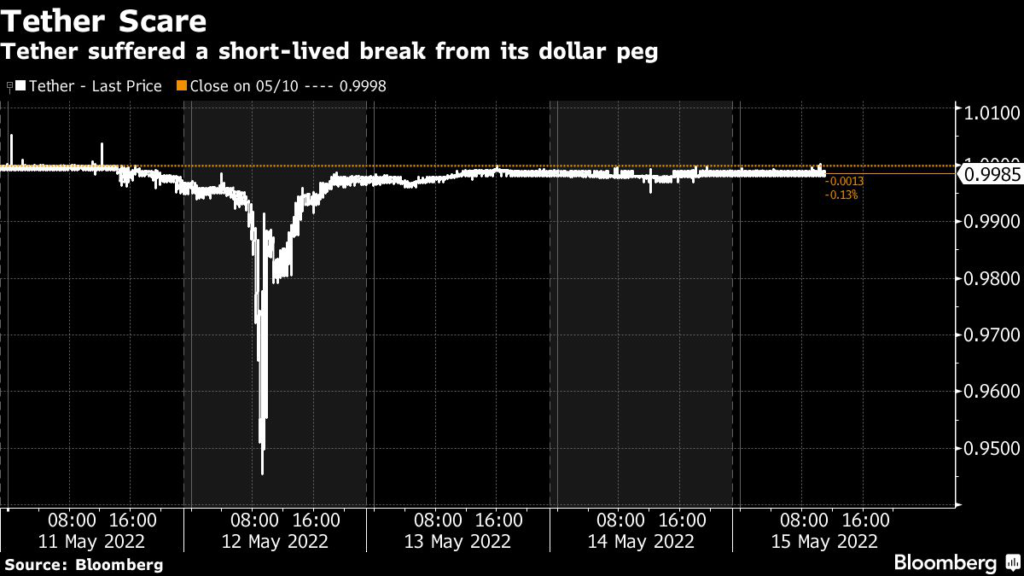
Bitcoin dipped to a low of $25,425 on Thursday after the TerraUSD algorithmic stablecoin unraveled, throwing the entire ecoystem that supports it into disarray. At its height, the market panic engulfed the $76 billion stablecoin Tether, a key cog in cryptoassets that briefly dipped from its dollar peg. 

“We have witnessed the rapid decline of a major project, which sent ripples across the industry, but also a new found resiliency in the market that did not exist during the last market downswing,” Changpeng Zhao, chief executive officer of crypto exchange Binance Holdings Ltd., tweeted on Sunday. 

One difference between the current environment and other prolonged downturns such as the “crypto winter” in 2018 is the amount of institutions now involved in the market, which may be a source of support, said Paul Veradittakit, an partner at digital asset manager Pantera Capital.

“Compared to 2018, there are more institutional investors with exposure to crypto and most see this as a buying opportunity,” said Veradittakit.

Ebbing Rally

Monday’s price action saw Bitcoin give back some of a Sunday rally. The total market value of cryptocurrencies has dropped by about $250 billion in the past seven days to roughly $1.37 trillion, according to data from CoinGecko. Bitcoin is some 56% off its November all-time high. 

While crypto markets may have digested the worst of the TerraUSD fallout, the asset class faces other challenges — most notably, rising global interest rates and tighter liquidity conditions.

“I remain long-term bullish, especially on Bitcoin,” said Vasja Zupan, president of cryptocurrency exchange Matrix. “But I do foresee high volatility for some time followed by a period of much lower volumes at lower prices before we can expect trending to new all-time highs.”

More stories like this are available on bloomberg.com

©2022 Bloomberg L.P.

South Korea President to Support Biden’s New Economy Grouping

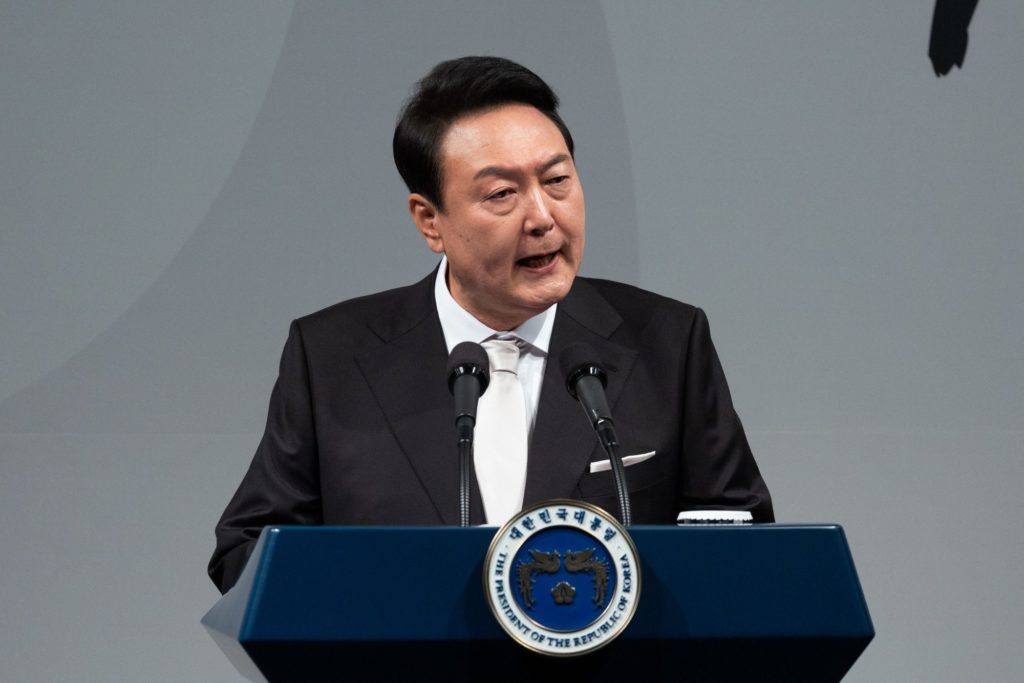
(Bloomberg) — South Korean President Yoon Suk Yeol indicated his new government will take part in a regional economic group Joe Biden is expected to soon unveil, in a show of support for the US president days before he arrives in Seoul for talks.

Yoon, who took office on May 10, told parliament Monday he wanted to discuss with Biden when they meet later this week how his government can contribute to the Indo-Pacific Economic Framework. The pact is supposed to help in coordination of regional supply chains, infrastructure and other areas. 

Biden’s No-Show on Trade Deals Risks Isolating Friends in Asia

Yoon said his talks with Biden will “include not only supply chain stabilization measures, but also various economic security issues, such as the digital economy and carbon neutrality.” South Korea is a major producer of semiconductors and Yoon has backed Biden’s supply chain initiatives.

The IPEF is part of the Biden administration’s efforts to counter China’s clout in Asia, following the US withdrawal from talks on the Trans-Pacific Partnership regional trade agreement under former president Donald Trump. Biden is set to make the announcement about IPEF during his first visit to allies South Korea and Japan since taking office. The trip will run from May 20-24, the Sankei newspaper of Japan reported last week.

Japan, South Korea Set to Join US-Led Economy Group, Sankei Says

Details of the IPEF are hazy and the Biden administration has stressed it won’t include lower tariffs or better access to US markets. Some in Congress have criticized the IPEF as lacking substance, with senators from both parties blasting Biden’s trade agenda at a March hearing and grilling US Trade Representative Katherine Tai over a shortage of ambition to negotiate new agreements.

More stories like this are available on bloomberg.com

©2022 Bloomberg L.P.

Yen, Supply Chain Chaos Prompt Japan Manufacturers to Head Home

(Bloomberg) — Japanese manufacturers are increasingly looking to move offshore operations to their home market, according to a Tokyo Steel Manufacturing Co. executive.

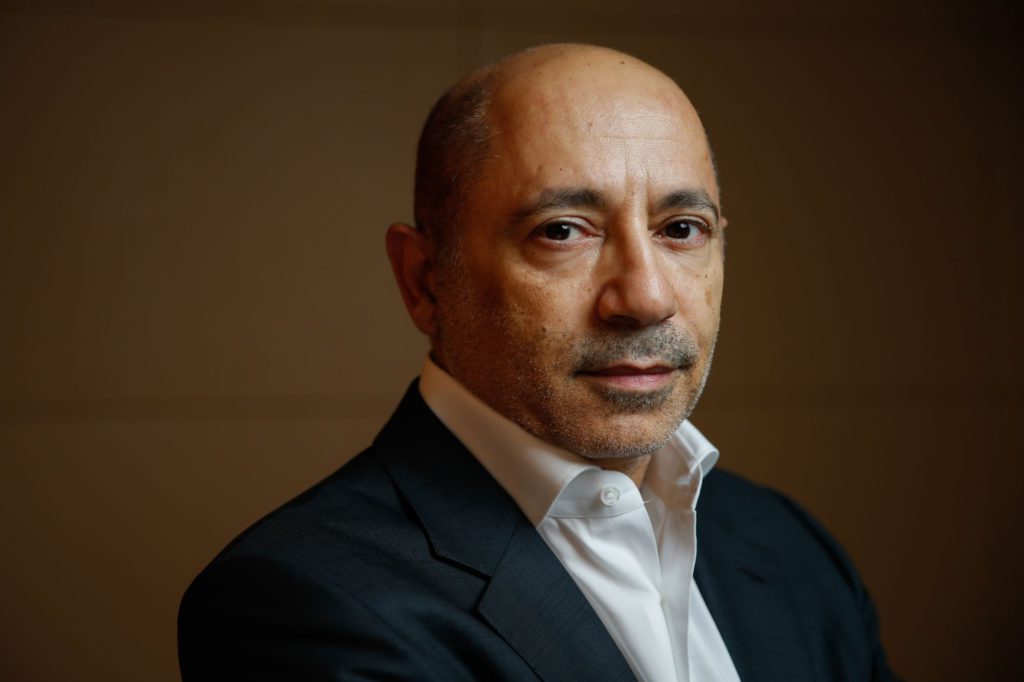
The rapidly weakening yen, global supply-chain constraints, geopolitical risks and shifting wages patterns are prompting the switch, Kiyoshi Imamura, a managing director of the steelmaker, said in an interview in Tokyo last week. 

Among those moving manufacturing to Japan are makers of everything from auto parts to cosmetics and consumer electronics, he said, with the trend expected to accelerate toward the end of this year.

According to Imamura, more Japanese companies are shifting operations out of China, Southeast Asia and Russia. The move to build new plants in their home country is fueling demand for steel used in construction, with the company receiving nearly 30 orders related to such switches, he said. 

“The yen has fallen so much that Japan’s trade balance won’t be back in the black — under such circumstances, companies judge it’s better to do manufacturing in Japan,” Imamura said. His company has seen orders for steel used in construction rise 10% so far this year, compared with a year earlier, he said.

The yen has declined about 11% against the US dollar since the start of the year, exacerbating rising prices for Japan’s imported commodities.

Even before the yen’s tumble this year, the Japanese government had been supporting relocation of domestic companies’ production bases back to the country. 

The Ministry of Economy, Trade and Industry is funding companies to assist them to invest in new plants that makes crucial products and materials to alleviate the risks of supply-chain bottlenecks. In November, the government also approved 774 billion yen ($6 billion) in funding for domestic semiconductor investment. 

“Now that the yen has weakened, it’s no surprise more companies will work on boosting domestic production capacity,” Takayuki Homma, chief economist at Sumitomo Corp. Global Research Co., said in a separate interview. The falling yen, which was increasing export margins, was “offering an option to ship goods from Japan strategically,” he said. 

Surging labor costs in other nations are also a factor. Imamura said Japan’s wages have barely changed over the past 30 years, while wages in Southeast Asia have roughly tripled over the same period.

Price Spikes

Takeshi Irisawa, an analyst at Tachibana Securities Co. in Tokyo, agreed the trend was a bright spot in Japan’s steel market. Still, he noted the country’s entire demand for steel used in construction was stagnant, and recent spikes in steel prices “will be a setback, making it a little difficult for the lower yen” to be a big driver for Japanese production in the short term.

The companies moving operations to Japan also face other hurdles, including high electricity costs and a shortage of labor due to the nation’s shrinking and aging population, said Homma. They will need to be innovative in both efficiently producing goods with fewer workers and coming up with value-added products. 

Imamura also said more nuclear power generation was essential to revive the competitiveness of manufacturing in the country. He joined calls by Japanese companies to quickly restart nuclear reactors that were idled after the Fukushima disaster more than a decade ago as the nation grapples with soaring energy costs.  

Read: Japanese Steel Producer Calls for Faster Nuclear Power Revival

(Updates with details on yen movement)

More stories like this are available on bloomberg.com

©2022 Bloomberg L.P.

Grayscale Makes Europe Debut with Crypto ETF

(Bloomberg) — Grayscale Investment LLC, the operator of the world’s biggest crypto fund, is making its European debut with an exchange-traded fund tracking a basket of digital asset companies, rather than a product tied to the price of Bitcoin itself.

The fund manager will launch its Future of Finance UCITS ETF (ticker GFOF) on the London Stock Exchange, Borsa Italiana and Deutsche Börse Xetra on Monday, in collaboration with white-label ETF platform HANetf. 

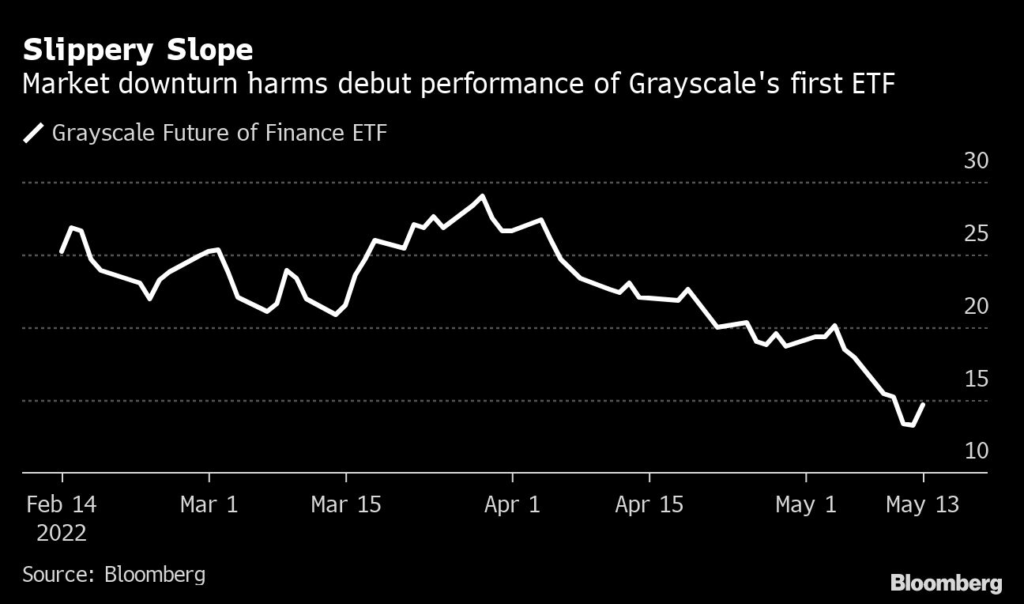
First launched in the US in February, GFOF tracks the investment performance of the $443 billion Bloomberg Grayscale Future of Finance index, with constituents including Robinhood Markets Inc, Block Inc and Coinbase Global Inc.

Grayscale is currently lobbying US regulators for permission to convert its $19 billion Bitcoin Trust (ticker GBTC) into an ETF that would directly track the price of Bitcoin. Spot Bitcoin ETFs have yet to be approved in the US. 

  • Read more: Wonky SEC Ruling Reignites Spot US Bitcoin ETF Approval Debate

The firm enters a competitive market in Europe, where spot crypto exchange-traded products from rivals including CoinShares International Ltd and 21Shares AG having been available on local bourses for several years.

Michael Sonnenshein, chief executive of Grayscale, told Bloomberg in an interview that while the firm has “high conviction in investors wanting to have digital asset exposure”, it viewed the Future of Finance ETF as the “most liquid way” for traders to share in that value.

“What we’re finding is that many people equate the ability to invest in an entirely new category of thematic investing as to what they might have experienced had they begun investing in cloud computing or other categories a decade ago,” Sonnenshein said. “Those would have been the proverbial nets that would have captured opportunity.”

  • Read more: Grayscale to Expand Into Europe’s Competitive Crypto-Fund Market

The performance of both Grayscale’s Bitcoin Trust and its Future of Finance ETF have suffered in recent months as the broader crypto market swung between periods of sideways trading and extreme volatility. 

GBTC shares hit a record discount to the price of Bitcoin on Tuesday following a meeting with the Securities and Exchange Commission about its ETF application, according to data compiled by Bloomberg, while the US-listed GFOF ETF recorded a three-month return of -42.6% as of May 13. 

Bloomberg revealed last month that Grayscale planned to run a series of pilot tests across the continent. Sonnenshein declined to comment on whether the firm might launch spot crypto products in Europe in future, saying that conversations with partners to date had focused on an equities launch.

“It’s important to take a larger step back away from performance over the last couple weeks and months,” said Sonnenshein, adding that thematic investing is a relatively new area for the European crypto market.

“What we’re seeing and hearing is about the growing popularity about ETFs in Europe, not only significant interest in thematic investing but also in crypto-related products as well as ESG. Many investors are beginning to gravitate toward the familiarity and protection that the ETF wrapper offers,” he said.

Read more: Crypto ETPs Enjoy Growth Spurt Even as Digital Assets Plunge

More stories like this are available on bloomberg.com

©2022 Bloomberg L.P.

New Zealand Plans More Digital Skills Investment to Bridge Gap

(Bloomberg) —

New Zealand will make a new investment in the digital technologies sector with the aim of increasing skills development and encouraging local companies to market their talents globally.

The government will allocate NZ$20 million ($13 million) over four years from this week’s budget, Minister for the Digital Economy David Clark said in a statement Monday in Wellington. The spending will support the growth of the Software-as-a-Service community and take a new a marketing initiative led by industry in partnership with government, to the world, he said.

“Through this new funding, the SaaS Community can build its momentum further and expand its network,” Clark said. ‘It will also support the delivery of short courses for digital skills development.”

The government wants to address a shortfall of investment in technology education that has created a skills gap and forced several local companies to shift offshore to find the talent they need. A report from the OECD highlighted a weak pipeline of advanced information technology skills while Wellington-based game developer Pikpok this year opened a studio in Colombia to tap talent there that isn’t available at home.

“We know for the digital sector to grow, it needs access to the right people,” said Clark. “Historically, there has been a ‘skills mismatch’, but the key to future success is training our domestic talent with the right skills, and encouraging New Zealanders to participate, whatever their background.”

Changes to the immigration system will help alleviate some of the immediate pressures on industry, with key roles including software engineers entitled to fast track residency, he said.

More stories like this are available on bloomberg.com

©2022 Bloomberg L.P.

UAE Telecom Firm Pays $4.4 Billion for 9.8% of Vodafone

(Bloomberg) —

Vodafone Group Plc is starting the trading week with a new largest shareholder, a show of support at a time when the telecommunications giant has been under pressure to improve its returns.

Emirates Telecommunications Group Company PJSC bought a 9.8% stake for $4.4 billion — offering about 130 pence ($1.59) a share, according to Bloomberg calculations. The price represents a premium of about 10% to Friday’s closing price for Vodafone shares, which have been trading at only about half of their 2018 high.

Unlike the pressure activist Cevian Capital AB has been putting on Vodafone to simplify the business and pursue deals to improve returns, the United Arab Emirates-based technology company — formerly known as Etisalat Group and now called e& — says it’s just pursuing global diversification. It said it wants to remain a long-term investor and won’t make an offer for the rest of Vodafone.

State-controlled e& “made the investment in Vodafone to gain significant exposure to a world leader in connectivity and digital services” and wants to develop opportunities for commercial partnerships, the company said in a stock exchange statement on Saturday.

The purchase pushes e&’s stake in Vodafone ahead of BlackRock Inc., the Vanguard Group Inc., and HSBC Holdings Plc, according to Bloomberg data. 

“We look forward to building a long-term relationship” with e&, Vodafone said in a statement. 

Vodafone oversees a sprawling portfolio across more than 20 countries serving over 300 million wireless customers. Its European operations include units in the U.K., Germany, Italy and Spain. Vodafone is also a major player in sub-Saharan Africa and has a joint venture in India. 

While Vodafone’s shares were up almost 5% this year through Friday, they’re not far from the lows of the dot-com crash in 2002, leaving it susceptible to pressure from activists such as Cevian. Vodafone is particularly on the lookout for deals in the UK, Spain, Italy and Portugal to consolidate and increase scale. 

Read More: Activist investor Cevian is said to build Vodafone stake

For its part, e& is stepping up deal activity after focusing on organic growth in recent years. 

The company is seeking to buy out the rest of its Saudi Arabian unit in a $2.1 billion deal and has built a presence in several emerging markets in Asia and Africa. Its purchase of a stake in Vodafone echoes French billionaire Patrick Drahi’s accumulation of an 18% share in BT Group Plc. Drahi, the president of telecommunications company Altice, has said the BT deal is a financial investment.

Read More:Drahi Tightens Grip on BT’s Future, Raises Stake to 18%

E& could look to emulate Drahi’s move and increase its stake over time, James Ratzer, an analyst at New Street Research, wrote in a note Saturday. That would likely require talks with the UK government to set out the company’s thinking and court political approval before increasing it further.

“This move will certainly trigger a lot of future discussion -– certainly only two days before Vodafone’s full-year results,” Ratzer wrote in the note. 

The UAE — in moves similar to that of larger neighbor and business rival Saudi Arabia — is looking to prepare its economy for a post-oil era, investing their wealth into growth industries abroad.

“Our investment represents a unique opportunity to acquire a significant stake in one of the leading and strongest global telecom brands,” e& Chief Executive Officer Hatem Dowidar said in the statement.


More stories like this are available on bloomberg.com

©2022 Bloomberg L.P.

Goldman, Barclays Invest in Alan Howard Crypto Trading Platform

(Bloomberg) — Goldman Sachs Group Inc. and Barclays Plc participated in a $70 million funding round of Elwood Technologies LLP, the cryptocurrency trading platform founded by billionaire Alan Howard, in a collaboration between crypto-native funds and traditional financial institutions.

The financing valued the six-year-old company at over $500 million, according to a person familiar with the matter. Other investors include Dawn Capital LLP and units of Commerzbank AG and Galaxy Digital Holdings Ltd., the crypto merchant bank headed by billionaire Michael Novogratz, Elwood said in a statement.

While Elwood was founded to meet the needs of institutions seeking exposure to digital assets, the platform is entering a new phase “to provide broader mass market involvement,” Chief Executive Officer James Stickland said in the statement.

Bloomberg, the parent company of Bloomberg News, has a partnership with Elwood that connects the crypto trading platform with Bloomberg’s order management system.

More stories like this are available on bloomberg.com

©2022 Bloomberg L.P.

Hochul Says Social Media Must Crack Down After Buffalo Killings

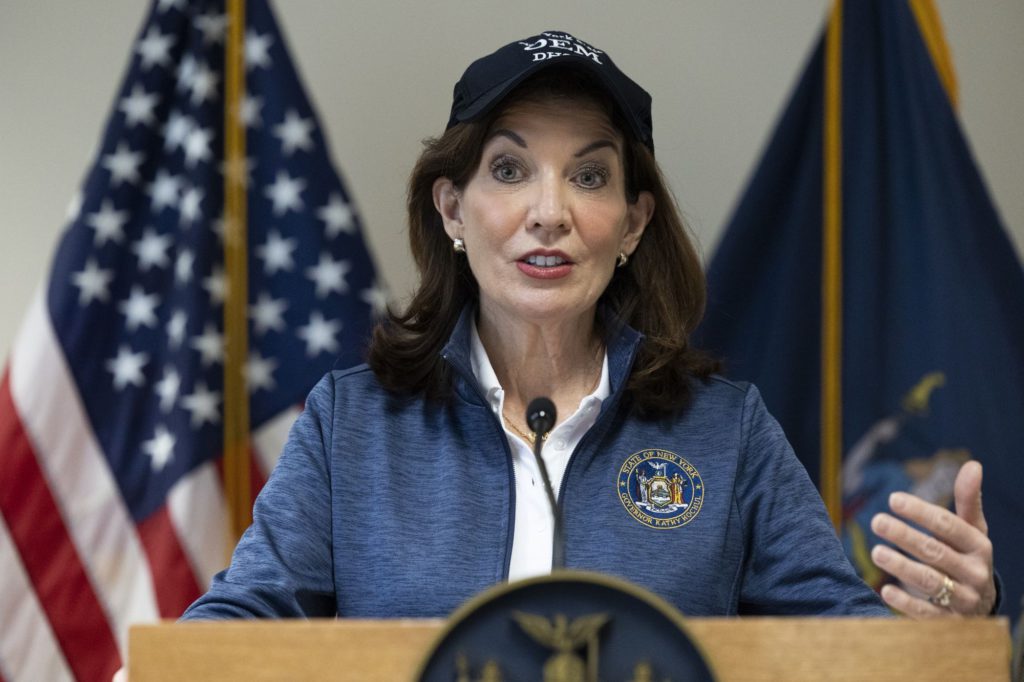
(Bloomberg) — New York Governor Kathy Hochul called on social media companies to do more to crack down on racist, anti-immigrant and antisemitic rhetoric on their platforms, saying the man accused of shooting and killing 10 people in a Buffalo supermarket was radicalized online. 

The accused 18-year-old shooter broadcast Saturday’s attack, which took place in a predominantly Black neighborhood, live and had posted a white supremacist manifesto online, Hochul said Sunday on CNN’s “State of the Union.” She said he had developed his hatred by viewing radical content on social media.

“This spreads like a virus and that’s why I’m calling on the CEOs of all the social media platforms to examine their policies and to be able to look me in the eye and tell me that everything is being done that they can do to make sure this information is not spread,” the governor, a Democrat, said.   

Hochul’s comments add to the renewed debate over how social media companies should regulate content on their sites. A federal judge has put on hold a new Texas law that would largely block companies like Twitter Inc. and Meta Platforms Inc.’s Facebook from moderating content to root out hate speech and extremism. Elon Musk, who is working to buy Twitter, has described himself as a “free speech absolutist” and plans to take a minimalist approach to restrictions on the platform.

Hochul said on ABC’s “This Week” that social media companies need to identify and take down violent or hateful content “the second it appears.”

“I will protect the right to free speech, but there is a limit, there is a limit to what you can do in hate crimes. Hate speech is not protected,” she said. 

Authorities say the accused Buffalo shooter visited sites espousing white supremacist ideologies and he also streamed the assault, carried out with a legally purchased assault rifle, on the Amazon.com Inc.-owned platform Twitch. Twitch told the Associated Press in a statement that it ended the transmission “less than two minutes after the violence started.”

House Speaker Nancy Pelosi, also speaking on ABC, said she agreed with Hochul. 

“I think the governor was right about the social media companies having some responsibility,” she said. “There has to be vigilance.”

More stories like this are available on bloomberg.com

©2022 Bloomberg L.P.

After SPAC Mania, Electric-Vehicle Startups Face a Cash Squeeze

(Bloomberg) — Two years into the SPAC merger boom for electric-vehicle startups, companies are having a tough time finding cash to actually produce cars.

First Lordstown Motors Corp. said it would back off investing in the tools to build its electric trucks until capital markets loosen up. Two days later, EV Startup Canoo Inc. issued a Going Concern notice to alert investors warning that it could run out of cash.

Without more money, some face the real danger of not making it. Those that can raise money could end up paying a lot more for it or just not getting as much as they need.

“The story has changed,” said Bloomberg Intelligence analyst Joel Levington. “These companies are burning huge amounts of cash. Every day that the market goes down their liquidity gets more challenged.”

The problem, Levington said, is that convertible debt for many of the smaller EV companies with little or no revenue is costing more than 10%. They can’t issue much secured debt because they lack hard assets to put up as collateral. With stock prices depressed, issuing equity will be very dilutive to existing shareholders.

Canoo is the most recent company to report a potential liquidity crunch. The company said on May 10 that it has lined up $300 million in funding from existing shareholders and an equity purchase agreement with Yorkville Advisors, along with filing for a $300 million shelf offering. That pads a cash reserve that was just $104.9 million on March 31.

Burn Rate

The company will likely need a lot more. Bloomberg Intelligence forecasts that Canoo will burn through a total of $1.1 billion this year and in 2023, which means it will have to keep trying to raise funds.

Just two months ago, Chief Executive Officer Anthony Aquila said his company was “very focused” on avoiding dilution. Aquila said in March that Canoo was instead looking at asset-backed loans and working-capital credit lines — options he didn’t mention on its first-quarter earnings call this week.

Lordstown Motors, meanwhile, is delaying plans for its Endurance pickup truck. The company reined in a goal to raise $250 million this year, saying that it will seek $150 million instead.

“As you all well know, the capital markets have not been open for the sector, notwithstanding we continue to work with our advisers on available financing alternatives,” Adam Kroll, Lordstown Motors’ chief financial officer, said on the startup’s first-quarter earnings call on May 9. “However, with our options limited at the moment, we are taking a balanced and disciplined approach to allocating our current capital.”

Without that funding, the cost to make its Endurance pickup will be “significantly higher” than the sale price, President Edward Hightower told analysts on the call. 

More Yorkville

Lordstown struck a deal in 2021 to sell up to $400 million worth of stock through an investment fund managed by Yorkville — the same firm now working with Canoo — but the decline in the startup’s stock price squeezed the amount of money it can make from that agreement. 

Instead, Lordstown decided late last year to sell the Ohio factory it bought from General Motors Co. to Hon Hai Precision Technology Co., or Foxconn, for $230 million. That deal gave the company a lifeline. The Taiwanese maker of Apple Inc.’s iPhone also invested $55 million in a joint venture that will help Lordstown develop future products, but the company will need to raise more cash on its own.

Most of the EV startups that went public during the SPAC wave now find themselves back in a tenuous financial position, similar to where they were before their mergers.

Cash Infusion

Canoo had just shy of $150 million in cash in the quarter before its merger in December 2020. Faraday Future Intelligent Electric Inc. had $2 million at the end of 2020 before it revealed its own SPAC combination in January 2021. 

Mergers changed their fortunes, at least for a little while. Canoo raised around $600 million, Faraday Future around $1 billion and Lordstown around $675 million. And this all happened quickly, since the mergers took just a few months versus the more protracted process of a traditional IPO.

At least one, though, was able to take advantage of the high-flying optimism while it lasted. Car designer Hernik Fisker’s eponymous startup, Fisker Inc., added $625 million to its $1 billion SPAC merger war chest last August by offering convertible notes when rates were lower.

Still, CFO Geeta Gupta-Fisker said this month that while the company had enough cash to get its Ocean SUV to market, the carmaker would still need to raise more money. The company is looking at bank debt or selling zero-emissions credits to conventional carmakers. 

“We are talking to several banks to see what we can do with respect to working capital,” Gupta-Fisker said on the company’s earnings call.

Even if these companies can hang on through the current volatility in the market, they all still have a long way to go to find the $23.5 billion Tesla Inc. raised, not to mention a decade of gross profits that funded development. 

Tesla CEO Elon Musk said at a conference this week that starting a car company “is mega pain.” 

“It’s the furthest thing from easy money you could possibly imagine,” he said.

When asked if he had advice for other EV startups, Musk said: “Make sure you’ve got a lot of reserve capital and then gradually build up from the dumb things that you do at the beginning and be less dumb over time — otherwise what will happen is vast losses of money.” 

More stories like this are available on bloomberg.com

©2022 Bloomberg L.P.

Bitcoin Trades Near $30,000 as Markets Digest TerraUSD Fallout

(Bloomberg) — Bitcoin staged a modest recovery to trade at around $30,000, extending a period of relative market calm after the collapse of a closely watched stablecoin roiled digital assets in the past week.  

The largest cryptocurrency advanced 3.2% n Sunday to $30,300 as of 9:15 a.m. in New York. Ether, the second-biggest token, rose 4.2% while coins like Avalanche and Cardano posted even larger gains. 

Bitcoin dipped to a low of $25,425 on Thursday after the TerraUSD algorithmic stablecoin unraveled, throwing the entire ecoystem that supports it into disarray. At its height, the market panic engulfed the $76 billion stablecoin Tether, a key cog in cryptoassets that briefly dipped from its dollar peg. 

“We have witnessed the rapid decline of a major project, which sent ripples across the industry, but also a new found resiliency in the market that did not exist during the last market downswing,” Changpeng Zhao, chief executive officer of crypto exchange Binance Holdings Ltd., tweeted on Sunday.  

Even after Sunday’s recovery, the total market value of cryptocurrencies has dropped by about $350 billion in the past week to roughly $1.38 trillion, according to data from CoinGecko. Bitcoin is almost 60% off its November all-time high. 

While crypto markets may have digested the worst of the TerraUSD fallout, the asset class faces other challenges — most notably, rising global interest rates and tighter liquidity conditions. Federal Reserve Chair Jerome Powell this week reaffirmed that the central bank will likely raise interest rates by a half-point at its next two meetings. 

“I remain long term bullish, especially on Bitcoin,” said Vasja Zupan, president of cryptocurrency exchange Matrix. “But I do foresee high volatility for some time followed by a period of much lower volumes at lower prices before we can expect trending to new all-time highs.”

While crypto markets may have digested the worst of the TerraUSD fallout, the asset class faces other challenges — most notably, rising global interest rates and tighter liquidity conditions. Federal Reserve Chair Jerome Powell this week reaffirmed that the central bank will likely raise interest rates by a half-point at its next two meetings. 

“I remain long term bullish, especially on Bitcoin,” said Vasja Zupan, president of cryptocurrency exchange Matrix. “But I do foresee high volatility for some time followed by a period of much lower volumes at lower prices before we can expect trending to new all-time highs.”

More stories like this are available on bloomberg.com

©2022 Bloomberg L.P.

Close Bitnami banner
Bitnami