Bloomberg

UAE Telecom Firm e& Pays $4.4 Billion for 9.8% of Vodafone

(Bloomberg) —

Emirates Telecommunications Group Company PJSC bought a 9.8% stake in Vodafone Group Plc for $4.4 billion as the Middle Eastern technology provider seeks to expand globally.

The company, formerly known as Etisalat Group and now rebranded as e&, offered about 130 pence ($1.59) a share for the stake, according to Bloomberg calculations. That’s a premium of about 10% to Vodafone’s closing price of 117.82 pence on Friday. The purchase makes the UAE-based company the largest shareholder in Vodafone, ahead of BlackRock Inc., the Vanguard Group Inc., and HSBC Holdings Plc, according to Bloomberg data. 

State-controlled e& plans to remain a long-term investor and won’t make an offer for the rest of Vodafone, it said in a stock exchange statement on Saturday.  The group “made the investment in Vodafone to gain significant exposure to a world leader in connectivity and digital services” and wants to develop opportunities for commercial partnerships, it said.

Vodafone’s shares are up almost 5% this year, but still at almost half of a 2018-high and close to the lows of the dot-com crash in 2002.

The company is facing pressure from activist investor Cevian Capital AB to simplify its business and pursue deals to improve returns. Vodafone is particularly on the lookout for deals in the UK, Spain, Italy and Portugal to consolidate and increase scale.

“We look forward to building a long-term relationship” with e&, Vodafone said in a statement. 

Read More:Activist Investor Cevian Is Said to Build Stake in Vodafone

Vodafone oversees a sprawling portfolio across more than 20 countries serving over 300 million wireless customers. Its European operations include units in the U.K., Germany, Italy and Spain. Vodafone is also a major player in sub-Saharan Africa and has a joint venture in India. 

For its part, e& is stepping up deal activity after focusing on organic growth in recent years. 

The company is seeking to buy out the rest of its Saudi Arabian unit in a $2.1 billion deal and has built a presence in several emerging markets in Asia and Africa. Its purchase of a stake in Vodafone echoes French billionaire Patrick Drahi’s accumulation of an 18% share in BT Group Plc. Drahi, the president of telecommunications company Altice, has said the BT deal is a financial investment.

Read More:Drahi Tightens Grip on BT’s Future, Raises Stake to 18%

E& could look to emulate Drahi’s move and increase its stake over time, James Ratzer, an analyst at New Street Research, wrote in a note Saturday. That would likely require talks with the UK government to set out the company’s thinking and court political approval before increasing it further.

“This move will certainly trigger a lot of future discussion -– certainly only two days before Vodafone’s full-year results,” Ratzer wrote in the note. 

The UAE — in moves similar to that of larger neighbor and business rival Saudi Arabia — is looking to prepare its economy for a post-oil era, investing their wealth into growth industries abroad.

“Our investment represents a unique opportunity to acquire a significant stake in one of the leading and strongest global telecom brands,” e& Chief Executive Officer Hatem Dowidar said in the statement.


(Updates with analyst comment in 10th paragraph)

More stories like this are available on bloomberg.com

©2022 Bloomberg L.P.

Terra $45 Billion Face Plant Creates Crowd of Crypto Losers

(Bloomberg) — This week’s undoing of the TerraUSD algorithmic stablecoin and its sister token Luna has ramifications for all of crypto. First, there’s the immediate impact: The rapid collapse of a once-popular pair of cryptocurrencies sent a ripple effect across the industry, contributing to plummeting coin prices that wiped hundreds of billions of market value from the digital-asset market and stoked worries over the potential fragility of digital-asset ventures.

Then there are the knock-on effects. In addition to delivering punishing losses to individual users and investment firms, the spectacular failure of a market darling like Terra threatens to have a cooling effect on the fundraisings that have jacked up crypto startups’ valuations in recent years. Venture capitalists who have long been some of the industry’s biggest cheerleaders may not have quite the same risk tolerance now — especially those directly caught in the crossfire.

“It’s something the scale of which crypto has really never seen in terms of a top-five project just absolutely imploding,” said Matt Walsh, founding partner of Castle Island Ventures, a blockchain-focused VC firm. Almost $45 billion evaporated from the market caps of TerraUSD (known as UST) and Luna over the course of a week, according to CoinGecko.

There were some winners in this scenario — like the investment firms including F9 Research that shorted TerraUSD. Stablecoins backed by reserves rather than algorithms also came off looking like better options. But it’s the losses from these bruising past few days that will resonate.

Read more: ‘Everything Broke’: Terra Goes From DeFi Darling to Death Spiral

Individual holders of UST and Luna, the token that’s part of the peg mechanism for the algorithmic stablecoin, are now deeply in the red, with tweets lamenting dashed fortunes flooding Crypto Twitter this week.

“The biggest losers from all of this will be retail [investors] that didn’t understand the risks they were taking,” said Kyle Samani, co-founder and managing partner at crypto VC firm Multicoin Capital.

Other losers include the venture capitalists and investment firms that have backed Terraform Labs, the startup behind UST, and Luna Foundation Guard, the nonprofit managing the Luna token. Galaxy Digital Holdings Ltd., Pantera Capital and Lightspeed Venture Partners invested in Terraform’s last $150 million fundraise in July, while Jump Crypto and Three Arrows Capital participated in a $1 billion sale of Luna tokens in February.

These backers, who once hoped that their investments would deliver massive returns, instead found themselves being solicited to prop up UST and Luna in a $1.5 billion backstop. In essence, they were asked to “put their money where their mouth is,” a test of whether these institutions actually believe in what they’re investing, said Billy Dishman, investment and research analyst at crypto VC firm CoinFund. So far, they haven’t shown much interest. 

Terraform Labs is working on another contingency plan in which ownership of the blockchain network would be distributed to investors, according to a blog entry posted Friday that was attributed to co-founder Do Kwon.

Investors and startups with no direct connection to UST are also finding themselves on unsteady ground. Chris McCann and Edith Yeung, general partners at Race Capital — a VC firm that focuses on early-stage crypto startups — have heard of deals falling apart or being repriced and said that founders are getting “ghosted” by potential investors. They’re urging their portfolio companies to take caution and ensure that the funds they’ve raised so far are in fiat, not crypto. 

“If you’re in the middle of a fundraise period, close it,” McCann added. “If you’re not, don’t do it now. Now’s not the time.”

Yeung said she also has a playbook in case a portfolio company finds itself in crisis. She said part of Race’s strategy is to find a better way for founders to communicate – lengthy Twitter threads have the potential to spur rumors and spread discord.

“I have a blog post template ready to go,” she said. “It’s kind of silly, but it’s happened now so many times now.”

‘Downstream Impact’

Castle Island Ventures’ Walsh said that later-stage companies are more likely to see valuation hits as they raise more funds because of their proximity to public markets, where stocks like Coinbase Global Inc. have plummeted. Coinbase stock slumped 35% this week and ended the week with a market value of $15 billion.

“Coinbase trading at $17 to $18 billion market cap, that’s going to have a downstream impact on the venture community in the crypto space,” Walsh said in an interview. 

This will eventually trickle down to the seed stage, where newer crypto startups could take valuation cuts, Walsh added. He said that there also could be a shift in the types of firms investing in crypto, noting that a lot of of traditional funds have gotten more interested in the industry in the last year.

“There’s a question of are some of those funds just tourists that in the bear market back away,” Walsh said.

Traditional Take

Dana Stalder, a general partner at tech VC firm Matrix Partners, said it’s important to note that it’s not just cryptocurrencies caught in a downturn: Tech stocks are struggling as well.

“There’s a flight to safety out of the equity asset class,” Stalder said in an interview.

The firm is still excited about its investment in crypto startup Lightspark, which it announced Thursday. The company was founded by David Marcus, who left Meta Platforms Inc. last year after overseeing its crypto efforts. Lightspark is building infrastructure to help support payments for Bitcoin, which traded at less $29,000 as of Saturday morning in New York and is down about 25% this month.

“I don’t think this cycle will have any impact on what the Lightspark team is building — it is a very long play,” he said.

Peter Fenton, a general partner at Benchmark, said that there will likely be a slowdown in crypto investing as many VC firms were likely “playing out of their winnings” and using returns from previous crypto investments to fund new ones in the space.

However, his firm, which has already backed crypto startups Chainalysis and Sorare, is still committed. Fenton said Benchmark plans to pursue three to five crypto investments a year because it still has confidence in the industry and its startups.

“People forget that Google’s best financings were done in really the worst venture years,” he said.

(UPdates Bitcoin’s price.)

More stories like this are available on bloomberg.com

©2022 Bloomberg L.P.

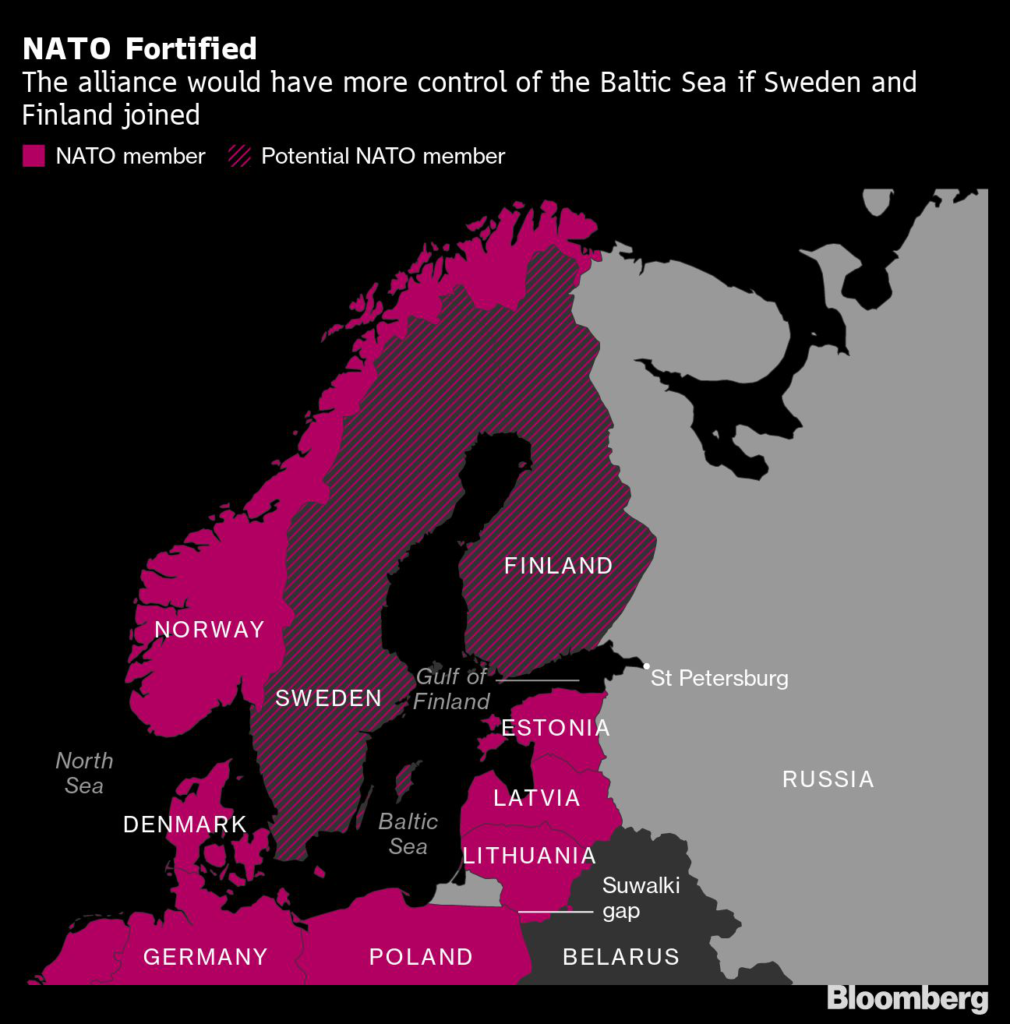
Ukraine Latest: McConnell Leads Senate Republicans on Kyiv Visit

(Bloomberg) —

Senate Minority Leader Mitch McConnell led a delegation of Republicans to Kyiv. Finland’s president phoned Russia’s Vladimir Putin, telling him that the invasion of Ukraine had “altered the security environment” for the Nordic country. G-7 foreign ministers urged China “not to justify Russian action in Ukraine.” 

Ukrainian President Volodymyr Zelenskiy said Kyiv’s forces are steadily pushing Russian troops from Kharkiv, the nation’s second largest city. India prohibited most wheat exports that the world was counting on to alleviate supply constraints sparked by the war in Ukraine, adding to a wave of food protectionism. 

Sweden has received no indication that Turkey would oppose it joining NATO, and will raise the issue at a meeting this weekend in Germany, Foreign Minister Ann Linde said. On Friday, President Recep Tayyip Erdogan expressed concern about Sweden and Finland potentially becoming members of the military alliance. NATO foreign ministers are meeting, with the issue of enlargement is likely to dominate.  

(See RSAN on the Bloomberg Terminal for the Russian Sanctions Dashboard.)

Key Developments

  • NATO Expansion Could Finally Shore Up Alliance’s Weakest Flank
  • India Bans Wheat Exports in Growing Wave of Food Protectionism
  • US and Southeast Asian Nations Avoid Russia Condemnation 
  • Germany Girds for Day of Reckoning in Gas Showdown With Russia
  • A Visual Guide to the Russian Invasion of Ukraine

All times CET:

McConnell Leads GOP Senators in Surprise Kyiv Visit (2:41 p.m.)

Senate Minority Leader Mitch McConnell lead a delegation of Republican senators to Kyiv and met there on Saturday with Ukrainian President Volodymyr Zelenskiy in a previously unannounced visit. 

Senators Susan Collins of Maine, John Barrasso of Wyoming and John Cornyn of Texas were with McConnell. 

G-7 Agriculture Ministers ‘Greatly Troubled’ About Food Security (2 p.m.)

G-7 agriculture ministers meeting in Stuttgart, Germany, issued a joint statement saying they’re “greatly troubled by the expected serious consequences for global food security” of Russia’s invasion of Ukraine. 

The impact of the war puts food supplies “under severe strain and further intensifies worldwide humanitarian needs for which President Putin and his accomplices bear the full responsibility,” according to the statement. 

German Agriculture Minister Cem Oezdemir said he and his G-7 counterparts had also discussed “with concern” moves toward food protectionism by some countries, including Indonesia limiting exports of palm oil and India mostly halting exports of wheat. “If we all start imposing these export limits, or even closed down markets, that just makes the crisis worse,” Oezdemir said. “It also hurts India itself and the farmers there because of course it means a rollercoaster ride for prices.

Finnish President Phones Putin Over NATO Plan (1:09 p.m.)

Finland’s President Sauli Niinisto phoned Russia’s Vladimir Putin to inform him that the Nordic country will decide in the next few days whether to seek NATO membership, the president’s office in Helsinki said.

“The conversation was direct and straight-forward and it was conducted without aggravations,” Niinisto said in a tweet. 


Mariupol Defenders’ Relatives Turn to Xi for Help (12:53 p.m.) 

Relatives of Ukrainian soldiers in the Azovstal steel plant in Mariupol have asked Chinese President Xi Jinping to act as an intermediary in talks with Russia to help evacuate the defenders and provide safe passage to a third country. 

“There is only one person in the world” left to turn to, Natalka Zarytska, wife of one of the defenders, said in a televised briefing. Citing the close ties between Moscow and Beijing, she said it would “be difficult for Putin to refuse” a request from China’s leader. 

Zarytska said that among the hundreds of wounded at Azovstal are men “without limbs and without pain relief.” The government in Kyiv has spoken to humanitarian groups and world leaders including the presidents of France and Turkey and Pope Francis about an evacuation. The defenders this week turned to billionaire Elon Musk for help.  

Seizing Russian Assets ‘Matter of Justice,’ Germany Says (12:30 p.m.)

Russia is responsible for the devastation in Ukraine and it’s “a matter of justice” that it should be held accountable via the seizing of frozen assets, said German Foreign Minister Annalena Baerbock. 

Speaking after talks with G-7 counterparts in Germany, Baerbock called seizing assets “anything but easy” in legal terms, and noted there are few precedents. If EU countries were to do so, it would have to be legally watertight and stand up at the European Court of Justice, she said, adding that her Canadian counterpart had indicated it’s legally possible there. 

“As Europeans we have a different legal framework, so that we always need more time for such a step,” Baerbock told reporters. “But there are indeed some good reasons why we too might choose this path.”

Germany Accuses Russia of Provoking Food Crisis (12:15 p.m.)

Baerbock also said Russia is provoking a global food crisis in a bid to weaken the international alliance against its war in Ukraine. She also condemned what she called Moscow’s “massive disinformation campaign” that she said sought to “portray the aggressor as the victim.” 

Russia is destroying transport routes and storage facilities for Ukraine’s grain, which is pushing up global prices and threatening to unleash “brutal hunger” around the world, especially in Africa, Baerbock said. 

“We must not be naïve about this,” Baerbock said. “It’s not collateral damage, it’s a perfectly deliberate instrument in a hybrid war that is currently being waged.” Russia has also been accused of stealing Ukrainian grain and offering it for export. 

G-7 Urges China Not To Justify Russia’s War (12 p.m.) 

Group of Seven foreign ministers issued a long list of demands on Beijing’s stance toward Ukraine following their meeting in Germany, including a request “not to justify Russian action” there. 

The G-7 officials called on China to “resolutely urge Russia to stop its military aggression against Ukraine,” according to a joint statement. They also called on Beijing not to assist Russia, not to undermine sanctions, and “to desist from engaging in information manipulation, disinformation and other means to legitimize Russia’s war of aggression.” 

The G-7 is committed to “both short-and-long term-support” for Ukraine, according to the statement. “We are determined to accelerate a coordinated multilateral response to preserve global food security and stand by our most vulnerable partners in this respect,” it added.

Scholz Doesn’t See Change in Putin Stance (11:30 a.m.)

Germany Chancellor Olaf Scholz said he detected no change of attitude in Vladimir Putin when he spoke by telephone with the Russian president for more than an hour on Friday. 

“One thing is clear here: Russia has not achieved any of the war aims set out at the start,” Scholz said in an interview with the T-Online news portal. “Ukraine has not been conquered, but is defending itself with great skill, courage and self-sacrifice.” 

“It should gradually be becoming clear to Putin that the only way out of this situation is to reach an agreement with Ukraine,” said Scholz. In tweet about the article, Scholz referred to Putin’s “insane idea” of expanding the Russian empire. 

Finland Counts on US Support to Win Over Turkey (11:29 a.m.)

Finnish President Sauli Niinisto pushed back against suggestions Turkey would prevent his country and neighboring Sweden from joining NATO, given that the US supports the move.

President Recep Tayyip Erdogan said on Friday Turkey doesn’t favor Sweden and Finland becoming members of the defense alliance, citing concerns over Kurdish “terrorists.” NATO welcomes new members unanimously, and a decision to apply for entry is expected on Sunday from the two Nordic countries that are reacting to Russia’s war in Ukraine.

Read more: Finland Counts on US Support to Win Over Turkey in NATO Bid

Germany Girds for Day of Reckoning in Gas Showdown (10:20 a.m.) 

If the worst-case scenario for Germany hits, BMW AG, Mercedes-Benz AG and Volkswagen AG would struggle to paint their cars and the air across the country would get dirtier.

Europe’s largest economy is bracing for the prospect that Russian natural gas gets cut off suddenly, a shock that would trigger a form of martial law for energy and affect 80 million residents and businesses from bakers to chemical producers.  

Ukraine Says It Destroyed Russian Pontoon Bridges (9:21 a.m.)

Ukraine’s army said it blew up pontoon bridges Russian forces were building near the village of Bilohorivka on the Siverskyi Donetsk River in the Luhansk region, although some Russian soldiers managed to cross. 

Russians troops were pushed back after two days of heavy fighting, the Ukrainian paratrooper brigade that took part in the fight said late Friday, adding that the US and UK anti-tank weapons helped them to repel the attack. 

Regional governor Serhiy Haiday said almost 90 Russian heavy weapons, including a helicopter, was destroyed in the hostilities and that Ukraine’s army is completing the liberation of the other bank of the river.

NATO Expansion Could Shore Up Alliance’s Weak Flank (6 a.m.) 

While much of the focus of deteriorating east-west relations has been on Germany’s new military plans, the expected accession of Finland and Sweden to the 30-member transatlantic alliance is part of the biggest shift in European foreign policy to emerge since Russia’s invasion of Ukraine. 

After waging war in part to stop NATO’s expansion, Putin is now confronted with the opposite.   

Zelenskiy Says Gradually Pushing Russia From Kharkiv Region (8:15 a.m.)  

Ukraine has retaken a total of over 1,015 villages and towns, including six in the previous 24 hours, as its army is gradually pushes Russian soldiers out of the Kharkiv region, President Volodymyr Zelenskiy said Friday in his night video address. He urged businesses to re-open in safe territories to add jobs. 

Talks on the evacuation of wounded Ukrainian wounded soldiers from Mariupol’s Azovstal steel plant are “very complex,” Zelenskiy said, adding that Kyiv has involved all possible influential intermediaries in the effort. 

Azovstal’s holdouts have criticized the government in Kyiv for failing to defend southern Ukraine, where Russia made much faster progress, and said it had abandoned Mariupol’s garrison. Russia continues airstrikes in the area.

Read more: Mariupol Steel Plant’s ‘Dead Men’ Defenders Call for Rescue Plan

Ukraine Appears to Have Won Battle for Kharkiv, U.S. Group Says (6 a.m.)  

Ukraine “appears to have won the Battle of Kharkiv,” according to the Institute for the Study of War.

Russia has likely decided to withdraw fully from its positions around Kharkiv in the face of Ukrainian counteroffensives and the limited availability of reinforcements, the U.S.-based defence think tank said in a daily bulletin. 

There’s evidence that “Moscow is focused on conducting an orderly withdrawal and prioritizing getting Russians back home before allowing proxy forces to enter Russia, rather than trying to hold its positions near the city,” ISW said. 

India Stops Most Wheat Exports (5 a.m.)

India prohibited most wheat exports that the world was counting on to alleviate supply constraints sparked by the war in Ukraine, which has largely halted Kyiv’s ability to ship. 

Bloomberg News reported earlier this month that a record-shattering heat wave has damaged wheat yields across the South Asian nation, prompting the government to consider export restrictions.

Exports will still be allowed to countries that require wheat for food security needs and will be based on the requests of their governments, India said. 

US, Southeast Asian Nations Stop Short of Russia Condemnation (3:35 a.m.)

A summit with Southeast Asian leaders organized and hosted by Biden concluded with a group statement that omitted any condemnation of Russia’s invasion of Ukraine. They called for the “immediate cessation of hostilities” in Ukraine and the countries said they “reaffirm our respect for sovereignty, political independence and territorial integrity.”

But the statement did not use the words “Russia,” “war” or “invasion.” The Southeast Asian region includes nations that are wary of directly criticizing Russia. Indonesia, which will host the Group of 20 summit later this year, has refused to exclude Putin from the gathering and is instead extending invitations to both the Russian leader and Zelenskiy. Much of the summit was conducted behind closed doors, so it wasn’t clear to what extent the Ukraine portion of the joint statement was debated.

Adeyemo Warns Banks on Russia and Sanctions (2:40 a.m.)

Deputy Treasury Secretary Wally Wally Adeyemo warned representatives from several foreign banks Friday about risks to their institutions should they assist Russia in evading sanctions imposed by the US and its allies after the invasion of Ukraine.

Adeyemo met with representatives from several foreign financial institutions and “conveyed the risks of facilitating sanctions evasions,” including the risk of falling under US sanctions if the banks provided material support to a person or entity that the US has already penalized, according to a Treasury Department press release about the meeting. 

More stories like this are available on bloomberg.com

©2022 Bloomberg L.P.

UAE’s Etisalat Pays $4.4 Billion for Almost 10% of Vodafone

(Bloomberg) — UAE phone company Etisalat Group said it bought a 9.8% stake in Vodafone Group Plc for $4.4 billion as the Middle Eastern telecommunications provider seeks to expand globally.

Etisalat Group offered about 130 pence ($1.59 dollars) a share, according to Bloomberg calculations. That’s a premium of about 10% to Vodafone’s 117.82 pence closing price Friday. The purchase makes Etisalat Vodafone’s largest shareholder, ahead of BlackRock Inc., the Vanguard Group Inc., and HSBC Holdings Plc, according to Bloomberg data. 

The government-controlled company plans to remain a long-term investor and won’t make an offer for the rest of Vodafone shares, Emirates Telecommunications Group Company PJSC, or e&, as the Abu Dhabi-listed group is formally known, said in a stock exchange statement. 

Etisalat Group “made the investment in Vodafone to gain significant exposure to a world leader in connectivity and digital services” and aims to develop opportunities for commercial partnerships, it said.

The purchase comes as Vodafone faces pressure from activist investor Cevian Capital AB, which has called on the telecoms giant to simplify its business and pursue deals to improve returns. The company is in talks to combine its UK operations with rival operator Three UK, owned by CK Hutchison, the Financial Times reported earlier this month. 

Read More: Activist Investor Coast Capital Builds Stake in Vodafone (1)

For its part, Etisalat is stepping up deal activity after sitting on the sidelines and focusing on organic growth in recent years. UAE’s largest telecoms player, is also seeking to buy out the rest of its Saudi Arabian unit in a $2.1 billion deal. Etisalat built has a presence in several emerging market countries in Asia and Africa in a previous expansion but had to write downv some of its investments in countries like India.

Etisalat’s stake purchase in Vodafone comes after French billionaire Patrick Drahi accumulated an almost 20% stake in BT Group Plc. Drahi, the president of telecommunications company Altice, has said the BT stake is a financial investment.

Read More:Drahi Tightens Grip on BT’s Future, Raises Stake to 18% (3)

The United Arab Emirates has developed as a business and tourism hub of the Middle East. The Persian Gulf state has parlayed its oil wealth into developing technology and logistics industries and seeking to attract investment for advanced manufacturing.

Like larger neighbor and business rival Saudi Arabia, the UAE is looking to prepare its economy for a post oil era and create jobs for its citizens. The countries, both members of the Organization of Petroleum Exporting Countries, are investing their wealth into growth industries abroad. Saudi Arabia has ploughed funds into Masayoshi Son’s Softbank Vision Fund and into electric carmakers, while Abu Dhabi last year listed its semiconductor maker Globalfoundries Inc.

“Our investment represents a unique opportunity to acquire a significant stake in one of the leading and strongest global telecom brands,” Etisalat Chief Executive Officer Hatem Dowidar said in the statement.

(Updates with)

More stories like this are available on bloomberg.com

©2022 Bloomberg L.P.
Nigeria Issues Crypto Asset Rules in Move Seen Boosting Trade

(Bloomberg) — Nigeria released new rules for digital assets, offering more clarity on trading in cryptocurrencies in Africa’s most populous nation.

The Securities and Exchange Commission published “rules on issuance, offering platforms and custody of digital assets” for virtual technologies, it said on its website. It classifies the assets as securities regulated by the SEC. 

The rules may help boost trading by giving more clarity on the sector in a country that already ranks as among the biggest markets for digital assets. Nigeria accounts for the largest volume of cryptocurrency transactions outside the U.S., according to Paxful, a Bitcoin marketplace.

Last year, the central bank ordered commercial lenders to stop transactions or operations in cryptocurrencies, citing a threat to the financial system. The SEC said at the time it would seek to protect investors and make the market more transparent.

The regulations “could act as the precursor for a surprise move from the central bank to reverse its approach, providing critical foundations for mass crypto adoption across the country,” Owen Odia, country manager for Nigeria at cryptocurrency exchange Luno, said by email.

The new rules cover the issuance of digital assets as securities, the registration of platforms and digital asset custodians, exchanges and virtual assets service providers.

More stories like this are available on bloomberg.com

©2022 Bloomberg L.P.
Early Bitpanda Investor Defies Tech Jitters With New Seed Fund

(Bloomberg) — Speedinvest GmbH is set to launch its fourth fund as the Vienna-based seed investor looks to defy an environment of jittery technology markets.

The firm, among the early investors in the crypto unicorn Bitpanda, is on track to close its latest funding round — to be worth several hundred million euros — in the next few months, co-founder and chief executive officer Oliver Holle said in an interview. The exact target size wasn’t specified. 

Holle is looking to boost the share of institutional investors participating in the fund to about two thirds from half in the previous round, with remaining cash coming from family offices. 

He’s betting that investors will look beyond the turbulence in tech stocks to embrace Speedinvest’s strategy of lapping-up early-stage startups that in the company’s first three rounds have included online insurance broker Wefox, e-mobility provider Tier Mobility, and tutoring platform GoStudent.

“We have so many repeat customers from our existing base that we are least worried on the fund-raising side,” Holle said.

Speedinvest is pushing ahead with its new fund even as a slump in technology stocks feeds its way through to the startup universe. A drop in the price of listed entities, including Apple Inc. and Netflix Inc., in turn often puts pressure on the valuation of privately-owned companies, hurting funding prospects and reducing bandwidth for early investors to exit their positions.

Unicorns Wanted

For Holle, building a portfolio that invests in early-stage companies still makes sense as they will be a few years away from needing more capital. They’re also often more immune to some of the economic difficulties hitting larger peers, including inflation and access to human capital.

For companies in a more mature phase of their life cycle, the next 12 to 18 months is going to be more challenging, he said. While top-tier companies continue to have abundant access to funding, the remainder will have to rely on more support from their owners and more time to develop.

Even then, getting to a listing may be a challenge. “We have a couple of scale-ups, or unicorns, that were clearly on a path to going public,” Holle said. “That won’t happen this year.” 

But the turmoil may also bring some upside as the era of cheap money and frenzy of competing venture-capital investments calms down. 

“This crazy wave where every week you have a new seed fund popping up can come to some sort of a stop,” Holle said. “Not everything will be as fun anymore.”

More stories like this are available on bloomberg.com

©2022 Bloomberg L.P.
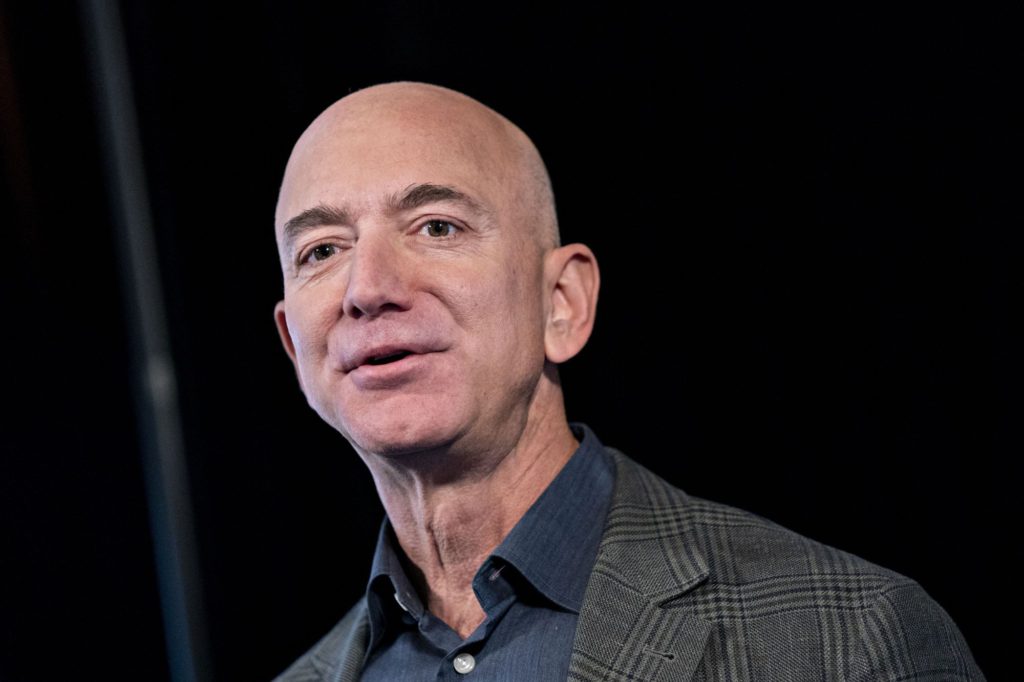
Amazon’s Bezos Spars With Biden on Twitter About Inflation

(Bloomberg) — Amazon.com Inc. founder Jeff Bezos on Friday accused President Joe Biden of “misdirection” on Twitter in response to the US leader’s tweet saying inflation could be tamed by making wealthy corporations “pay their fair share.”

The exchange began Friday evening with Biden’s tweet: “You want to bring down inflation? Let’s make sure the wealthiest corporations pay their fair share.”

Amazon, which paid $3.7 billion in US taxes in 2021 on global revenue of $469 billion, is often criticized for not contributing enough in federal levies, given its size. Still Bezos, the world’s second-wealthiest man who is often held up as a poster boy for income inequality, wasn’t ready to sit by and start taking heat for inflation as well.

“The newly created Disinformation Board should review this tweet, or maybe they need to form a new Non Sequitur Board instead,” Bezos tweeted, referring to the Department of Homeland Security’s Disinformation Governance Board announced in April. “Raising corp taxes is fine to discuss. Taming inflation is critical to discuss. Mushing them together is just misdirection.”

Bezos and Amazon were frequent Twitter targets of former President Donald Trump, who often tried to blunt critical investigative stories by the Bezos-owned Washington Post by attributing it to his personal feud with Bezos.

This is the Amazon founder’s first public spat with Biden and came on a day when Bezos was quite active on the social-media platform. In addition to sparring with Biden about inflation, Bezos engaged in conversations with other Twitter users about space squirrels and dyslexia.

Twitter has been at the center of the news since Elon Musk, the world’s wealthiest man, offered to take it private last month.


More stories like this are available on bloomberg.com

©2022 Bloomberg L.P.
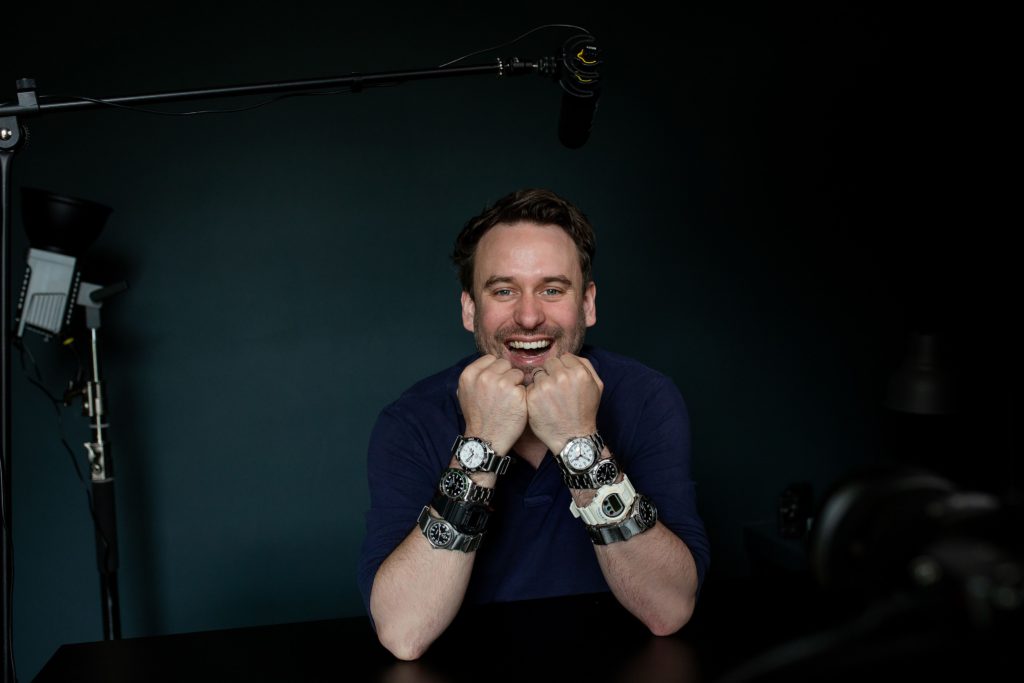
YouTubers Are Schooling Rolex How to Talk About Watches

(Bloomberg) — In the white-gloved world of Swiss luxury watchmaking, a floppy-haired Brit armed with a camera, lighting kit and best-mate charm is rewriting the rules of how to peddle Rolex and Omega timepieces.

A former corporate trainer, Adrian Barker has muscled his homegrown YouTube channel into a luxury wristwatch taste-making empire in the space of a few years. A Barker video entitled “I bought a Rolex Submariner off eBay!” has more than 700,000 views. Another, asking “Why is HUBLOT the most hated luxury watch brand?,” has been seen more than a million times in just eight months.

Like fans of other high-end kit favored by men of a certain age — think espresso machines, racing bikes or bespoke tailoring — watch aficionados can come off as fussy and stilted. Barker, by contrast, appears equally at ease discussing his first timepieces — “absolutely foul” — as he does fawning over his current Rolex Explorer II, which retails for about $9,000. It’s all delivered in a rapid-clip narration that’s both disarming and dissecting.

The platform earns the 36 year-old what he calls “a healthy salary” in the six figures, though Barker makes a point about watches being not just for people with silly cash to throw around.

His YouTube videos drive traffic to his website, Bark and Jack, where, combined with separate sponsorship deals, he makes just as much income again selling watch straps, storage cases and coffee mugs emblazoned with his logo. 

“I was just having fun,” said Barker, who quit his human-resources job at a technology company in London to go full-time with his channel. “I like making videos and I like talking about watches. It was no more complicated than that.”

While Swiss industry giant Rolex remains aloof, other luxury watchmakers accustomed to having near total control over their marketing and messaging are taking notice. Rolex sister-brand Tudor now loans Barker timepieces for review, and others have accepted the rising power of a new breed of online video influencers.

Vacheron Constantin, part of the haute horlogerie triumvirate that also includes Audemars Piguet and Patek Philippe, loaned Barker a £26,600 ($33,411) Dual Time Overseas watch last year for review. Barker strapped the timepiece to his wrist and hiked up a mountain in Scotland, for a video that’s been viewed more 150,000 times. 

Amid all the hype, Barker tries to maintain a degree of independence. He’s had watchmakers send him timepieces to review while asking him to sign contracts stipulating he won’t name rival brands or make negative comments about the watch without approval. When that happens, he said he sends the watch back, unreviewed. 

His biggest audience is aged 25 to 35, according to his own analytics data. Barker said watch brands interested in attracting a younger, aspirational consumer are more likely to work with him.

Zenith, founded in 1860 and now part of the LVMH empire, is embracing the trend. Working with watch YouTubers is much cheaper than traditional advertising and better targeted, said Chief Executive Officer Julien Tornare. 

“It literally became part of the landscape and we work with them more and more,” Tornare said.

YouTube watch vloggers scattered across the globe, from Australia to Europe to the US, are using their video macro-lenses to propel a revived interest in luxury timepieces that has sent prices soaring. Besides Barker, there’s Teddy Baldassarre, a 28-year-old from Cleveland, Ohio, who cranks out about six videos a week to his more than 500,000 YouTube subscribers. 

Baldassarre now has a staff of 12 and sells watches on his e-commerce site, where annual revenue is fast “approaching eight figures,” he said in an interview.

Barker’s pitch is that, despite all the complications surrounding watches and their movements, keeping it simple is what draws viewers. He’s not fancy, he just fancies some expensive timepieces, particularly rugged tool watches like his own Rolex Explorer. Think an equivalent to celebrity chef Jamie Oliver, but instead of well-prepared, easy-to-replicate food, Barker lays out the virtues of the Hamilton Khaki Field Mechanical or Grand Seiko’s quartz-powered GMT.

There’s long been publications dedicated to covering all things luxury watches. Online outlets such as Hodinkee, WatchPro and A Blog to Watch have been popular, respected and influential industry chroniclers for years. 

Barker’s twist has been to put video first. It’s paid off handsomely as the very nature of luxury watches lend themselves to high production video, giving consumers a feel and sense for the product in a way that no article in print or online can replicate.

YouTube videos “have definitely changed the landscape in terms of where people get their information,” said Mercedes Abramo, the chief executive officer for North America at Cartier, the maker of Tank and Santos watches. “We see it as a positive because it is an additional channel to learn and teach consumers about great watches.” 

Barker is now mulling a social-media consulting business to help centuries-old watch brands understand the secrets of  video. Some companies have approached him with an outright takeover offer for the site, though he’s politely declined. 

“They clearly don’t understand YouTube and want me to be part of their team,” Barker said.

More stories like this are available on bloomberg.com

©2022 Bloomberg L.P.

Elon Musk Sows Doubt Over His $44 Billion Twitter Takeover

(Bloomberg) — Elon Musk sowed new chaos into the market over his takeover bid for Twitter Inc. on Friday, first claiming his offer was “temporarily on hold” and then maintaining he is “still committed” to the deal, sending the social media giant into a tailspin. 

The billionaire initially sent an early tweet saying the $44 billion deal is pending until he receives more information about the proportion of fake accounts on the social media site, which sent Twitter stock tumbling as much as 25% in premarket trading. A few hours later he sent another tweet saying he is “still committed” to the deal. Twitter’s shares recouped some of their losses and closed 9.7% lower in New York.

Musk said he was waiting for details on a recent filing from Twitter that fake accounts on the social media platform contributed less than 5% of its users. In a follow-up tweet late Friday, he added that his team will do a random sample of 100 followers as a way to find out. 

Twitter said in its latest quarterly results “that the average of false or spam accounts during the first quarter of 2022 represented fewer than 5% of our monthly daily active users during the quarter.” However, this data-point has been part of Twitter’s quarterly filings for almost a decade. Twitter said it applied “significant judgment” to its latest estimate, and the true number could be higher.

Twitter Chief Executive Officer Parag Agrawal, in a series of tweets several hours later, said while he expected the deal to close, the company needed to be “prepared for all scenarios.”

“I won’t use the deal as an excuse to avoid making important decisions for the health of the company, nor will any leader at Twitter,” Agrawal said.

Fighting fake accounts has been a cornerstone of Musk’s bid to reform Twitter. In a statement announcing his deal to buy the company last month, he revealed he wanted to defeat spam bots, authenticate all humans, and make its algorithms open source. Musk has also said he’d like to make the platform a bastion of free speech, taking the guardrails off of content moderation.

Bots are currently allowed on Twitter, though under the company’s policy such accounts are supposed to indicate that they’re automated. The platform has even launched a label for “good” bots, such as @tinycarebot, an account that tweets self-care reminders. Spam bots, however, are not permitted, and the company has policies meant to combat them.  

Why Spam Bots are Top of Elon Musk’s Twitter Hit List: QuickTake

Doubts have grown in recent days that Musk would be able to pull off his acquisition of Twitter, and that the entrepreneur may consider dropping his bidding price for the micro-blogging site. The whole transaction has been a frenzied and untraditional affair, largely played out on Twitter. Musk went from being “just” a prolific user to revealing a more than 9% stake in the company and then launching an unsolicited takeover offer — without detailed financing plans — within a matter of weeks. It all came together at breakneck speed in part because Musk waived the chance to look at Twitter’s finances beyond what was publicly available. 

“There will also be questions raised over whether fake accounts are the real reason behind this delaying tactic,” said Susannah Streeter, senior investment and markets analyst at Hargreaves Lansdown, “given that promoting free speech rather than focusing on wealth creation appeared to be his primary motivation for the takeover. The $44 billion price tag is huge, and it may be a strategy to row back on the amount he is prepared to pay to acquire the platform.”

The proposed takeover includes a $1 billion breakup fee for each party, which Musk will have to pay if he ends the deal or fails to deliver the acquisition funding as promised. It is unclear whether an update by Twitter on the number of fake accounts — if materially larger than 5% — would trigger a so-called material adverse effect clause, releasing Musk from the breakup fee. 

“Musk should have slowed down for a second and not been so rash,” said Andrew Freedman, partner at the law firm Olshan Frome and Wolosky. “He should have done what every other acquirer buying a company the size of Twitter would do and that is to do due diligence. But Musk is Musk and he’s going to do whatever he wants to do.”

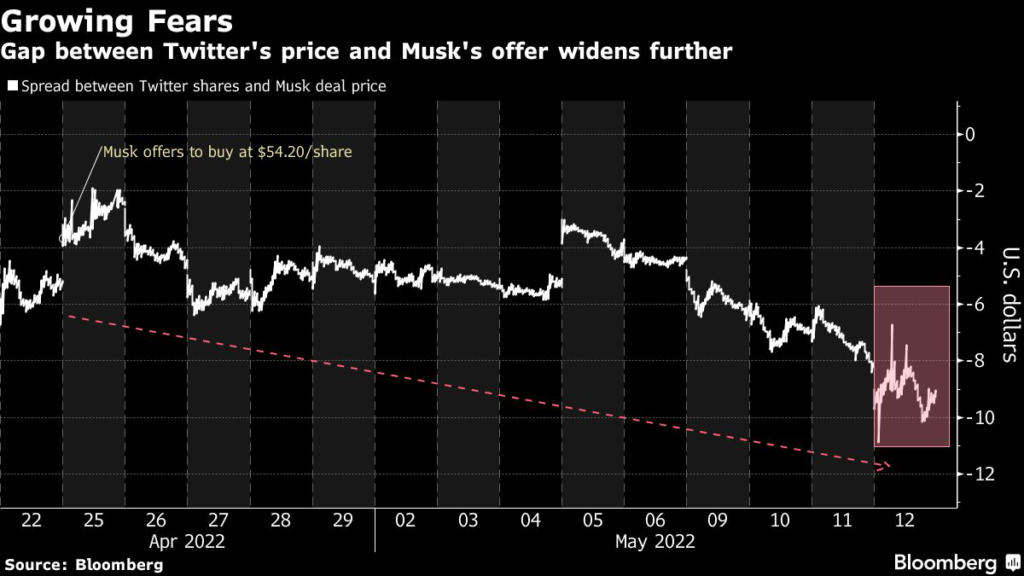
The spread on the deal, which offers an indication of how much Wall Street believes the takeover will be completed, swelled further on Thursday to $9.11 from $8.11 in the previous session. That was the widest level since the billionaire launched his bid last month to purchase the Twitter for $54.20 — and double where it was last week when he announced a roughly $7.1 billion financing commitment.

Musk’s latest tweets landed just hours after news that Twitter was freezing hiring as part of pre-deal cost-cutting efforts. Two of Twitter’s top leaders are also departing. Kayvon Beykpour, head of consumer product, and Bruce Falck, in charge of revenue product, were both asked to leave the company by Agrawal, the two executives said in separate public posts.

The changes reflect Twitter’s current state of limbo while it awaits a new owner. Hindenburg Research LLC, an investment research firm that focuses on activist short-selling, said on Monday that it sees a “significant risk” that Musk’s proposed offer gets repriced lower.

The analysts cited the ongoing meltdown in technology shares, Twitter’s own weak first-quarter results, including restating several years of user numbers, and the prospect that Musk will sell his 9% stake if the deal doesn’t come together.

Read More: Short Seller Founder Trolls Elon Musk Over Pausing Twitter Deal

Employees at Twitter have been on an emotional roller coaster for weeks. One employee said on Friday he felt like he worked at a circus and that for the first time he was considering changing jobs.

Aside from doubts over the extent of spam bots on Twitter’s platform, the world’s richest person is still working to secure the money to actually complete the deal. Musk has been in talks with investors to raise enough equity and preferred financing to eliminate the need for any margin loan linked to his Tesla shares, according to people with knowledge of the matter. 

He recently disclosed $7.1 billion in equity commitments from investors including Larry Ellison, Sequoia Capital, Qatar Holding and Saudi Prince Alwaleed bin Talal, with the latter rolling his Twitter stock into the deal. 

“Musk has never had the full funding – we know that from his constant attempts to get financial support – but he also held all the cards,” said Neil Campling, head of TMT research at Mirabaud Equity Research. “The Twitter board have been held hostage and only have themselves to blame for this mess. No other buyer will emerge – if Musk decides he is still interested he can name his price and it won’t be higher.”

(Updates with Musk’s comments in third paragraph)

More stories like this are available on bloomberg.com

©2022 Bloomberg L.P.
Social Media Sites Face Worldwide Upheaval, Supreme Court Told

(Bloomberg) — Twitter Inc. and Facebook will be compelled to allow the dissemination of Russian propaganda as well as neo-Nazi and Ku Klux Klan screeds denying the Holocaust unless a Texas social media law is blocked, tech groups representing the companies told the U.S. Supreme Court.

The emergency filing Friday seeking to block the Texas law — HB20 — comes two days after a divided federal appeals court let it take effect while a legal challenge filed by the tech groups goes forward. The New Orleans-based 5th US Circuit Court of Appeals’ order, which came without explanation, put on hold a temporary injunction a trial judge issued in December.

“The 5th Circuit short-circuited the normal review process, authorizing Texas to inflict a massive change to leading global websites,” the tech groups said in the filing. “The cost of revamping the websites’ operations would undo years of work and billions of dollars spent on developing some platforms’ current systems.”

The request is addressed to Justice Samuel Alito, who oversees the 5th Circuit. He can act on the groups’ request himself, or refer the matter to the full court for consideration.

The industry groups, NetChoice and the Computer and Communication Industry Association, represent companies including Twitter, Facebook parent Meta Platforms Inc. and Google parent Alphabet Inc. Platforms with more than 50 million users, like Twitter and Facebook, fall under the law’s criteria.

The trade groups claim the law by hosting extremist views they risk boycotts from advertisers not wanting to be associated with such content.

“In the past, YouTube and Facebook ‘lost millions of dollars in advertising revenue’ from advertisers who did not want their advertisements next to ‘extremist content and hate speech,”’ the groups said in the filing.

Texas Governor Greg Abbott and other Republicans argue the law is needed to protect conservative viewpoints from being silenced.

The law “is an assault on the First Amendment — and we remain confident the courts will strike it down as unconstitutional,” NetChoice general counsel Carl Szabo said in a statement.

US District Judge Robert Pitman in Austin issued a preliminary injunction barring enforcement of key provisions of the law while the pair of trade groups proceeded with their lawsuit. The judge, a Barack Obama appointee, determined the groups are likely to succeed on their claim that social media platforms have a First Amendment right to moderate content.

The lower court rejected the state’s argument that platforms don’t get such protections because they’re not newspapers and that artificial intelligence is sometimes used to make moderating decisions. Pitman said in his December ruling that the editorial discretion at social media platform doesn’t “fit neatly with our 20th Century vision of a newspaper editor hand-selecting an article to publish.”

“It is indeed new, and exciting — or frightening, depending on who you ask — that algorithms do some of the work that a newspaper publisher previously did, but the core question is still whether a private company exercises editorial discretion over the dissemination of content, not the exact process used,” Pitman wrote.

The Supreme Court has a scant track record on cases involving social media and content moderation, although Justice Clarence Thomas suggested last year that the government might constitutionally be able to limit Twitter’s ability to ban users.

A different federal appeals court, the Atlanta-based 11th US Circuit Court of Appeals, is considering a similar Florida law.

The case is NetChoice v. Paxton, 21-51178, 5th US Circuit Court of Appeals (New Orleans).

More stories like this are available on bloomberg.com

©2022 Bloomberg L.P.
Close Bitnami banner
Bitnami