Bloomberg

Fed Hikes, Powell Confirmation, Latin America Rates: Eco Day

(Bloomberg) — Sign up for the New Economy Daily newsletter, follow us @economics and subscribe to our podcast.

Welcome to Friday, Americas. Here’s the latest news and analysis from Bloomberg Economics to help you start the day:

  • Federal Reserve Chair Jerome Powell reaffirmed that the central bank is likely to raise interest rates by a half-point at each of its next two meetings, in June and July. He also won Senate confirmation for a second four-year term
    • San Francisco Fed President Mary Daly equally backed half-point hikes at the next two meetings
  • The US is heading into a new era of elevated inflation that’s likely to persist long after the red-hot prices of the past year or so come off the boil
  • Bloomberg Economics analysis shows wage growth in the US is likely peaking as the turnover rate among currently employed workers has declined since last year
  • Peru raised interest rates to the highest level in 13 years to curb soaring inflation that triggered mass disorder last month
  • Argentina’s central bank raised borrowing costs for the fifth time this year. Earlier Thursday, data from the country showed consumer prices rising 6% in April
  • Mexico boosted borrowing costs by a half-point in a widely anticipated move to tame inflation that’s at a two-decade high
  • China will likely report the weakest monthly economic indicators since the outbreak of the pandemic two years ago, putting pressure on the central bank to boost stimulus to support growth
  • UK Chancellor of the Exchequer Rishi Sunak said he was unable to increase welfare benefits this year because the government’s antique computer system would not let him

More stories like this are available on bloomberg.com

©2022 Bloomberg L.P.

Blacklisted Chinese Equipment Found Inside Top Secret UK Lab

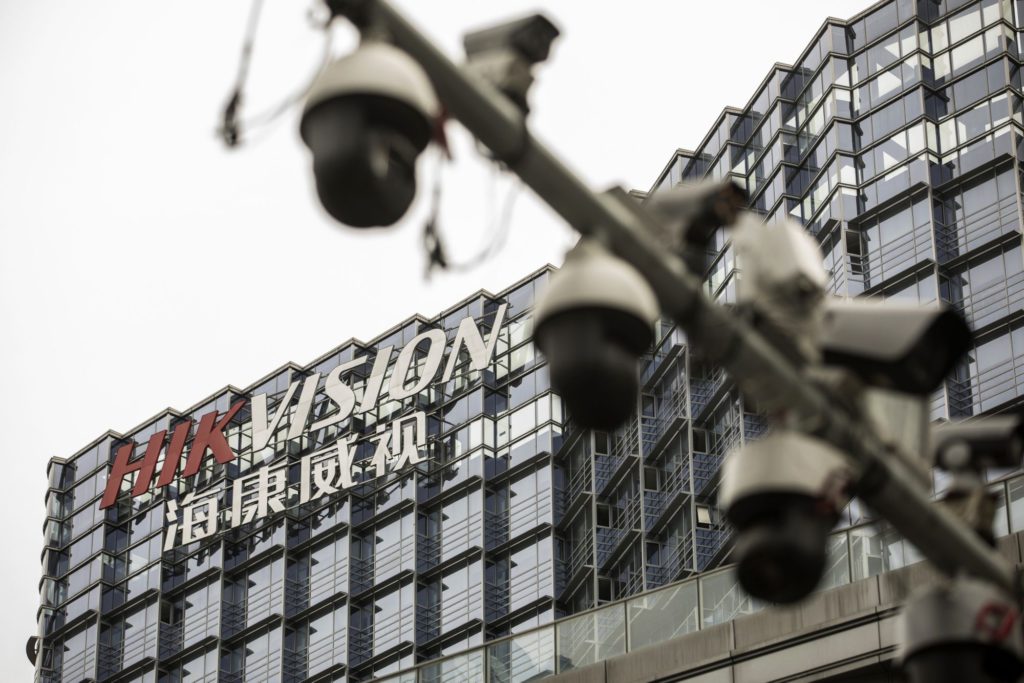
(Bloomberg) — The UK’s Health Security Agency has been using video surveillance technology from under-fire Chinese firm Hangzhou Hikvision Digital Technology Co. at laboratories that conduct research into vaccines and deadly diseases, according to people familiar with the matter.

The UKHSA is based at Porton Down, a UK science hub in rural England that is home to two key government agencies focusing on defense and health, as well as other labs working in sensitive areas such as vaccine testing. In 2018, scientists at the Defence Science and Technology Laboratory — run by the Ministry of Defence — helped identify the nerve agent that left a former Russian double agent, Sergei Skripal, and his daughter Yulia hospitalized in critical condition.

The Health Security Agency, which is not part of the Ministry of Defence, has been using an unknown amount of Hikvision technology, the people said, asking not to be named discussing confidential information. The equipment was in place as recently as February and it is not known whether it is still there.

The UKHSA declined to comment on security matters. A Ministry of Defence spokesperson said there are robust security measures in place at Porton Down but the ministry does not comment on specific arrangements. 

A Hikvision spokesperson said they were unable to confirm details of the installation as the company did not sell directly to end users in UK and other overseas markets. “The company has been engaging with governments globally to clarify misunderstandings about the company, our business, and address their concerns,” the spokesperson said in a statement.

Founded in 2001 with help from a state-owned electronics research institute in Hangzhou, Hikvision quickly grew into one of the world’s largest makers of surveillance equipment. Its cameras are used in cities around the world, from London to Bangkok, in part thanks to its offering of cheap and capable devices. It has become a major supplier in the UK to government agencies and universities. 

The University of Oxford said it used 113 Hikvision CCTV cameras, according to a recent freedom of information request. Insider reported this week that the Civil Nuclear Constabulary, the police force protecting Britain’s civil nuclear sites, uses Hikvision cameras. 

While the company has not been accused of any wrongdoing in the UK, Health Secretary Sajid Javid has reportedly banned Hikvision from competing for new Department of Health contracts on ethical grounds. The government has yet to reach a common position on the company, one of the people said. 

A Department of Health and Social Care spokesperson said the department did not comment on security procedures. “We take the security of our personnel, systems and establishments very seriously and have robust measures in place,” the spokesperson said.

The government declined last year to support a recommendation by the Foreign Affairs Committee to ban Hikvision and fellow camera maker Dahua Technology Co. from the UK.

In the US, Hikvision has faced greater scrutiny. In 2019, it was among others placed on a blacklist by the Trump administration over alleged human-rights violations by China against Muslim minorities in the far-Western region of Xinjiang. The Biden administration is considering sanctioning the company.

The UK defense ministry’s current guidance seems to suggest “not to use/install Hikvision equipment,” according to a recent freedom of information request from a human rights activist organization. 

Last month, Biometrics and Surveillance Camera Commissioner Fraser Sampson challenged central and local governments to clarify their position on the company.

The installation of Hikvision cameras at Porton Down illustrated “the shape and size of the problem,” said Sampson in an interview on Wednesday. “We don’t know what aspects of government and public life are being watched by these cameras and it reinforces my view that we need to have a clear understanding of what systems are in place.”

Hikvision has attracted criticism for supplying surveillance cameras and facial-recognition technology that has helped Chinese authorities roll out “safe city” initiatives in Xinjiang, where ethnic Uyghurs have faced persecution.

The UK parliament’s foreign affairs committee said in a report published last year that Hikvision’s cameras “have been deployed throughout Xinjiang, and provide the primary camera technology used in the internment camps.” Beijing denies that Uyghurs are held in internment camps. 

Cybersecurity concerns about Hikvision largely stem from the company’s association with the Chinese government. According to Hikvision’s financial records, its controlling shareholder is a Chinese government-owned entity, China Electronics Technology HIK Group.

Last year, a researcher known as Watchful IP discovered a security flaw affecting millions of Hikvision cameras that could have enabled hackers to covertly access video feeds. However, the researcher concluded the Chinese government had not deliberately inserted the flaw as a “back door” for espionage on the grounds that a government “wouldn’t do it like this.”

More stories like this are available on bloomberg.com

©2022 Bloomberg L.P.

Blacklisted Chinese Tech Found Inside Top Secret UK Lab

(Bloomberg) — The UK’s Health Security Agency has been using video surveillance technology from under-fire Chinese firm Hangzhou Hikvision Digital Technology Co. at laboratories that conduct research into vaccines and deadly diseases, according to people familiar with the matter.

The UKHSA is based at Porton Down, a UK science hub in rural England that is home to two key government agencies focusing on defense and health, as well as other labs working in sensitive areas such as vaccine testing. In 2018, scientists at the Defence Science and Technology Laboratory — run by the Ministry of Defence — helped identify the nerve agent that left a former Russian double agent, Sergei Skripal, and his daughter Yulia hospitalized in critical condition.

The Health Security Agency, which is not part of the Ministry of Defence, has been using an unknown amount of Hikvision technology, the people said, asking not to be named discussing confidential information. The equipment was in place as recently as February and it is not known whether it is still there.

The UKHSA declined to comment on security matters. A Ministry of Defence spokesperson said there are robust security measures in place at Porton Down but the ministry does not comment on specific arrangements. 

A Hikvision spokesperson said they were unable to confirm details of the installation as the company did not sell directly to end users in UK and other overseas markets. “The company has been engaging with governments globally to clarify misunderstandings about the company, our business, and address their concerns,” the spokesperson said in a statement.

Founded in 2001 with help from a state-owned electronics research institute in Hangzhou, Hikvision quickly grew into one of the world’s largest makers of surveillance equipment. Its cameras are used in cities around the world, from London to Bangkok, in part thanks to its offering of cheap and capable devices. It has become a major supplier in the UK to government agencies and universities. 

The University of Oxford said it used 113 Hikvision CCTV cameras, according to a recent freedom of information request. Insider reported this week that the Civil Nuclear Constabulary, the police force protecting Britain’s civil nuclear sites, uses Hikvision cameras. 

While the company has not been accused of any wrongdoing in the UK, Health Secretary Sajid Javid has reportedly banned Hikvision from competing for new Department of Health contracts on ethical grounds. The government has yet to reach a common position on the company, one of the people said. 

A Department of Health and Social Care spokesperson said the department did not comment on security procedures. “We take the security of our personnel, systems and establishments very seriously and have robust measures in place,” the spokesperson said.

The government declined last year to support a recommendation by the Foreign Affairs Committee to ban Hikvision and fellow camera maker Dahua Technology Co. from the UK.

In the US, Hikvision has faced greater scrutiny. In 2019, it was among others placed on a blacklist by the Trump administration over alleged human-rights violations by China against Muslim minorities in the far-Western region of Xinjiang. The Biden administration is considering sanctioning the company.

The UK defense ministry’s current guidance seems to suggest “not to use/install Hikvision equipment,” according to a recent freedom of information request from a human rights activist organization. 

Last month, Biometrics and Surveillance Camera Commissioner Fraser Sampson challenged central and local governments to clarify their position on the company.

The installation of Hikvision cameras at Porton Down illustrated “the shape and size of the problem,” said Sampson in an interview on Wednesday. “We don’t know what aspects of government and public life are being watched by these cameras and it reinforces my view that we need to have a clear understanding of what systems are in place.”

Hikvision has attracted criticism for supplying surveillance cameras and facial-recognition technology that has helped Chinese authorities roll out “safe city” initiatives in Xinjiang, where ethnic Uyghurs have faced persecution.

The UK parliament’s foreign affairs committee said in a report published last year that Hikvision’s cameras “have been deployed throughout Xinjiang, and provide the primary camera technology used in the internment camps.” Beijing denies that Uyghurs are held in internment camps. 

Cybersecurity concerns about Hikvision largely stem from the company’s association with the Chinese government. According to Hikvision’s financial records, its controlling shareholder is a Chinese government-owned entity, China Electronics Technology HIK Group.

Last year, a researcher known as Watchful IP discovered a security flaw affecting millions of Hikvision cameras that could have enabled hackers to covertly access video feeds. However, the researcher concluded the Chinese government had not deliberately inserted the flaw as a “back door” for espionage on the grounds that a government “wouldn’t do it like this.”

More stories like this are available on bloomberg.com

©2022 Bloomberg L.P.

Musk Declares $44 Billion Twitter Takeover ‘On Hold’

(Bloomberg) — Elon Musk tweeted that his $44 billion takeover of Twitter Inc. is “temporarily on hold” until the billionaire receives more information about the proportion of fake accounts, sending the social media giant into a tailspin. 

Twitter slumped 20% in pre-market trading after Musk tweeted Friday that the deal was suspended, pending details on a recent filing from Twitter that fake accounts on the social media platform contributed less than 5% of its users. Tesla Inc. shares rose roughly 5%. 

Twitter said in its latest quarterly results “that the average of false or spam accounts during the first quarter of 2022 represented fewer than 5% of our monthly daily active users during the quarter.”

Fighting fake accounts has been a cornerstone of Musk’s bid to reform Twitter. In a statement announcing his deal to buy Twitter last month, he revealed he wanted to defeat spam bots, authenticate all humans and make its algorithms open source. Musk has also said he’d like to make the platform a bastion of free speech, taking the guardrails off of content moderation.

Bots are currently allowed on Twitter, though under the company’s policy, such accounts are supposed to indicate that they’re automated. The platform has even launched a label for “good” bots, such as @tinycarebot, an account that tweets self-care reminders. Spam bots, however, are not permitted, and the company has policies meant to combat them. 

Why Spam Bots are Top of Elon Musk’s Twitter Hit List: QuickTake

Doubts have grown in recent days that Musk would be able to pull off his acquisition of Twitter, and that the entrepreneur may consider dropping his bidding price for the micro-blogging site. 

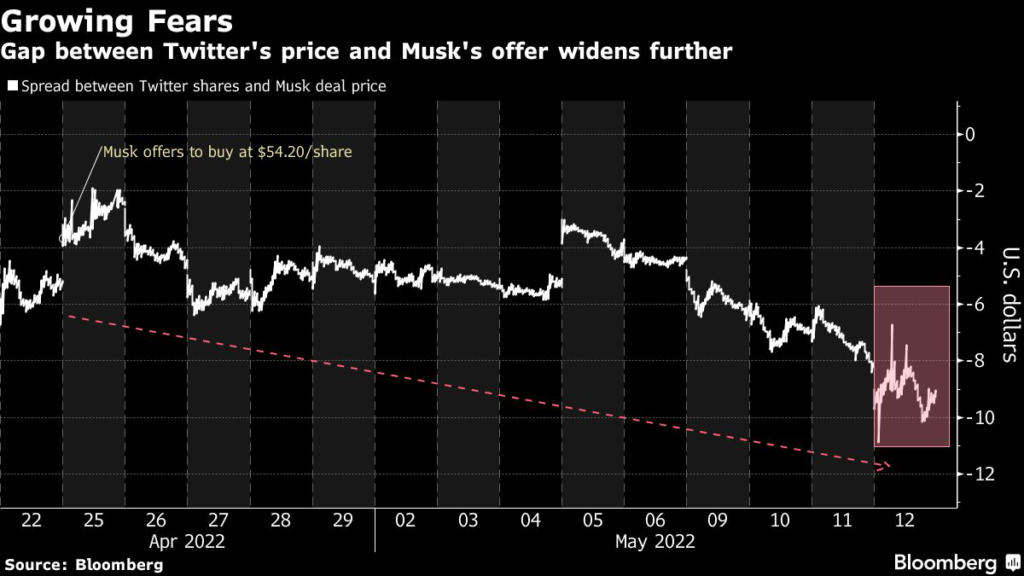
The spread on the deal, which offers an indication of how much Wall Street believes the takeover will be completed, swelled further on Thursday to $9.11 from $8.11 in the previous session. That was the widest level since the billionaire launched his bid last month to purchase the Twitter for $54.20 — and double where it was last week when he announced a roughly $7.1 billion financing commitment.

Musk’s latest tweet landed just hours after news that Twitter was freezing hiring as part of pre-deal cost-cutting efforts. Two of Twitter’s top leaders are also departing. Kayvon Beykpour, head of consumer product, and Bruce Falck, in charge of revenue product, were both asked to leave the company by Chief Executive Officer Parag Agrawal, the two executives said in separate public posts.

The changes reflect Twitter’s current state of limbo while it awaits a new owner. Hindenburg Research LLC, an investment research firm that focuses on activist short-selling, said on Monday that it sees a “significant risk” that Musk’s proposed offer gets repriced lower.

The analysts cited the ongoing meltdown in technology shares, Twitter’s own weak first-quarter results, including restating several years of user numbers, and the prospect that Musk will sell his 9% stake if the deal doesn’t come together.

Read More: Short Seller Founder Trolls Elon Musk Over Pausing Twitter Deal

Aside from doubts over the extent of spam bots on Twitter’s platform, the world’s richest person is still  working to secure the financing. Musk has been in talks with investors to raise enough equity and preferred financing for his proposed buyout of Twitter to eliminate the need for any margin loan linked to his Tesla shares, according to people with knowledge of the matter. 

He recently disclosed $7.1 billion in equity commitments from investors including Larry Ellison, Sequoia Capital, Qatar Holding and Saudi Prince Alwaleed bin Talal, with the latter rolling his Twitter stock into the deal. 

(Update with additional context from the second paragraph)

More stories like this are available on bloomberg.com

©2022 Bloomberg L.P.

Bitcoin Price Chart May Signal End to Selloff, If History Is Any Guide

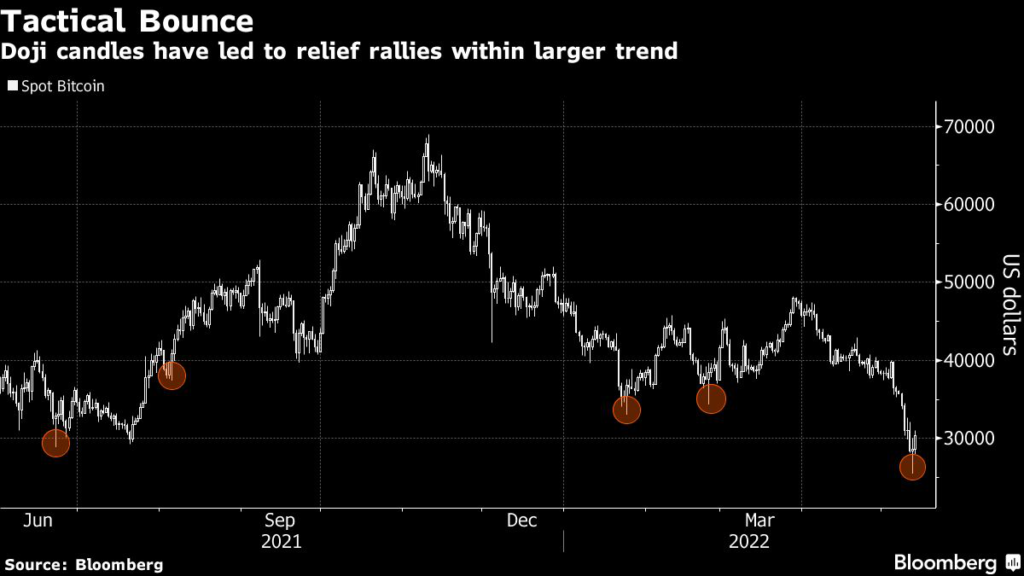
(Bloomberg) — Bitcoin’s latest plunge saw prices briefly break below $25,000, but an intraday recovery on Thursday saw the token close in the green. That rebound generated a so-called “doji” candlestick with a long lower tail, which technical analysts can read as a selling climax. Over the last 12 months, the appearance of a doji during a period of declining prices has almost always been followed by a relief rally. If the bounce extends in the current case, resistance between $33,000-$34,500 could come into play. 

More stories like this are available on bloomberg.com

©2022 Bloomberg L.P.

Short Seller Founder Trolls Elon Musk Over Pausing Twitter Deal

(Bloomberg) — The head of short selling firm Hindenburg Research wasted little time trolling Elon Musk on Twitter after the billionaire put his deal for the social media company on hold.

“I’m looking on the bright side of life this morning,” Hindenburg founder Nathan Anderson wrote just over a half hour after Musk announced he was pausing his pursuit of Twitter, pending details on how many accounts on the platform are fake.

Hindenburg announced early this week it was betting Twitter shares would fall, citing its belief there was significant risk Musk would cut the $54.20-a-share price he’s offered to pay.

Musk, who is famously not a fan of short sellers, responded to the firm’s thesis in a May 9 tweet: “Interesting. Don’t forget to look on the bright side of life sometimes!”

More stories like this are available on bloomberg.com

©2022 Bloomberg L.P.

As Shanghai Nears End of Lockdown, China’s Covid Angst Grows

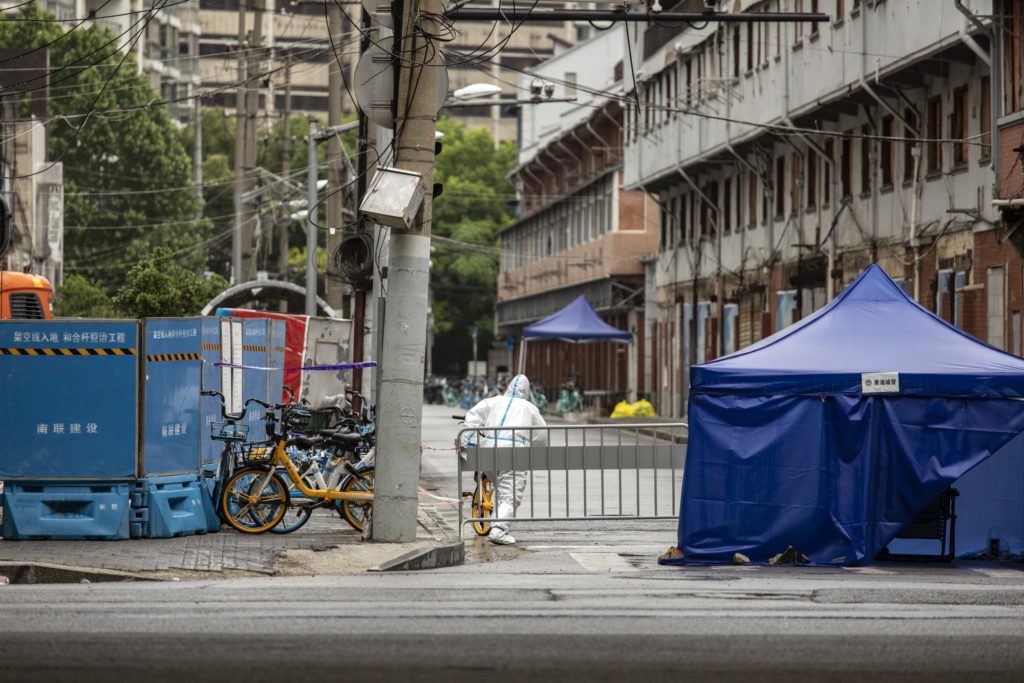
(Bloomberg) — After six weeks of confining people to their homes, enduring food shortages and the constant fear of being forcibly hauled away, Shanghai’s lockdown appears to have an end date. But China’s increasingly fraught battle with Covid-19 is far from over.

Officials in the financial hub said Friday they’re seeking to stop community spread of the virus by May 20, a sign they may finally dismantle the grueling restrictions that have upended lives and disrupted everything from banking to car manufacturing. Yet the prospect of lockdowns across major cities in China still looms large, with Beijing facing a growing list of Covid restrictions that are prompting fears it will soon suffer the same fate.

Once a clear success story, China’s Covid strategy has become a liability. The zero-tolerance approach that kept the virus out for much of the pandemic is flailing in the face of more contagious variants, and patience is dissipating for the travel curbs, enforced quarantines and incessant testing needed to continuously try to eradicate Covid. 

Shanghai’s goal to unwind the lockdown was announced after the city failed in recent days to sustain a three-day stretch of zero infections outside of quarantine areas. That has been a key milestone for local authorities in China to consider an outbreak successfully contained and justify allowing normal life to resume. 

Tighter Restrictions

Still, if anything President Xi Jinping appears to be embracing ever-tighter Covid restrictions in the face of an unprecedented grassroots backlash against his lockdown strategy and warnings of a sharp economic downturn. Last week the Communist Party’s supreme political body, the Politburo Standing Committee, vowed to “resolutely fight any attempts to distort, question or deny” its policy.

For Xi, the political stakes are high. His government has touted China’s fight against Covid as morally superior to those of U.S. and European nations, making it hard to change tack as he looks to secure a precedent-breaking third term as president later this year. That has forced authorities to stay the course and seek to repress internal criticism even as World Health Organization chief Tedros Adhanom Ghebreyesus — long seen by Beijing as an ally — said the Covid-Zero strategy was no longer sustainable. 

“Now it is clear to anyone with two eyes that more people are dying from lockdown than from Covid and that it has become an excuse to keep people from moving around,” said Anne Stevenson-Yang, a co-founder of J Capital Research Ltd., who spent roughly a quarter-century in China. “This sort of thing tends to feed on itself, so the more repression, the more revolt, and things spin out of control.”

The latest move to spur panic came Thursday, when the National Immigration Administration said it will strictly limit non-essential outbound travel for Chinese citizens and curtail access to documents needed to depart. While the move strengthened existing rules rather than instituting new border curbs, it sparked many comments from internet users worried that authorities were trying to prevent people from heading overseas. 

Salting the Wound

“It’s like spreading salt on the wound,” said Sofia Fang, a Shanghai-based finance professional. “Why are they stopping us from leaving?”

Beijing officials also denied a widespread rumor Thursday of an imminent lockdown of the city’s 22 million people, which spurred panic buying at food stores. Authorities announced they would instead do three rounds of Covid tests for most people while strongly advising everyone to stay at home. Police, meanwhile, said they detained a woman for allegedly fabricating rumors about a so-called three-day silent period with no food delivery.

The city saw an uptick in the share of cases found through mass testing on Friday, with 11 out of 51 infections found in people who weren’t already isolated as a close contact. The figure underscores the risk of omicron’s further spread in the community, and shows the challenge facing health authorities as their already expansive contact tracing program fails to round up everyone exposed to the virus.

At least three districts in the Chinese capital, including areas popular with expatriates that house most foreign embassies, have made work-from-home mandatory and closed a slew of subway and bus stations to limit movement. Meanwhile, schools have remained shut this month and dining in at restaurants is banned. Many indoor venues such as gyms and museums have also shut down.

Some major cities across the country are building permanent booths so that hundreds of millions of residents will be no more than 15 minutes away from getting a test. The new infrastructure, created at the behest of the National Health Commission, aims to detect Covid infections early and enhance surveillance, said Guo Yanhong, an NHC official.

Meanwhile, most of the country’s 31 provinces have set up makeshift hospitals — either building new ones from the ground up or re-purposing existing facilities — to handle future infection surges as omicron flareups become more common. 

While most analysts see little prospect of widespread protests or Xi somehow getting replaced, the measures are starting to erode confidence in the leadership among citizens who once hailed China’s measures as superior to the rest of the world. 

Early Support Fades

Early on in the pandemic, there was widespread support for measures such as mass testing, mandatory isolation of all the infected and snap lockdowns. But the more frequent and forceful implementation of these curbs in response to omicron is starting to bring hardship they never thought possible, particularly in Shanghai and other locked-down places. 

Whereas previously Chinese citizens could favorably compare their lives to friends and family who lived overseas, now their belief in the superiority of the Communist Party’s approach has been shaken, said Mark Tanner, managing director of Shanghai-based marketing and branding firm China Skinny, which regularly gauges the sentiment of Chinese consumers for clients.  

“They were feeling really proud about how great China’s system was,” he said. “And then all of a sudden, I think a lot of them would probably feel like it’s the worst.”

(Updates to add details on Beijing infections in 11th paragraph.)

More stories like this are available on bloomberg.com

©2022 Bloomberg L.P.

Terraform Again Halts Blockchain Behind UST Stablecoin, Luna

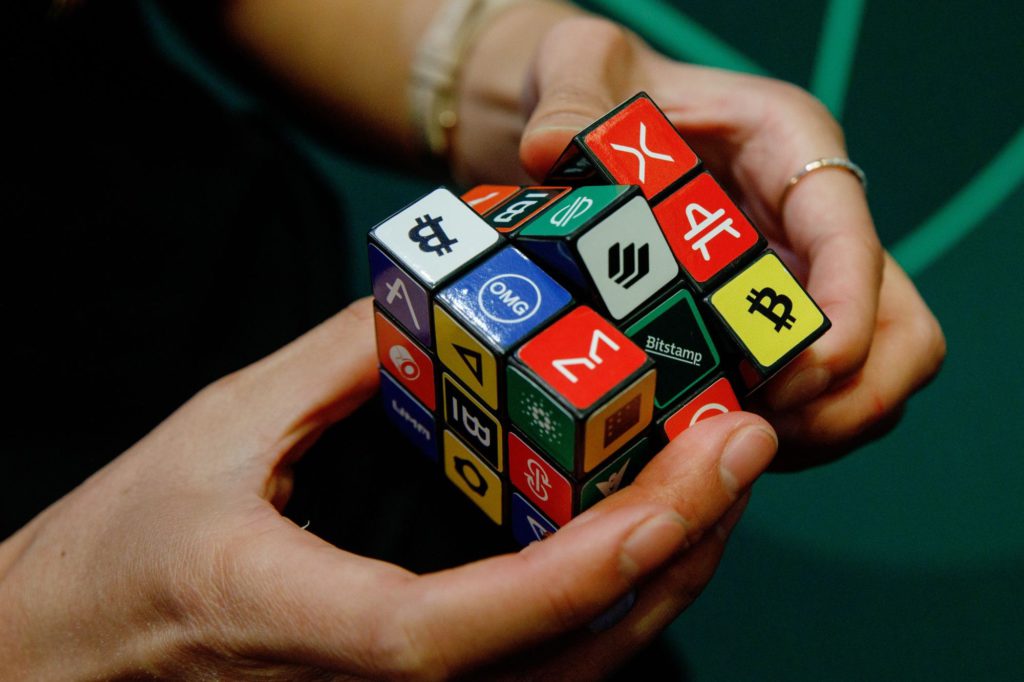
(Bloomberg) — The blockchain behind the collapsed TerraUSD stablecoin and the affiliated Luna token stopped processing new transactions for the second time in less than a day.

Terraform Labs said in a tweet from its verified Twitter account that validators, the entities responsible for verifying transactions on the blockchain, had taken the step to “come up with a plan to reconstitute” the Terra network. 

TerraUSD was one of the largest and most closely-watched algorithmic stablecoins before its intended 1-1 peg to the dollar disintegrated this week. The unraveling sent shock waves through crypto, triggering deep losses before sentiment stabilized. 

On Friday, a tweet from a Terra developer that was reposted by Terra’s verified account said the community was weighing several options to recover the ecosystem. Those options include restoring the Terra blockchain to where it was before TerraUSD crashed, in an apparent attempt to swiftly undo the damage caused by the event. 

Another proposal the developer tweeted was “fully collateralizing” TerraUSD, or UST, and drafting new mechanisms for how to redeem it against sister token Luna. The tweet didn’t include any details on how the proposals would be accomplished. 

Luna Relationship

The relationship between UST and Luna was central to attempts to maintain the former’s $1 peg. Traders could swap a unit of the stablecoin, whether it was trading at, below, or above $1, for one unit of Luna, and vice versa. The effect of unloading UST at prevailing prices was to dramatically increase the supply of Luna, further depressing the price of that token. 

The developer also appeared to suggest that ending Terraform Labs’s control of the Terra ecosystem was under consideration. “We must salvage the remaining value in the ecosystem and community and rebuild the right way,” they wrote. 

Representatives for Terraform Labs’s main backer Do Kwon and the Luna Foundation Guard didn’t immediately respond to a request for comment.

The stablecoin was trading below 20 cents on Friday morning in London, according to Bloomberg data. The Luna token has sunk to virtually zero, compared with its all-time high of $119.51. Wider crypto markets recovered, with Bitcoin rising as much as 8.4%. 

“A quorum among validators is attempting to halt the network in order to avoid a DECIMAL crisis due to exponential depreciation of LUNA,” read one post on the Terra Validators Discord server, seen by Bloomberg prior to the transaction shutdown.

The total amount of Luna tokens in circulation is up from 1.46 billion yesterday to more than 6.5 trillion on Friday morning, according to data from CoinMarketCap. 

Read more: Cryptocurrency Trader’s $10,000 Turns Into $200 in Terra Spiral

The Terra blockchain’s validators earlier stopped and then restarted transactions on Thursday, the crypto equivalent of turning a computer off and then on again, in order to implement a software update designed to help avoid attacks on the network.

The broader crypto market appeared to shrug off the developments. Bitcoin climbed as much as 7.5% to $30,674 and Ether rose as much as 9.3%.

(Updates with proposed changes from Terra’s community in fourth and fifth paragraphs.)

More stories like this are available on bloomberg.com

©2022 Bloomberg L.P.

Apple Suppliers, Top Chipmaker Succumb to China Lockdowns

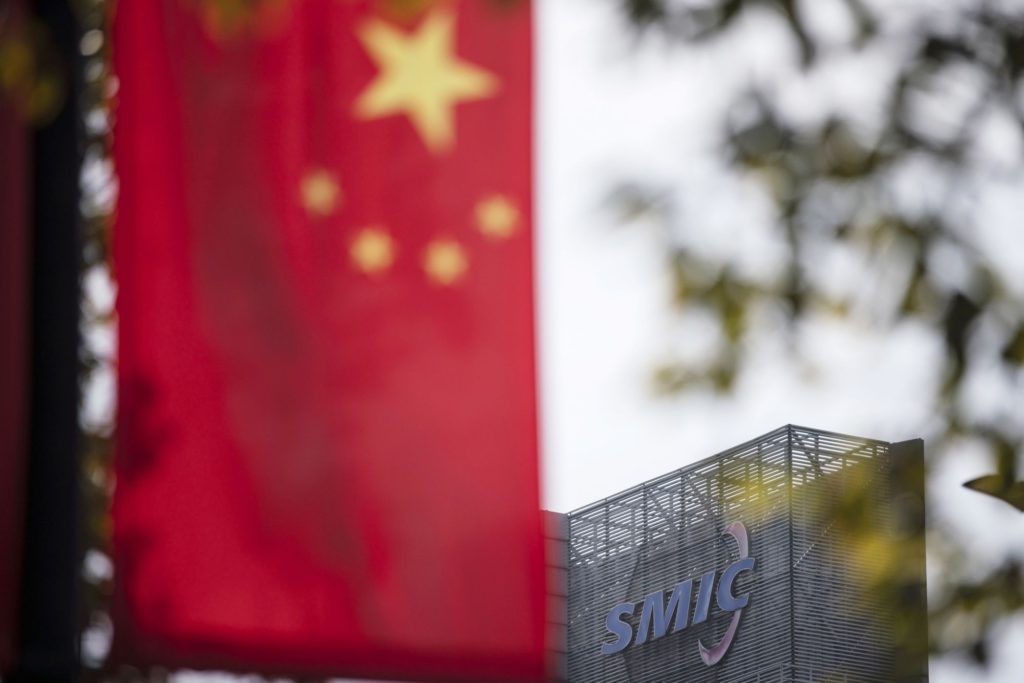
(Bloomberg) — China’s biggest chipmaker and a major iPhone supplier cut their outlooks for the second quarter, joining a growing list of manufacturers warning about the fallout from lockdowns aimed at containing the country’s worst Covid outbreak in two years.

Semiconductor Manufacturing International Co. estimates a month-long lockdown in Shanghai could spur component shortages and logistics tangles and erase roughly 5% of its output in the second quarter. And Pegatron Corp. slashed its outlook for notebook shipments to a decline of between 5% and 10% from the first three months– versus previous guidance for a rise of 25% to 30%.

“We are trying our best to mitigate the impact on product delivery,” SMIC Chairman Gao Yonggang told analysts on a call Friday morning. “We are still assessing the actual impact as many suppliers restart their operation.”

China’s Covid Zero strategy, which relies on a playbook of closed borders, quarantines, lockdowns and mass testing, is up-ending its giant manufacturing sector even as the rest of the world lives with Covid and opens up. The impact has been particularly keen in the eastern region around Shanghai, which is struggling to contain an outbreak. Hua Hong Semiconductor Ltd., another Shanghai-based chipmaker, also warned of potential impact from lockdowns and logistic disruptions on Thursday. 

Taiwan’s Quanta Computer Inc., which makes Macbooks, expects a 20% quarterly fall in notebook shipments and a squeeze on margins in April-June due to the lockdown, a spokeswoman said on Friday during an earnings call. The impact from supply chain disruptions could last until the end of the year, she said.

The company’s Shanghai factory has been operating under tight restrictions since mid-April, with video surfacing last week of workers charging isolation barriers and fighting guards to break through.

“Even if we have the manpower, we still need the materials,” Quanta Chief Financial Officer Elton Yang said during an earnings call on Friday. 

Read more: Workers at Apple China Plant Clash With Guards Over Lockdowns

Some have bucked the trend. Hon Hai Precision Industry Co., whose main iPhone production base is further inland in Zhengzhou, expects revenue to remain little changed this quarter. Like many companies, it has managed to keep its plants humming by employing closed-loop production sites. 

After reporting first quarter results ahead of estimates, Inventec Corp. President Maurice Wu said that second quarter performance will be flat, but it will still be a double-digit jump from the previous year. In server motherboards, however, which the company makes at its Shanghai plant, Inventec is now three months late on orders, he said. 

“We will need to work overtime to get back on schedule,” Wu said. “We hope to deliver our overdue orders to our clients by late May or June.”

SMIC jumped as much as 3.1% in Hong Kong on Friday after reporting profit more than doubled in the first three months, thanks to consistently strong demand for the chips used in everything from connected devices to electric vehicles.

Read more: IPhone Maker Hon Hai’s Profit Beats Despite China Lockdowns

But the pain for manufacturers could deepen if lockdowns persist, or if global macroeconomic uncertainty undermines demand for electronics.

While factories have been given special allowances to reopen under strict guidelines and systems, snarls in the supply chain — from a shortage of delivery drivers to a lack of materials — continue to disrupt local operators and global giants including Tesla Inc. and Sony Group Corp. Apple Inc. predicted that supply constraints in China would cost $4 billion to $8 billion in revenue during the current quarter.

And despite a decline in virus cases, the lockdown is intensifying as officials chase the elusive goal of wiping out Covid in the community.

The local government in Shanghai said it plans to achieve “no community spread” of the virus by mid-May, a crucial milestone that has eluded the city despite strict lockdown measures that have now stretched to nearly six weeks. The city of 25 million added over 2,000 cases and two deaths for Thursday.

The Covid pandemic in China as well as war in Ukraine could also shave about 200 million units off global smartphone shipments this year, SMIC Co-Chief Executive Officer Zhao Haijun said on the same call.

“The majority of the amount will be shouldered by Chinese smartphone vendors,” he said.

(Updates with warnings from Quanta and Inventec from the fifth paragraph)

More stories like this are available on bloomberg.com

©2022 Bloomberg L.P.
Weak Yen Helps Honda’s Annual Profit, Fails to Lift Outlook

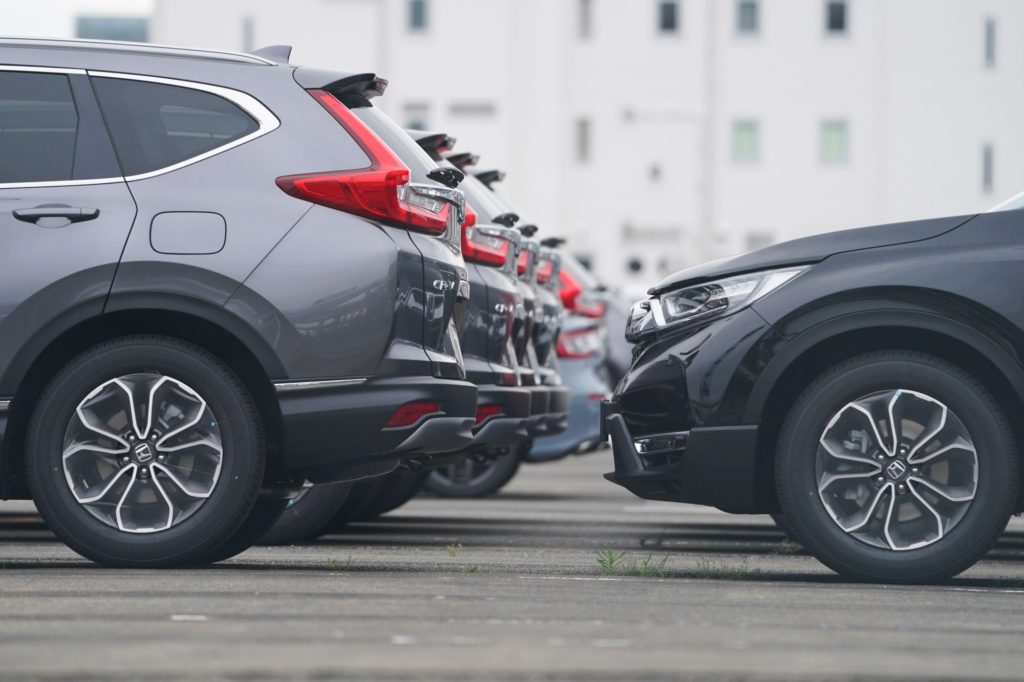
(Bloomberg) — Honda Motor Co. issued an annual operating profit outlook that fell short of analysts’ projections, reflecting the impact of higher raw material costs and production disruptions caused by war, China’s Covid lockdowns and a persistent global shortage of semiconductors for automobiles. 

Operating profit for the fiscal year through March 2023 will be 810 billion yen ($6.3 billion), the Japanese carmaker said in a statement Friday, compared with analysts’ average estimate for 943 billion yen. The outlook comes after Honda topped its own projections for the just-ended fiscal year with profit of 871 billion yen. Its guidance for last year was 800 billion yen, while analysts were estimating 820 billion on average.

While weaker yen has long been considered a boon for Japan’s blue-chip exporters, it’s now starting to damage Japanese automakers as material costs inflate for importers. Oil prices have soared amid Russia’s invasion of Ukraine. Covid lockdowns in China are also weighing on, with factories being forced to halt, causing further supply chain disruptions. 

Honda expects to see continued impact from the lockdown in Shanghai through the end of May, Yasuhide Mizuno, Honda’s senior managing executive officer, said at a briefing Friday.

The damage done to supply chains outweigh the benefit of plunging yen, said Takeshi Miyao, an analyst at Carnorama. Even as automakers try to produce cars, “demand and supply are losing balance” due to Covid and the Russia-Ukraine war, he added.

Still, Honda’s annual output was 4.1 million units for the fiscal year that ended March 2022, marking a third-straight annual decline. 

Honda forecast net sales of 16.3 trillion yen for the current fiscal year. That compares with 14.6 trillion yen in the prior period and analysts’ average prediction for 16.2 trillion yen.

Honda shares rose 2.2% ahead of the earnings announcement. 

Despite the headwinds, Honda is pushing ahead with an ambitious shift to electric cars, with Chief Executive Officer Toshihiro Mibe in April unveiling a plan to spend $40 billion on its push into electric vehicles over the next decade. 

Still, electrification comes with “high hurdles” that Honda can’t overcome on its own, Mibe said in an interview last month. Honda is teaming up with Sony Group Corp. to develop EVs and will expand an existing tie-up with General Motors Co. 

Demand for auto electronic parts will be unstable over the next three to six months, Bloomberg Intelligence analysts Mawashiro Wakasugi and Tatsuo Yoshida wrote in a note earlier this week. April car sales in Japan shows that recovery is sluggish, but potential demand is strong, they wrote.

Earlier this week, Toyota Motor Corp. forecast a 20% decline in operating profit for the current fiscal year, citing an “unprecedented” rise in costs for logistics and raw materials. Nissan Motor Co.’s profit outlook also fell short of analysts’ average projection. Meanwhile, Mitsubishi Motors Corp., Mazda Motor Corp. and Subaru Corp. both posted an outlook that beat analysts’ estimates.

“We can’t just say that weaker yen is good” although it has helped Honda make profits, Kohei Takeuchi, Honda’s executive vice president, said at the briefing. Rising inflation in the US and the Russian war are hitting the economy, and that’s why the yen is falling, he added. “For a company, it’s hard to deal with big currency volatilities. We’d like to see stable moves in the longer term.”

(Updates with executive comments in the fifth paragraph.)

More stories like this are available on bloomberg.com

©2022 Bloomberg L.P.
Close Bitnami banner
Bitnami