
Bloomberg

BofA Strategists Say Investor Exodus Signals ‘True Capitulation’

(Bloomberg) — Money is leaving every asset class and the exodus is deepening as investors rush out of names like Apple Inc., according to Bank of America Corp. strategists.

Equities, bonds, cash and gold all saw outflows in the week ended May 11, strategists led by Michael Hartnett wrote in a note, citing EPFR Global data. At $1.1 billion, technology stocks suffered their biggest withdrawals so far this year, second only to financials, which lost $2.6 billion.

“The definition of true capitulation is investors selling what they love,” Hartnett said, citing Apple, big tech, the dollar and private equity. The meltdown in cryptocurrencies and speculative tech now rivals the internet bubble crash and the global financial crisis, he said.

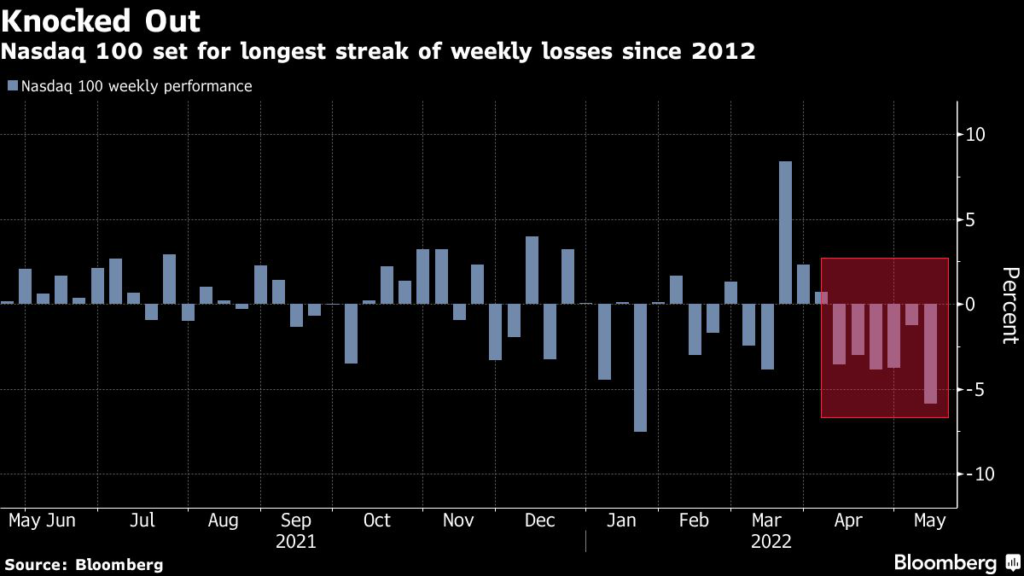
Apple, which was among the top stocks that led Wall Street’s main indexes to new highs after the pandemic-driven crash in 2020, is now trading in a bear market, falling nearly 10% this week alone. It’s a sudden turnaround for the company from even six weeks ago, when shares were close to a record high. The tech-heavy Nasdaq 100 Index is also poised for a sixth straight weekly drop, its longest such run since November 2012, as investors worry that hawkish central banks coinciding with high inflation would spark an economic slowdown.

The benchmark S&P 500 is also flirting with bear market territory — defined as a 20% drop from a record high — and although BofA strategists said they expect a bounce in the short term, they still see room for stocks to fall further. “Fear and loathing suggest stocks are prone to an imminent bear market rally, but we do not think ultimate lows have been reached,” Hartnett wrote.

The risk-off mood continued to hit all asset classes in the week. Outflows from equities were $6.2 billion, with a small inflow to US stocks outweighed by money exiting Europe and emerging markets. A total of $11.4 billion left bonds, while $19.7 billion exited cash and $1.8 billion departed gold.

Outflows from funds buying investment-grade, junk-rated or emerging market debt hit $19.3 billion, marking the biggest exodus since April 2020. High-grade funds led outflows with $11.6 billion in pulled assets.

On the other hand, safe Treasury bonds recorded their biggest inflow since March 2020.

More stories like this are available on bloomberg.com

©2022 Bloomberg L.P.
Samsung in Talks to Hike Chipmaking Prices by Up to 20%

(Bloomberg) — Samsung Electronics Co. is talking with foundry clients about charging as much as 20% more for making semiconductors this year, joining an industry-wide push to hike prices to cover rising costs of materials and logistics.

Contract-based chip prices are likely to rise around 15% to 20%, depending upon the level of sophistication, according to people familiar with the matter, who asked not to be identified due to the sensitivity of the issue. Chips produced on legacy nodes would face bigger price hikes, they said. New pricing would be applied from the second half of this year, and Samsung has finished negotiating with some clients, while it is still in discussions with others, the people said.

Samsung’s decision is a shift from its relatively stable pricing policy last year, when the industry rushed to raise prices in the wake of a global chip shortage. The company is facing multiple macro risks such as the war in Ukraine, lockdown measures in China, rising interest rates and inflation. That’s throwing a wrench into business plans typically made a few years in advance.

A Samsung spokesman declined to comment.

The move translates into additional pressure on makers of smartphones, cars and game consoles to lift the prices consumers pay. Samsung and Taiwan Semiconductor Manufacturing Co. account for more than two-thirds of global capacity for outsourced chips.

Manufacturing costs for chipmakers are now rising at about 20 to 30% on average on all fronts, from chemicals, gas and wafers to equipment and construction materials. 

Read more: Samsung Warns of ‘Immense’ Risks After Reporting Surge in Profit

Contract chip manufacturers including TSMC and United Microelectronics Corp. are warning clients that they plan to raise prices by a mid-to-high single digit percent, on the heels of a price hike several months ago. The industry leader TSMC has told clients that it plans to raise prices by about 5% to 8% from 2023, following a 20% price hike last year, according to the Nikkei. UMC is also planning another round of 4% price hikes in the second quarter. ASML Holding NV — a key supplier to Samsung and TSMC — warned last month of rising pressure on labor costs, in addition to higher material costs and transportation costs. 

The shortage forces customers to prioritize the ability to procure and secure the chips they need over prices. Semiconductor makers have been trying to improve profitability, partly by shifting more weight to high-end chips, said Masahiro Wakasugi, Bloomberg Intelligence analyst.

“This is an inevitable move for Samsung,” with costs rising on everything from power and equipment to materials and freight, Wakasugi said. “Some customers may accept higher prices if they can get chips earlier than others,” he said.

Read more: Samsung Intensifies Chip Wars With Bet It Can Catch TSMC by 2022

Samsung is the world’s biggest memory chipmaker, but it is catching up to TSMC in order-based chip manufacturing. Consumer PC and smartphone demand is waning, but tech companies said during earnings calls they expected strong 5G-related enterprise demand for new servers with more capacity and requiring more chips. The industry expects overall foundry demand to exceed supply, which will remain tight for the next five years.

Samsung already is fielding orders for the next five years that together represent around eight times that of the previous year’s revenue, said Kang Moon-soo, executive vice president at Samsung’s foundry business, during a recent earnings call. “We expect our order book to continue to grow.” 

South Korea’s biggest company spent more than $36 billion on expanding its chip division in 2021, eclipsing rivals as it acquired cutting-edge gear such as extreme ultraviolet lithography machines. The company, which last year dethroned Intel Corp. to become the world’s biggest chipmaker by revenue, has declared it wants to overtake TSMC and become the biggest player in the $400 billion foundry business of making chips for global corporations like Qualcomm Inc. and Nvidia Corp.

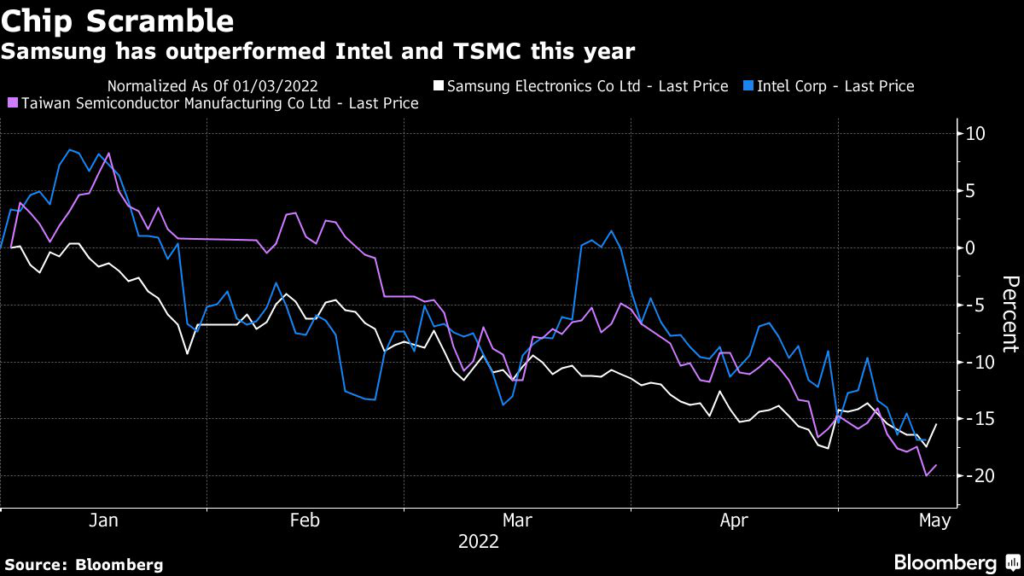
Shares of the Korean tech giant have fallen recently amid a broader tech-sell off and partly due to investors’ concerns over the foundry business’ slower-than-expected improvement in production yields. Samsung has said the market’s concerns were “excessive,” and that it’s on track to improve the yield on 4-nanometer nodes. It’s planning to start mass production of 3-nm based chips within this quarter, it said. 

More stories like this are available on bloomberg.com

©2022 Bloomberg L.P.
In The City: A New Podcast All About London

(Bloomberg) — Subscribe to In The City on Apple Podcasts

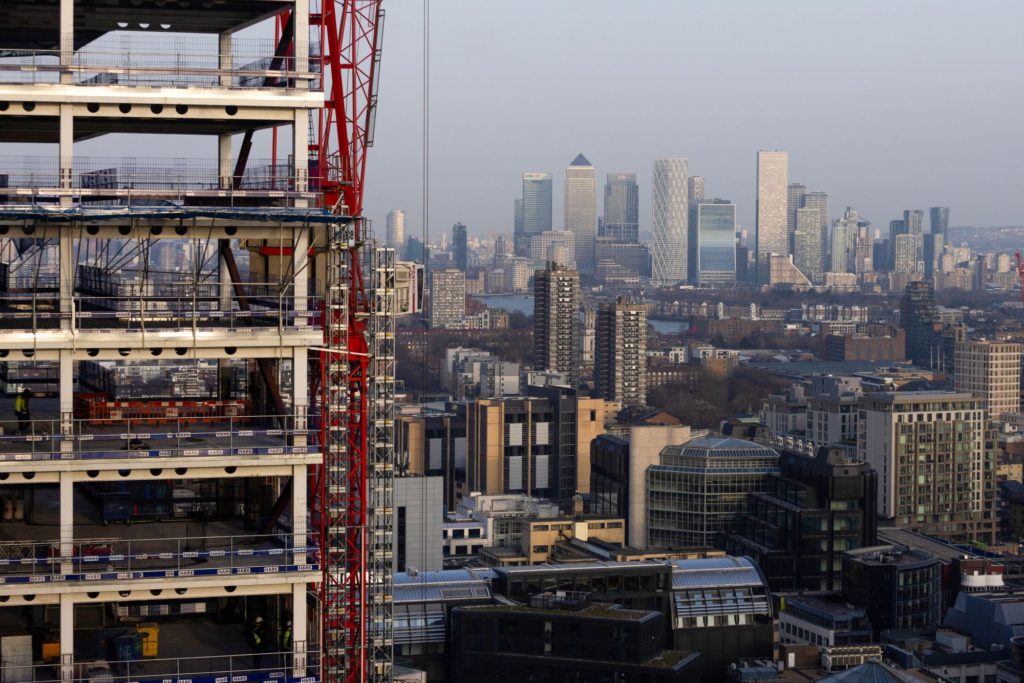
Is London having another moment? Shaken by Brexit, hurt by the pandemic, threatened by new ways of working and a worsening cost-of-living crisis, it remains the beating heart of European finance and a key player on the global scene. World-class cultural venues are getting back on their feet after Covid-19. The City of London is reinventing itself for the age of work-from-home, chasing new markets in crypto and green investing while trying to build new global relationships as it redefines ties with its European neighbors.

Every week, Bloomberg’s Francine Lacqua and David Merritt go behind the scenes in the Square Mile and beyond, uncovering the stories and speaking to the people that matter.

(add links)

More stories like this are available on bloomberg.com

©2022 Bloomberg L.P.
China’s Newest Commodity Exchange Eyes Silicon as First Contract

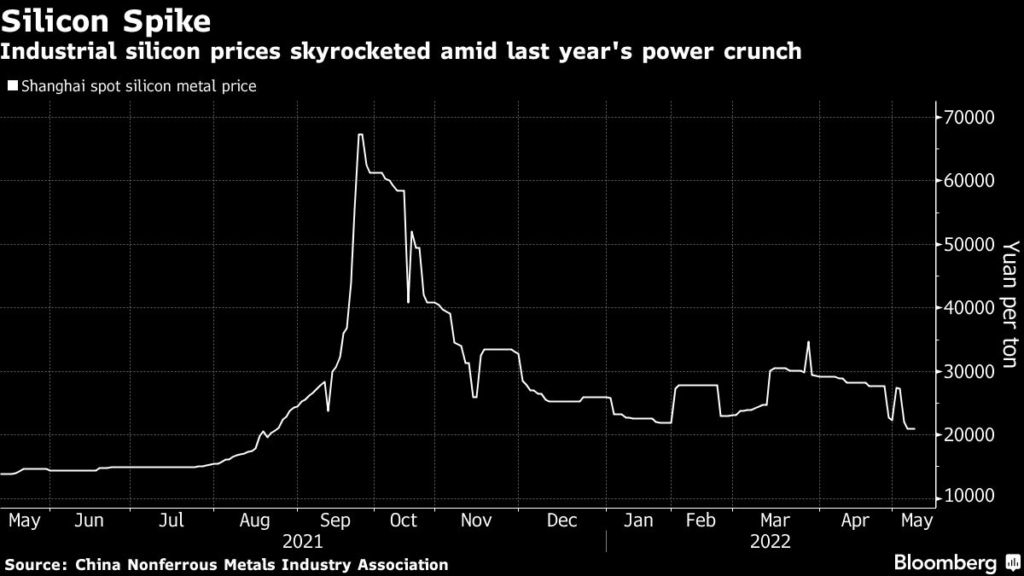
(Bloomberg) — China’s newest commodity exchange plans to launch its first contract later this year, focusing on industrial silicon after wild swings in the metal’s price in 2021.

The Guangzhou Futures Exchange plans to offer silicon contracts in the second half of the year, said a bourse official. It’s also planning to create an index that tracks a broad range of commodities, and is awaiting final government approvals for the launch, said the official, who asked not to be identified because the information isn’t public.  

The exchange began operations in April 2021 as China’s fifth bourse to focus on commodities and derivatives. It’s seeking to find niches in goods that are not yet traded on other domestic platforms, and has received approval for 16 products, including polysilicon, rare earths and lithium, according to its website. 

Silicon is used in everything from solar panels to computer chips to car parts. Prices skyrocketed more than 300% to record highs last October as production was disrupted by power shortfalls in the main manufacturing bases of Yunnan and Sichuan. 

Hoshine Silicon Industry Co., a top producer of the metal, said in its annual report in April that it expects the contracts to be offered in August, and that they could help win more price-setting power for China in the global market. Hoshine didn’t respond to requests for comment about the contracts.

The US government last year sanctioned Hoshine and barred imports of its products, accusing it of forced labor in its factories in Xinjiang. Hoshine didn’t respond to requests for comment on the accusations at the time, and the Chinese government has repeatedly denied claims of forced labor and other human rights abuses in the region, calling them “the lie of the century.”

China accounts for about 80% of global industrial silicon production, and its output could rise 7% to 2.8 million tons this year, Hoshine said in its report. Demand within China is about 2.3 million tons, compared to about 700,000 tons in the rest of the world, it said. 

More stories like this are available on bloomberg.com

©2022 Bloomberg L.P.

Renault Prepares for Carveouts of EV, Fossil-Fuel Businesses

(Bloomberg) — Renault SA outlined a plan to carve out separate electric-vehicle and combustion-engine businesses, providing details of the possible overhaul just before meetings with its Japanese partners. 

In a layout of the project first raised in February, the French automaker said the revamp could take effect by next year. Shares rose 1.4% in early Paris trading on Friday. 

An entity dedicated to EVs and software would be based in France and employ about 10,000 people by 2023, according to a statement Thursday. 

The second entity would focus on internal combustion and hybrid powertrains, and be based outside France, also with a staff of about 10,000.

Renault’s potentially transformational revamp comes as the automaker struggles to compete in a declining European car market and prepares to take a mid-year financial hit by pulling out of Russia, its second-biggest market before the war in Ukraine.

While Chief Financial Officer Thierry Pieton said last month that the carmaker was considering options ranging from a simple accounting separation to an initial public offering of its EV business, Thursday’s statement indicates relatively deep changes are underway.

“This autonomous entity would have a business model adapted to the specificities of electric vehicles and would be able to forge partnerships in new technologies and services,” Renault said in the statement. 

Strengths, Expertise 

The EV business would include manufacturing and engineering at French sites, while the entity dedicated to combustion and hybrid powertrains would have sites around the world — including Spain, Portugal, Turkey, Romania and Latin America. It could also develop partnerships. 

With Renault’s overhaul starting to take shape, it remains unclear what role Japanese partners Nissan Motor Co. and Mitsubishi Motors Corp. will play. 

Top executives from the three-company alliance are scheduled to hold in-person meetings in Japan next week, the first since the pandemic took hold.

On Thursday, Nissan Chief Operating Officer Ashwani Gupta didn’t commit to the plan.

“Let’s do the study with them and then we’ll make our opinion,” he told a conference organized by the Financial Times. “In the next 10 days we should have a better understanding” of what Renault CEO Luca de Meo is trying to do.

At a roundtable on quarterly earnings on Friday, the Nissan executive also remained vague about any similar plans of its own the company may have.

“Whether Nissan should think of carving out EV is too early to consider, because of our diversified portfolio,” he said. 

Renault said it has started meetings with unions on the carveout plans, a process which can be fraught in France.

“The aim of these strategic reflections is to adapt each technology, drawing on the group’s strengths and expertise on its various markets and within the Alliance,” the company said. 


(Adds shares in second paragraph, comment from Nissan executive)

More stories like this are available on bloomberg.com

©2022 Bloomberg L.P.
India Raises $2.7 Billion as Biggest IPO Prices at Top

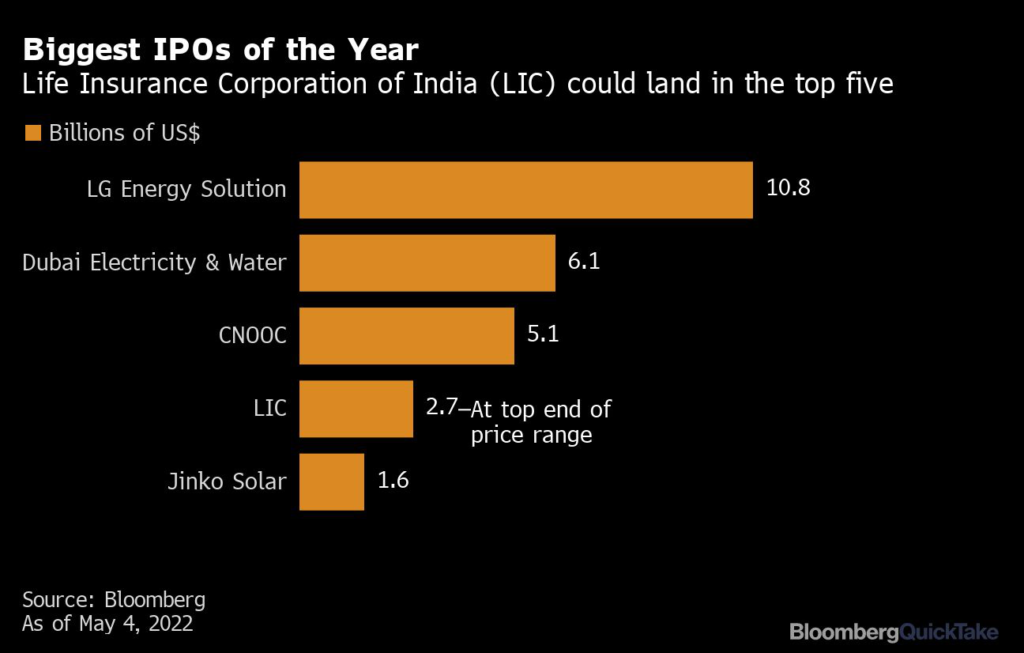
(Bloomberg) — India raised 205.6 billion rupees ($2.7 billion) as its biggest ever initial public offering priced at the top of the range following strong demand from local investors and a last-minute dash by foreign funds.

Life Insurance Corporation of India shares have been priced at 949 rupees each, the state-run firm said in a prospectus filed Friday. LIC shares were offered at 902 rupees to 949 rupees apiece. Trading on the stock exchange is due to begin May 17.

Dubbed India’s “Aramco moment” in reference to Gulf oil giant Saudi Arabian Oil Co.’s $29.4 billion listing in 2019 — the world’s largest — the float of LIC has ended up resembling the Aramco IPO not just in scale but in its reliance on domestic investors after some foreign buyers deemed it too expensive. Foreign institutional investors stepped up their bids for the sale in the last hours before the close of subscription this week, shunning currency risks and global market uncertainties.  

Besides smashing India’s record as the country’s biggest IPO, LIC’s offering is also the world’s fourth-biggest this year, according to data compiled by Bloomberg. LIC’s debut comes at a time when capital-market activities have significantly slowed globally as the war in Ukraine stokes market volatility and saps investor appetite.

Shares of LIC are trading at a discount of about 30 rupees to its IPO price in the so-called gray market, traders told Bloomberg News. The expectation for a strong debut by LIC’s shares is waning as the demand in the unregulated market, where investors bet on listing day gains, has come down over the last few days.

Retail investors and LIC policyholders were among the most enthusiastic for the offering, thanks to the discounts they were offered. The portion reserved for them was fully taken up days before the offering was closed. The anchor portion of the IPO drew in sovereign funds from Norway and Singapore while other foreign investors picked up pace only on the last day. 

Overall, the LIC offer was oversubscribed by nearly three times. The money will help the government bridge a budget deficit that’s expected to widen as commodity prices soar across the world.

For the banks working on the IPO, the share sale might not give them large fees but offers glory in the league table rankings, Bloomberg News has reported. The 10 banks on the IPO received a total 118 million rupees as fees, according to the prospectus, a fraction of what they could have typically pocketed for an offering of this size.

(Updates with bankers’ fees in the final paragraph)

More stories like this are available on bloomberg.com

©2022 Bloomberg L.P.
Sage and ContourGlobal Post Strong Results: The London Rush

(Bloomberg) — Here’s the key business news from London-listed companies this morning.

Sage Group Plc: The business software developer reported what it called a “strong first half performance” with a full-year outlook unchanged. 

  • The company said investment in sales, marketing and innovation has increased revenues across its business cloud unit. 

ContourGlobal Plc:  The power generation company reported first-quarter results ahead of its own expectations, and said its business model is “highly resilient with stable and predictable cashflows.”

Neometals Ltd: The company’s battery recycling joint venture has agreed a cooperation deal with Mercedes-Benz’s recycling unit to supply and install the equipment to build and operate the car company’s new battery recycling plant in southern Germany.

Outside The City

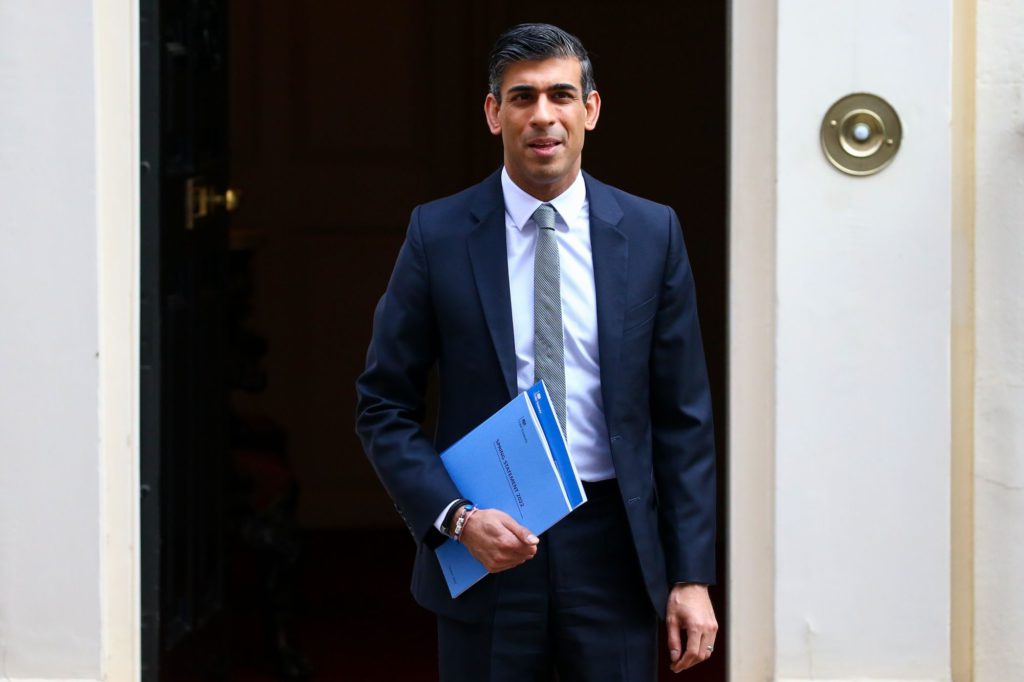
In an interview with Bloomberg, Rishi Sunak said the Brexit settlement in Northern Ireland is causing economic and political harm and called on the European Union to be flexible, comments likely to be seen as an attempt to publicly align himself with Boris Johnson after reports of a rift. 

Bloomberg Economics now expects the economy to shrink in the second and fourth quarter of this year, and as Stephanie Flanders notes, who would want to be the UK’s Chancellor of the Exchequer ?

In Case You Missed It

London is the underdog to New York in the battle to host Arm Ltd.’s return to the stock market. It shouldn’t be, writes Bloomberg Opinion’s Chris Hughes. 

Also, today is the last day to participate in this week’s MLIV Pulse survey for Bloomberg Terminal subscribers. The team is asking ‘What level is next for the pound?’, and ‘What have been the benefits of Brexit?’, among other questions. Participation takes one minute and is anonymous, so click here to get involved. Check back in Monday to see the results.

Looking Ahead

Earning season continues next week with Vodafone Group Plc, Burberry Group Plc and Easy Jet Plc all reporting. Vodafone’s full-year earnings come as the Financial Times reported it’s in talks to merge its British operations with Three UK. The telecommunications giant had expressed interest in acquiring its smaller rival late last year, Bloomberg reported in January. 

More stories like this are available on bloomberg.com

©2022 Bloomberg L.P.
Toshiba Says 10 Potential Investors Signed Confidentiality Pacts

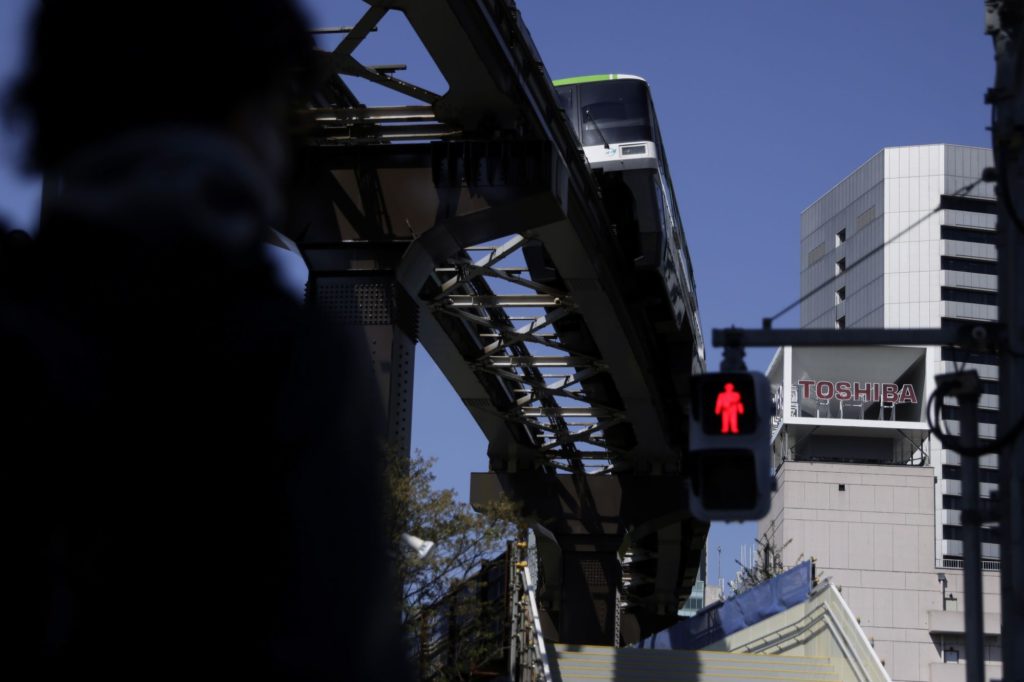
(Bloomberg) — Toshiba Corp. said it has signed confidentiality pledges with 10 potential investors and sponsors as the company solicits proposals on privatization and other strategic alternatives.

The 10 groups received detailed information on the company’s business and finances after signing the agreements, the Tokyo-based firm said in a statement. The deadline for submitting non-binding proposals is May 30, it said.

Toshiba has added JPMorgan Chase & Co. and Mizuho Financial Group Inc. to help evaluate the submissions, it said, confirming an earlier Bloomberg News report. The company had already hired Nomura Holdings Inc. as an adviser.

Toshiba said last month it would start soliciting proposals from potential investors on privatization and other strategic alternatives. That came after shareholders voted down a plan put forward by management to split the company in two.

Blackstone Inc. is considering teaming up with KKR & Co. on a joint bid for the conglomerate, while CVC Capital Partners and Bain Capital are also mulling offers, Bloomberg News reported this week.

Earlier on Friday, Toshiba postponed a planned announcement on the nomination of board directors, saying it needed more time. 

Proposed candidates for external director positions were met with opposition from some Toshiba executives for being close to activist shareholders, the broadcaster TV Tokyo reported, citing an unidentified company official.

More stories like this are available on bloomberg.com

©2022 Bloomberg L.P.

BOE Rate, Sunak’s Tough Choices, Fed’s Path: Eco Day

(Bloomberg) — Sign up for the New Economy Daily newsletter, follow us @economics and subscribe to our podcast.

Happy Friday, Europe. Here’s the latest news and analysis from Bloomberg Economics to take you through to the weekend:

  • The Bank of England is being warned it may have to hike interest rates higher than investors expect, even as the risk of recession mounts, in part because it has lost much of its power to control inflation
    • The decades-long era of cheap food in Britain may be coming to an abrupt end
  • Read Stephanie Flanders’s thoughts on UK Chancellor of the Exchequer Rishi Sunak’s hard choices in the UK’s fight against stagflation
    • Sunak said said the Brexit settlement in Northern Ireland is causing economic and political harm and called on the European Union to be flexible
    • Sunak said he was unable to increase welfare benefits this year to protect the most vulnerable from the cost of living crisis because the government’s antique computer system would not let him
  • Fed Chair Jerome Powell reaffirmed that the central bank is likely to raise rates by a half percentage point at each of its next two meetings, while leaving open the possibility it could do more
  • The world economy will essentially flatline this year as Europe falls into recession, China slows and US financial conditions tighten
  • From 2000 to 2019, median incomes in poorer nations rose faster than in wealthy ones
  • Polish central bank Governor Adam Glapinski won parliamentary approval for a second, six-year term despite public anger over surging inflation and rapidly rising interest rates
  • Some European Union nations are saying it may be time to consider delaying a push to ban Russian oil
  • Estonian Prime Minister Kaja Kallas, a Baltic leader who has been an outspoken antagonist of Vladimir Putin, narrowly avoided a government collapse

More stories like this are available on bloomberg.com

©2022 Bloomberg L.P.
Sunak Blames IT Systems for Decision Not to Raise UK Benefits

(Bloomberg) — Sign up for the New Economy Daily newsletter, follow us @economics and subscribe to our podcast.

UK Chancellor of the Exchequer Rishi Sunak said he was unable to increase welfare benefits this year to protect the most vulnerable from the cost of living crisis because the government’s antique computer system would not let him.

Millions of pensioners and out-of-work households face hardship after benefits were increased just 3.1% in April, well below the current 7% rate of inflation and a long way off the double-digit levels expected later this year.

In an interview with Bloomberg TV, Sunak said IT problems had proved insurmountable. “The operation of our welfare system is technically complicated,” he said. “It is not necessarily possible to [increase benefits] for everybody. Many of the systems are built so it can only be done once a year, and the decision was taken quite a while ago.”

He acknowledged that blaming the technology “sounds like an excuse” but insisted he was “constrained somewhat by the operation of the welfare system.”

Plea for Help

Before Sunak’s Spring Statement in March, both the right-wing Centre for Policy Studies and the centre-left Resolution Foundation urged the chancellor to smooth the income hit by bringing forward some of the above-inflation welfare increase that claimants are on course to get next year.

Benefits are increased each April in line with the rate of CPI inflation in the previous September. It means they will rise by close to 10% next year just as inflation drops back towards 3%, on Bank of England forecasts.

Smoothing the path would have helped about 4.5 million working-age Britons with no job and on benefits, the group most exposed to the living standards squeeze as more of their income goes on basics like energy and food that are seeing rapid price rises.

Technical problems were most acute for the 2.6 million people on legacy benefits, which are still run on an IT system built in the 1980s and are being migrated to Universal Credit. 

Changes to those benefits take around four months to implement. The system that administers payments for 12 million pensioners is even slower. However, there is little obstacle to raising benefits quickly for the 5.6 million people on Universal Credit.  

A spokesman for the Department for Work and Pensions, which runs welfare, acknowledged that legacy benefits use “complex and inefficient paper-based systems that are slowed further by aging, inflexible IT.” 

However, he appeared to contradict Sunak’s claim that the system can only be altered once a year, saying changes take “several months to process.” 

Not Insuperable

Paul Johnson, director of the Institute for Fiscal Studies, said Sunak could have chosen to help those on Universal Credit regardless as he had done during the pandemic, when around 2 million people on legacy benefits did not receive equivalent support. 

Torsten Bell, director of the Resolution Foundation, said: “The chancellor is right that it’s very difficult to change benefits outside the usual cycle, particularly for pensions. But these barriers can be overcome.”

In March, Sunak targeted his cost-of-living help largely at those in work with a £6 billion cut in payroll taxes and an increase in the minimum wage. The poorest got £350 of local authority tax and energy rebates alongside most other households.

A pot of money for the most vulnerable was increased by £500 million. Sunak told Bloomberg: “The best way to address cost of living is to get people into work.”

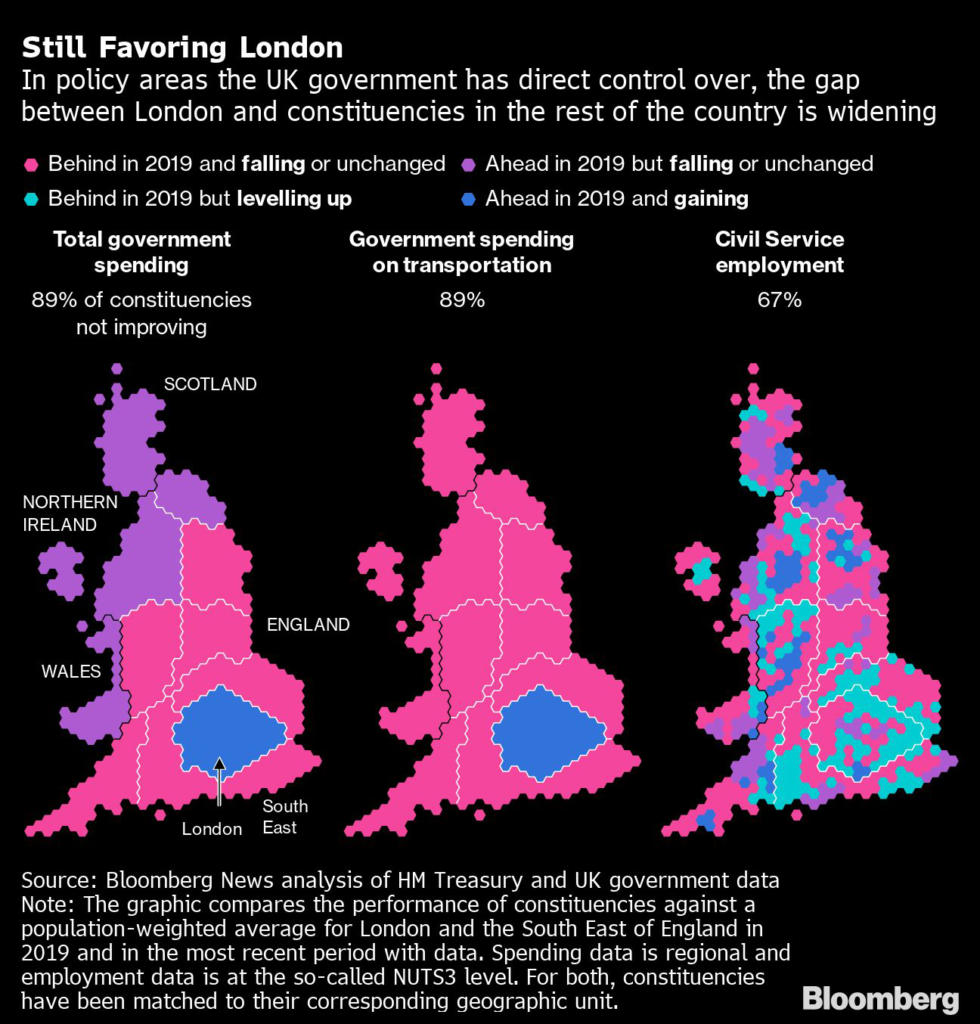
Separately, Sunak rejected the findings of Bloomberg’s “levelling up scorecard” that shows the gap between the South East and the rest of the country is growing on almost every measure.

“Those are different to the figures I looked at, where what I saw was a much stronger recovery in jobs and wages outside London and the South East,” he said. “We are very committed to levelling up.”

More stories like this are available on bloomberg.com

©2022 Bloomberg L.P.

Close Bitnami banner
Bitnami
