Bloomberg

India Raises $2.7 Billion in LIC IPO Priced at Top of Range

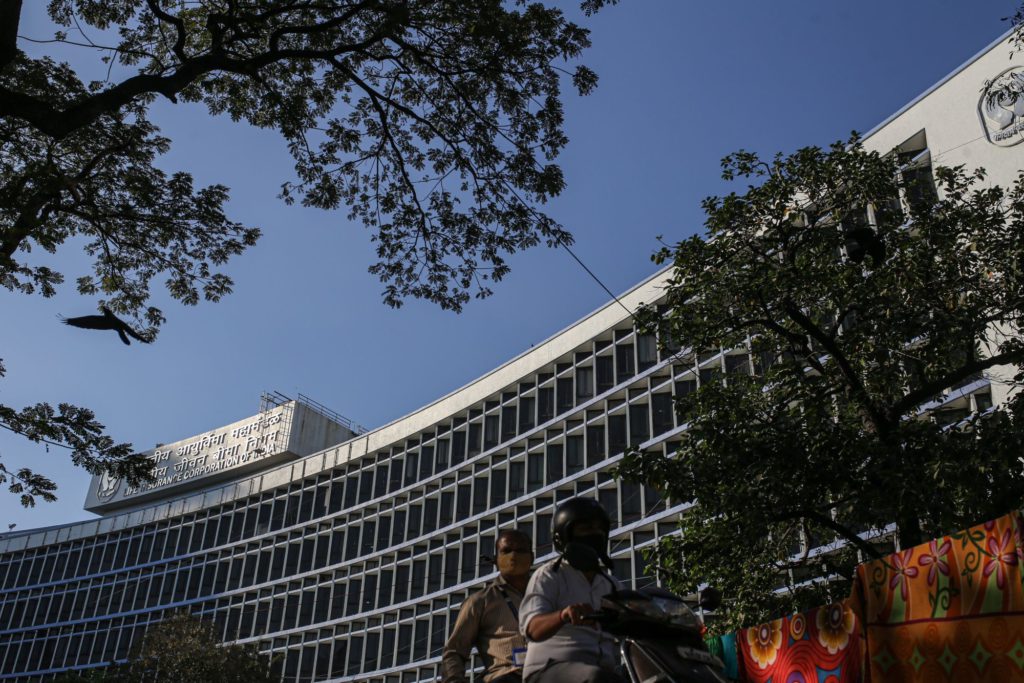
(Bloomberg) — India raised 205.6 billion rupees ($2.7 billion) as its biggest initial public offering priced at the top of the indicated range following strong demand from local investors and a last-minute dash by foreign funds.

Life Insurance Corporation of India will offer at 949 rupees a share, the state-run firm said in a prospectus filed Friday. Trading on the stock exchange is due to begin May 17.

Foreign institutional investors stepped up their bids for the sale in the last hours before the close of subscription this week, shunning currency risks and global market uncertainties. Dubbed India’s “Aramco moment” in reference to Gulf oil giant Saudi Arabian Oil Co.’s $29.4 billion listing in 2019 — the world’s largest — the float of LIC has ended up resembling the Aramco IPO not just in scale but in its reliance on domestic investors after some foreign buyers deemed it too expensive.   

Retail investors were given a discount of 45 rupees on the offer price, while policyholders received a 60-rupee discount.

More stories like this are available on bloomberg.com

©2022 Bloomberg L.P.

BitMEX Co-Founder Deserves More Than a Year in Prison, US Says

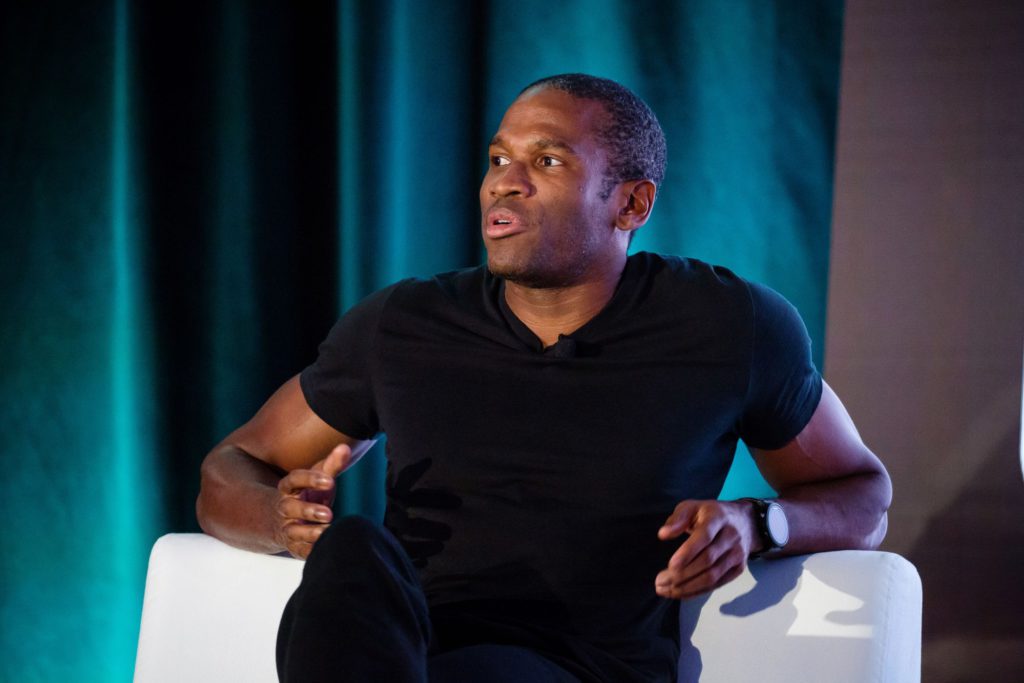
(Bloomberg) — BitMEX co-founder Arthur Hayes should spend significantly more than a year in federal prison for failing to implement an anti-money-laundering program at the pioneering cryptocurrency exchange, US prosecutors said.

Hayes, a former Citigroup Inc. equities trader who co-founded BitMEX in 2014, pleaded guilty in February to violating the US bank secrecy law. Federal prosecutors on Thursday submitted their sentencing recommendation to US District Judge John Koeltl in Manhattan.

As part of Hayes’s plea deal, prosecutors had agreed that, under federal sentencing guidelines, his offense called for a prison term of six to 12 months. He also agreed to pay a $10 million fine. If convicted at trial, Hayes had faced as much as five years in prison on each count of his October 2020 indictment.

But prosecutors said a year in prison wasn’t enough.

“There is no question that this case has been extremely closely watched in the cryptocurrency industry,” prosecutors said in the filing. “Compliance by cryptocurrency platforms will be unattainable if their operators believe there are no meaningful repercussions for failing to comply with the law.”

In their own sentencing recommendation, Hayes’ lawyers asked Koeltl to impose no jail time and allow him to live abroad and travel freely, saying the case is a landmark that will help the US  government prosecute financial crimes at cryptocurrency exchanges throughout the world.

The Probation Office recommended that Hayes be sentenced to two years’ probation.

Prosecutors said Hayes and his co-defendants failed to implement programs to prevent BitMEX from being used for money-laundering and set up the exchange in the Seychelles in part to avoid regulatory scrutiny.

BitMEX initially denied the allegations, but a group of companies that operated the exchange in August agreed to pay $100 million to settle allegations they allowed illegal trades for years and violated rules requiring them to implement anti-money-laundering programs. BitMEX said in a statement that it has improved its compliance program in recent years and is pleased to put the investigations behind the company.

Hayes founded BitMEX with Benjamin Delo, a computer scientist who built high-frequency trading systems for JPMorgan Chase & Co., and Samuel Reed, a programmer specializing in fast web applications. The exchange was among the first to offer cryptocurrency derivatives, such as futures contracts that allow investors to make leveraged bets on the prices of different cryptocurrencies.

Delo and Reed also pleaded guilty earlier this year and agreed to pay $10 million each. Their sentencings are set for June 15 for Delo and July 13 for Reed. Gregory Dwyer, the exchange’s first employee and former head of business development, is still fighting charges and is scheduled to go to trial in October.

The case is US v Hayes, 20-cr-500, US District Court, Southern District of New York.

More stories like this are available on bloomberg.com

©2022 Bloomberg L.P.

Kenya’s Forex Cash Cow Seen Remitting at Least 20% More in 2022

(Bloomberg) — Kenya’s remittances, the East African nation’s largest source of foreign exchange, is expected to grow by at least a fifth this year, according to money transfer company WorldRemit Ltd.

Kenyans abroad sent home a record $3.72 billion last year, 20% more than the previous year. Remittances in the first quarter of 2022 are already about a quarter higher than a year earlier, according to Central Bank of Kenya data.

“There’s definitely going to be some strong inflows,” Sharon Kinyanjui, WorldRemit’s director for Europe, Middle East and Africa, Receive Markets, said in an interview. “The only caveat is, obviously from a global standpoint, there’s inflation that is happening and there are also some key political risks that are at play.” 

Founded in 2010, London-based WorldRemit enables customers to send money to more than 100 countries from mobile-money wallets and bank accounts in either local currency or even dollars in some countries. 

New technology such as blockchain and increased competition from venture capital-backed companies will ultimately lower the cost of sending remittances to about 6% from 16%, she said.

The depreciation of Kenya’s shilling against the dollar is expected to continue, Kinyanjui said. The currency of East Africa’s largest economy has fallen about 2.7% year-to-date to a record 116.52 shillings.

“We’re seeing a weakening of currencies across different markets so looking at the numbers alone, it might be 118 shillings” to the dollar, she said. “It’s not just Kenya alone, but what is a bit more particular to Kenya is heightened political risk as this is an election year.”

More stories like this are available on bloomberg.com

©2022 Bloomberg L.P.

Top China Chipmaker, Apple Suppliers Succumb to Covid Lockdowns

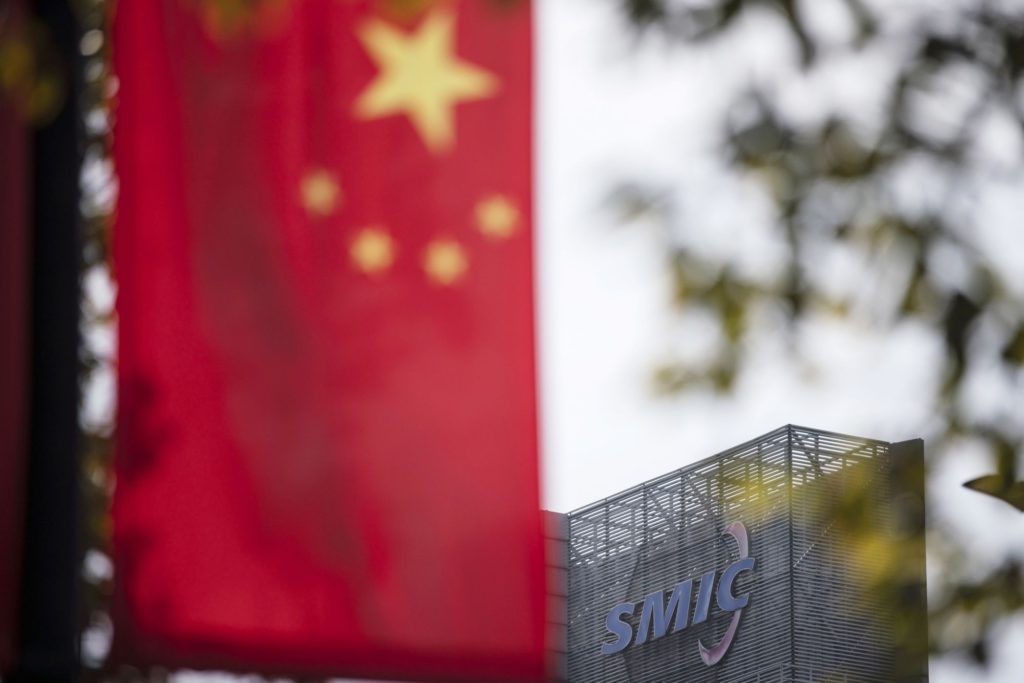
(Bloomberg) — China’s biggest chipmaker and a major iPhone supplier cut their outlooks for the second quarter, joining a growing list of manufacturers warning about the fallout from lockdowns aimed at containing the country’s worst Covid outbreak in two years.

Semiconductor Manufacturing International Co. estimates a month-long lockdown in Shanghai could spur component shortages and logistics tangles and erase roughly 5% of its output in the second quarter. And Pegatron Corp. slashed its outlook for notebook shipments to a decline of between 5% and 10% from the first three months– versus previous guidance for a rise of 25% to 30%.

“We are trying our best to mitigate the impact on product delivery,” SMIC Chairman Gao Yonggang told analysts on a call Friday morning. “We are still assessing the actual impact as many suppliers restart their operation.”

China’s Covid Zero strategy, which relies on a playbook of closed borders, quarantines, lockdowns and mass testing, is up-ending its giant manufacturing sector even as the rest of the world lives with Covid and opens up. The impact has been particularly keen in the eastern region around Shanghai, which is struggling to contain an outbreak. Hua Hong Semiconductor Ltd., another Shanghai-based chipmaker, also warned of potential impact from lockdowns and logistic disruptions on Thursday. 

Some have bucked the trend. Hon Hai Precision Industry Co., whose main iPhone production base is further inland in Zhengzhou, expects revenue to remain little changed this quarter. Like many companies, it has managed to keep its plants humming by employing closed-loop production sites. 

SMIC jumped as much as 3.1% in Hong Kong on Friday after reporting profit more than doubled in the first three months, thanks to consistently strong demand for the chips used in everything from connected devices to electric vehicles.

Read more: IPhone Maker Hon Hai’s Profit Beats Despite China Lockdowns

But the pain for manufacturers could deepen if lockdowns persist, or if global macroeconomic uncertainty undermines demand for electronics.

While factories have been given special allowances to reopen under strict guidelines and systems, snarls in the supply chain — from a shortage of delivery drivers to a lack of materials — continue to disrupt local operators and global giants including Tesla Inc. and Sony Group Corp. Apple Inc. predicted that supply constraints in China would cost $4 billion to $8 billion in revenue during the current quarter.

And despite a decline in virus cases, the lockdown is intensifying as officials chase the elusive goal of wiping out Covid in the community.

The local government in Shanghai said it plans to achieve “no community spread” of the virus by mid-May, a crucial milestone that has eluded the city despite strict lockdown measures that have now stretched to nearly six weeks. The city of 25 million added over 2,000 cases and two deaths for Thursday.

The Covid pandemic in China as well as war in Ukraine could also shave about 200 million units off global smartphone shipments this year, SMIC Co-Chief Executive Officer Zhao Haijun said on the same call.

“The majority of the amount will be shouldered by Chinese smartphone vendors,” he said.

More stories like this are available on bloomberg.com

©2022 Bloomberg L.P.

Apple Suppliers, Top China Chipmaker Succumb to Covid Lockdowns

(Bloomberg) — China’s biggest chipmaker and a major iPhone supplier cut their outlooks for the second quarter, joining a growing list of manufacturers warning about the fallout from lockdowns aimed at containing the country’s worst Covid outbreak in two years.

Semiconductor Manufacturing International Co. estimates a month-long lockdown in Shanghai could spur component shortages and logistics tangles and erase roughly 5% of its output in the second quarter. And Pegatron Corp. slashed its outlook for notebook shipments to a decline of between 5% and 10% from the first three months– versus previous guidance for a rise of 25% to 30%.

“We are trying our best to mitigate the impact on product delivery,” SMIC Chairman Gao Yonggang told analysts on a call Friday morning. “We are still assessing the actual impact as many suppliers restart their operation.”

China’s Covid Zero strategy, which relies on a playbook of closed borders, quarantines, lockdowns and mass testing, is up-ending its giant manufacturing sector even as the rest of the world lives with Covid and opens up. The impact has been particularly keen in the eastern region around Shanghai, which is struggling to contain an outbreak. Hua Hong Semiconductor Ltd., another Shanghai-based chipmaker, also warned of potential impact from lockdowns and logistic disruptions on Thursday. 

Some have bucked the trend. Hon Hai Precision Industry Co., whose main iPhone production base is further inland in Zhengzhou, expects revenue to remain little changed this quarter. Like many companies, it has managed to keep its plants humming by employing closed-loop production sites. 

SMIC jumped as much as 3.1% in Hong Kong on Friday after reporting profit more than doubled in the first three months, thanks to consistently strong demand for the chips used in everything from connected devices to electric vehicles.

Read more: IPhone Maker Hon Hai’s Profit Beats Despite China Lockdowns

But the pain for manufacturers could deepen if lockdowns persist, or if global macroeconomic uncertainty undermines demand for electronics.

While factories have been given special allowances to reopen under strict guidelines and systems, snarls in the supply chain — from a shortage of delivery drivers to a lack of materials — continue to disrupt local operators and global giants including Tesla Inc. and Sony Group Corp. Apple Inc. predicted that supply constraints in China would cost $4 billion to $8 billion in revenue during the current quarter.

And despite a decline in virus cases, the lockdown is intensifying as officials chase the elusive goal of wiping out Covid in the community.

The local government in Shanghai said it plans to achieve “no community spread” of the virus by mid-May, a crucial milestone that has eluded the city despite strict lockdown measures that have now stretched to nearly six weeks. The city of 25 million added over 2,000 cases and two deaths for Thursday.

The Covid pandemic in China as well as war in Ukraine could also shave about 200 million units off global smartphone shipments this year, SMIC Co-Chief Executive Officer Zhao Haijun said on the same call.

“The majority of the amount will be shouldered by Chinese smartphone vendors,” he said.

More stories like this are available on bloomberg.com

©2022 Bloomberg L.P.

Coinbase Customers Sue Over Stablecoin That Was ‘Anything But’

(Bloomberg) — Coinbase Global Inc. was sued over its role in the promotion and trading of a stablecoin cryptocurrency that allegedly turned out to be “anything but.”

The digital asset trading platform and the issuer of the GYEN token were accused of misleading investors about its stability, leading to millions of dollars in losses, according to the proposed class-action complaint filed Thursday in federal court in northern California.

The complaint came a day after Coinbase shares and bonds plunged to new lows, signaling investor skepticism about the prospects of the crypto exchange in a worsening bear-market. 

Read More: Coinbase Tumbles to Record Lows as Crypto Meltdown Deepens

Unlike Bitcoin, stablecoins are backed by hard assets. GYEN, which was issued by Tokyo-based GMO-Z.com Trust Co., purportedly had its value pegged to the price of the Japanese yen.

But in November 2021, when Coinbase started trading GYEN, “the asset immediately came untethered from the yen,” according to the lawsuit.

“Investors placed orders believing the coin’s value was, as advertised, equal to the yen, but the tokens they were purchasing were worth up to seven times more than the yen,” according to the complaint. “Just as suddenly, the GYEN’s value plunged back to the peg — falling 80 percent in one day.”

When the price plunged, Coinbase froze trading of the asset, “compounded the harm by restricting many customers’ ability to sell the asset,” the investors said. As a result, purchasers of GYEN “collectively lost untold millions in a matter of hours.”

Coinbase and GMO-Z didn’t respond to requests for comment late Thursday.

The investors are asking to represent a class of GYEN purchasers and are seeking unspecified damages.

The case is Donovan v. Coinbase Global Inc., 22-cv-02826, U.S. District Court, Northern District of California (San Francisco).

More stories like this are available on bloomberg.com

©2022 Bloomberg L.P.

SoftBank Surges After Big Loss as Son Turns to Defensive Stance

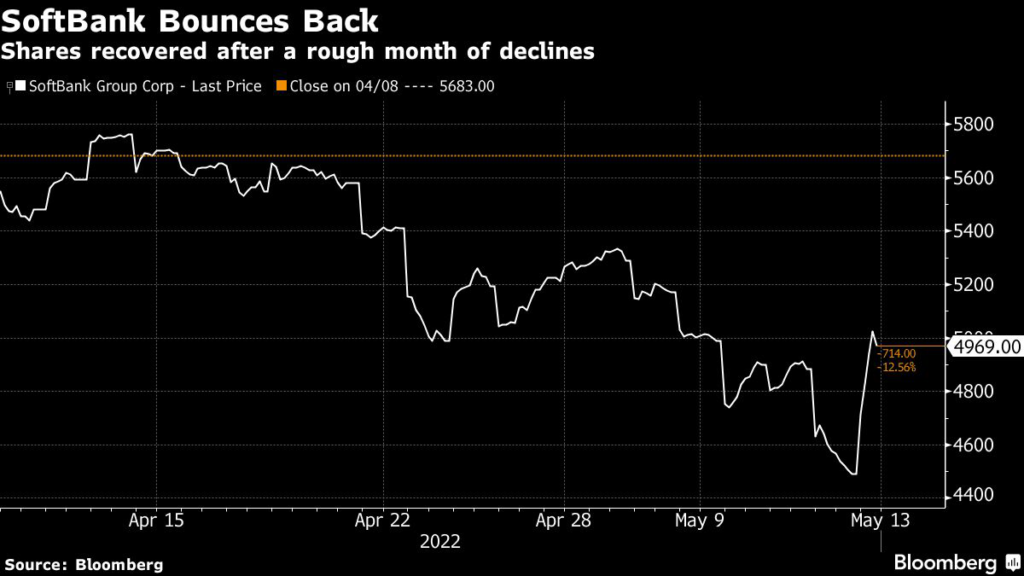
(Bloomberg) — Masayoshi Son had investors bracing for such a bad earnings report that even a $20 billion loss in SoftBank Group Corp.‘s Vision Fund business was enough to send shares surging. 

The stock rallied as much as 12% on Friday for its biggest such gain in six months, a sharp reversal after Thursday’s 8% drop. 

“There appears to be some relief that the Q4 report wasn’t worse, allowing the share price to regain the ground it lost yesterday,” said Kirk Boodry, an analyst at Redex Research who publishes on SmartKarma. 

Nomura Securities analyst Daisaku Masuno said the decline in SoftBank’s loan-to-value ratio to 20.4% left a “positive” impression. For Iwai Cosmo Securities analyst Tomoaki Kawasaki, the decrease in total net asset value to 18.5 trillion yen “isn’t so bad.” 

SoftBank Rises Most in Six Months on Buyback Hopes: Street Wrap

SoftBank on Thursday reported a record annual loss at its Vision Fund unit as a selloff in tech shares pummeled the value of its portfolio companies. The Vision Fund swung to a loss of 2.64 trillion yen ($20.5 billion) for the year ended Mar. 31, compared with a 4.03 trillion yen profit in the previous year. 

Despite the somber numbers, investors honed in on Son’s emphasis on “defensive driving.” Son explained in a slide that the company has allocated 2.9 trillion yen of cash, or roughly twice the 1.3 trillion yen due for bond redemptions in fiscal 2022 and 2023.

Recent stock falls also makes it an opportune time for the Japanese conglomerate to accelerate its plan to buy back stocks. The company has pledged to buy back as many as 250 million shares for up to 1 trillion yen by Nov. 8. 

Expectations over continued share buybacks, along with signs of recovery in U.S technology heavyweights, are factors supporting the stock, analysts said. “Tech valuations gained momentum in late US trading and some of that optimism appears to have spilled over into Japan,” Boodry said. 

The Nasdaq 100 finished 0.2% lower in New York after recouping most of its intraday loss of 2.3%. The blue-chip Nikkei 225 Stock Average jumped as much as 2.7% in Tokyo Friday. 

“The huge loss in the bottomline itself doesn’t seem to come across as such a negative thing,” Kawasaki said. But “it’s a bit too early to conclude that the weak share-price trend has been reversed with this latest earnings report.”


More stories like this are available on bloomberg.com

©2022 Bloomberg L.P.

US Cyber Chief Sees More Attacks in Russian Ukraine Playbook

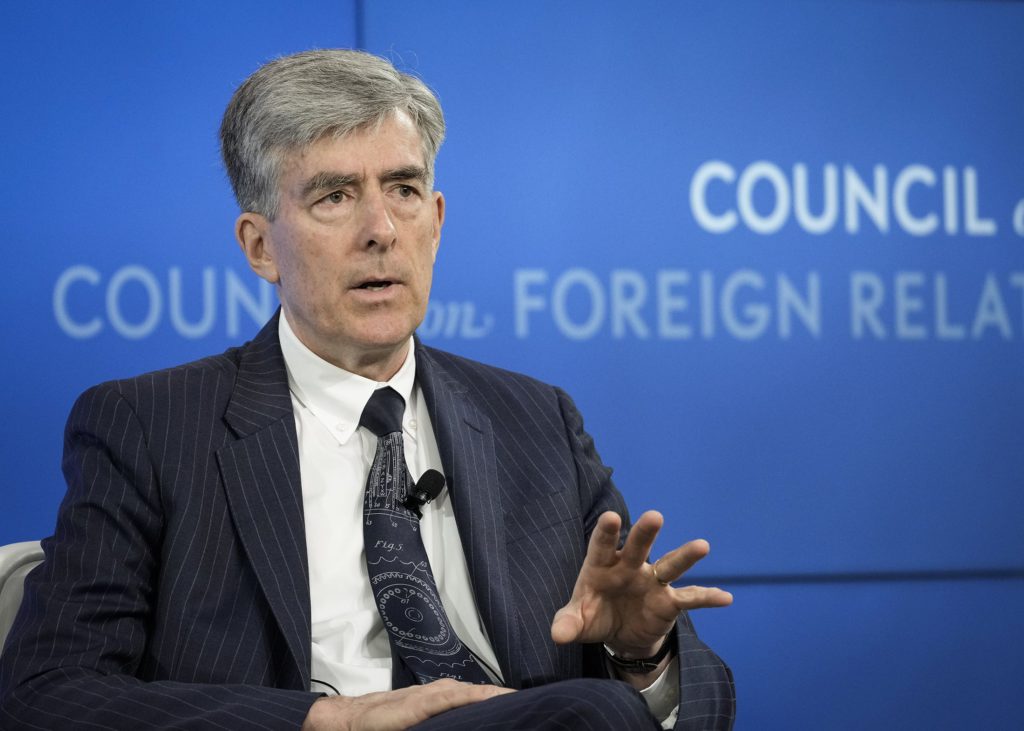
(Bloomberg) — White House Cyber Director Chris Inglis said on Friday he expects Russia’s use of disruptive cyber attacks to continue so long as there is war in Ukraine.

Speaking during an interview with Bloomberg TV, he said that the enduring war has shown Russia is “not perhaps as competent as they might have imagined, both in the physical world and the cyber world.”

“For as long as Russia persists in this egregious behavior, I think that cyber will be in their playbook, and so I would think that this would continue apace.”

The first-ever U.S. National Cyber Director was in Singapore as part of a regional tour. Inglis previously appeared in Australia, where he spoke about the role of cybersecurity in U.S. strategy and international ambitions to build resilience and counter threats. Inglis’ remarks came after the US, UK, and the European Union formally blamed Russia for a February cyberattack against the satellite communications provider Viasat Inc., leading to outages across Eastern Europe hours before Russian troops invaded Ukraine.

“Oftentimes, we find that cyber is used below what I would call the use of force, but it’s a tool that’s used in combination with other tools,” Inglis said on Friday. “Therefore, I don’t think that you should think of it as cyber on cyber, or for that matter to think of it as something that changes at the end of the day the outcomes that one nation can achieve against another.”

U.S. officials meanwhile continue to signal their concern about rising security threats amid the war. The National Security Agency told Bloomberg News it’s investigating the use in the U.S. business community of cybersecurity software made by Kaspersky, a Russian vendor.

Before stepping into the role of Cyber Director last year, Inglis was a managing director at Washington D.C.-based venture capital firm Paladin Capital Group. He was also previous Deputy Director of the National Security Agency, where he had also worked as chief operating officer.

(Updates with more context)

More stories like this are available on bloomberg.com

©2022 Bloomberg L.P.

Crypto-Market Panic Subsides With Prices, Tether Stabilizing

(Bloomberg) — On Wednesday, the implosion of the TerraUSD stablecoin kindled wide-spread panic in the crypto space. But 24 hours later, things have calmed down significantly.

Terraform Labs halted, restarted and then halted again its Terra blockchain in the wake of the collapse of TerraUSD and its related Luna token. Developers who work on the blockchain said in a tweet posted to their verified Twitter account that the second halt was intended to enable them to “come up with a plan to reconstitute” the network. Both TerraUSD (UST), the algorithmic stablecoin that lost and never regained its 1-1 peg to the US dollar, and the associated Luna token were trading near zero at the time of the second halt. 

But elsewhere in crypto sentiment had started to rebound. Tether, the largest stablecoin used in cryptocurrency markets to facilitate trading, recovered from an earlier mini-crash, soothing concerns that its troubles might spill into the broader market. 

Read more: Tether Takes Victory Lap After Stablecoin Regains Peg

Tokens underpinning key decentralized finance protocols also advanced. Even ApeCoin rallied, advancing more than 35% in 24 hours, according to CoinMarketCap.com.

Bitcoin, meanwhile, traded above $30,000 after falling to about $25,000 in the previous day’s trading. And some alternative coins also gained, with Bitcoin Cash adding 20% at one point before paring gains. 

It’s a remarkably more positive picture from the havoc that overtook crypto markets on Wednesday as UST entered a “death spiral”. That day, Bitcoin had suffered a nearly 10% drop.

Read more: ‘Everything Broke’: Terra Goes From DeFi Darling to Death Spiral

“The fact that Tether is stabilizing means that the margin calls that took place are fading,” said Matt Maley, chief market strategist at Miller Tabak + Co. “Whenever you get forced selling in anything, it overshoots. People are still nervous, but the selling has abated. Investors will be nervous for a few more days, but the supply-demand equation has stabilized again.”

Market-watchers noted that Bitcoin, which typically trades in tandem with the stock market, was able to gain on Thursday even as the S&P 500 and Nasdaq 100 sunk 0.1% and 0.2%, respectively.

Treasury Secretary Janet Yellen, meanwhile, said Terra’s tumble showed the dangers of tokens that purport to be pegged to the US dollar, though she added that its implosion didn’t pose a threat to financial stability.

“Crypto has little economic significance. Not that many people own much of it,” said Brian Nick, chief investment strategist at Nuveen. Still, he added that the crypto market is being swayed by the same forces that are affecting equities right now. 

“What gets punished when financial conditions are tightening? Anything with a high valuation and an uncertain or non-existent revenue stream,” he said by phone. “And crypto has inarguably high valuations and no revenue stream. That’s very much of a piece with what we’re seeing in growth stocks, tech. It’s correlated but obviously it’s more volatile because the market is less liquid.”

Read more: Yellen Says Terra Meltdown Shows Crypto-Stablecoin Dangers  

Various trading desks reported business-as-usual conditions, with B2C2 saying it saw two-way flows into UST, and more buying in USDC. Stephane Ouellette, chief executive of FRNT Financial Inc., said he’d received questions about Tether, with clients wondering if its dislocation provided any arbitrage opportunities. 

“Last night there was a huge arb,” he said, adding that “everything at Tether and Bitfinex appears to be working as usual.”

“There’s no indication there’s anything going wrong there at all besides the market move, which is now looking like it was circumstantial,” he said. 

Still, cryptocurrencies remain mired in a deep downturn. “The question, as always, is: now what?,” wrote Michael Purves, chief executive and founder of Tallbacken Capital Advisors. He expects further downside for Bitcoin and is looking at the coin potentially hitting $20,000 or $15,000. 

“A move to 15K would be a move off the January levels which would be quite consistent with the last three long term momentum reversals we have seen,” he said in a note. “However, bears should be prepared for aggressive relief rallies along the way (just as they should with equities).”

Read more: Crypto Glossary: Staking, Bridges, WAGMI and More: QuickTake

(Updates prices and adds Terra’s second halt)

More stories like this are available on bloomberg.com

©2022 Bloomberg L.P.

Baidu Bulls See Index Revamp Curbing 59% Stock Slump

(Bloomberg) — Baidu Inc. and other Chinese technology giants caught in a brutal selloff over the past year may see some respite from an expansion of Hong Kong’s equities benchmark that should drive buyers into their stocks.

The search-engine operator along with video streaming firm Bilibili Inc. are among top candidates expected to be added to the Hang Seng Index during the quarterly reshuffle next month, according to data compiled by Bloomberg. The results of the review, which will boost the number of stocks in the index, will be announced on May 20.

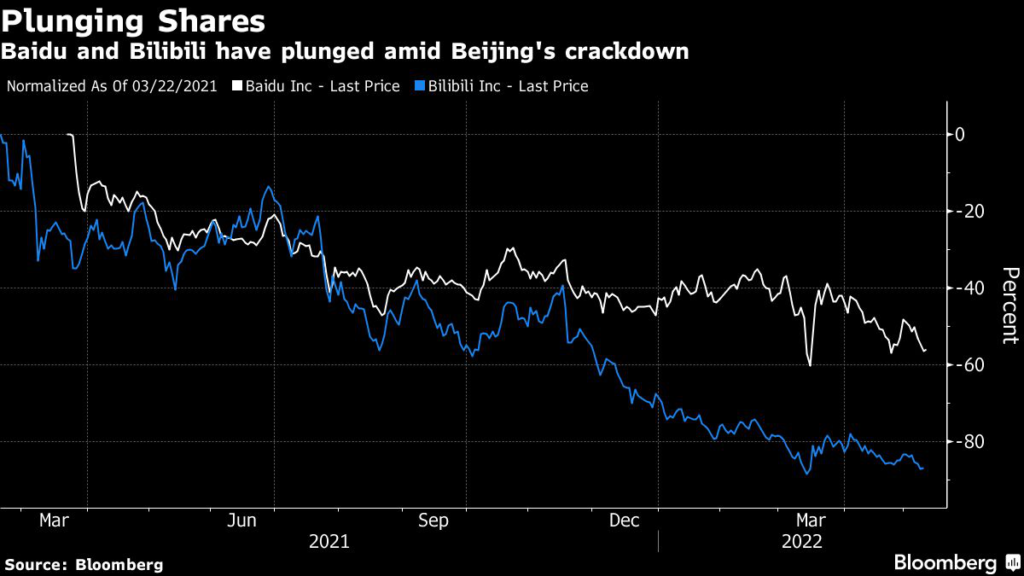
With about $17 billion of passive funds tracking the benchmark, stocks like Baidu and Bilibili could get a much-needed shot in the arm through inflows if they get included. They’ve plunged 59% and 85%, respectively, from their 2021 peaks in Hong Kong. 

“The most likely technology inclusion in the Hang Seng Index is Baidu,” said Brian Freitas, an analyst at independent research website Smartkarma, adding that buying by index funds could stabilize the stock in the short term.

Beijing’s protracted crackdown of the tech sector and investor worry over economic setbacks due to the nation’s strict Covid Zero policy have hurt sentiment, with the Hang Seng Tech Index losing more than half a trillion dollars in value this year.

That has created a fierce debate across Wall Street over the attractiveness of Chinese assets, with fund manager BlackRock Inc. abandoning its bullish stance. JPMorgan Chase & Co. distributed research in March labeling Chinese internet stocks “uninvestable,” but people familiar with the matter said this week the reports were published in error.

Index inclusions, however, could ultimately fuel a rally. Baidu may attract $391 million of passive fund buying, according to China International Capital Corp. The amount will take at least four days to complete based on the average daily turnover over the past three months, the brokerage said. 

For Bilibili, if it gets added, the value of buying orders would be 10 times more than its average daily trading. Baidu rose 1.7% in the US on Thursday while Bilibili advanced 0.3%.

Last year, compiler Hang Seng Indexes Co. said it would boost the number of members in the Hong Kong stock benchmark to 80 from 52 in a bid to embrace the new economy — one that shifted focus to information technology and away from the financial and property sectors. The gauge now has 66 members, with the upcoming rebalancing taking effect on June 13. 

It isn’t just Baidu and Bilibili that could get a lift in the impending review. Other potential inclusions may include short-video platform operator Kuaishou Technology and chip maker Semiconductor Manufacturing International Corp., according to CICC. Electric-vehicle makers Li Auto Inc. and XPeng Inc. and online travel agency Trip.com Group Ltd. are also possible candidates.

To be sure, analysts say that inclusion will not be the silver bullet when it comes to reviving heavily battered shares, given that concerns including regulatory crackdowns and a slowing economy play a large part in how the stocks trade.

Tech Chart of the Day

The rout in technology stocks this year has meant no end to the volatile ride in shares of Apple Inc., which on Wednesday lost its title as the world’s largest company by market value. Since the start of April, the iPhone maker has seen eight sessions where it closed with a decline of at least 2%, compared with only three trading days that ended with a 2% gain. The stock fell 3.6% on Thursday, now trading 22% below its record close in January.

Top Tech Stories

  • Walt Disney Co. reported subscriber gains for its flagship streaming service that exceeded analyst estimates, but tempered its outlook for the balance of the fiscal year and said it will trim spending on movies and TV shows
  • Rivian Automotive Inc. reaffirmed guidance to deliver 25,000 battery-electric vehicles this year, despite supply-chain snarls that are hampering its increase in production
  • Instacart Inc., the largest online grocery delivery platform in the US, said it confidentially filed documents for an initial public offering
  • Hon Hai Precision Industry Co., the maker of most of the world’s iPhones, posted earnings ahead of estimates after keeping production running despite component shortages and strict pandemic controls across China
  • Google is staking its vision for the future on what it’s calling “ambient computing,” according to Rick Osterloh, Google’s hardware chief
  • SoftBank Group Corp. logged a record annual loss at its Vision Fund unit as a global selloff in tech shares pummeled the value of public holdings like Coupang Inc. and Didi Global Inc
  • Taiwan’s Foxconn Technology Group completed a transaction with Lordstown Motors Corp. to acquire the electric-truck startup’s Ohio factory for $230 million and take over production of its Endurance pickup truck, a critical step as the iPhone manufacturer seeks to diversify into electric vehicles


(Updates share move in eighth paragraph.)

More stories like this are available on bloomberg.com

©2022 Bloomberg L.P.
Close Bitnami banner
Bitnami