
Bloomberg

Toyota’s ‘Unprecedented’ Cost Surge Casts Shadow Over Japan Inc.

(Bloomberg) — Halfway through Japan’s reporting season, companies are mostly hitting their marks, but some high-profile cautious outlooks from blue chips like Toyota Motor Corp. risk sapping optimism for the rest of the financial year.

Almost 60% of firms have beaten earnings estimates in the latest quarterly reports, with technology and consumer discretionary firms doing best and health-care and financial companies lagging, according to data compiled by Bloomberg. But some investors are worried the earnings recovery could soon unravel as companies such as Toyota struggle to deal with high raw material costs and supply disruptions.

The world’s biggest automaker forecast a 20% decline in operating profit for the current fiscal year despite posting robust annual car sales, citing an “unprecedented” rise in costs for logistics and materials. That even Toyota, known for its meticulous cost-cutting, sees higher expenses far outweighing the benefits of a cheaper yen spells trouble for many other Japanese manufacturers. 

“Toyota’s weak guidance will have quite a big impact on the market as a whole,” said Masayuki Kubota, chief strategist at Rakuten Securities Inc. “This suggests Japanese manufacturing as a whole is likely to be in a tough situation when it comes to annual guidance.”  

Robot manufacturer Fanuc Corp. was another closely-watched Japanese bellwether that disappointed investors with its earnings outlook this season.

Vulnerable Position

Japan’s stocks look vulnerable to a negative shift in sentiment, having outperformed global peers so far this year. The Topix Index has fallen just 8%, compared with a more than 18% slump in the MSCI AC World ex-Japan Index.

On top of increased costs, Japan’s corporates are dealing with a sluggish domestic economy and increasing risks to growth in key markets, the US and China. And while a weak yen could be seen as a positive for exporters, this time it is aggravating the impact of surging commodity prices, hitting some businesses and consumers much harder than before. 

Yen Freefall Has Fewer Benefits for Japan Inc. As Economy Shifts

“A cheaper yen should benefit some industries linked to exports but they are facing headwinds due to the rise in commodity prices, while domestic-demand oriented companies are also suffering from import inflation,” said Hiroshi Watanabe, senior economist at Sony Financial Group.

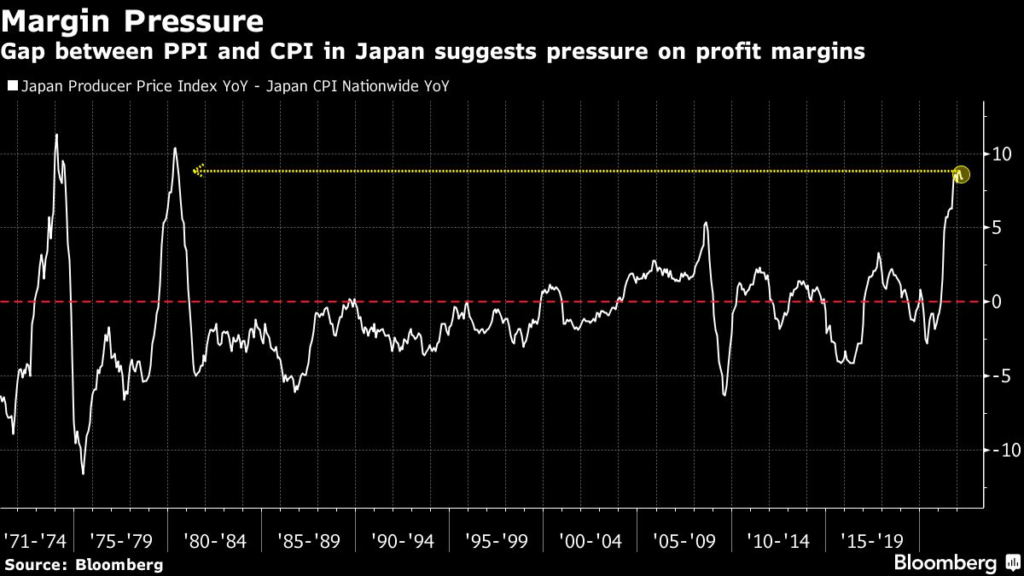
Margin Pressure

The gap between producer and consumer inflation in Japan has hit the highest since 1980, suggesting increased pressure on profit margins for companies that have traditionally balked at pushing through price rises. But analysts have yet to downgrade their earnings forecasts, which are at the highest in at least 17 years, according to data compiled by Bloomberg going back to 2005.

Still, one cohort likely to see a strong profit recovery this financial year is domestic-demand oriented firms even as they face higher import costs, given the prospect of a gradual reopening in the economy later this year. Many tourism-related companies, such as train operators and airlines are forecasting their best year since the pandemic, with border restrictions due to ease. 

Premium Friday

Investors will get a better sense of the outlook for Japan’s companies Friday, once they have time to digest a veritable firehose of data. Over 600 Topix members are scheduled to report, almost 30% of the benchmark’s constituents, according to data compiled by Bloomberg. 

Among the blue chips reporting are telecommunications giant KDDI Corp, automaker Honda Motor Co. and a slew of financials led by Sumitomo Mitsui Financial Group Inc. 

More stories like this are available on bloomberg.com

©2022 Bloomberg L.P.
Li Ka-shing’s Family Office Joins Singapore Expansion Wave

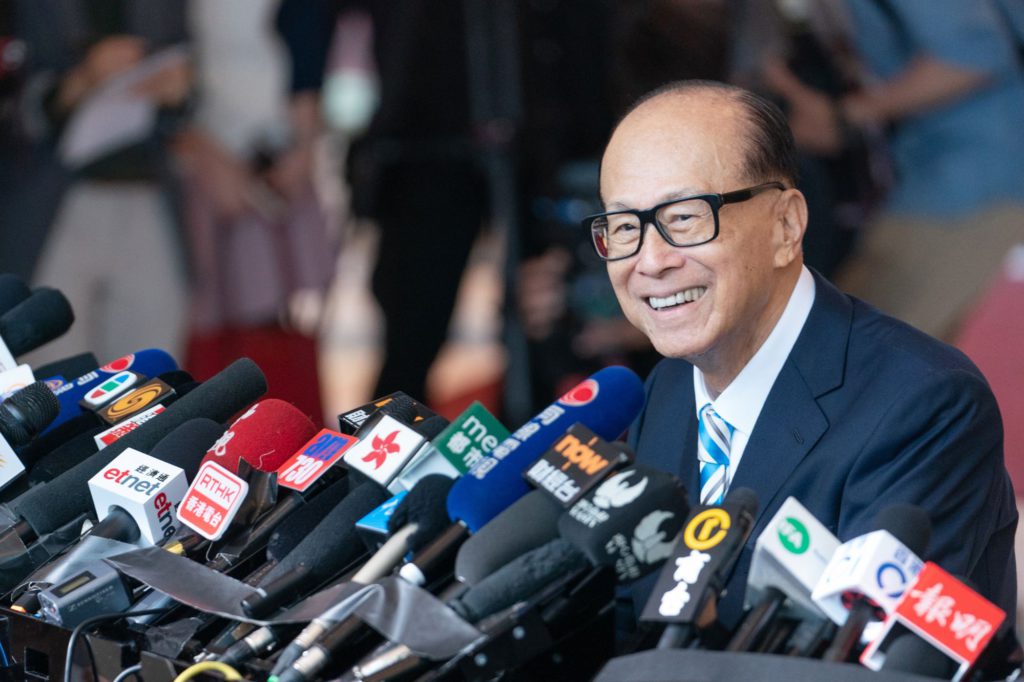
(Bloomberg) — Hong Kong tycoon Li Ka-shing’s private investment firm Horizons Ventures Ltd. is opening a Singapore office to find new deals and support portfolio companies trying to expand in Asia.

As many as ten staff will be based in the South East Asian city including Jacky Li, a senior investment manager who will focus on deal execution, and Jeffrey Ho, a portfolio curator. It comes a year after the firm flagged plans to ramp up deals in the region and will be Horizons’ first office outside of Hong Kong with a focus on supporting portfolio companies entering the market.

The Li-funded firm, which was co-founded by long time confidante Solina Chau, is the latest among a raft of high-profile investment outlets and family offices that have set up presence in Singapore — attracted by its low taxes, relative safety and an expedited pathway for permanent residency for the super wealthy.

Billionaire Ray Dalio’s Family Office Is Hiring in Singapore

A number of investors have either left Hong Kong or expanded operations outside the city amid increasingly strict national security laws and Covid-related travel restrictions. Horizons Ventures said none of these factors played a part. Instead its decision was driven by Singapore’s advantages as a regional hub for investors and expansion.

“We have about 23 investments across the region and operating out of this hub actually becomes pretty important because everyone is here,” said Chris Liu, an Adelaide-based portfolio curator for Horizons. “Building a hub out of Singapore and helping our companies create and identify strategic opportunities and partnerships into the South East Asian region makes total sense.”

Liu made the comments on a trip to Singapore with founders from two portfolio companies – health-care AI platform Harrison.ai and Loam Bio – both of which met with Singaporean government agencies and state-owned investors with Horizons’ assistance.

“Connecting into this region, it makes more sense to be in Singapore than Hong Kong. A lot of our co-investors are in this part of the world rather than in the greater China region,” he said, naming Temasek as an example, adding that Australia was too physically far away from Asia to act as a regional base.

Li, whose early wealth was built on infrastructure, telecommunications and real estate, enjoyed a surge in wealth thanks to high-tech bets in companies like Zoom Video Communications Inc. and Spotify Technology S.A. via Horizons Ventures when the pandemic hit.

In October Horizons’ will host portfolio company founders, co-investors and guests in Singapore for its bi-annual “Techcracker” event.

The firm is speaking with universities and professionals to see what investment and hiring opportunities are available, Liu added. “Well over $100 million” has been deployed across its Australian investments with South East Asia likely to get similar, if not higher, amounts of deals.

More stories like this are available on bloomberg.com

©2022 Bloomberg L.P.
Smelting Giant Korea Zinc to Invest $6.6 Billion in Green Power

(Bloomberg) — After nearly half a century expanding its bread-and-butter business into one of the world’s largest metal smelting operations, Korea Zinc Co. is setting its sights on renewable energy to cut costs and drive growth. 

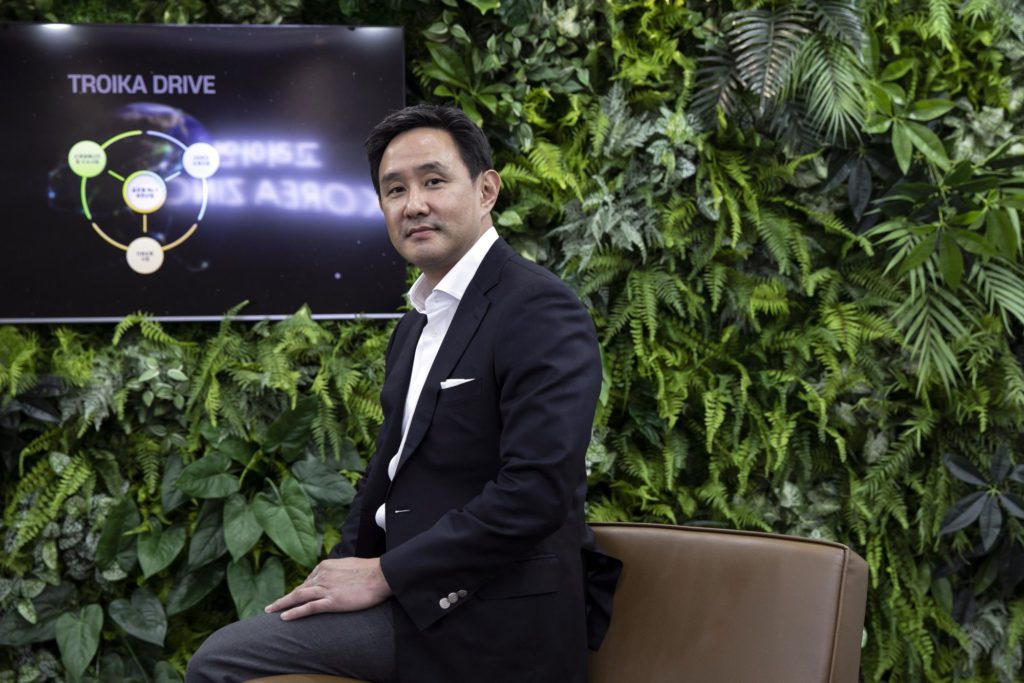
The Seoul-headquartered zinc, gold, silver and lead smelter plans to invest $6.6 billion over the next eight years developing solar and wind power generation and green hydrogen production, with aim of meeting its RE100 goal of using electricity generated entirely from renewable sources, according to Yun Choi, Korea Zinc’s vice chairman and heir apparent.

The investments are part of a broader move to become less dependent on traditional sources of energy, leveraging Korea Zinc’s world-class know-how in metal extraction, Choi said, insisting the company isn’t just following a global trend some have dismissed as greenwashing.

“We have always been an extreme user of electricity,” Choi, 47, said in an interview in Seoul. “As a group, all over the world, we probably spend $300 million on electricity a year. We always have several projects going on to de-carbonize and achieve cheaper electricity.”

Korea Zinc is also seeking to cut carbon emissions amid increasing pressure from regulators and investors to address environmental, social and governance concerns. Only 11 out of 46 metal and mining companies had carbon-reduction targets that match levels needed for the United Nations’ goal of limiting global warming, according to an analysis by Bloomberg Intelligence published in August. Korea Zinc wasn’t included in the analysis.

Many of Korea Zinc’s renewable projects are in mining-heavy Australia, where billionaire resources magnate Andrew Forrest is planning a factory for making hydrogen-producing electrolyzers.

Read more: Korea Zinc Buys Australia Renewables Group to Back Hydrogen Plan

During a rare interview, Choi, who majored in English literature at Amherst College in Massachusetts before his father insisted he pursue a different career, pointed to a large photo hanging on the wall, showing a 124-megawatt-hour solar farm the company built in 2018 in Australia — the country’s biggest at the time.

While the 500-acre farm (about the size of Monaco) is now providing a quarter of the electricity for Korea Zinc’s Sun Metals’ zinc refinery in Queensland, the company is seeking to boost that to 85% by 2025, with the remaining 15% coming from solar and wind projects under development at another subsidiary Epuron, an Australian energy company that Korea Zinc bought last year.

Korea Zinc is also looking to produce green hydrogen in Australia, with the ultimate goal of half a million tons by 2050 when the company aims to reach its RE100 goal, Choi said.

The third plank of Choi’s so-called “Troika Drive” revolves around leveraging Korea Zinc’s metal extraction know-how into recycling batteries.

Read more: Watch How One South Korean Battery Recycling Company Does It

“We’re able to extract various forms of zinc, copper, lead, precious metals and other valuable metals from secondary waste materials,” Choi said. “We are able to extract everything valuable from dirty material.” 

Korea Zinc is in talks with LG Chem Ltd. to build a plant that would manufacture precursor, a key component used for making cathode-active materials for batteries, local media reported last month. Choi declined to comment, but confirmed the company is in talks with partners for battery recycling.

Korea Zinc plans to have a recycling plant up and running as early as 2025, when a large number of spent batteries are expected, he said. The company’s recycling process of pyrometallurgy and hydrometallurgy can extract at least 80% of lithium, 95% of cobalt and nickel and 80% of copper from second-hand batteries, according to the company. 

“Korea Zinc is known for extracting metals at a very low cost and at a very high quality, as much as it could from rocks,” said Will Byun, analyst at NH Investment & Securities Co. “The question is how much it can reduce the cost to beat competitors in China.” 

Choi’s ambitious plans are backed by a profitable, cash-rich business. Korea Zinc posted a record 1.1 trillion won ($855 million) operating profit in 2021 on revenue of 9.9 trillion won. The company has about 2 trillion won in cash and cash equivalents and little debt. 

“Korea Zinc’s balance sheet is unbelievably good,” said Davis Woo, a fund manager at NH-Amundi Asset Management Co. “Cash has been piling up every year and they need to spend it. I think they’re making the right choice on these new investments.”

Choi hasn’t quite let go of his literary ambitions, either. As the interview concludes, Choi hands Bloomberg a slim volume titled “The Mission Book,” which he wrote in English and distributes to employees.

“Our mission is to become the best zinc refinery,” the 27-page guide says on its first page. “This means we are the safest, the most environmentally responsible and the most competitive zinc refinery in the world.” 

More stories like this are available on bloomberg.com

©2022 Bloomberg L.P.
China Tech Sector’s Dollar-Bond Selloff Attracts Bargain Hunters

(Bloomberg) — The regulatory headwinds and economic uncertainties weighing on China’s technology stocks have also hit the sector’s dollar bonds, a selloff that has some credit investors upbeat on future performance.

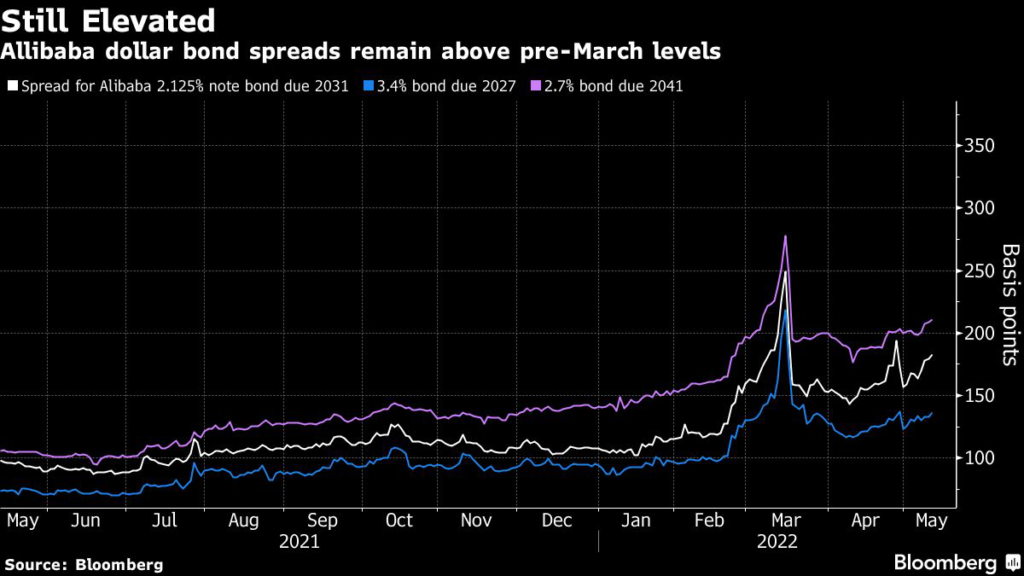
The notes’ spreads have started widening again after March’s swing, leaving them very high and attractive given many tech companies are cash-rich and lightly leveraged, said Jean-Louis Nakamura, Asia Pacific chief investment officer at Lombard Odier. The firms’ debt-repayment abilities haven’t been affected by the regulatory concerns, which “are mostly a problem for equity owners,” according to Phillip Torres, global co-head of emerging market debt at Aegon Asset Management in Chicago.

Dollar-bond spreads for Tencent Holdings Ltd. have widened at least 30 basis points this year, according to data compiled by Bloomberg, and they’ve expanded as much as 80 basis points for Alibaba Group Holding Ltd. There’s been fresh weakness lately as fixed income globally continues to struggle. For equities, the Hang Seng Tech Index is down 32% in 2022, partially on worries about Chinese regulatory action that’s hit areas from e-commerce to online education to gaming. 

Tech firms’ spreads narrowed some after China’s top financial policy body vowed in March to among other things ensure stability in capital markets and complete the crackdown on Big Tech “as soon as possible.” More policies could be on the way, state media outlets reported last week. 

Another factor weighing on the dollar bonds could be recent weakness in U.S. investment-grade debt, Goldman Sachs analysts including Kenneth Ho recently wrote. Such investors likely have a higher presence in China’s high-grade tech, media and telecom market than other domestic sectors, and 7- to 10-year TMT names have fared worst of late in the single-A area, according to the report. 

But those notes’ weakness being linked to U.S. investment-grade declines “is likely to be temporary, and spread widening due to market technicals is an opportunity,” said the Goldman analysts.

More stories like this are available on bloomberg.com

©2022 Bloomberg L.P.
Apple Drops 22% From January Peak as Tech Selloff Spreads

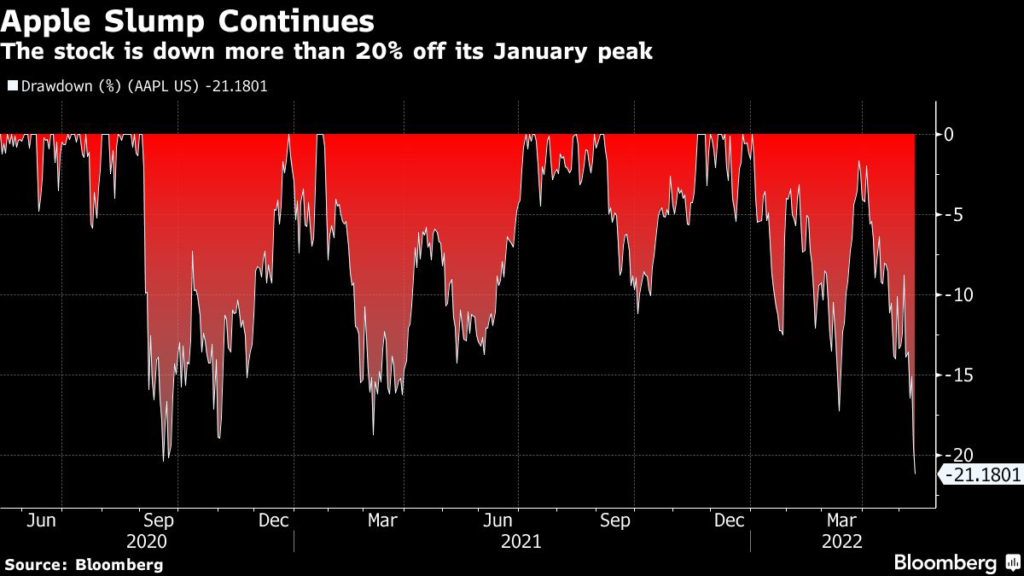
(Bloomberg) — Apple Inc. shares fell on Thursday, with the stock now about 22% below its January peak as a selloff in technology stocks spreads from more speculative shares to the world’s biggest companies.

The stock fell 2.7% to $142.56 and is trading at its lowest since October. Apple’s slump has erased about $700 billion in market value since the Jan. 3 record, a slump that enabled Saudi Aramco — which has benefited from this year’s surge in oil prices — to overtake the tech giant as the world’s most valuable company earlier this week.

The widespread tech weakness has been spurred by concerns about inflation and rising interest rates. The Nasdaq 100 Index has fallen almost 6% over the past four days, on track for a sixth-straight negative week, its longest losing streak since 2012.

“Sentiment is very depressed, and uncertainty surrounding inflation is going to continue to complicate the picture,” said Keith Lerner, co-chief investment officer and chief market strategist at Truist Advisory Services. “Even though prices are getting cheaper, we need a spark to start moving us up, and I don’t see one.”

While the tech-heavy Nasdaq 100 has been under pressure all year, Apple’s decline has been relatively recent. The stock has fallen nearly 10% this week alone amid mounting concerns about an economic slowdown. It’s a sudden turnaround for Apple from about six weeks ago, when shares were trading close to a record.

The stock is on track for a seventh straight weekly drop, which would represent its longest such streak since November 2018.

Apple continues to face supply chain challenges that the company predicted would cost $4 billion to $8 billion in revenue during the current quarter. Still, its strong balance sheet, hefty profits and loyal customer base has insulated it from some of the turmoil in the tech sector.

The stock is still outperforming the tech-heavy Nasdaq 100 index, which has lost nearly 30% of its value this year, compared with Apple’s year-to-date decline of about 19%.

Lerner suggested that the weakness in Apple and other big-tech names could be a sign of a bottoming process in markets. “You want to see the generals fall to find a good bottom, so this could be a positive from that perspective, though we can always get more oversold.”

(Updates with closing prices throughout.)

More stories like this are available on bloomberg.com

©2022 Bloomberg L.P.
Coinbase Melts Down Even as Wall Street Is Bullish on Prospects

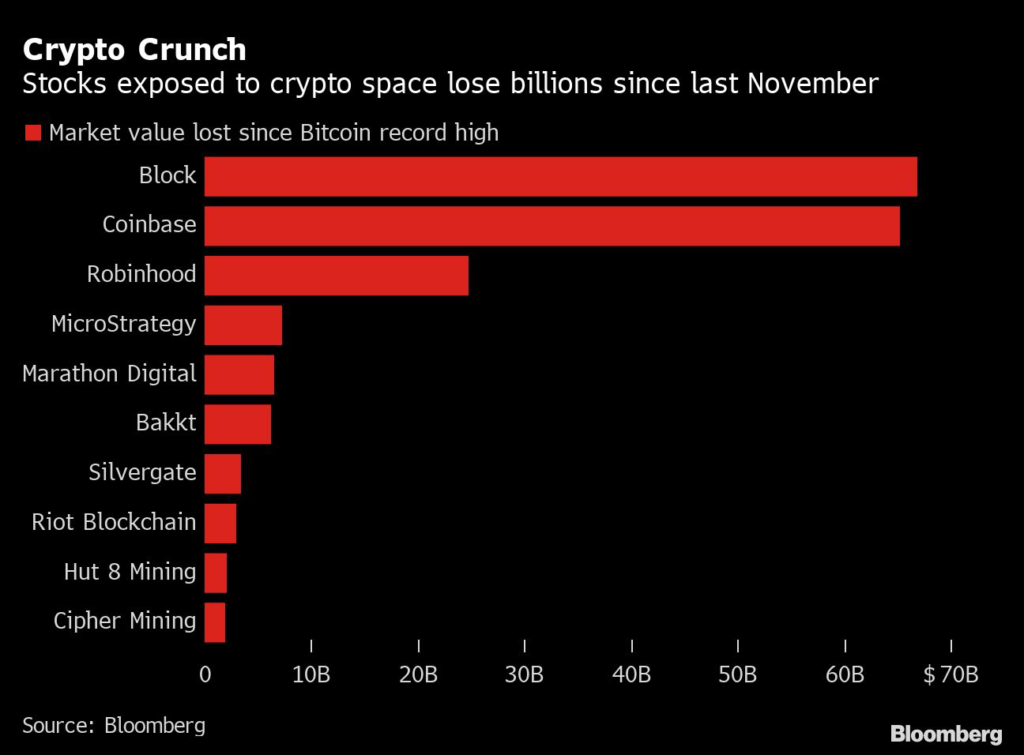
(Bloomberg) — Coinbase Global Inc. has declined precipitously this year, largely mimicking the drop in Bitcoin prices and taking its market value down to $12.5 billion from a peak of over $75 billion last year. But Wall Street still remains bullish on the stock. 

The crypto exchange is down nearly 77% so far this year, trading far below its first-day closing price of $328.28 last April. But analysts still broadly recommend the stock, despite its weaker-than-expected first-quarter earnings report. The stock was given a buy rating by 22 analysts, according to data compiled by Bloomberg. While five gave it hold ratings, only four recommended selling the stock.

Even a Mizuho Securities analyst with one of the lowest price targets on Coinbase stays hopeful on the firm’s ability to stabilize its share price this month. 

“Yet we believe the cost at which this is achieved is too high, and it is unlikely going to be any less costly,” Mizuho’s Dan Dolev wrote in a note Thursday, when he lowered his price target on the stock to $60 from $135. The average price target on Coinbase is $170.09, Bloomberg data show.

Large investors have also continued to pile in. Coinbase’s third largest investor, Cathie Wood’s Ark Investment Management, increased its holdings of the stock, according to a trading update late Wednesday. Wood, who is known for her dogged style of handpicking long-term growth companies with visionary stories, spoke at a panel with Coinbase CEO Brian Armstrong last week, where they touted the potential of crypto.

Coinbase rose as much as 12% to $60.30 on Thursday, paring some of Wednesday’s 26% decline. 

“The extent of that decline is vastly overblown and stems, in large part, from a lack of understanding among many retail investors of how well capitalized Coinbase is,” said Mark Palmer, a fintech analyst at BTIG, who set a $380 price target on the stock, one of the highest among analysts. 

While the current markets environment is challenging, Palmer said that Coinbase could eventually see “a very different competitive environment if there’s a shakeout among those smaller exchanges.” 

Read more: SEC’s Gensler Says Crypto Exchanges Trading Against Clients

Despite lackluster results and the steep decline in market value, the firm is unlikely to be an acquisition target, Palmer said. The management would reject a bid even with a significant premium, he added. 

An activist investor could come aboard and push for cost rationalization at Coinbase, said Michael Bucella, general partner at BlockTower Capital, a crypto and blockchain investment firm.

“Within the crypto ecosphere, it’s almost too big to fail,” he said.

Crypto Glossary: Staking, Bridges, WAGMI and More: QuickTake

More stories like this are available on bloomberg.com

©2022 Bloomberg L.P.

Spotify Elevates Bill Simmons While Gimlet Cofounder Departs

(Bloomberg) — Spotify Technology SA is expanding the responsibilities of some of its biggest podcast leaders, a sign that the audio-streaming company is sticking to its plan of becoming a leader in the area despite investor skepticism. 

The changes among podcast executives mostly involve promotions. The personnel moves were confirmed by a person familiar with the matter who asked not to be identified. 

One of the most prominent moves is Bill Simmons, the founder of the Ringer sports and culture website and podcast network, is assuming the title of global head of sports content and managing director for the Ringer. He will continue to oversee the Ringer, which Spotify Chief Executive Officer Daniel Ek has said could become the next ESPN. 

Julie McNamara, who is currently in charge of US studios and video, will now manage Spotify’s three acquired studios — the Ringer, Gimlet Media and Parcast — and oversee original content across Spotify. She’ll also be in charge of some high-profile partnerships, such as Spotify’s agreements with DC Comics and with Archewell Audio, which was founded by Prince Harry and Meghan Markle. 

Parcast founder Max Cutler is being named the head of talk creator content and partnerships. In that role, he will oversee licensed content and new content initiatives while working with podcast creators. Spotify will also soon name a global markets leader for talk content, who will manage global releases and see that hit podcasts in one place can be replicated elsewhere. 

Cutler and McNamara will report to Dawn Ostroff, head of Spotify’s content and advertising business, while Simmons will report to McNamara. As part of the shuffle, and previously reported, Courtney Holt, one of the company’s original podcast strategy architects, is leaving his role to take on a yearlong advisory position. Gimlet cofounder Matt Lieber, who oversaw the studios, is also leaving the company this summer. He’ll continue as an advisor as well.

Renewed Focus

Taken together, the promotions suggest a renewed focus on Spotify’s stated long-term podcast goals, which include bringing 50 million creators to the platform and establishing itself as a leader for audio content. Investors aren’t convinced by the plans, however: Spotify’s stock has remained at historic lows as shareholders zero in on the company’s lack of tangible returns from its podcast investments, which have totaled more than $1 billion. 

Flashy announcements such as shows with Kim Kardashian and Archewell Audio have yet to produce content and the Obamas’ production company, Higher Ground, isn’t renewing its exclusive partnership. 

There has been success as well: The platform’s latest major release, “Batman Unburied,” unseated its licensed “Joe Rogan Experience” as the top show on the platform abroad and in the US. 

Ek said he bought $50 million of Spotify stock last week to signal his confidence in the company’s strategy. He said on Twitter he’s always “been vocal about my belief in Spotify and what we are building” so he’s “putting that belief into action.”

Spotify shares have lost close to 60% of their value so far in 2022. That’s more than double the decline of the Russell 1000 Growth Index. 

(Updates with Matt Lieber leaving in sixth paragraph.)

More stories like this are available on bloomberg.com

©2022 Bloomberg L.P.
El Salvador Bitcoin Losses Enough for Its Next Bond Payment

(Bloomberg) — El Salvador’s gamble on Bitcoin has already cost the nation’s cash-strapped government enough to cover its next interest payment to bondholders, showing the increased risks posed by its experiment with the cryptocurrency. 

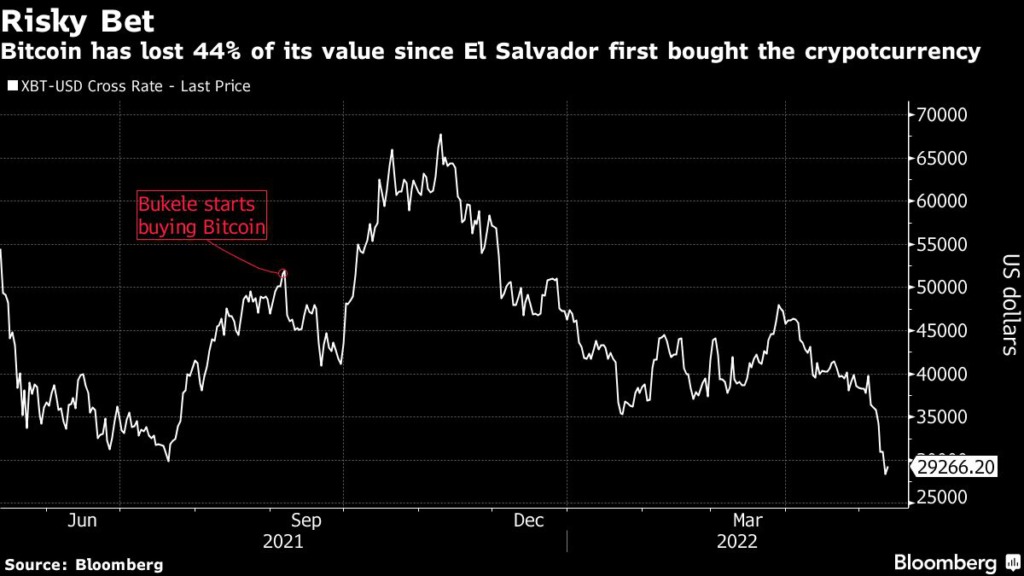
The rout that has driven Bitcoin down some 40% since late March has deepened President Nayib Bukele’s cumulative losses on the government’s holdings to about $40 million, according to an estimate by Bloomberg. That’s a little more than the country’s next coupon payment on its foreign debt, with $38.25 million due in June 15 on notes maturing in 2035. 

Bukele’s government spent about $105 million buying Bitcoins since becoming the world’s first government to make it legal tender in September, based on his announcements on Twitter. The cryptocurrency has fallen 45% since the first purchase, cutting down the value of the nation’s 2,301 Bitcoins to about $66 million.

“It’s risky because it’s an extremely volatile asset, and it’s an investment that is totally at the discretion of the president,” said former El Salvador Central Bank Chief Carlos Acevedo. “He buys it on his phone when he wants to take advantage of the dip, but he doesn’t do it right because when he buys there’s always a bigger dip.” 

The losses are another blow to Bukele, a devout believer in cryptocurrencies who has been trying for more than five months to sell a Bitcoin-backed bond. But investors have soured on El Salvador’s bonds, concerned not only with the government’s ability to keep current on its debt but its willingness to do so.

Bukele’s office declined a request for comment from Bloomberg News. The government doesn’t publish data on its Bitcoin holdings. 

Prices on the country’s foreign debt tumbled about 18% this year, leaving bonds due in 10 and 30 years trading at around 40 cents on the dollar, deep into distressed territory. The next principal payment is in January for $800 million. The 22% price discount at which the notes are trading suggests some hesitation from investors on whether the obligation will be met. 

Acevedo said that he thinks the government will be able to make the maturity payment with a combination of loans and cash reserves, a potential pension reform or tapping its special drawing rights with the IMF. Bukele will likely seek re-election and “doesn’t want to bear the political cost of a default,” Acevedo said. 

El Salvador owes bondholders $382 million in interest this year, with July being the heaviest month for payments as $183 million comes due. The nation had $3.4 billion in reserves in April, according to the central bank, and the government plans to raise $1 billion with the Bitcoin-backed bond, though it’s not clear at this point whether the transaction will go through. 

The nation was also in talks with the International Monetary Fund for an extended fund facility, but negotiations stalled after Bukele adopted the cryptocurrency as a legal tender. Since then, the spreads on the nation’s credit default swaps — a type of insurance against missed payments — have risen more than 20 percentage points, implying an 87% chance of a default in the next five years. 

(Adds comments from former Central Bank chief)

More stories like this are available on bloomberg.com

©2022 Bloomberg L.P.
El Salvador’s Bitcoin Losses Are Equal to Next Bond Payment

(Bloomberg) — El Salvador’s gamble on Bitcoin has already led to losses that equal the cash-strapped nation’s next interest payment to bondholders, showing the increased risks posed by its experiment with the cryptocurrency.

The rout that has driven Bitcoin down some 40% since late March has deepened President Nayib Bukele’s cumulative losses on the government’s holdings to about $40 million, according to an estimate by Bloomberg. That’s a little more than the country’s next coupon payment on its foreign debt, with $38.25 million due in June 15 on notes maturing in 2035. 

Bukele’s government spent about $105 million buying Bitcoins since becoming the world’s first government to make it legal tender in September, based on his announcements on Twitter. The cryptocurrency has fallen 45% since the first purchase, cutting down the value of the nation’s 2,301 Bitcoins to about $66 million.

“It’s risky because it’s an extremely volatile asset, and it’s an investment that is totally at the discretion of the president,” said former El Salvador Central Bank Chief Carlos Acevedo. “He buys it on his phone when he wants to take advantage of the dip, but he doesn’t do it right because when he buys there’s always a bigger dip.” 

The losses are another blow to Bukele, a devout believer in cryptocurrencies who has been trying for more than five months to sell a Bitcoin-backed bond. But investors have soured on El Salvador’s bonds, concerned not only with the government’s ability to keep current on its debt but its willingness to do so.

How El Salvador’s Bitcoin Experiment Got Rocky Start: QuickTake

Bukele’s office declined a request for comment from Bloomberg News. The government doesn’t publish data on its Bitcoin holdings. 

Prices on the country’s foreign debt tumbled about 18% this year, leaving bonds due in 10 and 30 years trading at around 40 cents on the dollar, deep into distressed territory. The next principal payment is in January for $800 million. The 22% price discount at which the notes are trading suggests some hesitation from investors on whether the obligation will be met. 

Acevedo said that he thinks the government will be able to make the maturity payment with a combination of loans and cash reserves, a potential pension reform or tapping its special drawing rights with the IMF. Bukele will likely seek re-election and “doesn’t want to bear the political cost of a default,” Acevedo said. 

El Salvador owes bondholders $382 million in interest this year, with July being the heaviest month for payments as $183 million comes due. The nation had $3.4 billion in reserves in April, according to the central bank, and the government plans to raise $1 billion with the Bitcoin-backed bond, though it’s not clear at this point whether the transaction will go through. 

The nation was also in talks with the International Monetary Fund for an extended fund facility, but negotiations stalled after Bukele adopted the cryptocurrency as a legal tender. Since then, the spreads on the nation’s credit default swaps — a type of insurance against missed payments — have risen more than 20 percentage points, implying an 87% chance of a default in the next five years. 

(Adds comments from former Central Bank chief)

More stories like this are available on bloomberg.com

©2022 Bloomberg L.P.

Terraform Restarts Blockchain Behind UST Stablecoin, Luna

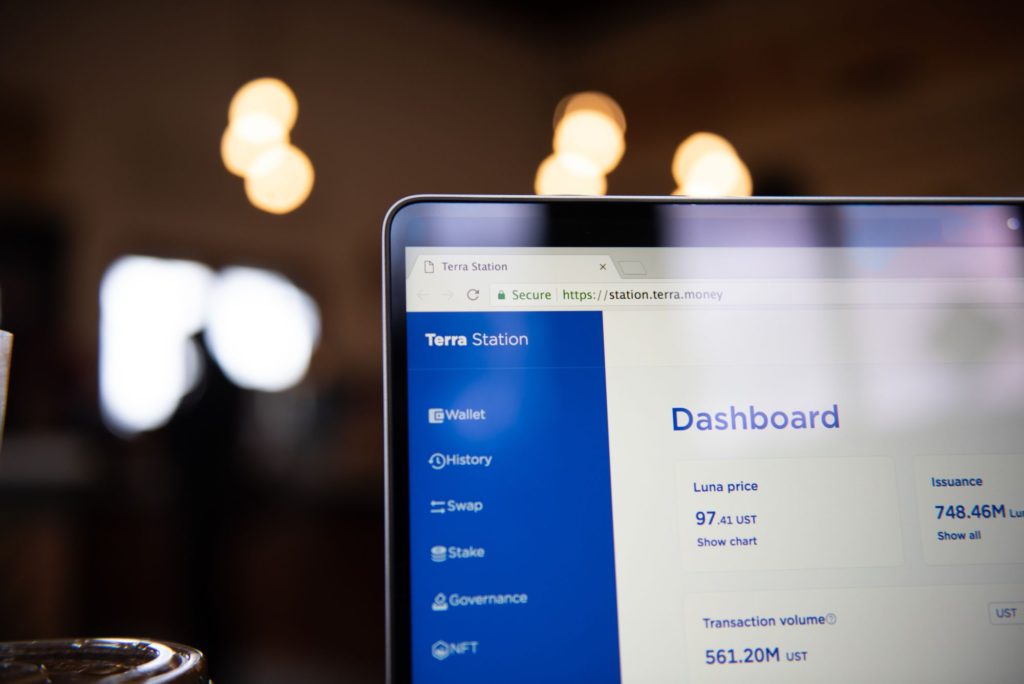
(Bloomberg) — Terraform Labs restarted the Terra blockchain following a software update to help avoid attacks against the network in the wake of the collapse of its algorithmic stablecoin and the related Luna token that had roiled cryptocurrency markets. 

The fix is designed to help avoid so-called governance attacks against its protocol — a way of manipulating the fundamentals of a given blockchain by acquiring enough tokens to force a majority vote. 

Following the patch’s release, Terra said earlier that the network would go live again once two-thirds of the voting power belonging to validators came online to finalize the update. In previous outages for blockchain networks like Solana, this process has taken several hours to complete as validators can reside across multiple time zones.    

Terra’s UST is one of the world’s largest stablecoins, while its corresponding Luna reached an all-time high of $119 only last month. Its fall has been quick and fast, leaving the wider crypto community at a loss for how this might impact the broader ecosystem.

The halt meant that no transactions occurred on Terra’s blockchain while the system was shut down, forcing the price of its two tokens to stop moving. The value of UST, which uses a complex mix of code and trader incentives to keep its peg to the dollar, was at around 36 cents before the blackout — while Luna, a sister token to UST which helps maintain the former’s price, had fallen close to zero on Thursday, according to data compiled by Bloomberg and CoinGecko.

Developers in Terra’s Discord server speculated that halting its blockchain might be the only solution they had left, after a plan to recapitalize UST by seeking outside funding appeared to fall apart. Terra’s supporting organization, the Luna Foundation Guard, had sought to raise more than $1.5 billion to shore up its token, but backers failed to immediately materialize.

‘Everything Broke’: Terra Goes From DeFi Darling to Death Spiral

Sid Powell, chief executive of Maple Finance, said Terra’s community was concerned that an attempt to attack its protocol by using a majority vote could compromise the security of the network — and as the price of Luna decreased, that risk became more likely. Several platforms which rely on the Terra blockchain to operate now also face being switched off, including its own decentralized lender Anchor Protocol.

Around the time of the halt, there was still more than $1.05 billion worth of tokens locked on Anchor, according to data from Defi Llama. Anchor has been the main driver of Terra’s growing value in the crypto sector, thanks to a promised interest rate of up to 20% for traders willing to deposit UST on its platform.

“They’ve made the decision that they can’t run the network security,” said Powell. “It’s bad for crypto because of the reputational damage and sentiment, it’s obviously demoralizing for crypto.”

Crypto Glossary: Staking, Bridges, WAGMI and More: QuickTake

(Adds chart.)

More stories like this are available on bloomberg.com

©2022 Bloomberg L.P.

Close Bitnami banner
Bitnami