Bloomberg

Sony PlayStation Staff Fume Over CEO’s Abortion Comments

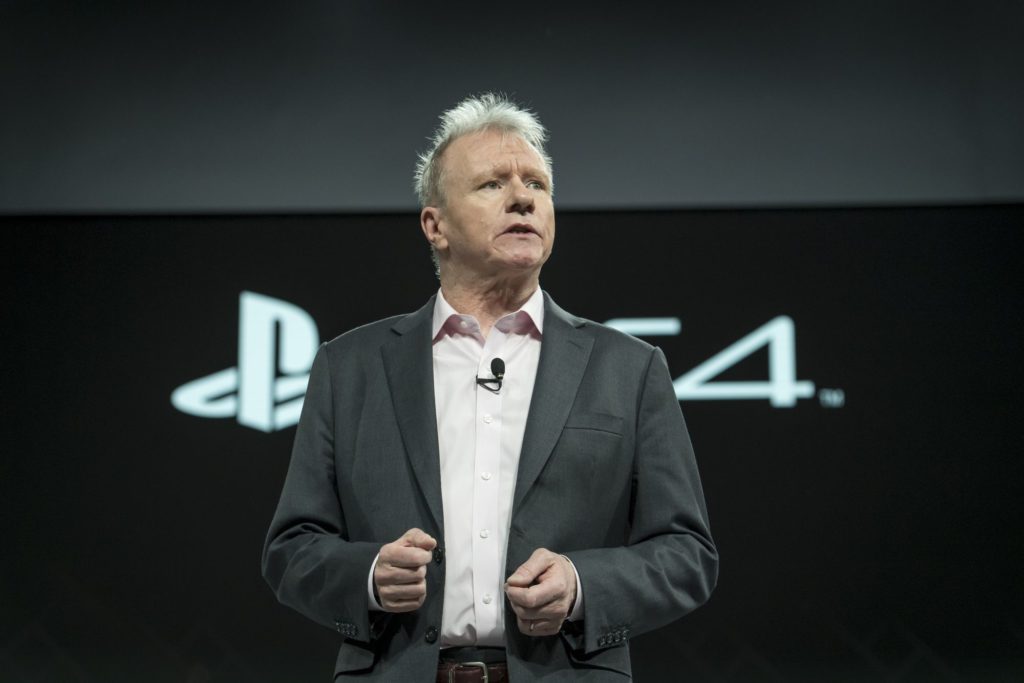
(Bloomberg) — Some staff at Sony Group Corp. are seething following an email Thursday from the head of PlayStation that urged employees to “respect differences of opinion” on abortion rights before entering into five detailed paragraphs about his two cats’ first birthday.

The email opens by addressing several current events including the recent leak of a draft US Supreme Court opinion that signaled an intention to overturn the landmark 1973 case Roe v. Wade, which legalized abortion nationwide. Many corporations have felt pressure from employees to comment on the case but most video game companies have remained silent on the matter. 

There are a few notable exceptions, however, such as Bungie Inc., the developer of the Destiny game which called the decision “a direct attack on human rights” in a blog post last week. “Standing up for reproductive choice and liberty is not a difficult decision to make,” Bungie said, receiving largely positive reactions from its employees. Sony agreed earlier this year to buy Bungie for $3.6 billion.  

In the email seen by Bloomberg, PlayStation president Jim Ryan didn’t take a stance on abortion rights, instead writing that the company and its community are “multi-faceted and diverse, holding many different points of view.” He wrote that “we owe it to each other and to PlayStation’s millions of users to respect differences of opinion among everyone in our internal and external communities. Respect does not equal agreement. But it is fundamental to who we are as a company and as a valued global brand.”

Ryan then went on to write that he “would like to share something lighthearted to help inspire everyone to be mindful of having balance that can help ease the stress of uncertain world events,” saying it was recently his two cats’ first birthday and elaborating over the next few paragraphs about his cats’ birthday cakes, their noises and his desire to one day get a dog.

In internal discussions viewed by Bloomberg, which haven’t been previously reported, employees at several PlayStation studios expressed their displeasure at the tone of the email. Some women wrote that they felt their rights were disrespected or trivialized by the message. One employee said they’d “never been so mad about a cat birthday before.”

More stories like this are available on bloomberg.com

©2022 Bloomberg L.P.

Ex-Meta Executive David Marcus Forms Company Focused on Bitcoin

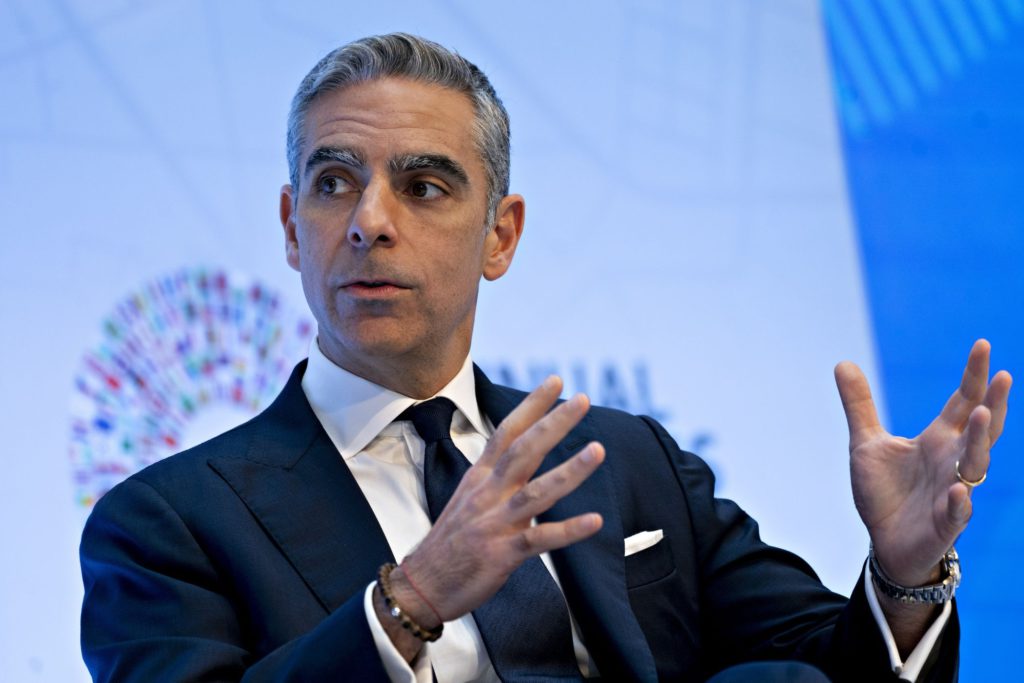
(Bloomberg) — Former Meta Platforms Inc. executive David Marcus, who spearheaded the social giant’s digital currency efforts before departing last year, is launching a new company focused on building technology to promote Bitcoin. 

The  company, called Lightspark, will “explore, build and extend the capabilities and utility of Bitcoin,” Marcus wrote in a statement. The startup is creating infrastructure to support the Lightning Network, a crypto payments system designed to make Bitcoin transactions faster and cheaper.

Marcus raised roughly $175 million in venture capital funding for the new company, according to a source familiar with the deal, and venture capital firms Andreessen Horowitz and Paradigm are co-leading the round.

Marcus left Meta after an eventful seven years in late 2021 with plans to start a new business. He joined Meta, then Facebook, in 2014 to lead the company’s Messenger team and spent four years running the service. But Marcus will be best known for his role in co-creating Libra, later renamed Diem, the company’s proposed digital currency that ran into intense regulatory pushback and never launched. The group was eventually spun out of Facebook but kept the social media company as its primary backer. The operation sold its intellectual property and other assets to Silvergate Capital Corp. earlier this year. 

Lightspark will be headquartered in Los Angeles. Other investors include Thrive Capital, Coatue, Felix Capital, Ribbit Capital, Matrix Partners and Zeev Ventures. 


More stories like this are available on bloomberg.com

©2022 Bloomberg L.P.

Twitter to Freeze Hiring, Rescind Offers Ahead of Musk Deal

(Bloomberg) — Twitter Inc. Chief Executive Officer Parag Agrawal announced a hiring freeze and other cost-cutting efforts on Thursday, a reflection of the company’s state of uncertainty while it awaits Elon Musk’s $44 billion takeover.

The social media company won’t hire new employees and may rescind offers already out, according to an internal memo obtained by Bloomberg. Some exceptions will be made for business-critical roles, as determined by Twitter leadership. The company is also pulling back on costs such as travel, consulting and marketing, according to the memo.

Two of Twitter’s top leaders are also departing. Kayvon Beykpour, head of consumer product, and Bruce Falck, in charge of revenue product, were both asked to leave the company by Agrawal, the two executives said in separate public posts.

Agrawal said global events, including the war in Ukraine and the supply chain crunch, have hurt Twitter’s business and may continue to do so. The company isn’t planning broad job cuts, “but leaders will continue making changes to their organizations to improve efficiencies as needed,” Agrawal wrote. 

“At the beginning of the pandemic in 2020, the decision was made to invest aggressively to deliver big growth in audience and revenue, and as a company we did not hit intermediate milestones that enable confidence in these goals,” Agrawal said. “In order to responsibly manage the organization as we sharpen our roadmaps and our work, we need to continue to be intentional about our teams, hiring and costs.”

Following the exits of Beykpour and Falck, Jay Sullivan will take over as head of product and interim head of revenue. Sullivan has talked about refocusing the company on fewer projects during recent team- and company-wide meetings, according to a person familiar with the matter.

Beykpour, who is on paternity leave, said on Twitter that it’s not how he imagined leaving. “Parag asked me to leave after letting me know that he wants to take the team in a different direction,” he said. Falck tweeted that he was also fired, then later deleted the post. A Twitter spokesperson didn’t respond to a request for comment. 

The changes reflect Twitter’s current state of limbo while it awaits a new owner. Musk, the world’s richest man and CEO of Tesla Inc., agreed to buy the company for $44 billion last month, but the deal may not be finalized for months, as Musk is still working to secure the financing. On Tuesday he suggested that the deal could still fall apart. 

That has left Twitter employees in the lurch, as many don’t know whether the projects or teams they are working on will be prioritized under new leadership.

Twitter will move some existing employees away from long-term projects to instead focus on core growth for its main app, according to two people familiar with the matter. It’s unclear which projects will be most impacted but longer-term efforts at Twitter include things like audio spaces, NFTs, creator efforts and newsletters.

The company is not alone in trimming expenses; larger competitor Meta Platforms Inc. also recently said it will reduce investments.

(Updates with revenue head’s tweet in the sixth paragraph)

More stories like this are available on bloomberg.com

©2022 Bloomberg L.P.

Quant Trader Vogel Shuts Two Climate Hedge Funds After Brief Run

(Bloomberg) — Quant trader David Vogel is closing two sustainable hedge funds after a short run.

Investors in his Voloridge Climate Change and Sustainability funds were told this week that the money would move into the firm’s main pool, according to a person with knowledge of the matter. The funds accounted for about 15% of Voloridge Investment Management’s $9.5 billion in total assets, the person said.

Vogel, a machine-learning pioneer, started the Sustainability fund in 2020 with a plan to raise $1.5 billion. The recent changes were made because Vogel thought it would be more profitable to manage green investments in a larger, broader vehicle, the person said.

This year’s rally in oil prices, fueled in part by Russia’s invasion of Ukraine, has hurt those betting against oil and gas companies, among the biggest contributors to global warming. At the same time, investors have been pulling cash from environmental, social and governance-labeled funds after plowing cash into them in recent years.

Some of the largest climate-focused exchange-traded funds, for example, have seen steady outflows this year, including the $1.8 billion Invesco Solar ETF, which has had a net $230 million of redemptions, according to data compiled by Bloomberg. 

The Sustainability fund had focused on companies affected by events such as floods, fires and natural disasters; firms that invest in efficient technologies; and electric-car makers and their suppliers.

Voloridge, based in Jupiter, Florida, was founded in 2009. Vogel also runs a foundation where he promotes research on the drivers and costs of climate change, and advocates for solutions.

More stories like this are available on bloomberg.com

©2022 Bloomberg L.P.

Trudeau’s Tory Rival Says He’d Fire Bank of Canada Governor

(Bloomberg) — The leading candidate to challenge Justin Trudeau in Canada’s next election said he would fire the governor of the country’s central bank if he was elected prime minister.

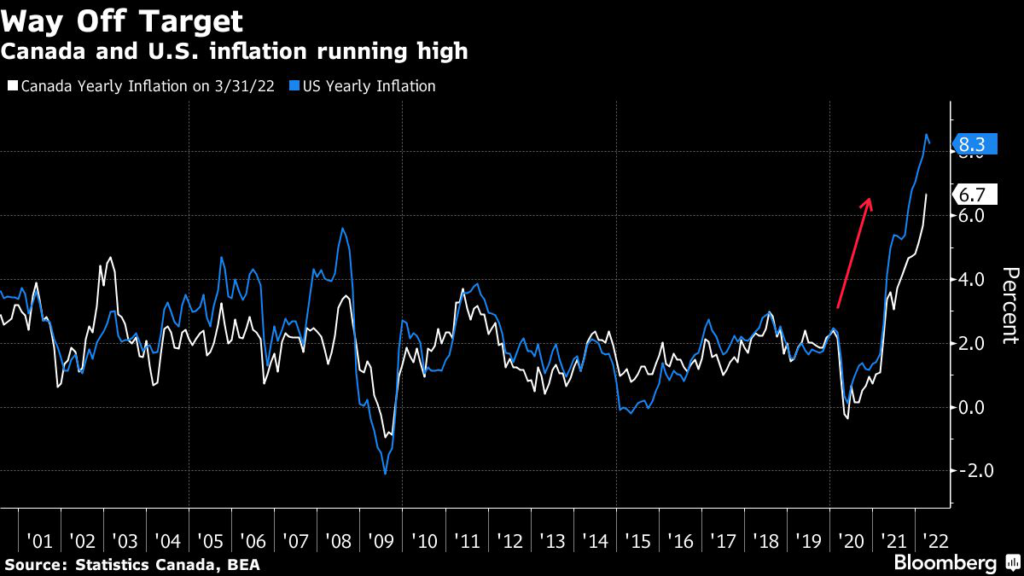
Pierre Poilievre, a 42-year-old firebrand seeking the leadership of the main opposition Conservative Party, has had the Bank of Canada’s governor in his cross-hairs for the past two years. The Ottawa lawmaker accuses Tiff Macklem of being an “ATM” for Trudeau’s deficit spending and of fueling inflation that’s now running at a three-decade high.

“I would replace him with a new governor who would reinstate our low-inflation mandate, protect the purchasing power of our dollar, and honor the working people who earned those dollars,” Poilievre said during a leadership debate Wednesday night in Edmonton, Alberta, to much applause from the audience.

Poilievre added that those who caused soaring post-pandemic inflation rate must be “held accountable.” 

Trudeau, asked about the Conservative lawmaker’s comments, said the Bank of Canada’s independence is vital to the country’s international reputation. 

“We have a robust and rigorous central bank that is independent from political machinations or interference,” the prime minister told reporters Thursday afternoon. “It is something that is a source of pride and a source of stability.”

That Poilievre “seems to profoundly either misunderstand that or not care about the facts at all is somewhat disappointing,” Trudeau added.

A Bank of Canada spokesman, meanwhile, downplayed the Conservative leadership contender’s remarks.

“It’s not the bank’s role to comment on political debates,” Paul Badertscher said earlier Thursday. “Governor Macklem was appointed by the bank’s board of directors, with the approval of the governor in council, for a seven-year period. His term runs until June of 2027.”

At a campaign policy announcement last month in front of the monetary authority’s Ottawa headquarters, Poilievre said he would increase parliamentary oversight of the central bank and halt its efforts to develop a digital currency. 

The Conservatives are set to elect a new leader in September, though Trudeau’s recent power-sharing deal with a left-wing opposition party means the victor likely won’t get a chance to unseat the Liberals until 2025. 

The Bank of Canada has recently embarked on what’s expected to be one of the most aggressive tightening cycles since the end of last century. Soaring inflation prompted policymakers to quickly lift borrowing costs from pandemic-era emergency lows in March, followed up by a rare 50-basis point increase in April — forceful moves meant to quell price pressures. 

Markets expect another jumbo-sized rate hike on June 1 and are betting the policy interest rate will rise to 3% over the next 12 months.

(Updates with Trudeau comments.)

More stories like this are available on bloomberg.com

©2022 Bloomberg L.P.

Renault Maps Out Carveouts of Electric, Fossil-Fuel Businesses

(Bloomberg) — Renault SA outlined a plan to carve out separate electric-vehicle and combustion-engine businesses, saying the overhaul that’s under consideration could take effect by next year.

An entity dedicated to EVs and software would be based in France and employ about 10,000 people by 2023, according to a statement Thursday. It’s the first time the automaker has provided specific details about the project first raised in February. 

“This autonomous entity would have a business model adapted to the specificities of electric vehicles and would be able to forge partnerships in new technologies and services,” Renault said. 

The second entity would focus on internal combustion and hybrid powertrains, and be based outside France, also with a staff of about 10,000.

Renault’s potentially transformational revamp comes as the automaker struggles to compete in a declining European car market and prepares to take a mid-year financial hit by pulling out of Russia, its second-biggest market before the war in Ukraine.

While Chief Financial Officer Thierry Pieton said last month that the carmaker was considering options ranging from a simple accounting separation to an initial public offering of its EV business, Thursday’s statement indicates a relatively deep revamp is underway.

Strengths, Expertise 

Renault said the EV business would include manufacturing and engineering at French sites, while the entity dedicated to combustion and hybrid powertrains would have sites around the world — including Spain, Portugal, Turkey, Romania and Latin America. It could also develop partnerships. 

With Renault’s overhaul starting to take shape, it remains unclear what role Japanese partners Nissan Motor Co. and Mitsubishi Motors Corp. will play. Earlier Thursday, Nissan Chief Operating Officer Ashwani Gupta didn’t commit to the plan.

“Let’s do the study with them and then we’ll make our opinion,” he told a conference organized by the Financial Times. “In the next 10 days we should have a better understanding” of what Renault CEO Luca de Meo is trying to do.

Top executives from the three-company alliance are scheduled to hold in-person meetings in Japan next week, the first since the pandemic took hold. 

“The aim of these strategic reflections is to adapt each technology, drawing on the group’s strengths and expertise on its various markets and within the Alliance,” Renault said. 


More stories like this are available on bloomberg.com

©2022 Bloomberg L.P.

Parents Are Trying Homemade Infant Formula. Doctors Say They Shouldn’t

(Bloomberg) — US baby-food shortages driven by everything from supply-chain chaos to product recalls are driving some Americans to try to make baby formula themselves.

With store shelves emptying, some desperate parents are turning to the internet for do-it-yourself recipes. But these homemade versions come with serious health risks, medical professionals and health officials say.

“Do not make your own formula at home,” said Florida pediatrician Mona Amin. “As tempting as it can be, there’s no safeguards that’s safe, that it’s nutritious.”

Formula shortages have been a problem for parents since last year because of supply-chain disruptions, but stockpiles were further squeezed after Abbott Laboratories’ nutrition unit  recalled some of its products earlier this year, including top-selling brand Similac.

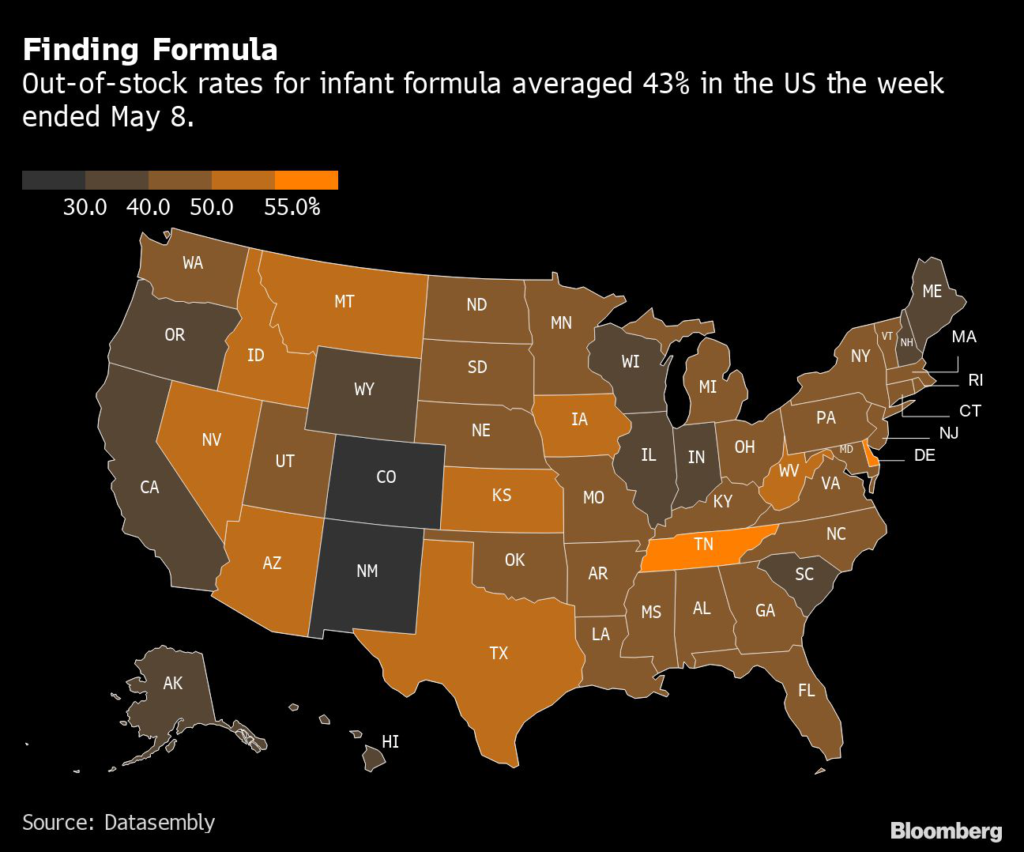
The scarcity is getting worse. Nationwide, the average out-of-stock rate for baby formula was 43% the week ended May 8, up from 31% in early April and 11% at the end of November, according to retail-tracking firm Datasembly. President Joe Biden will speak with infant formula manufacturers Thursday and announce additional actions to address the shortage.

Read More: Retailers Including CVS Ration Baby Formula as Shortages Hit 50%

Kristen Cochran, a mom of a five-month-old in South Carolina, checks websites multiple times a day for product restocks.

“Buying formula at this point is very much like winning the lottery,” Cochran said in an email. “Wondering when you will be able to get it to feed your baby is not a great feeling.”

The shortages are especially dire for low-income families. They typically can’t afford to pay up for shipping from retailers outside of their area or rely on benefits and can only buy specific brands or container sizes under the program’s rules. In many states, Abbott Nutrition is the sole contractor for those who get benefits through the Special Supplemental Nutrition Program for Women, Infants, and Children, known as WIC.

TikTok Videos, Zoom

While some parents are relying on friends or family members out-of-state to send formula supplies or driving as much as four hours away trying to stock up, others are turning to social media for help. From Twitter to Facebook to TikTok, DIY recipes are popping up — some more complex than others. One calls for more than a dozen ingredients, ranging from cod liver oil to liquid whey, while another simply suggests mixing milk with water. People are even hosting Zoom sessions showing parents and caregivers how to make their own recipes at home, and accepting donations for these tutorials.

Infant formula is the most regulated food product on the market — for good reason. Commercial formulas are created to closely mimic human breast milk and are held to high regulatory standards to ensure infants have the nutrients they need. Homemade formulas don’t have the same oversight, meaning it’s much trickier to guarantee the proper nutrition profile with a do-it-yourself recipe. In fact, the Food and Drug Administration strongly advises against making formula at home.

“If we don’t have access to formula, we don’t have access to those nutrients that are needed to build those neurons in our brain, to build those muscles to be able to move, to build all of those skills that we need,” said Amin, the pediatrician.

One 2021 report from the US Centers for Disease Control and Prevention illustrates the dangers of homemade formulas. A 4-month-old infant went into multiple episodes of cardiac arrest and suffered brain damage after he’d been fed a concoction made of sea moss, hemp seeds and coconut water for a month. Another 5-month-old exhibited breathing issues and had bone deficiencies.

Homemade formulas can also lead to contamination and hypocalcemia, or low calcium, according to the FDA.

Alternatives?

Anyone who is scrambling for baby formula supplies should first contact their child’s pediatrician, said Amin, as they can help parents or caregivers find formula or guide them through the process of switching to a different brand.

While it’s safe for most infants to swap to other commercial brands, including generic ones, doing so is not always straightforward if they have health conditions that require specialized formulas. Some children may also have gas, discomfort or spit up when using a different brand, Amin said. 

Babies over 12 months old can switch to cow’s milk, but they shouldn’t make the switch before that age, as it can lead to intestinal bleeding.

Although it may seem safer than homemade recipes, Amin also advised against diluting commercial formula to stretch supplies. “That is actually very dangerous to do because an over-diluted formula can cause electrolyte imbalances in children,” she said.

Formula feeding is used by parents widely: By six months, only a quarter of infants are exclusively breastfed, according to the CDC.

More stories like this are available on bloomberg.com

©2022 Bloomberg L.P.

Koch Industries, Fossil Fuel Veteran, Makes Another Battery Bet

(Bloomberg) — A division of Koch Industries Inc. led a $102 million funding round for manufacturing startup 6K, in the fossil fuel giant’s latest bet on the lithium-ion batteries that are gradually replacing gasoline in cars. 

Based north of Boston, 6K says it has developed technology for producing battery materials faster and with less energy than standard methods. The series D funding round also included the world’s largest lithium miner Albemarle Corp., Energy Impact Partners LP and HG Ventures.

Often associated with the conservative politics of its chief executive officer, Charles Koch, privately held Koch Industries has in recent years poured money into advanced batteries, particularly the lithium-ion cells that power cars. Through its division Koch Strategic Platforms, it has invested $100 million into Standard Lithium, which is developing a lithium-extraction facility in Arkansas, $50 million into a battery-making joint venture with Norway’s Freyr Battery SA, and $100 million into Li-Cycle Holdings Corp., which is building plants to recycle the batteries’ lithium, nickel and cobalt. In April, Koch Strategic Platforms invested $30 million in solid-state battery manufacturer Blue Current. 

“The investment from Koch Strategic Platforms not only brings the capital required to fuel our growth, but equally important, they bring unparalleled commitment and reach within the battery value chain,” said 6K Chief Executive Officer Aaron Bent in a statement.

More stories like this are available on bloomberg.com

©2022 Bloomberg L.P.
Elon Musk Seeks to Scrap Tesla Margin Loan With New Twitter Funding

(Bloomberg) — Elon Musk is in talks to raise enough equity and preferred financing for his proposed buyout of Twitter Inc. to eliminate the need for any margin loan linked to his Tesla Inc. shares, according to people with knowledge of the matter. 

The billionaire’s advisers, led by Morgan Stanley, have begun soliciting interest from potential investors for as much as $6 billion in preferred equity financing, the people said, asking not to be named discussing a private transaction.

Musk, 50, had originally teed up a $12.5 billion margin loan as part of his $44 billion deal to buy Twitter. That was halved to $6.25 billion after he disclosed $7.1 billion in equity commitments from investors including Larry Ellison, Sequoia Capital, Qatar Holding and Saudi Prince Alwaleed bin Talal, with the latter rolling his Twitter stock into the deal. 

Since then, Musk has received commitments for another $1 billion in equity, and is in talks for more, one of the people said.

That additional equity, on top of the preferred financing, would be enough to erase the margin loan, cutting the risk of the deal for both Musk and his lenders. 

It would also alleviate pressure on Tesla’s stock, which is the cornerstone of Musk’s $216 billion fortune, the world’s largest. The electric carmaker has tumbled more than 25% since he agreed to purchase Twitter, stoking concerns among investors that he may sell even more than the $8.5 billion he’s already disposed of to fund the buyout.

Talking Terms

The preferred equity may have a 20-year maturity and include a feature allowing interest to be paid in kind at a rate of 14%, the people said. That interest rate would be increased by 75 basis points in the seventh, eight and ninth year, they added. The financing may alternatively be structured with a 10% interest rate and warrants, one of the people said. 

Terms and size of the financing aren’t finalized and could change. Musk can block any transfers of the preferred equity, some of the people said. 

A representative for Musk did not respond to requests for comment. A Morgan Stanley representative declined to comment. 

Firms including Apollo Global Management Inc. and Sixth Street are already discussing participating in the preferred financing, Bloomberg reported earlier this week.

Read more: Elon Musk Turns to Billionaire Backers for Twitter Equity

Investors, especially those who specialize in merger arbitrage, have been hyper-focused on Musk’s margin loan since he made his offer for Twitter. That’s because as of June 30, Tesla’s chief executive had already pledged more than half of his shares toward other borrowings, leaving him with a limited amount he could put up for the social-media company and raising the risk that a slide in the stock could jeopardize the buyout. 

At the initial $12.5 billion size and after his share sales last month, Musk wouldn’t have had enough unpledged Tesla shares to cover the margin loan if the stock fell below $837. At the current $6.25 billion, Musk could withstand a drop to about $420. 

Tesla fell to as low as $680 on Thursday, and traded at $735.61 at 12:33 p.m. in New York. Twitter, meanwhile, surged as much as 3% intraday, before paring its advance. At $45.40, it remains below Musk’s $54.20 offer.

(Updates with details of margin loan in 11th paragraph.)

More stories like this are available on bloomberg.com

©2022 Bloomberg L.P.
Terra Developers Halt New Transactions on Stablecoin Blockchain

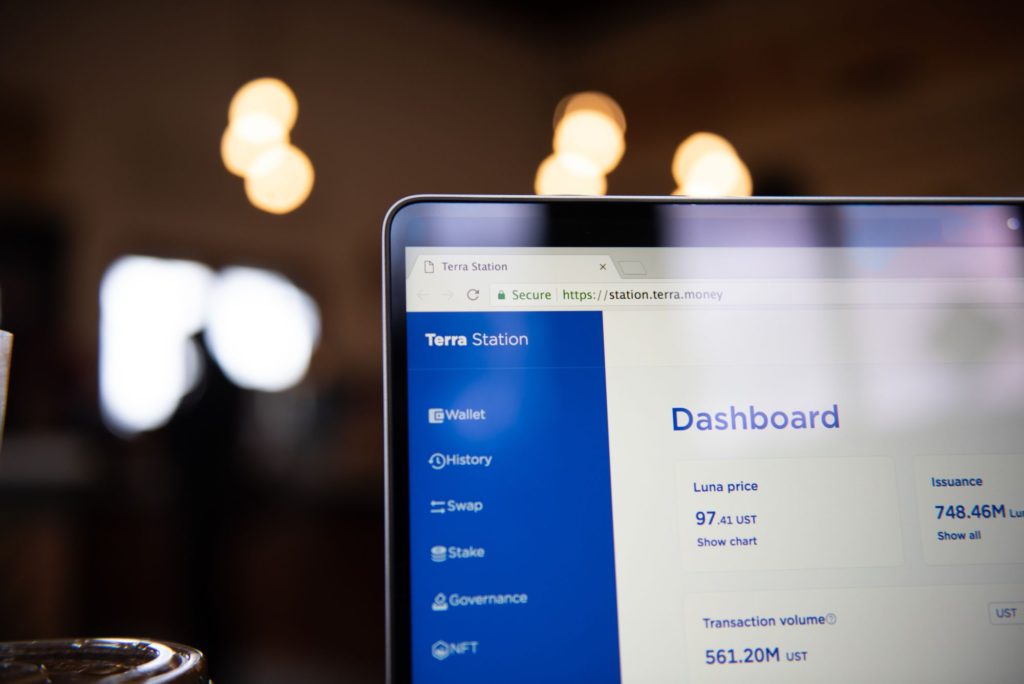
(Bloomberg) — A verified Twitter account for Terraform Labs said it would halt new activity on the Terra blockchain on Thursday, citing a need to avoid further damage to its ecosystem after the value of its hallmark TerraUSD and Luna tokens collapsed.

“The Terra blockchain was officially halted at a block height of 7603700,” the tweet said. “Terra validators have decided to halt the Terra chain to prevent governance attacks following severe $LUNA inflation and a significantly reduced cost of attack.”

Terra’s community had previously been engaged in a seven-day vote on several proposals aimed at recovering activity on the blockchain, and eventually re-securing the peg of TerraUSD, better known as UST, which is supposed to be worth $1.

The value of Luna fell close to zero on Thursday, while UST remained around 36 cents, according to data compiled by Bloomberg and CoinGecko.

More stories like this are available on bloomberg.com

©2022 Bloomberg L.P.
Close Bitnami banner
Bitnami