
Bloomberg

Cryptocurrencies Being Used by Fraudsters, Starling Boss Says

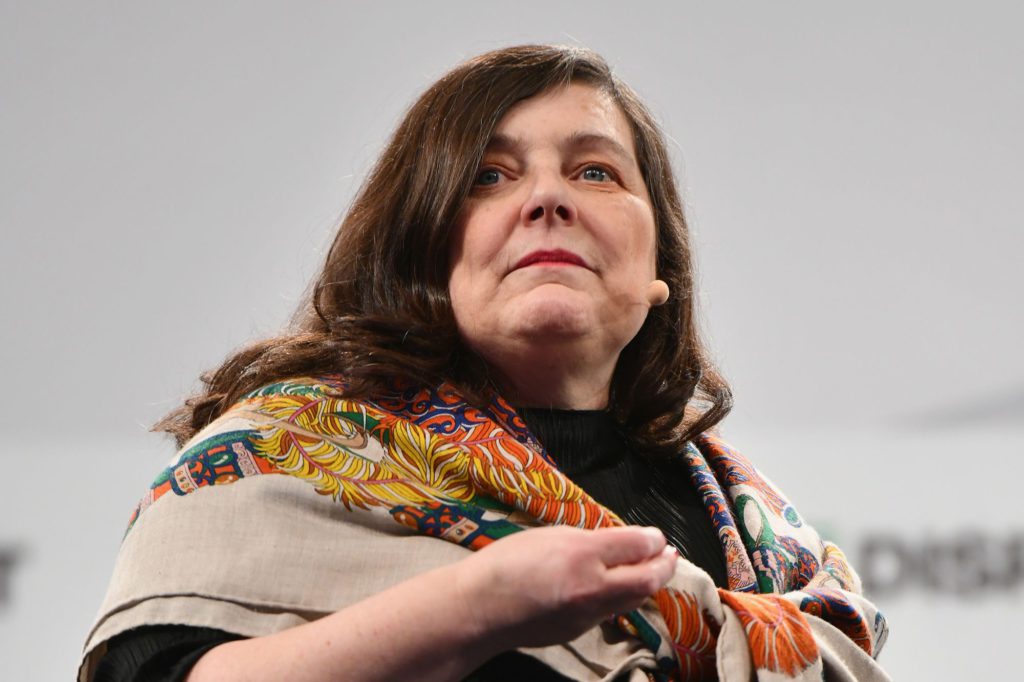
(Bloomberg) — Bitcoin and cryptocurrencies present several challenges for investors and banks, including their use by criminals, according to Anne Boden, chief executive of Starling Bank Ltd.

“People are being scammed and the proceeds normally go into crypto wallets,” Boden said in a virtual interview with Bloomberg UK. The assets are also in a valuation bubble and aren’t sustainable in the long term because of the environmental issues they will cause, she said.

Starling last month raised new funds in a round valuing the business at more than £2.5 billion ($3.1 billion), in a rare example of a European fintech achieving a value that was double the level of its previous round. All of its existing investors participated, including early backer Harald McPike and a unit of Goldman Sachs Group Inc. 

The bank could list in London at the end of next year, Boden said. The London market is “harder (than the US) on technology companies and loss-making companies,” but Starling is profitable, she said.

Starling’s future growth will partly come from selling its bespoke technology platform, Engine by Starling, to other businesses that want to offer banking services, Boden believes. 

“In four to five years’ time, I think we’ll be a global technology company that owns a bank in the UK,” Boden said. 

“Big banks around the world have a huge problem, it’s not a problem of innovation, it’s a problem of cost base, and being stuck on technology that’s gone past its sell-by date,” Boden said. 

Starling has fielded inbound queries from other banks, including in the US, about using its technology. Starling would package it as a software service, with users needing to source a banking license from another party, she said.

Boden set up Starling in 2014. The bank has 2.9 million customer accounts, including 450,000 belonging to small and medium-sized businesses. Given its market share, it can no longer be called a challenger bank in the UK, she said.

Starling is not for sale, Boden said when asked about takeover approaches from larger rivals. The bank is looking at acquisitions itself, including potentially adding lending platforms.

Boden, a frequent user of Twitter who was speaking via Twitter Spaces, said about billionaire Elon Musk’s acquisition of the streaming platform: “We must question whether the richest man in the world and his ownership of Twitter is something the world really wants but that is for another day.”


More stories like this are available on bloomberg.com

©2022 Bloomberg L.P.
Tether Loses Dollar Peg as Crypto Anxiety Hits No. 1 Stablecoin

(Bloomberg) — Dominoes are falling in crypto. First it was the collapse of algorithmic stablecoin TerraUSD, sowing turbulence in the broader market. Now its grown-up cousin Tether is wavering from the peg, fueling concern over its status as a place to hide during times of turbulence. While things appear to be settling down for the moment, nobody’s feeling safe.

Tether briefly dropped to the lowest level since December 2020, falling to 94.55 cents from its intended 1-to-1 peg to the dollar on Thursday before recovering to just above 99 cents on reassurances from Paolo Ardoino, Tether’s chief technology officer, that investors shouldn’t have any problems redeeming its tokens at a one-to-one value to the dollar via its platform. Meanwhile, Bitcoin recovered from intraday losses of more than 10% early Thursday to edge higher in the US morning. The world’s largest cryptocurrency traded at about $29,000 as of noon in New York, up about 2% on the day.


With a market value of about $84 billion, Tether is an essential cog to the array of crypto trades being actioned across the market at any given time. Investors turn to stablecoins as a way of retaining value without leaving the digital asset ecosystem, acting as a safe haven from volatile coins or even simply as a means of digital payment. It is the most traded cryptocurrency by far, charting more than double the volume of second-place Bitcoin over the last 24 hours at $178 billion.

The dip came as a massive selloff in cryptocurrencies wiped more than $200 billion in value from the market in 24 hours, knocked by weakened sentiment after Terra’s algorithmic stablecoin UST — also meant to be redeemable for $1 and a lynchpin of experimentation in decentralized finance — fell as low as 20 cents.

‘Everything Broke’: Terra Goes From DeFi Darling to Death Spiral

Tether operates differently to TerraUSD, or UST, which was designed to use a complex mix of code, trader incentives and swaps with its sister token Luna to maintain its peg. Tether, on the other hand, says it backs its token with dollar-equivalent assets, though questions about the quality of its stockpile persist. Its decline highlights the overall risk-off mood that’s sweeping through crypto markets, analysts said.

“Tether’s de-pegging seems more driven by market sentiment rather than real concern over its reserves, which demonstrates how important centralized markets are for maintaining a stablecoin’s peg,” Clara Medalie, research director at Kaiko, said in an email.

The market frenzy also caused traders to flood certain digital markets that allow them to swap one stablecoin for another on Thursday morning, according to data from Dune Analytics. One such location is Curve’s 3pool, which houses a stockpile of three stablecoins, USDT, USDC and DAI. While the pool’s portion of USDT represented about 42.6% of the total on May 7, that figure skyrocketed to 92.6% as of mid-morning on Thursday.

“I think given the situation with UST and market volatility retail traders are motivated to exchange their stablecoins for actual dollars, and the imbalance in the Curve pool is a result of that fluctuating demand rather than a full-on bank run,” Andrew Thurman, who is in charge of content at blockchain data firm Nansen.

Opportunity Taking

In a statement following USDT’s return above 99 cents, Tether said it was processing more than $2 billion in transactions seeking to redeem USDT for fiat dollars. It repeated a figure mentioned by Ardoino in a tweet, which said that it had redeemed over $300 million in tokens in the last 24 hours.

As of Thursday afternoon in London, the broader stablecoin market had experienced bouts of volatility but largely avoided the same dramatic collapse as Terra’s UST. Other major tokens including Circle Internet Financial Ltd.’s USDC, Binance Holdings Ltd.’s Binance USD and Maker’s DAI were trading at their pegs, according to pricing data from CoinGecko.

“There may be some stablecoin contagion following UST, however Tether continues to honor 1:1 redeemable ratio on their platform,” Fadi Aboualfa, head of research at crypto custodian Copper, said in an email. “Anyone who was around 2017-2019 and saw massive drops in Tether, and it was really an opportunity to buy at a discount.”

“Quite a few people are lacking confidence in all stablecoins at the moment. I wouldn’t be surprised if a lot of USDT holders saw what happened to Terra and are now exchanging for cheap Bitcoin,” said Mati Greenspan, founder of crypto research outfit Quantum Economics.

More than $1.8 billion of Tether was removed from the market between Wednesday and Thursday, as Tether’s market value dropped to as low as $82.2 billion from $84.2 billion, according to data from CoinGecko. 

(Updates with context, price chart, comment from analysts throughout)

More stories like this are available on bloomberg.com

©2022 Bloomberg L.P.
Yellen Says Terra Meltdown Shows Crypto-Stablecoin Dangers

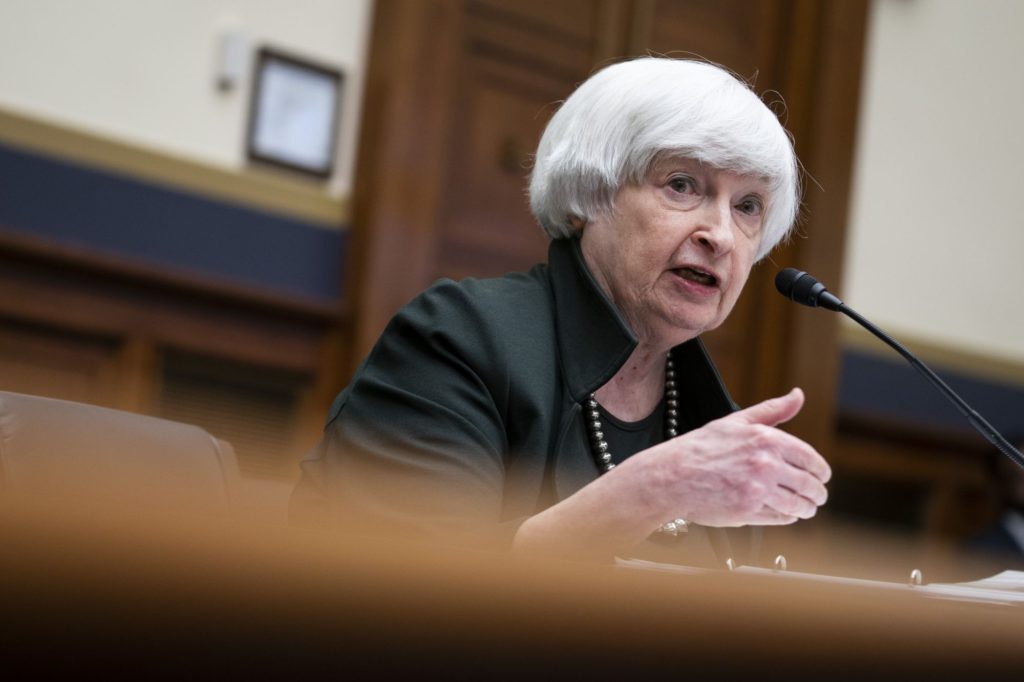
(Bloomberg) — Treasury Secretary Janet Yellen gave the US government’s most forceful response yet to the meltdown of TerraUSD, saying that the crypto stablecoin’s woes underscore the risks associated with the asset class.

Yellen said on Thursday that Terra’s spectacular tumble shows the dangers of tokens that purport to be pegged to the US dollar. She called for new regulations and added that Treasury was working on a report about the issue.

“I wouldn’t characterize it at this scale as a real threat to financial stability, but they’re growing very rapidly and they present the same kind of risks that we have known for centuries in connection with bank runs,” she told lawmakers on the House Financial Services Committee.

Concerns around the assets have also proliferated in the past week on Capitol Hill after TerraUSD, or UST, lost its peg to the dollar over the weekend. UST is a so-called algorithmic stablecoin, meaning that it’s not backed by assets like cash or cash-equivalents. Instead, it relies on trading and treasury management to maintain its value. In the most recent twist, one exchange-traded product tied to Terra saw its price almost evaporate in what may be the biggest ETP wipeout ever. 

Washington’s concerns aren’t new. In November, the Treasury and a group of federal agencies appealed to Congress to act to address “key gaps” in regulatory authority over stablecoins. They urged legislators to require that stablecoin issuers become insured depository institutions, subjecting them to oversight from banking regulators.

In March, President Joe Biden signed an executive order directing federal agencies across the government to devote more attention to prospective regulation of digital assets and placed the “highest urgency” on research, development and design of a potential U.S. central bank digital currency. He directed the Treasury to report on the implications of a CBDC within 180 days.

On Thursday, Yellen provided a glimpse into an approach the government could take in deploying a CBDC. She suggested that traditional financial institutions, rather than the government, could deal directly with users of such a coin.    

“There are a variety of design choices there, and there are issues around that,” she said. “Privacy is an issue if the central bank were to issue it directly to consumers.”

(Updates with comments on central bank digital currency in final two paragraphs.)

More stories like this are available on bloomberg.com

©2022 Bloomberg L.P.
Amazon Shareholders Should Reject CEO Pay Package, Advisers Say

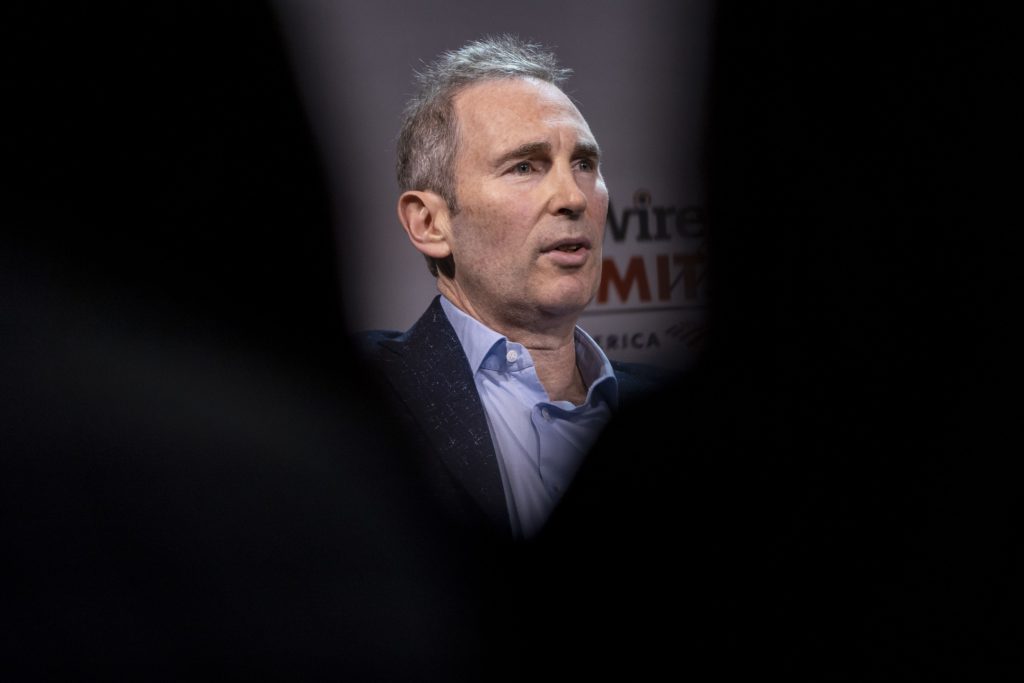
(Bloomberg) — Amazon.com Inc. shareholders should vote to reject the pay packages of Chief Executive Officer Andy Jassy and other top leaders, two influential investor advisory firms recommended, citing massive stock grants executives are set to receive regardless of how well the company performs in the coming years. 

Shareholders later this month will have an opportunity to express their views on how the e-commerce giant compensates its recently reshuffled executive ranks. Institutional Shareholder Services Inc. and Glass Lewis & Co., which advise investors on corporate governance issues, both recommend shareholders vote no in the non-binding vote. 

While it’s rare for the two firms to suggest rejecting executive pay packages, both recently recommended voting against them at Bayer AG and Discovery Inc.

Jassy, who took the reins from founding CEO Jeff Bezos in July, was awarded a pay package valued at about $212 million in 2021, the company said, almost entirely in stock grants that vest over 10 years. 

Adam Selipsky, who succeeded Jassy as head of the Amazon Web Services cloud computing unit, received about $81 million, mostly in a five-year stock grant. Dave Clark, who early last year took charge of Amazon’s retail and logistics business, was paid $56 million.

Jassy’s pay package “is excessive in the context of an internal promotion,” ISS said in a report, published to clients on Wednesday. “The compensation program lacks any connection to objective, pre-set performance criteria.” In its own report last week, Glass Lewis said: “Shareholders should be concerned with this year’s disconnect between pay and performance driven by one-off awards.”

In an emailed statement on Thursday, Amazon noted that Jassy received the shares grant last year when he transitioned from AWS chief to CEO of the entire company. 

“The way the SEC rules work we are required to report that grant as total compensation for 2021, when in reality it will vest over the next 10 years,” Amazon said. “What this equates to from an annual compensation perspective is competitive with that of CEOs at other large companies and was approved by the Amazon Board of Directors.”

Amazon says in its own recommendation to shareholders that the company’s compensation philosophy “focuses on the true long-term success of our business, not on isolated one, two or three-year goals.” More than 80% of Jassy’s shares vest after 2026, and the award is expected to “represent most of his compensation for the coming years,” the company said. 

Both ISS and Glass Lewis deemed the statement vague and non-binding and noted that Jassy could receive more stock in the coming years.  

Critics Forum

Amazon’s annual meeting, scheduled for May 25, has for years been a forum for company critics to voice their concerns before executives. This year’s shareholder-proposed resolutions include requests that Amazon consider hourly employees for future openings on its board and that the company produce reports on worker safety, the environment and employee policies, among other topics. 

Those measures are typically overwhelmingly voted down. But this year, ISS and Glass Lewis backed several of them, including a request that Amazon detail its policies on employees’ freedom of association and collective bargaining. Unions and federal labor officials have accused the company of illegally firing employees involved in union drives at its warehouses. Amazon denies that.

The New York City Comptroller has asked fellow investors to vote against the reelection of Amazon directors Daniel Huttenlocher and Judith McGrath, dinging the members of the board’s compensation and leadership committee for higher-than-average injury rates among frontline workers, violations of state and federal labor law and a high turnover rate. 

Amazon’s own guidance to shareholders recommends electing both directors, touting Amazon’s $18 an hour starting wage in the US and a safety report showing a decrease in lost time to injuries, among other initiatives. 

More stories like this are available on bloomberg.com

©2022 Bloomberg L.P.

Chainsmokers to Release NFTs That Offer a Cut of Music Royalties

(Bloomberg) — Pop music duo the Chainsmokers plan to release nonfungible tokens that will give fans a cut of the streaming royalties from their new album, “So Far So Good.”

The 5,000 NFTs will be given out for free on May 17, with a VIP list made up of frequent concert ticket buyers and other superfans getting early access. Holders are entitled to a collective 1% of the “So Far So Good” royalties, the group announced Thursday.

It’s a tenuous moment for NFTs, which have been hit hard by a rout that’s also punished cryptocurrencies. Blue-chip NFT collections like Bored Ape Yacht Club have seen prices plummet in recent days.

But the Chainsmokers’ NFTs, which are based on the Polygon blockchain, offer actual perks to fans. That may may help them stand out from other tokens, said Drew Taggart, one of the group’s members. In addition to the share of royalties, the NFTs will offer priority access for concert tickets and free merchandise.

The approach also will help the group reconnect with fans, he said in an interview. The new album, due on Friday, will be the Chainsmokers’ first in more than two years. “We’ve been very fortunate to have global success, but at some point felt really disconnected from our fan base,” Taggart said. 

The music industry is no stranger to crypto. There are projects like Audius, a decentralized music streaming service based on blockchain. Indie band the Kings of Leon released their last album as an NFT. Artists like DJ Steve Aoki and rapper Snoop Dogg have also embraced these tokens.

But NFTs haven’t taken off in the music world the way they did in gaming and digital art, two categories that dominate the leaderboards for popular NFT collections. That may be because some artists simply see NFTs as digital goods, according to Taggart.

“Being able to give your fans ownership in your actual album and participate in streaming royalty revenue is a really interesting case,” he said. 

Taggart and bandmate Alex Pall, are already well-versed in the world of crypto through their venture firm, Mantis, which formed last year with the goal of investing $50 million in startups. The fund has backed crypto companies like MoonPay, Magic Eden and Mythical Games.

Pall said in an interview that he and Taggart are interested in web3, a decentralized version of the internet, because it returns value and ownership to users. He said the NFTs also help shed light on disparities in the music industry. The Chainsmokers are entitled to a 7.5% cut from secondary sales of the NFTs, but the group is donating those profits to the album’s songwriters, a role they said is often underpaid in the music industry.

It’s too early to tell what kind of profit the NFT holders could get from their royalties cut, according to Pall. However, holders may not want to hold their breath in hopes of a big payday.

“In some ways, it’s an experiment to show people how little money is generated sometimes across the board in the music space, due to licensing rules and copyright laws,” Pall said. 

For their NFT drop, the Chainsmokers partnered with Royal, a startup that wants to change the relationship between music artists and their fans. The company’s chief executive officer, Justin Blau, used to feature the Chainsmokers as an opener when he performed as a DJ under the moniker 3LAU. He’s also sold his own music NFTs, making a $12 million from auctioning off a trio of them last March. 

He and co-founder JD Ross launched Royal almost a year ago with the goal of making it easier for fans to invest in artists. The company helps musicians develop and sell NFTs that give fans a share of streaming ownership. It raised $55 million in Series A funding in November and has seen users spend more than $1 million on the platform since an NFT release with rapper Nas in January. 

Blau said in an interview that fans often receive their royalties biannually. NFT holders can also make money off of secondary sales and can list their assets on other marketplaces like OpenSea. He noted that the NFTs sold on Royal are referred to as “limited digital assets.”

For Blau, these assets give holders actual ownership of the songs they love, which he said is more meaningful than simply possessing a copy of them.

“No one necessarily brags about owning a CD,” he said. 

More stories like this are available on bloomberg.com

©2022 Bloomberg L.P.
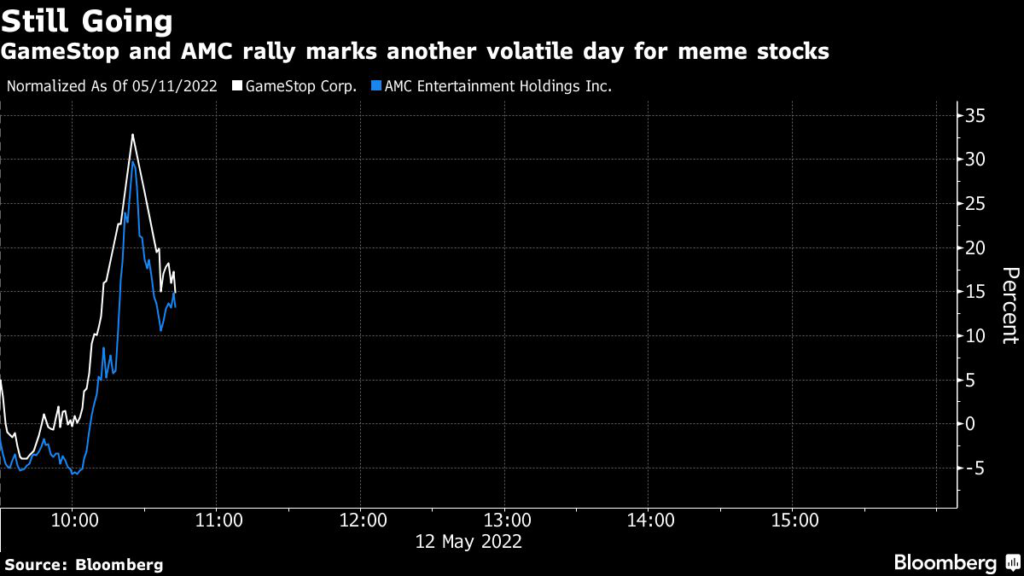
GameStop, AMC Jump With Meme Stocks Back in Favor — for Now

(Bloomberg) — Big rallies for GameStop Corp. and AMC Entertainment Holdings Inc. are proving that there is still demand for meme stocks.

The video-game retailer soared as much as 33%, triggering at least four trading halts, as investors flipped shares of beaten-down stocks. The rally carried over to AMC Entertainment, the other poster-child of the so-called meme stock mania that gripped Wall Street last year, as shares of the movie theater company spiked more than 30% at one point.

The latest rally comes despite volatility for broader markets and is a sign that investors may be digging back into riskier assets. However, the gains pale in comparison to the surge that vaulted many meme stocks to the top of the Russell 2000 Index last year. GameStop trimmed gains to 15% at 10:50 a.m. in New York while AMC Entertainment was up 12%. 

Both stocks were among the most bought companies on Fidelity’s platform on Thursday, rivaling Apple Inc. and Walt Disney Co. While the pair have tumbled from last year’s peak, they remain up more than 400% from the start of 2021.

A basket of 37 meme stocks tracked by Bloomberg rallied 7.9% in the first hour of trading, on pace to snap a five-day losing streak that wiped out one-fifth of its value. Even with Thursday’s bounce, the group is down nearly 60% from a June 2021 high.

More stories like this are available on bloomberg.com

©2022 Bloomberg L.P.

Sorare Will Offer Fantasy Baseball NFT Game With MLB

(Bloomberg) — Sorare, the maker of a fantasy sports app popular in Europe, will create a version of the crypto game with Major League Baseball, the first addition of a big four American sport.

The game will resemble the company’s European football app, which has 1.8 million players worldwide and has made Sorare a sought-after investment for venture capitalists. People will be able to buy and sell digital baseball cards, represented as nonfungible tokens, and assemble a fantasy team that’s ranked based on the athletes’ performance during the season. Sorare will offer free and paid versions this summer after the All-Star Game in July, the MLB said.

Fantasy leagues and trading cards have long been a part of baseball culture, said Nicolas Julia, the chief executive officer of Sorare. The company will also seek to draw fans by offering rewards that include player meet-and-greets and stadium tours. “We are seeing a lot of potential,” he said.

MLB sees the partnership as a potential way to broaden baseball’s fanbase, said Noah Garden, the league’s chief revenue officer. NFTs and fantasy sports tend to be more popular among younger fans, and Sorare could introduce baseball to a more international audience, Garden said.

Crypto and sports are becoming increasingly aligned. The National Basketball Association already has its own NFT initiative, NBA Top Shot, with the startup Dapper Labs. Crypto companies have bought up the naming rights to sporting venues, including the Staples Center in Los Angeles, which is now the Crypto.com Arena. Coinbase Global Inc. is a sponsor of the NBA and FTX of MLB.

Julia co-founded Sorare four years ago in France, and it quickly won over football fans across the continent. Sorare generated about $325 million in sales last year, the company said. Investors were drawn to the growth — nearly 4,000% last year — and the prospects. SoftBank valued the business at $4.3 billion in 2021 knowing the goal was to expand to a major American sport, Julia said. It unveiled a deal with Major League Soccer in March and plans to finalize a partnership with another big US league, in addition to MLB, later this year, Julia said, declining to identify the sport.

MLB initially had some hesitations about embracing crypto, Garden said. (He has personally owned and lost money on NFTs.) But Garden said the NFTs used on Sorare’s platform will have staying power because of their connection to gaming. “I don’t want somebody investing a lot of money in something that either decreases very quickly in value, or worse, it goes away,” he said.

Indeed, it’s a tricky time to sell the idea of investing in crypto tokens. An index of NFT assets fell by about 26% over the last week, and high-profile scams plague the market. Monthly sales volume for NBA Top Shot in April were less than half of what they were in January, according to the research firm CryptoSlam. Sorare’s volume declined 40% to $21.1 million over the same period.

Investors said the market will rebound. People’s love of sports and gaming will outlast market turmoil, said Peter Fenton, a member of Sorare’s board and a general partner at the VC firm Benchmark. “Sorare is an ah-ha moment of what’s possible in crypto,” he said.

Alexis Ohanian, the Reddit co-founder and a Sorare investor through his VC firm Seven Seven Six, compared the startup to Magic: The Gathering and Dungeons & Dragons, where people own the assets they play with. Blockchain technologies “take us back full circle to the traditions of gaming,” said Ohanian, whose wife, the tennis great Serena Williams, is an adviser to Sorare’s board.

Sorare is profitable and doesn’t expect to seek more financing in the near future, said Julia. An initial public offering in the U.S. is something the company could explore down the line, he said. “Right now, we are really focused on launching the US sports.”

(Updates with additional Ohanian title in the penultimate paragraph.)

More stories like this are available on bloomberg.com

©2022 Bloomberg L.P.
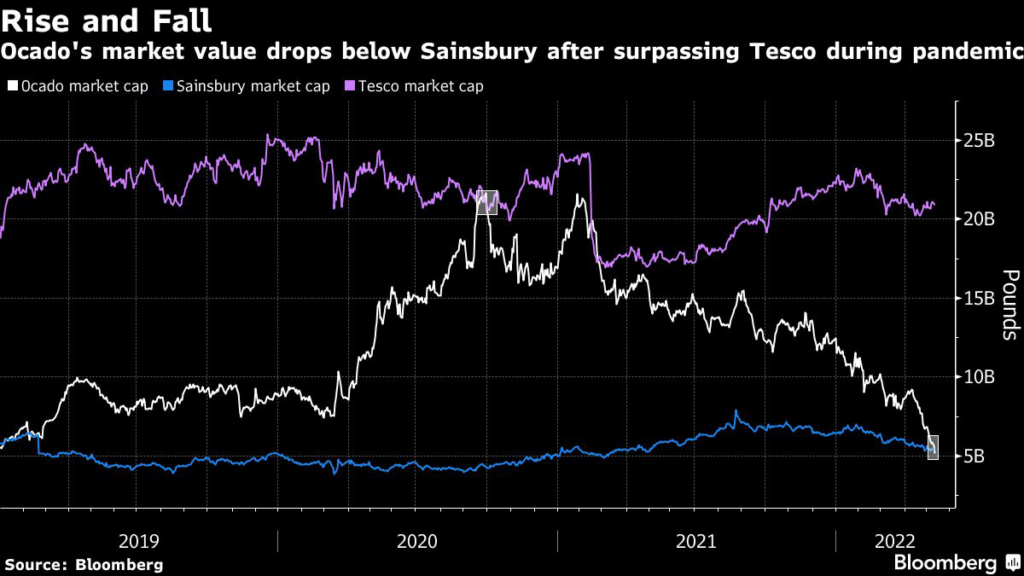
Ocado’s Market Value Drops Below Peers as Pandemic Boost Fades

(Bloomberg) —

Ocado Group Plc’s market valuation dropped below that of J Sainsbury Plc for the first time since early 2019, as investor enthusiasm over stocks that benefited during the pandemic fades. 

The shares traded 5.2% lower as of 3:13 p.m. in London, taking its market capitalization to £5.39 billion ($6.58 billion). That compares with £5.48 billion for Sainsbury and £20.9 billion for Tesco Plc. 

It’s a reversal of fortunes for Ocado, whose market value reached a peak of £21.7 billion in September 2020, surpassing that of Tesco as the pandemic fueled a surge in demand for online grocery shopping. 

“Valuations have become much more realistic, with the enthusiasm for all things pandemic getting a sharp reality check,” said Michael Hewson, chief market analyst at CMC Markets UK. “Once Ocado can show it can start making a profit, perhaps the shares can start heading higher again.” 

Thursday’s drop was part of a broader market decline, with European stocks catching up with Wednesday’s selloff in the US market as investors fled riskier assets. 

More stories like this are available on bloomberg.com

©2022 Bloomberg L.P.

Red Bull Stunt Pilots Who Crashed Have Licenses Revoked by FAA

(Bloomberg) — Two pilots flying aircraft emblazoned with Red Bull GmbH logos who attempted to switch planes mid-flight without government authorization — a stunt resulting in a crash in the Arizona desert last month — had their aviator licenses revoked. 

The US Federal Aviation Administration on Thursday also proposed a civil fine of $4,932 against one of the pilots, Luke Aikins, “for abandoning his pilot’s seat and operating an aircraft in a reckless manner,” the agency said in an emailed statement. 

The pilot admitted he attempted what the regulatory agency termed an “unauthorized Red Bull plane swap stunt” after being denied a request for an exemption, the FAA said. Aikins didn’t immediately respond to a request for comment.

One of the two small planes crashed on April 24. Aikins regained control of the second plane and landed while the other pilot parachuted to the ground. Red Bull, which details what it calls the “aspirational feat” on its website, also didn’t immediately respond to a request for comment. 

More stories like this are available on bloomberg.com

©2022 Bloomberg L.P.
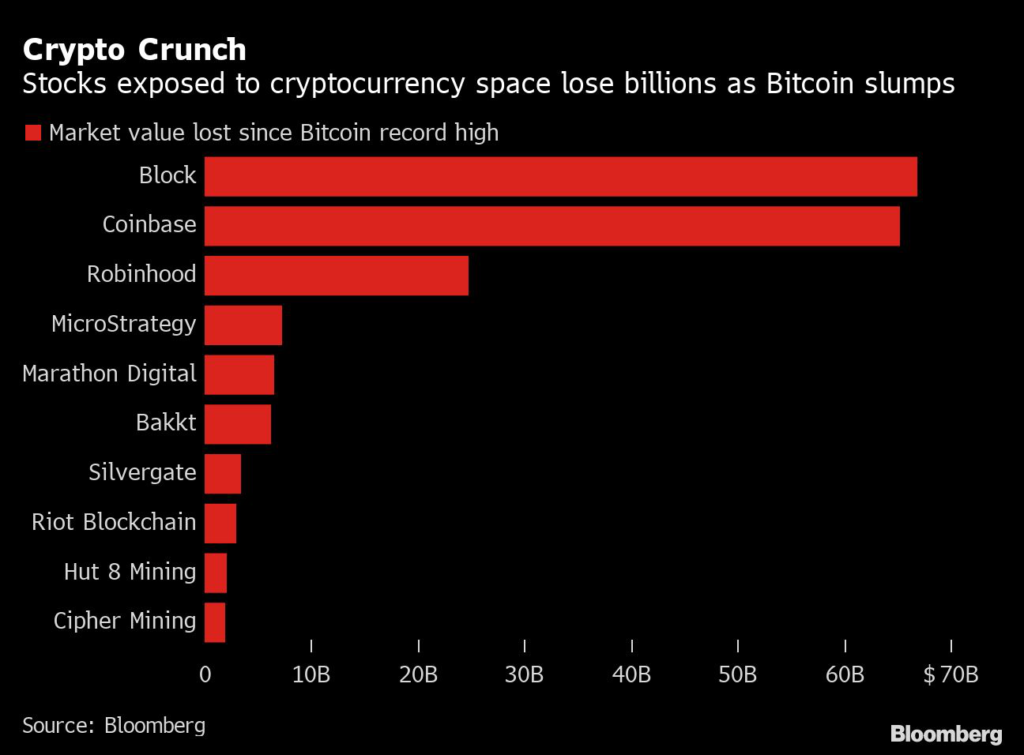
Crypto Stocks Have Erased $200 Billion in Value Since Bitcoin’s Peak

(Bloomberg) — Crypto companies have been pummeled over the last six months as Bitcoin’s price was cut in half amid a broader rout in global risk assets. A basket of 25 US-listed cryptocurrency-related stocks has seen roughly $200 billion in market value erased since the world’s largest digital token reached a record high in early November, according to data compiled by Bloomberg. Large-cap names with exposure to the crypto space including Block Inc., Coinbase Global Inc. and Robinhood Markets Inc. are among the hardest hit, losing three-quarters of their market capitalization on average over that span.

More stories like this are available on bloomberg.com

©2022 Bloomberg L.P.

Close Bitnami banner
Bitnami
