Bloomberg

UK Economy Unexpectedly Shrinks in March: The London Rush

(Bloomberg) — Here’s the key business news from London this morning.

GDP : The UK’s economy unexpectedly contracted in March as the cost of living squeeze saw consumers cut back on spending.

  • Gross domestic product fell 0.1% from February, when growth was flat, according to data released by the Office for National Statistics

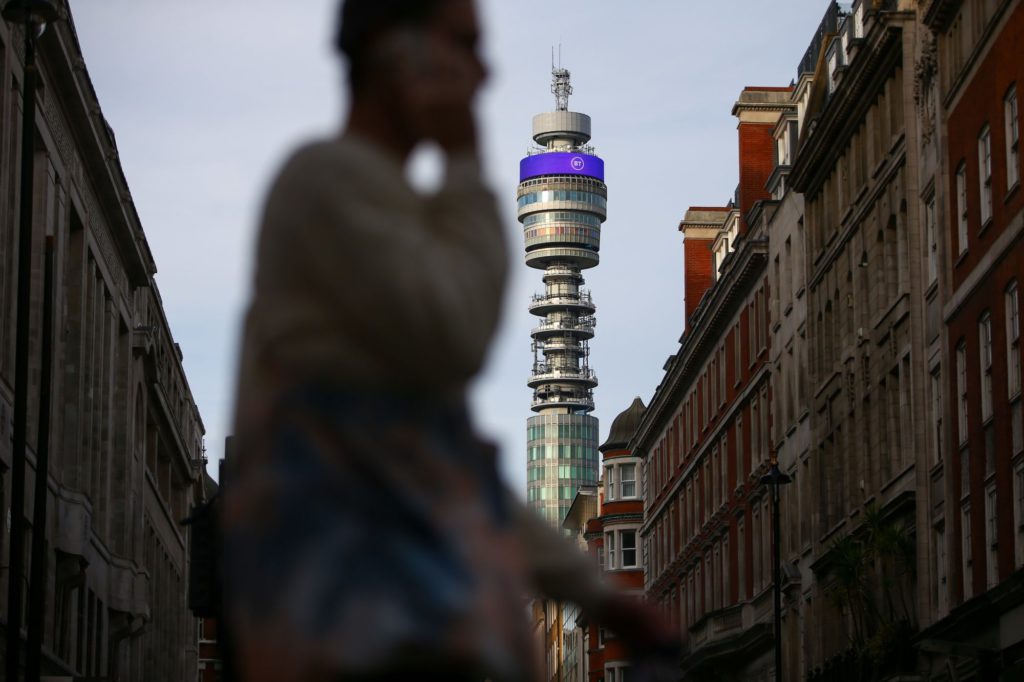
BT Group Plc: The telecommunications company has agreed to transfer the operating businesses of BT Sport to Warner Bros. Discovery Inc, as part of a new 50:50 joint venture for sport broadcasting in the UK & Ireland.

  • The British company will receive £93 million as part of the deal with the opportunity to earn about £540 million more if conditions are met 

Hargreaves Lansdown Plc: The retail investment company reported lower net new business inflows than expected in the third quarter, pointing to  “unprecedented” macroeconomic and geopolitical events impacting investor confidence

  • The company reiterated their guidance for this year, and raised their revenue margin on cash expectations to 30-35bps as the impact of base rate rises start to come through

Outside The City

Boris Johnson will spend the next few days considering whether the UK will introduce legislation to override its post-Brexit settlement with the European Union. He will hold further discussions with Foreign Secretary Liz Truss after she meets EU negotiator Maros Sefcovic in Brussels Thursday.

The Bank of England will have to raise interest rates further to control surging prices, and there’s a risk that the UK’s worst inflation crisis in decades will take longer to ease fully, Deputy Governor Dave Ramsden told Bloomberg.

Read the latest coverage of the war in Ukraine here.

In Case You Missed It

Fierce competition for workers pushed UK salaries higher in April, according to a survey that will put pressure on the Bank of England to continue tightening monetary policy in its battle to tame inflation.

And with the shift to hybrid working set to continue, Tesco Plc teamed up with flexible office company IWG Plc to convert excess space in a south London supermarket into a work hub. 

Looking Ahead

As the earnings week draws to a close, software publishing company Sage Group Plc and power generation firm ContourGlobal Plc are set to report results tomorrow. 

More stories like this are available on bloomberg.com

©2022 Bloomberg L.P.

China’s Covid Zero Policy Makes 2020-Style Rebound Unlikely

(Bloomberg) — China’s tightening Covid rules and extended lockdowns are making a 2020-style V-shaped economic recovery a dim possibility this time around. 

The slump in output may not be as deep as two years ago, when most of the country was under some form of restriction from late January through much of February following the outbreak in Wuhan. Currently, areas making up only about 30% of gross domestic product are under full or partial lockdown, according to estimates from Nomura Holdings Inc. 

However, this time around, given the ability of the highly infectious omicron variant to evade stringent controls, there’s greater risk of cities shutting down and then reopening repeatedly over several months. Major hub Shanghai is still in lockdown after five weeks, and while cases are easing there now, Beijing and other cities are tightening restrictions to curb their own outbreaks. 

Read More: Virtual Fence in Beijing Curbs Cab Access to Covid-Hit Districts

The result is that businesses will have to live with the ever-present threat of disruption of the kind that’s halted production at companies like Tesla Inc. and roiled supplies at Sony Group Corp. Consumer confidence and spending will likely also remain weak, putting the government’s GDP growth target of about 5.5% for this year further out of reach. 

“The main concern is that given the high transmissibility of omicron, the containment and lockdowns could be in place longer than in 2020,” said Wei Yao, head of research for Asia Pacific and chief economist at Societe Generale SA. “The confidence shock could be more sizable because the difficulties of extinguishing outbreaks make it almost impossible for business and households to forecast an end to recurring disruptions.”

CHINA INSIGHT: Plunging Subway Use, Home Sales Show Lockdown Hit

Unlike 2020, the economy must also weather the Covid crisis without one of its key growth drivers: property. Home sales are dropping, real-estate investment is plunging and property developers are under severe financial strain after Beijing tightened rules last year to curb runaway prices and control debt. 

Another difference from two years ago is the global environment. Central banks around the world are hiking interest rates to curb soaring inflation, energy prices are spiking because of Russia’s war with Ukraine, and global demand for China’s exports — a key driver of the economy’s 2020 rebound — is set to slow. 

“There is less space for policy easing than in 2020,” said Louis Kuijs, Asia-Pacific chief economist at S&P Global Ratings. “Debt and leverage is materially higher now than at the beginning of 2020, constraining the ability to use fiscal policy and credit to support growth. On the monetary side, rising US interest rates also make it harder to ease monetary policy.”

Here’s a deeper look at how the economic impact of the current lockdowns differ from two years ago and what the implications are likely to be.

Retail Sales

Retail sales have never recovered from the pandemic, with growth rates well below the 8% or more expansion seen in 2019 and before. Sales fell in March nationwide even before Shanghai was fully in lockdown, and with restrictions expanding nationwide since then, it’s expected that consumption dropped in April too.  

In Shanghai alone, sales plunged 19% in March and consumption at restaurants and hotels was down almost 40% from a year earlier. 

Mobility Data

The number of people riding the subway in 11 of China’s largest metro systems has slumped back to the level seen in 2020, as the lockdown of Shanghai and Zhengzhou and outbreaks in other cities forced people to stay home. 

An average of 29 million people took the subway each day over the past week in those 11 cities, down 43% from a year earlier. Even without Shanghai, that was still a 14% slump in the number of passengers, and outbreaks in other areas are continuing to affect ridership. Beijing has shut more than 70 metro stations so far to prevent infections from spiraling out of control.

Manufacturing Slump

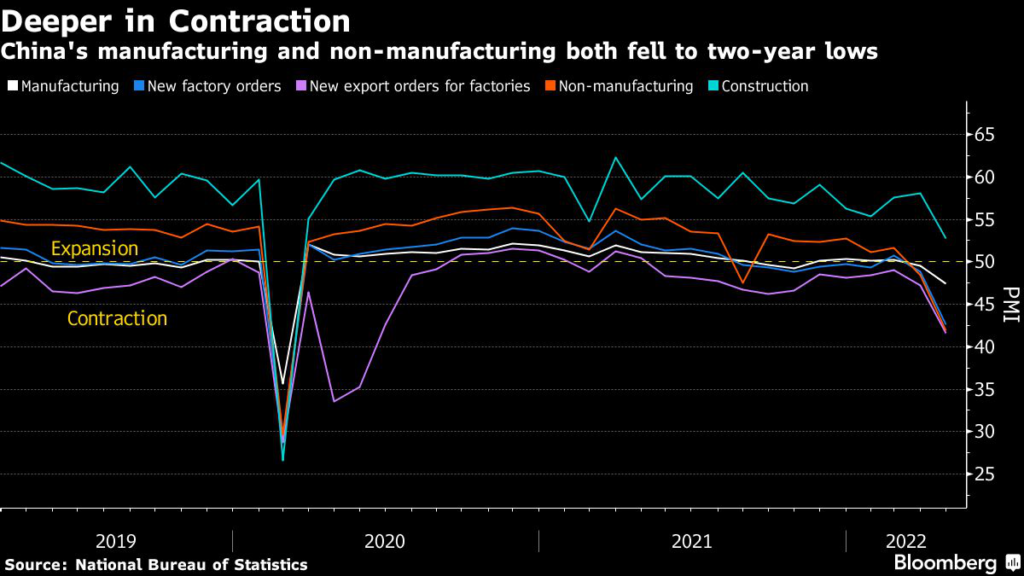
The official purchasing managers’ index for manufacturing, a leading indicator for factory output, fell to 47.4 in April, when Shanghai was in lockdown. In February 2020, the index fell to 35.7, indicating a deeper contraction in output then.

To minimize production losses, local governments have allowed some businesses to continue operating in so-called closed looped systems, where employees are kept at factory locations and undergo regular Covid testing to prevent outbreaks. 

“Productions are not completely shut and ports are still partially functional even in cities under lockdown such as Shanghai and Shenzhen with ‘close-loop’ management,” said Liu Peiqian, a China economist at NatWest Group Plc. “Exports were also growing, albeit at very low rate compared to regional peers.”

However, while the government is trying to get production back on track, many foreign businesses say they’re still unable to resume operations. Restrictions on the movement of people and testing requirements at border checkpoints have led to truck shortages, making it difficult for companies to transport their goods across provinces or to the ports.  

Logistics Nightmare

The PMIs show disruptions to supply chains are almost as severe as in 2020. Suppliers are experiencing the longest delays in over two years in delivering raw materials to their factory customers. Satellite data also show port activity is below levels seen in early 2020. 

Disruptions to factory output and logistics resulted in an abrupt slowdown in export growth and added to strains on global supply chains. 

Export growth slowed in April to its weakest pace since June 2020, while imports contracted for a second month. Two years ago, exports contracted the most on record when the coronavirus outbreak led to extended holidays, depressed factory output, and blocked transport and movement across the country. 

Property Woes

Even though many cities have loosened home purchase restrictions and cut mortgage rates this year, housing sales have continued to tumble, curbing demand in related industries from steel and cement, to furniture. Construction equipment sales continued to plunge in April, a sign of ongoing pain in the industry.  

The downturn has cut local governments’ income from land sales which is a key source of revenue, limiting their ability to boost spending to spur growth. Many provinces are forecasting double-digit declines in land sale revenue this year, including rich areas like Beijing, Shanghai and Zhejiang. In 2020, regional authorities reported a 15.9% jump in the income.

An extra burden on local finances is the increased expenditure on virus testing. Since the Labor Day holidays in May, many cities have implemented mandatory regular nucleic acid testing for residents to access public transportation and venues. If this strategy was expanded to the whole of mainland China, it would cost between 0.9% and 2.3% of the country’s GDP, according to an estimate from Nomura.

Job Losses

The surveyed unemployment rate climbed to 5.8% in March amid the lockdowns, the highest since May 2020, according to the latest official data. In 2020, the jobless rate reached a peak of 6.2%.

The latest PMI surveys indicate a slightly smaller loss of jobs now than two years ago, but even so, employment in the manufacturing and non-manufacturing sectors in April were both at their worst levels since February 2020.

Going into this year, job losses were already mounting, especially among technology firms and after-school tutoring companies, after Beijing’s regulatory crackdown on those sectors. Tech giants like Tencent Holdings and JD.com Inc. have made national news headlines with tens of thousands of layoffs. 

Chinese Premier Li Keqiang held a national teleconference this month, warning of a “complicated and grave” job situation, language that conveyed more concern about the employment outlook now versus two years ago.

At the same meeting, Li’s deputy Hu Chunhua urged officials to “closely follow changes in the job situation, identify emerging problems in a timely manner and effectively prevent and resolve risks and hidden dangers in labor relationship and other issues,” a call that wasn’t made in 2020.

(Updates with plunge in construction equipment sales.)

More stories like this are available on bloomberg.com

©2022 Bloomberg L.P.

Hedge Funds Made $1.25 Billion Profit on Europe’s Top Short Ambu

(Bloomberg) — Hedge funds have made a profit of about $1.25 billion on paper by betting against the shares of Danish medical equipment company Ambu A/S over the past year.

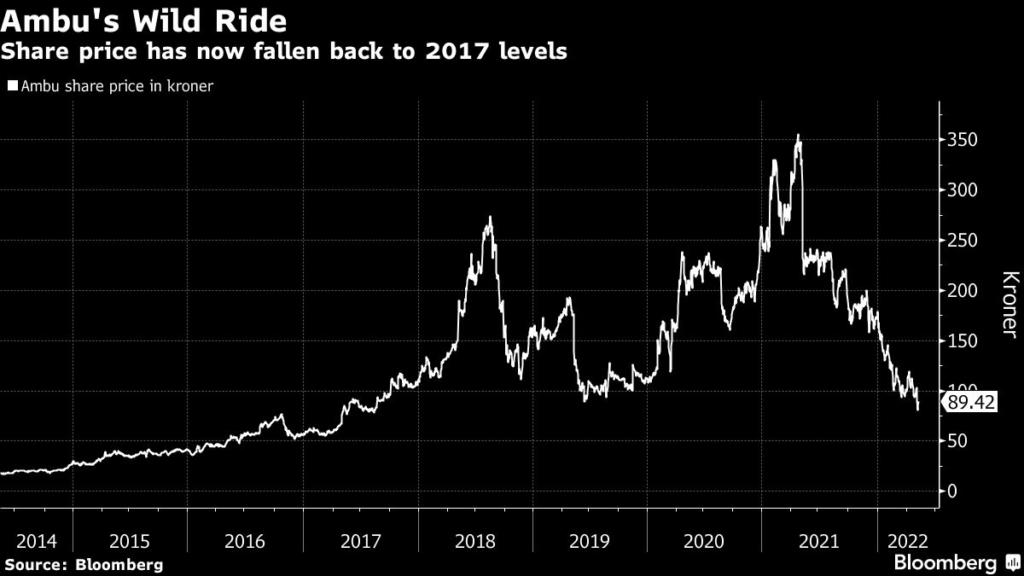
That’s according to an analysis of Ambu’s short interest and share price by S3 Partners. Shares in Ambu — the most shorted company in Europe — fell 70% over 12 months as supply chain problems and a slower-than-expected return of elective procedures in hospitals led the firm to cut its financial outlook four times in less than a year.

S3, a technology and data analytics firm, says investors may further increase positions that stand to gain from a drop in Ambu shares.

“There’s little reason for shorts to exit their positions,” Ihor Dusaniwsky, head of predictive analytics at S3 in New York, said by email. “They’re more likely to continue shorting more shares into a winning trade.” 

The health-care supplies company cut its sales and profit forecast last week, blaming fewer hospital procedures amid staffing shortages, as well as rising input costs for its products. The stock fell 21% over the subsequent two days, bringing short sellers’ 12-month mark-to-market profits to $1.25 billion, according to S3.

Shares have fluctuated wildly in the past decade and Ambu has been the subject of aggressive short selling before. S3 gives the firm a so-called Crowded Short score of 92.5 out of 100, the highest among companies in Europe’s Stoxx 600, while it also has the region’s highest short interest as a percentage of its free float, at about 34%, according to S3.

The company’s business case hinges on selling single-use medical products, such as endoscopes that let doctors examine a patient’s digestive tract. The stock soared to a record in early 2021 as the pandemic heightened fears of cross-contamination in hospitals, but has since given up most of the gains.

Ambu’s chief executive officer, Juan Jose Gonzalez, said in an interview last week that a high level of short interest is normal for a growth company. “We know that in a couple of years from now, the company will be more mature and our strategy will be better understood, so this will reduce over time,” he said.

Investors with the biggest short positions in Ambu:

  • Marshall Wace 1.72%
  • BlackRock Investment 1.39%
  • Kintbury Capital 0.97%
  • Kuvari Partners 0.95%
  • Marshall Wace Asia 0.7%
  • WorldQuant 0.6%
  • Millennium 0.52%
  • RTW Investments 0.51%
  • AHL Partners 0.5%
  • AQR Capital 0.5%

Source: Danish Financial Supervisory Authority

The last time short interest topped 30% of the free float, in September 2019, the stock rebounded and hedge funds dropped their shorts. But back then, analysts tracking the stock were generally positive, with four out of seven telling investors to buy. Now Ambu has just one buy recommendation out of nine, according to data compiled by Bloomberg.

“For shorts to get squeezed out of their positions we would have to see a substantial uptick in Ambu’s stock price to offset recent short side gains and turn this profitable trade into a losing one,” S3’s Dusaniwsky said.

More stories like this are available on bloomberg.com

©2022 Bloomberg L.P.
Largest Kenyan Company’s Profit Recovers as Mobile Money Surges

(Bloomberg) — Safaricom Plc full-year net income gained as East Africa’s largest company was cleared to resume mobile-money service charges and grew its customer base.

Profit at the Nairobi-based wireless carrier grew 1.4% to 69.6 billion shillings ($597 million) in the year through March, the company said on Thursday. Revenue rose 13% to 298 billion shillings, meeting estimates.

The sales boost was driven by a 30% rise of Safaricom’s money transfer and payments platform, M-Pesa, the bedrock of the company’s growth across the region. Safaricom’s subscribers grew to 42 million, while data revenue surged as more people become connected and live a digital life. 

“M-Pesa is now accessible across the country as a universal payments network,” Chief Executive Officer Peter Ndegwa told investors. “We have made significant progress on execution in Kenya, we are also making headway in terms of regional expansion with the operationalization of M-Pesa Africa and Ethiopia.”

The company’s capital expenditure jumped 42.4% to 49.7 billion shillings as it prepares to start operating in Ethiopia after securing a license alongside partners Vodafone Group Plc and Vodacom Group Ltd. a year ago. 

“We’ve made good progress” in Ethiopia, Ndegwa said. Safaricom has recruited over 300 staff and plans on reaching 1,000 in the next financial year, Ndegwa said, adding that the company’s initial activities included building two data centers and making a first test call.

More stories like this are available on bloomberg.com

©2022 Bloomberg L.P.
Byju’s Said to Be in Talks With Lenders for $1 Billion Funding

(Bloomberg) — Byju’s, India’s most valuable startup, is in talks with lenders to raise more than $1 billion in acquisition financing as the online education provider looks to expand its business rapidly, people familiar with the matter said.

The Bangalore-based market leader is in talks with banks, including Morgan Stanley and JPMorgan Chase & Co., for the funding to acquire another edtech company, the people said, asking not to be named as the information is not public. They didn’t disclose details of the acquisition target and said that the terms of the transaction and the funding are yet to be finalized.

Byju’s, led by former teacher Byju Raveendran, has been on a shopping binge in the US and elsewhere in recent years and bought out startups offering coding lessons, professional learning courses, and test prep classes for competitive Indian exams. The startup was valued at $22 billion with fund raising this year and is working on its initial public offering plans, Bloomberg reported earlier this year.

Representatives for Byju’s and JPMorgan declined to comment about the financing. Morgan Stanley representative didn’t immediately respond to an email seeking comment.

The platform’s app has been downloaded more than 150 million times and on average, customers spend an average71 minutes the app every day, according to information available on its website. The company formally called Think & Learn Pvt. education, has prominent global investors, including Facebook founder Mark Zuckerberg’s Chan-Zuckerberg Initiative, Naspers Ltd., Tiger Global Management, and Sequoia Capital India.

The popularity of online classes had soared in the country of almost 1.4 billion people with one of the world’s youngest population after schools and tutoring centers were forced to shut their doors during the Covid-19 pandemic, forcing parents, teachers and students to look for alternative learning resources. Byju’s has also expanded its product portfolio to include one-to-one learning with teachers in India and elsewhere tutoring school children across the globe in countries including US, UK, Brazil, Indonesia, Mexico and Australia.

More stories like this are available on bloomberg.com

©2022 Bloomberg L.P.
Byju’s in Talks With Lenders for $1 Billion Funding, Sources Say

(Bloomberg) — Byju’s, India’s most valuable startup, is in talks with lenders to raise more than $1 billion in acquisition financing as the online education provider looks to expand its business rapidly, people familiar with the matter said.

The Bangalore-based market leader is in talks with banks, including Morgan Stanley and JPMorgan Chase & Co., for the funding to acquire another edtech company, the people said, asking not to be named as the information is not public. They didn’t disclose details of the acquisition target and said that the terms of the transaction and the funding are yet to be finalized.

Byju’s, led by former teacher Byju Raveendran, has been on a shopping binge in the US and elsewhere in recent years and bought out startups offering coding lessons, professional learning courses, and test prep classes for competitive Indian exams. The startup was valued at $22 billion with fund raising this year and is working on its initial public offering plans, Bloomberg reported earlier this year.

Representatives for Byju’s and JPMorgan declined to comment about the financing. Morgan Stanley representative didn’t immediately respond to an email seeking comment.

The platform’s app has been downloaded more than 150 million times and on average, customers spend an average71 minutes the app every day, according to information available on its website. The company formally called Think & Learn Pvt. education, has prominent global investors, including Facebook founder Mark Zuckerberg’s Chan-Zuckerberg Initiative, Naspers Ltd., Tiger Global Management, and Sequoia Capital India.

The popularity of online classes had soared in the country of almost 1.4 billion people with one of the world’s youngest population after schools and tutoring centers were forced to shut their doors during the Covid-19 pandemic, forcing parents, teachers and students to look for alternative learning resources. Byju’s has also expanded its product portfolio to include one-to-one learning with teachers in India and elsewhere tutoring school children across the globe in countries including US, UK, Brazil, Indonesia, Mexico and Australia.

More stories like this are available on bloomberg.com

©2022 Bloomberg L.P.

Bitcoin ETFs Arrive in Australia Just as Crypto Market Tanks

(Bloomberg) —

Australia’s inaugural cryptocurrency exchange-traded funds began trading on Thursday amid a meltdown in digital tokens.

The ETFS 21Shares Bitcoin ETF, ETFS 21Shares Ethereum ETF and Cosmos Purpose Bitcoin Access ETF debuted on Cboe Global Markets Inc.’s local exchange after a delayed rollout.

The ETFS portfolios will invest directly in virtual coins, while the Cosmos vehicle will invest in the Purpose Bitcoin ETF, a Toronto-listed fund with assets of about C$1.4billion ($1.1 billion).

The funds are launching as the crypto sector reels from the unraveling of a high-profile stablecoin known as TerraUSD. A global wave of monetary tightening is also sapping liquidity and denting speculative investments.

Stablecoins are key elements of the plumbing in the crypto market, where traders park funds as they move in and out of other tokens. TerraUSD is supposed to have a stable value of $1 but the peg has frayed, casting a pall over the market for digital tokens.

Bitcoin has plunged around 42% this year, while Ether has shed 51%. Wild swings are common in crypto markets and the latest swoon may whet some people’s appetite to bet on a recovery.

“There are strong signs of capitulation in crypto this week, which often proceeds rebounds,” said Tony Sycamore, senior market analyst for City Index. “Presuming the recovery gains traction, it will help garner support for the newly listed ETF products along with the continuation of more widespread adoption.”

Meanwhile, trading volume of Australia’s inaugural cryptocurrency ETFS surpassed A$1 million only two hours after the opening bell. This marks a robust start for the country, as its entire ETF market is only A$152 billion versus the US’ $6.3 trillion, according to Bloomberg Intelligence analysts Rebecca Sin and James Seyffart.

“ETF Securities and Cosmos Asset Management’s cryptocurrency launch may go down in history books and put Australia’s ETF market in the running,” they wrote in a report. On some projections, Australia’s crypto market may hit $1 billion by year-end and the country could also act as the Asia-Pacific’s gateway to crypto ETFs, the analysts added. 

Bitcoin slid about 4.8% to $27,038 as of 1:10 p.m. in Hong Kong, while Ether was down nearly 10% to $1,838.

(Updates with analyst comments in seventh paragraph and latest prices.)

More stories like this are available on bloomberg.com

©2022 Bloomberg L.P.

Cryptocurrencies Drop Anew as TerraUSD’s Woes Cloud the Outlook

(Bloomberg) —

Cryptocurrencies resumed declines as the collapse of the TerraUSD stablecoin triggers a flight from many popular digital tokens. 

Bitcoin shed as much as 6.1% on Thursday, falling below $27,000 to the lowest since December 2020. Ether slid up to 12%, while tokens like Avalanche and Solana that underpin some key decentralized finance protocols also retreated. 

Virtual coins had earlier posted double-digit intraday percentage gains but the rally fizzled. The TerraUSD stablecoin was still below it $1 intended peg, while the affiliated token Luna tumbled. 

The crypto sector overall is nursing heavy losses for the week and sentiment remains fragile. Stablecoins are key elements of the crypto market, where traders park funds as they move in and out of other tokens. The various stablecoins taken together are worth well over $100 billion, and a widening loss of confidence could be an existential test for the digital-asset ecosystem.

The TerraUSD algorithmic stablecoin — also known as UST — has been bouncing between 30 cents and 90 cents and was around 66 cents as of 6:18 a.m. in London. Backers of the coin are trying to raise about $1.5 billion to shore up the token after it crashed from its dollar peg, according to the founder of a firm that was approached about the deal. 

“The downfall of the stablecoin UST has impacted the crypto market to a great extent,” said Edul Patel, chief executive officer of Mudrex, an algorithm-based crypto investment platform. While Bitcoin has often rebounded quickly from crashes in the past, this time it could have further to fall, he added.

“Is the market getting spooked by what’s happening with Terra? The answer is yes,” Craig W. Johnson, chief market technician at Piper Sandler, said by phone. “Money-market funds are important to investors and right now we’re questioning the third-largest money-market fund in crypto land. People did not think we were going to break the buck on that and that’s clearly happened.”

Crypto sentiment was also hurt by elevated US inflation, which points to aggressive interest-rate hikes — an unfavorable environment for risk assets. “There is extreme fear across the crypto market,” said Marcus Sotiriou, an analyst at the UK-based digital-asset broker GlobalBlock. 

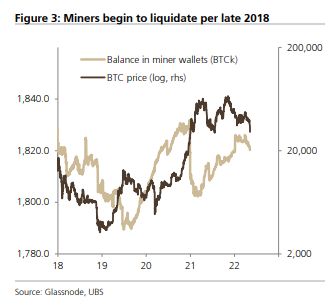
The area around $30,000 had been an “especially sensitive zone,” for Bitcoin, wrote James Malcolm, head of foreign exchange and crypto research at UBS. That’s where mining economics turn negative, “which could potentially lead to increased coin sales by this key cohort,” he said.

Meanwhile, Coinbase Global Inc. shares and bonds fell to new lows Wednesday, signaling investor skepticism about the prospects of the crypto exchange in a bear-market. The company reported lower-than-expected revenues yesterday, and warned trading volume and monthly transacting users in the second quarter is expected to be lower than in the first. 

Piper Sandler‘s Johnson says that’s another concern for crypto investors right now. “It’s the largest exchange here in the United States and they just turned a loss,” he said, adding that Terra’s troubles are all “snowballing in crypto land.”

Still, a lot of crypto investors, cognizant of the fact that Bitcoin has gone through a boom-and-bust cycle before only to recoup losses over and over again, are preaching patience. 

“Ultimately every investor needs to size positions based on their risk level and time horizon,” said Alex Tapscott, managing director of the digital asset group at Ninepoint Partners. “We believe Bitcoin will recover and that we’re still in the early stages of this new internet of value. Keep calm and HODL.”

More stories like this are available on bloomberg.com

©2022 Bloomberg L.P.
Cryptocurrencies Drop Further as TerraUSD’s Woes Cloud Outlook

(Bloomberg) —

Cryptocurrencies resumed declines as the collapse of the TerraUSD stablecoin triggers a flight from many popular digital tokens. 

Bitcoin shed as much as 6.1% on Thursday, falling below $27,000 to the lowest since December 2020. Ether slid up to 12%, while tokens like Avalanche and Solana that underpin some key decentralized finance protocols also retreated. 

Virtual coins had earlier posted double-digit intraday percentage gains but the rally fizzled. The TerraUSD stablecoin was still below its $1 intended peg, while the affiliated token Luna tumbled. 

The crypto sector overall is nursing heavy losses for the week and sentiment remains fragile. Stablecoins are key elements of the crypto market, where traders park funds as they move in and out of other tokens. The various stablecoins taken together are worth well over $100 billion, and a widening loss of confidence could be an existential test for the digital-asset ecosystem.

The TerraUSD algorithmic stablecoin — also known as UST — has been bouncing between 30 cents and 90 cents and was around 66 cents as of 6:18 a.m. in London. Backers of the coin are trying to raise about $1.5 billion to shore up the token after it crashed from its dollar peg, according to the founder of a firm that was approached about the deal. 

“The downfall of the stablecoin UST has impacted the crypto market to a great extent,” said Edul Patel, chief executive officer of Mudrex, an algorithm-based crypto investment platform. While Bitcoin has often rebounded quickly from crashes in the past, this time it could have further to fall, he added.

“Is the market getting spooked by what’s happening with Terra? The answer is yes,” Craig W. Johnson, chief market technician at Piper Sandler, said by phone. “Money-market funds are important to investors and right now we’re questioning the third-largest money-market fund in crypto land. People did not think we were going to break the buck on that and that’s clearly happened.”

Crypto sentiment was also hurt by elevated US inflation, which points to aggressive interest-rate hikes — an unfavorable environment for risk assets. “There is extreme fear across the crypto market,” said Marcus Sotiriou, an analyst at the UK-based digital-asset broker GlobalBlock. 

The area around $30,000 had been an “especially sensitive zone,” for Bitcoin, wrote James Malcolm, head of foreign exchange and crypto research at UBS. That’s where mining economics turn negative, “which could potentially lead to increased coin sales by this key cohort,” he said.

Meanwhile, Coinbase Global Inc. shares and bonds fell to new lows Wednesday, signaling investor skepticism about the prospects of the crypto exchange in a bear-market. The company reported lower-than-expected revenues yesterday, and warned trading volume and monthly transacting users in the second quarter is expected to be lower than in the first. 

Piper Sandler‘s Johnson says that’s another concern for crypto investors right now. “It’s the largest exchange here in the United States and they just turned a loss,” he said, adding that Terra’s troubles are all “snowballing in crypto land.”

Still, a lot of crypto investors, cognizant of the fact that Bitcoin has gone through a boom-and-bust cycle before only to recoup losses over and over again, are preaching patience. 

“Ultimately every investor needs to size positions based on their risk level and time horizon,” said Alex Tapscott, managing director of the digital asset group at Ninepoint Partners. “We believe Bitcoin will recover and that we’re still in the early stages of this new internet of value. Keep calm and HODL.”

More stories like this are available on bloomberg.com

©2022 Bloomberg L.P.
Mitsubishi Heavy Profitable Again, Recovering After Challenges

(Bloomberg) — Mitsubishi Heavy Industries Ltd. returned to profitability in the latest fiscal year, buoyed by its first revenue growth in four years, as the Japanese industrial conglomerate seeks to recover from pandemic-fueled disruptions, parts shortages and a costly foray into regional aircraft.

Shares in Mitsubishi Heavy rose as much as 5% after the company reported operating profit of 28.3 billion yen ($218 million) for the fiscal period through March. Revenue rose 4.3% to 3.86 trillion yen.

Mitsubishi Heavy and other global industrial firms making high-priced, low-volume products with long replacement cycles have been hit hard by the virus outbreak, chip shortages and rise in prices for energy and raw materials. The maker of aircraft parts, ships, turbines and nuclear plants is seeking a turnaround and focusing on energy production, transport and carbon-neutrality products and services for itself and its customers. Mitsubishi Heavy suspended its troubled regional-jet program in 2020 and embarked on cutting fixed costs across its businesses. 

“We made improvements in all major financial indicators while achieving record-breaking free cash flow and increasing shareholder returns,” Hisato Kozawa, Mitsubishi Heavy’s chief financial officer, said in the statement. “All of this in a period when difficult market conditions such as soaring materials and logistics costs as well as semiconductor shortages put pressure on our bottom line.”

Although free cash flow recovered and became positive to a record 302 billion yen for the latest fiscal year, Mitsubishi Heavy warned that it may shrink during the current period as it invests in carbon-neutral projects. 

Mitsubishi Heavy is forecasting slight revenue growth to 3.9 trillion yen and net income of 120 billion yen for the fiscal year through March 2023. Analysts are projecting, on average, revenue of 3.8 trillion yen and net income of 121 billion yen. 


More stories like this are available on bloomberg.com

©2022 Bloomberg L.P.

Close Bitnami banner
Bitnami
