

Bloomberg

Google Joins Amazon to Mull a Bid for Coveted Cricket Event

(Bloomberg) — Alphabet Inc., owner of the ubiquitous search engine Google, has flagged an interest in bidding for the broadcast rights of the Indian Premier League, or IPL, joining the ranks of half a dozen media giants vying for the coveted asset in cricket-crazy India. 

The American tech company, which also has the video-streaming website YouTube, purchased the bid-related documents from the Board of Control for Cricket in India, or BCCI, according to people familiar with the matter, who asked not to be named as the information isn’t public. SuperSport, a South Africa-based group of television channels, bought the documents too, according to a person familiar. 

Amazon.com Inc., The Walt Disney Co., billionaire Mukesh Ambani-led Reliance Industries Ltd., Sony Group Corp., homegrown Zee Entertainment Enterprises Ltd. and fantasy-sports platform Dream11 have also signaled their interest by purchasing these information dockets from BCCI, Bloomberg reported earlier.

Google’s interest in the global media rights of India’s top cricket league intensifies the fight for a sports event that has emerged as the world’s third-largest, trailing only the Premier League and the National Football League in terms of viewers. Last year’s edition of the IPL brought in 600 million viewers, according to BCCI estimates, underscoring the sheer media clout this event represents in India’s highly competitive entertainment market.

BCCI and a YouTube representative in India declined to comment.

BCCI, the sport’s governing body in India which values the IPL at about $7 billion, will be auctioning its broadcast and live streaming rights for the years 2023-2027 starting June 12. Purchasing application documents doesn’t lead to a certain offer and the firms can decide to not bid, the people said.

Bagging IPL’s media rights — considered the Super Bowl of cricket by some — will allow companies to reach out to hundreds of millions of eyeballs and bolster their advertisement revenue. Last month, Amazon announced its intention to add live sports on its platform in India, including cricket, while Reliance-controlled Viacom18 Media received $1.8 billion in funding from a James Murdoch-backed firm as it gears up for the bidding battle.

(Updates with Reliance’s recent fundraising in the last paragraph.)

More stories like this are available on bloomberg.com

©2022 Bloomberg L.P.

China Gathers Private-Sector Firms as Markets Mull Crackdown

(Bloomberg) — China’s top political advisory body plans to host a forum next week with some of the nation’s largest private-sector firms including Baidu Inc., an event that will be closely scrutinized by investors debating whether Beijing will dial back its clampdown on the technology industry.

The Chinese People’s Political Consultative Conference aims to host the symposium next week with attendees including officials from government agencies such as the Cyberspace Administration of China and business executives including Baidu founder Robin Li, people familiar with the matter said. Vice Premier Liu He, President Xi Jinping’s top economic aide, may also attend, said the people, asking not to be identified discussing a private matter.

While the conference is focused on the broader theme of developing China’s digital economy, investors will likely watch for signs of whether Beijing intends to wind down its year-long crackdown on the tech sector. Xi’s administration is enlisting the industry — the biggest growth driver of the past decade — to revitalize an economy struggling with rolling urban lockdowns, supply chain bottlenecks and evaporating consumption. 

Shares in sector heavyweights Baidu, Tencent Holdings Ltd. and Alibaba Group Holding Ltd. pared earlier losses on Thursday morning in Hong Kong.

Sentiment toward the industry has swung wildly in recent weeks, with companies from Tencent to Jack Ma’s Alibaba surging April 29 after China’s top leaders issued a sweeping set of pledges to boost economic stimulus. Later that day, the South China Morning Post and Wall Street Journal reported the government was organizing a symposium — originally slated for earlier this month — to signal a let-up in the bruising pace of Beijing’s campaign. That rally proved short-lived, in part because of a lack of concrete measures to prop up a sector that’s shed more than $1 trillion of value. On Wednesday, tech companies led a rally in China’s equity market.

In April, the CPPCC convened a videoconference meeting with firms in Hangzhou, the eastern Chinese city at the heart of the country’s private sector expansion, including surveillance camera maker Hangzhou Hikvision Digital Technology Co. That was part of a series of preparations for a national conference slated for May, the agency’s official newspaper said back then.

It’s unclear whether next week’s forum will trigger policy changes or easing, the people said. The timing could also shift, given the difficulty of organizing a major conference while cities from Beijing to Shanghai grapple with shifting Covid lockdowns. Delegates will attend virtually as well as in person, depending on role and location. Representatives for Baidu didn’t respond to requests for comment, while calls to the CPPCC’s news office weren’t returned.

The CPPCC, whose more than 2,000 members include the nation’s most prominent politicians and entrepreneurs such as Li, exists primarily to debate, advise on and support policy and legislation, or as a sounding board to the nation’s leaders. Its members meet at least once a year and consistently echo the nation’s top priorities, from population growth in 2021 to systemic financial risks in 2018.

Beijing has now made stability its core priority in a year plagued by global geopolitical and economic uncertainty — particularly as its top officials prepare to effect a key leadership transition toward the end of 2022. China already made a promise in March to ease its regulatory onslaught, as part of efforts to stabilize battered financial markets and stimulate the economy.

That’s fueled expectations that the crackdown — which started with the dramatic cancellation of Ant Group Co.’s record IPO before snowballing into an assault on every corner of China’s technosphere — has run its course, or is at least switching to a more sustainable pace.

That would be welcome news after a turbulent 2021, when Beijing curbed gaming time for minors, outlawed profits in swaths of the online education sector, forced companies from Alibaba and Meituan to Didi Global Inc. to alter core business practices and otherwise cast the future of a once-free-wheeling industry in disarray.

But investors remain wary as they weigh a mixed bag of developments, including a restart of gaming approvals and a campaign to rein in the little-understood algorithms that internet companies employ to serve content and gather data. The Hang Seng Tech Index rallied as much as 37% this year since a mid-March low, before giving back most of those gains in past weeks.

(Updates with share action from the fourth paragraph)

More stories like this are available on bloomberg.com

©2022 Bloomberg L.P.

Instacart Files Confidentially for an IPO That Could Happen This Year

(Bloomberg) — Instacart Inc., the largest online grocery delivery platform in the US, said it confidentially filed documents for an initial public offering.

The San Francisco-based company didn’t disclose details of its IPO plans in a statement Wednesday confirming an earlier report by Bloomberg News.

A listing could happen as soon as this year though the timing could slip, said people familiar with the matter who asked not to be identified discussing private information. The deliberations are ongoing and the company could still remain private, they said.

Instacart is working with banks including Goldman Sachs Group Inc. and JPMorgan Chase & Co. on an offering, said the people, who added that other banks may be included later. A representative for Goldman Sachs didn’t immediately respond to a request for comment. A spokesperson for JPMorgan declined to comment.

A beneficiary of the coronavirus pandemic, Instacart’s pace of growth has decelerated. It announced in March that it was cutting its valuation about 40% to $24 billion, Bloomberg News reported. The company was previously valued at $39 billion in a March 2021 funding round that included Andreessen Horowitz, Sequoia Capital and D1 Capital Partners, as well as Fidelity Management & Research Co. and T. Rowe Price Associates Inc.

Instacart’s public debut could come at a turbulent time in the stock market. Only two IPOs of more than $500 million have priced this year in the US. Excluding blank-check firms, 52 companies have raised $4.4 billion this year, compared with 201 listings for a total of more than $71 billion during the same period in 2021, according to data compiled by Bloomberg. 

The performance of those newly public companies generally has been disappointing. The Renaissance IPO ETF is down 48% in the past year. 

Instacart has undergone a series of management changes. Joining in the past 18 months were: Chief Executive Officer Fidji Simo, a former executive at Meta Platforms Inc.; Chief Financial Officer Nick Giovanni, a former Goldman Sachs banker; and Chief Operating Officer Asha Sharma, also a Meta veteran.

The company’s former president, Carolyn Everson, stepped down in December. 

(Updates with statement in second paragraph. One of the banks was corrected in an earlier version of this story.)

More stories like this are available on bloomberg.com

©2022 Bloomberg L.P.
Asian Cryptocurrency Stocks Drop on Fallout From Terra Collapse

(Bloomberg) — Asian shares related to cryptocurrencies declined after the collapse of the TerraUSD stablecoin triggered a stampede out of many of the digital-asset market’s most popular tokens.

Hong Kong-listed BC Technology Group Ltd. tumbled as much as 7.5%, on track for its lowest close in over four years. Japan’s Monex Group Inc., which owns the TradeStation and Coincheck marketplaces, slid as much as 8.6% while South Korea’s Woori Technology Investment Co. dropped 6.6%.

Cryptocurrencies Crater as Terra Collapse Triggers DeFi Exodus

“It is a very nervous time in crypto markets following the collapse of the controversial stablecoin UST and as the majority of institutional crypto investors that invested last year are now losing money,” Ed Moya, a senior market analyst at Oanda, wrote in a note.

Decentralized-finance favorite Avalanche plunged about 37% on Wednesday, while Solana slumped 33%. Bitcoin fell 8.4% to $28,402.78, the lowest since December 2020. All three tokens staged rebounds in early trading Thursday.

(Updates share moves, adds chart)

More stories like this are available on bloomberg.com

©2022 Bloomberg L.P.
Blackstone Explores Joint Toshiba Bid With KKR

(Bloomberg) — Blackstone Inc. is considering teaming up with KKR & Co. on a joint bid for Japanese conglomerate Toshiba Corp., people with knowledge of the matter said. 

The private equity firms have held exploratory talks about partnering on an offer for Toshiba, the people said, asking not to be identified because the information is private. 

Toshiba could announce as soon as this week it’s chosen additional banks to help it evaluate takeover interest, the people said. The Tokyo-based company plans to bring on JPMorgan Chase & Co. and Mizuho Financial Group Inc. to work alongside Nomura Holdings Inc. as it considers strategic alternatives including a privatization, according to the people. 

CVC Capital Partners and Bain Capital have also been weighing potential offers for Toshiba, Bloomberg News has reported. CVC is speaking to several buyout firms as well as local Japanese funds, including some with state backing, about joining forces, the people said. Buyout firms are looking to build consortia given the size of the transaction, as well as its competitive and political nature, they said.

A buyout of Toshiba could be private equity’s biggest ever deal in the country. The potential deal would add to the $51 billion in takeovers of Japanese companies announced over the past year, according to data compiled by Bloomberg. 

Discussions are at a preliminary stage, and the firms could decide not to move ahead with proposals, the people said. A representative for Toshiba referred to a previous announcement that it planned to add external advisers as necessary, declining to elaborate further. The Japanese company is scheduled to announce full-year business results on May 13.

Representatives for Blackstone, JPMorgan and Mizuho declined to comment, while spokespeople for CVC and KKR didn’t immediately respond to requests for comment. 

Shares of Toshiba rose as much as 1.4% in early Thursday trading in Tokyo, their largest intraday increase in almost a week, giving the company a market value of nearly $18 billion. Blackstone closed down 2.3% on Wednesday in New York, while KKR sank 2%.

Toshiba said on April 21 that it planned to start soliciting proposals from potential investors, and that it had hired Nomura as financial adviser. The company’s board of directors and the special committee picked UBS Group AG, in order to be advised independently from the management team.

The interest from investors shows that major private equity funds see an opportunity at the troubled Japanese firm, where management and shareholders have been at odds for years over the company’s future. 

(Updates with company shares in eighth paragraph.)

More stories like this are available on bloomberg.com

©2022 Bloomberg L.P.

Terra Implosion Shakes Foundations of Crypto Stablecoin Complex

(Bloomberg) — Stablecoins besides TerraUSD are failing to live up to their billing as the collapse of the algorithmic token has investors pondering the implications of the tumult for the broader market.

Most rival algorithmic stablecoins, which use a complex combination of computer code and trader incentives to maintain their pegs of one-to-one to the dollar, are also below that threshold — though not at the 80% extreme seen on TerraUSD on Wednesday. MakerDAO’s Dai and Fei fell by 0.4% and 1.6% respectively. Neutrino USD and Tribe fell 8% and 9.7% over the same period of time, according to data from CoinMarketCap.

Meanwhile, the two largest stablecoins Tether and USDC, which claim to be backed by actual assets including dollars, are basically holding their dollar peg. 

“Algorithmic stablecoins are at an experimental stage currently, nothing more,” said Dan Liebau, chief investment officer for Modular Asset Management’s blockchain strategy. Those backed by an increasing/decreasing amount in the stablecoin’s own protocol token comprise a “particularly risky category,” he added.

TerraUSD, or UST, and its related token Luna, had a long way to fall. They both recently climbed into the top 10 tokens by market value after Terra founder Do Kwon established the Luna Foundation Guard, which bought billions of dollars of Bitcoin to back it up. Investors had rushed to take advantage of yields that might reach almost 20% on Anchor Protocol, which is powered by the Terra blockchain.

“The effects of the UST collapse will bring a bit more caution while evaluating for other algorithmic stablecoins for investment,” said Paul Veradittakit, a partner at Pantera Capital in Menlo Park, California. Also, apps built on Terra/Luna “will likely want to diversify platforms to mitigate risk and apps that are tapping into Anchor for yields will have to tap into other cryptocurrencies and liquidity protocols.”

TerraUSD isn’t the first algorithmic stablecoin whose peg has blown up. Neutrino, which sought to keep at equilibrium by issuing and burning tokens, lost its peg last month. It happened to Iron Finance last June — an incident that caused Dallas Mavericks owner and crypto fan Mark Cuban to call for regulation defining what a stablecoin is, and what collateralization is acceptable.

“We do not believe that the UST situation means anything for the centralized stablecoin market,” a statement from Tether said. “They are entirely different types of assets.”


More stories like this are available on bloomberg.com

©2022 Bloomberg L.P.
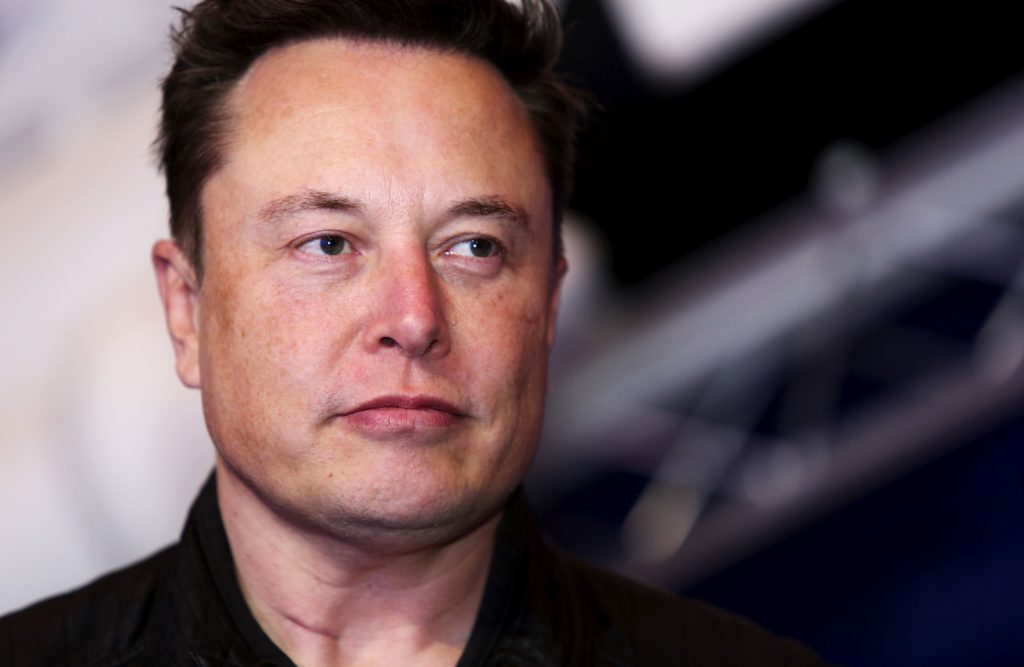
Scrutiny of Elon Musk’s Twitter Moves Intensifies in Washington

(Bloomberg) — Elon Musk’s bid to buy Twitter Inc. is facing more scrutiny in Washington following a report that the US Securities and Exchange Commission is probing whether he broke rules last month when disclosing a large stake in the social media platform.

The Wall Street Journal reported on Wednesday that the SEC is investigating Musk’s submission of a form that investors must file when they accumulate more than 5% of a company. The Federal Trade Commission is also reviewing the bid by the world’s richest person to take Twitter private.

Musk disclosed on April 4 that he acquired more than 9% in the company, a week later than regulations allow and by using a filing typically reserved for passive investors. He has since embarked on a highly-public takeover bid. 

An SEC spokesman declined to comment on the Journal report. Alex Spiro, a lawyer for Musk, didn’t immediately respond to a request for comment.

Inquiries by the SEC don’t always lead to the regulator taking action. 

SEC Chair Gary Gensler has been pressing to tighten rules for how investors must disclose they’ve taken a major stake in a company. He’s called for more transparency, and earlier this year proposed cutting the maximum time that an investor has to reveal they’d taken a significant position. 

Over the years the SEC has repeatedly sparred with the Tesla Inc. chief executive officer and was already investigating whether he and his brother violated insider trading rules when selling shares in the electric automaker late last year — something Musk has denied. He’s also fighting the regulator in court over fallout from his infamous tweet that he had secured funding to take Tesla private.

Musk, who reached an agreement to acquire Twitter for roughly $44 billion late last month, has said the San Francisco-based company has restricted user speech and wants to push it toward a more free-speech approach. 

More stories like this are available on bloomberg.com

©2022 Bloomberg L.P.
Lawmakers Call For Regulation After Terra Stablecoin Meltdown

(Bloomberg) — Lawmakers and regulators are renewing calls for new rules after a popular stablecoin lost its peg to the US dollar, putting investors and the market more broadly at risk.

TerraUSD, or UST, has plunged well below its $1 peg, leaving backers scrambling to shore up the token. They’re now trying to raise $1.5 billion to stabilize the coin, according to the founder of a firm that was approached about the deal. But so far they’re having a hard time winning over investors.

“If Congress does not act in this space, then the danger is, at some point, a fiat-backed stablecoin might lose its dollar peg. And that could not only be very problematic for consumers who lose money, but it could have repercussions,” Senator Pat Toomey, the top Republican on the Senate Banking Committee, told reporters Wednesday.

The debacle validates a concern that regulators have raised about stablecoins and whether investors can truly rely on issuer promises that the tokens can be redeemed at par for US dollars. The President’s Working Group on Financial Markets has warned that if users lose confidence in that promise that could lead to runs, which may have knock-on effects for the broader financial system. 

Treasury Secretary Janet Yellen said Tuesday at a Senate hearing the Terra coin meltdown underscores the urgent need for guardrails and said it would be “highly appropriate” for lawmakers to enact legislation sometime this year. 

Senate Banking Committee Chairman Sherrod Brown said the drop in the coin’s value raises questions about crypto more generally.

“What does that tell you? We should be skeptical of this whole industry,” he said, adding that regulators are particularly important given the difficulty of passing new legislation. 

Toomey, who released a draft proposal to set new rules for stablecoins last month, said he believes that fiat-backed crypto has the potential to automate payments, but that regulations are necessary to protect investors. He also said it’s important to distinguish between coins that are backed by cash or other assets, and those that are supposed to be stabilized by an algorithm. Terra’s UST is an algorithmic stablecoin.

“I think what people need to see is that not all cryptocurrencies are alike, not all stablecoins are alike,” Senator Cynthia Lummis, a Wyoming Republican, said in a hallway interview at the Capitol. “And at this point, it’s a very buyer-beware situation.” 

Toomey said he is hopeful that there could be bipartisan legislation sometime this year addressing stablecoins. However, it’s unclear how quickly a bill could come together ahead of the mid-term elections in November.

“What we want is for consumers that know what they’re doing, what risks they’re taking, and then markets will figure out what are good investments and what are bad investments,” Toomey said. “And honestly, it’ll probably take some failures in this space in order for the market to discover what works.”

More stories like this are available on bloomberg.com

©2022 Bloomberg L.P.
Coupang Shares Surge on Narrowed Losses Despite Slowdown

(Bloomberg) — Coupang Inc., the South Korean e-commerce giant backed by SoftBank Group Corp., narrowed its losses after ramping up cost cuts to weather a slowdown in online retail. The company’s US shares jumped about 20% in extended trading.

The first-quarter operating loss narrowed to $205.7 million, compared with $267.3 million a year earlier. Revenue rose 22% to $5.12 billion in the period, while the number of active clients increased 13%, the company said Wednesday in a statement. 

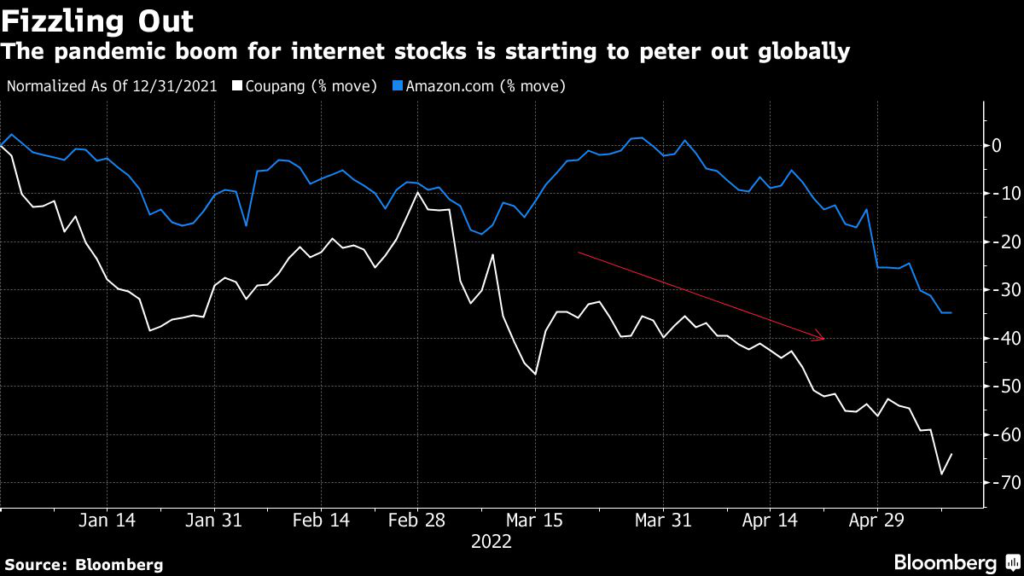
Global e-commerce is decelerating as consumers emerge from Covid-19 lockdowns or tighten their belts while the macroeconomic outlook remains uncertain. Amazon.com Inc. gave a gloomy forecast for sales last month and said it was monitoring whether rising inflation may affect shoppers’ appetites. 

In South Korea, the product e-commerce segment grew 8% compared to a year ago, while Coupang’s growth rate was nearly four times that, at 30%, Bom Kim, Chief Executive Officer said during an earnings call. 

“There continues to be lots of unpredictable variables related to the reopening in the short term, but the long term trajectory is very clear to us,” said Kim. “In any scenario, we will continue to grow significantly faster than the e-commerce segment and continue to gain share across all of our categories.”

Kim said that the company is benefiting from economies of scale with improvements in automation and supply chain logistics as its size gets bigger. Coupang expects steady improvement in profitability over time, Kim added. 

Coupang’s sales remained relatively resilient during the first quarter as record Covid cases spurred consumers in its home country to stock up, but the company’s focus has shifted to cost savings by increasing membership fees and halting some refunds of used products. 

Its shares have still plunged 67% this year, hit by the broader tech sell-off. SoftBank’s own Vision Fund sold 50 million of the Korean company’s shares in March for $20.87 each, compared with its $35 IPO price. 

“Coupang’s shares slid excessively as e-commerce platform companies are facing deratings globally,” said Park Sang-jun, an analyst at Kiwoom Securities. “The Korean e-commerce market growth has also fallen to single-digit percent growth as social distancing measures lifted. Coupang faces sluggish demand but it may outperform the market with its dominance in commodity goods sales.”

(Updates with CEO comments from fourth paragraph)

More stories like this are available on bloomberg.com

©2022 Bloomberg L.P.
Texas Law Against Facebook, Twitter Moderation Clears Hurdle

(Bloomberg) — A federal appeals court removed a legal hurdle to a new Texas law that social media platforms including Twitter and Facebook say will block them from moderating content to root out hate speech and extremism.

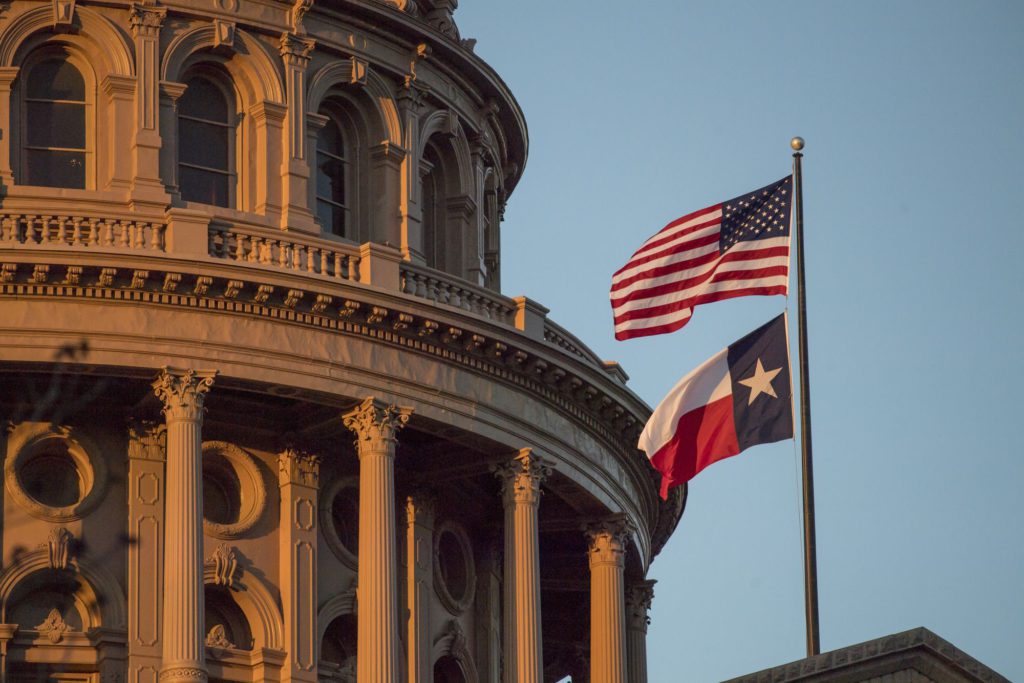
The 5th U.S. Circuit Court of Appeals on Wednesday put on hold a temporary injunction against key parts of the law that a lower-court judge issued in December. That means the law will no longer be blocked while a suit by a pair of trade groups for companies like Twitter Inc., Facebook parent Meta Platforms Inc. and Alphabet Inc.’s Google works its way through the courts.

The trade groups claim the law, known as HB 20, would force platforms to host extremist content in violation of their user policies and their First Amendment rights. Texas Governor Greg Abbott and other Republicans argue the law is needed to protect conservative viewpoints from being silenced.

It’s unclear how the ruling will impact the companies’ operations in the second biggest U.S. state with almost 29 million people. Representatives for Twitter, Facebook and Google’s YouTube declined to comment.

The appeals court, based in New Orleans, didn’t issue a written opinion explaining why it had granted Texas the stay. Its one-page order indicated the three-judge panel had one dissent.

“No option is off the table,” said Matt Schruers, president of the Computer & Communications Industry Association, one of the trade groups that challenged the law. “We will do what is necessary to ensure that the free market, not government fiat, decides what speech digital services do and do not disseminate.”

NetChoice, the other trade group, called the Texas law an assault on the First Amendment.

“We remain confident the courts will strike it down as unconstitutional,” Carl Szabo, general counsel of NetChoice, said in a statement. “In the meantime, unfortunately, Americans — especially Texans –will be negatively impacted.”

Read More: Texas Law Targeting Facebook, Twitter Put on Hold By Judge 

Allowing the law to take full effect during the appeal “will have terrible consequences for speech online,” Scott Wilkens, senior staff attorney at the Knight First Amendment Institute at Columbia University, which filed a brief in the case but isn’t a party, said in a statement.

“Texas’s law violates the First Amendment because it compels social media companies to publish speech they don’t want to publish,” Wilkens said. “Worse, the theory of the First Amendment that Texas is advancing in this case would give government broad power to censor and distort public discourse.”

The case is NetChoice v. Paxton, 21-51178, 5th U.S. Circuit Court of Appeals (New Orleans).

(Updates with comment from trade group)

More stories like this are available on bloomberg.com

©2022 Bloomberg L.P.

Close Bitnami banner
Bitnami
