
Bloomberg

California’s $19 Billion Carbon Market Falls Short in Fight to Curb Emissions

(Bloomberg) — California’s carbon market was supposed to be a model for the US, harnessing the power of capitalism to fight climate change in the world’s fifth-biggest economy.

But nearly 10 years after “cap and trade” began, there’s little proof the system has had much direct impact on curbing planet-warming pollutants. California has seen big cuts in greenhouse gas emissions — but such gains have little to do with the much-vaunted carbon market. As officials debate how to reach the state’s goal of zeroing out emissions by 2045, critics on both sides of the political spectrum say the market isn’t working.

“The California cap-and-trade program is really a failed experiment in regulation,” said Jim Walsh, policy director for the Food & Water Watch environmental group, which says the system lets polluters pay to keep polluting. “It’s done little if anything to address the climate crisis.”

The issues with California’s carbon-curbing initiative in some ways echo those of Europe, whose own market languished for years before reforms gave it greater strength. The US example may offer lessons to China, which just started its own program after years of study.

California’s cap-and-trade system sets an annual limit—the cap—on the amount of emissions the state’s economy can produce. The cap gets tighter every year, lowering emissions. Companies buy an “allowance” for each ton they emit, purchasing these permits through quarterly state auctions or from a secondary market. Allowances in that marketplace are trading at $30.73, up about 50% in the last year.

Two big issues, many critics contend, undermine the system. The cap on emissions has never been tough enough to force much change on its own, even with efforts to tighten it. Oil refiners and other companies have spent more than $19 billion over the years on auctioned permits to emit greenhouse gases. The expense gets baked into the price of their products, boosting gasoline prices an estimated 24 cents per gallon, according to Argus Media, in a state with the nation’s priciest fuel. But those costs haven’t done much to lower emissions.

“We’re paying, but we’re not getting the results we wanted,” said state Senator Brian Dahle, whom the state Republican Party has endorsed for governor this year. He wants the program audited as the state grapples with an affordability crisis that may be pushing some residents to leave. “It’s driving up the cost of all goods in California, and if you’re on a fixed income or hourly wage, you’re feeling the pain right now,” Dahle said.

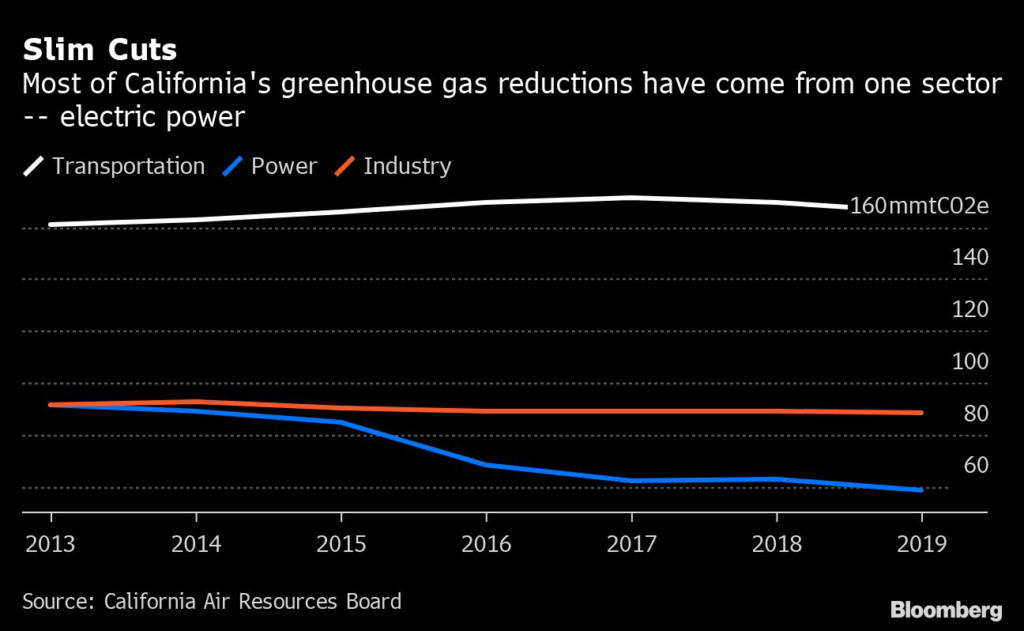
At the same time, other California climate programs that take a more direct approach — ordering specific industries to change their ways — have had a measurable impact on emissions. That’s particularly true in the electricity industry, whose rapid shift to renewable power has produced the state’s biggest emission cuts.

The result is that a program once considered a centerpiece of California’s climate fight is underperforming.

California officials released a report Tuesday with four proposals for eliminating net emissions by either 2045 or 2035, with the earlier date floated by Governor Gavin Newsom and favored by environmentalists. The proposals don’t specify which programs will be required to meet either deadline, but the report notes that cap-and-trade will probably cut emissions less in this decade than previously expected.

“It certainly is not up to par for being a driver of deep decarbonization,” said Chris Busch, research director at consulting firm Energy Innovation.

California’s emissions have fallen 6.5% since 2013, when the state started requiring companies to pay to pump greenhouse gases into the atmosphere. Yet the big declines aren’t from cap and trade. California’s electric utilities, for example, slashed their emissions 36% from 2013 through 2019 due to a state law that forces them to use more renewable power, shifting from fossil fuels on a timeline set by the legislature. The first version of that law passed a decade before the carbon market opened.

Cars, trucks and other transport represent the state’s single biggest source of greenhouse gases, and since 2015 the cap-and-trade system has covered the fuel they burn. Transportation emissions in 2019, before Covid-19 hobbled the economy, were virtually identical to 2015, after rising for two years and falling for two. Officials credit the progress on stricter fuel-efficiency standards, electric vehicle incentives and more biofuel use—all due to state programs other than cap and trade.

European Example

The European Union launched a similar market in 2005, and the emissions it covers have since dropped by about a third. It didn’t always go smoothly. The global financial crisis in 2008 produced a glut of permits and tanked prices, which plunged from a pre-crisis high of 31 euros to 2.50 euros. A set of fixes to introduce automatic permit supply control, limiting any potential glut, restored credibility. Permits now trade above 80 euros.

China, meanwhile, started its national carbon trading scheme last year. It is the largest market for emissions, covering about 4.5 billion tons from the country’s power sector, and there are plans to expand to other industries including metals and airlines in the coming years.

Like Europe, California’s system has faced oversupply. Many companies covered by the system get some allowances for free in an effort to limit the impact to consumers. In February, an advisory committee report warned that companies have bought and held on to so many allowances—“banking” them for future use—that the state is in danger of missing its 2030 target of cutting emissions 40% below 1990’s level. The number of banked allowances, the report said, is larger than the emissions cuts expected from the program through that year. 

The California Air Resources Board, which oversees the program, says banked allowances should be used up well before 2030.

The agency has tweaked cap and trade before and plans to revisit the program again next year. The cap has already been tightened—it now shrinks 4% per year compared to roughly 2% before 2021. Board Chair Liane Randolph said in an interview that she wants to see how those changes play out before considering more.

“We have a huge suite of strategies, and I don’t think we can leave any of those strategies on the table,” she said.

More stories like this are available on bloomberg.com

©2022 Bloomberg L.P.
Democrats Head Toward Doomed Vote to Advance Abortion Rights

(Bloomberg) — Senate Democrats’ clearly doomed effort to enshrine abortion rights in federal law highlights both the deep divide on the politically explosive issue and the party’s schism over ending the filibuster to achieve their goals.

With the Supreme Court poised to overturn the landmark Roe v. Wade decision that legalized abortion nationwide, Senate Majority Leader Chuck Schumer said he is aiming to put all the chamber’s Republicans on record at a time when polls continue to show most voters want Roe to remain intact.

“Republicans are going to have to go on record as to whether they want this to be the first generation of American women with less freedom than their mothers,” Washington Senator Patty Murray, a member of Schumer’s leadership team, said.

Wednesday’s vote won’t be directly on the legislation, drafted by Democratic Senator Richard Blumenthal of Connecticut. Instead, it will be a procedural vote to end debate and advance the bill to the floor, which would require 60 votes under the Senate’s filibuster rule. With the chamber evenly divided Schumer has nowhere near enough votes.

Why Abortion, Too, Has Democrats Raging at Filibuster: QuickTake

Schumer set the vote as a signal to the Democratic Party’s core voters, who largely support abortion rights and could be motivated to turn out for the midterm election that will decide control of Congress for the remainder of President Joe Biden’s first term. But the abortion issue also animates the GOP base, and Republican senators have branded the Democratic legislation as radical and extreme.

“This extreme legislation would invalidate all state laws that limit abortions after 20 weeks of gestation,” Republican Senator John Cornyn of Texas said. “This wouldn’t just impact pro-life red states. This change is so radical that it would invalidate existing laws in blue states as well.”

Blumenthal’s bill would establish a federal statutory right for doctors to provide abortion services and for patients to choose to have the procedure, without limitations or requirements such as specific tests or other medical procedures unless they’re required for comparable procedures. Health providers could sue on behalf of their staffs or patients if there are any violations. It is backed by the Biden administration.

“Americans strongly oppose getting rid of Roe, and they will be paying close attention from now until November to Republicans who are responsible for its demise,” Schumer said on the Senate floor Wednesday.

Democrats, however, don’t have 50 votes for the bill, though Senator Bob Casey of Pennsylvania, who has been opposed to abortion, announced his support for it on Monday. Two Republicans who have backed abortion rights in the past — Susan Collins and Lisa Murkowski of Maine — drafted a more limited bill codifying existing court rulings and don’t support the Democratic measure. Democrat Joe Manchin of West Virginia told reporters he would vote against the Democratic bill, but indicated he would have supported the Collins and Murkowski bill had it been put on the floor.

Democrats’ inability to move the abortion legislation — after being stifled on voting rights, policing reform, an immigration overhaul and other matters — has again highlighted the limits of the wafer-thin Democratic majority and the rancor within the party over doing away with the filibuster. Manchin and Arizona Senator Kyrsten Sinema, two pivotal Democratic votes, oppose ending the rule.

In January, after a bid to push voting rights legislation was blocked in the Senate, Schumer tried to change the Senate filibuster to allow it to pass on a simple majority vote. That was rejected 52-48 with Manchin and Sinema, who both backed the legislation, joining Republicans in preserving the 60-vote threshold to advance it. Schumer has given no indication that he will try again to hold a vote on the filibuster.

Sinema, who supports abortion rights, has particularly come under fire from fellow Democrats for her stance. After last week’s leak of a draft Supreme Court majority opinion indicating Roe would be overturned, two progressives, Representative Alexandria Ocasio-Cortez and Senator Bernie Sanders urged the party to put up a primary challenger to Sinema when she’s up for re-election in 2024 because of her opposition to getting rid of the filibuster.

Sinema, who was censured by Arizona Democrats in January, has repeatedly said the filibuster is necessary to protect Democratic priorities should Republicans take control of Congress.

“Protections in the Senate safeguarding against the erosion of women’s access to health care have been used half-a-dozen times in the past ten years, and are more important now than ever,” she said in a statement last week. 

Senate GOP leader Mitch McConnell this week vowed that he wouldn’t back any effort to gut the filibuster rule to pass a national abortion ban if Republicans take control next year. But he also told USA Today late last week that a national abortion ban is “possible” if Roe is overturned. 

There is wide distrust among Democrats.

“Mitch McConnell has said the doors are open for Congress to ban abortion all across the country,” Massachusetts Senator Elizabeth Warren said. “Mitch McConnell has delivered in the past. And I very much fear if he gets the chance he’ll deliver in the future.”

More stories like this are available on bloomberg.com

©2022 Bloomberg L.P.

US, EU Plan to Pledge Supply-Chain Cooperation to Counter Russia

(Bloomberg) — The U.S. and European Union plan to keep addressing supply-chain and other disruptions as they project a unified front against Russia when high-level officials meet starting Sunday to discuss cooperation on trade and technology issues in Paris. 

“The Trade and Technology Council intends to develop common approaches and explore shared solutions toward improving supply-chain resiliency, fostering predictability and diversification of trade,” the two sides plan to say, according to a recent draft of a joint statement seen by Bloomberg. 

The sentiment ahead of the second meeting of the TTC — established last year to collaborate on issues like export controls and semiconductor shortages — shows how much has changed in recent months. The inaugural meeting in September was almost canceled after a US defense deal with Australia to supply nuclear-powered submarines sparked a diplomatic dispute with France. 

“In the past year, we have strengthened, deepened, and elevated our relationship,” the draft statement said. “As recent events have proven, strong transatlantic bonds and cooperation on issues related to trade, technology, and security are more important than ever.” The draft could still change as the two sides negotiate an agreement on the final wording. 

US Secretary of State Antony Blinken, Commerce Secretary Gina Raimondo and Trade Representative Katherine Tai plan to attend the two-day Paris meeting from the U.S. side. European Commission Vice Presidents Valdis Dombrovskis and Margrethe Vestager, as well as Internal Markets Commissioner Thierry Breton will represent the EU.

The statement mentions Russia more than a dozen times, highlighting the coordination of export controls and sanctions against Moscow following its invasion of Ukraine in February. The two plan to say they “are committed to deeply enhancing” their cooperation on dual-use technologies and export controls, as well as mitigating supply shortages caused by the war.   

There is no reference to China in the main joint statement, but numerous issues on TTC’s agenda appear to be directed at Beijing.

Chip Subsidies

Both sides want to collaborate further by creating a system to notify each other of shortages of semiconductors, as well as coordinating subsidies to chip producers to guard against a subsidy race spurred by separate US and EU acts to boost semiconductor research and production.  

The draft states a desire by both sides to cooperate more in areas like purchases of environmental goods, as well as carbon footprinting, green public procurement, and electric vehicle charging infrastructure. 

The US and the EU plan to say they both want to overhaul the World Trade Organization and restore a functioning dispute settlement system, and to ensure that “specific products traded between the EU and US cannot be considered a national security threat,” in a reference to European steel and aluminum.

The officials aim to tackle disinformation by pushing companies to make their algorithms more transparent and share more data with researchers. They will also work together to set up a “crisis response protocol” to discuss challenges online from Russia’s war in Ukraine and in future crises. An earlier draft from April, though, had more language about jointly monitoring information manipulation. 

More stories like this are available on bloomberg.com

©2022 Bloomberg L.P.
Small-Time Funds Get Path to Invest in Musk’s Buyout of Twitter

(Bloomberg) — The roster of backers supporting Elon Musk’s acquisition of Twitter Inc. could soon get much more crowded. 

Some potential investors — including hedge funds and wealthy individuals — have been pitched the opportunity to invest $5 million or more in the Twitter buyout, according to people with knowledge of the matter. They’re being invited to commit money through special-purpose vehicles that will pool capital together from a variety of smaller sources, the people said. 

One party canvassing investors is seeking to collect $500 million in total, and plans to charge a 5% fee to whoever it brings in. The move could allow a well-connected financier to rope in investors who might not have direct access to the deal, but nonetheless want to join one of the biggest leveraged buyouts in history. 

The setup would also provide a way for an investor already participating in the deal to reduce its exposure by using other people’s money. While channeling capital from dozens of parties through a special-purpose fund is common in the venture capital world, it’s rarely seen in the world of public company takeovers. 

It couldn’t immediately be learned who was behind the approaches. Investors who were approached have a few weeks to decide whether to participate, some of the people said. A representative for Musk didn’t respond to a request for comment. 

Last week, a filing showed a group of investors has committed a combined $7.1 billion to help Musk take Twitter private. The list of investors looked more like a financing round for a company on the verge of an initial public offering rather than a typical take-private. Instead of private equity firms that usually show up in leveraged buyouts, a sprawling consortium of investors offered to join Musk’s bid, with check sizes ranging from $5 million to $1 billion.

The list included funds affiliated with high net-worth individuals like Oracle Corp. chairman and Tesla Inc. board member Larry Ellison, venture firms like Andreessen Horowitz and Sequoia Capital, and Qatar’s sovereign wealth fund. 

Investment banks are still soliciting additional investors to support the deal, according to people familiar with the matter. Apollo Global Management Inc. is in talks to lead a preferred $1 billion financing for Musk, along with Sixth Street Partners, Bloomberg News reported on Tuesday.

More stories like this are available on bloomberg.com

©2022 Bloomberg L.P.
Nike Escalates StockX Feud, Says Site Is Selling Fake Shoes

(Bloomberg) — Nike Inc. escalated its legal battle with sneaker marketplace StockX, saying it purchased four pairs of counterfeit shoes on the platform despite the company’s promises that it is only marketing authentic footwear.

The world’s largest athletic-wear maker asked a federal judge to let it add claims of counterfeiting and false advertising to the current trademark-infringement lawsuit against StockX. It said it obtained the fake shoes, including a counterfeit Air Jordan 1 Retro High OG, from the marketplace between December and January. 

“Those four pairs of counterfeit shoes were all purchased within a short two-month period on StockX’s platform, all had affixed to them StockX’s ‘Verified Authentic’ hangtag, and all came with a paper receipt from StockX in the shoe box stating that the condition of the shoes is ‘100% Authentic,’” Nike said in a court filing Tuesday.

Nike sued StockX in February in federal court in Manhattan, accusing the marketplace of “blatantly freeriding” on Nike’s trademarks and goodwill with a service called Vault NFTs. StockX argued that its NFTs aren’t digital sneakers but simply listings for physical sneakers that are stored in its vault and can be traded by users.

StockX said in a statement Wednesday that it takes customer protection “extremely seriously” and has invested millions of dollars to “fight the proliferation of counterfeit products that virtually every global marketplace faces today.”

StockX added, “Nike’s latest filing is not only baseless but also is curious given that their own brand protection team has communicated confidence in our authentication program, and that hundreds of Nike employees — including current senior executives — use StockX to buy and sell products.”

Legal scuffles are breaking out over NFTs as they become more mainstream, attracting major brands ranging from Louis Vuitton to Taco Bell. Nike bought virtual sneaker maker RTFKT for an undisclosed sum in December, and launched its own digital shoes last month. 

StockX is said to be planning to go public as alternative assets like sneakers and collectibles have become a hot market for investors. The company said in April 2021 that it was valued at $3.8 billion after a secondary tender offering.

The move by Nike “amounts to nothing more than a panicked and desperate attempt to resuscitate its losing legal case against our innovative Vault NFT program that revolutionizes the way that consumers can buy, store, and sell collectibles safely, efficiently, and sustainably,” StockX said. “Nike’s challenge has no merit and clearly demonstrates their lack of understanding of the modern marketplace.”

The case is Nike Inc. v StockX LLC, 22-cv-983, U.S. District Court, Southern District of New York.

(Updates with comment from StockX starting in fifth paragraph.)

More stories like this are available on bloomberg.com

©2022 Bloomberg L.P.
NXP Seeks Tax Breaks for $2.6 Billion Chip Expansion in Austin

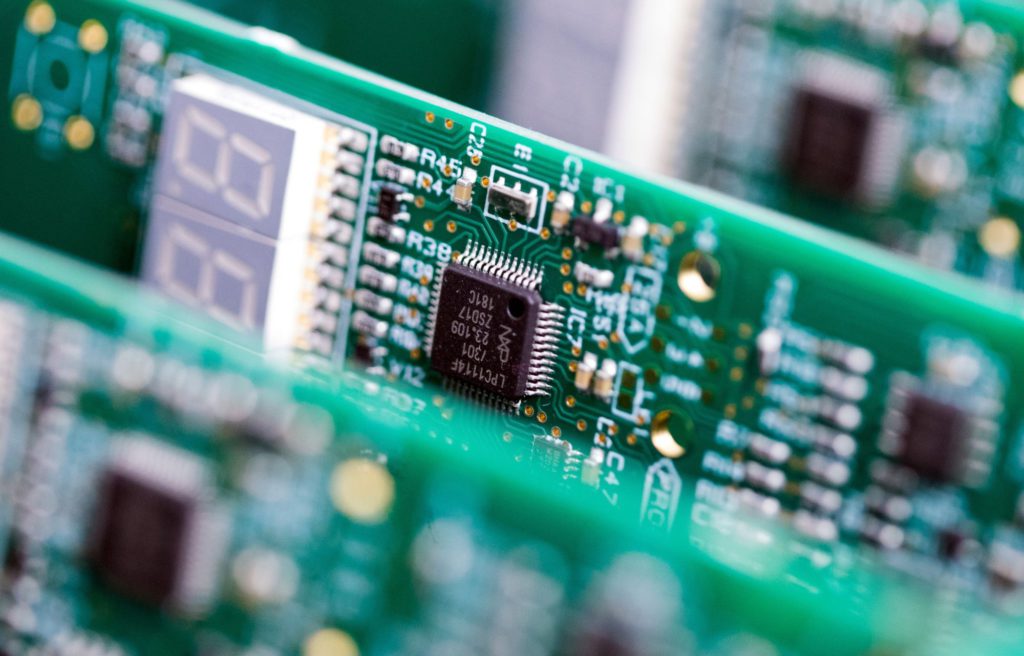
(Bloomberg) — NXP Semiconductors NV is considering Austin, Texas, for a $2.6 billion expansion that would create hundreds of jobs.

Representatives for the Dutch chipmaker held a meeting with Austin Independent School District board members Tuesday about potential tax breaks in exchange for expanding two facilities in the metro and adding 800 high-paying jobs. The new employees would earn average salaries of more than $100,000, according to Jason Stanford, a district spokesman. 

NXP is also looking at other cities as potential sites, according to company spokesperson Jacey Zuniga. The chipmaker expects to make a final decision in the fourth quarter of this year and begin construction in 2024.

The Texas capital, already home to Silicon Laboratories Inc. and Cirrus Logic Inc., has become a growing hub for the semiconductor industry. Last year, Samsung Electronics Co. announced plans for a $17 billion plant about 30 miles (48 kilometers) from Austin. 

Micron Technology Inc. has been scouting the area for a new multibillion-dollar chip plant; Advanced Micro Devices Inc. has a significant presence in the metro and German chipmaker Infineon Technologies AG has been studying a $700 million expansion of its facility in the region.

The school district will vote in two weeks on whether the chipmaker can move forward with an application for the tax breaks, known as a Chapter 313 agreement, according to Stanford. 

NXP makes chips for cars, phones and industrial equipment. The company has four wafer fabrication facilities in the US, two of which are in Austin.

(Updates with comment from NXP in third paragraph)

More stories like this are available on bloomberg.com

©2022 Bloomberg L.P.

Crypto Companies Are Turning to Bermuda as US Eyes Crackdown

(Bloomberg) — As crypto companies face growing scrutiny from policymakers in the US, they are increasingly turning to friendlier and less bureaucratic jurisdictions like Bermuda to grow their businesses and test new products. 

The self-governing British territory was one of the first places to establish a regulatory framework for digital assets — a puzzle that large countries like the US still haven’t solved. The island has the ability to be more nimble because it has a single regulator, compared to the many agencies that have input over crypto oversight in the US. 

This, plus the fact that the local officials have embraced the industry, has made it an attractive destination for businesses, especially as countries like the US are ramping up enforcement against crypto firms. The US Securities and Exchange Commission is already probing a number of companies for potentially offering unregistered securities and recently announced plans to beef up a team dedicated to policing digital assets. Lawmakers like Democratic Senators Elizabeth Warren and Sherrod Brown are also eager to rein in the market. 

“It’s wonderful to work with one regulator and have that freedom to have an active dialogue in an environment that supports innovation,” Kristin Boggiano, president and co-founder of digital asset exchange CrossTower Inc said of Bermuda. The company is headquartered in New Jersey but has an office on the island. 

Boggiano, who spoke to Bloomberg News in an interview, said companies can go to Bermuda to test their products and gather data that they can then bring back to US regulators when they’re ready. 

“If you think about the US where you might have state, multiple federal agencies, it’s a slower process to get through,” said David Hart, the chief executive officer of the Bermuda Business Development Agency. “We do find companies very attracted to what the BMA and the support of the broader government leadership brings to the table,” he said, referring to the Bermuda Monetary Authority. 

The BMA has a “sandbox” program that allows businesses to work alongside regulators to try out new technologies or business models in a controlled environment for a certain stretch of time. Companies start with a test license and can eventually graduate to a full license if the idea is successful. There are currently 14 companies with a range of licenses from that program, including four with test licenses, said Jason Hayward, Bermuda’s minister of economy and labor. 

“We allow companies to operate in our ecosystem and for the most part that has been rewarding for persons to build on and grow their concepts into an actual full business that is operating globally.”

(Adds background on US enforcement efforts in third paragraph.)

More stories like this are available on bloomberg.com

©2022 Bloomberg L.P.
Carvana’s Relentless Rout Leaves Analysts Struggling to Catch Up

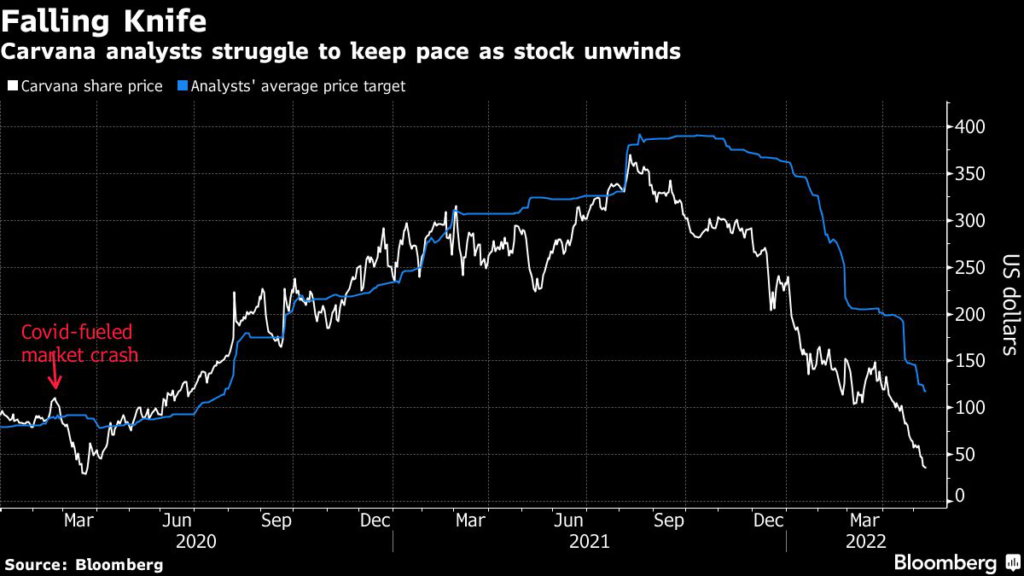
(Bloomberg) — Online used-car dealer Carvana Co. is trading as if the pandemic that spurred an almost 1,200% surge in its stock price never happened. Wall Street, however, has yet to fully adjust to the company’s new reality.

Analysts’ average target on the stock has tumbled 68% this year, but at $117 is still more than triple the current price of around $36. That decline also pales in comparison to the roughly 85% collapse in the shares in 2022 amid a broader selloff in riskier assets as investors fret over inflation, a hawkish stance from the Federal Reserve and a potential global economic slowdown.

The latest quarterly results from the company added to the concerns, with analysts warning about slowing industry demand amid soaring inflation. To make matters worse, Carvana struck what was seen as an “unfavorable” financing deal to fund an acquisition, followed by a plan to cut around 2,500 jobs, announced this week. 

“This 10-12% headcount reduction is an acknowledgment that the company should move more aggressively to right-size its cost structure, but also could indicate that other profit improvement drivers could be slower to develop,” Wedbush analyst Seth Basham wrote in a note Wednesday. However, the analyst called it a “prudent step,” given weakening demand. 

Read more: Carvana Nearly Wipes Out Covid-Fueled Gains as Worries Mount

About-Face

It was only about nine months ago that Carvana was one of the darlings of the stock market, riding high amid seemingly insatiable investor demand for businesses that enabled people to shop, work, exercise and entertain themselves without leaving their homes. What’s more, auto manufacturers were hit by crippling supply shortages, causing production halts and making new cars scarce. Demand for used vehicles soared as a result, a further boost for Carvana. 

These forces combined to push Carvana shares above $370 in August, from below $30 in March 2020. And yet, the decline has been even sharper, with the stock losing more than 90% of its value in about half the time.  

Read more: Carvana Father-Son Duo Down $25 Billion, Leading Wealth Rout

The company is far from the only pandemic-era darlings facing a rude awakening. Peloton Interactive Inc., the fitness company, has slid about 60% this year, while Netflix Inc.’s shares have retreated 70%.

More stories like this are available on bloomberg.com

©2022 Bloomberg L.P.

Lawsuit Seeks Millions for UK Customers From Cable Cartel

(Bloomberg) —

Power-cable makers, including Nexans SA and Prysmian S.p.A., face a UK class action lawsuit linked to a historic cartel case that could potentially seek hundreds of millions of pounds in compensation for electricity customers.

Clare Spottiswoode, the former head of Britain’s gas regulator, has applied to the Competition Appeal Tribunal for approval to bring a collective action on behalf of UK consumers, according to a statement Wednesday.

The suit follows on from a European Commission 2014 decision that found a number of cable companies operated a cartel on an “almost worldwide scale” from 1999 until regulators raided the firms in 2009. Spottiswoode and law firm Scott+Scott allege that the cartel raised the price of cables used by energy firms, which in turn passed on the costs to households.

“Domestic electricity customers in Great Britain paid inflated energy bills for many years through no fault of their own,” Spottiswoode said in a statement. 

The claim will now need to be approved by the CAT. The amount of compensation and customers involved is still to be determined. James Hain-Cole, a lawyer at Scott+Scott, estimated that the compensation could be in the hundreds of millions of pounds and the number of electricity customers involved could be as much as 30 million. 

A spokesperson from Prysmian said it is aware of the application for collective proceedings and it is too “premature to speculate.”

Nexans didn’t immediately respond to a request for comment. 

(Updates with comment from Prysmian spokesperson in sixth paragraph)

More stories like this are available on bloomberg.com

©2022 Bloomberg L.P.
Apollo Plans $1 Billion Financing for Musk’s Twitter Bid

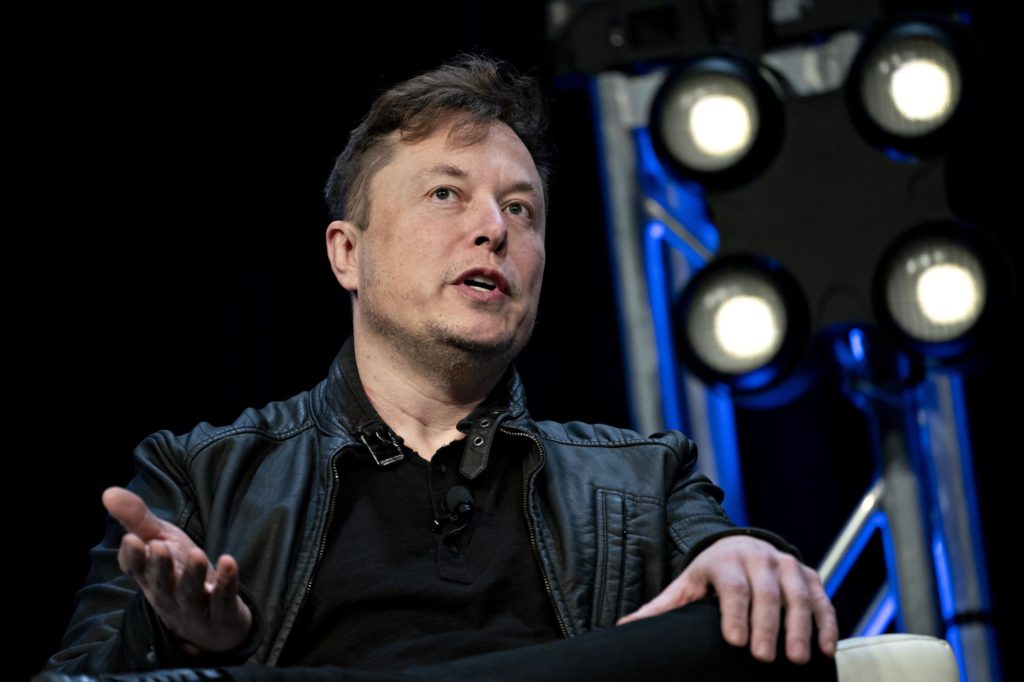
(Bloomberg) — Apollo Global Management Inc. is in talks to lead a preferred financing for Elon Musk’s proposed buyout of Twitter Inc., according to people with knowledge of the deal. 

The funding, arranged by Morgan Stanley, will exceed $1 billion and may include Sixth Street Partners, among other firms, the people said.

Apollo, Sixth Street and Morgan Stanley declined to comment.

Twitter stock rose 0.3% to $47.38 at 11:40 a.m. in New York. The stock in prior days had slumped as traders grew more skeptical that Musk, the chief executive officer of Tesla Inc., will complete the purchase at the $54.20 offer price. 

Read more: Musk-Twitter Deal Spread Hits Widest as Traders Doubt Takeover

That’s despite Musk revealing last week he’s getting $7.1 billion in equity commitments from investors including Larry Ellison, Sequoia Capital and Qatar. He persuaded Saudi Prince Alwaleed bin Talal to roll his $1.9 billion of Twitter stock into the privatized company and is seeking to do the same with Twitter co-founder Jack Dorsey.

It’s not clear how the preferred equity might change the existing financing proposal, which requires Musk and his partners to contribute $27.25 billion in equity to fund the $44 billion purchase, with the rest coming from junk-rated debt and a margin loan tied to Musk’s Tesla stock.

Preferred equity is a hybrid of debt and equity capital that sits above common equity in the capital structure. Some preferred equity is convertible into common shares at a pre-agreed price, but the proposed funding isn’t. This type typically offers a fixed dividend that can accrue if payments aren’t made.

Marc Rowan, Apollo’s chief executive officer, touted the attractiveness of hybrid investments in a recent interview with David Rubenstein, saying it offers the best risk versus reward in markets.

“You are stepping back from the publicly traded markets, so are getting the benefit of illiquidity and getting downside protection because the world is uncertain from a geopolitical and an economic point of view,” he told Rubenstein’s Bloomberg Wealth.

Read more: Apollo’s Rowan Warns Rivals to Ignore Blockchain at Their Peril

Musk recently boosted his cash position by selling Tesla stock — about $8.5 billion in the latest round — and he’s already amassed 9.6% of Twitter’s outstanding shares.

Musk is the world’s richest person with a net worth of $231.8 billion, according to the Bloomberg Billionaires Index, but much of that fortune is illiquid. Tesla’s stock has tumbled 26% since Musk announced his desire to buy Twitter, stoking concerns among investors that he may need to sell or pledge considerable amounts of stock to fund the bid.

(Updates with type of preferred in seventh paragraph.)

More stories like this are available on bloomberg.com

©2022 Bloomberg L.P.

Close Bitnami banner
Bitnami
