Bloomberg

Elon Musk Assures Tesla Worrywarts He Isn’t Going Anywhere

(Bloomberg) —

The big news the Financial Times got out of Elon Musk at its Future of the Car summit was decidedly unrelated to cars. The billionaire planning to take over Twitter said he would reverse the platform’s permanent ban of former President Donald Trump.

But Tesla’s chief executive officer also made plenty of headline-worthy comments about the world’s most valuable auto company. Musk said he’ll stay at Tesla “as long as I can be useful,” assuaging concern that a foray into social media will compromise the amount of attention the world’s richest man devotes to his electric car company. Tesla has long been clear that it’s highly dependent on Musk, who’s been CEO since 2008.

Musk’s almost 40-minute conversation with the FT was wide-ranging and hit on a lot of other topics, from Tesla’s China operations to metal mining. Here are a few highlights:

Asia Expansion

Musk estimated China will probably account for 25% to 30% of Tesla’s business in the long term. He brushed off the idea that acquiring Twitter could cause political complications for Tesla in the country, as space industry rival Jeff Bezos suggested a couple weeks back.

Tesla will expand its existing Shanghai factory but doesn’t plan to open additional plants in China anytime soon, Musk said, as the company has its hands full starting up production near Berlin and in Austin, Texas. Tesla’s Shanghai plant was closed for much of last month due to Covid lockdowns, but the CEO sounded optimistic the worst of the disruption there is over.

“I had conversations with the Chinese government in recent days, and it’s clear the lockdowns are being lifted rapidly,” Musk said.

When asked if Tesla would build a plant in Indonesia, Musk said the event wasn’t the proper forum for him to make any such announcement.

Holding companies

Musk also discussed his formation of a trio of holding companies as part of his bid to acquire Twitter.

He ruled out the idea of bringing Tesla, SpaceX and his other ventures under one roof, saying he doesn’t see “a ton of merit” in combining them. Tesla’s mission is to accelerate the transition to sustainable energy. SpaceX is trying to extend life beyond Earth and providing internet coverage to underserved parts of the world with Starlink. Those are pretty different aims.


Autonomy

Musk was less grandiose than usual about the road to fully autonomous driving, which has been much longer than many in the industry expected. He’s arguably overpromised more than anyone, which has unsettled US regulators.

“Self-driving is one of those things where there are a lot of false dawns,” Musk said. “Your progress is initially linear, and then looks logarithmic and sort of tapers off.

“Obviously, I could be wrong,” Musk added, “but I think we are actually quite close to achieving self-driving at a safety level that is better than human, and my best guess is that we will get there this year.”

Mining

Interestingly, Musk also said Tesla is open to buying a mining company.

The world’s largest automakers are racing to secure supply of metals needed to make batteries for electric vehicles. Tesla has always had a strategy to be vertically integrated — taking ownership of various stages of the production process — and has inked several deals recently for raw materials including nickel.

“It’s not that we wish to buy mining companies,” Musk said, “but if that’s the only way to accelerate the transition, then we will do that.”

Like getting this newsletter? Subscribe to  Bloomberg.com for unlimited access to trusted, data-driven journalism and subscriber-only insights.

More stories like this are available on bloomberg.com

©2022 Bloomberg L.P.

Power-Cable Firms Face UK Class Action Case Over Cartel

(Bloomberg) —

Power-cable makers, including Nexans SA and Prysmian S.p.A., face a UK class action lawsuit linked to a historic cartel case that could potentially seek hundreds of millions of pounds in compensation for electricity customers.

Clare Spottiswoode, the former head of Britain’s gas regulator, has applied to the Competition Appeal Tribunal for approval to bring a collective action on behalf of UK consumers, according to a statement Wednesday.

The suit follows on from a European Commission 2014 decision that found a number of cable companies operated a cartel on an “almost worldwide scale” from 1999 until regulators raided the firms in 2009. Spottiswoode and law firm Scott+Scott allege that the cartel raised the price of cables used by energy firms, which in turn passed on the costs to households.

“Domestic electricity customers in Great Britain paid inflated energy bills for many years through no fault of their own,” Spottiswoode said in a statement. 

The claim will now need to be approved by the CAT. The amount of compensation and customers involved is still to be determined. James Hain-Cole, a lawyer at Scott+Scott, estimated that the compensation could be in the hundreds of millions of pounds and the number of electricity customers involved could be as much as 30 million. 

Nexans and Prysmian didn’t immediately respond to a request for comment. 

(Updates with possible size and scope of claim starting in first paragraph)

More stories like this are available on bloomberg.com

©2022 Bloomberg L.P.

Lawsuit Seeks Millions for UK Customers From Power Cable Cartel

(Bloomberg) —

Power-cable makers, including Nexans SA and Prysmian S.p.A., face a UK class action lawsuit linked to a historic cartel case that could potentially seek hundreds of millions of pounds in compensation for electricity customers.

Clare Spottiswoode, the former head of Britain’s gas regulator, has applied to the Competition Appeal Tribunal for approval to bring a collective action on behalf of UK consumers, according to a statement Wednesday.

The suit follows on from a European Commission 2014 decision that found a number of cable companies operated a cartel on an “almost worldwide scale” from 1999 until regulators raided the firms in 2009. Spottiswoode and law firm Scott+Scott allege that the cartel raised the price of cables used by energy firms, which in turn passed on the costs to households.

“Domestic electricity customers in Great Britain paid inflated energy bills for many years through no fault of their own,” Spottiswoode said in a statement. 

The claim will now need to be approved by the CAT. The amount of compensation and customers involved is still to be determined. James Hain-Cole, a lawyer at Scott+Scott, estimated that the compensation could be in the hundreds of millions of pounds and the number of electricity customers involved could be as much as 30 million. 

Nexans and Prysmian didn’t immediately respond to a request for comment. 

(Updates with possible size and scope of claim starting in first paragraph)

More stories like this are available on bloomberg.com

©2022 Bloomberg L.P.

TerraUSD Backers Seek $1.5 Billion to Prop Up Stablecoin: Cashaa

(Bloomberg) —

The backers of the TerraUSD algorithmic stablecoin are trying to raise about $1.5 billion to shore up the token after it crashed from its dollar peg, according to Kumar Gaurav, the founder and chief executive of crypto liquidity provider Cashaa.

Investors in the proposed deal will be able to buy the Luna coin at a 50% discount to the spot price, Gaurav said in an interview. They’ll be subject to a one-year lockup and a monthly “linear vest” over 12 months, he added. Luna has tumbled 87% over the past 24 hours to $3.85, according to CoinMarketCap data. 

Cashaa is among prospective investors that received the proposal from the Luna Foundation Guard, Gaurav said, adding that his firm won’t participate. The LFG didn’t immediately respond to requests for comment. 

TerraUSD plunged from its intended 1-to-1 peg to the dollar on Wednesday to trade at around 50 cents. 

TerraUSD Stablecoin Plunges as Crypto Market Awaits Rescue (2)

More stories like this are available on bloomberg.com

©2022 Bloomberg L.P.

Mylerz Expands in North Africa After Lorax-Backed Funding Round

(Bloomberg) — Mylerz, an Egyptian parcel delivery and logistics startup, said it secured $9.6 million in a funding round led by Lorax Capital Partners and will now expand across North Africa. 

Lorax, an Egypt-focused private equity firm, was supported by Fawry for Banking & Payment Technology Services SAE, the leading payment processor in Egypt, Mylerz said in a statement. 

The delivery company will over the next three months expand into Algeria, Morocco and Tunisia, Samer Gharaibeh, Mylerz’s founder and chief executive officer, said in an interview. That will enable online merchants to trade across North Africa, he said. 

“We will need to do another round, the plan is Africa,” Gharaibeh, a former Africa head for Aramex PJSC, said. “Then we got to the east part of Africa, we look at the west and the east as well.”

That expansion and funding round could be in about a year and a half, he said.


More stories like this are available on bloomberg.com

©2022 Bloomberg L.P.

EU Presents Plan to Strengthen Online Child Sexual Abuse Fight

(Bloomberg) — The European Commission presented its plan to fight online child sexual abuse material, which includes demanding the world’s biggest technology companies to scan for, detect and report it to law enforcement bodies.

The measures announced in Brussels on Wednesday allow courts in the EU to require social networks to track and report efforts by their users to groom children via messaging tools.

Other proposed methods to achieve these requirements include:

  • Using age verification to identify minors joining a platform
  • Checking user-generated content for signs of abuse imagery
  • Deploying artificial intelligence to detect language patterns associated with grooming
  • Reporting offending material discovered to law agencies to investigate

A new European agency similar to the U.S.’s National Center for Missing and Exploited Children, which will work alongside Europol, will be created for companies to report their findings to. Courts in the EU will be able to require companies take down flagged material or block access to web addresses. Companies will be allowed to appeal such orders.

Ylva Johansson, the commissioner for home affairs in charge of the proposal, said she expects to see “heavy lobbying from companies against it.” Privacy activists and lawmakers alike have already voiced concern, likening the plans to surveillance tactics.

But Johansson said “companies will always protect their money” and “there’s not so much money in protecting children.”

Scanning for child sexual abuse material has long been controversial due to privacy concerns, but it’s something all major tech firms and social networks do. This includes sharing digital fingerprints of known illegal material so it can be automatically detected, removed and reported. Facebook, Microsoft and many others have done this for years.

Numerous companies attempt to go further, with mixed results. Last year, Apple Inc. announced, then halted, plans to detect child abuse imagery in its users’ photo libraries after widespread concern voiced by privacy advocates. The commission’s own plans have also been delayed for years for related reasons.

But the amount of child pornography online has been increasing, especially during the Covid-19 pandemic, Johansson said. Reports cited by the commission show that 85 million photos and videos containing child sexual abuse were reported online in 2021. Advocacy group Thorn said in March this was a 38% increase from 2020.

It’s part of the reason the EU’s proposal goes beyond conventional scanning for known offending material, and will allow courts to require companies proactively scan for new abuse, be it pictures, videos, or grooming of children via chat. AI could be used, such as to speed up detection of concerning language patterns, the commission said, but would need human oversight.

The EU’s plan will need the sign-off from member countries and the European Parliament, a process that can take years, especially with such a controversial proposal. 

More stories like this are available on bloomberg.com

©2022 Bloomberg L.P.

China Tech’s Grip Persists in US Long After Orders to Rip It Out

(Bloomberg) — It’s been three years since US officials sounded the alarm: Citing national security threats, the White House, Congress and federal agencies began ordering that certain Chinese-made equipment had to be ripped out from telecommunications and security networks.

But delays, deferrals and a serious funding shortfall have left that threat largely unaddressed, and Chinese technology remains in place throughout America — including in some surprising places. More than 100 telecom providers are still connecting mobile phone calls for hundreds of thousands of customers with gear from Huawei Technologies Co. and ZTE Corp. Chinese-made equipment is also still serving Department of Defense facilities, the corporate jets of some of the largest US companies and the biggest commercial airlines.

“It’s striking that it’s taking people so long to wake up to this reality,” says Isaac Stone Fish, founder and chief executive officer of Strategy Risks, a New York-based consulting firm that helps companies mitigate their exposure to China. “As US-China tensions continue to worsen, and growing numbers of people in the US national security establishment view China as an adversary and likely future combatant in a hot war, certain types of Chinese technology pose clear and present national security threats.”

Meanwhile, the mandate to rid US telecom networks of billions of dollars’ worth of Chinese tech is also posing a public safety risk. Carriers say that without adequate funding for a federal aid program known as Rip and Replace, they’ll have to cut service to swaths of rural America, reducing the reach of 911 services along busy highways — or halt it altogether. While there’s no penalty for failing to meet the mandate, there is a pressing deadline: Because the Chinese manufacturers are ending their US-based service programs, networks that rely on their equipment are one lightning strike away from a crisis.

Read more: Chinese Spies Accused of Using Huawei in Secret Australian Telecom Hack

The Department of Defense sought and received two waivers from the Director of National Intelligence allowing it to keep contracting with vendors that use equipment made by Huawei, ZTE and other manufacturers through September 2022. The waivers pertain to equipment and products “deemed to be of low risk potential but are necessary to execute the DOD mission.” A Pentagon spokesman declined to say where the Chinese equipment is used.

The DOD waivers specifically mention cameras made by Hangzhou Hikvision Digital Technology Co., another banned firm. Across the US, as many as 700,000 Hikvision surveillance cameras connect to the internet every weekday, according to a search tool called Shodan that finds devices’ web connections. Shodan reveals each service provider address that a camera connects to, but not the camera’s location or operator. Research from the Center for Strategic & International Studies in Washington found that Hikvision cameras had been installed on US military bases and domestic police departments before the ban, and that government officials have had trouble finding them all.

In the skies, internet connectivity still travels via ZTE’s ground-to-air network equipment in 1,400 regional jets operated by American Airlines Group, Delta Air Lines Inc., United Airlines Holdings Inc. and others. ZTE is also still used in 6,400 private jets, including charter and fractional-share operators such as NetJets Inc., FlexJet LLC and others, as well as business aircraft owned by major US corporations. The connectivity comes from Gogo Inc., which sold its commercial aviation business to Intelsat SA in December 2020 but continues to operate it under a network-sharing agreement, both companies confirmed.

Gogo has applied for $333 million from the Federal Communications Commission to “enable Gogo to significantly accelerate replacing ZTE equipment with American-made equipment on those networks,” spokesman Dave Mellin says.

It may not get that money. Congress last year allocated $1.9 billion to the FCC’s Rip and Replace program, which is primarily aimed at helping rural telecommunications providers replace their Chinese network equipment with Western manufacturers’ products. But when the agency in January tallied the funds requested by 181 applicants, it came to $5.6 billion, almost three times the available funds. There’s no sign that Congress plans to address that shortfall anytime soon, and telecom executives are frustrated.

“This is supposed to be a national security issue, the whole threat of China being able to weaponize these networks,” says Carri Bennet, general counsel for the Rural Wireless Association, a trade group that represents carriers with fewer than 100,000 subscribers. Bennet says the group hasn’t encountered any actual opposition to increasing the funding — and yet, it hasn’t happened. “It’s just that so many other things are going on, it’s not being given the focus right now.”

Companies like United Wireless Communications Inc., which serves 17 counties in southwest Kansas, are identifying the services they’d have to cut if they don’t get the funds they’ve requested. First on the chopping block would be Clark State Fishing Lake, a 300-acre oasis of blue on the prairie outside Dodge City, Kansas, which draws boaters, swimmers and fishermen by the thousands each summer, company officials say. If United Wireless doesn’t get enough of the $173.5 million it’s seeking from the FCC, cellphone connectivity at the lake, including 911 service, will be cut. If the subsidy is reduced too much, the company might have to shut down. It’s not lost on Todd Houseman, the CEO and general manager, that these difficult choices arise from a national security mandate.

“We’re patriots here in western Kansas,” says Houseman, whose company has about 3,000 member-owners and serves about 20,000 customers. “We believe in doing the right thing. But worst-case scenario, if we’re not funded enough, we’d even make a decision as drastic as needing to exit the business.”

‘Broad Strokes’

Then-President Donald Trump touched off industrywide concern in 2019 when his executive order imposed an initial ban on Chinese-made networking tech. Congress, the FCC and other US agencies have expanded the list of prohibited manufacturers since. Huawei, ZTE and others have denied for years that they pose any security threat, and Chinese officials have questioned the motives of their US counterparts.

Chinese Foreign Ministry spokesman Zhao Lijian said in January that the US was using security concerns as a pretext to punish Chinese competitors and called it “an abuse of state power.” In March, when the FCC added China’s Pacific Networks Corp. and ComNet (USA) LLC to the banned list, China’s commerce ministry spokesman, Gao Feng, said: “The US should immediately stop its unreasonable suppression of Chinese companies and the wrong practice of politicizing economic and trade issues.”

Now China is taking similar measures. On May 6, Bloomberg News reported that China has ordered central government agencies and state-backed corporations to replace at least 50 million foreign-branded personal computers with domestic alternatives within two years.

Amid the charges and countercharges, US officials haven’t provided public evidence of the threat posed by the Chinese tech. But the products carry real risks, experts say.

“It’s a potential entry point for Chinese espionage,” says James Lewis, senior vice president at the Center for Strategic & International Studies. “The risk is that they could disrupt our communications at will.”

In May 2019, United Wireless’s Houseman was among about 20 rural network operators summoned to the basement of the US Capitol. They met with the leaders of the Senate Intelligence Committee, Democrat Mark Warner and Republican Marco Rubio, along with representatives from the Central Intelligence Agency, the Federal Bureau of Investigation and other national security agencies. The officials made a series of presentations about the danger of Chinese equipment and told the local operators they had to take it out. “It was in pretty broad strokes,” Houseman recalls. “They said, “If you knew what we knew ….”

He returned to Dodge City determined to rip Huawei equipment out of his network core, where federal officials said it posed the most danger. United Wireless used its own operating capital to replace banks of Huawei equipment at its headquarters with similar gear from Nokia Oyj.

But now the company needs to replace the Huawei radio heads that receive and broadcast calls and data on its 114 towers, and to swap out connecting bay stations and other equipment. The demands on the FCC’s Rip and Replace fund suggest that United Wireless might receive just a third of its $173.5 million request. Trying to operate a network over a vast service area with just 40 towers or so isn’t feasible, Houseman says. “It could be a death blow for us.”

Congress has a chance to make up the FCC’s funding shortfall as part of the Bipartisan Innovation Act, which is primarily designed to devote billions to tech innovation and boost US semiconductor production. Lawmakers are working to reconcile House and Senate versions of the bill, but the prospects for additional Rip and Replace funding aren’t clear. Spokespeople for Senator Patrick Leahy, the Democrat who chairs the chamber’s appropriations committee, and Senator Richard Shelby, the panel’s Republican vice chairman, didn’t respond to requests for comment.

A spokesperson for Rubio, who sponsored the law that required the removal of the equipment, declined to address the funding issue. “FCC’s Rip and Replace plan is a critical national security priority to address this threat, and I look forward to seeing it carried out to its completion,” Rubio said in a statement.

Meanwhile, FCC officials are auditing the funding requests they’ve received to ensure that all the expenses are allowable, and the agency has indicated that not all will qualify. FCC officials plan to decide by June 15 how to allocate the $1.9 billion fund, assuming that Congress doesn’t come through with more money.

FCC Chairwoman Jessica Rosenworcel has told Congress it’s critical to make up the shortfall; the agency plans to report back the exact amount after its audit. She told legislators on March 31 that the $1.9 billion request was based on estimates voluntarily submitted to the agency by carriers with fewer than 2 million subscribers. But after Congress expanded the number of eligible recipients and instituted procedures that carriers would have to follow to get the money, the agency received many more applications than anticipated, with higher funding needs, she said.

Rosenworcel had previously expressed frustration about the slow pace at which the FCC has taken action to secure America’s communications networks. In congressional testimony in 2019, when she was a Democratic commissioner under a Republican chairman, she criticized a move to bar the use of federal subsidies to buy untrusted equipment: “I have only one complaint with this effort: that it took us so long to get here. This is not hard. It should not have taken us 18 months to reach the conclusion that federal funds should not be used to purchase equipment that undermines national security.”

Now, however, the FCC defends its pace. “We cannot comment on Congress’ actions, but the moment Congress appropriated funding, the Commission has moved very quickly,” the agency said in a statement. 

‘I’m Done’

For rural telecoms, the clock is ticking. The FCC will require replacement work to be done within a year of granting the funds. Also, ZTE has already halted its US customer support, and Huawei will soon follow suit.

That’s a big problem for John Nettles, who has ZTE equipment mounted on the 67 towers making up his Pine Belt Communications network in central Alabama. His network is falling apart, he says, and without replacements or repairs, a hurricane could shut down much of his five-county service area.  His towers are old and may not be able to take the weight required during the replacement phase. (To keep service running, the new Nokia equipment he plans to buy would have to go up alongside the ZTE radio heads, which would come down afterward.) So he has to pay to test them and possibly to shore them up as well.

Without the $75 million he requested from the FCC to cover costs, Nettles doubts he can continue the company his father set up in 1958. Its towers serve as many as 30,000 travelers a day on highways from Montgomery to Selma, then west to Mississippi or south to Mobile.

“If I can’t do any of it, those national security issues, you give them a nice wave goodbye,” Nettles says. “When it breaks, I’m done.”

Rural providers snapped up the Chinese equipment a decade ago in part because federal subsidies for extending mobile service required them to choose the lowest-cost carriers. If US officials hadn’t banned it, United Wireless would have upgraded to 5G service with Huawei’s equipment already, says Mike Laskowsky, the telecom’s network operations manager. For now, however, that will have to wait: The Rip and Replace program will cover only like-to-like equipment replacements, not upgrades. “They stopped us being able to grow,” Laskowsky says.

That’s not the only problem. After United Wireless installs its replacement equipment, all its customers’ 3G mobile phones will have to work with a new network protocol. But because phones and other consumer products aren’t covered by the Rip and Replace fund, customers will have to pay for those changes themselves.

Extra consumer costs, slower upgrades and — unless Congress acts — the potential loss of 911 service in well-traveled places: It’s a steep price for getting Huawei the heck out of Dodge.

More stories like this are available on bloomberg.com

©2022 Bloomberg L.P.

Zoom’s New AI Tool Spurs Criticism From Privacy Rights Groups

(Bloomberg) — Activists are warning that a new feature from Zoom Video Communications Inc. analyzing emotion and engagement could introduce bias and risk violating personal privacy.

The maker of the ubiquitous video-conference technology last month announced Zoom IQ — a post-call analysis of speaker sentiment powered by artificial intelligence. Designed for salespeople, the tool provides metrics like engagement or patience in an effort to improve future communication and deal-making.

More than 25 organizations, including the American Civil Liberties Union and the Electronic Privacy Information Center, asked the company Wednesday to abandon the feature. In a letter to Chief Executive Officer Eric Yuan, the group said that emotion analysis isn’t backed up by science and presents the potential for discrimination and the release of personal data.

“There is zero reliable evidence that a machine can accurately assess someone’s emotional state and a lot of evidence that one-size-fits-all assumptions about ‘normality’ don’t mirror human diversity,” Tracy Rosenberg, of the citizens’ coalition Oakland Privacy, said in a statement.

The group is also launching a site where members of the public can virtually sign a petition urging the company to drop the new feature. Fight for the Future, which is organizing the campaign, has also coordinated online protests against corporate use of facial recognition, and in favor of tech regulations like US antitrust bills and net neutrality in 2012. A commitment from Zoom is requested by May 20. 

Zoom has responded in the past to public pressure on product decisions. Early in the pandemic, the company axed a feature that tracked meeting attendee engagement, such as when they clicked outside of the chat window. Later, it suggested that end-to-end encryption would not be available to free users, before reversing course.

During an interview with Protocol last month, a Zoom executive said the San Jose, California-based company is researching ways to incorporate emotion analysis AI into its products.  

More stories like this are available on bloomberg.com

©2022 Bloomberg L.P.
Tesla and Sony’s Problems Show Shanghai’s Big Restart is Faltering

(Bloomberg) — The official line coming out of Covid-hit Shanghai is that business is returning to usual despite the ongoing lockdown, yet hundreds of manufacturers in the city aren’t operating at anywhere near to full capacity, if they’re up and running again at all. 

While factories have been given special allowances to reopen under strict guidelines and systems, snarls in the supply chain — from a shortage of delivery drivers to a lack of materials — continue to disrupt local operators and global giants including Tesla Inc. and Sony Group Corp. And despite a decline in virus cases, the lockdown is intensifying as officials chase the elusive goal of wiping out Covid in the community.

“Restrictions on transport of people and goods remain a serious problem,” said Louis Kuijs, Asia Pacific chief economist at S&P Global Ratings. “Much more needs to happen before we can start talking about a return to normality.”

Under pressure from President Xi Jinping to insulate the economy from pandemic disruptions, the Shanghai government is painting a rosier picture, saying over 70% of 1,800 industrial companies had resumed production as of May 4. Within that number there are about 660 so-called key industrial firms, and more than 90% of those have restarted work, according to the authorities.  

But manufacturers are far from firing on all cylinders. In a Shanghai Securities News survey of 667 companies, about half had resumed less than 30% of production as of May 7. The biggest challenges they face are disrupted supply chains and restrictions on staff movement, the newspaper said.  

Another survey this month by the Shanghai Japanese Commerce and Industry Club found that almost two-thirds of Japanese-run factories in the financial and manufacturing center hadn’t resumed any production. None of the 54 companies surveyed had returned to planned levels of output. 

Many German firms are also finding it hard to get government permission to restart, according to Maximilian Butek, executive director of the German Chamber of Commerce in Shanghai.

Closed Loop

China has touted “closed loops,” where workers are regularly tested and shuttled between factories and accommodation on-site or nearby, as a way to keep the economy running amid Covid Zero’s punishing diktats. But companies trying to operate these loops are facing issues from infections spreading among workers to lack of accommodation and social unrest.

Tensions flared last week at a facility that makes devices for Apple Inc., as workers rushed through barriers and clashed with guards trying to keep them inside, a video shared on Twitter and YouTube shows. The plant, owned by Taiwan’s Quanta Computer Inc., has been operating in a closed loop since the start of April. 

3M Co., a Minnesota-based manufacturer of face masks, electronic components and other medical and industrial materials, found it hard to book hotels to accommodate workers returning to plants in Shanghai, the company’s China President Hongyu Ding said at a press briefing late last month.

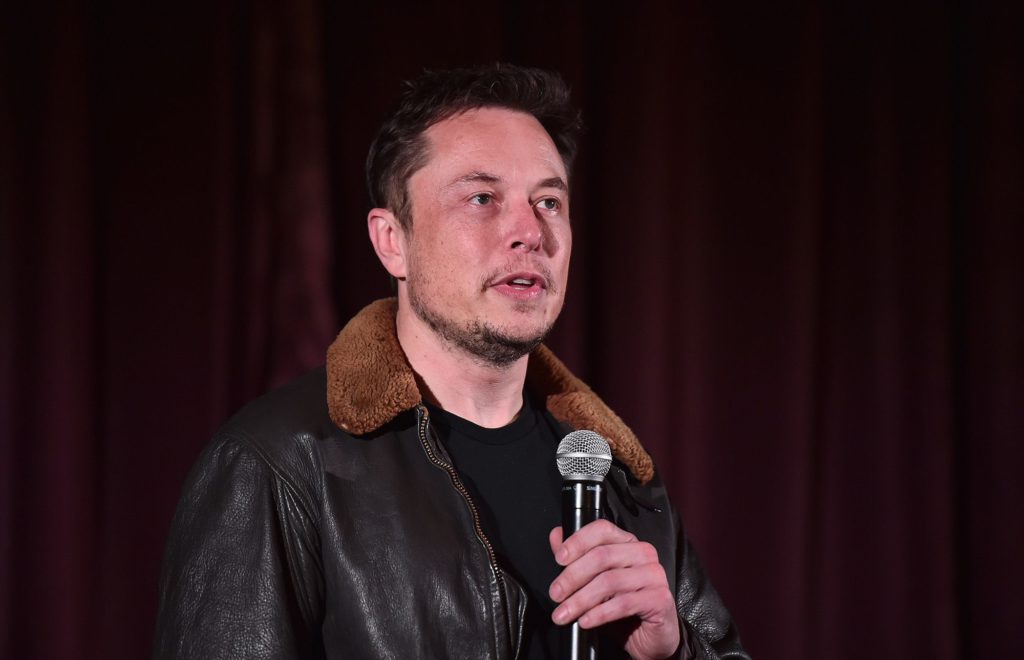
Tesla shuttered its Shanghai plant for three weeks because of the lockdown in the city of about 25 million people. The factory, which typically would make around 2,100 cars a day, shipped only 1,512 vehicles out of Shanghai last month due to the impact on operations. Continuing logistics challenges may force production to cease again entirely later this week, a person familiar with the matter said, declining to be identified because the details are private.

While officials are eager to reassure that businesses are returning to normal, government data show manufacturing and services activity plunging to their worst levels since the pandemic began. 

Even after securing permits to resume production, companies are struggling to get raw materials and parts due to difficulties in obtaining approvals to transport goods across provinces. Many truck drivers are also stuck in quarantine.


Sony Group Corp. on Tuesday cut its PlayStation 5 sales forecast to about 18 million units this fiscal year from a previous estimate of 22.6 million units, citing supply-chain complications due to the pandemic, including lockdowns in China. Nintendo Co. also said there had been some impact on sales because of the situation in Shanghai. 

Supply-chain disruptions stemming from Chinese lockdowns have hit manufacturing in other countries. Toyota Motor Corp. said Tuesday it would suspend some production lines in Japan and lowered its global output plan for the month to 700,000 vehicles from 750,000 due to the lockdown in Shanghai. Mazda Motor Corp. suspended work at two factories in Japan twice last month due to a shortage of parts from China. 

Cooper-Standard Holdings Inc., a Michigan-based manufacturer of car parts, had virtually no production at its Shanghai factories in April and its customers’ plants were also down, Chief Executive Officer Jeffrey Edwards said in an earnings call last week. 

“It’s far from over, in terms of getting back up to production levels in China that are normal,” Edwards said. “They had a great first quarter of it. With everything that’s happened now, that’s all out the window.”

More stories like this are available on bloomberg.com

©2022 Bloomberg L.P.

Panasonic Seeing Robust Tesla Demand for Batteries, Development

(Bloomberg) — Panasonic Holdings Corp. is being asked by Tesla Inc. to speed up development of its next-generation 4680 batteries, said Hirokazu Umeda, chief financial officer. 

Anticipation had been building for the Japanese company to unveil plans to construct a new battery factory in the US, but instead the CFO spoke at a post-results briefing about ongoing robust demand for batteries, including the 2170 cells it supplies for Tesla’s electric vehicles. 

Panasonic has been scouting sites in Oklahoma and Kansas for its multibillion-dollar factory, Bloomberg News reported in March. The newly planned plant is part of its push to increase investment in EV cell production — a segment the 104-year-old Japanese electronics giant sees as critical for future growth.

“We can’t say more than what has been released, but we are getting many requests,” Umeda said on Wednesday. “We seeing continued strong demand from Tesla, for 2170 batteries, but also for faster development of the 4680.”

Read more: Panasonic Is Scouting U.S. Sites for New Battery Factory by 2024

At its planned US factory, Panasonic is aiming to manufacture 4680 batteries, which are bigger and more powerful, people familiar with the matter have said. The Japanese company its betting that the newly-developed technology — championed by Tesla CEO Elon Musk as the key to unlocking $25,000 EVs — will open up doors to supply other automakers in addition to Tesla.  

Both Oklahoma and Kansas have for some months been working on financial incentive packages to lure the Japanese company and the jobs the factory would bring. For Panasonic, settling on either location comes with the benefit of being close to the new factory that Tesla recently opened in Texas. 

Read more: Panasonic Bets on Tesla ‘Beer Can’ Battery to Unlock $25,000 EVs

Yuki Kusumi, Panasonic’s chief executive officer, said in April that the manufacturer will invest 600 billion yen ($4.6 billion) in automotive batteries, supply chain software and other areas the company sees as core to its growth.

Panasonic also views opportunities in supply-chain software. Last year, it spent $7.1 billion buying Blue Yonder, one of its biggest-ever acquisitions. The company said earlier on Wednesday that it is considering an initial public offering of the business.

More stories like this are available on bloomberg.com

©2022 Bloomberg L.P.
Close Bitnami banner
Bitnami