Bloomberg

Elon Musk’s Go-Private Tweets About Tesla Were Reckless, Judge Found

(Bloomberg) — “No reasonable jury could find that Mr. Musk did not act recklessly.”

That’s the upshot of a federal judge’s review of Tesla Inc. CEO Elon Musk’s 2018 tweets about taking the company private, as revealed in an order that was sealed for more than a month before it was made public Tuesday.

U.S. District Judge Edward Chen’s conclusion that Musk was misleading in his Twitter posts was disclosed weeks ago in a court filing. But the ruling wasn’t released while Tesla fought to limit how much the public could learn about regulatory scrutiny and shareholder criticism of the billionaire’s past tweeting habits.

The ruling is a big win for investors seeking to recover billions of dollars in losses they blame on gyrations in Tesla’s share price four years ago when the tweets roiled the market. 

The case is heading to a trial in January at the same time as Musk is trying to close a deal to buy Twitter.

Musk has insisted for years that his short-lived plan to take Tesla private with “funding secured” was solid based on discussions he had with Saudi Arabia’s Public Investment Fund. 

But Chen found otherwise in his 33-page ruling.

“No reasonable jury could find that Mr. Musk did not act recklessly given his clear knowledge of the discussions that took place at the 7/31/2018 meeting” with the Saudis, the San Francisco judge wrote. 

Musk and Tesla had urged Chen to keep “select materials” in the lawsuit under wraps because they contain “protectable, non-public, confidential business information.” The company and the CEO argued that third-party investors in Tesla “had an expectation of the private nature of the communications,” according to a court filing.

Lawyers for the company and for the investors who sued finally reached an agreement that allowed the ruling to be unsealed Tuesday.

Musk and Tesla are trying to appeal Chen’s ruling.

More stories like this are available on bloomberg.com

©2022 Bloomberg L.P.

GlobalFoundries Tops Earnings Estimates in Sign Chip Demand Persists

(Bloomberg) — GlobalFoundries Inc., the biggest U.S.-based provider of made-to-order semiconductors, posted quarterly sales and profit that topped analysts’ estimates, a sign it’s benefited from industrywide shortages.

First-quarter revenue jumped 37% to $1.94 billion, the company said in a statement Tuesday. The company had profit of 42 cents a share, excluding certain items. Analysts projected $1.9 billion and 24 cents on average, according to data compiled by Bloomberg.

The company’s revenue forecast for the current quarter, meanwhile, was roughly in line with projections. Sales will be $1.96 billion to $1.99 billion in the period ending in June. Excluding certain items, profit will be 43 to 48 cents a share. Analysts had predicted sales of $1.93 billion and earnings of 26 cents a share.

GlobalFoundries, majority-owned by the government of Abu Dhabi, is trying to win share in the market for outsourced chip production and gain enough scale to compete with industry leader Taiwan Semiconductor Manufacturing Co. Widespread shortages of components have helped it attract new customers and secure long-term commitments.

The shares gained less than 1% in late trading following Tuesday’s report. 

Chief Executive Officer Tom Caulfield and some of his counterparts at other chipmakers have maintained that new uses for semiconductors mean that there will be a period of sustained growth in demand. Caulfield is expanding his factory footprint with upfront payments from customers.

Shares of GlobalFoundries have declined 19% this year, part of a broader selloff for chip-related stocks. The company began life as a publicly traded company last October.

More stories like this are available on bloomberg.com

©2022 Bloomberg L.P.

Loud Ads on Streaming Services Targeted by US Lawmakers

(Bloomberg) — US lawmakers who objected to loud TV commercials now want quieter ads on streaming services such as Hulu, Peacock and Paramount+.

Representative Anna Eshoo and Senator Sheldon Whitehouse on Tuesday introduced legislation requiring that ads on streaming services be no louder than regular programming. The measure would build on a 2010 law that targeted TV commercials.

“We’re updating the legislation for the benefit of consumers who are tired of diving for the mute button at every commercial break,” Eshoo, a California Democrat, said in an emailed news release. 

Whitehouse, a Rhode Island Democrat, said “new ways to watch TV shouldn’t mean new ways for corporations to blare ads at outrageously high volumes.”

Loud ads persist on traditional TV, according to a memo distributed by Eshoo’s staff. The Federal Communications Commission told Eshoo in 2020 that no service had been held to account. Consumer complaints numbered in the thousands per year, according to the agency.

The bill introduced Tuesday is known as the CALM Modernization Act, short for Commercial Advertisement Loudness Mitigation (CALM) Modernization Act.

More stories like this are available on bloomberg.com

©2022 Bloomberg L.P.

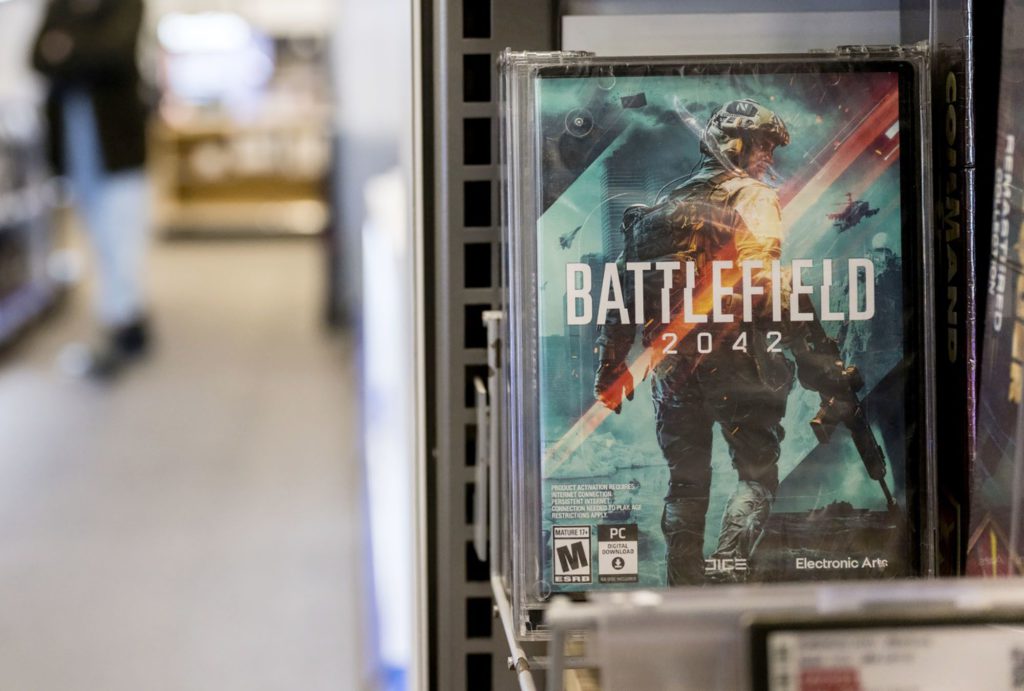
EA Revenue Forecast Misses Estimates Following Battlefield Flop

(Bloomberg) — Electronic Arts Inc. reported revenue for the current quarter that missed analysts’ estimates, as the video game publisher continues to feel the effects of an industry-wide downturn and the flop of last fall’s Battlefield game.

The video game publisher, known for its Star Wars and sports games, said adjusted revenue for the three months ending June 30 will be $1.2 billion to $1.25 billion. Analysts had expected $1.45 billion, according to data compiled by Bloomberg. 

“With amazing games, built around powerful IP, made by incredibly talented teams, and outstanding engagement in our live services, FY23 is set to be a year of innovation and growth for Electronic Arts,” said Chief Executive Officer Andrew Wilson in a statement. 

EA has yet to release any major titles in 2022 and is still dealing with fallout from Battlefield 2042, which was released last November to mediocre reviews and poor fan reception. EA acknowledged earlier this year that the game failed to meet expectations and “did not resonate with fans.” 

Earlier on Tuesday, EA said it’s ending the lucrative licensing agreement it has had for nearly three decades with FIFA, the world’s football governing body. FIFA, one of the most popular video games, will be renamed EA Sports FC, effective next year, EA said, adding that it will share more information about the new franchise in July 2023. This year’s game is expected to be released in the fall under the name FIFA 23. EA is also planning to release a new entry in its annual Madden NFL franchise.

The company is also expected to soon share more information about its upcoming Star Wars titles, such as a sequel to 2019’s popular Star Wars Jedi: Fallen Order. And shareholders are looking for the company’s next moves in the lucrative mobile market, where another new Battlefield title is expected soon. On Monday, EA announced that it’s developing a mobile game based on the popular fantasy franchise The Lord of the Rings, in partnership with Middle-Earth Enterprises.

EA, based in Redwood City, California, is poised to become the biggest dedicated game publisher in the U.S. if Microsoft Corp’s planned $69 billion acquisition of Activision Blizzard Inc. is approved by next year. EA is a potential player in the industry’s current wave of consolidation and could be either a target or a buyer in the field, like Take-Two Interactive Software Inc., which purchased the mobile company Zynga Inc. for $11 billion. Industry observers are carefully watching Ubisoft Entertainment SA, which has been the center of speculation about a sale.

For the fiscal fourth quarter, EA just missed analysts’ expectations with revenue of $1.75 billion, compared with the average estimate of $1.77 billion. Earnings per share, excluding some costs, were $1.46, compared with the average estimate of $1.42. 


More stories like this are available on bloomberg.com

©2022 Bloomberg L.P.

Roblox Misses Revenue Estimates on Slowing Post-Pandemic Growth

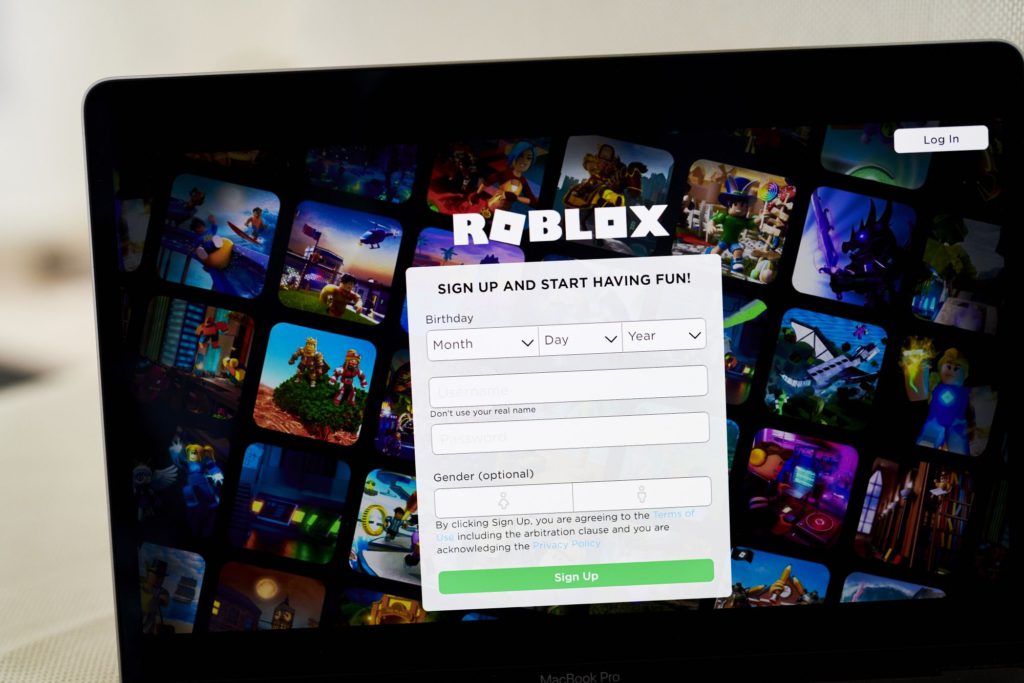
(Bloomberg) — Roblox Corp., a video game platform aimed at preteens and teenagers, reported bookings that declined from a year ago and missed analysts’ estimates, continuing a trend that saw the time players spent on the platform growing slower than during the pandemic. 

Bookings, which include revenue and deferred revenue and other adjustments, fell 3% to $631.2 million, in the period ended March 31, the company said Tuesday in a statement. Analysts, on average, estimated $633.3 million, according to data compiled by Bloomberg.

Roblox said daily active users hit a record 54.1 million in the quarter, but that 28% year-over-year increase was less that the previous period and short of the doubling of growth the game company experienced during the pandemic. And the amount of time game players engaged with the platform also grew at a slower rate than before and during the pandemic — a trend that continued in April, the company said in the statement.

“In the US & Canada during Q1 and April 2022 we saw fewer hours per (daily active user) relative to the relevant period in 2021 when most users were subject to Covid lockdowns,” Roblox said in a letter to shareholders. “Generally our bookings are highly correlated with engagement hours.”

Chief Executive Officer David Baszucki said it’s difficult to compare the environment in the first part of this year with early 2021 “when we were completely locked down.” A year ago, 3 million players ages 9 to 12 were spending 10 million hours a week on Roblox. The company is hanging onto those users, “and going forward we expect to grow them, but now they’re spending 8 million hours a week,” he said. “Our bookings are very correlated to time on the platform.”

Investors also question how Roblox will make money from its young, dedicated users. Right now, games are free-to-play, but the company generated revenue through sales of in-game currency, Robux, and the 73 cents it skims from every dollar spent in-game on user-generated content. Roblox also participates in licensing and advertising deals, including with Marvel, Gucci and Chipotle.

Roblox on Wednesday announced it would expand initiatives to generate revenue, including through advertising. The platform will offer more sponsored search results for their digital games and experiences as well as more integrated ad units in-game.

Ads in Roblox are controversial because most of its users are younger than 18. In April, advertising watchdog Truth In Advertising sent a complaint to the US Federal Trade Commission complaining that “Roblox has failed to establish any meaningful guardrails to ensure compliance with truth in advertising laws.”

Baszucki said the company’s views on advertising are “typically more stringent than laws or regulations,” and are “thoughtful of what’s appropriate” for kids younger than 13 on the platform. “What content is advertising, what content is fun brands kids want to interact with?” he said. “It’s a bit of a gray scale.”

First-quarter sales increased 39% to $537.1 million, compared with analysts’ average estimate of $563 million. The company reported its net loss widened to $160 million, or a loss of 27 cents a share, from $134.2 million, or 46 cents. Adjusted earnings before interest, taxes, depreciation and amortization was $67.9 million. Analysts estimated $100.1 million.

Roblox shares swung widely from negative to positive in extended trading and were down about 5% at 4:12 p.m., after closing at $23.18 in New York. The stock has plunged 77% this year, including 27% in a single day after the company reported disappointing results in February.

The company seems to be pivoting back to focus on its younger audience as part of its plan to improve its net bookings. Roblox said a year ago that it hoped to expand its players older than 16. The company said Tuesday its 9- to 12-year-old user base is not “fully penetrated,” and wants to increase their numbers. 

More stories like this are available on bloomberg.com

©2022 Bloomberg L.P.

Ukraine Latest: US ‘Actively Examining’ Russia Bond Carveout

(Bloomberg) — US Treasury Secretary Janet Yellen said her department is “actively” examining whether to extend a sanctions carveout for Russian payments on foreign currency bonds. 

A video call between the European Union and Prime Minister Viktor Orban to discuss proposed sanctions on Russian oil imports that Hungary is resisting was postponed. Meanwhile, a key committee in Finland’s parliament backed NATO membership. 

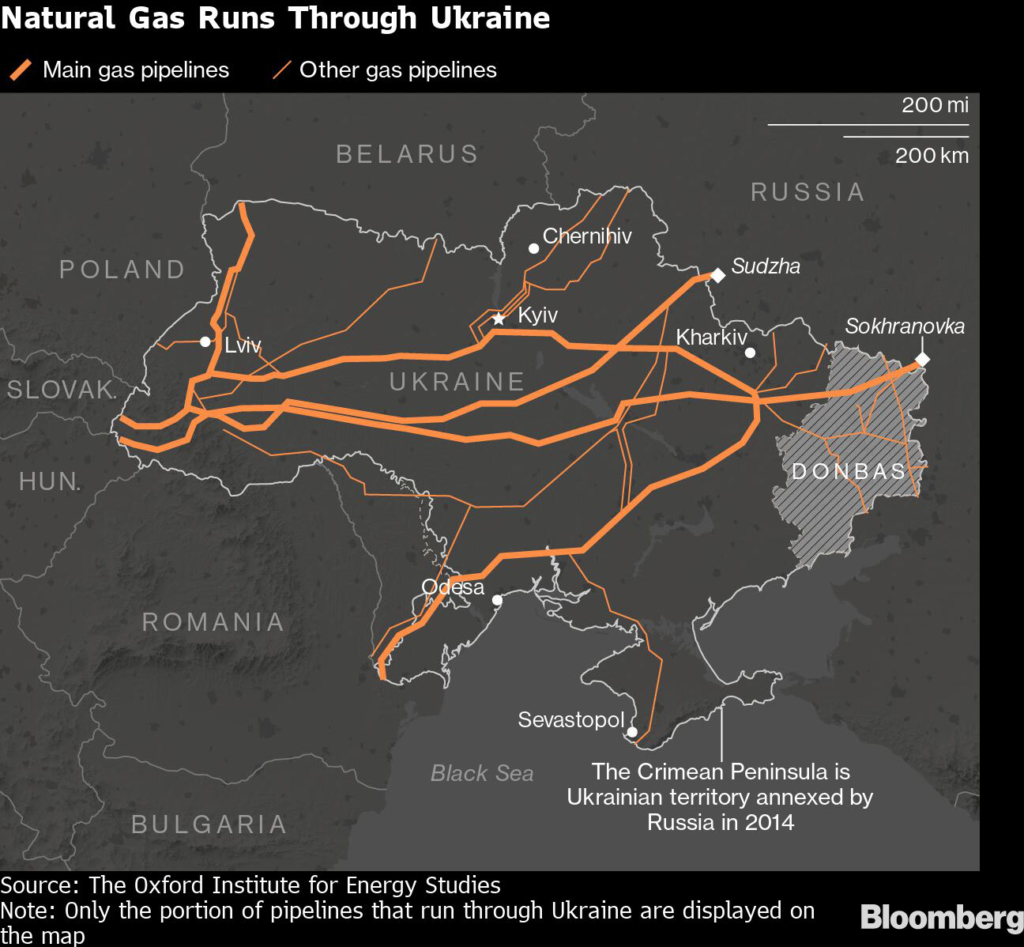
Ukraine’s natural gas grid said Russian flows to Europe via a key entry point will stop from Wednesday as Moscow’s forces disrupt operations, a move that has the potential to reduce supplies.

(See RSAN on the Bloomberg Terminal for the Russian Sanctions Dashboard.)

Key Developments

  • Spy Chief Says Ukraine Could Leave Russia Weaker But Aggressive
  • Macron, Orban Discuss Energy as EU Presses for Sanctions Deal
  • EU Weighs Joint Debt to Fund Ukraine’s Long-Term Rebuilding
  • Putin’s Crackdown Pushes Independent Russian Media Into Crypto
  • Finland Should Join NATO, Key Parliament Committee Concludes

All times CET: 

NATO Chief Stoltenberg Tests Positive for Covid-19 (9:53 p.m.)

NATO Secretary General Jens Stoltenberg has Covid-19, according to a tweet from the alliance’s press office. Stoltenberg is experiencing mild symptoms and will work from home, according to the statement. The diagnosis comes just days before NATO foreign ministers are due to meet in Berlin this weekend.

Biden to Meet Pelosi, Lawmakers Who Visited Ukraine (9:31 p.m.)

President Joe Biden will meet Tuesday afternoon with House Speaker Nancy Pelosi and other lawmakers who recently visited Ukraine, White House Press Secretary Jen Psaki said.

Among the issues expected to be discussed are whether the US should designate Russia as a state sponsor of terrorism. The meeting comes hours before the House plans to vote on a nearly $40 billion aid bill for Ukraine.

US Reviews Carveout for Russian Bond Payments (7:30 p.m.)

The US Treasury is busy examining whether or not it will extend a time-limited carveout from sanctions measures that has so far allowed Russia to keep making payments on its foreign currency bonds and steer clear of default. 

The future of those provisions — which allow US holders of Russian sovereign bonds to receive payments on the debt and are currently set to expire May 25 — are being “actively” examined at present, Yellen told lawmakers Tuesday in response to questioning.

“We want to make sure that we understand what the potential consequences and spillovers would be of allowing the license to expire,” Yellen said.

Zelenskiy Asks Malta to End ‘Golden Passports’ for Russians (7:01 p.m.)

Ukrainian President Volodymyr Zelenskiy said it is “high time” for Malta to end its support for so-called golden passports, which typically offer people citizenship in exchange for investing in a nation’s property or assets, for Russians. 

“It is high time to stop privileges for Russian citizens,” Zelenskiy said Tuesday in an address to Malta’s parliament. He also called on Malta to block Russian citizens’ access to real estate, bank accounts and yachts, among other things. 

EU Seeks to Boost Ukraine’s Food Exports Via Land (5:48 p.m.)

The EU is finalizing a plan to facilitate land exports of Ukraine’s stocks of food products with the Russian invasion blocking access to the country’s vital Black Sea ports. The bloc on Wednesday will consider a strategy that would address technical and bureaucratic initiatives to speed up the shipping of vegetable oils, corn and wheat, some of Ukraine’s key exports, people familiar with the discussions said.

The EU’s executive arm is concerned about logistical bottlenecks that could hamper efforts to utilize alternative land routes via neighboring countries, since infrastructure gaps could hinder exports despite recent moves to remove trade barriers with Kyiv. It will be a challenge to move a significant portion of the 25 million tons of products stuck there in time for the beginning of the next harvest season.

Ukraine Gas Grid Says Russia Flows Via Key Entry Point to Stop (5:20 p.m.)

Ukraine’s natural gas grid said Russian flows to Europe via a key entry point will stop from Wednesday as occupying forces disrupt operations, a move that has the potential to reduce supplies.

The Gas Transmission System Operator of Ukraine said it can no longer accept Russian gas transit via Sokhranivka from 7 a.m. local time, according to a statement on its website. It’s still possible for the fuel to be re-routed via another key entry point, allowing European contracts to be fulfilled, though it’s unclear who is responsible for making that decision.

Ukraine had already warned Russia that the actions of its troops and occupiers in the Luhansk region could end up disrupting about a third of the gas the Eastern European nation transits to Europe. 

NSA Probing Kaspersky’s Reach in US (4:19 p.m.)

The National Security Agency is investigating the extent to which software made by the Russian cybersecurity company Kaspersky is embedded in US businesses and organizations amid rising security concerns over Russia’s invasion of Ukraine.

“I am still very worried about US companies that are using Kaspersky,” said Rob Joyce, the NSA’s director of cybersecurity, in an interview in which he revealed the inquiry. “We think that is ill-advised with this global situation.”

Some companies, including those in financial services, voluntarily abandoned Kaspersky antivirus products after the US government banned the company’s software from federal systems in 2017, citing espionage fears. But the company’s products continue to be used in the US, which Joyce called “an installed base across random critical infrastructure and industry.”

Swedish Ruling Party Reported to Say Yes to NATO (2:37 p.m.)

Sweden’s ruling Social Democrats are set to declare their support on May 15 for the country to join NATO, Finland’s largest newspaper Helsingin Sanomat reported, citing sources it didn’t identify.

Finland’s government has been aware of the conclusion since at least last week, the newspaper said. 

Previous reports by news agency TT indicate that Swedish Prime Minister Magdalena Andersson wants to wait for the delivery of the country’s cross-party security policy review, due May 13, before she decides on the NATO position.

Zelenskiy Urges Slovakia to Back Russian Oil Ban (1:57 p.m.)

Ukrainian President Volodymyr Zelenskiy urged Slovak lawmakers to back the EU’s proposed ban on purchasing oil from Russia as the government in Bratislava tries to negotiate a three-year exemption with the bloc because of its heavy dependence on Russian crude.

Zelenskiy thanked Slovakia for supplying his military with weapons but said that the EU’s sixth package of sanctions was also vital for Ukraine’s defense. “If they will be weaker, it will be harder for us. We need this sixth package.” Zelenskiy told lawmakers in a video speech. “We understand it will be hard for you, but banning oil is important.”

Finnish Parliament Committee Says Country Should Join NATO (12:25 p.m.)

Finland should join the North Atlantic Treaty Organization to best ensure the security of all Finns, according to the parliament’s defense committee, as the nation prepares to decide on an application within days.

Russia’s invasion of Ukraine galvanized public support for joining the military alliance. Finland is, along with Sweden, considering NATO membership and giving up its non-alignment that stretches back to before the cold war.

EU Approves Release of 600 Million Euros for Ukraine (12:08 p.m.)

The EU has approved the release of 600 million euros to help Ukraine with its urgent financial needs, according to bloc officials who asked not to be identified. The money is part of the EU’s 1.2 billion euro emergency assistance package adopted by the bloc early this year.

The European Commission is expected to complete the process Wednesday and the funds could be transferred in the coming days, according to one of the officials.

Ukrainian Troops Retreat From Popasna in Luhansk Region (12:06 p.m.)

Ukrainian troops retreated from Popasna in the Luhansk region to more fortified positions, the area’s Governor Serhiy Haiday said in statement on Facebook. 

Fighting over the city, which is near the border between the Luhansk and Donetsk regions and occupies strategic heights, was ongoing over the last two months. 

German, Dutch Foreign Ministers Visit Kyiv (12:00 p.m.)

German Foreign Minister Annalena Baerbock and her Dutch counterpart Wopke Hoekstra traveled to Kyiv Tuesday where they will hold meetings with Ukrainian government officials.

Baerbock visited the town of Bucha near the capital, which is the site of alleged Russian atrocities against civilians, while Hoekstra was in the Kyiv suburb of Irpin, where he viewed bombed-out houses and buildings. “These acts cannot go unpunished,” he said in a tweet. “The Netherlands is committed to establish the truth and achieve justice.”

Macron Speaks With Orban on Energy Security (11:48 a.m.)

Orban spoke about energy security on Tuesday with Macron, whose country holds the EU’s rotating presidency, an aide to the Hungarian leader said, as diplomacy over potential sanctions on Russian oil continues. 

A video call between Orban, European Commission President Ursula von der Leyen and Hungary’s neighbors won’t be held Tuesday, according to a spokesman for the bloc. He didn’t immediately explain why the call, which was announced the previous day, was delayed. 

The EU’s sixth sanctions package would ban crude oil shipments over the next six months and refined fuels by early January, but Hungary has threatened to veto the measures due to its reliance on Russian energy imports. Orban and von der Leyen made progress in talks over the issue Monday but failed to reach a breakthrough, according to both sides.

German Investor Confidence Stabilizes (11:16 a.m.)

Investor confidence in Germany’s pandemic rebound improved but remained deeply negative as the war in Ukraine darkens the outlook for Europe’s largest economy.

The ZEW institute’s gauge of expectations rose to -34.3 in May from -41 the previous month, defying expectations for a third straight deterioration. Germany’s economy is feeling the effects of Putin’s invasion in large part due to its high dependence on Russian energy imports. 

Ikea Still Buying Russian Wood Despite Pledge, Newspaper Says (10:18 a.m.)

Ikea is continuing to source wood from Russia despite making a public promise to halt trade with the country following the war in Ukraine, Sweden’s tabloid Aftonbladet reported, citing internal email exchanges between Ikea’s purchasing managers.

In early March, the Swedish retailer said it was pausing operations in Russia and Belarus, including all exports and imports with those countries. Ikea representatives didn’t immediately respond to a request for comment.

Mazda Halted Russian Plant, Nikkei Reports (10:08 a.m.)

Mazda Motor Corp. halted production at its Vladivostok joint venture with Sollers in late April after it previously stopped exporting parts to Russia, Nikkei reported, citing the company.

Russia’s auto sector has been among the hardest hit domestic industries from sanctions as parts supplies have dried up. Volkswagen AG, BMW AG, Ford Motor Co. and every Japanese car company with production in the country have suspended operations there.

Oil Extends Slump as EU Softens Sanctions Proposals (8:34 a.m.)

Oil extended its biggest drop in more than five weeks after the European Union softened its proposed sanctions on Russian crude exports and as economic growth concerns weighed on sentiment.

West Texas Intermediate futures fell below $103 a barrel in Asian trading after sliding around 6% on Monday. The bloc will scrap a proposed ban on EU-owned vessels transporting Russian crude after objections from members including Greece. 

Independent Russian Media Turns to Crypto for Funding (8:10 a.m.)

Meduza, a prominent independent Russian-language news site, is soliciting donations via cryptocurrencies as President Vladimir Putin’s crackdown on the press and western sanctions made raising money in Russia impossible.

The site lost about a third of traffic after the Kremlin blocked its content in Russia and was forced to become creative in its fundraising to keep the lights on. Data show that Meduza’s Bitcoin and Ether wallets listed on its website held crypto worth around $230,000 at current prices.

Munich Re Writes Down $740 Million Over War (7:56 a.m.)

Munich Re wrote down Russian and Ukrainian bonds in its investment portfolio and warned that the war poses “considerable uncertainty” to its outlook.

The German reinsurer cut the value of the securities by almost 700 million euros ($740 million) in the first quarter and recorded about 100 million euros in costs related to the conflict.

Putin’s invasion has forced a series of financial hits among reinsurers, in part because of Russia’s move to effectively impound planes leased from foreign lessors. Swiss Re said earlier this month that it had set aside $283 million in reserves related to the war during the first quarter, and Hannover Re made additional provisions for possible losses in the low triple-digit million-euro range in the period.

Ukraine’s Economy to Shrink 30% This Year: EBRD (7:10 a.m.)

That forecast is more than previously expected and in a scenario where the war ends this year, the European Bank for Reconstruction and Development said. 

Russia’s invasion has upended trade in energy, agricultural commodities and fertilizers and disrupted supply chains, resulting in slower growth across eastern Europe.

More stories like this are available on bloomberg.com

©2022 Bloomberg L.P.

Musk on Trump, Twitter: ‘I Would Reverse the Permanent Ban’

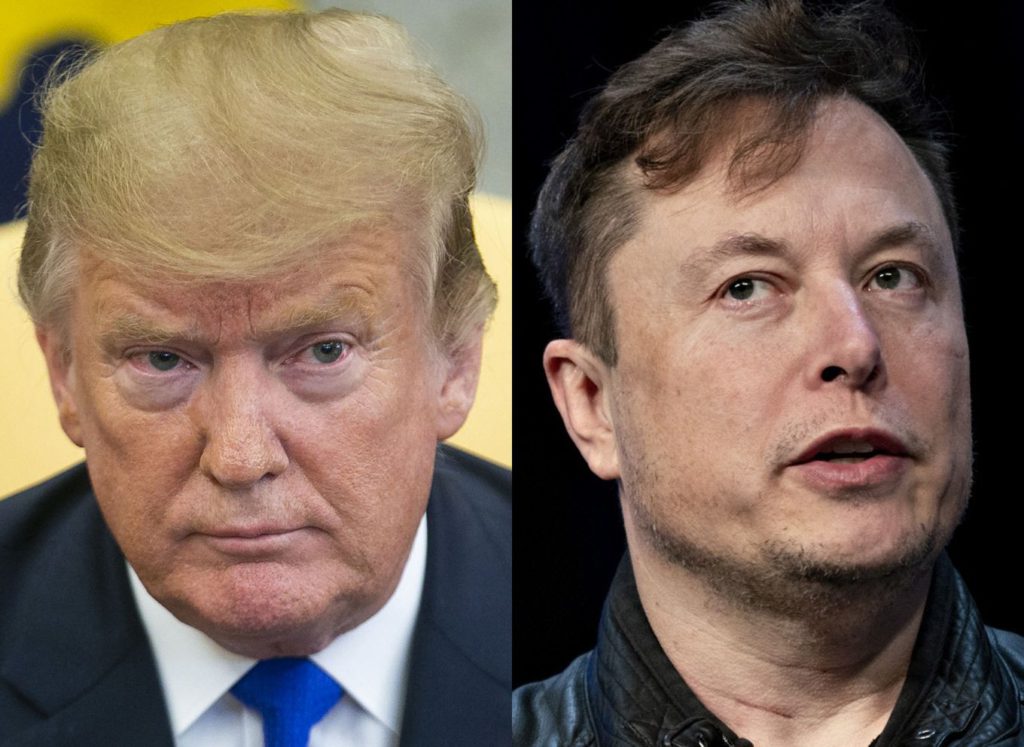
(Bloomberg) — Twitter Inc. was “foolish in the extreme” in kicking former US President Donald Trump off its service and his permanent ban should be ended, said Elon Musk, the billionaire who has agreed to acquire the social media company.

“I would reverse the permanent ban,” Musk said at a conference Tuesday when the interviewer asked directly about Trump. “Perma bans just fundamentally undermine trust in Twitter as a town square where everyone can voice their opinion.”

Booting the former president off the site “didn’t end Trump’s voice,” Musk said at the Financial Times Future of the Car summit, speaking via remote video. “It will amplify it among the right. This is why it is morally wrong and flat-out stupid.”

“My opinion, and Jack Dorsey I want to be clear shares this opinion, is that we should not have permanent bans,” Musk said, referring to the Twitter co-founder and former chief executive officer. Dorsey tweeted his agreement, and both men added caveats that illegal behavior or spam wouldn’t be allowed.

Elon Musk Stakes a $44 Billion Claim on the Future of Free Speech

Musk, who reached an agreement to acquire Twitter for roughly $44 billion late last month, has said that he believes the San Francisco-based company has overstepped on policing user speech and wants to push it toward a more free-speech-focused approach. 

But Musk also cast a bit of doubt about whether the deal, which would make Twitter a private company, will go through. He’s still in the process of lining up the necessary funding to complete the transaction.

“I don’t own Twitter yet, so this is not like a thing that will definitely happen,” Musk said. “What if I don’t own Twitter?”

Musk was speaking at the conference as CEO of electric-car maker Tesla Inc. He already runs multiple companies and said he intends to stay at Tesla for “as long as I can be useful.”

Twitter, citing rules against glorifying violence, permanently banned Trump’s account in January 2021 after he encouraged his supporters to march on the US Capitol in what became a deadly attempt to stop the counting of Electoral College votes for President Joe Biden. Trump also remains banned from Meta Platform Inc.’s Facebook.

Trump has said he won’t return to the service even if the ban is lifted. He is backing his own social media company, called Truth Social. A Trump spokesman didn’t immediately respond to a request for comment on Musk’s remarks.

U.S. District Judge James Donato last week threw out the former president’s challenge to his permanent ban from Twitter. The San Francisco judge gave Trump’s lawyers a chance to revise the suit and try again, but warned they will have to show that Twitter was acting as a government censor.

Twitter, Musk and Why Online Speech Gets Moderated: QuickTake


(Updates with background on Trump’s ban in the eighth paragraph.)

More stories like this are available on bloomberg.com

©2022 Bloomberg L.P.
Texas Power Generator Talen Energy Files for Bankruptcy

(Bloomberg) — Talen Energy Corp. placed its Talen Energy Supply unit in Chapter 11 bankruptcy on Monday after rising power and gas prices disrupted its hedges and sparked a liquidity crisis. 

At least eight of the company’s 18 power plants rely on natural gas to make electricity, which means that when prices spiked in recent months, Talen was “exposed to market price volatility” restructuring adviser Ryan Omohundro said in court papers. 

Talen’s strategy of using derivatives to manage commodity and power market volatility backfired when power and natural gas prices spiked last year, according to the filing. The hedges forced the company to post more cash collateral for its counterparties, sparking a “significant liquidity squeeze,” Omohundro said.

“These liquidity requirements were much greater than the (company) could have anticipated or were capable of financing,” he said.

Talen Energy Supply, the company’s debt-issuing vehicle, said it had struck a restructuring deal with a group of bondholders that will see the creditors inject up to $1.65 billion of new equity, according to a statement on Tuesday. The company is scheduled to appear in bankruptcy court at 4 p.m. on Tuesday in Texas. 

DIP Financing 

TES also obtained $1.76 billion of bankruptcy financing from a group of banks including Citigroup Inc., Goldman Sachs Group Inc., and Royal Bank of Canada. That consists of a $1 billion term loan, a $300 million revolving credit facility, and a $458 million letter of credit facility, the U.S. company said in a statement. 

Parent company Talen Energy Corp. and its crypto mining unit didn’t file for bankruptcy. 

Talen, based in The Woodlands, Texas, listed both assets and debt of more than $10 billion in its Chapter 11 petition filed in Houston. A Chapter 11 filing allows a company to continue operating while it works out a plan to repay creditors. The Riverstone Holdings-backed power generator had faced years of struggles amid weak energy prices, dividend payments to its sponsor and growing pressure to become more environmentally friendly. 

As part of its bankruptcy, Talen also filed a $900 million lawsuit against its former owners, PPL Corp., claiming the company diverted money away from an affiliate of Talen. The companies have been fighting about the transfer in court for several years. 

Power Crisis

The company, which operates in several Texas cities, was hit hard by the state’s freeze and power crisis in early 2021. The fallout from the winter storm cost it around $90 million, S&P Global Ratings said. 

Talen entered 2022 largely without hedges, which helped it profit from higher power prices, but the company was squeezed by higher gas prices and struggled to find hedging counterparties due to its risky debt profile, people with knowledge of the matter previously told Bloomberg. 

The case is Talen Energy Supply, 22-90054, U.S. Bankruptcy Court for the Southern District of Texas. 

(Adds first-day hearing time in fifth paragraph. A previous version of this story corrected the unit filing for bankruptcy.)

More stories like this are available on bloomberg.com

©2022 Bloomberg L.P.

MicroStrategy Options Hedge Risk of 96% Drop After Bitcoin Rout

(Bloomberg) — Few companies are tethered as closely to Bitcoin as MicroStrategy Inc., a software company that’s plowed its profits and borrowed money into the cryptocurrency. 

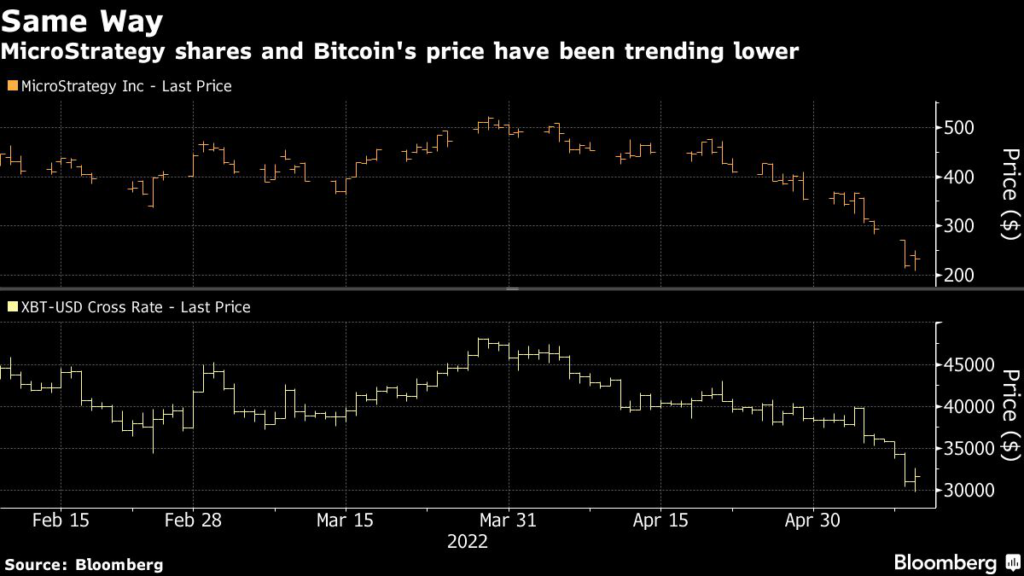
Shares of the Tysons Corner, Virginia-based company have tumbled alongside Bitcoin, dropping more than 50% since the end of March to around $230. 

Yet options activity shows some investors are eager to protect against — or bet on — an even deeper hit. Some of the most active options traded Tuesday were puts with January expirations that give the owner the right to sell the stock at $40, $20 and even $10. There had been no open interest in those contracts before. 

Such extreme bets could be from someone hedging a long position in the stock or in Bitcoin. But they amount to bets on a further drop of around 80%, 90% or 96% from current levels, respectively.

Shares of MicroStrategy, whose Chief Executive Officer Michael Saylor is regarded as a top Bitcoin evangelist, are often used as a proxy for the cryptocurrency given how heavily the company has tied its fortunes to it. MicroStrategy’s stock market capitalization has broadly mirrored the value of its Bitcoin holdings.

More stories like this are available on bloomberg.com

©2022 Bloomberg L.P.
Bitcoin Snaps 5-Day Slide After Briefly Crashing Below $30,000

(Bloomberg) —

Bitcoin rebounded from a swoon below $30,000 as a selloff in stocks eased and a bout of calm washed across global markets.

The world’s largest digital token snapped a five-day slide that had cut its price by more than 20%. Bitcoin added as much as 5.4% on Tuesday before giving up some gains and trading at around $31,623 as of 2:35 p.m in New York. Ether at one point climbed 7.2%, while coins like Solana and Avalanche were also in the green. The crypto recovery came as equities mostly advanced across the U.S. and Europe, highlighting how the two asset classes are trading in tandem. 

The TerraUSD algorithmic stablecoin continued to trade below $1 after de-pegging from the dollar over the weekend, adding to the market volatility. 

“The main reasons as to why Bitcoin would continue to struggle are rooted in both the equities market as well as the LUNA foundation,” said Nick Mancini, director of research at crypto sentiment analytics platform Trade The Chain. 

Bitcoin’s recent plunge has taken it to levels last seen in the middle of 2021, reversing a bull market that peaked in November. Whether the calm will last is an open question. Tightening monetary policy to combat runaway inflation is curbing liquidity, creating a formidable obstacle for speculative assets like cryptocurrencies. 

Michael Novogratz, the billionaire cryptocurrency investor who leads Galaxy Digital Holdings Ltd., warned that he expects things to get worse before they get better. Among challenges facing digital assets is that they’re increasingly trading in line with technology stocks, which are getting hammered by rising interest rates. 

“Crypto probably trades correlated to the Nasdaq until we hit a new equilibrium,” Novogratz said on Galaxy’s first-quarter earnings call on Monday, adding that investors may see “a very choppy, volatile and difficult market for at least the next few quarters before people are getting some sense that we’re at an equilibrium.” 

Issuers of conventional stablecoins like Tether’s USDT or Circle’s USDC maintain that their tokens are backed by “real” assets like cash or highly rated bonds on a 1-to-1 basis. These coins hold their peg because, the theory goes, they can be readily exchanged for cash or highly liquid cash equivalents. By contrast, algorithmic stablecoins attempt to hold their value through a combination of instructions encoded in software programs and active treasury management. UST — which functions in tandem with a related token, Luna — is the most popular and controversial of these kinds of tokens.

In the case of Terra’s stablecoin, if its price falls below $1, traders are incentivized to swap units of UST for Luna, which removes the former from circulation. Similarly, software programs are triggered to do the same. If the price rallies above $1, the mechanism applies in reverse – remove Luna tokens from circulation to create equivalent, new units of UST. But over the weekend, all of those mechanisms stopped working and UST lost its dollar peg, while Luna also slid in value. 

Do Kwon, the founder of Terraform Labs, which powers the Terra blockchain, is moving to shore up the stablecoin. Luna Foundation Guard, the association created to support the decentralized token and Terra blockchain, said it will issue loans worth about $1.5 billion in Bitcoin and TerraUSD to help strengthen TerraUSD’s peg.

Breaking Lower

Bitcoin is down more than 50% since hitting a record of almost $69,000 in November and has underperformed both global stocks and gold so far in 2022. The recent rout also broke it out of the narrow trading range where the token has spent most of this year, prompting some technical analysts to predict more pain ahead. Short bets against Bitcoin have climbed to a record, according to data compiled by CoinShares going back to January 2020.

Jeffrey Halley, a senior market analyst at Oanda, said in a note that technical patterns suggest Bitcoin could slump to the $17,000 area. 

“That is a big call, and it does seem to be making a stand ahead of $30,000.00” Halley wrote. “Realistically, it needs to reclaim $37,000.00 to change the technical outlook and give the HODLers hope of a good night’s sleep.”  

Over a 24-hour period, 254,956 traders were liquidated, with the total liquidations equaling about $987 million, data from Coinglass show.


More stories like this are available on bloomberg.com

©2022 Bloomberg L.P.
Close Bitnami banner
Bitnami