Bloomberg

Radius Global Infrastructure Mulls Options Including Sale

(Bloomberg) — Radius Global Infrastructure Inc., which leases cell sites to wireless-tower companies and mobile-network operators, is exploring strategic options including a sale, according to people with knowledge of the matter. 

The company, led by Chief Executive Officer Bill Berkman, is working with an adviser to solicit interest from potential suitors, including infrastructure investment firms, the people said, asking not to be identified discussing private information. 

A representative of New York-based Radius declined to comment.

Shares of the company surged a record 18% after Bloomberg reported the news, to close at $14.71 in New York. That brought the market capitalization to about $1.55 billion.

Radius’s operating company, APWireless, has more than 8,000 cell-site leases in 21 countries across North and South America, Europe, Asia and Australia, its website shows. 

Infrastructure-focused firms have been investing heavily in digital assets, which are viewed as stable with recurring revenue. 

(Updates with share reaction in fourth paragraph.)

More stories like this are available on bloomberg.com

©2022 Bloomberg L.P.

Biden Heads for JD Vance’s Home Turf as Democrat Sits Out Event

(Bloomberg) — President Joe Biden demanded Congress pass legislation to make the U.S. more competitive with China during a speech in Ohio that wasn’t attended by the Democratic nominee for the state’s pivotal open Senate seat.

“Pass the damn bill and send it to me,” Biden said Friday after touring a manufacturing facility in suburban Cincinnati. “If we do, it’s going to help bring down prices, bring home jobs, and power America’s manufacturing comeback.” 

The bill Biden wants lawmakers to pass, called the Bipartisan Innovation Act, is aimed at boosting U.S. manufacturing and supply chains — particularly of semiconductors — to reduce the country’s dependence on imports from China and other nations.

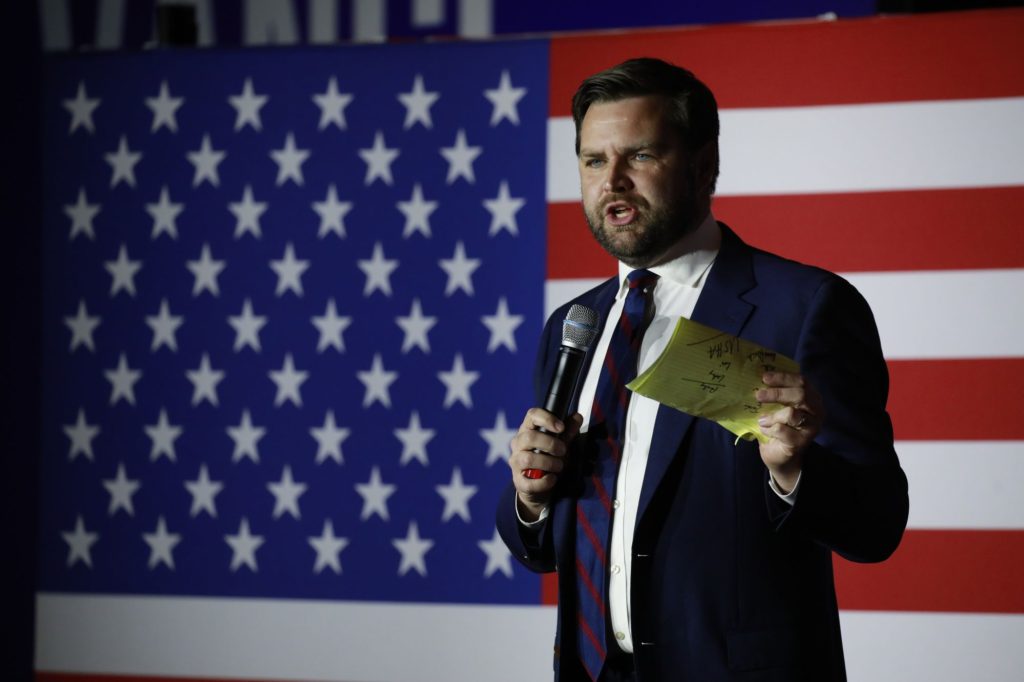
Biden visited the state three days after a primary election that saw Republicans nominate author and venture capitalist JD Vance for the Senate while Democrats selected Representative Tim Ryan. Vance calls Cincinnati his hometown.

Ryan’s absence from the speech suggests Democrats running in the most competitive congressional races regard Biden and his low public approval ratings as a drag on their chances.

Just 42% of Americans approve of Biden’s performance as president, according to an analysis of polls by FiveThirtyEight.

Ryan dodged questions about whether he wanted Biden campaigning for him in TV interviews this week. “We welcome everybody’s support, but I will be the face of this campaign,” he told CNN.

White House Press Secretary Jen Psaki attributed Ryan’s absence to a funeral and other events the candidate needed to attend, telling reporters traveling to Ohio with the president aboard Air Force One that Biden “remains in close touch” with the congressman. 

Read more: JD Vance Shows Trump’s Enduring GOP Grip With Ohio Primary Win

Ohio’s two current senators, Republican Rob Portman and Democrat Sherrod Brown, joined Biden on Friday, along with Greg Landsman, a Democratic city councilman in Cincinnati who is challenging Representative Steve Chabot’s re-election.

Brown said the China bill has been delayed because “some Republicans don’t want to give Biden a win,” but predicted it will pass.

“We’re going to get it, yeah, absolutely,” he said. “I think it’s done — done and done — by the summer, or early summer.”

Biden traveled to Cincinnati to celebrate U.S. job gains in manufacturing. The Labor Department reported Friday that the country gained 428,000 jobs in April, despite high inflation and an anticipated interest rate hike from the Federal Reserve.

“I know you’re worried about the price of gas, food and other necessities,” Biden said, adding that increased domestic manufacturing could help make the U.S. less vulnerable to inflation. 

He hailed an agreement between large companies and smaller suppliers to boost so-called additive manufacturing, or 3-D printing. 

The initiative includes GE Aviation Systems, Honeywell International Inc., Lockheed Martin Corp., Raytheon Technologies Corp., and Siemens Energy AG. The companies are pledging to buy a minimum amount of 3-D printed material from U.S. small- and medium-sized businesses. The agreement is aimed at solving a chicken-and-egg problem: Small firms can’t grow without orders, and large companies lack the scale they need from domestic suppliers, an administration official said.

“Every one of you know that competitiveness and resilience of the American supply chain rests on tens of thousands of small-size manufacturers like the ones I met here today,” Biden said. 

But the political backdrop of the trip overshadowed the policy aspects, as the Senate race kicks into full gear and Washington lawmakers begin to turn more of their attention to November’s midterm elections. Biden didn’t mention the Senate race or its candidates.

Ohio was once a Democratic stronghold, but it has grown steadily more conservative. Donald Trump won the state by 8 percentage points in 2020 and endorsed Vance in his primary election. Portman’s retirement means a Senate race without an incumbent, making it more competitive, though Ryan likely enters the contest as an underdog due to Ohio’s political shift.

Biden has said he thinks Democrats have a shot at gaining two Senate seats in November, though he hasn’t said where.

The president this week sharpened his criticism of Republicans, seeking to draw clear contrasts between their proposals and his, particular on taxes and the economy. He’s said they’re pursuing a “MAGA agenda” he’s called “radical” and “extreme,” referring to Trump’s “Make America Great Again” slogan. 

Ryan has sought to appeal to disaffected Republicans in his campaign. 

(Adds Psaki comment in sixth paragraph)

More stories like this are available on bloomberg.com

©2022 Bloomberg L.P.

Market Whiplash Proves It’s A Terrible Time to Miss on Earnings

(Bloomberg) — It’s been a volatile week for U.S. stocks. The selling, then buying, then major selling — followed by even more selling — sent indexes back to levels last seen a year ago when the pandemic was still rampaging. 

But few groups were punished as harshly as the companies that missed their quarterly earnings expectations.

In normal times, companies that report worse than anticipated results can expect to suffer modest drops as Wall Street digs into the underlying business. In the current environment, however, underwhelming earnings are being slammed with massive selloffs as traders dump shares of former market darlings.

Take Under Armour Inc., for example. The stock plunged by as much as 27% on Friday after warning it’s struggling with supply-chain issues. Lyft Inc., which spiraled to the lowest since Covid-19 ravaged markets in March 2020, shed more than one-third of its value this week after the company spooked investors by saying it plans to spend more money to woo drivers. 

The struggle was real in Europe too, where Adidas AG sank despite earnings that “would have been seen as almost reassuring,” according to Jefferies, which called the current macro environment “not a normal market.”

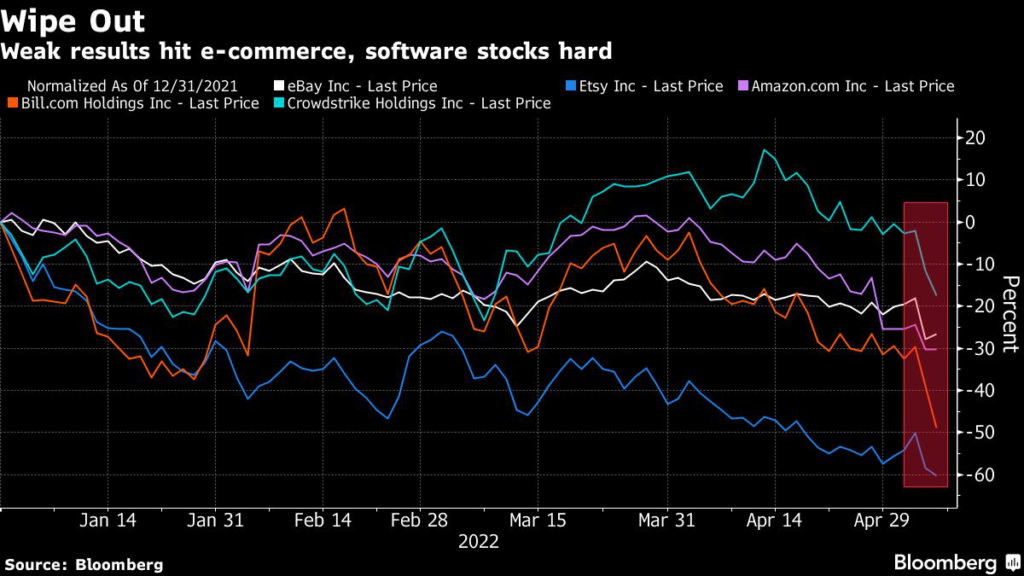
The iShares Expanded Tech-Software Sector ETF, ticker IGV, closed at the lowest level since July 2020, bogged down by more than 20% drops this week by Confluent Inc., Bill.Com Holdings Inc., and Rapid7 Inc. E-commerce companies ranging from Shopify Inc. to eBay Inc. were also hit as results fell flat.

The likes of Amazon.com Inc. and software and e-commerce peers including CrowdStrike Holdings Inc. and Etsy Inc. were also whipsawed as investors dumped growth stocks.

To be fair, it wasn’t much better for companies that actually beat expectations: Expedia Group Inc. and Airbnb Inc. saw initial rallies turn into selloffs despite results and guidance that showcased increasing demand for travel.

Adam Crisafulli, founder at Vital Knowledge, attributed the high volatility and relentless selling to secular shifts similar to what happened in the 1990s, when excessive optimism related to the Internet created a bubble, as well as soaring inflation.

“In this vortex of change, everyone has become discombobulated,” he wrote. “The result is a [market] tape in which no one is really happy, and barely anyone has any conviction about what comes next.”

This kind of gloom is everywhere as the week comes to a close, unless of course you’re a fan big oil or big dividends.  

The S&P 500 Energy Index rallied more than 10% this week, while the Vanguard High Dividend Yield ETF, ticker VYM, was up a more modest 1.9%. Kellogg Co., a notable dividend payer, climbed more than 6% this week to the highest level since 2018.

Many of the S&P 500’s top performers during the market’s latest leg lower include Devon Energy Corp., Pioneer Natural Resources Co. and Occidental Petroleum Corp. The group’s standout performance is a product of oil trading back above $110 a barrel despite an earnings season for energy companies that has actually underwhelmed.

(Updates share movement for market close.)

More stories like this are available on bloomberg.com

©2022 Bloomberg L.P.

Pro-Russian Hackers Hit German Government Sites, Spiegel Says

(Bloomberg) — Pro-Russian hackers carried out cyberattacks on German government websites and politicians, including Chancellor Olaf Scholz’s party-affiliated site, Der Spiegel reported, citing an official investigation.

Germany’s Defense Ministry, parliament, Federal Police and several state police authorities were also attacked in recent days, temporarily knocking some of them offline, the magazine reported. 

A pro-Russian activist group known as “Killnet” claimed responsibility on Telegram for the attacks, which security officials view as retaliation for German arms deliveries to Ukraine in its war with Russia, according to Der Spiegel.  

Scholz’s administration is stepping up efforts to supply Ukraine. It authorized the transfer of 50 Gepard anti-aircraft tanks last week and on Friday announced the delivery of seven self-propelled, rapid-fire artillery systems.


More stories like this are available on bloomberg.com

©2022 Bloomberg L.P.
Miami City Mayor Suarez Invites Twitter to Move to Florida

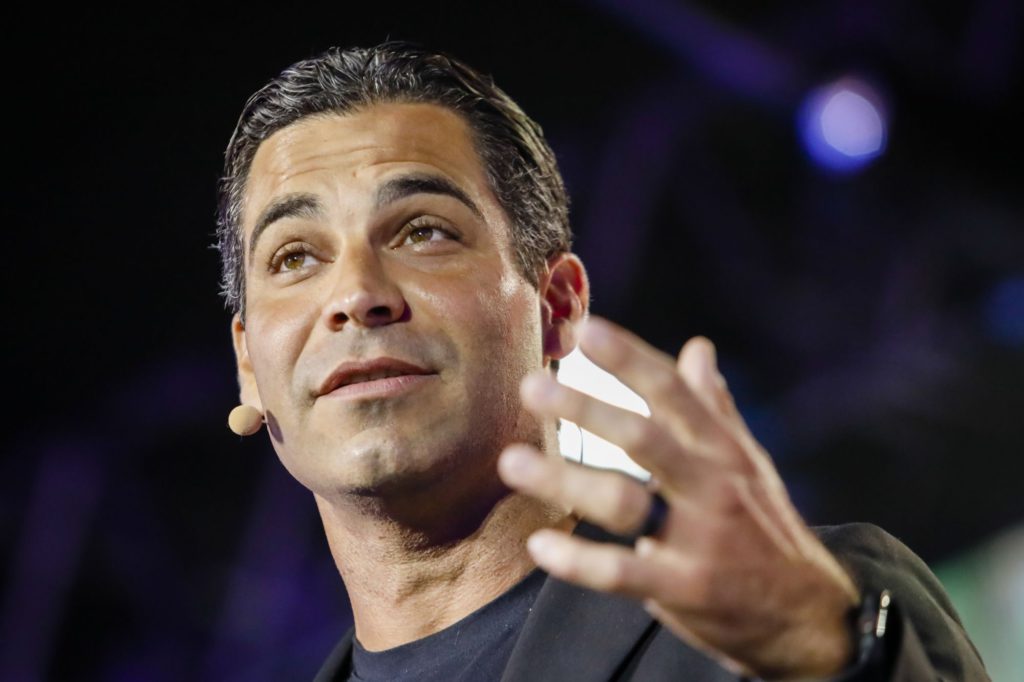
(Bloomberg) — Miami Mayor Francis Suarez invited Twitter Inc. to move to the city amid Elon Musk’s $44 billion buyout of the social-media company.

“We’d love to have Twitter here,” Suarez said Friday during an interview at a Bloomberg Power Players event in Miami. “We think what he is trying to accomplish with Twitter dovetails very nicely with the brand of the city of Miami.”

Suarez, who noted the city’s growth in both tech-job creation and migration, said he hadn’t yet talked to Musk about a potential move, but pointed to other companies adding office space in the city, including Microsoft Corp. Suarez said there had also been talk about Apple Inc. and Cisco Systems Inc. 

“I think we’re on the cusp of getting something big, like, you know, Jeff Bezos moving here or Elon Musk moving here,” Suarez said, joking that he thought Musk would have relocated to Miami instead of Austin, Texas, had the move happened more recently.

“There’s nobody in Sao Paulo or Paris, or, you know, or any other part of the world saying, ‘Man, I can’t wait to get on that plane to Austin’,” he said to widespread laughter. “It’s not an international city. I don’t think they would argue that they’re an international city. I think Miami is a global city.”

Last month, the state’s finance chief advocated Twitter moving to Florida in a letter to Musk. Governor Ron DeSantis said he wouldn’t try to lure the company to the Sunshine State because it would increase living expenses for residents.

Read more: DeSantis Says He Won’t Lure Twitter to Florida 

Suarez was asked at the conference about Florida’s controversial dispute with Walt Disney Co., after the company criticized legislation signed by DeSantis that placed limits on grade school instruction about sexual orientation and gender identity. The mayor said he thinks children should be learning about sexuality from their parents.

“At the same time, we have a thriving LGBTQ community here in Miami, and that’s something that we also believe in nurturing,” he said. “It’s part of our identity, like part of the diversity of our city is that we do have that, and we embrace that. And I’m a Republican, I’m not ashamed to say that.”

Suarez said he hadn’t talked to DeSantis in three years and that he regretted the loss of Kara Swisher’s Pivot conference in Miami because of the controversy. 

“These ideological battles have real consequences. Right, and they affect people, they affect people’s lives, they affect people’s jobs,” he said. “And I think that’s something we’ve got to really be conscientious of.”

More: New York Money, Miami Hype Collide to Fuel Crypto Ambitions

More stories like this are available on bloomberg.com

©2022 Bloomberg L.P.
Dutch Tech Firms Warn They’ll Lose Out If Expat Tax Break Goes

(Bloomberg) — Technology companies including ASML Holding NV and Adyen NV called on the Dutch government to maintain a tax break that seeks to attract expatriates to the Netherlands.

Ingrid Thijssen, head of the Confederation of Netherlands Industry and Employers, said the government for budget reasons is considering shrinking or scrapping a rule that exempts 30% of an expat’s salary from income tax for five years. 

“We are trying to explain to the politicians that it isn’t a good move, but we haven’t been able to get it off the table so far,” she said in an interview. Prime Minister Mark Rutte’s government hasn’t publicly announced such a plan and the Dutch Finance Ministry declined to comment.

The plan drew the ire of dozens of Dutch technology companies that rely on foreign talent. “Between 15% and 70% of our employees come from outside the Netherlands,” executives including ASML Chief Executive Officer Peter Wennink, Adyen Chief Financial Officer Ingo Uytdehaage and Flow Traders NV CEO Dennis Dijkstra said in a letter to the government seen by Bloomberg. The tax benefit is essential to attracting international talent, the executives said.    

Rutte’s previous cabinet decided in 2018 to reduce the tax benefit from eight to five years. 

“This measure will really hurt companies like NXP, ASML and Philips,” Henk Volberda, a professor of strategy and innovation at the University of Amsterdam, told Bloomberg. He said 17% of Dutch job openings already can’t be filled. 

“Companies that operate in the Netherlands will move parts of their operations abroad and companies considering to be based here will think twice,” he said.

More stories like this are available on bloomberg.com

©2022 Bloomberg L.P.

Musk’s Twitter Buyout Challenged by Florida Pension Fund

(Bloomberg) — Elon Musk’s $44 billion buyout of Twitter Inc. was challenged in a lawsuit by a Florida pension fund that argues the deal can’t close before 2025 because Musk was an “interested shareholder” in the social-networking platform.

The Orlando Police Pension Fund filed suit in Delaware Chancery Court on Thursday. According to the complaint, Musk had agreements with other major Twitter shareholders — including founder Jack Dorsey — to rely on their holdings when offering to take the company private last month. Those arrangements triggered a Delaware law that calls for a three-year delay in closing such deals, the fund claims.

Musk’s Twitter acquisition features one of the biggest leveraged buyout deals in history. He’s taking private a 16-year-old social networking platform that has become a hub of public discourse and a flashpoint in the debate over online free speech. Musk disclosed Thursday a group of investors were kicking in more than $7 billion of equity towards the deal. They include Oracle Corp. billionaire Larry Ellison, venture-capital firm Sequoia Capital and cryptocurrency exchange Binance Holdings Ltd. 

A representative for Musk didn’t immediately return an email seeking comment on the pension fund’s suit. 

Musk, 50, has outlined financing for the deal that includes $13 billion in bank loans secured by the social-media company and $12.5 billion backed by a pledge of some of his $170 billion Tesla Inc. stake. He’s currently the world’s richest individual, with a fortune valued at more than $249 billion.

The pension fund’s lawyers note Musk owned about 10% of Twitter’s shares when he made his buyout offer. They also say in the complaint that he had an “agreement, arrangement or understanding” with other major Twitter investors, such as Dorsey and investment bank Morgan Stanley. Those pacts allowed Musk to rely on their shares and support for the deal, according to the suit.

Under Delaware corporate law, those agreements make Musk an “interested shareholder” who has to wait three years to close the deal or win the support of investors who control “at least 66 2/3% of Twitter’s outstanding voting stock” and were independent from the billionaire, the suit said.

The fund is asking a Delaware judge to find that Musk meets the test for an “interested shareholder” and is subject to the law, according to the complaint.

The statute cited by the Florida fund was passed by Delaware lawmakers in the 1980s to help address a boom in takeovers and to protect shareholders’ rights to vote, but it won’t pose much of a barrier for Musk, said Charles Elson, the former director of the Weinberg Center for Corporate Governance at the University of Delaware.

“Its an extremely high wall to show someone was an interested shareholder, and few have surmounted it over the years,” Elson said.

The case is Orlando Police Pension Fund v. Twitter Inc, No. 2022-0396, Delaware Chancery Court.

(Updates with law professor comment.)

More stories like this are available on bloomberg.com

©2022 Bloomberg L.P.
Amazon Fires Managers at Pro-Union Staten Island Warehouse

(Bloomberg) — Amazon.com Inc. fired managers at its New York JFK8 warehouse, where workers in April voted to join the upstart Amazon Labor Union.

“Over the last several weeks, we’ve spent time evaluating aspects of the operations and leadership at JFK8 and, as a result, have made some management changes,” Amazon spokeswoman Kelly Nantel said in an emailed statement. 

She didn’t say how many managers were fired at the facility in Staten Island. But the New York Times reported earlier that six lost their jobs and, citing people familiar with the situation, said they were let go because the union won the election.

Workers at Amazon’s JFK8 facility in April voted to join the ALU despite mandatory “information sessions” designed to discourage employees from voting for union representation.

Amazon is fighting to get the election overturned. In a filing to the National Labor Relations Board last month, the Seattle-based company said the agency repeatedly “failed to protect the integrity and neutrality of its procedures” by turning away voters.

Earlier this week, workers at another warehouse across the street from JFK8 voted not to join the ALU. 

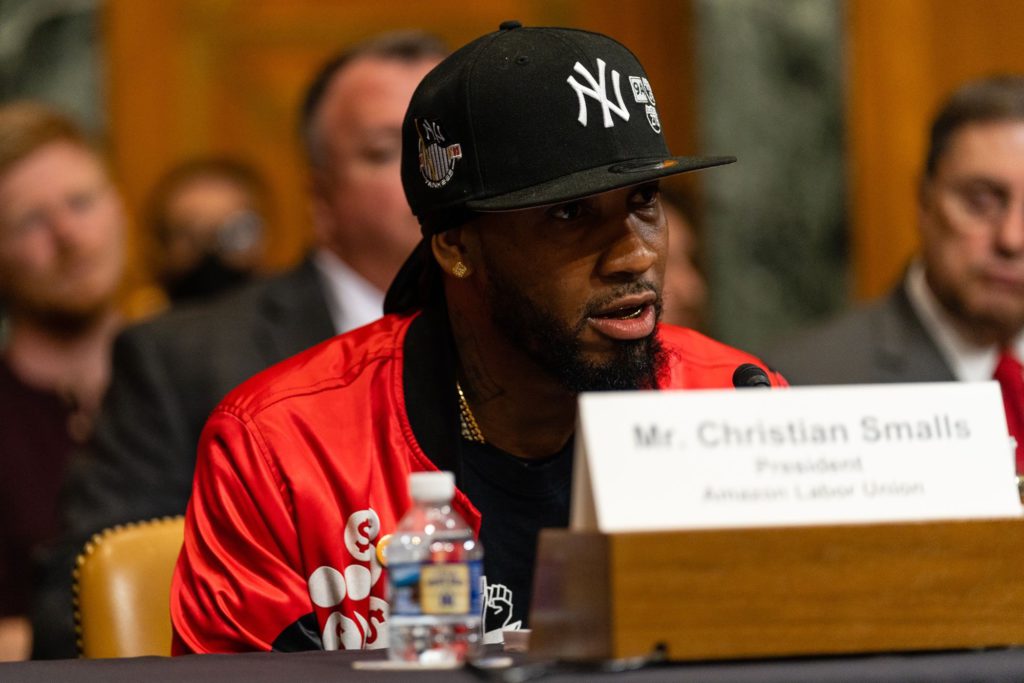
Led by fired Amazon worker Christian Smalls, the ALU is trying to organize two more facilities in New York and says Amazon workers across the U.S. have gotten in touch for advice on how to unionize their own facilities.

More stories like this are available on bloomberg.com

©2022 Bloomberg L.P.

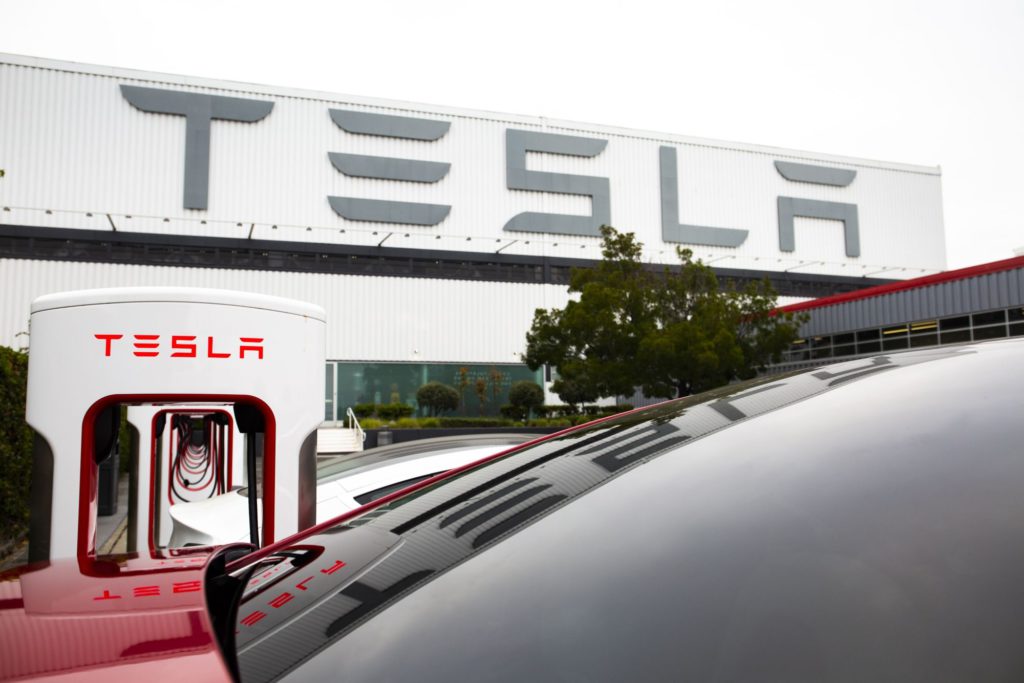
Tesla, Echoing Musk, Says ESG Metrics Are ‘Fundamentally Flawed’

(Bloomberg) — Tesla Inc., whose Chief Executive Officer Elon Musk has criticized ESG for making little sense, said current ways of measuring environmental, social and governance issues are “fundamentally flawed.”

In a 144-page annual report, the electric vehicle-maker said ESG ratings are based on how corporate profits are affected by ESG-related factors, rather than gauging a company’s real-world impact on society and the environment. The ratings are used by money managers to help decide where to invest. 

In effect, individual investors who park their money in ESG funds managed by large asset managers are unaware that their capital is being used to buy shares of companies that are exacerbating the effects of climate change, rather than mitigating it, Tesla said. 

“We need to create a system that measures and scrutinizes actual positive impact on our planet, so unsuspecting individual investors can choose to support companies that can make and prioritize positive change,” the Austin, Texas-based company said. It added that large investors, ratings agencies, companies and the public need to push for change. 

Musk has been a recent critic of ESG, and has said its investment principles should be “deleted if not fixed.”

In its report, Tesla cited how automakers may see their ESG ratings increase even though they are only slightly reducing their greenhouse gas emissions, while continuing to produce vehicles that burn fossil fuels. Most emissions from vehicles are produced when customers drive them and that data tends to be misreported, not reported at all or based on “unrealistic assumptions,” Tesla said. 

More stories like this are available on bloomberg.com

©2022 Bloomberg L.P.
ApeCoin Owners Consider Locking Up Coins to Keep NFT Mania Going

(Bloomberg) — Holders of ApeCoin approved two measures that may help to sustain the momentum around the cryptocurrency launched to support the Bored Apes NFTs. 

The “ape improvement proposals” ratified in a vote that closed late Wednesday by the so-called decentralized community, giving owners the option to lock up their tokens for a period of time in exchange for more ApeCoin in the future. While the logic of such an agreement may seem circular, handing out incentives to remain invested has become a fairly common strategy in crypto. 

ApeCoin was launched in March through a type of release known as an “airdrop,” in which certain groups of holders such as early venture capital backers automatically receive tokens as a reward. In this case, owners of Bored Ape NFTs received a portion of the 1 billion ApeCoins dropped. The tokens of launch partners like venture capitalists were locked up, however, with coins becoming available at intervals starting at six months and ending as far as 36 months out, depending on each individual arrangement. 

From the venture capitalists’ standpoint, the risk that comes with such lockups is that many new coins dramatically drop in value within several months of being launched. About 65% of freshly minted cryptocurrencies are underwater and their average returns are close to zero relative to Bitcoin within a month, according to a recent report from Jump Crypto. The AIP proposals may help forestall such a decline. 

“It doesn’t seem very sustainable,” said Sasha Fleyshman, a portfolio manager at Arca, which invests in cryptocurrencies. “Because at some point you reach that split in the path, you have the venture capital unlock. At some point, the band-aid gets ripped off.”

ApeCoin has whipsawed investors since its launch, with prices spiking at the debut, only to be followed by a steady decline. It then traded at more than $26 at the end of April, before falling to around $13 on Friday, according to data from CoinMarketCap. The token has a market value of about $3.8 billion. 

Th ApeCoin incentive program approved is being referred to as app staking, though it differs from a similarly named type of reward system where coins are used to order blockchain transactions in exchange for rewards. 

“The nice byproduct of staking is it’s a very high-conviction gesture from the community,” Reddit co-founder Alexis Ohanian said during a recent conversation over Twitter Spaces that was attended by more than 1,000 people. Ohanian is on the board of the ApeCoin DAO that governs the community. 

ApeCoin DAO’s vision is for the token to be used at events, games and in a variety of applications. Last weekend, ApeCoin holders had a chance to buy Otherdeeds, NFTs to an upcoming game, which are currently trading below what many buyers spent on them. 

“As you know, it’s up to the DAO collectively to decide what makes the most sense, staking should theoretically benefit all ApeCoin holders, not just a limited few,” Yat Siu, co-founder of Yuga Labs investor Animoca Brands, said in an email. Siu, who is also on the board of the ApeCoin DAO, noted one of the staking proposals caps the ability of major holders to benefit excessively from staking their coins.

“It isn’t appropriate for me individually to speculate on what launch contributors will do with their ApeCoin holdings once the first unlock takes place — but it’s worth remembering that many of those launch contributors believe we’re much closer to the beginning of this ecosystem than we are to the end,” said Siu, whose Animoca is making games and other products using ApeCoin. “Launch contributors, such as ourselves, therefore have economic incentives that are far more closer and long-term aligned with the broader community goals and that of ApeCoin than some may assume.”   

More stories like this are available on bloomberg.com

©2022 Bloomberg L.P.
Close Bitnami banner
Bitnami