Bloomberg

China Property Loan Growth Slowest on Record as Sector Struggles

(Bloomberg) — China’s property loan growth slowed to the lowest pace in over two decades due to the continued slump in the real-estate market brought on by developer defaults, virus lockdowns and weak consumer confidence.

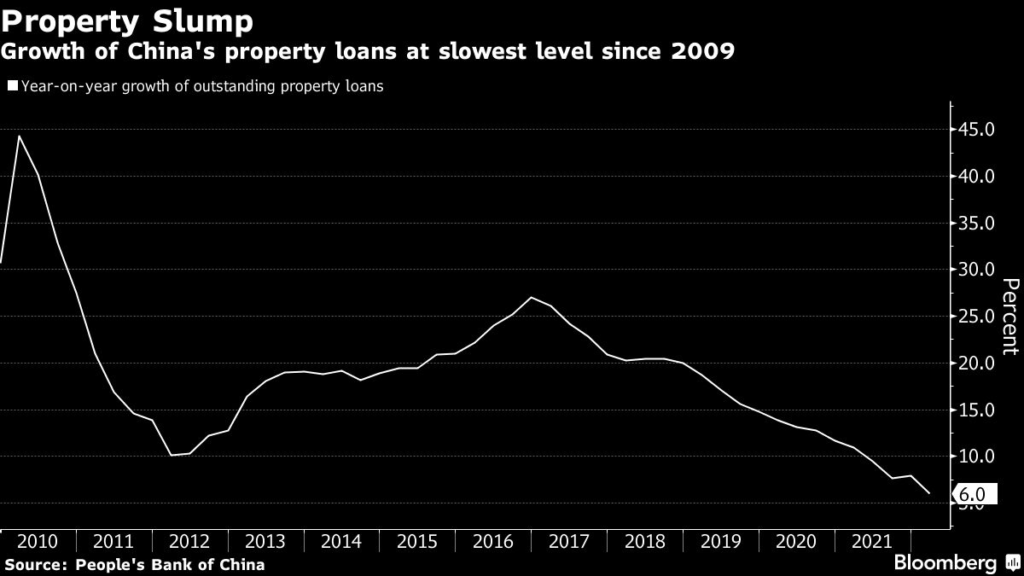
Outstanding loans in the property sector grew 6% to 53.2 trillion yuan ($8 trillion) at the end of March from a year ago, the slowest pace of expansion since data began in 2009, according to a statement released Friday by the People’s Bank of China. The growth rate was down from 7.9% at the end of 2021.

Residents’ mortgages rose 8.9% to 38.8 trillion yuan from a year ago, slowing from the 11.3% increase at the end of last year, while outstanding property development loans grew after dropping for three straight quarters. 

China’s home sales slump deepened in April, with preliminary data from the China Real Estate Information Corp showing an almost 60% decline in sales by the top 100 developers. The drop came with major cities such as Shanghai and Changchun under lockdown, and consumers stayed away even as purchase restrictions were loosened in more than 60 cities.

The average interest rate on new mortgages offered in March stood at 5.42%, down 17 basis points from the start of the year, the PBOC said in the statement. That decline comes after the five-year loan prime rate, which is a reference for the interest rate for many home loans, was cut to 4.6% in January.  

The sector’s persistent downturn has prompted the central bank to step up its support for several distressed developers by loosening loan restrictions to ease a cash crunch last month, Bloomberg reported. That comes after the central bank called on banks to boost real-estate lending in the first quarter.

More stories like this are available on bloomberg.com

©2022 Bloomberg L.P.

U.S. Threat to Sanction Hikvision Shows China Ties Near a Tipping Point

(Bloomberg) — The fate of a Chinese technology giant at risk of unprecedented U.S. sanctions will show whether the Biden administration intends to significantly ramp up tensions with the world’s second-biggest economy.

The U.S. is weighing whether to add Hangzhou Hikvision Digital Technology Co., which makes cameras and surveillance systems, to its Specially Designated Nationals and Blocked Persons List, according to people familiar with the situation. The company’s shares tumbled by the 10% daily limit on Thursday on news of the potential sanctions tied to alleged human-rights violations by China against mostly Muslim minorities in its far-Western region of Xinjiang. They fell again on Friday by as much as 10%.

While Hikvision and seven other Chinese tech companies already face U.S. restrictions, the move would mark the first time a Chinese company faces more severe Treasury Department sanctions that risk curbing its business around the globe. The measure — used for terrorists, drug kingpins and Russian banks — would dramatically restrict its ability to work with companies, financial institutions and governments.

“Given that these sanctions apply globally, it could be the end of Hikvision as a major international company, if not as a solvent entity entirely,” said Christian Le Miere, founder of the strategic advisory firm Arcipel.

More broadly, the sanctions would mark an escalation in how the U.S. uses its dominant position in the global financial system to target Chinese companies, at a time when both governments are starting to curb business ties due to national-security concerns. The emphasis on human rights also exposes potentially any company that deals with the Communist Party’s vast security apparatus to similar penalties.


“That would be a very, very broad category of companies,” said Jon Bateman, a fellow at the Carnegie Endowment for International Peace, adding that the U.S. was struggling to clarify its China policy. “The Biden administration hasn’t yet defined what kind of relationship it does want with China,” he added. “This indicates that human rights will be a focal point.”

President Joe Biden has largely kept in place measures left over from the Trump administration, without clearly spelling out how it would deal with punitive tariffs put in place during the trade war and questions over what sensitive data companies can share with China. He’s also expanded restrictions in other areas, signing a law last year that bans imports of goods from Xinjiang starting in June unless companies can prove they weren’t made with forced labor.

China’s diplomatic support for Russia following its invasion of Ukraine has also strained Beijing’s relations with the U.S., with Biden drawing a firmer distinction between democracies and autocracies. Fears that Chinese companies would be hit with Russia-style sanctions have contributed to declines in China’s markets in recent months. 

Secretary of State Antony Blinken had planned to give an address on the administration’s China policy on Thursday, but it was delayed after he tested positive for Covid-19. Still, people familiar with the remarks said they were likely to offer little new information on basic questions on how the U.S. and China can collaborate on some issues.

‘Grave Concern’

China on Thursday expressed “grave concern” over the reports on Hikvision, reiterating that U.S. claims of human-rights abuses in Xinjiang were the “lie of the century.”

“China firmly opposes U.S. moves to use human rights as an excuse, and abuse state power and its domestic law to hobble Chinese companies,” Foreign Ministry spokesman Zhao Lijian said.

Chinese officials have told Hikvision the government will consider retaliatory measures against the U.S. if such a step is taken, according to a person familiar with the matter.

“The Chinese government will resolutely defend the legitimate and lawful rights and interests of Chinese companies,” the foreign ministry said in a written response to Bloomberg News, without commenting on whether it’s spoken with Hikvision.

Hikvision is one of several Chinese companies targeted by Washington for aiding and abetting human rights violations in Xinjiang, a list that includes well-known corporations including AI startups SenseTime Group Ltd. and Megvii, which are backed by traditional industry leaders or financiers including Alibaba.

Founded in 2001 with help from a state-owned electronics research institute in Hangzhou, Hikvision quickly grew into one of the world’s largest makers of surveillance equipment. The company sells CCTV cameras and surveillance software to governments and corporations in more than 150 countries and regions worldwide. It has around 53,000 staff and operates research facilities from Shanghai to London.

Chinese Surveillance

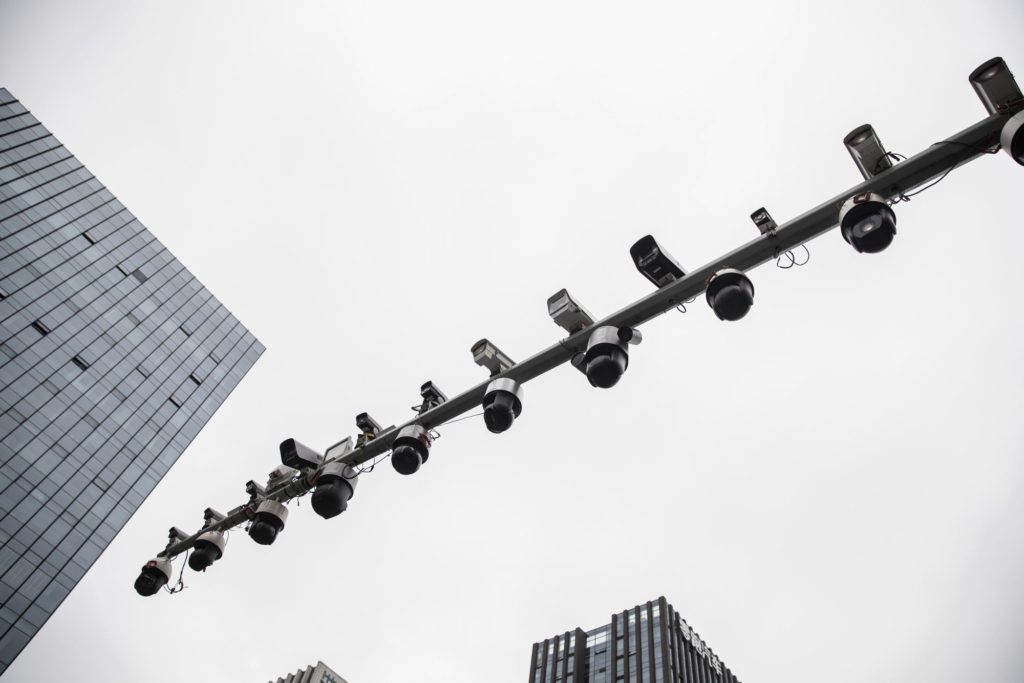
The most important client for Hikvision remains the Chinese government, which spends handsomely each year to oversee the activities of its 1.4 billion citizens. Its surveillance cameras are easy to spot on the streets of Chinese cities and its gear for security checks are widely used in the country’s largest airports and events attended by the supreme leaders of the ruling Communist party.

Hikvision has repeatedly denied U.S. allegations of involvement in abuses in Xinjiang. “We think any such sanction should be based on credible evidence and due process, and look forward to being treated fairly and unbiasedly,” it said in a statement Wednesday. 

In 2019, Hikvision was placed on an entity list that prevents American firms from supplying it with components and software — similar to Chinese telecom gear maker Huawei Technologies Co. had faced. But the blacklisting had limited impact on Hikvision’s production after it slightly revised its supplier list to buy alternative components from local vendors. The company’s 2021 sales jumped by 28% to over 80 billion yuan ($12.1 billion), according to filings.

‘Technological Containment’

It’s possible the U.S. could be using the threat of more sanctions as a bargaining chip on thorny geopolitical issues like the war in Ukraine or Beijing’s aggression against Taiwan, according to Vivian Zhan, an associate professor specializing in Chinese politics at the Chinese University of Hong Kong. 

“If the U.S. is using it as a tactic to coerce China on an issue it isn’t compromising on, it might potentially work given that the Chinese economy is suffering,” she said, noting the lockdowns and Xi’s regulatory moves against tech companies. 

Sanctions against Hikvision would also help the U.S. maintain its technological edge over China, said Wen-Ti Sung,  a lecturer in the Australian National University Taiwan Studies program.

“Invoking human-rights and values-based justifications can help the U.S. mitigate pushback from U.S. business sector, while perhaps also elicit more Western governments to join in, making it a collective ‘technological containment’ effort,” he said. “This is guided more by interests than ideology.”

(Updates with foreign ministry’s comment in the 13th paragraph)

More stories like this are available on bloomberg.com

©2022 Bloomberg L.P.

VC Fund Will Invest in NFT Swords and Other Video Game Items

(Bloomberg) — Venture capitalists generally invest in startups. A new fund from the Chicago-based firm Sfermion will invest in virtual ice swords.

Sfermion is seeking $100 million for the new fund, which it will invest mostly in nonfungible tokens designed for video games, the company plans to announce in June. It has raised roughly a fifth of the total so far.

The firm specializes in NFTs, in the past accumulating digital collectibles like CryptoPunks and Meebits. Among the backers of Sfermion’s previous funds are Marc Andreessen and the Winklevoss brothers.

The next fund, the firm’s third, is called Halliday, after the fictional creator of the game featured in the book Ready Player One, said Andrew Steinwold, the firm’s managing partner. Sfermion will study crypto games and try to determine which NFTs have the potential to generate high demand in the future. For example, if the second level of a game involves defeating a fire-breathing dragon, Sfermion might purchase a large number of ice sword NFTs that are effective against the beast. Steinwold calls Sfermion’s investment strategy “mini venture capital.”

The video game industry is conflicted over crypto. The largest game publishers have expressed interest, but many customers are loudly opposed. Those gamers see NFTs as a dreary economic instrument and yet another way for companies to squeeze money out of them.

The NFT fund is not a get-rich-quick scheme for Sfermion, said Steinwold. The firm plans to hold onto the NFTs until the games increase in popularity and the assets’ value appreciates. With some gaming NFTs, Steinwold said the firm can earn an annual yield of 5% to 40% by, for example, allowing them to be used in tournaments. The decentralized autonomous organizations BlackPool and Yield Guild Games use similar techniques.

Within the crypto world, enthusiasts argue that venture capitalists hold too much control over the market by snapping up tokens that give them influence over how decentralized platforms are managed. Sfermion will keep tabs on how many NFTs it buys and what percentage they make up of the asset’s total supply, Steinwold said, with the goal of not accumulating outsized influence.

In the future, Sfermion plans to create two additional NFT funds: one focused on virtual land and another on consumer categories like collectibles, fashion and music, Steinwold said: “We’re in the early stages of developing these metaverse economies, and there’s a lot that needs to be learned.”

More stories like this are available on bloomberg.com

©2022 Bloomberg L.P.

China Danger Strikes Fear Into Global Investors Stumbling on Fed

(Bloomberg) — The toxic combination of a slowing economy in China and what may be the most aggressive withdrawal of Federal Reserve stimulus since 1994 is hammering the world’s financial markets.

While everything from the Bank of England’s recession warning to poor U.S. productivity data contributed to the selloff this week, a shift in tone out of Beijing further undermined confidence. Top Chinese officials committed to Covid Zero in the strongest terms at a meeting on Thursday, while leaving out earlier pledges to minimize the economic cost of the strategy.

“The economy was barely mentioned at the meeting,” wrote Nomura Holdings Inc. economists led by Ting Lu. 

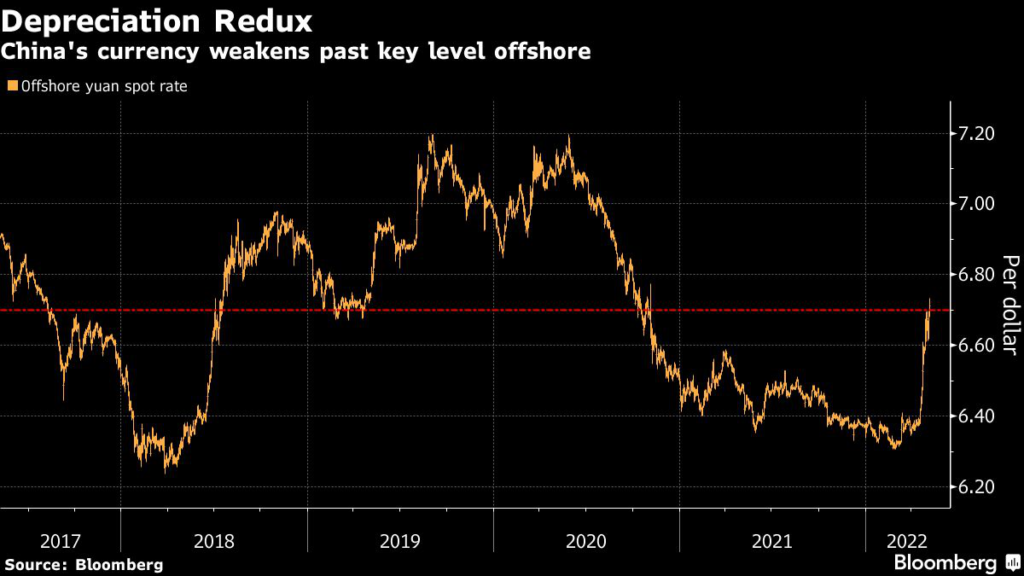
Investors are growing increasingly nervous. The CSI 300 Index of stocks fell 2.5% on Friday, taking losses this year to 21%. The use of borrowed money to invest in China’s stock market has fallen for at least 17 days, the longest streak since early 2016 — when concern about China’s economy was spooking global markets. The yuan on Friday weakened past 6.7 per dollar offshore for the first time in 18 months, reigniting a depreciation cycle that historically has gone hand in hand with global equity declines, Bank of America Corp. strategists say.

At a meeting this week led by President Xi Jinping, the Politburo’s seven-member Standing Committee said China will “exhaust all means and efforts” to eradicate Covid-19. Criticism of Xi’s Covid-Zero strategy would not be tolerated, was the stern message. Vows to support the economy were absent from the memo, raising questions over the 5.5% economic growth target.

Investors had been seeking clarity from authorities over top-level pledges first made in March to boost growth. The promises — reiterated many times since, including by Xi himself last week — had signaled to money managers that economic growth remained at the top of Beijing’s agenda, and had spurred brief but powerful rallies in Chinese stocks. 

There’s also a risk the weakening currency will accelerate foreign outflows. Yuan depreciation tends to signal risk-off sentiment globally: previous cycles during the first Covid wave in 2020, a deleveraging drive in 2019, the trade war in 2018 and the chaotic devaluation in 2015 coincided with declines in global stocks outside the U.S. on average, said Bank of America’s equity strategy team led by Ajay Singh Kapur. They predict the yuan will weaken to 6.8 per dollar this year. 

“We remain cautious on China equities based on our view that policy makers’ prioritization of common prosperity, nation rejuvenation goals, and now zero-Covid, could come in the way of profit maximization and equity market performance,” the strategists wrote in a note Friday.

It’s not just Covid Zero. Reports that the Biden administration may sanction a Chinese maker of surveillance systems has added to investor fears over harsher financial penalties from a newly united West. News that China’s public sector is starting to replace foreign-made computers points to further decoupling of the world’s two largest economies. Contemporary Amperex Technology Co. — one of the mainland’s most valuable listed companies — sank 8.2% after the worst-ever drop in quarterly earnings.

Global markets have seen losses accumulate week by week as Fed rate hikes, inflation fears and the war in Ukraine spur waves of selling. The S&P 500 Index is down almost 13% this year, while Treasuries followed their worst quarter on record with further selloffs. Credit markets have also posted the biggest losses since the global financial crisis. The Fed raised interest rates by 50 basis points on Wednesday, something it hadn’t done since 2000. A 75 basis-point increase would be the largest since 1994.

The bear case against China is growing. So much money flowed out of Chinese financial assets that the offshore yuan had its worst month ever versus the dollar in April. Allocations to China among emerging-market funds recently fell to the lowest in 32 months, EPFR Global said in a report this week. Hedging risk is challenging after China discontinued its version of VIX volatility futures in 2018, meaning selling is the only option for some funds.

The rising pessimism stands in contrast to the start of the year, when China was hailed by almost every Wall Street strategist as one of the top investment destinations as they expected regulatory crackdowns and a deleveraging campaign to come to an end.

“We suggest staying defensive as there is no catalyst in the near term for a sustainable sentiment reversal in Chinese markets,” said Gilbert Wong, a quantitative strategist at Morgan Stanley in Hong Kong — one of the only teams that warned against buying Chinese assets this year. “The spillover of volatility from the U.S. to China is something we are monitoring.”

More stories like this are available on bloomberg.com

©2022 Bloomberg L.P.

Workers at Apple China Plant Clash With Guards Over Lockdowns

(Bloomberg) — Hundreds of workers at a technology factory in China clashed with authorities and flooded past isolation barriers after weeks under lockdown, a stunning breakdown in the Communist Party’s efforts to contain Covid-19 infections.

The Shanghai factory, which is owned by Taiwan’s Quanta Computer Inc. and makes devices for Apple Inc. among others, has been operating under tight restrictions since the beginning of April. In a video shared on Twitter and YouTube, workers rushed through barriers and tangled with guards in white protective gear who tried to keep them inside.

Quanta employees confirmed the clash occurred Thursday evening, while the company did not immediately provide comment. One worker said that people are worried about further tightening because there are positive Covid cases on the campus. The government is taking a central role in managing the plant’s operations, said another employee on-site. 

The incident underscores the rising challenges for President Xi Jinping’s hardline strategy in containing the pandemic. China has imposed sweeping lockdowns to quarantine the infected and prevent Covid’s spread, an approach that has sparked unusual protests and complaints in the 25-million strong city of Shanghai. The policy has also threatened China’s economy, jeopardizing its ability to reach a target growth rate of 5.5%.

China’s main strategy for minimizing damage to its economy amid the rolling lockdowns is for companies and factories to operate in a “closed loop” system, in which workers live and sleep on-site or in nearby accommodation that they’re shuttled to. This has helped Shanghai restart production at more than 70% of its industrial manufacturing facilities, while 90% of 660 “key” industrial companies have resumed output, officials said this week. 

But it’s unclear how long the closed loops can be sustained, given the resources required to feed and house thousands of workers at a time. The system also requires that workers avoid contact with anyone outside the loop, including family members. The majority of Japanese factories in Shanghai haven’t yet resumed operating despite the city’s assurances that production is getting back on track.

Tensions at the Quanta factory in the Songjiang district of Shanghai boiled over after workers tried to return to dormitories after their shifts, according to Taiwanese media outlet UDN. More than 100 jumped over a gate and ran past the staff without regard for their guidance, it said. 

People are getting tired and frustrated under the controls, one of the workers said.

Operations at the facility returned to normal by Friday morning, another worker said.

Quanta is a critical partner for Apple, generating more than 50% of its revenue from the Cupertino, Calif.-based company as it assembles MacBooks and other devices. The Taiwanese company also does work for HP Inc., Dell Technologies Inc. and Microsoft Corp., according to Bloomberg supply chain data.

More stories like this are available on bloomberg.com

©2022 Bloomberg L.P.

China Tech Stocks Suffer Renewed Selling as Growth Worries Mount

(Bloomberg) — China’s technology stocks slumped, tracking a tumble in its U.S.-listed peers, as growth worries from the nation’s Covid Zero policies and lack of concrete measures to support the sector triggered further selling. 

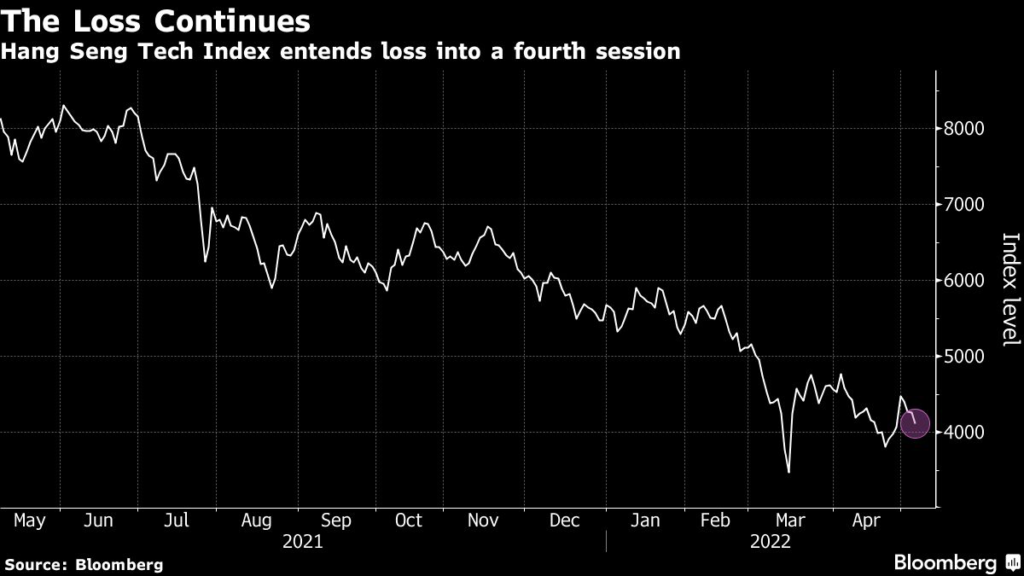
The Hang Seng Tech Index slid 5.2% Friday, declining for a fourth straight session to take this week’s decline to near 10%. The losing streak erased the bulk of last week’s rally spurred by the nation’s top leaders promising to loosen a regulatory crackdown on the sector.  

Friday’s slide follows a rout on Wall Street overnight, as overseas investors reassessed the Federal Reserve’s tightening path. The move also suggests that a barrage of pledges by Chinese authorities since mid-March — most recently on Thursday — to go soft on the sector has failed to convince investors that the regulatory environment will improve.

READ: China’s Leaders Warn Against Questioning Covid Zero Policies 

Also weighing heavily on traders’ minds is the latest warning from Chinese leaders not to question President Xi Jinping’s Covid Zero policy. A slew of disappointing economic data from China has underscored the growing toll of the lockdowns, and market watchers say the outlook will stay dim unless that stance shifts. 

On the mainland, the CSI 300 Index slid 2.5%, while Hong Kong’s benchmark Hang Seng Index was down 3.8%, the most since mid-March. Major equities gauges across Hong Kong and China all posted weekly losses. 

“Although the valuation for Chinese tech giants have been largely beaten down over the past one year, we may have to see a clear control of China’s virus situation or more follow through in support measures in order to lift market confidence,” said Jun Rong Yeap, a strategist at IG Asia Pte. “With relief catalysts such as earnings seasons and Fed meeting largely behind us now, markets are in need of a new relief catalyst.” 

Staying Power

Thursday’s statement from the Politburo’s Standing Committee sent a clear message that Covid restrictions and broad lockdowns are here to stay. That means policy makers will likely use other measures to prop up growth.

“No one who has been trading in the China market for any period of time has realistically expected a relaxation to Covid policies in the short term,” said Chen Yicong, managing director at Beijing Chengyang Asset Management. He added that Friday’s moves are more likely from the impact of U.S. declines.

Regional tech stocks also fell Friday, with the MSCI Asia Pacific Information Technology Index down as much as 2.3%. A gauge of chipmakers in the region slumped more than 3%. 

(Updates throughout)

More stories like this are available on bloomberg.com

©2022 Bloomberg L.P.

Sorrell Pledges Changes After S4’s ‘Embarassing’ Results Lag

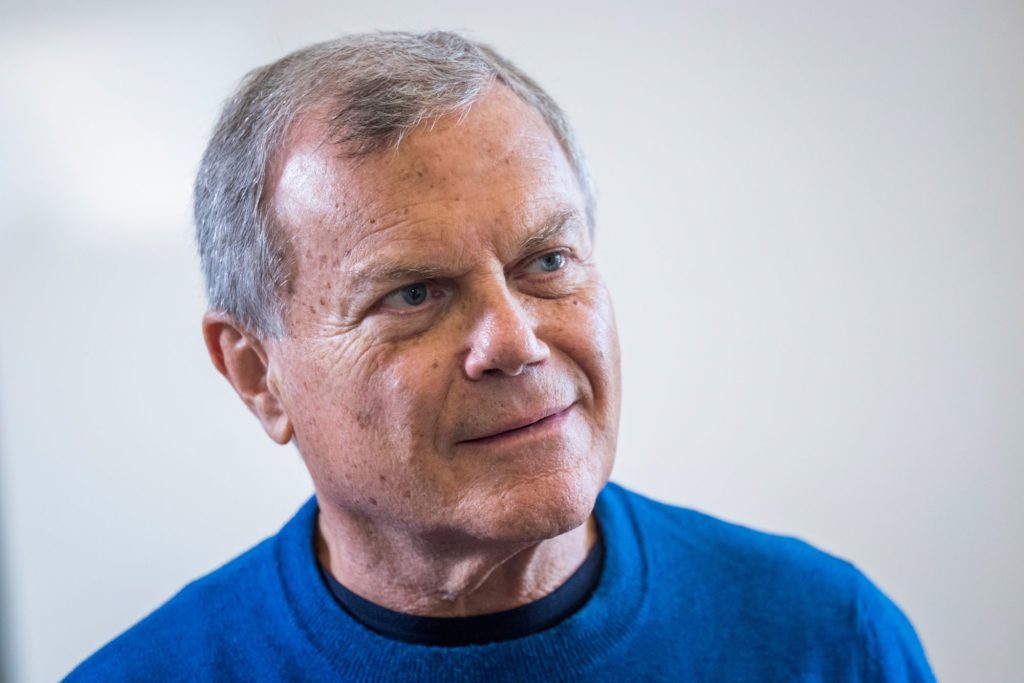
(Bloomberg) — Martin Sorrell’s digital advertising agency said it was making changes to its financial control, risk and governance structure after a lengthy lag in reporting its 2021 results.

S4 Capital Plc delayed publishing its annual results in late March for the second time, saying that accountancy PriceWaterhouseCoopers was unable to complete the audit work on time, after previously citing the impact the coronavirus pandemic had on travel and resources. 

Shares in the company plunged after the second announcement, losing about 1.2 billion pounds ($1.5 billion) in market value. It soared on Thursday after S4 said it would publish its results, and gained as much as 9.9% in early trading Friday morning in London after doing so.

S4 reported 2021 annual results that showed adjusted pretax profits for the full year of 81.2 million pounds, below analysts’ estimate of 89.2 million pounds. However, sales of 686.6 million pounds topped expectations for 650.7 million pounds. 

In a presentation, S4 attributed the delayed audit to control weaknesses, staff turnover and a lack of detailed documentation. The company said the issue was focused particularly on revenue and cost of sales recognition, and concentrated at the legacy operations of its agency MediaMonks.

The company is making new senior hires and said that there was no impact to its cash position. Results for first-quarter 2022 will be announced by the end of May. 

“The delay in producing our 2021 results is unacceptable and embarrassing and significant changes in our financial control, risk and governance structure and resources are being implemented and planned,” Sorrell said in a statement. 

In an interview, he added that “we’ve had to deal with it as best we can, and we want to try and ensure that it never happens again.”

(Updates throughout with shares, context, interview)

More stories like this are available on bloomberg.com

©2022 Bloomberg L.P.

Revolut’s $33 Billion Banking App Hits a Roadblock in Britain

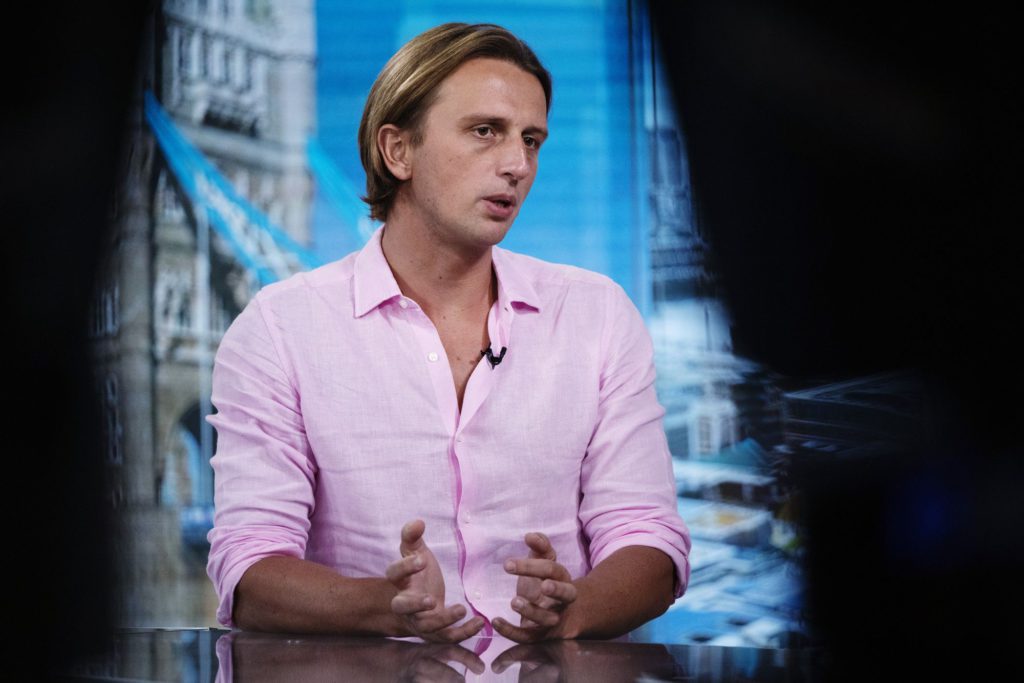
(Bloomberg) — Nikolay Storonsky, once a championship swimmer in his native Russia, doesn’t like to hang around in the slow lane. His $33 billion fintech Revolut Inc. has a neon sign in the office telling staff to “Get Shit Done.”

It was in this spirit that the 37-year-old buttonholed U.K. Chancellor of the Exchequer Rishi Sunak at a London event in February. Revolut has applied for a British banking license, a crucial step in its plan to become a globe-spanning financial “superapp.” It already offers money transfers, store purchases, share trading and pet insurance. A license would add protected U.K. current accounts with overdrafts and loans, the backbone of any grownup bank.

But first the Brits want to be sure Revolut has the compliance and risk-management capabilities to avoid the stumbles of other finance “disruptors,” especially as it works with cryptocurrencies. A frustrated Storonsky, who’d hoped to get a license by the start of 2022, asked Sunak what was taking so long, according to people present: Three months later approval still hasn’t arrived. A new vigilance around any Russian-linked businesses hasn’t helped.

Revolut’s rise has been rapid. It launched in 2015 as a prepaid card offering cheap foreign-exchange fees, with Storonsky — a former derivatives trader at Credit Suisse Group AG and Lehman Brothers — handing out freebies at railway stations. Today it has more than 18 million customers and a higher valuation than Barclays Plc. A funding round last year, led by SoftBank Group Corp.’s Vision Fund 2, briefly made it Britain’s most valuable startup ever.

Now, the U.K. process means Storonsky is having to tread water in his attempt to make Revolut the everything store of internet banking. He wants a U.S. license, too, though a person familiar says the Americans are unlikely to oblige until the British situation’s resolved. Revolut’s U.S. boss quit in December in part because of the delay.

There’s a huge amount at stake. While Revolut does have a license for the European Union, the U.K. and U.S. are key territories. Much of its valuation depends on cracking the mainstream banking market globally. Its 2020 revenue was just $325 million so it’s a long way from justifying that $33 billion figure.

And the backdrop isn’t straightforward. The U.K. has concerns about Revolut’s crypto trading service, a big revenue contributor, and whether upstart banking apps are equipped to tackle money launderers and fraud, people familiar say. “We take our regulatory and compliance obligations extremely seriously,” a Revolut spokesman says. “We have constructive, productive relationships with over 22 regulators around the world and … our relationships with U.K. regulators are among the most long-standing.”

Vladimir Putin’s war on Ukraine also brings attention to any Russian ties, no matter how loose. “We’re not in normal circumstances,” says Maria Demertzis, of the Brussels think tank Bruegel, who’s researched the fintech industry.

Russian Distance

Storonsky moved to London at 20, made his billions from setting up his business there and he’s been unequivocal in condemning the war. Revolut cofounder Vlad Yatsenko is Ukrainian; both he and Storonsky have British passports. They’re closing the company’s Moscow office, according to a person familiar with the plan. 

Yet Putin’s invasion makes Western politicians cautious. Storonsky’s Ukraine-born father, Nikolay Mironovich Storonsky, is a director at a division of Gazprom, the Russian gas giant. Regulators have to decide if that’s “a relevant factor,” says Jane Jee, a compliance lawyer for payment companies.

These family roots were first examined in 2019 after Revolut won a banking license in Lithuania, and a lawmaker accused it of being involved with the Kremlin. “We’ve participated in a number of reviews in Lithuania and the committees concluded there were no Russian political connections at Revolut,” its spokesman says.

The fintech is backed by DST Global, a venture capital firm set up by Yuri Milner, Silicon Valley’s wealthiest Russian. He too has distanced himself from Moscow, damning “Russia’s war.” Revolut’s spokesman says there was no Russian money in any of the DST funds that invested in the company.

Other regulatory questions around Revolut appear more important. Its current “e-money” designation in the U.K. means it’s more lightly supervised than a bank, making it nimbler and cheaper to run. But it can’t lend directly and its deposits aren’t protected by state insurance.

It must show the Financial Conduct Authority that it has the right compliance and fraud-busting tools for a fully licensed bank — an expensive and onerous duty. The big lenders spend billions on monitoring transactions and clients. Revolut has about 300 people in its risk and compliance teams.

“Standards are very high to get a banking license in the U.K.,” says Mark Hipperson, who went through the process after cofounding Starling Bank in 2014. “You have to be very thorough in your know-your-customer procedures.” Another British startup, Monument Bank, took three years to get approval. Storonsky first applied in early 2021.

In the meantime Revolut is using its Lithuanian license as a passport into the EU. It started offering lending and credit products in the Baltic state and Poland in 2020; in January it launched as a bank in 10 other EU nations.

Its Lithuania experience shows some of the challenges for banking apps as they mature. One compliance expert who worked recently at its office there says Revolut’s sanctions controls are strong, but that its no.1 priority is “client friendliness.” That can put the onus on asking for as few details as possible. The Lithuanian central bank has fined the firm over shortcomings in collecting customer information.

Revolut has a “company-wide compliance practice that’s best in class,” the spokesman says.

Bitcoin Blow

In Britain, Revolut’s crypto-trading product has been in focus. The regulator hasn’t deemed it “fit and proper” because of worries about its know-your-customer approach and transaction monitoring, though it’s still available in the U.K. Revolut has indicated frustration at dealing with several different FCA contacts, with crypto discussions having to restart each time, according to a person briefed on the process.

While Sunak champions fintech and speaks of making London a post-Brexit “crypto hub,” this doesn’t chime with the regulatory wariness, some industry executives say. One fintech boss, who asked not to be named, says Revolut’s wait adds to the perception that the Bank of England and FCA’s support for innovation has weakened. The FCA wouldn’t comment on the holdup, but says it welcomes innovation. London is eager to host any Revolut stock market listing.

Official relations with Storonsky haven’t always been easy. In 2019 the FCA objected to his proposal to make a relative unknown Revolut’s chairman. He settled instead on City grandee Martin Gilbert, ex-boss of Aberdeen Asset Management, after angrily telling the regulator to pick who it wanted. Revolut’s boardroom is now home to finance veterans such as Michael Sherwood, a former co-chief of Goldman Sachs International.

Some speak of a new maturity in Storonsky, who’s been criticized before for a toxic and target-obsessed work culture. He’ll need that as he navigates British officialdom. The “finance bro” fans of Revolut’s steel and gold bank cards will be cheering him on.

The potential prize is great. With the superapp concept, “We’re going back to the times when clients had a current account, loan, insurance, all in one place,” says Hipperson, who’s running a new fintech called Ziglu. Customers went cold on this approach in the ‘90s because banks took advantage.

Since its 2015 debut Revolut has raised about $1.7 billion from SoftBank and others. A banker close to the company expects more lavish funding rounds. There’s a lot riding on Storonsky’s success.

More stories like this are available on bloomberg.com

©2022 Bloomberg L.P.

Revolut’s $33 Billion Bank App Hits a Roadblock in Britain

(Bloomberg) — Nikolay Storonsky, once a championship swimmer in his native Russia, doesn’t like to hang around in the slow lane. His $33 billion fintech Revolut Inc. has a neon sign in the office telling staff to “Get Shit Done.”

It was in this spirit that the 37-year-old buttonholed U.K. Chancellor of the Exchequer Rishi Sunak at a London event in February. Revolut has applied for a British banking license, a crucial step in its plan to become a globe-spanning financial “superapp.” It already offers money transfers, store purchases, share trading and pet insurance. A license would add protected U.K. current accounts with overdrafts and loans, the backbone of any grownup bank.

But first the Brits want to be sure Revolut has the compliance and risk-management capabilities to avoid the stumbles of other finance “disruptors,” especially as it works with cryptocurrencies. A frustrated Storonsky, who’d hoped to get a license by the start of 2022, asked Sunak what was taking so long, according to people present: Three months later approval still hasn’t arrived. A new vigilance around any Russian-linked businesses hasn’t helped.

Revolut’s rise has been rapid. It launched in 2015 as a prepaid card offering cheap foreign-exchange fees, with Storonsky — a former derivatives trader at Credit Suisse Group AG and Lehman Brothers — handing out freebies at railway stations. Today it has more than 18 million customers and a higher valuation than Barclays Plc. A funding round last year, led by SoftBank Group Corp.’s Vision Fund 2, briefly made it Britain’s most valuable startup ever.

Now, the U.K. process means Storonsky is having to tread water in his attempt to make Revolut the everything store of internet banking. He wants a U.S. license, too, though a person familiar says the Americans are unlikely to oblige until the British situation’s resolved. Revolut’s U.S. boss quit in December in part because of the delay.

There’s a huge amount at stake. While Revolut does have a license for the European Union, the U.K. and U.S. are key territories. Much of its valuation depends on cracking the mainstream banking market globally. Its 2020 revenue was just $325 million so it’s a long way from justifying that $33 billion figure.

And the backdrop isn’t straightforward. The U.K. has concerns about Revolut’s crypto trading service, a big revenue contributor, and whether upstart banking apps are equipped to tackle money launderers and fraud, people familiar say. “We take our regulatory and compliance obligations extremely seriously,” a Revolut spokesman says. “We have constructive, productive relationships with over 22 regulators around the world and … our relationships with U.K. regulators are among the most long-standing.”

Vladimir Putin’s war on Ukraine also brings attention to any Russian ties, no matter how loose. “We’re not in normal circumstances,” says Maria Demertzis, of the Brussels think tank Bruegel, who’s researched the fintech industry.

Russian Distance

Storonsky moved to London at 20, made his billions from setting up his business there and he’s been unequivocal in condemning the war. Revolut cofounder Vlad Yatsenko is Ukrainian; both he and Storonsky have British passports. They’re closing the company’s Moscow office, according to a person familiar with the plan.

Yet Putin’s invasion makes Western politicians cautious. Storonsky’s Ukraine-born father, Nikolay Mironovich Storonsky, is a director at Gazprom Promgaz OAO, a division of the Russian gas giant. Regulators have to decide if that’s “a relevant factor,” says Jane Jee, a compliance lawyer for payment companies.

These family roots were first examined in 2019 after Revolut won a banking license in Lithuania, and a lawmaker accused it of being involved with the Kremlin. “We’ve participated in a number of reviews in Lithuania and the committees concluded there were no Russian political connections at Revolut,” its spokesman says.

The fintech is backed by DST Global, a venture capital firm set up by Yuri Milner, Silicon Valley’s wealthiest Russian. He too has distanced himself from Moscow, damning “Russia’s war.” Revolut’s spokesman says there was no Russian money in any of the DST funds that invested in the company.

Other regulatory questions around Revolut appear more important. Its current “e-money” designation in the U.K. means it’s more lightly supervised than a bank, making it nimbler and cheaper to run. But it can’t lend directly and its deposits aren’t protected by state insurance.

It must show the Financial Conduct Authority that it has the right compliance and fraud-busting tools for a fully licensed bank — an expensive and onerous duty. The big lenders spend billions on monitoring transactions and clients. Revolut has about 300 people in its risk and compliance teams.

“Standards are very high to get a banking license in the U.K.,” says Mark Hipperson, who went through the process after cofounding Starling Bank in 2014. “You have to be very thorough in your know-your-customer procedures.” Another British startup, Monument Bank, took three years to get approval. Storonsky first applied in early 2021.

In the meantime Revolut is using its Lithuanian license as a passport into the EU. It started offering lending and credit products in the Baltic state and Poland in 2020; in January it launched as a bank in 10 other EU nations.

Its Lithuania experience shows some of the challenges for banking apps as they mature. One compliance expert who worked recently at its office there says Revolut’s sanctions controls are strong, but that its no.1 priority is “client friendliness.” That can put the onus on asking for as few details as possible. The Lithuanian central bank has fined the firm over shortcomings in collecting customer information.

Revolut has a “company-wide compliance practice that’s best in class,” the spokesman says.

Bitcoin Blow

In Britain, Revolut’s crypto-trading product has been in focus. The regulator hasn’t deemed it “fit and proper” because of worries about its know-your-customer approach and transaction monitoring, though it’s still available in the U.K. Revolut has indicated frustration at dealing with several different FCA contacts, with crypto discussions having to restart each time, according to a person briefed on the process.

While Sunak champions fintech and speaks of making London a post-Brexit “crypto hub,” this doesn’t chime with the regulatory wariness, some industry executives say. One fintech boss, who asked not to be named, says Revolut’s wait adds to the perception that the Bank of England and FCA’s support for innovation has weakened. The FCA wouldn’t comment on the holdup, but says it welcomes innovation. London is eager to host any Revolut stock market listing.

Official relations with Storonsky haven’t always been easy. In 2019 the FCA objected to his proposal to make a relative unknown Revolut’s chairman. He settled instead on City grandee Martin Gilbert, ex-boss of Aberdeen Asset Management, after angrily telling the regulator to pick who it wanted, people familiar say. Revolut’s boardroom is now home to finance veterans such as Michael Sherwood, a former co-chief of Goldman Sachs International.

Some speak of a new maturity in Storonsky, who’s been criticized before for a toxic and target-obsessed work culture. He’ll need that as he navigates British officialdom. The “finance bro” fans of Revolut’s steel and gold bank cards will be cheering him on.

The potential prize is great. With the superapp concept, “We’re going back to the times when clients had a current account, loan, insurance, all in one place,” says Hipperson, who’s running a new fintech called Ziglu. Customers went cold on this approach in the ‘90s because banks took advantage.

Since its 2015 debut Revolut has raised about $1.7 billion from SoftBank and others. A banker close to the company expects more lavish funding rounds. There’s a lot riding on Storonsky’s success.

More stories like this are available on bloomberg.com

©2022 Bloomberg L.P.
Nurse in Lockdown-Weary Shanghai Filmed Kicking Elderly Patient

(Bloomberg) — Officials in Shanghai have suspended a health-care worker who was filmed kicking an elderly man in a hospital, sparking outrage and again putting the locked-down city’s medical system in the spotlight.

The video shows a female nurse kicking and hitting an elderly man who is kneeling on the ground with an object while also scolding him. The clip, apparently filmed by another patient, was met with outrage by internet users in China, with one person saying that the professional integrity of the hospital staff has been “fed to the dogs.”

pic.twitter.com/13WRCVi4dJ

— thameslion (@thameslion) May 5, 2022

Health officials said in a statement Thursday they “attached great importance to the incident and quickly formed a team to investigate the situation,” adding that the police have also launched their own investigation. 

Shanghai — a city of 25 million home to some of the world’s second-largest economy’s most important financial institutions and biggest stock market — is in its fifth week of lockdown, though there have been some signs of easing as the number of cases falls. Many people have had difficulty getting groceries and essential medical care during the ordeal, which has pushed the health-care system to breaking point.

The lockdown in China’s most cosmopolitan city has caused an unusual amount of social unrest. Rare protests have broken out, and conflict between residents and the hazmat-suited personnel who enforce the lockdown is widespread. The latest incident comes days after a resident of a nursing home in Shanghai was mistakenly sent to the morgue while still alive, leading to the dismissals of four people, including the care facility’s director.

More stories like this are available on bloomberg.com

©2022 Bloomberg L.P.
Close Bitnami banner
Bitnami