Bloomberg

Nurse Filmed Kicking Elderly Patient in Lockdown-Weary Shanghai

(Bloomberg) — Officials in Shanghai have suspended a health-care worker who was filmed kicking an elderly man in a hospital, sparking outrage and again putting the locked-down city’s medical system in the spotlight.

The video shows a female nurse kicking and hitting an elderly man who is kneeling on the ground with an object while also scolding him. The clip, apparently filmed by another patient, was met with outrage by internet users in China, with one person saying that the professional integrity of the hospital staff has been “fed to the dogs.”

Health officials said in a statement Thursday they “attached great importance to the incident and quickly formed a team to investigate the situation,” adding that the police have also launched their own investigation. 

Shanghai — a city of 25 million home to some of the world’s second-largest economy’s most important financial institutions and biggest stock market — is in its fifth week of lockdown, though there have been some signs of easing as the number of cases falls. Many people have had difficulty getting groceries and essential medical care during the ordeal, which has pushed the health-care system to breaking point.

The lockdown in China’s most cosmopolitan city has caused an unusual amount of social unrest. Rare protests have broken out, and conflict between residents and the hazmat-suited personnel who enforce the lockdown is widespread. The latest incident comes days after a resident of a nursing home in Shanghai was mistakenly sent to the morgue while still alive, leading to the dismissals of four people, including the care facility’s director.

More stories like this are available on bloomberg.com

©2022 Bloomberg L.P.

Sorrell Pledges Changes After S4’s ‘Embarassing’ Delayed Results

(Bloomberg) — Martin Sorrell’s digital advertising agency said it was making changes to its financial control, risk and governance structure after a lengthy lag in reporting its 2021 results.

S4 Capital Plc delayed publishing its annual results in late March for the second time, saying that accountancy PriceWaterhouseCoopers was unable to complete the audit work on time, after previously citing the impact the coronavirus pandemic had on travel and resources in early March. 

Shares in the company plunged after the second announcement, losing about 1.2 billion pounds ($1.5 billion) in market value.

S4’s stock soared on Thursday after the company said it would publish its results.

On Friday morning, S4 reported 2021 annual results that showed adjusted pretax profits for the full year of 81.2 million pounds, below analysts’ estimate of 89.2 million pounds. 

However, sales of 686.6 million pounds topped expectations for 650.7 million pounds. 

“The delay in producing our 2021 results is unacceptable and embarrassing and significant changes in our financial control, risk and governance structure and resources are being implemented and planned,” Sorrell said in a statement. 

More stories like this are available on bloomberg.com

©2022 Bloomberg L.P.

How to Plan a Last-Minute Summer Getaway Without Breaking the Bank

(Bloomberg) — Sometimes you just have to get out of Dodge. But in 2022, last-minute trips are no small feat.

With packed planes, rising gas costs, rental car scarcity, and shifting Covid-19 protocols, the summer travel season—which many industry executives predicted would be the busiest ever—has already gotten off to an expensive, difficult start.

According to one survey conducted by the Points Guy, which polled 2,400 travelers and was released in early May, 41% of U.S. adults cited cost as the largest disruption to their summer plans. Data from AAA shows that average domestic airfares have risen by $160 per ticket, to $445, with fares on holiday weekends doubling from their norms. Home rental site Vacasa says 1 in 4 Americans are waiting for gas prices to drop before booking summer trips. And the consumer insights platform Zeta has just released survey findings showing that 62% of respondents were currently canceling plans because of inflation.

Enter a new feature from Google, released on May 2, that can pinpoint easier-access vacations in a pinch around the globe.

To find it, open the search giant’s Explore tool—an interactive map pre-populated with destinations and their respective flight prices—and look for the pushpin that says “Explore nearby.” It’ll zoom the map to the drivable radius around your hometown, suggesting local getaway spots on easy-to-scan cards that include riving distances (shown in hours, not miles) and flight prices alike. You can toggle around to extend or contract the radius; in some cases it will pair a cheap flight with a drive.

For example, from my home in New York City, a trip to the cute riverside town of Portsmouth, N.H., can be a $90 flight to Boston plus a 90-minute drive. Artsy Beacon, in the Hudson Valley, is an hour and a half away by car. Maybe you knew that—but had you considered Waterbury, Conn., with its family-oriented theme parks and train museum?

Google provides a quick sell on each destination by showing you a few popular points of interest in a streamlined display. If you’re intrigued, you can “view more things to see and do” to learn more, according to selections that may range from “kid-friendly” to “outdoors” to “art and culture,” depending on what actually applies to that place. And should you choose to book, there’s an easy interface for browsing local hotels and vacation rentals through Google’s travel booking platforms. 

The new feature is a good start to untangling a perpetual planning problem—and one that’s especially onerous right now. Here are a few more tools and up-to-the-minute insights to pair it with, to get you through the summer.


For Rental Cars

For a coming weekend getaway departing from Brooklyn, the cheapest car available on Expedia was an economy option from Hertz for $65 per day. On the same dates—with short notice—new platform Kyte had the same style of car for $55 per day, delivered straight to my home address. There’s a nominal fee for the convenience at each end ($23 total on my booking), more than worth it to spare the time and hassle involved with lining up at a random rental car counter, with or without your luggage, on an already-hectic travel day—and maybe, even then, not getting a car.

Kyte, currently active in 14 cities across the U.S., adds to a landscape of alternative car rental businesses including Turo (like Airbnb for cars) and luxury option Silvercar (which only rents Audis, for a more predictable experience).


For Last-Minute Hotel Deals

Hotel prices will depend entirely on the destination—as well as the availability of last-minute deals. Data pulled exclusively for Bloomberg from Hopper make it clear in a few examples. In New York City, for instance, average hotel prices hover just below $180 if you’re booking three to four months out; booking within 10 or 20 days of arrival, you’ll find those numbers drop below $160. Las Vegas offers even deeper discounts at the eleventh hour, with hotel deals averaging $140, vs. $180 a night booking ahead.

All that is in direct contrast to beach and leisure destinations such as Miami, where prices rise steadily in the four months before a check-in date, starting around $140 and topping out near $200 on average.

Midweek stays, especially with business travel still stunted, provide noticeable value, if you’re flexible or able to work from anywhere. Hopper says starting your hotel reservation on a Thursday rather than Friday, for example, can save 25% on a weekend-long stay. 

Don’t forget about Hotel Tonight, the first app to explicitly cater to the worst procrastinators. In 2020 it quietly rolled out a “Local Getaways” search tool that helps find availability within the coming week in nearby destinations. (I found an especially enticing deal for $340 rooms at Marram Montauk, where last summer prices typically hovered close to $1,000.)

“Daily Deals,” an even newer feature on the app, will reveal deeply discounted prices for hotels that don’t often have last-minute inventory and don’t want to publish low rates without some opacity. The same search we’d conducted for Long Island revealed a knockout Daily Deal for Topping Rose House, another extravagantly luxurious Hamptons stay. The price: $452 per night. On most summer weekends it’ll cost you upwards of $2,000.

If nothing else works, here’s a real travel editor trick: Check out just-opened or soon-to-open hotels, where reservation sheets may still contain plenty of availability and there may even be good deals for early adopters.

In the Hudson Valley, for instance, top-end resorts like Troutbeck have woefully limited reservation calendars, with X’s on almost every single weekend date through the end of August. But you could roll the dice on Little Cat Lodge, a promising luxury newcomer that’s opening this summer, and get a room for a reasonable $378 in July.

Finding those properties requires insider knowledge or a good dose of research, but industry blogs publish lists that you can use as a starting point. (As a rule with new hotels, though: Expect opening dates to slide.)


For Flights

Real talk: These days, last-minute flight deals are pretty nonexistent, and prices tend to only increase once you’re three weeks away from a departure. But new tools will help ensure you get the best price possible.

Just this week, Expedia introduced a feature called Price Match Promise that’ll automatically refund you the difference if the airfare you’ve booked drops in price. The cost fluctuates according to the fare; on $500 flights from the tri-state area to Cancún, for instance, I was quoted $43 protection per ticket. It’s similar to Hopper’s Price Drop Guarantee, a free feature that applies to fares that the site is recommending with a confident “buy” rating; it continues to track the prices on that route for 10 days after you book and refunds you if its algorithm made an incorrect recommendation. 

If you have flexibility and like using Google Flights, a new option there lets you find fares to your preferred destination on “any dates,” by toggling a slider switch after your initial search parameters have been filled in.

And if price is really the make-or-break factor for where you go, there’s always Kayak’s Explore tool. An oldie-but-underrated-goodie that just keeps getting better as its parent company expands its abilities, the tool lets you scan the globe with real flight prices attached to any and every destination. Adjust the search for how much you’re willing to spend, how far you’re willing to go, or what type of trip you want to take, and it’ll show you only the relevant options.

More stories like this are available on bloomberg.com

©2022 Bloomberg L.P.

SAP Wrestles With Concerns Over Treatment of Women, Female Exits

(Bloomberg) — Christian Klein was in his second year as chief executive of SAP SE in January 2021 when he addressed a staff meeting to field questions about the imminent launch of a new push into cloud computing.

A staffer took Klein, 42, to task over female representation. “If gender equality and women in leadership is important to SAP, why are there no female speakers?” one employee asked through a moderator, concerning the event planned for the announcement later that month. Klein’s response took the audience aback.

He said the question was “fair,” and that SAP needs to improve its diversity. However, he added that he couldn’t change the status quo overnight. “You can’t just have anyone on the stage who has no clue on the topic,” Klein said, according to a recording of the event. Several female employees found his response offensive because it suggested he regarded women as unknowledgeable, and they lodged complaints seen by senior management, according to people with direct knowledge of the interchange.

While Klein later walked back the comments, the clash struck at the heart of SAP’s struggle to elevate and retain women in some of its senior-most positions, including the former co-CEO and a one-time president of SAP’s operations in Asia. Although the company’s policy permits “close personal connections” between colleagues as long as they avoid conflicts of interest, some women believe the policy tacitly condones inappropriate behavior.

The software company has hosted networking events that involve heavy drinking and have resulted in unwelcome advances from senior male managers toward female colleagues, according to more than a dozen current and former SAP employees. Some women who have complained about mistreatment, such as bullying, unfair treatment, or offensive sexual advances, found HR to be unhelpful or hostile, in some cases moving women to other roles or pushing them out of the company entirely, several people said. The people who spoke to Bloomberg requested anonymity because they fear reprisals and don’t want to jeopardize their job prospects.

“SAP has a zero-tolerance policy for harassment and unlawful discrimination of all kinds,” Joellen Perry, an SAP spokeswoman, said in a statement. “We have a robust process for investigating 100% of reported allegations, and consequences for those found to be in violation of our policies can and have included termination of employment.”

Walldorf, Germany-based SAP is Europe’s largest technology company, but its businesses span the globe, and it employs more than 31,000 people in the U.S. SAP has been struggling with a new strategy and fierce competition from rivals including Microsoft Corp., Oracle Corp. and Workday Inc. The stock has declined about 25% this year, giving SAP a market capitalization of about 115 billion euros ($122 billion). The swoon reflects a pandemic-related drop in demand for the company’s Concur travel-expense management software, as well as concerns that Klein’s strategic shift toward cloud-based products has yet to bear fruit.

Companies across the technology industry have struggled to promote women to the highest levels. Research has shown that executives rarely attempt to change their company in a structural way to improve gender equality, and a PwC study of 2,000 U.K. university students showed 78% of students can’t name a famous woman working in technology. But while major U.S. tech companies have been accused of failing to support women, many of their European rivals have largely managed to avoid similar scrutiny.

In the U.S., technology bellwethers, from Activision Blizzard Inc. to Uber Technologies Inc., have well-documented histories of failing to combat harassment. Others, including Intel Corp. and Hewlett-Packard, have removed CEOs after learning that they were involved in intimate relationships with colleagues. Google parent Alphabet Inc. pledged $310 million in 2020 to expand diversity efforts and resolve shareholder litigation that alleged the company’s board to failed to prevent sexual harassment and hid misconduct by executives. In Europe, more than a dozen people made public claims of sexual harassment and abuse against employees of French game-maker Ubisoft.

SAP made history in 2019 when it promoted Jennifer Morgan, 51, to the role of co-CEO, alongside Klein. She was the first woman to lead one of Germany’s 30 largest listed companies. But the pair disagreed on key issues from the start, Klein said in an interview in 2020. The co-CEO structure was disorganized and, at times, chaotic, a person with knowledge of the matter said at the time. Morgan helped oversee operations from SAP’s U.S. office outside Philadelphia, while Klein worked from headquarters in Walldorf, remaining close to Hasso Plattner, 78, SAP’s influential co-founder and chairman. After less than a year, Morgan was on the way out. She is currently global head of portfolio operations at Blackstone Inc.

Eight months afters Morgan’s exit, Adaire Fox-Martin, an executive board member and the former president of SAP’s Asia Pacific Japan business through 2017, announced her departure. Fox-Martin was a mentor to many women at SAP, and her resignation caused shockwaves among senior female leaders, several employees said. Fox-Martin, who has since taken a role leading Google’s European cloud business, didn’t respond to LinkedIn messages requesting comment. Morgan did not respond to requests for comment.

SAP added new female employee representatives to its board in 2019, and it hired former Microsoft executives Sabine Bendiek and Julia White to senior roles in 2021. About a third of SAP’s staff are female, with 28.3% in leadership roles in 2021, up from 26.4% in 2019, according to company data, putting it on par with some peers. Even so, the departures fueled concern that women are unable to thrive in senior leadership roles at SAP, according to people who spoke to Bloomberg.

Fox-Martin’s exit was particularly demoralizing for women in SAP’s Asia-Pacific region, which has experienced instances of inappropriate behavior in and out of the office, several employees said. After a company event in Sydney in January 2019, a group of executives and employees visited Frankie’s Pizza, a rock-and-roll-themed dive bar at the center of the city, according to people in attendance. A senior Australian executive made unwanted advances, including groping, toward a junior female colleague, the people who were there said. The woman didn’t file a formal complaint because she didn’t think SAP’s human resources department would help, and the executive was never disciplined, said a person with direct knowledge of the matter.

Such incidents weren’t confined to the Asia-Pacific region, current and former employees said. In Europe, after an alcohol-fueled event in Barcelona in 2020, a male sales executive took photos of a female colleague who had fallen asleep on a bus. The photos were passed around a WhatsApp group consisting of male sales staff, one person said.

SAP’s Perry said the company was unable to verify any of the incidents reported by Bloomberg. “SAP is committed to fostering a diverse, inclusive workplace,” she said. “We have often been recognized by independent external parties as an outstanding place to work for women and employee feedback suggests the strong majority of employees agree we create and maintain an equitable workplace.”

Many women, including senior managers, said they have been conditioned to avoid events like these. Others said female employees often feel compelled to attend because they present a rare opportunity to network.

SAP requires staff to complete diversity and inclusion training every year. The company said its employees have a variety of options for reporting instances of harassment, and that 81% of employees surveyed in 2021 believed that SAP has equal opportunities regardless of gender or age.

Bloomberg spoke with female executives who said they found SAP to be supportive of their careers. They asked not to be identified because they aren’t authorized to speak to reporters without a manager’s approval. 

Even so, some employees said that they are reluctant to complain to HR for fear of reprisals or because they doubt HR will take action. One U.K. employee who left an unflattering review of her manager in an anonymous questionnaire said he confronted her about the issues shortly afterward. She said that the experience made her afraid to bring up more serious complaints after she experienced discrimination and inappropriate sexual advances at work at a later date.

This was among the instances SAP said it was unable to verify.

Another high-ranking former female employee in Asia said she complained to HR about a manager who made inappropriate comments and asked her to keep her webcam on during the day. She said that after her complaint, which occurred in recent years, she was put on a “performance plan,” an initiative aimed at boosting the output of underperformers that often serves as a prelude to firing. A woman who said she was harassed by male executives at off-site events in recent years said she didn’t go to HR in part because of the company’s reputation for pushing out people who complain.

One female executive who’s since left the company said her direct reports, including men and women, told her they believed they could go only to her, and not HR, with problems. Their concern, they told her, was that HR ignored complaints and acted in the interests of managers — not rank-and-file workers. 

“Bloomberg’s failure to provide sufficient information means we’ve been unable to verify the four anecdotes provided across three years and three continents,” Perry said.

SAP’s gender-related issues have surfaced in at least one court case. A former executive in Singapore, Billie Jean Burlingame, said that her job was cut in a reorganization last year after she spoke out against gender discrimination at the company, according to an ongoing lawsuit filed with the country’s High Court in December 2020. Burlingame, one of the highest-ranking women in the country, said in filings that she met or exceeded her performance targets and was on her former boss’s succession plan. Even so, SAP said she was unsuitable for her former manager’s role or any others she applied for after her position was eliminated, according to the court documents.

SAP’s Perry said the company doesn’t comment on ongoing litigation. 

Two weeks after Klein’s comments at the company meeting in January last year, he attempted to make amends in a video shared internally. “I was by far not clear enough,” he said, adding that he’d spent time reflecting on past hiring. “I can absolutely say, no, I wasn’t always looking at diversity and inclusion,” he said. “And that isn’t a bad intention, but you pick the people you know around you.”

More stories like this are available on bloomberg.com

©2022 Bloomberg L.P.

European Tech Giant Shaken by Bullying Claims, Exodus of Women

(Bloomberg) — Christian Klein was in his second year as chief executive of SAP SE in January 2021 when he addressed a staff meeting to field questions about the imminent launch of a new push into cloud computing.

A staffer took Klein, 42, to task over female representation. “If gender equality and women in leadership is important to SAP, why are there no female speakers?” one employee asked through a moderator, concerning the event planned for the announcement later that month. Klein’s response took the audience aback.

He said the question was “fair,” and that SAP needs to improve its diversity. However, he added that he couldn’t change the status quo overnight. “You can’t just have anyone on the stage who has no clue on the topic,” Klein said, according to a recording of the event. Several female employees found his response offensive because it suggested he regarded women as unknowledgeable, and they lodged complaints seen by senior management, according to people with direct knowledge of the interchange.

While Klein later walked back the comments, the clash struck at the heart of SAP’s struggle to elevate and retain women in some of its senior-most positions, including the former co-CEO and a one-time president of SAP’s operations in Asia. Although the company’s policy permits “close personal connections” between colleagues as long as they avoid conflicts of interest, some women believe the policy tacitly condones inappropriate behavior.

The software company has hosted networking events that involve heavy drinking and have resulted in unwelcome advances from senior male managers toward female colleagues, according to more than a dozen current and former SAP employees. Some women who have complained about mistreatment, such as bullying, unfair treatment, or offensive sexual advances, found HR to be unhelpful or hostile, in some cases moving women to other roles or pushing them out of the company entirely, several people said. The people who spoke to Bloomberg requested anonymity because they fear reprisals and don’t want to jeopardize their job prospects.

“SAP has a zero-tolerance policy for harassment and unlawful discrimination of all kinds,” Joellen Perry, an SAP spokeswoman, said in a statement. “We have a robust process for investigating 100% of reported allegations, and consequences for those found to be in violation of our policies can and have included termination of employment.”

Walldorf, Germany-based SAP is Europe’s largest technology company, but its businesses span the globe, and it employs more than 31,000 people in the U.S. SAP has been struggling with a new strategy and fierce competition from rivals including Microsoft Corp., Oracle Corp. and Workday Inc. The stock has declined about 25% this year, giving SAP a market capitalization of about 115 billion euros ($122 billion). The swoon reflects a pandemic-related drop in demand for the company’s Concur travel-expense management software, as well as concerns that Klein’s strategic shift toward cloud-based products has yet to bear fruit.

Companies across the technology industry have struggled to promote women to the highest levels. Research has shown that executives rarely attempt to change their company in a structural way to improve gender equality, and a PwC study of 2,000 U.K. university students showed 78% of students can’t name a famous woman working in technology. But while major U.S. tech companies have been accused of failing to support women, many of their European rivals have largely managed to avoid similar scrutiny.

In the U.S., technology bellwethers, from Activision Blizzard Inc. to Uber Technologies Inc., have well-documented histories of failing to combat harassment. Others, including Intel Corp. and Hewlett-Packard, have removed CEOs after learning that they were involved in intimate relationships with colleagues. Google parent Alphabet Inc. pledged $310 million in 2020 to expand diversity efforts and resolve shareholder litigation that alleged the company’s board to failed to prevent sexual harassment and hid misconduct by executives. In Europe, more than a dozen people made public claims of sexual harassment and abuse against employees of French game-maker Ubisoft.

SAP made history in 2019 when it promoted Jennifer Morgan, 51, to the role of co-CEO, alongside Klein. She was the first woman to lead one of Germany’s 30 largest listed companies. But the pair disagreed on key issues from the start, Klein said in an interview in 2020. The co-CEO structure was disorganized and, at times, chaotic, a person with knowledge of the matter said at the time. Morgan helped oversee operations from SAP’s U.S. office outside Philadelphia, while Klein worked from headquarters in Walldorf, remaining close to Hasso Plattner, 78, SAP’s influential co-founder and chairman. After less than a year, Morgan was on the way out. She is currently global head of portfolio operations at Blackstone Inc.

Eight months afters Morgan’s exit, Adaire Fox-Martin, an executive board member and the former president of SAP’s Asia Pacific Japan business through 2017, announced her departure. Fox-Martin was a mentor to many women at SAP, and her resignation caused shockwaves among senior female leaders, several employees said. Fox-Martin, who has since taken a role leading Google’s European cloud business, didn’t respond to LinkedIn messages requesting comment. Morgan did not respond to requests for comment.

SAP added new female employee representatives to its board in 2019, and it hired former Microsoft executives Sabine Bendiek, 55, and Julia White, 48, to senior roles in 2021. About a third of SAP’s staff are female, with 28.3% in leadership roles in 2021, up from 26.4% in 2019, according to company data, putting it on par with some peers. Even so, the departures fueled concern that women are unable to thrive in senior leadership roles at SAP, according to people who spoke to Bloomberg.

Fox-Martin’s exit was particularly demoralizing for women in SAP’s Asia-Pacific region, which has experienced instances of inappropriate behavior in and out of the office, several employees said. After a company event in Sydney in January 2019, a group of executives and employees visited Frankie’s Pizza, a rock-and-roll-themed dive bar at the center of the city, according to people in attendance. A senior Australian executive made unwanted advances, including groping, toward a junior female colleague, the people who were there said. The woman didn’t file a formal complaint because she didn’t think SAP’s human resources department would help, and the executive was never disciplined, said a person with direct knowledge of the matter.

Such incidents weren’t confined to the Asia-Pacific region, current and former employees said. In Europe, after an alcohol-fueled event in Barcelona in 2020, a male sales executive took photos of a female colleague who had fallen asleep on a bus. The photos were passed around a WhatsApp group consisting of male sales staff, one person said.

SAP’s Perry said the company was unable to verify any of the incidents reported by Bloomberg. “SAP is committed to fostering a diverse, inclusive workplace,” she said. “We have often been recognized by independent external parties as an outstanding place to work for women and employee feedback suggests the strong majority of employees agree we create and maintain an equitable workplace.”

Many women, including senior managers, said they have been conditioned to avoid events like these. Others said female employees often feel compelled to attend because they present a rare opportunity to network.

SAP requires staff to complete diversity and inclusion training every year. The company said its employees have a variety of options for reporting instances of harassment, and that 81% of employees surveyed in 2021 believed that SAP has equal opportunities regardless of gender or age.

Bloomberg spoke with female executives who said they found SAP to be supportive of their careers. They asked not to be identified because they aren’t authorized to speak to reporters without a manager’s approval. 

Even so, some employees said that they are reluctant to complain to HR for fear of reprisals or because they doubt HR will take action. One U.K. employee who left an unflattering review of her manager in an anonymous questionnaire said he confronted her about the issues shortly afterward. She said that the experience made her afraid to bring up more serious complaints after she experienced discrimination and inappropriate sexual advances at work at a later date.

This was among the instances SAP said it was unable to verify.

Another high-ranking former female employee in Asia said she complained to HR about a manager who made inappropriate comments and asked her to keep her webcam on during the day. She said that after her complaint, which occurred in recent years, she was put on a “performance plan,” an initiative aimed at boosting the output of underperformers that often serves as a prelude to firing. A woman who said she was harassed by male executives at off-site events in recent years said she didn’t go to HR in part because of the company’s reputation for pushing out people who complain.

One female executive who’s since left the company said her direct reports, including men and women, told her they believed they could go only to her, and not HR, with problems. Their concern, they told her, was that HR ignored complaints and acted in the interests of managers — not rank-and-file workers. 

“Bloomberg’s failure to provide sufficient information means we’ve been unable to verify the four anecdotes provided across three years and three continents,” Perry said.

SAP’s gender-related issues have surfaced in at least one court case. A former executive in Singapore, Billie Jean Burlingame, said that her job was cut in a reorganization last year after she spoke out against gender discrimination at the company, according to an ongoing lawsuit filed with the country’s High Court in December 2020. Burlingame, one of the highest-ranking women in the country, said in filings that she met or exceeded her performance targets and was on her former boss’s succession plan. Even so, SAP said she was unsuitable for her former manager’s role or any others she applied for after her position was eliminated, according to the court documents.

SAP’s Perry said the company doesn’t comment on ongoing litigation. 

Two weeks after Klein’s comments at the company meeting in January last year, he attempted to make amends in a video shared internally. “I was by far not clear enough,” he said, adding that he’d spent time reflecting on past hiring. “I can absolutely say, no, I wasn’t always looking at diversity and inclusion,” he said. “And that isn’t a bad intention, but you pick the people you know around you.”

More stories like this are available on bloomberg.com

©2022 Bloomberg L.P.

Twitter, Pinterest Co-Founders Back Swedish Audio Startup Chroma

(Bloomberg) — Twitter Inc. co-founder Isaac “Biz” Stone and Pinterest Inc. co-founder Evan Sharp are among the backers of a Swedish startup striving to create a new type of audio entertainment, built specifically for mobile devices.

Stockholm-based Chroma Studios AB recently raised 5.1 million euros ($5.4 million) from individuals including Stone, Sharp and Ben Silbermann, co-founder and chief executive officer of Pinterest, in a seed round led by venture capital firms Singular and Adjacent. Berlin-based angel syndicate SpotiAngels also took part.

The company is building an audio technology where the primary experience is sound, supported by visual effects and a visual theme on a smartphone. The content can be anything from drama, to interactive and meditative experiences and musical performances, Chroma CEO Andreas Pihlstrom said in an interview.

“It’s a platform for a unique, sound-driven experience that is drawing on the creativity of artists,” he said. The aim is to launch the service before the end of the year.

Before the latest round, Chroma raised 1.6 million euros in pre-seed funding. The company declined to disclose its valuation.

More stories like this are available on bloomberg.com

©2022 Bloomberg L.P.

SAP Wrestles With Concerns Over Women’s Treatment, Senior Exits

(Bloomberg) — Christian Klein was in his second year as chief executive of SAP SE in January 2021 when he addressed a staff meeting to field questions about the imminent launch of a new push into cloud computing.

A staffer took Klein, 42, to task over female representation. “If gender equality and women in leadership is important to SAP, why are there no female speakers?” one employee asked through a moderator, concerning the event planned for the announcement later that month. Klein’s response took the audience aback.

He said the question was “fair,” and that SAP needs to improve its diversity. However, he added that he couldn’t change the status quo overnight. “You can’t just have anyone on the stage who has no clue on the topic,” Klein said, according to a recording of the event. Several female employees found his response offensive because it suggested he regarded women as unknowledgeable, and they lodged complaints seen by senior management, according to people with direct knowledge of the interchange.

While Klein later walked back the comments, the clash struck at the heart of SAP’s struggle to elevate and retain women in some of its senior-most positions, including the former co-CEO and a one-time president of SAP’s operations in Asia. Although the company’s policy permits “close personal connections” between colleagues as long as they avoid conflicts of interest, some women believe the policy tacitly condones inappropriate behavior.

The software company has hosted networking events that involve heavy drinking and have resulted in unwelcome advances from senior male managers toward female colleagues, according to more than a dozen current and former SAP employees. Some women who have complained about mistreatment, such as bullying, unfair treatment, or offensive sexual advances, found HR to be unhelpful or hostile, in some cases moving women to other roles or pushing them out of the company entirely, several people said. The people who spoke to Bloomberg requested anonymity because they fear reprisals and don’t want to jeopardize their job prospects.

“SAP has a zero-tolerance policy for harassment and unlawful discrimination of all kinds,” Joellen Perry, an SAP spokeswoman, said in a statement. “We have a robust process for investigating 100% of reported allegations, and consequences for those found to be in violation of our policies can and have included termination of employment.”

Walldorf, Germany-based SAP is Europe’s largest technology company, but its businesses span the globe, and it employs more than 31,000 people in the U.S. SAP has been struggling with a new strategy and fierce competition from rivals including Microsoft Corp., Oracle Corp. and Workday Inc. The stock has declined about 25% this year, giving SAP a market capitalization of about 115 billion euros ($122 billion). The swoon reflects a pandemic-related drop in demand for the company’s Concur travel-expense management software, as well as concerns that Klein’s strategic shift toward cloud-based products has yet to bear fruit.

Companies across the technology industry have struggled to promote women to the highest levels. Research has shown that executives rarely attempt to change their company in a structural way to improve gender equality, and a PwC study of 2,000 U.K. university students showed 78% of students can’t name a famous woman working in technology. But while major U.S. tech companies have been accused of failing to support women, many of their European rivals have largely managed to avoid similar scrutiny.

In the U.S., technology bellwethers, from Activision Blizzard Inc. to Uber Technologies Inc., have well-documented histories of failing to combat harassment. Others, including Intel Corp. and Hewlett-Packard, have removed CEOs after learning that they were involved in intimate relationships with colleagues. Google parent Alphabet Inc. pledged $310 million in 2020 to expand diversity efforts and resolve shareholder litigation that alleged the company’s board to failed to prevent sexual harassment and hid misconduct by executives. In Europe, more than a dozen people made public claims of sexual harassment and abuse against employees of French game-maker Ubisoft.

SAP made history in 2019 when it promoted Jennifer Morgan, 51, to the role of co-CEO, alongside Klein. She was the first woman to lead one of Germany’s 30 largest listed companies. But the pair disagreed on key issues from the start, Klein said in an interview in 2020. The co-CEO structure was disorganized and, at times, chaotic, a person with knowledge of the matter said at the time. Morgan helped oversee operations from SAP’s U.S. office outside Philadelphia, while Klein worked from headquarters in Walldorf, remaining close to Hasso Plattner, 78, SAP’s influential co-founder and chairman. After less than a year, Morgan was on the way out. She is currently global head of portfolio operations at Blackstone Inc.

Eight months afters Morgan’s exit, Adaire Fox-Martin, an executive board member and the former president of SAP’s Asia Pacific Japan business through 2017, announced her departure. Fox-Martin was a mentor to many women at SAP, and her resignation caused shockwaves among senior female leaders, several employees said. Fox-Martin, who has since taken a role leading Google’s European cloud business, didn’t respond to LinkedIn messages requesting comment. Morgan did not respond to requests for comment.

SAP added new female employee representatives to its board in 2019, and it hired former Microsoft executives Sabine Bendiek, 55, and Julia White, 48, to senior roles in 2021. About a third of SAP’s staff are female, with 28.3% in leadership roles in 2021, up from 26.4% in 2019, according to company data, putting it on par with some peers. Even so, the departures fueled concern that women are unable to thrive in senior leadership roles at SAP, according to people who spoke to Bloomberg.

Fox-Martin’s exit was particularly demoralizing for women in SAP’s Asia-Pacific region, which has experienced instances of inappropriate behavior in and out of the office, several employees said. After a company event in Sydney in January 2019, a group of executives and employees visited Frankie’s Pizza, a rock-and-roll-themed dive bar at the center of the city, according to people in attendance. A senior Australian executive made unwanted advances, including groping, toward a junior female colleague, the people who were there said. The woman didn’t file a formal complaint because she didn’t think SAP’s human resources department would help, and the executive was never disciplined, said a person with direct knowledge of the matter.

Such incidents weren’t confined to the Asia-Pacific region, current and former employees said. In Europe, after an alcohol-fueled event in Barcelona in 2020, a male sales executive took photos of a female colleague who had fallen asleep on a bus. The photos were passed around a WhatsApp group consisting of male sales staff, one person said.

SAP’s Perry said the company was unable to verify any of the incidents reported by Bloomberg. “SAP is committed to fostering a diverse, inclusive workplace,” she said. “We have often been recognized by independent external parties as an outstanding place to work for women and employee feedback suggests the strong majority of employees agree we create and maintain an equitable workplace.”

Many women, including senior managers, said they have been conditioned to avoid events like these. Others said female employees often feel compelled to attend because they present a rare opportunity to network.

SAP requires staff to complete diversity and inclusion training every year. The company said its employees have a variety of options for reporting instances of harassment, and that 81% of employees surveyed in 2021 believed that SAP has equal opportunities regardless of gender or age.

Bloomberg spoke with female executives who said they found SAP to be supportive of their careers. They asked not to be identified because they aren’t authorized to speak to reporters without a manager’s approval. 

Even so, some employees said that they are reluctant to complain to HR for fear of reprisals or because they doubt HR will take action. One U.K. employee who left an unflattering review of her manager in an anonymous questionnaire said he confronted her about the issues shortly afterward. She said that the experience made her afraid to bring up more serious complaints after she experienced discrimination and inappropriate sexual advances at work at a later date.

This was among the instances SAP said it was unable to verify.

Another high-ranking former female employee in Asia said she complained to HR about a manager who made inappropriate comments and asked her to keep her webcam on during the day. She said that after her complaint, which occurred in recent years, she was put on a “performance plan,” an initiative aimed at boosting the output of underperformers that often serves as a prelude to firing. A woman who said she was harassed by male executives at off-site events in recent years said she didn’t go to HR in part because of the company’s reputation for pushing out people who complain.

One female executive who’s since left the company said her direct reports, including men and women, told her they believed they could go only to her, and not HR, with problems. Their concern, they told her, was that HR ignored complaints and acted in the interests of managers — not rank-and-file workers. 

“Bloomberg’s failure to provide sufficient information means we’ve been unable to verify the four anecdotes provided across three years and three continents,” Perry said.

SAP’s gender-related issues have surfaced in at least one court case. A former executive in Singapore, Billie Jean Burlingame, said that her job was cut in a reorganization last year after she spoke out against gender discrimination at the company, according to an ongoing lawsuit filed with the country’s High Court in December 2020. Burlingame, one of the highest-ranking women in the country, said in filings that she met or exceeded her performance targets and was on her former boss’s succession plan. Even so, SAP said she was unsuitable for her former manager’s role or any others she applied for after her position was eliminated, according to the court documents.

SAP’s Perry said the company doesn’t comment on ongoing litigation. 

Two weeks after Klein’s comments at the company meeting in January last year, he attempted to make amends in a video shared internally. “I was by far not clear enough,” he said, adding that he’d spent time reflecting on past hiring. “I can absolutely say, no, I wasn’t always looking at diversity and inclusion,” he said. “And that isn’t a bad intention, but you pick the people you know around you.”

More stories like this are available on bloomberg.com

©2022 Bloomberg L.P.
Outspoken Analyst Turns to Twitter After China Social Media Ban

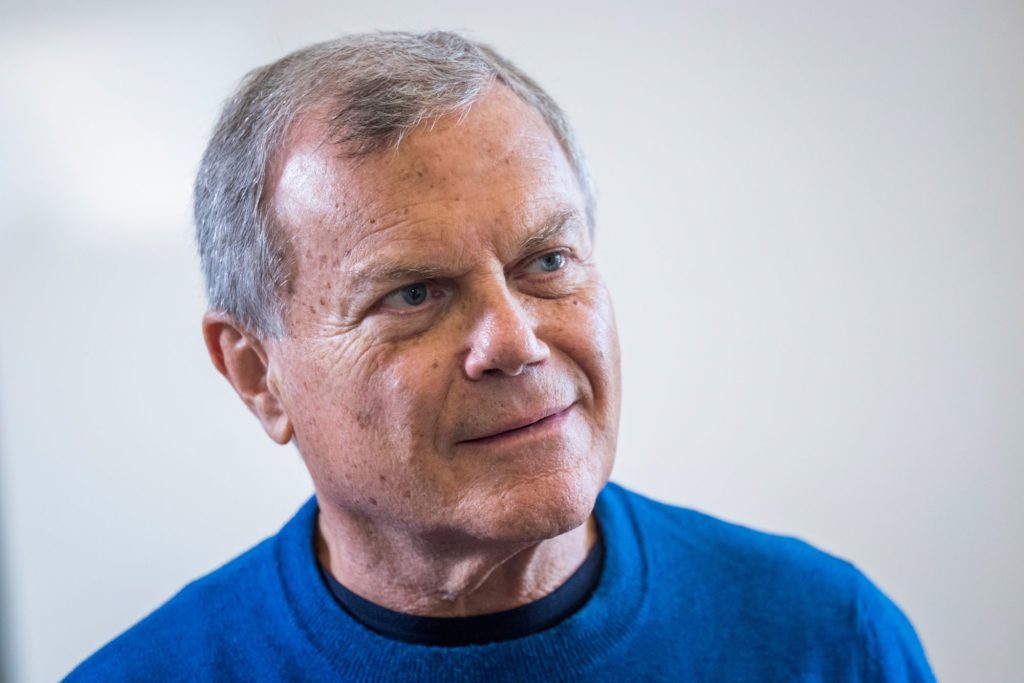
(Bloomberg) — Hong Hao, the former China strategist at Bocom International Holdings, was active again on Twitter with a forecast on the Nasdaq index, just days after his departure from the state-owned brokerage following a ban by Chinese social media.

Hong early Friday posted a chart he made on April 21 that likened the Nasdaq’s bubble in 2000 to its latest performance to imply that the gauge might have peaked, without elaborating. Hong has also changed his profile description on his profession to ex-Bocom International on Twitter, where he has nearly 28,000 followers.

Hong’s Chinese social media accounts, including those on China’s WeChat and Weibo, where he has more than 3 million followers, were suspended for unspecified violations since at least late Saturday following recent bearish reports on the country and its stocks. The analyst later left Bocom International after spending a decade at the firm. 

While it’s unclear which of Hong’s posts may have crossed the line, China has in recent weeks censored social media posts related to its economically-disruptive lockdowns. The benchmark CSI 300 Index fell to a two-year low last week and has slumped 21% this year, making it one of the world’s worst-performing equity gauges. That hasn’t stopped state-run media from publishing a series of articles projecting confidence in markets.

U.S. stocks sank on Thursday, erasing their gains from the prior session amid a broad-based selloff in risk assets that sent tech shares tumbling by the most in more than 1 1/2 years. The tech-heavy Nasdaq 100 index plunged 5.1%, its biggest decline since September 2020.

Hong’s latest tweet was well received by his followers, with many welcoming his comeback. 

One user commented: “It’s a complex world out there, so good to see you here again!”

More stories like this are available on bloomberg.com

©2022 Bloomberg L.P.

Tesla Looking to Boost Shanghai Car Production With Second Shift

(Bloomberg) — Tesla Inc. is making plans to resume double shifts at its factory in Shanghai as soon as mid-May as it expects staffing and parts shortages to ease, according to people familiar with the matter.

The U.S. electric carmaker’s China factory was shuttered for three weeks in April as Shanghai was plunged into lockdown in an attempt to halt community spread of Covid-19. The plant started up again in late April under a so-called closed loop system whereby workers live on site and are tested regularly. The workers in that system have been doing 12-hour shifts, six days a week.

Read more: Tesla Restarts Shanghai Factory With Strict Hygiene, Sleep Plans

Now Tesla is aiming to bring back more employees to keep factory lines running around the clock, people familiar with the matter said, asking not to be identified because the details are private. Prior to the pandemic-inducted halt on March 28, Tesla workers in Shanghai were working three shifts covering 24 hours, seven days a week.

The Shanghai factory’s management committee is trying to determine how feasible it is to bring more workers back, canvassing the willingness of staff to leave their residential compounds and collating address information to get a better picture of where in the city people are located, the people said.

Executives are also looking at daily door-to-door shuttle buses that would allow some workers to return home after their shift rather than sleep at the factory, they said.

A Tesla representative said there were no further updates as yet regarding the factory’s status.

In the meantime, Tesla’s Shanghai factory, which in regular times pumps out around 2,100 cars a day, remains challenged by component shortages. Tesla only has inventory for just over two weeks based on its current closed-loop schedule, another person familiar with the matter said last month, and logistics are a major problem for many other parts.

The company’s China website shows new customers can expect a wait time of between 20 to 24 weeks for a Model 3, up from around four to six weeks normally.

Shanghai reported 4,024 local asymptomatic Covid cases and 245 confirmed infections Thursday. While cases have been coming down, the city has said it will continue to mass test citizens and only lift the lockdown once community transmission reaches zero.

Read more: China’s Leaders Warn Against Questioning Covid Zero Policies

While officials are encouraging firms to restart production — China said last month it will give assistance to more than 600 selected companies to help restart factory activities — the reality on the ground may be more complex. 

Some 63% of Japanese companies that own a plant in Shanghai say they’re still fully halting operations, the Nikkei reported Friday, citing the Shanghai Japanese Commerce & Industry Club.

More stories like this are available on bloomberg.com

©2022 Bloomberg L.P.
Bankers Quit Jobs for Shot at Riches in ‘Wall Street of Crypto’

(Bloomberg) — Sign up for our Middle East newsletter and follow us @middleeast for news on the region.

In the shadow of Dubai’s sail-shaped Burj Al Arab hotel, crypto executives rubbed shoulders with Emirati royals, Wall Street bankers and Instagram influencers. 

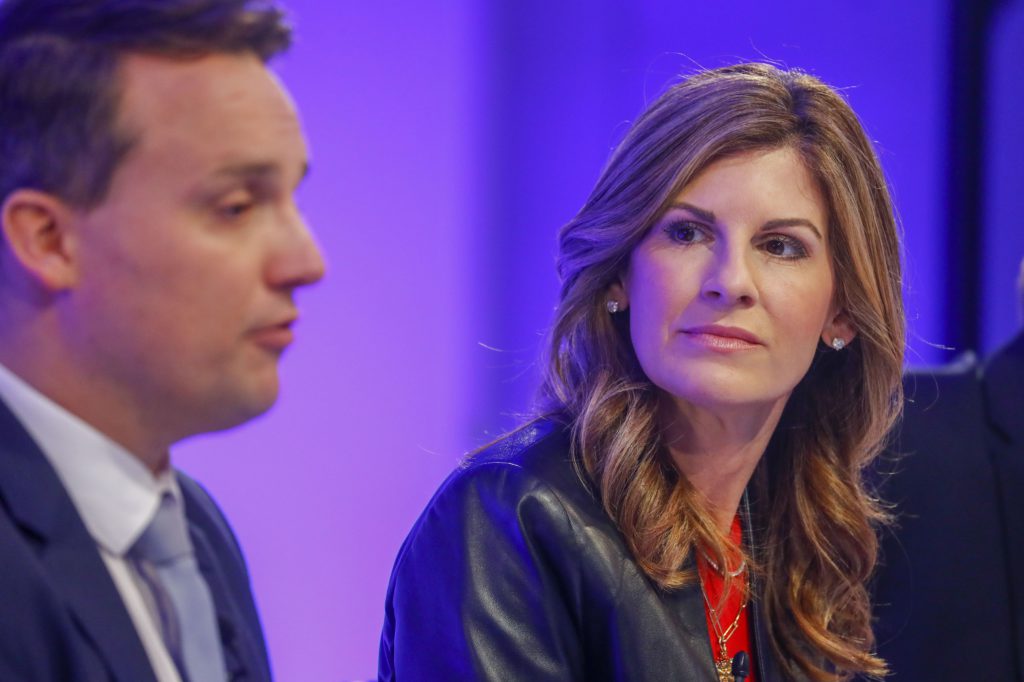
The festivities in late March were organized by Binance Holdings Ltd. in its de facto home of the United Arab Emirates, which is fast becoming a global hub for digital currencies. Co-founder and Chief Executive Officer Changpeng ‘CZ’ Zhao skipped the event as he recovered from Covid, but he was top of mind for partygoers who said they aspired to replicate his rapid ascent from software developer to one of the world’s wealthiest people. 

Following Zhao’s lead, many are flocking to the UAE, which he has called the “Wall Street of crypto.” The euphoria even has local bankers, lawyers and big tech executives pondering career pivots of their own to cash in.

“We see a lot of interest from employees in traditional financial institutions who want to work for us,” Richard Teng, the head of Middle East and North Africa at Binance, which is the world’s largest crypto exchange by trading volume, said in an interview at Bloomberg’s Dubai office. “We’re actually recruiting a number of them.”

Career Pivots

In February, Binance tapped Vishal Sacheendran, a former Bank of New York Mellon Corp. banker, as its UAE-based director of MENA. Robbie Nakarmi, the firm’s senior counsel in Dubai, joined late last year after almost a decade as a mergers and acquisitions lawyer.

They’re far from alone.

Ahmed Ismail, a former banker at Bank of America and Jefferies in Dubai, pivoted in 2017. He launched HAYVN, an Abu Dhabi-based digital currency investment bank, with Chris Flinos, a fellow BofA alum. He said several banker friends recently quit their jobs to launch crypto investment funds.

“It all starts from the top,” Ismail said in e-mailed comments. “We have witnessed the UAE making a huge push in developing world-class infrastructure and a regulatory environment for crypto firms to thrive and call home.”

Amir Tabch, former head of global markets at Emirates Investment Bank, is one of the more recent folks to decamp. He became CEO of DeFi brokerage Securrency Capital in Abu Dhabi last June after 16 years in the traditional banking sector. In his new role, he said he’s looking to hire more bankers to help “bridge the gap” between traditional and digital finance.

Surging inflation is compelling more investors to consider investments in digital assets as a potential hedge, yet many who’ve piled in recently have been stung by steep losses. Bitcoin, the world’s largest cryptocurrency, has almost halved in value since its peak last November.

The UAE’s crypto-friendly policies — in contrast to tightening regulations in other jurisdictions — have lured the largest firms. In an interview in late March, Binance’s Zhao said Dubai is the firm’s HQ by any common interpretation. “Wherever we go, the industry players do tend to follow.”

Crypto hedge fund Three Arrows Capital said last month it’s planning to move its headquarters to Dubai from Singapore, which has been more conservative with its regulatory approach toward virtual currencies.

UAE authorities, meanwhile, are trying to strike a delicate balance as they promote the business-friendly environment that’s made Dubai an attractive home for many of the biggest financial firms while also seeking to navigate concerns about volatility and financial crime dogging the crypto industry.

Ola Doudin, the CEO of Dubai-based BitOasis, said the UAE government has demonstrated its strong commitment to address illicit finance concerns in the industry and that centralized exchanges like hers offer local investors a safer way to invest in virtual assets compared with peer-to-peer platforms.

“It won’t be easy to dethrone the UAE as the global crypto hub,” said Gabriel Abed, Ambassador of Barbados to the Gulf nation. Abed created the Caribbean’s first blockchain firm in 2010 and hosted Binance’s Zhao at his house as the Chinese-Canadian billionaire got settled in the UAE. 

“This country literally has every piece of the puzzle – the leadership, regulations, the free zones, the talent and the capital,” Abed said in a phone interview. 

Wealth Funds

Wealth funds are also joining in. Abu Dhabi’s Mubadala is investing in the cryptocurrency ecosystem, its spokesman Brian Lott said. 

Investment firm Royal Group and ADQ, both controlled by National Security Adviser Sheikh Tahnoon Bin Zayed Al Nahyan, are pursuing deals in the crypto space, people familiar with the matter said. Representatives for Royal Group and ADQ did not respond to requests for comment. 

The Dubai Multi Commodities Centre said it registered a record 665 new companies in the first quarter of 2022, buoyed by an influx of crypto and blockchain businesses. The sector accounted for 16% of all firm registrations in the quarter, according to the DMCC. Marwan Alzarouni, the CEO of Dubai Blockchain Center, said he expects more companies to move to the country.

Crypto is also becoming more commonplace for property purchases and even settling restaurant bills, demonstrating the broader appetite for it, according to Yehia Badawy, the co-founder of crypto platform Rain, which received in-principal approval from Abu Dhabi Global Market in January.

The UAE is the Middle East’s third-largest crypto market, trailing Turkey and Lebanon, with a transaction volume of about $26 billion, according to data compiled by Chainalysis from July 2020 to June 2021. While the region’s crypto footprint is relatively small in global terms, it grew by about 1,500% from the prior year, the data showed.

“We don’t think we are seeing a blip or a bout of euphoria in the UAE,” BitOasis CEO Doudin said. “Over the next few years, those cities and markets that embrace this emerging sector will become what centers such as New York, London and Hong Kong have been to traditional finance.” 

More stories like this are available on bloomberg.com

©2022 Bloomberg L.P.
Close Bitnami banner
Bitnami