Bloomberg

Crypto Trading Startup Amber Seeks Funding at $10 Billion Value

(Bloomberg) — Cryptocurrency trading platform Amber Group is in discussions to raise fresh funding at a valuation of $10 billion, according to people with knowledge of the matter.

The Singapore-based startup has begun talks with prospective investors about the new round, which would mark a more than tripling of the startup’s previous $3 billion valuation, said the people, who asked not to be identified discussing private information. 

A representative for Amber declined to comment.

Amber Group, led by Chief Executive Officer Michael Wu, last raised funding in February from Singaporean state investment firm Temasek Holdings Pte and other investors including Sequoia China, Pantera Capital and Tiger Global Management. The company was founded in 2018 by five former Morgan Stanley traders.

At the time the deal was announced, Wu said Amber may pursue another funding round in 2022 ahead of an initial public offering that could take place as soon as next year, most likely in the U.S. 

The potential new funding comes at a tough time for the crypto market. The price of Bitcoin is currently down 23% over the past month to about $36,000. Other cryptocurrencies, such as Ethereum, are sagging as well. But that hasn’t cooled crypto fundraising efforts. Startups like Blockchain.com and Binance.US have scored multibillion-dollar valuations in their latest rounds.

More stories like this are available on bloomberg.com

©2022 Bloomberg L.P.

Microsoft’s Xbox Cloud Lets iPhone Users Play Fortnite Again

(Bloomberg) — Microsoft Corp. is bringing the hit video game Fortnite back to iOS devices two years after Apple Inc. took it off its App Store. 

Fortnite, produced by Epic Games Inc. is one of the most popular video games of all time. But it’s been absent from Apple’s App Store and Google Play after Epic tried to circumvent the tech giants’ closely controlled stores by allowing players to make in-app purchases directly on its website. That move effectively created a workaround to paying a commission to the app stores and violating their guidelines. 

Epic sued Apple and Alphabet Inc.’s Google in 2020, and the legal showdown has help draw criticism and regulatory scrutiny to the app store policies, which are seen as a dominant force in mobile software. In September 2021, a federal judge ordered Apple to make a major change in the way it generates money from the App Store, chipping away at it’s grip on the $100 billion market for mobile games. But the company said it would keep Fortnite off the App Store until all appeals are exhausted. Epic Chief Executive Officer Tim Sweeney has said that could take as long as five years. 

Now, Fortnite will resurface on browser-enabled devices with Microsoft’s Xbox Cloud Gaming service according to a statement from Microsoft on Monday. Anyone with a Microsoft account and an iOS device, Android phone or tablet or Windows PC with internet access, can download the game for free using the beta version of Xbox Cloud gaming. 

“It’s an important step to add a free-to-play title to the cloud gaming catalog as we continue our cloud journey,” Microsoft said. “We’re starting with Fortnite and will look to bring more free-to-play games people love in the future.”

Microsoft has also been lobbying for regulation of the app stores as it seeks to get ahead of regulatory scrutiny of its $69 billion purchase of Activision Blizzard Inc., announced earlier this year. Microsoft has outlined new data-collection, competition and payment policies for its Xbox and Windows software stores that it says address regulators’ broader concerns about its rivals’ app stores. 

Apple had already blocked Microsoft’s Xbox Cloud Gaming service from the app store, but Sweeney noted that it’s not blocking the web site, “at least not yet.” 

Fortnite previously wasn’t available on Xbox Cloud Gaming because Epic’s vice president of business development said the service would compete with Epic’s own PC offerings.  


More stories like this are available on bloomberg.com

©2022 Bloomberg L.P.

MaxLinear to Buy Chipmaker Silicon Motion in $3.8 Billion Deal

(Bloomberg) — MaxLinear Inc., a maker of chips for broadband communications, agreed to acquire Silicon Motion Technology Corp. in a cash-and-stock deal valuing the Taiwanese semiconductor firm at $3.8 billion.

Carlsbad, California-based MaxLinear is offering the equivalent of $114.34 for each of Silicon Motion’s American depositary shares, the companies said in a statement Thursday. The proposal includes $93.54 in cash and 0.388 MaxLinear shares. Bloomberg News reported earlier that MaxLinear was in talks to acquire the company.

The bid represents a 48% premium to Silicon Motion’s closing price on April 22, the last trading day before Bloomberg News first reported the company was exploring a sale. The deal will create a company valued at about $8 billion including debt, according to the statement.

Silicon Motion’s American depositary shares jumped as much as 30% in pre-market trading Thursday in New York. They were up 17% to $94.83 at 2:24 p.m. in New York trading, giving the company a market value of about $3.3 billion. 

MaxLinear’s shares were down 22% to $41.61 for their biggest drop since March 2020. The plunge was part of the larger market decline in which the Nasdaq fell 5%.

Silicon Motion makes NAND flash controllers for solid-state storage devices. It also supplies data center and specialized industrial and automotive solid-state drives. The company had also attracted interest from Taiwan-based MediaTek Inc., people with knowledge of the matter have said.

The acquisition will be the largest to date for MaxLinear, according to data compiled by Bloomberg. MaxLinear shareholders will own about 86% of the combined company, it said in the statement. The deal is expected to close by the first half of 2023, subject to regulatory clearance and approval of Silicon Motion investors.

The transaction will generate annual run-rate synergies of about $100 million within 18 months after closing and provide an immediate material boost to MaxLinear’s earnings per share and cash flow, according to the statement.

Bank of Montreal was exclusive financial adviser to MaxLinear, while Wells Fargo & Co. is providing committed debt financing. Goldman Sachs Group Inc. acted as exclusive financial adviser to Silicon Motion.

(Updates with share prices starting in fourth paragraph.)

More stories like this are available on bloomberg.com

©2022 Bloomberg L.P.

Fanatics Adds SoftBank, Airbnb Veterans to Its Board

(Bloomberg) — Fanatics Inc. has added two new board members as it looks for acquisitions and expands beyond its core business of sports merchandise.

The company is bringing on Lydia Jett, who is head of global e-commerce at SoftBank Investment Advisers and the first woman to be a managing partner at the firm’s private equity fund. SoftBank first invested in Fanatics in 2017. 

Jonathan Mildenhall, a former Airbnb Inc. chief marketing officer who now runs a marketing consultancy, will also join the Fanatics board. He joins several other independent members on the 10-person board, including Gerald Storch, a former Hudson’s Bay Co. chief executive officer; former WW International Inc. CEO Mindy Grossman; and NBA legend Earvin “Magic” Johnson, who now runs an investment firm.

“The deep expertise and insight that Lydia and Jonathan both bring to the board will be vital,” Fanatics CEO Michael Rubin said in a statement. Both will focus on “uncovering and amplifying opportunities” for growth.

Rubin has widened operations from the company’s origins in licensed sportswear and collectibles, shaking up the trading-card industry by acquiring Topps Co. and working its way into sports betting.

Fanatics is seen as a possible IPO candidate and was last valued at $27 billion in March, when the company raised $1.5 billion in funding. Rubin said in April that the company would use the fresh capital to seek more deals.

(Corrects number of board members in third paragraph.)

More stories like this are available on bloomberg.com

©2022 Bloomberg L.P.

DeFi Exchange Says It Beats Larger Rivals Binance, Coinbase

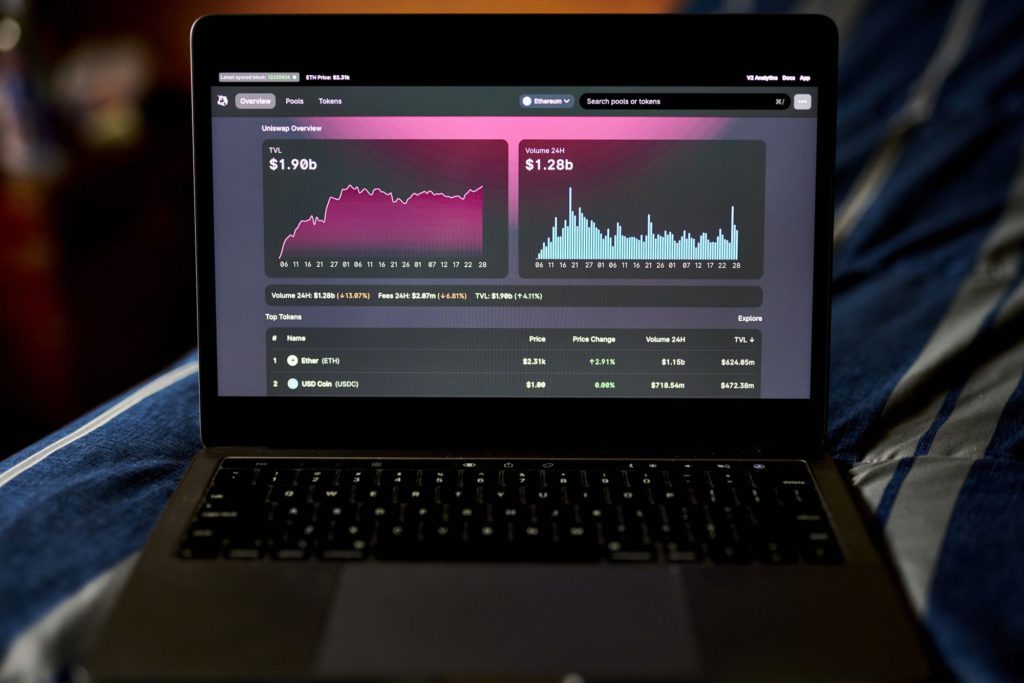
(Bloomberg) — Uniswap, the biggest decentralized crypto exchange, says that it can provide more liquidity than its larger, centralized rivals Coinbase and Binance, because of the incentives it gives its liquidity providers to deliver better pricing to traders.

Compared to the most popular Ether trading pairs on the centralized exchanges, the latest version of Uniswap launched about a year ago allows traders to execute large-size trades in a price range they prefer more easily, new research by Uniswap Labs, the main developer of the exchange, found. Coinbase and Binance did not respond to requests for comment.

The research used a metric called market depth to compare liquidity across Uniswap v3 and the centralized exchanges. Market depth, a common method used to measure liquidity on exchanges, shows how much of one asset can be traded for another at a given price level. For an Ether/USD trading pair, a trader who executes a single $5-million trade can save about $24,000 on Uniswap v3 compared with Coinbase, according the research.

“The fact that this liquidity exceeds even major centralized players illustrates how swiftly crypto and global markets are adapting to innovations in decentralization,” said Dan Robinson, head of research at crypto investment firm Paradigm and co-author of the Uniswap’s latest research.

Uniswap v3 is the the largest decentralized exchange by trading volume, with more than $1.7 billion worth of assets changing hands in the past 24 hours, according to data from Coingecko. However, Binance is the largest centralized crypto exchange with $22.2 billion in trading volume over the same period. Coinbase, meanwhile, logged $3.1 billion. 

Uniswap has already been using a mechanism called automated market maker through which a smart contract, or pieces of codes run on a blockchain, determines the price when someone wants to convert one crypto token into another. Anyone can provide liquidity to any of the liquidity pools on Uniswap and earn fees from trades in those pools. This frees exchanges from relying on sophisticated high-frequency traders for market making.

The latest version of Uniswap allows individual market makers to set a specific price range they want to provide liquidity in. Since they can only earn fees for trades that occur within that range, it encourages them to provide liquidity at a price favored by traders.

Liquidity on exchanges in a topic beyond the digital-asset space. The U.S. Securities and Exchange Commission has previously recognized that the lack of liquidity in thinly traded assets is a challenge to central limit order exchanges.

But automated market makers are far from perfect. The kind of freedom they provide on decentralized exchanges makes it easier for developers to drum up interest for a new token of their making before yanking it off the market, also known as the infamous “pump-and-dump” scheme. On Uniswap’s latest version, its liquidity providers can also face a problem called impermanent loss, which is the loss in dollars from market making for a volatile asset.

Meanwhile, on centralized exchanges, traders can use an algorithmic trade execution strategy such as TWAP, or time-weighted averaged price, to execute large-size trades without affecting the market too much, said John Kramer, who’s in charge of derivatives and DeFi trading at crypto market maker GSR.

More stories like this are available on bloomberg.com

©2022 Bloomberg L.P.

Brookfield’s Venture Arm Cuts Biggest Check Yet for Musk’s Twitter Buyout

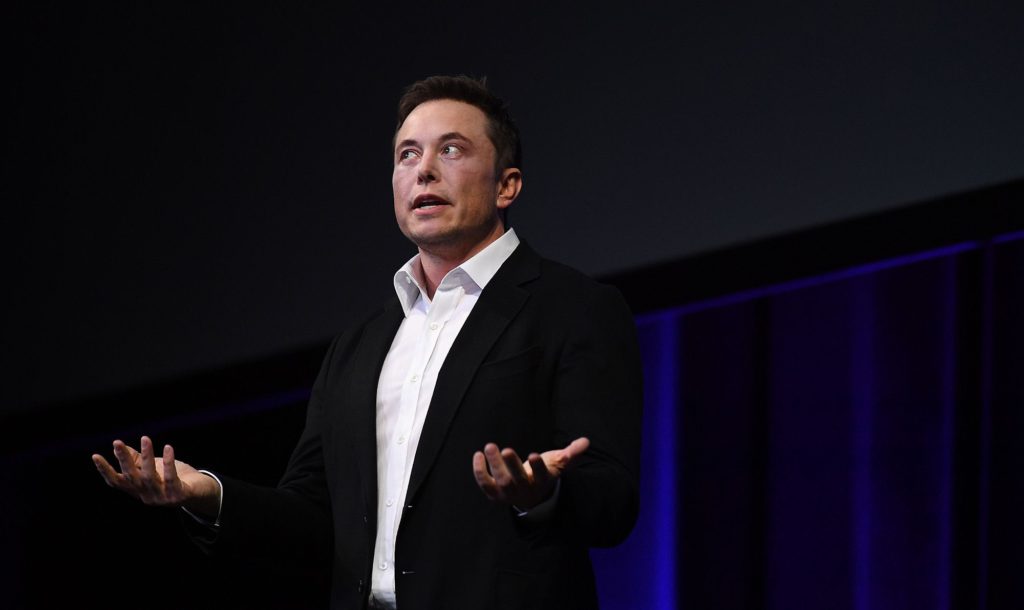
(Bloomberg) — Brookfield Asset Management Inc.’s new venture capital arm has cut its largest check to date to help finance Elon Musk’s takeover of Twitter Inc. 

The alternative asset manager’s Brookfield Growth division piled $250 million into Musk’s $7.1 billion equity raise for the deal, according to a regulatory filing Wednesday. The financing for Musk stems from a long-standing relationship between the billionaire and Canada’s largest alternative asset manager. 

Josh Raffaelli, Brookfield Growth managing partner, said the relationship has given the firm a “front row seat” on Musk’s focus on operational excellence and building iconic businesses. 

“We are thrilled we can once again support Elon and his mission of transforming the future through innovative and world class technologies. Funding secured,” Raffaelli wrote on his LinkedIn page. The last part is a nod to Musk’s infamous 2018 tweet about his proposal to take Tesla Inc. private. 

The check is the largest ever for the venture capital arm and a little out of step from the late-stage funding it typically provides to private tech companies — at much smaller sums, according to a person familiar with the matter. Brookfield raised $500 million for the growth fund last November. 

A representative for Musk wasn’t immediately available for comment. 

Not only is Brookfield invested in Musk’s the Boring Co., but the two are partnered on a project to build a sustainable housing development in Austin, Texas. 

Brookfield, Musk’s Tesla Energy and real estate developer Dacra announced the partnership, known as SunHouse at Easton Park, last year. The group said at the time that Tesla’s solar panels would be installed at the homes being developed at Brookfield’s Easton Park residential community.  

(Updates with Brookfield comment starting in paragraph three)

More stories like this are available on bloomberg.com

©2022 Bloomberg L.P.

Many VC Firms Ban Side Investing. Yuri Milner’s DST Encourages It

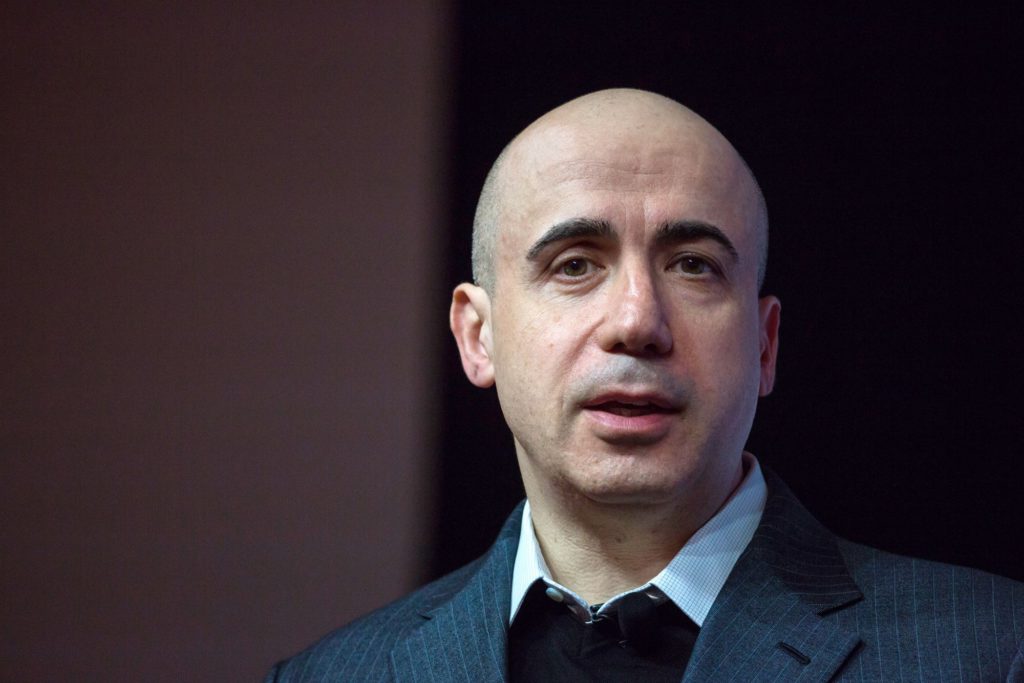
(Bloomberg) — Many venture capital firms frown upon or even bar their partners from using their own money to make side investments in startups. At DST Global, the investment group run by the Russian-Israeli billionaire Yuri Milner, personal investing is institutionalized.

A prevailing philosophy in venture capital is that allowing partners to broker personal investments can put their interests at odds with those of the firm. An investor might choose to bid up the valuation of a startup he holds using his employer’s money, in turn increasing his paper wealth.

DST sees things differently. The firm doesn’t typically invest in young companies, so it allows the partners to do so individually or pool their cash. It asks that each deal is approved by the compliance department beforehand, a spokesman for the firm said. DST does this, according to interviews with several founders who took partners’ money, because it allows them to scout entrepreneurs the firm might want to invest in later. And it often does.

The practice is one little-known example of how Milner defies Silicon Valley convention. Milner is the wealthiest and most powerful Russian in global technology, and his position has come under heightened scrutiny in the last couple of months since his birth country invaded Ukraine. His firms have publicly condemned the war, and Milner has made donations to Ukrainian relief efforts, most recently pledging $100 million to Tech for Refugees on April 28.

Milner, a dual-citizen of Israel and Russia, rose to prominence with extremely lucrative bets on Airbnb Inc., Alibaba Group Holding Ltd., Facebook and Twitter Inc. He built his early fortune — now worth $3.8 billion, according to the Bloomberg Billionaires Index — with funding from Kremlin-connected sources. DST said it hasn’t tapped Russian money in more than a decade.

Personal investing was another controversial, and ongoing, element of DST’s formula. Here’s how it works: If a partner finds a young startup he wants to invest in, he writes a personal check, a so-called angel investment. If other partners want to back the same company, they finance the deal through a fund they control. There are at least two: an older one called Apoletto and a newer fund, Gemini, a spokesman said. These are sometimes referred to in corporate disclosures as DST Global Partners.

Side investments do happen at other firms, but they’re rarely as organized and commonplace as they are at DST. “It’s interesting to have a business model around this,” said Emily Pahnke, who teaches venture capital and entrepreneurship at the University of Washington. “By investing sooner than the investment thesis of the fund, they are getting their leg in the door and keeping that door open.”

The partner funds generally make investments of quite a bit less than $25 million, the spokesman for DST said. Part of the pitch is that the startup could get backing from the main DST fund later, though it isn’t guaranteed, said people familiar with investment negotiations who asked not to be identified because the talks were private. Any future investments will be subject to a diligence and analysis review by the firm, the spokesman said.

Ryan Petersen, the founder of freight startup Flexport, recalls an approach from DST partner Rahul Mehta in 2015. Mehta explained that Flexport, then valued at about $100 million, was too small for DST, which likes to make investments once companies are at least five times the size, Petersen said. Mehta brokered a small investment from the Apoletto fund and made no promises about future money from DST, Petersen said.

Two years later, DST led Flexport’s next funding round valuing the business at more than $900 million, and Mehta was appointed as a board observer. By that point, Mehta “was already super helpful,” Petersen said. Flexport is now valued at $8 billion.

Renaud Laplanche already had a connection to DST by the time he was ready to start his latest company. DST backed his previous startup, Lending Club, which burned hot before Laplanche was ousted over concerns about the company’s loan disclosures. For his next financial-technology venture, Upgrade, Laplanche got money from the DST partners’ fund. “From their standpoint, the early investment gave them the inside track on how the company was doing,” Laplanche wrote in an email.

In November, DST co-led a $280 million investment in Upgrade. “They already knew a lot about the business,” he wrote.

Something similar happened with the Indian vehicle marketplace Cars24, where a personal investment beget a DST-led $200 million round in 2020, said Vikram Chopra, the founder and chief executive officer.

DST does a lot of these deals, but they remain in the minority, a spokesman said. The partners’ funds are used for more than startup investments. Apoletto contains a portfolio of public stocks valued at over $800 million, according to data compiled by Bloomberg. Regulatory filings from Robinhood Markets Inc. and DraftKings Inc. list Apoletto among shareholders, alongside DST.

The funds benefit from a virtuous circle. The vast majority of that $800 million is rooted in shares the partners receive as part of their profits from DST investments, including from Airbnb and DoorDash Inc. Those can eventually be sold for cash to make more startup investments.

(Updates with Ukrainian relief group and other details throughout.)

More stories like this are available on bloomberg.com

©2022 Bloomberg L.P.

Stocks Slump in Post-Fed Reversal as Yields Climb: Markets Wrap

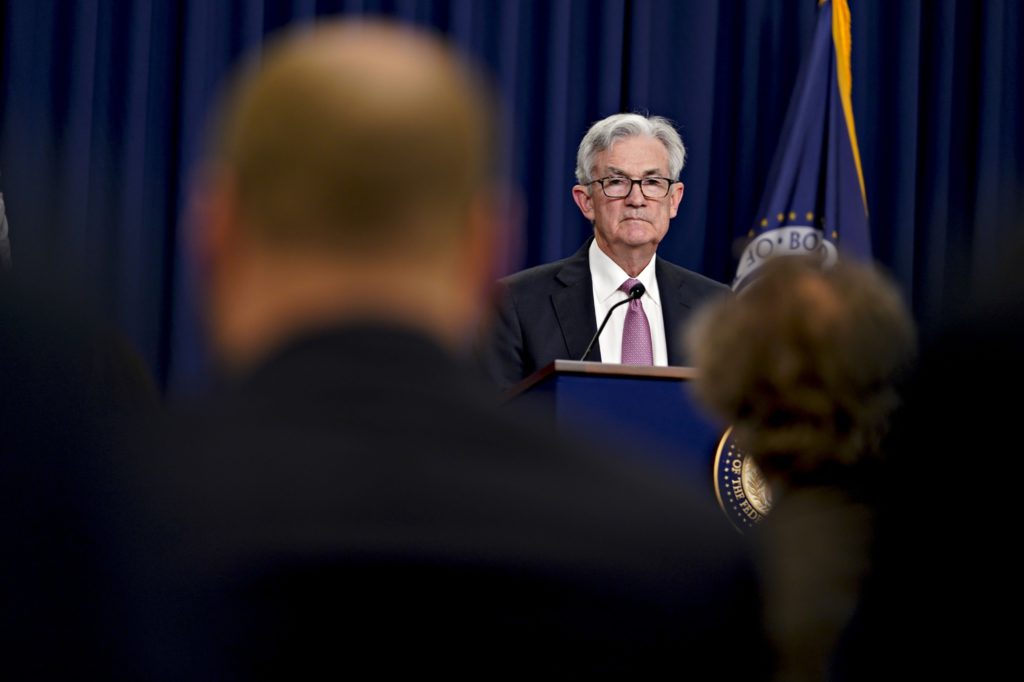
(Bloomberg) — The surge in stocks that followed the Federal Reserve decision proved short lived as concern over persistently high inflation and slower economic growth resurfaced. The S&P 500 halted a three-day rally, while the technology-heavy Nasdaq 100 underperformed major benchmarks. The dollar also made an about-face, climbing alongside Treasury 10-year yields — which topped …

Stocks Slump in Post-Fed Reversal as Yields Climb: Markets Wrap Read More »

Musk Faces FTC Antitrust Review on Twitter Alongside Stock Probe

(Bloomberg) — The U.S. Federal Trade Commission is reviewing Elon Musk’s $44 billion Twitter Inc. takeover, a person familiar with the deal said, setting up a deadline in the next month for the agency to decide whether to conduct an in-depth review of the transaction.

Under U.S. merger law, Musk is required to notify the FTC and the Justice Department of the transaction and wait at least 30 days before closing to allow an investigation into potential antitrust concerns. The FTC can ask for additional information, issuing what’s known as a second request, which would further delay closing. 

An FTC spokesman declined to comment. Spokespeople for Twitter and Musk didn’t immediately respond to requests for comment. 

Antitrust experts don’t expect the deal to raise antitrust concerns. 

However, Open Markets -– the anti-monopoly non-profit group where Democratic FTC Chair Lina Khan got her start in antitrust –- has urged the agency to block the deal, arguing that it would give Musk too much control over free speech platforms. Musk also owns Starlink, a satellite-based internet provider operated by Space Exploration Technologies Corp., which is being used to provide internet to Ukraine.

The FTC is separately probing whether Musk should have notified the agencies when he acquired a 9% stake in the company in March. The Tesla Chief Executive Officer didn’t file paperwork with the FTC, seeking to take advantage of an exemption in the law for voting securities acquired solely for investment purposes, the person said. 

The Information reported earlier on the FTC’s probe into Musk’s 9% stake.

The FTC generally doesn’t take action if it finds a notification failure was accidental. But the agency can seek fines of up to $43,792 per day if the failure was flagrant or occurs repeatedly. In December, for example, the FTC fined Clarence Werner, founder of trucking giant Werner Enterprises Inc., nearly $500,000 for failing to notify the agency about several stock purchases.  Capital One Financial Corporation CEO Richard Fairbank was also dinged by the FTC last year for $637,950 for failing to file.

On Wednesday, House Republicans demanded information from Khan on whether the FTC had taken action in response to Open Markets’ statement, alleging the group was seeking to leverage its prior relationship with the FTC chair to “suppress free speech online.”

More stories like this are available on bloomberg.com

©2022 Bloomberg L.P.

Andreessen Support for Musk-Twitter Bid May Pose Meta Conflict

(Bloomberg) — Andreessen Horowitz invested $400 million in Elon Musk’s Twitter Inc. bid, backing Facebook’s rival even though partner Marc Andreessen is on the social networking giant’s board.

“Elon is the one person we know and perhaps the only person in the world who has the courage, brilliance, and skills to fix all of these and build the public square that we all hoped for and deserve,” Ben Horowitz, another Andreessen partner, wrote in a tweet.  

On Twitter, Andreessen has been publicly supportive of Musk, and against the content-moderation policies that have become stricter at social media companies. Musk has said he plans to loosen the rules if he takes charge of Twitter.

Andreessen has been on the board of Facebook, now called Meta Platforms Inc., since 2008. In that time, he’s come under scrutiny for numerous conflicts of interest, such as investing in companies, including Oculus VR, that Facebook ended up buying. At one point he was sued by investors for advising Meta Chief Executive Officer Mark Zuckerberg on how to protect his majority voting control even if he sold his shares. 

Twitter, while smaller, is considered a Meta rival, competing for digital advertising dollars and users’ posts. When Twitter’s board was evaluating whether to take Musk’s bid, they looked at the shrinkage in Meta’s valuation in order to conclude that the billionaire’s offer was fair, according to a person familiar with the matter.


More stories like this are available on bloomberg.com

©2022 Bloomberg L.P.

Close Bitnami banner
Bitnami