
Bloomberg

FTX’s Sam Bankman-Fried Still Hasn’t Answered These Questions Ahead of DealBook Summit Interview

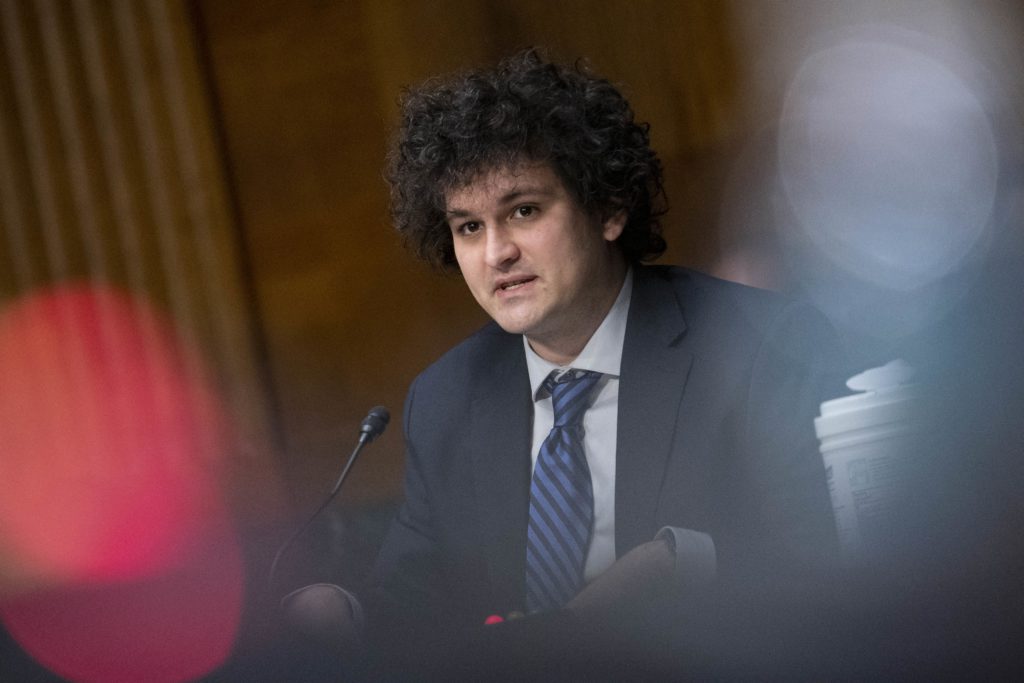
(Bloomberg) — The collapse of FTX was one of the crypto industry’s biggest and most stunning failures. It transformed Sam Bankman-Fried from a billionaire savant and industry savior to a corporate villain virtually overnight, even though major questions remain about what exactly happened. Some may be answered if the former chief executive officer goes through with a planned speaking engagement at the New York Times DealBook Summit at 4:55 pm on Wednesday. Here are key issues that have yet to be sufficiently explained: 

How did FTX end up with an $8 billion shortfall?

Bankman-Fried has offered convoluted explanations of what happened, both on Twitter and in media interviews. He ultimately blamed the company’s $8 billion hole on “poor internal labeling” of accounts, though that effectively raised as many questions as it answered. A live interview may force him to provide more clarity on what went on at a company that court records now portray as one rife with mismanagement, self-dealing and insufficient oversight over what happened to customers’ money. FTX acting CEO and Chief Restructuring Officer John J. Ray, the court appointed overseer who worked on the Enron case, said in a filing that “never in my career have I seen such a complete failure of corporate controls.” But Bankman-Fried’s record of dissembling and dishonesty could mean that straight answers are unlikely. 

Did FTX and Alameda Research misuse customer funds?

The Securities and Exchange Commission and the Commodity Futures Trading Commission are investigating whether FTX misused customer funds, and it’s been reported that the company lent clients’ money to Alameda Research, the crypto trading firm co-founded by Bankman-Fried. The two companies shared close ties and FTX received some customer deposits through bank accounts held by Alameda. If FTX did misappropriate customers’ money, the next question would focus on what the funds were used for. Options include covering Alameda’s liabilities, as well as fueling venture investments, Bankman-Fried’s $1 billion bailout spree over the summer or purchases like his acquisition of a 7.6% stake in Robinhood Markets Inc. Bankruptcy records show that Alameda is owed $4.1 billion for loans it extended to “related parties,” including $1 billion to Bankman-Fried.

Who are FTX’s biggest creditors?

FTX owes its top 50 unsecured creditors around $3.1 billion, but a bankruptcy judge ruled that they can remain anonymous for now. Not knowing who these creditors are helps obscure the full extent of FTX’s contagion, sowing uncertainty and questions about which others may be taken down by its collapse. Cryptocurrency lender BlockFi Inc. cited FTX’s debts in its own bankruptcy filing, and concerns about which firms have money tied up with the exchange has sapped investors’ confidence in the industry. FTX owes its largest unsecured creditor more than $226 million and 10 of the biggest creditors have claims of more than $100 million each, according to bankruptcy filings. Knowing who FTX’s top creditors are would also show whether major institutional investors were caught up in FTX’s web and could indicate that the ripple effect of the company’s collapse isn’t just contained to crypto.

How did $662 million of crypto disappear from FTX’s platform after its bankruptcy?

Shortly after FTX filed for bankruptcy on Nov. 11, a series of mysterious withdrawals drained $662 million worth of digital assets from the crypto exchange. While the identity of the account associated with the attack has been determined, there still are a lot of unknowns, including how this could have happened. Any updates from Bankman-Fried could provide greater clarity and mitigate speculation that this was an inside job perpetrated by either current or former FTX employees. 

What’s next for Bankman-Fried?

With his reputation in tatters and regulators descending on FTX, Bankman-Fried’s next move will be closely watched. Details on how he’s cooperating with investigators — or even just basic insights into where he’s currently located or his state of mind — could shed some light on what the troubled founder is facing now that his former empire lies in ruins.

(Updates to add time of appearance in first paragraph.)

More stories like this are available on bloomberg.com

©2022 Bloomberg L.P.

The Dark Side of TikTok

(Bloomberg) — For every relatively harmless viral moment on TikTok—from corn kid to butter boards—there are more dangerous ones. Like teens climbing teetering milk crates, sticking pennies in light sockets or cooking chicken in Vicks NyQuil. 

Some of them are even deadly. A new investigation by Bloomberg shows some kids have died attempting the “blackout challenge,” where users are instructed how to choke themselves in pursuit of an adrenaline rush. Many of the TikTok users who tried it and lost their lives were too young to even be on the app in the first place. 

TikTok’s rise coincided with the beginning of the pandemic, as children and families stuck indoors scrolled endlessly through its short videos. Virtually overnight, ByteDance’s social media platform became the world’s biggest app. With its ascendance, however, has come dangerous viral content that—despite what the company says is a concerted effort to erase it—can land in front of children.

On this episode of Storylines, Bloomberg explores how kids have scrambled to get on the adult version TikTok, sometimes with fatal results. Nine-year-old Arriani Arroyo died trying the “blackout challenge,” and her family has sued the company alleging its liable for her death. The company’s algorithm, they allege, sent the video to their daughter. It’s one of many lawsuits alleging wrongful death under similar circumstances, litigation that may test the limits of federal protections for platforms like TikTok that generally avoid liability for content posted by its users. 


More stories like this are available on bloomberg.com

©2022 Bloomberg L.P.

Google Sued by 130,000 Alleged Victims of Its Ad Dominance

(Bloomberg) — Google and its parent Alphabet Inc. were sued in a UK court over alleged antitrust abuses in a group claim by 130,000 businesses that argues the tech giant’s approach to advertising that may have cost companies billions of pounds in lost revenue.

The claim, filed at London’s UK Competition Appeal Tribunal on Wednesday, accuses Google and its parent of abusing their dominant position in online advertising and “earning super-profits for itself at the expense of the tens of thousands of publishers of websites and mobile apps in the UK.” 

The case follows criticism that regulatory penalties — such as a €150 million ($155.5 million) French fine for mistreating companies using its online advertising platform — aren’t enough to stop the US tech giant’s anticompetitive behavior, said Toby Starr, a partner at law firm Humphries Kerstetter, who represents some of the claimants. The UK suit is being run alongside a European Union claim expected next year in the Netherlands.

“None of these regulatory actions will do anything to compensate the UK publishers of thousands of websites and mobile apps who have lost billions in advertising revenue because of Google’s actions,” Starr said in a statement. “The only way to recoup these losses is through a competition class action.”

Read More: Apple, Google Probed by UK Over ‘Stranglehold’ on Mobile Devices

A spokesperson for Google said the lawsuit is “speculative and opportunistic” and that the firm works constructively with publishers across Europe.

Britain’s opt-out class-action regime finally sparked into life last year after new laws allowed US-style claims under competition law. Potential UK damages, which are based on estimates from possible losses could run into the low tens of billions, according to the claimants.

Opt-out class-action style lawsuits mean someone impacted doesn’t have to be involved in the case to be included or to get a share in any eventual award.

The UK challenge would add to the scrutiny Google already faces in the EU. While Google’s antitrust run-ins with the European Commission have cost the company billions of euros, the 2019 decision by the Autorite de la concurrence was its first such fine in France. 

–With assistance from Katharine Gemmell.

(Updates with Google comment in fifth paragraph)

More stories like this are available on bloomberg.com

©2022 Bloomberg L.P.
UK Internet Watchdog Increasingly Led by Ex-Big Tech Executives

(Bloomberg) — UK’s Ofcom hired former Google executive Gill Whitehead to head up a team regulating search engines and social media firms, the latest in a string of Silicon Valley appointments as the watchdog prepares to impose sweeping new online safety laws.

Whitehead, formerly Google’s senior director of client solutions and analytics, will work alongside Ofcom Chief Technology Officer Sachin Jogia and online safety lead Jessica Zucker. Jogia and Zucker were was previously executives at Amazon.com Inc. and Meta Platforms Inc. respectively. 

Ofcom’s top hires over the past 18 months underscore a pivot in its role from an auditor of the airwaves and postal service to one increasingly concerned with the internet and Big Tech.

Last year its CEO, Melanie Dawes, said she expected to hire about 300 people on top of the 1,000 it employed already to be able to deal with the Online Safety Bill, which will place strict duties on companies that host user-generated content. That would leave Ofcom about a third of the size of the Financial Conduct Authority. 

Whitehead will report directly to Dawes, who joined Ofcom after holding senior roles in the British civil service. Since May, Ofcom’s chairman has been 79-year-old former television executive Michael Grade, who told lawmakers this year he doesn’t use Twitter, Facebook, Instagram or TikTok.

More stories like this are available on bloomberg.com

©2022 Bloomberg L.P.
GoTo’s Plans for Controlled Stake Sales Won’t Occur for Now

(Bloomberg) — GoTo Group’s novel plan for a managed sale of shareholders’ stock — aimed at avoiding a bigger selloff when a lock-up on their holdings expires — isn’t going ahead for now.

The shareholders that considered selling have decided not to proceed at this time, GoTo said in a statement Wednesday. The holders and potential buyers involved in the discussions haven’t agreed on a price, people familiar with the matter said. Some holders GoTo has been in talks with are inclined to wait for a recovery in the stock price before selling, the people said.

Falling prices of tech stocks made it difficult to arrange the sale, with potential new investors asking for a discount of as much as 30% to the Indonesian internet company’s current share price, said one of the people, who asked not to be named as the deliberations were private.

The company’s shares have plunged for eight days ahead of the lock-up on the holders’ stakes expiring on Wednesday. Holders including Alibaba Group Holding Ltd. and SoftBank Group Corp. agreed to an eight-month lock-up to support the stock price following GoTo’s initial public offering in late March.

The regional tech giant has been trying to avoid a situation where a large part of its backers would seek to cash out at the same time once the lock-up had expired. On a conference call last week, Chief Executive Officer Andre Soelistyo said that there were no assurances that the controlled share sale it’s seeking will take place.

About 1 trillion GoTo shares, or more than 90% of the total outstanding, become eligible to be sold after Nov. 30. Still, that includes holders such as GoTo’s employee fund that are unlikely to sell. Alibaba and SoftBank each own about 9% of GoTo.

Formed via a merger of ride-hailing provider Gojek and e-commerce firm Tokopedia, GoTo raised $1.1 billion in one of this year’s largest IPOs. The share sale boosted the value of stakes of China’s Alibaba and SoftBank’s Vision Fund to almost $5 billion combined.

In late June, Chinese artificial intelligence software maker SenseTime Group Inc. slumped as much as 51% in Hong Kong trading after a lock-up of its shares expired following its December IPO.

More stories like this are available on bloomberg.com

©2022 Bloomberg L.P.
Elon Musk’s Neuralink Spawns a Cluster of Brain Computer Startups

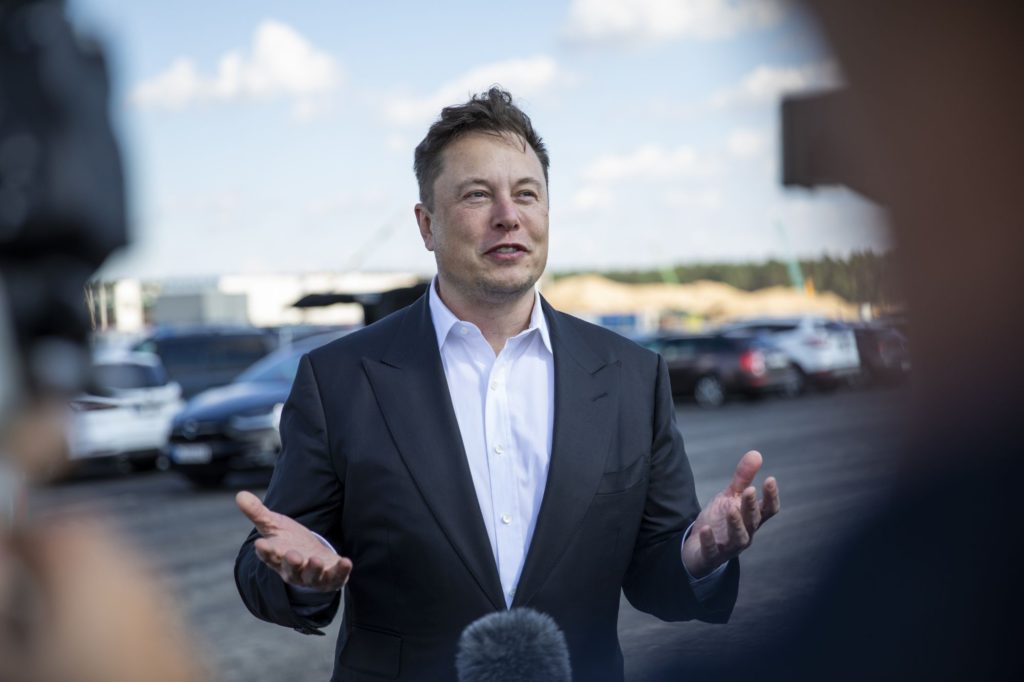
(Bloomberg) — Neuralink Corp., the brain-computer interface startup run by Elon Musk, doesn’t yet have a product ready for broad human consumption, but the project has already succeeded in seeding several offshoots that are developing different technical approaches to manipulating the brain.

Musk’s company is the most deeply funded and, thanks to its owner, the most visible of the bunch. Musk will draw further attention to this once-obscure area of scientific research on Wednesday night when he hosts an event to showcase developments at Neuralink’s office in Fremont, California.

It’ll be years before there’s a chance of walking into a store and buying a computer to be implanted in your brain, but Neuralink has already left an outsized mark on the field. Most of the people who were there at the beginning in late 2016 and early 2017 have left, and several are working on new kinds of brain-computer interfaces. Of nine key members on Neuralink’s founding team, just two remain: DJ Seo, the vice president of implants, and Musk.

Many workers have cycled through Neuralink over the last five years. LinkedIn data shows almost 200 former employees. Many of them are now working on projects that draw on their experience at Neuralink, which seeks to place electrodes in human brains to first help paralyzed people and eventually augment even healthy people’s intelligence.

These new companies are built on decades of research in academia and at places like the US Defense Advanced Research Projects Agency, better known as DARPA. “We have recently crossed the threshold in our basic science understanding of many areas of neuroscience, enabling us for the first time to translate these innovations into products and services,” said Alexander Morgan, a partner at Khosla Ventures, where he has funded the BCI company Synchron Inc.

So far this year, venture capitalists have backed 37 BCI startups, compared with 17 in 2016, according to the research firm Pitchbook. They invested $568 million last year and $263 million so far this year, up from $175 million six years ago.

The BCI field is showing signs that resemble what happened in personal computers, said Amy Kruse, a general partner at Prime Movers Lab and an investor in the BCI company Paradromics. In computers, Intel Corp. co-founder Gordon Moore posited a theory that the number of transistors that could fit on a microchip would double roughly every two years, creating increasingly powerful machines. “It’s a culmination of the impressive results in this field,” said Kruse, “and the fact that Moore’s Law is finally impacting neurotechnology devices in a meaningful way.”

The startup boomlet isn’t solely a credit to Neuralink. Among others, Alphabet Inc.’s Google and Meta Platforms Inc. do their own BCI research, and many of those employees have left for startups. They tend to bring credibility to whatever projects they get involved with next. That makes it easier to recruit and raise funds.

Here’s a look at where members of Neuralink’s founding team landed:

Tim Gardner was poached by Neuralink from Boston University’s biology department in 2017. After leaving in 2019, he went right back to academia, joining the faculty of the University of Oregon where he works as an associate professor. He’s also a partner at the newly formed Interface Ventures, which launched this year and aims to back companies combining physics with biology.

New gig: Academic and venture capitalist

Location: Eugene, Oregon

Dates at Neuralink: 2017-2019

Timothy Hanson, a specialist in flexible electrodes, worked on some of Neuralink’s key early technology, the so-called sewing machine process that aims to quickly implant electrodes into brain tissue with minimal damage. He’s now consulting for Precision Neuroscience, founded by another Neuralink alumnus. Hanson said he is also working on his own startup idea and plans to unveil research on it in the next few months.

New gig: Stealth startup

Location: San Francisco

Dates at Neuralink: 2017-2018

Max Hodak, formerly the president of Neuralink, is the best-funded of his fellow alumni, with $160 million in capital for his new endeavor, Science Corp. Like Neuralink, its aim is to communicate with neurons to help solve a health problem and in future, add to that by enhancing brain activity for perfectly healthy people. While Neuralink plans to implant electrodes deep within brain tissue, Hodak is taking a photonics approach, using the optic nerve as a pathway to the brain. The initial treatment is for blindness.

New gig: Founder and CEO of Science Corp.

Location: Alameda, California

Dates at Neuralink: 2017-2021

Paul Merolla, a specialist in chips, worked as a research scientist at International Business Machines Corp. for six years before joining Neuralink in late 2016. He quit this June and has kept a low profile since. In a blog post at the time, he said he’s working on a stealth project and still finds Neuralink’s mission “extremely compelling.”

New gig: Stealth startup

Location: Bay Area

Dates at Neuralink: 2016-2022

Ben Rapoport, formerly a Neuralink neurosurgeon, moved across the country to work on an electrode-based device to treat epilepsy and other intractable medical conditions. The prototype developed by his company, Precision Neuroscience, would still require surgery that opens the skull, but its device sits on top of the brain rather than penetrating into brain tissue.

New gig: Co-founder of Precision Neuroscience

Location: New York

Dates at Neuralink: 2017-2018

Philip Sabes was working as a professor and at the Center for Integrative Neuroscience at the University of California, San Francisco, when he joined Neuralink. He then moved to Seattle and started at a startup, Starfish. Little information is available about what Starfish does, and Sabes left the company this year. He declined to comment on it. By phone, he said he plans to launch a new project next year focusing on clinical neuromodulation.

New gig: Forthcoming project

Location: Seattle area

Dates at Neuralink: 2017-2020

Vanessa Tolosa was the neurotechnologies lead at Lawrence Livermore National Laboratory when she joined Neuralink. After leaving in early 2020, she worked as a consultant for a time and then joined Meta, where she’s now a hardware technology manager for its Reality Labs division, according to her LinkedIn profile. 

New gig: Manager at Meta

Location: Seattle area

Dates at Neuralink: 2017-2020

More stories like this are available on bloomberg.com

©2022 Bloomberg L.P.
Dutch Startup Begins Production of World’s First Solar Car

(Bloomberg) — Dutch mobility startup Lightyear started making the world’s first series-production electric vehicle that generates power directly from sunlight.

Its first model, the Lightyear 0, comes with a price tag of €250,000 ($259,000) and has already collected around 150 pre-orders. 

Lightyear plans to make about a thousand of the model at a Valmet Automotive Oyj facility in Finland, starting at a rate of one car a week. By the second half of next year, production should increase to five weekly, Chief Executive Officer and co-founder Lex Hoefsloot told Bloomberg in an interview.

The car, which features curved solar panels across the hood and roof, is able to drive two months without charging in Amsterdam during summer, and as many as seven months in Portugal, according to Hoefsloot. Sun-derived power will add as much as 70 kilometers (43 miles) of driving range each day.

Cars powered by the sun have struggled to make it beyond the prototype stage because of the large area solar panels require. Fundraising in the early days was a challenge as investors were reluctant to put their money into a new concept, Hoefsloot said. 

“Right now, we’re at a much more mature” stage, adding that the majority of investments came from the Netherlands. Lightyear secured €81 million from a Dutch-led group of investors in September. 

The company, founded in the Netherlands in 2016, has also been developing Lightyear 2, its second high-volume model, with a starting price of around €30,000. The Lightyear 2 is expected to go into production by 2025 and has reservations from leasing and car-sharing companies LeasePlan Corp NV and MyWheels, according to the company.

More stories like this are available on bloomberg.com

©2022 Bloomberg L.P.
Santander Hires Two London Bankers From Perella, Credit Suisse

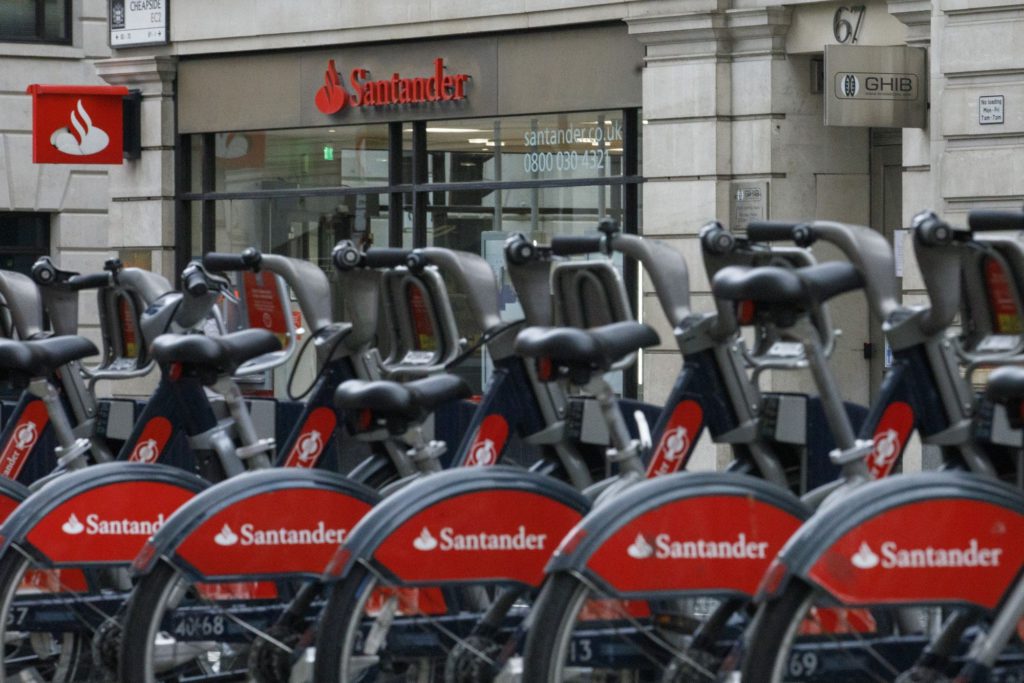
(Bloomberg) — Banco Santander SA hired two London-based investment bankers from Credit Suisse Group AG and Perella Weinberg Partners LP, the latest in a string of appointments aimed at beefing up its advisory business. 

Spain’s biggest lender tapped Alex Andreichuk from Perella Weinberg as a managing director for sustainable technology, and Ishan Kaul from Credit Suisse as head of its telecommunications business in Europe, a spokesperson said in response to questions from Bloomberg News. 

Santander has made a slew of appointments to help bolster business with non-Spanish corporate clients across Europe and in the US. One area the bank is focusing on is advisory for ESG-related deal-making and debt issuance, where it sees an opportunity to become a leading global player. 

As part of its hiring drive, Santander announced in October that it had appointed Carlos Rivero from Guggenheim Securities to a role as head of energy transition and sustainable advisory practice at its investment banking unit in the US. 

In September, it hired Tobias Heilmaier of JPMorgan Chase & Co. as the new head for its corporate and investment banking business in Germany. In August, the bank named Mike Bagguley, a former chief operating officer at Barclays International, to run its global markets division.

Santander is also betting on growing in US fixed-income through the acquisition, announced last year, of brokerage Amherst Pierpoint Securities.

Kaul’s hiring had been reported earlier by eFinancial Careers.

More stories like this are available on bloomberg.com

©2022 Bloomberg L.P.

DoorDash to Slash About 1,250 Jobs to Pare Back Rising Costs

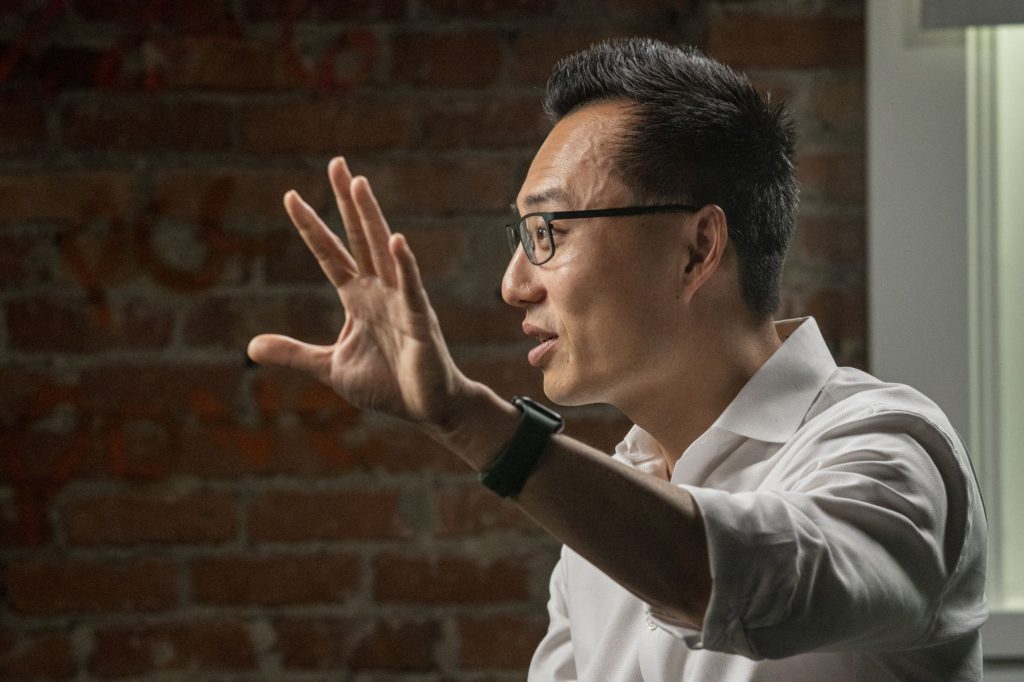
(Bloomberg) — DoorDash Inc. is laying off about 1,250 people in an effort to rein in expenses, according to a company memo from Chief Executive Officer Tony Xu viewed by Bloomberg.

“While our business continues to grow fast, given how quickly we hired, our operating expenses – if left unabated – would continue to outgrow our revenue,” Xu wrote in a letter to staff on Wednesday.

The cuts will affect about 6% of the company’s workforce, a mix of US and non-US based staff, according to people familiar with the matter asking not to be identified as the matter was not yet public. By scaling back headcount, DoorDash aims to curb operating expenses, which topped $2 billion in the third quarter, largely due to stock-based compensation and the absorption of Wolt, the Finnish food-delivery company it acquired last year. 

The San Francisco-based company is the latest technology firm to cut staff amid an uncertain economic outlook; but in contrast to other companies seeing a slowdown in consumer demand due to rising inflation, DoorDash’s order volumes have remained resilient, growing 27% in the third quarter compared with last year and boosting revenue to $1.7 billion.

Xu said DoorDash “will continue to reduce our non-headcount operating expenses, but that alone wouldn’t close the gap. This hard reality ultimately led me to make this painful decision to reduce our team size.”

DoorDash shares jumped as much as 2.5% in premarket trading after news of the cuts. 

The pandemic supercharged consumers’ affinity for takeout when coronavirus lockdowns shuttered indoor dining. DoorDash increased its share of the meal delivery market in the US and garnered 56% of food delivery sales as of September, according to YipitData. But that growth has also come at a cost. Competition in the sector has only intensified and the company has spent heavily to sustain growth by expanding its footprint in non-restaurant categories like convenience store items, groceries and alcohol. Last year, DoorDash spent $8 billion to acquire Wolt to increase its international presence. 

DoorDash reported adjusted earnings before interest, taxes, depreciation and amortization of $87 million in the period ending Sept. 30. The adjusted Ebitda metric strips out expenses like stock-based compensation or non-recurring costs that executives deem to be outside the scope of operations. Under generally accepted accounting principles, however, DoorDash is unprofitable. The company reported a loss of $296 million compared with $101 million a year earlier during the third quarter.

“We must keep this level of discipline moving forward and act with the hunger, efficiency and creativity of the younger startup we once were while leading with the responsibility of the market leader we’ve become,” Xu wrote.

Rising interest rates and the prospect of an economic recession has contributed to a rout in tech stocks, as investors punish companies that have historically prioritized growth over profits. Shares of DoorDash and food-delivery rival Uber Technologies Inc. have fallen 64% and 34%, respectively, so far this year.

(Updates with shares in sixth paragraph)

More stories like this are available on bloomberg.com

©2022 Bloomberg L.P.

Stocks Gain, Dollar Drops as Traders Await Powell: Markets Wrap

(Bloomberg) — US equity futures edged higher, and the dollar slipped for a second day, as investors awaited a speech by Federal Reserve Chair Jerome Powell for signals about the path of interest-rate increases, and assessed prospects for China’s economic reopening.

Contracts on the S&P500 and the Nasdaq 100 posted moderate gains, indicating the underlying indexes could snap a three-day losing streak. In premarket trading, US-listed Chinese stocks were among the biggest gainers, amid signs Beijing is easing some Covid Zero curbs. In Europe, shares climbed the most in more than a week as data showed eurozone inflation slowed for the first time in 1-1/2 years. 

Equities in Europe as well as the US are set for a second straight month of gains, swept higher by optimism that interest rates in major economies may be nearing their peak.

Investors will keep their attention trained later on Powell’s comments on the economy and the labor market. He is widely expected to signal that the next Fed rate hike will step down to 50 basis points, though he will also likely warn that policy tightening has further to run. 

Those hopes of slower interest rate rises, alongside mounting optimism over China’s reopening, pushed the dollar lower and put the greenback on track for its worst month since 2010. Benchmark Treasury 10-year yields slipped and are down more than 25 basis points in November. 

A degree of caution remains among traders before the Fed chair’s remarks, given still-high global inflation and a robust jobs market.   

“The market is hesitating a bit,” Societe Generale strategist Kenneth Broux said. “I would be very surprised if it is a dovish speech.” Some may hold the view that “the dollar has peaked and that the Fed Funds rate will peak at 5%, but I fear Powell will tell them it’s too soon,” he said.

In Asian trading, shares gained and the offshore-traded yuan extended Tuesday’s rally. Traders shrugged off data showing a contraction in China’s factory and services activity and focused on news that authorities were relaxing stringent lockdowns in the manufacturing hub of Guangzhou as well as in Zhengzhou, home to Apple Inc.’s largest manufacturing site in China.

“The market wants to see good news stemming from China’s gently shifting stance towards lockdowns, but the reality is that a full re-opening is still some time away and will be politically tricky to execute,” said James Athey, investment director at Abrdn. 

Oil prices rose for a third day, after industry data pointed to a substantial draw in US crude stockpiles and investors counted down to an OPEC+ meeting that may see the group agree to cut production.

In US premarket trading, Crowdstrike Holdings Inc. sank after the cybersecurity company’s revenue outlook trailed analyst estimates. Hewlett Packard Enterprise Co. gained after its sales forecast surpassed expectations.

Crypto assets rose, with Bitcoin gaining as much as 3.6% to a two-week high.  

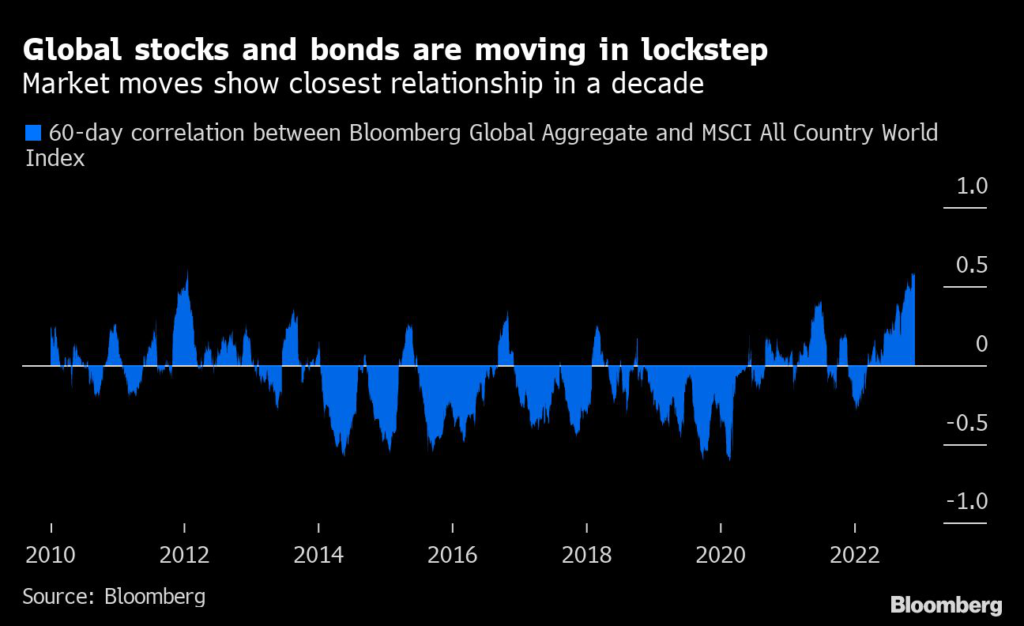
Amid all the recent bumpiness in markets, an index of global stocks was on course for a second monthly advance, while bonds were also poised for a monthly gain. The lockstep moves in stocks and bonds has taken their correlation to highest level since 2012, heaping pressure on investors seeking to hedge risk by splitting their portfolios between the two asset classes. 


Key events this week:

  • EIA crude oil inventory report, Wednesday
  • Fed Chair Jerome Powell speech, Wednesday
  • Fed releases its Beige Book, Wednesday
  • US wholesale inventories, GDP, Wednesday
  • S&P Global PMIs, Thursday
  • US construction spending, consumer income, initial jobless claims, ISM Manufacturing, Thursday
  • BOJ’s Haruhiko Kuroda speaks, Thursday
  • US unemployment, nonfarm payrolls, Friday
  • ECB’s Christine Lagarde speaks, Friday

Some of the main moves in markets:

Stocks

  • Futures on the S&P 500 rose 0.2% as of 7:24 a.m. New York time
  • Futures on the Nasdaq 100 rose 0.4%
  • Futures on the Dow Jones Industrial Average were little changed
  • The Stoxx Europe 600 rose 0.8%
  • The MSCI World index rose 0.3%

Currencies

  • The Bloomberg Dollar Spot Index fell 0.4%
  • The euro rose 0.3% to $1.0362
  • The British pound rose 0.4% to $1.2003
  • The Japanese yen was little changed at 138.65 per dollar

Cryptocurrencies

  • Bitcoin rose 2.5% to $16,872.06
  • Ether rose 3.8% to $1,265.58

Bonds

  • The yield on 10-year Treasuries declined two basis points to 3.72%
  • Germany’s 10-year yield advanced one basis point to 1.93%
  • Britain’s 10-year yield advanced three basis points to 3.13%

Commodities

  • West Texas Intermediate crude rose 2.1% to $79.88 a barrel
  • Gold futures rose 0.8% to $1,777.20 an ounce

This story was produced with the assistance of Bloomberg Automation.

–With assistance from Richard Henderson.

More stories like this are available on bloomberg.com

©2022 Bloomberg L.P.

Close Bitnami banner
Bitnami