Bloomberg

Boohoo Plunges as Online Clothing Retailer Warns of Flat Revenue

(Bloomberg) — Boohoo Group Plc shares plunged after the U.K. online clothing retailer warned that revenue growth may grind to a halt in the first half as cash-strapped consumers return more garments.

The adjusted Ebitda margin will probably be 4% to 7% in the full year, Boohoo also said Wednesday. That implies it will probably weaken from last year’s level of 6.3%. The company forecast full-year sales growth in the low single digits, which is much lower than its historic average. The stock fell as much as 14%.

Selling clothes online is getting tougher as retailers worldwide boosted their e-commerce business during the pandemic. Meanwhile, cut-rate discount upstart SheIn has been having exponential growth, and Inditex SA is trying to keep its sourcing advantages against other retailers. Hennes & Mauritz AB is also attempting to double its revenue by 2030.

“We view Boohoo as vulnerable to further market share loss,” wrote Sherri Malek, an analyst at RBC Europe.

The fast-fashion company slashed its sales projections twice last year as customers coming out of lockdown returned more clothes and the nascent U.S. business was hit by supply chain disruption and freight costs. Boohoo, whose brands include PrettyLittleThing and Nasty Gal, is also recovering from a labor supply scandal in 2020 which sparked governance changes at the e-commerce retailer. 

Read more: Boohoo Defends Standards After Report of Labor Abuse at Supplier

The retailer said it has started a cost-cutting program and is operating with lower levels of inventory. To help tackle the problem of freight costs and delays, the company is looking to source more closely to the U.K.

Boohoo said in March that higher returns rates are expected to continue in the first half as customers buying outfits for special occasions are more likely to send them back than than those shopping for joggers and casual clothing during Covid lockdowns. The retailer said Wednesday that sales growth should pick up in the second half of the year with return rates easing and consumer demand normalizing.

The shares have fallen 35% this year. 

More stories like this are available on bloomberg.com

©2022 Bloomberg L.P.

Indonesia Wealth Fund May Miss Jokowi’s $200-Billion Target

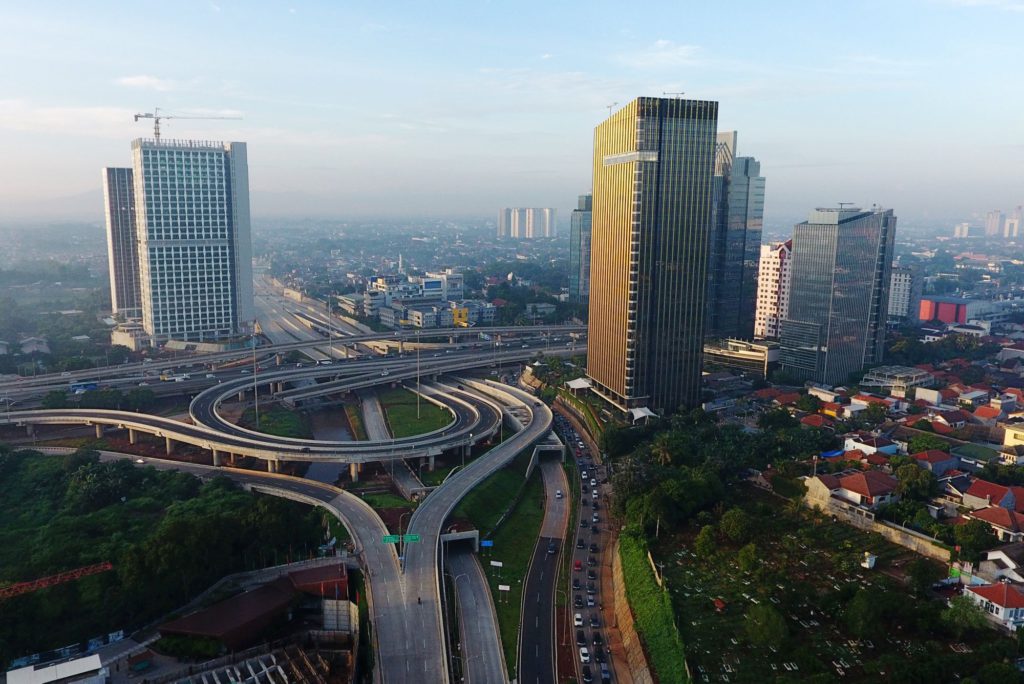
(Bloomberg) — Indonesia’s wealth fund may not reach its $200 billion goal in the time frame set out by the country’s president, as it aims to ensure sufficient returns for the state before making investments, according to its chief executive officer.

“The timing will probably be a bit stretched,” Ridha Wirakusumah said in an interview with Bloomberg Television’s Haslinda Amin on Wednesday. “It also depends if we will be getting in more injections. But the fundamentals are set and the system is ready to go.”

President Joko Widodo set a target for the fund last year to reach $200 billion within two to three years — around April 2024. The fund, known as INA, was established in 2021 with about $15 billion in assets. It was reported to have raised over $25 billion in investments as of March, with contributions from pension fund Caisse de dépôt et placement du Québec and the Abu Dhabi Investment Authority, among others

INA is part Widodo’s strategy to lure more foreign funding to help fulfill his platform of developing much-needed infrastructure in Southeast Asia’s largest economy. Potential investment returns would also augment state coffers after the heavy stimulus spending during the pandemic.

However, bulk of INA’s assets so far remain idle as the board continues to hunt for prudent investment opportunities, amid investor concern over regulatory uncertainty in Indonesia and the corruption scandals that plagued 1MDB in neighboring Malaysia.

“We are on our way, but we will make sure we don’t invest haphazardly,” Wirakusumah said.

1MDB Scandal Casts Pall Over Indonesia Wealth Fund Ambitions (1)

Among the fund’s investments so far include an $800 million stake in Indonesia’s largest telecommunication towers company, as well as a $2.7 billion deal with state builders covering about 20% of the nation’s toll roads.

Going forward, INA is interested in the areas of digital technology, health care and energy, Wirakusumah said. The fund is keen to invest in projects that could replace coal power plants and develop renewables, as well as the booming electric vehicle sector “if the risk-reward is interesting.”

(Updates throughout with background)

More stories like this are available on bloomberg.com

©2022 Bloomberg L.P.

Indonesia Wealth Fund May Miss Jokowi’s $200 Billion Target

(Bloomberg) — Indonesia’s wealth fund may not reach its $200 billion goal in the time frame set out by the country’s president, as it aims to ensure sufficient returns for the state before making investments, according to its chief executive officer.

“The timing will probably be a bit stretched,” Ridha Wirakusumah said in an interview with Bloomberg Television’s Haslinda Amin on Wednesday. “It also depends if we will be getting in more injections. But the fundamentals are set and the system is ready to go.”

President Joko Widodo set a target for the fund last year to reach $200 billion within two to three years — around April 2024. The fund, known as INA, was established in 2021 with about $15 billion in assets. It was reported to have raised over $25 billion in investments as of March, with contributions from pension fund Caisse de dépôt et placement du Québec and the Abu Dhabi Investment Authority, among others

INA is part Widodo’s strategy to lure more foreign funding to help fulfill his platform of developing much-needed infrastructure in Southeast Asia’s largest economy. Potential investment returns would also augment state coffers after the heavy stimulus spending during the pandemic.

However, bulk of INA’s assets so far remain idle as the board continues to hunt for prudent investment opportunities, amid investor concern over regulatory uncertainty in Indonesia and the corruption scandals that plagued 1MDB in neighboring Malaysia.

“We are on our way, but we will make sure we don’t invest haphazardly,” Wirakusumah said.

1MDB Scandal Casts Pall Over Indonesia Wealth Fund Ambitions (1)

Among the fund’s investments so far include an $800 million stake in Indonesia’s largest telecommunication towers company, as well as a $2.7 billion deal with state builders covering about 20% of the nation’s toll roads.

Going forward, INA is interested in the areas of digital technology, health care and energy, Wirakusumah said. The fund is keen to invest in projects that could replace coal power plants and develop renewables, as well as the booming electric vehicle sector “if the risk-reward is interesting.”

(Updates throughout with background)

More stories like this are available on bloomberg.com

©2022 Bloomberg L.P.

Biden Accuses China Trying to Meddle With Competition Bill

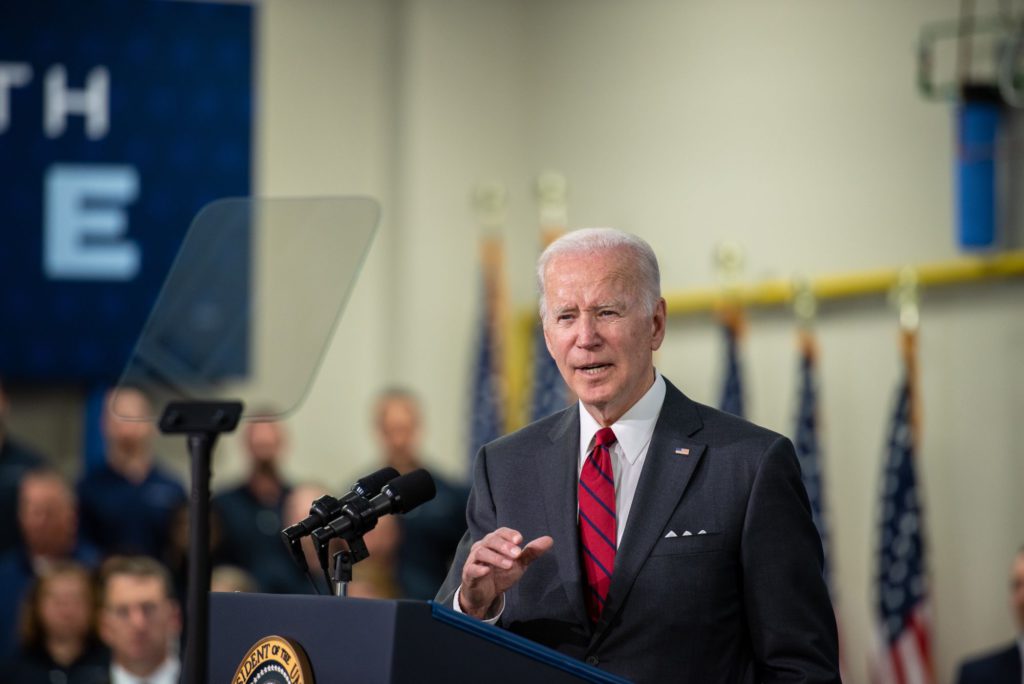
(Bloomberg) — U.S. President Joe Biden accused China of trying to interfere in congressional negotiations over a broad competition bill that would bolster domestic semiconductor manufacturing.

“Fundamentally, this is a national security issue. This is one of the reasons why the Chinese Communist Party is lobbying folks to oppose this bill,” Biden said Tuesday in Troy, Alabama. “And it’s an issue that unites Democrats and Republicans. So, let’s get it done.”

He spoke during a tour of a Lockheed Martin Corp. plant and made the case for passage of the long-stalled legislation. The president cited the more than 200 semiconductors needed to manufacture a Javelin antitank missile, which has been deployed by Ukrainian forces against Russian invaders.

Biden’s comments — made during remarks that centered chiefly on the war in Ukraine — were among his most critical yet toward China’s Communist Party. He often cites past conversations with Chinese President Xi Jinping in which he challenged Xi’s view that democracies cannot deliver for their people. 

The Senate and House could soon begin the formal conference process so the two chambers can reconcile their different versions of the measure, which is intended to strengthen competition with China. While members of both parties support the $52 billion in the legislation for domestic semiconductor manufacturing, they disagree on other provisions and final passage is still months off.

The Chinese Embassy in Washington has been seeking meetings with administration officials, congressional offices, think tanks and companies to gather information about the status of the bill and what provisions were likely to make it to the president’s desk, people familiar with the meeting requests said. Administration officials have all declined the requests, as have many of the congressional offices, according to the people. 

An embassy spokesperson didn’t respond to a request for comment. The White House declined to provide more details of the president’s claim.

Although the Chinese Foreign Ministry has previously said how the U.S. develops “is its own business,” it has rejected what its views as efforts to suppress China’s growth. Foreign Ministry spokesperson Wang Wenbin told a regular news briefing in March that draft provisions of the legislation “exaggerate the ‘China threat theory’” and urged its supporters to to drop their “Cold War, zero-sum mentality.” 

After 15 months in office, the White House has yet to articulate a comprehensive China strategy, including what it would do with respect to economic disputes. U.S. Secretary of State Antony Blinken is set to outline the administration’s policy toward the country in a speech Thursday morning, but people familiar with the plans said he wasn’t expected to lay out any new initiatives or details on the economic front. 

Republicans believe the lack of a China strategy that distinguishes Biden from former President Donald Trump represents a vulnerability for Democrats in the November midterm elections.

Biden Team Splits on New Rules for U.S. Investments in China

U.S. officials for months have been deliberating about potential tariff reduction, new trade probes and the enforcement of Trump’s “phase one” trade deal. Biden’s team continues to be at odds over what to do with hundreds of billions of dollars in existing tariffs on Chinese goods, and has diverging views of whether and how hard to scrutinize U.S. investments into China.

(Updates with China’s previous comments on bill in eighth paragraph)

More stories like this are available on bloomberg.com

©2022 Bloomberg L.P.

North Korea Fires Suspected Ballistic Missile Into Eastern Sea

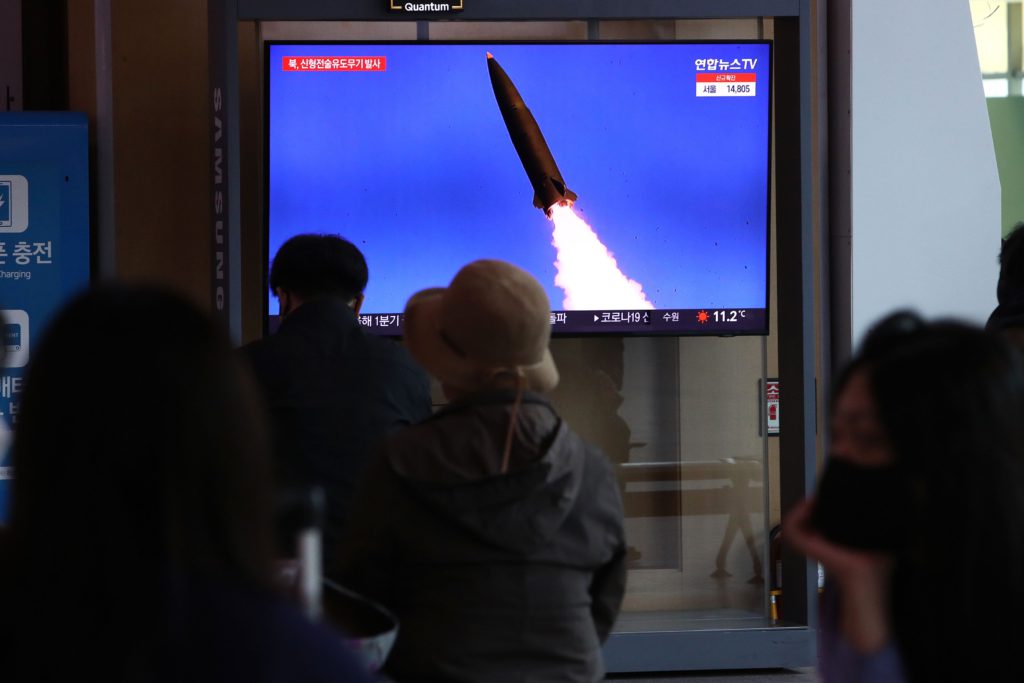
(Bloomberg) — North Korea fired a possible mid- to long-range ballistic missile into the sea off its eastern coast, the Yonhap New Agency said, after Kim Jong Un pledged to accelerate the development of his nuclear program. 

The projectile was launched from a Pyongyang-area site near where Kim in March test-launched his first intercontinental ballistic missile in more than four years, Yonhap said, without citing anyone. The launch was separately confirmed by the South Korean and Japanese governments, with Japan’s Coast Guard saying the projectile was probably a ballistic missile. 

The launch comes after Kim vowed at a military parade last week in Pyongyang to speed up the development of his weapons program. U.S. President Joe Biden is expected to make his first visit to Seoul as president later this month, after months of failed overtures to Pyongyang to restart talks. 

“North Korea seems to have resumed its martial protests before Biden’s visit to South Korea later this month and as U.S. deploys its strategic assets around the Korean Peninsula,” said Cheon Seong-whun, a former security strategy secretary for South Korea’s presidential office. 

In late March, North Korea fired an ICBM that reached an altitude of 6,200 kilometers (3,900 miles) and traveled 1,080 kilometers to splash down in the sea to the west of Japan, which was higher and farther than North Korea’s last successful ICBM test in November 2017.

North Korea tried to deceive the world about the type of missile it fired, claiming that it successfully tested a “huge,” new ICBM while actually firing off the same rocket launched four years earlier, South Korean defense officials said.

Kim Jong Un Lied About Firing Newer Version of ICBM, Seoul Says

North Korea claimed it fired a Hwasong-17, which is first unveiled in an October 2020 military parade. Weapons experts described it as the world’s largest road-mobile ICBM and it appeared designed to carry a payload of multiple nuclear warheads to the U.S. mainland. 

South Korea said its neighbor likely fired off a Hwasong-15 on March 24, which is thought to be able to deliver a single warhead to all of the U.S. mainland, after a failed launch on March 16 of a Hwasong-17.

On April 17, it fired two projectiles that flew about 110 kms, which Pyongyang said were a new type of tactical guided weapon. The range was far less than that of its short-range ballistic missiles.

North Korea Test Fires Missiles Ahead of U.S.-S. Korea Drills

Over the past several months, Kim’s regime has tested a variety of missiles designed to evade U.S.-operated interceptors and increase the threat of a credible nuclear strike against the U.S. and its allies in Asia. 

Biden is scheduled to visit South Korea on May 20. Any display of the weapons in Kim’s nuclear arsenal would serve as a reminder of the pressing security problems posed by Pyongyang that have simmered as his administration has been focused on Russia’s invasion of Ukraine.

Kim enacted a self-imposed moratorium on tests of nuclear devices and intercontinental ballistic missiles that could deliver a warhead to the U.S. mainland to facilitate talks with then President Donald Trump in 2018. The two met three times and their discussions resulted in no tangible steps to wind down Pyongyang’s atomic arsenal — which only grew larger as their talks sputtered.

How Kim Jong Un Keeps Advancing His Nuclear Program: QuickTake

Satellite imagery indicates Pyongyang has been restoring tunnels at the Punggye-ri site where it conducted all six of its previous nuclear tests, in what could be the harbinger of an imminent test of an atomic device. 

More stories like this are available on bloomberg.com

©2022 Bloomberg L.P.

Indonesia Wealth Fund CEO Says $200 Billion Timing ‘Stretched’

(Bloomberg) — Indonesia’s wealth fund may not reach its $200 billion goal in the time frame set out by the country’s president, as it aims to ensure sufficient returns for the state before making investments, according to its chief executive officer.

“The timing will probably be a bit stretched,” Ridha Wirakusumah said in an interview with Bloomberg Television’s Haslinda Amin on Wednesday. “It also depends if we will be getting in more injections. But the fundamentals are set and the system is ready to go.”

President Joko Widodo set a target for the fund last year to reach $200 billion within two to three years — around April 2024. The fund, known as INA, was established last year with about $15 billion in assets, and was reported to have raised over $25 billion in investments as of March.

Following its investments in toll roads and telecommunication towers, INA is interested in the areas of digital technology, health care and energy, Wirakusumah said. The fund is keen to invest in projects that could replace coal power plants and develop renewables, as well as the booming electric vehicle sector “if the risk-reward is interesting.”

More stories like this are available on bloomberg.com

©2022 Bloomberg L.P.

Singapore’s Temasek Sees China Growth Reviving in Second Half

(Bloomberg) — Singapore’s state-owned investor Temasek Holdings Pte. expects Chinese growth to rebound in the second half as the government stimulates the economy, according to Chief Investment Officer Rohit Sipahimalani.

“We are close to the trough, so a very different stage in the cycle,” he told Bloomberg Television. “I would see growth on the rise in the second half of this year as against a decline in the U.S. and Europe.”

Speaking on the sidelines of the Milken Institute’s Global Conference in Los Angeles on Tuesday, Sipahimalani admitted the firm’s investment in ride hailing firm Didi Global Inc. had not been good from a stock price perspective. But he continues to be bullish on the broader market and some of its tech companies pending clarity from the government.

Temasek had S$381 billion ($275.2 billion) in assets under management as of March 2021 including investments in China, which has struggled with Covid-19 crackdowns among other macro factors.

The firm has steadily cut its positions in Chinese technology giants such as Alibaba Group Holding Ltd. and Didi over the past year, while also suffering losses in the country’s online education space.

The U.S. Securities and Exchange Commission is investigating Didi’s chaotic 2021 debut in New York, when the ride-hailing giant raised $4.4 billion days before revelations of a Chinese probe into data security tanked the stock.

Around 27% of Temasek’s holdings are based in China – the single largest geography for its holdings ahead of its home country of Singapore.  The firm is due to speak about its annual results for the year ending March 31, 2022 by July.

“A lot of companies in the Chinese internet space have been beaten down a lot and I think over the next few months just based on the announcements we will have more clarity in policy around them,” he said. “In some of those cases there’ll be very attractive opportunities to invest in them.”


More stories like this are available on bloomberg.com

©2022 Bloomberg L.P.

Musk Suggests ‘Slight Cost’ for Twitter Commercial Users

(Bloomberg) — Twitter will always remain free for “casual users” but government and commercial users may see a “slight cost” to stay on the social media platform, the company’s would-be owner Elon Musk said in a tweet Tuesday.

Elon Musk Plans to List Twitter Again Within a Few Years: DJ (1)

To view the source of this information click here

More stories like this are available on bloomberg.com

©2022 Bloomberg L.P.

Coinbase Ends M&A Talks With Brazilian Crypto Firm 2TM

(Bloomberg) — Coinbase Global Inc. and 2TM Participacoes SA scrapped talks over a possible purchase by the exchange of the Brazilian cryptocurrency brokerage, people familiar with the matter said.

The negotiations, which 2TM had hired JPMorgan Chase & Co. to advise in, could have resulted in a controlling acquisition or a minority stake sale. 2TM declined to comment on the deal. 

Coinbase is “committed to the Brazilian market and has local tech and business leadership in place,” a company spokesperson said in a statement. The U.S. crypto exchange hired former Uber and PicPay executive Fábio Tonetto Plein as a country director for Brazil last week and is expanding local hiring there. 

The 2TM deal would have helped Coinbase’s push into international expansion, which it believes will help it generate more active users. The crypto exchange is also reportedly in talks to buy Turkish crypto exchange BtcTurk.

2TM raised $50 million in November from investors including 10T Holdings, a U.S. private equity firm focused on the digital asset ecosystem, and Tribe Capital, a San Francisco-based venture capital fund. It also secured a $200 million capitalization from the Softbank Latin America Fund in July that valued the company at $2.1 billion, making it the second crypto unicorn in Latin America. 

The company is most known for being the parent of Mercado Bitcoin SA, the first crypto brokerage firm in Brazil. 

Coinbase’s stock closed at $123.56 on Tuesday, up almost 2% from a day earlier.

More stories like this are available on bloomberg.com

©2022 Bloomberg L.P.

Airbnb Sees ‘Substantial Demand’ for Travel as Outlook Tops Estimates

(Bloomberg) — Airbnb Inc. gave a forecast for revenue in the current quarter that easily surpassed Wall Street’s estimates as the company sees “substantial demand” for travel heading into the busy summer season after more than two years of Covid-19 restrictions. Shares gained about 6% in extended trading.

Second-quarter revenue will be $2.03 billion to $2.13 billion. That topped the average analyst’s estimate of $1.97 billion, according to data compiled by Bloomberg. Revenue in the first three months of the year was also better than expected, helping significantly narrow the net loss at the vacation home rental platform.

“As we lap the beginning of the travel rebound that started last year, we are particularly encouraged by the compounding growth we are seeing in North America,” Chief Executive Officer Brian Chesky wrote in a letter to shareholders. “U.S. domestic demand this year has so far outpaced our internal expectations and we are encouraged by U.S. international bookings exceeding 2019 levels.” 

Chesky also said Airbnb is seeing “higher than historical demand” for the fourth quarter, “which indicates that consumer confidence to travel remains strong beyond the summer months.”

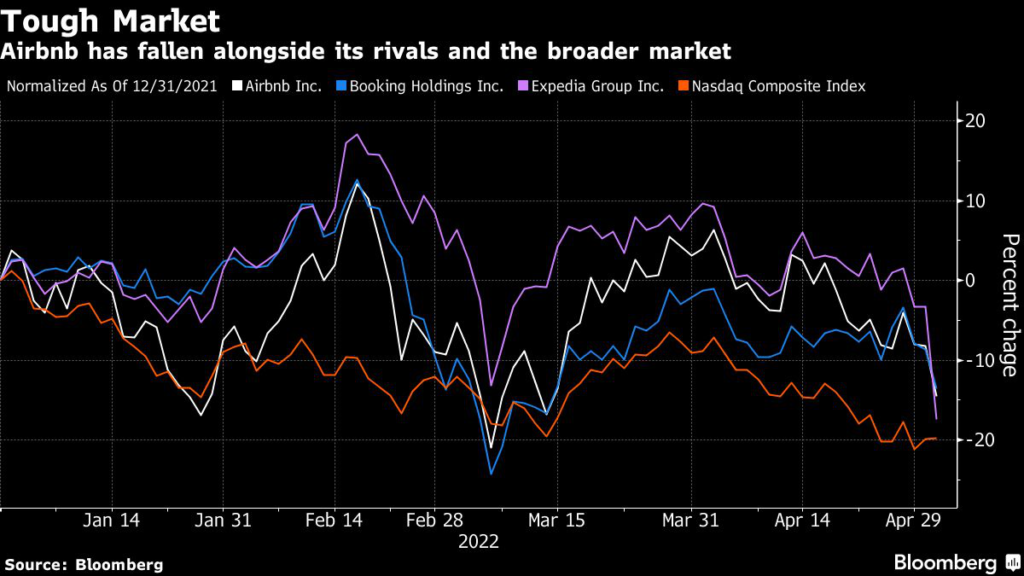
Airbnb, along with its rivals Expedia Group Inc. and Booking Holdings Inc., have said they expect this summer to be one of the best the industry has ever seen, as travelers unleash pent-up demand and head to far-flung destinations and tourist hot spots. That vision was threatened earlier this year with the resurgent omicron Covid-19 variant and the break out of war in Ukraine, yet industry executives have remained unfailingly optimistic. 

There are positive signs that people are itching to travel. For example, United Airlines Holdings Inc. is boosting capacity for transatlantic flights and Southwest Airlines Co. said it expects to be profitable for the remaining three quarters of the year, even with oil prices well over $100 a barrel. 

In Expedia’s earnings report on Monday, which showed an 80% jump in revenue in the first quarter, CEO Peter Kern said he’s “feeling very good about a summer recovery that should be very robust.”

Despite reporting results that were in line with analysts’ estimates, Expedia shares fell 17%, the most since March 2020 as concern about inflation, which is running at its hottest in nearly four decades, and the risk for recession begins to cloud the vision. Travel companies from hotels to airlines have been saying consumers are willing to pay the rising prices so far, but there appears to be a limit. Hilton Worldwide Holdings Inc. gave a profit forecast that fell short of analysts’ expectations. 


The news from Hilton and Expedia weighed on travel stocks on Tuesday, sending Airbnb shares down 5% to close at $145. Booking, which reports results on Wednesday, fell 4%. After releasing earnings, Airbnb stock jumped to a high of $157 in extended trading.

Airbnb has managed to weather the pandemic and even thrive, achieving the best year in the company’s history in 2021, as it claims a “new world of travel” has emerged. The flexibility offered by new remote work policies has resulted in people spreading out to thousands of towns and cities, staying for weeks, months, or even entire seasons at a time, Chesky said. 

“So far from what I can tell, you’re still seeing improvements versus 2019 levels across European and U.S. geographies,” Justin Patterson, an analyst with Keybanc Capital Markets, said in an interview before the results were released. “What I can tell today, the demand for travel has not weakened in the U.S. or Europe.”

San Francisco-based Airbnb said first-quarter revenue increased 70% to $1.51 billion, surpassing the average analyst estimate of $1.45 billion. The company reported a net loss of $19 million compared with a loss of $1.2 billion a year ago. The loss per share was 3 cents, while analysts had projected a loss of 29 cents. 

The number of nights and experiences booked surpassed pre-pandemic levels in the first quarter, rising 59% to 102.1 million and exceeding 100 million for the first time. Daily rates also increased, bringing gross booking value to $17.2 billion while analysts had forecast $15.9 billion.

Earlier this year, Chesky himself began “living” on Airbnb and staying in rentals around the country for a few weeks at a time to help improve the experience of people who can now live anywhere. Mirroring the trends of its customers, Airbnb said last week that its employees would be permanently able to work from anywhere — including their home, the office or while traveling in different countries. 

(Updates with trading in the ninth paragraph.)

More stories like this are available on bloomberg.com

©2022 Bloomberg L.P.

Close Bitnami banner
Bitnami