Bloomberg

China Tech Stocks Fall as Policy Jitters Outweigh Support Vows

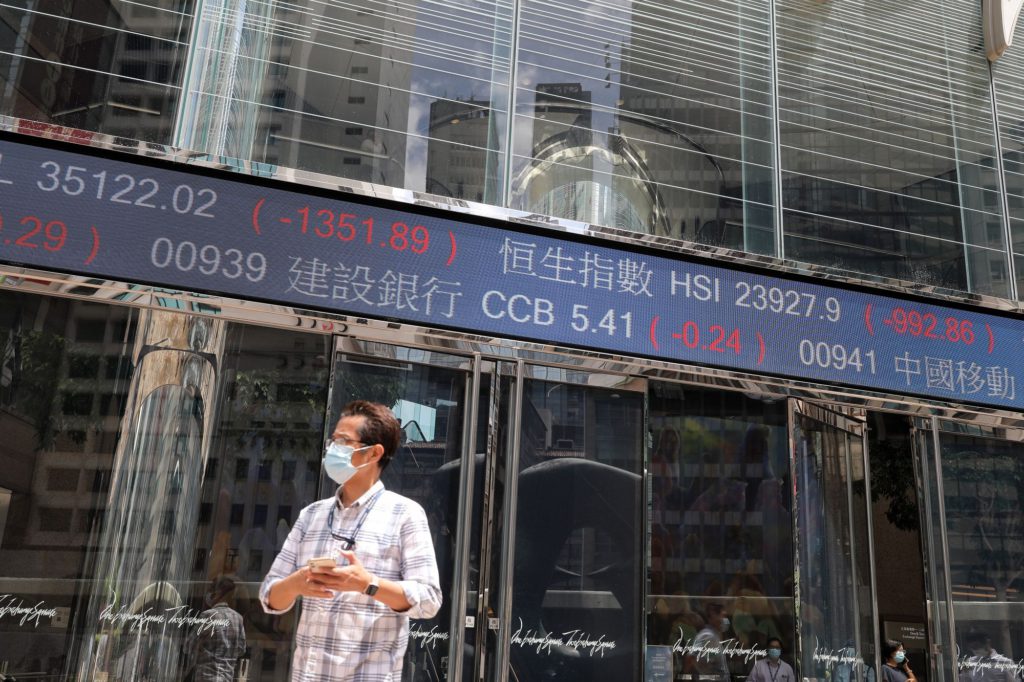
(Bloomberg) — China’s tech stocks fell after a volatile open on Tuesday, as traders weighed policy vows to rescue a slumping economy against the risk of fresh regulatory pressures on the sector.

The Hang Seng Tech Index slid 1.4% in Hong Kong, after fluctuating between losses of as much as 4.6% and a flat reading. The initial market slump was triggered by traders selling off Alibaba Group Holding Ltd. following a report that an individual surnamed Ma had been issued new curbs.

Shares of the tech giant shortly pared the majority of its losses to close 1.8% lower, as reports later showed the accused person’s name covered three characters, as opposed to Alibaba co-founder Jack Ma’s two-character Chinese name. Global Times said the person in question works as the director of hardware research and development at an IT company, further quelling speculation over Alibaba.


The episode highlights just how anxious investors remain in the once-mighty tech sector after Beijing’s yearlong clampdown on nearly every corner of the internet sphere. The knee-jerk selling earlier in the day came despite Beijing’s repeated promises to take a softer stance on tech firms. 

READ: Alibaba Recovers After Report on ‘Ma’ Briefly Erased $26 Billion

People were concerned about the possibility that Jack Ma is the person in the news, said Steven Leung, executive director at UOB Kay Hian. “The whole technology sector is falling partly due to this sensitive news.”   

JD.com Inc. and Xiaomi Corp. were the biggest drags on the Hang Seng Tech Index as traders returned after the holiday on Monday. Meanwhile, the Hang Seng Index eked out a 0.1% gain after early losses, managing to advance for the fifth straight session. 

Tuesday’s fluctuation in stocks stands in contrast to the stunning gains recorded last week, including a 10% surge in Hong Kong’s tech gauge, as traders cheered the Politburo’s vows of support for the economy and platform firms.

However, that optimism is being tested as the latest developments darken the outlook again, including a contraction in Chinese activity and an increase in Covid-19 restrictions in Beijing. 

READ: Bets of Easing Crackdown Spur Dizzying Jump in China Tech Stocks

Beijing is deploying an increasingly hardcore playbook to contain its nascent Covid-19 outbreak, from repeat testing of most residents to barring access to public places without a negative result. Financial markets in the mainland will remain closed through Wednesday for the Labor day holiday.     

More stories like this are available on bloomberg.com

©2022 Bloomberg L.P.

Uber Partners With Tesco for Fast Grocery Delivery in the U.K.

(Bloomberg) —

Uber Technologies Inc. is partnering with Tesco Plc to advance high-speed delivery at the U.K.’s largest grocer. 

As part of the deal, the network of Uber Eats couriers will also fulfill orders from Tesco.com and the retailer’s app, Uber said Tuesday. The partnership will start in 20 stores across the U.K. from Edinburgh to Portsmouth and will guarantee delivery within one hour.

Traditional grocers in Britain are increasingly trying to team up with delivery firms as shopping habits change and consumers demand ever-faster delivery of goods. Tesco is already working with Gorillas Technologies GmbH and testing out 10-minute deliveries from a handful of supermarkets.

Tesco started its Whoosh e-commerce service last year to deliver orders from the Express format within 60 minutes and since then it has grown to 200 shops. The company plans to expand that to 600 stores by the end of this year.


More stories like this are available on bloomberg.com

©2022 Bloomberg L.P.

Alibaba Recovers After Report on ‘Ma’ Briefly Erased $26 Billion

(Bloomberg) — A brief bout of concern about the fate of Alibaba Group Holding Ltd. co-founder Jack Ma triggered wild swings in shares of the e-commerce company on Tuesday, underscoring continued investor anxiety toward China’s tech sector after a year-long crackdown.

Alibaba plunged as much as 9.4% in Hong Kong, erasing about $26 billion of market value, after state broadcaster CCTV reported that authorities in the company’s home base of Hangzhou had imposed curbs on an individual surnamed Ma.

The stock erased the majority of those losses after a statement from Hangzhou police indicated the accused person’s name was spelled with three Chinese characters. Jack Ma’s Chinese name is the two-character Ma Yun.

Investors’ reaction “shows the relatively weak sentiment in the tech space,” said Willer Chen, analyst at Forsyth Barr Asia Ltd. “I think the market is just a bit too sensitive on this.” 

The accused person works as the director of hardware research and development at an IT company, the state-run Global Times reported, citing unidentified sources. CCTV said the person was placed under so-called “compulsory measures” on April 25 after being accused of inciting subversion of state power and other activities that endangered national security.

CCTV’s two-sentence report, later updated to indicate a third character in the accused person’s name, rattled investors already on edge over Beijing’s clampdown over every corner of the internet sphere, which kicked off by targeting Jack Ma. Regulators halted the IPO of his Ant Group Co. before waging a campaign to rein in alleged abuses and excesses by increasingly powerful internet firms. 

Chinese authorities in the city of Hangzhou, where both Alibaba and Ant are based, were unavailable for comment during the Golden Week holiday. Representatives for Alibaba and Ant didn’t immediately respond to requests for comment.

Alibaba shares were down 0.2% to HK$101.90 at 1:23 p.m. in Hong Kong. The firm’s dollar bonds were also little changed after a morning selloff.

(Updates with quote in fourth paragraph and adds line on dollar bonds in last paragraph)

More stories like this are available on bloomberg.com

©2022 Bloomberg L.P.

Sandbox AQ Gets Backing From CIA’s Venture Arm

(Bloomberg) — The Central Intelligence Agency’s venture capital firm has invested in Sandbox AQ, a Google software spinoff that is focused on harnessing artificial intelligence and quantum science.

The CIA’s In-Q-Tel was joined by Paladin Capital Group, which backs innovative tech companies, in Sandbox AQ’s first round of fundraising. The round — which was oversubscribed — has garnered “well into the nine figures,” Sandbox AQ Chief Executive Officer Jack Hidary said in an interview.

Founded in 2016, Sandbox AQ was spun off from Alphabet Inc.’s Google earlier this month and is chaired by Eric Schmidt, the search giant’s former CEO. Instead of making a quantum computer of its own, Sandbox AQ seeks to develop software architecture that can replace existing cryptography with complex new algorithms that are deemed impossible to crack by quantum computers, a nascent technology that isn’t yet operationally viable. 

Steve Bowsher, president of In-Q-Tel, said the aim of the equity stake was to develop new encryption software that could resist the prospect of code-cracking by emergent quantum computing, as well as quantum sensors and other products. 

“We want them to be able to sell into the U.S. government,” Bowsher said in an interview. He added the venture firm had spent the past few weeks introducing Sandbox AQ’s work to some of the eight U.S. intelligence agencies that it works with, which include the National Security Agency, Federal Bureau of Investigation and CIA.

Bowsher said In-Q-Tel invests in about 30 companies a year. About 40%-45% of the technologies from the 600 companies it has invested in since its genesis in 1999 have gone on to be adopted by U.S. intelligence agencies, he added.

Paladin Capital Chief Investment Officer Chris Steed predicted Sandbox AQ could come to dominate a market that would be worth tens of billions of dollars. Industry analysts IQT Research estimated last year the market for post-quantum cryptography will grow to $2.3 billion by 2026 and $7.6 billion by 2030.

‘Hardware Miracles’

In-Q-Tel and Paladin’s backing would allow Sandbox AQ to develop relationships to work closely with U.S. and allied governments on roll out, said Hidary. While it was “wonderful” to have early-mover advantage, the strength of its software, expert team of more than 55 people and alliances were more critical for success, he added. 

Scientists differ over when a breakthrough in quantum computing might arrive, with estimates spanning five to 50 years — or never at all. 

Joe Altepeter, who manages a quantum research program at the Pentagon’s Defense Advanced Research Projects Agency, said last month there was a lot of “hype” over industry claims about the arrival of quantum computing, which has drawn billions of dollars in investment, though several “hardware miracles” still stand in the way. 

While there was “definitely still a possibility that quantum ultimately doesn’t develop” and so the problem would never manifest, Bowsher said it was important to prepare in advance “because you don’t want to be caught flat-footed.” 

He added that it was hard to know how close China, which is investing billions of dollars into quantum research, might be to cracking public-key encryption. “If you wait until then, it would be too late,” he said.

Experts warn encrypted data that is stolen and stockpiled en masse could be cracked at scale as soon as quantum computing comes online. That could risk troves of commercial and government secrets, some of which remain classified for 25 years or far longer.

Theoretical Threats

Wary of the coming threat, the Biden administration in January tasked national security systems to come up with transition plans to help defend against the theoretical threat to public-key encryption posed by the arrival of quantum computers. 

The National Institute of Standards and Technology, known as NIST, is seeking to select new quantum-proof encryption algorithms from seven finalists shortly as part of a global competition. Two of the shortlisted algorithms come from the team behind PQShield, an Oxford University spinoff that also offers post-quantum cryptographic software. Winners will be slotted into Sandbox AQ’s and other companies’ software architecture. 

Sandbox AQ has also newly formed partnerships with Ernst & Young and Deloitte to offer services to thousands of their customers, including initially an inventory of existing software. Financial, pharmaceutical and telecommunications companies, which have some of the most sensitive data to protect, are likely to be at the forefront of efforts to create a new marketplace in post-quantum cryptography. 

“We’re not being alarmist and saying you need to change everything today,” said Colin Soutar, who leads cyber strategy at Deloitte Risk & Financial Advisory. “But I do want to say that organizations should start taking a prudent look at what they have.” 

Some in the private sector are already taking the plunge. Mount Sinai Health System in New York and its 7,000 physicians became a customer of Sandbox AQ’s discovery services last month, said Chief Information Officer Kristin Myers. That will enable the healthcare company, which has revenue of $9.3 billion a year, to review all the software it would need to update to prepare for post-quantum cryptography, before determining if it will go ahead with the transition. 

“I think this is the way the industry will go, especially in the next five years,” Myers said, adding she took the step to safeguard patient confidentiality.

(Updates with more details from Bowsher in sixth paragraph. A previous version was corrected to reflect the funding round had closed.)

More stories like this are available on bloomberg.com

©2022 Bloomberg L.P.

Sandbox AQ Gets Backing From CIA’s Venture Capital Arm

(Bloomberg) — The Central Intelligence Agency’s venture capital firm has invested in Sandbox AQ, a Google software spinoff that is focused on harnessing artificial intelligence and quantum science.

The CIA’s In-Q-Tel was joined by Paladin Capital Group, which backs innovative tech companies, in Sandbox AQ’s first round of fundraising. The round — which was oversubscribed — has garnered “well into the nine figures,” Sandbox AQ Chief Executive Officer Jack Hidary said in an interview.

Founded in 2016, Sandbox AQ was spun off from Alphabet Inc.’s Google earlier this month and is chaired by Eric Schmidt, the search giant’s former CEO. Instead of making a quantum computer of its own, Sandbox AQ seeks to develop software architecture that can replace existing cryptography with complex new algorithms that are deemed impossible to crack by quantum computers, a nascent technology that isn’t yet operationally viable. 

Steve Bowsher, president of In-Q-Tel, said the aim of the equity stake was to develop new encryption software that could resist the prospect of code-cracking by emergent quantum computing, as well as quantum sensors and other products. 

“We want them to be able to sell into the U.S. government,” Bowsher said in an interview. He added the venture firm had spent the past few weeks introducing Sandbox AQ’s work to some of the eight U.S. intelligence agencies that it works with, which include the National Security Agency, Federal Bureau of Investigation and CIA.

Bowsher said In-Q-Tel invests in about 30 companies a year. About 40%-45% of the technologies from the 600 companies it has invested in since its genesis in 1999 have gone on to be adopted by U.S. intelligence agencies, he added.

Paladin Capital Chief Investment Officer Chris Steed predicted Sandbox AQ could come to dominate a market that would be worth tens of billions of dollars. Industry analysts IQT Research estimated last year the market for post-quantum cryptography will grow to $2.3 billion by 2026 and $7.6 billion by 2030.

‘Hardware Miracles’

In-Q-Tel and Paladin’s backing would allow Sandbox AQ to develop relationships to work closely with U.S. and allied governments on roll out, said Hidary. While it was “wonderful” to have early-mover advantage, the strength of its software, expert team of more than 55 people and alliances were more critical for success, he added. 

Scientists differ over when a breakthrough in quantum computing might arrive, with estimates spanning five to 50 years — or never at all. 

Joe Altepeter, who manages a quantum research program at the Pentagon’s Defense Advanced Research Projects Agency, said last month there was a lot of “hype” over industry claims about the arrival of quantum computing, which has drawn billions of dollars in investment, though several “hardware miracles” still stand in the way. 

While there was “definitely still a possibility that quantum ultimately doesn’t develop” and so the problem would never manifest, Bowsher said it was important to prepare in advance “because you don’t want to be caught flat-footed.” 

He added that it was hard to know how close China, which is investing billions of dollars into quantum research, might be to cracking public-key encryption. “If you wait until then, it would be too late,” he said.

Experts warn encrypted data that is stolen and stockpiled en masse could be cracked at scale as soon as quantum computing comes online. That could risk troves of commercial and government secrets, some of which remain classified for 25 years or far longer.

Theoretical Threats

Wary of the coming threat, the Biden administration in January tasked national security systems to come up with transition plans to help defend against the theoretical threat to public-key encryption posed by the arrival of quantum computers. 

The National Institute of Standards and Technology, known as NIST, is seeking to select new quantum-proof encryption algorithms from seven finalists shortly as part of a global competition. Two of the shortlisted algorithms come from the team behind PQShield, an Oxford University spinoff that also offers post-quantum cryptographic software. Winners will be slotted into Sandbox AQ’s and other companies’ software architecture. 

Sandbox AQ has also newly formed partnerships with Ernst & Young and Deloitte to offer services to thousands of their customers, including initially an inventory of existing software. Financial, pharmaceutical and telecommunications companies, which have some of the most sensitive data to protect, are likely to be at the forefront of efforts to create a new marketplace in post-quantum cryptography. 

“We’re not being alarmist and saying you need to change everything today,” said Colin Soutar, who leads cyber strategy at Deloitte Risk & Financial Advisory. “But I do want to say that organizations should start taking a prudent look at what they have.” 

Some in the private sector are already taking the plunge. Mount Sinai Health System in New York and its 7,000 physicians became a customer of Sandbox AQ’s discovery services last month, said Chief Information Officer Kristin Myers. That will enable the healthcare company, which has revenue of $9.3 billion a year, to review all the software it would need to update to prepare for post-quantum cryptography, before determining if it will go ahead with the transition. 

“I think this is the way the industry will go, especially in the next five years,” Myers said, adding she took the step to safeguard patient confidentiality.

(Updates with more details from Bowsher in sixth paragraph. A previous version was corrected to reflect the funding round had closed.)

More stories like this are available on bloomberg.com

©2022 Bloomberg L.P.

Japan PM Dashes South Korean Hope He Would Attend Inauguration

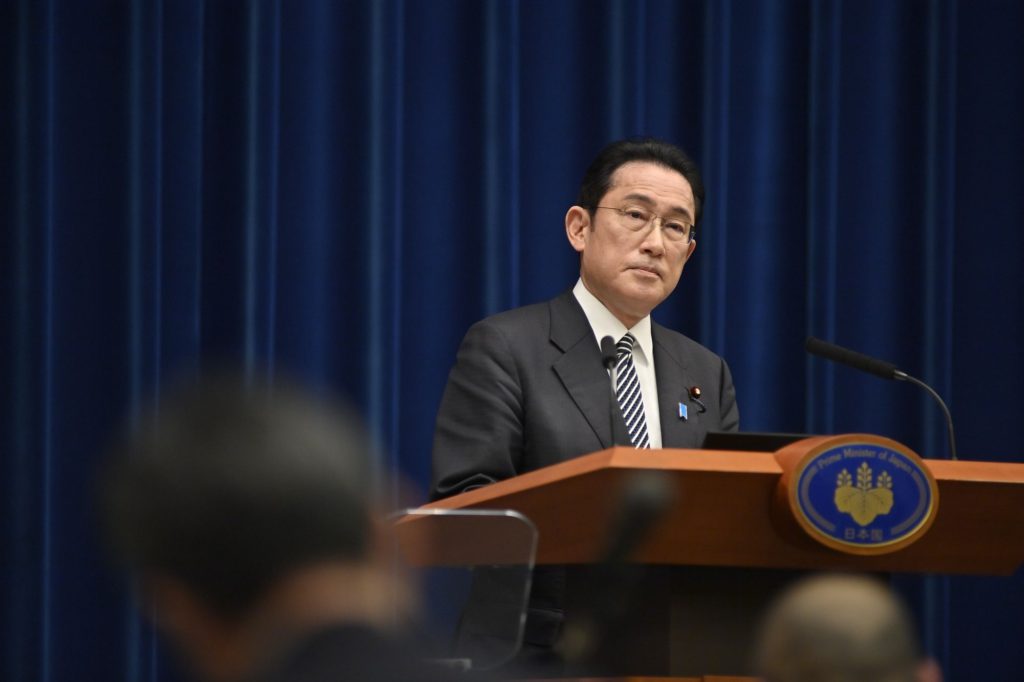
(Bloomberg) — Japanese Prime Minister Fumio Kishida is dispatching his foreign minister to attend the inauguration next week of South Korea’s new president, who had been seeking the premier’s attendance as a symbol of putting troubled ties on a more stable course.

Kishida will send Foreign Minister Yoshimasa Hayashi to attend the swearing in ceremony for South Korean President-elect Yoon Suk Yeol, Japan’s Asahi newspaper and other media reported Tuesday, citing unnamed government sources. Yoon’s office did not immediately respond to requests for comments, adding it does not comment on individual reports.

Jin Chang-soo, an expert on Japan at South Korea’s state-funded Sejong Institute think tank, said that although Yoon’s camp would have rather have Kishida attend, it would still consider Hayashi’s visit as a sign of Tokyo’s will to set a new course in relations. 

“Hayashi’s talks with the new South Korean top officials may be the beginning of the two countries mending ties,” Jin said.

Soon after taking office, Yoon will be meeting U.S. President Joe Biden, who will be on a trip to the region from May 20-24 that also takes him to Japan for talks with Kishida. Warming ties between the two U.S. allies would be a welcome development for Biden as he seeks their cooperation to counter security threats posed by China and North Korea, while securing supply chains for key goods such as semiconductors free from interference from Beijing.

Yoon, a conservative, has signaled he wants to take a hawkish diplomatic course, which would also be in line with some of the security priorities of Kishida’s conservative government. The new leadership in Seoul may offer a chance to inch back relations to something more like normal, with the war in Ukraine providing a reminder to both countries of their reliance on their mutual ally amid growing regional threats.

It had been the tradition for Japanese premiers to attend South Korean presidential inaugurations until political acrimony led Japan’s premier to skip the inauguration of former President Park Geun-hye in 2013. 

Relations had deteriorated to their worst state in decades under Yoon’s predecessor, President Moon Jae-in, due to disputes related to Japan’s 1910-1945 colonial rule over the Korean Peninsula. In a bid to break the ice, Yoon dispatched a delegation of lawmakers and policy experts to Japan in late April that met with Kishida and sought to have him attend the ceremony.

In a reminder of the simmering tensions, a district court in South Korea last week ordered the sale of patent held by Mitsubishi Heavy Industries Ltd. to pay compensation to a Korean woman in a case related to conscripted workers at factories during the colonial period, Kyodo News reported Tuesday, citing a lawyer for the plaintiff.

A series of decisions by South Korean courts under Moon ordering compensation for Koreans forced to work at Japanese mines and factories during the colonial period — and women trafficked in Japanese military brothels — led to strains in security cooperation and trade ties between the two countries that host the bulk of U.S. troops in the region.

Japan has said all matters of compensation have been settled decades ago by a treaty between the two while Moon’s government argues Tokyo hasn’t done enough to properly atone. Due to procedural matters in these cases, any decision by a court could take months, if not years, to actually be implemented.

Yoon’s camp has indicated it may seek a two-track approach with Japan — trying to improve cooperation on security, while pressing Tokyo to show what Seoul sees as greater accountability for widespread harm to millions of Koreans before and during World War II.


More stories like this are available on bloomberg.com

©2022 Bloomberg L.P.

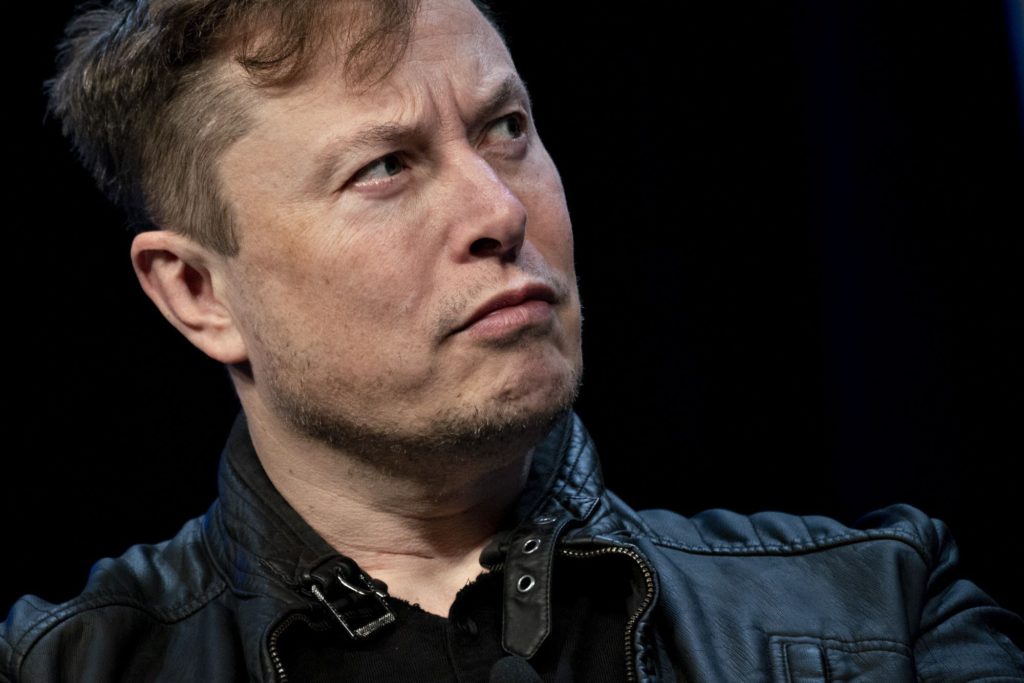
Musk’s Grand Vision for Twitter Faces Reality Check in Asia

(Bloomberg) — For all the furor about which way Elon Musk might tilt U.S. political discourse after getting the keys to Twitter Inc., his biggest challenges may emerge across the Pacific.

Asia, home to more than half the world’s population, is Twitter’s biggest growth opportunity and arguably a far thornier challenge. If the Tesla Inc. and SpaceX billionaire makes good on promises to scrap censorship, he’ll encounter a plethora of perplexing regulations, wielded by sometimes authoritarian governments, pushed to the limits by a horde of first-time internet users. 

The numbers alone suggest Musk’s biggest headaches lie abroad. Twitter’s monetizable daily active users numbered 179 million internationally — dwarfing the 38 million in the U.S. in 2021, according to its latest annual report. 

As a public company, Twitter has repeatedly emphasized it must abide by local regulations. Once it’s a private concern controlled by the world’s richest man, Musk will personally shoulder responsibility for navigating that thicket — and the fallout if he fails.

“Asia has the potential to make or break the new Twitter,” said JJ Rose, a contributor to Australia’s nonpartisan Lowy Institute think tank. “It will depend on how he approaches it, if he can harness it for his free speech aims.” 

Representatives for Twitter and Musk didn’t respond to requests for comment.

Read more: Elon Musk’s $44 Billion Claim on the Future of Free Speech

China

Twitter is officially banned in China, but the country will still demand a lot of Musk’s attention. Amazon.com Inc. founder Jeff Bezos alluded to the potential conflicts in a tweet shortly after Musk’s deal, asking “Did the Chinese government just gain a bit of leverage over the town square?”

An obvious point is that China is tremendously important for Tesla, the key source of Musk’s wealth. The billionaire will certainly face pressures — implicit or explicit — to fine-tune Twitter’s policies to please Beijing. 

As the world’s biggest electric-vehicle market as well as a supplier of Tesla batteries, China is essential to the healthy growth of the centerpiece of Musk’s business empire. Tesla has also benefited from significant tax breaks in setting up his Shanghai Gigafactory — its first overseas plant — and been allowed to wholly own its local operations, a rarity for a U.S. firm. 

A pressing issue is how Twitter handles China’s efforts to spread propaganda globally on the platform. The company in 2020 instituted labels for government officials and “state-affiliated media” for publications like Xinhua and Global Times, and readers are reminded of this government-backing any time they like or retweet stories. Chinese media have called the practice “intimidation” and already begun to lobby the billionaire to roll it back.

“One of the fiercest tests of Musk’s avowed commitment to expanding free speech on Twitter will lie in whether he withstands pressure from Beijing to whitewash criticisms and challenges of China on the platform,” said Suzanne Nossel, CEO of non-profit advocacy group PEN America. “Whatever incremental changes he makes on the platform in the name of free speech risk being subsumed beneath the weight of a heavy Chinese hand controlling what Musk has rightly dubbed a global public square.”

Chen Weihua, a journalist at the China Daily, appealed directly to Musk with the argument that such labels suppress free speech and contradict Musk’s stated principles. The billionaire hasn’t given a clear indication of how he would decide such matters. 

“By ‘free speech’, I simply mean that which matches the law,” Musk wrote on Twitter. “I am against censorship that goes far beyond the law.”

Bots are another matter. China has also used automated and anonymous accounts to distribute the government’s messages, which prompted Twitter to remove more than 170,000 accounts in 2020 for “spreading geopolitical narratives favorable to the Communist Party.” Musk has pledged to “defeat the spam bots or die trying!” and sounds determined to keep taking on the fake accounts.

Beijing has shown a willingness to punish billionaires who don’t comply with its wishes. Regulators have hammered the country’s tech giants and effectively banished Alibaba Group Holding Ltd. co-founder Jack Ma from public view.

There are incentives on offer beyond the electric-vehicle market. Musk’s SpaceX could certainly seek Chinese customers, while his Boring Co. may profit from lucrative infrastructure contracts in the country. 

And what of Twitter itself? A slice of the Chinese population employs virtual private networks to evade Beijing’s control and use the service. Could Beijing also offer up access to its 1.4 billion people?  Perhaps under the right terms. They would certainly not include free speech.

India

India is another high-stakes market for Twitter: there are half a billion internet users in the country and another half-billion getting online.

Twitter plays a role in India’s online discourse similar to that in the U.S.: the country’s political leaders use it to get their messages out, which are then relayed across TV and news networks. Prime Minister Narendra Modi was an early adopter and has 78 million followers on the service — more than Twitter has registered users in the country. 

But the New Delhi government has insisted on far more control than Washington has ever been able to exert. Tensions in the relationship spiked during farmer protests in the country in 2020 and 2021 as Twitter and the government clashed over what sort of speech would be tolerated on the platform. 

When farmers’ groups demanded the repeal of certain laws they said favored corporate-run farms, they took to the streets and social media to make their case, including Twitter. Modi’s administration insisted the San Francisco-based company take down posts critical of its actions — and Twitter at first refused to comply. Indian authorities then threatened to jail the company’s executives, which prompted Twitter to permanently suspend more than 500 accounts and block access to hundreds more.

Twitter Yields, Blocks Access to Hundreds of India Accounts – Bloomberg

It was a direct example of how support for “free speech” can clash with government edicts and legal compliance. Later in 2021, New Delhi tightened its grip over social media such as Twitter and Facebook: The government insisted that companies identify specific individuals as grievance officers, who will be responsible for handling official removal requests and who could face prison terms for non-compliance. Twitter acceded, albeit after a delay. 

It’s not clear how Musk would reconcile his support for more free speech with such strict government controls. 

“Twitter should match the laws of the country,” the owner-to-be said in an interview.

The issue is hardly limited to India. Nearby Sri Lanka restricted social media access in anticipation of protests in April, while Myanmar’s military junta last year disrupted internet access altogether in its push to quell opposition. Researchers found Twitter was the most-blocked social media platform globally with a total 12,379 hours of outages in 2021.

Southeast Asia

Southeast Asia has become one of the fastest-growing internet markets, fueled by countries like Indonesia and India getting their vast populations online.

Southeast Asia Digital Economy to Reach $363 Billion by 2025

But developing markets come with their own set of issues. Meta Platforms Inc. names the Philippines, Vietnam and Indonesia as prominent sources of fake and duplicate accounts. Meta, whose Facebook and Instagram services face similar challenges to Twitter’s, has for years reported in its annual filings that roughly 11% of its worldwide users are duplicate accounts and another 5% are fake. As with China, Twitter will have its work cut out to eradicate synthetic users.

Freedom of expression also bumps up against local laws in this region. Singapore passed a contentious “foreign interference” law last year granting it powers to demand user information from social networks, in an effort to prevent outsiders from swaying domestic politics. Would that square with Musk’s ambition of free-wheeling expression?

Vietnam has posed similar challenges for online service providers like Facebook and Alphabet Inc.’s Google, with a cybersecurity law effectively forcing a choice between upholding user privacy and adhering to local rules.

The question to be answered over the coming years is how far Musk will stick with his promises of freeing up Twitter — not just in the U.S., but in the rest of the world. 

“Asia is not North America and it is not Europe,” said the Lowy Institute’s Rose. “Musk has a globalist view and his business interests to date have tended to be fairly universal. But something like media requires a more nuanced approach when applied globally.”

(Updates with free-speech advocate’s comment in the 11th paragraph)

More stories like this are available on bloomberg.com

©2022 Bloomberg L.P.

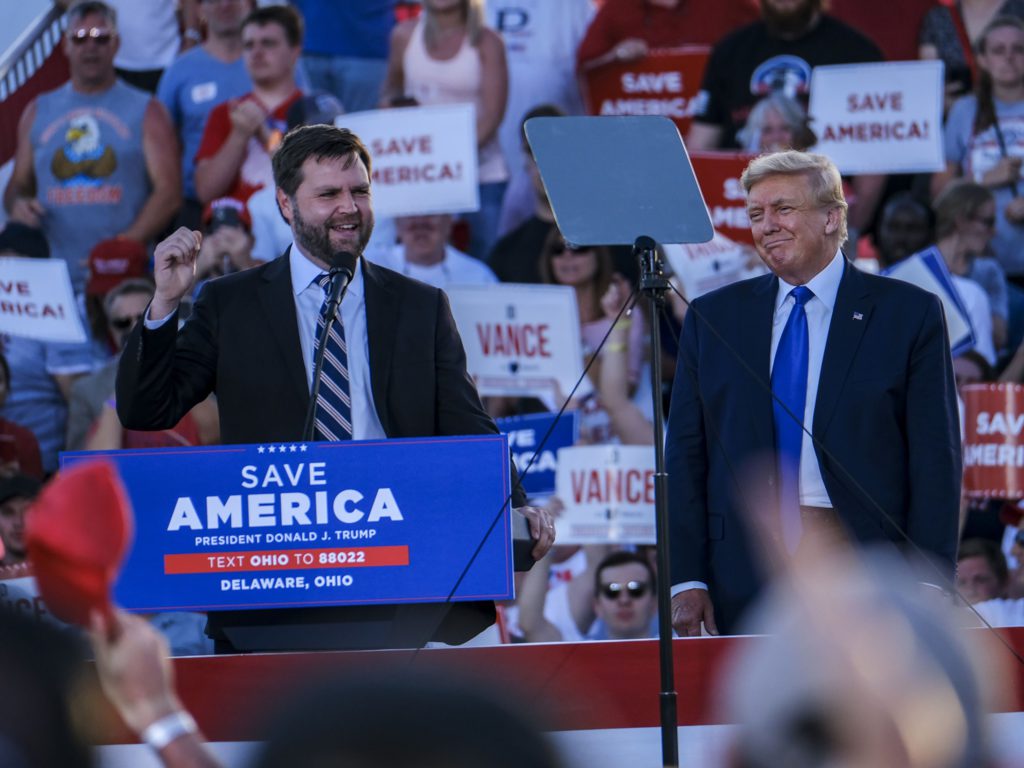
Trump’s Grip on GOP Gets First Test With JD Vance Endorsement in Ohio Primary

(Bloomberg) — The first major test of Donald Trump’s hold on Republican voters is set for Tuesday, when a crowded and acrimonious U.S. Senate primary contest that centered largely on the former president comes to a close. 

Trump endorsed venture capitalist JD Vance in a race defined by leading candidates casting themselves as standard bearers of Trump’s “America First” movement, mimicking his coarse style. But the endorsement sparked a rare public backlash from dozens of Ohio Republican officials who warned that Vance would depress Republican turnout in the general election and hand the seat to U.S. Representative Tim Ryan, the expected Democratic nominee. A major GOP group and Trump-allied conservatives like Senator Ted Cruz of Texas also campaigned for Vance’s opponents.

Ohio is the first in a series of primaries that will gauge the potency of Trump’s endorsement, an influence he is wielding to ward off potential 2024 presidential challengers, should he mount another White House campaign.

Trump has also made endorsements in high-stakes Republican U.S. Senate primary races in Pennsylvania, scheduled to take place on May 17 and in Georgia, to be held on May 24. Republicans are heavily favored to take control of the House in the November elections, with the president’s party historically losing seats during the first term. 

The Senate is currently deadlocked at 50-50 and the GOP’s chances for a majority in the upper chamber are cloudier, due in part to questions about Trump-backed candidates’ statewide electability. 

A Fox News poll last week showed Vance, the author of the memoir “Hillbilly Elegy,” had vaulted to the lead from third place after Trump’s endorsement, followed by former Ohio Treasurer Josh Mandel and investment banker Mike Gibbons. State Senator Matt Dolan and former Ohio Republican Party Chairwoman Jane Timken trailed the leading candidates, but a quarter of voters remained undecided.

Trump endorsed Vance’s first bid for public office, despite his past pronouncements that he was a “never-Trump guy” and questioning whether Trump would be “America’s Hitler.” 

The former president held a “tele-town hall” call with supporters on Monday night to make a final pitch for Vance, saying he’s “said some negative things about me, but he’s made up for it in spades. I think I can say that he’s a thousand percent with us” — and that Vance is the best candidate to win against Democrats in the November election.

“Winning tomorrow means nothing if you’re not going to win in the general election, and JD’s going to be able to win in the general election,” Trump said.

Vance, 37 and backed by $13.5 million from billionaire Peter Thiel, said he changed his mind after seeing Trump in office. He has since adopted Trump’s false claim that President Joe Biden is a “fake president” because of widespread election fraud. 

Just before Russia’s invasion of Ukraine, Vance created a furor with an attempt to channel Trump’s populist tone when he said he didn’t really care what happens to Ukraine and the U.S. needs to pay more attention to its Southern border. 

Just two days before the primary, Trump couldn’t remember Vance’s name when he touted the endorsement at a rally in Nebraska. He initially misidentified him as “JP” and then called him “JD Mandel,” mixing his name with a rival. 

Dozens of Ohio GOP county chairmen, state committee members and 2016 delegates for Trump urged the former president not to back Vance. Club For Growth Action, backing Mandel, has spent millions of dollars on ads showing Vance criticizing Trump. 

Donald Trump Jr. campaigned alongside Vance as did Missouri Senator Josh Hawley and Representatives Marjorie Taylor Greene of Georgia and Matt Gaetz of Florida, all staunch Trump allies. 

Mandel, 44, closed his campaign appearing in an ad with Cruz vowing to stop “Biden’s inflation” and held rallies with the Texas senator who rarely bucks Trump. 

Mandel wooed evangelical voters and tried to establish himself as the most conservative and the most supportive of the former president. He highlighted his time as U.S. Marine, called himself “pro-God,” “pro-gun,” “pro-life,” “pro-Bitcoin” and “pro-Trump.” His closing ad leaned into culture-war fights.

Gibbons, 70, who ran unsuccessfully for the GOP Senate nomination in Ohio in 2018 and is currently endorsed by Kentucky Senator Rand Paul, rose to the top of the field after loaning his campaign more than $16 million to run ads proclaiming himself “Trump tough.” But he faltered with widely panned debate performances, including one on March 18 when he nearly came to blows with Mandel.

Dolan, 57, is the only leading candidate who didn’t court Trump’s endorsement, vying instead for centrist Republicans. A poll conducted April 29 through Sunday by the Trafalgar Group showed Dolan surging into second place behind Vance, 26.2% to 22%, with Mandel third at 20.8%. Dolan’s family owns the Cleveland Guardians baseball team and he’s spending $10.6 million of his own money.

Timken, who was endorsed by Portman, hopes that her get-out-the-vote operation will be decisive in a low-turnout primary. She portrayed herself as a “mom on a mission” who had Trump’s backing to take over the state GOP in 2017, but polls show that she hasn’t risen into the top tier of candidates.

Ryan is running against former Consumer Financial Protection Bureau lawyer Morgan Harper and information technology executive Traci Johnson.

(Updates with Trump comments, in eight and ninth paragraphs.)

More stories like this are available on bloomberg.com

©2022 Bloomberg L.P.

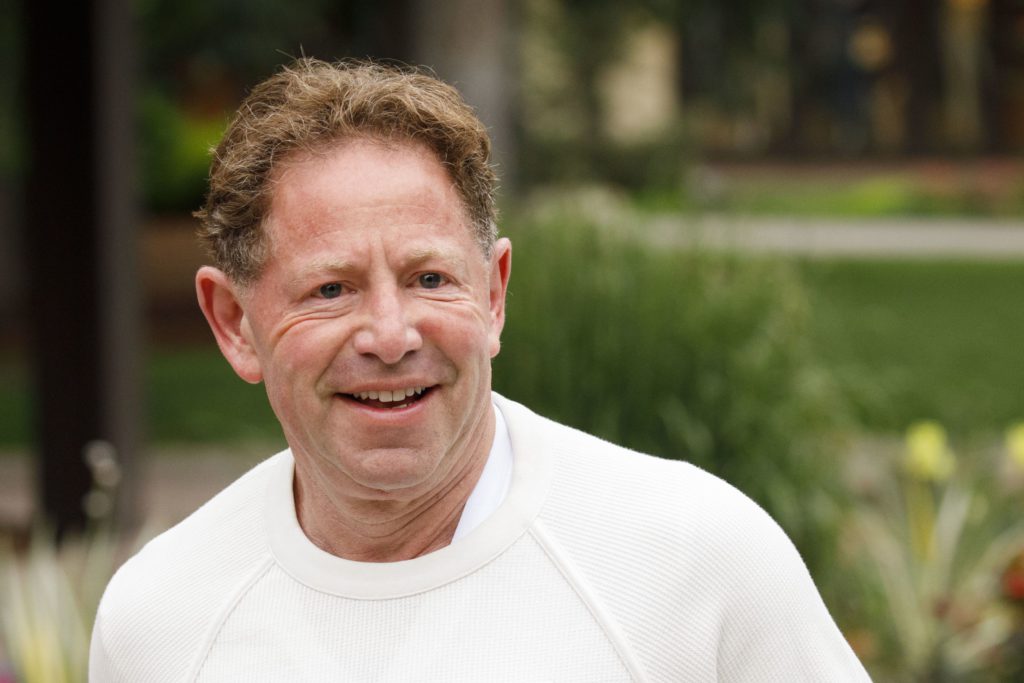
Activision’s Kotick Could See $520 Million on Microsoft Deal

(Bloomberg) — Activision Blizzard Inc. Chief Executive Officer Bobby Kotick stands to reap more than $500 million after Microsoft Corp. completes its purchase of the video game publishing giant.

In a securities filing on Friday, Activision said Kotick, 59, would receive $14.4 million in severance if he is terminated or leaves under various circumstances within a year of a change of control at the company. Kotick owns 4.3 million shares and has the right to acquire another 2.2 million through the exercise of options, which could potentially be worth $520 million in total at the $95 per-share price that Microsoft is offering. Kotick, who has been CEO for nearly 30 years, received $826,549 in total compensation in 2021, according to the proxy filing. 

The payout is striking for a leader whose recent tenure has been marked by employee complaints over sexism, a hostile work culture and mismanagement of assault claims. Kotick was the target of employee walkouts in November and petitions demanding his removal over reports he failed to make the company’s board aware of allegations of rape and other serious misconduct.

Activision said Kotick’s pay has been tied to the company’s performance. “The majority of Mr. Kotick’s compensation was earned by surpassing ambitious pre-established goals, including doubling the market cap for two consecutive periods,” the company said in a statement. “Mr. Kotick has transformed the company, reshaped the video game industry, and delivered tens of billions of dollars of value to shareholders.”

Kotick’s compensation was controversial even before California’s Department of Fair Employment and Housing sued the video-game publisher in July, detailing a retaliatory “frat boy” culture. Earlier, the company announced it was slashing Kotick’s 2021 salary and bonus in half in response to criticism his pay package was excessively lavish compared with peers. 

In 2020, Kotick was awarded total compensation of $155 million. Most of that came in the form of moonshot-incentive stock awards that were granted by the board in 2016.

Kotick will stay on as CEO only until the deal closes, a person familiar with the transaction said at the time it was announced in January. The acquisition is expected to close by the end of Microsoft’s fiscal year in June 2023, pending regulatory approval, the company has said. 

(Updates with comments from company in the fourth paragraph.)

More stories like this are available on bloomberg.com

©2022 Bloomberg L.P.

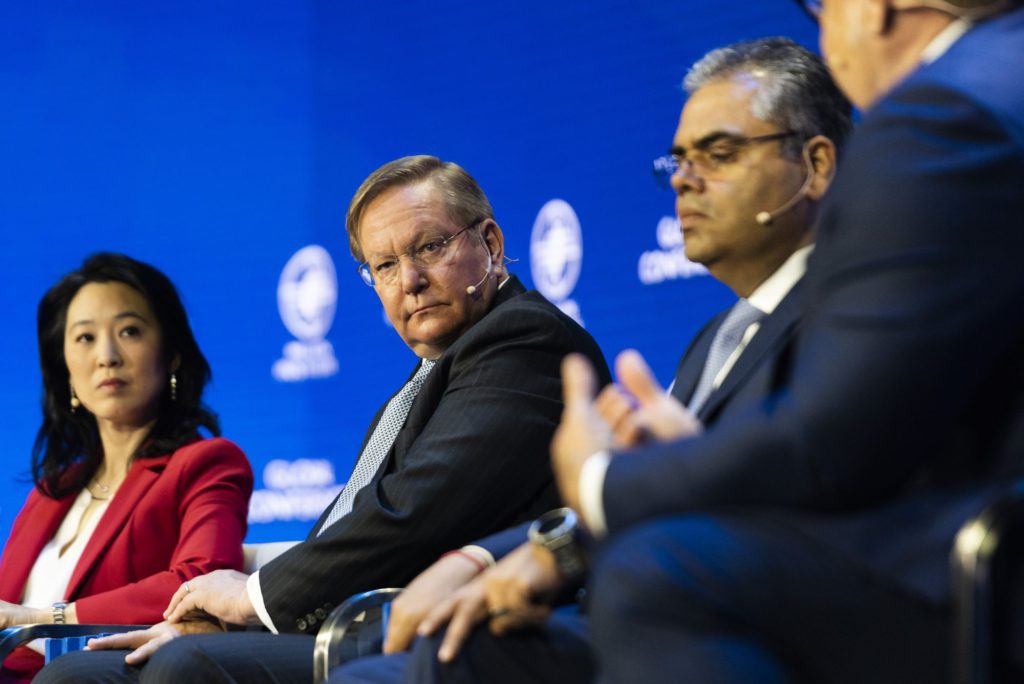
Whalen of TCW Says It’s Time to Get ‘Defensive’: Milken Update

(Bloomberg) — It’s the first day of speakers at the Milken Institute Global Conference in Los Angeles, which brings together everyone from dealmakers to celebrities as it returns to its pre-pandemic spring schedule.

The famed gathering, in its 25th year, has outlined its focus as the power of connection, celebrating “the forces that bring us together while confronting the issues that keep us apart.” It’s a fitting theme for a world jolted by war in Ukraine just as the highest inflation in decades raises the specter of recession and the dregs of a global pandemic refuse to disappear.

Speakers including Ark Investment’s Cathie Wood, Goldman Sachs Group Inc.’s David Solomon and General Motors Co. CEO Mary Barra will address the crowds, with academics, sports stars, entrepreneurs and politicians among the thousands set to gather this week at the Beverly Hilton.

Whalen of TCW Says Firm Is Decreasing Risk (7:23 p.m. ET) 

Asset manager TCW is paring back risk in the face of growing economic and geopolitical risks, according to Brian Whalen, the firm’s co-chief investment officer for fixed income. 

“We are back to 2019 playbook,” Whalen, who helps oversee over $225 billion of fixed-income assets at TCW, said on a panel at the Milken conference. “We are getting defensive.”

Within credit markets, the firm finds agency mortgages attractive and sees opportunities in junk bonds that are trading at deeply discounted prices, especially when investors can benefit from corporate events such as acquisitions that repay the debt at par, Whalen said. 

Lemkin of Canyon Partners Sees ‘Changing of the Guard’ Out of High-Yield Bonds (6:13 p.m. ET) 

Investors are leaving high-yield bonds and looking for other opportunities in credit, according to Todd Lemkin, chief investment officer of Canyon Partners. 

“It is poetic justice to us,” Lemkin said on a panel during the conference. “Funds are going to start flowing into alternative credit and alternative investments.”

Lemkin described the shift in sentiment among investors as “a bit of a changing of the guard.”

Lemkin also said that Canyon Partners is “very cautious” about investing in China at the moment. The country’s economy has rapidly slowed, and Lemkin feels that the nation “has really lost its way.” 

“We are not rushing in there to buy,” he said.

More Milken Coverage: Takeaways from Cathie Wood, Brian Armstrong remarks

Apollo’s Zelter Says Higher Rates Will Slow Growth (4:50 p.m. ET) 

A U.S. recession “has to be” one-third to two-thirds of an investment base-case scenario, Apollo Global Management Co-President James Zelter, said in an interview with Bloomberg Television on the sidelines on the Milken conference.

It looks like higher interest rates will slow down the economy, he said. A recession would be driven by financial conditions rather than led by consumers, he added.

Read More: End of easy money heralds financial shock

Zelter said his firm is targeting a part of the private credit market that focuses on how the financial system operates such as inventory, transport and real estate finance.

 “That is arguably a $40 trillion opportunity,” he said. He noted that most people think about private credit as the sponsor market, which is only a $5 trillion to $10 trillion opportunity.

Carlyle’s Bernasek Sees a Pause for U.S. Buyout Deals (4:50 p.m. ET)  

Brian Bernasek, co-head of U.S. buyout and growth at private equity giant Carlyle Group Inc., said there’s very likely to be a pause on U.S. buyout deals as there was during the first six to eight weeks of the year.

Still, there will be a lot of very good investment opportunities, Bernasek said Monday in an interview with Bloomberg Television on the sidelines of the conference.

“It has been a very good financing market,” particularly for the larger-scale firms, he said.

Qualcomm CEO Says Hybrid Work Is Here to Stay (4:50 p.m. ET) 

Cristiano Amon, the CEO of chipmaker Qualcomm Inc., said a hybrid form of working — part office, part remote — is here to stay post-pandemic, fueled by metaverse technologies that will allow people a sense of presence with their colleagues even when they’re not in the same room.

“Working from home drove a broadband transformation,” Amon said, making it possible to use more video and virtual reality than ever before. VR can make it possible for people in the same meeting to throw on goggles and enter the same virtual space. Then eventually, technology will augment our physical reality. 

“People will be in Zoom meetings in holographic form,” he added.

Citadel’s Griffin Says Fed Needs 4% Inflation This Year to Avoid Recession (3:50 p.m. ET)

The Federal Reserve will be able to ease off monetary tightening if inflation drops to 4% by year-end, Citadel founder Ken Griffin said. 

That “will give the Fed much more latitude in policy,” Griffin said Monday at the Milken Conference. But if it remains near or above the current 8.5%, the central bank “will have to the hit brakes pretty hard,” tipping the economy into recession.

The billionaire also highlighted the big disconnect in the labor market, noting there are twice as many job openings than unemployed people seeking work. That will put even more upward pressure on wages, further exacerbating inflation, he said. That the economy isn’t pulling more people off the sidelines of the job market is a “real problem,” he said.

Griffin also said cryptocurrencies are the “great hot spot” of debate within his Chicago-based firm, noting that most employees who are younger than he are big believers in digital assets.  

“They believe that cryptocurrency has an important role in the global economy as a means of facilitating payment,” said Griffin, who has previously expressed skepticism about the value of digital tokens. “These are really sharp people,” he added. “I have to live with the reality that an asset is worth what people perceive it to be worth.”

Corporate Bonds Starting to Look Attractive, Silver Rock’s Meyer Says (2:20 p.m. ET)

This year’s sell-off in corporate bonds has created attractive investment opportunities, especially if the Federal Reserve changes its policy stance in coming years, said Carl Meyer, CEO of credit firm Silver Rock Financial.

“You’ve got lots of bonds trading at 85, 90 cents on the dollar,” Meyer said Monday on a panel at the Milken Conference. “There’s real upside if the Fed were to pivot to dovish later this year. You have a chance to make a lot of money, whether in investment grade or high yield.”

The traditional 60/40 allocation between equities and bonds that has fallen out of favor recently due to low yields could also perform well in the current environment, Meyer added.

“If you think we’re heading for a recession, if you think the Fed is going to have to tame inflation and then go dovish, then maybe 60/40 is the way to go,” he said. “It’s going to serve as both a hedge and a way to make money in your portfolio.”

Shenkman Capital’s Slatky Says CCC Debt ‘Tough Place to Be’ (2:20 p.m. ET)

Shenkman Capital Management expects slowing growth coupled with sticky inflation to hurt the riskiest part of the U.S. high-yield corporate bond market.

“For the bottom end of the market, the CCC part of the market, in stagflation, that’s a really tough place to be,” Justin Slatky, the firm’s chief investment officer, said Monday at the Milken Conference.

The high-quality part of the junk market should be able to withstand stagflation, at least compared with other asset classes, he said. About 40% of the junk and loan market matures from 2024 to 2026 and volatility is likely to pick up as companies struggle with their Ebitda and valuations come down, he added.

“You are going to see bond prices move around quite dramatically, but you’ll probably still going to see default rates stay at a lower level,” he said.

Citi Traders Dealing With the Highest Volatility Since 2008 (1:45 p.m. ET)

Trading desks are dealing with volatility levels that markets haven’t seen in more than a decade, Citigroup Inc. CEO Jane Fraser said.

Traders are coping with inflation that is at its highest level in a generation and investors who are increasingly worried about the likelihood of a global recession, Fraser said Monday at the Milken Conference. As an example of volatility, she mentioned trading on Friday, when bonds sold off at the same time as equities. Normally, the two have an inverse relationship. 

“I remember the ’70s and ’80s, and I don’t remember days like that, and some of this is just very odd dynamics around supply and demand,” Fraser said. “When volatility is 2008 or 2009 levels, that’s telling you that no one knows what this is going to be.”

Emerging Market Indexes Should Split Into Baskets, PGIM’s Hunt Says (1:40 p.m. ET)

Emerging market indexes are too broad given disparities between different countries coming out of the Covid-19 crisis, PGIM CEO David Hunt said Monday at the Milken Conference.

“When you think about an index that has South Korea, China, Argentina, and until recently, Russia and Ukraine in it, and you say ‘I’d like to allocate to a basket like that,’ it sounds a little crazy,” Hunt said.

Hunt said PGIM is working with clients on investing approaches that break emerging markets up into different baskets, including a more-developed group, a commodities-related basket and one focused on those on the verge of being “very attractive economies.”

“The world will quite soon pull apart emerging-market indexes and we’ll see something a lot more tailored to the way that capital should be allocated,” he said.

Guggenheim’s Minerd Says Market Not Fed Should Find Neutral Rate (1:30 p.m. ET)

With the market focused on this week’s Federal Reserve meeting, where the central bank is forecast to raise the overnight lending rate by 50 basis points, Guggenheim Partners CIO Scott Minerd questioned the goal of the ebb and flow of monetary policy.

“We don’t know where the neutral and natural interest rate is” and never did, Minerd said Monday on a panel at the Milken Conference. “I’m a great skeptic that the Fed can figure out” where the rate should be to support full unemployment while keeping inflation steady. 

“Why don’t we just unpeg rates and let the market find the rate,” he said, adding that former Fed Chairman Paul Volcker took such an approach.  

Sovereign Funds ‘Look Past the Noise’ With Private Assets, Kapoor Says (1:08 p.m. ET)

Many sovereign wealth funds have increased their allocation to private assets, which have the benefit of being able to “look past the noise” and invest for the long term, Investcorp Holdings Co-CEO Rishi Kapoor said. 

Floating-rate loans have become very attractive to institutional investors, with base rates roughly equal to spreads in recent months, said Kapoor, who oversees the firm’s private equity business in North America and India. 

“You have effectively created the ability to double your absolute return on a portfolio of floating-rate loans, even compared to six months ago,” he said Monday at the Milken Conference. 

Guggenheim’s Minerd Says Recession Likely, But Not Until 2023 (1 p.m. ET)

The Federal Reserve may be leading the U.S. into a recession as it races to raise rates and get ahead of inflation, but probably not until end of 2023, Guggenheim CIO Scott Minerd said.

“We’ve never been able to reduce inflation by more than two percentage points in the U.S. historically without inducing recession,” Minerd said Monday at the Milken Conference.

The recession will likely not be too bad, he added, because the Fed will be able to pivot quickly. The only way the Fed would be able to avoid a recession is to “let markets find a natural rate.”

PGIM’s Hunt Sees Europe on the Brink of Recession (12:15 p.m. ET)

Wide-ranging sanctions on Russian energy exports could soon tip the European economy into a recession, PGIM Chief Executive Officer David Hunt said.

“We’re only one hydrocarbon sanction away from a recession starting,” Hunt said Monday on a panel at the Milken Conference.

A recession also looks likely for the U.S. if the Federal Reserve’s tightening path stays on the current track, he added, but probably not until 2024.

Apollo’s Rowan Is Preparing for ‘Volatile’ Future (Noon, ET)

Marc Rowan, the co-founder of Apollo Global Management Inc., said that the current market is the “logical conclusion” of 14 years of “money printing,” with the biggest correction likely to occur in growth and technology stocks.

“The world is desperate for safe yield,” Rowan, who is also Apollo’s chief executive officer, said Monday at the Milken Conference, adding that he’s a big fan of senior-secured credit and also likes floating-rate notes.

During a panel, Rowan also said he’s enthusiastic about financial-technology firms, many of which want to focus on fee generation but not on building their balance sheets. That’s where Apollo can come in.

“We’re going to see a revolution in financial services” in the coming decade, he said.


More stories like this are available on bloomberg.com

©2022 Bloomberg L.P.

Close Bitnami banner
Bitnami