
Bloomberg

Ken Griffin Says Fed Needs 4% Inflation This Year to Avoid Recession

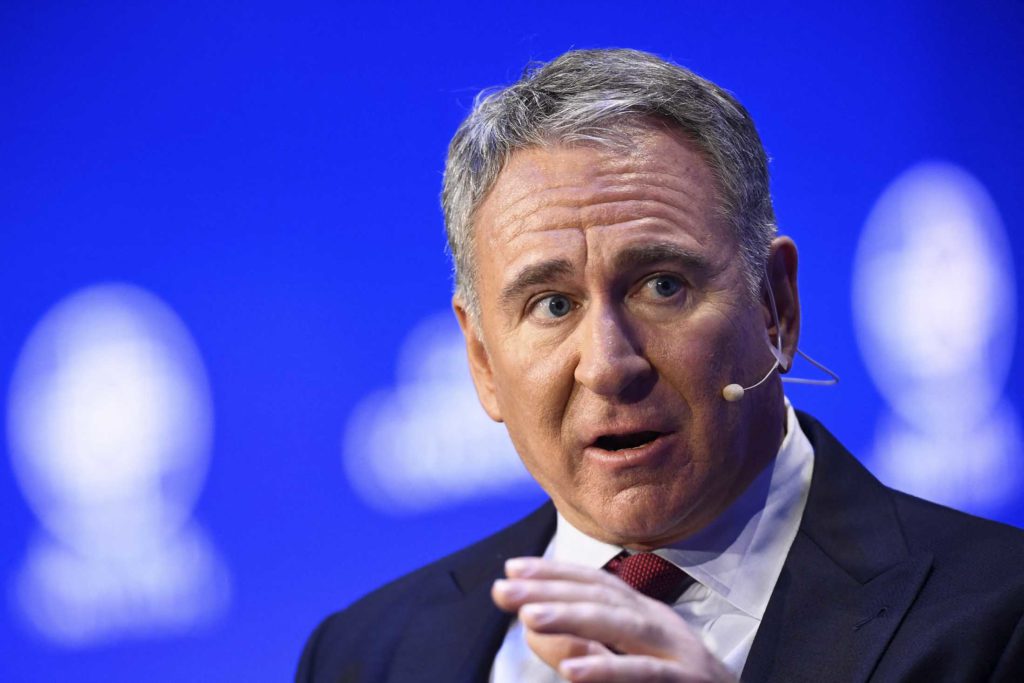
(Bloomberg) — Citadel founder Ken Griffin said the Federal Reserve will be able to ease off monetary tightening if inflation drops to 4% by year-end. 

That “will give the Fed much more latitude in policy,” Griffin said Monday in a wide-ranging interview with Bloomberg’s Erik Schatzker at the Milken Global Conference in Beverly Hills. But if it remains near or above the current 8.5%, the central bank “will have to the hit brakes pretty hard,” tipping the economy into recession.

The billionaire also highlighted the big disconnect in the labor market, noting there are twice as many job openings than unemployed people seeking work. That will put even more upward pressure on wages, further exacerbating inflation, he said. That the economy isn’t pulling more people off the sidelines of the job market is a “real problem,” he said.

Griffin, 53, also said cryptocurrencies are the “great hot spot” of debate within his Chicago-based firm, noting that most employees who are younger than he are big believers in digital assets.  

“They believe that cryptocurrency has an important role in the global economy as a means of facilitating payment,” said Griffin, who has previously expressed skepticism about the value of digital tokens. “These are really sharp people,” he added. “I have to live with the reality that an asset is worth what people perceive it to be worth.”

A major campaign contributor to Republicans, Griffin also weighed in Florida’s recently enacted “Don’t Say Gay” law and Governor Ron DeSantis’s move to restrict Walt Disney Co.’s special tax status in the state. While Griffin agreed with the legislation banning discussion of sexual orientation and gender identity in classrooms with young students, he said the move to strip Disney of certain privileges smacks of retaliation for the company’s opposition to that law.

Other highlights from the interview:

  • Griffin bemoaned what he called mismanagement of energy policy in the West that has limited fossil-fuel production, in part through regulation and the discouragement of financing, leaving Europe reliant on Russia for its natural gas. This has caused a “price shock” that’s endangering the life dreams of tens of millions of people, he said.
  • He blasted social-media curators for having “eroded free speech,” and anticipates that fellow billionaire Elon Musk will help to address that if he succeeds in his acquisition of Twitter Inc.
  • Griffin said today is a “tough time” for investors seeking to deploy capital as equity markets are tumbling, shrinking the overall pie. The key is to be “quick” and “nimble” to take advantage of trading opportunities. The next couple of months will be “incredibly telling,” he said. “It’s been an environment where we believe that holding stock outright long is likely to be a punishing experience,” he said.

Click here to read the TOPLive blog.

More stories like this are available on bloomberg.com

©2022 Bloomberg L.P.
Inflation Is Also Eating Up Gains in the Post-Covid Bull Market

(Bloomberg) — Anyone betting the stocks they bought during the pandemic bull market would return enough to keep them ahead of inflation has reason to worry.

Not only are spiraling prices clogging up the economy and raising recession risk, they’re debasing the value of what’s left of an investor’s equity gains. Since the pre-Covid peak in February 2020, the S&P 500 has appreciated 11% a year, well above the historic average. But inflation was 5.2% over the same stretch, eating almost half the equity increase.

It’s a brutal one-two punch that gets worse in a shorter lens, with this year’s 14% drop worsened when stacked next to surging consumer prices. Adjusted for inflation, the S&P 500 is down in value at an annualized rate of roughly 40%, worse than any full year since 1974, data compiled by Bank of America Corp. show. 

The data counter a popular narrative that stocks can serve as a haven during times of hot inflation. They also show the danger of following any old playbook in the post-pandemic world where the Federal Reserve embarks on an aggressive rate-hiking cycle to curb growth. 

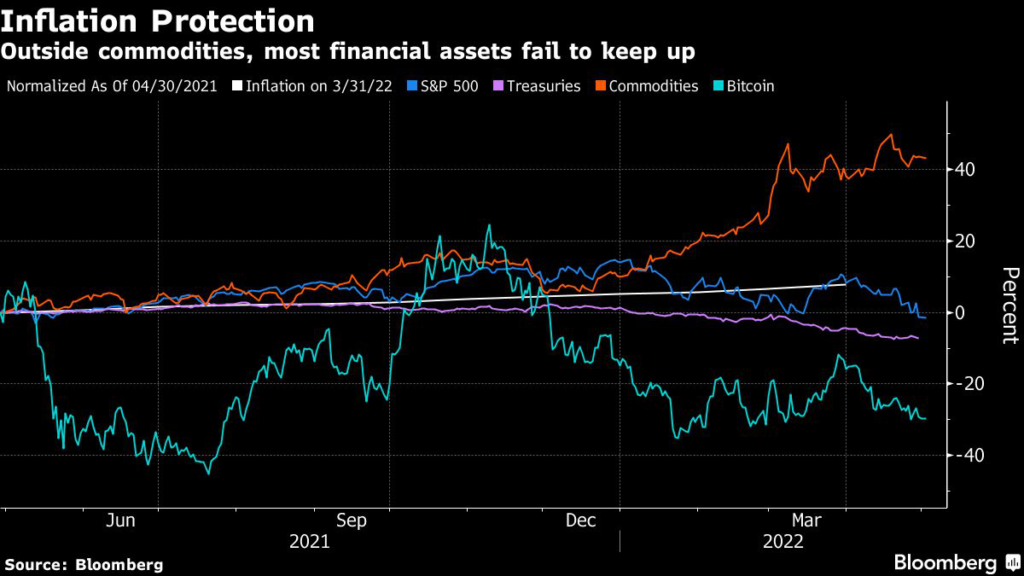
With the exception of commodities, all major financial assets have lost money in real terms over the past year, including Bitcoin, something that crypto bulls once touted as a store of value. 

“We are in the worst part of the market cycle now,” Dennis DeBusschere, the founder of 22V Research, wrote in a note Monday. “Inflation/economic growth data are stubbornly firm, and markets are discounting significant tightening, but with still high uncertainty on how much MORE the Fed needs to do to slow growth/inflation.” 

Since pricing pressure started to mount in April 2021, Bitcoin has lost roughly a third of its value as investors dumped risky assets in anticipation of tighter central bank policy. 

Fixed income has endured deep losses too. Investment-grade bonds are down 10% in the past year, followed by a 7% drop in Treasuries and a decline of 5% in high yield. Even those meant to work as an inflation hedge are losing money, with Vanguard Short-Term Inflation-Protected Securities Index Fund (VTIP) and iShares TIPS ETF (TIP) sliding 3% and 6.7%, respectively.

Read more: Bridgewater’s Top Strategist Says Fed Has to Ramp Up Rate Hikes

Betting on stocks as a harbor during the inflation storm hasn’t worked either. The S&P 500’s 1% slide over the past year translates to a real loss of almost 10%, when the latest annualized inflation of 8.5% is factored in. 

The real return is even worse for the tech-heavy Nasdaq 100 and the Russell 2000 of small-cap stocks, which are down roughly 15% and 25%, respectively. 

“Anyone who tells you we are in a bull market has got a lot of explaining to do,” said Mike Wilson, chief U.S. equity strategist at Morgan Stanley. “Perhaps, stocks are no longer the inflation hedge investors expect.”  

That argument held that corporate America tends to benefit in a high-inflation environment in part because it can pass on rising costs to end consumers. And that resilience in earnings can help stocks thrive.  

Profit estimates for this year and next have gone up in the past 12 months. Yet with the Fed committing to raise rates to battle inflation running at a four-decade high, the specter of higher borrowing costs has sparked a quick reassessment of equity valuations and a broad selloff. 

Commodities have rallied, with a Bloomberg measure tracking everything from oil to wheat climbing more than 40% over the past year. Still, Societe Generale strategists led by Andrew Lapthorne warn investors not to lean too much on the asset, in part because of its “notoriously volatile” prices that can be affected by idiosyncratic factors, such as geopolitical events or seasonal variations. 

“We want to be long inflation up until the point tightening creates the conditions whereby supply and demand are brought back into balance by an economic slowdown or, even worse, a recession,” Lapthorne wrote in a note last week. “In that regard, commodity prices, bond yields and equities are all involved in a game of chicken with central bank tightening. If central banks are successful, these inflation hedges will become problematic.”

To mitigate the risk, the team created a multi-asset model to hedge inflation. In commodities, rather than wagering on further gains, they developed a trend following strategy to ride the ebbs and flow of prices. Similarly in bonds, they’re long yield volatility, as opposed to placing an outright bet on a continued rise in rates. In stocks, the model calls for better returns from inflation beneficiary versus the market.  

“We are simply changing the implementation of what are traditional inflation hedges,” Lapthorne said. “We like the logic of being long the problem (commodities), being long a reaction to that problem (rates volatility) and being long the beneficiaries of that problem (inflation-linked equities).” 

More stories like this are available on bloomberg.com

©2022 Bloomberg L.P.
Apple Sues ‘Stealth’ Startup Rivos Over Chip Trade-Secrets Theft

(Bloomberg) — Apple Inc. accused “stealth-mode” startup Rivos Inc. in a lawsuit of poaching its engineers to steal trade secrets used to develop its homegrown chip designs that make iPhones more powerful.

Rivos, which has hired dozens of Apple engineers, began a “coordinated campaign” in June 2021 to target Apple’s employees, the Cupertino, California-based company said. 

The former employees left to join Rivos after stealing “highly-sensitive” proprietary and trade secret information about Apple’s “system-on-chip” designs, including its M1 laptop and A15 mobile phone chips, according to the complaint filed in federal court in San Jose, California.

“Apple has devoted billions of dollars to this critical work,” the company said. 

Two former Apple engineers who joined Rivos for “parallel roles” were named as defendants in the suit for allegedly breaching intellectual property agreements they had signed. The agreements required them to refrain from copying confidential proprietary information during their time at the company and return such materials before they left, Apple claims.

Rivos and Apple didn’t immediately respond to requests for comment.

The complaint against Rivos is the latest by Apple targeting ex-employees who left to join startups. 

Apple in 2019 sued a former chip executive, Gerard Williams III, for allegedly betraying the company by launching a startup that develops processors for data centers after luring its employees to join his venture. That dispute is headed for trial in San Jose state court in October 2023.

Read More: Apple Accused by Ex-Exec It’s Suing of Poaching His Staff

Some Apple employees hired by Rivos transferred gigabytes of trade secret data, including presentations on current and unreleased chip designs, onto USB drives and their personal storage drives before leaving, the company claims. 

“Apple has reason to believe that Rivos instructed at least some Apple employees to download and install apps for encrypted communications (e.g., the Signal app) before communicating with them further,” the technology giant said in its complaint.

The lawsuit was reported earlier by Reuters.

The case is Apple Inc. v. Rivos Inc., 22-cv-2637, U.S. District Court, Northern District of California (San Jose).

More stories like this are available on bloomberg.com

©2022 Bloomberg L.P.

Facebook Pulls the Plug on Podcast Business After a Year

(Bloomberg) — Facebook is pulling out of podcasts and plans to remove them altogether from the social-media service starting June 3.

Part of Meta Platforms Inc., Facebook will stop letting people add podcasts to the service starting this week, according to a note sent to partners. It will discontinue both its short-form audio product Soundbites and remove its central audio hub.

Facebook announced various audio efforts last April during a hot market for podcasting and audio in general. But the company’s interest has waned, Bloomberg News reported last month, and it’s now focused on other initiatives, disappointing some providers.

“We’re constantly evaluating the features we offer so we can focus on the most meaningful experiences,” a Meta spokesperson said an email. The person added that they didn’t have a specific date on when Soundbites and the audio hub would shut down but it will be in the “coming weeks.”

In the note to partners, Facebook said it doesn’t plan to alert users to the fact that podcasts will no longer be available, leaving it up to the publishers to decide how they want to disclose that information. Live Audio Rooms will be integrated into Facebook Live, meaning users can choose to go live with just audio or audio and video. 

The podcast market has grown crowded in recent years. Spotify Technology SA has both licensed hit shows and acquired companies. Amazon.com Inc. purchased the podcast network Wondery and also a hosting platform. The live audio platform Clubhouse was valued at about $4 billion last year and every tech company wanted to copy its product.

That made Facebook’s entrance look inevitable, but only a year later the platform and its parent company Meta are heading in a different direction. 

The company changed its name to Meta to emphasize its interest in building the metaverse and is also now pushing users toward short-form videos called Reels to compete with TikTok.

Meta said in its earnings report last week that Reels now make up more than 20% of the time spent on Instagram. Though the stock tumbled in February, it rebounded after financial results came out. 

More stories like this are available on bloomberg.com

©2022 Bloomberg L.P.

Teens’ 10-Minute Grocery Startup Valuation Reaches $900 Million

(Bloomberg) — Zepto, an instant grocery startup founded by two teenagers, has raised $200 million in a funding round led by Y Combinator, taking its valuation to around $900 million within nine months of beginning 10-minute deliveries in India’s fast-growing quick commerce segment.

New investor Kaiser Permanente participated in the round that comes less than five months after the startup raised capital previously. Early investors Nexus Venture Partners, Glade Brook Capital and Silicon Valley investor Lachy Groom have all increased their investments, Zepto said in an announcement late Monday. That brings its total funding to $360 million.

Zepto, named after the minuscule unit of time, was started by childhood friends Aadit Palicha and Kaivalya Vohra who dropped out of Stanford University’s computer science program to return to India and become e-commerce entrepreneurs. They are both 19 years old. 

The Mumbai-headquartered company’s 10-minute delivery promise has spurred rivals like Google-backed Dunzo, SoftBank Group Corp-backed Blinkit and Naspers Ltd-backed Swiggy. These are fighting for the attention of shoppers in India’s $1 trillion retail market along with established players Amazon.com Inc. and Walmart Inc.-backed Flipkart Online Services Pvt.

Zepto’s revenue has grown 800% quarter-on-quarter and it has slashed its cash burn by five times on a per-order basis, Palicha, chief executive officer, said in the statement. The startup’s team has expanded to 1,000 people and it has begun making profits in small micro-markets, or dense city neighborhoods served by a warehouse or dark store. 

Zepto is now piloting a service to deliver coffee, Chai tea and other cafe items within 10 minutes in select areas in Mumbai in a new service it calls ‘Zepto Cafe’.

More stories like this are available on bloomberg.com

©2022 Bloomberg L.P.
Apple Hit With EU Antitrust Complaint Over iPhone Payments

(Bloomberg) — Apple Inc. was hit by a formal antitrust complaint from the European Union over how it handles iPhone payment services, an area where regulators say the tech giant favors its own technology over rival platforms. 

The European Commission sent a so-called statement of objections alleging that the company abuses its control over mobile wallets by limiting how third-party firms can provide services on the iPhone. The move escalates a probe that began nearly two years ago. If confirmed, the company could face hefty fines under EU antitrust rules.

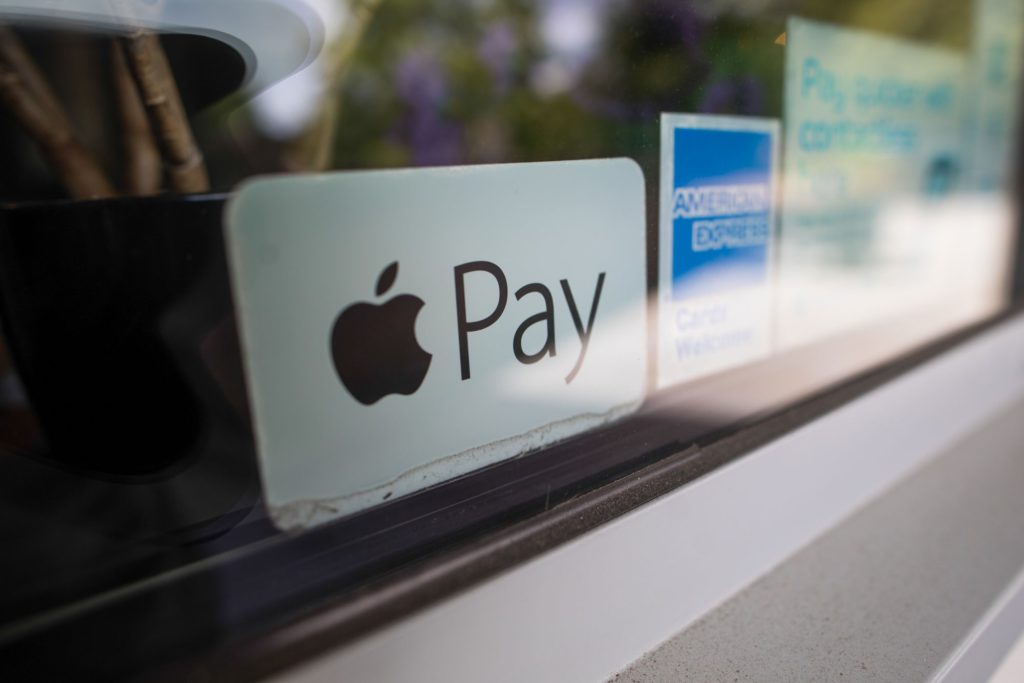
The issue centers on Apple Pay, which customers can use via the iPhone’s near field communication chip. That allows them to tap to pay, something that isn’t available for rival services, such as PayPal. Apple is planning to open up the technology so vendors can use it to accept payments, but customers still won’t be able to use the tap feature to make payments with rival services — a more pressing need for most phone owners.

The situation would seem to create an unequal playing field, EU regulators said.

“We have indications that Apple restricted third-party access to key technology necessary to develop rival mobile wallet solutions on Apple’s devices,” EU antitrust chief Margrethe Vestager said in a statement Monday. The EU’s charge sheet makes a preliminary finding that the company “may have restricted competition, to the benefit of its own solution.”

The decision to ramp up its probe comes weeks after the EU approved sweeping new rules to rein in how U.S. tech firms operate in the region. The measures, designed to work alongside traditional antitrust powers, aim to prevent companies from abusing their power as gatekeepers to digital technology. 

The Apple Pay probe was one of two cases that the European Commission opened in June 2020, part of efforts by Vestager to rein in powerful tech companies. It follows the EU’s decision in 2016 to hit Apple with a record 13 billion-euro ($13.7 billion) tax bill, which is subject to a pending court case following the company’s successful appeal at a lower EU court.

Read more: Apple keeps payments tech for itself and Europe has had enough

Apple defends its approach by noting the popularity of rival services on the iPhone. That includes PayPal, which is widespread in Europe, and some other options that are more popular than Apple Pay in certain European countries: MobilePay (Denmark), Swish (Sweden) and Payconiq (Belgium).

The company also said it gives all banks equal access to the payment system, with 2,500 banks in Europe connected, as well as smaller fintech companies and upstart financial services.

“We designed Apple Pay to provide an easy and secure way for users to digitally present their existing payment cards and for banks and other financial institutions to offer contactless payments for their customers,” Apple said in a statement, saying it will “continue to engage with the commission to ensure European consumers have access to the payment option of their choice in a safe and secure environment.”

The EU move could pave the way for multibillion-euro fines and an order to change how Apple does business. But the company will have the chance to contest the EU’s findings in writing and at a hearing.

(Updates with more on Apple’s technology starting in third paragraph.)

More stories like this are available on bloomberg.com

©2022 Bloomberg L.P.

ApeCoin Drops After Ethereum-Crashing Record Virtual Land Sale

(Bloomberg) — Yuga Labs, the creator of the popular Bored Apes Yacht Club collection of NFTs, is seeking to refund transaction fees incurred by bidders who were unsuccessful at its weekend auction of virtual land related to its metaverse project. 

The record sale raised around $320 million but also resulted in about $180 million transaction fees in Ether. The frenzy caused the congestion on the Ethereum blockchain with the so-called gas fees so high that not only the minters but other Ethereum-based apps users were unable to perform many activities such as trading or minting. In order to complete a transaction on the network, extra fees are needed to prioritized the transaction given limited capacity of Ethereum blockchain.

Yuga Labs declined to comment beyond its tweet to disclose more details such as the amount for the refund and the number of affected minters.  

The saga is the latest example of a popular Ethereum-based NFT launch causing congestion and high fees on Ethereum. While the network is about to undergo one of its most significant technical upgrades this year, it doesn’t address scalability issues and fees. Developers have been working on a few scaling solutions such as so-called layer 2 projects and sharding that changes the way to distribute data but similar congestion issues have persisted.     

It appears that winning bidders on the virtual land rushed to the secondary NFT marketplace OpenSea to flip the assets for a quick profit. OpenSea’s daily sales on May 1 were more than four times higher than the prior day, according to data from Dune Analytics. 

Holders of the ApeCoin token who verified their identities jockeyed to buy deeds for 55,000 parcels of virtual land in Otherside, the project’s planned metaverse game and the latest extension of the Bored Ape franchise. Anticipation that interest would be strong for the plots — Ethereum-based NFTs called Otherdeeds — had pushed up the price of ApeCoin last week ahead of the sale. The price fell about 16% to $14.64 over the last 24 hours, according to CoinMarketCap data.

Each plot cost a buyer around $5,800 based on ApeCoin’s price of $19 at the time of the auction, plus the gas fees. 

Minting a token or making a transaction on Ethereum requires token creators or traders to pay a fee to those that order transactions on the network. Transaction fees go higher when the network becomes congested given more fees are needed to prioritize a transaction. That can impact the Ethereum-based business of apps like Uniswap, effectively slowing the transactions on these other platforms.

Yuga Labs apologized on Twitter for “turning off the light on Ethereum,” and suggested the possibility of establishing an ApeCoin blockchain.   

The ApeCoins raised in the sale will be locked up — meaning that they can’t be sold, thus reducing coins in circulation — for one year, according to Otherside’s Twitter account.

Besides the 55,000 Otherdeeds sold Saturday, another 45,000 were allocated to holders of Bored Ape Yacht Club and Mutant Ape NFTs, as well as Yuga Labs and other project developers, with another 100,000 of the tokens expected to be awarded later to certain Otherdeed holders, according to the Otherside website. 

ApeCoin is striving to become widely used in a variety of so-called web3 apps, using digital coins and blockchains. The idea is for owners to be able to access a variety of events, services, merchandise and games. It’s also the governance token of ApeCoin DAO, whose board includes Reddit Co-founder Alexis Ohanian and FTX’s Amy Wu.  

Venture capital investors that helped with ApeCoin’s March launch, including Andreessen Horowitz and Animoca, were some of the biggest recipients of ApeCoin, which was created as an “airdrop,” in which certain groups of crypto holders automatically received 1 billion tokens as a reward. They and other launch partners received 14%, or 140 million tokens.

More stories like this are available on bloomberg.com

©2022 Bloomberg L.P.

Israel Raises Cyber Standards in Bid to Boost Digital Defenses

(Bloomberg) — Israel will require all telecommunications companies to implement a cybersecurity program to filter out digital attacks. The initiative is an effort to protect the country’s critical assets from what officials say are increasingly frequent cyberattacks.

The mandate, made jointly by the Communications Ministry and National Cyber Directorate, sets out a list of requirements that includes installing monitoring and control systems while making boards of directors responsible for the completion of cybersecurity plans. The ministry declined to elaborate on what penalties might be enforced on firms that fail to meet the requirements. 

The announcement came after attempted cyberattacks in Israel jumped 137% in the first quarter of 2022 compared to a year earlier, primarily in the insurance, education, health care, government and manufacturing sectors, according to cybersecurity firm Check Point Software Technologies Ltd. 

Some individual organizations came under attack more than 1,400 times on a weekly basis, compared with 750 times per week last year, the company said. 

Last month the Israel National Cyber Directorate said attackers temporarily knocked some government websites offline. In October, hackers breached an Israeli hospital in an apparent ransomware attack. 

“We are raising standards in order to protect Israel and create a kind of Iron Dome against cyberattacks,” said Communications Minister Yoaz Hendel. “It won’t matter how strong the attack is or who is the attacker. We will be able to keep Israel secure.” 

The Iron Dome anti-missile system, which first went into operation in April 2011, was designed to intercept and destroy rockets from the Gaza Strip.

“The idea to look at the telecoms as a bridge or channel to businesses and consumers and understand that if they are more protected, their users will be as well, is a step in the right direction,” said Gil Messing, spokesman for Check Point.

Bezeq Israeli Telecommunication Corp., Israel’s largest telecommunication company, said it was still examining the government’s requirements and declined to comment further. A company representative said it already meets strict cyber regulations. 


More stories like this are available on bloomberg.com

©2022 Bloomberg L.P.
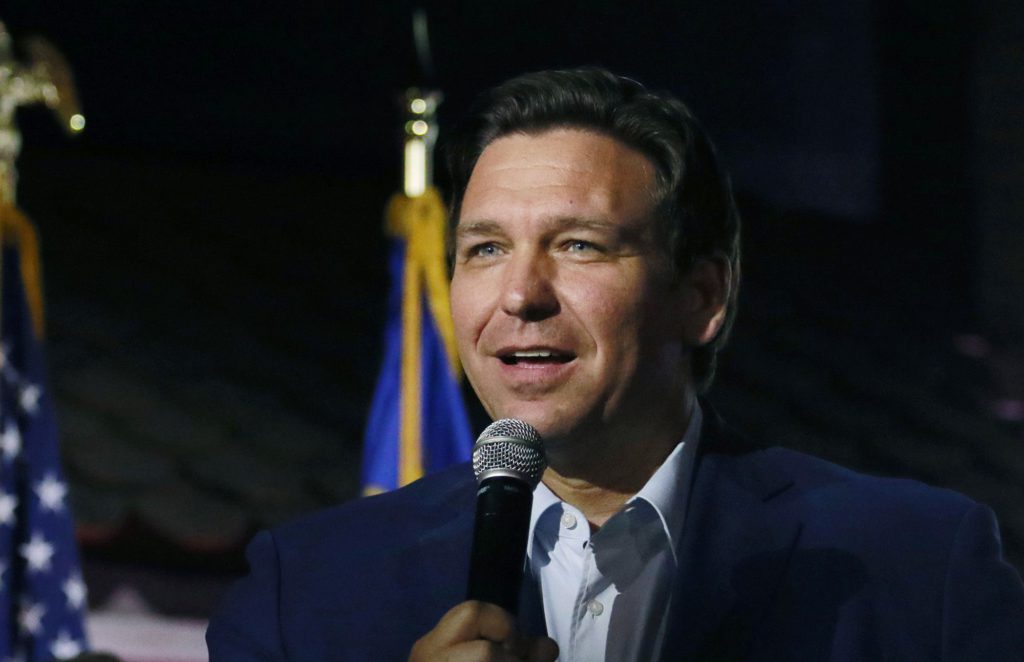
DeSantis Says He Won’t Lure Twitter to Florida Because of Increased Costs

(Bloomberg) — Governor Ron DeSantis said he’s not interested in luring Twitter Inc. to move its headquarters to Florida because it would increase living expenses in the Sunshine State. 

The Florida governor made the comments after the state’s Chief Financial Officer Jimmy Patronis advocated the move on social media and in an April 5 letter to Elon Musk. 

“Importing some tech company from San Francisco has not been high on our list,” DeSantis said in a press conference in Jacksonville on Monday. When technology companies like Twitter relocate, they drive up the cost of living for existing residents and the state is instead focused on attracting industrial and manufacturing businesses, he said.

“I’m very supportive of what Elon Musk is doing,” DeSantis said. “He will make that company more valuable, I have no doubt about it, but I don’t want to import that necessarily into the state of Florida.” 

Patronis said he would introduce Musk to the state’s business development arm and help him “find the perfect place to start relocating Twitter headquarters” to Florida. Local officials chimed in. Jacksonville Mayor Lenny Curry called on Musk to relocate the company to his city last week, according to local news. 

DeSantis made clear on Monday he disagrees. “In terms of bringing Twitter from San Francisco to Florida, that is not something that I’m advocating,” he said. 

More stories like this are available on bloomberg.com

©2022 Bloomberg L.P.
Tesla Has Old Count of Musk’s Pledged Shares, Key to Margin Loan

(Bloomberg) — Tesla Inc. said Monday in a securities filing that it needs more time to file a regular disclosure ahead of its annual shareholders’ meeting. 

The company may also need to have another look at a closely watched section on Elon Musk’s pledged shares, which appears to contain out-of-date information. 

Tesla’s amended annual report shows the share count and options of key investors through Dec. 31, and other footnotes refer to dates in 2022. But the part breaking out Musk’s ownership, exercisable options and pledged shares refers to Dec. 31, 2020, the same date from last year’s annual report. The company had previously updated the figures through June 30.

Tesla didn’t immediately respond to a request for comment sent through its investor relations portal. 

The number of Tesla shares pledged by its chief executive officer has taken on added importance because of the $12.5 billion margin loan he arranged to help finance his purchase of Twitter Inc. It requires Musk, 50, to pledge Tesla shares worth $62.5 billion. The debt is secured by that stock, which can be seized by lenders in the case of default.

The discrepancy itself won’t affect Musk’s Twitter deal. But after his sale of about $8.5 billion of Tesla stock last week, he had just enough Tesla shares remaining to secure the new facility, according to Bloomberg calculations, though it depends on the company’s share price. 

That calculation assumes Musk has 88.3 million Tesla shares pledged to secure existing debt that would be unavailable for the margin loan — the figure as of June 30. An updated number should have been included in Monday’s filing.

It might be a coincidence that Musk had increased his pledged shares to the exact same figure he had a year earlier, though the old date in the same footnote would seem to suggest otherwise.

More stories like this are available on bloomberg.com

©2022 Bloomberg L.P.

Close Bitnami banner
Bitnami
