Bloomberg

Anti-Ark ETF Adds Double-Leveraged Fund Mimicking Cathie Wood’s

(Bloomberg) — The firm behind the anti-Ark ETF is launching a fund that doubles the performance of Cathie Wood’s flagship product —  just as her fund is seeing its worst-ever performance. 

The AXS 2X Innovation exchange-traded fund (ticker TARK) uses derivatives to track double the performance of the $8.8 billion ARK Innovation ETF (ARKK). The launch comes weeks after AXS Investments LLC bought the $428 million Tuttle Capital Short Innovation ETF (SARK), which bets against the Ark fund.

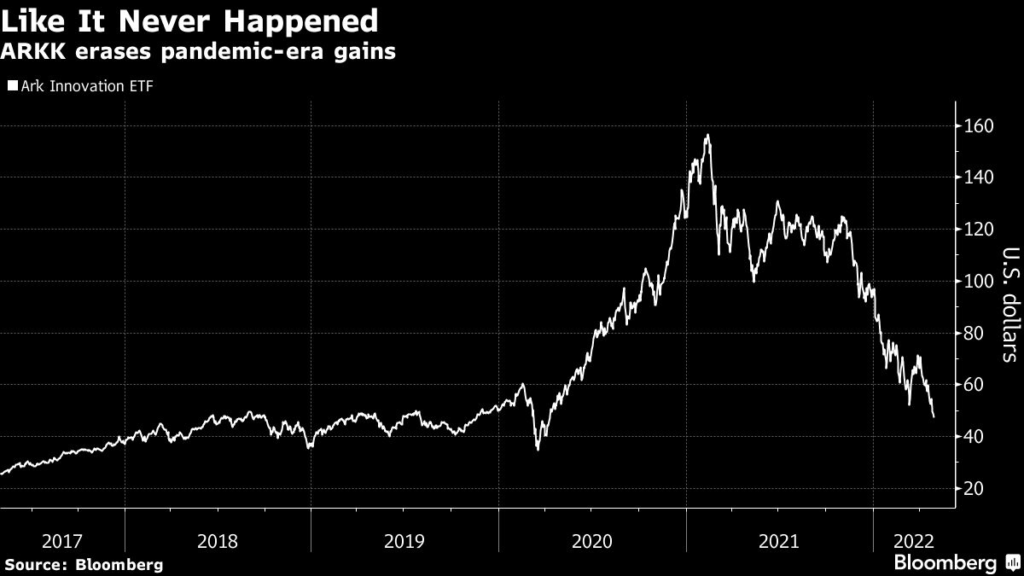
ARKK has plunged about 49% so far in 2022, after last year’s 24% drop. The S&P 500 is down more than 13% this year while the Nasdaq 100 has plummeted 21%.

Wood’s hot hand during 2020’s technology-fueled stock rally earned her somewhat of a cult following as her relatively concentrated portfolio — ARKK holds just 37 stocks — of so-called disruptors soared nearly 150%. Companies such as Tesla Inc. led the surge. The performance of the fund has deteriorated as the Federal Reserve tightens monetary policy and Treasury yields spike, dragging down richly valued, speculative technology shares.

While both TARK and SARK are directly tied to ARKK — one of the highest-fliers of the pandemic era — the ETFs shouldn’t be viewed as a comment on Wood, but as a way to wager on “beaten down” tech stocks from both sides of the trade, according to AXS chief executive officer Greg Bassuk. 

“We definitely don’t see this as a Cathie Wood or an Ark ETF,” Bassuk said in an interview. “The combination of our TARK launch, combined with the acquisition of the SARK fund, we view it really as a toolkit for investors for disruptive technologies, having nothing to do with Ark or Cathie Wood per se.”

While still a small player in the $6.6 trillion ETF arena, AXS has made an aggressive entrance. That includes a takeover of Tuttle Capital’s six funds, as well as the $106 million AXS Change Finance ESG ETF (CHGX) and the $10 million AAF First Priority CLO Bond ETF (AAA).

In addition to acquiring funds, the firm also launched the $67 million AXS Astoria Inflation Sensitive ETF (PPI) in late December. AXS has also applied with the Securities and Exchange Commission for 18 single-stock products, as well as the AXS Short Bitcoin Strategy ETF and a Bitcoin futures fund. 

TARK will launch on Monday alongside the AXS Short China Internet ETF (SWEB), which tracks the inverse performance of the $5.9 billion KraneShares CSI China Internet ETF (KWEB) that has dropped more than 21% so far this year. TARK and SWEB will charge management fees of 95 basis points and 75 basis points, respectively, Bassuk said.

More stories like this are available on bloomberg.com

©2022 Bloomberg L.P.

How to Buy a Classic Car Online

(Bloomberg) — With used car prices skyrocketing,  new-car inventories delayed for months, and the lingering stay-closer-to-home trend of Covid-19, car lovers are increasingly shopping online.

Last year, online auction sales beat live auction sales for the first time, with 20,000 cars sold online vs. 16,000  sold live across North America, according to research by the classic car insurer and data firm Hagerty. All told, online car sales rose 107%, moving from $492.5 million sold in 2020 to $1.02 billion sold in 2021, according to Kevin Fisher, a Hagerty analyst. 

The hazards of buying a car sight unseen are myriad. They can range from the mundane (that shade of blue on the 1975 Ferrari 308 you bought looks different in real life than in photos) to the expensive (you overpaid for that 1969 Corvette C3, and now it needs a new transmission). And that’s before you get to the dangerous (the worn tires and old brakes on the cute little 1980 Mercedes-Benz SL make driving it feel like skating on ice).

There is no way to completely erase the risk of buying a collectible car online vs. doing it in real life. But there are ways to mitigate the risk—and maximize the fun. Here are a few.

Determine the market value of the vehicle you want.

Hagerty price guides published online contain charts that show the rise or fall in values of nearly every collectible make and model on today’s market. They allow you to determine where the market is going for vehicles in perfect condition, vehicles in good drivable condition, and vehicles that need some work. You should also check the Hammer Price app for market rates; it publishes auction results from dozens of public sales each year for hundreds of vehicles. And a deep perusal of EBay Motors, Hemmings, and local lots, including Craigslist, to price-check and comparison shop will give you a good sense of what a fair price should be for the vehicle you wish to buy online.

You might be surprised. Classics from such luxury brands as Rolls-Royce cost far less than their newly made counterparts. Here are some general rules of thumb: “Numbers matching” means a car contains the original engine and is worth more than one that doesn’t; manual transmissions are often worth more than automatic transmissions; and lower mileage generally means a car is more desirable and will cost more money. 

Find an example you like.

You’ve got plenty of options. Bonhams’s Market, EBay, Collecting Cars, Fantasy Junction, and special online auctions from the big auction houses such as Gooding & Co. and RM Auctions all offer collectable cars for sale online. The granddaddy of them all is Bring a Trailer, which last year sold $828.7 million worth of cars, a 108% gain over the $398 million worth it sold in 2020—and a full quarter-billion dollars ahead of its closest live-auction competitor.

Most of the auctions work in a similar way: You can search for the make, model, and year of a vehicle you want and then follow online as people place bids. To place one of your own, which you can do at any time, you’ll register with the given site and hand over credit card information. (Most sites place a hold on the card or require an immediate down payment on the car, should you win the auction.)  

Research the car in question.

Talk to the seller about the vehicle. On Bring a Trailer, you can message the seller directly to ask a question. On other websites, you can even call the seller by phone. Having a one-on-one conversation about any vehicle will help you quickly suss out if the car is worth consideration.

On a more general level, you can read long threads about model-specific reliability problems and build standards on such enthusiast forums as Pelican Parts and Ferrari Talk. It can help to peruse online auction catalogs and read the descriptions of models previously sold that are similar to one you’re considering. Even though they don’t necessarily pertain to the car you’re contemplating, they’ll give you a sense of potential problems and what to inquire about. 

“The problem [online] is there is not a great standard platform for appropriate photos and inspection of these cars,” says Dorian Valenzuela, the founder and owner of DV-Mechanics, an Alfa Romeo and Porsche restoration and performance enhancement shop in Los Angeles. “A lot of poorly restored cars look super nice in photos to the untrained eye.”

If you’re really serious about the vehicle, consider traveling to view the car personally.

“I’ve flown to Birmingham, England, for a [pre-purchase inspection] because I didn’t trust photos,” Valenzuela says.

For many expensive classic vehicles, the price of a plane ticket is negligible compared to what you’ll be paying to buy. You wouldn’t purchase an expensive couch without sitting on it, or a luxury bed without laying on it, right? It pays to go see a car and drive it. Either you’ll find that you don’t like it and save yourself the money, or you’ll gain confidence that it’s indeed a vehicle you want to own.

Monitor the sale.

Some cars are listed at “No Reserve,” meaning the highest bid at the close of the sale will win the car. Other cars have a reserve, which means that if bidders don’t meet a minimum set by the seller, the car will remain with the owner. Be aware if a reserve has been placed on the car you want—and determine for yourself how much you can afford to pay; don’t get caught up in the emotion.

For instance, a car that you determined from your research has a market value of $75,000 would be a great deal if no reserve is listed and you  can buy it for $65,000. Conversely, if you find that the car’s market value is $75,000, and the reserve set on the car is $80,000, it is overpriced. Move on.

Don’t get too upset if bidding doesn’t go your way the first time you bid. Don’t let your heart get the best of you and force you to place a higher bid than a car is worth—or more than you can afford.

Read the room.

Take note of who is bidding on a car when the sale opens. Is it a random assortment of anonymous handles somewhat arbitrarily bidding, or are two bidders going strongly back and forth with alternating bids? People who are already in a fight to win the car may be willing to pay far more than it is worth.

Beware of bidders who jump in early and bid fervently. Often they are there to make a name for themselves or to build hype for their own car businesses, says high-end automotive broker Peter Brotman. Or a friend of the seller might be trying to boost the bidding.

“If you list a seven-figure car on BAT, and it’s not selling for the price you want, you can pretty much have your friends bid for it, and you can wind up having your car bought back,” Brotman says about a practice that’s downright common among the higher echelons of the blue-chip art and car worlds. “And it’s the best advertising you can get for your car. So it’s definitely a controlled environment that the everyday buyer should be aware of.”

Bid at the right time.

But not right away. There’s no sense in jumping into the bidding early. It’s better to wait and monitor any activity first. Keep reading the comments as they accumulate. Then bid an appropriate price incrementally above the previous bid and hope you win. And remember the bid limit you set for yourself; there’s no sense in going broke over one special car. 

“I personally like to show absolutely no interest in [a car] and then bid in the last minutes,” Valenzuela says.

Be patient. Remind yourself that even if you’re bidding on a $4.7 million-and-counting Ferrari La Ferrari Aperta, there will always be another example of what you want coming out there—or in the La Ferrari Aperta’s case, 209 of them! Trust that the right car will find you; when it does, the timing and finances will fall into place. 

Don’t be distracted by the peanut gallery. 

Half the fun of buying a car online is to read the comments.

“Remarkably, on BAT the community has become fraught with information and backstories,” Brotman says. “Some of it is b.s., and some of it is actually quite good. You have some very smart professional people giving opinions that are very valuable, that you would never get without it.”

When it comes to old cars, it seems everyone has a hot take—and likes to share it, whether or not it was requested. Most sales at Bring a Trailer bear dozens of comments about the vehicle; they offer a deep dive into the car’s most minute particulars from period-correct paint colors and seat upholstery to wheels and door handles. These are very helpful in gauging the authenticity of a given vehicle.

Still, the shrieks from the cheap seats can also serve to distract.

“Anyone with an account can comment and ruin good auctions,” says Valenzuela. “I see a lot of awful cars get way too much money.”

Don’t be distracted following a rabbit trail conversation online about things that are inconsequential to a car’s actual worth and merit; a conversation about the fact that the car has an old set of tires, for instance, simply diverts from a vehicle that may be worth serious interest. If you buy the car, put new tires on it.

Expect to pay, even after your winning bid.

Did you win the car you wanted? Great! Now be prepared to spend more money. Unlike most live auctions, where the buyer must pay the auction house a percentage premium for the purchase, most online auctions require no such payment for the buyer.  You are nonetheless likely to have to spend more money once you have it. 

One of the great things about online sales is that they expand your net in terms of the cars you can see and buy. This also increases the likelihood that the car you end up buying is not in your town. Transport to get the vehicle to you will cost. An open-air truck-ride to move your new baby from, say, Nashville to LA costs roughly $1,800 and can take the better part of a week. To transport the car via truck with an enclosed trailer costs even more. Registering a vehicle, getting it emissions-tested when necessary, and paying additional fees (such as for insurance) will all come into play.  

Hope for the best; expect the worst.

No amount of photos—or even videos—can properly vet a car. You will probably have to pay for at least some minor maintenance or repairs when you get your new prize. Such things as fixing electronics in the dashboard or repairing windows or seat belts are minor but essential to making the vehicle ideal for use. If you’re lucky, the car you buy online will be closely approximate what you anticipated. 

That’s part of the fun of owning a collectible car. There’s always something to improve.

More stories like this are available on bloomberg.com

©2022 Bloomberg L.P.

Toyota Facing End Of the Road on EV Tax Credits

(Bloomberg) — Toyota Motor Corp. is inching closer to using up a key U.S. tax credit for hybrid and electric vehicles, a milestone the automaker argues will raise its costs and hinder adoption of climate-friendly cars.

Current law allows automakers to offer a $7,500 tax credit to buyers of fully or partly electric cars, but only up to 200,000 per company. Demand for Toyota’s plug-in hybrid vehicles has steadily grown, especially as gasoline prices have surged past $4 a gallon, pushing up its cumulative sales of eligible vehicles to 183,000 as of the end of 2021, according to an analysis by BloombergNEF. The company reported sales of another 8,421 plug-in hybrid and electric cars in the first quarter.

The Japanese manufacturer, which has been at the center of a debate in Washington over whether extra tax credits should be extended to unionized carmakers, is poised to become the third manufacturer to hit the limit, joining General Motors Co. and Tesla Inc. Toyota executives have said they are planning for their share of credits to run out as soon as this summer.

“We’re planning for it, because Tesla’s out, and General Motors is out, and we’ll be out probably in the second quarter,” Bob Carter, Toyota Motor North America’s executive vice president of sales, said in a recent interview. “When you’re out, you enter a step-down phase down, so we’re planning for that.” 

The automaker has joined its rivals in lobbying for an extension of the cap, but Toyota and Tesla have vocally opposed an effort by the Biden administration to offer an additional $4,500 in credits to unionized carmakers, a position favored by GM, Ford Motor Co. and Stellantis NV. 

Democratic Senator Joe Manchin, a swing vote and lynchpin for such an extension, on April 28 called the White House’s current proposal to expand the popular tax credit “ludicrous,” noting a large existing backlog of orders for EVs and other vehicles as carmakers wrangle with shortages of critical parts.

Gradual Phase-Out

Absent Congressional action in the near future, Toyota faces a wind-down period that would halve the value of its credits every six months until hitting zero. The phase-out process starts two quarters after the cap is reached, meaning Toyota’s credit could be reduced to $3,750 as soon as Jan. 1, 2023. Toyota could have no more credits to offer car buyers as soon as next October. 

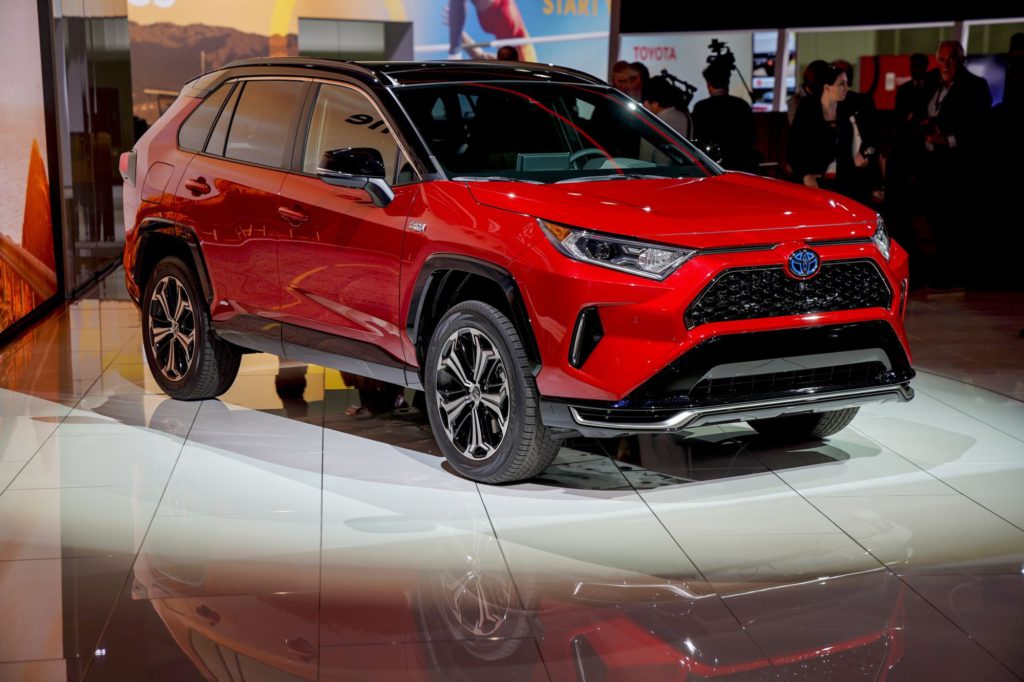
Toyota dealers have prioritized sales of increasingly popular hybrid models, which now make up more than a quarter of the company’s U.S. sales volume. Demand for the gas-electric version of the brand’s top selling vehicle — the RAV4 compact SUV — rose by double digits last quarter.

Carter said Toyota has considered lowering the price of its new EVs to compensate for the looming loss of the federal tax credit. 

Nissan Motor Corp. and Ford Motor Co. are the next nearest manufacturers close to tapping out on credits. The Japanese company has sold 166,000 electrified vehicles as of the end of 2021, followed by Ford’s 157,000. 

Carmakers sold a record 657,000 hybrid or all-electric cars in 2021, according to an analysis by BloombergNEF. While that accounted for only 4.4% of new car sales, it was double the level of a year earlier. Analysts say they see no sign of that growth halting anytime soon, even without the full federal credit for some brands.

“We have seen quarter-by-quarter increase in shopping for EVs and hybrids” since the fourth quarter of 2020, Michelle Krebs, executive analyst at Cox Automotive, which conducts market research for auto dealers, said in an email. 

More stories like this are available on bloomberg.com

©2022 Bloomberg L.P.
Google Attacks EU for Treating It Almost Like a ‘Criminal’

(Bloomberg) — Alphabet Inc.’s Google lashed out at the European Union for doling out a “quasi criminal fine of very large proportions” for allegedly thwarting advertising rivals on websites.

At a hearing at the bloc’s General Court on Monday, the search giant said the 2019 decision by the EU’s antitrust arm to issue the 1.49 billion-euro ($1.6 billion) fine was riddled with errors and should be struck down.

The case is the last of a trilogy of EU court fights over cases that set the course for antitrust chief Margrethe Vestager’s bid to rein in Silicon Valley. It focuses on Google’s role as an ad broker for websites, targeting exclusivity agreements for online ads with its AdSense for Search product. In its decision, the EU accused the company of imposing a number of restrictive clauses in contracts with third-party websites which prevented Google’s rivals from placing their search adverts on these websites.

The European Commission analysis includes “errors of characterization” that led it “to proceed on a false basis in its assessment of the clauses and they have resulted in material errors of analysis,” said Josh Holmes, one of the lawyers for Google appearing in court. 

The trio of cases marked the centerpiece of Vestager’s bid to crack down on the growing power of big tech companies. She’s fined the Alphabet unit about $9.5 billion to date and is still probing the company’s suspected stranglehold over digital advertising. 

“Google’s ultra-dominant position in general search” meant that it would always be well placed to operate on the European market for search advertising, Nicholas Khan, a lawyer for the commission, told the court. 

“Google didn’t want to rely on the intrinsic merits of its service, but instead resorted to the impugned clauses” in the agreements with “the commercially most important publishers for periods that usually ran for several years, and sometimes ran for many years,” he said. The disputed clauses were “clearly capable of restricting competition, as Google was well aware.”

Meta, Google Hit With EU, U.K. Probes Over Advertising Pact 

EU and U.K. antitrust watchdogs recently opened a new probe into possible collusion by Google and Meta Platforms Inc. over the way they operate online display advertising services.

Google in November lost the first challenge in its pending appeals in a case that focused on how the firm favored its own shopping service over rivals, an issue that’s triggered complaints against other tech giants. 

The EU court, the bloc’s second-highest, on Sept. 14 is set to rule on Google’s appeal of a record-breaking 4.3 billion-euro antitrust fine over its Android operating system.

The case is: T-334/19, Google and Alphabet v. Commission.


More stories like this are available on bloomberg.com

©2022 Bloomberg L.P.

Wikipedia Ends Crypto Donations as Environmental Concerns Swirl

(Bloomberg) — The Wikimedia Foundation, the non-profit organization behind Wikipedia, will stop accepting cryptocurrencies donations amid concern about their negative impact on the environment. 

“We began our direct acceptance of cryptocurrency in 2014 based on requests from our volunteers and donor communities,” the organization said in a statement Sunday. “We are making this decision based on recent feedback from those same community.”

The WMF will close its account on Bitpay, a crypto payment service provider, as well as its direct methods to accept cryptocurrencies as donations.

A proposal centered at this issue was made earlier this year and a little under 400 users participated in the voting and discussing whether the WMF should stop accepting cryptocurrency donations. The majority voted yes to the proposal 232 to 94. Users who support halting the process are mostly concerned about the energy-intensive mechanisms of the digital currency space.

Some members in the Wikipedia community opposed the proposal cited that there are less energy-intensive cryptocurrency options and crypto has shown its advantages to provide safer ways of donations for people in oppressive countries.

Bloomberg previously reported that the impact of the voting result would be minor in the context of the WMF’s funding. Total crypto donations in crypto to the WMF in the last financial year made up only 0.08% of overall revenue.

More stories like this are available on bloomberg.com

©2022 Bloomberg L.P.
Tesla Delays Filing as Investors Await Word on Possible Stock Split

(Bloomberg) — Tesla Inc. needs more time to file a regular disclosure ahead of its annual shareholders’ meeting, pushing back a potential detailing of plans for issuing new shares and a possible stock split.

Elon Musk’s electric-car-market leader said on Monday in a securities filing that it wouldn’t be able to file a proxy statement until sometime later this year, without providing a specific timeline. Tesla faced an April 30 deadline for filing its shareholder proxy after the end of its fiscal year on Dec. 31.

“We currently expect that our definitive proxy statement for the 2022 annual meeting of stockholders will be filed later than the 120th day after the end of the last fiscal year,” it said.

Investors are awaiting details on an anticipated request for a share-issuance vote the Austin, Texas, based company announced in a March 28 tweet. Tesla said new shares would “enable a stock split,” but didn’t provide details.

Read more: Tesla Adds $84 Billion to Valuation on Stock-Split Signal (1)

Tesla hasn’t announced a date for its 2022 shareholder meeting, which it held in October last year. The last time the company split its stock was in August 2020. 

Shares of the company fell 2.2% to $851.58 as of 9:37 a.m. in New York. The stock is down about 19% so far this year.

(Updates with opening shares in sixth paragraph.)

More stories like this are available on bloomberg.com

©2022 Bloomberg L.P.

Amazon Deepens Gloom for Battered E-Commerce Stocks

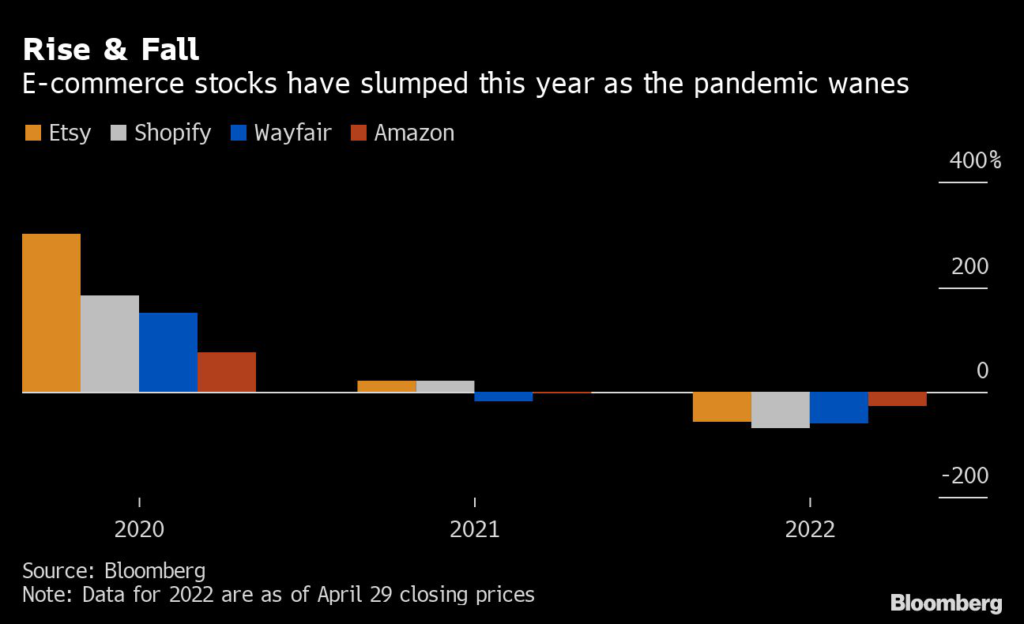
(Bloomberg) — The historic rout in Amazon.com Inc.’s shares last week highlights how difficult the environment has become for e-commerce stocks after their pandemic-driven boom, with investors set for another roller coaster in coming days.

Etsy Inc., Wayfair Inc. and Shopify Inc. are hurtling toward earnings reports this week in the shadow of Amazon’s worst selloff since 2006. The tech giant triggered the rout with a weaker-than-expected revenue forecast, adding to evidence of slowing e-commerce growth.

“It’s a canary in the coal mine,” said Oktay Kavrak, a director and product strategist at Leverage Shares. “If Amazon is hitting a speed bump, other names could crash. People were expecting a slowdown in growth following the pandemic, but I don’t think they expected as drastic a drop as we saw.”

The blazing rally e-commerce stocks saw at the height of Covid-19 lockdowns in 2020 has reversed as consumers returned to their pre-pandemic habits and inflation cooled their spending. Amazon executives said they were watching for whether shoppers will trim their purchases to offset rising prices as fuel and labor costs bite.

Etsy has slumped 58% this year, making it the third-worst performer on the S&P 500 Index, while Wayfair has tumbled 60%. Shopify just posted its worst month on record and it is also the biggest loser on Canada’s S&P/TSX Composite Index this year. All these stocks extended their decline Monday.

Despite that relentless selloff, dip buyers have been hard to come by. That might have to do with how expensive they still are. Shopify is trading on a whopping 128 times projected profits over the next 12 months and Wayfair has a multiple near 95, while Etsy’s figure is 21 — suggesting they continue to be priced for rapid growth. That compares with about 17 on the S&P 500 and 21 for the Nasdaq 100.

However, analysts have been paring back their expectations for the upcoming quarterly results. Wayfair’s revenue was projected to fall about 15% this quarter, while the 26% growth expected at Shopify would be its lowest since at least 2014, according to data compiled by Bloomberg.

Etsy reports on May 4, while Wayfair and Shopify are slated to release results on May 5.

The average consensus for Shopify’s earnings has been reduced about 9% over the past week, according to data compiled by Bloomberg. For Etsy, its average earnings projection has dropped by 2.6% over the past month and is down almost 30% over the past 90 days. Its revenue estimate has declined by more than 9% over the past quarter.

Despite near-term risks, some are staying upbeat when it comes to future growth. Poonam Goyal, a senior retail analyst at Bloomberg Intelligence, has a positive view on the long-term prospects for e-commerce.

“We’re very bullish on e-commerce, which should be able to grow at a double-digit clip for the next several years,” she said in a phone interview. “Comparisons will only get easier from here.”

Tech Chart of the Day

Tech stocks may be in for a prolonged selloff. The Nasdaq 100 Index, which sank more than 13% in April for its worst month since 2008, has fallen below what has been a key support line for the gauge. The tech-heavy benchmark closed at 12,855 on Friday just below the 13,000 level which has previously acted to halt multiple selloffs, including in March of this year and in May 2021. Friday’s decline to below that level may mean investors should hunker down for more volatility ahead.

Top Tech Stories

  • India accused Xiaomi Corp. of breaching the country’s foreign-exchange laws and seized 55.51 billion rupees ($726 million) from a local unit of the smartphone maker. It’s the nation’s latest clash with a Chinese company over their activities in the market.
  • The Solana blockchain is recovering after going dark in a seven-hour outage, caused by a significant rush of bots trying to mint nonfungible tokens on the crypto network.
  • Warren Buffett snapped up more Activision Blizzard Inc. stock in a merger arbitrage bet, as Microsoft Corp. pursues its deal to buy the video-game maker in what would be one of the largest mergers in U.S. history.
  • Yuga Labs, the creator of the popular Bored Apes Yacht Club collection of NFTs, launched a sale of virtual land related to its highly anticipated metaverse project, raising about $320 million worth of cryptocurrency in the largest offering of its kind.

(Updates share price moves.)

More stories like this are available on bloomberg.com

©2022 Bloomberg L.P.

Apple Faces New Dutch Fines in Dating Apps Dispute

(Bloomberg) — The Dutch consumer protection regulator is preparing to issue Apple Inc. with fresh fines after the watchdog found that the changes the technology giant made to how dating apps can bill customers were “insufficient.”

“Apple still uses unfair conditions for dating-app providers in the Netherlands,” the Authority for Consumers & Markets said in a statement. Its own investigation, plus market consultation and expert analysis have demonstrated that, the regulator said. 

Apple didn’t immediately respond to a request for comment.

The ACM, as its known, has already penalized Apple 50 million euros ($53 million) for rule breaking. The Cupertino, California-based company had filed a proposal to fully comply with an order to offer payments outside the app store to dating app providers after the fine.

That proposal offers improvements “but these still fall short of meeting European and Dutch rules,” the regulator said, adding that it continues to hold discussions with Apple about the issues.

Apple usually requires developers to use its own payment system, which helps it ensure a commission for apps on its platform. 

That tight control over app payments has attracted lawsuits and antitrust scrutiny, often focusing on Apple’s refusal to allow developers steer users to other payment methods. The ACM insisted Apple isn’t complying with its antitrust regulations, slapping the company with a series of weekly fines. 

“As the previous order subject to periodic penalty payments failed to deliver the desired outcome, ACM is currently preparing a new order subject to periodic penalty payments,” said the regulator.


More stories like this are available on bloomberg.com

©2022 Bloomberg L.P.
Blue Owl Starts a $2 Billion Private-Credit Fund for Wealth Push

(Bloomberg) — Blue Owl Capital Inc., the nearly $100 billion investment firm known for its direct-lending business, is expanding a push to attract high-net-worth clients through a new private-credit vehicle. 

Owl Rock Technology Income Corp. raised more than $500 million to focus on direct lending in the technology industry, the firm said Monday in a statement. The fund, structured as a non-traded business-development company, totals about $2 billion including leverage. 

“This access to the technology sector is especially important as we enter periods of increased market volatility,” Chief Executive Officer Doug Ostrover and co-President Marc Lipschultz said in the statement. 

Blue Owl is joining rivals including Blackstone Inc. and Apollo Global Management Inc. in forging into investments for wealthy individuals after many years of managing money for institutions. The push is so large across the industry that Blackstone has said its own retail assets could surge to $500 billion over time, while Apollo has hired about 150 people in the past year alone to lure retail clients.

Blue Owl started its technology investments in 2018, according to a presentation. It said it hasn’t suffered any defaults on loans in that sector since then. 

The firm has been lending to borrowers affiliated with private equity firms such as Thoma Bravo, Silver Lake and the Carlyle Group Inc., according to the presentation. 

More stories like this are available on bloomberg.com

©2022 Bloomberg L.P.
Buffett Lures Fans to Omaha With Stock Buys, Inflation Talk

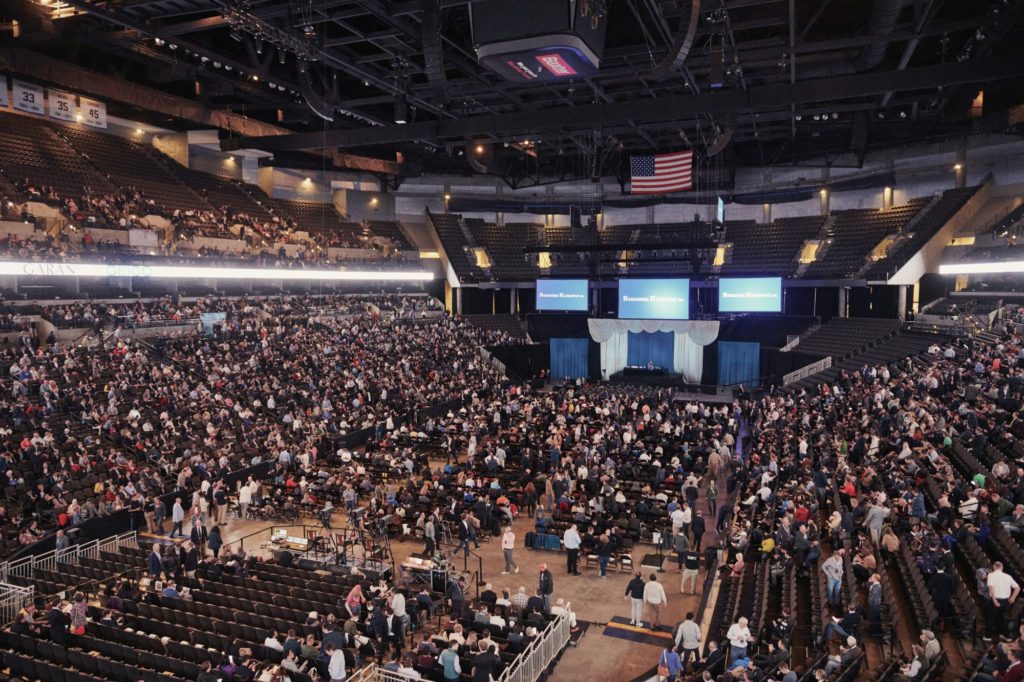
(Bloomberg) — As war broke out in Europe and U.S. inflation soared, Berkshire Hathaway Inc.’s Warren Buffett was doubling down on a tried-and-trusted strategy to navigate the fallout.

The billionaire investor went on his biggest stock-buying spree in at least a decade, undeterred by the geopolitical turmoil and fears of runaway inflation. He and his deputies dug deeper into the U.S. stock market and expanded the conglomerate’s stakes in Chevron Corp. and Activision Blizzard Inc., even as Buffett acknowledged the “extraordinary” price increases in Berkshire’s businesses.

Buffett, who held court in Omaha, Nebraska, on Saturday at Berkshire’s annual shareholder meeting, had faced questions about why he didn’t take advantage of the downturn when the pandemic took hold. Now, as war and inflation fuel market volatility, prompting the S&P 500’s worst quarter in two years, he’s ramped up amid the uncertainty, making $41 billion in net stock purchases in the first quarter. That’s the most in data going back to 2008.

“As long as Buffett and his team are paying reasonable prices for quality companies, these investments should do well in any environment — inflationary or otherwise,” said Darren Pollock, a Berkshire investor who’s a principal at Cheviot Value Management LLC. They reflect “the sheer volume of cash coming into Berkshire’s coffers along with what we think is becoming an increasingly obvious desire to get out of cash as inflation becomes more ingrained.” 

Buffett said he couldn’t predict the trajectory of inflation over the coming months or years, though he said he’s seen price increases across his businesses. He also conceded — as he’s done before — that his firm hasn’t always been good at timing its asset purchases, though it’s been “reasonably good at figuring out when we were getting enough for our money.”

On the home front, Berkshire let up on one of its key capital deployment levers, signaling buybacks aren’t quite as attractive to the firm right now. Still, the $3.2 billion of repurchases it did make, coupled with its other investments, helped shrink the conglomerate’s cash pile to roughly $106 billion — a sum that’s still above Buffett’s preferred margin for safety.

Berkshire’s stake in Chevron, which totaled nearly $4.5 billion at the end of 2021, hit $25.9 billion at the end of March, according to its first-quarter regulatory filing. The firm’s Activision stake, which accounted for just 1.87% of the video game company’s common stock, jumped to 9.5% as Berkshire wagered its deal with Microsoft Corp. would safely close. Activision stock was up 2.5% to $77.51 at 8:11 a.m. in early New York trading Monday.

“It is my purchases, not the manager who bought it some months ago,” Buffett said on Saturday about the increased Activision stake. “If the deal goes through, we make some money and if the deal doesn’t go through, who knows what happens.”

The billionaire carefully navigated some of the year’s biggest topics, if he addressed them at all. Scarce explicit comments were made on Russia’s invasion of Ukraine, though Buffett did address a question about the risk of nuclear weapons. He gave little away about Berkshire’s own succession plan.

Here are some of the other key topics that came up Saturday:

Succession Plans

Buffett confirmed last year that Greg Abel, the vice chairman in charge of non-insurance operations, was the top candidate to succeed him when he steps down as chief executive officer. Abel, alongside fellow Vice Chairman Ajit Jain, joined Buffett, 91, and longtime business partner Charlie Munger, 98, on stage for a portion of the meeting. 

Still, Buffett gave no indication that he was planning to cede his post anytime soon, and his appearance on stage reassured some investors about his ability to keep pace with the job. 

“The level of mental acuity and the humor is still there. It’s really something,” said James Armstrong, whose Henry H. Armstrong Associates oversees investments in Berkshire shares. “I feel pretty satisfied that management of the company is in good shape.”

Buffett joked that the top managers’ ages frankly require a chance for investors to check in on the leaders.

“It’s been three years and it’s a lot better seeing actual shareholders, owners, partners,” Buffett said to kick the meeting off in the morning. “If you’re the owner of a company and you’ve got two guys — 98 and 91 — running the company, you’re entitled to actually see them in person.”

Inflation Woes

Buffett again addressed the impact of inflation, after warning shareholders last year that the economy was red hot. Inflation hurts bondholders, as well as people who stash cash under couches.

“It swindles almost everybody,” Buffett said. “If you really could have a totally stable unit of monetary use for the next hundred years, it would be better for business and investors in general.”

What Bloomberg Intelligence Says:

“Berkshire Hathaway’s net $41.5 billion purchase of equities in the face of inflation was the key takeaway from 1Q results, with the lack of share repurchase in April potentially signaling more cash deployment is on tap.”

— Matthew Palazola, BI senior industry analyst, and Kylie Towbin, BI associate analyst

Click here to read the research.

Berkshire’s businesses haven’t been immune to the pressures. Dairy Queen CEO Troy Bader said in an interview on Friday that it’s a real challenge. Brooks Sports Inc. CEO Jim Weber acknowledged the effects on his business, which makes running shoes, but expressed some optimism that the supply challenges and inflation pressures that have weighed on the economy will lessen.

“There’s been such a bubble in demand post-Covid, people have been buying stuff at an incredible rate,” Weber said. “It isn’t going to crash, I believe, but it’s going to normalize. And when it normalizes, I think all of this capacity challenge in the supply chain is going to go back to normal. I think some prices may be more attractive because there’s going to be overcapacity.”

Bitcoin Criticism

Buffett and Munger have been constant skeptics of cryptocurrencies, with Munger calling it a “noxious poison.” The pair aired their deep criticism again on Saturday, with Buffett noting that he’d rather own lots of farmland or apartments — what he calls productive assets — than Bitcoin. 

“What would I do with it?” Buffett said. “It isn’t going to do anything.” 

(Updates with Activision stock price in seventh paragraph, Activision quote in eighth, Bloomberg Intelligence research.)

More stories like this are available on bloomberg.com

©2022 Bloomberg L.P.
Close Bitnami banner
Bitnami