Bloomberg

Binance Re-Enters Japan With Sakura Exchange Purchase

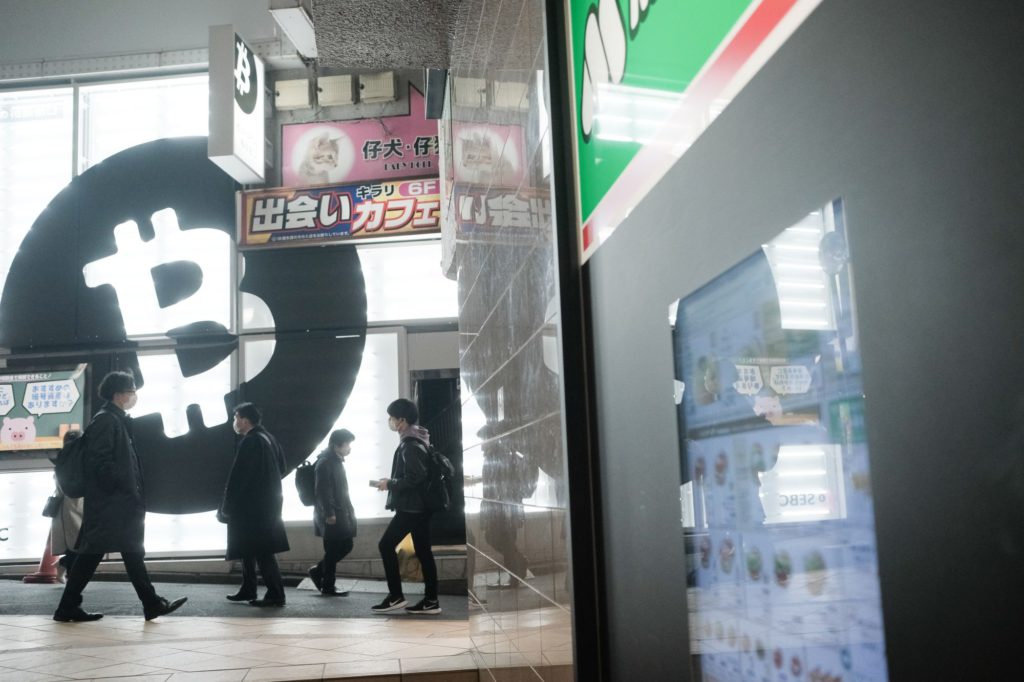
(Bloomberg) — Binance, the world’s biggest cryptocurrency exchange, bought a Japan crypto exchange service provider to re-enter a market it said will play a “key role” in the future of cryptocurrency adoption. 

The firm acquired 100% of Sakura Exchange BitCoin, paving the way for it to enter Japan as a regulated entity, Binance said in a statement on Wednesday. The purchase will give Binance its first license in East Asia, according to the statement. 

Binance’s acquisition comes amid turmoil in the digital assets industry in the aftermath of the collapse of rival FTX. The terms of the transaction were not disclosed.

“We will actively work with regulators to develop our combined exchange in a compliant way for local users,” said Takeshi Chino, general manager of Binance Japan. “We are eager to help Japan take a leading role in crypto.”

Binance’s billionaire co-founder Changpeng “CZ” Zhao in 2018 ditched a plan to build a base in Japan, following inquiries from the securities regulator that led to an official notice to stop operating in the country without a license. It got a similar warning three years later for not complying with registration rules. 

More recently, Japanese Prime Minister Fumio Kishida’s agenda for reinvigorating the economy under the rubric of “New Capitalism” includes support for the growth of so-called web3 firms. The term refers to a vision of a decentralized internet built around blockchains, crypto’s underlying technology.


More stories like this are available on bloomberg.com

©2022 Bloomberg L.P.

GoTo Shares Fall to Record Low as Major Holders’ Lock-Up Expires

(Bloomberg) — Shares of GoTo Group plunged to a record low as a lock-up on its major shareholders’ stakes neared expiry, suggesting investors are expecting some of them to reduce their holdings.

The stock fell as much as 6.8% in Jakarta trading and headed for its eighth straight daily drop, leaving it down 55% since its initial public offering in late March. Indonesia’s largest tech company now has a market value of about $11 billion.

Early backers such as Alibaba Group Holding Ltd. and SoftBank Group Corp. agreed to an eight-month lock-up expiring Nov. 30 to support the stock price following the IPO. GoTo has been trying to avoid a situation where a large part of the backers would seek to cash out at the same time, attempting a novel plan to find buyers for controlled sales of their stakes.

Yet on a conference call last week, Chief Executive Officer Andre Soelistyo said that there were no assurances that such a controlled share sale will take place.

About 1 trillion GoTo shares, or more than 90% of the total outstanding, are becoming eligible to be sold. Still, that includes holders such as GoTo’s employee fund that are unlikely to sell. Alibaba and SoftBank each own about 9% of GoTo.

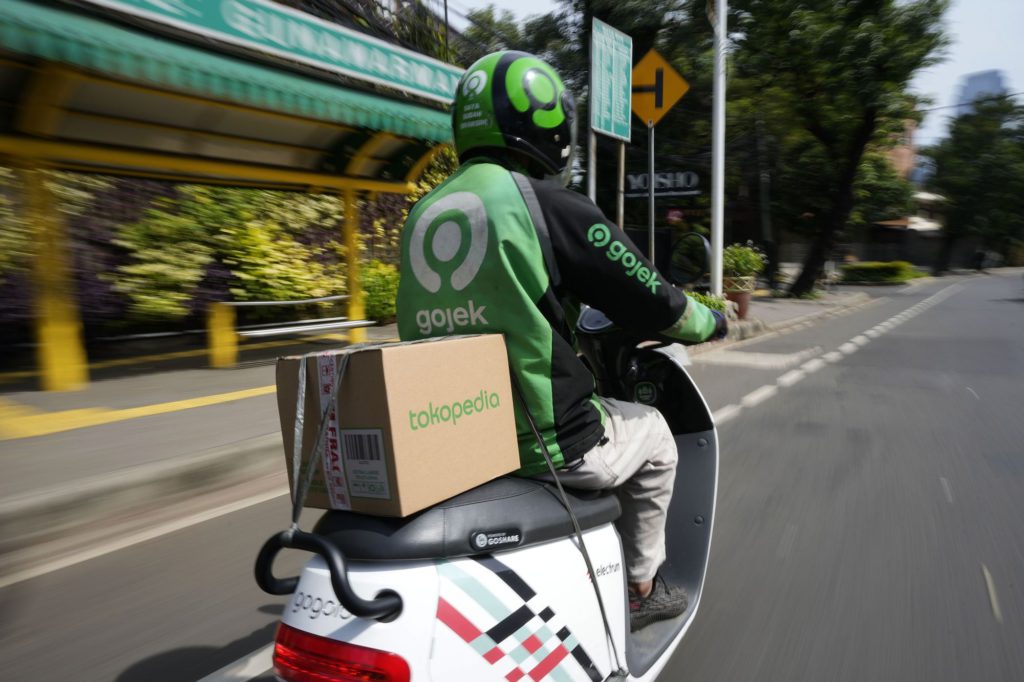
Formed via a merger of ride-hailing provider Gojek and e-commerce firm Tokopedia, GoTo raised $1.1 billion in one of this year’s largest IPOs. The share sale boosted the value of stakes of China’s Alibaba and SoftBank’s Vision Fund to almost $5 billion combined.

In late June, Chinese artificial intelligence software maker SenseTime Group Inc. slumped as much as 51% in Hong Kong trading after a lock-up of its shares expired following its December IPO.

–With assistance from Yoolim Lee.

More stories like this are available on bloomberg.com

©2022 Bloomberg L.P.

Investors Want More of India, Says Goldman Sachs’ Sengupta

(Bloomberg) — Foreign investors are showing increased interest in India, as Asia’s third-largest economy ramps up its manufacturing capacity and improves infrastructure, said Santanu Sengupta, Chief India Economist at Goldman Sachs Group Inc. 

As investors chase markets with digital new economy assets, India has consistently attracted annual foreign direct investments of $50 billion to $55 billion, even in the pandemic, Sengupta said in an interview with Bloomberg Television’s Haslinda Amin and Rishaad Salamat. 

Government incentives for companies that expand their manufacturing base in India are a big draw, he said. “There is clearly a lot of interest from foreign institutional investors, especially from the foreign direct investment side, to invest in India.”

India is trying to woo investors as global manufacturing firms, especially in the technology sector, look to diversify away from China. India and Vietnam are expected to corner a large share of business, especially in electronics.

“The window is likely going to be largest in the next several years,” Sengupta said in a note released last week. “If India is able to capitalize on this opportunity, it will be able to attract a large share of global inbound manufacturing FDI.”

More broadly, Sengupta said India’s economy is in decent shape. He expects gross domestic product for the July-September quarter, which is due today, to come in at 6.3%. With inflation still high, the Reserve Bank of India may increase the policy rate by half a point next week and another 35 basis points in February, he said. 

Inflation for core goods may reach its apex in the coming quarters, but services inflation could stay sticky for longer, Sengupta said. The current account deficit will likely remain elevated at 3%-3.5% of gross domestic product, even as a peaking dollar gives the central bank “some freedom to play with a lower level of reserves as external balances pressure will be more manageable.”

Manufacturers have strengthened their balance sheets by shedding debt, he said, and Indian banks are doing well, helping to buffer the country from external financial shocks. However, a longer US Federal Reserve interest rate hike cycle, and spikes in oil prices when China fully opens its economy, pose risks for 2023, Sengupta said.

More stories like this are available on bloomberg.com

©2022 Bloomberg L.P.

Singapore Says FTX Blow to Temasek Limited Despite Stain

(Bloomberg) — The collapse of crypto exchange FTX hurts the reputation of Singapore state-owned investor Temasek Holdings Pte. but it has “very limited” impact on the broader financial system, Deputy Prime Minster Lawrence Wong said.

“The FTX loss is disappointing and is being taken seriously,” Wong said in parliament Wednesday in response to a flurry of questions from lawmakers. Temasek wrote down its entire $275 million investment in FTX after Sam Bankman-Fried’s crypto empire imploded Nov. 11.

Temasek will have an independent team reviewing the loss, according to an updated explainer page on its website. Wong said the government will not rule out doing an external probe, but only if there’s negligence or misconduct within the organization. He called the FTX loss an “exceptional situation.”

–With assistance from Aradhana Aravindan.

More stories like this are available on bloomberg.com

©2022 Bloomberg L.P.

Stocks Rise in Volatile Trading Ahead of Powell: Markets Wrap

(Bloomberg) — Stocks edged higher Wednesday after a volatile open as investors weighed Covid developments in China and awaited a speech from Federal Reserve Chair Jerome Powell.

Hong Kong’s equities benchmark dropped initially, quickly reversed course and then made gains in choppy trading as the day progressed. Mainland China gauges fell slightly.

US and Europe futures rose after stocks on Wall Street closed down, and ahead of the speech by Powell on the economy and the labor market. Investors will be on the lookout for further signs that the next Fed rate hike will step down to 50 basis points.  

Treasuries made a small advance while a dollar gauge declined. The offshore yuan slid, giving back part of Tuesday’s rally, after China’s factory and services activity contracted further in November as record Covid cases prompted widespread movement curbs.

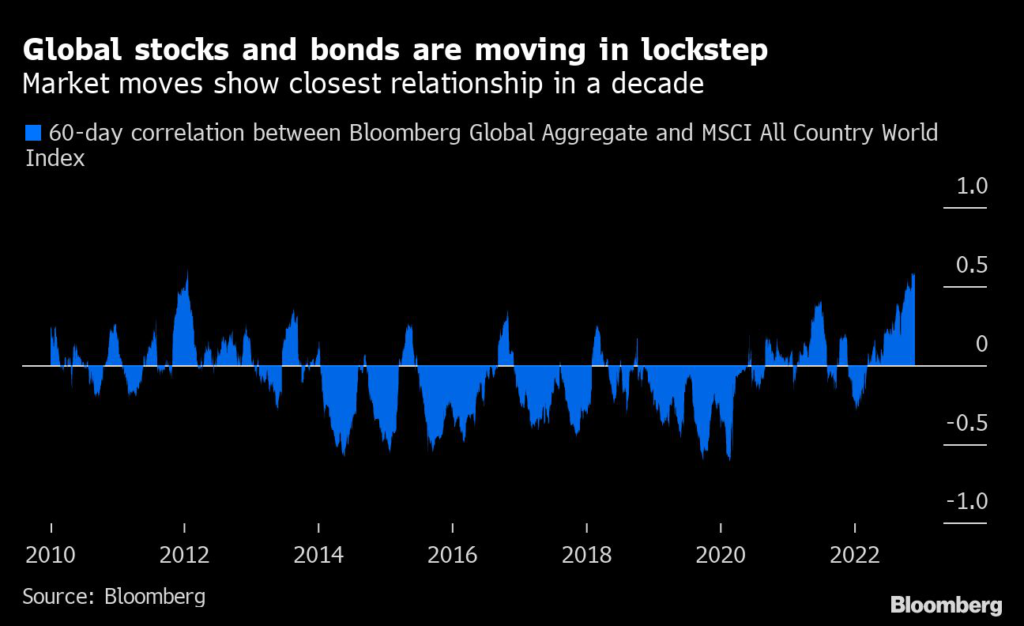
Amid the bumpiness, an index of global stocks was on course for a second monthly advance, which has trimmed its loss so far this year to about 18%. Bonds were also poised for a monthly gain, along with losses for 2022 on a near par with equities.

The lockstep moves in stocks and bonds brought their correlation this week to highest level since 2012, which has heaped pressure on investors seeking to hedge risk by splitting their portfolios between the two asset classes. 

The declines in equities on Wall Street Tuesday were led technology companies. A slump in Amazon shares followed a large debt offering from the retailing giant.

A series of investment grade debt deals was one factor that lured investors from Treasuries, which fell in the US, sending yields higher. 

Oil rose for a third day Wednesday after industry data pointed to a substantial draw in US crude stockpiles and investors counted down to an OPEC+ meeting that may see the group agree to cut production.

Gold headed for its biggest monthly gain since May 2021 as the dollar fell on signs the Fed is preparing to slow the pace of interest-rate hikes.

Elsewhere, Bitcoin and other leading crypto assets spiked higher in the Asian trading session.

Key events this week:

  • EIA crude oil inventory report, Wednesday
  • Fed Chair Jerome Powell speech, Wednesday
  • Fed releases its Beige Book, Wednesday
  • US wholesale inventories, GDP, Wednesday
  • S&P Global PMIs, Thursday
  • US construction spending, consumer income, initial jobless claims, ISM Manufacturing, Thursday
  • BOJ’s Haruhiko Kuroda speaks, Thursday
  • US unemployment, nonfarm payrolls, Friday
  • ECB’s Christine Lagarde speaks, Friday

Some of the main moves in markets:

Stocks

  • Futures on the S&P 500 rose 0.1% as of 6:44 a.m. London time. The S&P 500 fell 0.2%
  • Nasdaq 100 futures climbed 0.1%. The Nasdaq 100 fell 0.7%
  • Euro Stoxx 50 futures rose 0.5%
  • The Topix Index fell 0.4%
  • The S&P ASX Index rose 0.4%
  • The Hang Seng Index rose 0.3%
  • The Shanghai Composite Index fell 0.3%

Currencies

  • The Bloomberg Dollar Spot Index fell 0.1%
  • The euro was little changed at $1.0339
  • The Japanese yen was little changed at 138.52 per dollar
  • The offshore yuan fell 0.2% to 7.1543 per dollar

Cryptocurrencies

  • Bitcoin rose 2.4% to $16,860.88
  • Ether rose 4% to $1,268.2

Bonds

  • The yield on 10-year Treasuries declined three basis points to 3.72%
  • Japan’s 10-year yield was unchanged at 0.25%
  • Australia’s 10-year yield declined seven basis points to 3.53%

Commodities

  • West Texas Intermediate crude rose 0.8% to $78.85 a barrel
  • Spot gold rose 0.2% to $1,753.84 an ounce

This story was produced with the assistance of Bloomberg Automation

More stories like this are available on bloomberg.com

©2022 Bloomberg L.P.

Saudi Food Delivery Firm Jahez to Buy Chefz in Cash, Stock Deal

(Bloomberg) —

Saudi food delivery firm Jahez agreed to acquire The Chefz in a cash and stock deal, almost a year after Delivery Hero SE’s attempt to buy the firm was thwarted by the local competition watchdog.

Jahez International Co. for Information Systems Technology, as the firm is formally known, will buy The Chefz for an equity valuation of 650 million riyals ($173 million), according to a statement. It will consist of 325 million riyals in cash and issuance of new shares to the sellers of The Chefz valued at the same amount.

The Chefz, which started out as an app that specialized in home delivery for fine dining restaurants before expanding its services, competes against Delivery Hero’s Hungerstation and Jahez. Saudi Arabia’s General Authority for Competition last year rejected Delivery Hero’s takeover offer for The Chefz, without disclosing any details or the reasons for its decision.

Jahez is the biggest locally owned food delivery group in Saudi Arabia. The firm made its trading debut in January after pricing its initial public offering at the top end of a planned range.

Jahez said in addition to cash and shares, the founding members of The Chefz will receive an earn-out amount of 100 million riyals in cash, subject to performance-related targets being attained over an earn-out period. The proposed transaction is likely to close in the first quarter of next year.

HSBC Holdings Plc is the financial adviser for Jahez, while EFG Hermes is the adviser for The Chefz.

More stories like this are available on bloomberg.com

©2022 Bloomberg L.P.

A Parent’s Guide to Kids and Social Media

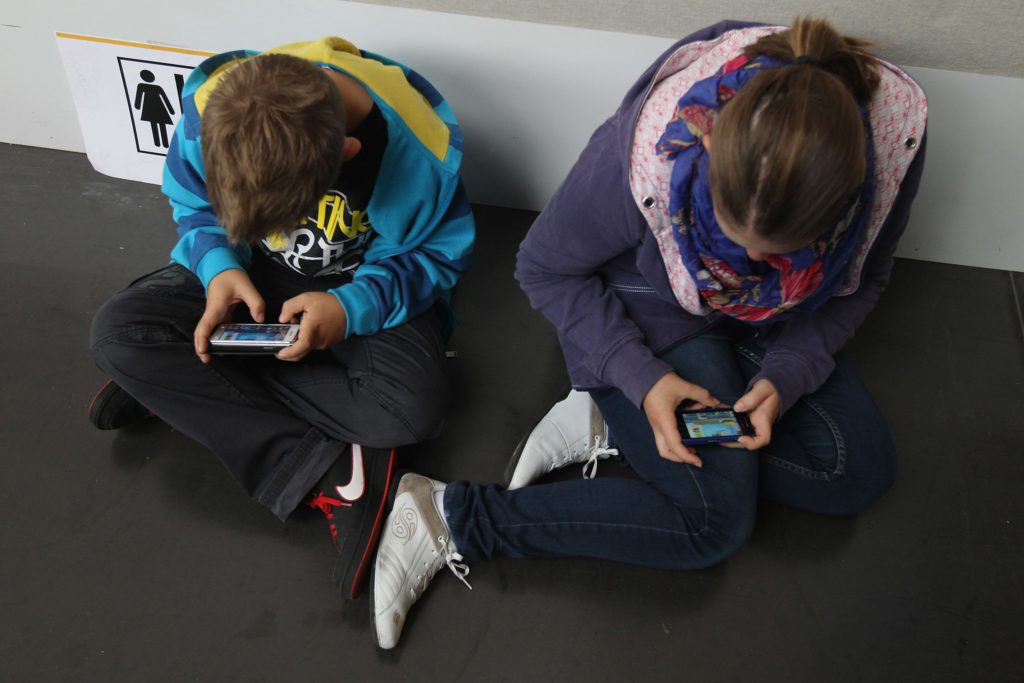
(Bloomberg) — With more than seven in 10 Americans using social media, parents are facing an increasingly challenging question: How do you keep the digitally native generation safe?

Watchdogs, researchers and industry insiders have warned of the dangers of social media for young kids for years. Former Facebook employee Frances Haugen described the addictive features of apps and algorithms — and the negative affect they can have on body image.  More people are filing lawsuits against social media companies for damage to their mental health, as well as for addiction. 

TikTok isn’t free of dangers either. Fueled by the Covid-19 pandemic, TikTok is now the biggest app in the world, and it’s come to be known for challenges that go viral on the platform. There are harmless ones, like choreographed dances and adding music under videos of pets. There are also more dangerous ones that proliferate on the app, like climbing unstable towers (the milk crate challenge), or kicking the legs out from under someone (the skull-breaker challenge). These can become a big a problem when underage kids bypass restrictions to sign up for the app. 

A recent Bloomberg investigation uncovered at least 15 deaths of children under the age of 12 related to one dangerous challenge on TikTok: The blackout challenge, in which people choke themselves until they pass out. Some parents are now suing the social media giant for liability in their children’s deaths. You can read the investigation here.

Navigating the conversation around social media platforms can be difficult, especially with younger children. Two experts Marc Berkman, chief executive officer at the Organization for Social Media Safety, and Emily Mulder, program director at Family Online Safety Institute weighed in on keeping kids safe online.Where do I start when it comes to talking to my kids? The first step is for parents to educate themselves on the full scope of dangers on social media, such as sexual harassment and cyber bullying, according to Berkman. “A lot of parents don’t realize how many different social media related dangers are out there, how severe some of them are, or how common some of them are,” he said.  What  conversations should I be having ? There is no one-size-fits-all approach for families, said Mulder.  Begin asking questions like: What are your intentions in using the app?  Why is it appealing to you? It will help give parents a sense of what they should keep an eye on with their kids, she said. Conversations should be ongoing too, starting when your child first starts using social media.

Talk about the dangers or problems that the child is likely to encounter. “If a child does not understand what a danger is, it’s much harder to either avoid that danger or most likely respond to it,” Berkman said. 

Establish a set of values for your child. Explain that things like hate speech and cyberbullying are wrong and against your family and community values. It makes a significant difference in terms of protecting them.Once I’ve talked to my child, how do I monitor them?Berkman said the next thing would be to implement rules within your family for social media and adjust safety settings on your child’s devices. If your child violates your family rules, Berkman recommends a consequence that is proportional to the misbehavior, like temporarily losing access to social media or the device. One caveat to restricting access too much is that it can prohibit children from learning how to navigate safely. “You want them to know what a healthy interaction looks like online, the same way you want them to know what that looks like in real life,” said Mulder.What should I do if my child is not of age but wants to use social media?The age requirements are there for a reason, said Mulder. She recommends parents look for other age-appropriate platforms that children can use if they’re insistent. She suggests looking for places where their exposure to negative content or comments will be limited. 

However, if you are comfortable with your children using social media earlier, Beckman recommends additional precautions like using a third-party software. Apps like Bark, can monitor your child’s account and send parents alerts when the account comes across harmful content.  

What should I do if I don’t want my child on social media just yet?Berkman recommends a community-based approach where majority of parents, in a particular classroom or school grade, agree to keep their children off social media until they are ready. This will prevent your child from feeling excluded online and alleviate the peer pressure.

More stories like this are available on bloomberg.com

©2022 Bloomberg L.P.

Hackers Cripple Prestigious Indian Hospital’s IT Systems

(Bloomberg) — Cyberattackers have crippled systems at one of India’s most prominent hospitals for a week, forcing the institution to operate a raft of key medical services and labs manually.

The All India Institute of Medical Sciences — a hospital that’s traditionally treated the country’s top politicians — has succumbed to a ransomware attack that’s shut down centralized records, people familiar with the matter said.

India’s premier state-run teaching hospital has advised various departments to store data individually until systems can be restored, the people said, asking to remain anonymous disclosing sensitive information. The downtime is exerting a domino effect across a plethora of divisions including its clinics, complicating new patient registrations, the people added.

It’s unclear what data the attackers may have accessed, or what their motives were. The hospital itself hasn’t said what data — or whose — may have been compromised. On Monday, police in the Indian capital, where the hospital is located, said it was unaware of ransom demands in response to local media reports that 2 billion rupees ($24.5 million) had been demanded.

The sprawling hospital complex handles 1.5 million outpatients and 80,000 inpatients a year, according to information on its website. Prime Minister Narendra Modi was administered his Covid-19 vaccination at AIIMS and Home Minister Amit Shah was treated there after he tested positive for the virus.

A spokesman for AIIMS did not immediately respond to text messages from Bloomberg News seeking comment. On Tuesday, the institute said it had recovered all its data, but “all hospital services, including outpatient, in-patient, laboratories, etc continue to run on manual mode” since Nov. 23 while authorities sanitize the network. It gave no details in the statement except to describe it as a cyber-security incident.

The incident is the latest in a long and accelerating run of cyber-intrusions that have plagued global institutions for years, as hackers, ranging from state-sponsored attackers to opportunists seeking enrichment, take advantage of endemic deficiencies in cybersecurity.

But the AIIMS incident is notable given the target’s prominence as well as the amount of time it’s taking to secure breached systems. 

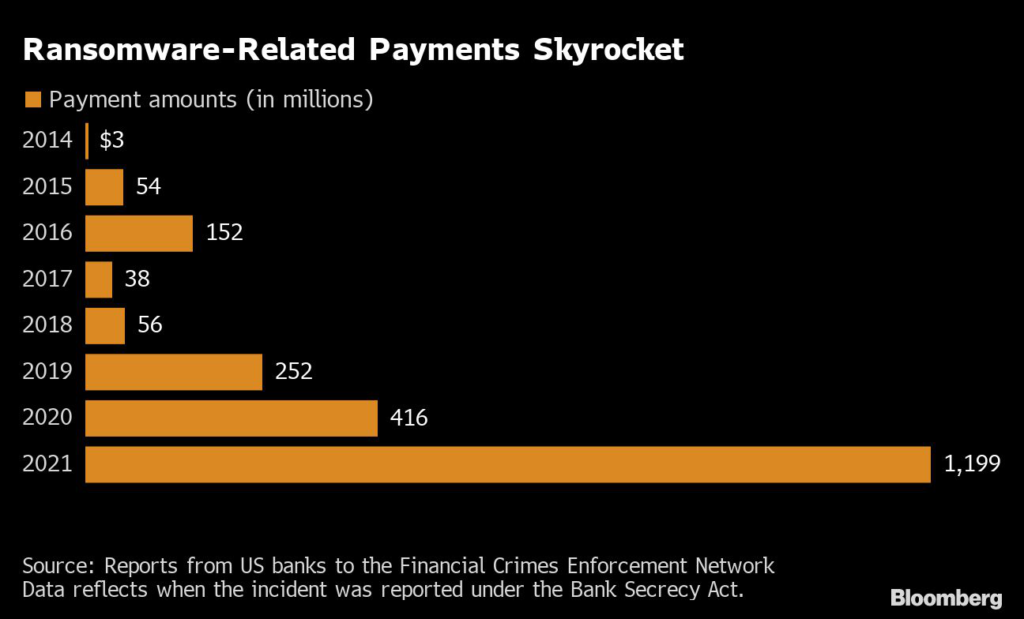
Ransomware is a type of malware that encrypts a victim’s computers. The attackers then demand a ransom payment to unlock them. Ransomware payments have skyrocketed in recent years, US government data shows, as many groups have adopted a type of double extortion. In addition to encrypting files and demanding money, they also are stealing private troves of data and threatening to release it if their demands aren’t met. 

Medical institutions in particular present an attractive target because of the highly sensitive nature of the data they house, as well as their critical societal roles. In October, Australian health insurer Medibank Private Ltd. disclosed that the personal information of nearly 10 million people had been exposed in an attack.

The Treasury Department said that US financial institutions reported nearly $1.2 billion on likely ransomware-related payments in 2021, usually in response to breaches originating with Russian criminal groups.

–With assistance from Jamie Tarabay and Abhijit Roy Chowdhury.

(Updates with details)

More stories like this are available on bloomberg.com

©2022 Bloomberg L.P.

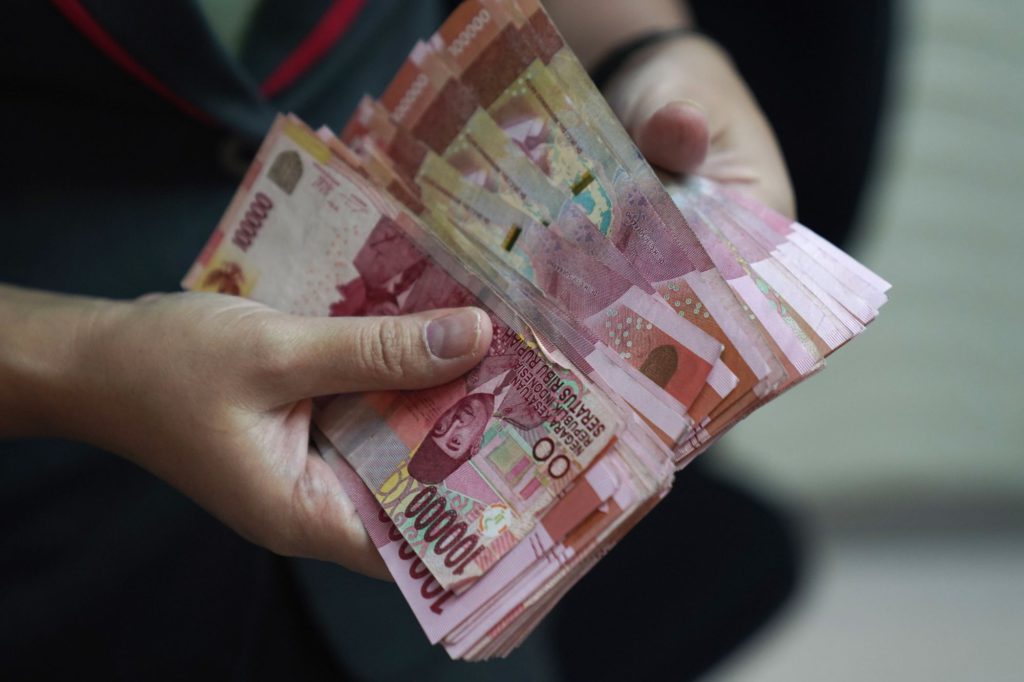
Indonesia Ready to Boost Rates, Buy Bonds to Shield Rupiah

(Bloomberg) — Bank Indonesia stands ready to further raise interest rates and boost short-term bond yields to support the rupiah into 2023, Governor Perry Warjiyo said.

The rupiah, Asia’s worst performer this quarter, should bounce back next year on the back of Indonesia’s recovery momentum and cooling inflation, Warjiyo said at the central bank’s annual meeting on Wednesday. The monetary authority will continue its “triple intervention” strategy and buy up bonds in the secondary market to maintain “competitive” yields.

Indonesia’s currency has weakened to a two-year low even as the central bank tightened by another half-point earlier this month, taking the benchmark rate to pre-pandemic levels. The rupiah erased an earlier loss and was little changed at 15,739 per dollar as of 12:06 p.m. Jakarta time, as BI said it intervened on Wednesday.

Amid continued global turmoil, the governor doubled-down on Bank Indonesia’s “front-loaded, pre-emptive and forward-looking interest rate policy” to anchor “overshooting” inflation expectations, with the goal of wresting the core gauge back to the 2%-4% target earlier in the first half of 2023.

At the same time, policymakers will keep using macroprudential measures to support growth. Bank Indonesia is extending looser rules on home and auto loans, as well as lower reserve requirements for banks lending to priority sectors. It reaffirmed its estimate for gross domestic product to expand 4.5%-5.3% next year, driven by exports, consumption and investment.

The central bank also launched its white paper on the digital rupiah, with plans to launch it wholesale for money markets then expanding it to retail later.

Here are the latest estimates from Bank Indonesia:

  • Global interest rates will likely stay higher for longer, with the Federal Reserve’s key rate expected to reach 5% and stay high for the rest of 2023
  • Inflation will return to the target range of 2%-4% in 2023 and 1.5%-3.5% in 2024
  • Credit growth seen at 10%-12% in 2023 and 2024

–With assistance from Claire Jiao and Sanjit Das.

(Updates with more details from governor’s speech)

More stories like this are available on bloomberg.com

©2022 Bloomberg L.P.
Flipkart Veteran Building Unified Shopper Identity Across Stores

(Bloomberg) — Flash, an early-stage startup established by an e-commerce veteran to target frequent online shoppers, bagged $5.8 million in seed capital to defy a tough global funding climate.

The Indian startup created by engineer Ranjith Boyanapalli, a former executive at Walmart Inc.’s Flipkart, raised the funds from backers including Global Founders Capital Management and angel investors such as Binny Bansal and Sujeet Kumar.

Flash is creating a digital identity that power shoppers can use across retail sites. The service seeks to make order processing, communication with sellers and the use of rewards programs easier for frequent shoppers. The company will use the seed-round capital to develop the product, hire and expand globally.

“Power shoppers who shop online, order food or groceries as many as 400 times a year have a very broken experience, devoid of synergy,” Boyanapalli, 41, said in a video interview.

Users will be able to track and manage their past and current orders with various services in one location. Flash’s service will debut in India and expand to the US and Europe within 18 months.

The startup is targeting India’s 25 million frequent shoppers who account for over two-thirds of online-retail revenue, and it predicts the number of those heavy users to rise to 65 million by 2030.

India had the world’s third-largest online-shopper base of nearly 190 million at the end of 2021 and this number is set to triple to 650 million by 2030, Flash said in a release.

More stories like this are available on bloomberg.com

©2022 Bloomberg L.P.
Close Bitnami banner
Bitnami