
Bloomberg

China Builders Face First Investor Test in Resumed Equity Sales

(Bloomberg) — China’s cash-strapped property developers are set for the first major test of investor demand after policy makers lifted restrictions on local share sales. 

Luxury builder Shimao Group Holdings Ltd. plans to sell as much as 30% of share capital of its key China-listed unit to no more than 35 investors. Smaller regional company Hubei Fuxing Science and Technology Co. also plans a private share sale. 

The two developers will provide the first gauge of demand from investors at a time when real estate shares are just starting to rebound from record lows. China said this week that it would end a ban and allow listed builders to sell local shares for debt repayment and acquisitions. 

Shimao’s key unit onshore, Shanghai Shimao Co., could raise more than 3 billion yuan ($420 million) based on its current market value, which would meaningfully boost its cash pool that stood at 4.5 billion yuan as of September-end, Bloomberg Intelligence analysts Daniel Fan and Adrian Sim said in a note.  

The company “will be able to come up with a debt plan,” if using part of the proceeds as a sweetener to negotiate a debt-extension, the analysts wrote. 

Shanghai Shimao said it will use the money for housing projects, debt repayment and working capital. 

Cash-strapped Shimao, which defaulted on two bonds this year, has seen its sales tank amid a cash crunch brought on by tightening policy measures. It’s requested a number of extensions in recent months to repay loans, asset-backed securities and trusts. 

It fell out of the top 10 by sales to 22nd, according to data from China Real Estate Information Corp. The company said last month it’s actively working on offshore debt restructuring. 

Shimao’s two yuan bonds both surged about 30% before being halted Wednesday morning. A 5.2% dollar bond due 2025 gained 1.6 cents on the dollar to 7.56 cents, set for the largest one-day rally in more than three months. 

Shares of Shanghai Shimao and Hubei Fuxing both surged by a 10% daily limit. 

China has eased its stance against developers after real estate prices fell the most in seven years in October, posting a 14th month of declines. The government has offered some developers the chance to issue guaranteed bonds and pledged to finance at least 1.28 trillion yuan for builders through its largest banks.

–With assistance from Phila Siu.

More stories like this are available on bloomberg.com

©2022 Bloomberg L.P.
China Economic Activity Falls as Covid Cases Surge to Record

(Bloomberg) — China’s economic activity contracted further in November amid a record Covid outbreak, with growth likely to remain weak and the central bank expected to add more stimulus to bolster the recovery. 

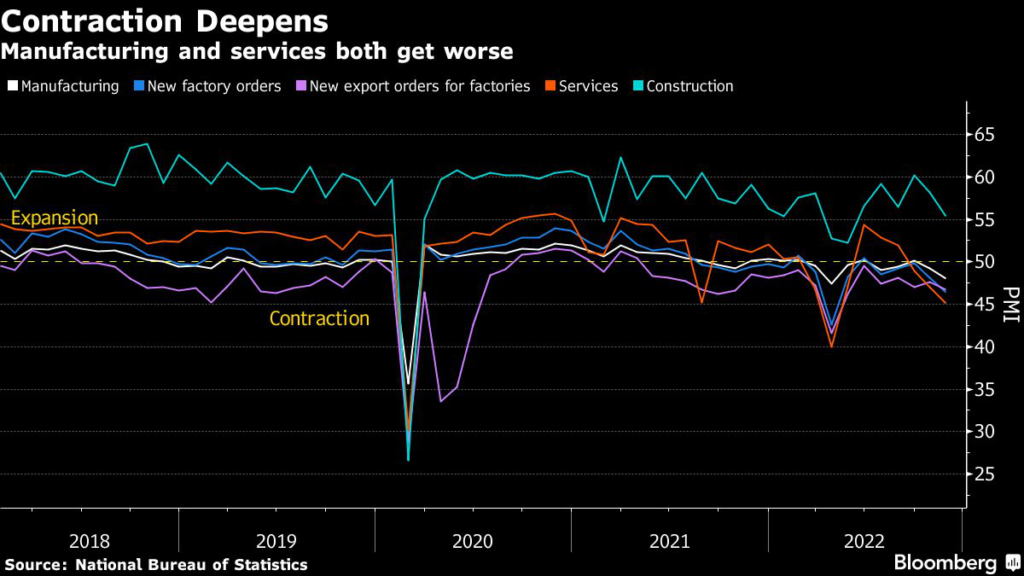
The official manufacturing purchasing managers index fell to 48 this month, the National Bureau of Statistics said on Wednesday, the lowest reading since April and worse than an estimate of 49 in a Bloomberg survey of economists.

The non-manufacturing index, which measures activity in the construction and services sectors, declined to 46.7 from 48.7 in October, also lower than the consensus estimate of 48. A reading below 50 indicates contraction, while anything above suggests expansion.

The economy is suffering increasing damage and residents have taken to the streets to protest tighter Covid controls in several major cities recently. Economists expect growth to slow to around 3% this year, putting pressure on officials to step up stimulus to spur the recovery next year.

“Policymakers are working at full steam to create strong impetus for growth with stimulus packages,” said Bruce Pang, chief economist and head of research for Greater China at Jones Lang LaSalle Inc. 

He sees China’s economy as likely to return to a potential growth rate of over 5% “no earlier” than the second quarter of next year, assuming less disruptions from Covid outbreaks and curbs.

China’s benchmark CSI 300 Index of stocks rose 0.28% as of the mid-day break, led by energy and telecom service shares. The yuan traded onshore strengthened 0.18% to 7.1449 per dollar as of 11:31 a.m. local time, while the yield on 10-year government bonds was up 2 basis points at 2.91%.

Manufacturing PMI gauges measuring output, new orders, raw material inventories and employment all contracted in November at a faster pace than the month before. A sub-index measuring suppliers’ delivery times also fell further, a sign of supply disruptions.

What Bloomberg Economics Says…

Recovery will be slow as China works out ways to live with the virus, but each new sign of economic weakness is likely to nudge in the direction of loosening Covid Zero. Any new approach will need to strike a delicate balance: boosting economic activity without allowing an unmanageable spread of the virus.

— Chang Shu and David Qu

For the full report, click here.

Economic activity will likely continue to weaken in December and the first quarter of next year, according to Zhang Zhiwei, chief economist at Pinpoint Asset Management Ltd., adding that a reopening-fueled rebound seems set for the second half of 2023. 

“At this early stage of reopening, more cities face rising number of Covid patients,” he said. “These cities have to impose restrictions to ‘flatten the curve.’ The economic cost is inevitable.”

As Covid outbreaks spread, more companies are seeing infections rise among their employees. About 53% of Chinese firms reported a Covid case in their workforce in November, according to a survey of more than 2,400 companies across the nation by China Beige Book International. That was the highest in data back through January last year.

About a quarter of China’s total gross domestic product is now affected by lockdowns, according to a recent estimate from Nomura Holdings Inc. That was higher than the firm’s previous peak recording of 21% in April, when the whole of Shanghai was shut down to curb Covid cases.

“In November, Covid outbreaks brought negative impact to some firms’ production and operation. Production activity slowed, and product orders declined,” Zhao Qinghe, a senior statistician at the NBS, said in a statement.

While the government has taken steps to help the economy recently — including lowering the amount of cash banks must hold in reserves and offering financing support to property developers — the policies aren’t likely to be enough to shore up household and business confidence. 

Bloomberg Economics downgraded its GDP growth forecast for this year to 3% from 3.5%, and trimmed next year’s projection to 5.1% from 5.7%. 

The International Monetary Fund said Tuesday it may have to trim its forecast for China’s growth because of Covid restrictions and property sector turmoil. The lender currently sees China’s GDP expanding 3.2% this year and 4.4% in 2023. 

Several economists say the central bank could provide more stimulus in the coming months as the global outlook makes it somewhat more favorable for China to ease monetary policy.

Adjustments to the reserve requirement ratio and banks’ loan prime rate are “possible early next year,” said Zhou Hao, chief economist at Guotai Junan International Holdings Ltd.

–With assistance from Fran Wang and James Mayger.

(Updates with more comments and economist commentary.)

More stories like this are available on bloomberg.com

©2022 Bloomberg L.P.
Bitcoin Climbs to Two-Week High Ahead of Speech by Fed’s Powell

(Bloomberg) — Bitcoin spiked higher Wednesday in the countdown to a speech by Federal Reserve Chair Jerome Powell that may cement expectations for a slower pace of interest-rate hikes in the US.

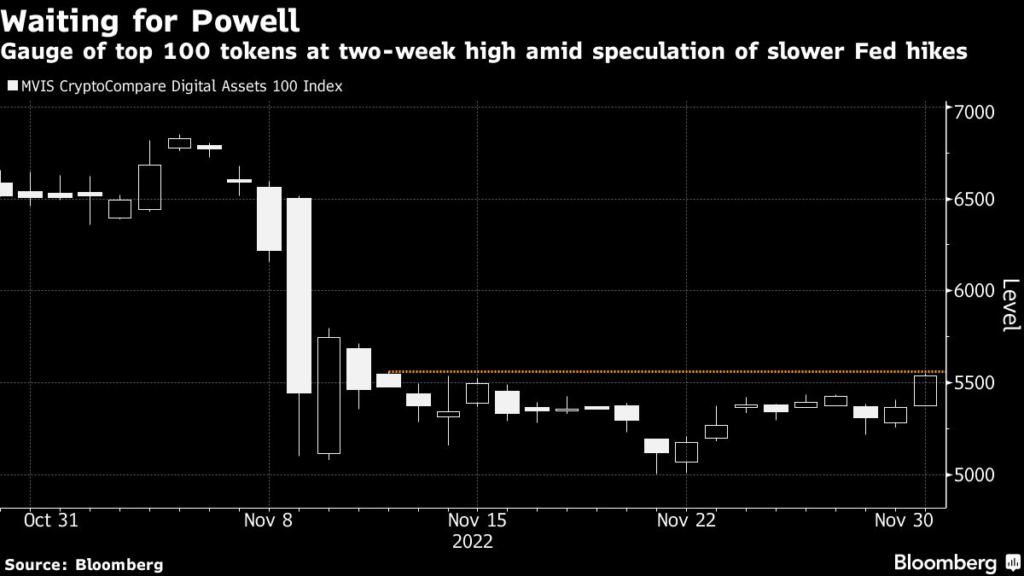
The largest token added as much as 3.7% and was trading at about $17,010 as of 10:41 a.m. in Singapore, the highest level in two weeks. Ether climbed over 4%, while the likes of Binance Coin and Dogecoin also jumped.

Powell is due to speak later Wednesday at an event hosted by the Brookings Institution and may echo fellow Fed officials in signaling a half-point rate rise at their final meeting of the year after four successive 75 basis-point moves. Rapidly tightening monetary policy has been the key trigger of a 63% slump in a gauge of top digital assets this year.

“Overnight, there’s been increasing commentary around the perception that the Fed will raise rates by only 50 basis points,” said Hayden Hughes, chief executive of social-trading platform Alpha Impact. “Since crypto usually leads other asset classes, we may see equities rally” as the mid-December Fed meeting nears, he added.

Crypto markets have been fairly resilient following a slide lower when Sam Bankman-Fried’s FTX crypto empire tumbled into bankruptcy earlier this month. At the same time, there are worries that more pain may lie ahead as the contagion from the collapse spreads in the digital-asset sector.

Bankman-Fried, who has transformed from industry savior to corporate villain in the blink of an eye, is also expected to speak Wednesday. He is scheduled to participate in the New York Times DealBook Summit but via video conference from the Bahamas rather than in person.

More stories like this are available on bloomberg.com

©2022 Bloomberg L.P.
Stocks Seesaw in Asia Amid Focus on China, Fed: Markets Wrap

(Bloomberg) — Volatile trading pushed stocks between losses and gains in Asia as investors weighed Covid developments in China and awaited a speech from Federal Reserve Chair Jerome Powell later Wednesday. 

Hong Kong’s benchmark equities opened lower, snapped higher and then began sliding again in the first hour of trading. It was a similar picture for mainland shares. 

Australian shares erased early losses after inflation eased and Japan’s market remained in the red following data that showed a sharper-than-expected decrease in industrial production.

US futures edged higher after stocks on Wall Street closed down and ahead of the speech by Powell on the economy and the labor market.  

Treasuries were little changed while a dollar gauge declined. The offshore yuan fell as China’s factory and services activity contracted further in November as record Covid cases prompted widespread movement curbs.

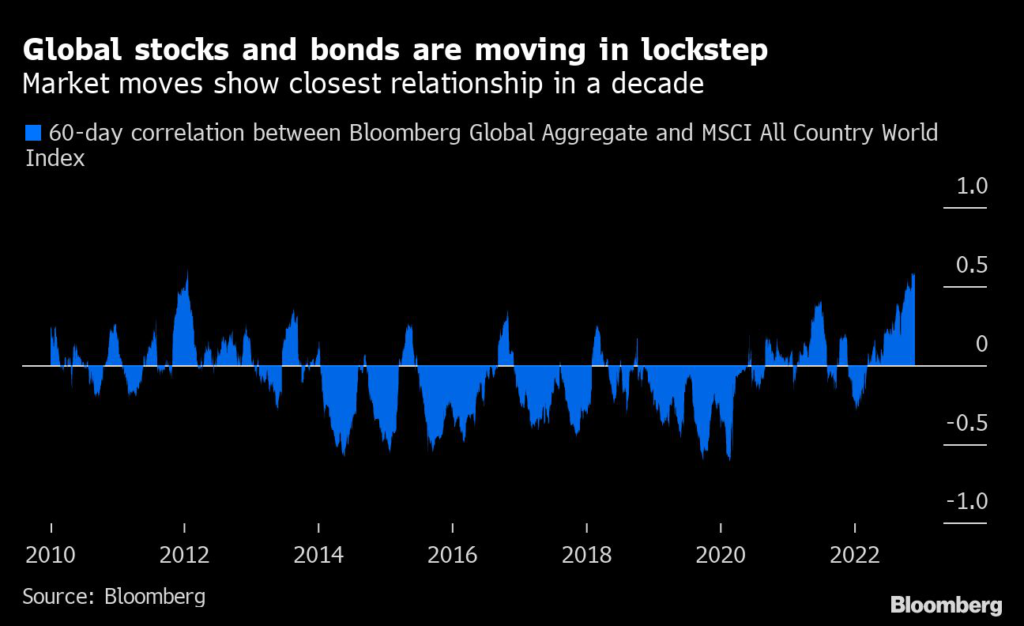
Amid the turmoil, a gauge of global stocks was on course for a second monthly advance, which has trimmed its loss so far this year to 18%. Bonds were also poised for a monthly gain, along with losses for 2022 on new par with equities.

In fact, the lockstep moves in stocks and bonds brought their correlation this week to highest level since 2012, heaping pressure on investors seeking to hedge risk by splitting their portfolios between the two asset classes. 

The declines in equities on Wall Street Tuesday were led technology companies. A slump in Amazon shares followed a large debt offering from the retailing giant.

A series of investment grade debt deals was one factor that lured investors from Treasuries, which fell in the US, sending yields higher. 

Oil rose for a third day Wednesday after industry data pointed to a substantial draw in US crude stockpiles and investors counted down to an OPEC+ meeting that may see the group agree to cut production.

Gold headed for its biggest monthly gain since May 2021 as the dollar fell on signs the Fed is preparing to slow the pace of interest-rate hikes.

Elsewhere, Bitcoin and other leading crypto assets spiked higher in the Asian trading session.

Key events this week:

  • EIA crude oil inventory report, Wednesday
  • Fed Chair Jerome Powell speech, Wednesday
  • Fed releases its Beige Book, Wednesday
  • US wholesale inventories, GDP, Wednesday
  • S&P Global PMIs, Thursday
  • US construction spending, consumer income, initial jobless claims, ISM Manufacturing, Thursday
  • BOJ’s Haruhiko Kuroda speaks, Thursday
  • US unemployment, nonfarm payrolls, Friday
  • ECB’s Christine Lagarde speaks, Friday

Some of the main moves in markets:

Stocks

  • S&P 500 futures rose 0.1% as of 11:39 a.m. Tokyo time. The S&P 500 fell 0.2%
  • Nasdaq 100 futures rose 0.1%. The Nasdaq 100 fell 0.7%
  • The Topix index fell 0.6%
  • The Hang Seng Index was little changed
  • The Shanghai Composite Index was little changed
  • Euro Stoxx 50 futures rose 0.4%

Currencies

  • The Bloomberg Dollar Spot Index was little changed
  • The euro rose 0.1% to $1.0341
  • The Japanese yen was little changed at 138.69 per dollar
  • The offshore yuan fell 0.2% to 7.1554 per dollar

Cryptocurrencies

  • Bitcoin rose 3.4% to $17,022.64
  • Ether rose 4.6% to $1,274.84

Bonds

  • The yield on 10-year Treasuries was little changed at 3.74%
  • Japan’s 10-year yield was little changed at 0.25%
  • Australia’s 10-year yield declined two basis points to 3.59%

Commodities

  • West Texas Intermediate crude rose 0.8% to $78.82 a barrel
  • Spot gold was little changed

This story was produced with the assistance of Bloomberg Automation.

More stories like this are available on bloomberg.com

©2022 Bloomberg L.P.

Sony’s New Metaverse Bet: $360 Wearable to Record Your Moves

(Bloomberg) — Sony Group Corp.’s latest gadget is a set of wearable motion trackers designed to bring users into the metaverse on their phones.

The new Mocopi system consists of six pucks worn around the user’s wrists, ankles, head and hips, used to animate avatars inside various metaverse apps on Android phones or Apple Inc. iPhones. Priced at 49,500 yen ($360) and launching in Japan in January, the Mocopi kit adds to the company’s ventures into virtual and augmented reality.

“We label this a metaverse product instead of a VR peripheral, because we expect the virtual world to further blend with the real world,” Takeshi Aimi, senior manager of Sony’s motion business group, said at a demonstration event Wednesday. “People will access the metaverse without head-mounted displays in the future, and we didn’t want to limit the product’s use to just VR users.”

Tokyo-based Sony has made a big push to expand its gaming empire beyond its traditional strength of console games with more peripherals for PC and mobile gaming. The company also has the PlayStation VR headset and a successor in the offing, both designed to develop an ecosystem of VR experiences along the lines envisioned by Mark Zuckerberg’s Meta Platforms Inc., which he renamed the company after.

Metaverse and VR applications have failed to break through to mainstream audiences so far, occupying only a niche of the global gaming and peripherals market. Sony’s betting on being able to drive this segment with its PlayStation brand and software development talent.

(Updates with comment from Sony executive in third paragraph)

More stories like this are available on bloomberg.com

©2022 Bloomberg L.P.

FTX’s LedgerX to Make $175 Million Available for Bankruptcy Pot

(Bloomberg) — LedgerX — one of the few corners of Sam Bankman-Fried’s crumbled crypto empire that remain solvent — is preparing to make available $175 million for use in FTX’s bankruptcy proceedings, according to people with knowledge of the matter. 

The money, which could be transferred as soon as Wednesday, comes from a $250 million fund that LedgerX had set aside for a bid to get regulatory approval to clear crypto derivatives trades without intermediaries. The firm, which is known as FTX US Derivatives, withdrew its application with the US Commodity Futures Trading Commission as more than 100 FTX entities filed for bankruptcy on Nov. 11.

A spokesman for the CFTC, which regulates LedgerX, said that the agency is aware of a planned transfer. Representatives for LedgerX and FTX didn’t immediately respond to requests for comment. 

The transfer to FTX’s bankruptcy estate would provide a fresh pool of money that could be made available to investors scrambling to recoup losses. Since bankruptcy was declared, new Chief Executive Officer John J. Ray III and advisers have been poring over the company’s books in search of cash, cryptocurrency and assets that could be sold to help repay creditors. 

The chairman of the CFTC, Rostin Behnam, is slated to testify about the FTX collapse in a US Senate committee hearing on Thursday. 

–With assistance from Hannah Miller and Jeremy Hill.

More stories like this are available on bloomberg.com

©2022 Bloomberg L.P.
FTX’s LedgerX, a Solvent Corner of SBF’s Fallen Empire, Will Put Millions in Bankruptcy Pot

(Bloomberg) — LedgerX — one of the few corners of Sam Bankman-Fried’s crumbled crypto empire that remain solvent — is preparing to make available $175 million for use in FTX’s bankruptcy proceedings, according to people with knowledge of the matter. 

The money, which could be transferred as soon as Wednesday, comes from a $250 million fund that LedgerX had set aside for a bid to get regulatory approval to clear crypto derivatives trades without intermediaries. The firm, which is known as FTX US Derivatives, withdrew its application with the US Commodity Futures Trading Commission as more than 100 FTX entities filed for bankruptcy on Nov. 11.

A spokesman for the CFTC, which regulates LedgerX, said that the agency is aware of a planned transfer. Representatives for LedgerX and FTX didn’t immediately respond to requests for comment. 

The transfer to FTX’s bankruptcy estate would provide a fresh pool of money that could be made available to investors scrambling to recoup losses. Since bankruptcy was declared, new Chief Executive Officer John J. Ray III and advisers have been poring over the company’s books in search of cash, cryptocurrency and assets that could be sold to help repay creditors. 

The chairman of the CFTC, Rostin Behnam, is slated to testify about the FTX collapse in a US Senate committee hearing on Thursday. 

–With assistance from Hannah Miller and Jeremy Hill.

More stories like this are available on bloomberg.com

©2022 Bloomberg L.P.
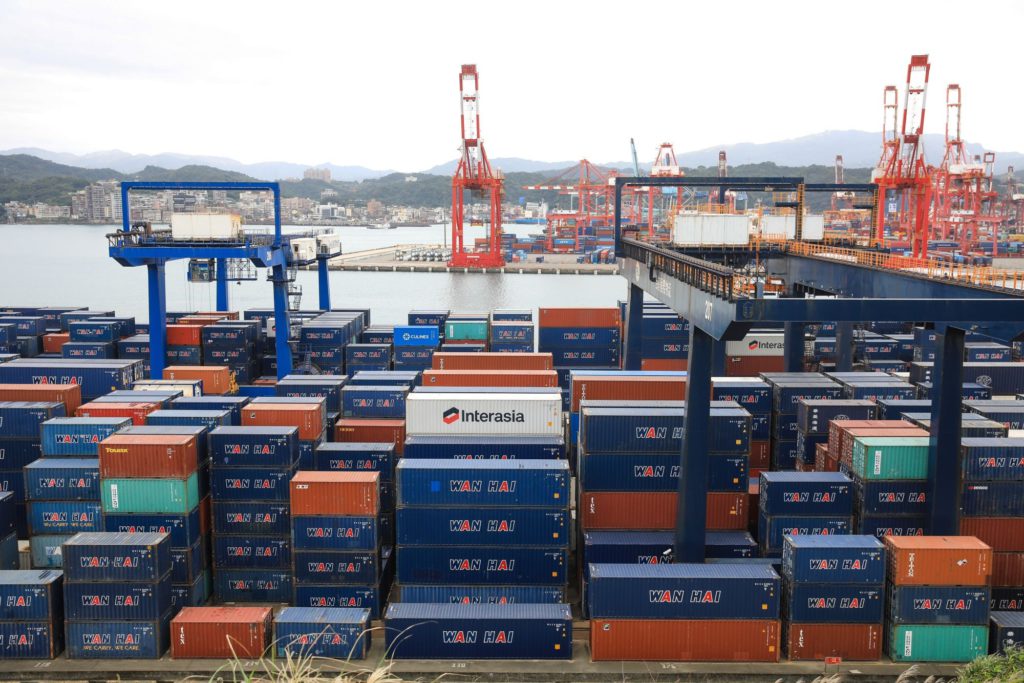
Taiwan Warns of Hit to Its Exports from US Chip Restrictions

(Bloomberg) — Taiwan’s semiconductor industry may be impacted by recent US moves to reduce reliance on the island’s leading-edge technology, according to a Taiwanese economic official. 

A recently passed US semiconductor law, along with a similar proposal in Europe, “could directly and indirectly affect exports of crucial industries in Taiwan,” said Tsai Yu-tai, head of statistics for the Directorate-General of Budget, Accounting and Statistics.

“The uncertainty from these acts will affect Taiwan’s production and exports, although the scale of impact is still unclear,” Tsai said at a Tuesday briefing about Taiwan’s economic outlook. 

Tsai was referring to the roughly $50 billion Chips and Science Act passed by the US government in August to boost domestic semiconductor research and development. The legislation is part of the Biden administration’s attempt to reduce dependence on Asian suppliers, including Taiwan. 

Read More: Biden Signs Chips Bill, Unleashing Funding for US Production

Taiwan’s government on Tuesday lowered its forecasts for gross domestic product growth for 2022 and 2023 to 3.06% and 2.75%, respectively, citing a slowdown in global demand fueled in part by inflation and China’s Covid policies. 

Taiwan’s chip supply chain centering around Taiwan Semiconductor Manufacturing Co. is leading the market, and TSMC is building a chip fabrication facility in the US. But Taiwan’s chipmaking prowess has also long contributed to tensions between the US and China, hastening Washington’s desire to make itself the foremost chipmaking power to counter Beijing. 

While Taiwan is preparing its own tax incentives, those plans have not yet been finalized, Tsai said. Earlier this month, the island proposed expanding some tax breaks for companies that invest in technology research and production, an attempt to strengthen its semiconductor industry. 

The CHIPS Act’s signing has already spurred US chip companies such as Micron Technology Inc. to plan billions of dollars in new investments. US Secretary of Commerce Gina Raimondo also recently pointed to the need to shift cutting-edge chip production from Taiwan to the US.

The US has also taken more aggressive action to combat China on technology, including the unveiling last month of sweeping curbs on the sale of semiconductors and chipmaking equipment to the world’s No. 2 economy.

Tsai on Tuesday did not specifically mention sanctions, though said that a prohibition on production in China might create a “large impact on order placement,” impacting the supply chain there.

The EU, meanwhile, agreed this month to pursue a €43 billion to jump-start its semiconductor production, though the plan won’t be finalized until next year.

–With assistance from Cindy Wang.

More stories like this are available on bloomberg.com

©2022 Bloomberg L.P.

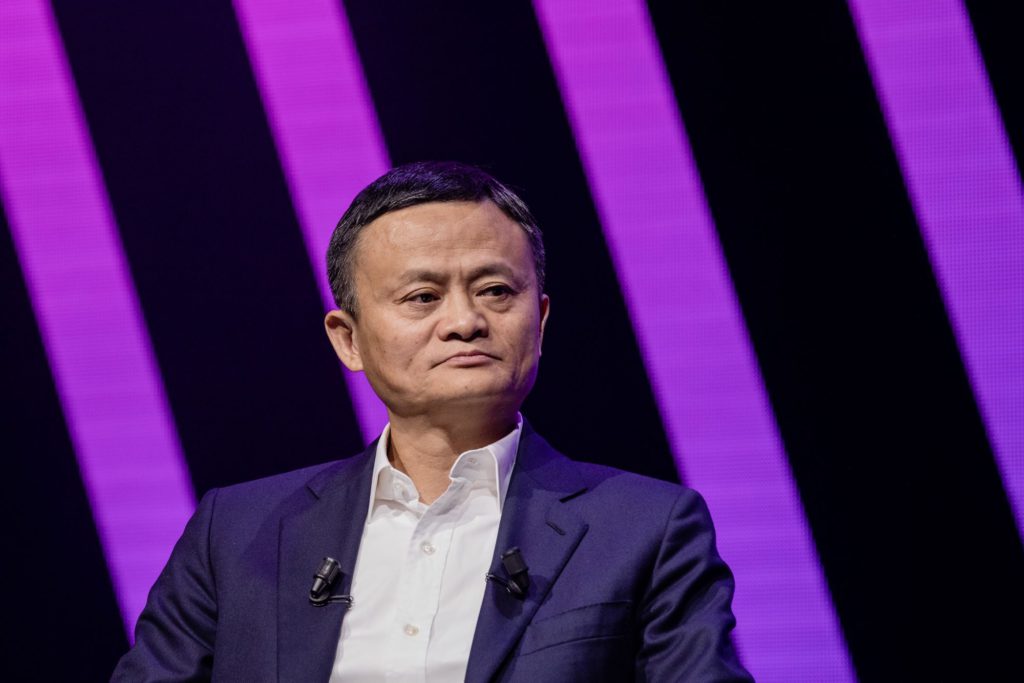
Alibaba Founder Jack Ma Living in Tokyo for Half a Year, FT Says

(Bloomberg) — Chinese entrepreneur Jack Ma has been living in Tokyo for nearly six months, after Beijing’s crackdown on the technology sector, the Financial Times reported Tuesday.

The co-founder of Alibaba Group Holding Ltd. has punctuated his stay in Japan with trips to the countryside and regular visits to the US and Israel, the paper said, citing people with knowledge of his whereabouts. Ma is a close friend of Masayoshi Son, founder of Tokyo-based SoftBank Group Corp. and an early investor in Alibaba.

Once China’s wealthiest and most prominent tech leader, Ma retreated from the spotlight in recent years after his criticism of government regulation landed him in trouble with Beijing, derailing the initial public offering of fintech giant Ant Group Co. That was followed by an expansive crackdown on the private sector in China, particularly aimed at reining in the power of internet firms. His rare public appearances since then have been closely watched.

In Tokyo, Ma has kept to a handful of private members’ clubs in the central districts of Ginza and Marunouchi, the FT said. He’s also brought along his personal chef and security staff and become an enthusiastic modern art collector, the paper added.

Ma, previously a high-profile fixture at business conferences, led large-scale international donations of protective equipment and other gear the world needed in the early days of the pandemic.

More stories like this are available on bloomberg.com

©2022 Bloomberg L.P.

Disney Channel, ESPN Each Lost 2 Million Subscribers in Fiscal Year

(Bloomberg) — Walt Disney Co. warned investors that changes in management and strategy being contemplated by returning Chief Executive Officer Bob Iger could result in impairment charges.

Iger, who on Nov. 20 resumed the job he’d held for 15 years, said last week in a memo to staff that he’s considering changes in the company’s management structure. 

Iger, 71, returned to lead the world’s largest entertainment company with a mandate from the board to renew Disney’s growth. His plans could include changes in the way the company releases and shows movies and TV programs, including the “platforms selected for the initial distribution of content,” Disney said in its 10-K filing Tuesday. 

“The restructuring and change in business strategy, once determined, could result in impairment charges,” Disney said.

Disney, like much of the media industry, is grappling with massive changes in how consumers watch movies and TV shows. Viewers are tuning out of traditional broadcast and cable networks in favor of online entertainment. But new streaming services are struggling to turn a profit. Disney lost $4 billion last year in its online TV businesses.

Read more: AMC Networks to Cut 20% of Staff as CEO Departs

Cord-cutting is crimping regular TV results. In the last fiscal year, ESPN and the Disney Channel, the company’s largest cable networks, lost 2 million subscribers each, finishing at 74 million subscribers.

Some of the company’s other channels fared worse, with FX, Freeform and National Geographic losing 3 million subscribers each, according to the company filing. The numbers, from Nielsen, are through Disney’s year end.

The company also said it had paid $900 million this month to acquire the remaining 15% stake of BamTech from Major League Baseball. BamTech, which Disney acquired control of years earlier, provides technology to run streaming businesses such ESPN+.

(Updates with impairment language in first paragraph.)

More stories like this are available on bloomberg.com

©2022 Bloomberg L.P.

Close Bitnami banner
Bitnami