
Bloomberg

Milken Unmasked: Frivolity and Fear as Elite Descend on LA

(Bloomberg) — It’s the Milken Gala, unmasked. Back are the financial world’s glitterati, dealmakers and celebrities, all gathering at the Beverly Hills confab as it returns to its pre-pandemic spring schedule for the first time this week.

That should spell gentle optimism as the world’s most influential people cavort between panels, wellness sessions and the puppy playtime on offer at the Milken Institute Global Conference. But as they assemble to deliberate the world’s biggest issues, there’s a rare cocktail — and not the good kind — of mounting global challenges that will test the sunny West Coast mood. 

The famed gathering, in its 25th year, has outlined its focus as the power of connection, celebrating “the forces that bring us together while confronting the issues that keep us apart.” It’s a fitting theme for a world jolted by war in Ukraine just as the highest inflation in decades raises the specter of recession and the dregs of a global pandemic refuse to disappear.

“The conference will be a juxtaposition,” said Bob Kricheff, portfolio manager and global strategist at Shenkman Capital Management Inc. “Excitement of being able to see everyone three dimensional and unmasked, but dampened given concerns over the invasion in Ukraine, a decline in U.S. GDP, rates and meaningful losses across most asset classes.”

And as markets agitate amid the geopolitical turmoil, Gwyneth Paltrow and Goldie Hawn will rub shoulders with financial titans and corporate America’s biggest chiefs by the sparkling pool at The Beverly Hilton. Citadel’s Ken Griffin, Goldman Sachs Group Inc.’s David Solomon and General Motors Co. Chief Executive Officer Mary Barra will address the crowds, with academics, sports stars, entrepreneurs and politicians among the thousands set to gather. 

With the war in Ukraine entering its 10th week, the crisis and its impact on the economy, markets, trade as well as its significance for democracy will likely infiltrate many more than the seven or so panels that reference the invasion. 

Steven Mnuchin, secretary of the treasury under President Donald Trump, will join Peter Beyer, who served as the transatlantic coordinator for Chancellor Angela Merkel’s government, to discuss the turmoil alongside exiled former Russian oil tycoon Mikhail Khodorkovsky, who was once the country’s richest person.

Inflation Fears

And for a conference gathering the who’s who of the investing world, inflation and the Federal Reserve’s efforts to quell it with rate hikes will dominate much discussion. With April one of the worst months across asset classes in more than a decade as investors fled risk, attendees will likely line up to hear from the likes of Citigroup Inc. CEO Jane Fraser and Guggenheim Partners’ Chief Investment Officer Scott Minerd on a global capital markets panel.

“There will be lots of people trying to predict the future with great confidence,” said Kricheff. “The majority of predictions will be about when does the Fed stop tightening. The only problem with that is the Fed itself probably doesn’t know the answer yet.” 

To take the edge off, there’ll be after-parties, sessions of regenerative mind-and-body yoga, puppy playtime, guided meditation and Jedi mindfulness training. For those who want more of an escape, virtual reality headsets will be on offer to experience the metaverse — a hot topic in the investing world and where cryptocurrencies play a significant role.

Crypto Content

And as more and more money pours into crypto and blockchain technology, the conference has perhaps its most sizable digital asset contingent yet. There will be several crypto-related panels, including two on the metaverse and one on digital nationalism. A slew of crypto executives, investors and developers such as Brian Armstrong, CEO of Coinbase Global Inc., will also attend. 

For many attendees, the goal is purely business, to meet contacts and strike deals. Apollo Global Management LLC CEO Marc Rowan, and Thoma Bravo LP managing partner Holden Spaht are speakers. Both firms were named in the fray surrounding Elon Musk’s offer for Twitter Inc., which he agreed to buy on April 25. 

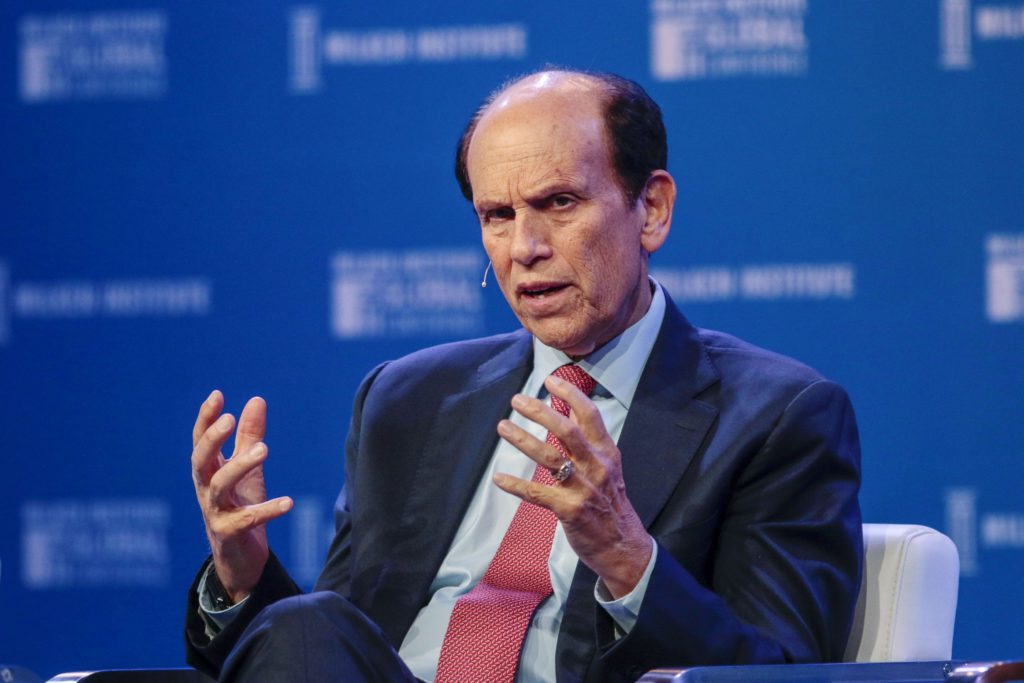
Mike Milken, who founded the eponymous institute hosting the conference in the early 1990s, is set to moderate a number of panels. The billionaire “Junk Bond King” worked at Drexel Burnham Lambert in the 1980s before he was convicted for securities fraud, sent to prison and banned from the securities industry for life. Trump pardoned him in 2020. 

Almost half a century ago, Valerie Red-Horse Mohl was a part-time assistant for Milken at Drexel Burnham Lambert. Now she’s about to be a speaker at her first Milken conference.

The co-founder of finance startup Known Holdings and East Bay Community Foundation’s chief financial officer expects the mood at the event to be “cautious as opposed to ominous,” she said. “People are definitely talking about recessions. What’s going to happen with the volatility in the markets?”

Whatever tone the mood takes, there should be levity as the conference wraps up Wednesday — with a Beach Boys concert.

More stories like this are available on bloomberg.com

©2022 Bloomberg L.P.
Bitcoin-Hoarding Miners Turn to Options Market for Cash Infusion

(Bloomberg) — Bitcoin miners are deploying their own version of “yield farming,” the often-discussed cryptocurrency money-making strategy, but with an old-school twist.

Publicly traded miners very much embrace the HODL, or “hold on for dear life,” mantra, hoarding tokens to make their stock more appealing to investors seeking exposure to Bitcoin’s gains. But these firms have major expenses; grinding through cryptographic puzzles to spawn new coins takes pricey computer hardware and giant power bills.

Instead of selling Bitcoin to raise money, firms like Marathon Digital Holdings Inc. are selling Bitcoin call options to wring money out of their holdings, turning to a yield-generating strategy deployed throughout conventional finance.

“Bitcoin miners are some of the most voracious yield seekers in the market today,” said Joshua Lim, head of derivatives at New York-based brokerage Genesis Global Trading, which offers options overwriting strategies to the industry.

Open Secret

The firms are exploiting an open secret in the options market: contracts frequently expire worthless. When that happens, the owner of the contract gets nothing, and the person — in this case, a Bitcoin miner — who sold it to them gets to keep whatever the buyer paid to purchase the option.

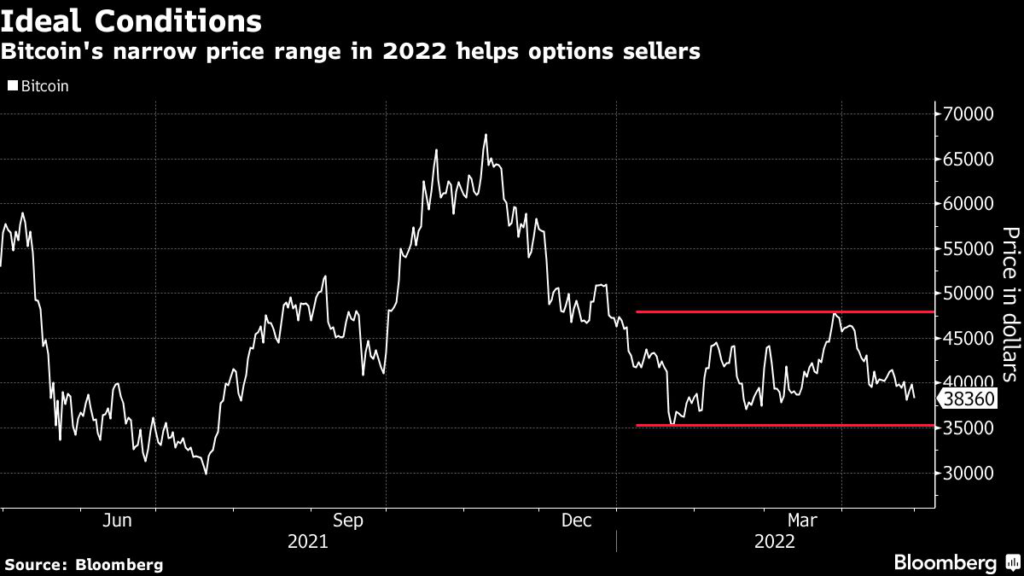
Bitcoin now trades around $39,000. If a miner sells a call with a $50,000 exercise price and Bitcoin fails to rise to that level by the time the contract expires, the miner makes money. Depending on the trade, annual returns, or yields, can get well into double-digit percentages, according to Lim.

But the strategy is not without risks. If Bitcoin hits the exercise price, miners start losing money. That risk can be mitigated by trading multiple contracts with different strike prices, but it’s something that has to be factored in.

Public miners have been on the lookout for yield-generating strategies to fund their rapid expansion without issuing new shares or debt. Other blockchains, most notably the second-largest one, Ethereum, have myriad ways to generate income, many of which fall under the umbrella of yield farming, a popular but sometimes-derided money-making strategy. 

“We use call option straddles, where essentially you sell a call option and then buy one at a higher price so that you don’t miss out on the upside,” said Fred Thiel, chief executive officer of Las Vegas, Nevada-based Marathon. “Historically, it has generated more than 10% annually.” 

Thiel targets generating yield — using other techniques, too, including lending out Bitcoin — from 25% of the company’s holdings.

Though Bitcoin has lost almost half its value since peaking in November, prices have been relatively stable lately. That can be helpful to options sellers, because it reduces the chance that the option strike price will be hit and the contract becomes profitable for the buyer. But miners could face losses if Bitcoin starts soaring again.

“When Bitcoin is in a range-bound market, this type of yield-generating strategy will outperform a mine-and-hold or mine-and-liquidate strategy,” Lim said. “However, in an upward trending market, miners will give up any upside performance beyond the strike of the calls they are selling.”

More stories like this are available on bloomberg.com

©2022 Bloomberg L.P.
Google Spinoff Sandbox AQ Gets Backing from CIA’s Venture Arm

(Bloomberg) — The Central Intelligence Agency’s venture capital firm has invested in Sandbox AQ, a Google software spinoff that is focused on harnessing artificial intelligence and quantum science.

The CIA’s In-Q-Tel was joined by Paladin Capital Group, which backs innovative tech companies, in Sandbox AQ’s first round of fundraising. The round — which is oversubscribed and still open — has garnered “well into the nine figures,” Sandbox AQ Chief Executive Officer Jack Hidary said in an interview.

Founded in 2016, Sandbox AQ was spun off from Alphabet Inc.’s Google earlier this month and is chaired by Eric Schmidt, the search giant’s former CEO. Instead of making a quantum computer of its own, Sandbox AQ seeks to develop software architecture that can replace existing cryptography with complex new algorithms that are deemed impossible to crack by quantum computers, a nascent technology that isn’t yet operationally viable. 

Steve Bowsher, president of In-Q-Tel, said the aim of the equity stake was to develop new encryption software that could resist the prospect of code-cracking by emergent quantum computing, as well as quantum sensors and other products. 

“We want them to be able to sell into the U.S. government,” Bowsher said in an interview. He added the venture firm had spent the past few weeks introducing Sandbox AQ’s work to some of the eight U.S. intelligence agencies that it works with, which include the National Security Agency, Federal Bureau of Investigation and CIA.

Paladin Capital Chief Investment Officer Chris Steed predicted Sandbox AQ could come to dominate a market that would be worth tens of billions of dollars. Industry analysts IQT Research estimated last year the market for post-quantum cryptography will grow to $2.3 billion by 2026 and $7.6 billion by 2030.

‘Hardware Miracles’

In-Q-Tel and Paladin’s backing would allow Sandbox AQ to develop relationships to work closely with U.S. and allied governments on roll out, said Hidary. While it was “wonderful” to have early-mover advantage, the strength of its software, expert team of more than 55 people and alliances were more critical for success, he added. 

Scientists differ over when a breakthrough in quantum computing might arrive, with estimates spanning five to 50 years — or never at all. 

Joe Altepeter, who manages a quantum research program at the Pentagon’s Defense Advanced Research Projects Agency, said last month there was a lot of “hype” over industry claims about the arrival of quantum computing, which has drawn billions of dollars in investment, though several “hardware miracles” still stand in the way. 

While there was “definitely still a possibility that quantum ultimately doesn’t develop” and so the problem would never manifest, Bowsher said it was important to prepare in advance “because you don’t want to be caught flat-footed.” 

He added that it was hard to know how close China, which is investing billions of dollars into quantum research, might be to cracking public-key encryption. “If you wait until then, it would be too late,” he said.

Experts warn encrypted data that is stolen and stockpiled en masse could be cracked at scale as soon as quantum computing comes online. That could risk troves of commercial and government secrets, some of which remain classified for 25 years or far longer.

Theoretical Threats

Wary of the coming threat, the Biden administration in January tasked national security systems to come up with transition plans to help defend against the theoretical threat to public-key encryption posed by the arrival of quantum computers. 

The National Institute of Standards and Technology, known as NIST, is seeking to select new quantum-proof encryption algorithms from seven finalists shortly as part of a global competition. Two of the shortlisted algorithms come from the team behind PQShield, an Oxford University spinoff that also offers post-quantum cryptographic software. Winners will be slotted into Sandbox AQ’s and other companies’ software architecture. 

Sandbox AQ has also newly formed partnerships with Ernst & Young and Deloitte to offer services to thousands of their customers, including initially an inventory of existing software. Financial, pharmaceutical and telecommunications companies, which have some of the most sensitive data to protect, are likely to be at the forefront of efforts to create a new marketplace in post-quantum cryptography. 

“We’re not being alarmist and saying you need to change everything today,” said Colin Soutar, who leads cyber strategy at Deloitte Risk & Financial Advisory. “But I do want to say that organizations should start taking a prudent look at what they have.” 

Some in the private sector are already taking the plunge. Mount Sinai Health System in New York and its 7,000 physicians became a customer of Sandbox AQ’s discovery services last month, said Chief Information Officer Kristin Myers. That will enable the healthcare company, which has revenue of $9.3 billion a year, to review all the software it would need to update to prepare for post-quantum cryptography, before determining if it will go ahead with the transition. 

“I think this is the way the industry will go, especially in the next five years,” Myers said, adding she took the step to safeguard patient confidentiality.

More stories like this are available on bloomberg.com

©2022 Bloomberg L.P.

PayPal, Aon Partner to Offer Insurance Through Payments Platform

(Bloomberg) — PayPal Holdings Inc. formed a partnership with Aon Plc to offer its small-business customers the ability to shop for and manage their insurance policies using the company’s digital-commerce platform.

The collaboration between the San Jose, California-based payments firm and the Dublin-based insurance broker will integrate Aon’s CoverWallet small-business insurance product into PayPal’s digital offering, the companies said in a statement Monday.

Insurance brokers have been taking steps to expand their reach online. In March, Hub International Ltd. partnered with Bold Penguin Inc. to acquire the assets of a digital brokerage that targets small businesses.

“We’re going to be able to provide a digital and delightful experience to all of the merchants that work with PayPal,” Roberto Pinto, Aon’s president of digital-client solutions, said in an interview. The company has about 34 million merchants on its platform, the majority of which are small businesses.

The partnership will also give PayPal’s small-business clients insight into average insurance costs and access to guidance from Aon’s licensed insurance advisers.

More stories like this are available on bloomberg.com

©2022 Bloomberg L.P.
China Contagion Threatens to Derail World’s Emerging Markets

(Bloomberg) — A widespread selloff in China is rippling through emerging markets, threatening to snuff out growth and drag down everything from stocks to currencies and bonds.

Fresh Covid outbreaks — and the government’s stringent policy to contain them — are spooking global investors who fear shutdowns in China will echo across the world by lowering demand and disrupting supply chains. That’s pushing them to sell not just China’s currency, bonds and stocks but the assets of any developing nation that relies heavily on trade with the world’s second-biggest economy.

The result is the sharpest slide in emerging markets in two years, not unlike the meltdown in 2015 when China’s woes led to a rout in their bonds and currencies, besides wiping out $2 trillion from equity values. Since then, the country’s influence on the global economy has only grown: It’s now the largest buyer of commodities, meaning its slump may impact exporters of raw materials and their markets more than ever.

“Given China’s importance in global supply chains and importance to global growth prospects, further disappointments in the nation’s growth may lead to more contagion risk,” Johnny Chen and Clifford Lau, money managers at William Blair Investment Management in Singapore, wrote in an email. “We see countries with high trade linkages to China as being the most vulnerable.” 

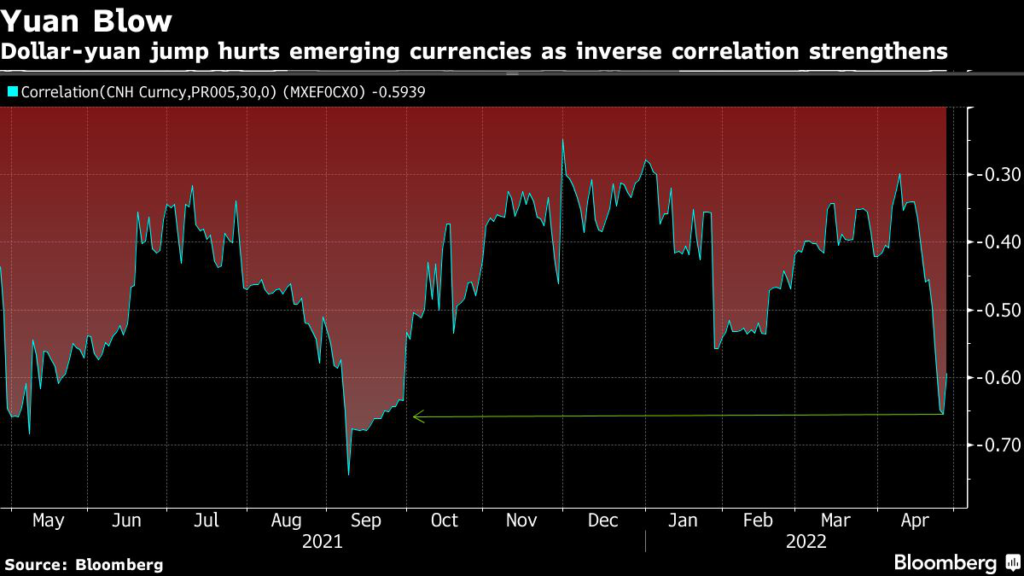
As armies of white-suited enforcers descended on Shanghai and Beijing in late April to oversee the mandatory testing of millions, the offshore yuan sank to the worst monthly loss in at least 12 years. The MSCI Emerging Markets Currency Index, with almost a 30% weight for the Chinese currency, tumbled in tandem. The yuan’s 30-day correlation to the index rose to the strongest level since September, underscoring the currency’s influence in the emerging-market selloff. After Shanghai reported its first deaths since the latest outbreak, panic selling spread to bonds and equities.

China’s Sudden Currency Plunge Raises Risk of a 2015-Style Panic

The scale of the losses prompted Chinese authorities to step in and assure markets they’ll support the economic recovery and boost infrastructure spending. They also signaled willingness to resolve regulatory issues in the technology sector. These pledges soothed investors’ nerves even though authorities didn’t abandon the stern Covid Zero policy that had sparked the panic in the first place. While the last trading day of April did see a rebound in the yuan, most analysts expect the currency to resume its slump. 

The offshore yuan dropped 0.5% to 6.6726 per dollar as of 6:43 a.m. in New York, extending a monthly decline that was the biggest in more than a decade. China’s local markets are shut for a holiday.

Beijing’s 2022 growth target of 5.5% is now in question, prompting analysts from Standard Chartered Plc to HSBC Holdings Plc to predict currency losses over the next three months. That, in turn, could lower growth rates in countries like South Africa and Brazil, just when they’re also buffeted by higher U.S. yields, an inflationary spiral and the war in Ukraine.

“If China’s economy slows significantly, emerging markets currencies as well as the yuan could experience a period of elevated and persistent volatility,” said Brendan McKenna, a currency strategist at Wells Fargo Securities in New York. 

Commodity Pain

The rand erased four months worth of gains in just two weeks, while the Brazilian real, Colombian peso and the Chilean peso posted some of the sharpest declines among peers. Carry-trade losses ballooned, capping the worst showing since November.

Money managers quickly moved to downgrade their currency outlook for emerging markets. HSBC cut its forecast for nine Asian currencies, citing China’s economic travails. TD Securities and Neuberger Berman said South Korea’s won and Taiwan’s dollar will come under greater pressure. 

“We continue to maintain a cautious stance on Asian currencies, and expect more volatility till the time some of these growth concerns abate,” Prashant Singh, senior portfolio manager for emerging-markets debt at Neuberger Berman in Singapore. 

Multi-Asset Rout

Currency losses are also driving a selloff in local bonds, which sank to the worst first four months of a year on record, as performance in April alone was the worst since the peak of the pandemic in March 2020. The main drag here was China again, with a 41% weight in the Bloomberg index for the asset class. The nation’s bonds posted the biggest monthly retreat since the 2008 financial crisis, while sparking double-digit losses in countries as varied as South Africa, Poland and Chile.

Equities weren’t spared either. A rout in Chinese technology shares listed in Hong Kong echoed half a world away in Johannesburg. Naspers Ltd., which owns 28.8% in Tencent Holdings, plunged to a five-year low. A three-week slump partly fueled by panic over Covid cases in China — and partly by rising U.S. yields — led emerging-market stocks to erase $2.7 trillion in market value.

China’s economic activity contracted sharply in April as the lockdown of Shanghai escalated concerns about further disruption to global supply chains. Factory activity fell to the lowest level in more than two years, with the official manufacturing PMI dropping to 47.4 from 49.5 in March, according to data released by the National Bureau of Statistics on Saturday.

“China’s slowdown will compound the challenging outlook for emerging economies facing soaring energy prices and tighter monetary policy from the major central banks,” said Mansoor Mohi-uddin, chief economist at Bank of Singapore Ltd.

Xi’s Vow to Boost Growth While Locking Down Met With Skepticism

Here are the main things to watch in emerging markets in the week ahead:

  • South Korea, Thailand and Taiwan will be releasing latest inflation data for April, with March price growth having risen to at least a near-decade high across all three economies
  • Russia’s PMI survey will be one of the first glimpses of activity in April, the second full month of President Vladimir Putin’s war against Ukraine
    • Bond investors will be on the lookout for coupon payments in dollars as the clock is ticking for the country’s 30-day grace period, which ends May 4
  • Turkey’s inflation is set to rise to 65% in April, the highest since 2002, but still unlikely to trigger a response from a politically-constrained central bank
  • In Brazil, the highlight of the coming week is the monetary policy meeting, where the yield curve shows investors believe the central bank will deliver on its pledge to raise the policy rate by 100 basis points
  • In Chile, the central bank is likely to continue its tightening cycle at a more moderate pace and increase the benchmark interest rate to 8%

(Updates with offshore yuan’s drop in seventh paragraph)

More stories like this are available on bloomberg.com

©2022 Bloomberg L.P.
Gulf of Mexico Oil Drilling Makes Too-Little, Too-Late Comeback

(Bloomberg) — A new wave of oil platforms is sweeping into the U.S. Gulf of Mexico as crude prices are riding historic levels and demand for barrels is higher than ever.

But don’t count on the new production to close the oil-supply gap that has  plagued the world’s economies since the pandemic. Even with the new platforms coming online, Gulf oil production won’t grow substantially in the coming years as mature fields decline, according to analysts.

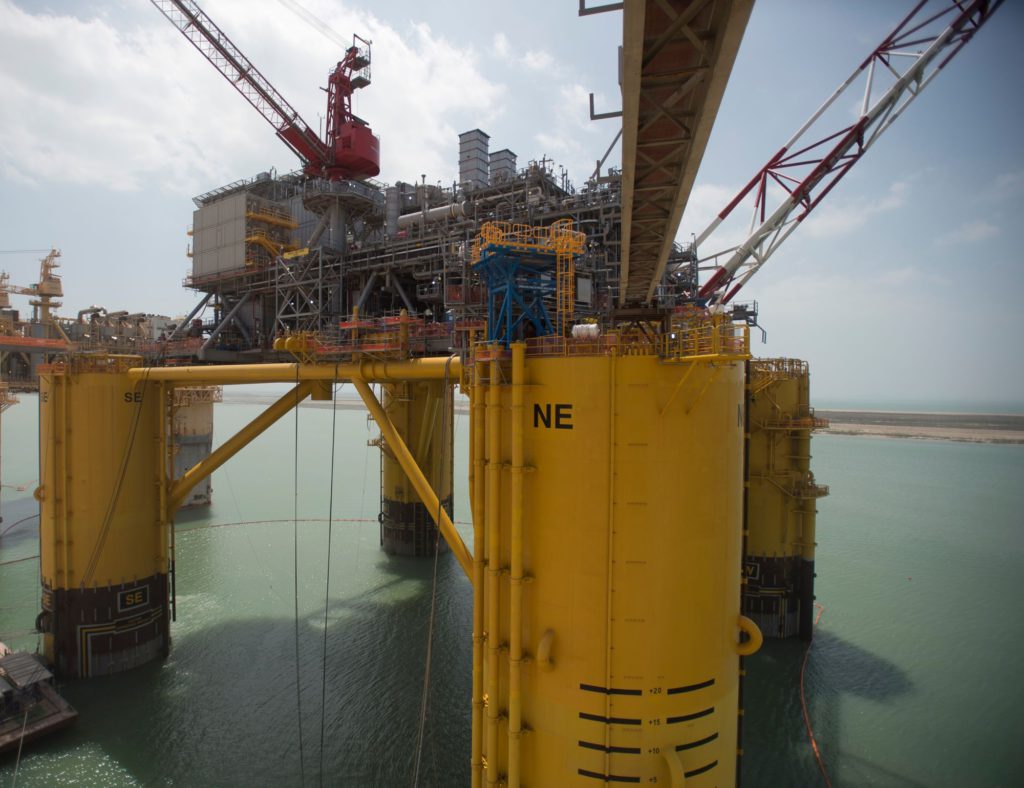
BP Plc’s Argos and Shell Plc’s Vito — floating production platforms that are taller than 20-story buildings and have decks the size of football fields — will start pumping crude off the Louisiana shore later this year. They will join Murphy Oil Corp.’s King Quay, a behemoth that started producing oil in April, also off the Louisiana coast. Others from Chevron Corp., Shell and Beacon Offshore Energy are expected to start production in two years. Once all six platforms are online, they could produce up to 560,000 barrels a day.

The timing for these new Gulf projects couldn’t be better. The offshore sector has been battered by back-to-back busts and a pandemic that forced mass layoffs and bankruptcies. But even with oil at $100 a barrel, a big comeback is unlikely. After a decade that saw one of the worst oil spills in U.S. history, shale’s ascendance and mounting climate-change concerns, some experts believe that the sun may be setting on the Gulf. 

“I think it has a future, but it’s not as bright as it once was,” said James West, an analyst at Evercore ISI. “There’s probably some growth still left in the Gulf of Mexico, but it’s a more modest growth.” 

Last year, Shell said its global oil production had peaked in 2019 while BP in 2020 said it would cut oil and gas production worldwide 40% by 2030. Shell and BP are the two biggest Gulf producers. 

Since the first offshore rig was built off the coast of Louisiana in 1938, the Gulf of Mexico has been a reliable source of domestic oil. Its deep trove of reservoirs is responsible for about 14% of the U.S.’s crude production, second only to the country’s prolific shale fields. Gulf producers extracted 1.7 million barrels of oil per day in January, still shy of the pre-pandemic record of 2 million barrels a day. 

The U.S. Energy Information Administration expects Gulf output to remain flat through 2023, while S&P Global Commodity Insights projects production may recover to the pre-pandemic record by the end of the year. Energy consulting firm Wood Mackenzie is more bullish, forecasting crude and natural gas production this year could jump to the equivalent of 2.3 million oil barrels per day. 

Offshore projects cost billions and rarely come online in less than a decade. The sector’s inability to quickly ramp up production when geopolitical disruptions like Russia’s war in Ukraine upend markets is one reason why U.S. oil production at 11.8 million barrels a day remains below the pre-pandemic record of 13.1 million barrels a day, even with crude prices at 14-year highs.

The number of new offshore discoveries worldwide has fallen to a 75-year low after oil companies slashed their budgets for deepwater exploration. Even as the industry recovers from the pandemic, its offshore investment globally is set to rise only 7% to $155 billion this year, compared with an 18% increase in shale investments, according to Rystad Energy, a consulting firm. 

Companies have slashed deepwater exploration budgets primarily in response to recent oil busts and the pandemic, which squeezed revenues. The industry’s poor financial performance in recent years, as well as investor pressure due to environmental concerns, have hampered its ability to tap Wall Street to finance offshore projects. Worries that today’s high prices won’t last make investing in expensive, time-consuming offshore projects a hard sell.

Regulatory concerns also loom large over the offshore sector, which relies on regular federal lease auctions to maintain output. The U.S. is still permitting new drilling and production on existing offshore leases, but it could be another year or more before producers get a crack at new federal acreage. 

The Biden administration isn’t on track to set a schedule for new offshore lease sales by June 30, when the current five-year program expires, and federal budget documents show the White House doesn’t anticipate selling more oil and gas leases in the Gulf through at least October 2023. That means it’s unclear when — or if — offshore producers will be able to secure new Gulf leases.

If leases remain suspended, Gulf production could be halved by 2040, according to the National Ocean Industries Association, which represents the offshore oil and wind industries.

“We’re sitting in a situation where it’s been coming up on two years without the issuance of offshore leases, likely to be three or four,” said Erik Milito, NOIA’s president. “You’ve got this tone and tenor that in many respects has had a chill on the investment community and on companies.” 

Instead of launching megaprojects to explore in ever deeper waters farther from shore, producers are increasingly shifting to smaller designs and subsea tiebacks, which connect new oil and gas production to existing networks of platforms and pipelines. 

“If you do a greenfield investment, you’re exposing yourself to potentially 10 years of volatility,” said Colin White, an offshore analyst with Rystad. “Because the Gulf of Mexico already has so much infrastructure in place, operators are shifting to an infrastructure-led exploration strategy.” 

BP and Shell remain committed to the region even as they shift investment away from oil and gas to meet net-zero ambitions. BP has said its existing Gulf of Mexico fields can break even with crude prices in the low-$30s, making it some of the lowest-cost oil in the world to produce. By some measures, offshore platforms are less environmentally damaging because they emit about half the greenhouse gas levels of their shale counterparts, according to S&P Global. Oil spills, though, remain a big risk. 

“I would be hard-pressed to say that offshore is on the decline because we keep improving our technology, including our seismic imaging,” said Starlee Sykes, the senior vice president overseeing the Gulf of Mexico for BP Americas. “No one would have thought there would be a renewal in the Permian before the shale boom, so I personally think it’s a long way from over,” she said, referring to the Gulf of Mexico.   

Some offshore giants are increasingly setting their sights on waters beyond the Gulf of Mexico. Exxon Mobil Corp. and Hess Corp. have made significant discoveries in Guyana while TotalEnergies SE and APA Corp. are ramping up development in neighboring Suriname. Across the Atlantic, Shell has made a massive discovery offshore Namibia.   

“When I worked in the Gulf of Mexico in the ‘90s, they were calling it the Dead Sea then, right before deepwater took off,” said Bob Fryklund, vice president of upstream energy for S&P Global. “But it’s reinvented itself more times than people thought.”  

More stories like this are available on bloomberg.com

©2022 Bloomberg L.P.
A Change to Car-Ownership Rights Could Spur EVs in Singapore

(Bloomberg) — Singapore has big ambitions to have 100% of the vehicles on its roads powered by cleaner energy by 2040 and EVs will obviously have to be a big part of that. But what most people outside of Singapore probably don’t know is that owning a car in the city-state, electric or otherwise, is very expensive.

That’s because when a person buys a new or used car in Singapore, they also have to buy the right to the vehicle ownership for a period of 10 years. It’s called a certificate of entitlement, or COE, and the purpose behind them is to regulate the number of cars on the island.

The price of a COE fluctuates, depending on demand. Auctions are held twice a month and the certificates are divided into five categories depending on engine capacity and vehicle use. A Tesla Model 3, for example, costs around S$77,990 ($56,200), excluding taxes, in Singapore but a COE for the car is around S$90,002, more than the car itself. A Tesla Model 3 in the U.S. starts at about $48,190 by comparison.

That prohibitive expense is reflected in Singapore’s EV adoption rates. Just 2,942 electric cars were registered in the city-state last year, up from 1,217 in 2020 but only a fraction of the total 645,150 cars registered in 2021.

Things could start to change this month, however. That’s because as of May 4, some EVs will be moved from category B (generally reserved for cars with larger engine capacities) to category A, typically the segment that attracts the lowest COE premiums. Because electric cars tend to be relatively powerful to compensate for their weighty batteries, even mass-market models were being tipped into the higher category, where bidding from luxury car buyers can also make things more expensive.

Now, instead of paying S$90,002, the COE drops to S$68,699. Of course, these prices will vary at auction but it’s a move authorities in Singapore hope will entice more consumers to make the switch when it comes to replacing their aging combustion engine car. According to local media reports, the change will double the number of electric models that fall within category A to 20, from 10.

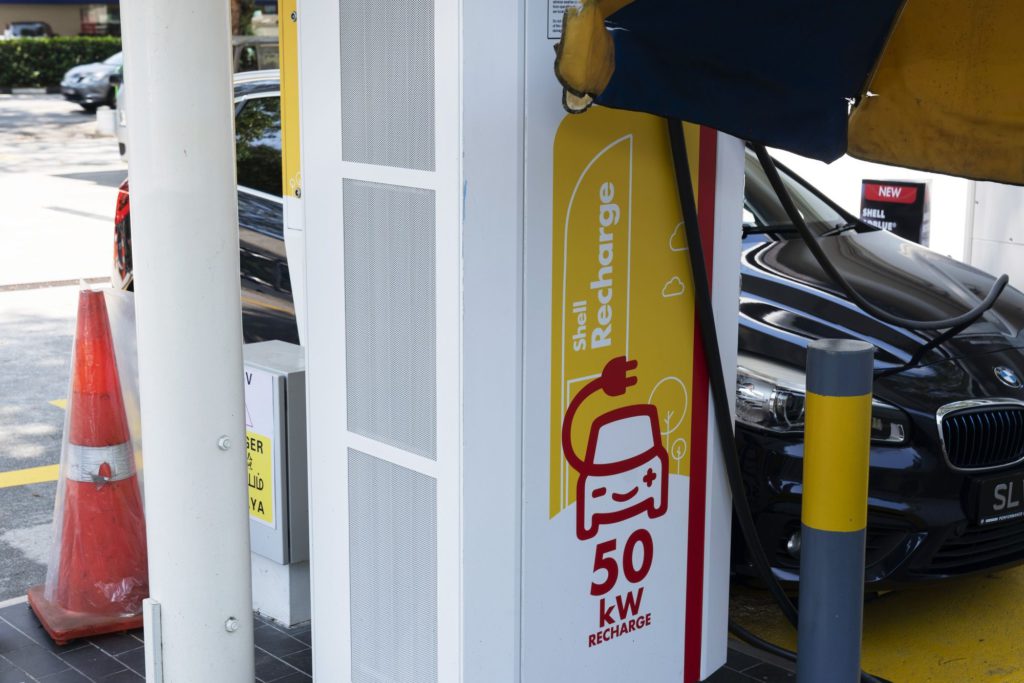
Another issue Singapore needs to tackle in tandem with EV purchase rates is charging infrastructure. Like many other places, a lack of EV chargers is a significant barrier to adoption and a particular problem in densely built up Singapore, where the vast majority of people live in high-rise apartments.

The government has said that all public housing car parks (over 80% of Singaporeans live in public housing, or Housing & Development Board flats) will have at least three EV charging points by 2025. Charging points are also cropping up in shopping center car parks and the like, and tenders have been issued to install outlets in private housing, or condominium basements.

There are a raft of other measures too — such as extending the statutory lifespan of electric taxis to 10 years from eight, and pledging that half of public buses will be electric by 2030. All are instrumental to Singapore’s green goals, but convincing the general public to give EVs a go is a critical step.

More stories like this are available on bloomberg.com

©2022 Bloomberg L.P.
Spanish Premier’s Phone Was Hacked With Spy Software in 2021

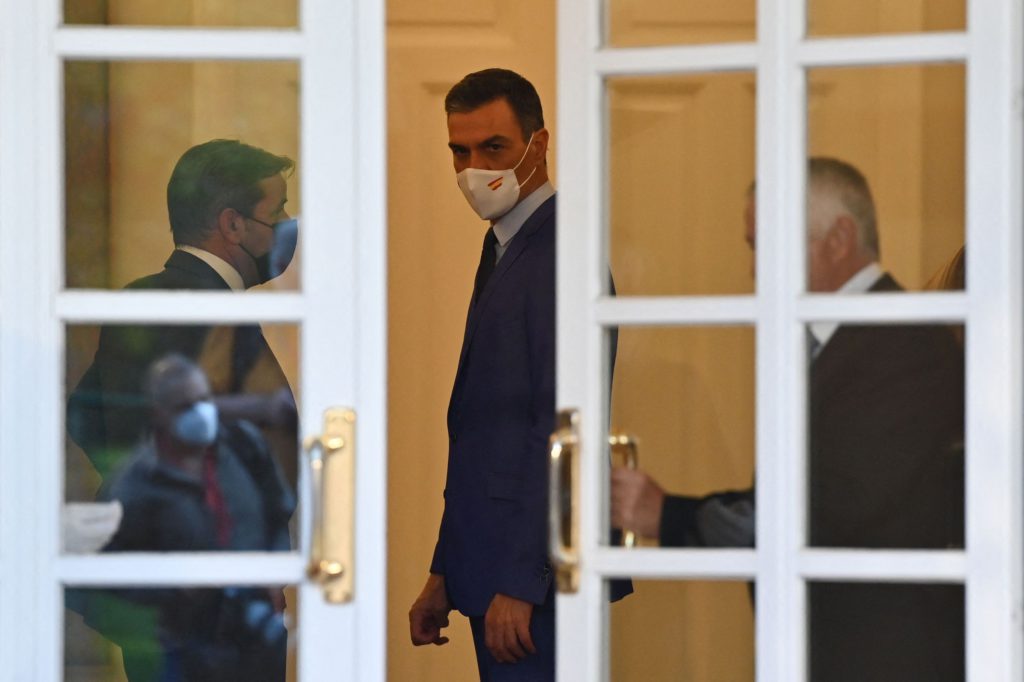
(Bloomberg) — Spanish Prime Minister Pedro Sanchez’s phone was broken into last year with software and data was stolen from the device, the government said Monday.

The breach occurred in May 2021 using the Pegasus spying software, Felix Bolaños, the secretary of state for the prime minister’s office, announced at a news conference. The phone of Defense Minister Margarita Robles was also breached in June of last year, Bolaños said. 

The Pegasus software was developed by an Israeli firm, NSO Group., and is used by governments and intelligence agencies in several countries. The software has drawn widespread attention in Spain in recent weeks following media reports that it was widely used between 2017 and 2020 by the government to spy on Catalan secessionist leaders and activists. 

The Pegasus surveillance software has been under global scrutiny, and in February, the European Union data agency recommended that it be banned from use in the region.

Pegasus software can track a user’s mobile phone, and its misuse has landed NSO at the center of high-profile privacy and human-rights abuse cases. The product allegedly was supplied to governments that used it to spy on political dissidents, journalists and human-rights activists.

Explainer: Explaining Spyware, and Who Is Using It Against Whom

In Spain, the revelations that the software was used to target Catalan separatists put Sanchez under pressure, as his minority government relies on support from the leading secessionist party, known as ERC, to pass legislation. On April 28, the government barely managed to pass a large economic package in parliament after the ERC voted against it due to the scandal surrounding Pegasus.

Read more: Spanish Premier Pushes Through Economic Plan With 11th Hour Save

(Updates with Pegasus background from fourth paragraph)

More stories like this are available on bloomberg.com

©2022 Bloomberg L.P.
Australia Yields Hit Highest Since 2014 With RBA, Fed Hikes Seen

(Bloomberg) — Australian bonds sold off as investors anticipate the nation’s central bank will raise interest rates on Tuesday for the first time since 2010. 

Yields on benchmark 10-year government notes jumped 14 basis points to 3.26%, the highest since November 2014. The premium over similar-dated Treasuries rose to 32 basis points, up 13 basis points from Friday, according to data compiled by Bloomberg.

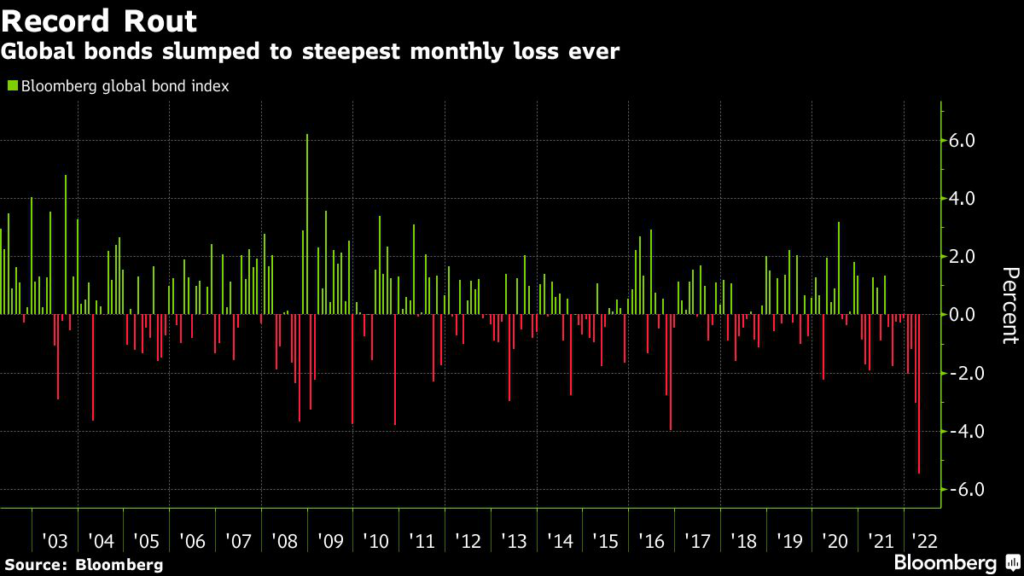
Bonds are tumbling worldwide this year as central banks move to aggressively tighten policy to counter elevated inflation. The Bloomberg Global Aggregate Total Return Index lost 5.5% in April, the biggest monthly drop since its inception in 1990. Investors are pricing in a half-point increase by the Federal Reserve on Wednesday, its steepest hike since 2000. 

Bond Traders Face Week That Threatens to Shatter Any Market Calm

“Australian bonds have under-performed to reflect the market’s confidence that the RBA will now deliver its first hike of the cycle this week,” said Andrew Ticehurst, a rates strategist in Sydney at Nomura Holdings Inc. “Stronger-than-expected U.S. wages data led markets to conclude that central banks will be forced to stay on the hawkish path, and will seek to get back to the relative safety of neutral policy settings, as quickly as they can.”

Treasury 10-year yields were little changed on Monday at 2.94%. They climbed about 11 basis points on Friday after the U.S. employment cost index surged by a record 1.4% in the first quarter. Swaps traders are pricing in four straight half-point hikes by the Fed to take its benchmark rate to 2.33% by the end of its September meeting. 

Australian traders are also expecting aggressive moves from the RBA. Overnight-index swaps see the cash-rate target at 2.5% by year-end, from a record-low 0.1%, which would be the sharpest annual increase since 1994. That also implies at least two occasions when the central bank raises rates by more than a quarter point.

Australian Policy Makers Take Election Center Stage in Rate Call

(Updates yields throughout)

More stories like this are available on bloomberg.com

©2022 Bloomberg L.P.
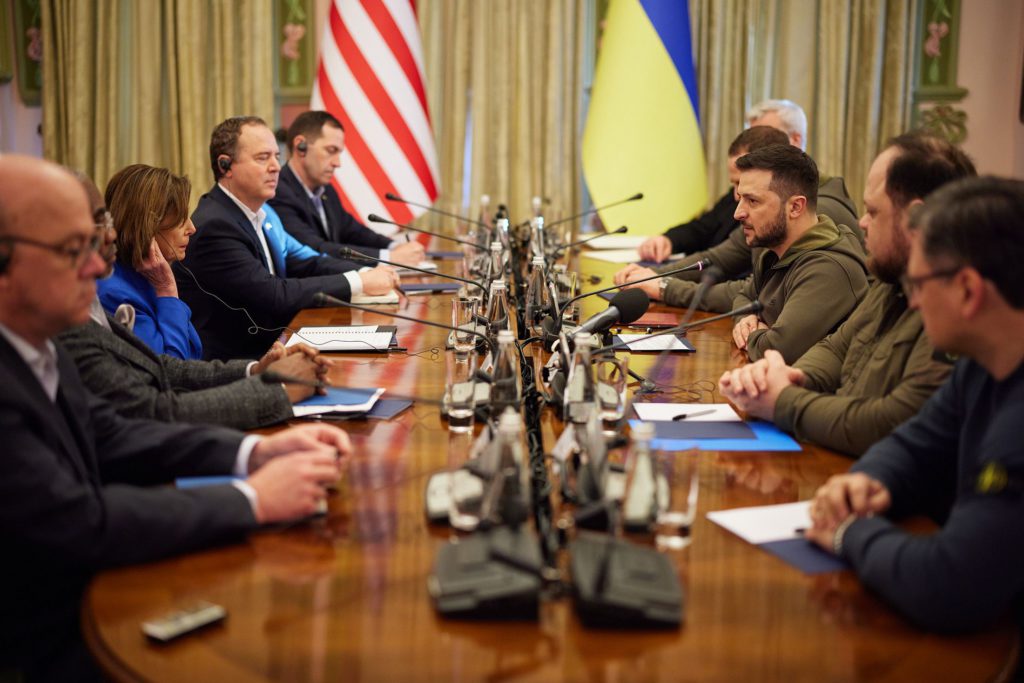
Ukraine Latest: Pelosi in Kyiv; Moscow Tightens Grip on Kherson

(Bloomberg) —

Sanctions against Russia can only be lifted after its forces leave Ukraine, German Foreign Minister Annalena Baerbock said, adding this includes Crimea, which Moscow annexed in 2014.

About 100 civilians have been evacuated from the besieged Azovstal steel plant in the eastern port city of Mariupol, President Volodymyr Zelenskiy said, in an operation involving the United Nations and Red Cross.

Ukraine’s military said Russian attacks continued in the east around Izyum with the conflict extending along most of the contact line in the Donetsk area that delineates pro-Russian separatist areas of the country.

(See RSAN on the Bloomberg Terminal for the Russian Sanctions Dashboard.)

Key Developments

  • Hungary Would Veto EU Sanctions on Russian Energy, Minister Says
  • Putin’s War Brings Risks to Moldova and its Pro-Moscow Enclave
  • Ex-Wall Street Executive Steers Ukraine Post Office Through War
  • Scorching Heat in India to Deal New Blow to Global Wheat Supply

All times CET: 

Germany to Woo India With G-7 Invite in Push to Isolate Russia (7:21 a.m.)

Chancellor Olaf Scholz plans to invite Indian Prime Minister Narendra Modi as special guest to a Group of Seven leaders’ summit next month, according to people familiar with the discussions. The decision could be announced as early as Monday, when Scholz hosts Modi in Berlin.

Scholz was undecided on Modi’s invitation until a few weeks ago given the prime minister’s reluctance to condemn Russia’s invasion of Ukraine and a jump in fossil fuel deliveries to India from Russia.

Jill Biden to Meet Displaced Ukrainians (5:58 a.m.)

First lady Jill Biden will travel to Romania and Slovakia from May 5-9, the White House said in a statement. During her visit she will meet Ukrainian mothers and children forced to flee because of the war, it said. 

South Korea Diplomats Return to Kyiv (2:39 a.m.)

South Korea plans to resume operations at its embassy in Kyiv from Monday. Embassy staff had been evacuated to the Ukrainian city of Chernivtsi as well as Romania, the foreign ministry said.

Baerbock Says Sanctions Lifted After Russian Withdrawal (1:10 a.m.)

German Foreign Minister Annalena Baerbock made clear that sanctions against Russia would only be lifted after a complete withdrawal of its troops from Ukrainian territory. She included Crimea in that, which Russia annexed in 2014 and would be unlikely to cede again.

“It is important that we can withstand every sanction that we introduce, if necessary, for years,” Baerbock told public broadcaster ARD. “We will only lift these sanctions once the Russian troops have left.”

Read more: Baerbock: Sanctions Will Only Be Lifted After Russian Withdrawal 

Hungary Would Veto EU Sanctions on Russian Energy (11:55 p.m.)

Hungary would veto any European proposal that leads to the restriction of energy imports from Russia, according to a senior minister in Prime Minister Viktor Orban’s government.

“We’ve made it clear that we’ll never support” extending European Union sanctions against Russia to the field of energy, Cabinet Minister Gergely Gulyas told HirTV on Sunday.

Lavrov Reaffirms Gas Payments Need Rubles (10:37 p.m.)

Russian Foreign Minister Sergei Lavrov reaffirmed that foreign payments for gas will be considered complete only after they are converted into rubles, making it potentially harder for energy companies and states to keep gas flowing without breaching sanctions.

“Gas supplies are considered paid not when euros or dollars arrive but when they are converted into rubles, which can’t be stolen,” Lavrov said in an interview with Italian TV channel Rete 4, his first with Western media since the Russian invasion of Ukraine. 

War Will End When Ukraine Wins, Zelenskiy Says (10:15 p.m.)

“The war will end when we win,” President Volodymyr Zelenskiy told Greek newspaper Kathimerini. “Since the beginning of the war we have started working on scenarios for all kinds of attacks. Trust in the Russian side’s promises and commitments is zero, after all,” he said. 

Zelenskiy estimated the cost of the war to Ukraine’s infrastructure at $60 billion.

Biden Speaks With Pelosi on Kyiv Visit (9:07 p.m.)

President Joe Biden spoke with U.S. House Speaker Nancy Pelosi after she returned to Poland to “discuss her visit to Ukraine” and her meeting with Zelenskiy, a White House official said. No other details were given. 

Zelenskiy Says 100 Evacuations From Azovstal So Far (4:57 p.m.)

Zelenskiy confirmed civilian evacuations from the Azovstal steel plant in Mariupol. The effort started Saturday night under United Nations and International Committee of the Red Cross guidance. 

More than 100 people have been moved out so far and the operation continues, said Deputy Prime Minister Iryna Vereshchuk, who said she hopes to be able to meet the first group of evacuees on Monday. Zelenskiy said the civilians will be transported to Zaporizhzhia. 

Some 1,000 civilians and perhaps 2,000 Ukrainian soldiers have been trapped in the Azovstal plant, which has been under heavy Russian bombardment. 

Close to 1 Million Have Crossed Back From Poland (3 p.m.)

Almost ten weeks into Russia’s invasion border flows between Ukraine and Poland are more two-sided. On Saturday, 23,500 people crossed into Poland while 26,800 returned to Ukraine, according to Poland’s border authorities. 

Through the end of April some 3.076 million people had crossed into Poland since Feb. 24 — and 975,000 had made the reverse journey. 

Altogether, the United Nations estimates almost 5.5 million people have left Ukraine, with Poland, Romania and Russia the top destinations. Millions more have been displaced within the country. 

Modi Heads to Europe to Convey India’s Perspective (2 p.m.)

Indian Prime Minister Narendra Modi will “exchange perspectives” on the war in Ukraine during his visit to Germany, France and Denmark this week, Foreign Secretary Vinay Kwatra said. He arrives in Berlin Monday. 

India has always maintained that “there should be cessation of hostilities in Ukraine and the path to resolution goes through diplomacy and dialog,” he said. Still, the South Asian nation has abstained at recent United Nations votes for draft resolutions condemning Russia’s invasion. 

Scholz Says ‘Necessary’ For Germany to Arm Ukraine (1:03 p.m.)

Chancellor Olaf Scholz said Sunday it was “now necessary” for Germany to supply Ukraine with weapons in its fight against Russia.

“We will support them with arms deliveries so that they can defend themselves,” Scholz said at a May 1 labor union event. Scholz added refusing to do so was “behind the times” given the amount of assistance other European countries have offered. 

Scholz has faced calls from members of his ruling coalition and opposition parties to ramp up weapons deliveries to Ukraine and take a more asserting stance against Moscow.

Germany Says Won’t Block Embargo on Russian Oil to Punish Putin

More stories like this are available on bloomberg.com

©2022 Bloomberg L.P.

Close Bitnami banner
Bitnami
