Bloomberg

Bitcoin ETFs Set to Roll Out in Australia to Test Crypto Demand

(Bloomberg) — The Bitcoin exchange-traded fund bandwagon is coming to Australia as regulators finalize approvals for products offering direct exposure to digital assets.

Cosmos Asset Management said it’s preparing to launch the Cosmos Purpose Bitcoin Access ETF in coming days. It will invest in the Purpose Bitcoin ETF, a Toronto-listed fund with assets of about C$1.6 billion ($1.3 billion).

“We anticipate to launch the product next week” pending a final regulatory green light, Dan Annan, chief executive officer at Cosmos, said in an interview.

Meanwhile, 21Shares AG in partnership with ETF Securities expects Bitcoin and Ether funds to go live April 27, according to a statement. The tokens backing the products will be held in so-called cold storage by Coinbase Global Inc.

Excitement around Bitcoin-linked ETFs reached a peak last year when the U.S. allowed a futures-based fund, propelling the token to an all-time high. Some of that ardor has cooled along with Bitcoin’s price as the prospect of sharply tighter Federal Reserve monetary policy dims the allure of riskier investments.

At the same time, anecdotal evidence signals growing adoption of cryptocurrencies in Australia. In addition, Bloomberg Intelligence has said Australia could act as the Asia-Pacific’s gateway to crypto ETFs. 

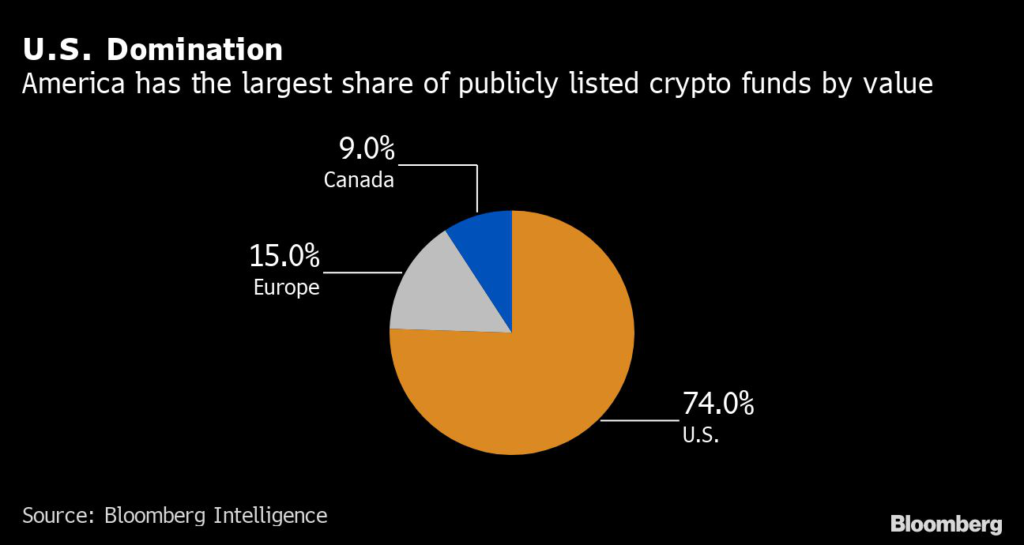
The U.S. accounts for about 74% of the market value of publicly listed crypto funds, according to Bloomberg Intelligence figures, followed by Europe with some 15% and Canada with 9%.

Annan argues there’s “quite a bit of a pent-up demand” in Australia and is looking at the possibility of developing ETFs investing in other tokens. The Australian market already has ETFs tracking crypto-linked stocks.

More stories like this are available on bloomberg.com

©2022 Bloomberg L.P.

Treasury’s Yellen Leads G-20 Walkout on Russian Officials: Latest

(Bloomberg) — With conditions in the Ukrainian port city of Mariupol looking increasingly fraught, the U.S. announced fresh sanctions on Russia — including on a cryptocurrency miner — and the UN secretary-general sought meetings with Russian President Vladimir Putin and Ukrainian President Volodymyr Zelenskiy. 

In addition, the Biden administration is preparing to announce another $800 million in weapons and support for Ukraine, according to people familiar with the matter. 

Ukraine’s Foreign Minister Dmytro Kuleba warned again that his nation wouldn’t cede territory in any negotiations with Russia, even as Moscow’s forces step up their offensive in the east. Putin, meanwhile, reiterated that his “military operation” will continue, saying the goal is to protect the population of Donbas in Ukraine’s east. 


(See RSAN on the Bloomberg Terminal for the Russian Sanctions Dashboard.)

Key Developments

  • Russia Test-Fires Nuclear-Capable ICBM in Warning to U.S. Allies
  • Kremlin Insiders Are Alarmed Over Growing Cost of Putin’s War
  • Germany to Support Ukraine With Artillery Ammunition, Training
  • Finnish Lawmakers Begin NATO Debate as Russia Risk Weighed
  • Aeroflot May Buy Airbus Jets, Tapping EU Sanctions Workaround
  • Ukrainian Troops Risk Being Encircled in New Russian Offensive

All times CET:

U.S. Targets Russia Crypto Miner BitRiver in New Sanctions (8:41 p.m.)

The U.S. Treasury sanctioned cryptocurrency miner BitRiver — the first time it has targeted such a company — as well as dozens of other entities and individuals it said were involved in helping Russia evade sanctions linked to its invasion of Ukraine. 

Along with BitRiver, which was founded in Russia in 2017, Treasury penalized 10 of the company’s subsidiaries. It also sanctioned Russian commercial bank Transkapitalbank and a global network of more than 40 individuals and entities led by Russian oligarch Konstantin Malofeev.

In addition, the State Department issued visa bans on 635 Russian nationals it said are involved in suppressing dissent abroad and at home.

Sanctions Move Russian Bank to Sell Subsidiary (8:39 p.m.)

Russia’s Alfa-Bank sold its Kazakh subsidiary to Kazakhstan’s Bank CenterCredit, Interfax reported, to remove the subsidiary from sanctions imposed by the U.S. and other countries. The bank’s Kazakh arm had introduced temporary restrictions due to sanctions.

Alfa-bank bank is owned by its founder, Russian billionaire Mikhail Fridman, who is sanctioned in the U.K. and in the European Union.

Ukraine Supports UN Proposal for Temporary Easter Truce (8:11 p.m.)

The Ukrainian Foreign Ministry said in a statement that a “humanitarian truce” proposed by the UN over the upcoming Orthodox Easter holiday would help allow for the evacuation of thousands of civilians, including from heavily hit Mariupol. 

Luhansk has not received clear signals on any four-day truce, Serhiy Haiday, the governor of the eastern region, said in televised remarks, but is prepared to use it for maximal evacuation and to fill up humanitarian aid stockpiles.

Zelenskiy Calls Russian Attacks on Mariupol ‘Terrorism’ (7:38 p.m.)

Ukraine’s President Volodymyr Zelenskiy called Russia’s actions toward Mariupol “terrorism.” In an interview with French TV, he said that 95% of the coastal city has been destroyed. 

He said Ukrainians aren’t able to leave the city to safety via proposed humanitarian corridors. An evacuation effort failed Wednesday amid continued Russian shelling.

Poland Asks U.S. to Speed Up Delivery of Weapons (7:10 p.m.)

Poland asked the U.S. to accelerate the delivery of military hardware including Abrams tanks and Patriot missile systems, Defense Minister Mariusz Blaszczak said after meeting at the Pentagon with his U.S. counterpart, Lloyd Austin. Poland seeks to purchase more equipment such as helicopters and drones and plans to file a letter of request to U.S. producers in a “short time,” Blaszczak said.

UN’s Guterres Seeks Meetings with Putin, Zelenskiy (6:45 p.m.)

United Nations Secretary-General Antonio Guterres delivered a letter to Russia’s mission on Tuesday requesting a meeting with Putin, according to the UN chief’s office. Separately, he delivered a similar letter to the Ukrainian mission asking for a meeting with Zelenskiy, as he seeks to mediate between the warring sides.

Guterres, who has mostly tried not to alienate any of the world’s top powers, took an unusually strong stance against Russia’s invasion at the start of the war. His position was praised by Western leaders but may have alienated Putin, depriving him of a mediator’s role in the conflict.

Yellen Leads G-20 Walkout as Russian Officials Speak (6:25 p.m.)

Multiple finance chiefs and central bank governors including U.S. Treasury Secretary Yellen and Ukrainian Finance Minister Serhiy Marchenko walked out of a Group of 20 meeting in Washington when Russia’s representative started speaking, people familiar with the situation said.

Some officials who were virtual participants also turned their cameras off when Russia’s representative spoke, the people said, declining to be identified.

Lavrov Discusses Mariupol With Turkish Counterpart (6:21 p.m.)

Russian Foreign Minister Sergei Lavrov discussed the situation in Mariupol by phone with his Turkish counterpart Mevlut Cavusoglu, according to a statement on the website of Russia’s Foreign Ministry. 

Russia repeated that its negotiations with Ukraine “depend entirely on Kyiv’s readiness to take into account our legitimate demands,” the statement said.

Russia Tests Ballistic Missile Amid Putin Praise (6:17 p.m.)

Russia’s Defense Ministry released video of a Sarmat intercontinental ballistic missile being test-fired from the Plesetsk cosmodrome in the northern Arkhangelsk region, Tass said. The ministry previously showed videos of the missile in 2018.

“This unique weapon will strengthen the military potential of our armed forces, will reliably guarantee Russia’s security against outside threats and force those who in the heat of frenzied aggressive rhetoric try to menace our country to think again,” Putin said on state TV.

IMF Urges Nations to Help on Ukraine Financing (6:02 p.m.)

The International Monetary Fund called on nations to provide grants and donations to fill a $5 billion monthly financing need for Ukraine, while signaling that more of the institution’s own lending will need to wait for when there is more stability.

The IMF last month approved a $1.4 billion emergency loan for Ukraine — the maximum it can provide with few conditions based on the fund’s rules. Ukraine canceled an existing loan that had $2.2 billion left to disburse but was subject to reforms such as tackling corruption.

Russia Ruled in Potential Default By Derivatives Panel (5:55 p.m.)

The Credit Derivatives Determinations Committee said a “potential failure-to-pay event” occurred for credit-default swaps when Russia made two dollar-bond payments in rubles after foreign banks declined to process U.S. currency transfers. The nation could still avert a default if it pays bondholders in dollars before a 30-day grace period ends.

Opinion on Ukraine Membership Due by End-June, Michel Says (5:53 p.m.)

“We will have this opinion of the Commission by the end of June and it will be my responsibility to asses when I can put this point on the agenda of the European Council,” Charles Michel, who chairs meetings of EU leaders, said at a news conference in Kyiv with President Volodymyr Zelenskiy. EU leaders next meet June 23-24.

Michel said he was personally convinced that “sooner or later we will target oil and gas,” as the EU prepares a sixth package of sanctions against Russia.

Biden Expected to Send Ukraine $800 Million More in Arms (5:01 p.m.)

The money will come from the president’s draw-down authority to send stockpiles of weapons to a U.S. ally in an emergency, according to people familiar with the matter. Its contents are expected to be similar to the last package of aid, according to the people. That package included artillery systems, armored personnel carriers and the transfer of additional helicopters.

Ukraine Won’t Give up Territory, Kuleba Says (4:38 p.m.)

Foreign Minister Dmytro Kuleba told Bulgaria’s BNT TV that Ukraine would not cede on territory in any negotiations with Russia. “We won’t allow the Russian army to stay in the territories that have been occupied since Feb. 24, these are absolute red lines,” Kuleba said via a translator.

Kuleba met government officials and lawmakers in Sofia, seeking military aid. Bulgaria has so far refused to provide arms to Ukraine as the pro-Russian Socialists in the ruling coalition have threatened to leave the government if that happened.

Germany Rejects Ruble Payments for Gas (4 p.m.)

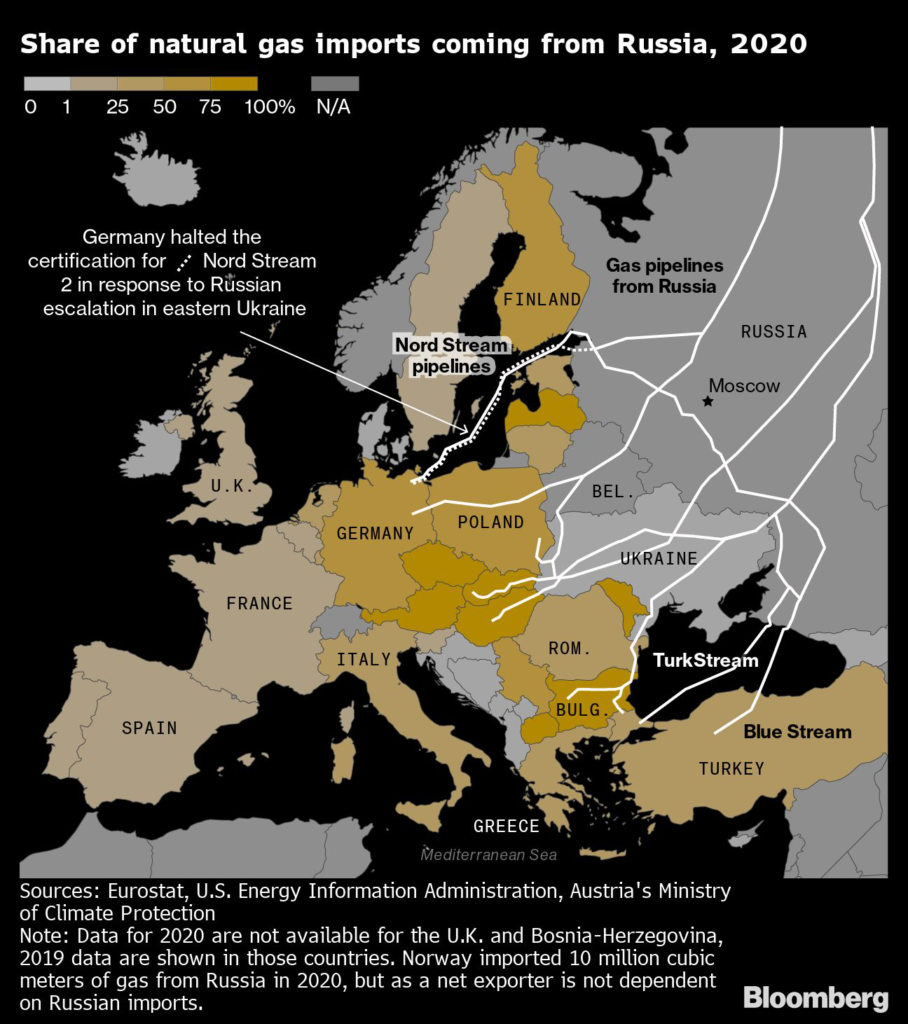
Companies buying Russian natural gas should not have to set up ruble accounts to pay for it, German Finance Minister Christian Lindner said, pushing back against a demand made last month by Russian President Vladimir Putin.

“Contracts are contracts,” Lindner said in an interview with Bloomberg Television in Washington. “Contracts are based on dollars and euros and so private-sector companies should pay in dollars or euros.” EU lawyers drafted a preliminary finding that the mechanism Putin wants would violate EU sanctions, raising the prospect of a de facto embargo on Russian gas.

Russian Finance Minister to Participate in G-20 (3:58 p.m.)

Anton Siluanov will take part in the meetings in Washington this week via video link, according to two people familiar with the matter. The meetings will include sessions on the economic fallout from Russia’s invasion of Ukraine, and Ukraine’s finance minister will attend the opening session of the event, according to a senior Treasury official. Secretary Janet Yellen plans to skip some meetings due to Russia’s involvement, the official said.

U.K. Plans Further Russia Defense Sanctions (3:46 p.m.)

The fresh penalties will come this week, a person familiar with the matter said. The U.K. will also target more Russian tycoons and their associates, the person said. The measures will add to sanctions that already target more than 1,300 Russian individuals, companies and banks.

U.S., China Defense Officials Hold Rare Phone Call (3:41 p.m.)

Defense Secretary Lloyd Austin spoke with Defense Minister Wei Fenghe about the conflict in Ukraine and, more broadly, defense ties and regional security issues, according to a U.S. statement. It was the first time they’d chatted since the Biden administration took office, AP reported.

A Chinese statement confirmed the Ukraine discussion, without providing details. In the statement China said it also urged the U.S. to stop military provocations at sea and refrain from using Ukraine to “smear” China.

Austin will host Polish Defense Minister Mariusz Błaszczak at the Pentagon on Wednesday.

Ukrainian Army Is Counterattacking in Kharkiv Region (2:20 p.m.)

Ukraine’s military is mounting a counterattack in the northeastern Kharkiv region, liberating some towns even as Russian forces attempt to advance in the area, Presidential spokesman Oleksiy Arestovych said in a televised briefing.

Russian troops were storming the towns of Popasna and Rubizhen in the Luhansk region and “attempted to launch a quiet offensive” in the Zaporizhzhia region, he said. The battle continues at the Azovstal steel mill in Mariupol, Arestovych said.

Ukraine Studies Russia’s Latest Proposal in Talks (2:05 p.m. CET)

Ukraine is studying Russia’s latest proposal in peace talks, a senior official said, without indicating whether or when progress might be expected. 

The documents submitted by Russia came in response to drafts that Ukraine offered at the last round of in-person talks on March 29 in Istanbul, according to presidential adviser Mykhailo Podolyak. Since then, with talks continuing via video link, top officials from both sides have said the negotiations were at a dead end.

Earlier Thursday, Kremlin spokesman Dmitry Peskov said Moscow had submitted a draft document, but he declined to provide details. “The ball is in their court,” he said. Ukraine’s Foreign Minister Dmytro Kuleba told Bulgarian public BNT TV channel the country would not cede ground on territory. “


Zelenskiy Touts Macron Ties, Sees Potential With Le Pen (1:47 p.m.)

Ukrainian President Volodymyr Zelenskiy said he has a relationship that he wouldn’t want to lose with French counterpart Emmanuel Macron, who is seeking re-election in Sunday’s runoff ballot against right-wing candidate and Putin ally Marine Le Pen.

But, speaking in a video address ahead of the last debate between Macron and Le Pen, the Ukrainian leader left the door open to building bonds with Le Pen. “As long as she was to understand that she was wrong” to speak to Putin, “our relation could change,” Zelenskiy said.

Wartsila Books Just Under $220 Million Writeoff on Russia (1:40 p.m.)

Finland’s Wartsila, a maker of ship engines and power plants, will make the write off on its assets and business operations in Russia in the first quarter.

Maintaining activities in Russia is not viable, the company said. It has therefore decided to further downscale operations there, having already suspended all deliveries, sales, orders, and bidding to Russia. Russia-related activities accounted for about 5% of its net sales in 2021.

UN Says 5 Million Ukrainians Have Fled Abroad Due to War (12:45 p.m.)

More than 5 million people have fled Ukraine, the United Nations refugee agency said. Among its neighbors Poland has accepted more than 2.8 million people, Romania 757,047, Hungary 471,080, Moldova 426,964 and Slovakia 342,813. Russia took in 549,805 people and Belarus 23,759, the UNHCR said.

Russia Offers Oil in a Rush, Hinting at Trade Impact (12:40 p.m.) 

Russia’s state oil-producing giant Rosneft PJSC surprised traders in Europe and Asia with offers to sell large amounts of crude quickly, as well as setting out significant changes to the payment process for some cargoes.

The move is another sign of disruption to some of the firm’s operations following Russia’s invasion of Ukraine. There has been a growing pressure in Europe to ban Russian oil imports, creating a potential impetus to get purchases finalized before any such step is taken.

Kazakhstan Sees Main Oil-Export Route Fully Restored This Week (12:37 p.m.)

Kazakhstan expects to resume full operations on its main oil-export route via Russia in the coming days, after storms curtailed shipments. The Central Asian country was forced to reduce deliveries through the Caspian Pipeline Consortium pipeline late last month following damage to moorings at the Black Sea port where it terminates.

The route is expected to be fully up and running again later this week, Energy Minister Bolat Akchulakov said, according to his press office.

NATO-Linked Center to Hold ‘Live-Fire’ Cyber Drills (12:25 p.m.)

The world’s largest “live-fire” security exercise will involve 2,000 people from 32 countries, according to Jaak Tarien, director of the NATO Cooperative Cyber Defense Center of Excellence in Tallinn, Estonia. Some 8,000 real attacks will be carried out this week on computers simulating military, civilian and financial IT networks. 

The exercise is intended to boost the skills of cybersecurity experts defending national IT systems and critical infrastructure under real-time attacks amid Russia’s war against Ukraine. Tarien added that “Ukraine is surprising Russia” with its cyber-defense capabilities. 

Turkey Nears LNG Loan in Shift From Russian Natural Gas (12:10 p.m.)

Turkey and Deutsche Bank AG are in the final stages of talks for a pioneering 1 billion-euro loan to finance liquefied natural gas purchases that will reduce the country’s reliance on Russian imports.

State-owned pipeline operator Botas will use the money to buy LNG from U.S. producers and from traders in Europe, according to people with direct knowledge of the matter. The transaction marks the company’s first loan for LNG imports and paves the way for similar deals that will allow Botas to diversify supplies currently dominated by Russia and Iran.

Germany to Provide Rockets, Artillery Training (11:30 a.m.)

Germany will provide Ukraine with ammunition and training for heavy artillery to help fend off Russian forces, according to a senior government official.

The training and ammunition are for the PzH 2000, a self-propelled, rapid-fire artillery system, which the Netherlands is sending to Ukraine, said the official. The training could be provided in Poland or Germany, but not in Ukraine because of ongoing attacks from Russia, the official said.


Finnish Lawmakers to Debate NATO Bid (11:20 a.m.)

Finland’s parliament is gearing up for a security policy debate that’s expected to pave the way to an application to join NATO, with lawmakers weighing how neighboring Russia’s attack on Ukraine will reflect on the Nordic country.

“Finns lost all the remaining trust, the little bit of trust we had on the Russian regime,” Atte Harjanne, a lawmaker for the Greens, said on Bloomberg TV.

European Stocks Gain, Crude Rebounds (11:10 a.m.)

Stocks in Europe rose, while futures on the Nasdaq 100 and S&P 500 gauges fell after U.S. shares rallied the most in a month on Tuesday.

Shares of Credit Suisse AG declined after the Swiss lender signaled a first-quarter loss due to a revenue hit form Russia’s invasion. Treasuries and bonds in Europe gained. Gold extended losses, while crude oil rebounded as industrial activity in virus-hit China picked up.

Ukraine Says Allies Haven’t Delivered New Planes (11 a.m.)

Ukraine’s air force pushed back against reports that it had received new deliveries of aircraft from allies, saying instead that the U.S. has sent equipment to help get more planes into service.

European Firms Cite War’s Impact on Business (10:30 a.m.)

Joining Credit Suisse, German turbine maker Siemens Energy said the war was impacting its business, while car sales in Europe fell for a ninth consecutive month in part due to the conflict’s impact on supply chains.

New-car registrations in Europe slumped 19% in March to 1.13 million vehicles as a lack of semiconductors and other components roils production, according to the European Automobile Manufacturers’ Association.


More stories like this are available on bloomberg.com

©2022 Bloomberg L.P.

Netflix Plan to Introduce Commercials Draws Shock, Questions From Ad Agencies

(Bloomberg) — Netflix Inc.’s revelation that it will introduce commercials was met with a mix of shock, cheers and skepticism from an advertising community that’s been shut out of the streaming service up to now.

“I thought, there’s no way it’s going to happen,” said Brian Wieser, global president of business intelligence at GroupM, a WPP Plc company whose clients include Ford Motor Co., Google and Unilever Plc. “It’s such a 180 from what they stood for.”

With TV viewership in decline, advertisers are flocking to the growing number of streaming services that include commercials, including Walt Disney Co.’s Hulu, Comcast Corp.’s Peacock, Fox Corp.’s Tubi and HBO Max, now owned by Warner Bros. Discovery Inc. They’re all catering to consumers who are willing to sit through a few ads in exchange for paying a low monthly subscription fee or nothing at all.

But advertisers’ opportunities remain limited. Streaming services restrict commercials to just a few minutes per hour to avoid upsetting viewers. Netflix, which announced plans to create a lower-priced version of its service with commercials, would offer brands another opportunity to get in front of the cord-cutters who can no longer be reached on linear TV. 

“The more ad-supported options in streaming the better for advertisers,” said Dave Campanelli, chief investment officer at Horizon Media, a media services agency that works with Corona, Geico and Capital One.

Netflix has allowed marketing before in the form of product placement on shows. But a lower-priced service with commercial breaks would be new. Whether advertisers embrace it depends on the details. 

“I think there are still a lot of questions to be answered,” said Michael Law, U.S. chief executive officer of the ad agency Carat, which lists General Motors Co., Intel Corp. and Procter & Gamble Co. as clients on its website.

Viewer Data

Those include how much viewer data Netflix is willing to share, how the company measures its audience and how many people sign up for the ad-supported version, he said.

Netflix’s practice of releasing all episodes of a season at once could also complicate its ad business, Wieser said. Advertisers typically secure TV commercials months in advance, but they can also buy spots mid-season if a show suddenly becomes popular. 

Netflix could insert ads into shows that suddenly becomes part of the cultural zeitgeist, but that may be too late for advertisers.

“The bulk of the viewing would likely have occurred before an advertiser decided to build a campaign around the program,” Wieser said. “It can be easier to do this when a program runs over a conventional multimonth schedule.”

For Netflix, selling ads will require a shift in thinking. After years of focusing on acquiring subscribers and keeping them from leaving, Netflix will need to please advertisers too, said Dave Morgan, chief executive officer of Simulmedia, which helps marketers place their ads more precisely. It lists Walt Disney Co., Choice Hotels International Inc. and Expedia Group Inc. as customers.

“They will need more than subscribers that binge watch, they will need viewers watching ad-supported programming each and every day,” Morgan said. 

Brad Adgate, a media consultant, wasn’t surprised that Netflix embraced ads. The company needed another revenue source given its big investment in programming and slowing subscriber growth, he said.

Netflix Co-Chief Executive Officer Reed Hastings announced the plans to look at advertising came after Netflix on Tuesday posted a loss of 200,000 customers in the first quarter — the first decline in a decade — and forecast a drop of 2 million this quarter, causing its stock to plunge. The company will work on creating an ad-supported version of the service over the next year or two.

“Based on the dismal outlook on their subscriber counts,” the announcement of an ad-supported tier “deflected some of the negative news,” Adgate said. “That became the lede.”

Hulu generated $3 billion in ads last year, with about 88% of subscribers choosing an ad-supported plan, notes Michael Morris, an analyst with Guggenheim Partners. He estimates that commercials could contribute $4 billion to profits for Netflix by 2030.

More stories like this are available on bloomberg.com

©2022 Bloomberg L.P.
Rogers Boosts 2022 Guidance Ahead of Decision on Shaw Deal

(Bloomberg) — Rogers Communications Inc. rose the most in 13 months after the company lifted its 2022 revenue forecast and said it still expects to close its $16 billion takeover of Shaw Communications Inc. by June. 

Rogers jumped 4.3% to C$76.94 at 1:57 p.m in Toronto, the biggest intraday rise in the stock since the day after it announced the Shaw deal last year. Earlier Wednesday, it traded as high as C$80.85, the highest intraday level on record, after the company said it expects faster business growth from an economic rebound and rising immigration.

Canada’s largest wireless and cable firm earned C$462 million ($368 million) on an adjusted basis in the quarter ended March 31. That equaled 91 Canadian cents per share, beating the average analyst estimate of 83 cents. 

Toronto-based Rogers said it expects service revenue to increase 6% to 8% this year over 2021 levels versus previous guidance of 4% to 6%. It also raised its forecast for free cash flow and for adjusted earnings before interest, taxes, depreciation and amortization. 

“It is not common for telecom companies to increase their outlook this early in the year, which speaks to management’s improved visibility on the company’s operations amid the reopening,” Desjardins analyst Jerome Dubreuil said in a note to investors.  

The company’s proposed acquisition of Calgary-based Shaw is being reviewed by Canada’s antitrust agency and the federal government, with a divestiture of Shaw’s wireless division expected as part of the approval. Rogers wants to sell the division to Xplornet Communications Inc., the Globe and Mail newspaper reported Tuesday.

In March, the Canadian broadcast regulator approved Rogers’ purchase of Shaw’s cable television assets. 

The deal, which the companies are trying to close this quarter, could boost the company’s wireless growth, allowing it to create compelling wireless, pay-television and internet bundles across a broader network footprint, according to John Butler, senior analyst at Bloomberg Intelligence.

Even in the absence of Shaw, Rogers’ wireless growth should improve as it executes better on driving transactions through its digital and retail channels, Butler said, adding that a rebound in travel could boost high-margin roaming fees this year.

“Wireless results were well above our already high expectations,” driven by new customers and higher growth in revenue per user, Scotiabank analyst Jeff Fan said in a note. 

FIRST WORD: Rogers Boosts FY Service Rev. Forecast: Snapshot

Key Numbers

  • Revenue was C$3.62 billion, in line with estimates and up 4% from 1Q last year
  • Service revenue was C$3.2 billion, up 6%
  • Cable revenue up 2%
  • Net income on an GAAP basis of C$392 million was up 9%
  • Postpaid mobile phone additions were 66,000
  • New guidance for annual free cash flow is C$1.9 billion to C$2.1 billion; previous guidance was C$1.8 billion to C$2 billion
  • New guidance on adjusted Ebitda is growth of 8% to 10% over last year; previous was 6% to 8%

Market Reaction

  • Rogers shares are up about 27% this year versus a 3.9% gain for the S&P/TSX Composite Index.

(Updates share move, adds analyst comments)

More stories like this are available on bloomberg.com

©2022 Bloomberg L.P.
Bitcoin Rallies Near Key Level as ApeCoin Rises on Metaverse Bet

(Bloomberg) — In a calm week for cryptocurrency trading, Bitcoin rose above a key technical level with little fanfare on Wednesday, while a coin tied to the popular Bored Apes NFTs surged to a record.

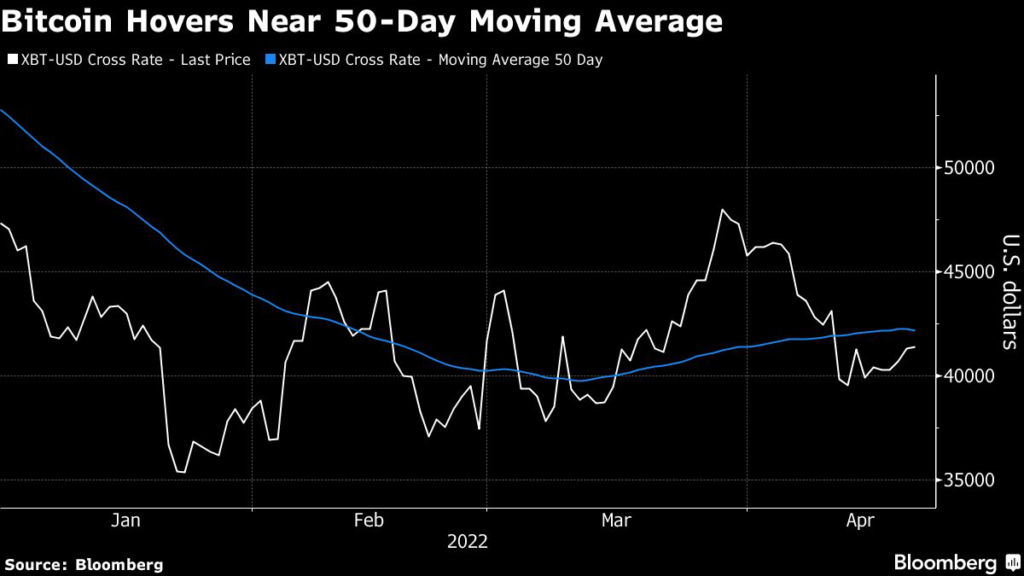
The world’s largest digital currency rose as much as 2% to $42,204 to break its 50-day moving average, before fluctuating between gains and losses. 

“Bitcoin is at very significant technical levels,” said Teong Hng, chief executive of Hong Kong-based Statori Research. The $42,000 level “is the 50-day moving average and with a close above, the technical picture could get more bullish.” 

Also in Wednesday trading, ApeCoin rose to about $17 per coin, according to CoinGecko, a record high following its March inception. Market-watchers tie the move to anticipation of a virtual-land sale, in the latest speculative bet in the booming metaverse industry. 

The Federal Reserve is set to aggressively jack up interest rates to tamp down inflation at multi-decade highs. That’s seen Bitcoin trade largely in tandem with other risk assets including tech stocks, with its correlation to the sector rising in recent weeks. 

All told, Bitcoin’s tight trading range, as it fails to meaningfully rally, is leaving some market watchers bored.

“It’s so dull — it’s like watching grass grow right now. This was supposed to be the exciting asset that was volatile and has a bit of mojo. But no,” said Fiona Cincotta, senior market analyst at City Index, by phone. 

Katie Stockton, founder of Fairlead Strategies, a research firm focused on technical analysis, wrote in a note that Bitcoin support holds near the $40,000 level. She’s also watching an indicator known as the daily MACD, which currently reflects “improved short-term momentum that supports a move higher toward next resistance” near the $48,100 mark. 

The more exciting action can be seen in coins tied to virtual worlds. ApeCoin has soared over speculation that the creators of the BAYC non-fungible token collection, known as Yuga Labs, are planning to roll out virtual land sales through its metaverse project known as Otherside. That would enable ApeCoin holders to buy properties with the token. 

Another potential catalyst for ApeCoin’s surge is its listing on the Gemini Earn platform, where ApeCoin holders can earn interest by lending their tokens to institutional investors.   

“The Bored Ape Yacht Club ecosystem is a very vibrant one,” Hng said.   

More stories like this are available on bloomberg.com

©2022 Bloomberg L.P.

U.S. Consumers Are Holding Up Well as Rates Rise, Bank of America’s Moynihan Says

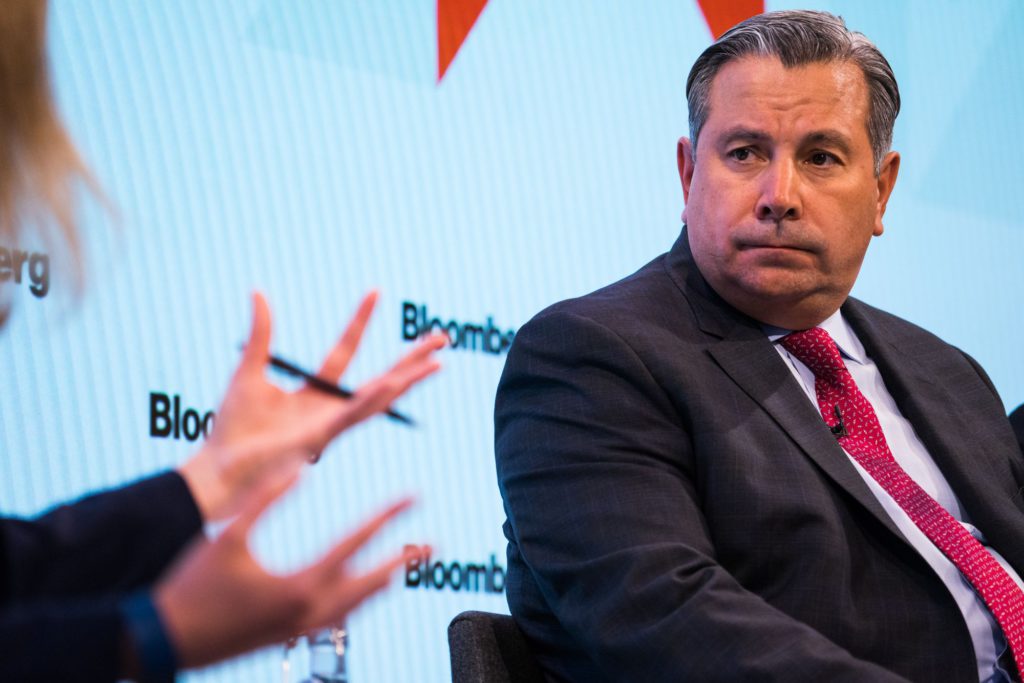
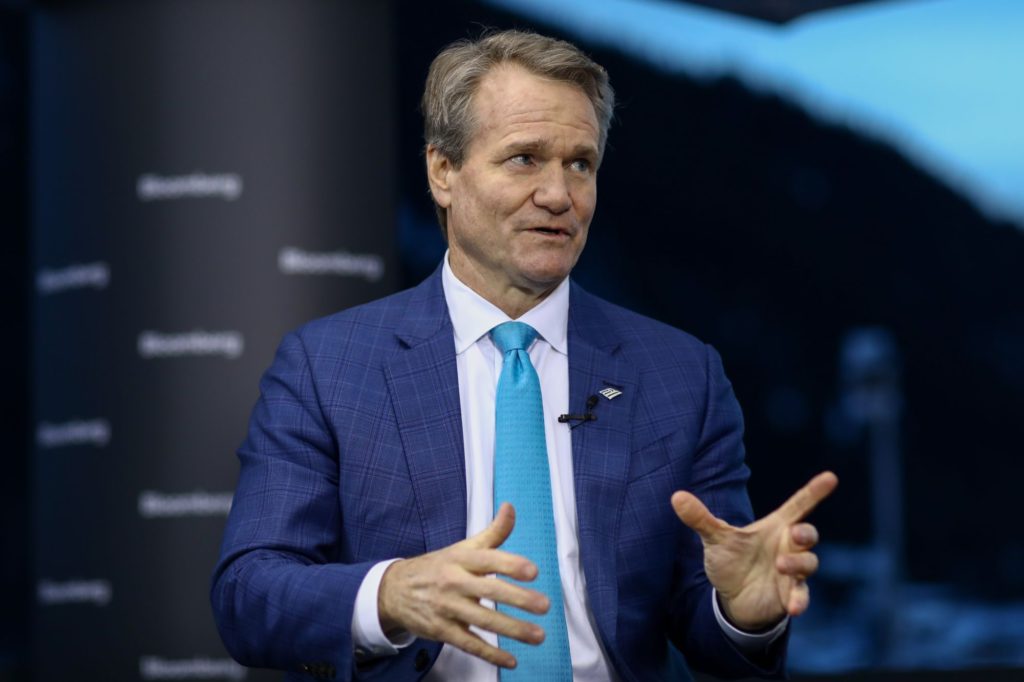
(Bloomberg) — The U.S. consumer is holding up well as inflation rises and interest rates climb, Bank of America Corp. Chief Executive Officer Brian Moynihan said. 

“There is a lot of dry powder on the consumer side,” Moynihan said in a Bloomberg TV interview with David Westin Wednesday. Account balances are rising and consumers are spending more as they “engage in the economy,” he said. 

The Federal Reserve has signaled rate increases over the rest of the year to battle inflation running at a 40-year high, with the March consumer price index climbing 8.5% in March. Policy makers raised the benchmark rate by a quarter-percentage point in March after keeping it near zero for the previous two years. 

Moynihan said customers of the bank spent 13% more from their accounts in March than a year earlier, adding that the figure for April so far is up 18%. Spending is rising for travel, entertainment and food, he said.

His comments follow the Charlotte, North Carolina-based bank’s first-quarter earnings earlier this week, which beat analysts’ estimates. Profit got a boost from a record quarter for the equities-trading business and an increase in loan balances. Moynihan said Wednesday that he “feels good” about loan growth at the company.

The largest U.S. banks saw spending on credit cards surge in the first three months of the year as customers began traveling and dining out again after pandemic lockdowns. At the same time loan balances have been increasing. 

Labor, Housing

In the wide-ranging interview, Moynihan also touched on housing, labor and cryptocurrencies. 

“As rates go up, people are less likely to buy a house,” Moynihan said. Still, lack of supply and strong demand will help support the housing market, he said.

In corporate America, people are starting to return to the workforce, but there is still a shortage of workers, according to Moynihan. Corporations are more concerned about getting employees than they are about the price of rising wages, he said.

Bank of America is bringing back its own staff to the office, including unvaccinated employees, after the Covid-19 pandemic forced many to work from home. The company is focused on retaining talent, with attrition at around 12%, according to the CEO.

“We’re stable” and “feel good, but there’s constant work that needs to be done,” Moynihan said.

Like other major U.S. lenders, Bank of America isn’t active in cryptocurrencies because of regulatory limits, he said.

“We do a very limited activity in futures, but there is not a lot we can do,” Moynihan said. “It’s not allowed, and we will have to see how the regulatory process emerges.” 

(Updates with additional CEO comments starting in sixth paragraph.)

More stories like this are available on bloomberg.com

©2022 Bloomberg L.P.
Hedge Fund Bets Against a SPAC Tied to Trump After Truth Social ‘Disaster’

(Bloomberg) — Hedge fund Kerrisdale Capital Management is betting against the shell company tied to Donald Trump, wagering that it will fail to get regulatory approval to merge with his media company and take it public. 

Shares of Digital World Acquisition Corp., a special-purpose acquisition company, have more room to fall, according to a report Wednesday from Kerrisdale announcing its short position. DWAC gave misleading statements in registration documents and the high-profile nature of its potential combination with the former president’s company, Trump Media & Technology Group, is an “ideal way” for regulators to send a message to the broader industry, it said.

“DWAC is not just another dubious 2021 SPAC; it is a poster child for some of the worst abuses the investment vehicle has spawned,” according to the report from Kerrisdale, which is led by founder and chief investment officer Sahm Adrangi.

SPACs have faced increased scrutiny from the U.S. Securities and Exchange Commission after they exploded in popularity as a way for companies to go public without some of the rules required for initial public offerings. The crackdown could be the biggest obstacle to the Trump’s bid to create a media company to rival Twitter Inc., which banished him.

Shares of DWAC soared in October when the blank-check company announced it would merge with Trump’s media group, fueling a retail trader frenzy. The SPAC has since pared its advance after downloads of Truth Social, Trump’s social-media app, dried up and key technology executives departed.

“Truth Social’s disaster of a launch, among many other red flags regarding TMTG, raise valid concerns over execution and the company’s long-term viability,” Kerrisdale said in the report. “These factors raise serious doubts regarding the scope of due diligence DWAC conducted.”

DWAC will likely never file an S-4 with documentation of that due diligence, which will doom the merger, according to the report. That would wipe out 80% of its current share price of $45.61 and bring it back down to the $10 level where most SPACs raise capital. 

More stories like this are available on bloomberg.com

©2022 Bloomberg L.P.
Musk to Judge in Go-Private Tweet Fight: Don’t Muzzle Me

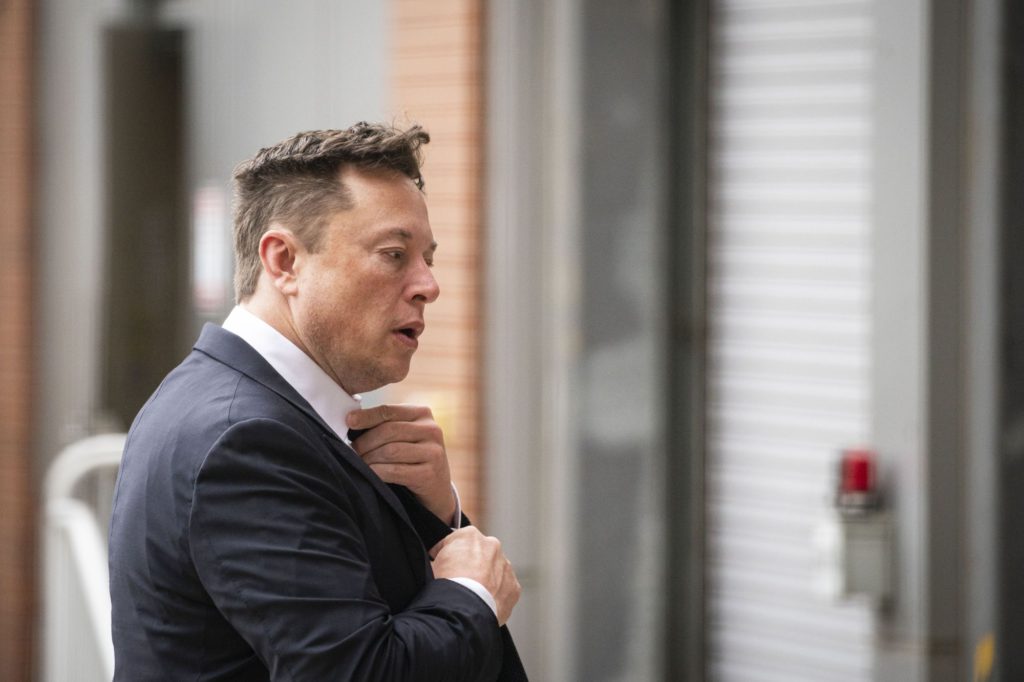
(Bloomberg) — Tesla Inc. chief executive officer Elon Musk told a judge he shouldn’t be prohibited from talking about his fight with the U.S. Securities and Exchange Commission, as shareholders suing him have requested.

It’s the latest volley in a lawsuit by shareholders alleging that Musk’s 2018 tweet about taking the company private manipulated its stock price and defrauded them. Last week, the investors won a key ruling in the run-up to a San Francisco fraud trial set for January with billions of dollars in damages at stake.

After Musk publicly complained at a TED talk that he was “unlawfully” forced to settle a 2018 SEC suit over the same tweet, the investors said his commentary threatens to “taint” the jury that will eventually decide whether the world’s richest person committed fraud.

Read More: Musk’s Venting About SEC Ires Investors Suing Over 2018 Tweets

The shareholders urged U.S. District Judge Edward M. Chen to prohibit Musk from making any more public comments about his “interpretation and opinions” of the claims in their lawsuit until after the trial is finished.

The investors “ask this court to trample on Elon Musk’s First Amendment rights by barring him from publicly discussing this case or its underlying facts,” lawyers for Musk and Tesla said in Wednesday’s filing. That request “cannot be reconciled with the Constitution’s guarantee of free speech and should be denied.”

The Tesla CEO said in the filing that the investors’ lawyers made no effort to show how his recent comments could have possibly reached the millions of potential jurors in the case. Musk also argued that the “gag order” shareholders have asked for would block him from communicating with Tesla shareholders or talking publicly about his attempt to purchase Twitter Inc.

Even in the most highly publicized cases, potential jurors remain untainted by press coverage, Musk’s lawyers said. They cited prosecutions stemming from Watergate and against members of the Ku Klux Klan and Nazi Party for murder, and another involving Enron, to argue that even those cases didn’t warrant restricting the free speech of media outlets or witnesses.

Musk insists that the August 2018 tweet that was he considering taking Tesla private with “funding secured” was truthful. But Chen concluded after reviewing the evidence that it was false. 

The case is In re Tesla Inc. Securities Litigation, 18-cv-04865, U.S. District Court, Northern District of California (San Francisco).

(Updates with Musk’s arguments in court filing.)

More stories like this are available on bloomberg.com

©2022 Bloomberg L.P.
Ericsson Faces Swedish Probe Into Suspected Bribery in Iraq, TT Reports

(Bloomberg) — Ericsson AB is facing a preliminary investigation by the Swedish Prosecution Authority into suspected bribery in Iraq, the Swedish TT news agency reported on Wednesday.

The National Anti-Corruption Unit confirmed that the investigation is underway, but declined to provide more details given the preliminary nature of the probe, the news agency said, citing prosecutor Leif Gorts.

Earlier this month, the maker of 5G telecom-network gear indicated that it faces new fines related to its corruption scandal in Iraq and associated breach notices of its deferred prosecution agreement by the U.S. Department of Justice. The company faced a shareholder revolt at its annual general meeting in March when they voted against discharging Chief Executive Officer Borje Ekholm from legal liability.

Shares pared a gain in Stockholm after the news to close up 0.9% after earlier having gained as much as 2.9%.

Neither Ericsson nor the Swedish Prosecution Office were able to immediately comment when contacted by Bloomberg.

(Updates with attempts to contact company, Swedish Prosecution Authority in final paragraph)

More stories like this are available on bloomberg.com

©2022 Bloomberg L.P.

Close Bitnami banner
Bitnami