
Bloomberg

IMF Warns of Crypto Mining as Possible Dodge on Russia Sanctions

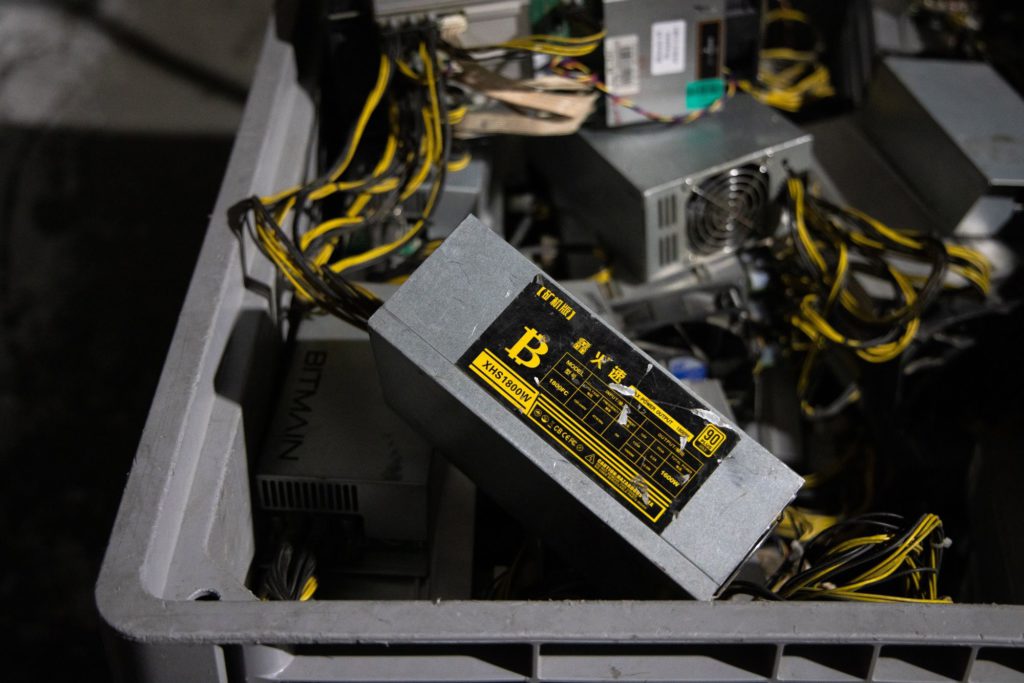
(Bloomberg) — Countries such as Russia and Iran may eventually use cryptocurrency mining to evade sanctions, the International Monetary Fund warned in a report. 

There’s a risk that sanctioned nations will leverage their energy resources — which can’t be exported — to power mining, an energy-intensive process of validating coin transactions, the IMF said. By expanding their mining operations, governments could also generate revenue directly from transactions fees.

The war in Ukraine has underscored some of the unique challenges that regulators face in policing digital assets, according to the Washington-based IMF. Tokens can be used to bypass steep economic sanctions in cases where exchanges don’t comply with rules, if firms have inadequate compliance procedures, or when technologies that increase anonymity are used, the fund said. 

The warnings follow heightened calls by lawmakers for officials to take steps to ensure digital currencies aren’t being used to evade the sweeping restrictions the U.S. and its allies put in place following Russia’s invasion of Ukraine. 

“Regulators in the United States and United Kingdom, among others, have urged firms in their jurisdictions, including the crypto asset sector, to increase vigilance with regard to potential Russian sanction evasion attempts,” the organization said. 

While mining could be used to bypass rules in the future, the practice in sanctioned countries is small today, according to the report. Although regulators say they are concerned about criminals using crypto to thwart rules, trading in rubles on exchanges has declined in recent weeks. 

(Updates with Russian crypto trading in last paragraph.)

More stories like this are available on bloomberg.com

©2022 Bloomberg L.P.
Robinhood Buys U.K. Crypto Firm With Eye on Global Expansion

(Bloomberg) — Robinhood Markets Inc. agreed to acquire Ziglu Ltd., a London-based crypto and payments company, ending the U.S. brokerage’s long pause on international expansion.

The transaction will give Robinhood a platform that allows customers to buy and sell 11 cryptocurrencies as well as move and spend money abroad, the Menlo Park, California-based company said Tuesday in a statement. Terms weren’t disclosed. 

Robinhood tabled its plans to expand in Europe and Asia as U.S. retail trading exploded after the start of the pandemic. 

“Together with the Ziglu team, we’ll work to leverage the best of both companies, exploring new ways to innovate and break down barriers for customers across the U.K. and Europe,” Robinhood Chief Executive Officer Vlad Tenev said in the statement.

The acquisition also gives Robinhood a jump-start in the U.K.’s crypto industry, which is subject to stringent anti-money laundering regulations. Ziglu is among 34 firms on the Financial Conduct Authority’s register of cryptoasset businesses. More than 100 companies have yet to receive that distinction, leaving them in regulatory limbo.

Shares of Robinhood rose 1.8% to $11.19 at 10:44 a.m. in New York. The stock has plunged 71% since its July initial public offering.

(Updates with U.K. regulator in fifth paragraph, share price in last.)

More stories like this are available on bloomberg.com

©2022 Bloomberg L.P.
Zendesk Is Working With Adviser Qatalyst on Potential Sale

(Bloomberg) — Zendesk Inc., a software company that became a takeover target during a failed purchase of SurveyMonkey’s parent, is exploring a potential sale, according to people familiar with the matter. 

The San Francisco-based company has brought on a new adviser, Qatalyst Partners, and has reached out to potential buyers including software companies and private equity firms, said the people, who asked to not be identified because the situation is private. A final decision hasn’t been made and Zendesk could opt to remain independent, the people added.

A representative for Qatalyst couldn’t be reached for comment. A spokesperson for Zendesk declined to comment.

Zendesk rose 6.3% to $129.29 at 10:46 a.m. in New York trading Tuesday, giving the company a market value of about $15.8 billion.

Zendesk had put itself in play after trying to buy SurveyMonkey parent Momentive Global Inc. Zendesk nixed that takeover in February after shareholders in both software companies questioned the merits of the deal.

Zendesk said in a statement that month that it had received an unsolicited proposal from private equity firms that valued it at $127 to $132 a share, without disclosing the names of the bidders. Bloomberg News reported the consortium included Hellman & Friedman, Advent International Corp. and Permira.

The failed Momentive deal left Zendesk vulnerable to activist pressure.

Jana Partners has been pushing the company to significantly change its board, including by appointing its four director nominees. The investment firm has said in the absence of that board change, Zendesk should be sold.

(Updates with share gain in fourth paragraph)

More stories like this are available on bloomberg.com

©2022 Bloomberg L.P.

American Vanguard Rejects Cruiser Capital’s Board Nominees

(Bloomberg) — American Vanguard Corp. has rejected a slate of four directors put forth by activist investor Cruiser Capital Advisors, arguing the nominees wouldn’t add value to the board and lacked enthusiasm for joining. 

Cruiser, run by Keith Rosenbloom, told American Vanguard last month when it nominated the directors that it held a roughly 0.2% stake in the agricultural chemical producer, the company said in a regulatory filing Tuesday, confirming an earlier report by Bloomberg News. Cruiser now claims to own about 3% of the company, it said. 

American Vanguard believes that Cruiser, which said it was nominating the directors to help improve the company’s operations, didn’t offer enough details on how that would be achieved.

Rosenbloom said in an emailed statement that he believed American Vanguard has the potential to be a highly-profitable platform but is undermanaged. He said it’s failed to generate meaningful returns over the past decade, and a more focused management team could improve the company’s earnings before interest, tax, depreciation and amortization margin to “well north” of 15%, from 10% today. 

“We think the opportunity is substantial, but the company’s board has demonstrated poor capital allocation decisions over the past 10 years and we are deeply concerned about how free cash flow will be allocated,” Rosenbloom said.

In addition to Rosenbloom, Cruiser nominated its director of research, Charles Rose; former Union Carbide Corp. chairman and chief executive officer Patrick Gottschalk; and former Hemlock Semiconductor chairman and CEO Mark Bassett. All four were interviewed by the American Vanguard board, which decided to reject them because the nominees either wouldn’t add value to the board or expressed reservations about joining, the company said in the filing. 

The board considered, among other factors, the lack of relevant experience in agricultural chemicals, sustainable agriculture, precision applications, agribusiness, regulatory, or other relevant expertise, as well as the lack of diversity of any kind among the Cruiser nominees, it said in the filing. 

Rosenbloom said he didn’t believe the vetting of its nominees was made in good faith. 

“As for their review process of our board nominees, it was perfunctory at best — but it’s exactly what one would expect from a board who has been paid millions of dollars while its shareholders have seen virtually no historical return,” Rosenbloom said Tuesday. 

Shares of Newport Beach, California-based American Vanguard have climbed 39% this year through Monday’s close. They rose 2.6% to $23.45 at 10:39 a.m. in New York trading Tuesday, giving the company a market value of about $726 million. 

American Vanguard is benefiting from the fundamental strength in its sector that has been amplified by the war in Ukraine, which has created a fertilizer shortage and increased the value of North American crops. 

Cruiser previously agitated for changes in the sector in 2018, when it nominated four directors to Ashland Global Holdings Inc.’s board to help oversee its transition to a pure-play chemical company. Cruiser reached a settlement at the company the following year that saw one of its nominees appointed to the board. 

It also was also given two seats on the board of A. Schulman Inc. in a settlement in 2017. A. Schulman was later sold to LyondellBasell Industries N.V. 

(Updates trading in tenth paragraph.)

More stories like this are available on bloomberg.com

©2022 Bloomberg L.P.
Crypto Venture Firms Challenge the ‘Khaki, Sweater Vest’ Crowd

(Bloomberg) — Venture capitalists are raising records amounts of money, and that boom is being partly driven by crypto-centric firms like Framework Ventures.

On Tuesday, Framework plans to announce a new $400 million fund to invest in young, blockchain startups, the founders said. It’s the third fund for the two-year-old VC firm, bringing its total assets under management to $1.4 billion.

Part of Framework’s pitch is that it’s nothing like a traditional VC in Silicon Valley. “If people have interacted with crypto, they have probably interacted with us,” said Vance Spencer, a founder of the San Francisco-based firm. “That — compared to the khaki, sweater-vest style of the Sand Hill Road firms — is just night and day.”

The VC industry is reaching new heights based in part on expectations for a generation of companies built around decentralized systems. In the first quarter, VCs in the U.S. raised $73.8 billion, the most money ever recorded in a three-month period and more than the total for most full years, according to research firm PitchBook.

Read more: Crypto startup investment in 2021

Some crypto startups choose a specialized VC so they can enlist the partners’ expertise, said Michael Anderson, who founded Framework with Spencer. For example, he said, Framework has helped its startups beef up their blockchain security, an important issue in light of recent crypto hacks.

Framework will take steps with its investing to protect the integrity of decentralization, Anderson said. It intends to purchase about 4% to 6% of tokens in each project it backs — and therefore, restrict its influence by maintaining a small minority of votes, said Anderson. “Anything higher than that, or frankly, anything approaching 10%, you actually do call into question decentralization,” he said.

The firm will earmark about half of its new fund for companies developing crypto-based video games. Many gamers have expressed anguish about the potential for financial speculation to sour the fun, but Spencer is convinced that gaming will be the tipping point that ensures the mainstream adoption of crypto: “This is going to be the vertical that brings everyone in.”

More stories like this are available on bloomberg.com

©2022 Bloomberg L.P.

Crypto Exchange Okcoin Launches Fee-Free NFT Trading Marketplace

(Bloomberg) — Okcoin, a cryptocurrency exchange, is starting a marketplace for nonfungible tokens, seeking to extend its reach by allowing free trading in the digital artworks. 

The San-Francisco based site, which was founded in 2013, is the latest to shift into NFT trading, following similar announcements by rivals including Coinbase Global Inc., Kraken and Gemini.

Okcoin will launch NFTs from well-known collections such as Bored Apes, World of Women, Boss Beauties and Crypto Punks and allow users to link to external wallets to trade. The NFTs will be minted on the Ethereum, Polygon, Binance, and OKC blockchains.

Hong Fang, the CEO of Okcoin, said the company’s no-fee approach is in contrast to rivals. “Some of our competitors out there, they charge a sell fee on top of the sales proceeds,” she said.

The exchange will also highlight NFT collections by creators from varying demographics that previously may have been marginalized from traditional finance.

The NFT market is expected to reach over $80 billion in 2025, up from about $30 billion this year, according to Stephanie Wissink, a Jefferies equity analyst.

But the sector has shown signs of cooling down recently, with the average selling price of an NFT declining to under $2,000, compared with an all-time high of almost $6,900 on Jan. 2, according to industry data tracker NonFungible. 

More stories like this are available on bloomberg.com

©2022 Bloomberg L.P.

Pakistan’s Fintech SadaPay Raises Funds Ahead of Mass Rollout

(Bloomberg) — Pakistan’s SadaPay raised additional funds to become the nation’s highest-funded fintech as it received permission for full-fledged operations that will allow it to add millions of new users.  

The Islamabad-based startup scored $10.7 million in a seed-extension round, according to Chief Executive Officer Brandon Timinsky. The funding announcement comes a day after the central bank allowed it to offer financial services through its smartphone app.  

The South Asian nation is seeing a rush of investors eager to back startups in the world’s fifth largest nation, one of the last large untapped markets. A flurry of fintechs are emerging in Pakistan, which has the world’s third-largest unbanked population, according to the World Bank.

The opportunity lay in “a huge population of young people with smartphones, high cellular-broadband penetration, sleepy incumbent banks and massive policy reform by the government to support digitization,” Timinsky said of when he first visited Pakistan. 

Timinsky, 31, an American entrepreneur, came to Asia to explore new opportunities after a previous startup was acquired in the U.S.. The fintech started operating last year in pilot mode, which restricted users to 10,000, before it got the Electronic Money Institution license from the State Bank of Pakistan on Monday.  

Unlike conventional banks, Sadapay allows customers three free cash withdrawals in a month, offers round-the-clock in-app chat support and opens an account in two minutes. 

While Pakistan has seen an increase in digital payments during the pandemic, only 1% of almost $4 trillion of payments are made digitally. SadaPay is projected to be the fastest-growing mobile wallet in the world in the five years to 2025, research from London-based fintech company Boku Inc. mentioned last year. A unit of Uber’s Careem Inc. has also decided to invest $50 million in the country and acquire a similar license. 

SadaPay’s prior backers Recharge Capital, Kingsway Capitaunitl, and Raptor Group added to their investment. The startup plans to more than double its employee headcount to over 250 people by the end of the year.

More stories like this are available on bloomberg.com

©2022 Bloomberg L.P.

SAP Shutting Down Russia Operations After 30 Years in Country

(Bloomberg) — SAP SE is taking steps toward an “orderly exit” of its operations in Russia with plans to stop offering support for on-premise products in the country while winding down cloud services.

The Germany-based software firm has operated for more than 30 years in Russia, but is now joining other technology companies in pulling back from the country. SAP said in a statement it is going beyond sanctions by halting sales in Russia and Belarus, and shutting down cloud operations in Russia. 

As part of the exit, SAP will stop providing support and maintenance for on-premise products in Russia, the company said, noting that existing customers with such software will still be able to use their products. SAP also said that as part of the cloud shutdown, non-sanctioned companies in Russia will have the choice to have their data deleted, sent to them, or migrated to a date center outside of Russia. 

SAP’s board chairman Hasso Plattner said in a recent interview that the company had 1,300 employees in Russia. 

“We are in general as employers offering opportunities where it makes sense from a business perspective for people to work internationally,” SAP’s Chief Financial Officer Luka Mucic told reporters in a briefing. “We are so far not doing this at mass scale for our employees, but there are individual instances where some of our employees are working from abroad.”

Ukrainian President Volodymyr Zelenskiy had tweeted last month that companies including SAP should “stop supporting your products in Russia.” SAP had previously announced ending sales and cloud operations.  

Read more: War Accelerates Russia’s Shift Toward an Isolated Internet

(Updates with CFO comments on Russian employees)

More stories like this are available on bloomberg.com

©2022 Bloomberg L.P.

Olivia Rodrigo Signs On With Glossier for Its First Celebrity Deal

(Bloomberg) — Teenage pop star Olivia Rodrigo has signed a long-term deal with  Glossier Inc. to collaborate on the beauty and skincare company’s products and promote the brand.

Rodrigo, 19, who  set records on Spotify last year and won three Grammys with her debut album, agreed to work with Glossier on product development, social content and ad campaigns. The partnership will begin with a set of Glossier products selected by Rodrigo and labeled as her favorites, including an eyebrow shaper, lip gloss and eyeliner. Glossier is working with Rodrigo on yet-to-be-identified new products as well. The company declined to share financial terms of the agreement.

Since skyrocketing up the charts, Rodrigo has started to dabble in consumer businesses and has emerged as a valuable ambassador for brands that are looking for ways to reach more Gen Z shoppers. She has promoted Apple Inc.’s iPad and in December signed a one-year deal with Hong Kong-based phone case seller Casetify. 

Discussions between Glossier and Rodrigo began shortly after her first hit, “Driver’s License,” was released just over a year ago, according to Glossier Chief Marketing Officer Ali Weiss. Rodrigo has used Glossier at red-carpet events, including the Grammy Awards. 

“It’s our first-ever celebrity partnership,” Weiss said in an interview. “Olivia really inspired us to push that forward. It’s a pretty natural extension.” 

Glossier is trying to refocus on its core beauty businesses after laying off more than a third of its corporate workforce in January. Chief Executive Officer Emily Weiss told staff at the time that management got “distracted” by projects such as technology initiatives and hired too many workers. 

The business raised $80 million last year in a funding round led by hedge fund Lone Pine Capital last July, with the company’s valuation reported as $1.8 billion at the time. Glossier declined to say if it’s currently seeking more capital.

More stories like this are available on bloomberg.com

©2022 Bloomberg L.P.

South Africa Is Poised for 101 Days of Power Outages This Year

(Bloomberg) — South Africa’s state power utility warned the country may have more than 100 days of electricity blackouts this year because of outages at its power plants. Under “extreme” circumstances, the country may face about 101 days of outages in the financial year that began on April 1, Segomoco Scheppers, Eskom Holdings SOC Ltd.’s …

South Africa Is Poised for 101 Days of Power Outages This Year Read More »

Close Bitnami banner
Bitnami