Bloomberg

Amazon, Reliance, Sony Vying for India Cricket Broadcast Rights

(Bloomberg) — Amazon.com Inc., The Walt Disney Co. and billionaire Mukesh Ambani-led Reliance Industries Ltd. are among those that have signaled an intention to bid for the broadcast rights of the Indian Premier League, or IPL, according to people familiar with the matter, setting the stage for an epic showdown for the prized asset in cricket-crazy India.

Besides these, Sony Group Corp., Zee Entertainment Enterprises Ltd., and fantasy-sports platform Dream11 have also purchased the bid-related documents from Board of Control for Cricket in India, or BCCI, people said asking not to be named as the information is not public. BCCI is the sport’s local governing body that will be conducting the online auction starting June 12.

The auction will allow the winner or winners — there are four baskets of rights to bid for — to globally telecast matches of India’s top cricket league between 2023 and 2027 via live streaming and TV broadcast. Securing rights to the world’s third-largest sporting event by number of viewers — IPL is considered the Super Bowl of cricket — means access to hundreds of millions of eyeballs. 

More companies may still seek to join the race, which is expected to draw bids worth $5 billion or more, to acquire the media rights for the sporting event while those that sought the applications can decide to not bid, the people said. Last year’s edition of the IPL brought in 380 million viewers, and whichever broadcaster wins the rights will likely secure millions of new subscribers in a highly competitive market.

A representative for BCCI and Walt Disney in India declined to comment. Spokespeople for Reliance, Amazon, Sony, Zee and Dream11 didn’t immediately offer any comments on participating in the auction for IPL’s broadcast rights. 

The bidders will be vying to grow their advertising revenues as well as cement their clout in the broadcast sector. The upcoming auctions will be separately selling rights to broadcast matches on television and to stream them online for the first time, opening the door to Amazon and its Prime video service, and setting the stage for a ferocious fight with Ambani’s conglomerate that’s looking to expand its media and digital businesses.

More stories like this are available on bloomberg.com

©2022 Bloomberg L.P.

China’s Promises to Support Covid-Hit Economy Fail to Impress

(Bloomberg) — Sign up for the New Economy Daily newsletter, follow us @economics and subscribe to our podcast.

Investors aren’t buying the Chinese government’s bullish rhetoric and promises of support for an economy paying the price for its stringent Covid Zero strategy.

China reported the biggest contraction in retail sales and the highest unemployment since the early months of the pandemic on Monday. Hours later, the central bank announced 23 measures to cushion the economy, including more loan support to help businesses struggling to cope with damaging lockdowns. 

State media followed with a detailed statement on growth, saying annual targets could still be met. Government departments on Tuesday pledged more steps to help companies resume production in key sectors.  

The response from local markets was indifference, with the benchmark CSI 300 Index dropping 0.8% in Shanghai on Tuesday, a third day of decline. For investors, the bigger worry is the latest upsurge in Covid cases and more disruptions of the kind that shut down Shanghai for weeks, concerns that have eclipsed authorities’ pledges for market support and policy easing.

“It won’t be a very easy year for the market. The market needs much longer before seeing a broad and sustainable recovery,” Bruce Pang, head of macro-strategy research at China Renaissance Securities, said in an interview on Bloomberg TV. “All the negative factors such as macro slowdown, policy overhang and Covid lockdowns are not yet fading, so that still disrupts sentiment and confidence.”

President Xi Jinping has made clear there will be no change to the Covid Zero policies the country has followed since locking down Wuhan in 2020, which means that a cycle of shutdowns and reopening is likely in cities across the nation for the rest of this year, and possibly even longer.

The virus outbreak and stringent controls are now the biggest threat to China’s growth since the pandemic began two years ago, coming on top of a housing market crisis, the war in Ukraine and rising global interest rates. UBS Group AG, Barclays PLC and Bank of America Corp. slashed their growth forecasts for China to below 5%, with the latter outlining a bearish outcome of just 3.5% expansion if lockdowns spread to more economic hubs.

In a sign of what could be in store for the rest of the country, Tangshan, a steel-making hub about 100 miles from Beijing announced Tuesday it was locking down some districts in the city to stop a new virus outbreak, only a week after lifting city-wide curbs. 

The government has made repeated promises over the past month that it would support markets, but the results have been disappointing. The People’s Bank of China offered only a modest cash boost to the economy last week, reducing the reserve requirement ratio for banks by a smaller-than-expected 25 basis points. A loosening of property sector controls have also failed to reverse the collapse in home sales.  

“At the moment, the market is quite pessimistic as we feel the liquidity injection is far from enough and the policy support are not very positive,” said Kevin Li, portfolio manager at GF Asset Management (Hong Kong) Ltd.

The stunning equities rebound seen in mid-March — when the State Council first vowed to keep the market stable — has petered out, with many investors saying that China loosening its grip on its tight Covid-19 containment policy is key to turning the tide for local shares.

That China’s strict virus-containment policy is the bugbear for markets was evident last Tuesday, when speculation over easing of some curbs helped local shares lure the biggest daily foreign inflows this month. The CSI 300 wiped out early losses to finish the day 2% higher, but since then it has lost all those gains. 

The lockdown of tens of millions of people in Shanghai and the surrounding area has had a damaging effect on the national economy, not only by shuttering shops and factories, but also by interrupting critical supply lines between the world’s largest port and the industry in the area. 

While local and national governments have promised to get those supply lines back up and running and to restart shuttered factories, the process of testing workers and truck drivers and reopening businesses will take a long time to achieve. 

Officials from the Ministry of Industry and Information Technology said at a Tuesday briefing that working groups have been sent to Covid-hit areas including Shanghai to ensure stable production at key companies and the smooth operation of the supply chain. 

They will “actively” push for work to resume at major companies by getting local authorities to simplify approvals, use big data to allow more workers to get back to their posts, and strengthen policy coordination to solve logistics problems, a spokesman said.

The comments followed a national teleconference chaired by Vice Premier Liu He on Monday on the subject of keeping supply chains stables. Officials at the meeting called for local governments to relax mobility restrictions for logistics workers at checkpoints, and recognize the results of their Covid tests performed in other regions.  

The government also announced the creation of “white lists” of companies in sectors including automobiles, semiconductors, consumer electronics, food, equipment manufacturing and medicine and foreign trade. Firms on the white lists will receive extra help to ensure they can stay open, easing supply chains disruptions, according to a statement.

However, there’s no guarantee that a reversal of the government’s Covid Zero policy would stop the economic slump. If the whole country of 1.4 billion people was hit by outbreaks, the government will have to contend with widespread shutdowns and a potential surge in deaths for the under-vaccinated elderly, as happened in Hong Kong.

“Without major adjustment to the dynamic Covid Zero policy, which targets to cut all community transmission, tight pandemic-control measures will likely be maintained in various forms around the country this year,” Bank of America economists including Helen Qiao wrote in a note.

More stories like this are available on bloomberg.com

©2022 Bloomberg L.P.

Crypto Donations Face Ban in Ireland to Avert Russian Meddling

(Bloomberg) — Ireland’s political parties will be banned from accepting financial donations through cryptocurrencies to prevent foreign interference in elections, most prominently by Russia, according to the Irish Independent.

The new rules are being drafted as Russia’s invasion of Ukraine and an “insidious disinformation war” highlight the threats faced by democracies, Local Government Minister Darragh O’Brien wrote to party leaders, the newspaper reported Sunday. 

Donations made in cryptocurrencies can mask the donor’s identity, and the Irish measure seeks to stop dark money from foreign governments flowing to candidates. Russia has allegedly meddled in elections including the 2016 Brexit referendum in the U.K. and the 2016 presidential vote in the U.S.

Other measures planned include stricter rules on all foreign donations and requirements for parties to give full details of their property portfolios. A new Electoral Commission will also have the power to issue take-down notices to social-media companies and issue clarifications about online misinformation, the newspaper said.

O’Brien said he aimed to pass the legislation and have the commission established by the summer parliamentary recess “in light of the urgency of the challenges,” the Independent reported.

More stories like this are available on bloomberg.com

©2022 Bloomberg L.P.

Spectris Agrees to Sell Omega Unit to Arcline for $525 Million

(Bloomberg) — Spectris Plc agreed to sell its U.S. process measurement and control instrumentation business to private equity firm Arcline Investment Management for $525 million in cash.

The deal values Omega Engineering at about 20.4 times its adjusted earnings before interest, taxes, depreciation and amortization for 2021, Spectris said in a statement Tuesday. Arcline will combine Omega Engineering with Dwyer Group, a sensor maker it acquired last year, according to the statement.

Bloomberg News reported in March that Spectris was exploring a sale of the non-core unit. The divestment is expected to be completed early in the third quarter, the British testing equipment firm said in Tuesday’s filing. 

Separately, Spectris announced plans to buy back as much as 300 million pounds ($390 million) of stock. An initial tranche of 150 million pounds will be launched shortly, according to the statement. Spectris shares were up 3.9% at 8:32 a.m. Tuesday in London, giving the company a market value of about 2.9 billion pounds. 

Andrew Heath, who took over as chief executive officer at Spectris in 2018, had been working on a turnaround of Omega Engineering that included bringing in new management. Analysts at HSBC Holdings Plc in February valued the business at about 327 million pounds.

Spectris agreed to buy Connecticut-based Omega Engineering in 2011. The business was founded in 1962 by Betty Hollander, who in her own home started engineering thermocouples, a temperature-measuring device used for everything from industrial processes to aircraft engines to automotive sensors as well as home appliances.

The divestment strengthens Spectris’s balance sheet, giving it the ability to invest more in research and consider acquisition opportunities ranging from smaller bolt-on deals to larger-scale purchases, the company said. Mergers and acquisitions remain a key strategic component of Spectris’s strategy, according to the statement. 

Jefferies Financial Group Inc. was sole financial adviser to Spectris on the sale.

More stories like this are available on bloomberg.com

©2022 Bloomberg L.P.

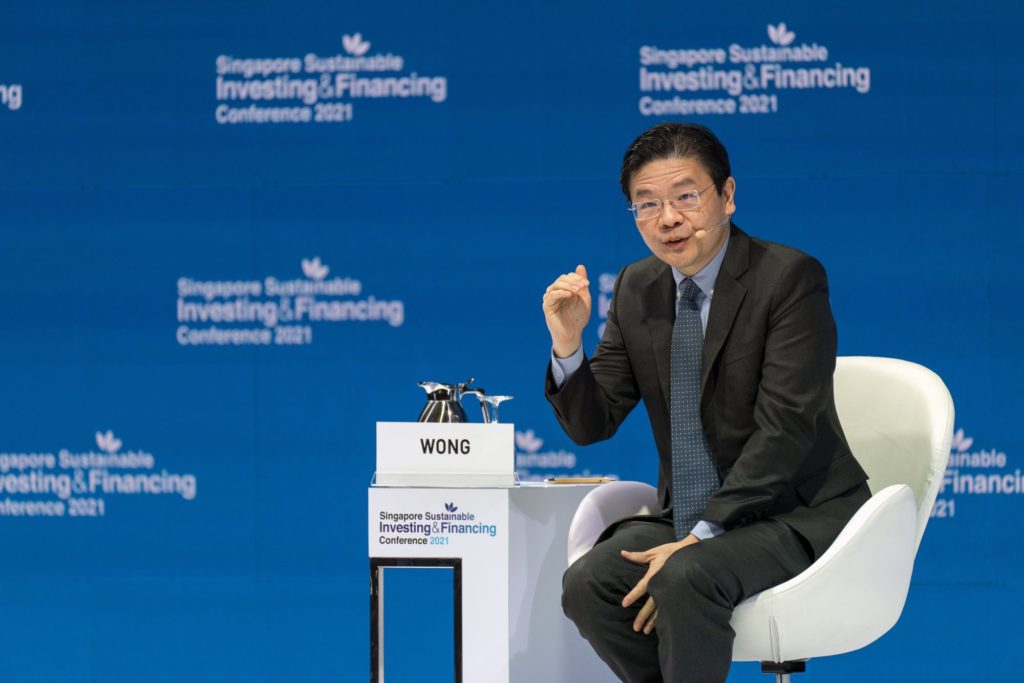
Google Searches Surge for Singapore’s New Leader-in-Waiting

(Bloomberg) — Singapore Finance Minister Lawrence Wong became the most Googled person in the city-state last week, when he was chosen by his peers to lead the nation after current premier Lee Hsien Loong.

Lee last week announced that 49-year-old Wong had been chosen as the new leader of the so-called fourth generation team, paving the way for him to become the next prime minister, Singapore’s fourth since independence in 1965.

Local searches for Wong on Alphabet Inc’s Google search engine surged, topping more than 50,000 on April 14, the day the selection was announced, according to data from Google trends. This made him the most-searched figure within the Southeast Asian nation for the week ending April 17.

While Wong has become a familiar political face as a co-leader of the country’s Covid pandemic task force and after unveiling his first budget in February, interest primarily centered on his less public personal life. Top local searches related to his wife and family background, according to data from search traffic aggregator Semrush. Top search topics reflect estimates and may not fully reflect actual queries.

In 2013, Wong told local newspaper The Straits Times that he had divorced “amicably” with his wife of three years due to “incompatibility” after getting married at 28. These details have not been independently verified by Bloomberg News.

Also attracting searchers’ interest were comparisons between Wong and Ong Ye Kung, the country’s Health Minister, who was also seen as a leading contender for the top job.

Singapore’s current leader Lee said Saturday that no time line for Wong to take over had been determined.

More stories like this are available on bloomberg.com

©2022 Bloomberg L.P.

Software Company Ideagen Awaits Cinven Approach: The London Rush

(Bloomberg) — Here’s the key business news from London-listed companies this morning:

Ideagen Plc: The software company has not yet received an approach from Cinven Limited, after they said they were in the early stages of considering an offer after the market closed on Thursday.

  • Cinven has until 5 p.m. on May 12 to announce whether it intends to make an offer

Pearson Plc: The education company’s Online Program Management partnership with Arizona State University will end after 10 years.

  • The company said there’ll be a “modest” impact on profit in 2022, which will be offset through fewer costs in 2023, and said there was no change to the group’s guidance

Spectris Plc: The specialist manufacturer will sell Omega, a provider of specialist sensors, to Arcline Investment Management for £403 million.

  • This year, Omega is expected to return to levels of revenue last seen before the pandemic, and Spectris said the unit’s “next stage of development can be better fulfilled with the scale provided as part of a larger group”

SNRG Ltd: French private equity company Antin Infrastructure Partners will buy a majority stake in the U.K.-based smart grid systems company, without disclosing the terms of the deal.

  • Antin said SNRG offers a “one-stop-shop” for smart grid solutions, including grid connections, distribution networks, solar PV panels, batteries, heat pumps and community EV charging

Outside The City

Boris Johnson is expected to address Parliament today. The Prime Minister will apologize for breaking lockdown rules but insist he was not aware he had done so, according to the Telegraph. 

That’s as newspaper reports on Sunday heaped more pressure on the prime minister. The Sunday Times reported that Johnson gathered people round a table in Novermber 2020 and started drinking with them. According to the Mirror, the premier urged those present to “let off steam.”

Read the latest coverage of the war in Ukraine here.

In Case You Missed It 

A consortium led by the Ricketts family has withdrawn its bid to buy Chelsea FC. The withdrawal trims the hunt for Chelsea down to groups spearheaded by former Guggenheim Partners President Todd Boehly, British businessman Martin Broughton and Bain Capital co-chairman Stephen Pagliuca.

A record number of business leaders in the U.K. warned of rising operating costs in a survey conducted by Deloitte, as inflation proves more sticky than thought. The survey found that 98% of chief finance officers at leading British companies expect operating costs to rise in the year ahead, with almost half of the those expecting the increase to be “significant”.

Looking Ahead

Oxford Biomedica Plc, 888 Holdings Plc and Bunzl Plc are among the companies reporting results tomorrow. 

More stories like this are available on bloomberg.com

©2022 Bloomberg L.P.

iPhone City Is Operating Normally Despite China Covid Lockdowns

(Bloomberg) — The world’s biggest iPhone assembly campus, on the outskirts of the central Chinese city of Zhengzhou, is operating normally despite lockdowns and mass Covid-19 testing in the area that began last week, the official Henan Daily reported.

A surge in Covid infections in Shanghai led to extensive disruptions there, and Zhengzhou’s decision late Friday to implement a quarantine raised concerns that Foxconn Technology Group’s facility may have to limit operations. The sprawling assembly site’s importance to Apple Inc.’s smartphone supply chain has earned the locality the nickname of iPhone City. Local authorities on Monday morning ordered a fresh round of mass testing.

“Production at the Foxconn campus is proceeding well with some 200,000 workers,” the newspaper said, citing Foxconn managers within the compound. The Taiwanese company is cooperating with local government and putting measures in place to ensure worker safety. “The supply lines haven’t been affected by Covid.”

Read more: IPhone City Staff in China to Undergo Mandatory Virus Tests

President Xi Jinping has championed a zero-tolerance approach to Covid and his administration has held firm, even as public anger and economic costs mount.

“Prevention and control work cannot be relaxed,” Xi said during a trip to the island province of Hainan, the official Xinhua News Agency reported last week.

Many factories across China’s electronics manufacturing hubs of Shanghai, Kunshan and Suzhou have either halted operations completely or are only able to maintain partial production due to stringent restrictions on personnel movement and logistics. 

Tesla Inc., iPhone assembler Pegatron Corp., Apple laptop maker Quanta Computer Inc. and many other electronics parts makers were forced to pause production, causing ripples of disruption beyond China’s borders. Japan’s Mazda Motor Corp. said last week it will suspend production at two domestic factories for a second time because of supply challenges caused by China’s virus outbreak.

Read more: Shanghai Unveils Business Restart Plan on Supply-Chain Woes

Shanghai on Saturday unveiled plans to resume work in the city and said businesses should formulate plans for closed-loop management, where workers live on-site and are tested regularly. Quanta has resumed partial production in Shanghai, according to Xinhua. Tesla is also calling back its workers in the city to prepare for resumption of production as soon as this week, after a weeks-long suspension, Bloomberg News has reported.

On Monday, senior Chinese officials including Vice Premier Liu He highlighted the need to stabilize the supply chain in a meeting, according to a Xinhua report. They announced measures including creating white lists of manufacturers and foreign trade firms and leveraging 1 trillion yuan ($157 billion) to help resolve supply chain issues.

More stories like this are available on bloomberg.com

©2022 Bloomberg L.P.

Ukraine Update: Russia Assault in Donbas, EU Mulls Postwar Costs

(Bloomberg) — Russia’s military targeted regions in Ukraine’s south and east overnight for shelling, with Ukrainian President Volodymyr Zelenskiy saying Moscow has begun a new campaign to conquer the Donbas area in the east of the country. 

The U.S. is looking to re-establish a diplomatic presence in Ukraine and the European Union is considering ways to finance the reconstruction of the war-ravaged country. 

Washington is also preparing to train some Ukrainians outside the country on howitzer artillery pieces in the coming days to help them fight back at home. 


(See RSAN on the Bloomberg Terminal for the Russian Sanctions Dashboard.)

Key Developments

  • Yellen to Attend G-20 Sessions as U.S. Retreats on Boycott Idea
  • Putin Decorates Army Unit That Ukraine Blames for Bucha Deaths
  • World Bank Cuts 2022 Global Growth Outlook on Russia Invasion
  • Corn Rallies Further From Decade High as War Stokes Supply Fears
  • Europe Expects to Pay Bulk of Ukraine’s Reconstruction Costs

All times CET:

Russian Strikes Target Ukraine’s South and East (7:53 a.m)

Russia’s navy has moved almost 200 km (125 miles) away from Ukraine shores, according to the Ukrainian military. That’s after the recent sinking of its flagship Black Fleet missile cruiser Moskva. Russian ships are still impeding Ukrainian navigation, it said.

At the same time, Russian troops are enforcing air defenses near Kharkiv in the northeast, while local officials said there were explosions overnight in the Dnipro region in central Ukraine and Mykolayiv in the south. Towns and villages in the eastern Donetsk region remain under artillery fire. 

The mayor of the Russian-occupied southern city of Kherson, Ihor Kolykhayev, wrote to Ukrainian leaders asking for guidance on how to operate, Ukrainska Pravda reported. “Ukraine’s government bodies have stopped functioning in Kherson,” Kolykhayev said in the letter, the outlet reported. The military said separately the broader Kherson region was shelled by Russia overnight.

Europe Looks to Pay for Reconstruction (6:30 a.m.)

The European Union is planning to establish a solidarity trust fund to finance Ukraine’s reconstruction as member states were told they should expect to pay the bulk of the costs. 

The topics of postwar reconstruction and possible war reparations are expected to garner attention over the next weeks as senior officials in Brussels and Washington plan to discuss ways to support Kyiv financially and ensure the enormous amount of money isn’t misused, EU officials said.

READ: Europe Expects to Pay Bulk of Ukraine’s Reconstruction Costs

U.S. to Forgo Tests of Anti-Satellite Missiles (4:50 a.m.)

The U.S. won’t test some anti-satellite weapons in space. The move comes after Moscow blew up a dead satellite last November with a ground-launched missile. The resulting debris raised concern that orbiting space junk could endanger the International Space Station or threaten commercial spacecraft. 

The ban would prevent test debris from damaging other satellites and reduce the chances of conflict between nations in space,  the office of Vice President Kamala Harris said. 

READ: U.S. to Forgo Tests of Anti-Satellite Missiles Over Debris Risks

Japan to Provide Gas Masks, Kyodo Says (2:27 a.m.)

Japan’s government plans to provide Ukraine with drones, gas masks and protective gear against chemical weapons, Kyodo News reported, citing an unidentified person. Japan previously sent bullet-proof vests, helmets and other supplies to support Ukraine against the Russian invasion. 

Zelenskiy Says Russia Starts Donbas Assault (11:10 p.m.)

Zelenskiy, in his nightly video address Monday, said “It can now be stated that Russian troops have begun the battle for Donbas, for which they have been preparing for a long time.”

“In the east and south of our country, the occupiers are recently trying to attack in a little more thought-out manner than before,” Zelenskiy said. “They are putting pressure, looking for a weak spot in the defense of our state to go there with the main forces.”

Russian forces were already shelling the area heavily. Russia has been assembling large numbers of troops in eastern Ukraine for weeks even as it pulled out of areas near Kyiv. Moscow has not announced the start of a major offensive.

U.S. Says It Wants to Send Diplomats Back But Not When (8:45 p.m.)

The U.S. wants to re-establish a diplomatic presence in Ukraine as soon as possible, State Department spokesman Ned Price said in Washington. But he didn’t say when that could happen, citing the safety of American diplomats as a priority. 

“When the security situation allows it, and not a second later, I can assure you that we will have a re-established diplomatic presence on the ground in Ukraine,” Price said.

Spain plans to join European Union allies in reopening its embassy in Kyiv soon, Prime Minister Pedro Sanchez told Antena 3 television. The European Union reopened its mission in Kyiv just over a week ago after Russian troops retreated from the region, though the capital has come under fire again in recent days.

Russia Says It Destroyed Weapon Storage Near Lviv (7:56 p.m.)

The Russian military said it destroyed a facility in the Lviv region that held weapons shipped to Ukraine from the U.S. and other countries, according to Interfax. Pentagon spokesman John Kirby told reporters he couldn’t immediately confirm that such an attack occurred.

Also Monday, four missiles hit Lviv, killing seven people, the first civilians killed in the western city, Mayor Andriy Sadovyi said. Eleven others were injured. 

Yellen to Attend Some G-20 Events Even If Russia Takes Part (6:41 p.m.)

Treasury Secretary Janet Yellen won’t automatically boycott meetings of the Group of 20’s finance ministers this week in Washington if Russian officials attend, the U.S. said Monday.

Yellen will avoid some sessions but will participate in others focused on the economic fallout from Russia’s invasion of Ukraine. Earlier this month Yellen had said U.S. officials wouldn’t take part in some G-20 meetings this year in which Russia is allowed to participate.

Russia Has Added Forces, U.S. Official Says (6:32 p.m.)

Russia has sent reinforcements to eastern Ukraine for renewed offensive in the region, a senior U.S. defense official told reporters. Russia has added about 11 battalion tactical groups, bringing its total in the country to about 76, the person said.

The U.S. is preparing to train some Ukrainians outside the country on howitzer artillery pieces in the coming days, the official said. The official contended that sanctions have limited Russia’s ability to restock and resupply components for some of its military systems including precision-guided missiles.

Putin Decorates Army Unit That Ukraine Blames For Bucha (5:36 p.m.)

Citing “mass heroism and valor” but making no mention of Russia’s war in Ukraine, the decree Putin signed awarded the 64th Motorized Infantry Brigade the honorary title of Guards.

Ukraine’s Defense Ministry previously identified the unit as one involved in war crimes during the occupation of Bucha, a town outside Kyiv that has drawn international attention for reports of Russian atrocities. Kremlin spokesman Dmitry Peskov didn’t immediately respond to a request for comment.

READ: Putin Decorates Army Unit That Ukraine Blames for Bucha Deaths

Moscow Mayor Says 200,000 Jobs At Risk (5:15 p.m.)

Sergei Sobyanin cited the impact of foreign companies shutting down operations in Russia in a post on his blog Monday, and pledged special subsidies for those affected. 

Over 750 foreign companies have curtailed or suspended operations in Russia since the invasion of Ukraine, according to economists at Yale University.

Putin Sees Russian Economy Stabilizing (3:45 p.m.)

Russia’s economy has withstood unprecedented sanctions pressure and the situation is stabilizing, Putin said. In a televised meeting with officials, the Russian leader highlighted the rise in the ruble and said fiscal policy must actively support the economy by maintaining liquidity. 

According to Bloomberg Economics, capital controls have steadied Russia’s financial sector and propped up the ruble, but a recession triggered by the sanctions is likely to be deep and prolonged.


More stories like this are available on bloomberg.com

©2022 Bloomberg L.P.

NATO-Linked Center to Hold ‘Live-Fire’ Cyber Drills as War Rages

(Bloomberg) — A cyber organization accredited by the North Atlantic Treaty Organization will conduct what it bills as the largest and most complex “live-fire” cyber defense exercises in the world beginning on Tuesday.

The NATO Cooperative Cyber Defense Center of Excellence, which is based in Estonia, said the annual event, called Locked Shields, is intended to boost the skills of cybersecurity experts defending national IT systems and critical infrastructure under real-time attacks.

The participants are deployed to assist a fictional country handle a large-scale cyberattack. More than 2,000 people from 32 nations, including Ukraine, are expected to be involved. 

This year’s Locked Shields event comes amid the ongoing war in Ukraine, in which hacking has had a constant, if relatively muted, role in Russia’s invasion. Russian state-sponsored hackers have been accused of attacking Ukrainian government agencies and attempted to breach the power grid. Ukrainian companies have also been subject to regular cyberattacks, according to government officials.

Ukraine’s government, meanwhile, has helped organize a group of hacktivists that have waged cyberattacks in Russia.

But concerns about cyberattacks have spread well beyond the war zone, too. Finland reported an attack on government websites earlier this month, just as speculation mounted that the Nordic nation may apply for NATO membership. And U.S. President Joe Biden has warned U.S. businesses to prepare for retaliatory cyberattacks as a response to sanctions imposed against Russia.

Among the participants this year will be five to 10 large financial institutions, including Mastercard Inc. and Banco Santander SA, according to the Financial Services Information Sharing and Analysis Center, or FS-ISAC, which helped design the virtual systems to look realistic and the simulated attacks on the sector.

“By working with other organizations in a protected setting, like Locked Shields, we are able to glean insights into what others are doing and learn firsthand what is, or isn’t, working,” said Ron Green, Mastercard’s chief security officer, in a statement provided to Bloomberg News. “This also opens the door for deeper discussions about process and technology improvements each participant can make to enhance our overall cybersecurity.”

Steven Silberstein, FS-ISAC’s chief executive officer, said such exercises have been helpful to the financial sector in year’s past, helping to plan against major cyberattacks and even with pandemic preparedness.

They are valuable in helping cyber professionals with muscle memory — using playbooks in close-to-real-life situations — and with learning where you have issues with defense and resiliency, he said.

The NATO exercise is especially instructive because of its scale and global reach, and it highlights the interdependency between the finance and other sectors, Silberstein said.

The exercises run through Friday. The center is one of more than two dozen centers for excellence, international military organizations that train and educate leaders and specialists from NATO members and partner countries.


More stories like this are available on bloomberg.com

©2022 Bloomberg L.P.

Zilingo Board Is Said to Discuss Replacing CEO After Suspension

(Bloomberg) — After suspending Ankiti Bose from her post as chief executive officer, the board of Zilingo Pte is discussing replacing her for good amid an investigation into the Singapore startup’s accounting practices, according to people familiar with the matter.

Directors have been talking regularly in recent days to consider the future of Bose and Zilingo itself, said the people, asking not to be identified because the discussions are private. Bose, whose current suspension runs through May 5, has pressed the board to clarify her status in part because she is concerned the company is growing directionless, the people said.

The board has not yet decided who will replace Bose, though one option discussed is to appoint interim leadership, possibly including senior executives and investors, the people said. The private investigative firm Kroll is conducting a probe of Zilingo’s bookkeeping and is aiming to finish soon. 

Bose has denied any wrongdoing and has hired an attorney to fight back against what they have described as a “witch hunt.” She has grown frustrated with the conflicts and has begun to realize she is unlikely to return as CEO, according to one of the people.

In a statement to Bloomberg, Bose said she is “fully committed to cooperating with the board in the investigations” and that “one thing we all agree on is that whenever there are credible complaints, as board members we are obligated to look into them and do what is best for the company.”

Zilingo did not immediately respond to requests for comment.

Zilingo, backed by Sequoia Capital India and Temasek Holdings Pte, had been one of the highest-profile startups to emerge from Singapore until revelations about its accounting probe and the CEO’s suspension emerged this month. Temasek, also based in Singapore and backed by its government, has expressed concern the meltdown is tainting its reputation and urged the company to fix the situation.

“We expect our portfolio companies to abide by sound corporate governance and codes of conduct and ethics. We are therefore supportive of the board’s investigation into the complaint as part of good governance, to safeguard the interests of the company,” Temasek said in its own statement. 

Zilingo, which supplies technology to apparel merchants and factories, had been trying to raise as much as $200 million with help from Goldman Sachs Group Inc. when prospective investors began to question its financial practices. The concerns involve how the startup accounts for revenue on a platform used by thousands of small merchants, as well as the consolidation of its Indonesia operations, the people said. 

The company raised $226 million at a valuation of $970 million in 2019 when Bose was 27 years old. But the Covid-19 pandemic took a toll on its business: Revenue dropped by about a third in fiscal 2021 to roughly $40 million. Bose took a pay cut of about 30% as a result, while the company laid off staff.

The clash between Bose and the board has escalated in recent days as executives and directors sort through who is responsible for the startup’s financial state, the people said. Bose has argued that she is getting blamed for decisions and practices that were well known by senior managers and directors. 

In particular, she has made the case that Sequoia and its Managing Director Shailendra Singh were intimately involved in Zilingo’s operations, the people said. She has said that she and co-founder Dhruv Kapoor were young founders who leaned on the expertise of investors like Sequoia, which owns about 25% of the startup and is considered one of the top venture firms in the world, they said. 

Singh participated in many discussions about daily operations, often communicating with Bose, the people said. He also joined discussions with Goldman about fundraising and helped bring in other investors.

Sequoia said a statement that its team routinely works with portfolio companies, but it “operates on information shared by the companies.” The firm, along with other investors, was “shocked and disappointed by the allegations that surfaced in March 2022.”

Sequoia said on behalf of the board that any question of change in management is “speculative and premature at this stage.”

Singh and two other directors have resigned from Zilingo’s board in recent weeks. Sequoia India’s Sandeep Kher took over his director post at Zilingo.

Sequoia India posted an unusual mea culpa on its website on Sunday, following troubles at several of its startups including Zilingo.

“We usually stand shoulder to shoulder with our founders during hard times. But on some rare occasions, we wake up feeling disappointed. Our worst days are when we hear about breaches of integrity or ethics in the portfolio. This is the stuff that pains us deeply. And it’s time we speak about this,” said the post, which did not name any individual partners and was attributed only to “Team Sequoia.”

“Recently some portfolio founders have been under investigation for potential fraudulent practices or poor governance. These allegations are deeply disturbing,” it read. “We need some guardrails that we, as an ecosystem, sign up to, so that a few errant founders don’t create big setbacks for the wider ecosystem at large.”

Sequoia’s Singh had raised the idea of replacing Bose as far back as January of 2021 and had suggested Ananth Narayanan, the former CEO of Myntra, as a successor, the Morning Context reported earlier. Bose, who had worked at Sequoia before co-founding Zilingo, fought back against that idea. 

Bose has made the case that Sequoia and other investors are now using the pretext of accounting to oust her unfairly, the people familiar told Bloomberg. At least some of the bookkeeping practices at Zilingo are technical decisions that are typically considered judgment calls at startups.

One example is how a startup accounts for revenue when it provides substantial incentives to customers. If, for example, a customer gets a 50% discount on a $100 dress, the company may count that as $100 in revenue and $50 in expenses, effectively making its revenue look bigger. A more conservative approach would be to book only $50 in revenue.

Zilingo has made similar accounting decisions that make its revenue look larger, but Bose has argued the company’s finance department is primarily responsible for such moves, the person said. 

The board has argued that as Zilingo emerges from the Covid downturn it is better to press the reset button with a new CEO, one person said. While Bose feels loyalty to many employees at the company, she has grown disappointed that directors have not backed her with sufficient support, another person said.

“I’m committed to, above all, acting in the interests of all of our customers, our hundreds of employees, our shareholders and their LPs and together with the cooperation of the board, we will find the most constructive path forward,” Bose said in her statement, the first she has made since the investigation began. “I hope that the media and social media can give us some privacy as we resolve this in the best way possible for the company, its stakeholders and the entire ecosystem.”

More stories like this are available on bloomberg.com

©2022 Bloomberg L.P.
Close Bitnami banner
Bitnami