Bloomberg

Sega Reboots Crazy Taxi, Jet Set Radio to Chase Fortnite Riches

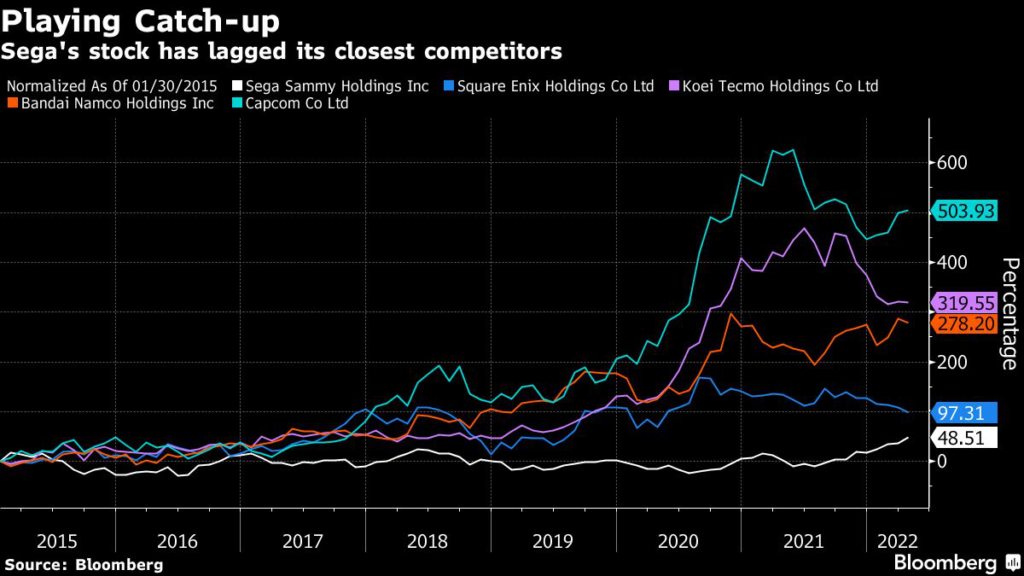
(Bloomberg) — Sega Sammy Holdings Inc. is developing big-budget reboots of its Dreamcast games Crazy Taxi and Jet Set Radio as it taps its back catalog in search of global hits like Epic Games Inc.’s Fortnite, according to people familiar with its plans.

The two titles would be the first entries in Sega’s Super Game initiative, which the company announced a year ago as an effort to develop recurring revenue sources and build online communities around its software portfolio. Fortnite has become the role model for such games: free to play, it’s available across platforms, hosts large multiplayer contests and includes extras like vehicles, construction and social events on top of the usual combat, spurring player purchases of in-game items.

The new Crazy Taxi has already been in development for over a year and the Tokyo-based entertainment group aims to release it within two to three years, the people said, asking not to be named as the information is not yet public. It was named alongside Jet Set Radio in Sega’s annual report a year ago on a list of intellectual property assets that Sega wanted to recapitalize by bringing them up to date. Both new games are in the early stages of creation and could still be canceled, the people said.

A Sega spokesman said the company has no comment to make at the present time.

The Super Game project is led by Sega’s video game unit chief Shuji Utsumi, a former PlayStation executive, and currently includes plans for about four such titles, according to the people. The company said last year that its European studio is working on a first-person shooter Super Game and the plan was to offer “contents and services that can create a large community” and as much as 100 billion yen ($780 million) in lifetime revenue. 

Sega’s online role-playing game Phantasy Star Online 2 fits the criteria for a global multiplayer hit, but it has so far failed to stir up a thriving market with its in-game purchase offerings. The Japanese company plans to address this aspect of monetization more aggressively with its upcoming titles.

Crazy Taxi casts the player in the role of a speed-above-all-else taxi driver and Jet Set Radio is an award-winning street action game, both released for the Dreamcast console in 2000. Past installments never turned into major commercial hits but did develop a devoted fan base even as niche titles, according to Tokyo-based games consultant Serkan Toto.

“They are more like cult titles with very loud and vocal fan bases, totally different in scale when compared to Sega’s iconic Sonic series,” Toto said.

Sega is betting big on Super Games at a time when its traditional businesses of pachinko and arcade machines face dwindling audiences and waves of Covid-19 restrictions. Console and smartphone gaming represents the company’s best chance at securing long-term growth.

Sega partnered with Microsoft Corp. in November on its Super Game development, using the Azure cloud platform and potentially setting the stage for the addition of those titles to Microsoft’s Xbox Game Pass service. Sarah Bond, corporate vice president for gaming at Microsoft, at the time said that the duo will “reimagine how games get built, hosted, and operated, with a goal of adding more value to players and Sega alike.”

Read this next: King of the ‘Lunatics’ Becomes Bitcoin’s Most-Watched Whale

More stories like this are available on bloomberg.com

©2022 Bloomberg L.P.

China Vows to Ease Supply Chain Woes in Foreign Chamber Meeting

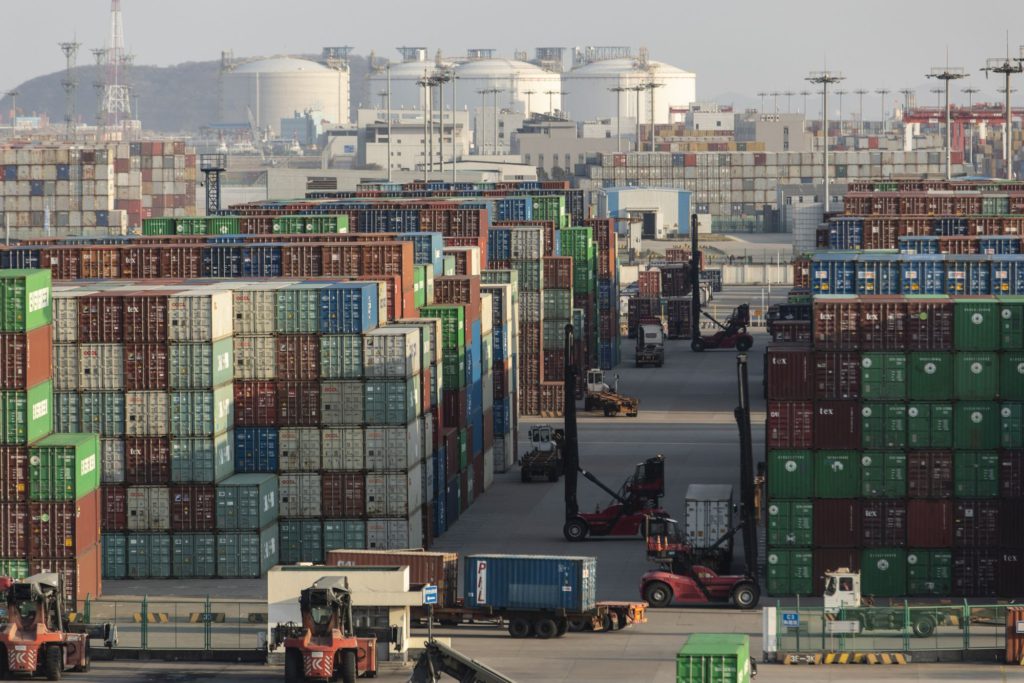
(Bloomberg) — Chinese officials pledged in a meeting with foreign chambers to address supply chain concerns while reaffirming their commitment to the country’s Covid Zero strategy, according to participants.

Representatives of foreign companies in China met Monday with Commerce Minister Wang Wentao to discuss the impact of Covid controls, as outbreaks and lockdowns spread across the country and damage the economy. The eight groups present were the European, German, Japanese, South Korean and U.K. chambers, as well as AmCham China, AmCham Shanghai and the U.S.-China Business Council. 

Jens Hildebrandt, executive director of the German Chamber of Commerce in North China, said the meeting let them raise pressing issues member companies were facing related to the country’s Covid-containment strategy, especially in Shanghai. 

“The current policy with lockdowns leading to productions stops, logistic and supply chain disruptions and restrictions on the movement of people do not only pose a short-term concern, but will leave their marks on the long run,” Hildebrandt said via email. “We are looking for clear signals on how the Chinese government will help to ease the burden through relief programs such as tax reductions, reduction of social insurance payments, rent deductions.”

The business groups proposed setting up regular briefings with Commerce Ministry to discuss new policies and share updates on the Covid response, he added.

Joerg Wuttke, president of the European Union Chamber of Commerce in China, said Wang was “attentive and amicable” during the two-hour meeting. The Chinese side described the chambers as “bridges and bonds,” and vowed to work with international businesses to resolve supply chain issues, he said. It also reiterated Beijing’s stance on maintaining its Covid Zero approach, Wuttke said. 

The Chinese government has so far shown no sign of abandoning the strategy championed by President Xi Jinping, even as fresh data showed that the lockdowns have begun to damage the economy. The Commerce Ministry in Beijing didn’t immediately reply to a request for comment Tuesday. 

The Chinese Ministry of Industry and Information Technology said Friday that it would push forward the resumption of production at major factories in Shanghai as it tried to ensure smooth supply chains. The city then announced a plan on Saturday night to allow some companies to restart operations, although there was no timetable.

Steven Lynch, managing director for the British Chamber of Commerce in China, said his group highlighted that China was diminishing as an attractive destination for investment and talent. “We would like to see clarity on China’s dynamic Covid-19 policy, and measures under this policy should be directly proportionate to the risk posed,” he said.

AmCham China said in a newsletter that it raised issues around certain Chinese Covid-control apps not working for people with foreign passports. It also said it pushed for access to foreign vaccines, which the government has not approved for use yet.

AmCham Shanghai and the U.S.-China Business Council declined to comment.  

Earlier this month, the European Chamber sent a letter to Chinese Vice Premier Hu Chunhua arguing that the omicron variant was “posing new challenges that seemingly cannot be overcome by applying the old toolbox of mass testing.” The letter, which was signed by Wuttke, added that such measures were increasing the social and economic costs of the pandemic.

The party’s Global Times newspaper dismissed the European Chamber’s stance, saying “biased smearing against China’s lifesaving policy is counterproductive.”

More stories like this are available on bloomberg.com

©2022 Bloomberg L.P.

King of the ‘Lunatics’ Becomes Bitcoin’s Most-Watched Whale

(Bloomberg) — Back in 2016, when Do Kwon was just a little-known startup founder with grand ambitions of bringing free internet to all, he noticed his research on distributed networks kept bringing up stuff on Bitcoin and Ethereum.

Next thing he knew, he’d fallen “down the crypto rabbit hole.”

Fast forward to today, and this relative newcomer is now one of the most influential — and controversial — figures in that rabbit hole.

On one side are the legions of fans and deep-pocketed crypto backers called “Lunatics,” who have turned Kwon’s vision of engineering a stable, digital currency that’s both easy to spend in real life and free from the tentacles of Wall Street and government regulators into one of the biggest blockchain projects to date — with tens of billions of dollars’ worth of crypto tied to the ecosystem. (“Lunatics,” for the uninitiated, is a nod to the Luna token, which through some algorithmic wizardry, is designed to keep the Terra stablecoin, commonly referred to as UST, stable. More on that later.)

On the other are the critics, including within crypto itself, who say Kwon is doomed to fail. Some liken the seemingly too-good-to-be-true 20% interest on the Terra blockchain’s lending-and-borrowing program to one big Ponzi scheme that will ultimately collapse under its own weight. Others warn — albeit without much evidence — that it risks bringing down the entire world of digital assets.

At the center of it all is Kwon, the 30-year-old “King of the Lunatics.” This year, a group led by Kwon wowed the laser-eye crowd by buying more than $1.5 billion in Bitcoin to help prop up Terra, with plans to purchase as much as $10 billion worth of the token. That’s made it not only one of the original cryptocurrency’s biggest whales, but also a flash point for boosters and naysayers alike. Believers see the purchases as a bold move to bring Kwon’s vision a step closer to reality. Skeptics say it’s a desperate ploy to divert attention away from a project that’s bound to run out of money.

“Right now, my role in the crypto industry is a little polarizing,” Kwon, co-founder of Terraform Labs, said in an interview with Bloomberg. “Because, you know, we’ve been making a lot of big moves. And that ruffles some feathers.”

Kwon seems to relish stirring up trouble, and his online persona is built on confidently combative and at times puerile tweets. In fact, he first vaulted into the collective crypto consciousness after raising his figurative middle finger at the U.S. Securities and Exchange Commission, suing the agency over its scrutiny of software developed by Terraform that allowed people to create, and speculate on, tokenized, synthetic stocks and ETFs without ever owning the actual thing.

So it’s perhaps no surprise that Kwon waves away the accusations of Terra being a Ponzi scheme careening toward disaster. And he’s putting his money where his mouth is: In March, he placed an $11 million wager — on the blockchain of course — with two of his social-media critics to prove them wrong.

Plenty in the crypto world are also betting on the Stanford grad and former Apple and Microsoft engineer.

Besides his more than 360,000 followers on Twitter, some of the most influential names in the industry are card-carrying Lunatics. Terraform Labs is backed by firms such as Coinbase Ventures, Galaxy Digital, Pantera Capital and a host of other players in crypto. The Luna Foundation Guard, the organization buying Bitcoin for Terra, also raised $1 billion in February through a private sale of Luna tokens, with buyers including Jump Crypto, Three Arrows Capital and others.

Michael Novogratz, the billionaire crypto luminary who leads Galaxy Digital, wears his respect for Kwon and Terra on his sleeve. Literally.

“I’m probably the only guy in the world that’s got both a Bitcoin tattoo and a Luna tattoo,” Novogratz told the Bitcoin 2022 conference in Miami on April 6, referring to the wolf howling at the moon that covers most his upper left arm.

The reason for all this breathless excitement, and a big reason why Terra has quickly become the second-largest blockchain used in decentralized finance, sounds at first rather mundane: the promise of engineering a cryptocurrency that’s worth a buck. Exactly a buck, to be precise: $1. No more, no less. In the volatile world of crypto, though, that’s not as easy to accomplish as it sounds — particularly when you’re trying to avoid interacting with the traditional financial system altogether.

A stablecoin that’s reliably worth $1 is crucial to Terra’s ultimate goal of creating peer-to-peer digital cash that can bypass banks, governments and all their fees and regulations.

For now, stablecoins are still mostly used by speculators, often as a place to park their money to avoid wild swings in crypto markets in lieu of regular old U.S. dollars. Traditional bucks typically only enter and exit the crypto universe via exchanges such as Coinbase and FTX, which follow the same “know-your-customer” rules as banks and brokerages. Stablecoins are free to roam where traditional dollars cannot: in and out of various DeFi platforms that offer users anonymity, not to mention all sorts of cutting-edge — and risky — ways to speculate on more crypto.

Issuers of the biggest stablecoins, Tether and USDC, attempt to accomplish that one-to-one dollar peg by holding real-world, dollar-denominated reserve assets such as T-bills or commercial paper. Yet that invariably requires a bank or some other centralized firm to be involved, which DeFi evangelists such as Kwon say flies in the face of their overarching mission to liberate humanity from financial and regulatory “censorship.” For example, some regulator could shut the whole project down and seize the assets.

That’s where UST comes in. It’s known as an algorithmic stablecoin, which aims to eliminate those risks by avoiding non-crypto reserves altogether. Instead, it attempts to maintain its dollar peg through a relationship with a fluctuating cryptocurrency, in this case Luna. To oversimplify, for every UST created, the same amount of value in Luna tokens is destroyed through embedded algorithmic codes, thus keeping UST at $1. High yields on UST deposits are meant to attract capital, which can then be lent out to generate income to pay depositors.

The track record of algo stablecoins, however, is littered with failure. Neutrino, IRON and Basis, to name a few, have all lost their dollar pegs, some in spectacular fashion, after price declines in the stabilizing tokens. That’s led some to suggest these types of protocols are little more than confidence games. As long as you can convince enough users the price will keep going up, everything’s OK. 

Kwon says if anything, the risks that UST become unpegged to the dollar have increased simply because of the explosive growth of DeFi projects on the Terra blockchain. It’s a victim of its own success, so to speak.

To head those off, Kwon is falling back on one of the most oft-repeated mantras in all of crypto: Bitcoin fixes this.

The Luna Foundation Guard — which abbreviates to LFG, identical to another common crypto catchphrase that stands for “let’s f—ing go!” — plans to keep buying Bitcoin as a sort of backstop to help underpin UST. The LFG also will acquire $100 million of Avalanche tokens for the same purpose. As more UST is issued, part of the fees collected will be used to buy the collateral. In theory, this will allow Terra to fulfill the goal of providing a truly decentralized stablecoin.

Kevin Zhou, founder of crypto-quant hedge fund Galois Capital, is doubtful. Zhou has positioned itself as perhaps the most outspoken antagonist toward Kwon and the Terra community. On Galois’s Twitter account, the former head of trading at U.S. crypto exchange Kraken portrays his firm as ancient Rome and Terra as Carthage. For those rusty on their history: Roman soldiers ended up sacking Carthage and slaughtering many of its citizens in the Punic Wars.

Like many crypto feuds, Twitter serves as the main battlefield.

On almost a daily basis, Galois sends out tweet storms criticizing Terra, detailing how a potential mismatch in supply and demand between Luna and UST could result in the failure of the mechanism keeping the stablecoin at $1. Buying Bitcoin as a reserve asset, according to Galois, is a sign Kwon is worried about an ugly unwind.

Galois points to Terra’s annual percentage yield (APY) on deposits, currently about 19.5%, as the reason a deluge of UST supply hasn’t hit the market and threatened its $1 peg — yet. Galois is convinced those same high yields, governed by Terra’s Anchor lending protocol, will eventually drain the reserves that back the project. Simply put, more money is going out than coming in. To Galois, the math doesn’t work.

“Every day that ticks by, Anchor reserve bleeds several millions away, counting down like a doomsday clock,” the firm tweeted on April 7.

Indeed, in the past 30 days alone, the protocol has burned through more than $100 million of its reserves, leaving it with roughly $280 million, according to the DeFi data compiler Mirror Tracker.

Galois insists it only wants UST to fail, and fail soon, to prevent Terra from getting big enough to take down the crypto universe with it. The firm didn’t respond to requests to elaborate. A recent tweet suggests why:  “And did you know, Do, that large traditional media companies reached out to me for comments on LUNA after seeing my tweets? I turned them down because I don’t want to be a pawn in their pernicious anti-crypto narrative.”

Others, including an anonymous Twitter user known as @AlgodTrading, who made one of the high-stakes bets with Kwon about the price of Luna, have compared the project to a Ponzi scheme because it requires demand for the tokens to keep growing.

Of course, accusations of Ponzi schemes are pretty common in crypto, where there is typically no real-world cash flow or assets to back up the numbers on the screen. Bitcoin has been accused of being a Ponzi pretty much since its birth. Thirteen years and some $800 billion in market value later, Bitcoin is still going strong.

Kwon says demand for UST will also keep growing. While the Terra blockchain’s biggest app by far remains the Anchor protocol, he cites all the other apps being built, including Prism, which he calls “a really novel and innovative interest-rate swap protocol,” as well as gaming and cultural projects. The high interest rates on UST aren’t a risk to the project because they’ll come down as the project matures, he says. He compares those juicy yields to the 1990s, when commercial-banking rates were high in many Asian countries. Eventually, they fell as the economies matured.

“Look, so essentially where I’m coming from is I have a very strong belief in a decentralized ecosystem, decentralized money,” said Kwon, a native of South Korea who mostly splits time between his home country and Singapore. “I have pretty high confidence that Terra will be the largest stablecoin in the next two years.”

The work necessary to get there means the lifestyle of the king of the Lunatics isn’t very looney at all, according to Kwon. When he’s not working, he says he’s usually just spending some time with his wife, who recently gave birth to their first child — a daughter aptly named Luna. If you want a meeting with him in Singapore, he’d prefer you join him for a hike in MacRitchie Reservoir so he can get some exercise.

Kwon also doesn’t have as much time as he once did to play StarCraft, the futuristic outer-space video game that inspired much of the terminology of his blockchain project — and inspires many of the interactions Kwon has with both fans and trolls. In the game, the Terrans are humans exiled from Earth who “excel at adapting to any situation,” as Wikipedia puts it.

So Kwon and his Terra project are adapting, too. He doesn’t ignore the advancing Romans and the various pieces of analysis they catapult at him like boulders from an onager: “It’s like a million data points that are coming in from all sorts of different places. And you sort of synthesize, then you try to, you know, put your best forward.”

Back in Miami, Novogratz sized up Kwon’s pivot to Bitcoin as a reserve asset to back up UST.

“It’s not without risk, right?” he told the audience in his keynote address at the conference. “He’s in this transition right now. The plan is to buy $10 billion worth of Bitcoin. And as that ecosystem grows, that number will grow. That’s all good as long as there’s not a run on the bank.”


More stories like this are available on bloomberg.com

©2022 Bloomberg L.P.

Japan to Model Digital Yen Tests on Sweden’s Approach, Not China’s

(Bloomberg) — Sign up for the New Economy Daily newsletter, follow us @economics and subscribe to our podcast.

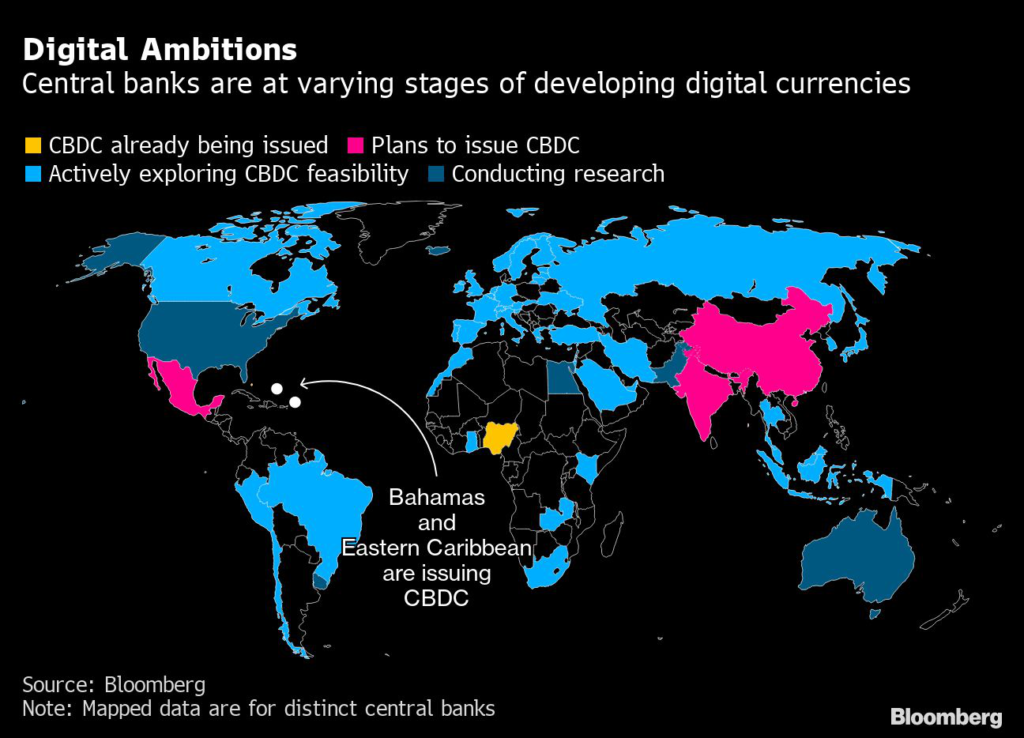
The Bank of Japan will explore the design issues of a central bank digital currency in measured steps like Sweden rather than pressing ahead with large-scale pilot tests like China, according to the BOJ’s point-man on digital yen research.

“Sweden’s staged and planned expansion of experiments is a better fit for us than China’s big-scale tests from the get-go,” Kazushige Kamiyama, the head of the BOJ’s payment system department, said in an interview. 

“The framework and design of the central bank digital currency needs to be decided as a part of an overall settlement system for the future,” he added.

Kamiyama also said studies would continue in close cooperation with other major central banks including the Federal Reserve and European Central Bank in remarks that suggest the BOJ is looking to proceed with its research cautiously while ensuring compatibility with other potential CBDCs.

Earlier this year China took a further step toward a full-scale launch of its digital currency by introducing it to a wider range of users at the Beijing Winter Olympics. 

Sweden’s Riksbank, meanwhile, has focused on smaller-scale technical research including a test this year to see if an e-krona can fit into a settlement system with other digital payment providers.

Like the Riksbank, the BOJ has yet to decide if it will issue a CBDC. Japan’s central bank says the decision is up to the public.

Kamiyama said it’s natural for emerging economies to be more enthusiastic about launching electronic money compared with developed nations with well-established payment systems.  

Still, with the pandemic accelerating cashless payments and strong interest in alternative assets for payment such as Bitcoin, an increasing number of central banks are looking into the need for electronic money. 

Some 87 countries representing over 90% of the global economy are exploring the possibilities of CBDCs, more than double the number in 2020, according to Atlantic Council, a Washington-based think tank. 

BOJ Governor Haruhiko Kuroda said the decision on the feasibility of issuing a CBDC is likely to be made by 2026. 

Referring to the potential time needed to develop a specific framework for a digital currency, Kamiyama indicated it would take about three years once the design has been decided. That’s a time frame that largely matches the view of some policy makers in Europe.

Japan’s central bank launched the second phase of its digital money experiments this month and Kamiyama signaled that proceeding to a pilot test, the next phase, is likely. 

Kamiyama said the need for a ceiling on holdings and transactions will be throughly considered during experiments, echoing the position of European officials. 

“Many private-sector businesses are calling for a limit to be set to avoid or at least contain any massive capital shift to a CBDC from bank notes or deposits,” Kamiyama said.

(Adds more detail on potential time frame for designing CBDC)

More stories like this are available on bloomberg.com

©2022 Bloomberg L.P.
Didi’s Brief U.S. Foray Is Ending. What Happens Next?

(Bloomberg) — Didi Global Inc. is preparing to delist from the New York Stock Exchange, after its initial public offering there last year drew the wrath of Beijing. The Chinese ride-hailing giant said it plans to list in Hong Kong instead, allowing existing shareholders to convert their holdings in the company. There are challenges ahead — for Didi, its shareholders and other Chinese companies looking to go public. Meanwhile, the government’s ongoing investigation and new regulatory measures have hit Didi’s bottom line.

1. Why is Didi going to delist?

Chinese regulators opposed the U.S. listing, saying it could expose Didi’s vast troves of data to foreign powers. The firm pressed ahead with the June 2021 IPO anyway, in a move that Beijing saw as a challenge to its authority. Days after the listing, the government announced a cybersecurity probe into the firm and forced its services off domestic app stores. Later the Cyberspace Administration of China, the agency responsible for data security, was said to have asked Didi’s top executives to devise a plan to delist because of concerns about leakage of sensitive data.

2. How will it work?

Didi has said it aims to list on the Hong Kong Stock Exchange and ensure that its American depositary shares can be swapped for “freely tradable shares of the Company on another internationally recognized stock exchange.” However, in April it said it won’t apply for a listing on another exchange until after the U.S. delisting is finished, and it also set a shareholder vote for May 23. The firm was already said to have suspended preparations for a Hong Kong listing after being informed by regulators that its proposals to prevent security and data leaks had fallen short. (Didi had put forward several ideas, including ceding management of its data to an outside party in China.) When the filing finally comes — assuming it does — the entire process could still take months from that point.

3. What are the challenges?

Prior to its U.S. IPO, Didi had weighed a potential Hong Kong listing but abandoned the effort after the city’s exchange questioned its compliance with Chinese regulations, such as having licenses in all the cities where it operated. (The Hong Kong exchange makes far more stringent demands on companies seeking a listing than its New York peers.) In preparation for its new listing, the company is said to be planning to reduce its headcount by as much as 20%, not including drivers. Didi in December disclosed a $4.7 billion loss in the September quarter after revenue slid 13% from the previous three months. Even if Didi pulls off a listing in Hong Kong, some investors may choose to sell rather than swap their U.S. shares, which have fallen drastically. Technically speaking, swapping them for stock in Hong Kong should be relatively straightforward for most institutional shareholders. But the new securities may trade with a valuation discount: Hong Kong has long been home to some of the world’s lowest price-to-earnings ratios. 

4. Why is this such a big deal?  

Didi’s blockbuster IPO was the second-biggest in the U.S. by a company based in China (Alibaba Group Holding Ltd.’s was bigger) and gave Didi a market value of about $68 billion. The listing, which was shepherded by a who’s who of Wall Street banks, appeared to be a model for how international investors could tap into China’s red-hot tech sector. Didi’s largest shareholder was Japan’s SoftBank Group Corp., with more than 20%. 

5. Will China force other companies to change listings?

Didi’s exit is unlikely to be the last. The Chinese internet regulator began probing two more U.S.-listed companies, Full Truck Alliance Co. and Kanzhun Ltd., soon after launching the review into Didi. In December the government unveiled tighter regulations for Chinese companies seeking to go public abroad using the so-called variable interest entity (VIE) structure, as Didi did. Meanwhile, the U.S. is moving to implement a new law that mandates foreign companies open their books to U.S. regulators or face delisting starting in 2024. The U.S. Securities and Exchange Commission says that only two jurisdictions historically have not allowed the required inspections, China and Hong Kong.

6. Will this end Didi’s troubles? 

Unlikely. The cybersecurity probe into Didi is ongoing, and regulators may still impose an array of punishments such as a fine, suspension of certain operations or the introduction of a state-owned investor. The municipal government of Beijing, where Didi is based, was said to have proposed that the Shouqi Group — part of the influential Beijing Tourism Group — and others acquire a stake in Didi, which would give control to state-run firms. Media including the South China Morning Post have reported that regulators may force Didi to reshuffle its top management. President Xi Jinping’s campaign to achieve “common prosperity” has heaped pressure on platform companies like Didi to offer better wages and benefits to its army of drivers. More fundamentally, the Chinese government is expected to maintain strict curbs on and scrutiny over big tech enterprises that amass sensitive data.

(Updates delisting plan in section 2)

More stories like this are available on bloomberg.com

©2022 Bloomberg L.P.
China’s Central Bank Pledges Support for Businesses Hit by Covid

(Bloomberg) — China’s central bank announced a spate of measures to help an economy which has been hit by lockdowns to control the current Covid outbreak, but the focus on boosting credit likely means the chances for broad-based easing are shrinking.

The People’s Bank of China told banks to meet the “reasonable funding needs” of local government financing vehicles, according to a document released with the foreign exchange regulator Monday. It also urged more lending to people with “flexible employment” such as taxi drivers, online shop-owners and truck drivers, and provide longer-term and cheaper loans to small businesses. 

In the announcement of 23 measures, the central bank vowed to step up the use of targeted tools including the relending program, which provides funds for banks to lend to sectors that include those hit by the pandemic. The various relending programs are expected to lead to 1 trillion yuan ($157 billion) in additional bank loans, it said.

The measures came after China reported its biggest decline in consumer spending and worst unemployment rate since the early months of the pandemic in March, as lockdown measures to stop Covid infections disrupted activity. The support for LGFV financing is rare as regulators have been tightening the rules governing the sector in recent years in an attempt to push local governments to bring their debts back on to their official balance sheets.

The announcement suggests that “the chance of broad policy interest rate and RRR cuts is lowered further as the PBOC did not mention them in the discussion on monetary policy tools,” Goldman Sachs Group Inc. analysts including Hui Shan wrote in a report. “Instead, the PBOC’s monetary easing could be more reliant on targeted policy tools in coming quarters.”

Banks should lend more to infrastructure projects and purchase local government bonds to help them front-load investment, and shouldn’t “blindly” suspend or withdraw loans from LGFVs, to ensure that they can deliver projects under construction, the PBOC said. Policy banks will also need to to step up their financing to major investment projects, it said.

On housing policy, the PBOC called on local authorities to set appropriate minimum down-payments and mortgage rates based on each city’s conditions, and urged banks to support the reasonable financing needs of property developers and construction companies. The central bank also asked banks to increase the share of private companies among the recipients of new corporate loans.

The PBOC has transferred 600 billion yuan of profit to the central government as of mid-April and this was mainly used for tax rebates and transfer payments to local governments, it said. The profit transfer had the impact of increasing the base money supply by 600 billion yuan, which has the same effect as a 25 basis-point cut in the reserve requirement ratio, it said.

The statement followed the central bank’s move on Friday to provide lenders with a modest cash boost while refraining from cutting interest rates. That cautious approach to monetary easing comes as some analysts argue the key to bolstering growth now lies in adjusting strict Covid controls rather than offering more liquidity.

Separately, the China Banking and Insurance Regulatory Commission vowed to increase financial resources for the logistics, transportation and courier industries, and use relending funds to lower financing costs. This will provide funding help to smaller businesses suffering from temporary difficulties due to Covid, the regulator said in a statement on Monday.

(Updates throughout)

More stories like this are available on bloomberg.com

©2022 Bloomberg L.P.

U.S. to Forgo Tests of Anti-Satellite Missiles Over Debris Risks

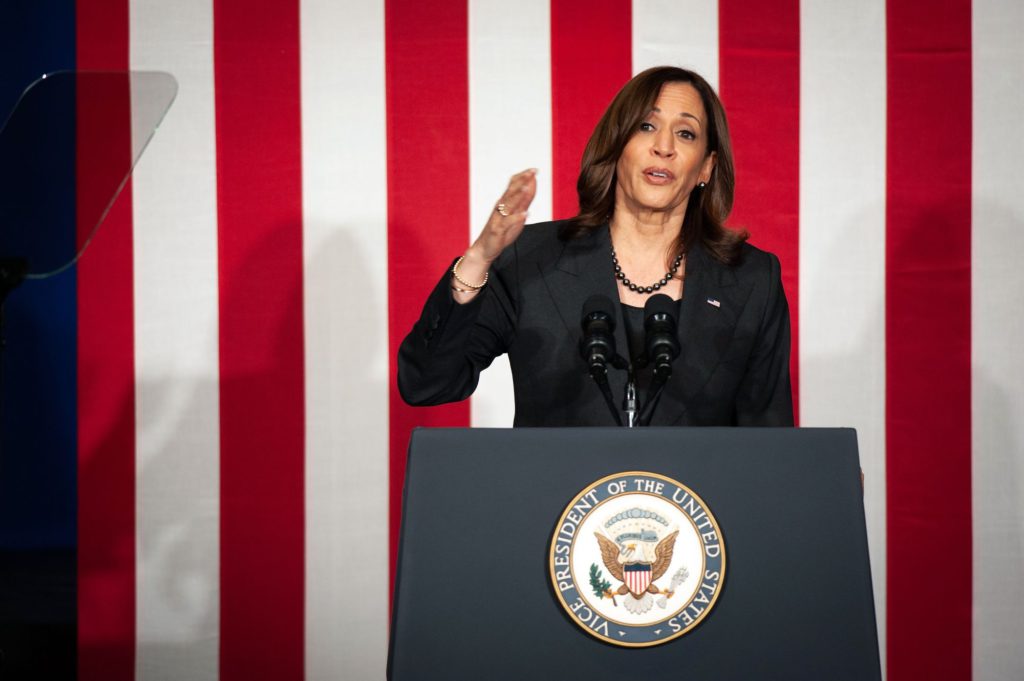
(Bloomberg) — Vice President Kamala Harris will announce Monday the U.S. won’t test some anti-satellite weapons in space, a move aimed at pressuring rivals Russia and China. 

Banning “reckless and irresponsible” anti-satellite missile tests should become the “international norm,” Harris’s office said in a statement. During a visit to the Vandenberg Space Force Base in California she will announce that the U.S. will forgo tests of what are known as “direct-ascent” anti-satellite weapons — generally, missiles designed to destroy spacecraft in orbit by impact.

The ban will prevent test debris from damaging other satellites and reduce the chances of conflict between nations in space, Harris’s office said. 

The move comes amid deep tensions between the U.S. and Russia over President Vladimir Putin’s invasion of Ukraine. 

Moscow blew up a dead satellite last November in a test of a ground-launched anti-satellite missile. The resulting debris raised concern that orbiting space junk might endanger the crew of the International Space Station or threaten commercial spacecraft launched by companies such as SpaceX and the Boeing Co.-Lockheed Martin Corp. United Launch Alliance joint venture.

“By blasting debris across space, this irresponsible act endangered the satellites of other nations, as well as astronauts in the International Space Station,” Harris, who leads the National Space Council, said in December. 

Monday’s announcement is part of an effort by the council to establish norms “that advance U.S. interests and preserve the security and sustainability of space,” Harris’s office said Monday.

Earlier: Space Junk Spreads, Creating Risk of No-Go Zones for Satellites

“The long-lived debris created by these tests now threaten satellites and other space objects that are vital to all nations’ security, economic, and scientific interests, and increases risk to astronauts in space. Overall, these tests jeopardize the long-term sustainability of outer space and imperil the exploration and use of space by all nations,” she said in her statement. 

China conducted a similar anti-satellite missile test in 2007. 

Victoria Samson, Washington director of the Secure World Foundation, which advocates for peaceful ventures in outer space, called the Harris announcement “a really big deal” because it’s “the first time in a long time that the U.S. has acknowledged that there is benefit to its willingly constraining its freedom of action in space.” 

She added this marks “the first possibility for real forward movement in multilateral space discussions in a while” to ban tests.

But Representative Mike Rogers of Alabama, the top Republican on the House Armed Services Committee, said the administration’s decision “does nothing to deter our adversaries in an escalating war- fighting domain. In fact, I’m worried it will have the opposite effect.”

Rogers added that Russia and China “have demonstrated their anti-satellite capabilities — it would be naive to think they don’t intend to use them against our assets.”

(Updates with comments from Mike Rogers, in final two paragraphs. A previous version corrected the spelling of Vandenberg, in the second paragraph.)

More stories like this are available on bloomberg.com

©2022 Bloomberg L.P.
Ukraine Update: Zelenskiy Says Russia Launches Donbas Assault

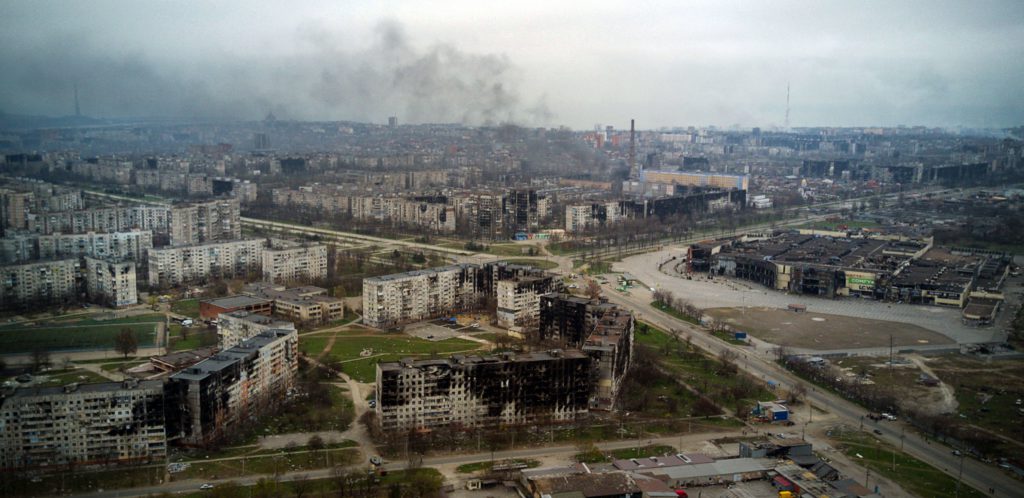
(Bloomberg) — Ukrainian President Volodymyr Zelenskiy said Russian forces had begun a new campaign to conquer the Donbas region in the east of his country, as the remaining defenders of Mariupol were encircled by the Kremlin’s forces but haven’t surrendered the key port city. 

The U.S. is looking to re-establish a diplomatic presence in Ukraine as soon as possible in a show of support. Washington is preparing to train some Ukrainians outside the country on howitzer artillery pieces in the coming days to help them fight back at home. 

President Vladimir Putin asserted the “economic Blitzkrieg” of international sanctions on Russia had failed, citing the recovery in the ruble to prewar levels. That recovery, however, came after Russia imposed tight capital controls. He also gave a special elite designation to an army unit that Ukraine and others have accused of committing war crimes in the northern town of Bucha.

(See RSAN on the Bloomberg Terminal for the Russian Sanctions Dashboard.)

Key Developments

  • Yellen to Attend G-20 Sessions as U.S. Retreats on Boycott Idea
  • Russia Has Found No Place Yet to Invest Reserves After Sanctions
  • Putin Decorates Army Unit That Ukraine Blames for Bucha Deaths
  • Bomb Threats Can’t Stop One of Russia’s Last Air Links to Europe
  • World Bank Cuts 2022 Global Growth Outlook on Russia Invasion

All times CET:

Japan to Provide Gas Masks, Kyodo Says (2:27 a.m.)

Japan’s government plans to provide Ukraine with drones, gas masks and protective gear against chemical weapons, Kyodo News reported, citing an unidentified person. Japan previously sent bullet-proof vests, helmets and other supplies to support Ukraine against the Russian invasion. 

Zelenskiy Says Russia Starts Donbas Assault (11:10 p.m.)

Zelenskiy, in his nightly video address Monday, said “It can now be stated that Russian troops have begun the battle for Donbas, for which they have been preparing for a long time.”

“In the east and south of our country, the occupiers are recently trying to attack in a little more thought-out manner than before,” Zelenskiy said. “They are putting pressure, looking for a weak spot in the defense of our state to go there with the main forces.”

Russian forces were already shelling the area heavily. Russia has been assembling large numbers of troops in eastern Ukraine for weeks even as it pulled out of areas near Kyiv. Moscow has not announced the start of a major offensive.

U.S. Says It Wants to Send Diplomats Back But Not When (8:45 p.m.)

The U.S. wants to re-establish a diplomatic presence in Ukraine as soon as possible, State Department spokesman Ned Price said in Washington. But he didn’t say when that could happen, citing the safety of American diplomats as a priority. 

“When the security situation allows it, and not a second later, I can assure you that we will have a re-established diplomatic presence on the ground in Ukraine,” Price said.

Spain plans to join European Union allies in reopening its embassy in Kyiv soon, Prime Minister Pedro Sanchez told Antena 3 television. The European Union reopened its mission in Kyiv just over a week ago after Russian troops retreated from the region, though the capital has come under fire again in recent days.

Russia Says It Destroyed Weapon Storage Near Lviv (7:56 p.m.)

The Russian military said it destroyed a facility in the Lviv region that held weapons shipped to Ukraine from the U.S. and other countries, according to Interfax. Pentagon spokesman John Kirby told reporters he couldn’t immediately confirm that such an attack occurred.

Also Monday, four missiles hit Lviv, killing seven people, the first civilians killed in the western city, Mayor Andriy Sadovyi said. Eleven others were injured. 

Yellen to Attend Some G-20 Events Even If Russia Takes Part (6:41 p.m.)

Treasury Secretary Janet Yellen won’t automatically boycott meetings of the Group of 20’s finance ministers this week in Washington if Russian officials attend, the U.S. said Monday.

Yellen will avoid some sessions but will participate in others focused on the economic fallout from Russia’s invasion of Ukraine. Earlier this month Yellen had said U.S. officials wouldn’t take part in some G-20 meetings this year in which Russia is allowed to participate.

Russia Has Added Forces, U.S. Official Says (6:32 p.m.)

Russia has sent reinforcements to eastern Ukraine for renewed offensive in the region, a senior U.S. defense official told reporters. Russia has added about 11 battalion tactical groups, bringing its total in the country to about 76, the person said.

The U.S. is preparing to train some Ukrainians outside the country on howitzer artillery pieces in the coming days, the official said. The official contended that sanctions have limited Russia’s ability to restock and resupply components for some of its military systems including precision-guided missiles.

Putin Decorates Army Unit That Ukraine Blames For Bucha (5:36 p.m.)

Citing “mass heroism and valor” but making no mention of Russia’s war in Ukraine, the decree Putin signed awarded the 64th Motorized Infantry Brigade the honorary title of Guards.

Ukraine’s Defense Ministry previously identified the unit as one involved in war crimes during the occupation of Bucha, a town outside Kyiv that has drawn international attention for reports of Russian atrocities. Kremlin spokesman Dmitry Peskov didn’t immediately respond to a request for comment.

READ: Putin Decorates Army Unit That Ukraine Blames for Bucha Deaths

Moscow Mayor Says 200,000 Jobs At Risk (5:15 p.m.)

Sergei Sobyanin cited the impact of foreign companies shutting down operations in Russia in a post on his blog Monday, and pledged special subsidies for those affected. 

Over 750 foreign companies have curtailed or suspended operations in Russia since the invasion of Ukraine, according to economists at Yale University.

Putin Sees Russian Economy Stabilizing (3:45 p.m.)

Russia’s economy has withstood unprecedented sanctions pressure and the situation is stabilizing, Putin said. In a televised meeting with officials, the Russian leader highlighted the rise in the ruble and said fiscal policy must actively support the economy by maintaining liquidity. 

According to Bloomberg Economics, capital controls have steadied Russia’s financial sector and propped up the ruble, but a recession triggered by the sanctions is likely to be deep and prolonged.

Sales of ‘Snake Island’ Stamps Surge (1:30 p.m.)

Ukraine’s postal service said it has sold almost half a million stamps featuring a soldier on the tiny Black Sea outpost known as Snake Island who became a symbol of resistance to Russia’s invasion on the day it began.

According to the story, guards on the island swore at the Moskva — Russia’s flagship missile cruiser that later caught fire and sank — and another ship when ordered to surrender. An audio recording of the exchange spread on social media and unleashed patriotic memes. The total number of available stamps — which went into issuance last week — is 1 million and no additional issues are planned, the postal service said on Facebook.

READ: Sunken Russian Warship Was a Symbol of Ukrainian Defiance

Putin Ally Offers Himself in Troop Swap (12:30 p.m.)

Viktor Medvedchuk, a businessman and politician seen as one of Putin’s top allies in Ukraine, has agreed to offer himself in a swap for troops and residents in Mariupol, according to the State Security Service in Kyiv.

After Medvedchuk was detained this month, Ukrainian President Volodymyr Zelenskiy proposed swapping him for prisoners of war. He had gone missing around the start of the war after being placed under house arrest last year. Separately, a Ukrainian troop commander in Mariupol wrote to Pope Francis asking him to help rescue trapped civilians, Ukrayinska Pravda reported.

Bomb Threats Impede Serbia-Russia Flights (11:41 a.m.)

Air Serbia will maintain flights to Moscow even as frequent bomb threats wipe out potential profit from the service, Serbian President Aleksandar Vucic said.

Almost every flight from Belgrade to Moscow has received an anonymous bomb threat since other European carriers stopped flying to the Russian capital, causing delays or requiring the plane to return to its airport of origin for security checks, Vucic told Pink TV.

Russia Targets Sites Around Ukraine (11:36 a.m.)

Four missiles hit the western city of Lviv, including a strike on a car repair shop that killed seven people and injured 11, Mayor Andriy Ivanovych Sadovyi said. Several rockets targeted the Dnipro region, with some hitting infrastructure, the regional governor said. 

Shelling of Kharkiv was reported throughout the night. 


More stories like this are available on bloomberg.com

©2022 Bloomberg L.P.

Pakistan Startup Abhi Raises Funds at $90 Million Valuation

(Bloomberg) — Pakistani financial platform Abhi Pvt. raised funds at a $90 million valuation within a year after introducing its business, the latest startup to benefit from investors’ increasing interest in the South Asian country.

The Karachi-based company’s $17 million Series A round was led by Speedinvest, marking the venture capital firm’s first bet in Pakistan, Abhi Chief Executive Officer Omair Ansari said in an interview. Global Ventures, VentureSouq, VEF, Sturgeon Capital, Rallycap, FJ Labs, Fatima Gobi, Sarmayacar and i2i Ventures also participated.

Pakistan is attracting investors eager to back startups in one of the last large untapped markets. Companies raised more than $350 million last year in the country, greater than the amount over the previous six years combined. Among the firms making their first-time investments in the country recently are Kleiner Perkins, Tiger Global Management and Dragoneer Investment Group.

Startup Fever Grips Pakistan, World’s Last Big Untapped Nation

The lending startup offers an alternative to people asking their employer, family or friends for cash to make ends meet until their next salary. It also gives small- and medium-sized companies financing for working capital requirements. The company has now become cash-flow positive.

“This is the first time you’re able to get this access in the country,” Ansari said in an interview. “As people and smaller companies get this access then it becomes something they want to keep using.”

The app takes less than 30 seconds and two clicks for a registered user to access the funds, with a flat 2% transaction fee. The funds are automatically deducted from the next paycheck. 

Co-founder Ansari previously oversaw two funds at Morgan Stanley, and was looking at investment opportunities in consumer companies and fintech in emerging and frontier markets. He helped with early-stage investments in fintech companies from China to Brazil. He was also an adviser to VEF, which focuses on fintech in frontier and emerging markets.

The company has increased users to 650,000 from about 200,000 since a previous round in November and also on-boarded over 150 companies. Individuals are accessing 15% to 20% of their monthly wage through the platform, Ansari said.

“Abhi has the potential to change millions of lives across MENA and South Asia,” said Stefan Klestil, general partner at Speedinvest. “It’s no wonder they have been able to establish themselves as one of the fastest-growing Pakistani startups.”

More stories like this are available on bloomberg.com

©2022 Bloomberg L.P.

Pantera Leads CoinDCX Funding Round at $2.2 Billion Valuation

(Bloomberg) — India’s crypto unicorn CoinDCX is raising $135 million from venture capital funds led by Pantera Capital and Steadview Capital Management LLC., according to a company statement. 

The latest round values the company at $2.15 billion, making the Coinbase Ventures-backed exchange the highest valued crypto firm in India, said co-founder and Chief Executive Officer Sumit Gupta. Other investors in the financing include Kingsway, DraperDragon, Republic, and Kindred along with existing backers B Capital Group, Coinbase, Polychain and Cadenza, it said in the statement.

The funding comes even as Indian payment service providers have stopped processing crypto transactions via the Unified Payments Interface, the country’s biggest online retail payments platform, leading to a plunge in trading volumes.

Read about Indian payment firms pulling support 

“The kind of confidence such high-quality funds have shown in the company in spite of these challenges is actually very promising,” said Gupta, referring to the recent issues on processing payments via the UPI platform.

CoinDCX, which became the first $1 billion firm in the Indian crypto space last year, will use the funds to more than double its workforce to 1,000 people this year, add more products, spread awareness regarding virtual digital assets and support other startups, Gupta said. 

The latest round of funding led to a 6% dilution in stake by Gupta and fellow co-founder Neeraj Khandelwal after which they will hold about 30% in the company, while 60% is with investors, Gupta said. Prior to the latest round CoinDCX had raised $90 million in October.

Read about the previous round of fund raise by CoinDCX

Undeterred by the ongoing payment hurdles, steep taxation and regulatory uncertainty, CoinDCX which has 12.5 million users, will continue to invest in India, Gupta said.  

“We’ll continue to double-down in India, we’ll continue to build more use cases and go deeper into crypto,” he said.

More stories like this are available on bloomberg.com

©2022 Bloomberg L.P.
Close Bitnami banner
Bitnami