

Bloomberg

Rivian’s EV Factory, Constrained by Chips, Is Off to Slow Start

(Bloomberg) —

Rivian Automotive Inc.’s “launch mode” is impressive — at least on its trucks. 

While the battery-powered pickups go from 0 to 60 miles per hour in 3.3 seconds, the 3.3 million-square-foot factory they roll out of is off to a protracted start. The assembly lines are perfectly capable of cruising speed; they just need more computer chips. 

That was the message from Chief Executive Officer  R.J. Scaringe last week as he took Bloomberg on a tour of the company’s Normal, Illinois, plant two hours southwest of Chicago. The cavernous facility was packed with people — 5,200 in all, spread across different shifts. Industrial tools were punching metal into door frames and scores of robotic arms were welding body panels, smooshing on windshields and spraying paint.

The parking lot behind the factory is crammed with hundreds of battery-electric pickups called R1T, Rivian’s debut consumer product. Parked alongside in trademark “Prime Blue” were dozens of plug-in commercial delivery vans for Amazon.com Inc., a critical customer and investor. All of the machines are awaiting shipment to their new owners, a dormant cavalcade ready to deploy in the coming electric vehicle wars.

Still, for all the activity, the factory is limping compared to rival facilities. Rivian forecasts it will run at just 50% capacity this year as a shortage of key parts constrains output. The assembly line was static in places and some workers were diligently organizing parts bins and re-checking machinery. At times, the first shift of the day files out at around 3 p.m., Scaringe said in an interview, simply because they don’t have enough to do.

“I would love to be in a position where we’re running two shifts, but two shifts would gain us nothing right now,” Scaringe said. “We need parts.”

Rivian is not an exception in the auto industry; it’s only different because it’s new. A few months ago, Rivian brought the first battery-powered electric pickup to the U.S. market, beating Tesla Inc, Ford Motor Co. and General Motors Co. in the process. The company counts Jeff Bezos and Amazon among its biggest investors (and customers) and its initial public offering in 2021 was the sixth largest in U.S. history. But since the debut, shares have swooned and analysts have slashed projections and hopes for the stock. 

Rivian has managed to speed the flow of certain products, in part by sending employees to supplier plants to step up the pressure. Computer chips, however, remain a challenge. There’s a fixed supply and typically chipmakers allocate them based on historic production, which is a huge disadvantage to a newcomer like Rivian. Scaringe says he spends much of his time calling chip executives and assuring them his factory is humming. Inviting a gaggle of reporters for a tour puts a nice underline on that missive.

“The allocation is being set based on whether they think we’re using the chips or not,” Scaringe said. “But it’s a self-fulfilling prophecy, because if Intel believes we’re not going to produce more than the next number, then that’s the number we’re going to produce.”

Scaringe reiterated a pledge that his factory will roll out 25,000 vehicles this year — including 10,000 vans Amazon is expecting, the first tranche of a 100,000-unit order to be completed by the end of this decade. That’s roughly half of what the plant would be capable of if it had a steady stream of parts.

The company has invested billions of dollars retrofitting a former Mitsubishi plant it acquired in 2017 for $16.5 million. Since then, the facility has expanded by 700,000 square feet. It’s now chock-a-block with tooling and machinery that takes months to map and install. One of Rivian’s biggest expenses to date, a state-of-the-art paint shop, is humming away like a wing of the Star Wars Death Star. Two assembly lines — one for the commercial van, the other for the company’s passenger pickup and SUV — weave around each other in a carefully choreographed industrial ballet. At one end of the plant, battery cells are packed into modules and joined with electric motors to form the “skateboards” which are bolted under all Rivian vehicles before they’re driven out of the facility to the parking lot outside.

Rivian currently is producing vehicles in batches: when enough parts pile up, managers crank up the conveyer belts and workers make a few dozen trucks. “We accumulate enough parts to build as fast as the plant can build,” Scaringe said, “but we can’t run like that for a week; we run through the parts so fast.” Eventually, Rivian plans for the facility to stamp out 200,000 machines a year by 2023. But so far, the factory’s limitations don’t appear to have had any effect on demand. Orders are coming in at an increasing rate, Scaringe said, as more of the trucks make their way into neighborhoods and parking lots. The high-profile IPO didn’t hurt either.

That presents its own set of challenges, however. With a wait list of more than 85,000, Rivian is selling hardware that customers won’t receive for nearly two years.  Given that widening window, Rivian is about to change the way it takes orders, essentially uncoupling reservations from detailed prices. New customers will still be able to choose a truck, put down a deposit and claim a place in line, but they won’t be able to choose options — or configure their vehicle — and lock in a specific price until closer to an appointed delivery date. 

“It’s a conversation we need to have,” Scaringe said. “Content is going to evolve, pricing is going to evolve; it allows those evolutions to occur without having to predict what they’re going to be precisely.”

The change will help Rivian account for inflation and fast fluctuating prices for commodities and parts. The company in early March walked back an announced price increase for people with standing orders when a swell of those customers cancelled their reservations (although it maintained the higher stick price for new buyers). Also, Scaringe said, Rivian vehicles will change drastically in the next two years. They may look the same, but he says they will be more efficient, with improved charging speed and driving dynamics.

The R&D squad, in short, is working at a frenzy, even as the line workers wait for 10 or so parts out of 2,000 — each the size of a fingernail — which are holding up the process. “Layered on top of this is the question,” Scaringe said, “‘Is the plant actually not running and using the semi-conductor shortage as an excuse?’ It’s really complex and it’s really frustrating.”

More stories like this are available on bloomberg.com

©2022 Bloomberg L.P.
China’s Chip Output Shrinks as Lockdowns Hurt Production

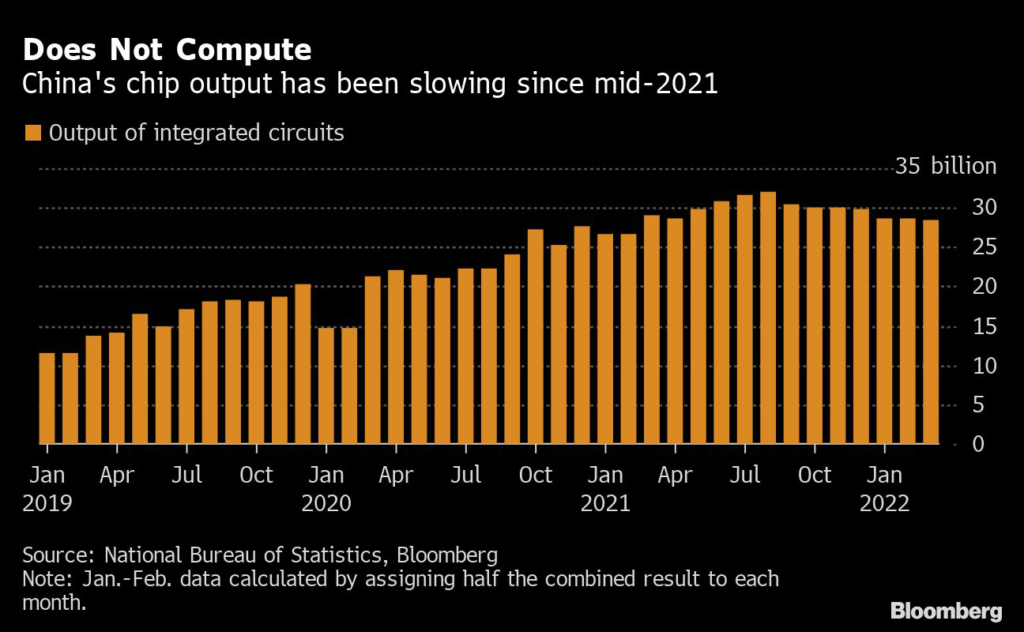
(Bloomberg) — China’s quarterly production of semiconductors shrunk for the first time since early 2019 as consumer electronics demand softened and Covid-triggered lockdowns in regions including Shanghai disrupted output.

Output of integrated circuits dropped 4.2% in the first three months of the year as chipmakers reported a steeper decline in March, according to data from the National Bureau of Statistics. It was the worst quarterly performance since the first quarter of 2019 when the country’s chip output slumped 8.7%.

China has put Shanghai, a key chipmaking hub, into a month-long lockdown as Xi Jinping’s administration tries to stop the spread of Covid infections. The nation’s biggest chip manufacturers, from the Semiconductor Manufacturing International Corp. to Hua Hong Semiconductor, have struggled to source some components due to traffic controls imposed by local authorities. Chip production dropped 5.1% in the month of March.

A number of executives from Chinese auto and hardware companies expressed concerns over supply chain disruptions last week as more regions announced stricter prevention measures following reports of local Covid cases. Those include the tech manufacturing hub of Kunshan and Zhengzhou, home to the world’s largest iPhone factory.

Tech factories across the country could be forced into production halt after May if suppliers in Shanghai remain closed, Huawei Technologies Co. Executive Director Richard Yu wrote in a WeChat post last week. 

“The economic loss will be immense,” said Yu, who oversees the Chinese company’s smartphone and smart car businesses.

The Ministry of Industry and Information Technology has sent officials to help chip companies in Shanghai resume production despite the lingering Covid infections in China’s biggest city.

For years, Beijing treated home-grown chip industry as a strategic industry and a key component of its race for tech supremacy. Its chip output enjoyed double-digit growth for years amid the trade war with the United States although China still imported more than $432 billion worth of chipsets in 2021, according to China Semiconductor Industry Association.

Sluggish demand from consumer electronics sector also bodes poorly for some Chinese chip firms. Demand for smartphones, PCs and TVs has been hurt by China’s lockdown measures, according to Mark Liu, chairman of Taiwan Semiconductor Manufacturing Co.

Jefferies analyst Edison Lee wrote in a note this month that “demand from smartphone and some consumer electronics is very weak.”

“Smartphone is a meaningful part of semi demand, but how long does it take for that weakness to transmit to foundries remain uncertain,” Lee said.

More stories like this are available on bloomberg.com

©2022 Bloomberg L.P.

Treasury Blames Audit Imbalance on Underfunding of IRS

(Bloomberg) — U.S. Treasury officials blamed the Internal Revenue Service’s outsized number of audits on low-income households on severe underfunding of the agency by Congress.

Audits on filers with higher net worth require more time and expertise, and the agency’s underfunding has led to a significant loss of personnel capable of performing those, senior Treasury officials told reporters in a telephone conference Friday.

They were responding to a study from Syracuse University showing households making less than $25,000 were almost three times as likely to get audited in tax year 2021 than those making $200,000 to $1 million.

The numbers prompted two Democratic lawmakers to write a letter to IRS Commissioner Chuck Rettig demanding an explanation.

The Biden administration has appealed to Congress for $80 billion in additional funding for the IRS over the next 10 years to modernize its computer systems and hire more qualified personnel.

In the call with reporters, one Treasury official said some Republicans and wealthy individuals have opposed funding that would allow the agency to pursue tax evaders, causing decades of underfunding for the IRS.

More stories like this are available on bloomberg.com

©2022 Bloomberg L.P.
China Meets With Foreign Chambers as Lockdowns Hit Business

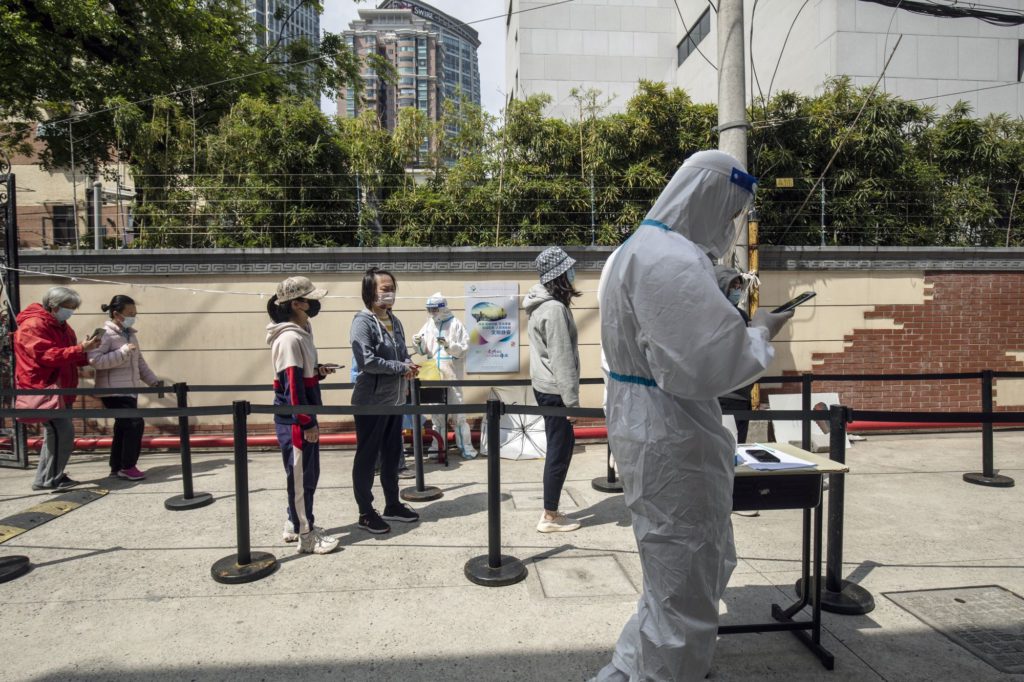
(Bloomberg) — Representatives of foreign companies in China were expected to meet the nation’s commerce minister to discuss the impact of Covid controls, as outbreaks and lockdowns spread across the country and damage the economy.

Commerce Minister Wang Wentao will meet representatives from American, European, Japanese and other chambers of commerce Monday, according to Joerg Wuttke, president of the European Union Chamber of Commerce in China. The meeting will be a chance for members of the foreign business community to share their concerns with senior Chinese officials and shows the urgency of the current situation, Wuttke said.

“What I care about is that they listen,” Wuttke said. 

AmCham Shanghai declined to comment. AmCham China didn’t respond immediately to a request for comment Monday. The Commerce Ministry also didn’t respond to a similar request.

The Chinese government has so far shown no sign of abandoning the strategy championed by President Xi Jinping, even as fresh data showed that the lockdowns have begun to damage the economy. A commentary published on the front page of the Communist Party’s People’s Daily newspaper Monday reaffirmed support for the “correct and effective” policy and urged the country to unite “more closely around the party’s leadership with Xi Jinping as the core.” 

Read more: Shanghai Reports Its First Covid Deaths as Lockdowns Spread

Earlier this month, the European Chamber sent a letter to Chinese Vice Premier Hu Chunhua arguing that the omicron variant was “posing new challenges that seemingly cannot be overcome by applying the old toolbox of mass testing.” The letter, which was signed by Wuttke, added that such measures were increasing the social and economic costs of the pandemic.

“This is also having an unfortunate impact on China’s image to the rest of the world while eroding foreign investors’ confidence in the Chinese market,” Wuttke said in the letter.

The party’s Global Times newspaper dismissed the European Chamber’s stance, saying “biased smearing against China’s lifesaving policy is counterproductive.”

Separately, the Japanese Chamber of Commerce in Shanghai issued a report last week, outlining the impact of the Shanghai lockdown on Japanese companies and their staff. That report was accompanied by a letter from Consul General Shuichi Akamatsu, who underscored the impact of the lockdown on the 40,000 Japanese citizens and about 2,300 Japanese firms in the city.

The Chinese Ministry of Industry and Information Technology said Friday that it would push forward the resumption of production at major factories in Shanghai as it tried to ensure smooth supply chains. The city then announced a plan on Saturday night to allow some closed companies to restart operations, although there was no timetable.

More stories like this are available on bloomberg.com

©2022 Bloomberg L.P.

China Turns Focus on Supply Chains, Pledging More Financial Aid

(Bloomberg) — China is taking stronger measures to stabilize supply chains, pledging financial aid and possible exemptions to allow some businesses activity to resume, to help limit the damaging effect of Covid restrictions.

Authorities will improve living and working conditions in the logistics industry and provide employees with financial support, such as deferring repayments on loans, according to a state media readout of a meeting attended by Vice Premier Liu He and chaired by State Councilor Xiao Jie on Monday.

To help supply chains, the government will establish “white lists” of companies in sectors including automobiles, semiconductors, consumer electronics, food, equipment manufacturing and medicine and foreign trade, the official Xinhua News Agency said. The report didn’t provide more details, although a similar “white list” of companies in Shanghai was disclosed late last week allowing companies to make plans to resume production.

Read More: Shanghai Unveils Business Restart Plan on Supply-Chain Woes

Tight restrictions to stamp out coronavirus infections are weighing on the economy and threatening supply chains. Shanghai’s lockdown has led to factory closures and a shortage of trucks to move goods, with containers piling up at the port, which is the world’s largest. It now takes about 115 days on average for goods to reach a warehouse in the U.S. from the moment they are produced at a factory in China, up from 50 days in 2019, according to freight-forwarder Flexport Inc.

Officials on Monday also urged local governments to relax mobility restrictions for logistics workers at checkpoints, and recognize the results of their Covid tests performed in other regions. 

China will leverage 1 trillion yuan ($157 billion) in funding from some of the central bank’s relending programs to support supply chains, Xinhua said. The report cited a 200 billion yuan relending program focused on technology innovation, along with a 100 billion yuan program focused on transportation and logistics.

The meeting came days after the People’s Bank of China and the country’s banking regulator pledged financial support for logistics firms and truck drivers.

More stories like this are available on bloomberg.com

©2022 Bloomberg L.P.

Uber Ties Up With Rakuten for Food-Delivery Payments in Japan

(Bloomberg) — Uber Technologies Inc. will integrate Rakuten Group Inc.’s payment services into its Uber Eats and later Uber mobility app in Japan, one of its key international markets.

Rakuten, Japan’s homemade answer to Amazon.com Inc., operates a broad range of e-commerce and fintech services and has a widely used Rakuten Points loyalty program. The integration with Uber Eats, which will roll out in stages by the end of this month, will allow Rakuten account holders to log in without a pre-existing Uber account and earn and spend their Rakuten Points or Rakuten Pay credit, the companies said Monday.

The move builds on Uber’s efforts to make its services more accessible in international markets. The company rolled out ride-booking via WhatsApp in India in December, saying it wanted to meet customers on the platforms they are comfortable with. Rakuten counts more than 100 million members in Japan and now runs the fourth mobile network in the country, expanding its ecosystem with aggressive pricing and promotions.

Deliveries generated $13.4 billion in gross bookings worldwide for Uber in the last quarter of 2021, up by a third from a year earlier. The company’s Uber Eats operates in more than 6,000 cities globally and covered 47 Japanese prefectures as of February last year. Uber claims to be the leader in food delivery in Japan, where it has more than 150,000 restaurant partners and 100,000 active delivery partners. Uber’s ride-hailing app has been less popular in Japan, but the company said it too will integrate Rakuten’s services later this year.

More stories like this are available on bloomberg.com

©2022 Bloomberg L.P.

Crypto Fund Founder Warns Industry on North Korean Cyber Attacks

(Bloomberg) — All prominent cryptocurrency organizations are probably being targeted by North Korean hackers and should strengthen their cybersecurity, according to the founder of a crypto fund.

North Korea is likely to devote more resources to such attacks given the success it’s had so far, said Arthur Cheong, who set up DeFiance Capital in Singapore in 2020 and was himself a recent victim of a cybercrime. He advised crypto firms to take extra care in hiring remote teams, have dedicated computers for crypto transactions and revoke unnecessary token approvals.

“It is critical that this industry is highly aware that we are being targeted by a state-sponsored cybercrime organization that is extremely resourceful and sophisticated,” Cheong said on Twitter.

Read more: U.S. Links North Korean Hacker Group to Record Crypto Heist 

North Korea appears to have stepped up its crypto-related cyber attacks in recent months. Last week, the U.S. Treasury Department tied the North Korean hacking group Lazarus to the theft of more than $600 million in cryptocurrency from a software bridge used for the popular Axie Infinity play-to-earn game. Cybercrimes have provided a lifeline for the struggling North Korean economy, which has been hobbled by sanctions to punish it for nuclear and missile tests, and grown smaller since Kim Jong Un took power about a decade ago.

Read more: Growing Army of Hackers Helps Keep Kim Jong Un in Power

More stories like this are available on bloomberg.com

©2022 Bloomberg L.P.

SoftBank’s Latin America Fund Suffers Key Departures

(Bloomberg) — SoftBank Group Corp.’s Shu Nyatta and Paulo Passoni, two of the three managing partners at the SoftBank Group Corp.’s Latin America Fund, said they are leaving to start their own venture business focused on late-stage startups in the region. 

This week, SoftBank is set to promote the LatAm fund’s third managing partner, Alex Szapiro, who currently holds an operating role, to a more senior position, a person familiar with the matter said. Juan Franck, a fund investor in Mexico City, will also get promoted, the person said. The firm is also weighing investing a substantial further sum in the fund, perhaps as much as $2 billion, the person said.

Still, the departures leave the fund in a challenging place. Latin American investments have proven a bright spot in SoftBank’s overall portfolio and the company will need to work hard to hold the confidence of late-stage startup entrepreneurs, who had held the firm in high regard.  

The departures come three months after SoftBank chief operating officer Marcelo Claure left the firm following clashes with founder Masayoshi Son over compensation and responsibilities. Claure created and oversaw the LatAm fund, among other duties, and had advocated for its spinoff.“We’re firmly committed to playing a leadership role in Latin America,” said Rajeev Misra, the London-based chief executive officer of the Vision Fund. “There is tremendous opportunity and I’m confident our teams across the region are well placed to help us back the next generation of extraordinary entrepreneurs.”Due in part to Claure’s advocacy, the fund had operated with considerable autonomy since launching in 2019, particularly compared to the much larger Vision Fund, based in London. Partners in that group must run investments by Son, whereas partners in the LatAm fund have the latitude to make their own decisions without vetting by other parts of SoftBank.The LatAm Fund also had a different compensation structure compared to the Vision Fund. The LatAm Fund’s compensation was more in line with other growth-equity funds, where compensation for each managing partner might be around 15% or 20% of the pool of profits divided among the investing team. That changed after Claure left, Passoni said, when a new compensation structure was announced with no binding commitments around the share of the profits.

After Claure left, the managing partners reported directly to Misra and a possible next step was to sweep the LatAm fund into the Vision Fund. Michel Combes, CEO of SoftBank Group International, is also involved with the running of the LatAm fund and sits on its investment committee.

Alongside his role at the LatAm fund, Nyatta, based in Miami, launched and ran SoftBank’s $100 million  Opportunity Fund targeting startups by founders of underrepresented racial  minorities. He worked at JPMorgan Chase & Co. before joining SoftBank in 2015 and was also a singer and songwriter, releasing an album in 2005.

Passoni, based in New York, formerly worked at hedge fund Third Point LLC. He joined SoftBank Group in 2019. 

“Paulo and I are incredibly excited to be entrepreneurs,” Nyatta said. “We’re launching our own fund to keep investing in the most special companies in the region.” He also acknowledged SoftBank’s role in his career, citing the trust that Son and others had in him to deploy significant amounts of capital. “I can’t wait to start helping entrepreneurs again in Latin America,” Passoni said. “I’m beyond excited to be starting something new with Shu.” He also said he was grateful to Son and SoftBank for his learning experience there.

The LatAm fund is on track to invest about $2 billion this year out of its second fund. The first LatAm fund was originally slated to invest $2 billion, and grew to $5 billion. Portfolio companies include Rappi, Kavak, NuBank, and Creditas.

While smaller than other divisions, the LatAm fund has been performing well. In the results for the nine months ended Dec. 31, 2021, its investments showed a gain of 9%, as the Vision Fund and others chalked up substantial losses.

In that period, investments in Latin America gained 136.7 billion yen ($1.1 billion), as Vision Fund investments lost 767.7 billion yen. At the end of 2021, it had 84 companies in its two funds’ portfolios, compared to 208 for Vision Fund 2 and 83 for Vision Fund 1.

Last week, SoftBank announced a spinout of the LatAm fund’s early stage investments into an autonomous business, Upload Ventures.

(Updates with details about potential new investments in second parageaph)

More stories like this are available on bloomberg.com

©2022 Bloomberg L.P.
TCS CEO Vows to Navigate Tech Giant Through Global Tumult

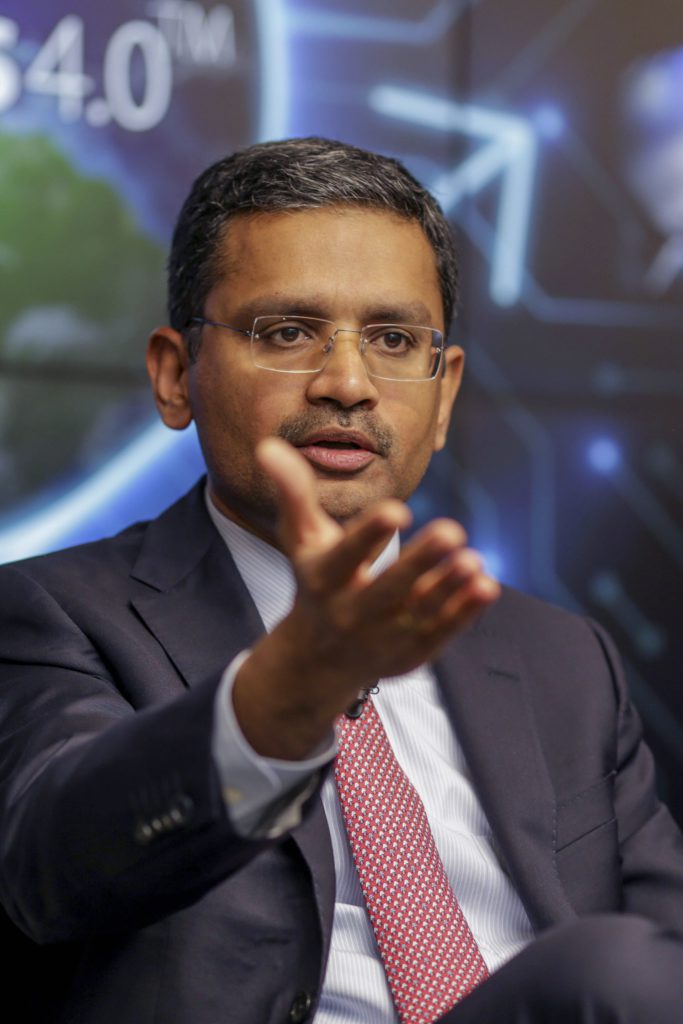
(Bloomberg) — Tata Consultancy Services Ltd.’s chief executive officer says the company can navigate its way through any immediate disruptions to the global economy and tap into long-term demand for its services as its seeks to reach $50 billion in sales by the end of the decade.

TCS, the largest player in India’s $227 billion tech services industry, must deal with a host of challenges, from Covid outbreaks in China that are disrupting supply chains to the war in Ukraine as it upends the geopolitics of Europe. The company also provides tech services and support to thousands of companies in the U.S. and beyond that are adopting hybrid labor strategies, with employees working both from home and the office.

“The long-term demand environment is very strong,” TCS Chief Executive Officer Rajesh Gopinathan told Bloomberg News in an interview at headquarters in Mumbai. “We’re leaning forward, we’re betting on growth.”

Gopinathan, a soft-spoken TCS veteran who joined the company two decades ago and often wears blue formal shirts, is known to be good with numbers and fostering client relationships.

India’s outsourcing industry was built on helping companies replacing their own pricey technology workers with lower cost — and typically higher skilled — specialists from the likes of TCS, Infosys Ltd. and Wipro Ltd. But easy growth from labor arbitrage has largely disappeared, forcing Gopinathan and his peers to move into more sophisticated offerings, such as cybersecurity, cloud computing and artificial intelligence.

TCS last month revamped its internal structure with specialized groups as part of a wider move to win business from startups as well as large global enterprises. That overhaul, Gopinathan said, was executed in less than a month.

“We are extremely agile in the way we reorganize,” he said. “We are more micro-focused on the customer sets that we have and the opportunities we have.”

TCS is Asia’s top outsourcer and a cornerstone of Tata Group, the Indian conglomerate with dozens of companies in everything from salt to automobiles. The tech services company closed out its fiscal year ending in March with revenue of more than $25 billion. 

Rising labor costs are a challenge. Last week, TCS reported a 7.4% increase in fourth-quarter profit to 99.3 billion rupees ($1.3 billion), short of analyst estimates, as expenses to hire and retain talent cut into margins. 

Startups are beginning to compete with giants like TCS for the programmers and developers needed to run their businesses. Some of the newcomers are luring talent with the likes of BMW motorcycles or three-day work week — something the much-larger outsourcers have resisted. 

TCS employs nearly 600,000 people and aims to hire more than 40,000 graduates in the fiscal year through March 2023. Gopinathan calls the current scramble for employees “transitory” and argues that, ultimately, nobody will be able to pay more for talent than TCS because it enjoys the highest structural margins. 

“If you look at this industry, we enjoy the benefit of occupying the high point on the profitability side; everybody else is benchmarked below us,” he said. “So, no, I don’t see a threat to our position.”

Gopinathan, chief financial officer before his promotion, said he does get questions about why TCS is determined to hire and expand, given the apparent challenges in the global economy. 

“I’m getting a lot of debate that everybody else is saying the outlook is bad –how come you are positive? We are reacting to what’s there” he said. 

“That is not to say that we are living in a bubble,” he added. “We are betting on that growth knowing that even if we turn out to be wrong, we will then step back and reset.”

More stories like this are available on bloomberg.com

©2022 Bloomberg L.P.

U.K. Ministers to Soften Clampdown on Tech Deals: Telegraph

(Bloomberg) — The U.K. government plans to dial back on a proposed clampdown on tech acquisitions by its new technology watchdog, bowing to pressure from Silicon Valley, the Telegraph reported.

The Digital Markets Unit within the Competition and Markets Authority will have its powers to block takeovers reined in significantly after the likes of Google and Facebook, as well as British startups, argued that it would hamper investment, the newspaper said, citing anonymous sources.

The regulatory division was set up to curb the market power of tech giants but opponents claimed that the startup scene would be collateral damage of stricter rules. The initial plan was to introduce the unit’s new powers after a series of consultations, the Telegraph said.

“Our pro-competition regime will change the conduct of the most powerful tech firms and protect the businesses and consumers who rely on them right across the economy,” a spokesman for the Department for Digital, Culture, Media and Sport told the Telegraph. “This is about supporting competition and innovation, not stifling it.”

More stories like this are available on bloomberg.com

©2022 Bloomberg L.P.

Close Bitnami banner
Bitnami
