
Bloomberg

Fan Tokens From Manchester City to PSG Disappoint as Boom Fades

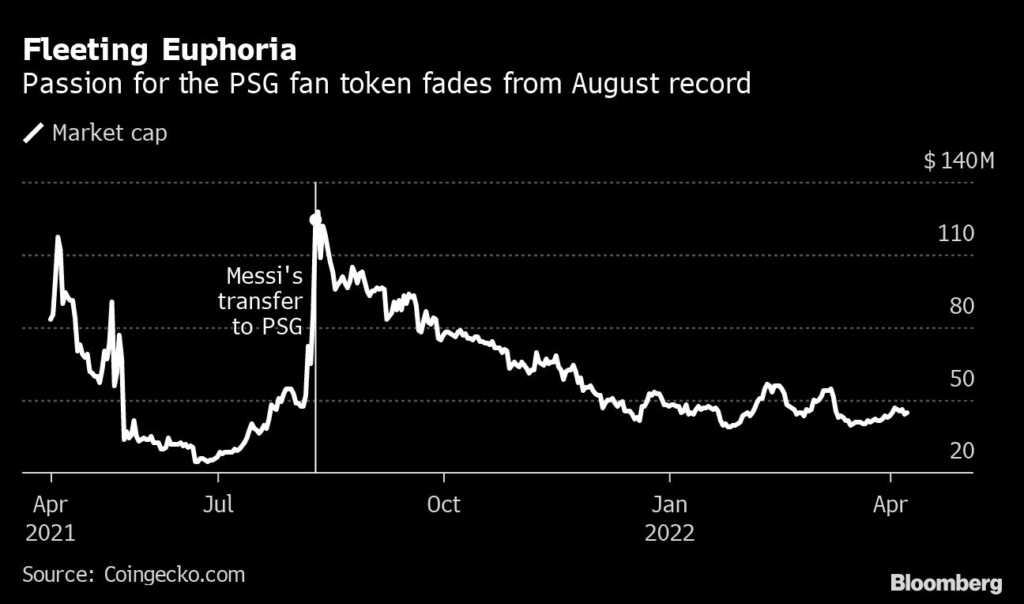
(Bloomberg) — As soon as rumors started buzzing that soccer star Lionel Messi would transfer from FC Barcelona to Paris Saint-Germain in August, Miguel Schweizer decided to buy the French club’s fan token, $PSG, on a hunch that prices would spike. They did – but he didn’t hold the tokens for long.

He sold them a few days later, betting the rally would be short-lived. His trade proved correct: prices were down 34% a week later, and 73% from when the tokens were issued after four months. 

“I would never keep them in my investment portfolio for the long term,” said Schweizer, 29, chief executive officer of Decrypto, a Buenos-Aires based exchange and wallet. “They’re trade opportunities.”

For many hopeful fans, soccer club tokens have proved a disappointment, with prices quickly losing steam within days. It’s now three years since fan tokens started trading in the main crypto exchanges, promising an alternative for clubs to gain financing and for fans to be closer to their favorite teams. 

Both these options have yet to live up to expectation. Clubs that have issued tokens include the likes of Manchester City, SS Lazio, FC Porto, Santos FC, FC Barcelona, AC Milan and Trabzonspor. Some, like FC Arsenal have raised as much as $5.5 million through fan tokens, though most transactions are closer to $2 million. That’s a fraction of these clubs’ expenses. 

Analysts caution that demand for fan tokens quickly goes from euphoria to indifference. The main criticism they make is that these have few tangible benefits for the fans. The Juventus token, for example, allows fans to use the tokens to buy VIP tickets, while the PSG token was used to allow holders to vote on the design for the new team bus an club slogan. 

“The problem with current fan tokens is the clubs do not actively promote them or the utility the tokens have”, said Oliver Bell, CEO and co-founder of XCAD Network, a company that makes tokens for content creators. “The people that are buying them are not necessarily fans of the clubs at all; the only buyers are crypto enthusiasts.”

Meanwhile, the market remains small. The market cap of the sports fan tokens is as high as $491 million and its daily traded volume is $241 million. The biggest 10 fan tokens have an average daily volume of $13 milion, which is only 28% of the daily volume traded on average for the 364 coins listed on Binance, according to CoinMarketCap and Coingecko data.

The world’s largest fan token by market capitalization, Manchester City, has a market capitalization of $56 million and the daily traded volume is under $15 million, according to data from CoinMarketCap.com. Its price is half of what it was issued for. 

Room for Growth

Proponents of fan tokens say it’s too early to assess their success. These coins are not intended to be investment assets, but rather to provide a service, said Alexandre Dreyfus, founder and CEO of Socios.com, a company that partners with clubs to develop the tokens. 

Socios.com has 57 fan token partners, ranging from soccer to Formula 1, up from 20 a year ago, which Dreyfus says indicates growing interest. 

“We’re seeing an uptick in interest from clubs in issuing fan tokens,” he said. “Fans will be able enjoy exclusive games and content and score points that they can redeem for official signed products, free tickets or VIP experiences.”

To promote their use, on April 7, Binance began offering Lazio fan token holders the opportunity to stake, a process that allows owners to earn passive income on the coins without having to sell them. The tokens are used to help validate transactions on the blockchain, with the rewards and fees divided among the participants and the exchange. Binance offered holders 8% of annualized returns when they keep the Lazio tokens locked for 30 days, or 15% if they keep them for 90 days.

Some say they still see a good investment opportunity, even amid low volumes that reflect the wider mood on crypto on high volatility. They point to certain tokens, like PSG’s or Barca’s, which have seen spikes of interest when there’s big news. 

“When the market becomes more bullish, there we will see how the volumes traded in all tokens increase”, said Maximiliano Hinz, Latin America general director of Binance, the world’s largest crypto exchange by traded volume, which has issued four fan tokens.“It’s the free market that governs their prices.” 

More stories like this are available on bloomberg.com

©2022 Bloomberg L.P.
Crypto Payments Frozen Across India, Hitting Trading

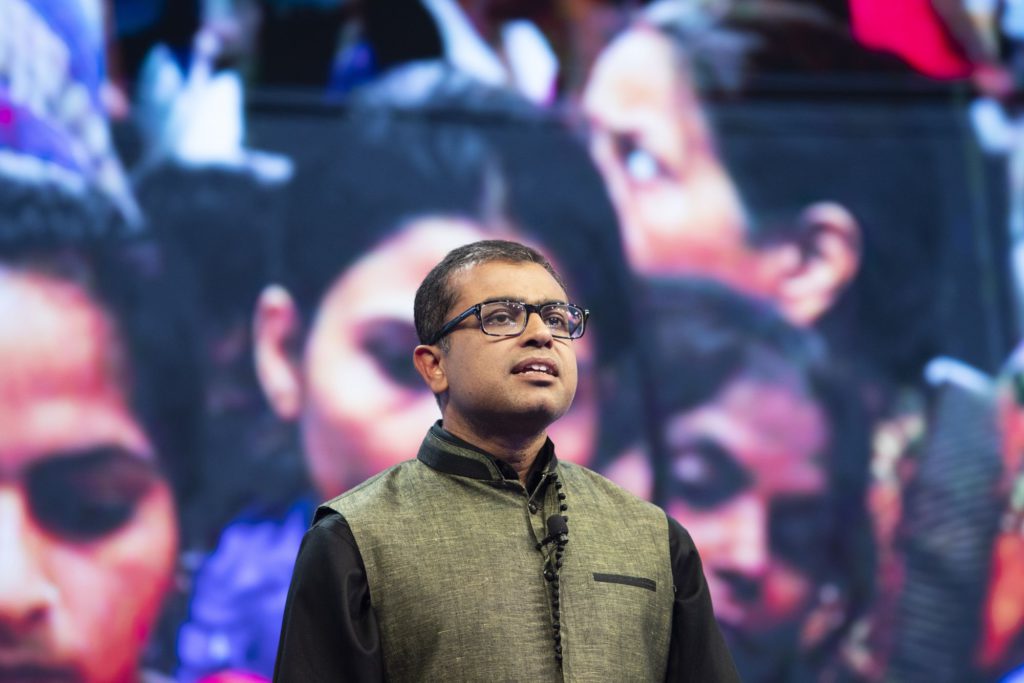
(Bloomberg) — When Surojit Chatterjee walked on stage at a Coinbase Global Inc. conference in Bengaluru, India, on April 7, he had little reason to anticipate the fallout that would shortly ensue. Chatterjee, the company’s chief product officer, told the assembled audience that crypto investors would now be able to use the country’s online retail payments system to transfer funds to its local exchange.

Hours after Chatterjee’s announcement, the central bank-backed entity that runs the system — called United Payments Interface — said it was “not aware” of any crypto exchange using the network. Within three days of the event, Coinbase had halted rupee transfers to its trading app via UPI. 

The abrupt reversal left Coinbase customers without any way of funding their accounts with rupees, dealing a blow to its expansion plans in India. “We are committed to working with NPCI and other relevant authorities to ensure we are aligned with local expectations and industry norms,” a spokesperson for Coinbase said in a statement to Bloomberg on April 11, referring to the National Payments Corporation of India, which operates UPI. 

Coinbase wasn’t the only one affected. Since its announcement, at least four other companies that provide crypto-related trading services have either suspended rupee deposits or seen banks and payment gateways pull support for money transfers onto their platforms, according to executives at the firms and local media reports. Two other exchanges had lost support for rupee deposits from a payment service provider before the incident. 

Industry Slump

Those actions put additional pressure on already falling trading volumes, exchange executives said. The industry is also bracing for a new tax on all crypto transactions above a certain size that will take effect on July 1. The government this month introduced a 30% levy on income from digital asset investments. 

Daily trading volumes on Indian crypto exchanges, which collectively cater to about 15 million people, has tumbled by between 88% and 96% since peaking last year, data from CoinGecko show. WazirX, India’s biggest crypto bourse, saw volumes drop 93% from an October high, according to the data. 

Investors who cash in crypto positions on an exchange can still withdraw their fiat currency. Coinbase already offered trading in crypto pairs in India, which doesn’t require customers to deposit rupees into their accounts. 

“After the Coinbase announcement, whoever was providing support to the industry has withdrawn support,” said Vikram Subburaj, chief executive officer of crypto exchange Giottus, in an April 12 interview. Giottus’s payment gateway stopped working with it, he said, declining to name the company. Trading volume on the platform plunged about 70% as a result, Subburaj said. 

Local rival BuyUcoin has also halted payments via UPI after the notice from NPCI, said co-founder Atulya Bhatt. 

Uneasy Relationship

NPCI, an initiative by the central bank and the Indian Banks’ Association, is an umbrella organization for retail payments and settlements in the country of 1.4 billion people. It didn’t respond to requests for comment. 

CoinSwitch Kuber, a Bengaluru-based cryptocurrency exchange, temporarily halted accepting rupee deposits via UPI and other banking channels, the Economic Times reported April 12. CoinSwitch didn’t respond to an emailed request for comment.  

Crypto-trading firms in India have had an uneasy relationship with banks and payment services providers since 2018, when the central bank issued a directive to lenders to stop working with digital asset companies. While the Supreme Court in 2020 reversed that directive, some banks remained hesitant to work with the crypto sector — in part because top officials at the Reserve Bank of India have kept calling publicly for cryptocurrencies to be banned.

As a result of the wariness from the traditional banking sector, payment gateways like MobiKwik have become a crucial link between crypto exchanges and clients seeking to deposit fiat currency. Without their cooperation, investors are limited to using methods like transferring money to the exchanges’ current accounts, a time-consuming manual process prone to errors. Coinbase doesn’t offer that option in India. 

Peer-to-Peer

Investors can also engage in peer-to-peer trading, where transfers of fiat is handled directly between the counterparties, although that represents a small share of the market in India.   

One payment service provider stopped working with crypto exchanges last year after being told by banks to do so, its CEO said, asking that he and his company not be named due to the sensitivity of the issue. 

MobiKwik, a local payment service provider, stopped working with Indian crypto exchanges on April 1, according to a report by news outlet Moneycontrol. MobiKwik declined to comment. WazirX and CoinDCX, another Indian crypto exchange, have both announced that rupee deposits via MobiKwik have been temporarily suspended. 

Singled Out

Restricting payment access without legal grounds for doing so adds up to unfairly singling out the digital asset industry, said Jaideep Reddy, a lawyer at Nishith Desai Associates for specializes in technology.

“If a bank denies service to a crypto business, there has to be a valid reason other than the mere fact that it’s a crypto business,” Reddy said. “Banks have to be transparent, as account holders also have a charter of rights which includes transparency from the service provider.” 

Edul Patel, co-founder and CEO of algorithmic crypto trading firm Mudrex, said payment gateways in India started withdrawing support after the Coinbase episode. That happened to Mudrex as well, Patel said in an April 12 interview, declining to name its partner.  

The moves didn’t just impact trading, he said: Inflows into Coin Sets, a mutual fund-like crypto product the Y Combinator-backed startup offers, fell by roughly half in the previous two to three days.  

“While exchanges around the world are innovating on Web 3.0, Indian exchanges are busy finding the next payment provider,” Subburaj of Giottus said.

(Corrects to drop reference to Juspay being a payment gateway in the 13th paragraph.)

More stories like this are available on bloomberg.com

©2022 Bloomberg L.P.

China’s Zhengzhou Locks Down Areas Near Major IPhone Plant

(Bloomberg) — The Chinese city of Zhengzhou locked down some areas near Foxconn Technology Group’s main iPhone manufacturing base, with state media reporting operations remain normal amid concern of further trouble for Apple Inc.’s supply chain. 

Local authorities announced late Friday they are placing some areas in the Zhengzhou Airport Economy Zone under quarantine effective immediately, according to a statement on its official WeChat account. People in the area will not be permitted to leave, according to the statement.  

The Zhengzhou Airport Economy Zone is home to the world’s largest iPhone assembly plant, where staff have been ordered to undergo mandatory Covid-testing in recent days. Foxconn and Apple didn’t immediately reply to emailed queries about whether the lockdown will affect operations.

The China Securities Journal reported Saturday that Foxconn’s plants in the area are operating as usual, citing unidentified company executives.

IPhone City Staff in China to Undergo Mandatory Virus Tests

The fresh controls mark a widening of curbs in China, which is battling its worst Covid-19 outbreak in the past two years. Major cities from Shanghai to Guangzhou have already imposed restrictions on their citizens, fueling burgeoning anger against the government. 

Fellow Apple suppliers Pegatron Corp. and Quanta Computer Inc. have halted production in eastern China to comply with local Covid-related restrictions.

(Updates with state media report from first paragraph)

More stories like this are available on bloomberg.com

©2022 Bloomberg L.P.

A Quick Way to Cut Carbon From Your Cocktail

(Bloomberg) — Decades of marketing and overpackaging products means there’s plenty of low-hanging fruit in the effort to make the beverage industry greener. And while many of the efforts to reduce waste have concentrated on recycling the billions of plastic containers, aluminum cans and glass bottles the industry uses each year, one of the easiest and most cost-effective ways to cut emissions, energy and consumption of raw materials is to rethink the way drinks are packaged and transported.

Take Singapore-based EcoSpirits, which has introduced a change to the way alcohol is shipped and sold that could eliminate an average of 60% to 90% of the carbon dioxide associated with the traditional packaging and distribution of premium spirits, according to a study performed by Deloitte. Its system has drawn partnerships with iconic hotels such as London’s Savoy and Singapore’s Raffles Hotel as well as global drinks brand Pernod Ricard.

Here’s how it works: instead of putting the liquid into glass bottles and then shipping them around the world, the producer transports the liquid in bulk. Once it reaches the local market, the drinks are decanted into smaller, reusable containers called ecoTotes that are sent to the venue, such as a bar or an hotel. There the drink is put into the bottles that consumers are used to, or dispensed directly into a glass via an integral tap. The empty containers are returned to the processing plant for refilling. EcoSpirits estimates each ecoTote could eliminate more than 1,000 single-use glass bottles over its lifetime.

With consumer pressure growing, producers of luxury alcohol brands are looking for solutions like this to help them adopt so-called circular models that reuse materials and reduce waste and pollution. Many of the strategies adopted so far are based on reducing the size and weight of bottles and cans and stepping up efforts to get consumers to recycle containers. But reducing the use of cans and bottles altogether has added benefits in reducing shipping emissions and energy use.

“The transition to circular packaging technology is one of the most important movements in the spirits industry today,” Paul Gabie, ecoSpirits chief executive officer, said in an interview. “Circular is one of the most effective ways for our industry to do its part in supporting the United Nations Sustainable Development Goals and the global drive to net-zero carbon emissions.”

EcoSpirits is one of several companies offering beverage makers ways to slim their shipment profiles. Colorado-based BrewVo has developed a way to extract water and alcohol from beer before shipment and reconstitute it at the destination. London-based Packamama makes lie-flat wine bottles that are 87% lighter than traditional cylindrical glass ones and 40% smaller, so almost twice the amount of product can be shipped in the same space, according to the company. It said sales volumes rose more than 20-fold in 2020 and growth has continued despite the pandemic.

Simple changes can make a big environmental difference in food and beverages, said Santiago Navarro, Packamama’s founder and chief executive officer. “The simplicity of the innovation is so impactful that many see it as obvious once implemented and even question why it was not done before,” Navarro said in an email. “It is important that we challenge the status quo, and rethink outdated technologies by questioning base assumptions.”

EcoSpirits says its program to reduce single-use glass waste saves 30 grams of carbon emissions per serve.

“Leveraging tech for ESG can be transformative for our planet,” said Sui Ling Cheah, ecoSpirits’ new chairman and an operating partner at venture-capital firm Wavemaker Partners, who has decades of investment-banking experience at the likes of BNP Paribas and JPMorgan. “Their ability to create significant impact through innovation and technology — on top of a robust and sustainable business model — is really impressive.”

One of the early adopters of EcoSpirits’ technology is Singapore’s Raffles Hotel, which has been using the technology since 2018, the year the company started, for the hotel’s iconic Singapore Sling — a mixture of gin, cherry liqueur, Bénédictine, curaçao, pineapple juice, lime juice, grenadine and bitters invented by bartender Ngiam Tong Boon in 1915.

By the end of last year, EcoSpirits was licensed in 18 countries, from the U.S. and U.K. to Norway, Germany, Vietnam and the Seychelles. It’s planning to expand into around 12 more this year, including the Philippines, the Netherlands, Israel and Mexico.

The drinks industry still has some issues on the environmental front, regardless. Spirits manufactured in one location might be flown anywhere else in the world. The sourcing of ingredients can be a drain on the food-and-beverage supply chain, too. And while the likes of ecoSpirits and Packamama may be changing some practices, there’s still an awful lot of single-use glass, and packaging and container space being used between the creation of the product and the moment it hits a customer’s mouth.

Still, while it’s unlikely be emissions-free anytime soon, there are ways it’s trying. EcoSpirits, for example, has a Forest Program, where one tree is planted for every cycle of an ecoTote through the network, saving about 120 grams of carbon per serving, according to the firm.

A partnership with The Savoy in London led to the Co-Naissance Cocktail in mid-2021, developed in collaboration with the hotel’s Senior Mixologist Cristian Silenzi. It contains Portobello Road Gin in the ecoTote, re-carbonated Champagne, and two unique locally foraged London ingredients, elderflower from Little Venice and fig leaves from Embankment Gardens. In addition, one native tree was planted in Borneo for each cocktail served during the collaboration period.

Penicillin in Hong Kong, which won the Ketel One Sustainable Bar Award among Asia’s 50 Best Bars in 2021, partnered with ecoSpirits for its signature “One Penicillin, One Tree” cocktail and promotes its relationship with the startup on its website.

Last month, ecoSpirits announced its partnership with Pernod Ricard, one of the world’s largest spirits and wine companies, which will begin a pilot program to make its brands Absolut Vodka, Beefeater Gin and Havana Club Rum available in ecoTotes to as many as 80 bars, restaurants and hotels in Singapore and Hong Kong. That should reduce the carbon emissions of packaging and distribution for the participating brands by an average of 66%, ecoSpirits estimates.

“This new pilot program is only the start of our long-term sustainability journey,” Hermance De La Bastide, Pernod Ricard’s vice president of corporate affairs in Asia, said in an email. She said the drinks-maker was looking to expand the program to other markets in Asia and beyond.

More stories like this are available on bloomberg.com

©2022 Bloomberg L.P.
Putin’s Ruble Standoff With Europe Risks De Facto Gas Embargo

(Bloomberg) — The European Union and Russia are at risk of triggering a de facto embargo on Russian gas after the bloc’s lawyers drafted a preliminary finding that the mechanism President Vladimir Putin is demanding for payment in rubles would violate EU sanctions.

Countries including Germany are still scrutinizing an initial EU assessment that Putin’s ruble demand would breach sanctions imposed over Russia’s invasion of Ukraine. The Netherlands has told its energy firms to refuse the new payment system in light of the EU legal analysis.

Russia could still provide clarifications or adjustments to its decree that could affect how the EU and companies move forward. Moscow has been pulling in roughly 1 billion euros a day from Europe in energy purchases, which has helped insulate it from the impact of EU sanctions.

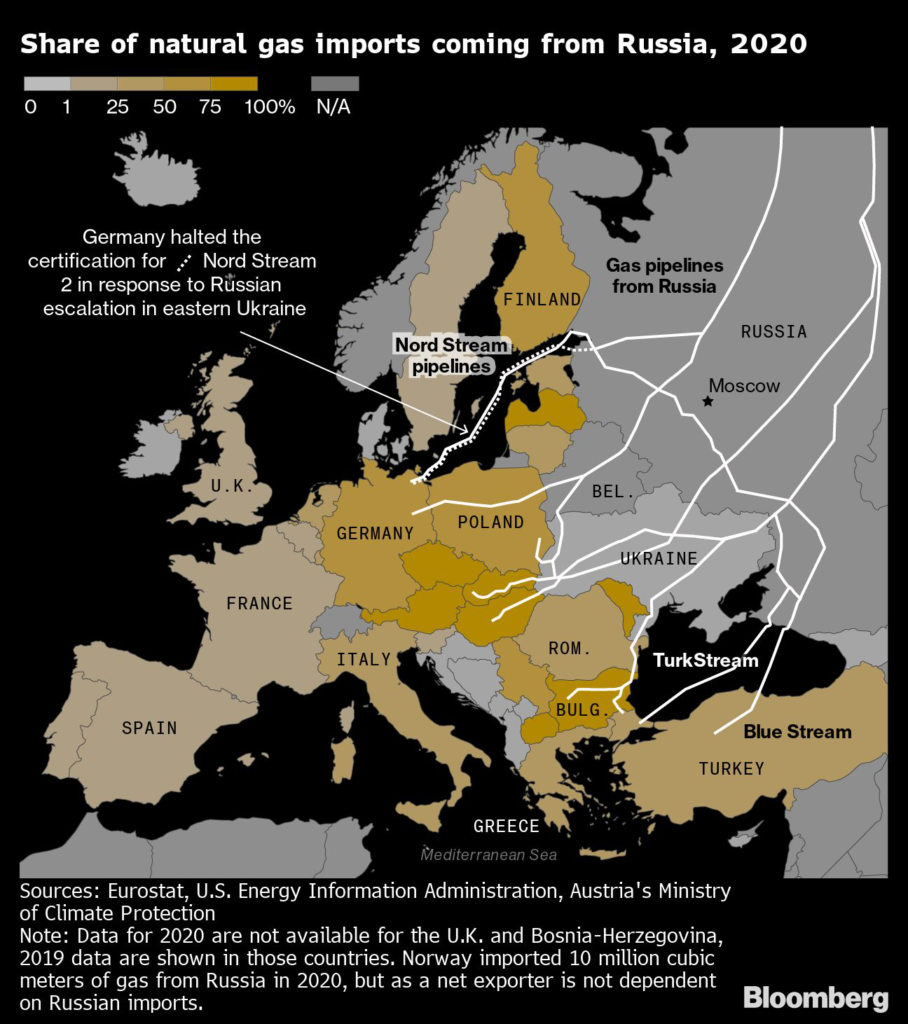
If Russia follows through on its threat to cut off gas supplies to buyers that don’t comply, it poses a serious threat for the EU, which gets 40% of its gas from Russia. The bloc is scrambling to find alternative energy sources as it comes to terms with the outsize leverage Moscow has over its security, but the transition will take time. The EU is working on its sixth sanctions package, but moves to target Russian energy have been fraught given its dependence. 

Germany could face a 220 billion-euro ($238 billion) hit to output over the next two years should the gas supply be cut immediately, according to a joint forecast of economic institutes. That’s the equivalent of a 6.5% annual output cut and it could tip the country into a recession of more than 2% next year. 

On March 31, Putin issued a decree stipulating that “unfriendly” buyers of its gas open two accounts, one in a foreign currency and one in rubles, with Gazprombank. The Russian bank would convert the foreign currency payments into rubles before transferring the payment to Gazprom PJSC, the state-owned gas company. 

A preliminary analysis by lawyers for the European Commission, the EU’s executive arm, found that payments using this system would violate the bloc’s sanctions, according to a person familiar with the matter. Lawyers for the European Council, the institution composed of the leaders of the 27 member states, concurred with the commission’s assessment, another person said.   

The commission relayed the analysis to member states this week, adding that governments would need to inform the 150 companies that hold gas contracts with Russia, the person said. The EU also said it plans to provide further guidance on the situation to aid countries and companies. 

The Netherlands this week told its companies to refuse the new gas-payment terms being demanded by Russia. “The Dutch government agrees with the conclusion of the European Commission,” a spokesperson for the Dutch Ministry of Economic Affairs and Climate Policy told Bloomberg. “This means it’s not allowed for Dutch companies to agree with these terms.”

New Sanctions Package

Gazprom’s gas exports to the Netherlands are relatively low by regional standards, with supplies to the country representing only about 4% of the Russian gas giant’s shipments to the EU and Turkey in the first half of last year.

German Economy Minister Robert Habeck acknowledged the commission report to Politico, adding, “We cannot allow any circumvention of the sanctions through back doors.” He didn’t, however, say if his government agreed with the assessment, nor did he elaborate on what action Germany would take. 

Read more: Germany’s Faustian Pact With Russia Haunts Industrial Giants

Germany is particularly exposed, since half of its gas and coal comes from Russia.

The commission is working on a sixth sanctions package that could include restrictions on some oil imports and goods, according to a person familiar with the work, but member states including Germany, Austria and Hungary have expressed reservations on a full embargo. Even then, it’s unlikely the commission will present anything concrete until after the second round of the French election on April 24, two separate officials said. 

More stories like this are available on bloomberg.com

©2022 Bloomberg L.P.
Musk Uses Inverted Smile Emoji on 2017 Tweet About Twitter Price

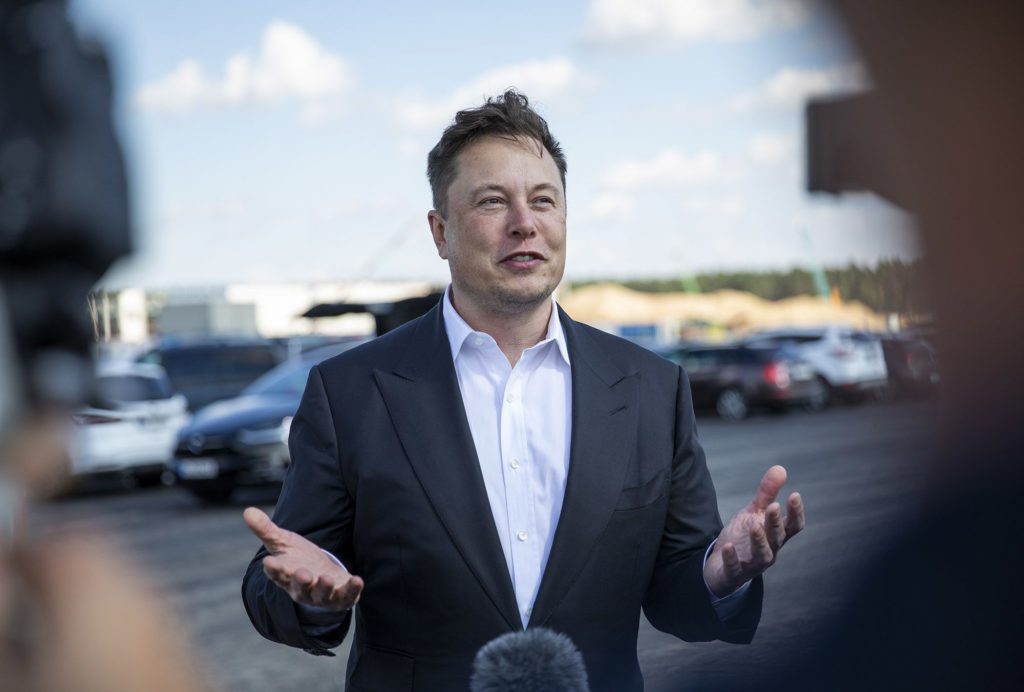
(Bloomberg) — Elon Musk used an upside-down smile emoji on Saturday in a response to a tweet he sent more than four years ago about how much it would cost to buy Twitter Inc.

The Tesla Inc. chief executive officer, who earlier this week launched a $43 billion hostile takeover offer for the social media company, was commenting on a tweet thread from December 2017 in which he expressed his admiration for Twitter and asked how much it cost to buy.

The “upside-down smile” emoji is used as an indication of frustration or bemused resignation, according to emojipedia. Twitter on Friday adopted a so-called “poison pill” provision in an attempt to thwart Musk’s takeover attempt.

To view the source of this information click here

More stories like this are available on bloomberg.com

©2022 Bloomberg L.P.
Bluesky Funding to Be Reviewed If Twitter Owners Change: Dorsey

(Bloomberg) — Funding for the Bluesky initiative would need to be re-assessed if ownership of Twitter Inc. changed, Jack Dorsey, founder of the social-media company, said in tweet.

“Twitter doesn’t own it,” Dorsey wrote in response to a comment about Bluesky. Still, “Funding would need to be reassessed.”

Progress on Bluesky has been slow, he said. The initiative is aimed at developing a protocol to enable multiple social networks to interact.

Elon Musk earlier this week launched a $43 billion hostile takeover bid for Twitter. The company responded by adopting a so-called “poison pill” provision to help ward off the proposal.

More stories like this are available on bloomberg.com

©2022 Bloomberg L.P.
Crypto Payments Are Frozen Across India, Hitting Trading

(Bloomberg) — When Surojit Chatterjee walked on stage at a Coinbase Global Inc. conference in Bengaluru, India, on April 7, he had little reason to anticipate the fallout that would shortly ensue. Chatterjee, the company’s chief product officer, told the assembled audience that crypto investors would now be able to use the country’s online retail payments system to transfer funds to its local exchange.

Hours after Chatterjee’s announcement, the central bank-backed entity that runs the system — called United Payments Interface — said it was “not aware” of any crypto exchange using the network. Within three days of the event, Coinbase had halted rupee transfers to its trading app via UPI. 

The abrupt reversal left Coinbase customers without any way of funding their accounts with rupees, dealing a blow to its expansion plans in India. “We are committed to working with NPCI and other relevant authorities to ensure we are aligned with local expectations and industry norms,” a spokesperson for Coinbase said in a statement to Bloomberg on April 11, referring to the National Payments Corporation of India, which operates UPI. 

Coinbase wasn’t the only one affected. Since its announcement, at least four other companies that provide crypto-related trading services have either suspended rupee deposits or seen banks and payment gateways pull support for money transfers onto their platforms, according to executives at the firms and local media reports. Two other exchanges had lost support for rupee deposits from a payment service provider before the incident. 

Industry Slump

Those actions put additional pressure on already falling trading volumes, exchange executives said. The industry is also bracing for a new tax on all crypto transactions above a certain size that will take effect on July 1. The government this month introduced a 30% levy on income from digital asset investments. 

Daily trading volumes on Indian crypto exchanges, which collectively cater to about 15 million people, has tumbled by between 88% and 96% since peaking last year, data from CoinGecko show. WazirX, India’s biggest crypto bourse, saw volumes drop 93% from an October high, according to the data. 

Investors who cash in crypto positions on an exchange can still withdraw their fiat currency. Coinbase already offered trading in crypto pairs in India, which doesn’t require customers to deposit rupees into their accounts. 

“After the Coinbase announcement, whoever was providing support to the industry has withdrawn support,” said Vikram Subburaj, chief executive officer of crypto exchange Giottus, in an April 12 interview. Giottus’s payment gateway stopped working with it, he said, declining to name the company. Trading volume on the platform plunged about 70% as a result, Subburaj said. 

Local rival BuyUcoin has also halted payments via UPI after the notice from NPCI, said co-founder Atulya Bhatt. 

Uneasy Relationship

NPCI, an initiative by the central bank and the Indian Banks’ Association, is an umbrella organization for retail payments and settlements in the country of 1.4 billion people. It didn’t respond to requests for comment. 

CoinSwitch Kuber, a Bengaluru-based cryptocurrency exchange, temporarily halted accepting rupee deposits via UPI and other banking channels, the Economic Times reported April 12. CoinSwitch didn’t respond to an emailed request for comment.  

Crypto-trading firms in India have had an uneasy relationship with banks and payment services providers since 2018, when the central bank issued a directive to lenders to stop working with digital asset companies. While the Supreme Court in 2020 reversed that directive, some banks remained hesitant to work with the crypto sector — in part because top officials at the Reserve Bank of India have kept calling publicly for cryptocurrencies to be banned.

As a result of the wariness from the traditional banking sector, payment gateways like Juspay and MobiKwik have become a crucial link between crypto exchanges and clients seeking to deposit fiat currency. Without their cooperation, investors are limited to using methods like transferring money to the exchanges’ current accounts, a time-consuming manual process prone to errors. Coinbase doesn’t offer that option in India. 

Peer-to-Peer

Investors can also engage in peer-to-peer trading, where transfers of fiat is handled directly between the counterparties, although that represents a small share of the market in India.   

One payment service provider stopped working with crypto exchanges last year after being told by banks to do so, its CEO said, asking that he and his company not be named due to the sensitivity of the issue. 

MobiKwik, a local payment service provider, stopped working with Indian crypto exchanges on April 1, according to a report by news outlet Moneycontrol. MobiKwik declined to comment. WazirX and CoinDCX, another Indian crypto exchange, have both announced that rupee deposits via MobiKwik have been temporarily suspended. 

Singled Out

Restricting payment access without legal grounds for doing so adds up to unfairly singling out the digital asset industry, said Jaideep Reddy, a lawyer at Nishith Desai Associates for specializes in technology.

“If a bank denies service to a crypto business, there has to be a valid reason other than the mere fact that it’s a crypto business,” Reddy said. “Banks have to be transparent, as account holders also have a charter of rights which includes transparency from the service provider.” 

Edul Patel, co-founder and CEO of algorithmic crypto trading firm Mudrex, said payment gateways in India started withdrawing support after the Coinbase episode. That happened to Mudrex as well, Patel said in an April 12 interview, declining to name its partner.  

The moves didn’t just impact trading, he said: Inflows into Coin Sets, a mutual fund-like crypto product the Y Combinator-backed startup offers, fell by roughly half in the previous two to three days.  

“While exchanges around the world are innovating on Web 3.0, Indian exchanges are busy finding the next payment provider,” Subburaj of Giottus said.

(Updates with crypto income tax in fifth paragraph.)

More stories like this are available on bloomberg.com

©2022 Bloomberg L.P.
China’s Commitment to Covid-Zero Undermines Support for Market

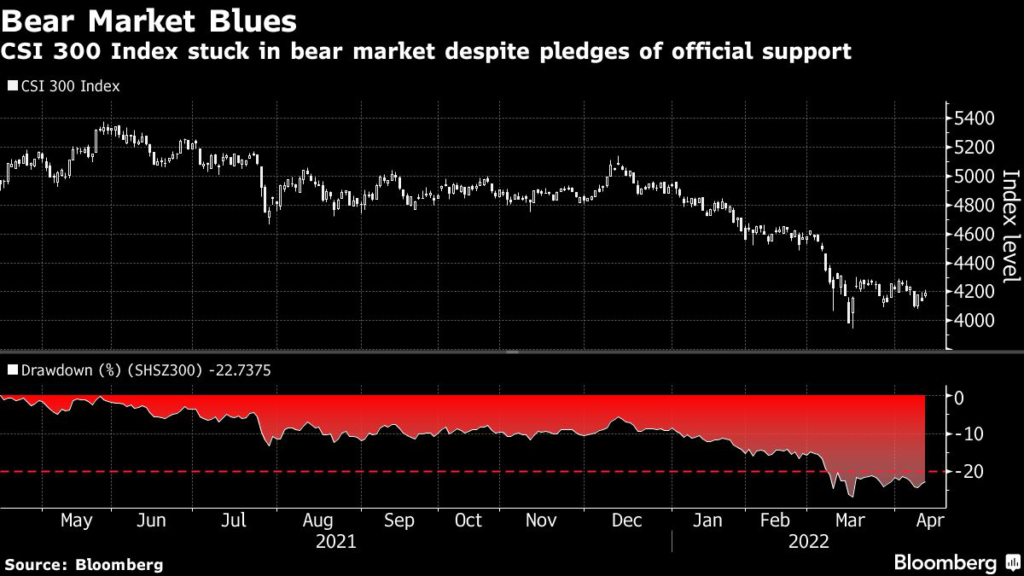
(Bloomberg) — Patience is wearing thin among China’s beleaguered stock investors as worries about the impact of the latest Covid upsurge eclipse promises of official market support.

Authorities have somewhat delivered on last month’s pledges by extending a lifeline to the property sector, committing to ease monetary policy, shelving plans for a real-estate tax, restarting some gaming approvals and removing a key hurdle that threatened to pull ADRs listed in New York. But the market reaction has been a damp squib as all eyes turn to the effects of Covid Zero.

The stunning reversal in the CSI 300 Index mid-March has petered out as lockdowns to contain the nation’s worst Covid outbreak since early 2020 strain the economy. The benchmark remains mired in a bear market and is little changed since March 16, when stocks roared back from a historic rout after the State Council first vowed to keep the market stable.

“The market desperately wants economic activity to return to normal,” said Wang Zhuo, fund manager at Shanghai Zhuozhu Investment Management Co. “Though unleashing more liquidity at this stage would help, that would not be as potent as easing of virus curbs.”

China’s central bank gave lenders a modest cash boost on Friday and refrained from cutting interest rates, taking a cautious approach with monetary easing even as the Covid outbreak takes a toll on the economy.

READ: China’s Central Bank Takes Modest Easing Path Despite Covid Toll

Zero Problems

The Covid-Zero policy has pressured everything from manufacturing and trade to inflation and food prices. President Xi Jinping has said his government will stick to the approach even as a lockdown in the main financial hub Shanghai has generated escalating anger, spawning some of the most anti-government criticism in years on social media.

Trader focus on Covid was encapsulated by a 2% surge in the CSI on Tuesday, after social media chatter that some cities had started a pilot program including shortening of quarantines — a potential gradual exit from current measures. That proved more of a boon to stocks than a State Council meeting voicing support to consumption and pledging additional monetary stimulus.

“What is key is how would they do away with the Covid-Zero strategy,”  said Kerry Goh, chief investment officer at Kamet Capital Partners Pte. “That’s the fundamental difference between China and rest of the world. While the strategy is effective, it is painful to China and other nations.”

Support Pledges

Measures to shore up the teetering property sector look to be having the strongest market impact. A gauge of real estate shares has soared over 40% from its bottom in March and is now in positive territory for the year.

The property market is at a critical juncture with defaults setting another record pace and the country’s fourth-largest builder failing to make a bond payment on time.

Premier Li Keqiang last month announced plans to set up a financial stability fund to “defuse risks and potential dangers” as well as adopt measures to keep home prices stable. But Beijing is yet to loosen debt metrics imposed on developers.

READ: China Developer Rally Confronts Impatience for Policy Plan

Tech Wreck

Meanwhile, investors in Chinese internet stocks remain wary. While the Hang Seng Tech Index has rallied almost 25% from its March low, the shine is starting to wear off. A restart of gaming approvals failed to extend its rebound, as traders wager Beijing’s regulatory crackdown isn’t over yet.

China kicked off a formal campaign this month to rein in potential abuse of algorithms by internet giants to serve up advertisements. A top anti-graft watchdog was said to be involved in a probe into Alibaba Group Holding Ltd.’s financial arm. And how Beijing will cooperate with Washington to eliminate ADR delisting risk is also unclear.

“Policies have trickled out in drips and drabs, making it difficult for investors to see the end of this regulatory phase”, said Louis Lau, fund manager at Brandes Investment Partners. “Liu He said to introduce more predictable regulations, but if you don’t say what else is going to be regulated, how can it be predictable?”

READ: China Ends Game Freeze by Approving First Titles Since July

Summer Relief

But beyond sectors, investors looking for a recovery in the broader market see China getting a grip on the coronavirus as the key catalyst.

“Lifting lockdowns in Shanghai may take some time because the virus has already spread quite a bit but in other cities, we should see clear improvements if they have lockdowns for a week to ten days,” said Naoto Saito, chief researcher at Daiwa Institute of Research in Tokyo. “So while the economic sentiment may be very poor this month, we could see a bottom-out some time in the April-June quarter.”

More stories like this are available on bloomberg.com

©2022 Bloomberg L.P.

Twitter Brings on JPMorgan as Adviser Alongside Goldman

(Bloomberg) — Twitter Inc. has brought on a second investment bank, JPMorgan Chase & Co., to help it respond to Elon Musk’s hostile bid, according to people familiar with the matter.

The largest U.S. bank started work recently to assist Twitter in talks with potential buyers, the people said, asking not to be identified because the matter is private. 

Representatives for Twitter and JPMorgan declined to comment. 

Besides Musk’s offer, Twitter has been fielding takeover interest from other parties, including technology-focused private equity firm Thoma Bravo, according to one of the people familiar. The New York Post reported Thoma Bravo’s interest on Thursday. 

A representative for Thoma Bravo declined to comment.

In bringing on JPMorgan, Twitter is working with a bank that hasn’t been afraid to wrangle with Musk. JPMorgan and Musk’s electric vehicle company Tesla Inc. have been embroiled in lawsuits. 

They are suing each other over stock transactions, some that are linked to Musk’s tweet in 2018 that he had secured the funding to take Tesla private, an effort that was given up weeks later. The two sides are scheduled to appear in court next week.

JPMorgan is the latest Wall Street heavyweight to become involved with Musk’s quest to buy Twitter, and joins Goldman Sachs Group Inc. in helping deal with the 50-year-old billionaire. Morgan Stanley is working with Musk.

Missing Out

JPMorgan’s involvement is also a blow to the boutique investment banks, who have been increasingly competing for market share against the bulge brackets. 

Twitter was advised by boutique advisory firm Allen & Co. in 2020 when the company was tussling with activist investor Elliott Investment Management, according to data compiled by Bloomberg.

This time around, no boutique investment bank appears to be involved although companies tend to add on more advisers as transactions drag on.

Goldman, which has been historically close to Musk, including being the lead bank in 2018’s failed attempt to take Tesla private, was conflicted from advising the billionaire due to its longstanding relationship with Twitter. 

Twitter adopted a so-called poison pill on Friday, a measure to help shield it from Musk acquiring more of the company. The move could buy the board more time to decide how to proceed.

(Adds BI comment, court meeting next week in sixth paragraph)

More stories like this are available on bloomberg.com

©2022 Bloomberg L.P.

Close Bitnami banner
Bitnami