
Bloomberg

Revolut Seeks Rapid Growth in Asia as Regulators Increase Scrutiny

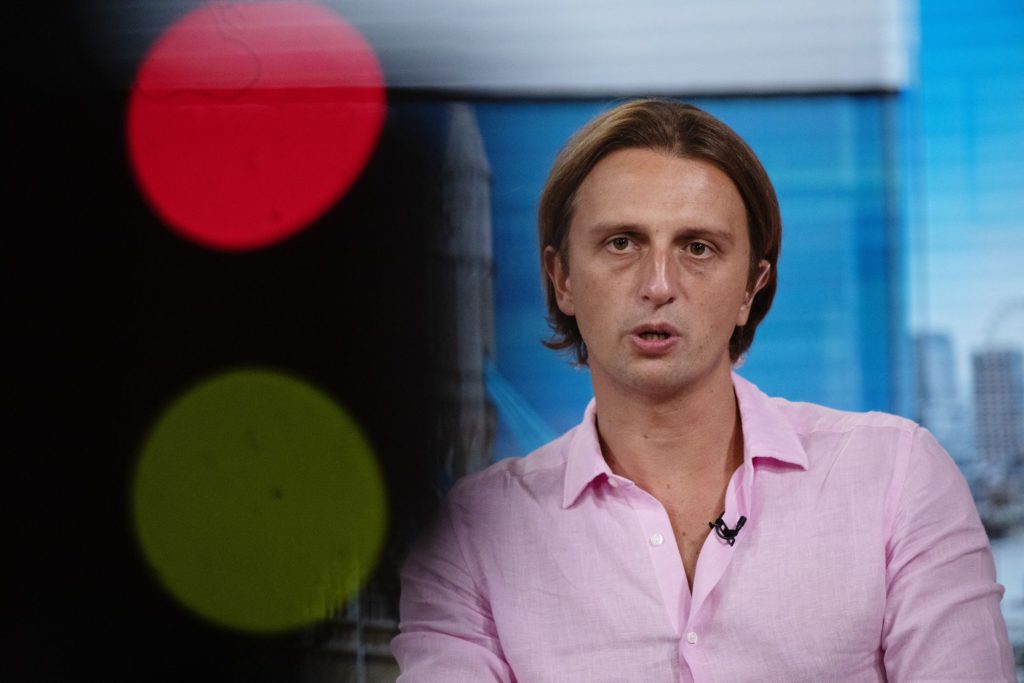
(Bloomberg) — Revolut Ltd., one of the UK’s fastest-growing startups, is betting it can sustain its breakneck pace in Asia, even as it comes under greater scrutiny from regulators at home and abroad.

Months after a run-in with Japan’s financial watchdog, the fintech startup is now in talks about the regulatory approvals necessary to service small-to-medium-sized businesses in the world’s No. 3 economy next year, according to founder and Chief Executive Officer Nik Storonsky.

Revolut, which was valued at $33 billion in its fundraising round last year, is targeting Japanese exporters looking to cut international money transfer fees in a country that still lags behind in cashless payments. It wants to reach a million users in Japan — a key step to hitting a target of at least 10 million customers in Asia by end-2025. The company says it now has about 80,000 users in Japan and 600,000 users in all of Asia.

“From a competition point of view, Japan’s a very attractive market,” Storonsky said in an interview with Bloomberg News in Tokyo. The country’s top banks “don’t really provide modern services.” Cashless payments comprised 30% of all transactions in Japan in 2020, compared with 94% in South Korea and 56% in the US, according to the Payments Japan Association.

So far, the seven-year-old app has been off to a rocky start in a country whose complicated regulations have flummoxed new and old financial players alike. 

Japan’s Financial Services Agency slapped Revolut’s 40-person local unit with a business improvement order in September, saying there were “serious problems” in its control measures. The unit outsourced many of its services such as transaction verification to the parent company, was unaware that such services were then outsourced further and was unable to provide oversight, the administrative order said. 

Revolut now has increased checks to make sure that it meets compliance requirements in each country in which it operates, Storonsky said. In Japan, Revolut plans to add 10 more people over the next year. About half of its existing staff in Japan is now devoted to risk and compliance, according to Storonsky.

“Every single country was quite ad hoc. And when things are ad hoc, certain things are being missed,” Storonsky said of the firm’s early days. “But now, launching in a country is a much more robust process.”

Calling Asia “a huge opportunity,” Storonsky said the company helps customers save money with its cheaper fees and instant peer-to-peer money transfers. The one million target for Japan — where it went online two years ago — “is definitely possible if you look at the trajectory in Europe,” he said. 

Launched in 2015 as a prepaid card offering cheap foreign-exchange fees, Revolut says it now has 25 million customers, primarily in Europe, with a goal to grow four-fold in three years. In the Asia-Pacific region, Revolut operates in Australia and Singapore and is considering expanding into New Zealand, India and the Philippines.

Backed by SoftBank Group Corp.’s Vision Fund 2, which holds a roughly 2% stake, Revolut has no immediate plan to go public or raise money, as the business turned profitable last year, Storonsky said. 

More stories like this are available on bloomberg.com

©2022 Bloomberg L.P.

China Adjusts Covid Restrictions in City With Key iPhone Plant

(Bloomberg) — The Chinese city of Zhengzhou shuttered hundreds of buildings and apartment blocks hours after lifting broader lockdown measures, as officials strive to make their Covid controls more targeted in line with Beijing’s directives. 

The city, home to Apple Inc.’s largest manufacturing site in China, said late Tuesday that it was lifting a lockdown of its main urban areas put in place five days ago as Covid cases climbed. Authorities then issued a lengthy list of buildings that would be declared high risk spanning the greater Zhengzhou region, which means they will continue to be subject to lockdown-style curbs. 

The shift comes after China’s top health officials in Beijing reinforced an order for local cadres to avoid excessive curbs in containing the virus, following weekend protests where demonstrators took to the streets in several major cities in opposition to the stringent Covid Zero policy. 

As of Nov. 30, Zhengzhou will remove so-called mobility controls — a euphemism for lockdown — and replace them with “normal Covid-combating measures,” according to a post on the local government’s official WeChat account. Businesses will be allowed to resume operations in an orderly manner, and people outside of the high-risk areas won’t be subject to regular mandatory Covid tests as long as they don’t leave home. 

Beijing is urging local authorities to adhere to a 20-point playbook for virus control issued just over two weeks ago after a meeting of the Politburo Standing Committee, China’s top leadership body. While the guidelines caution against broader lockdowns and excessive mass testing, officials on the ground have struggled to control outbreaks in a more targeted way — instead reverting to the cruder, wider measures of old. 

Read more: China’s Lockdowns Surge in Week Since Covid Policy Adjusted

Tough Task

Zhengzhou has adjusted its restrictions a number of times over the past few weeks, with tensions at the vast Foxconn Technology Group factory known as “iPhone City” putting its response in the global spotlight. A lockdown of the district around the plant was lifted Nov. 9, and replaced with a web of high-risk areas that included the factory, which is currently in a so-called closed loop to keep operating. Two weeks later, on Nov. 24, authorities locked down Zhengzhou’s main urban areas as cases swelled.  

The city’s experience shows the difficulty officials have meeting Beijing’s twin priorities of wiping out Covid outbreaks, while being less disruptive to people’s lives and the economy. Anger at restrictions and their possible role in stymieing the response to an apartment block fire in Xinjiang, northwest China, sparked the weekend’s demonstrations, unprecedented during President Xi Jinping’s tenure. 

Goldman Sachs Group Inc. said on Monday that it saw a 30% chance of China exiting its tough Covid approach before April, earlier than widely anticipated, because of the public pushback.

Zhengzhou’s iPhone plant has also seen unrest, including a rare violent protest last week after almost a month under tough restrictions intended to contain an outbreak within the factory and enable employees to continue production.

Foxconn has been struggling to secure enough workers to crank out the latest iPhone 14 Pro devices, the most sought-after of Apple’s latest handset models, as many left outbreaks on the campus. The Taiwanese company is offering various incentives to retain existing workers while luring former employees back. 

Turmoil at the plant is likely to result in a output shortfall of close to 6 million iPhone Pro units this year, Bloomberg News has reported. 

–With assistance from Jacob Gu and Lin Cheng.

(Updates from first paragraph with analysis of the shift.)

More stories like this are available on bloomberg.com

©2022 Bloomberg L.P.

Bitcoin Offshoot Becomes the Latest Victim of FTX’s Contagion

(Bloomberg) — The fallout from the collapse of Sam Bankman-Fried’s FTX crypto empire has spread to a new corner of the digital-asset market.

Traders’ focus has turned to the price disparity between Bitcoin and a derivative of the largest cryptocurrency called wrapped Bitcoin, which can be used on the rival Ethereum blockchain. Wrapped Bitcoin is backed 1-to-1 by the token, which is held in custody by the digital-trust firm BitGo. While it normally trades on par with Bitcoin, a “persistent” discount emerged in mid-November, according to blockchain-data firm Kaiko.

Wrapped Bitcoin, which is ranked as the No. 23 cryptocurrency by total market value, gained popularity during the peak of the decentralized finance boom. The version provides Bitcoin holders an easy way to trade, buy and sell these tokens in DeFi. The Bloomberg Galaxy Crypto Index has tumbled more than 25% since Binance chief Changpeng “CZ” Zhao raised concern about FTX three weeks ago. 

The discount has been sparked by concern that the wrapped Bitcoin is not fully backed, given that Alameda Research — the trading desk co-founded by FTX’s Bankman-Fried — was once the biggest merchant to issue the offshoot. Executives at BitGo dismissed the speculation, saying via Twitter that all of the derivative is backed 1-to-1 by Bitcoin held in custody by the firm.

“Everyone is afraid of everything these days,” said Evgeny Gaevoy, founder and chief executive of crypto fund Wintermute.

“The whole point of using a custodian behind wrapped Bitcoin is to prevent the type of failure like FTX,” Mike Belshe, chief executive officer of BitGo, said in an interview. “Now, I realize there’s a little bit of market slippage on the price because of some concerns, which is probably healthy, but it was small, it’s not a depeg. Actually, BitGo is one of a handful of companies out there that’s trying to add market structure. Customers come to BitGo because we’ve been doing this right, we’ve been putting customers first, we’ve been putting security first.”

In the past, when wrapped Bitcoin traded below par to Bitcoin, the discount would create an arbitrage opportunity for traders. Hedge funds would buy the discounted wrapped Bitcoin in the spot market and then redeem it for the higher-priced original cryptocurrency. 

But in recent days, disparities such as the one between Bitcoin and wrapped Bitcoin have come under the spotlight as investors and other market participants sift through the rubble left by FTX’s implosion. Unfounded speculation has been especially rampant on Twitter and other social-media platforms, where skeptics have fanned the flames with fear, gossip and even jokes, in a likely attempt to both dismiss and spark chaos within the market.  

“There’s tons of FUD and to sort through it, you have to be confident in what you know,” Michael Safai, co-founder of trading firm Dexterity Capital, said in an interview, using the acronym for “fear, uncertainty and doubt.” 

Another reason the discount has been persistent was that many funds, who had money stuck on the now-defunct FTX exchange, aren’t able to access capital easily right now, as the trades would require borrowing Bitcoin, according to Gaevoy. 

Gaevoy said on Monday that his fund, Wintermute, executed the arbitrage trade and redeemed “some” Bitcoin back. The discount between wrapped Bitcoin and Bitcoin has mostly recovered, based on data from TradingView and Binance.

Data from Dune Analytics show that wrapped Bitcoin saw the biggest monthly redemption event this November, with more than 28,000 wrapped Bitcoin redeemed back to the original coin.

(Updates with comment from BitGo in the sixth paragraph.)

More stories like this are available on bloomberg.com

©2022 Bloomberg L.P.
UK Car Output to Stay Well Below Pre-Pandemic Levels, Trade Group Says

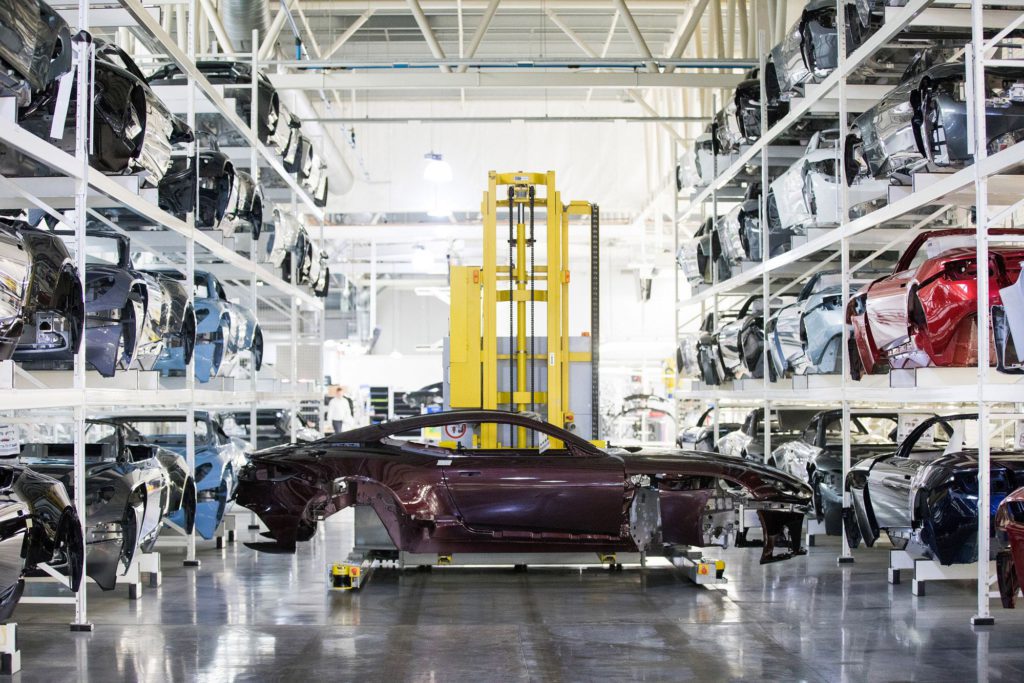
(Bloomberg) — UK light vehicle production will jump by about 15% next year as crippling shortages of semiconductors improve but the industry is unlikely to recover to pre-pandemic levels as energy costs and a lack of investment put a lid on the rebound. 

The Society of Motor Manufacturers and Traders sees output rising to 984,000 next year, and to over a million by 2025, according to a statement Monday. That’s still a far cry from the 1.3 million cars produced in 2019. 

The UK automotive industry, which counts Tata Motors Ltd.’s Jaguar Land Rover, Nissan Motor Co., and BMW AG as producers, is at risk of bungling the transition to electric cars after uncertainties around Brexit made investment tricky. Since then, a lack of a cohesive industrial strategy and now surging energy costs is dragging on the nation’s competitiveness. 

We “need swift and decisive, action that addresses the immediate challenges and gives us a fighting chance of winning the global competition,” Mike Hawes, chief executive officer of the SMMT, said at the group’s annual dinner in London. “That window of opportunity is open but is closing fast.”

Read More: The UK Car Industry’s Prospects Are Going From Bad to Worse

Carmakers are also renewing their push for government support to help with soaring energy bills amid a cost of living crisis in the country. Energy costs in the UK are some 80% higher than the European Union average, the SMMT said, plunging smaller enterprises into crisis. 

More stories like this are available on bloomberg.com

©2022 Bloomberg L.P.

AMC Networks to Cut 20% of US Staff as CEO Abruptly Departs

(Bloomberg) — AMC Networks Inc., the home of popular TV shows like The Walking Dead, announced a layoff of one-fifth of its US workforce and the departure of its chief executive officer, becoming the latest media company rocked by cable television’s accelerating subscriber losses.

The New York-based company, which operates a suite of channels, disclosed the surprise departure of Christina Spade Tuesday after just three months on the job. In a memo to employees, Chairman James Dolan said the company has tried to grow its streaming business to replace the loss of cable-TV subscribers.

“It was our belief that cord-cutting losses would be offset by gains in streaming,” Dolan said. “This has not been the case.”

AMC Networks, a smaller channel operator, has been especially hard hit by the loss of viewers to streaming services like Netflix and Disney+, suffering declines in advertising and subscription revenue. In its latest quarter, sales shrank 16%. The company had 1,739 employees at the end of 2021.

In his memo, Dolan said the company plans “a large-scale layoff as well as cuts to every operating area.” 


The board is finalizing a replacement for Spade. No reason was given for her departure. She is entitled to a severance of around $10 million, along with restricted stock units and other awards, according to a filing outlining her employment agreement.

“The news is a complete surprise,” said Doug Creutz, an analyst at Cowen & Co. With no apparent successor lined up, AMC shares will be under pressure until the company “can reassure investors that Spade’s exit was not related to any financial-related issues,” he said.

The change continues a leadership revolving door. AMC, known for its flagship cable channel, along with networks such as IFC and SundanceTV, had been run by Josh Sapan before a similarly sudden exit last year. Matt Blank served as interim CEO before Spade, who was previously chief operating officer and chief financial officer. She became chief executive in September.

Shares of AMC, which isn’t related to the similarly named theater chain, fell as much as 11% to $18.39 in New York. The stock had fallen 40% this year through Monday’s close, in line with other pay-TV stocks that have tumbled this year.

Turnover at the top adds to the challenges faced by AMC, which is shifting to the streaming age as cord cutters drop their cable packages.

While online subscriptions to AMC+ and the company’s other services jumped 44% last quarter from a year earlier to 11.1 million, total sales dropped. The forces weighing on AMC contributed to the downfall of Walt Disney Co. CEO Bob Chapek earlier this month.

Adding to AMC’s woes, one of its most popular programs just ended its run. The Walking Dead zombie apocalypse show concluded its 11th and final season on Nov. 20, and the company, which also aired Mad Men and Breaking Bad, has struggled to find another hit of that scale.

Three Walking Dead spinoffs are in the works, AMC said earlier this month. The company is also banking on a collection of programs based on the works of author Anne Rice, including Interview With the Vampire.

AMC Networks is controlled by the Dolan family, one of the most influential in the cable-TV industry. They also run Madison Square Garden Sports Corp., which owns basketball’s New York Knicks and hockey’s New York Rangers, and control the company behind Madison Square Garden.

(Updates with Dolan memo in second paragraph.)

More stories like this are available on bloomberg.com

©2022 Bloomberg L.P.

BlockFi Will Seek $680 Million From FTX’s Alameda, Lawyer Says

(Bloomberg) — Bankrupt cryptocurrency lender BlockFi Inc. will try to collect about $680 million it is owed by a part of Sam Bankman-Fried’s failed crypto empire, a lawyer told the federal judge overseeing BlockFi’s insolvency case.

The company made its first appearance in bankruptcy court in Trenton, New Jersey, on Tuesday, seeking routine approval to keep operating while it tries to develop a plan to repay creditors owed more $1 billion by reorganizing or finding a buyer. 

Part of that effort will include collecting money it is owed by other crypto firms, including Alameda Research, the bankrupt trading operation founded by Bankman-Fried. Alameda defaulted on certain collateralized loans from BlockFi, a lawyer for the lender said at the hearing. 

BlockFi also owes FTX about $275 million, which was part of a lending package designed to help BlockFi survive the drop in crypto prices that pushed multiple companies into bankruptcy. 

The company will soon ask US Bankruptcy Judge Michael Kaplan, who is overseeing the case, for approval to return money held in clients’ personal digital wallets, company attorney Joshua Sussberg said.

BlockFi filed bankruptcy on Monday, blaming the collapse of Bankman-Fried’s empire, which itself sought court protection in Wilmington, Delaware earlier this month. As part of its bankruptcy, BlockFi filed a lawsuit against Emergent Fidelity Technologies seeking to recover assets it claims are collateral for defaulted debt.

A lawyer for FTX told Kaplan that those assets may actually belong to FTX. A courtroom showdown on the assets is likely to come before the judge in January, a lawyer for BlockFi said during Tuesday’s hearing.

Sussberg told Kaplan that BlockFi is in a stronger position than FTX because it was better run and never issued its own digital currency. BlockFi is licensed in 32 states and is working with US regulators to relaunch programs that had been suspended after an investigation by the US Securities and Exchange Commission.

Kaplan gave BlockFi permission to keep paying employees and other necessary expenses while in bankruptcy. The judge also agreed to let the company keep secret many of its top creditors, which BlockFi argues are clients whose names shouldn’t be released. Kaplan will give the US Trustee, an arm of the Justice Department which monitors corporate bankruptcy cases, the chance to argue in favor of making the names public at a future hearing.

The case is BlockFi Inc., 22-19361, U.S. Bankruptcy Court for the District of New Jersey (Trenton).

(Updates with dispute over collateral in sixth paragraph.)

More stories like this are available on bloomberg.com

©2022 Bloomberg L.P.
Tech Leads Stocks Lower as Treasury Yields Climb: Markets Wrap

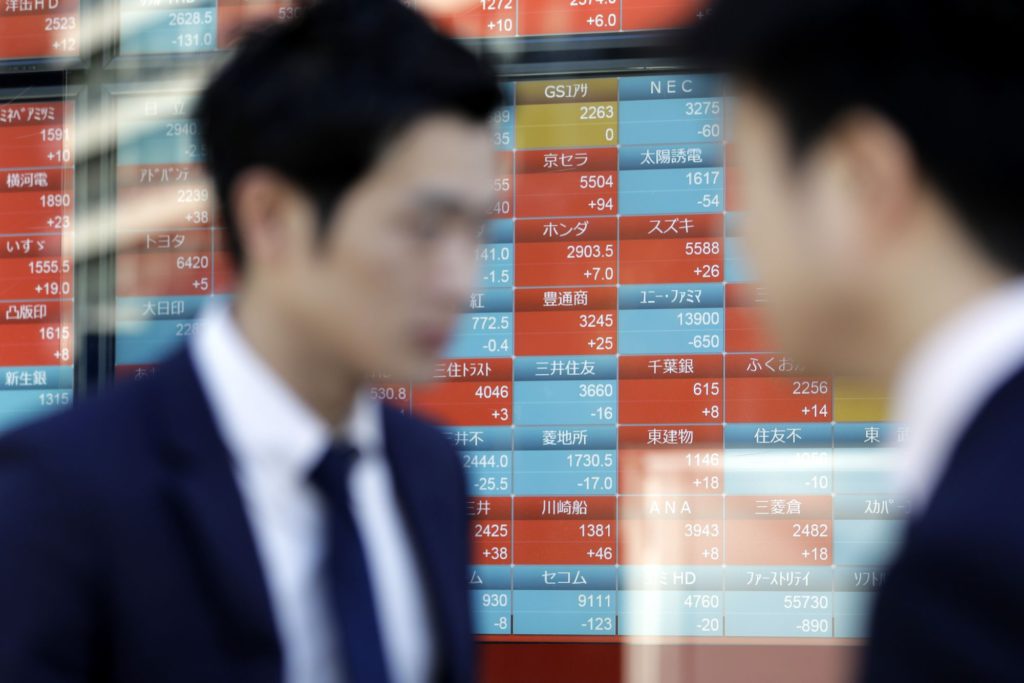
(Bloomberg) — Stocks fell, with some of the world’s largest technology companies leading losses as Treasury yields climbed.

The S&P 500 was down for a third day, while the tech-heavy Nasdaq 100 underperformed amid a slide in giants like Apple Inc. and Microsoft Corp. Amazon.com Inc., which is looking to sell investment-grade debt, saw its shares slump. US-listed Chinese stocks jumped as officials vowed to speed up Covid shots for the elderly and avoid excessive restrictions. 

A gauge measuring the global yield curve inverted for the first time in at least two decades — signaling a recession. Data Tuesday showed US consumer confidence fell to a four-month low amid the double blow of persistent inflation and Federal Reserve hikes. Traders are now looking ahead to Chair Jerome Powell’s speech Wednesday.

“The Fed has hiked enough — and quickly enough — to make recession a base-case scenario in our book,” said Lauren Goodwin, economist and portfolio strategist at New York Life Investments. “Volatility and risk premia are likely to remain elevated as long as the Fed is fighting inflation in a growth slowdown.”

Goodwin also noted that equity earnings don’t usually begin to drop until an economic recession starts. That means equity market fundamentals “may still deteriorate,” she added.

Corporate America’s bloated margins are likely to start coming down in 2023 as certain expenses start to normalize, according to Goldman Sachs Group Inc.’s David Kostin. The firm’s strategists, along those at other banks including Morgan Stanley have been saying they see a slowdown in earnings growth next year.

Alicia Levine at BNY Mellon Wealth Management says that even in a shallow recession, S&P 500 companies can still see earnings declines of 20%.

“There is still risk here in the end,” Levine told Bloomberg Television. “This is the transition year. Next year is, ‘OK, now your rates are higher, what does it mean for the real economy?’ And that I think we really have not priced in.”

Read: Evercore Says Fed Won’t Stop Until Yield Curve Inversion Deepens

The Fed’s actions, stubborn inflation, the war in Ukraine and the outlook for corporate earnings “make for a tough tale to tell for the stock market over the next 12 months,” said Kevin Philip, partner at Bel Air Investment Advisors.

Last week, institutional clients and hedge funds poured money into stocks, while retail clients sold off for a fifth straight week — with selling likely to continue through next month, according to Bank of America Corp. strategists led by Jill Carey Hall.

Recent flow momentum along with lack of “capitulation-like outflows” signal that investors believe the market has already bottomed. But BofA strategists say they see further downside risk ahead of a first half of 2023 bottom.

Several widely followed DeMark indicators, which try to anticipate momentum and long-term trend reversals, suggest the Cboe Volatility Index may be poised for a reversal. 

History shows that the appearance of a “countdown 13” pattern has led to turns in the past, with a cluster of such signals occurring at the more-recent lows. The so-called fear gauge last week fell to its lowest level since August as the S&P 500 advanced.

Meantime, former greenback bulls including JPMorgan Asset Management and Morgan Stanley say the era of dollar strength is ending as cooling prices spur markets to trim bets on further Fed tightening. That may spell buying opportunities for the currencies of Europe, Japan and emerging markets.

Read: Banks Stuck With $42 Billion Debt Seize Chance to Offload It

Key events this week:

  • EIA crude oil inventory report, Wednesday
  • China PMI, Wednesday
  • Fed Chair Jerome Powell speech, Wednesday
  • Fed releases its Beige Book, Wednesday
  • US wholesale inventories, GDP, Wednesday
  • S&P Global PMIs, Thursday
  • US construction spending, consumer income, initial jobless claims, ISM Manufacturing, Thursday
  • BOJ’s Haruhiko Kuroda speaks, Thursday
  • US unemployment, nonfarm payrolls, Friday
  • ECB’s Christine Lagarde speaks, Friday

Some of the main moves in markets:

Stocks

  • The S&P 500 fell 0.5% as of 1:26 p.m. New York time
  • The Nasdaq 100 fell 1%
  • The Dow Jones Industrial Average fell 0.2%
  • The MSCI World index fell 0.1%

Currencies

  • The Bloomberg Dollar Spot Index fell 0.1%
  • The euro was little changed at $1.0334
  • The British pound was little changed at $1.1961
  • The Japanese yen rose 0.3% to 138.55 per dollar

Cryptocurrencies

  • Bitcoin rose 1.1% to $16,366.88
  • Ether rose 3% to $1,207.75

Bonds

  • The yield on 10-year Treasuries advanced six basis points to 3.74%
  • Germany’s 10-year yield declined seven basis points to 1.92%
  • Britain’s 10-year yield declined three basis points to 3.10%

Commodities

  • West Texas Intermediate crude rose 1.4% to $78.34 a barrel
  • Gold futures rose 0.5% to $1,764.20 an ounce

This story was produced with the assistance of Bloomberg Automation.

–With assistance from Peyton Forte, Vildana Hajric and Garfield Reynolds.

More stories like this are available on bloomberg.com

©2022 Bloomberg L.P.

Amazon’s New Chip Moves AWS Into High-Performance Computing

(Bloomberg) — Amazon.com Inc.’s cloud-computing unit is rolling out new chips designed to power the highest-end of computing, supporting tasks such as weather forecasting and gene sequencing.

Amazon Web Services, the largest provider of over-the-internet computing, on Monday said it would let customers rent computing power that relies on a new version of its Graviton chips. Peter DeSantis, a senior vice president who oversees most of AWS’s engineering teams, said in an interview that the product is a springboard for making what the industry calls high-performance computing more readily available. 

The newest chip is the latest piece of Amazon’s effort to build more of the hardware that fills the massive data centers that power AWS. Amazon says making its own chips will give customers more cost-effective computing power than they could get by renting time on processors built by the likes of Intel Corp., Nvidia Corp. or Advanced Micro Devices Inc. The move has put AWS in direct competition with those companies, which are also among its biggest suppliers. DeSantis said the chipmakers remain “great partners,” and that AWS plans to continue to offer high-performance computing services based on chips made by other companies. 

AWS acquired chipmaker Annapurna Labs in 2015 to jumpstart its homegrown chip designs, which at first were focused on simpler computing tasks, such as providing the backbone for websites. The high-performance computing push announced at the kickoff of the AWS re:Invent trade show on Monday is an effort to demonstrate that Amazon’s in-house technology can compete head-to-head with chips from industry leaders. 

On Tuesday, AWS Chief Executive Officer Adam Selipsky announced a new version of the Inferentia chip, which is designed to draw inferences from vast amounts of data. Inferentia2 is built to handle bigger sets of data than its predecessor, enabling things like software-generated images or detecting and interpreting human speech, Amazon said. 

Computers that predict weather patterns and model race car aerodynamics are among the most powerful systems run by state-of-the-art semiconductors. Those components have typically been provided by Intel, Nvidia and AMD in expensive computer systems that companies, government departments and academic institutions have built in their own data centers.

The latest version of AWS’s line of Graviton processors, the Graviton3E, will have twice the ability of current versions in one type of calculations needed by high-performance computers, DeSantis said. When combined with other AWS technology, the new offering will be 20% better than the previous one. Amazon didn’t say when services based on the new chip would be available.

“The reason that high-performance computing isn’t big is it’s hard,” DeSantis said. “It’s hard to get capacity, it’s hard to get time on that supercomputer. What we’re excited about is bringing the capabilities of high-performance computing to more workloads.”

(Updated with second chip announcement.)

More stories like this are available on bloomberg.com

©2022 Bloomberg L.P.
McCarthy Says White House Should ‘Stop Picking on Elon Musk’

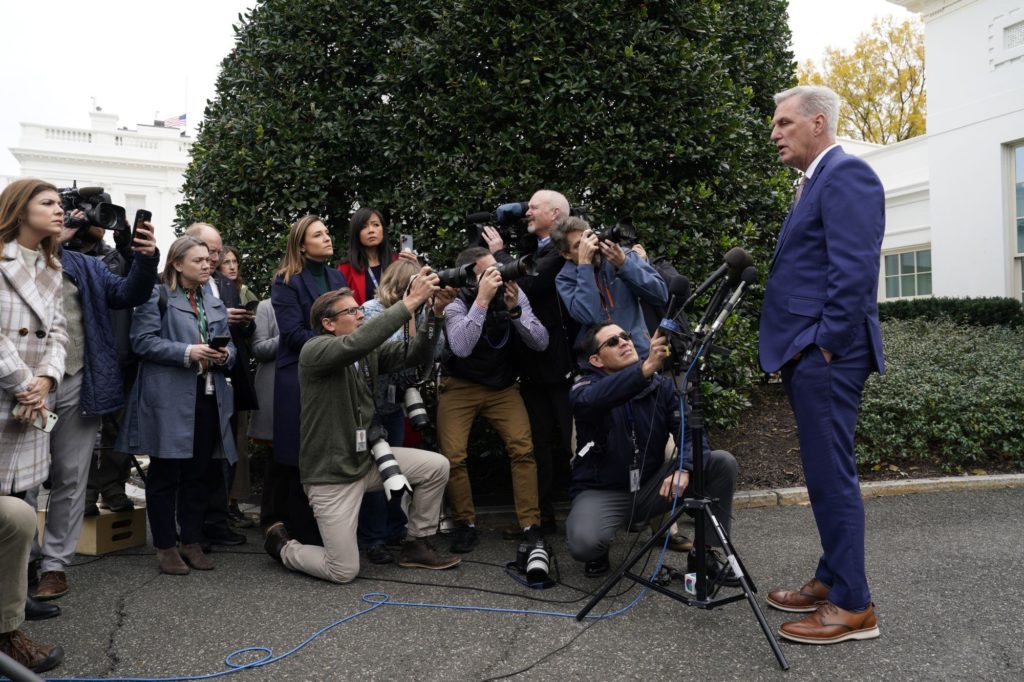
(Bloomberg) — House Republican Leader Kevin McCarthy accused the White House of unfairly targeting Twitter Inc. owner Elon Musk over his political views, calling it “offensive.”

“The government’s going to go after someone who wants to have free speech? What do they have to look at Twitter about?,” McCarthy said Tuesday outside the White House following a meeting with President Joe Biden and other congressional leaders. 

“I think the American public had spoken on this, I think our First Amendment stands up and I think they should just stop picking on Elon Musk.”

Musk, a self-styled champion of free speech who acquired Twitter for $44 billion, has begun revamping the company’s content moderation policies. Those changes have spurred worries from civil rights groups and advertisers that Twitter could become a haven for hate speech or disinformation.

Asked about Twitter on Monday, Biden Press Secretary Karine Jean-Pierre said the White House was “monitoring what’s currently occurring” but did not mention Musk in her remarks.

“Social media companies have a responsibility to prevent their platforms from being used by any user to incite violence, especially violence directed at individual communities, as we have been seeing,” Jean-Pierre said.

Musk responded on Monday to a Twitter user who shared video of Jean-Pierre’s remarks. 

McCarthy and Musk are close and the Tesla Inc. CEO attended a Wyoming event the GOP leader hosted in August. Musk’s SpaceX also has operations in McCarthy’s Bakersfield, California-area district and he has previously donated to both Republican and Democratic candidates.

Read more: Musk Among Guests as McCarthy Raises Money on Cheney’s Home Turf

Ahead of the midterms, though, Musk told his over 100 million Twitter followers to vote for Republicans, a departure from other CEOs in the US who have largely shunned political activism to avoid alienating consumers. Republicans narrowly won control of the House, putting McCarthy on the path to becoming speaker.

“To independent-minded voters: Shared power curbs the worst excesses of both parties, therefore I recommend voting for a Republican Congress, given that the Presidency is Democratic,” Musk wrote.

McCarthy on Tuesday praised Musk as someone who had “succeeded in many places.” 

“I’d bet on him more than government going after you and one thing I would say when we talk about accountability, we’ll no longer let government go after people simply because of their political views,” he said. 

–With assistance from Anna Edgerton.

More stories like this are available on bloomberg.com

©2022 Bloomberg L.P.
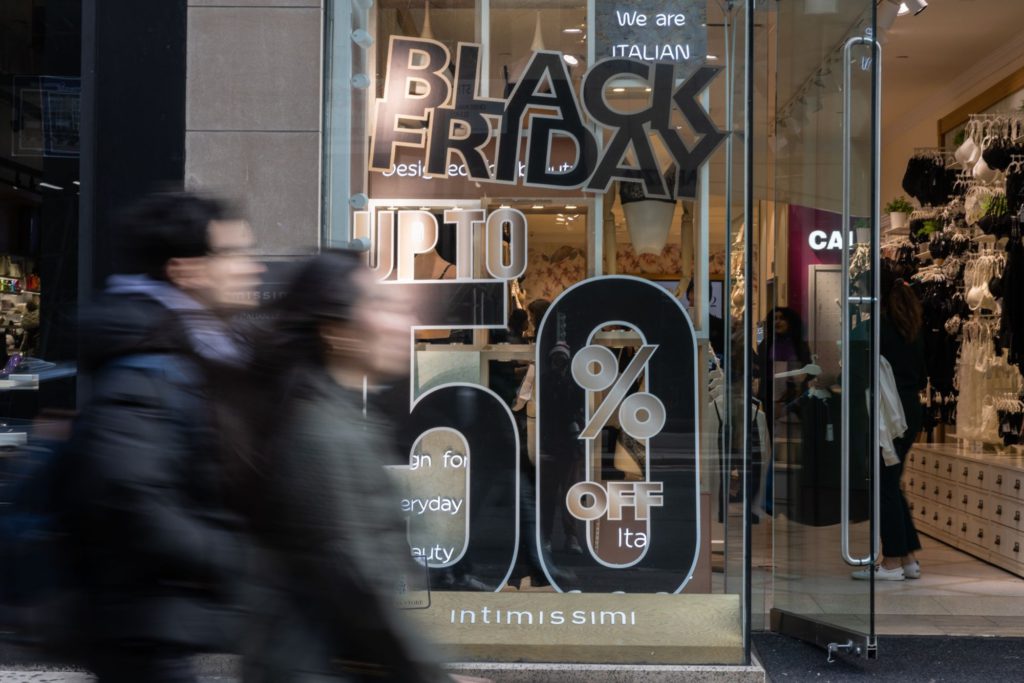
Deep Discounts Lure Record Number of Holiday Weekend Shoppers

(Bloomberg) — A record 196.7 million American consumers flocked to stores and e-commerce websites over the Thanksgiving holiday weekend in search of deals, according to data from the National Retail Federation. 

Retailers discounted generously on Black Friday and Cyber Monday this year in an effort to clear excess inventory and lure consumers who are increasingly strained by inflation. Those efforts drove foot traffic up: about 123 million customers shopped between Thanksgiving Day and Cyber Monday, a 17% increase from a year ago, the NRF said Tuesday.

The number of e-commerce shoppers rose by a more modest 2% from 2021, pointing to a “resurgence of in-store shopping,” following the last two years of pandemic restrictions, said NRF President and Chief Executive Officer Matt Shay.

Total average spend per customer was $325, up 8% from a year ago but below the prepandemic level of $362, according to the NRF. The results are based on a consumer survey of about 3,300 US participants. 

“It’s been clear that American families and households have become a bit more cautious with their spending,” Shay said on a conference call. “Retailers have responded accordingly, offering shoppers a season of buying convenience, matching sales and promotions across online and in-store channels to accommodate their customers at each interaction.”

The vast majority of shoppers, about 90%, said deals were either the same or better than last year, according to the survey. Clothing, toys and gift cards were the top gifts purchased over Thanksgiving weekend, while the most popular shopping destinations were online, department stores and grocery stores. 

More than half of consumers surveyed said they still had holiday shopping left to do, “leaving plenty of room for additional purchases in the remaining weeks of the year,” said Phil Rist, executive vice president of Prosper Insights & Analytics, which helped conduct the survey with the NRF. Ongoing discounts will likely support some of that spending into December. 

Despite inflation and economic concerns, “you can get consumers engaged, but you have to deliver on value and price,” Shay said.

–With assistance from Martine Paris.

More stories like this are available on bloomberg.com

©2022 Bloomberg L.P.

Close Bitnami banner
Bitnami
