Bloomberg

AMC Networks Plans Large-Scale Job Cuts as CEO Abruptly Departs

(Bloomberg) — AMC Networks Inc., whose TV programs included The Walking Dead, is planning significant cutbacks following the departure on Tuesday of its chief executive officer, who stepped down less than three months after taking the top job.

In a memo to employees, Chairman James Dolan said the company has tried to grow its streaming business while facing pressure from the growing number of people canceling cable-TV service.

“It was our belief that cord cutting losses would be offset by gains in streaming,” Dolan said. “This has not been the case.” 

Dolan added that AMC Networks is “primarily a content company and the mechanisms for the monetization of content are in disarray.”

The company needs to conserve resources and will implement “a large-scale layoff as well as cuts to every operating area,” he said.

The board is finalizing a replacement for former CEO Christina Spade. No reason was given for her departure. She is entitled to a severance of around $10 million, along with restricted stock units and other awards, according to a filing outlining her employment agreement.

The change continues a leadership revolving door. AMC, known for its flagship cable channel, along with brands such as IFC and SundanceTV, had been run by Josh Sapan before a similarly sudden exit last year. Matt Blank served as interim CEO before Spade, AMC’s former chief operating officer and chief financial officer. She was named the top executive effective Sept. 9.

“The news is a complete surprise,” said Doug Creutz, an analyst at Cowen & Co. With no apparent successor lined up, Creutz expects AMC shares to be under pressure until the company “can reassure investors that Spade’s exit was not related to any financial-related issues.”

The stock was down 5.5% as of 12:01 p.m. in New York. The shares had fallen 40% this year through Monday’s close.

Turnover at the top adds to the challenges faced by AMC, which is shifting to the streaming age as cord-cutters drop their cable packages. While online subscriptions to AMC+ and the company’s other services jumped 44% last quarter from a year earlier to 11.1 million, total sales dropped 16% on lower licensing revenue, advertising and fees from pay-TV companies. A similar blow to profits has roiled other parts of the media world, contributing to the downfall of Walt Disney Co. CEO Bob Chapek earlier this month.

Adding to AMC’s woes, one of its most popular programs just ended its run. Its zombie apocalypse show concluded its 11th and final season on Nov. 20, and the company has struggled to find another hit of that scale. Three Walking Dead spinoffs are in the works, AMC said earlier this month. The company is also banking on a collection of programs based on the works of author Anne Rice, including Interview With the Vampire.

AMC Networks, not to be confused with movie theater company AMC Entertainment Holdings Inc., is controlled by the Dolans, one of the most influential families in the cable-TV industry. They also run Madison Square Garden Sports Corp., which owns basketball’s New York Knicks and hockey’s New York Rangers, and control the company behind Madison Square Garden.

The company employed 1,739 full-time workers and 287 part-time ones at the end of December, 2021, according to a filing.

(Updates with Dolan memo in second paragraph.)

More stories like this are available on bloomberg.com

©2022 Bloomberg L.P.

Chinese City Hosting Key IPhone Plant Lifts Covid Lockdown

(Bloomberg) — The central Chinese city of Zhengzhou, home of Apple Inc.’s largest manufacturing site, is lifting a lockdown on its main urban areas after five days. 

As of Nov. 30, Zhengzhou will remove so-called mobility controls — a euphemism for lockdown — and replace them with normal Covid-combating measures, according to a post on the local government’s official WeChat account. Businesses will be allowed to resume operations in an orderly manner, and people outside of designated high-risk areas can skip Covid tests as long as they don’t leave home. 

The announcement came hours after Chinese officials vowed to avoid excessive restrictions following the outbreak of weekend protests across the country against President Xi Jinping’s strict Covid Zero policy. Goldman Sachs said on Monday that it saw a 30% chance of the policy ending before April, earlier than widely anticipated, in the wake of the demonstrations.

The iPhone plant in Zhengzhou, operated by Foxconn Technology Group, has been at the center of the some of the unrest, witnessing a rare violent protest in late November after almost a month under tough restrictions intended to quash a Covid outbreak.

Foxconn has been struggling to secure enough workers to crank out the latest iPhone 14 Pro devices, the most sought-after models of Apple’s latest handset offerings, as many have departed following Covid outbreaks on the campus. 

The Taiwanese company is offering various incentives to retain existing workers while luring former employees back. Turmoil at the plant is likely to result in a output shortfall of close to 6 million iPhone Pro units this year, Bloomberg News has reported. 

–With assistance from Jacob Gu.

More stories like this are available on bloomberg.com

©2022 Bloomberg L.P.

Wall Street Spends $1.8 Billion to Spy on Traders and Bankers After Record Fines 

(Bloomberg) — Wall Street is spending more than ever on technology designed to keep an eye on traders after regulators extracted record fines from many of the world’s biggest banks for lapses in monitoring communications. 

The industry will spend about $1.8 billion on surveillance technology this year, up 20% from 2021, according to Coalition Greenwich, an analytics firm tracking the financial-services industry. Two-thirds of that spending comes from banks and broker-dealers alone, the London-based consultancy said. 

The increased spending comes after US regulators reached settlements with a dozen banks in a sprawling probe into how global financial firms failed to monitor employees’ communications on unauthorized messaging apps, bringing total penalties in the matter to more than $2 billion. The investigation forced many of the world’s biggest banks to hire compliance consultants to review the monitoring and archiving of work-related communications, including those on employees’ mobile phones or other personal devices.

“With record-keeping lapses triggering steep fines, it makes economic sense for capital markets firms to invest in technology that helps monitor communications in a more stringent manner,” Audrey Blater, a senior analyst for Coalition Greenwich, said in a statement.

Compliance professionals want to add technology that allows them to store audio files they record of employees’ conversations along with searchable transcripts, Coalition Greenwich’s researchers found. Wall Street firms also are looking for software providers that let them store information beyond the two years of history that third-party systems usually offer, the consultancy said.

More stories like this are available on bloomberg.com

©2022 Bloomberg L.P.

What Electric Cars Should Be in 2023

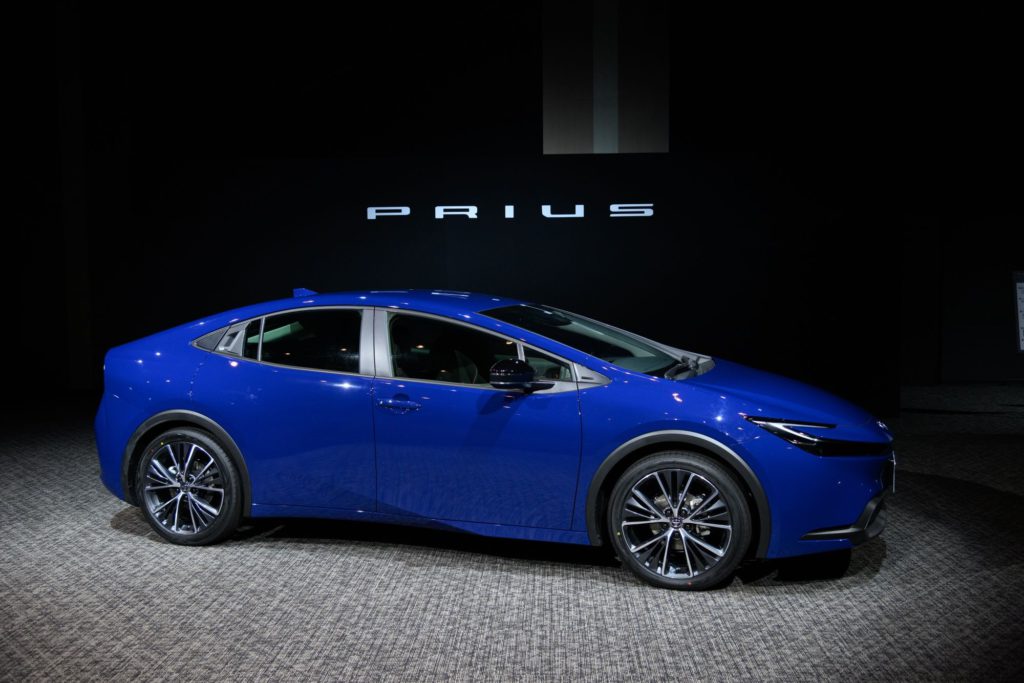
(Bloomberg) — The new Toyota Prius doesn’t cut it. Not by a long shot. 

The redesigned hybrid that debuted on Nov. 16 at the Los Angeles Auto Show won critical applause for its improved body. It looks less like a medical appliance from the 1980s and more like a pretty teardrop.

But the econo-appliance routinely owned by the nation’s absolute worst drivers (proven time and again by unscientific studies conducted by moi) is not the electric vehicle we deserve. We deserve something that looks so good, we glance back after parking near one. Something that makes us smile like a 9-year-old on helium gas and summer break when we press the accelerator. We need something that we drive because we love it, not because the neighbors say it’s “the right thing to do.” 

As somebody who drives cars for a living, here’s what I think EVs should be in 2023 and thereafter.

EVs Must Become Less Expensive

To start with, sticker shock. 

The average price of an electric vehicle in the US is $66,000, a 13% increase over 2021, according to Kelley Blue Book. The average price for an internal combustion engine (ICE) vehicle is $48,000. You can see evidence of this disparity simply by driving around Anytown, USA: Count how many EVs you see in upscale neighborhoods versus working-class and poor neighborhoods. The discrepancy is sinful.

My colleague Kyle Stock reports that some wealthier EV owners hoard them. Which, uh, kind of defeats the purpose. Nearly 30% of new EV buyers in this year’s second quarter either traded a used EV for a new one or just bought another—and 9% of recent EV buyers already owned a hybrid, according to Edmunds. Worse, a recent Bloomberg survey of EV drivers showed 14% of respondents saying they owned more than one battery-powered vehicle. Some 6% said they have at least three.

This is a problem because EVs leave an enormous carbon footprint during production, far larger than those of gasoline-powered vehicles. The only way for an EV to offset that carbon, Stock writes, is in covering miles. But households that own more than one EV drive each successive vehicle less. EVs won’t save the world if only rich people buy them—especially if they’re just sitting in garages. 

EVs Need to Fix Quality Control—And Quick

If you’re going to charge a price premium for a product, it had better be worth it. I’m tired of startups like Lucid, Rivian, Tesla, Fisker and Faraday Future expecting to get a pass on inferior quality just because they claim to be saving the world. 

EV makers owe consumers cars that are built well, with quality and performance befitting their price tags. Since their inception, electric vehicles from startup companies have polluted the automotive gene pool with shoddy manufacturing, poor craftsmanship, unreliable technology, unsafe driving systems and cheap components. (One horror story had Rivian managers fishing damaged electrical cables out of the trash and telling staff to use them in new products, Bloomberg reported in January.)  

According to JD Power’s most recent initial-quality study, overall quality in new vehicles dropped 11% this year; the biggest drops came from EV makers including Polestar and Tesla.

I’ve seen the failure to produce quality products firsthand, from the uneven body panels notorious at Tesla to the easily removed components I saw in the Lucid Air and the finicky technology I experienced in the Rivian truck. Those surfaced in press loaner vehicles, which are meant to represent the best of what the company has to offer. I can’t imagine what a year of driving them as daily commuter cars might do, but it can’t be pretty. Consumers and even employees have complained—and filed suit. 

JD Power’s director of global automotive, David Amodeo, said in a statement about the quality report that the pandemic put a damper on the industry. But he noted that the intense level of expertise required to make an EV is what has dragged down quality for everyone.

“Automakers continue to launch vehicles that are more and more technologically complex in an era in which there have been many shortages of critical components to support them,” Amodeo said.

EV startups are particularly susceptible to materials scarcity because they lack big parent companies that can funnel parts to them. In June, Elon Musk told Bloomberg that supply chain constraints pose the biggest impediment to Tesla’s growth. Established brands such as Porsche, Audi, Mercedes and BMW have the advantage here because their parent companies help buffer shortages and financial constraints; they also have decades of experience making the most complex thing most people buy: a car. 

EV startups need to shape up quickly as the big legacy automakers start to unroll new, fully electric fleets in 2023 and thereafter. They need to start reliably providing high-grade interior materials; seamless body panels; functional, intuitive infotainment; reliable drive and safety systems; and components that don’t look as if they came out of some backroom spare parts bin, or they’re going to get crunched by the big guys. 

EVs Need Better Charging 

I’m not going to ask for more range or extended battery life for EVs in 2023. I know that’s coming, and study after study shows that most Americans drive fewer than 40 miles a day, anyway. Charge time is what makes me anxious.

But this isn’t just about charging faster. In 2023, EVs will need to charge better. They need to improve the charging experience.

I’ve spent more than my share of time hanging around dodgy parking lots and shopping centers, and anyone who owns an EV will empathize. It’s never as simple as just driving to a charging station and plugging in. That perfect scenario assumes an empty charger that’s conveniently close to your normal driving route and actually works. These variables are far from assured, even in California—the biggest market for EVs in the US—let alone Boston, Dallas or Miami. 

Meanwhile, the time required to charge a vehicle depends on such things as the state of the batteries in the car; the specific charger; how many others are plugged in beside you; and even the weather on a given day. 

To simplify it all, car companies generally report charging times by mapping out how much electricity a car can receive at one time and how quickly. They put it on X and Y axes. As the battery fills, it accepts less electricity and charges slower, which is why we get charging times in a range rather than an absolute number. For example, the Porsche Taycan reports charging from 5% to 80% in 23 minutes; the Mercedes-Benz EQS reports 10% to 80% in 31 minutes.

But these numbers reflect optimal conditions on DC fast chargers, not on slower AC chargers and home plug-in outlets, which can see charging times stall up to 12 hours. If you’ve got a garage, great. If not, I know you definitely do not have the bandwidth to spend that amount of free time chained to a plug. Nor do I. This has to improve. 

EVs Need Sex Appeal

Finally, my personal favorite: EVs must become sexy. I would say “sexier” but that would imply they already have some allure. Apart from a few hypercars such as the Rimac Nevera and Pininfarina Battista—and for those few who fetishize the Prius (see: Rule 34 of the internet)—they don’t.

Sex and affordability can coexist. Ferrari’s Dino was a bargain basement offer when it debuted in the 1950s—Ferrari wouldn’t even put its name on it—but I defy anyone to say that the Italian stallion isn’t a stunner. See also: The Graduate’s Alfa Duetto Spider and that smoking-hot Fiat Abarth commercial. 

Here’s the problem: Modern EVs sprang from the grass roots of those who procured used French-fry oil or tinkered with solar panels before sustainability was much of a dream. It’s a group that, while admirably forward thinking, includes your oddball neighbor and, well, Elon Musk. These are the opposite of aesthetes; just check out Musk’s nightstand.

The efficiency-at-all-cost mentality meant that early EVs were designed for humble practicality, resulting in such things as worn-out Volvo composites powered by biofuel and the Tesla Roadster. Even in final form, the Chevy Bolt, Nissan Leaf, Lucid Air and Tesla Model 3 feel like neutered versions of four-wheel transport—or worse, incel versions of a car. 

The best we have—Porsche Taycan, Mercedes-Benz EQS, Audi e-Tron—do possess a certain level of attraction. But they’re sedans, not sexpots. They do not have the makings of a Pirelli calendar photo shoot, so to speak, if the shoot were to include actual cars.

What we need are EVs that prioritize beauty over reduced drag and less battery drain. If we could afford to sacrifice some efficiency for shapelier arches or angular edges, some dramatic flair across the body lines, it would go a long way toward getting our blood going. Why not electrify  that new Porsche 911 Dakar? That could be sexy in a Moroccan desert kind of way.

I am not without hope. A two-door EV, rather than four-door EV, instantly improves prospects. Genesis hinted at a sexy electric convertible on Nov. 15 in Malibu, California; Porsche will unleash a two-door EV by 2025; and Polestar will produce one by 2026. Fiat is even bringing back the electric version of the 500 it initially launched with Jennifer Lopez.  

Rolls-Royce beats them all, though. It will deliver its Spectre electric coupe by the end of 2023. A British gent in the finest tailoring, with a massive powertrain underneath that suit? That’s an EV to look forward to. Now if only we could do something about the six-figure price tag. 

More stories like this are available on bloomberg.com

©2022 Bloomberg L.P.

Cyber Monday Sales On Track to Break Record Despite US Inflation

(Bloomberg) — US shoppers spent $11.3 billion on Cyber Monday, a robust showing that suggests steep discounts attracted inflation-stung shoppers.

Spending increased 5.8% from a year ago, making it the biggest online shopping day ever, according to Adobe Inc., which compiles the data. Adobe adjusted its online spending forecast for November and December slightly upward based on higher-than-expected spending through Cyber Monday.

The promotional period from Thanksgiving through Monday — now known as the Cyber Five — was nothing like 2021, when supply-chain snarls prompted people to shop earlier and retailers to skimp on discounts. This year stores were saddled with a glut of unsold merchandise, forcing them to offer sharply reduced prices to lure bargain-hunters looking to offset higher food and fuel costs.

“With oversupply and a softening consumer spending environment, retailers made the right call this season to drive demand through heavy discounting,” said Vivek Pandya, lead analyst at Adobe Digital Insights. “It spurred online spending to levels that were higher than expected, and reinforced e-commerce as a major channel to drive volume and capture consumer interest.”

Adobe said the surge in consumer spending online during the Cyber Five was driven by demand, not simply inflation. The firm said prices across 18 product categories it tracks have been almost flat in recent months. Adobe doesn’t adjust its data for inflation but said that, even if online price gains were factored in, “there would still be growth in underlying consumer demand.”

Hot items included Legos, drones and digital cameras. Discounts were steeper compared with a year earlier. For instance, electronics had mark-downs that peaked at 25%, according to Adobe, which tracks 1 trillion visits to retail websites and monitors sales of more than 100 million products.

Conflicting economic indicators have made this year’s holiday season difficult to predict. Unemployment remains low, but interest rates are rising and lofty prices have made inflation top of mind. Adobe doesn’t adjust its forecast for inflation, but said the slow rate of growth isn’t entirely inflation-driven because prices for many consumer goods, particularly electronics, have dropped from a year ago.

Big sale days like Black Friday and Cyber Monday have been gradually losing their cachet as shoppers spread their spending over longer periods. Black Friday online spending rose 2.3% to $9.12 billion and was better than anticipated, Adobe said. The total for November and December combined is set to reach $210.1 billion, up 2.8% from last year, according to the firm. 

Shoppers less concerned about Covid-19 returned to stores for more of their shopping, which blunted online sales growth, according to Adobe. Overall Black Friday spending — both online and in store — was up 12% from a year earlier, according to data from Mastercard.

Amazon.com Inc. promoted itself as a destination for holiday deals, which benefited the independent merchants who sell more than half of the products on the site. Branded Group, which carries more than 40 houseware, personal care and leisure brands on Amazon, said sales increased 85% during the five-day promotional period, fueled by a late evening surge in spending. The company had more inventory than it did last year so could offer more deals, including 40% off a 17-piece Home Hero kitchen knife set.

“Consumers probably look for deals in an inflationary environment, but this is also good news about the strength of US consumption,” said Branded Group Chief Executive Officer Pierre Poignant.

Cyber Monday “isn’t worth waiting for anymore” since most retailers just rebrand their Black Friday deals as Cyber Monday deals, said Kristin McGrath, a shopping expert at the deal-monitoring website BlackFriday.com. Retailers offered bargains on counter-top kitchen appliances and electronics, which will likely be discounted even further after Christmas for those not in a rush, she said.

“Anything they don’t sell will be marked down again,” she said. “So you only have to buy it now if you want to give it to someone as a gift.”

(Updated with inflation context in the fifth paragraph.)

More stories like this are available on bloomberg.com

©2022 Bloomberg L.P.
Stocks Gain, Dollar Retreats as Risk-Off Tone Ebbs: Markets Wrap

(Bloomberg) — Stocks rebounded, with traders weighing the outlook for Federal Reserve policy and prospects that China could move faster in loosening Covid curbs that prompted protests in a number of cities.

The S&P 500 halted a two-day drop, while the dollar fell with bonds. Amazon.com Inc. is looking to sell investment-grade bonds for general corporate purposes. US-listed Chinese shares climbed as officials vowed to speed up Covid shots for the elderly and avoid excessive restrictions, fueling a new round of bets that Beijing is bending to pressure for a reopening.

“If sentiment towards Covid policy expectations and the latest wide-spread protests improve, then stocks will be able to stabilize as that was a major bearish influence on the market yesterday,” wrote Tom Essaye, a former Merrill Lynch trader who founded The Sevens Report newsletter.

Another tailwind for stocks is the possibility that the Fed will move to a slower hiking pace, with Chair Jerome Powell seen cementing those bets when he speaks on Wednesday. Data showed US consumer confidence fell in November to a four-month low amid the double blow of persistent inflation and rising interest rates.

Ned Davis Research says global stock-market breadth is improving, an optimistic sign for investors hoping to see a sustained equity rally in the coming months. To gauge how much the bullish trend could continue, the strategists pointed to the MSCI ACWI Index, which includes large- and mid-cap stocks in developed and emerging markets.

Among ACWI markets, more than 90% are above their 50-day moving average, while more than 60% are topping their longer-term 200-day moving average, the strategists said. If the latter’s percentage rises to 85%, they project it would reach a level that would turn bullish.

Read: Commodity Hedge Funds Are Back After a Decade in the Wilderness

Several widely followed DeMark indicators, which try to anticipate momentum and long-term trend reversals, suggest the Cboe Volatility Index may be poised for a reversal. 

History shows that the appearance of a “countdown 13” pattern has led to turns in the past, with a cluster of such signals occurring at the more-recent lows. The so-called fear gauge last week fell to its lowest level since August as the S&P 500 Index continued its upward march — with the US equity measure up 11% from its October low through Monday.

“There is still risk here in the end,” Alicia Levine at BNY Mellon Wealth Management told Bloomberg Television. “This is the transition year. Next year is, ‘OK, now your rates are higher, what does it mean for the real economy?’ And that I think we really have not priced in.”

Levine notes that even in a shallow recession, S&P 500 companies can still see earnings declines of 20%.

Meantime, former greenback bulls including JPMorgan Asset Management and Morgan Stanley say the era of dollar strength is ending as cooling prices spur markets to trim bets on further Federal Reserve tightening. That may spell buying opportunities for the currencies of Europe, Japan and emerging markets.

Elsewhere, oil rose as investors looked ahead to an OPEC+ meeting that may see a supply cut to counter market weakness.

Key events this week:

  • EIA crude oil inventory report, Wednesday
  • China PMI, Wednesday
  • Fed Chair Jerome Powell speech, Wednesday
  • Fed releases its Beige Book, Wednesday
  • US wholesale inventories, GDP, Wednesday
  • S&P Global PMIs, Thursday
  • US construction spending, consumer income, initial jobless claims, ISM Manufacturing, Thursday
  • BOJ’s Haruhiko Kuroda speaks, Thursday
  • US unemployment, nonfarm payrolls, Friday
  • ECB’s Christine Lagarde speaks, Friday

Some of the main moves in markets:

Stocks

  • The S&P 500 rose 0.3% as of 10:30 a.m. New York time
  • The Nasdaq 100 rose 0.2%
  • The Dow Jones Industrial Average rose 0.2%
  • The Stoxx Europe 600 rose 0.3%
  • The MSCI World index rose 0.5%

Currencies

  • The Bloomberg Dollar Spot Index fell 0.4%
  • The euro rose 0.3% to $1.0370
  • The British pound rose 0.4% to $1.2010
  • The Japanese yen rose 0.5% to 138.25 per dollar

Cryptocurrencies

  • Bitcoin rose 1.5% to $16,431.78
  • Ether rose 3.6% to $1,214.13

Bonds

  • The yield on 10-year Treasuries advanced three basis points to 3.71%
  • Germany’s 10-year yield declined seven basis points to 1.92%
  • Britain’s 10-year yield was little changed at 3.12%

Commodities

  • West Texas Intermediate crude rose 2.7% to $79.35 a barrel
  • Gold futures rose 0.9% to $1,771.60 an ounce

This story was produced with the assistance of Bloomberg Automation.

–With assistance from Sujata Rao, John Viljoen and Peyton Forte.

More stories like this are available on bloomberg.com

©2022 Bloomberg L.P.

China Launches Rocket Sending Astronauts to New Space Station

(Bloomberg) — China launched a rocket carrying three astronauts to its newly completed space station, where they’re scheduled to spend the next six months on projects aimed at fulfilling Beijing’s goal of creating a permanent Chinese presence in space.

The Shenzhou-15 spacecraft took off aboard a Long March-2F rocket from the Jiuquan Satellite Launch Center in northwestern China at about 11:08pm local time, state media reported.

Tuesday’s launch marked a breakthrough for the Chinese space agency, which for the first time sent a crewed mission into space during extremely cold conditions.

Unlike NASA, which typically starts US space missions from facilities at warmer-weather locations in Florida or southern California, China’s space agency operates one of China’s main launch facilities at a site in the Gobi Desert, where temperatures in late November can fall to around minus-20C (minus-4F).

China, barred by the US from participating in the International Space Station, is the only country to operate an orbiting station of its own, and the Chinese space agency has many other ambitious plans, including sending astronauts from China to the moon.

The US is racing to get back there first, and possibly as early as 2025. NASA on Nov. 16 launched its most powerful rocket in 50 years, sending the uncrewed Orion capsule on a lunar mission that’s part of a program to return US astronauts to the moon within the coming decade.

China is working to get there too, according to official media.

“Our astronauts will likely be able to go to the moon within 10 years,” Wu Weiran, chief designer of China’s lunar exploration program, said in an interview with state broadcaster CCTV this month.

Upon reaching the Chinese space station, the Shenzhou-15 astronauts will briefly share it with three astronauts from an earlier mission, Shenzhou-14, who have been up there since June.

It will be the first time Chinese astronauts from two different missions will be on the space station together, an accomplishment that’s “not only of symbolic significance but also carries great practical values to the overall development of the country’s first permanent space outpost,” reported the Global Times, a newspaper controlled by China’s Communist Party.

The Shenzhou-14 astronauts are scheduled to return to Earth about a week after the arrival of their colleagues from Shenzhou-15.

–With assistance from Loren Grush.

More stories like this are available on bloomberg.com

©2022 Bloomberg L.P.
GIP Said to Mull Deal for Infrastructure Firm Tower Vision India

(Bloomberg) — Global Infrastructure Partners is exploring a potential acquisition of Tower Vision India Pvt, an independent telecommunications infrastructure provider in India, people with knowledge of the matter said. 

The private equity firm has been sounding out financing for a potential deal that could value Tower Vision India at about $300 million to $400 million, said the people, who asked not to be identified discussing private information. 

GIP already owns a significant stake in Indian tower owner Ascend Telecom Infrastructure Pvt. Deliberations are ongoing and GIP could decide not to proceed with a transaction, according to the people. 

Representatives for GIP and Tower Vision didn’t immediately respond to requests for comment. 

Tower Vision was founded in 2006 and operates about 9,000 towers across India, according to its website. The firm serves telecom operators including Bharti Airtel Ltd. and Reliance Jio Infocomm Ltd.

More stories like this are available on bloomberg.com

©2022 Bloomberg L.P.
China Stocks Surge in US as Vaccine Drive Fuels Reopen Bets

(Bloomberg) — Chinese stocks listed in the US extended gains on Tuesday, as officials vowed to speed up Covid shots for the elderly and to avoid excessive restrictions, fueling a new round of bets that Beijing is bending to pressure for an economic reopening.

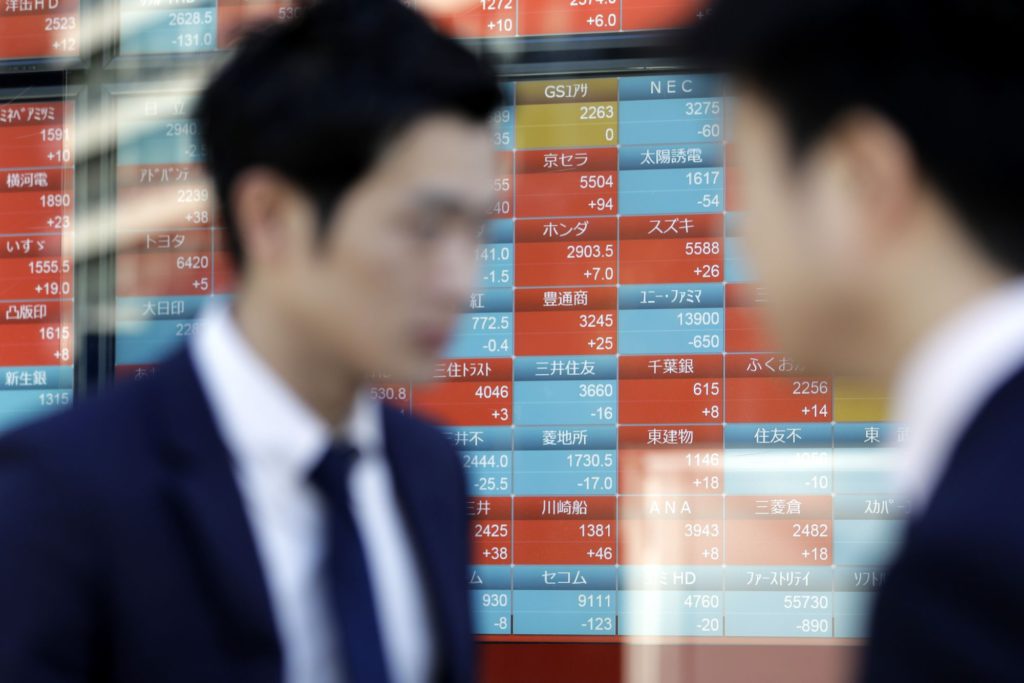
The Nasdaq Golden Dragon Index surged as much as 6.3%, the most in two weeks, and added to a 2.8% gain on Monday’s session. E-commerce giants Alibaba Group Holding Ltd. and JD.com Inc. each rose at least 5.4%. Stocks that are set gain strongly from reopening, such as online travel agency Trip.com Group Ltd. and Yum China Holdings Inc., also climbed. The moves tracked a rally among their Hong Kong peers, with Hang Seng Index higher 5.2%.

Earnings optimism is also buoying the stocks. Bilibili Inc. was the latest to announce better-than-expecting earnings, pushing its shares up as much as 21%. Pinduoduo Inc. reported results topping analysts estimate on Monday.

China said it will bolster vaccinations among senior citizens in a move seen crucial to reopening, even though the government stopped short of issuing mandates to help raise inoculation rates. The country’s top health officials also warned against any excessive control measures during a briefing, while saying China is constantly adjusting its Covid policies.

READ: China Pushes Elderly Vaccination as Reopening Pressure Grows

The statements came after protesters took to the streets across China over the weekend in a rare act of defiance against the government and its Covid Zero strategy. The demonstrations were muted on Monday after authorities deployed a heavy police presence in major cities and localities pared back some Covid restrictions, soothing concerns that a long-lasting protest may prompt a crackdown.

“The direction of reopening is very clear, in our view, and we don’t think the government will double down on pandemic control measures. Whether China will head into a forced reopening will depend on the Covid situation, but the government still has enough room to maneuver, ” Citigroup analysts including Xiangrong Yu wrote in a note to clients. The reopening will gain momentum post the National People’s Congress next March, the note said. 

The benchmark of US-listed China stocks is up 23% in November, heading for its biggest monthly gain on the record after a historic rout in October. A slew of recalibration of Covid Zero policy, more supportive measures for the property sector as well as audit inspection progress spurred optimism among investors, though the group was still gripped by volatility and jitters swayed by surge in Covid infections.

(Updates shares, chart at the open, adds analyst comments in the sixth paragraph and details throughout)

More stories like this are available on bloomberg.com

©2022 Bloomberg L.P.
Deutsche Bank Plows People and Capital Into Latin America to Undo Retreat

(Bloomberg) — Deutsche Bank AG is predicting a rebound in revenue from Latin America as it boosts headcount and shifts capital into the region, reversing a pullback that began in 2015.

“This is going to be our best year in Latin America in terms of revenue for the past six years, and that is just a reflection of investments we’ve made to our global emerging-markets platform,” Ricardo Cunha, head of global emerging markets for Brazil, said in an interview.

The Frankfurt-based lender sent 100 million euros ($105 million) to Mexico in September, after increasing its capital in Brazil by the same amount last year. 

Deutsche Bank trimmed its teams and shut operations in some Latin American nations during a global cost-cutting effort that began in 2015. It started expanding again in recent years, boosting the local team in Brazil that serves hedge funds as well as its onshore fixed-income, commodities, currencies and derivatives local trading book, Cunha said. The bank built a team in Mexico and opened an office for its relaunched broker-dealer business. 

The company hired 15 people in the past 12 months to serve the region from its broker-dealer office in Mexico, its bank in Brazil, representative offices in Colombia and Argentina, and also from New York and other offices of its global emerging-markets platform, which has about 400 employees. It’s been transferring headcount to local subsidiaries from the US.

Among the top executives hired this year was New York-based Isander Santiago-Rivera, a managing director for sales coverage in global emerging markets for Latin America, who was with Credit Suisse Group AG previously. Deutsche Bank also invested in its offshore private-banking business serving Latin American clients in the US and Switzerland booking centers.

“We haven’t grown the business in the past three years by simply hiring people and spending money, but mainly by finding efficiencies within the firm — we are extremely focused on cost,” Jorge Sanchez-Lara, head of global emerging markets for Mexico, said in an interview at the bank’s New York office.

Deutsche Bank, which used to have a full-fledged bank in Mexico, this year relaunched a broker-dealer business there focusing on fixed-income and currency trading and derivatives, risk management and finance solutions. In November, Citigroup Inc. said it agreed to buy Deutsche Bank’s banking entity and license in Mexico.  

“We decided on the broker-dealer in Mexico because we believe that’s the most efficient entity that we can use to cover our clients there,” Sanchez-Lara said. Deutsche Bank’s total capital in Mexico now is around 125 million euros, he said. 

The German bank was among the joint lead managers of an 800 million-euro, 8-year global bond issued in February by the Mexican government. 

Deutsche Bank transferred back to Brazil the nation’s fixed-income and currencies trading book from New York in 2019, and now has a bank with 3 billion reais ($556 million) in equity there. 

Recently, the company sent a Brazilian trader to work from Singapore, to generate Brazilian business in Asia and to offer liquidity during Asian hours for Brazilian clients there and in the rest of Asia. 

“As a global bank, we can deliver the whole global platform to our clients in the region, and vice versa,” Sanchez-Lara said. 

Deutsche Bank has also participated in Brazil’s local-bond market this year, focusing on real-denominated acquisition financing and structured credit, according to Cunha, who said the bank is active in sectors including digital infrastructure, fiber optics, data centers, towers and chemicals.

It underwrote five Brazil local bond deals providing about 1 billion reais in credit, according to data compiled by Bloomberg.

The bank was among the underwriters on a 1.65 billion-real bond issued in March by Highline do Brasil, a portfolio company owned by US private equity firm Digital Colony. Part of the proceeds from the sale will be used to roll over debt used in acquisitions such as the mobile assets of Brazilian telecom Oi SA.

The war between Russia and Ukraine brought more volatility to commodities prices, increasing business for Deutsche Bank in Latin America. 

“We saw an almost unprecedented amount of hedging activity on the commodities front in Brazil from several clients that are exposed,” Cunha said. 

More stories like this are available on bloomberg.com

©2022 Bloomberg L.P.
Close Bitnami banner
Bitnami