
Bloomberg

Electric Bike Startup Offers Home Test Rides to Lure U.S. Buyers

(Bloomberg) —

In the early days of the pandemic, when U.S. buyers began snapping up electric bikes at unprecedented rates, the Belgian e-bike startup Cowboy took notice. Before then, says the company’s co-founder and chief executive officer Adrien Roose, Cowboy had looked at the U.S. as a backwater where per capita sales lagged in comparison to Europe. The boom convinced Roose to jump in, and in September Cowboy began taking orders from U.S. customers.

“It’s been a fairly small market historically,” says Roose, “but that seems like it’s changing quite rapidly.” 

Maintaining that momentum is an important step toward reducing carbon emissions as e-bikes offer an alternative to combustion engine vehicles that is many times more efficient than electric cars.

Like many of its competitors in an increasingly crowded market, Cowboy sells its e-bikes directly to consumers. The company has a brick-and-mortar store in Brussels and one in Berlin, but none outside of Europe. Of the more than 25,000 units it’s sold so far, most have been online. The low-overhead sales model made it relatively easy to enter the U.S. market. The only property the company bought was the “cowboy.com” web address, which previously belonged to a forum for actual cowboys.

But without stores, Cowboy faced a tricky problem: How do you get bikes to customers who want to try before they buy?  

“Most of our new customers have never tried an e-bike before, period,” says Roose, “They have never heard the name Cowboy, have never seen our products in the streets. You can research fairly well online, but it’s not the same thing as touching and feeling.”

In order to make this contact possible, Cowboy recently launched an on-demand test ride service in ten cities, including New York, Los Angeles, San Francisco and Seattle. The idea, which has also been tried by direct-to-consumer rivals such as Rad Power Bikes and VanMoof, is a new spin on the old door-to-door sales model. Customers go online to book a one-hour ride and a Cowboy “ambassador” brings the bike out to them.

Test rides have become a popular tool for direct-to-consumer brands to get “butts in seats” — as Rad Power chief executive officer Mike Radenbaugh told me in 2020 — without building expansive dealer networks or becoming wholesalers for bike shops and big box stores.

Roughly two-thirds of all e-bikes are sold online, including through Amazon.com, according to Ed Benjamin, founder and chairman of the Light Electric Vehicle Association. Direct-to-consumer brands, Benjamin estimates, account for 60% of those sales. But while early adopters have shown a willingness to forego bike shops, the industry consensus is that nothing brings first-time buyers to the market faster than a test ride.

The broad shift to e-commerce has begun to cool as pandemic restrictions have eased, making it that much more important for retailers to try to connect with potential buyers in person. “The consumer is going back into stores and back into the shopping experience,” says Don DiCostanzo, chief executive officer at Pedego Electric Bike, which sells through 208 dealerships across North America. Traffic and sales at Pedego’s stores has increased dramatically this spring compared to last year, according to DiConstanzo.

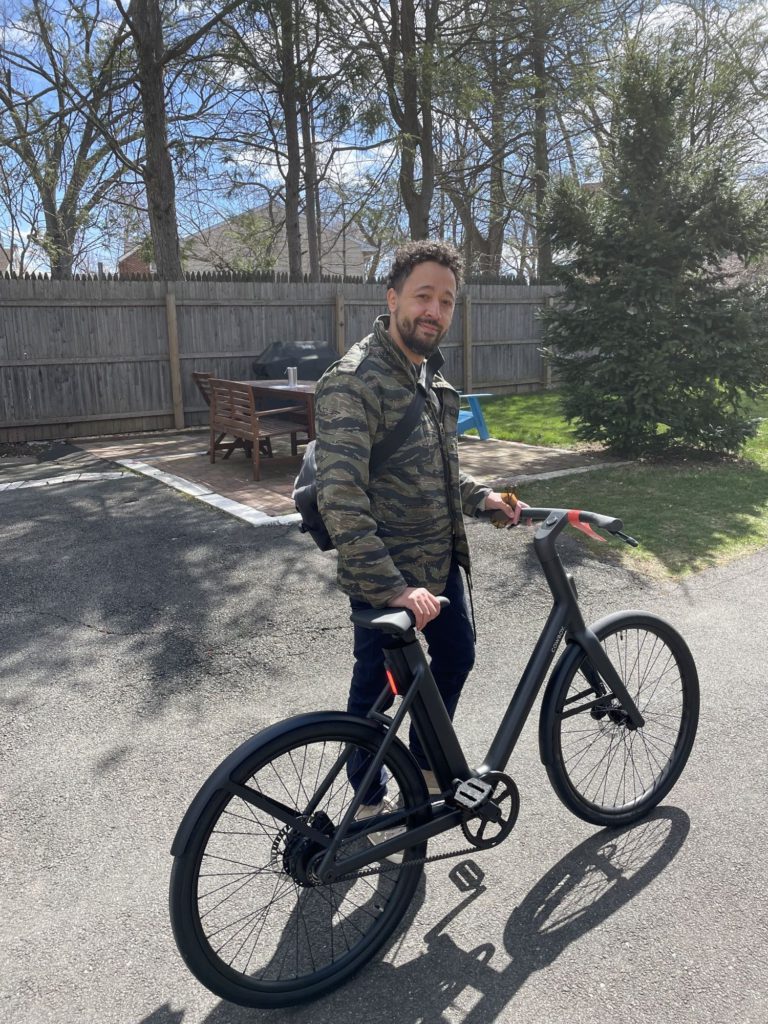
Cowboy calls its roving crew of salespeople “ambassadors.” Joe Hanan, a 40-year-old former bike courier, is one of 22 in the U.S. and the only one in New York City. On a chilly Tuesday at the end of March, he came to my driveway in suburban New Jersey with the step-through version the company’s latest model, the Cowboy 4. Like his colleagues, Hanan is an independent contractor, paid by the visit and by commission on sales. His normal service area is Manhattan, Brooklyn, and parts of Queens, but for the purposes of this story Cowboy sent him a few miles further west. Mine was the first house call of his ambassadorship.

“This is great to talk to people in person, get out in the sunshine,” says Hanan, who also freelances as a sound designer, which can be a solitary job. To get to my place, he put the bike in the back of an Uber, but most of the time he’ll be able to ride the bike to the customer and then home again. In my case, he also left the bike behind for a two-week press trial.

Hanan’s approach was low-key. He mostly let the product speak for itself. The Cowboy 4 has a minimalist design, with most of the wires and guts hidden inside its aluminum frame. There’s a mount in the middle of the handlebars for attaching a smartphone. Once a rider downloads the company’s app and connects to the bike via Bluetooth, the phone becomes a dashboard, displaying battery charge, speed, weather and a map. (The bike also charges the phone as you go.)

Hanan showed me how to enable and disable the bike’s motor with my phone, how to slide the removable battery in and out of its slot below the seat for recharging, and how to raise and lower the seat. Then I was off. There’s no throttle, gear lever, or toggle for setting the level of assistance. You just hop on and start pedaling and the motor inside the rear wheel hub does the rest — automatically adjusting its output according to how fast and how hard you pedal.

Roose co-founded Cowboy in 2017 with Karim Slaoui and and Tanguy Goretti, who both worked with him at his previous startup, an on-demand food delivery service that folded the year before. The idea was to make e-bikes that would appeal to young, urban riders, as opposed to the older customers who were the target demographic for many early e-bikes.  

Cowboy’s closest competitor is the Dutch direct-to-consumer brand VanMoof, which also makes high-end commuter e-bikes built to interface through smartphones. Like its Dutch rival, Cowboy custom designs most of the parts on its bikes. VanMoof, though, has a seven-year head start in the U.S. market. The latest versions of both company’s bikes cost just under $3,000.

Cowboy, which raised $80 million earlier this year to help fund its U.S. expansion, had planned to sell its bikes for less, says Roose. Increases in material costs have made that impossible. “From Tesla to Cowboy, we all face the same rises in aluminum costs, nickel costs, and transport costs,” he says. “We are just not seeing those coming down.”

Over my two weeks with the Cowboy 4, I took it for about a dozen rides, none longer than six miles, well within the advertised range of 43.5 miles. It’s often said that an e-bike changes the way you think about your town or city. This was true for me. A deli two miles away from my house became a convenient place to pop in for lunch. I found myself looking for excuses to take the bike out, making runs for milk or beer. Most of the time, the Cowboy felt like riding a traditional bike, except a little easier. The motor helped me get going from a dead stop and made hills less sweaty but fell away as I hit cruising speed or coasted downhill.

If you have never ridden a well-made e-bike like the Cowboy 4, I highly recommend it. Buying one, however, is another story. The downside of Cowboy’s customized approach to manufacturing is that, if something goes wrong, you are almost entirely dependent on the company, which has no physical presence in the U.S. and has yet to launch an on-demand repair service planned for select cities. Once that is up and running, says Roose, riders who snap a spoke or need a brake adjustment will be able to get help from someone like Hanan. Until then, they’ll have to rely on remote tutorials and shipped parts.

More stories like this are available on bloomberg.com

©2022 Bloomberg L.P.
Mercedes Puts Another Nail in the Minicar’s Coffin With Smart SUV

(Bloomberg) — Some cars occupy a special place in the history of automobile design, and Mercedes-Benz’s Smart Fortwo certainly is among them.

At just 2.5 meters (8.2 feet) long and 1.5 meters wide, the two-seater weighed roughly 800 kilograms and cost less than 9,000 euros ($9,791) when it was introduced in 1998, making it an easy-to-park and affordable option for city dwellers. Mercedes stacked the vehicles in display case-like glass towers to market them to a design-conscious urban crowd. In 2002, the Museum of Modern Art in New York entered the car into its permanent collection.

The Smart did relatively well in Europe and helped Mercedes offset the emissions of its gas-guzzling sedans. But the model never caught on to the extent the carmaker had envisioned, particularly in the U.S., where oversize pickup trucks and sport utility vehicles are all the rage. The SUV craze spread to Europe, nearly sweeping away the microcar in the process.

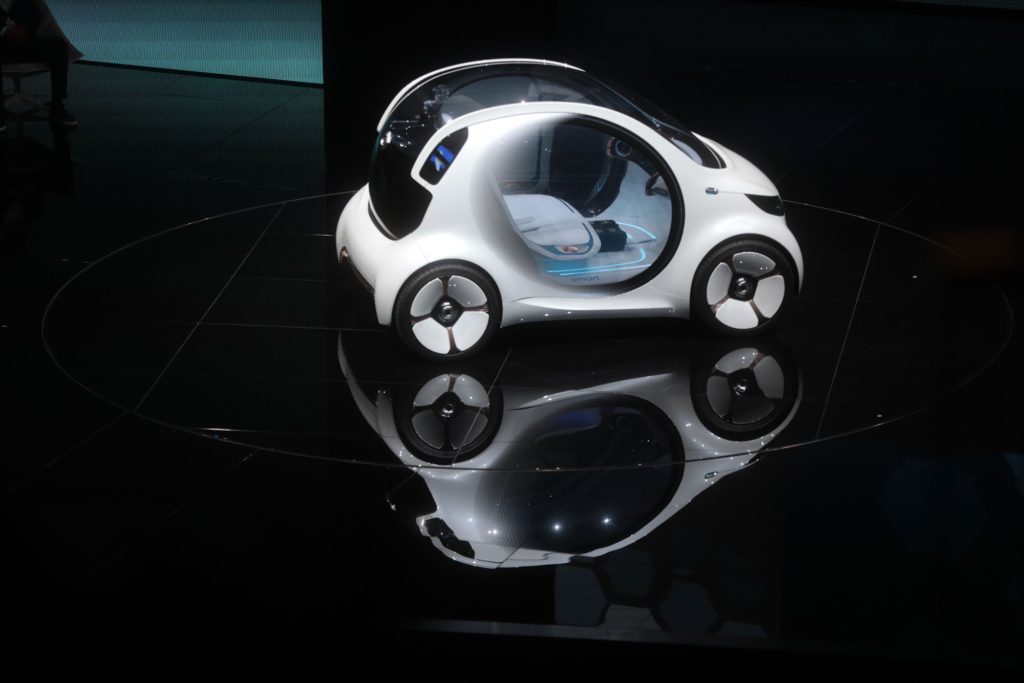
Mercedes and its Chinese partner Geely last week unveiled a remodeled Smart that’s bigger, heavier and more expensive than its predecessor. Dubbed the #1 — say it with me, without cringing: “Hashtag One” — the new Smart is a battery-powered compact SUV with a 440-kilometer (237-mile) range and a stylishly minimalist interior. It’s also 4.27 meters long — roughly the size of a Volkswagen ID.3 — and weighs almost two metric tons.

While the companies didn’t release a starting price, I’ve seen estimates ranging from 30,000 euros to 40,000 euros. That’s not exactly catering to the original Smart crowd.

Some of the radical microcars people got excited about in the early 2000s — think the Tata Nano city car, which cost roughly $2,500 when it was introduced in India in 2008 — have been abandoned mainly because they never turned a profit.

Mass-market manufacturers these days are putting margins over volume, in part because they have to invest massively in electrifying lineups and retooling factories. The global semiconductor shortage and rising raw-materials costs have only hastened the industry’s moves upmarket. 

With its compact electric SUV, Smart is entering an increasingly crowded space. Tesla will churn out more Model Ys after it recently opened factories in Texas and Germany. Volkswagen will start producing its ID.4 electric SUV later this year at its plant in Tennessee, and BMW last year debuted the iX, a battery-powered SUV that’s been getting decent reviews. SUVs accounted for about half of the EV market in Western Europe after the first two months of the year, according to Matthias Schmidt, a Berlin-based independent auto analyst.

The push to go bigger and more upmarket will price a growing number of people out of the new-vehicle market, especially as personal incomes haven’t kept pace with the relentless climb in pricing. As always, market changes will give rise to new opportunities, including for used-car sellers and more budget-conscious brands like Kia and Skoda.

“There will be new segments opening” because of rising prices for new cars, Schmidt told me. “We will see a lot more subscription models, where you can join a car club for two or three months.”

More stories like this are available on bloomberg.com

©2022 Bloomberg L.P.

JPMorgan’s New Headquarters Touts Yoga, Cycling to Lure Talent

(Bloomberg) — JPMorgan Chase & Co. unveiled plans for its new global headquarters — a 60-story skyscraper in midtown Manhattan that, according to the bank, demonstrates its commitment to New York City’s revival.

To encourage employees to back that revival, it’s offering lots of amenities at the Park Avenue tower, including yoga and cycling rooms, meditation spaces, an abundance of outdoor areas and a state-of-the-art food hall, according to a statement Thursday. Such enticements could also help JPMorgan with another effort it’s actively engaged in: Wall Street’s intense fight to retain talent.

“JPMorgan Chase is making a long-term investment in our business and New York City’s future while ensuring that we operate in a highly efficient and world-class environment,” CEO Jamie Dimon said in the statement. 

The bank announced plans in 2018 to tear down its 52-story office tower at 270 Park Ave. in favor of a more modern skyscraper. The new 1,388-foot (423-meter) building will house as many as 14,000 workers, up from roughly 3,500 that the 1950s-era property was designed to hold. It will have 2.5 times more outdoor space on the ground level, with wider sidewalks on Park and Madison avenues. A public plaza will be constructed on Madison.

The project, the first under New York’s 2017 rezoning of the Midtown East area, started more than two years ago and will be completed by the end of 2025. 

The announcement comes at a time when employees have been slow to return to their offices after pandemic lockdowns. Manhattan’s supply of empty office space has soared to record levels as companies re-evaluate their real estate needs in the hybrid-work era.

Still, major finance firms have been at the forefront of bringing employees back. JPMorgan was the first major U.S. bank to mandate a return to office for its U.S. workforce last year.

“We firmly believe that working together in person is important for our culture, clients, businesses and teams, and we know that you’ll do your part to make it a positive experience that reflects our company at its best,” JPMorgan’s leaders wrote in a memo about a year ago.

Read more: Wall Street Brings Bankers Back to Offices Remade for Hybrid Era

The new building will be the city’s largest all-electric tower, fully powered by renewable energy from a New York State hydroelectric plant, JPMorgan said. The company will use technology such as artificial intelligence, water storage and reuse systems and automatic solar shades to operate more efficiently. 

More stories like this are available on bloomberg.com

©2022 Bloomberg L.P.

U.S. Recession, Argentina Rate Hike, Yellen on China: Eco Day

(Bloomberg) — Sign up for the New Economy Daily newsletter, follow us @economics and subscribe to our podcast.

Welcome to Thursday, Americas. Here’s the latest news and analysis from Bloomberg Economics to help you start the day:

  • The U.S. Treasury Secretary Janet Yellen delivered her most pointed comments on China yet in a keynote speech laying out a vision of a new era for international economic ties
  • Larry Summers argues the Federal Reserve has made mistakes but is getting better. Still, the former Treasury secretary says a U.S. recession is more likely than a soft landing
    • Listen to the Stephanomics podcast
    • Read the full transcript
  • Central bank tightening measures continue
    • Argentina raised interest rates for the fourth time this year
    • The Bank of Korea added to a wave of global action against inflation this week by raising its key interest rate
    • Singapore further tightened monetary settings and raised its inflation forecast, sending the currency higher
    • Bank of Canada chief Tiff Macklem said central banks won’t let stagflation take hold
  • The European Central Bank is set to maintain its speedier withdrawal of stimulus as it prioritizes stemming relentless inflation over growing risks to the continent’s economy from the war in Ukraine
    • Follow our TOPLive blog here
  • China is expected to cut its key policy interest rate for the second time this year
  • Brazil’s President Jair Bolsonaro decided to raise wages of federal public servants by 5% starting in July, following weeks of strikes and work stoppages
    • São Bernardo do Campo offers a glimpse of the country’s economy in a moment of transition
  • Finally, six projects around the world provide clues to the next stage of central bank digital cash

More stories like this are available on bloomberg.com

©2022 Bloomberg L.P.
Porsche Sales Stumble on Supply Snarls, Virus Restrictions

(Bloomberg) — Porsche deliveries fell during the first quarter after outbreaks of coronavirus in China shut dealerships and a number of vehicles were lost at sea when a cargo ship caught fire and sank.

The Volkswagen AG brand’s shipments dropped 5% to 68,426 vehicles globally during the first three months of the year after significant declines in the U.S. and China outweighed a surge in Europe, the sports-car maker said Thursday. Last year, Porsche delivered a record number of vehicles even as the global chip shortage roiled carmakers. 


“The latest outbreak in the pandemic in China and other regions, as well as considerable delivery-related and logistical challenges, have put us under considerable pressure,” Detlev von Platen, Porsche’s sales and marketing chief, said in a statement.

Carmakers continue to battle significant strains from stretched supply chains, chief among them shortages of semiconductors that have idled production lines. While manufacturers have outlined hopes for improved supplies during the second half of the year, Mercedes-Benz AG reported a 15% slump in deliveries during the first quarter. In addition, renewed lockdowns in China to combat coronavirus and Russia’s war in Ukraine is straining global business.

Porsche performed better than some of the other Volkswagen units. Deliveries of the main VW passenger brand slumped 26% in the first quarter, while Audi reported a 17% decline, the Wolfsburg-based manufacturer said Thursday in a separate statement.

In China, Porsche’s largest single market, sales fell by a fifth as government-imposed lockdowns forced trade and consumer businesses to a halt. The carmaker, one of VW’s most profitable units, continues work on an initial public offering targeted for the fourth quarter, which could value the iconic brand at as much as 90 billion euros ($97.5 billion). 

“We are starting the second quarter with hyper-vigilance — particularly in view of the armed conflicts in Ukraine,” said von Platen. “The impact on our business is continuously reviewed and assessed by experts in a task force.”

(Updates with VW, Audi sales figures in fifth paragraph.)

More stories like this are available on bloomberg.com

©2022 Bloomberg L.P.

Blackstone Is Betting Over $1 Billion on Europe Tech Growth Funding

(Bloomberg) — Blackstone Inc.’s growth investing team committed more than $1 billion of financing to Europe tech companies over the last year, and it has plans to increase that further.

New York-based Blackstone is the world’s largest alternative asset manager, best known for its portfolio of real estate and infrastructure holdings. Like other private-equity firms, it is increasingly looking to invest in technology deals including providing financing to startups and it’s picking up that activity in Europe where it sees a gap. 

“If we look at the late stage specifically where we play, I think there’s less capital in Europe than there is in the U.S.,” Blackstone growth’s regional head Paul Morrissey said in an interview at the firm’s London offices last week. “We want to become the go-to investor for growth stage investments across Europe.”

Blackstone’s growth unit raised an initial $4.5 billion fund in March 2021 and Bloomberg News has reported the firm may aim to raise as much as $10 billion for a second fund. The company has hired executives globally to lead efforts, bringing Morrissey last year from Battery Ventures to run the team’s activity in Europe. 

The growth fund has begun to make investments locally, backing payment service startup Mollie in a round that valued it at $6.5 billion. It also has invested in retail planning solutions provider Relex Solutions at a 5 billion euro ($5.4 billion) valuation, and the Blackstone growth team also worked on an investment in the $11 billion software startup Celonis. 

Europe’s venture sector has boomed in recent years, deploying more than $100 billion across 2021 in a record year, according to a report compiled by investment firm Atomico. However, their remains a gap when it comes to growth financing that is holding European growth back, according to a separate report from venture capital firm Lakestar.

That apparent discount and opportunity has attracted other American tech investors to open Europe offices and explore local hires including Sequoia Capital, General Catalyst, Coatue Management and New Enterprise Associates. EQT is also expanding its growth-advisory team in the region.  

Morrissey said Blackstone’s growth fund invests in sectors such as software, fintech, consumer and health care. When it comes to crypto currency, the unit is most attracted to the “picks and shovels” that supports the broader ecosystem such as anti-money laundering and compliance technology. 

While turbulent public markets and geopolitical instability stemming from Russia’s invasion of Ukraine have led to a slowdown in private tech markets, Morrissey said he expects that to only last a period of months. And he said he wants to see more European companies have their public listings locally, rather than in the U.S. — something that has proved a challenge for regional exchanges.

With the growing amount of traditional private equity firms investing in startups, Morrissey added that it raises the question of “why would a company necessarily need to go public, if we can provide that capital.” 

“The itch to go public somewhat goes away and they also don’t have to deal with a lot of the struggles of being a public company, which we see day in and day out,” he added.

More stories like this are available on bloomberg.com

©2022 Bloomberg L.P.
China Offers More Detail on Xi’s Desert Clean Power Mega-Hub

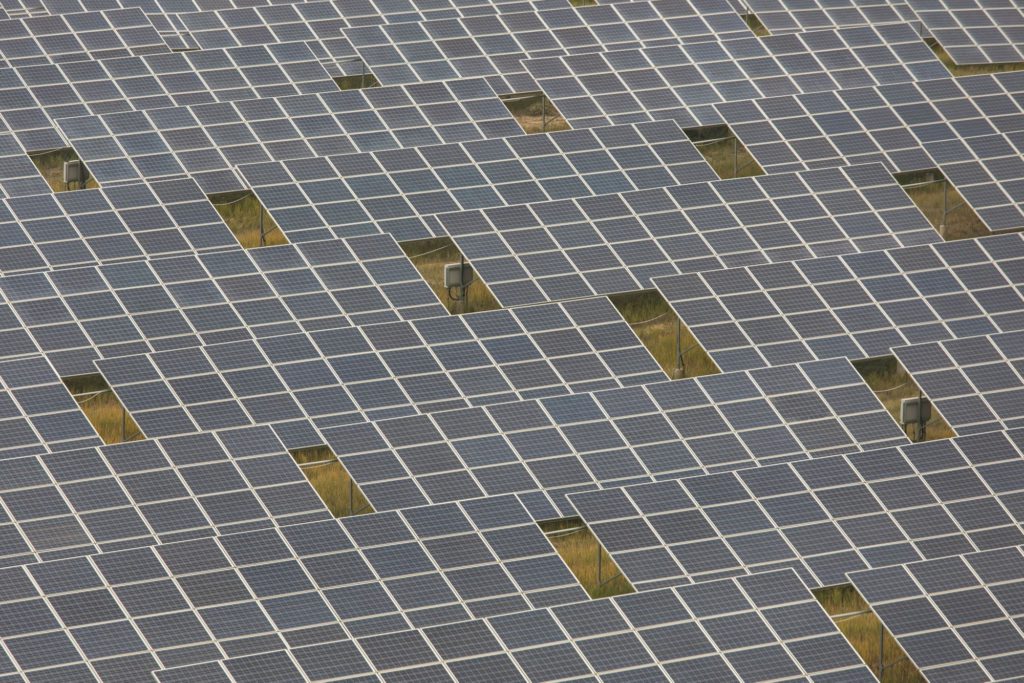
(Bloomberg) — The majority of China’s massive desert renewable power project will be built after 2025, and most of the capacity in the first phase will come from solar, according to a researcher from the country’s largest grid operator.

The details fill in some gaps about the country’s plans to build 455 gigawatts of wind and solar power across the country’s vast desert expanses, which were announced by President Xi Jinping in October. Researchers and officials spoke Thursday at an event in Beijing hosted by the China Electricity Council and solar manufacturing giant Longi Green Energy Technology Co.

About 200 gigawatts will be installed before 2025, with another 255 gigawatts coming between 2026 and 2030, according to Li Qionghui, a researcher with the State Grid Corp. of China. Of the pre-2025 projects, about 50 gigawatts will be fed into local grids while 150 will connect to long-distance transmission lines, she said. Post-2025, about 90 gigawatts are expected to be local with 165 destined for far-away use. 

A first batch of 97 gigawatts will connect to the grid through 2023 and will comprise of about 60% solar and 40% wind, Li said.

The massive build-out will help increase clean energy generation that will eventually help the country meet its goals of peaking carbon emissions by 2030 and reaching net zero by 2060.

Read more: China’s New Renewable Project Rivals All Wind and Solar in India

Including the desert projects, China will install 500 gigawatts of wind and solar between 2021 and 2025, and as much as 700 gigawatts in the second half of the decade, said Shi Jingli, a researcher with the National Development and Reform Commission. That would bring the country’s renewable capacity to more than 1,700 gigawatts by the end of the decade, far exceeding central government targets. 

In the near term, though, clean energy in the desert will rely on coal power plants as backup to provide steady streams of electrons to the grid, Shi said. The country will build new coal plants and upgrade old ones to provide the balancing capacity.

“It is not feasible to only transmit wind and solar power,” Shi said at the event Thursday.

China has come under scrutiny for its continued support of the dirtiest fossil fuel despite increasingly dire warnings from climate scientists about the world’s current warming path. Chinese lenders have helped coal companies raise about $10 billion selling bonds so far this year, data compiled by Bloomberg show, more than double the same period of 2021.

Also at Thursday’s event, Longi’s president Li Zhenguo called on the solar industry to focus on improving the efficiency of its products amid rising prices. Enhancing solar technology to produce more power from each cell is the best way to reduce costs in the longer term, he said. 

Solar prices have remained high this year after a surprise rally in 2021 following a decade of steady declines. Still, the increases have been relatively small compared to soaring costs of power plant fossil fuels like coal and natural gas.

As a company in the downstream of the solar supply chain, Longi does not have complete control on prices of modules, Li said. He expects solar prices to stabilize soon, and any further increases will likely be the result of continued high demand for panels, he said. 

More stories like this are available on bloomberg.com

©2022 Bloomberg L.P.
Russian Troops Risk Repeating Blunders If They Try for May 9 Win

(Bloomberg) — French President Emmanuel Macron has become the latest leader to warn a major Russian assault in eastern Ukraine is imminent. If that’s the plan, its troops risk repeating at least some of the mistakes made in trying to take the capital, Kyiv.

According to European and NATO diplomats familiar with the matter, Ukraine’s allies see a two-week window to spirit in heavier weapons like tanks before President Vladimir Putin unleashes an offensive designed to declare some sort of victory by the May 9 anniversary of Nazi Germany’s defeat in World War II. 

Moscow traditionally holds a large annual military parade that day. The Kremlin did not respond to a request for comment on the potential significance of the date in the war timing.

“The next weeks will be decisive,” Josep Borrell, who coordinates European Union foreign policy, said on Wednesday, as the bloc proposed a further 500 million euros ($544 million) to help fund member states’ military aid to Ukraine. That lifts the total to 1.5 billion euros.

The eastern port city of Mariupol has been under siege for weeks and is at risk of falling completely under Russian control within days.

Yet weather conditions, the need to prepare logistics, establish air dominance and reconstitute forces mauled around the Ukrainian capital would argue for a longer time frame to retake the rest of the Donbas region still in Ukrainian hands, according to some diplomats and military analysts.

Russia suffered another setback late Wednesday with news its flagship Black Sea fleet cruiser Moskva suffered major damage. Moscow said ammunition on board detonated during a fire, while a Ukrainian official claimed it had been hit by anti-ship missiles.

The trade-off between speed and casualties is one Putin appears to recognize. At a press conference on Tuesday, he said he was often asked if it wasn’t possible to finish the war more quickly. 

“It is possible. It depends on the intensity of military action, and the intensity of military action is unfortunately one way or another linked with losses,” Putin said. “Our task is to achieve the set goals while minimizing losses.”

That will be hard to do if Russia throws units into the fight at the height of the Spring mud season, when the ground is too soft and wet for trucks and mobile artillery to move off the roads without getting stuck – something that happened north of Kyiv, leaving some convoys stranded and vulnerable to attack.

That season will end some time in May, but likely not soon enough for any significant campaign win before Putin’s Victory Day parade, according to a Moscow-based military analyst who asked not to be identified discussing sensitive matters. New Russian laws tightly restrict comment and reporting on the war. 

The continued failure of Russian forces to take major towns such as Kharkiv means they can’t use the main Ukrainian highways to move equipment and are forced to send columns of tanks and trucks over much smaller, slower roads. These are better suited for ambush, especially as trees are regaining leaf cover, the analyst said.

Reconstituting depleted Battalion Tactical Groups, which roughly have 600-800 troops and 50 armored vehicles including tanks, will also take time. A Russian regiment typically generates two BTGs for combat and should return to base to regenerate. Some equipment in need of significant repair also has to be moved across Russia.

A T-72 tank, for example, has to be sent to the city of Nizhny Tagil, about 2,200 km (1,367 miles) east of Donetsk, for major repairs, the analyst said. A T-80 tank goes to Omsk in Siberia, 3,000 km away. With the best, most advanced tanks already sent in to fight, any substitutes are likely to be older, less capable models.

“People need to be very careful before talking about a major, large and powerful Russian offensive kicking off soon,” Phillips O’Brien, professor of strategic studies at Scotland’s St. Andrews University, wrote in a recent twitter thread.

All of this is likely to be understood by the Russian campaign’s new commander, General Alexander Dvornikov. 

Although commentary has focused on Dvornikov’s brutal reputation in Syria, he also was in charge of the more successful southern theater of the Ukraine invasion, the likely reason for his promotion, said the Moscow-based military analyst.

At the same time there are reasons, beyond the political benefits of a parade, for Putin to want Dvornikov to move quickly. 

There is incentive to act before Ukraine can deploy more of its own forces in the east, or take delivery of the hundreds of millions of dollars worth of drones, anti-aircraft, ship and armor weapons, as well as tanks and armored vehicles that the U.S., Britain, Australia and many EU states are now hurrying to Ukraine.

Ukraine has also asked for combat aircraft to ensure it continues to challenge Russian air dominance over much of the country, which has an area larger than mainland France.

Satellites have picked up images of an eight km column of Russian vehicles already heading to Donbas from the north, as well as several columns of tanks and armored personnel carriers moving toward Ukraine from inside Russia, and a nearby air base filling with jets.

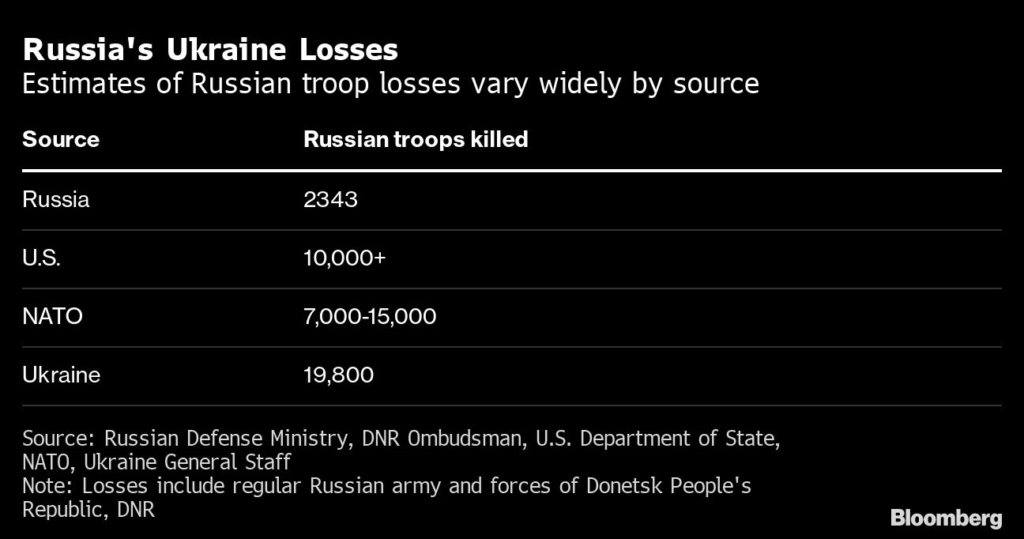
Russian losses during the first six weeks of the invasion appear to have been large. While no reliable casualty figure exists in the broad spread between the official Russian data and estimates by Ukraine, a U.S. assumption of about 20% attrition fits with data on verified Russian vehicle losses, according to @OsintTechnical, an open source intelligence outfit.

Twenty percent is a big figure, equivalent to that suffered by the armies serving Confederate General Robert E. Lee, who lost a higher proportion of men than any other general during the American civil war, according to O’Brien, the St. Andrews professor. He sees that as unlikely to change. 

“What it actually is looking at is Russia suffering a constant drip, drip of losses, making small gains, and instead of building up massive force for one effort, feeding forces more slowly over a poor road network. All without air dominance,” O‘Brien tweeted.

High casualty rates alone are unlikely to force an end to the war, given that Russians tend to be more willing than Americans or Europeans to accept them, especially if Putin’s self-described “special military operation” has popular support. Losses can, however, create constraints in critical areas where personnel are difficult to quickly replace, such as combat pilots.

Nor would high casualties stop Putin from declaring victory at any point, given the lock he has on domestic media. The problem, says @OsintTechnical, who uses only the name of his project, is how to stop the war even after Putin has found something to declare as victory. 

“The Russians would still be in Ukraine, so the war would not be over,” he said. “The Ukrainians would just have to try to retake territory.”

(Updates to add details on warship in seventh paragraph)

More stories like this are available on bloomberg.com

©2022 Bloomberg L.P.
Emirates to Expand Into the Metaverse and Launch Own NFTs

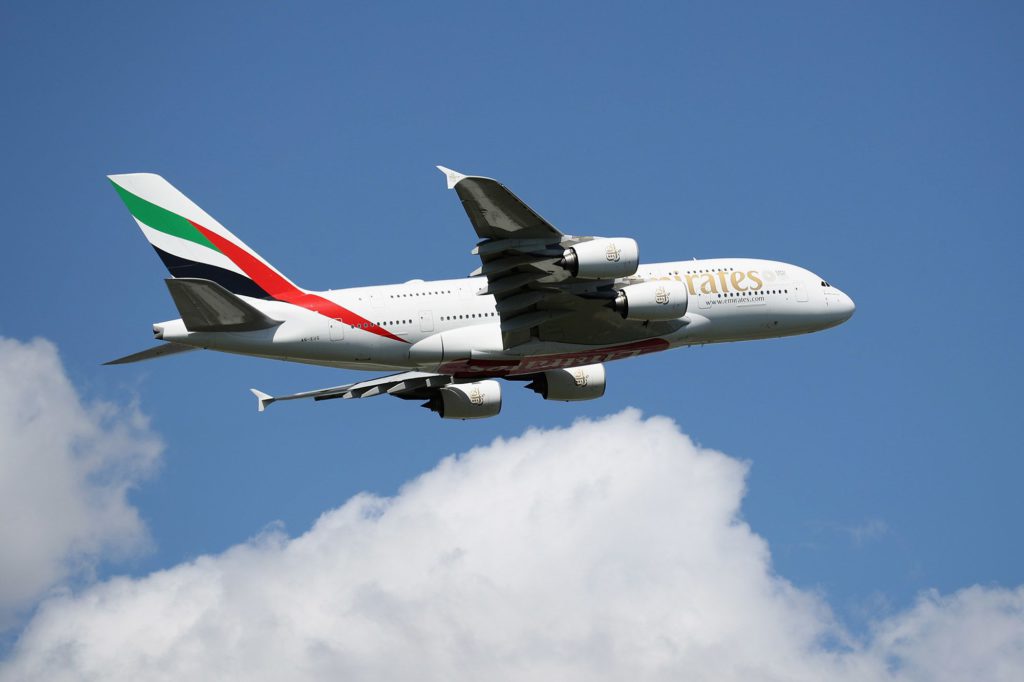
(Bloomberg) — Emirates unveiled plans to expand the airline’s use of the Metaverse and launch NFTs, a plan intended to boost revenue and improve customer service.

An NFT, or nonfungible token, is a unique asset — often digital art — that is registered on a blockchain. They have attracted growing interest from institutions outside of the cryptocurrency industry as a means to raise funds and awareness. 

Emirates’ NFTs are set to be both collectible and utility-based, according to a statement on Thursday. Nike Inc. unveiled a similar plan with the acquisition of a virtual collectibles company in December.

The airline also plans to turn its pavilion at Dubai’s Expo into an innovation center that focuses on “future-focused projects,” including those related to the Metaverse, NFTs and Web3.

Emirates is “committing a significant investment in financial and resourcing terms to develop products and services using advanced technologies,” said Chief Executive Officer Saeed Al Maktoum. “That will deliver on revenue, brand experience and business efficiencies.” 

More stories like this are available on bloomberg.com

©2022 Bloomberg L.P.
Battery Maker Gotion is Seeking $1.6 Billion in Swiss Listing

(Bloomberg) — Chinese battery maker Gotion High-Tech Co. is considering raising about 10 billion yuan ($1.6 billion) from a sale of global depositary receipts in Switzerland, according to people familiar with the matter. 

The Shenzhen-listed company picked China International Capital Corp. and Haitong Securities Co. to arrange the offering, said the people, who asked not to be identified as the information is private. A listing could happen as soon as in the second half of this year, the people said.

Deliberations are ongoing and details of the GDR sale including size and timeline could change, the people said. A representative for CICC declined to comment, while representatives for Gotion and Haitong Securities didn’t immediately respond to requests for comment.

If the deal is successful, Gotion could join Sany Heavy Industry Co. in becoming the first batch of Chinese companies to trade in Switzerland under an expanded cross-border listing program. China’s securities regulator said in February that the Shanghai-London Stock Connect — which lets companies listed on one exchange offer depositary receipts on the other — would be enlarged to include firms in Switzerland, Germany and Shenzhen.

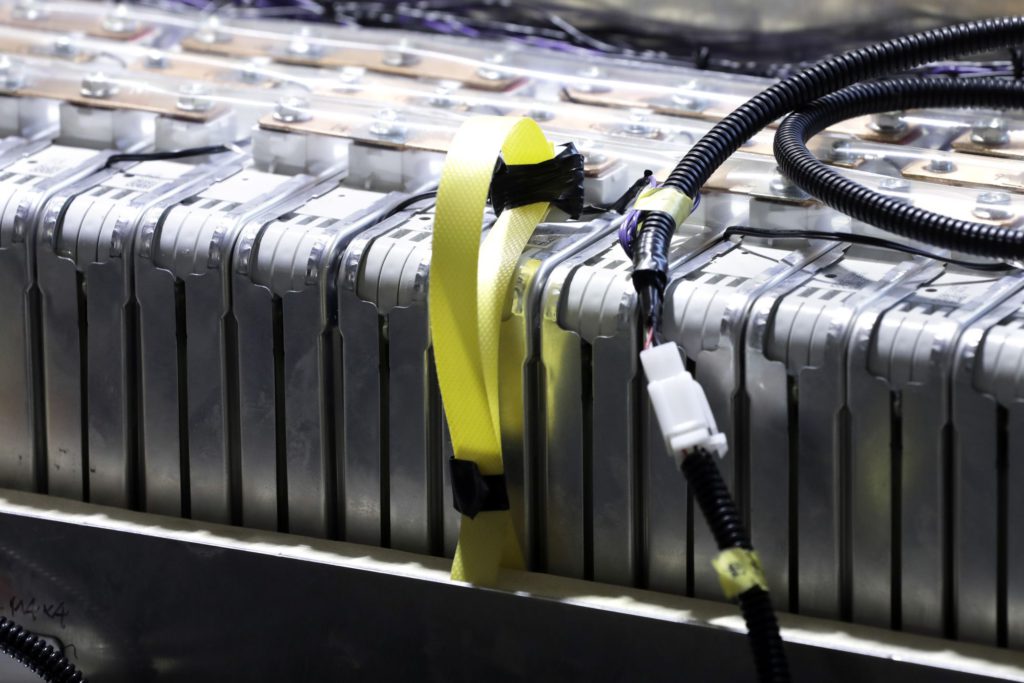
Founded in 2006, Gotion makes batteries for electric vehicles and has research centers in China, Singapore, the U.S., Germany and Japan, according to its website. The No. 4 battery manufacturer in China went public in Shenzhen in 2015. Volkswagen AG in 2020 became its largest shareholder in an 1.1 billion euro deal.

Shares in Gotion have fallen about 43% this year, giving the company a market value of about $7.6 billion.

Gotion announced its GDR offering plans last month, adding it still requires approvals from shareholders and regulators. The Hefei-based company didn’t provide details on the share sale. It plans to use the proceeds for purposes including accelerating its international strategy, meeting its overseas funding needs and hiring overseas research technicians.

The battery maker also aims to more than triple its capacity to 300 gigawatt-hours by 2025, with a third being in Europe, North America, South and Southeast Asia, according to a separate statement.

More stories like this are available on bloomberg.com

©2022 Bloomberg L.P.

Close Bitnami banner
Bitnami
