Bloomberg

Tigray Waits for Aid After Truce Agreed in Ethiopia’s Civil War

(Bloomberg) — Aid has trickled into parts of Ethiopia’s war-torn Tigray region since federal and rebel forces declared a truce late last month after 17 months of fighting, but has only reached a tiny proportion of the millions of people who need it so far.

The World Food Programme dispatched 20 trucks carrying food and other supplies to Tigray on April 1, the first such convoy to enter the northern area in more than three months. The International Committee for the Red Cross, which had been flying in life-saving drugs into Tigray since January, dispatched its own convoy carrying food, medical and water-treatment supplies and other essentials to the area the following day. Ongoing security challenges, damaged infrastructure and fuel shortages have frustrated efforts to distribute the aid.

The WFP estimates 4.6 million people in Tigray are food insecure, and that its first 650-ton aid drop will feed about 30,000 of them for a month.

“This is just a drop in the ocean and will only serve a fraction of the needs,” the United Nations agency said in response to emailed questions on Tuesday.  While the agency said it is prepared to continue providing assistance, it needs swift access to fuel and cash.

Read: The Misery Behind the Truce in Ethiopia’s Civil War: QuickTake

Fighting erupted in Tigray when Prime Minister Abiy Ahmed ordered an incursion in November 2020 after forces loyal to the state’s ruling Tigray People’s Liberation Front attacked a federal army base. The showdown followed months of tension stemming from Abiy’s sidelining of the TPLF, which had been the nation’s preeminent power broker for decades, and degenerated into a civil war that has claimed tens of thousands of lives. Healthcare, electricity, banking and telecommunications have all been disrupted. 

“Ultimately it is essential to restore basic services in the Tigray region after almost one-and-a-half years of interruption,” the WFP said. 

Tigrayan leaders last week bemoaned the inadequacy of the aid flows, and accused the government of using the cessation in hostilities to intensify a blockade of Tigray. On Tuesday, the TPLF said it was withdrawing its forces from the neighboring Afar region and an immediate improvement in access to humanitarian assistance was expected, according to a statement read out on Tigray TV.

Selamawit Kassa, state minister at the communication ministry, didn’t immediately respond to a request for comment. 

Read more: Rights Groups Accuse Ethiopian Forces of War Crimes in Tigray

The U.S.’s special envoy for the Horn of Africa, David Satterfield, and his deputy, Payton Knopf, are due to arrive in Ethiopia on Wednesday for talks with government officials, humanitarian organizations and diplomats. 

“Their visit continues U.S. efforts towards ceasing hostilities, unhindered humanitarian access, transparent investigations into human-rights abuses and violations by all actors, and a negotiated resolution to the conflict in Ethiopia,” the State Department said in a statement.

While hostilities in the north have eased since the truce was agreed on March 25, conflict has flared in the center of the country, with federal troops and regional forces from the Oromia region staging a month-long offensive against the Oromo Liberation Army — a rebel group that the government has designated as a terrorist organization.  

More stories like this are available on bloomberg.com

©2022 Bloomberg L.P.

Deutsche Telekom Edges Closer to T-Mobile Control After Deal

(Bloomberg) — Deutsche Telekom AG paid $2.4 billion to SoftBank Group Corp. to increase its stake in T-Mobile US Inc., taking it closer to its goal of holding a majority of the U.S. division.

The Bonn-based telecommunications company now holds 48.4% of the company after buying 21.2 million shares at an average price of $113 per T-Mobile share, according to a statement Wednesday. The company is using part of the approximately 4 billion euros received from the recently completed sale of T-Mobile Netherlands to purchase the stake.

While European telecom firms struggling due to fierce competition and tough regulation, Deutsche Telekom has long flagged that it wished to increase its stake in the U.S. business, which accounts for nearly two-thirds of the group’s sales.

Deutsche Telekom shares rose about 1% in Frankfurt, while T-Mobile shares rose 0.8% in pre-market trading in New York. SoftBank closed 2% higher.

SoftBank previously struck a complex deal with Deutsche Telekom to sell part of its stake in T-Mobile US. The Japanese company ended up with a stake in the U.S. firm after the completion of a mega-merger with Sprint Corp. in 2020.

In September last year the Japanese company agreed to swap about 45 million T-Mobile shares for a 4.5% stake in Deutsche Telekom AG. The deal allowed SoftBank to borrow against its T-Mobile stake as long as Deutsche Telekom gets to vote the shares pledged as collateral. 

SoftBank still holds about 39.7 million shares in T-Mobile, currently worth about $5.2 billion.

Deutsche Telekom previously had a 46.7% stake in T-Mobile after it bought 45 million shares in the company in September as part of its agreement with SoftBank. The move Wednesday involved the exercise of a call option for 21.2 million shares and the purchase of a further 9.3 million shares. The weighted average price compares with a closing value on Tuesday of $130.42. 

T-Mobile is currently projecting 2022 subscriber growth that exceeded most analysts’ expectations. The carrier has had an edge over rivals through its earlier introduction of fast 5G service and that helped the company sign 646,000 customers in a new business last year: wireless home broadband. T-Mobile had expected to attract more than 7 million home broadband subscribers by 2025.


(Updated with chart, additional context)

More stories like this are available on bloomberg.com

©2022 Bloomberg L.P.

China’s Exports to Russia Slump After Ukraine Invasion

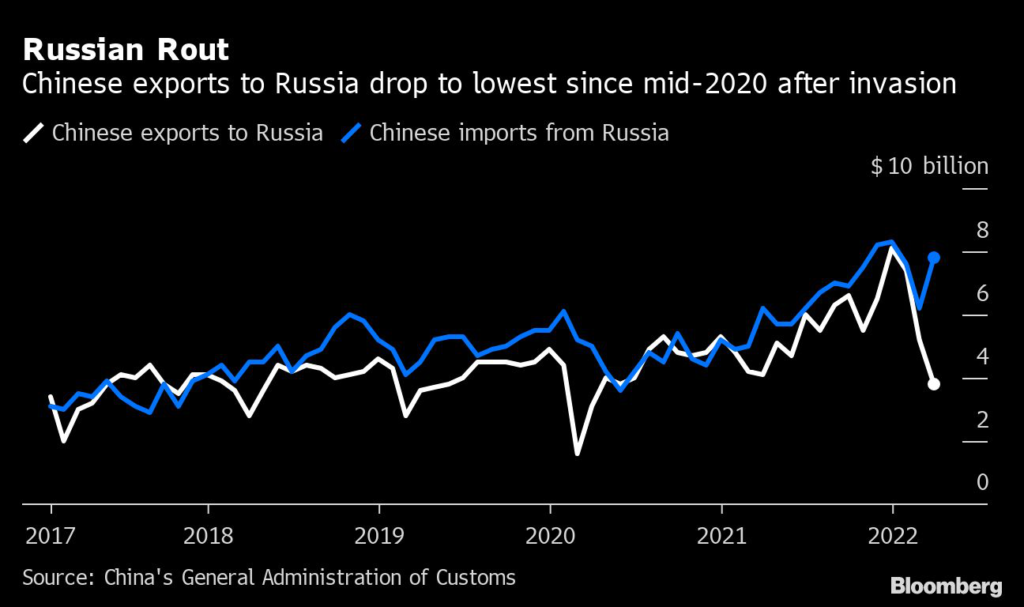
(Bloomberg) — China’s exports to Russia slumped in March after the invasion of Ukraine even as shipments to other nations grew quickly, indicating Chinese companies are likely being cautious about trading with Russia. 

Chinese firms sold $3.8 billion worth of goods to Russia in March, official data showed Wednesday, a 7.7% drop from a year earlier. That was the lowest amount since May 2020, when global trade was badly affected by the outbreak of Covid-19. 

The two nations declared their friendship had no limits earlier this year when Presidents Xi Jinping and Vladimir Putin met before the invasion of Ukraine, and since the attack China has said it will continue normal trade relations. However, the increasing sanctions on Russia by many nations, the slump in the Russian currency and U.S. efforts to stop Russia from using the dollar has probably pushed Chinese firms to hold back on exports.

Imports from Russia rose 26.4% from a year ago, likely pushed higher by rising commodity prices. China mainly buys oil, gas, coal and agricultural commodities from Russia and sells electronic equipment, machinery, and vehicles. Details on the actual goods moved across the border in March will be released later in the month.

Read more: War Complicates Russia’s Role in Supplying Commodities to China

China received 387,000 tons of liquefied natural gas from Russia in March, higher than the 317,000 tons a year earlier, according to ship-tracking data compiled by Bloomberg. While China has been steadily increasing gas imports from Russia since supply from its pipeline started in late 2019, that volume still lags behind top supplier Australia.

Imports in March may have dropped due to Russia’s seasonal pipe maintenance works and China’s covid outbreaks, but will likely rise by 3 billion cubic meters this summer, from 10bcm in 2021, to keep Gazprom PJSC on track to reach full capacity of 38bcm by 2024, according to Lujia Cao, a gas analyst with BloombergNEF. Just before the invasion, PetroChina Co. inked its second gas contract with Gazprom.

In 2021, China’s total trade with Russia grew 36% to $147 billion, official data showed, with the nations’ leaders agreeing to boost this to $250 billion when they met in February. Russia’s Energy Minister Nikolay Shulginov said that the country is ready to sell crude oil and petroleum products to “friendly countries” within any price range, according to a report Wednesday in Izvestia. 

(Updates with Russian energy minister’s comment in final paragraph. The data on Chinese imports of Russian LNG in 5th paragraph was corrected in an earlier version of this story.)

More stories like this are available on bloomberg.com

©2022 Bloomberg L.P.

BOJ Says Won’t Issue Digital Currency to Achieve Negative Rates

(Bloomberg) — The Bank of Japan won’t issue any digital currency with the aim of achieving negative interest rates, a senior BOJ official said on Wednesday, the clearest denial yet of an idea often floated by analysts and academics.

“The bank will not introduce CBDC on this ground,” BOJ Executive Director Shinichi Uchida, in charge of the central bank’s experiments for digital money, said in a speech to a committee on Wednesday. “It is unlikely that such a motivation would be supported by the general public. Furthermore, such a remuneration functionality would be operationally unrealistic while cash still exists.”

The remarks by Uchida, also a key architect of monetary policy, are likely to cool any speculation that the central bank may use digital money to bolster the impact of its negative rates for a distant, stable inflation target. 

Some BOJ watchers say a digital currency could open the door to more effective stimulus tools for a bank that has used almost everything available. 

The central bank began the second phase of its proof of concept studies for digital money earlier this month. It plans to examine features to set limits on the amount of transactions and holdings of digital currency as safeguards against an unpredictable shift of deposits away from banks, Uchida said, in line with moves by other major central banks including the European Central Bank. 

Uchida reiterated that the bank hasn’t decided on issuing a digital currency and that it won’t be the one to make the call. The decision will be made by the public, he said, adding that the BOJ wanted to be prepared for when it’s needed.

More stories like this are available on bloomberg.com

©2022 Bloomberg L.P.

China, Russia Seek Weapons to Hit U.S. Satellites, Pentagon Says

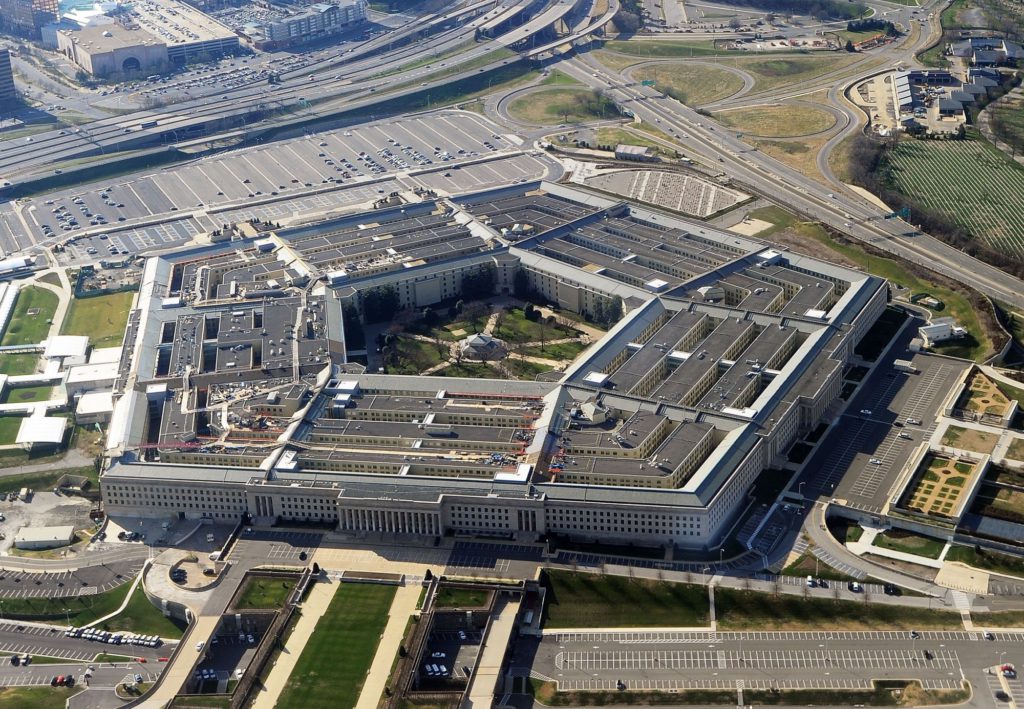
(Bloomberg) — China and Russia continue to develop and deploy weapons that can attack U.S. satellites even as they increase their own fleets of intelligence, surveillance and reconnaissance space vehicles, according to the Pentagon’s intelligence agency.

Although the updated report issued Tuesday by the Defense Intelligence Agency is based mostly on news accounts and declarations from Chinese and Russian officials, it’s a useful summary of the threats that the U.S. says are driving major investments in the Pentagon’s proposed fiscal 2023 defense budget, specifically for the U.S. Space Force and Space Command.

“China has multiple ground-based laser weapons of varying power levels to disrupt, degrade, or damage satellites that include a current limited capability to employ laser systems against satellite sensors,” the intelligence agency said. “By the mid- to late-2020s, China may field higher power systems that extend the threat to the structures of non-optical satellites” as well.

China’s own fleet of intelligence, surveillance and reconnaissance satellites keeps expanding. As of January it included more than 250 systems — “a quantity second only to the United States, and nearly doubling China’s in-orbit systems since 2018,” according to the report. It said the People’s Liberation Army of China “owns and operates about half of the world’s ISR systems, most of which could support monitoring, tracking and targeting of U.S. and allied forces worldwide, especially throughout the Indo-Pacific region. These satellites also allow the PLA to monitor potential regional flashpoints, including the Korean Peninsula, Taiwan, Indian Ocean and South China Sea.”

At the same time, Russia perceives the U.S. dependence on space as America’s “Achilles’ heel” so it’s “pursuing counterspace systems to neutralize or deny U.S. space-based services” and “probably will field lasers that are more capable of damaging satellites in the mid-to-late 2020s,” the Defense Department agency said. 

Russia already “has several ground-based lasers, for example, that can blind satellite sensors,” the Defense Intelligence Agency said, including a system delivered in 2018 to its aerospace forces. By 2030, Russia may also field “higher-power systems that extend the threat to the structures of all satellites, not just electro-optical” sensors, DIA said.

In addition to the threat from anti-satellite weapons, “the probability of collisions of massive derelict objects in low Earth orbit is growing and almost certainly will continue through at least 2030,” the Defense Intelligence Agency said. It cited the rising number of space launches, especially those with multiple payloads, and continuing fragmentation from collisions, battery explosions” and anti-satellite testing.

Chinese Foreign Ministry spokesman Zhao Lijian said Wednesday at a regular press briefing in Beijing that his nation “always advocates the peaceful use of outer space,” and carries out space exploration for economic and scientific needs.

“The U.S. has been weaving a narrative about the so-called threat posed by China and Russia in outer space in order to justify its own military buildup,” he said.

(Updates with comments from China’s Foreign Ministry.)

More stories like this are available on bloomberg.com

©2022 Bloomberg L.P.

Electric Vehicles, Not Luxury Cars, Dominate the New York Auto Show

(Bloomberg) — The auto show, expected after two years of lockdowns to drive off into an irrelevant sunset, isn’t dead yet. Following the vibrant Munich auto show in the fall, the New York International Auto Show will open to the public on Friday, April 15, at Manhattan’s Javits Center and will run through April 24.

The format is more compelling than in years past, given the supply chain crisis that has severely delayed deliveries to dealerships, not to mention markups as high as $100,000 over manufacturer’s suggested retail price for luxury cars and SUVs.

In New York, automakers will showcase new vehicles that even the most neurotic car-spotters have read about only in glossy magazines or seen on YouTube. Thousands have placed orders for such new cars, sight unseen, and resigned themselves, as in the case with General Motors’ Hummer EV, for yearslong waits. 

This week, they’ll at least be able to kick the tires.

“Auto shows are still highly relevant in the same way that dealerships are still highly relevant,” says Erin Kerrigan, founder and managing director of Kerrigan Advisors, a consulting firm. “Consumers still like to touch and feel a new car before they purchase it.”  

Electric Vehicle Proliferation

Electric vehicles will command the spotlight’s primary glare this week in New York.

Some of them will come from such obscure companies as INDI EV and ElectraMeccanica, but Detroit’s heavyweight pickups will hold top billing. Ford Motor Co’s F-150 Lightning, revealed via video feed almost a year ago, will appear just weeks before its first deliveries. Prospective buyers can eyeball just how many White Claws they might be able to fit in the front trunk, or figure out how they might go about plugging the rig into their home in a blackout.

General Motors Inc., in turn, will showcase the electric version of its Chevrolet Silverado EV, a truck first unveiled at the Consumer Electronics Show in January. It’s not due out until 2023, so expect GM to pull out all the stops to pique interest among the e-truck crowd in order to slow the momentum of Ford’s electric pickup.

Nissan, meanwhile, will play up its coming electric SUV, the Ariya. The brand’s humble battery-powered hatchback, the Leaf—for years the everyman’s Tesla—has been overtaken by rivals. The Ariya is Nissan’s chance to regain some of its EV street cred. Production issues have delayed the machine for months, and this week will give Americans one of few opportunities to see the vehicle before it ships to dealers in the fall.

Hyundai Motor Co. may present one of the show’s few surprises. The company promises to unveil a new production vehicle, although it wouldn’t provide details. The company aims to sell 1.7 million electric vehicles in 2026, so the bet is that whatever is under the cover, it will be powered by a big lithium-ion battery.

Hyundai will also show its Kia EV6 and Hyundai Ioniq 5, recently released electric models that are still rare on the road. (Both rigs are commanding steep markups over sticker price.)

By June, according to BloombergNEF estimates, the world will have 20 million plug-in vehicles on its streets—a remarkable jump from 1 million EVs in 2016. In the second half of 2022, almost one million EVs  will hit the road worldwide per month, according to BNEF estimates. That’s one every 3 seconds. 

“We are now transitioning from the halo EV cars to more mass-produced EVs, which can be afforded by anybody,” says Jesse Toprak, the chief analyst for Autonomy, an EV-subscription service. “So we are going to see an influx of the EV-curious consumers at the show who want to see what is out there now. Even [for] consumers who may have ignored the EV market so far, eventually it’s going to be too hard to ignore.”

Absence of Luxury

Still, the amount of news breaking announcements at such trade shows faded long before lockdowns, especially for luxury brands. They figured out years ago that pulling the cover off the new German utility vehicle with pyrotechnics and Arnold Schwarzenegger in a crumbling Detroit theater, or launching the newest Italian supercar in a posh private lounge, commands far better buzz than a carpeted conference center.

This week’s trade show will be light on anything novel from the posher automakers. Aston Martin, Audi, Bentley, Cadillac, Ferrari, Maserati, Porsche, Rolls-Royce, and Volvo will not be unveiling anything new.

Alfa Romeo will show a new Tonale hybrid SUV. BMW will display its new X7 SUV and i7 electric sedan that follows the iX SUV and i4 sport coupe it unveiled last fall. Mercedes-Benz is officially skipping the show but will debut the all-new electric EQS days later, on April 19. Lincoln chose to debut its new electric model on April 20 in Hollywood, Calif.  

Lamborghini, meanwhile, will show a new variant of the existing Huracan supercar, the Huracan Tecnica, both at its private studio space along Manhattan’s High Line and at the Javits Center. The mix of elite and egalitarian access best serves the brand that enjoys sales in the U.S. that are more than twice as high as those in its next-biggest market, China.

“The U.S. is our most important market, and if we look at the share we have inside the U.S., it’s clear New York is a place we have to be,” says Lamborghini CEO Stephan Winkelmann. “It’s a good combination.”

More stories like this are available on bloomberg.com

©2022 Bloomberg L.P.

China’s Exports to Russia Slump After Invasion of Ukraine

(Bloomberg) — China’s exports to Russia slumped in March after the invasion of Ukraine even as shipments to other nations grew quickly, indicating Chinese companies are likely being cautious about trading with Russia. 

Chinese firms sold $3.8 billion worth of goods to Russia in March, official data showed Wednesday, a 7.7% drop from a year earlier. That was the lowest amount since May 2020, when global trade was badly affected by the outbreak of Covid-19. 

The two nations declared their friendship had no limits earlier this year when Presidents Xi Jinping and Vladimir Putin met before the invasion of Ukraine, and since the attack China has said it will continue normal trade relations. However, the increasing sanctions on Russia by many nations, the slump in the Russian currency and U.S. efforts to stop Russia from using the dollar has probably pushed Chinese firms to hold back on exports.

Imports from Russia rose 26.4% from a year ago, likely pushed higher by rising commodity prices. China mainly buys oil, gas, coal and agricultural commodities from Russia and sells electronic equipment, machinery, and vehicles. Details on the actual goods moved across the border in March will be released later in the month.

Read more: War Complicates Russia’s Role in Supplying Commodities to China

China received 188,000 tons of liquefied natural gas from Russia in March, down from 273,000 tons a year earlier, according to data compiled by Bloomberg. While China has been steadily increasing gas imports from Russia since supply of its first Russian gas contract started in late 2019, that volume is less than 11% of what it imported from top supplier Australia in March, according to Bloomberg’s shipping data.

Imports in March may have dropped due to Russia’s seasonal pipe maintenance works and China’s covid outbreaks, but will likely rise by 3 billion cubic meters this summer, from 10bcm in 2021, to keep Gazprom PJSC on track to reach full capacity of 38bcm by 2024, according to Lujia Cao, a gas analyst with BloombergNEF. Just before the invasion, PetroChina Co. inked its second gas contract with Gazprom.

In 2021, China’s total trade with Russia grew 36% to $147 billion, official data showed, with the nations’ leaders agreeing to boost this to $250 billion when they met in February. 

More stories like this are available on bloomberg.com

©2022 Bloomberg L.P.

Abu Dhabi Invests in Egyptian Firms to Help Shore Up Economy

(Bloomberg) — An Abu Dhabi wealth fund is snapping up stakes in key Egyptian companies, including the country’s largest listed bank, as part of efforts to shore up the North African nation’s economy. 

ADQ said it’s buying into Commercial International Bank, Fawry for Banking & Payment Technology Services SAE, Alexandria Container & Cargo Handling Company, Misr Fertilizers Production Company and Abu Qir Fertilizers & Chemical Industries. 

The fund didn’t specify how much it will spend, but Bloomberg has previously reported ADQ plans to invest about $2 billion in Egypt, including a stake of about 18% in Commercial International Bank. The Egyptian bourse reported block trades worth $1.82 billion in the five firms on Tuesday, without disclosing the buyer’s identity.

Such funding is welcome for Egypt, where the economy is being put under increasing pressure from the shockwaves of Russia’s invasion of Ukraine. The central bank held a special policy meeting in March and hiked interest rates for the first time since 2017, and allowed the currency to weaken sharply. 

The United Arab Emirates, of which Abu Dhabi is a part, is investing after Egypt expressed concerns over food security, a person familiar with the Gulf nation’s thinking said in March. Abu Dhabi sees this as a core issue for President Abdel-Fattah El-Sisi, the person said. 

The UAE supported El-Sisi’s overthrow of an Islamist president who came to power following the Arab Spring uprisings a decade ago. 

Egypt and the UAE set up a $20 billion joint strategic platform in 2019 to invest in a range of sectors and assets. It’s run through Egypt’s sovereign wealth fund and ADQ, which is chaired by Sheikh Tahnoon Bin Zayed Al Nahyan — a brother of the UAE’s de facto ruler and the country’s national security adviser.

“The recent transactions are a testament to our long-term commitment to elevate our investment partnership with Egypt and continue deploying capital in projects of commercial importance,” ADQ Chief Executive Officer Mohamed Hassan Alsuwaidi said on Wednesday.

ADQ last year bought an Egyptian pharmaceuticals company from Bausch Health Cos., while also investing in a UAE supermarket chain expanding in the North African country. Aldar Properties PJSC, backed by Alpha Dhabi Holding PJSC, meanwhile agreed to buy an Egyptian developer known as Sodic.

Earlier this year, First Abu Dhabi Bank PJSC offered to buy a majority stake in EFG Hermes, valuing the firm at $1.2 billion, in what’s likely to be the biggest acquisition yet in Egypt by the UAE’s largest lender.

(Updates with details)

More stories like this are available on bloomberg.com

©2022 Bloomberg L.P.

Apple Laptop Maker Joins Growing Covid Plant Closures in China

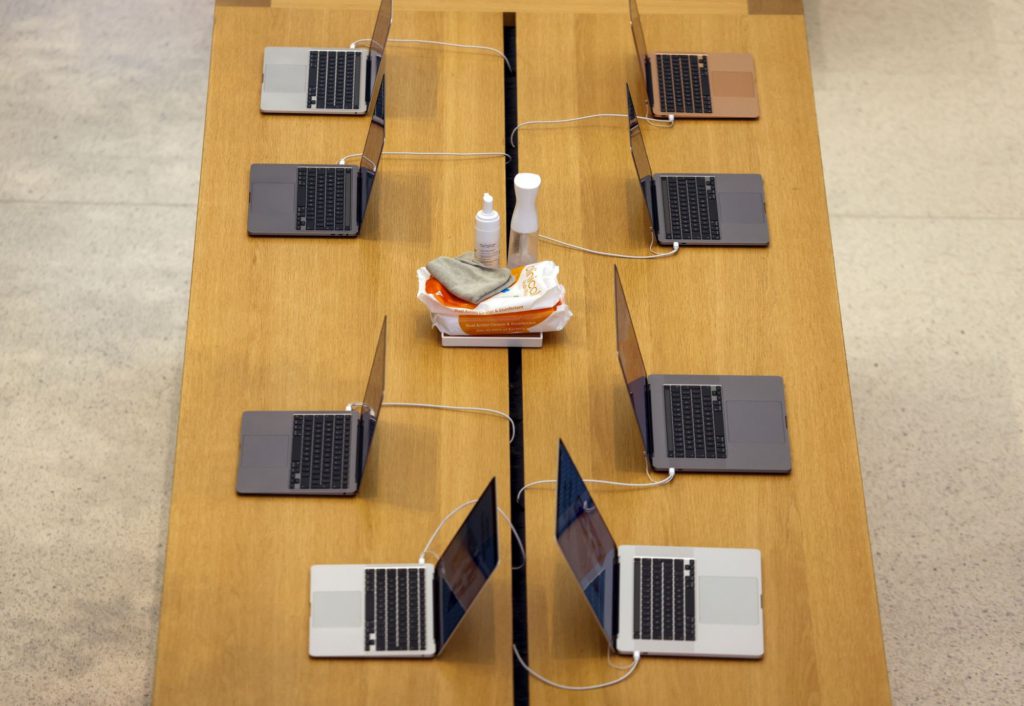
(Bloomberg) — More than 30 Taiwanese companies including Pegatron Corp. and Macbook maker Quanta Computer Inc. have now halted production in the electronics hubs of eastern China to comply with local Covid-related restrictions, spelling more trouble for an already fragile global tech supply chain.

On Wednesday, Quanta said it was suspending a Shanghai plant to comply with government restrictions. At least 30 other companies are suspending output in nearby Kunshan until April 19, they said in filings to Taiwan’s stock exchange. Some said the effect on their finances is still unknown, while others expect no major impact. Kunshan, a bustling city that hosts Apple Inc. suppliers including Pegatron and Luxshare Precision Industry Co., began a city-wide lockdown in early April.

The companies make parts for consumer electronics products ranging from PCs and smartphones, with many of the components critical for their global customers. The global supply of key tech has already been hobbled by China’s zero tolerance toward the virus and its measures to stamp it out in cities such as Shanghai and Kunshan.

On Tuesday, Pegatron suspended its iPhone assembly campuses in those two cities as China struggles to control the worst virus outbreak in two years. Other key Apple Inc. manufacturing partners including Luxshare and Compal Electronics Inc. also have major operations in Kunshan.

Widespread Chinese lockdowns have begun to exact an unquantifiable toll on the world’s No. 2 economy, the biggest buyer of semiconductors and the largest producer of electronics from iPhones to PCs. 

Disruptions to local manufacturing are set to worsen the logistics hurdles of global companies already grappling with a shortage of cargo capacity that’s pushed shipping costs to record highs and a prolonged chip crunch. Gaming consoles, server computers and electric vehicles are among products facing further supply challenges.

Many of the most critical factories in Kunshan and Shanghai have managed to keep humming by operating so-called closed-loop systems that are quarantined from much of the outside world. But worsening logistics jams are constricting shipments of components, draining inventories to the point where some manufacturers including Pegatron and Quanta are down to just a few weeks’ stocks, Taipei-based consultancy TrendForce estimated.

Local officials on Wednesday placed two Kunshan districts with significant electronics manufacturing into lockdown for an indefinite period, while for certain other districts the lockdown was extended by seven days.

Some contract electronics makers have been unable to secure CPUs, battery modules and panels amid prolonged lockdowns, and certain manufacturers are facing a shortage of multilayer ceramic capacitors for servers and automotive products.

“The biggest problem for MLCC suppliers at this stage is they cannot deliver materials to Shanghai and Kunshan,” TrendForce said in a note on Tuesday. “Limited manpower and logistics and suspended transportation options mean [contract electronics makers] can only rely on onsite inventory to barely meet the needs of production lines, further exacerbating component mismatches.” 

More stories like this are available on bloomberg.com

©2022 Bloomberg L.P.

Ukraine Update: Polish and Baltic Presidents Set to Visit Kyiv

(Bloomberg) — The presidents of Poland and the three Baltic states are heading to Kyiv in a show of support that follows the visits of other leaders to the Ukrainian capital, including from Boris Johnson and European Union chiefs.

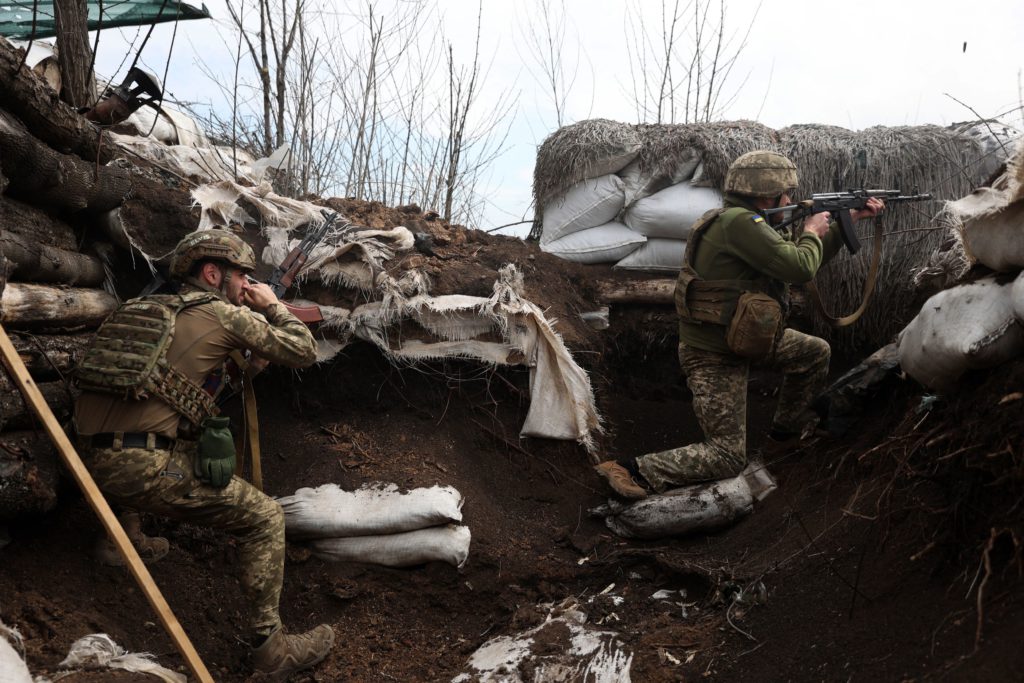
U.S. President Joe Biden ramped up his condemnation of Vladimir Putin by accusing the Russian president’s forces of committing genocide in Ukraine, as Washington prepares a new military aid package for Kyiv. Russia has been massing its forces in the east of Ukraine with a fresh push expected to try and seize control of the broader Donbas region.

Putin said peace talks are stalled, and vowed to continue his “military operation” even as he called the conflict “a tragedy.” Ukrainian negotiator Mykhailo Podolyak said the discussions are “extremely difficult.”


(See RSAN on the Bloomberg Terminal for the Russian Sanctions Dashboard.)

Key Developments

  • U.S. Prepares Massive New Surge of Military Aid to Ukraine
  • World’s Top Oil Merchant Says It Will Stop Trading Russian Crude
  • Richest Russian Strikes Deal as Sanctions Snare Other Oligarchs
  • Russia Faces Hard-to-Verify Claims of Chemical Arms in Mariupol
  • Ukraine War Will Start Rippling Through U.S. Corporate Earnings

All times CET:

Baltic and Polish Leaders to Visit Kyiv (6:28 a.m.)

The leaders of Poland, Latvia, Estonia and Lithuania are on their way to Kyiv, Jakub Kumoch, a foreign policy aide to Polish President Andrzej Duda, wrote on Twitter.

Oil Holds Advance as Putin Continues War (6:04 a.m.)

Oil steadied in Asia after rallying back above $100 a barrel as the Russian president vowed to continue his war in Ukraine, which has rattled markets and tightened global crude supply. West Texas Intermediate surged 6.7% on Tuesday, the most in three weeks. 

U.S. Prepares New Surge of Military Aid (4:44 a.m.)

Roughly $750 million in weaponry is expected to be sent under presidential drawdown authority, people familiar with the matter said. This allows Biden to transfer equipment from U.S. stocks without congressional approval to speed up delivery during an emergency. The types of weapons are still being discussed.

The U.S. has provided more than $2.4 billion in military assistance to Ukraine since Biden took office. Of that, more than $1.7 billion was delivered after the invasion began on Feb. 24.

Top Oil Merchant Will Stop Trading Russian Crude (2:57 a.m)

Volumes of Russian oil handled by Vitol “will diminish significantly in the second quarter as current term contractual obligations decline,” a company spokesperson said by email. “We anticipate this will be completed by end of 2022.”

BP Plc, Shell Plc and Exxon Mobil Corp. earlier announced plans to abandon their stakes in investments related to Russia as they take steps to halt dealings with the nation. Refiners in India and China have continued to purchase Russian oil cargoes, either directly from Moscow or via traders. 

Separately, Russia is ready to sell crude oil and petroleum products to “friendly countries” within any price range, Izvestia reports, citing an interview with Energy Minister Nikolay Shulginov.  

Biden Says Putin Has Committed ‘Genocide’ (11 p.m.)

Biden for the first time accused Russia of committing genocide in Ukraine. Speaking at an event in Iowa on Tuesday laying out steps to lower fuel costs that have surged during the war, Biden described Russia’s actions in the conflict as a “genocide.” He later stood by his comments, but said lawyers would ultimately make the official determination. 

“Yes, I called it genocide because it has become clearer and clearer that Putin is just trying to wipe out the idea of being able to be Ukrainian,” the president told reporters before departing Iowa. “The evidence is mounting.” 

Biden Accuses Putin of Committing ‘Genocide’ in Ukraine (1)

Macron Says Putin Is Paranoid, Won’t Stop Attacks (7:56 p.m.)

French President Emmanuel Macron told Le Point magazine that Vladimir Putin’s decision to attack Ukraine derived from anti-West resentment and paranoia. Covid-19 exacerbated Putin’s feeling of isolation, according to Macron. 

“He found himself in Sochi for months, he locked himself down, he had less contact with other thinking,” Macron said, predicting that Putin won’t stop his attacks and needs a military victory ahead of May 9, the day Russia marks its victory in World War II. The French leader stressed that he will continue to speak to his Russian counterpart to warn him about the dangers of continuing the cycle of violence.

German President Isn’t Welcome in Kyiv (6:36 p.m.)

German President Frank-Walter Steinmeier planned to visit Kyiv in a gesture of solidarity with the Ukrainian government, but he wasn’t welcome, according to Bild.

“I was prepared for it,” the newspaper cited Steinmeier as saying in Warsaw on Tuesday. “But apparently, and I have to take this on board, that wasn’t wanted in Kyiv.”

Steinmeier has been criticized by Ukrainian officials for his previous support of the Nord Stream 2 gas pipeline from Russia to Germany. In a rare admission, the former foreign minister said in a TV interview this month that he and other German officials had failed in their policy toward Russia and President Vladimir Putin over the past two decades.

Ukraine Negotiator Says Talks Continue, Are Difficult (4:42 p.m.)

Talks continue with Russia in working subgroups, Mykhailo Podolyak said by WhatsApp message, adding “the emotional background is difficult.” He said Moscow was seeking to use public statements to drive its claims in the negotiation process.

Putin Says Peace Talks ‘at Dead End’ (4:15 p.m.)

The “military operation” is going “according to plan,” Putin said in a joint press conference with Belarusian President Alexander Lukashenko. In his first public comments on the atrocities reported in Bucha, he said allegations that Russia was responsible were “fake.”

Putin also accused Ukraine of backing off earlier concessions. The government in Kyiv says it has not changed its position and in turn blames Russia for the lack of progress.

Russia’s economy has withstood the sanctions “blitzkrieg,” Putin said, citing the recovery of the ruble exchange rate. But he conceded that logistics and payment systems remain a weakness and the long-term impact could be more painful. 

ArcelorMittal to Restart Blast Furnace in Ukraine (4:04 p.m.)

Europe’s biggest steelmaker said it was responding to a request from the government in Kyiv. The company idled operations at its Kryvyi Rih facility when the war broke out. Pig iron production will return to around fifth of the plant’s normal output.

Airbus Defends Decision to Buy Russian Titanium (4:03 p.m.)

The company said sanctions would hurt aerospace manufacturers who depend on the lightweight metal and wouldn’t deter Putin when it comes to Ukraine.

The European plane maker has been stockpiling titanium for many years, Chief Executive Officer Guillaume Faury said at the company’s AGM. That’s given it some breathing room in the short and medium term, even if an embargo does take effect.

OPEC Sees War Curbing Oil Supply and Demand (3:32 p.m.)

The comment from the cartel suggests it sees little need to divert from its current production policy. OPEC Secretary-General Mohammad Barkindo told the European Union on Monday that the oil market was beyond its control.

The Organization of Petroleum Exporting Countries cut forecasts for global oil consumption in 2022 by 410,000 barrels a day, according to its latest monthly report. At the same time, it lowered projections for supplies from outside the cartel by 330,000 barrels a day, with Russia’s output now seen 530,000 barrels a day below previous estimates.

World Bank Announces $1.5 Billion for Ukraine (2:19 p.m.)

The World Bank is preparing $1.5 billion for Ukraine to support the continuation of essential government services during the war, the institution’s president, David Malpass, said in Warsaw. 

Donors and recipient countries approved $1 billion for Ukraine and $100 million for Moldova, according to Malpass. The disbursement is part of as much as $3 billion that the World Bank has pledged in funding for Ukraine following Russia’s invasion.

Number of People Returning to Ukraine Surges (12:30 p.m.)

The number of people returning to Ukraine from abroad has jumped to about 30,000 per day, according to Andriy Demchenko, a spokesman for the State Border Guard Service.

While in the first days of the war mostly men were coming back to Ukraine, now there are more women, elderly people and children returning, Demchenko said in a video briefing. The United Nations Refugee Agency estimates that more than 4.3 million refugees fled the country after the outbreak of war, with some 7.1 million displaced internally.

Putin Says Conflict With West Inevitable (11:30 a.m.)

Speaking to workers at the Vostochny Cosmodrome in Russia’s Far East, Putin said conflict with the West was inevitable and that Russia is too large to isolate from the rest of the world.

Western sanctions imposed over the invasion of Ukraine won’t keep Moscow from developing space-exploration efforts, he added, vowing to resume the country’s lunar program. 

More stories like this are available on bloomberg.com

©2022 Bloomberg L.P.

Close Bitnami banner
Bitnami