Bloomberg

Solar Power Is the Latest Industry Hit by China’s Pandemic Curbs

(Bloomberg) — The solar power industry is the latest to be hit by China’s strict Covid control measures, with equipment makers cutting production amid complaints of shipment delays and staffing problems.

Solar companies are seeing a “severe impact” on both panel production and installations from the most recent round of virus outbreaks in China, according to a survey conducted by the Shanghai Solar Energy Society. More than half of respondents noted negative impacts, according to the group, which did not name the companies. 

Wafer production has been suspended in some factories in the coastal region close to Shanghai, driving up prices in recent weeks, Jefferies analysts including Johnson Wan said in an April 10 note. Domestic shipping of polysilicon, a key solar manufacturing material, has also faced delays due to outbreaks in the major sourcing region of Xinjiang, the analysts said. 

China is vital to the production of solar panels needed for the world to meet its climate change goals, with the vast majority of global production capacity in every step of the manufacturing process. 

The country is facing its largest documented outbreak since the pandemic began, with Shanghai in the midst of a weeks-long lockdown while other regions have introduced control measures that disrupted supply chains across the economy. 

More stories like this are available on bloomberg.com

©2022 Bloomberg L.P.

China’s Covid Outbreak Highlights Weak Lending as Borrowers Hold Back

(Bloomberg) — China’s central bank is struggling to drive up lending in the economy despite cutting interest rates and giving banks a cash boost. 

With a worsening Covid outbreak locking down mega cities Shanghai and Shenzhen, worries about jobs and incomes mean businesses and consumers are unwilling to take on more debt. Banks are reluctant to extend more loans too as a property downturn drives up bad debts and squeezes profits. 

That creates a challenge for the People’s Bank of China, which is set to diverge further with a tightening U.S. Federal Reserve by possibly cutting policy interest rates for a second time this year on Friday. Many economists also expect the central bank to reduce the amount of cash banks must hold in reserve, freeing up more money for lending.

Problem is, with restrictions to contain the spread of omicron amid China’s ongoing Covid Zero strategy keeping consumers on edge, any new stimulus may end up being parked at banks rather than flowing through to the real economy.

“Credit demand is so weak, but there is abundant liquidity in the interbank market and the banks are having trouble lending them out,” said Helen Qiao, chief China economist at Bank of America. Since credit demand is very low, adjusting interest rates and cutting reserves isn’t the most effective form of monetary policy for China, she said. 

With monetary policies in the world’s two biggest economies now headed in opposite directions, the traditional premium Chinese debt returns compared with U.S. Treasuries vanished for the first time since 2010. That may constrain the PBOC’s policy options, for fears too much easing would spur money to shift out of the nation’s markets.  

China’s leaders in early March set an ambitious GDP growth target of around 5.5% for the year. Since then, the war in Ukraine has pushed up energy costs, and virus outbreaks and shutdowns to contain infections have caused economists to cut their forecasts. The State Council, China’s cabinet, has also pledged additional support. 

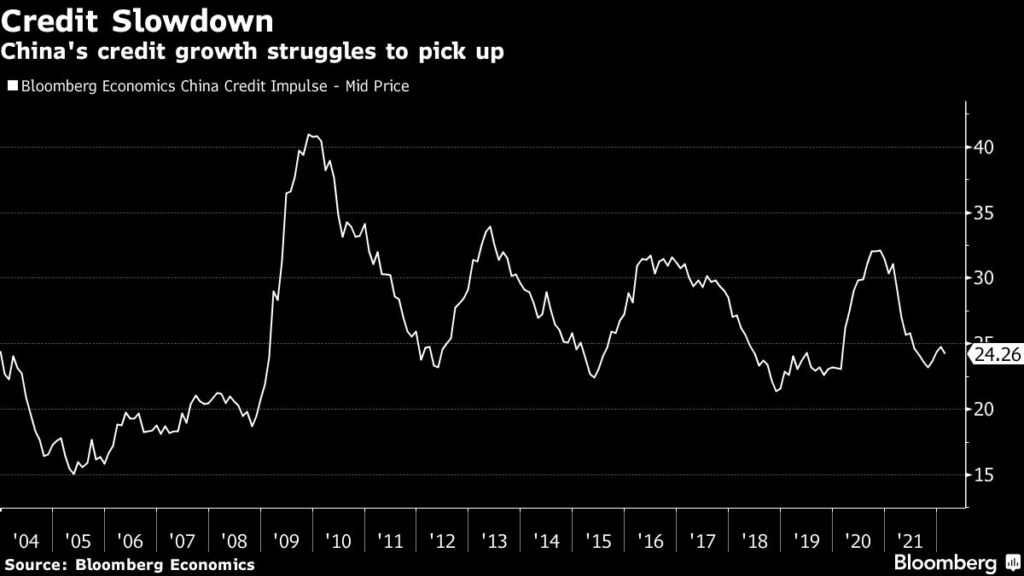
Despite two reductions last year in the reserve requirement ratio — the level of deposits lenders must lock away at the central bank — and an interest-rate cut in January, China’s credit impulse, a measure of the ratio of new credit to gross domestic product, decelerated sharply in 2021 and has yet to pick up significantly. 

Latest figures show a pickup in credit in March, largely due to a ramp up in bond sales from local governments and a seasonal boost as companies accelerated borrowing after the Lunar New Year holiday. But mortgage growth and long-term corporate loans remained weak, suggesting ongoing caution. 

What Bloomberg’s Economists Say…

Monetary policy transmission is a key issue for almost all central banks. The better the transmission is, the more willing the central bank would be to ease policy when necessary.

The demand in private sector in China has been weaker than before. It is a hurdle for the PBOC to maintain credit expansion.

David Qu, China economist

The central bank has acknowledged it has a problem. At the end of March, the monetary policy committee promised to “unclog” the transmission system, the first time since late 2020 it’s referred to the issue. 

For Xu Gao, chief economist at Bank of China International, the key to getting credit flowing again lies in the property market, which remains under strain after Beijing tightened restrictions last year to curb runaway prices and debt. 

“The core problem is a lack of confidence,” he said. “Even if banks lowered mortgages rates, residents still don’t dare to buy houses and take on mortgages because they fear the buildings won’t be finished and delivered.”

Signs of weak lending are everywhere. 

Even though the average corporate loan rate trended lower last year, the growth of new medium and long-term corporate loans — reflecting companies’ fixed-asset investment demand — slowed in the first three months of this year from last year. Long-term household loans, a proxy for mortgages, shrank for the first time ever in February and remain below the levels reached in previous years.

And rather than a lack of liquidity, banks are actually flush with cash. The rate on one-year interbank loans has been below the policy interest rate on the one-year medium-term lending facility since mid-2021, implying that it’s cheaper for banks to borrow from each other than to take out low-cost loans from the PBOC. 

Even with all that cash sloshing around, banks are saddled with low profitability and rising debt though, making them less willing to give out loans. 

John Beirne, vice chair of research at Asian Development Bank Institute, said interest rate cuts from the central bank reduce the net interest margins for banks, and combined with high levels of risk aversion and fears of taking on more debt, rate cuts may not be passed through to borrowers.

The amount of bad loans rose to 2.85 trillion yuan in the fourth quarter of last year, up around 18% from two years ago before the pandemic, according to figures from the China Banking and Insurance Regulatory Commission. Even though the non-performing loan ratio declined to 1.73% in the October-December period from a recent peak of 1.96% in 2020, it was still well above the level of around 1% a decade ago.

The situation is likely worse at smaller banks. Net income at Guangzhou Rural Commercial Bank Co., for instance, plunged 28.4% last year, mainly because it made more provisions for asset impairment losses to “enhance its ability to resist risks under the complex external environment and the epidemic,” the lender said in its annual report. Credit impairment losses surged nearly 60% last year to 12.5 billion yuan ($2 billion), it said.

A weaker monetary policy transmission means the PBOC may opt for only a small rate cut, a move that would be more about signaling supportive policy, said Jing Sima, a China strategist at BCA Research Inc. 

“Our view is that the PBOC has done its job,” she said. “More rate cuts won’t do much to boost the real economy.” Rather it’s regulatory policies that are preventing central bank measures from being more effective, she said. 

Structural monetary tools are crucial to boosting credit growth and improving policy transmission, the Economic Daily said in a commentary Wednesday. The newspaper is affiliated with the State Council, China’s cabinet.

The PBOC is planning to widen its relending program, providing loans to banks to lend to sectors such as small businesses and agricultural firms, innovative industries and elderly care sectors.

“The PBOC will certainly avoid flooding the economy with liquidity, because that would lead to funds flowing into undesirable sectors,” said Peng Yuchao, associate professor at the Central University of Finance and Economics. “It should use its structural policies well.”

(Updates with state newspaper, expert comments and additional details in last three paragraphs.)

More stories like this are available on bloomberg.com

©2022 Bloomberg L.P.

Celebrities Toss $87 Million to Crypto-Payments Company MoonPay

(Bloomberg) —

Crypto-payments company MoonPay got almost 16% of its most recent funding round from celebrities. 

More than 60 musicians, actors and other personalities collectively offered about $87 million in the firm’s latest round of funding, MoonPay said in a press release Wednesday. Late last year, the startup raised $555 million in a Series A round led by Tiger Global Management and Coatue Management that valued the company at $3.4 billion. 

Celebrities on the investor roster include Ashton Kutcher, Justin Bieber, Steve Aoki, Gwyneth Paltrow, Maria Sharapova, Diplo, Post Malone, Drake, Matthew McConaughey, Bruce Willis, Mindy Kaling and Paris Hilton. 

MoonPay’s fundraising is the latest sign of the mounting interest among the glitterati in crypto-focused financial technology. NFTs and the blockchain technology that underpins them have the potential to disrupt the music, film, fashion and gaming industries by allowing creators to secure financing, control their intellectual property and sell their work directly to consumers without the help of intermediaries. 

MoonPay Chief Executive Officer Ivan Soto-Wright said NFTs are more than just JPEGs, and provide a way for artists and creators to manage royalties. The company seeks to help them think about strategies for the emerging blockchain-based web — or web3 — he said in an interview.

“MoonPay sees an entire different format for the entertainment industry,” Soto-Wright said. “My thought was: Let’s build a diversified portfolio of incredible people that represent different industries and let’s talk about the use cases for their intellectual property.”

MoonPay describes itself as a sort of PayPal for the crypto economy, enabling transactions between individuals and crypto firms, such as purveyors on nonfungible tokens, or NFTs. It’s designed to allow users to buy and sell digital assets and NFTs via credit and debit cards; Apple, Google or Samsung Pay; or bank accounts.

Several of the celebrities in MoonPay’s investor list, including Bieber and Hilton, have jumped into NFTs over the past year, with high-profile purchases of digital images worth millions of dollars. 

More stories like this are available on bloomberg.com

©2022 Bloomberg L.P.

Honda CEO Bets $40 Billion to Reach Goal of Going Fully Electric

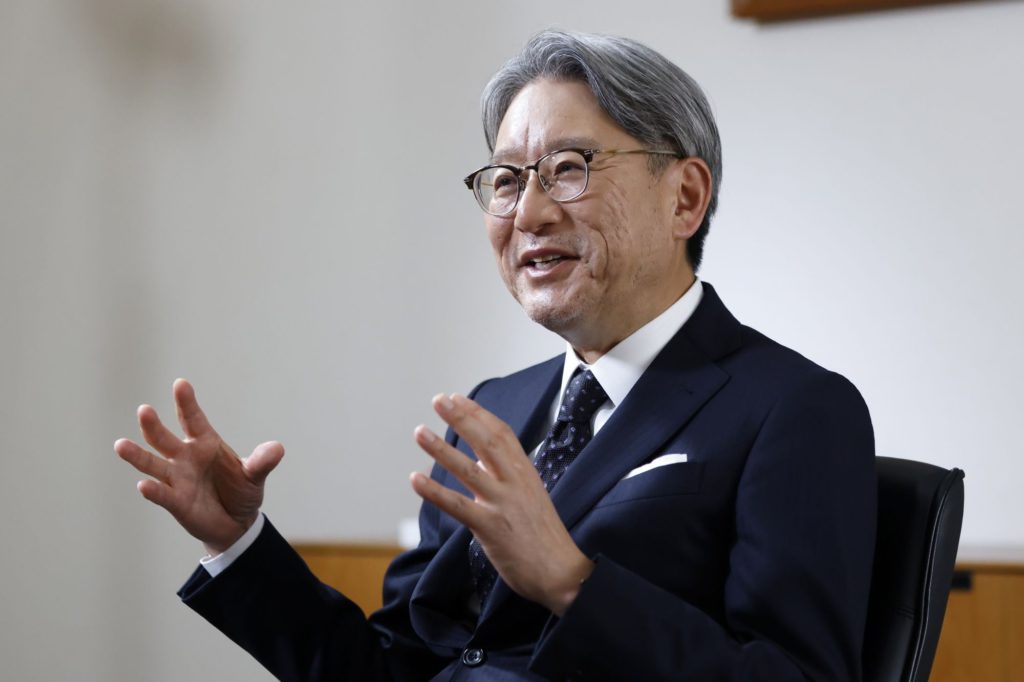
(Bloomberg) — When Toshihiro Mibe took over as Honda Motor Co.’s chief executive officer last year, he did so with a bang, promising to achieve carbon neutrality by 2050 and phase out gasoline-powered car sales by 2040, becoming Japan’s first automaker to say as much. 

Now, he’s backing that with numbers. Honda will spend 5 trillion yen ($40 billion) on its push into electric vehicles over the next decade to introduce 30 EV models by 2030 with production volume of more than 2 million vehicles a year.

“We can no longer envision the future by drawing a straight line forward from our autos business as it exists today,” the CEO said in an interview with Bloomberg after unveiling his spending plans. “Within this broad-scope image, we’re making significant progress.”

Even so, electrification comes with “high hurdles” that Honda can’t overcome on its own, he added. That’s why Mibe, who ran the carmaker’s research division before becoming CEO, has largely abandoned Honda’s go-it-alone strategy when it comes to developing and selling EVs. 

Where We Are on the Road to Electric Vehicles: QuickTake

Last month, Honda announced it’s joining forces with tech giant Sony Group Corp. to develop EVs that will go on sale starting in 2025. And earlier this month, Honda and General Motors Co. expanded their existing tie-up with plans to jointly develop affordable EVs in major global markets.

Mibe says partnering with Sony, a company operating in a completely different industry, is a way for Honda to create new sources of value for its cars that the company couldn’t have conceived of on its own. A major draw of its partnership with GM is the cost savings afforded by the automakers’ combined production capacity. Together “we have globally significant volume,” Mibe said, “which will have a huge impact on costs.” 

GM and Honda announced last week they’ll introduce their first model — with a starting price of less than $30,000 — in North America in 2027. Along with GM, Honda is seeking to bring EV costs down to an extent that they reach price parity with gasoline-powered cars, according to the Japanese automaker. 

Honda is also looking to expand partnerships further in order to stay abreast of what Mibe sees as “constantly evolving” EV and battery technologies. In a sense, “we’re moving forward with our electrification strategy in a chaotic situation,” Mibe said. “We have to make sure our plans are flexible enough to respond to the daily progression of various technologies.”

At Tuesday’s briefing, Honda, which sources Ultium batteries from GM, said it’s exploring the possibility of creating a joint venture with another company for battery production and plans to source batteries for mini EVs in Japan from Envision AESC. 

Honda itself will start trial production of solid-state batteries in early 2024 and is discussions with GM about next-generation batteries as well, according to Mibe.

A benefit, Mibe says, of Honda’s existing partnerships with Sony and GM is that there are no capital ties between the companies that restrict their actions. “We’re pursuing conversations as companies that are totally free,” he said. “The partnerships will strongly tie into the competitiveness of our global EV expansion.”

More stories like this are available on bloomberg.com

©2022 Bloomberg L.P.

Ukraine Update: Biden Accuses Putin of Genocide, Sends More Arms

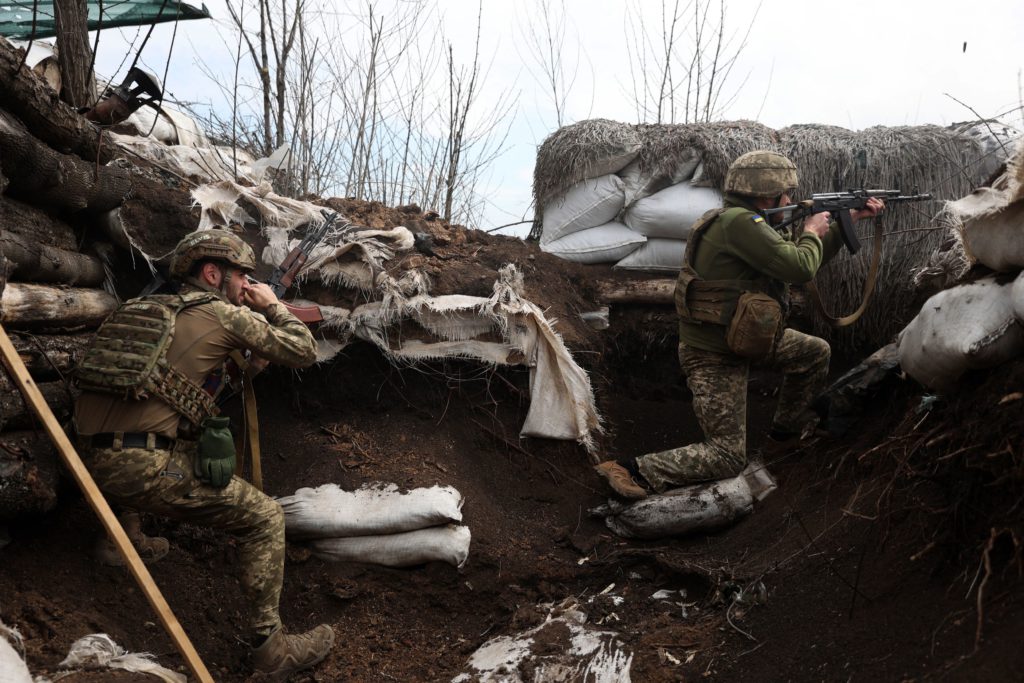
(Bloomberg) — U.S. President Joe Biden ramped up his condemnation of Vladimir Putin by accusing the Russian president’s forces of committing genocide in Ukraine, as Washington prepared a new military aid package of roughly $750 million for Kyiv.

Putin said peace talks are stalled, and vowed to continue his “military operation” there even as he called the conflict “a tragedy.” Ukrainian negotiator Mykhailo Podolyak said the discussions are “extremely difficult.”

Ukrainian President Volodymyr Zelenskiy again called for further European Union sanctions on Russia to include oil and all banks. French President Emmanuel Macron said Putin’s decision to attack derived from anti-West resentment and paranoia.


(See RSAN on the Bloomberg Terminal for the Russian Sanctions Dashboard.)

Key Developments

  • U.S. Prepares Massive New Surge of Military Aid to Ukraine
  • World’s Top Oil Merchant Says It Will Stop Trading Russian Crude
  • Germany May Snub India as G-7 Guest Over Russia Stance
  • Richest Russian Strikes Deal as Sanctions Snare Other Oligarchs
  • Russia Faces Hard-to-Verify Claims of Chemical Arms in Mariupol
  • Ukraine War Will Start Rippling Through U.S. Corporate Earnings

All times CET:

U.S. Prepares New Surge of Military Aid (4:44 a.m.)

Roughly $750 million in weaponry is expected to be sent under presidential drawdown authority, people familiar with the matter said. This allows Biden to transfer equipment from U.S. stocks without congressional approval to speed up delivery during an emergency.

The types of weapons in the package are still being discussed and are not yet finalized, added the people, who requested anonymity to discuss the assistance before it was announced.

The U.S. has provided more than $2.4 billion in military assistance to Ukraine since Biden took office. Of that, more than $1.7 billion was delivered after the invasion began on Feb. 24.

Top Oil Merchant Will Stop Trading Russian Crude (2:57 a.m)

Volumes of Russian oil handled by Vitol “will diminish significantly in the second quarter as current term contractual obligations decline,” a company spokesperson said by email. “We anticipate this will be completed by end of 2022.”

BP Plc, Shell Plc and Exxon Mobil Corp. earlier announced plans to abandon their stakes in investments related to Russia as they take steps to halt dealings with the nation. Refiners in India and China have continued to purchase Russian oil cargoes, either directly from Moscow or via traders. 

Separately, Russia is ready to sell crude oil and petroleum products to “friendly countries” within any price range, Izvestia reports, citing an interview with Energy Minister Nikolay Shulginov.  

Biden Says Putin Has Committed ‘Genocide’ (11 p.m.)

Biden for the first time accused Russia of committing genocide in Ukraine. Speaking at an event in Iowa on Tuesday laying out steps to lower fuel costs that have surged during the war, Biden described Russia’s actions in the conflict as a “genocide.” He later stood by his comments, but said lawyers would ultimately make the official determination. 

“Yes, I called it genocide because it has become clearer and clearer that Putin is just trying to wipe out the idea of being able to be Ukrainian,” the president told reporters before departing Iowa. “The evidence is mounting.” 

Biden Accuses Putin of Committing ‘Genocide’ in Ukraine (1)

Macron Says Putin Is Paranoid, Won’t Stop Attacks (7:56 p.m.)

French President Emmanuel Macron told Le Point magazine that Vladimir Putin’s decision to attack Ukraine derived from anti-West resentment and paranoia. Covid-19 exacerbated Putin’s feeling of isolation, according to Macron. 

“He found himself in Sochi for months, he locked himself down, he had less contact with other thinking,” Macron said, predicting that Putin won’t stop his attacks and needs a military victory ahead of May 9, the day Russia marks its victory in World War II. The French leader stressed that he will continue to speak to his Russian counterpart to warn him about the dangers of continuing the cycle of violence.

German President Isn’t Welcome in Kyiv (6:36 p.m.)

German President Frank-Walter Steinmeier planned to visit Kyiv in a gesture of solidarity with the Ukrainian government, but he wasn’t welcome, according to Bild.

“I was prepared for it,” the newspaper cited Steinmeier as saying in Warsaw on Tuesday. “But apparently, and I have to take this on board, that wasn’t wanted in Kyiv.”

Steinmeier has been criticized by Ukrainian officials for his previous support of the Nord Stream 2 gas pipeline from Russia to Germany. In a rare admission, the former foreign minister said in a TV interview this month that he and other German officials had failed in their policy toward Russia and President Vladimir Putin over the past two decades.

UN Backs French Plan To Offset Food Crisis (5:24 p.m.)

David Beasley, the World Food Programme’s executive director, said he will join efforts to ensure the “people in the greatest need around the world receive the support they need.” 

Details of the plan are set be outlined by the end of June, French Foreign Minister Jean-Yves Le Drian said, adding the food crisis will be discussed within the Group of Seven format.

Ukraine Negotiator Says Talks Continue, Are Difficult (4:42 p.m.)

Talks continue with Russia in working subgroups, Mykhailo Podolyak said by WhatsApp message, adding “the emotional background is difficult.” He said Moscow was seeking to use public statements to drive its claims in the negotiation process.

Putin Says Peace Talks ‘at Dead End’ (4:15 p.m.)

The “military operation” is going “according to plan,” Putin said in a joint press conference with Belarusian President Alexander Lukashenko. In his first public comments on the atrocities reported in Bucha, he said allegations that Russia was responsible were “fake.”

Putin also accused Ukraine of backing off earlier concessions. The government in Kyiv says it has not changed its position and in turn blames Russia for the lack of progress.

Russia’s economy has withstood the sanctions “blitzkrieg,” Putin said, citing the recovery of the ruble exchange rate. But he conceded that logistics and payment systems remain a weakness and the long-term impact could be more painful. 

ArcelorMittal to Restart Blast Furnace in Ukraine (4:04 p.m.)

Europe’s biggest steelmaker said it was responding to a request from the government in Kyiv. The company idled operations at its Kryvyi Rih facility when the war broke out. Pig iron production will return to around fifth of the plant’s normal output.

Airbus Defends Decision to Buy Russian Titanium (4:03 p.m.)

The company said sanctions would hurt aerospace manufacturers who depend on the lightweight metal and wouldn’t deter Putin when it comes to Ukraine.

The European plane maker has been stockpiling titanium for many years, Chief Executive Officer Guillaume Faury said at the company’s AGM. That’s given it some breathing room in the short and medium term, even if an embargo does take effect.

OPEC Sees War Curbing Oil Supply and Demand (3:32 p.m.)

The comment from the cartel suggests it sees little need to divert from its current production policy. OPEC Secretary-General Mohammad Barkindo told the European Union on Monday that the oil market was beyond its control.

The Organization of Petroleum Exporting Countries cut forecasts for global oil consumption in 2022 by 410,000 barrels a day, according to its latest monthly report. At the same time, it lowered projections for supplies from outside the cartel by 330,000 barrels a day, with Russia’s output now seen 530,000 barrels a day below previous estimates.

World Bank Announces $1.5 Billion for Ukraine (2:19 p.m.)

The World Bank is preparing $1.5 billion for Ukraine to support the continuation of essential government services during the war, the institution’s president, David Malpass, said in Warsaw. 

Donors and recipient countries approved $1 billion for Ukraine and $100 million for Moldova, according to Malpass. The disbursement is part of as much as $3 billion that the World Bank has pledged in funding for Ukraine following Russia’s invasion.

Number of People Returning to Ukraine Surges (12:30 p.m.)

The number of people returning to Ukraine from abroad has jumped to about 30,000 per day, according to Andriy Demchenko, a spokesman for the State Border Guard Service.

While in the first days of the war mostly men were coming back to Ukraine, now there are more women, elderly people and children returning, Demchenko said in a video briefing. The United Nations Refugee Agency estimates that more than 4.3 million refugees fled the country after the outbreak of war, with some 7.1 million displaced internally.

Putin Says Conflict With West Inevitable (11:30 a.m.)

Speaking to workers at the Vostochny Cosmodrome in Russia’s Far East, Putin said conflict with the West was inevitable and that Russia is too large to isolate from the rest of the world.

Western sanctions imposed over the invasion of Ukraine won’t keep Moscow from developing space-exploration efforts, he added, vowing to resume the country’s lunar program. 

German Investor Mood Deteriorates (11 a.m.)

Confidence in Germany’s economic recovery slid for a second month as investors worry that price spikes driven by the war in Ukraine will dampen output.

The ZEW Institute’s gauge of expectations dropped to -41 in April from -39.3 the previous month, hitting the lowest since the Covid-19 pandemic took hold in early 2020. An index of current conditions also worsened. 

Zelenskiy Repeats Call for Oil Sanctions (10:45 a.m.)

“Some very powerful decisions must be taken and they must be taken now with the sixth package of sanctions,” Zelenskiy said in an address to the Lithuanian parliament, referring to EU measures against Russia.

He warned that if Russia’s assault on Ukraine is not repelled, Europe may face security threats against nations including Poland, Georgia, Moldova and the Baltic states.

Slovakia Mulls Giving Fighter Jets to Ukraine (10:35 a.m.)

The Slovak government signaled it’s considering donating its fleet of Soviet-era MiG fighter jets to Ukraine, the Sme newspaper reported, citing an interview with Prime Minister Eduard Heger.

“If this equipment is to be useful somewhere, then it’s in Ukraine,” Sme quoted Heger as saying. European nations are attempting to ramp up weapons shipments to Ukraine amid concerns sanctions on Russia are insufficient to force Moscow to end the war.

Ukraine Says it Thwarted Cyberattack (10:30 a.m.)

Ukraine said it prevented a cyberattack on its energy infrastructure this month that was apparently launched by Sandworm, a group of hackers linked to Russia’s military intelligence agency.

Microsoft and ESET helped repel the attack, in which the hackers sought to disable power facilities using Industroyer2 and CaddyWiper malware, the nation’s telecommunications agency said.

India Plans to Boost Exports to Russia (10:10 a.m.)

India is planning to boost exports to Russia by an additional $2 billion as the two nations work out a payment system in local currencies to continue bilateral trade, according to people with knowledge of the matter.

Prime Minister Narendra Modi’s administration is in talks with Moscow to liberalize market access for several Indian-made products, the people said, asking not to be identified as the talks are private. This comes as the two governments work toward a proposal to settle trade in rupees and rubles and look for ways to balance trade given that India is a net importer of Russian goods.

Inflation in Ukraine Surged Last Month (9:30 a.m.)

Ukraine saw a rapid increase in prices for food staples, drugs and fuel last month, as Russia’s invasion disrupted supply chains and complicated access to imports, according to the country’s central bank.

Fuel costs rose by 30% from the previous year due to soaring prices in global markets and Russia’s targeting of Ukraine’s oil-storage facilities, even though the government scrapped sales and excise taxes on fuel to help ease the burden on consumers. Annual inflation accelerated to 13.7% from 10.7% in February.

More stories like this are available on bloomberg.com

©2022 Bloomberg L.P.

Secretive Ronaldo-Backed Football App Brings Aboard New Team

(Bloomberg) — ZujuGP, a digital football community helmed by the son of secretive Singaporean investor Peter Lim and fronted by global superstar Cristiano Ronaldo, is bringing over the employees of a gaming-technology startup to bolster the infrastructure behind its app.

It acquired the team behind Tokigames, which provides technology for sporting brands to engage with fans online, the company said in a statement on Wednesday. The 14 new employees will be part of a new digital arm of ZujuGP, which will be headed by Tokigames co-founder Mervyn Lau and build new features as the company prepares to launch its app in the fourth quarter.

Ronaldo Teams With Singapore Tycoon for Secretive Soccer Startup

Zuju is a play on the name cucu, which means kicking. Its origin is cuju, an ancient Chinese game considered the earliest recorded form of football.

The new arm, zujuDigital, will be in charge of the technology that enables fan interaction and commerce in the app. It plans to let users watch live games, participate in trivia shows, buy merchandise, and engage with football hosts and players. It also aims to make it easier for club owners, agents and scouts to discover and develop talented players.

The Lims see Asia as the next frontier of football, whose highest-profile teams such as Ronaldo’s Manchester United FC are in Europe. Asia is home to about 60% of the world’s population and its growing fan base presents a huge market for European games and products.

The consumer app will initially launch in the most populous markets in Asia. “Countries like India, China, Indonesia and Thailand offer the highest opportunities,” said Lau, the incoming head of zujuDigital.

More stories like this are available on bloomberg.com

©2022 Bloomberg L.P.

Meta, Snap Sued by Mother of Wisconsin Teen for His Suicide

(Bloomberg) — Meta Platforms Inc. and Snap Inc. were sued over a teenager’s suicide in the latest effort by an advocacy group to hold the social media giants responsible for addiction to their platforms.

Christopher James Dawley, who went by CJ, was a college-bound honors student who played sports and enjoyed outdoor activities, but he got so deeply drawn into social media that he was frequently communicating on Instagram at 3 a.m., according to a lawsuit filed Monday by his mother in Wisconsin federal court. 

“CJ never showed outward signs of depression or mental injury but became addicted to defendants’ social media products, progressively sleep deprived, and increasingly obsessed with his body image,” his mother, Donna Dawley, said in her complaint.

In January 2014, while CJ’s family was cleaning Christmas decorations and about a month before his 17th birthday, he posted “Who turned out the light?” on his Facebook page, held a 22-caliber rifle in one hand, his smart phone in the other, and shot himself to death, the court filing shows. 

Like previous cases led by Seattle-based Social Media Victims Law Center, the suit alleges that Meta deliberately designed algorithms that keep teens hooked onto their platforms to promote excessive use that they know is indicative of addictive and self-destructive use.

“Neither Meta or Snap warned users or their parents of the addictive and mentally harmful effects that the use of their products was known to cause amongst minor users,” Donna Dawley alleged in her complaint. 

Read More: Meta, Snap Sued Over Social Media ‘Addicted’ Girl’s Suicide

Meta said in an email that the company recently introduced its Family Center, its first step in offering supervision tools for parents and guardians. 

Instagram allows them to see how much time teens spend on the app and set time limits, get notified when their teen reports to Meta that a contact has made a post about suicide, and get updates about what accounts their children are following and are being followed by, Meta said.

Meta also said that for teens in particular, it sends “Take A Break” reminder that also nudges them towards different topics if they’ve dwelled on one subject for a long time, among other features.

The case is Dawley v. Meta Platforms Inc., 22-cv-00444, U.S. District Court, Eastern District of Wisconsin.

(Updates with response from Meta.)

More stories like this are available on bloomberg.com

©2022 Bloomberg L.P.
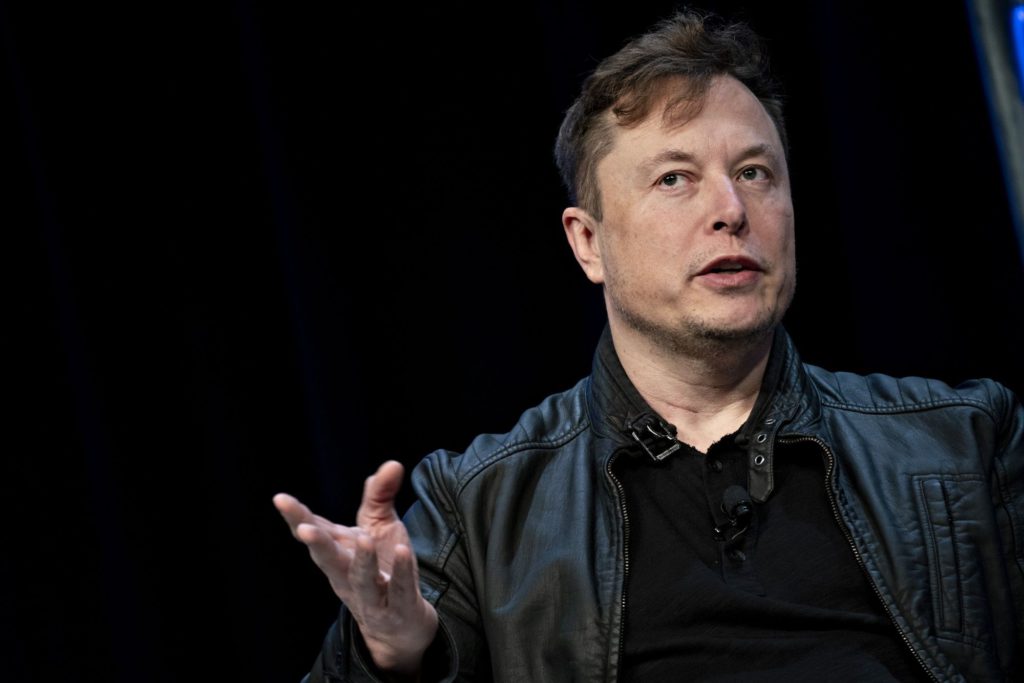
Cathie Wood Says Twitter’s Advertising Model May Not Be Right

(Bloomberg) — Cathie Wood added her voice to one of Wall Street’s favorite parlor games: What will Elon Musk do next with his new stake in Twitter Inc.

The Ark Innovation Inc. founder said the “global town square” may need to rethink its revenue stream, in an interview with CNBC shortly before her appearance at the Exchange ETF conference in Miami Beach. 

“Maybe the model isn’t right around advertising, maybe it is subscription,” Wood said, according to a transcript. “I don’t know what is exactly in his mind, but the one thing for sure is in his mind is it should not include censorship. And I think he feels very strongly about that.” 

Read more: Musk Sued Over Alleged Delay in Disclosing Twitter Stake 

Wood was asked why she sold 185,900 shares of Twitter from her Ark Next Generation Internet ETF (ticker ARKW) on April 11 following Musk’s April 4 filing that he had taken a 9.2% state in the social media platform. Even after the sale, Twitter makes up 1.8% of ARKW. 

“We had been cutting back on Twitter after Jack Dorsey handed over the reins,” she said of Twitter’s co-founder who stepped down as chief executive officer in November. “We know that there is now going to be a lot of management distraction, maybe board distraction, with or without Elon.” 

“I think there’s going to be some drama,” she continued. “And we don’t know if the advertising model, the subscription model, some combination of that is going to prevail.” 

Twitter shares fell 5.4% on Tuesday in New York. 

More stories like this are available on bloomberg.com

©2022 Bloomberg L.P.

Elon Musk Sued Over Delay in Disclosing Twitter Stake

(Bloomberg) — Elon Musk was sued by a Twitter Inc. shareholder who claims the Tesla Inc. CEO’s delay in disclosing his ownership of more than 5% of the social media company artificially kept its share price down.

Marc Bain Rasella sued Musk for securities fraud in Manhattan federal court Tuesday, claiming Musk was required to disclose his holdings to the SEC by March 24. Musk’s delay in filing the disclosure allowed him to buy more shares at a lower price and cheated the sellers of Twitter sales of increased profits, Rasella claims.

Musk didn’t immediately respond to a request for comment. Twitter declined to comment on the suit.

The investor said that, when Musk filed the form revealing his Twitter stake, company shares rose 27%, from $39.31 on April 1 to $49.97 on April 4.

Rasella is seeking to represent a class of investors who sold Twitter shares from March 24 to April 1.

The case is Rasella v. Musk, 22-cv-03026, U.S. District Court, Southern District of New York (Manhattan).

(Updates with Twitter declining to comment.)

More stories like this are available on bloomberg.com

©2022 Bloomberg L.P.
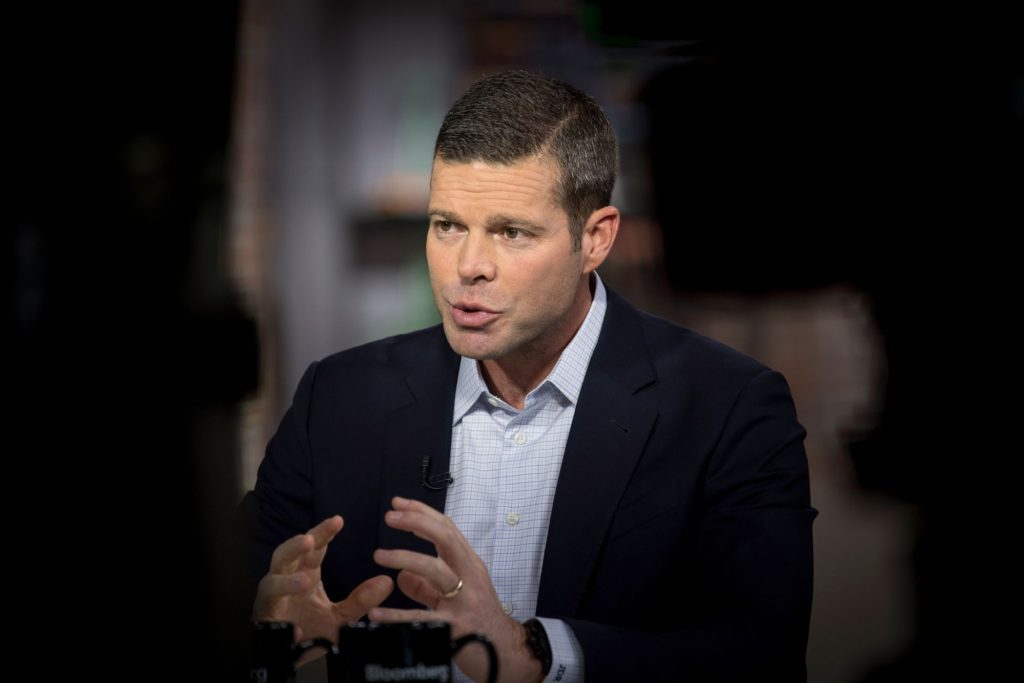
Walmart Hires PayPal’s John Rainey as CFO to Succeed Biggs

(Bloomberg) — Walmart Inc. named PayPal Holdings Inc. Chief Financial Officer John Rainey as its new finance chief, turning to a company outsider as it seeks to build a financial-technology venture and a membership program. 

Rainey will start his new job June 6, Walmart said in a statement Tuesday. A veteran of United Airlines who jumped to PayPal in 2015, Rainey will replace Brett Biggs, who last year announced plans to leave Walmart by early 2023.  

The new CFO will take over as the world’s largest retailer grapples with soaring inflation, supply-chain headaches and rising U.S. labor costs. The company has also seen healthy sales gains during the pandemic period, although its performance has fallen short of rivals such as Target Corp. and Costco Wholesale Corp.  

Two big projects await Rainey. One is Walmart’s plan to provide a fintech app that enables customers to save, borrow and receive money. The other is expansion of its paid membership program — Walmart+ — that is widely seen as an answer to Amazon.com Inc.’s Prime. 

“John’s mix of financial and digital acumen, coupled with his experience leading finance in complex, highly competitive industries, will help us deliver for our customers and shareholders as we continue to transform our company,” Walmart Chief Executive Officer Doug McMillon said in the statement. 

Walmart was little changed at $153.36 after the close in New York. Paypal fell 1.5% to $106.65 at 5:22 p.m. 

PayPal Search

Rainey will remain with PayPal until late May, when Gabrielle Rabinovitch, senior vice president for corporate finance and investor relations, will take over as interim CFO. 

The payments giant’s board has started a formal search process to replace Rainey, who was also the executive vice president for global customer operations at PayPal. That team will now join the risk, legal and customer operations organization led by Aaron Karczmer. 

“We’re not surprised that one of the world’s top brands has recognized John and his contributions to building PayPal into one of the most innovative technology and financial services companies in the world,” PayPal CEO Dan Schulman said in a statement. 

Alongside Schulman, Rainey helped refashion PayPal into a financial behemoth that ended last year with more than 420 million active accounts. The San Jose, California-based company now processes more than $1 trillion a year in payments. 

PayPal — long known for its payment buttons on retailers’ online checkout pages — has added savings accounts and the ability to buy and sell cryptocurrencies to its app. It’s now exploring stock trading to customers.

Fintech Goals

Still, Paypal has struggled in recent months as growth in spending on its platform continued to slow compared with the flurry of activity it saw in the early days of the pandemic. The technology giant’s former parent, EBay Inc., has also continued to move its own payments offerings away from PayPal faster than the company originally expected. 

That’s weighed on shares. PayPal has dropped 43% this year, compared with the 15% decline in the S&P 500 Information Technology Index. 

In recent quarters, PayPal has sought to boost the number of active accounts on its platform and was spending more on marketing campaigns. But in February, it announced a review of its business and uncovered 4.5 million accounts it now believes were illegitimately created to reap the benefits of those campaigns. The firm announced it will focus on improving engagement with existing customers.

“The timing of the CFO departure is unfortunate, given the material pivot PayPal is undergoing,” Daniel Perlin, an analyst with RBC Capital Markets, said in a note to clients. “The fact that management did not use this opportunity to reiterate guidance, in the face of such a material event, does call into question if a reset could be necessary.”

Fintech Efforts

Walmart, meanwhile, has been vocal about its desire to expand into financial technology. The Bentonville, Arkansas-based retailer last year formed a new fintech startup with the investment firm Ribbit Capital that it said was meant to “develop and offer modern, innovative and affordable financial solutions.” It later hired two Goldman Sachs Group Inc. executives to help lead the effort. 

In January, Walmart’s fintech venture agreed to buy two small companies, rebranding them as ONE. As part of the CFO transition, Biggs will continue to represent Walmart on the startup’s board. He will also serve as an adviser at Walmart until leaving on Jan. 31, 2023.

Airline Background

Before his tenure at PayPal, Rainey spent 18 years in the airline industry, at United and Continental Airlines. He’s not the only leader at Walmart with a background in airlines: Lead director Tom Horton is a former CEO of American Airlines. 

Rainey started his career at Ernst & Young. He serves on the boards of Nasdaq Inc. and Baylor University’s Hankamer School of Business. 

“I am incredibly excited about my next chapter with the largest company in the world,” Rainey said in a post on LinkedIn. 

(Updates with PayPal background in ninth paragraph)

More stories like this are available on bloomberg.com

©2022 Bloomberg L.P.
Close Bitnami banner
Bitnami