Bloomberg

Spotify’s Podcasting Architect Will Be Leaving Company

(Bloomberg) — The architect of Spotify Technology SA’s podcasting strategy, including the signing of controversial commentator Joe Rogan, is leaving the company after almost five years, according to people with knowledge of matter.

Courtney Holt will depart Spotify in the coming weeks and take on a yearlong advisory role, according to the people, who asked not to be identified discussing a personnel matter. Julie McNamara, head of U.S. studios and video, and Max Cutler, head of new content initiatives, will split Holt’s responsibilities, the people said.

Under Holt, Spotify pushed hard into the field, with acquisitions including the podcast networks Gimlet, Parcast and the Ringer. He also helped push through high-profile deals with Barack and Michelle Obama and Rogan. 

But the business also had growing pains. Prince Harry and Meghan Markle’s Archewell Audio has yet to debut its first podcast, more than a year after their deal with Spotify was announced, while the Obamas’ Higher Ground is reportedly shopping for a new deal. Last week, Lydia Polgreen, managing director of Gimlet Media, said she is leaving for a role at the New York Times.

The company also battled controversy when some musical artists began pulling their works from the service in protest over racial comments and alleged Covid-19 misinformation from Rogan, Spotify’s top podcasting personality. Dawn Ostroff, Spotify’s head of content and advertising business, brought in McNamara, a TV veteran, to lead the U.S. studios and video in September.

Holt doesn’t come from a programming background. He joined Spotify in 2017 after stops at the YouTube network Maker Studios, the social network MySpace and Universal Music Group. His plans to leave were reported earlier Tuesday by the Ankler.

More stories like this are available on bloomberg.com

©2022 Bloomberg L.P.

Bitcoin Drops Below $40,000; Shiba Jumps on Robinhood Listing

(Bloomberg) —

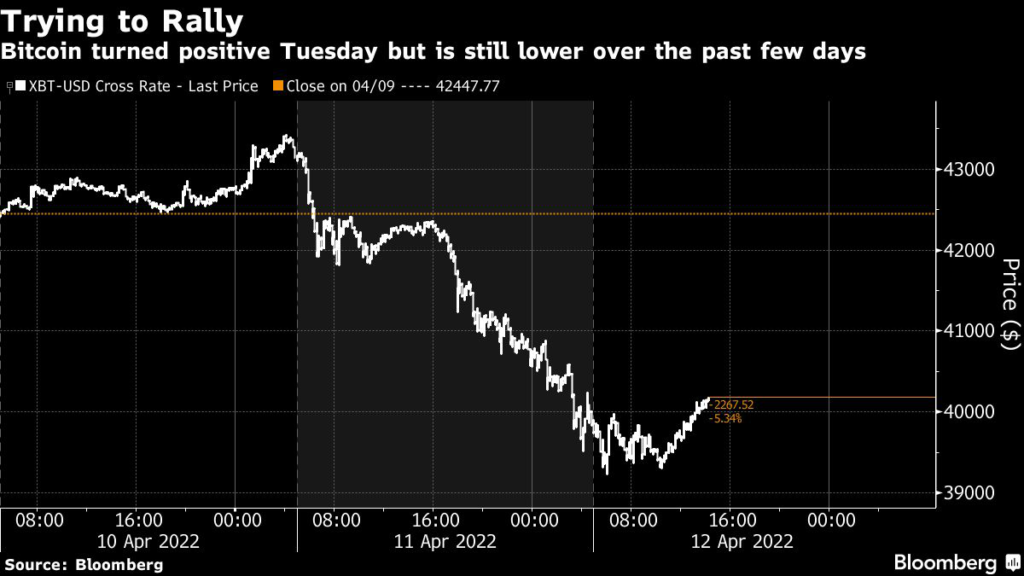
Bitcoin dropped back below $40,000 amid volatile price swings across financial markets, while day-trader favorite Shiba Inu jumped about 10%. 

Shiba Inu and three other tokens — Solana’s SOL, Polygon’s Matic and Compound’s COMP — were all listed for the first time on Robinhood Markets Inc.’s platform. Shiba, which trades at a fraction of one U.S. cent, was the biggest gainer of the four.

Bitcoin had dropped Monday to below $40,000 for the first time in more than three weeks. It was about 1.1% lower at $39,411 as of 3:30 p.m. in New York. Ether also turned lower again after briefly rising above $3,000.  

Bitcoin and the broader crypto market have struggled in recent weeks as the Federal Reserve began hiking rates to combat stubbornly high inflation and geopolitical turmoil hurt risk appetite. A report Tuesday showed core inflation increased less than forecast in March.

Bitcoin “is still consolidating in a triangle pattern stretching back to mid-January,” said Jeffrey Halley, senior market analyst at Oanda. “The lower and upper boundaries today are $36,500 and $47,500,” he said, implying that Bitcoin was well within its range.  

Bitcoin Bearish Flag Has Analysts Looking For Crash Lows: Chart

Crypto’s correlation with U.S. tech stocks has risen sharply in the past few weeks, suggesting investors increasingly view digital assets as vulnerable to tightening monetary conditions. By contrast, the massive stimulus the Fed flooded markets with during the Covid outbreak drove Bitcoin to a record of almost $69,000 in November.  

A break above or below those support or resistance levels could lead to an $18,000 move either way, Halley added.

Strategists at Bespoke Investment Group point out that Bitcoin’s drubbing on Monday led to the coin collapsing through its 50-day moving average. “From a strictly technical perspective, Bitcoin isn’t trading well right now as the benchmark crypto asset has followed a similar playbook to stocks since late 2021: a major downtrend, a failure to make new highs on the rebound (and indeed, an outright rejection of its 200-DMA in BTC’s case), and now another trip below the 50-day,” they wrote in a note.

Noelle Acheson, head of market insights at Genesis Global Trading, says there are two big narratives at play for Bitcoin: one is that the coin is a risk asset and it’s going to move in tandem with other riskier assets. She points to its correlation with a basket of non-profitable tech companies — a 90-day reading shows the highest correlation on record. Another narrative is that long-term investors are accumulating Bitcoin because they don’t see it as a high-volatility play — instead, they view it as a store of value or an inflation hedge. 

“With so much accumulation and with more and more Bitcoin being held in illiquid or longer-term addresses, whichever definition you wish to choose, there’s less available for the macro investors or for the new market participants,” she said by phone. “Anyone new coming in has to source the Bitcoin from an ever-dwindling stockpile of liquid Bitcoin — in other words, those that are moved around by traders, which is what’s keeping the volatility relatively high.”

More stories like this are available on bloomberg.com

©2022 Bloomberg L.P.

Uber, Lyft Halt Surge Pricing Near NYC Shooting

(Bloomberg) — Uber Technologies Inc. and Lyft Inc. turned off surge pricing in the Sunset Park area of Brooklyn after the ride-hailing giants’ algorithms increased fares in the wake of a shooting on Tuesday. 

Rates for a ride on the apps spiked after New York City emergency alerts advised people to avoid the area near the 36th Street subway station where 16 people were injured, 10 with gunshot wounds, and numerous undetonated devices were discovered inside the station. 

Surge pricing, which is driven by an algorithm that multiplies fares when rider demand is higher than driver supply, ignited criticism of the rideshare companies’ pricing model on Twitter. 

In addition to disabling surge pricing, Uber also capped pricing citywide, spokeswoman Freddi Goldstein said. 

“As always, Uber strives to be a resource for New Yorkers aiming to get around New York City. If anyone on our platform experienced unintended charges during this emergency, we will work to get them refunded,” she said.

Uber has a global security center that operates 24 hours a day, seven days a week and flags issues that could impact businesses and customers. During major emergency events, the company’s policy is to immediately cap trip pricing in the affected area. Customers can also report issues through the app. 

A Lyft spokeswoman said the company is also “working to adjust fares for certain riders who paid Prime Time prices when the situation first unfolded.”

(Updates to reflect Lyft’s response, adds company comment in seventh paragraph.)

More stories like this are available on bloomberg.com

©2022 Bloomberg L.P.

TransUnion Called an ‘Out-of-Control’ Offender as CFPB Sues Over Marketing

(Bloomberg) — Credit-reporting company TransUnion is an “out-of-control” repeat offender that has been violating a law-enforcement order intended to stop the company from engaging in “deceptive” marketing practices, the Consumer Financial Protection Bureau alleged. 

The bureau filed a lawsuit Tuesday against TransUnion, two of its subsidiaries and longtime executive John Danaher, who recently left the Chicago-based company. Danaher was a top executive for the unit called TransUnion Interactive, according to a statement from the CFPB.

“TransUnion is an out-of-control repeat offender that believes it is above the law,” CFPB Director Rohit Chopra said in the statement. “I am concerned that TransUnion’s leadership is either unwilling or incapable of operating its businesses lawfully.”

TransUnion called the claims against the company and Danaher “meritless,” and said that the CFPB ignored its compliance plan and didn’t advise the firm of its concerns. 

“Despite TransUnion’s months-long, good-faith efforts to resolve this matter, CFPB’s current leadership refused to meet with us and were determined to litigate and seek headlines through press releases and tweets,” the company said in a separate statement Tuesday. “The CFPB’s unrealistic and unworkable demands have left us with no alternative but to defend ourselves fully.”

The CFPB is accusing TransUnion of continuing to violate a 2017 order against the company. That year, the bureau took action against both TransUnion and Equifax Inc. for allegedly deceiving consumers. As part of a settlement, TransUnion agreed to pay $13.9 million in restitution to victims and $3 million in civil penalties, the bureau said Tuesday. 

TransUnion failed to comply with the order, according to the consumer finance watchdog. The CFPB told TransUnion in 2019 that it was violating multiple requirements of the order, and told the company again in June 2020 that it was still failing to comply and engaging in additional violations. The CFPB said TransUnion uses various methods “to trick people into recurring payments and to make it difficult to cancel them.”

Check Box

Danaher was also subject to the 2017 order, the bureau said. Danaher decided that complying with the order would reduce the company’s revenue, so he devised a plan for delaying or avoiding implementing it, the CFPB alleged Tuesday.

“Danaher determined that using an affirmative-selection check box, required by the order to limit unintended subscription enrollments, would result in fewer enrollments into TransUnion’s Credit Monitoring service,” the bureau said. “Danaher instructed TransUnion Interactive to cease using the check box, which led to millions of enrollments.”

Danaher’s counsel said the claims were “without merit.”

“This lawsuit demonstrates that the CFPB is focused more on politically expedient headlines than the facts or the law,” Danaher’s attorneys, Jeff Knox and Brooke Cucinella of Simpson Thacher & Bartlett LLP, said in an emailed statement. “Mr. Danaher very much looks forward to his day in court.” 

The case is Consumer Financial Protection Bureau v. TransUnion, 22-cv-01880, U.S. District Court, Northern District of Illinois (Chicago).

(Updates with comment from Danaher’s attorney starting in 10th paragraph.)

More stories like this are available on bloomberg.com

©2022 Bloomberg L.P.

Facebook Adding Manhattan Office Space in Latest NYC Expansion

(Bloomberg) — Facebook is adding more offices in Manhattan.

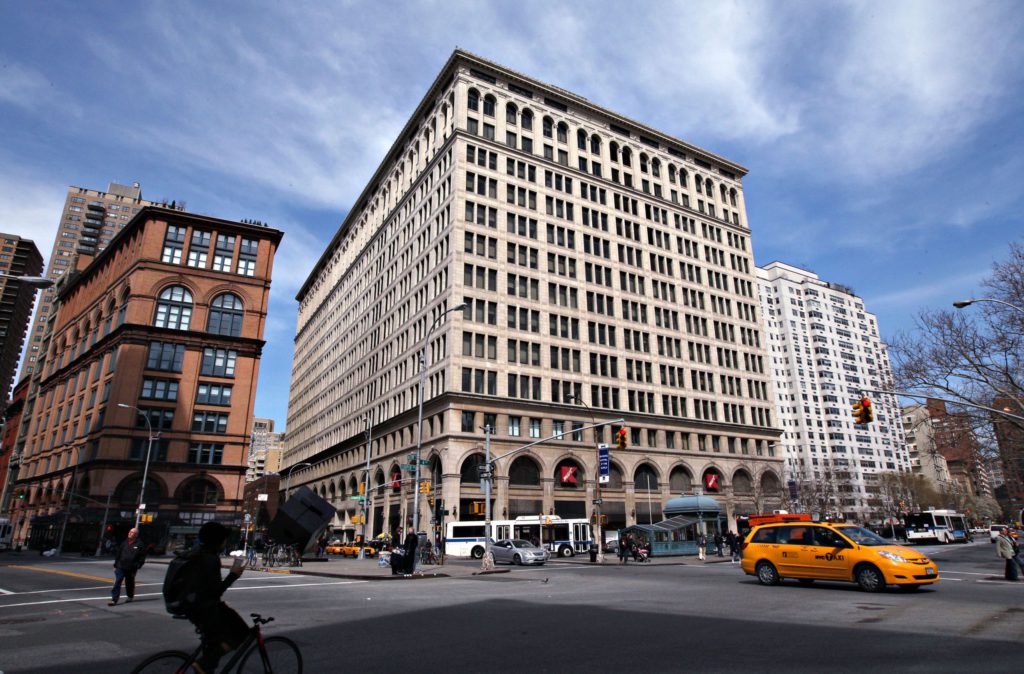
The Menlo Park, California-based company, now known formally as Meta Platforms Inc., is planning to take roughly 300,000 square feet (28,000 square meters) at 770 Broadway, a property near Astor Place where it already has space, according to people familiar with the matter. With the new lease, Facebook will have nearly the entire building. 

“We are proud to be a part of New York City’s business ecosystem and are constantly evaluating ways to help attract and retain our diverse talent base here,” Jamila Reeves, a representative for the company, said in a statement. She declined to comment on the specific lease at 770 Broadway.

Read more: Facebook Eyes NYC Office Expansion Despite Delta Delaying Return

Meta is taking several floors that housed Verizon Media, which was sold last year to Apollo Global Management and rebranded as Yahoo. The grocery chain Wegmans is opening a store in the former Kmart space at the property, owned by Vornado Realty Trust. 

The supply of office space in New York has soared to a record as companies embrace hybrid schedules, though prominent tech and finance firms have been on the hunt for deals even as many employees stay home. Meta has new offices at Hudson Yards and is preparing to move employees into the renovated Farley Building near Penn Station.

Read more: Manhattan Offices Face Reckoning With Divide Between Old and New

Yahoo has been re-evaluating its real estate globally in light of its hybrid work schedule and decided not to renew its lease for some of its space at 770 Broadway, a spokesperson said in a statement.  

More stories like this are available on bloomberg.com

©2022 Bloomberg L.P.

Ukraine Update: Macron Says Putin Is Paranoid, Bent on Fighting

(Bloomberg) — Russian President Vladimir Putin said peace talks with Ukraine are stalled and vowed to continue his “military operation” there even as he called the conflict “a tragedy.”

There’s been little sign of progress in negotiations at a lower level after Ukraine accused Russian troops of carrying out war crimes in northern towns like Bucha by killing unarmed civilians. Ukrainian negotiator Mykhailo Podolyak said talks are “extremely difficult.”

Ukrainian President Volodymyr Zelenskiy again called for further European Union sanctions on Russia to include oil as well as all banks. French president Emmanuel Macron said that Putin’s decision to attack Ukraine derived from anti-West resentment and paranoia.


(See RSAN on the Bloomberg Terminal for the Russian Sanctions Dashboard.)

Key Developments

  • Germany May Snub India as G-7 Guest Over Russia Stance
  • Richest Russian Strikes Deal as Sanctions Snare Other Oligarchs
  • Germany Plans Law to Secure Critical Energy Infrastructure
  • Ukraine War Will Start Rippling Through U.S. Corporate Earnings

All times CET:

Macron Says Putin Is Paranoid, Won’t Stop Attacks (7:56 p.m.)

French president Emmanuel Macron told Le Point magazine that Vladimir Putin’s decision to attack Ukraine derived from anti-West resentment and paranoia. Covid-19 exacerbated Putin’s feeling of isolation, according to Macron. 

“He found himself in Sochi for months, he locked himself down, he had less contact with other thinking,” Macron said, predicting that Putin won’t stop his attacks and needs a military victory ahead of May 9, the day Russia marks its victory in World War II. The French leader stressed that he will continue to speak to his Russian counterpart to warn him about the dangers of continuing the cycle of violence.

German President Isn’t Welcome in Kyiv (6:36 p.m.)

German President Frank-Walter Steinmeier planned to visit Kyiv in a gesture of solidarity with the Ukrainian government, but he wasn’t welcome, according to Bild.

“I was prepared for it,” the newspaper cited Steinmeier as saying in Warsaw on Tuesday. “But apparently, and I have to take this on board, that wasn’t wanted in Kyiv.”

Steinmeier has been criticized by Ukrainian officials for his previous support of the Nord Stream 2 gas pipeline from Russia to Germany. In a rare admission, the former foreign minister said in a TV interview this month that he and other German officials had failed in their policy toward Russia and President Vladimir Putin over the past two decades.

UN Backs French Plan To Offset Food Crisis (5:24 p.m.)

David Beasley, the World Food Programme’s executive director, said he will join efforts to ensure the “people in the greatest need around the world receive the support they need.” 

Details of the plan are set be outlined by the end of June, French Foreign Minister Jean-Yves Le Drian said, adding the food crisis will be discussed within the Group of Seven format.

Ukraine Negotiator Says Talks Continue, Are Difficult (4:42 p.m.)

Talks continue with Russia in working subgroups, Mykhailo Podolyak said by WhatsApp message, adding “the emotional background is difficult.” He said Moscow was seeking to use public statements to drive its claims in the negotiation process.

Putin Says Peace Talks ‘at Dead End’ (4:15 p.m.)

The “military operation” is going “according to plan,” Putin said in a joint press conference with Belarusian President Alexander Lukashenko. In his first public comments on the atrocities reported in Bucha, he said allegations that Russia was responsible were “fake.”

Putin also accused Ukraine of backing off earlier concessions. The government in Kyiv says it has not changed its position and in turn blames Russia for the lack of progress.

Russia’s economy has withstood the sanctions “blitzkrieg,” Putin said, citing the recovery of the ruble exchange rate. But he conceded that logistics and payment systems remain a weakness and the long-term impact could be more painful. 

ArcelorMittal to Restart Blast Furnace in Ukraine (4:04 p.m.)

Europe’s biggest steelmaker said it was responding to a request from the government in Kyiv. The company idled operations at its Kryvyi Rih facility when the war broke out. Pig iron production will return to around fifth of the plant’s normal output.

Airbus Defends Decision to Buy Russian Titanium (4:03 p.m.)

The company said sanctions would hurt aerospace manufacturers who depend on the lightweight metal and wouldn’t deter Putin when it comes to Ukraine.

The European plane maker has been stockpiling titanium for many years, Chief Executive Officer Guillaume Faury said at the company’s AGM. That’s given it some breathing room in the short and medium term, even if an embargo does take effect.

OPEC Sees War Curbing Oil Supply and Demand (3:32 p.m.)

The comment from the cartel suggests it sees little need to divert from its current production policy. OPEC Secretary-General Mohammad Barkindo told the European Union on Monday that the oil market was beyond its control.

The Organization of Petroleum Exporting Countries cut forecasts for global oil consumption in 2022 by 410,000 barrels a day, according to its latest monthly report. At the same time, it lowered projections for supplies from outside the cartel by 330,000 barrels a day, with Russia’s output now seen 530,000 barrels a day below previous estimates.

World Bank Announces $1.5 Billion for Ukraine (2:19 p.m.)

The World Bank is preparing $1.5 billion for Ukraine to support the continuation of essential government services during the war, the institution’s president, David Malpass, said in Warsaw. 

Donors and recipient countries approved $1 billion for Ukraine and $100 million for Moldova, according to Malpass. The disbursement is part of as much as $3 billion that the World Bank has pledged in funding for Ukraine following Russia’s invasion.

Number of People Returning to Ukraine Surges (12:30 p.m.)

The number of people returning to Ukraine from abroad has jumped to about 30,000 per day, according to Andriy Demchenko, a spokesman for the State Border Guard Service.

While in the first days of the war mostly men were coming back to Ukraine, now there are more women, elderly people and children returning, Demchenko said in a video briefing. The United Nations Refugee Agency estimates that more than 4.3 million refugees fled the country after the outbreak of war, with some 7.1 million displaced internally.

Putin Says Conflict With West Inevitable (11:30 a.m.)

Speaking to workers at the Vostochny Cosmodrome in Russia’s Far East, Putin said conflict with the West was inevitable and that Russia is too large to isolate from the rest of the world.

Western sanctions imposed over the invasion of Ukraine won’t keep Moscow from developing space-exploration efforts, he added, vowing to resume the country’s lunar program. 

German Investor Mood Deteriorates (11 a.m.)

Confidence in Germany’s economic recovery slid for a second month as investors worry that price spikes driven by the war in Ukraine will dampen output.

The ZEW Institute’s gauge of expectations dropped to -41 in April from -39.3 the previous month, hitting the lowest since the Covid-19 pandemic took hold in early 2020. An index of current conditions also worsened. 

Zelenskiy Repeats Call for Oil Sanctions (10:45 a.m.)

“Some very powerful decisions must be taken and they must be taken now with the sixth package of sanctions,” Zelenskiy said in an address to the Lithuanian parliament, referring to EU measures against Russia.

He warned that if Russia’s assault on Ukraine is not repelled, Europe may face security threats against nations including Poland, Georgia, Moldova and the Baltic states.

Slovakia Mulls Giving Fighter Jets to Ukraine (10:35 a.m.)

The Slovak government signaled it’s considering donating its fleet of Soviet-era MiG fighter jets to Ukraine, the Sme newspaper reported, citing an interview with Prime Minister Eduard Heger.

“If this equipment is to be useful somewhere, then it’s in Ukraine,” Sme quoted Heger as saying. European nations are attempting to ramp up weapons shipments to Ukraine amid concerns sanctions on Russia are insufficient to force Moscow to end the war.

Ukraine Says it Thwarted Cyberattack (10:30 a.m.)

Ukraine said it prevented a cyberattack on its energy infrastructure this month that was apparently launched by Sandworm, a group of hackers linked to Russia’s military intelligence agency.

Microsoft and ESET helped repel the attack, in which the hackers sought to disable power facilities using Industroyer2 and CaddyWiper malware, the nation’s telecommunications agency said.

India Plans to Boost Exports to Russia (10:10 a.m.)

India is planning to boost exports to Russia by an additional $2 billion as the two nations work out a payment system in local currencies to continue bilateral trade, according to people with knowledge of the matter.

Prime Minister Narendra Modi’s administration is in talks with Moscow to liberalize market access for several Indian-made products, the people said, asking not to be identified as the talks are private. This comes as the two governments work toward a proposal to settle trade in rupees and rubles and look for ways to balance trade given that India is a net importer of Russian goods.

Inflation in Ukraine Surged Last Month (9:30 a.m.)

Ukraine saw a rapid increase in prices for food staples, drugs and fuel last month, as Russia’s invasion disrupted supply chains and complicated access to imports, according to the country’s central bank.

Fuel costs rose by 30% from the previous year due to soaring prices in global markets and Russia’s targeting of Ukraine’s oil-storage facilities, even though the government scrapped sales and excise taxes on fuel to help ease the burden on consumers. Annual inflation accelerated to 13.7% from 10.7% in February.

Asos Warns of Earnings Impact (8:30 a.m.)

British online fashion retailer Asos said its full-year earnings goal is at risk due to the fallout from Russia’s war in Ukraine and accelerating inflation. U.S. consultant Accenture completed an exit from its Russian business following a transfer to several of its local leaders.

Finnish 5G Gear Maker Nokia to Exit Russia (8 a.m.)

Nokia will exit the Russian market after having suspended deliveries, stopped new business and initiated a move of its limited R&D activities out of Russia in the past weeks, the Espoo, Finland-based telecommunications networks maker said.

Russia accounted for less than 2% of net sales in 2021 for Nokia, whose rival Ericsson on Monday said it had suspended business with customers in Russia “indefinitely” and put about 600 staff on paid leave.

Oil Rebounds After Fall That Erased War Gains (7:31 a.m.)

Oil rebounded after a tumble that saw crude erase most of the gains sparked by Russia’s invasion of Ukraine. China’s virus outbreaks and mobility curbs are imperiling demand as it locks down Shanghai and other areas in pursuit of a Covid Zero strategy that has made it a global outlier in handling the pandemic.

The next major test for markets looms later Tuesday, when the U.S. is expected to unveil an inflation print for March of more than 8%. The Ukraine war is disrupting flows of essential commodities, and China’s lockdowns are straining supply chains.

Russia Significant Military Threat, Say Finns (5:23 a.m.)

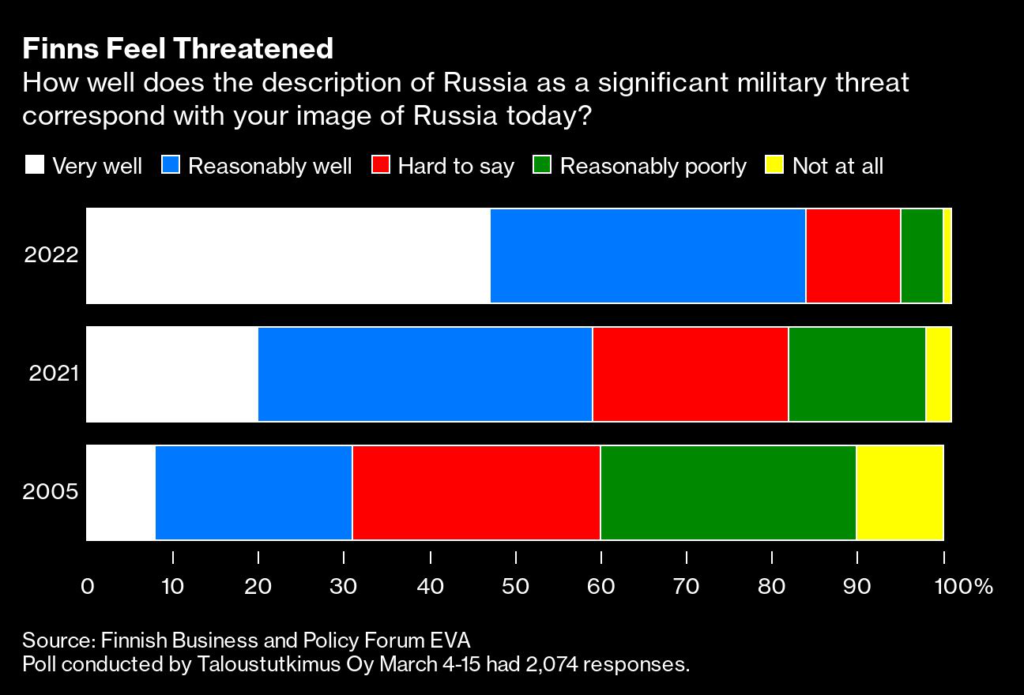
Some 84% of Finns believe Russia poses a significant military threat, according to a survey by Finnish Business and Policy Forum EVA, with the government set to kick off a process that may culminate in an application to join NATO.

In 2005, fewer than one in three in the Nordic country with a 1,300-kilometer (800-mile) border with Russia considered Moscow a major threat. The change helps explain why Finns now back NATO membership, with the government seen leaning toward an application within weeks.

More stories like this are available on bloomberg.com

©2022 Bloomberg L.P.

Crypto Expert Gets 63 Months for Helping North Korea Evade U.S. Sanctions

(Bloomberg) — A cryptocurrency expert was sentenced to more than five years in prison after pleading guilty to helping North Korea evade U.S. sanctions.

Virgil Griffith, a former Ethereum Foundation cryptocurrency scientist, told a federal judge in New York on Tuesday that he “arrogantly and erroneously” thought he knew better than U.S. authorities, people at his company and his family, all of whom tried to dissuade him from participating in a 2019 blockchain and cryptocurrency conference in the North Korean capital, Pyongyang. 

U.S. District Judge P. Kevin Castel imposed a 63-month sentence for Griffith, who pleaded guilty in September to one count of conspiracy to violate the International Emergency Economic Powers Act. The defendant had asked for just two years behind bars, but the judge rejected that request, saying in a hearing in Manhattan that Griffith showed “a deliberate, willful intent to violate the sanctions regime.”

Griffith, 39, ignored specific State Department warnings against attending the conference. He was arrested in November 2019 in Los Angeles on charges of providing technical blockchain information to the regime of dictator Kim Jong Un that prosecutors said could be used to help the country launder money and evade sanctions. 

In explaining the sentence, Castel referred to photographs of Griffith and an unidentified co-conspirator at the conference explaining how to convert North Korean money into cryptocurrency as a way to evade sanctions. In the photos, Griffith is dressed in a North Korean-style uniform, standing in front of a white board on which he drew a smiley face and wrote “No sanctions yay.”

While Griffith faced as much as 20 years in prison, prosecutors agreed to seek no more than 6 1/2 years in a plea deal. Griffith has been in federal custody since July, when Castel revoked his bail, saying a surge in the value of his cryptocurrency holdings gave him the means and incentive to flee.

Lawyers for Griffith told the judge he suffers from obsessive compulsive personality disorder and narcissistic personality disorder. He was obsessed with North Korea and hoped, “arrogantly and naively,” that he was acting in the interest of peace.

“I love my country and did not set out to do anything to harm it,” Griffith said in a letter to the judge before sentencing.

A U.S. prosecutor argued Griffith’s actions were well planned and that they “struck at the heart” of the North Korea sanctions program.

“We are all bearing witness to a war generated by the whim of a dictator,” Assistant U.S. Attorney Kimberly Ravener told the judge, referring to Russia’s war in Ukraine. “Our central tool has been sanctions.”

Griffith was the subject of a 2008 New York Times Magazine profile that described him as a “cult hacker” and dubbed him the “Internet Man of Mystery.“ 

The case is U.S. v. Griffith, 20-cr-00015, U.S. District Court, Southern District of New York (Manhattan).

(Adds details of sentencing in third paragraph.)

More stories like this are available on bloomberg.com

©2022 Bloomberg L.P.

Crypto Expert Gets 63 Months in Prison for Helping North Korea Evade U.S. Sanctions

(Bloomberg) — A cryptocurrency expert was sentenced to more than five years in prison after pleading guilty to helping North Korea evade U.S. sanctions.

Virgil Griffith, a former Ethereum Foundation cryptocurrency scientist, told a federal judge in New York on Tuesday that he “arrogantly and erroneously” thought he knew better than U.S. authorities, people at his company and his family, all of whom tried to dissuade him from participating in a 2019 blockchain and cryptocurrency conference in the North Korean capital, Pyongyang. 

U.S. District Judge P. Kevin Castel imposed a 63-month sentence for Griffith, who pleaded guilty in September to one count of conspiracy to violate the International Emergency Economic Powers Act. The defendant had asked for just two years behind bars, but the judge rejected that request, saying in a hearing in Manhattan that Griffith showed “a deliberate, willful intent to violate the sanctions regime.”

Griffith, 39, ignored specific State Department warnings against attending the conference. He was arrested in November 2019 in Los Angeles on charges of providing technical blockchain information to the regime of dictator Kim Jong Un that prosecutors said could be used to help the country launder money and evade sanctions. 

In explaining the sentence, Castel referred to photographs of Griffith and an unidentified co-conspirator at the conference explaining how to convert North Korean money into cryptocurrency as a way to evade sanctions. In the photos, Griffith is dressed in a North Korean-style uniform, standing in front of a white board on which he drew a smiley face and wrote “No sanctions yay.”

While Griffith faced as much as 20 years in prison, prosecutors agreed to seek no more than 6 1/2 years in a plea deal. Griffith has been in federal custody since July, when Castel revoked his bail, saying a surge in the value of his cryptocurrency holdings gave him the means and incentive to flee.

Lawyers for Griffith told the judge he suffers from obsessive compulsive personality disorder and narcissistic personality disorder. He was obsessed with North Korea and hoped, “arrogantly and naively,” that he was acting in the interest of peace.

“I love my country and did not set out to do anything to harm it,” Griffith said in a letter to the judge before sentencing.

A U.S. prosecutor argued Griffith’s actions were well planned and that they “struck at the heart” of the North Korea sanctions program.

“We are all bearing witness to a war generated by the whim of a dictator,” Assistant U.S. Attorney Kimberly Ravener told the judge, referring to Russia’s war in Ukraine. “Our central tool has been sanctions.”

Griffith was the subject of a 2008 New York Times Magazine profile that described him as a “cult hacker” and dubbed him the “Internet Man of Mystery.“ 

The case is U.S. v. Griffith, 20-cr-00015, U.S. District Court, Southern District of New York (Manhattan).

(Adds details of sentencing in third paragraph.)

More stories like this are available on bloomberg.com

©2022 Bloomberg L.P.
Trump’s Backing of Dr. Oz Forces a Rethink for McCormick, Senate Rivals

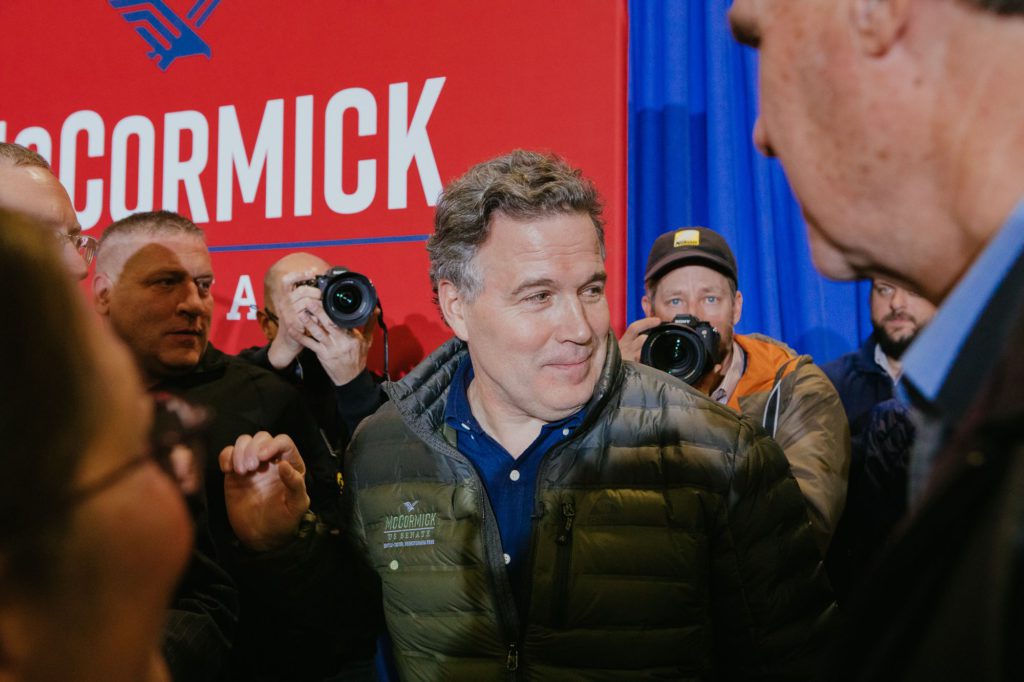
(Bloomberg) — Former Bridgewater Associates chief executive officer David McCormick has to quickly readjust his strategy for the Republican Senate primary in Pennsylvania after Donald Trump’s surprise endorsement of the other top contender, celebrity physician Mehmet Oz.

Trump endorsed Oz, known for hosting the long-running “Dr. Oz Show,” on Saturday in arguably the former president’s most consequential nod of the 2022 midterms. Polls show a close race between McCormick and Oz in a crowded primary election that will ultimately help decide which party controls the Senate.

John Brabender, a Republican strategist who served as a senior adviser to former Pennsylvania senator and 2016 presidential candidate Rick Santorum, said the endorsement is a major boost for Oz that he can now highlight in his campaign but isn’t necessarily fatal to McCormick and others in the primary. 

“I don’t believe it’s enough to win the race for Oz, but in a very close race, I think it’s enough to put Oz over the top,” Brabender said.

The endorsement will force the Senate campaigns to retool and determine how they can draw hard-core Trump supporters since he’s backing Oz, said Christopher Nicholas, a Pennsylvania Republican strategist.

McCormick started airing an ad Monday on broadcast and cable television in response to the Trump endorsement accusing Oz of being “a complete and total fraud.” It shows clips of Oz from his former television show and other appearances taking different positions than he has today, including praising Dr. Anthony Fauci and China and asking, “how do we keep guns out of the wrong person’s hands?”

The ad accuses Oz of being “anti-Trump” and includes a clip of him saying, “We haven’t any interaction with President Trump at all.” It ends with images of Oz kissing a star in his honor on the Hollywood Walk of Fame, backing up accusations from McCormick’s allies that he’s really a “Hollywood liberal.”

“It’s no surprise McCormick is using the same bag of tricks that Never Trumpers used against President Trump,” Oz spokeswoman Brittany Yanick said in a response to the ad. “Dr. Mehmet Oz is endorsed by President Trump, and like him isn’t afraid to call out complete fake news.”

McCormick’s campaign said it’s not changing its approach as a result of Trump’s involvement in the race. Campaign general counsel Jeff Roe on Monday repeated his reaction to the endorsement, saying, “Dave McCormick is going to be the next Senator from the Commonwealth of Pennsylvania.”

Last November, Roe helped steer Republican Glenn Youngkin’s upset of Terry McAuliffe in Virginia’s gubernatorial race. A former co-chief executive officer of Carlyle Group, Youngkin’s winning strategy included keeping Trump at a distance as not to alienate suburban independent voters. 

A RealClearPolitics average of polls shows McCormick with a lead of 2.6 percentage points over Oz in the GOP contest. Both McCormick and Oz heavily courted Trump’s endorsement as a way to tap into his energetic base. McCormick surrounded himself with former Trump administration officials and visited Trump’s Florida estate as recently as last week to seek his endorsement, according to a person familiar with the matter.

Both have aired ads playing up their support for Trump and his “America First” agenda. 

Surveys last year by Franklin and Marshall College found that the largest percentage of commonwealth Republicans consider themselves “Trump Republicans,” and an Emerson College Polling/The Hill Pennsylvania poll last month showed 61% would be more likely to vote for a candidate Trump endorsed.

“The president’s endorsement is very important, especially in a close race,” said Rob Gleason, a former chairman of the Republican Party of Pennsylvania who’s backing McCormick in the primary.

The greatest advantage of the Trump endorsement for Oz is that he doesn’t have to spend as much time trying to prove his conservative bonafides, Brabender said. He said the value of the endorsement will also depend on what Trump does to promote it. A Trump spokesman wouldn’t confirm reports that locations are being scouted in Pennsylvania for a rally 10 days before the May 17 primary.

But Trump’s endorsement sparked opposition among some pro-Trump figures on Twitter who are skeptical of Oz. Conservative radio host Erick Erickson suggested in a tweet that Trump’s staff “is sabotaging Trump by convincing him to make the worst possible endorsements.”

Sean Parnell, the candidate Trump initially endorsed before he dropped out in November and has now endorsed McCormick, said on Twitter he has enormous respect for Trump but that Oz “is the antithesis of everything that made Trump the best president of my lifetime.”

(Corrects percentage in 13th paragraph)

More stories like this are available on bloomberg.com

©2022 Bloomberg L.P.

Uber Disables Surge Pricing Near Brooklyn Subway Shooting

(Bloomberg) — Uber Technologies Inc. turned off surge pricing in the Sunset Park area of Brooklyn after the ride-hailing giant’s pricing algorithm increased fares in the wake of a shooting on Tuesday. 

Prices for a ride on the app spiked after New York City emergency alerts advised people to avoid the area near the 36th Street subway station where 16 people were injured, 10 with gunshot wounds, and numerous undetonated devices were discovered inside the station. 

Surge pricing, which is driven by an algorithm that multiplies fares when rider demand is higher than driver supply, ignited criticism of Uber’s pricing model on Twitter. 

The ride-hailing giant also capped pricing citywide, Uber spokeswoman Freddi Goldstein said. 

“As always, Uber strives to be a resource for New Yorkers aiming to get around New York City. If anyone on our platform experienced unintended charges during this emergency, we will work to get them refunded,” she said.

Lyft Inc. didn’t immediately respond to a request for comment.

Uber has a global security center that operates 24 hours a day, seven days a week and flags issues that could impact businesses and customers. During major emergency events, the company’s policy is to immediately cap trip pricing in the affected area. Customers can also report issues through the app. 

More stories like this are available on bloomberg.com

©2022 Bloomberg L.P.

Close Bitnami banner
Bitnami