Bloomberg

Rwanda Looks to Space to Boost Information Technology Footprint

(Bloomberg) — Rwanda plans to invest in its space industry to more than triple the contribution of information and communications to 10% of gross domestic product over the next decade.

The East African nation is seeking partners to build its own satellites, partly to create back up international connectivity and for collection of spatial data for government agencies, Information and Communications Technology Minister Paula Ingabire said in an interview late Monday.

Rwanda launched its first telecommunications satellite in 2019 in partnership with the Japan Aerospace Exploration Agency. Currently, the ICT sector makes up about 3% of annual output.

“Rwanda has bigger ambitions in building a space sector, what we seek to do as a country is to build partnerships with different satellite companies,” the minister said.

Part of the investment will be through the private sector as the national space agency won’t have capacity to do everything, Ingabire said. Rwanda filed a request with the International Telecommunications Union in 2021 for a company known as eSpace that plans of launch “multiple thousands” of satellites within the next one year, she said.

“We need to have space startups, space companies that are either into the designing and manufacturing of satellites, end-user terminals but at the same time having companies that can leverage the data collected from satellites and analyze and come up with different solutions,” Ingabire said.

More stories like this are available on bloomberg.com

©2022 Bloomberg L.P.

Apple May Extend Buyback Spree by $90 Billion, Citi Analyst Says

(Bloomberg) — For years, Apple Inc. has been at the forefront of multi-billion dollar stock repurchases among technology mega-caps. According to Citigroup Inc. analyst Jim Suva, it may be about to raise its game.

In a note published Tuesday, Suva estimated that the iPhone maker might announce a buyback of $80 billion to $90 billion, while also increasing its dividend by 5% to 10%. All eyes will be on its second-quarter results due after the closing bell on April 28.

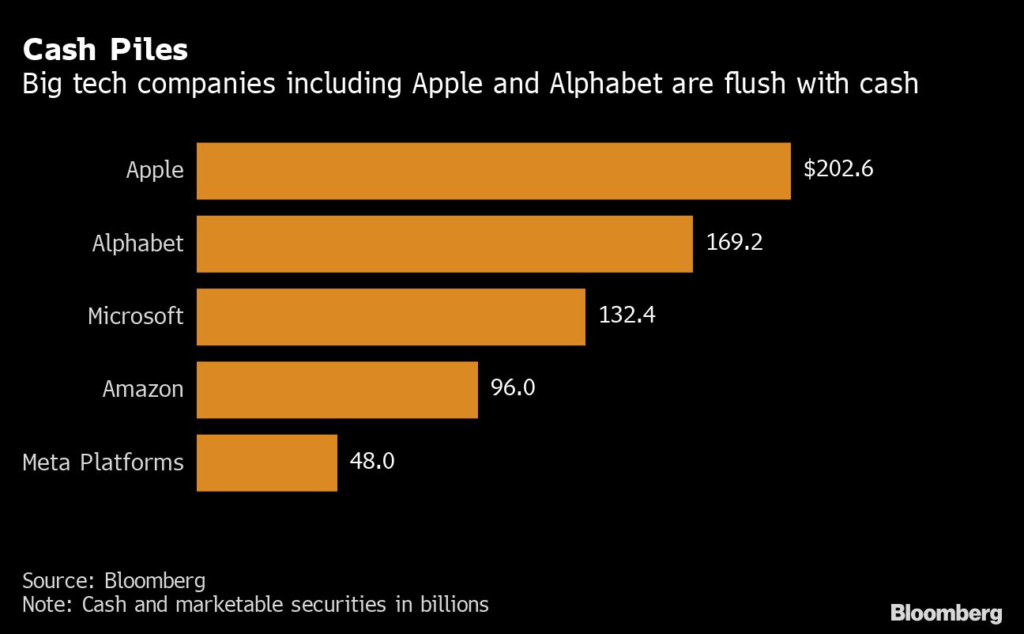
With their coffers filling fast, companies including Alphabet Inc. and Microsoft Corp. have been looking for ways to employ excess cash. Apple’s repurchases have totalled $274.5 billion, including $20.4 billion in the December quarter alone. Yet the company still has cash of more than $200 billion on the balance sheet, and with authorization to purchase up to $315 billion of stock, has scope to do a lot more.

Apple shares have fared better than peers this year, falling 6.7% versus the 14% drop of the tech-heavy Nasdaq 100 index. That’s despite reports of production difficulties that Suva says “could provide a near-term stock pullback which we would use as a buying opportunity.”

According to the Citi analyst, the company’s current market value does not reflect potential new product category launches such as augmented reality/virtual reality headsets and the Apple car.

More stories like this are available on bloomberg.com

©2022 Bloomberg L.P.

OfBusiness Seeking $2 Billion in Mega Indian Tech IPO, Sources Say

(Bloomberg) — A husband-and-wife founding team is in discussions with banks about raising as much as $2 billion in an initial public offering for one of their startups, aiming for India’s biggest tech debut since fintech giant Paytm.

OfBusiness, a startup founded by entrepreneurs Ruchi Kalra and Asish Mohapatra to help Indian enterprises buy bulk raw materials, could file initial listing documents around October, people familiar with the matter said. The startup is in talks now to raise about $400 million of pre-IPO financing in coming months, one of the people said. It’s in discussions with potential IPO arrangers including Goldman Sachs Group Inc. and Morgan Stanley and India’s Kotak, Avendus and ICICI Securities. 

At $2 billion, OfBusiness is aiming to pull off India’s largest tech IPO after Paytm’s. That’s despite the fintech startup’s disastrous early performance, and waning global appetite for riskier assets as the war in Ukraine and rising inflation stoke macroeconomic uncertainty.

OfBusiness hopes to buck the trend after quadrupling revenue in each of the past few years, the people said, asking not to be identified discussing private matters. It’s hoping for a higher valuation than the $5 billion it obtained during its most recent funding round in late 2021, the people said. OfBusiness is projecting a revenue run rate by the financial year ending March 2023 of $6 billion and it’s already profitable, one person said. 

“The companies are both ready for public markets and at the right, opportune time, over the six months to two-year period, you will see both companies go public,” Kalra told Bloomberg Television in an interview on Monday.

India’s ‘Unicorn Couple’ Aim for First Startup IPO Within a Year

Kalra, 38, and Mohapatra, 41, this year became the country’s first husband-and-wife team to build their respective startups into enterprises with at least a $1 billion valuation, also known as unicorns.

They co-founded OfBusiness, formally known as OFB Tech Pvt., and began operations in 2016. The couple later won backing from Tiger Global and SoftBank Group Corp. They also helped create Oxyzo Financial Services, which provides digital credit and turned unicorn in its maiden funding of $200 million last month. 

Mohapatra is chief executive officer of OfBusiness while Kalra is CEO of Oxyzo. OfBusiness helps companies, particularly in the manufacturing and infrastructure segments, purchase metals, chemicals, agricultural commodities and building materials, helping them get better pricing and more efficient deliveries. It also helps these enterprises scope out new growth opportunities.

Read more: Husband and Wife Entrepreneurs Mint Own Unicorns Within a Year

More stories like this are available on bloomberg.com

©2022 Bloomberg L.P.

Stripe, Alphabet and Others to Spend Nearly $1 Billion on Carbon Removal

(Bloomberg) — Some of the world’s largest companies will spend $925 million buying offsets from startups that remove carbon dioxide from the air.

The Frontier fund, a public-benefit corporation owned by Stripe Inc., has also received funding from Alphabet Inc., Shopify Inc., Meta Platforms Inc. and McKinsey & Co. Inc. It will help fledgling carbon-removal companies scale up and reduce the cost of withdrawing each ton of CO₂ from the air, which would benefit all companies in the world looking to buy high-quality offsets.

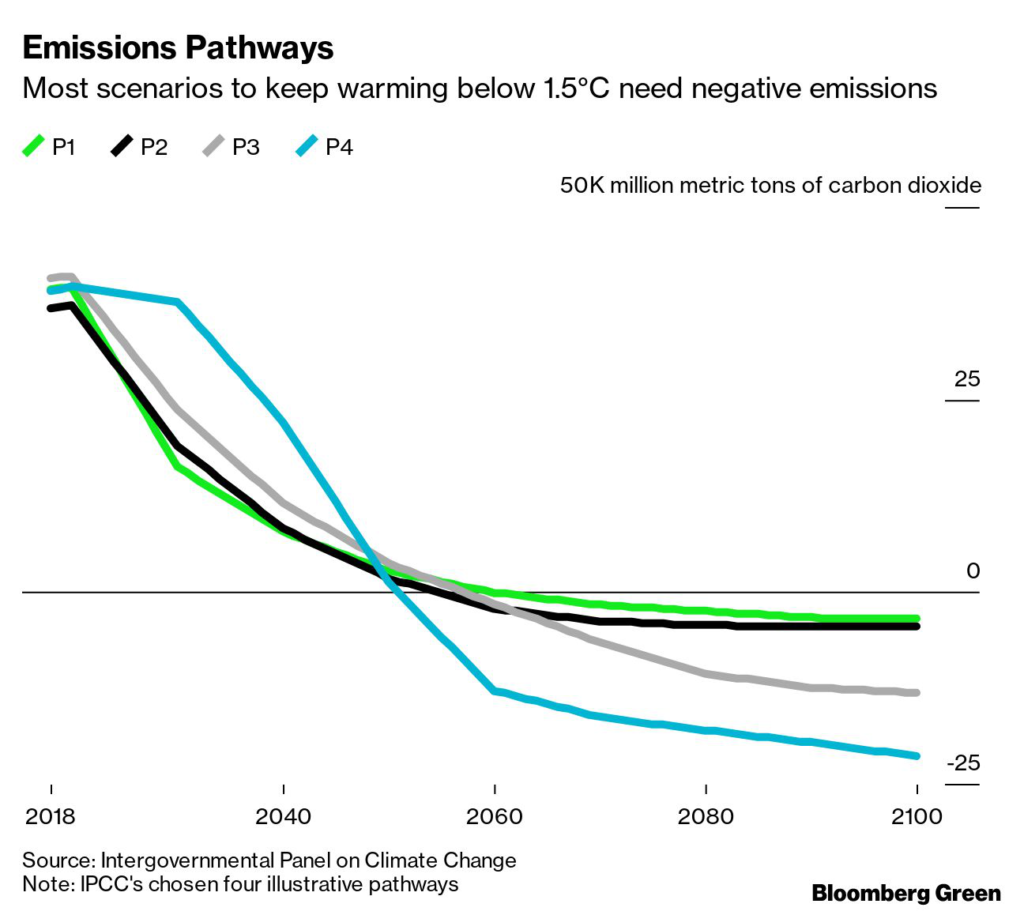
Climate scientists are clear that every company in the world has to cut emissions first, whether that be through moving to renewable power or other carbon-free alternatives. But the process of reducing emissions has been delayed so much that it won’t be possible to meet global climate goals without removing some of the CO₂ already dumped in the air. Offset purchases made by large companies to deal with emissions it cannot cut, such as those from air travel, could create the business model that will support carbon removal.

While much of these tons removed could come from growing forests, there are limits on how much nature can help. Crucially, these forests face the risk of fires that can release the trapped carbon, rendering the offset promise dead. There are technology solutions, but they are expensive and we don’t yet fully understand their limits. These include startups that crush minerals which attract CO₂ like iron filings to a magnet and others that pickle wood to stop it from degrading and releasing the CO₂ it captured in its life as a tree.

“If we don’t hustle and figure out the real potential of these technologies, the world will be put in a challenging position,” said Nan Ransohoff, head of climate at Stripe. As much as 6 billion tons will have to be removed annually by 2050, according to the Intergovernmental Panel on Climate Change’s models. “We are relying on technologies that we don’t know can get to that scale,” she added.

That’s where Frontier can help. It’s based on a model that Stripe has fine-tuned over the past two years. Here’s how it will work: startups with technologies that pull CO₂ from the air can pitch to Frontier. The fund will evaluate those technologies with a pool of experts. They will take into consideration factors such as:

  • Permanence: how long will the carbon remain stored?
  • Footprint: how much land area per ton will the technology take?
  • Cost: can the technology reach less than $100 per ton at scale?
  • Capacity: can it capture at least 500 million tons each year at full scale?
  • Justice: how will it affect the local community where plants are located?

Once the experts are happy, Frontier will negotiate a price per ton captured and make a commitment to spend millions of dollars for the delivery of those tons as offsets. Some startups may charge as much as $2,000 per ton and others as little as $75 per ton. Frontier is aiming to use its purchasing power to first support as many good carbon-removal startups as possible and then look to maximize how many tons it could acquire from each of those startups. The funds will be spent by 2030, though Frontier welcomes other companies and governments joining and growing the sum it can spend.

Stripe and Shopify have each run a Frontier-like fund that has so far supported 14 and 22 startups with $7 million and $30 million, respectively, in purchase agreements. Those agreements have helped the startups to secure venture-capital funding, said Peter Reinhardt, chief executive officer of carbon-removal startup Charm Industrial, because they can show investors a guaranteed market for their product. As the startups mature, the hope is that these purchase commitments will enable them to raise billions of dollars for building large-scale plants through debt markets, which are cheaper pools of capital that make safer bets than venture funds do.

Frontier takes inspiration from a similar funding mechanism that supported the development of a pneumococcal vaccine in 2007. The target buyers for the vaccine were people in poor countries, where more than 700,000 died annually from pneumococcus bacteria but whose governments did not have the means to commit upfront money even if the vaccine would save lives and thus help their economy.

So the Bill and Melinda Gates Foundation and rich-country governments made an upfront purchase of $1.5 billion, which provided enough of a demand signal for the market to make the necessary investments. The result was immunization of 150 million children, with 700,000 lives saved over a decade since the program was launched.

A more recent example is the sums government spent on Covid-19 vaccines purchase commitments. When no other treatment was available, each dose was probably worth $1,000 in economic benefits, according to Susan Athey, professor of economics of technology at Stanford Graduate School of Business. Governments paid a much smaller sum per dose, but that was enough to get large pharma companies to spend billions of dollars needed to manufacture the vaccine.

This kind of technology development risk is typically taken by governments or philanthropies. So what are private companies doing supporting innovation at such early stages? “Governments move slow and they cannot always afford to make compromises with how they spend tax dollars on risky ideas,” said Stacy Kauk, head of sustainability at Shopify. “I think of this less as philanthropy and more like research and development,” said Peter Freed, director of energy strategy at Meta.

Both Meta and Google have committed to reach net zero, for which they will use nature-based offsets, but they would also like to support more robust carbon removal. Spending the sum upfront will help make future purchases cheap, said Kate Brandt, chief sustainability officer at Alphabet’s Google. The cost of carbon removal per ton needs to be between $40 and $140, said McKinsey’s Dickon Pinner, to help the world reach climate goals.

None of this is to take away from the major task of cutting emissions now. That’s where most of the money is going anyway. Global spend on clean technologies breached $750 billion in 2021, according to BloombergNEF, a clean energy research group. In that sense, spending $925 million over the this decade supporting carbon removal is not a huge amount. Scaling those technologies will need lots more money.

More stories like this are available on bloomberg.com

©2022 Bloomberg L.P.

Bitcoin Rises Back Above $40,000 to Show Some Recovery Signs

(Bloomberg) —

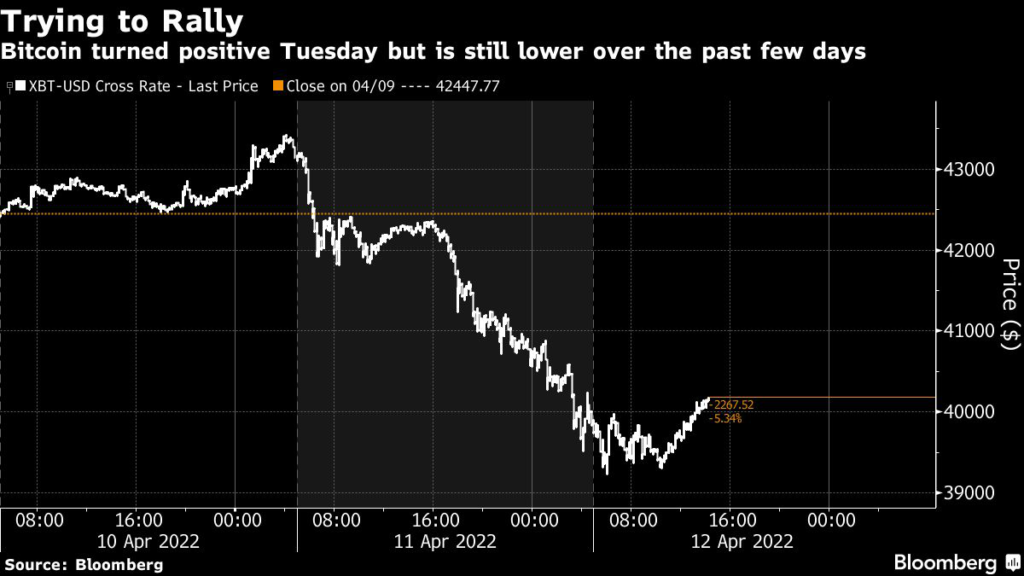
Bitcoin recovered to above $40,000 on Tuesday, gaining back some ground after dropping for seven days out of the past eight.

The largest cryptocurrency rose 0.8% to $40,160 at 5:30 p.m. in Hong Kong, gaining steam around midday in Hong Kong after dropping earlier in the session. Ether also strengthened at around the same time, rising to just above $3,000. Some smaller coins posted larger gains, with Avalance rising 3.8% and Polkadot advancing 2.3%. 

Bitcoin and the broader crypto market have struggled in recent weeks as the Federal Reserve began hiking rates to combat stubbornly high inflation and geopolitical turmoil hurt risk appetite. U.S. inflation likely accelerated to 8.4% in March, the fastest pace since early 1982, data due later Thursday is likely to show, according to a survey of economists. 

Crypto’s correlation with U.S. tech stocks has risen sharply in the past few weeks, suggesting investors increasingly view digital assets as vulnerable to tightening monetary conditions. But contrast, the massive stimulus the Fed flooded markets with during the Covid outbreak drove Bitcoin to a record $69,000 in early November.   


Bitcoin Bearish Flag Has Analysts Looking For Crash Lows: Chart

The Federal Reserve may need to raise interest rates “significantly” higher than it currently expects to cool an overheated U.S. economy, Goldman Sachs Group Inc. Chief Economist Jan Hatzius said Friday.

Bitcoin “is still consolidating in a triangle pattern stretching back to mid-January,” said Jeffrey Halley, senior market analyst at Oanda. “The lower and upper boundaries today are $36,500 and $47,500,” he said, implying that Bitcoin was well within its range. 

A break above or below those support or resistance levels could lead to an $18,000 move either way, Halley added.

(Updates pricing in second paragraph.)

More stories like this are available on bloomberg.com

©2022 Bloomberg L.P.

Infinite Reality to Buy ReKTGlobal, Aims to Raise $150 Million

(Bloomberg) — Infinite Reality Inc., which has inked a deal to go public through a merger with Universal Security Instruments Inc., has agreed to acquire ReKTGlobal, an esports startup that abandoned a prior plan to combine with a SPAC.

“We were on the two-yard line to go public with a SPAC,” ReKTGlobal co-founder and Chairman Amish Shah said in an interview. “We could have gone solo and been a micro-cap stock, but we thought it was smarter play to be part of a bigger company in a hot sector,” he said, referencing the metaverse. The company pivoted to a $470 million all-stock transaction with Infinite Realty.

Infinite Reality, formed through the merger of Display Social and production company Thunder Studios, is valued at $2 billion, Chief Executive Officer John Acunto said in an interview. It plans to expand ReKTGlobal’s brands including League of Legends’ Rogue and Call of Duty League’s London Royal Ravens into the metaverse, potentially through the creation of esports stadiums and skyboxes, Acunto said.

“Together, there’s no reason we can’t do $100 million in revenue in 2022,” Shah said.

Read more: Baron Davis SPAC Said In Talks With ESports Startup ReKTGlobal

Infinite Reality is in discussions to raise $150 million or more through a private investment in public equity, or PIPE, in a deal valuing the combined entity at more than $2.5 billion, said Acunto. 

The firm has no ambitions to become profitable in the next 24 to 36 months, Acunto said. Instead, it plans to both build metaverses and provide tools for businesses and creators to build their own metaverses, which he says is “going to take a tremendous amount of investment.” The company is aiming to make additional acquisitions, he added. 

“We believe that the future of business, entertainment, socializing and learning will be conducted in digital environments and that Infinite Reality is the company that will bring it all to life,” ReKTGlobal co-founder and CEO Dave Bialek said in an emailed statement. 

ReKTGlobal’s investors include Summit Partners, Imagine Dragons, DJ Steve Aoki and Nick Gross, the son of Bill Gross. Investors in Infinite Reality and its affiliates include Hilco Streambank and Terracap Ventures.

In a March report, Citigroup Inc. analysts said the metaverse “may be the next generation of the internet” and that rather than being a purely virtual reality world, it may combine the physical and digital world in a “persistent and immersive manner.” The New York firm estimated the metaverse economy’s total addressable market could grow to between $8 trillion and $13 trillion by 2030 with 5 billion total users.

More stories like this are available on bloomberg.com

©2022 Bloomberg L.P.

‘Staggering’ Crypto Seizures Have Cops Struggling to Keep Up

(Bloomberg Markets) — One spring day in a village just west of London, residents saw a man being muscled into a car in front of a nearby house. He reappeared with cuts and bruises 13 hours later, but the cops had already discovered the house was a cannabis-growing operation. A separate search of the man’s home in a nearby town turned up something more intriguing—some of the first cryptocurrency that would ever be seized by U.K. police.

That era-defining 2017 case yielded a safety-deposit box containing jewelry, gold bars, £263,000 ($345,000) in cash, and an item that flummoxed the lead investigator, Matthew Durkin, a 19-year veteran of the Surrey police. It was a USB device found in the suspect’s study. The gadget was wrapped in a small notebook, which contained two strings of 12 random words. A young probationary officer recognized the device, a KeepKey, as a virtual currency holder and the words as seed phrases to access crypto wallets. Eventually, police discovered it held 295 Bitcoin.

“It meant nothing to me until someone said it was worth £900,000,” recalls Durkin, 51.

In recent years, police departments such as Durkin’s and law enforcement agencies around the world have had to learn quickly about how to deal with crypto­currencies, often in amounts that eclipse traditional assets such as cash, gold, jewelry, cars, and real estate. In London, for instance, police seized almost £300 million of crypto linked to crime last year.

The U.S. Marshals Service held 22 cryptocurrencies valued at about $919 million last December, according to spokeswoman Shaunteh Kelly. In February the U.S. made its largest financial seizure ever: about $3.6 billion in Bitcoin stolen during a 2016 hack of the Bitfinex currency exchange. And cryptocurrencies made up almost all—93%—of the assets confiscated by the Internal Revenue Service’s Criminal Investigation Division in the fiscal year that ended Sept. 30.

“It’s exploded since 2017,” says Ryan Korner, head of the division in Los Angeles. “We’re at a point where it touches almost every investigation that we work in one way or another. We’re trying to make sure that all of our agents have the ­knowledge to work these cases.”

The qualities that make cryptocurrencies attractive to criminals—some think they’re easier to hide and ­transfer than many valuable assets—are challenging law enforcement.

To start, investigators have to learn to recognize a crypto wallet and then how to obtain the private key, or seed phrase, to unlock it. Months after the $10 million hack of the GateHub platform in 2019, French investigative judge Pascal Latournald and his colleagues held and interrogated a suspect for the better part of 48 hours before he gave up the code that unlocked $2 million in Bitcoin. The exhausted suspect, hoping for leniency, revealed he’d written it on a slip of paper inside a cookbook in his parents’ living room in southern France, according to an officer involved in the investigation who spoke on the condition he wasn’t named.

U.S. agents have discovered seed phrases hidden on a gum wrapper, inside a TV instruction manual, and on tiny pieces of paper stuffed in a suitcase in a closet, says Tigran Gambaryan, who was a special agent for the IRS’s criminal investigation arm for a decade before joining crypto exchange Binance in September.

In 2018, U.K. police chiefs lobbied the government for funding to equip about 250 officers—dubbed crypto tactical advisers—and train them in how to investigate, seize, and realize the value of digital currencies.

The U. S. Federal Bureau of Investigation in February formed a crypto unit to provide equipment, training, and blockchain analysis to agents. The Department of Justice appointed Eun Young Choi as the director of a team dedicated to crypto crimes. Choi says her focus will include virtual currency exchanges and services, known as mixers or tumblers, that obscure funds. Speaking at a Munich conference, Deputy Attorney General Lisa Monaco said her prosecutors will work more with European partners on crypto enforcement.

Laurel Loomis Rimon, who worked on many money laundering cases during her 17 years as a federal prosecutor, says the value of the recent seizures is “staggering” and will have a big impact on prosecutors. “There’s a facility with this type of analysis that has been growing,” says Rimon, now at the law firm Paul Hastings. “You’ve got prosecutors getting more and more comfortable with it.”

As law enforcement becomes more sophisticated in identifying and accessing a suspect’s cryptocurrency, they’ve also had to navigate the challenges of securing it and, eventually, liquidating it. In the Surrey case, police quickly bought their own KeepKey and transferred the Bitcoin to it. They put the device and seed phrase in a safe, and only two officers knew the combination. Durkin had heard about two U.S. agents who went to prison for stealing Bitcoin while investigating the now-­shuttered Silk Road underground virtual drug bazaar. “I was very conscious of security—people’s heads can be turned with a million quid,” Durkin says. “But most of all, I was worried about losing it—I didn’t want to stand in front of my chief constable and say £900,000 in Bitcoin had gone.”

Durkin’s team got a court order, the first of its kind in the U.K., that enabled them to convert the crypto into sterling. They sold it directly to a trusted international exchange for £1.25 million, the market rate at the time.

Once seized, it can take years for authorities to secure a forfeiture order letting them sell crypto and return the proceeds to crime victims or governments. In the U.S., seized property is subject to claims by people who say they have a right to it.

In 2018, authorities in Monmouth County, N.J., raided two locations used by a suspected drug dealer, Giddel Gonzalez-Estrada. They seized cocaine, cash, and a handgun, as well as Bitcoin, Litecoin, and Ether valued at $57,000. Gonzalez-Estrada held the crypto in an account at Coinbase Global Inc. Monmouth authorities got a judge’s approval to seize the crypto from Coinbase, which transferred it to a wallet set up by detectives. They held it on a device in the evidence vault, says Michael Costanzo, a special deputy attorney general. Gonzalez-Estrada pleaded guilty in 2019 and was sentenced to 10 years in prison. When a judge finally approved the forfeiture in 2021, detectives transferred the crypto back to Coinbase, netting $198,237 for the county’s law enforcement trust account.

Seizing and selling crypto is becoming less daunting for prosecutors and detectives, Costanzo says. Monmouth prosecutors are preparing for trial against a former tennis teacher accused of identity theft and other crimes. In 2017 they seized crypto valued at $200,000. The value grew to $1.25 million last year. “There were a lot of questions about it in 2018,” Costanzo says. “Now, in 2022, people have if not a full understanding, at least a rudimentary understanding.”

Around the world, stashes of confiscated crypto have been auctioned ­alongside Ferraris, watches, diamonds, and, in one case in Germany, a harp. Wilsons Auctions, the largest independent auction house in the U.K. and Ireland, got involved in 2018 when the company realized that law enforcement didn’t have a solution for selling seized crypto at the time. In February 2019 the company auctioned 315 Bitcoin for Belgian authorities. The sale, which took place online as well as in person, attracted bidders from more than 90 countries.

One middle-aged woman purchased half a Bitcoin along with some other items, says Aidan Larkin, who ran asset recovery for Wilsons at the time. When she insisted on taking the Bitcoin home with her in a bag, the auction team had to coach her on how to set up a digital wallet instead.

The U.K.’s National Police Chiefs’ Council, the representative body for all forces, undertook a procurement process that enabled police to use a third-party custodian to store and sell its crypto. So Surrey Police and other forces now use Komainu, which is backed by Nomura Holdings, Ledger, and CoinShares. Larkin, who formerly worked as a criminal investigator for the U.K.’s tax authorities, left Wilsons to start a company called Asset Reality that aims to advise law enforcement on dealing with seized assets, including crypto­currencies.

The U.S. Marshals Service, which disposes of assets like houses, cars, planes, boats, and artwork, has had a hard time finding a contractor to manage and sell forfeited crypto. From 2014 to 2020, the marshals auctioned crypto themselves. Billionaire venture capitalist Tim Draper was one bidder who cleared background checks and bought crypto at auction. In 2014 he picked up 30,000 Bitcoin for $632 each, before the price plunged to $180. He still holds those Bitcoin, now valued at more than $40,000 each. He says he bought fewer Bitcoin in the next auction, investing about 40 of them in startups, but would consider buying more if the government auctions them.

He may not get the chance. As seizures ballooned, the marshals sought proposals from companies to store and sell crypto. In soliciting contractors, they posted 26 pages of questions and answers in May 2020. At that point, their portfolio was valued at $145 million in more than 160 wallets, the agency said. Last April, BitGo Inc. won a $4.5 million contract. But that award fell through because it was supposed to go to a company designated as a small business, and BitGo, now part of Galaxy Digital Holdings, was too big. In July, a $6.6 million contract went to Anchorage Digital, which had received conditional approval for a national trust bank charter from the Office of the Comptroller of the Currency. The contract is on hold pending the outcome of a protest to the bid.

The U.S. Marshals Service now uses a secure online platform for selling and transferring cryptocurrency with the goal of disposing of assets “in a timely manner at fair market value,” says Kelly, the agency spokeswoman.

The Justice Department’s asset forfeiture policy manual last year spelled out how prosecutors and agents should proceed on crypto. Because multiple copies of a key may exist, “it is imperative that once authorization to seize the virtual currency is obtained, it be transferred to an ­agency-controlled wallet,” the manual states. Seized crypto also must be held in cold storage, or a secure offline device, until it’s transferred to a government-controlled custodial wallet.

In Germany, prosecutors in each of the country’s 16 states decide how to manage seized property. Frankfurt prosecutor Jana Ringwald’s cybercrime unit uses Bankhaus Scheich, a small investment bank, to ensure that confiscated crypto­currency in her home state, Hesse, is legally managed and sold in a way that creates minimum volatility. Prosecutors in Cologne, by contrast, auction cryptocurrency seized in North Rhine-Westphalia like other contraband. Buyers can pick up a physical wallet with the codes in person, or apply to have the coins transferred online.

Over time, German authorities have become more efficient in handling crypto, but delays aren’t always a bad thing. In 2018, Berlin police watched the value of their crypto­currency soar as they waited to clear bureaucratic hurdles before holding an auction.

To be sure, much of the crypto seized today stems from crimes such as the Bitfinex hack or frauds that occurred years ago. Investigators handling these cases are specially trained in crypto sleuthing, and they say it can be easier to trace money on the blockchain ledger that underlies cryptocurrencies than in the traditional banking system. “The blockchain of Bitcoin provides a lot more transparency than the legacy financial system,” says Gambaryan, the former IRS criminal investigator who’s now vice president for global intelligence and investigations at Binance. “This is coming from somebody who’s worked both. If not for Bitcoin, a lot of cases I was working wouldn’t be closed.”

For instance, in November 2020, U.S. authorities confiscated Bitcoin that had been hacked from the Silk Road digital marketplace about seven years earlier. The Bitcoin were valued at $1 billion when they were recovered from someone identified in court papers only as Individual X. The IRS cracked the case after working with Chainalysis Inc., a cryptocurrency research firm. “That’s a perfect example of the permanence and immutability of the blockchain, that crimes committed long ago remain relevant as soon as we can get some attribution,” says Gurvais Grigg, Chainalysis’s global public sector chief technology officer.

The proceeds from seized crypto sold by the U.S. government go to support law enforcement if the crypto was used to facilitate crime, according to Michael Sherwin, a former federal prosecutor. But if there were victims of the crime, they get the money as restitution, he says. For instance, the Justice Department has said it will return the Bitcoin hacked from Bitfinex to the victims—a process to be worked out in court.

The volatility of cryptocurrency can create thorny questions for courts to solve. “If you have 300 tokens stolen in 2018, what’s the court going to give you? Are you going to get the value of the tokens in 2018, or are they just going to give you back your tokens, which had an exponential increase?” asks Sherwin, who’s now at the law firm Kobre & Kim. “I think it should be the latter. You should get your property back, even if it increased in value.”

As regulators and law enforcement agencies become savvier about seizing and disposing of crypto, so do the criminals trying to evade detection. “It’s not easy for us, and it’s still an extremely volatile market,” says Durkin, the Surrey detective chief inspector. “It’s an area of criminality that we’ve had to play catch-up on really quickly. But the police play cat and mouse, that’s what we do.” —With Gaspard Sebag in Paris, Karin Matussek in Berlin, and Chris Strohm and Allyson Versprille in Washington

Milligan and Voreacos cover legal news in London and New York, respectively.

More stories like this are available on bloomberg.com

©2022 Bloomberg L.P.

Nokia Exits Russia Saying It’s ‘Not Possible’ to Stay

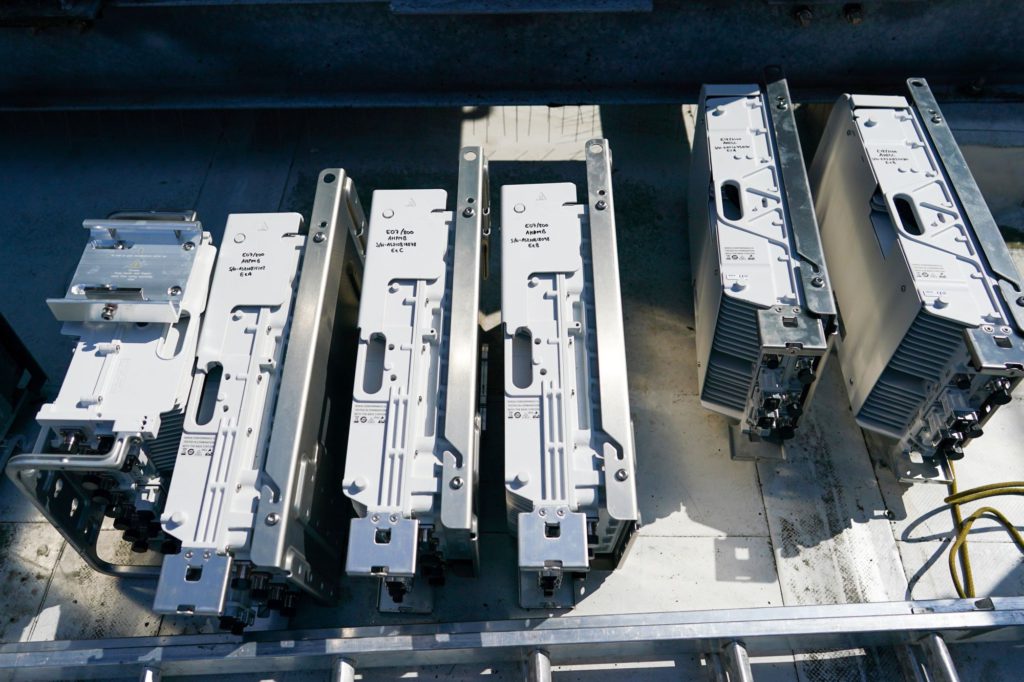
(Bloomberg) — Finnish 5G gear maker Nokia Oyj plans to exit the Russian market in response to the invasion of Ukraine and the full-scale war Russia is waging.

Over the last weeks Nokia had suspended deliveries and stopped new business, it said in a statement on Tuesday. It’s also moving its “limited” research and development activities out of Russia. The decision follows Swedish rival Ericsson AB’s announcement on Monday of an “indefinite” suspension of business there.

“It has been clear for Nokia since the early days of the invasion of Ukraine that continuing our presence in Russia would not be possible,” Chief Executive Officer Pekka Lundmark said on Twitter.

Nokia has 2,000 employees in the country, and “redundancies are unavoidable” though the company will offer relocation “for certain roles that can be done outside of Russia,” a spokesperson said in an emailed response to questions.

By pulling out, Nokia and Ericsson are ceding the market to Chinese rivals Huawei Technologies Co Ltd. and ZTE Corp, which have already won big contracts to supply fifth generation networks to Russia’s biggest carriers. Huawei’s failure to condemn President Vladimir Putin’s invasion of Ukraine has caused controversy as it seeks to continue business in other markets. British board members resigned last month following its silence on the matter.

Nokia said that it still aims to provide support for networks maintenance for operators including MTS, Vimpelcom, Megafon and Tele2 while it winds down operations in Russia, and apply for the relevant licenses to enable that support “in compliance with current sanctions.”

Ensuring “continued flow of information and access to the Internet, which provides outside perspectives to the Russian people,” is “the most responsible course of action” to take, the Finnish telecommunication equipment maker said.

Nokia expects to book a provision of about 100 million euros ($109 million) in the first quarter. Given “strong demand” in other regions and Russia accounting for less than 2% of net sales last year, Nokia said the decision would not have an impact on its ability to reach its 2022 outlook. 

(Adds impact on rival Huawei, ZTE in fifth paragraph)

More stories like this are available on bloomberg.com

©2022 Bloomberg L.P.

iPhone Maker Halts Plants as China Covid Battle Hits Tech Supply

(Bloomberg) — IPhone assembler Pegatron Corp. suspended production at its Chinese plants in Shanghai and Kunshan as the country’s policies to control the worst virus outbreak in two years disrupt global supply chains.

Resumption of output at the sites will depend on notifications from the government, Pegatron said in an exchange filing Tuesday. The company is continuing to assess the suspension’s impact on its finances.

The Taiwanese company makes iPhones in Shanghai and nearby Kunshan, both under lockdowns as China pursues its Covid-zero strategy. Pegatron had been able to keep production humming thus far as local governments allowed some manufacturers to maintain their operations with a closed-loop system that reduces the chances of workers getting infected.

Pegatron splits iPhone assembly orders in China with bigger Taiwanese rival Foxconn Technology Group and Chinese peer Luxshare Precision Industry Co. Foxconn suspended some iPhone assembly work in Shenzhen for a few days in March because of Covid-related restrictions.

Shanghai said on Monday it was partially easing a city-wide lockdown, but the majority of its residents are still subject to tight movement restrictions and local communist party chief Li Qiang vowed to continue measures to control the outbreak. The weeks-long lockdown has triggered a food shortage and threatened to throw already fragile supply chains into further turmoil.

Kunshan’s local government said it will stick with existing Covid-prevention policies despite a decline in the number of cases, asking residents to “make less fuss” and fully comply with the measures. Local officials have reported three positive coronavirus cases in Pegatron’s dormitory in Kunshan in the past four days.

Widespread Chinese lockdowns are exacting an unknown toll on the world’s No. 2 economy, where most electronics from iPhones to laptops and PCs are made. While many of the most critical factories in cities like Shanghai have managed to stay in operation, worsening logistics jams are constricting shipments of components, draining inventories to the point where some manufacturers including Pegatron are down to just a few weeks’ stocks, consultancy Trendforce estimates.

More stories like this are available on bloomberg.com

©2022 Bloomberg L.P.
Floods Wash Away Bridges, Close Routes to Key South African Port

(Bloomberg) — Key highways linking South Africa’s biggest port to the commercial hub of Johannesburg and its eastern seaboard were closed as severe flooding hit the province of KwaZulu-Natal.

The so-called N3 highway that connects Johannesburg to the port of Durban has been closed to southbound traffic because of debris on the road caused by the floods, KWaZulu-Natal’s Transport Department said on Twitter. Bridges on the N2, the main highway along the nation’s Indian Ocean coastline, have been washed away, Parboo Sewpersad, a spokesman for eThekwini Metropolitan police, said on Durban-based East Coast Radio.

At least 20 people may have been killed because of the flooding, Johannesburg-based broadcaster eNCA reported. Local media reports showed videos and images of A.P. Moller-Maersk A/S-labeled shipping containers adrift in the water. 

“The inclement weather conditions are expected to continue today” in areas around eThekwini municipality, which includes the city of Durban, KwaZulu-Natal’s Cooperative Governance and Traditional Affairs department said in a statement. “This increases the risk of flooding getting worse in all these areas.”

South Africa is this year experiencing the La Nina weather phenomenon, which usually causes above normal rainfall in the country and its neighbors. In January, many parts of the nation experienced the heaviest rains since tracking by district began in 1921.

Transnet SOC Ltd., which manages the Durban port, declined to comment and said it will issue a statement later on Tuesday.

More stories like this are available on bloomberg.com

©2022 Bloomberg L.P.
Close Bitnami banner
Bitnami