

Bloomberg

Maurice Lacroix Says Watchmaker Is Profitable and Still for Sale

(Bloomberg) — The head of Swiss watchmaker Maurice Lacroix said the company is still for sale and has been profitable for three years as it focuses on its popular entry level-priced Aikon model and younger customers.

Owned by Zurich-based distribution conglomerate DKSH Holding AG, the brand was put on the block amid a watch sector downturn in 2015. It has yet to find a buyer. 

Chief Executive Officer Stephane Waser said the brand had a record year in 2021 as its Aikon model remained popular with millennial-generation buyers looking for an accessibly priced luxury Swiss watch. As other brands have focused on increasingly pricey timepieces, Maurice Lacroix has zeroed-in on the more affordable segment.

Waser has overhauled Maurice Lacroix since taking over the top job in 2014, focusing on watches priced between 1,000 francs ($1,071) and 3,000 francs. The company also shifted to more online sales and marketing and began allowing for work from home back in 2017, well before the pandemic made such flexibility obligatory. 

“We changed our whole company culture,” the CEO said in an interview. “We can’t sell to younger generations if we don’t understand what they do and how they behave.”

The decision to go down-market rubs against industry trends. As Maurice Lacroix has shifted to entry-level prices, rivals including LVMH’s Tag Heuer and Richemont’s Baume & Mercier have increasingly focused on more expensive models.

The recent rebound in Swiss watch exports is still being driven by the top end. In February, for example, shipments of watches costing more than 3,000 francs increased in value by 28% while watches priced at between 500 francs and 3,000 francs rose 16%. Those worth less than 500 francs rose by just 4.8%.

The stainless steel automatic Aikon timepiece shares 1970s-era design traits with Audemars Piguet’s iconic Royal Oak and Patek Philippe’s vaunted Nautilus, but at a tenth of the price. The timepiece accounts for about 70% of the company’s sales. 

Maurice Lacroix is among the top 50 Swiss watch brands, with annual revenue of about 35 million francs and selling about 70,000 watches in 2021, according to Morgan Stanley estimates. For comparison, cult high-end brand F.P. Journe earned the same revenue selling just 900 watches last year.

Maurice Lacroix is now doubling down on its entry-level strategy. It’s launching a quartz version of the Aikon made from brightly colored recycled plastic made from a composite derived from ocean-waste. The Aikon Tide watches sell for about 700 francs and are being marketed with advertising materials featuring skateboarders, dancers, basketball players and parkour artists. 

“This is where we are at home,” Waser said, noting that more than 30% of its sales are online. 

The strategy has translated into profits for the past three years, according to the CEO. That’s taken pressure off the sales process which, while ongoing, isn’t particularly active or urgent for parent company DKSH.

“Business has been good for the past three years,” Waser said. “When you make black numbers, you don’t cost and you don’t disturb.”


More stories like this are available on bloomberg.com

©2022 Bloomberg L.P.

Google Tightens Philippines Apps Review to Curb Loan Sharks

(Bloomberg) — Alphabet Inc.’s Google will tighten approval for personal loan apps made available in the Philippines to fight illegal and abusive lending practices, the nation’s Securities and Exchange Commission said. 

From May 11, the technology company will require more documents and proof that developers are licensed to operate an online lender or to perform crowdfunding activities, the SEC said in a statement Tuesday. Those who can’t comply will be removed from Google Play Store, the company’s digital distribution service widely used by Android phone owners, it said.

The Southeast Asian nation is increasing efforts to curb online loan sharks after the pandemic boosted financial technology. The SEC stopped granting permits for lending apps in November last year and shut 72 platforms. Its central bank also put a cap on interest rates and fees by apps.

The Philippines will be the third country where Google will implement stricter requirements for personal loan apps, after India and Indonesia, the SEC said.

More stories like this are available on bloomberg.com

©2022 Bloomberg L.P.
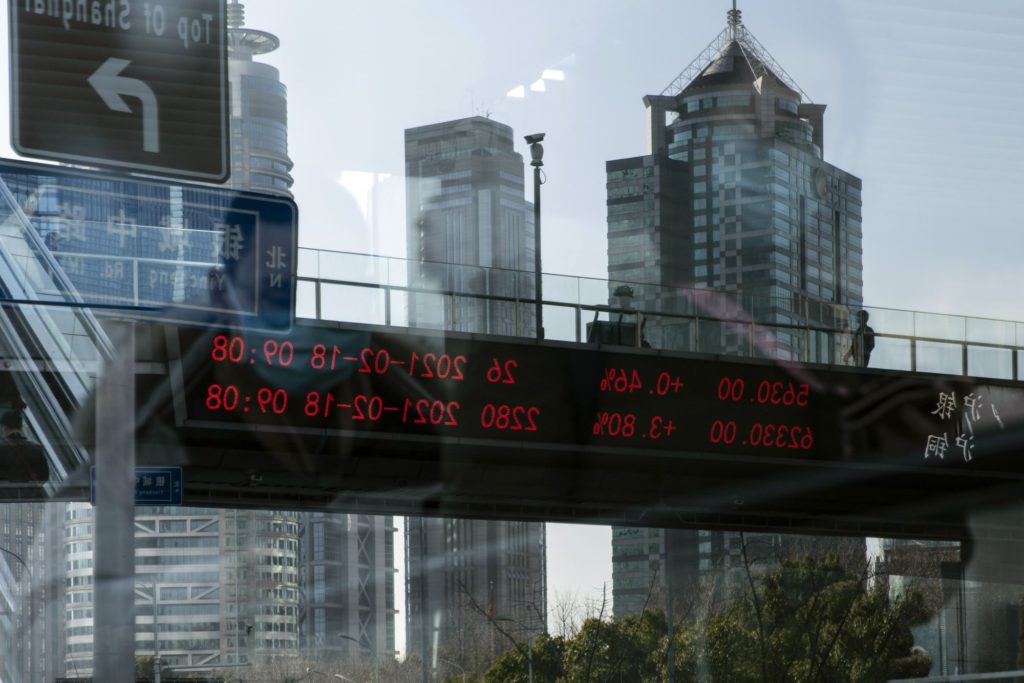
China Tech Stocks Slide as Risks Outweigh Game Approval Uplift

(Bloomberg) — Chinese tech stocks erased earlier gains on Tuesday as worries over rising interest rates and Covid-19 lockdowns outweighed optimism from Beijing’s approval of new video game licenses.

The Hang Seng Tech Index slid as much as 1%, having earlier jumped by 2.5% as shares of video game companies rallied. Kuaishou Technology was the largest drag, falling as much as 11%, with investors citing concerns about its earnings outlook. The benchmark Hang Seng Index also slid. 

China ending its months-long freeze on gaming approvals will likely help ease market anxiety that’s plagued the sector following a yearlong crackdown. But investors are also confronted with other headwinds, including a surge in Treasury yields before U.S. inflation data due later, and a dimming growth outlook for China as lockdowns continue.

Read more: China Ends Game Freeze by Approving First Titles Since July 

“The market is waiting for the U.S. inflation figure so the broader sentiment is a bit cautious today, despite the good news in the regulatory front in China,” said Linus Yip, a strategist at First Shanghai Securities. “Investors won’t pile in at this moment given so many uncertainties, such as pace of rate hikes, Covid situation in China and that property crackdown is still going on.” 

Chinese authorities’ actions to stabilize markets in recent weeks have done little to soothe market jitters, with the broader Hang Seng Index down nearly 10% this year and China’s benchmark CSI 300 down some 17%. 

On Monday, the China Securities Regulatory Commission again pledged further support to the “healthy” development of listed companies. 

Meanwhile, Alibaba Group Holding Ltd. fell as much as 1.9% as the Daily Journal Corp., a newspaper and software business that counts Charlie Munger as one of the overseers of its stock portfolio, cut its stake in half.


More stories like this are available on bloomberg.com

©2022 Bloomberg L.P.

SK May Invest in Nuclear Firm Including Bill Gates’ TerraPower

(Bloomberg) — South Korean conglomerate SK Group said it’s looking at an investment in a company that designs small-scale nuclear reactors for electricity generation.

The Chosun Ilbo newspaper reported that SK had been in talks with TerraPower LLC, founded by Bill Gates, and would take a 10% stake in the company.

SK declined to confirm it was in discussions with TerraPower when contacted by Bloomberg, but a spokeswoman said it had been reviewing a potential investment in next-generation nuclear technology in a bid to de-carbonize its operations. The company still hasn’t made a final decision, she said.

See also: Tech Billionaires See Energy Crisis as Nuclear Power’s Moment 

Small modular reactors are increasingly being seen as a way for countries to green their electricity mixes, and wean themselves off Russian natural gas. Technology billionaires including Gates, Jeff Bezos and Peter Thiel are investing in the sector, with China connecting its first SMR to the grid late last year. China National Nuclear Power Co., Toshiba Corp. and Electricite de France SA are among those developing the technology.

Nuclear generation accounts for about 29% of South Korea’s electricity, and President-elect Yoon Suk Yeol has said he supports the technology, including the small-scale SMRs. SK Group — the country’s third-largest conglomerate with units spanning oil refining and semiconductors — has a plan to invest $85 billion in green businesses from electric vehicle batteries to hydrogen. 

See also: Can Small Nuclear Reactors Really Help The Climate?: QuickTake

TerraPower, bankrolled by Gates, aims to use advanced cooling materials to build smaller, cheaper and more efficient reactors than conventional ones that use water for cooling. It plans to build two reactors in cooperation with the U.S. Energy Department, and expects to begin operations in 2028.

More stories like this are available on bloomberg.com

©2022 Bloomberg L.P.

Meta, Snap Sued by Mother of Wisconsin Teenager for His Suicide

(Bloomberg) — Meta Platforms Inc. and Snap Inc. were sued over a teenager’s suicide in the latest effort by an advocacy group to hold the social media giants responsible for addiction to their platforms.

Christopher James Dawley, who went by CJ, was a college-bound honors student who played sports and enjoyed outdoor activities, but he got so deeply drawn into social media and obsessed with body image that he was frequently communicating on Instagram at 3 a.m., according to the complaint filed Monday by his mother in federal court. 

In January 2014, while CJ’s family was cleaning Christmas decorations and about a month before his 17th birthday, he posted “Who turned out the light?” on his Facebook page, held a 22-caliber rifle in one hand, his smart phone in the other, and shot himself to death, according to the complaint.

Like previous cases filed by Seattle-based Social Media Victims Law Center, the suit alleges that Meta deliberately designed algorithms that keep teens hooked onto their platforms to promote excessive use that they know is indicative of addictive and self-destructive use.

“Neither Meta or Snap warned users or their parents of the addictive and mentally harmful effects that the use of their products was known to cause amongst minor users,” Donna Dawley’s said in her complaint. 

Read More: Meta, Snap Sued Over Social Media ‘Addicted’ Girl’s Suicide

Meta and Snap representatives didn’t immediately respond to email messages after regular business hours seeking comment.

The case is Dawley v. Meta Platforms Inc., 22-cv-00444, U.S. District Court, Eastern District of Wisconsin.

More stories like this are available on bloomberg.com

©2022 Bloomberg L.P.

CP Group’s Data Centers Unit Seeks $150 Million in Stake Sale

(Bloomberg) — True Internet Data Center Co., a unit of Thai conglomerate Charoen Pokphand Group, is seeking to raise about $150 million from a sale of a minority stake, according to people with knowledge of the matter.

The stake in the Bangkok-based company has attracted interest from other firms in the industry and financial investors, said the people, who asked not to be identified as the process is private. Non-binding offers are due as early as this week, said the people.

Deliberations are ongoing and the company may decide not to sell the holdings, they said. An external representative for True IDC declined to comment.

CP Group was exploring a divestment of True IDC that could fetch around $200 million, Bloomberg News reported in September. The company said at the time that it had no intention of selling the business.

True IDC is a carrier-neutral data center and cloud service provider, and is part of CP Group’s digital unit Ascend Corp., according to its website. The unit operates four data centers in Thailand and one in Myanmar, True IDC’s website shows.

Digital infrastructure such as towers and data centers are attracting interest from investors following a surge in online activity during the coronavirus pandemic. 

PLDT Inc., the Philippines’ biggest telecommunications and digital services provider by market value, has picked preferred bidders for its local towers valued at $1.5 billion, people familiar with the matter have said. Time Dotcom Bhd., a Malaysian telecommunications provider, is considering strategic options for its data centers business that could be worth more than $500 million, Bloomberg News has reported. 

CP Group is controlled by billionaire Dhanin Chearavanont, who has a net worth of $4.6 billion, according to the Bloomberg Billionaires Index. He is the biggest shareholder and senior chairman of CP Group, Thailand’s largest closely held company, with interests in agriculture, food, retail and telecommunications.

More stories like this are available on bloomberg.com

©2022 Bloomberg L.P.
Tencent Soars After China Ends Eight-Month Gaming Freeze

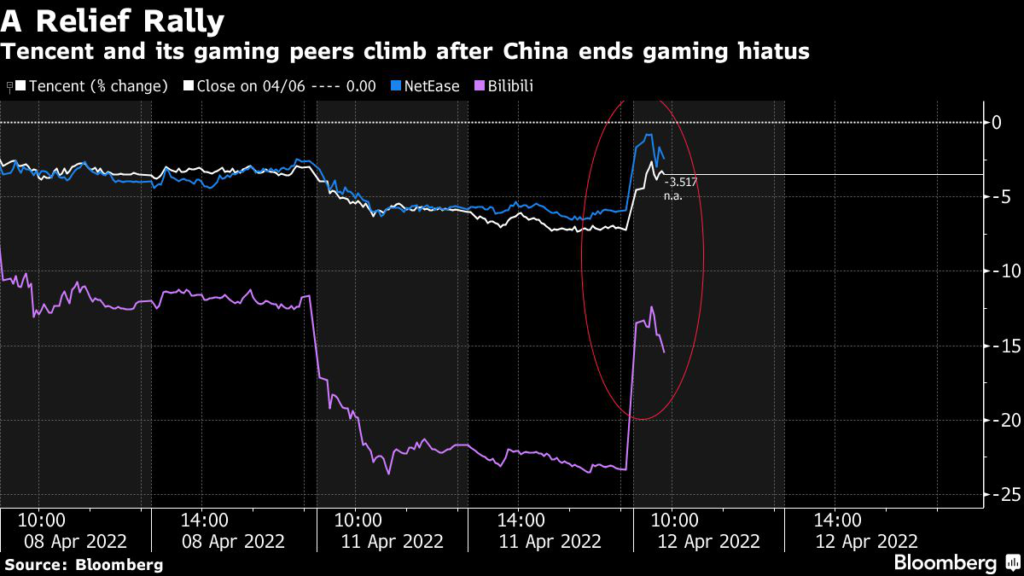
(Bloomberg) — Tencent Holdings Ltd. surged more than 5%, joining the rest of China’s gaming industry in a rally after regulators approved the country’s first batch of new titles in more than eight months.

The National Press and Publication Administration published a list of 45 domestic titles on its website late Monday, confirming an earlier Bloomberg News report. While leaders Tencent and NetEase Inc. were noticeably absent from a lineup of mostly casual games, the long-awaited resumption in licensing quelled investors’ worst fears about Beijing’s intentions for the gaming sector, which had come under fire for encouraging addiction and undesirable behavior among youths.

Analysts expect Tencent and NetEase to eventually get games approved. During a previous major suspension in 2018, Tencent was also excluded from the first crop of licensed titles.

Tencent gained the most in about three weeks in Hong Kong on an intraday basis. Video and game streaming service Bilibili Inc. soared as much as 15%, while NetEase gained more than 6%. Video platform DouYu International Holdings Ltd. rose 2.4% in U.S. trade.

“The resumption of game approval is a positive development to China’s games industry,” Citigroup analyst Alicia Yap wrote in a note. It “will help boost investor confidence that the government remains supportive of cultural and innovative aspects of the games industry and could signal resumption of a more regular approval process.” 

Read more: China Ends Game Freeze by Approving First Titles Since July

Beijing’s far-reaching tech crackdown — which has ensnared sectors from e-commerce to fintech and even online education — spread to online gaming in August, when regulators introduced stringent measures capping play time for minors and imposed new requirements aimed at curbing addiction. 

The media watchdog has also been reviewing new titles to determine whether they meet stricter criteria around content and child protection, an effort that’s slowed rollouts, Bloomberg News has reported.

The titles approved Monday were only from domestic companies, including a Baidu Inc. game, XD Inc.’s “Flash Party” and iDreamSky Technology Holdings Ltd.’s “Watch Out For Candles.” The line-up also included 37 Interactive Entertainment and Youzu Interactive Co.

Of the 45 approved titles, five are for PC, one for the Nintendo Switch console, and the rest are mobile games. Many of them appear to be casual games with lower player spending.

More stories like this are available on bloomberg.com

©2022 Bloomberg L.P.

KKR-Backed Voyager Nears Funding at $1.4 Billion Value

(Bloomberg) — Voyager Innovations Inc. raised $210 million from investors in a funding round that values the Philippine fintech firm at nearly $1.4 billion.

The fundraising for the digital arm of PLDT Inc., the Southeast Asian nation’s biggest telecommunications company by market value, was led by the Asian venture capital unit of Susquehanna International Group, according to a statement confirming an earlier Bloomberg News report.

Susquehanna, the U.S. investment firm also known as SIG and which was one of the earliest and largest backers in TikTok-owner ByteDance Ltd., was joined in the round by new investors EDBI and First Pacific Company Ltd. 

Some of Voyager’s existing investors including PLDT, private equity firm KKR & Co. Chinese technology giant Tencent Holdings Ltd., International Finance Corporation and two vehicles under IFC Asset Management also participated in the fundraising.

Voyager will use the proceeds to launch savings and credit services for Maya Bank, the digital bank it began pilot testing in March, the statement showed. It will also continue to expand its digital payments platform PayMaya’s offerings including cryptocurrency, micro-investments and insurance.

The company has been considering raising funds to help finance its expansion, Bloomberg News reported in February. Voyager raised $167 million in June to fund the expansion of PayMaya. The company won its digital bank permit in September.

PayMaya has more than 47 million registered users across its consumer platforms as of the end of March, the statement showed.

(Updates with confirmation and details of round throughout.)

More stories like this are available on bloomberg.com

©2022 Bloomberg L.P.
Sri Lankan Envoy Confident China Will Provide Debt Relief

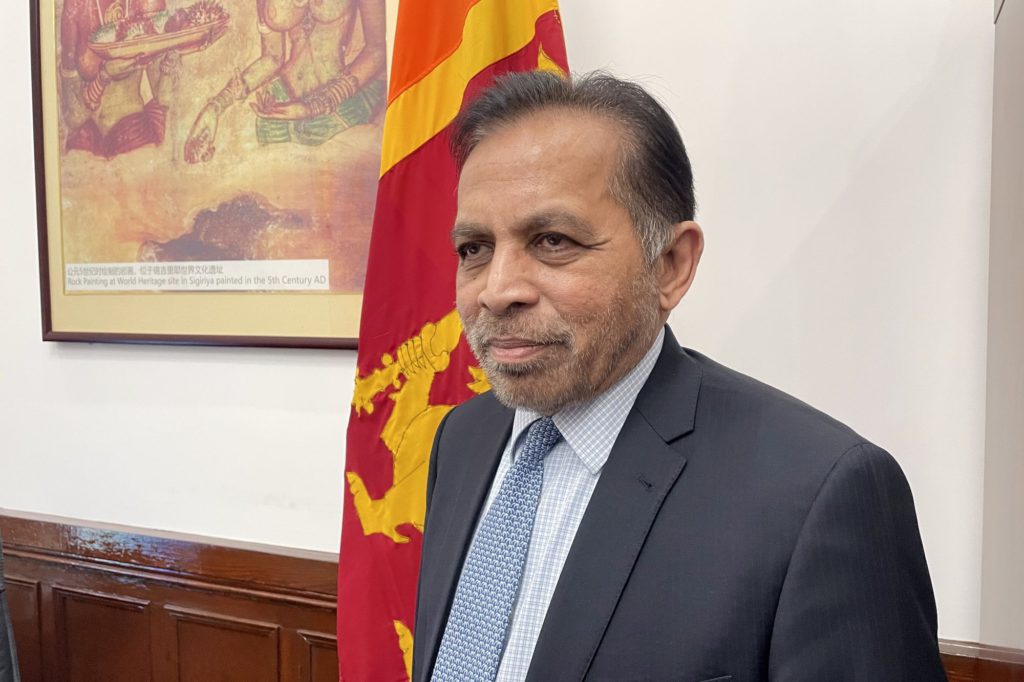
(Bloomberg) — Sri Lanka’s top diplomat in Beijing said he’s very confident that China will come through on $2.5 billion in financial support as the island nation’s inflation-driven crisis becomes more dire.

Ambassador Palitha Kohona said that he’d received reassurances as recently as last week from authorities in China that arrangements for loans and credit lines were progressing. Sri Lanka is looking to borrow $1 billion from Beijing so that it can repay existing Chinese loans due in July, as well as a $1.5 billion credit line to purchase goods from the world’s No. 2 economy such as textiles needed to support the apparel export industry, he said.

“For us, it can’t come any sooner,” Kohona said, adding that it could be a matter of weeks. He wasn’t able to give a precise timeframe, and didn’t disclose the terms of the funding.

“Given the current circumstances, there aren’t that many countries that can step out to the pitch and do something,” he said. “China is one of those countries that can do something very quickly.”

Sri Lanka is embroiled in its worst economic crisis in decades, as consumer prices rose the fastest in Asia at about 19% last month. Soaring costs, widespread power outages, and shortages of food and medicine have fueled street protests and left President Gotabaya Rajapaksa with a minority in parliament. 

Read more: Where Sri Lanka’s Inflation-Driven Crisis Could Head Next

Beijing has long enjoyed warm relations with Colombo but has yet to deliver a much needed lifeline to Sri Lanka. Rajapaksa had recently written to Chinese President Xi Jinping directly to seek credit support, Kohana said, and Sri Lanka officials are still encouraging Beijing to address the issue as soon as possible.

“Our request will be honored, but they have to go through the Chinese system,” he said. “We are very confident that sooner than later, these two facilities will be made available to us.” 

Kohana said that Sri Lanka had also sought China’s help to buy items such as fuel that it was struggling to secure because of the nation’s foreign-currency shortage. He said he was unsure whether China could provide such support, given that it is a net importer of such goods.

Separately, Sri Lankan officials will meet with counterparts from the International Monetary Fund later this week to iron out details of a potential financial package to help it meet $8.6 billion worth of debt payment due this year. Kohana said he was hopeful to secure Chinese support that would enhance its chances for closing the deal. 

“Given the nature of our relationship — this very close and warm relationship — and Sri Lanka’s dire situation, I would say that I am confident that China will respond positively to our request,” Kohona said of his nation’s overall efforts to secure funding from Beijing.

More stories like this are available on bloomberg.com

©2022 Bloomberg L.P.

Hong Kong’s OneDegree Says It’s Been Approached on SPAC Listing

(Bloomberg) — OneDegree, a Hong Kong-based insurer of digital assets, has been approached by investment banks about going public through a blank-check company, its co-founder said. 

The firm, one of four with a so-called virtual insurer license in Hong Kong, expects to carry out a funding round in coming months to finance expansion, Alvin Kwock said in an interview without giving specifics. He said no decision has been made on whether to merge with a special purpose acquisition company, or SPAC. OneDegree raised $28 million in August.  

“In the last four years, we have had fundraising pretty much every year,” Kwock said. “With the type of large market that we are seeing, I do think that there is a lot of interest coming from the investment community.”

Crypto-Focused SPAC Companies Are Outperforming Their Peers

The company, which began selling protection on digital assets last year, on Monday announced a partnership with German reinsurance firm Munich Re to offer coverage of cybersecurity risks for trading platforms, custodians, asset managers and technology providers. It is also working with pilot customers to insure “offline” risks, covering physical products and real-life services that are linked to a digital assets like nonfungible tokens.

Soaring crypto hacks and thefts means insuring such assets is a booming business. The value of crypto thefts jumped six times last year to $3.2 billion, according to blockchain researcher Chainalysis. More than two-thirds of that was looted from decentralized finance platforms, where counterparties interact directly via so-called smart contracts. 

OneDegree, founded in 2016, said sales jumped 30% in the first quarter from the previous three months, and that its number of customers has doubled to 200,000 since last summer. It is now seeking to compete with traditional insurers in areas including pets, health and real estate, Kwock said.

More stories like this are available on bloomberg.com

©2022 Bloomberg L.P.

Close Bitnami banner
Bitnami
