

Bloomberg

China Ends Game Freeze by Approving First Titles Since July

(Bloomberg) — China has approved the first batch of new video game licenses since July, ending a months-long hiatus that put the world’s largest mobile gaming arena on edge.

The National Press and Publication Administration published a list of 45 domestic titles on its website late Monday, confirming an earlier Bloomberg News report. Industry leaders Tencent Holdings Ltd. and NetEase Inc. were noticeably absent from a lineup that included a Baidu Inc. game, XD Inc.’s “Flash Party” and iDreamSky Technology Holdings Ltd.’s “Watch Out For Candles.” 

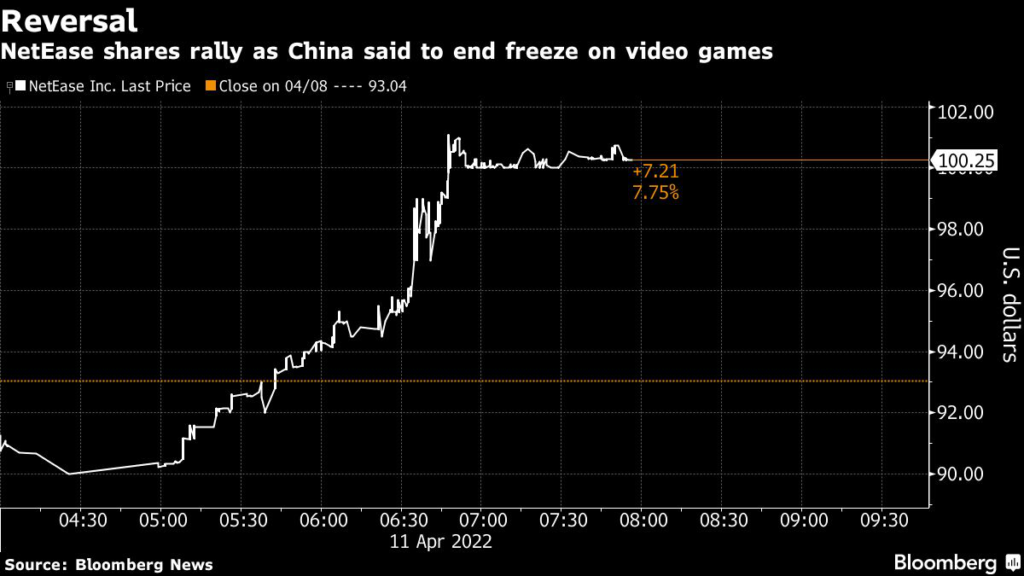
The long-awaited resumption in licensing is likely to quell investors’ worst fears about Beijing’s intentions for the gaming sector, which had come under fire for encouraging addiction and undesirable behavior among youths. Bilibili Inc. gained 7.2% in U.S. trading, while DouYu International Holdings Ltd. rose 2.4%. NetEase closed 2.1% higher after climbing as much as 8.8%.

“We believe the market has been waiting for game approvals and the news is a positive catalyst since the suspension in Aug-21,” wrote Jefferies analysts including Thomas Chong. “According to our channel checks, we expect games of different genres will be released in future approvals.”

Beijing’s far-reaching tech crackdown — which has ensnared sectors from e-commerce to fintech and even online education — spread to online gaming in August, when regulators introduced stringent measures capping play time for minors and imposed new requirements aimed at curbing addiction. The media watchdog has also been reviewing new titles to determine whether they meet stricter criteria around content and child protection, an effort that’s slowed rollouts, Bloomberg News has reported.

The list had been distributed privately to developers ahead of the announcement on Monday, people familiar with the matter said, asking not to be identified discussing a private communique.  NetEase declined to comment while Tencent had no immediate comment. Representatives for the agency weren’t immediately available for comment after business hours.

The resumption of gaming approvals is likely to quell investors nervous about the prospects for Tencent’s largest business. Titles approved were only from domestic companies, which also included 37 Interactive Entertainment and Youzu Interactive Co. Of the 45 approved titles, five are for PC, one for the Nintendo Switch console, and the rest are mobile games. Many of them appear to be casual games with lower player spending.

Read more: Tencent Declares ‘Reckless’ Tech Era Over as Growth Tanks

“The resumption of game approvals is a positive sign for China’s video game market and could indicate that more titles than expected might launch in the second half of the year. We forecast 500-700 games to be approved in 2022.” analysts including Daniel Ahmad at game research firm Niko Partners wrote in a note.

Investors who had suffered losses during a 10-month freeze on game monetization licenses in 2018 experienced deja vu in 2021, when a state-backed newspaper accused the industry of peddling “spiritual opium” before walking back that charged description. In September, regulators summoned the top game publishers to discuss further oversight of their titles and the need to de-emphasize profits, the official Xinhua news agency reported. In November, the 21st Century Business Herald reported game approvals may restart soon, sparking a rally in gaming stocks. 

But the slowdown has already started to weigh on Tencent’s most lucrative division, which is still heavily reliant on the longevity of hit titles Honor of Kings and Peacekeeper Elite. Domestic gaming revenue climbed just 1% during the December quarter, lagging the 34% increase in its international business, dragging Tencent’s overall sales growth to its slowest pace since 2004.

Executives have stressed they see the domestic challenges as “temporary,” adding that they had a large backlog of games ready for launch once uncertainties ease. After weeks of delay, the company introduced the highly anticipated League of Legends mobile title in China in October, while the franchise’s e-sports tournament and new anime series have attracted hundreds of millions of views.

But uncertainty continues to dog the online social media and entertainment sector. China last week kicked off a formal campaign to rein in the potential abuse of algorithms by internet giants from ByteDance Ltd. to Tencent, taking aim at the way social media platforms serve up ads and content to hook users.

(Updates with trading from third paragraph)

More stories like this are available on bloomberg.com

©2022 Bloomberg L.P.

‘Sonic 2’ Grabs $72 Million as Biggest Covid-Era Kids Movie

(Bloomberg) — “Sonic the Hedgehog 2” became the highest-grossing kids movie of the pandemic era, generating $72.1 million in its domestic debut in an encouraging sign for theater owners and film studios that families will return to cinemas.

The Paramount Pictures movie, a sequel to the February 2020 hit, was a key test for the industry. Previously, the biggest PG-rated movie released during the pandemic was Warner Bros.’s “Space Jam: A New Legacy,” which took in $31.1 million in domestic ticket sales during its opening weekend in July 2021.

The Sonic sequel exceeded the $65 million estimate of Boxoffice Pro. The original “Sonic the Hedgehog” collected $58 million in domestic ticket sales over its February 2020 opening weekend.

“It’s a win for Paramount and a win for the industry,” Chris Aronson, the studio’s president of domestic distribution, said in an interview Sunday. Paramount would have been pleased even with a figure closer to $50 million, and he’s taking the fact that the film beat the original as a sign people are ready to return to theaters in larger numbers.

Key Insights

  • “Sonic 2” is a combination live action and animated film. It tells the story of a blue spiny mammal that goes in search of an emerald before it can fall into the hands of the evil villain, Dr. Robotnik, played by Jim Carrey. “Parks and Recreation” actor Ben Schwartz is the voice of Sonic.
  • The movie has a decent 67% critical approval rating on Rottentomatoes.com, which can help draw audiences back. It also benefited from the fact it’s based on a popular Sega Co. video game. Audiences favor movies with familiar brands, even when they are critically panned, like Sony Group’s Marvel installment “Morbius.”
  • “Sonic 2” already made $26.1 million internationally last weekend. Before its wide release in the U.S. and Canada, the movie was available in 31 countries, mostly in Europe. This weekend it also opened in Asia and Latin America.
  • The performance of “Sonic” bodes well for other upcoming family friendly films. Warner Bros. is scheduled to release “Fantastic Beasts: The Secrets of Dumbledore” on April 15. That may make as much as $55 million during its opening weekend, according to Boxoffice Pro.
  • The domestic box office has taken in $1.58 billion so far in 2022, an almost fivefold increase over the same period last year, industry researcher Comscore Inc. said Monday.

(Updates with final box office figures in first paragraph)

More stories like this are available on bloomberg.com

©2022 Bloomberg L.P.
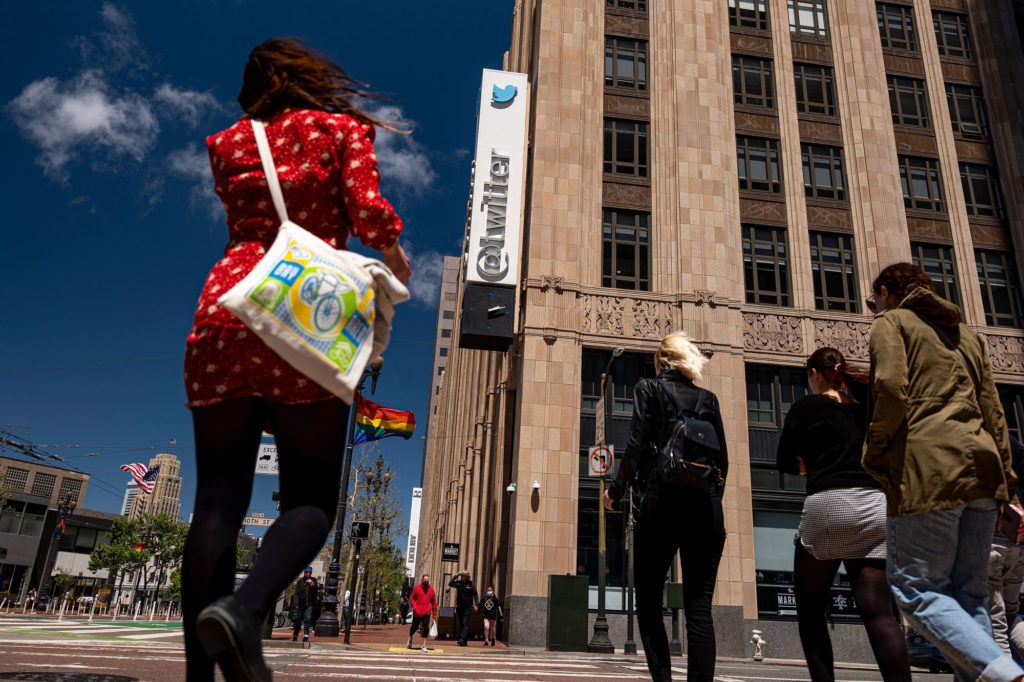
Twitter Staff ‘Super Stressed’ Over Musk Board Chaos on Day Off

(Bloomberg) — Twitter Inc. employees were scheduled to have Monday off, for the company’s monthly “day of rest.” But Elon Musk made it hard not to think about work.

Musk, the billionaire who disclosed this month he’d become the largest individual Twitter shareholder, backed away from a plan to join the company’s board over the weekend. Days earlier, Chief Executive Officer Parag Agrawal had laid the groundwork for a friendly relationship by inviting Musk to join the board. The company was so confident he’d accept that it listed Musk as a board member on its investor relations website. Agrawal also organized a question-and-answer session with Musk and employees this week. 

For some employees, the reversal signaled chaos: Musk was going to keep tweeting his critiques of Twitter to more than 80 million followers on the site, without any requirement to act in the best interests of the company. The Q&A was canceled.

In his announcement late Sunday, Agrawal framed Musk’s surprise decision as good for Twitter, but warned of “distractions ahead.” 

The whiplash is overwhelming, employees said. The vibe among workers at Twitter is “super stressed,” with employees “working together to help each other get through the week,” some said, asking not to be named discussing internal company details. 

In recent days, Musk has tweeted product ideas from eliminating advertising for members of Twitter’s subscription service to turning part of its San Francisco headquarters into a homeless shelter. Without a board seat, there are no longer restrictions on how many shares he can buy, or on his tweeting; one employee expressed concern that Musk was “just getting started, which is unfortunate.” Multiple workers described the situation as a “sh-t show.”

Some Twitter staffers had mixed feelings about attending the ask-me-anything session with Musk anyway. It might have clarified whether Musk had plans to be friendly or hostile with his stake, but it could also have raised further questions about how to react to his whims.

“Musk’s immediate chilling effect was something that bothered me significantly,” Rumman Chowdhury, a director on Twitter’s AI research team, posted on the social media site. 

Meanwhile, Musk’s fans on Twitter have chimed in to be critical of the product, following his lead. “Twitter has a beautiful culture of hilarious constructive criticism, and I saw that go silent because of his minions attacking employees,” Chowdhury said. 

Musk’s sudden change of heart over the board seat also ignited speculation about his end game. By not joining the board, Musk, who owns just more than 9% of the company, is no longer subject to a standstill agreement that would have capped his stake at 14.9%.

“This decision by Elon does not bode well for Twitter,” because he could increase his stake while posting increasingly antagonistic things about the platform, said Matt Navarra, a social media consultant. “Twitter thought having Trump on the platform was tough. Elon Musk is going to be a corporate nightmare.”

More stories like this are available on bloomberg.com

©2022 Bloomberg L.P.
Citigroup Hires Feldkamp, Feige for North America ECM Business

(Bloomberg) — Citigroup Inc. hired two managing directors for its North America equity capital markets business from JPMorgan Chase & Co. and Barclays Plc, according to a memo obtained by Bloomberg.

Geoff Feldkamp, based in New York, joins from Barclays and will lead the bank’s real estate and financial ECM business alongside Alex Ivanov, the memo shows.

Gregor Feige, most recently co-head of Asia ex-Japan ECM at JPMorgan, will co-lead the technology and communications ECM operations with Josh Li. He will be based in San Francisco. 

Feldkamp and Feige will start in June and report to Paul Abrahimzadeh and Russell Chong, co-heads of North America ECM.

A representative for Citigroup confirmed the contents of the memo.

Citigroup collected $2.43 billion in equity underwriting fees last year, a 53% increase from a year earlier, as the frenzy in special purpose acquisition companies fueled business for the Wall Street giant.

The bank has increased its ECM headcount in North America by about 40% since the start of the coronavirus pandemic, Chong had said in an earlier interview.

Feldkamp worked at Barclays for more than 20 years in ECM. Feige relocated to Hong Kong with JPMorgan in 2019. He has covered technology, media and telecommunications ECM at the U.S. bank, as well as for Barclays. 

More stories like this are available on bloomberg.com

©2022 Bloomberg L.P.
Ethereum Undergoes Another Stress Test Ahead of Software Change

(Bloomberg) — Ethereum’s network is inching closer toward its much-anticipated software upgrade known as the Merge, having just entered a key testing step.

Earlier Monday, Ethereum developers launched a so-called mainnet shadow fork, stress-testing the new upcoming software. The test uncovered at least one bug, but the deployment has mostly gone smoothly, and was “a huge success,” Ethereum developer Marius Van Der Wijden said in a Tweet.

The test marks the latest step toward the Merge, the software upgrade that will change the way transactions on the Ethereum network are ordered. Currently, so-called miners order transactions using giant server farms. After the Merge, the miners will be out of the job, and the transaction ordering will be done by so-called stakers, by using swaths of Ether in a system called Proof of Stake. The change is projected to cut Ethereum’s energy use by some 99%. 

The shift is being watched closely, with Ethereum the most important commercial network. It trails only Bitcoin in market value at around $360 billion. Decentralized-finance apps with more than $108 billion in value locked in them are also dependent on the update. The incessant testing that the Ethereum developers have been doing for months is designed to detect bugs and issues before the system is projected to go live later this year, to avoid major problems. 

Ether fell about 9% on Monday to below $3,000 amid a broad decline in digital-asset prices.    

More stories like this are available on bloomberg.com

©2022 Bloomberg L.P.
Amazon Kicks Off a Jumbo 7-Part Bond Sale Including 40-Year Debt

(Bloomberg) — Amazon.com Inc. sold $12.75 billion of investment-grade bonds for general corporate purposes that may include repaying debt as well as funding acquisitions and share buybacks in its first note sale in about a year.

The online retail giant issued senior unsecured bonds in seven parts. The longest portion of the offering, a 40-year security, yields 1.3 percentage points over Treasuries after initial talks of around 1.55 percentage points, according to a person with knowledge of the matter, who asked not to be identified as the details are private.

Amazon last tapped the U.S. debt market when it sold $18.5 billion of bonds in May, also for general corporate purposes that included possible refinancing of debt and share repurchases. The 40-year security on that deal priced to yield 95 basis points over Treasuries.

While yields have jumped since its last issuance, selling debt now makes sense because borrowing costs may be headed even higher as the Federal Reserve fights inflation and tightens the money supply.

Even as it once again accesses high-grade debt markets, Amazon’s credit quality is likely to continue on an improving trajectory, Robert Schiffman, senior credit analyst at Bloomberg Intelligence, wrote in a note. The company’s balance sheet is growing and with $50 billion of outstanding bonds, it could come close to sector leader Apple Inc.’s debt of over $100 billion in the intermediate term, he added. 

Amazon’s cash, cash equivalents and marketable securities stood at an all-time high of $96 billion at the end of 2021.

Read more: Initial Price Talk for Amazon’s Debt Offering in Seven Parts

The company also has aggressive business ambitions, including opening new warehouses, expanding its brick-and-mortar grocery operations and sending broadband-streaming satellites into space.

In February, Amazon wowed Wall Street with a strong earnings report. While online store sales actually declined from last year’s pandemic-fueled gains, the company’s profitable cloud-computing and advertising businesses combined to more than make up for it.

Still, the company spent heavily in the holiday period to ensure packages got to customers amid supply-chain bottlenecks and an acute labor shortage. A lot of that spending went into hiring 140,000 workers. Amazon also lavished bonuses on workers, dispatched half-empty vehicles if it meant getting packages to customers on time and secured space on any ship it could find — a spending spree that totaled $22.4 billion.

In March, Amazon announced a 20-to-1 stock split and a $10 billion share-buyback authorization that sent the stock soaring.

Goldman Sachs Group Inc., JPMorgan Chase & Co. and Morgan Stanley managed Monday’s bond sale.

(Updates to say the deal has priced.)

More stories like this are available on bloomberg.com

©2022 Bloomberg L.P.

Musk Opens Door to Pressing Twitter for Deal as He Avoids Board

(Bloomberg) — Elon Musk may acquire additional shares in Twitter Inc. now that he is no longer accepting a position on the social media company’s board, according to a securities filing on Monday. 

The abrupt reversal over the board seat over the weekend ignited renewed speculation about Musk’s intentions for Twitter since the Tesla Inc. chief executive officer first disclosed he had taken a stake of just over 9% — becoming the company’s largest individual shareholder. By not joining the board, Musk is no longer subject to an agreement to keep his stake below 14.9%. Twitter shares gained 1.7% on Monday in New York.

According to a filing with the Securities and Exchange Commission, Musk has no “present plans or intentions” to acquire additional shares, but “reserves the right to change his plans at any time” after evaluating various factors including the stock price and the “relative attractiveness of alternative business and investment opportunities.”

Any significant changes in Musk’s investment — equal to 1% or more — would have to be disclosed to regulators. If Musk wishes to make a full takeover offer, he can make a hostile bid for the company, and take his offer directly to shareholders. Twitter’s rising share price since Musk first revealed his position in early April makes any further stake-building increasingly expensive.

However, Musk can afford it. He’s currently worth about $260 billion according to the Bloomberg Billionaire’s Index, compared with Twitter’s market valuation of about $37 billion.

The SEC notice also said that Musk could engage in discussions with the board about potential business combinations and strategic alternatives. And, in a twist that may be germane to one of Twitter’s most prolific users, the filing noted that Musk can express his views to the board “or the public through social media or other channels.”

Musk has gone from “helping move Twitter strategically forward to likely a ‘Game of Thrones’ battle between Musk and Twitter,” said Dan Ives, an analyst at Wedbush Securities, “with the high likelihood that Elon takes a more hostile stance towards Twitter and further builds his active stake in the company.”

The sudden about-face came despite Musk having held “many discussions” with Twitter’s directors. But the entrepreneur ultimately declined their offer of a board seat, Chief Executive Officer Parag Agrawal tweeted on Sunday. 

“I believe this is for the best,” Agrawal said in an internal memo shared late Sunday. “There will be distractions ahead, but our goals and priorities remain unchanged.”

News that Musk would be joining the board was greeted enthusiastically by investors, who sent the shares soaring about 30% over two days last week. But some employees were concerned about the damage Musk could inflict to the company’s culture, according to the Washington Post. There was also wide speculation that Musk would push to have former President Donald Trump reinstated on the platform.  

By staying off the board, Musk avoids the potential conflict of interest that can arise when a board member has a number of financial interests that may influence how they vote.

The billionaire executive has been vocal about changes he’d consider at the social media platform. Musk wasted no time in appealing to users about prospective moves from turning Twitter’s San Francisco headquarters into a homeless shelter and adding an edit button for tweets, to granting automatic verification marks to premium users. One tweet suggested Twitter might be dying, given the fact that several celebrities with high numbers of followers rarely tweet. 

Musk could face scrutiny from U.S. regulators by disclosing his massive stake days later than regulations allow, and because he revealed it in a filing typically reserved for passive investments. Ascending to Twitter’s board so swiftly after the disclosure could have complicated that process.

Musk is already seeking to exit a 2018 deal with the SEC that put controls in place related to his previous tweeting about Tesla.

(Updates with closing share price in second paragraph.)

More stories like this are available on bloomberg.com

©2022 Bloomberg L.P.
Shopify Plans Stock Split That’s Bound to Tap Retail Frenzy

(Bloomberg) — Canada’s Shopify Inc. just became the latest tech giant to announce plans to split its stock in a bid to bring a higher number of loyal retail investors to its shareholder base. 

Shopify said on Monday it plans a 10-for-1 stock split for its common stock pending shareholder approval on a June 7 meeting. The proposed share split “will make ownership more accessible to all investors,” the company said in a statement. 

Recent split proposals from Alphabet Inc., Amazon.com Inc. and Tesla Inc. triggered sharp rallies on the stocks as retail traders — who tend to favor stocks with high liquidity and lower price tags — jumped in. 

“The reason that Amazon, Apple, Tesla and now Shopify are doing stock splits is to make their shares more attractive to retail investors,” D.A. Davidson & Co. analyst Tom Forte said in an interview. “When you look at Amazon’s actions, one of the first things they did to stimulate the share price was to announce both a repurchase plan and a stock split. We’re seeing instances where companies’ stocks are under pressure and they are announcing stock splits.”

But Shopify’s rally was more muted after seesawing in earlier trading. The shares, which have lost about 55% of their value this year, closed higher by 2.9% in Toronto, pulling up the S&P/TSX Information Technology Index by 0.6% while the S&P 500 Information Technology Index slumped 2.6%, the most in more than a month. But the stock ranked outside of the top 10 most traded on Fidelity’s platform and its ticker was largely absent from platforms like Reddit’s WallStreetBets or Stocktwits.

In addition to the split, Shopify announced it will give Chief Executive Officer Tobi Lutke a special “founder share” that will preserve his voting power as long as he’s at the company. Under the plan, Lutke, his family and his affiliates would together retain 40% of the votes at the company, even as their ownership stake changes.

For some, this shows an attempt by senior management to preserved Lutke’s position as the company embarks in longer-term initiatives, including the development of Shopify’s fullfillment network after it cancelled contracts with several warehouse and fulfillment partners in January.   

“The changes are designed to prevent any knee jerk reactions, given that the execution of these initiatives do require some time,” said Richard Tse, an analyst at National Bank of Canada. “If it doesn’t execute in the short term and investors get impatient, who knows what they would suggest the board look at doing with management.” 

Read more: Tesla, Amazon Stock Splits Trigger Retail Stampede: Tech Watch

Shopify soared above C$250 billion ($198 billion) in market value during the pandemic as online selling took off, but it has given back most of those gains. 

The shares are down this year amid a selloff in richly valued technology stocks — costing Lutke, 41, about $6.3 billion in personal wealth. He’s still one of the richest Canadians, with a net worth of $5.5 billion, according to the Bloomberg Billionaries Index. 

Read More: Shopify’s Slump Proves That It’s No Amazon

Analysts are still largely bullish on the stock, with 27 buys, 18 holds and two sell ratings. Tse at National Bank maintains his outperform rating with a $1,500 price target.   

Morgan Stanley is serving as Shopify’s financial adviser on the proposed changes and Skadden, Arps, Slate, Meagher & Flom LLP and Stikeman Elliott LLP as legal counsel, according to the company’s statement.  

(Updates share price move in fifth paragraph and adds analyst commentary in fourth graph.)

More stories like this are available on bloomberg.com

©2022 Bloomberg L.P.
Bilibili, DouYu Rise in U.S. as China Ends Video Game Freeze

(Bloomberg) — Shares of Chinese video-game makers and live-streaming platforms rallied on Monday, after China approved the first batch of new video game licenses since July.

Video-game streaming site Bilibili Inc. closed 7.2% higher, and its peer DouYu International Holdings Ltd. rose 2.4%. NetEase Inc. pared advance to 2.1% as the mobile game giant was absent from a list of titles published by China’s National Press and Publication Administration. 

Read more: China Ends Game Freeze by Approving First Titles Since July 

Chinese live-streaming stocks have taken a hit in the past week as Beijing vowed to crack down on any tax-related crimes such as tax evasion in the sector. The closure of Tencent Holdings Ltd.’s game streaming site Penguin Esports and a campaign to rein in potential abuse of algorithms at internet companies also weighed on investor sentiment.  

Industry leader Tencent Holdings Ltd. was also noticeably absent from the list of 45 titles that included a Baidu Inc. game, XD Inc.’s “Flash Party” and iDreamSky Technology Holdings Ltd.’s “Watch Out For Candles.” 

“Investors see the news as a positive sign that regulation in the gaming industry is going to be eased,” said Henry Guo, an analyst at M Science in New York. “Even though industry leaders like NetEase and Tencent don’t have any games included in the current list, they can benefit from the improving policy environment.”

The Nasdaq Golden Dragon China Index slid 1.2% on Monday, extending its losing streak to five sessions. Concerns over a slowdown in economic growth in China also hurt the cohort, as Covid caseload set a fresh record in Shanghai amid a stringent lockdown. 

The Chinese government “is very modestly easing back its tech regulatory scrutiny,” Vital Knowledge founder Adam Crisafulli wrote in a note this morning. The main overhang facing Chinese equities are concerns over rising Covid cases and Beijing’s zero-tolerance approach toward the virus, he said.

(Updates prices)

More stories like this are available on bloomberg.com

©2022 Bloomberg L.P.
More Than 18,000 Etsy Sellers Sign on to Strike Over 30% Fee Increase

(Bloomberg) — More than 18,000 Etsy sellers have pledged to join a strike protesting a 30% increase in fees that takes effect today. 

In a petition signed by nearly 50,000, the organizers are demanding that Etsy CEO Josh Silverman cancel the fee increase to 6.5% from 5%. About 18,400 people who signed the petition as of Monday afternoon identify themselves as sellers, the method organizers are using to track participants. They are asking sellers to go on vacation mode and buyers to boycott the crafts website from April 11 through 18.

According to Etsy’s website, sellers can start a shop for free but must pay fees for listing, transactions and payment processing. The company last raised transaction fees in 2018 to 5% from 3.5%. Meanwhile, Etsy’s shares have quadrupled in the last four years, closing at $116.58 on April 8 in New York. 

Strike organizer Kristi Cassidy, who sells handmade wedding dresses on Etsy, said the platform can charge sellers more than 20% on items sold with hidden charges.

“It’s been one thing after another on the Etsy platform that just gradually makes it a worse and worse place to try to run a unique business,” Cassidy said. “The fee increase was the final straw.”

Etsy says it’s using the fees to make improvements for its 5.3 million sellers.

“Our sellers’ success is a top priority for Etsy,” a company spokesperson said in an emailed statement. “We are always receptive to seller feedback and, in fact, the new fee structure will enable us to increase our investments in areas outlined in the petition, including marketing, customer support, and removing listings that don’t meet our policies.” 

Several of Etsy’s competitors use monthly rates to charge sellers. Amazon charges businesses $39.99 a month to sell on the site, although it offers an alternative plan for smaller sellers that charges $0.99 per item sold. Shopify monthly rates vary, ranging from a $29 a month basic plan recommended for newer businesses to a $299 premium offering. 

More stories like this are available on bloomberg.com

©2022 Bloomberg L.P.

Close Bitnami banner
Bitnami
