Bloomberg

‘Altcoins’ Lead Crypto Slide as Bitcoin Drops Below $40,000

(Bloomberg) — Cryptocurrency losses accelerated, with popular Defi tokens such as Cardano and Avalanche falling more than sector bellwether Bitcoin, as risk aversion sweeps through financial markets. 

Bitcoin dropped as much as 7.7% to $39,796, the first time the largest cryptocurrency by market value has been below $40,000 since March 16. Ether, the second largest, was down as much as 9.5%, dipping below $3,000. Altcoin, or alternative coin, Luna was down around 11%, while Avalanche was off 13% and Cardano slumped 11%. 

Since peaking at just above $48,000 in late March, Bitcoin — and other tokens — have been dragged lower by concerns about tighter monetary policy. Even the buzz around last week’s Bitcoin 2022 conference in Miami wasn’t enough to reverse the trend. 

“Historically, altcoins have a tendency to over perform Bitcoin to the downside in strong bearish trading environments,” said Josh Olszewicz, head of research at crypto investment firm Valkyrie.  “Altcoin trading participants often have less longer-term conviction.” 

Bitcoin Extravaganza is ‘All About Eye-Catching’ Post Pandemic

U.S. inflation likely accelerated to 8.4% in March, the fastest pace since early 1982, economists surveyed ahead of data due Tuesday predict. The Federal Reserve may need to hike interest rates above 4%, Goldman Sachs Group Inc. Chief Economist Jan Hatzius said Friday.     

“Fed tightening by 0.5 percentage point steps at upcoming meetings as well as $95 billion per month balance sheet run-off sent crypto markets spiraling lower,” Teong Hng, chief executive of Hong Kong-based Satori Research, said.  

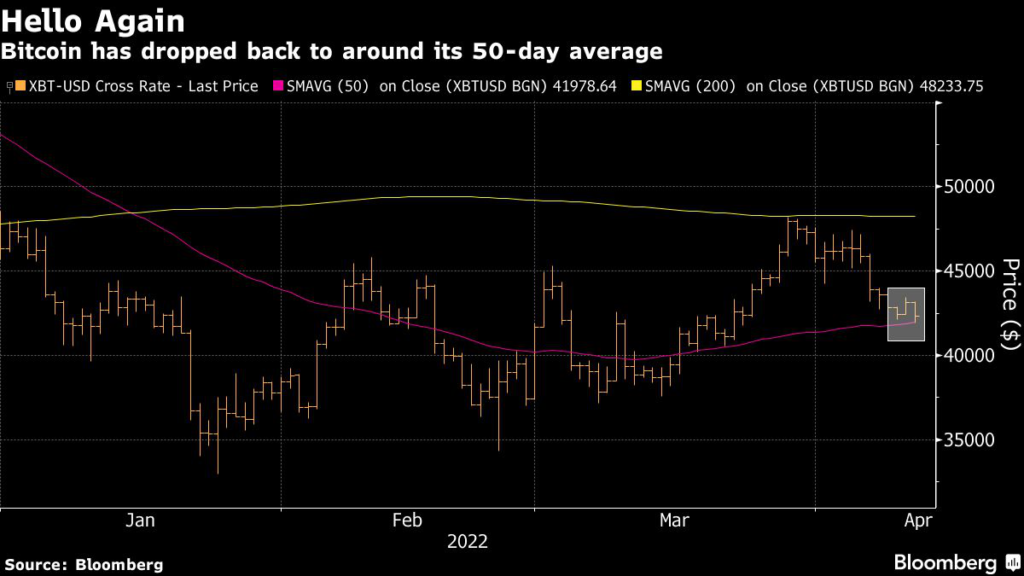
Bitcoin has been in a trading range of around $35,000 to $45,000 for much of the year so far. A breakout above $48,000 last month briefly erased its losses for the year, but the token hit resistance around its 200-day moving average. 

Bitcoin’s tendency to move in sync with assets such as U.S. tech stocks makes the drop less of a surprise after a tough week for American markets. Its correlation with the Nasdaq 100 Index is now back at record levels. 

“The Nasdaq 100 closed below its 50-day moving average on Friday, so now wouldn’t be a bad time for Bitcoin to break its correlation with the tech-laden index,” said Antoni Trenchev, managing partner of crypto lender Nexo, in emailed comments. “Close above $45,000 again and we’re back in the game.”

Tech Rout Could Drag Bitcoin to $30,000, BitMEX Co-Founder Says   

More stories like this are available on bloomberg.com

©2022 Bloomberg L.P.
When All Else Fails, Crypto Watchers Blame Slide on the Taxman

(Bloomberg) — Crypto analysts typically have a difficult time deciphering any one reason why prices might be moving one way or another during a particular day or week, but they’ve got a theory for the recent slump that’s one of life’s few certainties.

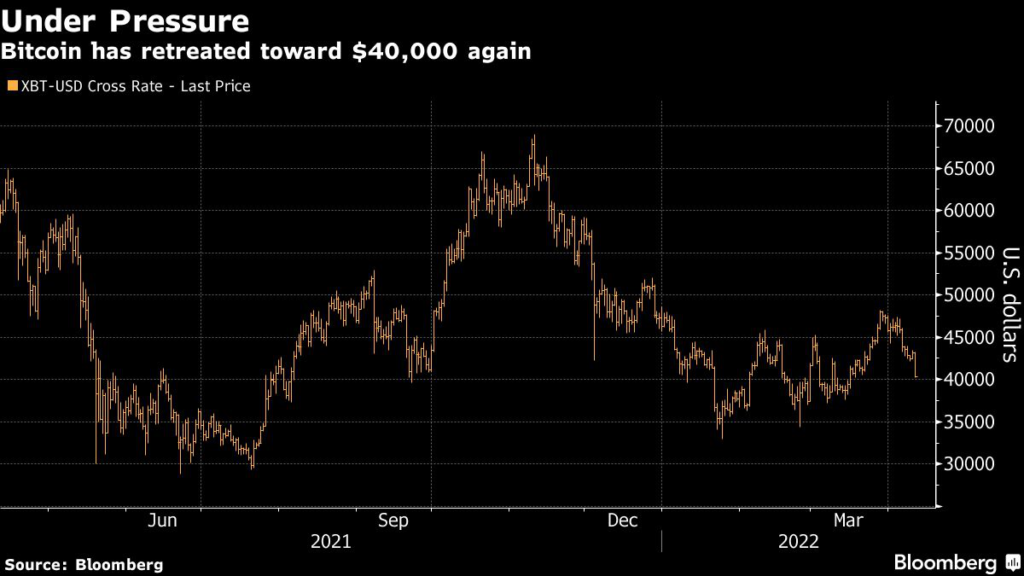
Investors are selling cryptocurrencies ahead of the mid-April tax deadline in the U.S., pushing Bitcoin down more than 12% since last Monday and bringing its price down to around $40,000. 

At least that’s the view of David Duong, head of institutional research at Coinbase Global Inc., who is seeing a repeat of trends that also played out in 2021. “Last year we saw market players selling digital assets to make tax-related payments,” he wrote in a recent note. Bitcoin jumped about 60% last year, following a surge of more than  300% in 2020.

Duong says that’s not the only reason cryptocurrencies are under pressure — investors are also souring on riskier assets as the Federal Reserve raises interest rates. 

Even buzz generated at last week’s Bitcoin 2022 conference failed to sustain excitement. Investors last week withdrew $134 million across digital-asset products tracked by CoinShares, marking the second-largest outflow of the year. The majority of that was attributable to Bitcoin, while short-Bitcoin products saw inflows.

Last April, Bitcoin posted its first lower month of the year with a loss of near 4% for the month. And the tax-season reason resonated with other market-watchers. 

“Next week is tax week — people made a lot of money last year. I mean, a lot,” Mark Yusko, CEO and CIO of Morgan Creek Capital Management, said by phone. “So a lot of people have to pay taxes. People are doing what they need to do and they’re takings some profits.”

Bitcoin, the largest crypto token, is down more than 12% since the start of last week. The decline has lopped off roughly $100 billion in the coin’s value, according to Coinmarketcap.com. Meanwhile, the MVIS CryptoCompare Digital Assets 100 index, which tracks a wide range of digital assets, on Monday alone lost 6% and is down 10% so far this month.

Still, others point to the cryptocurrency’s tendency to move in sync with other riskier assets. Both Bitcoin and U.S. stocks had a tough time last week — and at the start of this week again — and the coin’s correlation with the Nasdaq 100 Index is now back at record levels. 

“From my perspective, they’re risk assets and they’re acting more like risk assets,” said Jon Maier, chief investment officer at Global X. “During the initial Russian invasion into Ukraine and the collapse of the ruble, Russians were using the assumption that there’d be a greater use of Bitcoin as a currency and there was an uptick there. But I would say more recently they’ve been acting like risk assets.”

More stories like this are available on bloomberg.com

©2022 Bloomberg L.P.

Munger-Tied Daily Journal Slashes Its Alibaba Stake in Half

(Bloomberg) — Daily Journal Corp., a newspaper and software business that counts Charlie Munger as one of the overseers of its stock portfolio, cut its stake in Chinese internet giant Alibaba Group Holding Ltd. by roughly half. 

The Los Angeles-based company owned 300,000 American depositary shares in Alibaba at the end of March, according to a regulatory filing Monday. That’s down from 602,060 at the end of last year. Daily Journal’s current Alibaba holdings are valued at roughly $31 million as of 2:35 p.m. in New York.

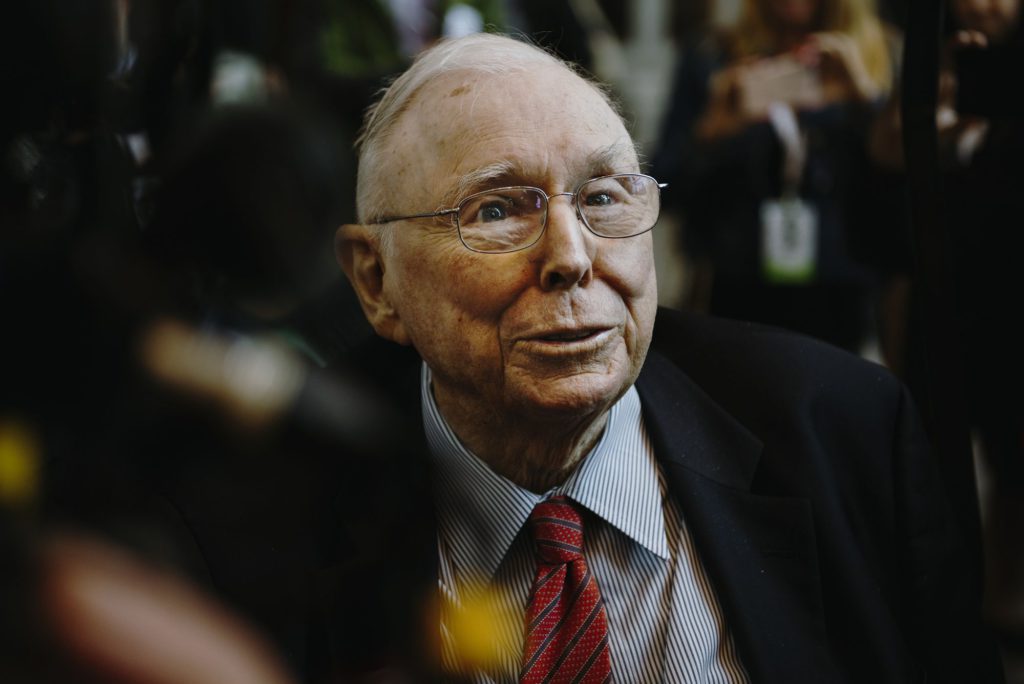
For years, Munger led Daily Journal as chairman, in addition to his role as a vice chairman at Warren Buffett’s Berkshire Hathaway Inc. Daily Journal announced in March that the 98-year-old billionaire would step down from that role, but still hold a board seat and “continue to pay particular attention to matters with which he has been involved in the past, including the company’s securities portfolio,” according to a regulatory filing at the time. He also said that he would donate $1 million of his stock in the company to create an equity incentive plan. 

Daily Journal is known for its collection of papers and for selling software to customers that include justice agencies and courts. The business also holds a collection of stocks in addition to its operating businesses, similar to Berkshire’s strategy of also investing while owning businesses. Its stock portfolio consisted of five different publicly disclosed investments at the end of March, which includes the Alibaba holding that it first started disclosing a year ago. 

Munger’s assistant said he declined to comment on Daily Journal’s Alibaba stake. Alibaba’s American depositary receipts slumped almost 50% in 2021, and are down nearly 14% this year.

(Updates with valuation in second paragraph and pricing in fifth.)

More stories like this are available on bloomberg.com

©2022 Bloomberg L.P.

Shopify Plans 10-1 Stock Split That’s Bound to Tap Retail Frenzy

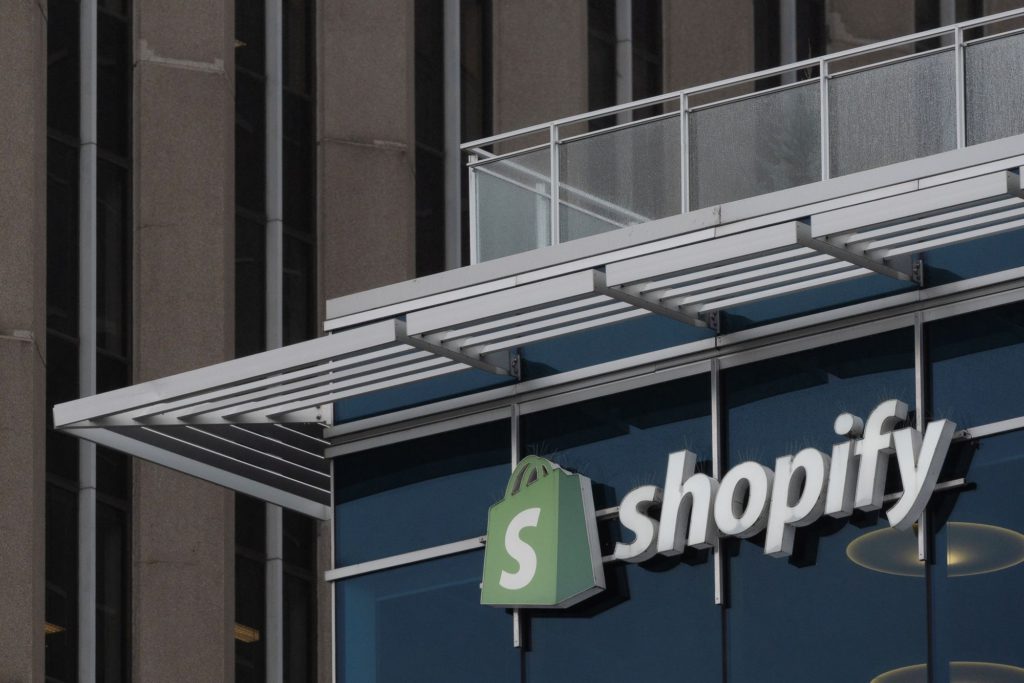
(Bloomberg) — Canada’s Shopify Inc. just became the latest tech giant to announce plans to split its stock in a bid to bring a higher number of loyal retail investors to its shareholder base. 

Shopify said on Monday it plans a 10-for-1 stock split for its common stock pending shareholder approval on a June 7 meeting. The proposed share split “will make ownership more accessible to all investors,” the company said in a statement. 

Recent split proposals from Alphabet Inc., Amazon.com Inc. and Tesla Inc. triggered sharp rallies on the stocks as retail traders — who tend to favor stocks with high liquidity and lower price tags — jumped in. 

But Shopify see-sawed on the news. The shares, which have lost about 55% of their value this year, rose only 0.6% after dropping nearly 2%. The stock ranked outside of the top 10 most traded on Fidelity’s platform and its ticker was largely absent from platforms like Reddit’s WallStreetBets or Stocktwits.

In addition to the split, Shopify announced it will give Chief Executive Officer Tobi Lutke a special “founder share” that will preserve his voting power as long as he’s at the company. Under the plan, Lutke, his family and his affiliates would together retain 40% of the votes at the company, even as their ownership stake changes.

For some, this shows an attempt by senior management to preserved Lutke’s position as the company embarks in longer-term initiatives, including the development of Shopify’s fullfillment network after it cancelled contracts with several warehouse and fulfillment partners in January.   

“The changes are designed to prevent any knee jerk reactions, given that the execution of these initiatives do require some time,” said Richard Tse, an analyst at National Bank of Canada. “If it doesn’t execute in the short term and investors get impatient, who knows what they would suggest the board look at doing with management.” 

Read more: Tesla, Amazon Stock Splits Trigger Retail Stampede: Tech Watch

Shopify soared above C$250 billion ($198 billion) in market value during the pandemic as online selling took off, but it has given back most of those gains. 

The shares are down this year amid a selloff in richly valued technology stocks — costing Lutke, 41, about $6.3 billion in personal wealth. He’s still one of the richest Canadians, with a net worth of $5.5 billion, according to the Bloomberg Billionaries Index. 

Read More: Shopify’s Slump Proves That It’s No Amazon

Analysts are still largely bullish on the stock, with 27 buys, 18 holds and two sell ratings. Tse at National Bank maintains his outperform rating with a $1,500 price target.   

Morgan Stanley is serving as Shopify’s financial adviser on the proposed changes and Skadden, Arps, Slate, Meagher & Flom LLP and Stikeman Elliott LLP as legal counsel, according to the company’s statement.  

(Updates share price move in fourth paragraph and adds analyst commentary.)

More stories like this are available on bloomberg.com

©2022 Bloomberg L.P.

Musk’s Q&A With Twitter Staff Is Canceled After He Declined Board Seat 

(Bloomberg) — Elon Musk is no longer hosting a question-and-answer session with Twitter Inc. employees this week since he isn’t taking a board seat at the social media company. 

The world’s wealthiest person was scheduled to join Twitter Chief Executive Officer Parag Agrawal, for an “ask-me-anything” meeting with Twitter staff after the company announced last week that Musk had acquired a stake of more than 9% and would join the board. 

But the meeting was canceled after Musk decided not to take a seat. Employees have the day off Monday for a regular, monthly day of rest the company provides. The break is well-timed as several people described the vibe as “super stressed,” with employees “working together to help each other get through the week.”

Twitter staff had mixed feelings about attending the session with Musk anyway. It might have clarified whether Musk had plans to be friendly or hostile with his stake, but it could also have raised further questions about how to react to his whims. In the past week, his ideas have ranged from striking advertising for Twitter’s subscription service to turning part of its headquarters into a homeless shelter.

By inviting Musk to join the board and speak to the staff, Agrawal gave the impression that the relationship would be friendly. But the sudden change of heart over the seat ignited renewed speculation about Musk’s intentions. By not joining the board, Musk is no longer subject to a standstill agreement that would have capped his stake at 14.9%.

Agrawal warned of “distractions ahead” in his note Sunday. One employee expressed concern that Musk was “just getting started, which is unfortunate.” Multiple employees described the situation as a “sh-t show.”


(Updates with employee sentiment in fourth paragraph.)

More stories like this are available on bloomberg.com

©2022 Bloomberg L.P.

Crypto Oligopoly Imminent as Top Exchanges Grab 96% Market Share

(Bloomberg) — Top-tier crypto exchanges reached an all-time high market share this year as traders sought lower-risk venues amid broader market volatility, data compiled by tracker CryptoCompare show.

Crypto exchanges considered top level increased their market share to 96% in February from 89% in August, according to the tracker. These 78 exchanges, led by Coinbase Global Inc., Gemini Trust Co., Bitstamp Ltd. and Binance, have grabbed market share from peers that have struggled to maintain security and stability.

Top-ranked exchanges traded a total of $1.5 trillion in February. So-called lower-tier exchanges traded roughly $62 billion that month, CryptoCompare said in a report published Monday.

The researcher graded 150 spot exchanges based on everything from legal and regulatory compliance to security to whether they check their customers’ identities and had been compromised in the past. 

More than 50 exchanges have shut since June 2019 as China cracked down on its crypto industry and traders fled to better-quality venues, the report said. An acquisition spree by top crypto exchanges has also led to further consolidation. Gemini, the cryptocurrency platform run by the Winklevoss brothers, acquired trading technology provider Omniex earlier this year to better serve institutional investors. FTX Trading Ltd. too announced its acquisition of fintech Liquid Group to increase its presence in Japan. 

“As the industry matures, we expect there to be an oligopoly of exchanges dominating trading volumes as their traction accelerates and smaller players are left behind,” CryptoCompare said in the report.

Lower-ranked exchanges can have a slew of problems, the report said. More than a third of all crypto exchanges have poor or inadequate know-your-customer programs. And 3% don’t reveal the legal entities associated with them while only 11% offer some form of crypto insurance, according to CryptoCompare.

More stories like this are available on bloomberg.com

©2022 Bloomberg L.P.

Intel’s $3 Billion Factory Expansion Opens in Key Comeback Step

(Bloomberg) — Intel Corp. announced the opening of a $3 billion extension to its D1X plant in Oregon, an investment aimed at speeding up technology development needed to regain leadership of the chip industry. 

The biggest maker of computer processors reiterated its plan to have better production technology than rivals by 2025 and have its factories reach parity a year earlier than that. 

The 270,000-square-foot extension, an increase of 20% to the D1X facility, demonstrates the chipmaker’s willingness to spend up front to accelerate the use of more advanced production techniques, according to Sanjay Natarajan, an Intel senior vice president. D1X, effectively a giant lab, is now more capable of developing multiple methods of manufacturing in parallel and transferring them to its mass production counterparts within Intel’s network, he said. 

Chief Executive Officer Pat Gelsinger is trying to make up for time lost by his predecessors. How a chip is made determines its capabilities — how much data it can hold, how quickly it can process that data and how much energy it uses while doing so. Intel was once the unquestioned leader in that field, allowing it to manufacture products that dominated computing and commanded high prices. 

Progress in chip manufacturing is measured in nodes. Intel’s 10-nanometer node was years late and didn’t deliver the promised benefits. That allowed companies such as Taiwan Semiconductor Manufacturing Co. and Samsung Electronics Co. to offer outsourced production that’s better than the output of Intel’s factories. TSMC and Samsung customers such as Nvidia Corp. and Advanced Micro Devices Inc. have fielded more competitive products and taken share, squeezing Intel’s profitability and holding back growth. 

D1X is spearheading Gelsinger’s plan to reverse that trend. Going from one production node to a more advanced technique typically takes 18 months to two years. Intel is aiming to progress through five nodes in four years to catch and pass its Asian competitors. 

Natarajan and Ryan Russell, the co-general managers of Intel’s logic development efforts, were keen to stress that the company has learned from recent problems. While it’s taking risks with new experimental technology, the company is also making sure that things are done in a modular way — so that troublesome portions can be shelved or removed — and that it has backup plans. 

D1X is in Hillsboro, Oregon, west of Portland. The Ronler Acres site, which employs about 14,000 people, is being renamed Gordon Moore Park to honor the company’s co-founder.

More stories like this are available on bloomberg.com

©2022 Bloomberg L.P.

‘Altcoins’ Lead Crypto Slide as Bitcoin Drops to Three-Week Low

(Bloomberg) — Cryptocurrency losses accelerated, with popular Defi tokens such as Cardano and Avalanche falling more than sector bellwether Bitcoin, as risk aversion sweeps through financial markets. 

Bitcoin dropped as much as 6.1% to $40,510, the first time the largest cryptocurrency by market value has been below $41,000 since March 22. Ether, the second largest, was down as much as 9.5%, dipping below $3,000. Altcoin, or alternative coin, Luna was down around 8.4%, while Avalanche was off 10% and Cardano slumped 11%. 

Since peaking at just above $48,000 in late March, Bitcoin — and other tokens — have been dragged lower by concerns about tighter monetary policy. Even the buzz around last week’s Bitcoin 2022 conference in Miami wasn’t enough to reverse the trend. 

“Historically, altcoins have a tendency to over perform Bitcoin to the downside in strong bearish trading environments,” said Josh Olszewicz, head of research at crypto investment firm Valkyrie.  “Altcoin trading participants often have less longer-term conviction.” 

Bitcoin Extravaganza is ‘All About Eye-Catching’ Post Pandemic

U.S. inflation likely accelerated to 8.4% in March, the fastest pace since early 1982, economists surveyed ahead of data due Tuesday predict. The Federal Reserve may need to hike interest rates above 4%, Goldman Sachs Group Inc. Chief Economist Jan Hatzius said Friday.     

“Fed tightening by 0.5 percentage point steps at upcoming meetings as well as $95 billion per month balance sheet run-off sent crypto markets spiraling lower,” Teong Hng, chief executive of Hong Kong-based Satori Research, said.  

Bitcoin has been in a trading range of around $35,000 to $45,000 for much of the year so far. A breakout above $48,000 last month briefly erased its losses for the year, but the token hit resistance around its 200-day moving average. 

Bitcoin’s tendency to move in sync with assets such as U.S. tech stocks makes the drop less of a surprise after a tough week for American markets. Its correlation with the Nasdaq 100 Index is now back at record levels. 

“The Nasdaq 100 closed below its 50-day moving average on Friday, so now wouldn’t be a bad time for Bitcoin to break its correlation with the tech-laden index,” said Antoni Trenchev, managing partner of crypto lender Nexo, in emailed comments. “Close above $45,000 again and we’re back in the game.”

Tech Rout Could Drag Bitcoin to $30,000, BitMEX Co-Founder Says   

More stories like this are available on bloomberg.com

©2022 Bloomberg L.P.
Bilibili, DouYu Jump in U.S. as China Ends Video Game Freeze

(Bloomberg) — Shares of Chinese video-game makers and live-streaming platforms rallied on Monday, after China approved the first batch of new video game licenses since July.

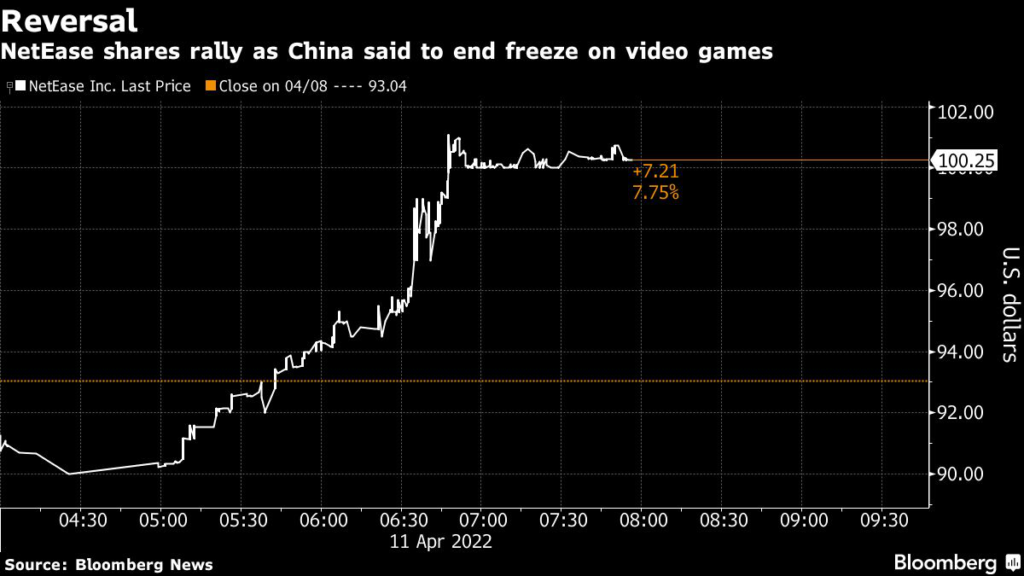
Video-game streaming site Bilibili Inc. jumped as much as 13.5%, and its peer DouYu International Holdings Ltd. rose 5.8%. NetEase Inc. pared an earlier advance to 3% as the mobile game giant was absent from a list of titles published by China’s National Press and Publication Administration. 

Read more: China Ends Game Freeze by Approving First Titles Since July 

Chinese live-streaming stocks have taken a hit in the past week as Beijing vowed to crack down on any tax-related crimes such as tax evasion in the sector. The closure of Tencent Holdings Ltd.’s game streaming site Penguin Esports and a campaign to rein in potential abuse of algorithms at internet companies also weighed on investor sentiment.  

Industry leader Tencent Holdings Ltd. was also noticeably absent from the list of 45 titles that included a Baidu Inc. game, XD Inc.’s “Flash Party” and iDreamSky Technology Holdings Ltd.’s “Watch Out For Candles.” 

“Investors see the news as a positive sign that regulation in the gaming industry is going to be eased,” said Henry Guo, an analyst at M Science in New York. “Even though industry leaders like NetEase and Tencent don’t have any games included in the current list, they can benefit from the improving policy environment.”

The Nasdaq Golden Dragon China Index slid again on Monday after a four-day losing streak. Concerns over a slowdown in economic growth in China also hurt the cohort, as Covid caseload set a fresh record in Shanghai amid a stringent lockdown. 

The Chinese government “is very modestly easing back its tech regulatory scrutiny,” Vital Knowledge founder Adam Crisafulli wrote in a note this morning. The main overhang facing Chinese equities are concerns over rising Covid cases and Beijing’s zero-tolerance approach toward the virus, he said.

(Updates with a comment in fifth paragraph)

More stories like this are available on bloomberg.com

©2022 Bloomberg L.P.
Thoma Bravo to Buy Cyber Firm Sailpoint for $6.9 Billion

(Bloomberg) — Investment firm Thoma Bravo has agreed to acquire cyber security company Sailpoint Technologies Holdings Inc. for $6.9 billion, according to a statement Monday.

Thoma Bravo is paying $65.25 per share in cash for the Austin-based company, which represents a 48% premium to the company’s 90-day, volume-weighted average price, the statement showed. 

The deal includes a so-called go-shop period that will let Sailpoint solicit other offers through the end of May 16. 

“Sailooint is ideally positioned to capitalize on the large and growing demand from modern enterprises for robust identity security solutions that secure their business and reduce risk,” Seth Boro, a managing partner at Thoma Bravo, said in a statement. 

Sailpoint rose more than 29% to $64.01 at 11:33 a.m. in New York on Monday, giving the company a market value of about $6 billion. 

Sailpoint won’t be a new investment for Thoma Bravo. It previously backed Sailpoint and took the company public in 2017. 

(Updates with statement starting in first paragraph.)

More stories like this are available on bloomberg.com

©2022 Bloomberg L.P.

Close Bitnami banner
Bitnami