Bloomberg

NetEase, Bilibili Jump in U.S. as China Ends Video Game Freeze

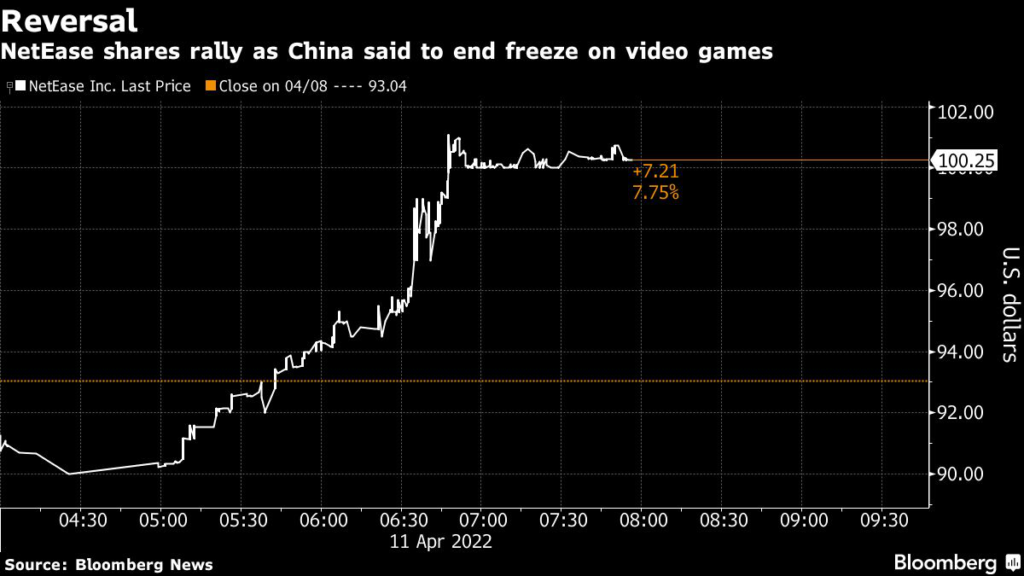
(Bloomberg) — Shares of Chinese video-game makers and live-streaming platforms rallied in U.S. premarket trading after Bloomberg News reported China has approved the first batch of new video game licenses since July.

Mobile game giant NetEase Inc. jumped nearly 8%. Video platform operators Bilibili Inc. and DouYu International Holdings Ltd. gained 8.5% and 6.3%, respectively. Large-cap Chinese internet stocks including Alibaba Group Holding Ltd. and Baidu Inc. also trimmed losses after the report. It wasn’t clear if the approved titles included any games from industry leaders Tencent Holdings Ltd. and NetEase Inc.

READ: China Ends Game Freeze by Handing Out First Licenses Since July

Chinese live-streaming stocks have taken a hit in the past week as Beijing vowed to crack down on any tax-related crimes such as tax evasion in the sector. The closure of Tencent Holdings Ltd.’s game streaming site Penguin Esports and a campaign to rein in potential abuse of algorithms at internet companies also weighed on investor sentiment. 

While volatility in U.S.-listed Chinese stocks has eased after Beijing pledged support to overseas listings in mid-March, the Nasdaq Golden Dragon China Index lost 4.8% last week amid surging bond yields. The lingering risks of potential delistings also hurt the cohort, although Beijing modified a rule that removed a key hurdle for U.S. regulators to gain full access to audit reports for Chinese firms listed in New York.

The Chinese government “is very modestly easing back its tech regulatory scrutiny,” Vital Knowledge founder Adam Crisafulli wrote in a note this morning. The main overhang facing Chinese equities, however, are concerns over rising Covid cases and Beijing’s zero-tolerance approach toward the virus, he said.

More stories like this are available on bloomberg.com

©2022 Bloomberg L.P.

Tata Consultancy Earnings Trail Estimates After Labor Crunch Boosts Costs

(Bloomberg) — Tata Consultancy Services Ltd. reported fourth-quarter profit that trailed analysts’ estimates, hurt by rising costs to hire and retain workers during a pandemic-driven technology boom.

Net income rose 7.4% to 99.3 billion rupees ($1.3 billion) in the quarter through March, the Mumbai-based company said in a statement on Monday. Analysts, on average, had estimated a profit of 100.55 billion rupees.

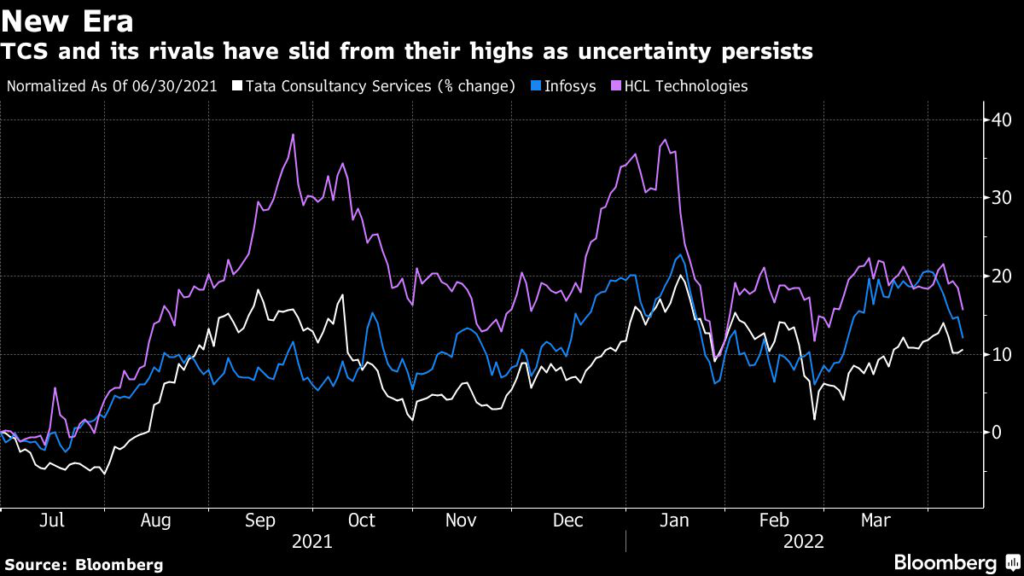
TCS and smaller Indian rivals are benefiting from a pandemic-induced rush among enterprises to transform into work-from-anywhere organizations, boosting demand for services such as cloud computing. But a talent crunch is making it harder for the IT companies to attract and keep workers, increasing labor costs and weighing on margins. Uncertainty surrounding the war in Ukraine could also weigh on new orders from Europe, which accounts for about a third of the company’s revenue.

TCS, which employs over half-a-million around the world, the bulk of them in India, said sales for the quarter rose 16% to 505.9 billion rupees. Riding the sector boom, TCS and competitors Infosys Ltd. and HCL Technologies Ltd. have been signing on new customers, expanding contracts and bringing on software programmers by the thousands every quarter.

What Bloomberg Intelligence Says: 

“We expect employee attrition to remain elevated, which could make it harder to realize any margin expansion, despite consensus’ 10% sales growth.”

– Anurag Rana, analyst

Click here for research

Shares of TCS closed 0.3% higher in Mumbai. They are down 1% this year.

More stories like this are available on bloomberg.com

©2022 Bloomberg L.P.

Musk Rejects Twitter’s Offer to Join Board in Surprise Twist

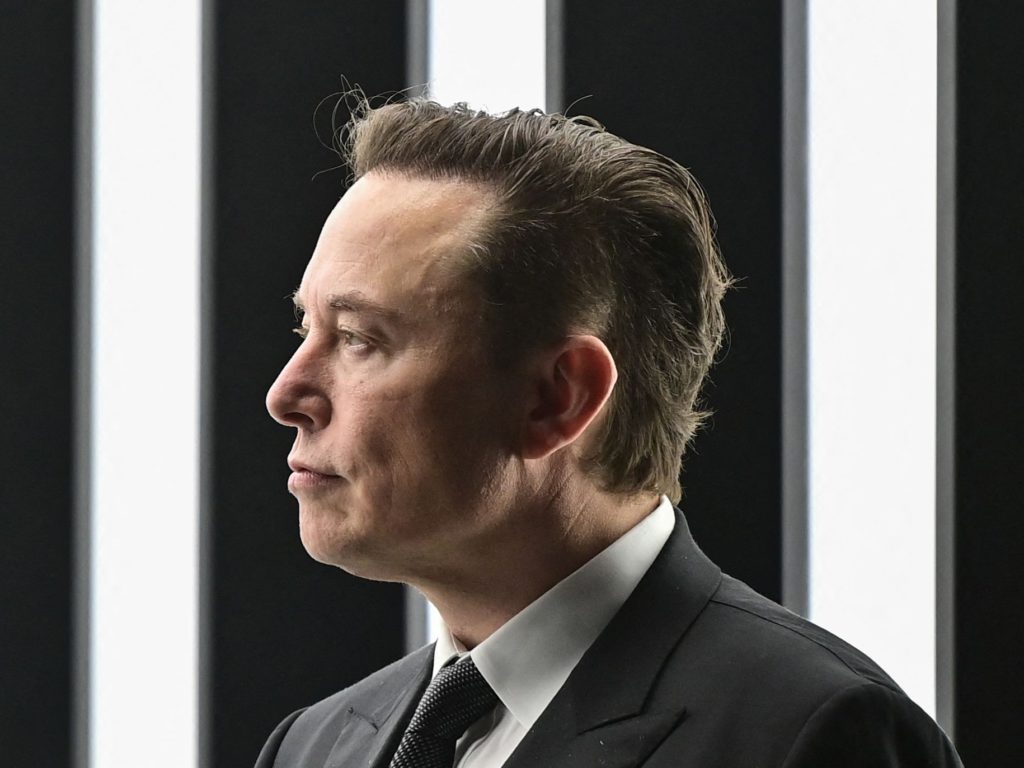
(Bloomberg) — Twitter Inc.’s shares slid after Elon Musk decided not to join its board, a stunning twist to a week-long saga that has captivated the tech community and touched off renewed speculation about the company’s future.

Musk held “many discussions” with Twitter’s directors but the entrepreneur ultimately declined their offer of a board seat, Chief Executive Officer Parag Agrawal tweeted. According to the CEO, Musk informed Twitter of his decision April 9, the same day he was slated to formally join the board.

Twitter shares fell about 2.9% in pre-market trading on Monday in New York. The drop erases part of a week of gains after Musk revealed he had taken a stake, with investors seeming to welcome his investment. 

“I believe this is for the best,” the Twitter CEO said in an internal memo shared late Sunday. “There will be distractions ahead, but our goals and priorities remain unchanged.”

Read more: Twitter Shares Fall After Musk Ditches Potential Board Role

The abrupt reversal ignites renewed speculation about Musk’s intentions for Twitter since disclosing he had taken a stake of just over 9% — becoming the social media giant’s largest individual shareholder. If he doesn’t join the board, Musk would not be subject to an agreement to keep his stake at no more than 14.9%.

The billionaire behind Tesla Inc. and SpaceX has been vocal about changes he’d consider at the social media platform. Musk wasted no time in appealing to users about prospective moves from turning Twitter’s San Francisco headquarters into a homeless shelter and adding an edit button for tweets, to granting automatic verification marks to premium users. Those open musings drew in even Amazon.com Inc. founder and space-faring rival Jeff Bezos, among other high-profile personalities.

Read more: Musk’s Idea for Twitter Homeless Shelter Wins Bezos Support

Musk posted a single emoji after the Twitter CEO’s revelation, a smiling face with a hand over its mouth. The tweet was deleted hours later without explanation.

Musk and Twitter executives had been expected to host a town-hall for employees this week, though it’s uncertain if that will proceed. Representatives for Musk and Twitter declined to comment.

Musk’s tweets have enthralled the social media sphere since the revelation of his stake. Twitter announced shortly after that the entrepreneur would be joining its board, spurring widespread debate. Several market-watchers tweeted that Musk may be staying off the board to avoid potential conflicts of interest in future — were he to consider increasing his stake in Twitter or acquiring it outright. 

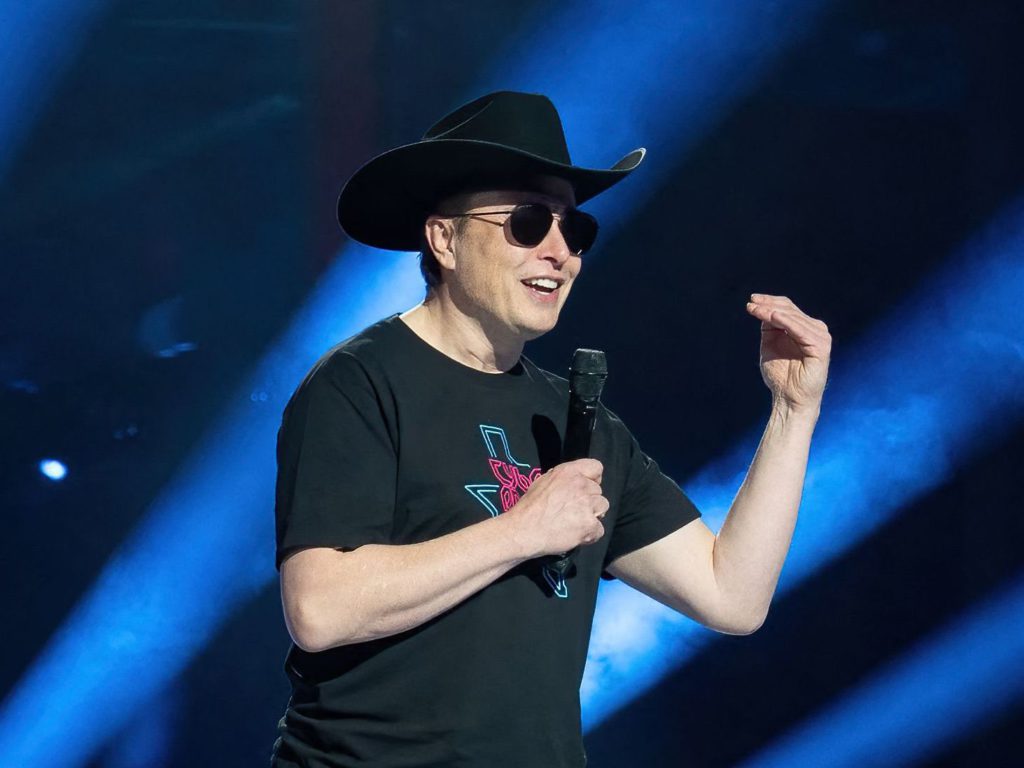
Musk, CEO of automaker Tesla, is the world’s richest man, according to the Bloomberg Billionaires Index. He’s also one of the biggest personalities on Twitter and has regularly stirred controversy on the platform. 

The billionaire could face scrutiny from U.S. regulators by disclosing his massive stake days later than regulations allow, and because he revealed it in a filing typically reserved for passive investments. Ascending to Twitter’s board so swiftly after the disclosure could have complicated that process.

Musk is already seeking to exit a 2018 deal with the SEC that put controls in place related to his previous tweeting about Tesla.

Citing internal company messages, the Washington Post reported that some workers in recent days have expressed concern on Twitter’s employee Slack channels that Musk could inflict damage to the company’s culture, as well as make it harder for people to do their jobs.

“Let’s tune out the noise, and stay focused on the work and what we’re building,” Agrawal said in his Sunday memo to employees.

(Updates with shares in third paragraph.)

More stories like this are available on bloomberg.com

©2022 Bloomberg L.P.

Twitter Shares Fall After Elon Musk Ditches Potential Board Role

(Bloomberg) — Twitter Inc.’s investors were left bewildered after Elon Musk decided not to join the company’s board, leading to a share price swing and increased speculation that the world’s richest person could mount a takeover of the social media platform.

Following discussions with management, Musk decided against joining Twitter’s board over the weekend, a dramatic reversal that also ends a previous agreement to keep his stake at no more than 14.9%.

Twitter shares initially fell over 7% in pre-market trading on Monday in New York, before paring losses. The drop erases part of a week of gains after Musk revealed he had taken a stake, with investors seeming to welcome his investment. 

Musk has gone from “helping move Twitter strategically forward to likely a ‘Game of Thrones’ battle between Musk and Twitter,” said Dan Ives, analyst at Wedbush, “with the high likelihood that Elon takes a more hostile stance towards Twitter and further builds his active stake in the company.”

Musk, already Twitter’s largest shareholder, is now free to increase his stake and push for changes in the company as an activist investor, which has also set off speculation that he may be interested in an acquisition of the company. Any significant changes in his investment — equal to 1% or more — will have to be disclosed. 

If Musk wishes to make a full takeover of Twitter, he can put forward a hostile bid for the company, and take his offer directly to shareholders. Twitter’s shares popped by a third after Musk first revealed his position in early April, making any further stake-building increasingly expensive.

It would be difficult, but not impossible, for Musk to build up a major stake in Twitter without being detected. The U.S. Securities and Exchange Commission is currently proposing new rules to stop hedge funds and family offices from using complex derivatives to secretly build huge stakes in public companies – the types of trades that fueled the collapse of Archegos Capital Management.

However, Musk can afford it. He is currently worth about $260 billion according to the Bloomberg Billionaire’s Index, compared to Twitter’s market valuation of about $37 billion.

By staying off the board, Musk avoids the potential conflict of interest that can arise when a board member has a number of financial interests that may influence how they vote.

The billionaire behind Tesla Inc. and SpaceX has made a flurry of suggestions — via Twitter — for changes to the company’s business model, including turning its San Francisco headquarters into a homeless shelter, adding an edit button for tweets, to granting automatic verification marks to premium users. 

There’s a growing likelihood that Musk may build his Twitter stake beyond 14.9% — the restriction proposed with the board seat — or gradually sell it. Speculation that Twitter might be taken private through a buyout persists, but we believe this is unlikely.

Mandeep Singh,Ashley Kim: analysts, Bloomberg Intelligence

One of the most prolific users of Twitter, Musk has regularly courted conflict on the platform. He has called out Twitter for “failing to adhere to free speech principles” and the need to root out cryptocurrency scams that are prolific on the social media platform, which was co-founded by his friend Jack Dorsey.   

The confusion of what Musk may have planned for his investment in Twitter increased further on Monday, after the deletion without explanation of his tweet of a single emoji — a smiling face with a hand over its mouth — as a response to Twitter’s Chief Executive Officer Parag Agrawal’s announcement that Musk would not take up his board seat.  

(Updated with context throughout, shares, analyst notes.)

More stories like this are available on bloomberg.com

©2022 Bloomberg L.P.

Bitcoin Declines as ‘Sugar Rush’ From Miami Crypto Event Fades

(Bloomberg) — Bitcoin dropped below $41,000 for the first time in about three weeks, sliding back further into the range in which it has traded this year on mounting concerns about rising interest rates. 

The largest cryptocurrency fell as low as $40,996 on Monday in New York trading, retreating for the seventh day in the past eight. Since peaking at just above $48,000 in late March, Bitcoin — and other tokens — have been dragged lower by concerns about tighter monetary policy. Even the buzz around last week’s Bitcoin 2022 conference in Miami wasn’t enough to reverse the trend. 

Bitcoin Extravaganza is ‘All About Eye-Catching’ Post Pandemic

U.S. inflation likely accelerated to 8.4% in March, the fastest pace since early 1982, economists surveyed ahead of data due Tuesday predict. The Federal Reserve may need to hike interest rates above 4%, Goldman Sachs Group Inc. Chief Economist Jan Hatzius said Friday. 

Expectations for tighter monetary policy has hurt demand for riskier assets such as cryptocurrencies and tech stocks, which are increasingly moving in tandem. Other top tokens also dropped on Monday, with Polkadot sliding 8.7% and Ether down as much as 7.9%.  

“Now the sugar rush of Bitcoin 2022 has passed, Tuesday’s (likely) ugly U.S. consumer price report is a reminder that the Fed is caught between a rock and a hard place when it comes to tackling runaway inflation without sinking the economy,” said Antoni Trenchev, managing partner of crypto lender Nexo, in emailed comments. 

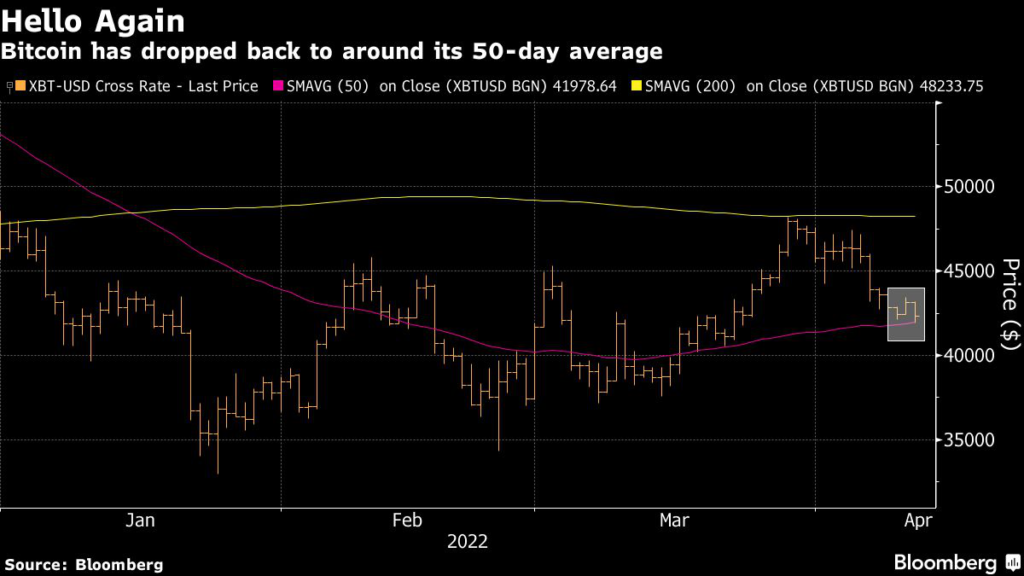
Bitcoin also dipped below its 50-day moving average. The token traded at $41,263 at 7:41 a.m. in New York, down 2.6% for the day. U.S. equity futures were lower, while the Chinese markets fell sharply    

Bitcoin has been in a trading range of around $35,000 to $45,000 for much of the year so far. A breakout above $48,000 last month briefly erased its losses for the year, but the token hit resistance around its 200-day moving average. 

Miller Tabak + Co. Chief Market Strategist Matt Maley said he doesn’t see the selloff as particularly concerning.

“The pullback from the late March high is more technical than anything else,” Maley said in emailed comments. “After its 35% rally from January to late March, Bitcoin had become very overbought. So it’s just working off that condition. As long as it can hold above $40,000, its multi-month upward trend will remain intact.”

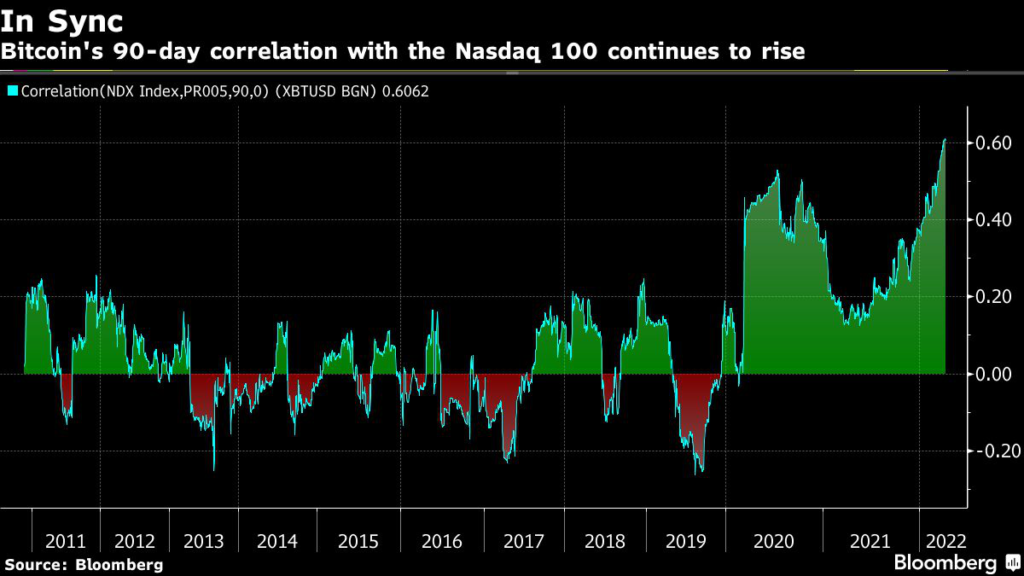
Still, Bitcoin’s tendency to move in sync with assets such as U.S. tech stocks makes the drop less of a surprise after a tough week for American markets. Its correlation with the Nasdaq 100 Index is now back at record levels. 

“The Nasdaq 100 closed below its 50-day moving average on Friday, so now wouldn’t be a bad time for Bitcoin to break its correlation with the tech-laden index,” Nexo’s Trenchev said. “Close above $45,000 again and we’re back in the game.”

Tech Rout Could Drag Bitcoin to $30,000, BitMEX Co-Founder Says   

More stories like this are available on bloomberg.com

©2022 Bloomberg L.P.

Singapore’s Coda Nears Funding at $2.5 Billion Value, Sources Say

(Bloomberg) — Singaporean firm Coda Payments Pte is nearing a deal to raise funds at about a $2.5 billion valuation, according to people familiar with the matter.

The online payment processing company is poised to announce a fresh fundraising deal to fuel growth plans as early as this week, the people said, asking not to be identified because the discussions are private. The round was led by venture capital firm Insight Partners, while Singaporean sovereign wealth fund GIC Pte is among those who also invested, the people said. 

Coda has been working with Goldman Sachs Group Inc. on a strategic review of options including a potential sale of the business, an initial public offering and a private round, Bloomberg News reported in November. The company was seeking a valuation of at least $4 billion, people familiar with the matter said at the time.

Advent International and Primavera Capital had also considered participating in the round, the people said.

Considerations are ongoing and details such as the value and prospective investors could still change, the people said. Representatives for Coda, Insight, GIC and Primavera didn’t immediately respond to requests for comment, while a representative for Advent declined to comment.

Founded in 2011, Coda provides online payment solutions to digital content providers in more than 30 markets, according to its website. Its investors include London-based private equity firm Apis Partners and Japan’s GMO Global Payment Fund. Its customers include gaming giants inclduing Tencent Holdings Ltd., Krafton Inc., Activision Blizzard Inc. and Riot Games Inc. 

(Updates with investor names in the second paragraph.)

More stories like this are available on bloomberg.com

©2022 Bloomberg L.P.

Norrsken22-Backed Nigerian Startup Plans $125 Million Round

(Bloomberg) — A Nigerian startup that connects informal traders with suppliers more than doubled the amount of funds it plans to raise this year after it breezed through its financial targets.

Sabi is seeking $125 million in a Series B funding round planned to start in September, its co-founder, Ademola Adesina, said in an interview on Friday. The firm, which also operates in Kenya, plans to open in South Africa this month, having already hired staff. It is also setting up a finance vehicle to help its clients raise money for expansion, he said.

Investors, including Softbank Group Corp. and founders of Swedish unicorns, are rushing to Africa to fund startups benefiting from connecting and helping finance businesses on the continent. Sabi, which raised $6 million in an initial funding round and has since tapped existing and new shareholders for additional finance, has seen its growth rate surge, according to Adesina. 

Its shareholders include Norrsken22, a fund backed by Swedish tech founders and chief executive officers, Fintech Collective Inc. and CRE Venture Capital.

The company, founded in late 2020, saw $100 million of transactions on its platform in its first year of operation and is now running at an annualized rate of $350 million, Adesina said. Its ability to expand is based on the fact that it runs a platform and has few physical assets, he said.

“We are asset light, we do not own vehicles or warehouses,” Adesina said. “We are a platform for owners of all of those. We are a platform for all of those middlemen.”

The company has widened its initial focus on fast moving consumer goods to other products, including chemicals, agricultural products and electronic goods

Sabi, founded by Adesina and Anu Adasolum, who serves as CEO, aims to operate in what it estimates is an $800 billion informal trade market in sub-Saharan Africa. 

(Updates with staff being hired in South Africa in second paragraph)

More stories like this are available on bloomberg.com

©2022 Bloomberg L.P.

Tech Rout Could Drag Bitcoin to $30,000, BitMEX Founder Says

(Bloomberg) — Bitcoin’s tendency to move in tandem with technology stocks means the biggest cryptocurrency may slump to $30,000 by June, according to Arthur Hayes, the co-founder of crypto trading platform BitMEX. 

Hayes, in a blog post on Monday, also said the same dynamic could drive Ether to $2,500. The tokens traded at around $41,500 and $3,070, respectively, at 6:30 p.m. in Hong Kong. Hayes said he’s buying “crash” puts expiring in June on both coins, while pointing out that’s he’s overall in a “long crypto position.” 

Expectations for a series of interest rate increases by the Federal Reserve in coming months have weighed on crypto and tech stocks recently, with the Nasdaq 100 Index losing 3.6% last week and Bitcoin briefly dipping below $42,000 on Monday. The Fed may need to hike interest rates above 4%, Goldman Sachs Group Inc. Chief Economist Jan Hatzius said Friday.

Hayes is awaiting sentencing after he and fellow BitMEX co-founder Benjamin Delo admitted in February they failed to establish an anti-money-laundering program at the cryptocurrency exchange.  

Bitcoin’s 90-day correlation with the Nasdaq 100 is at a record, undermining the token’s appeal as an instrument for diversification. The combination of weakening global growth and less accommodative central banks will weigh on tech stocks, and by extension, crypto, Hayes said. He acknowledged that his predictions for Bitcoin and Ether are mainly based on a “gut feeling.”

Crypto markets “will lead equities lower as we head into the downturn, and lead equities higher as we work our way out of it,” he wrote. “Bitcoin and Ether will bottom well before the Fed acts and U-turns its policy from tight to loose.”

Hayes has been sounding a cautious note of late on the short-term prospects for digital assets. 

“As we move into year end and 1Q 2022, I don’t see how we can take out Bitcoin at $69,000 or Ether at $5,000,” he wrote Dec. 10, following a sharp drop in both tokens over the previous month. “I can imagine, though, a muddle-through, sideways, boring market with small bouts of downside volatility followed by a tepid recovery.”

That prediction proved prescient, with Bitcoin spending most of this year mired in its tightest trading range since mid-2020. While crypto moved mostly sideways, bulls have pointed to accumulation by longer-term holders as a sign that digital assets were poised to break out of the rut. 

Bitcoin Breakout Is Making Proponents Wary of Another Fakeout

“There are many crypto market pundits who believe the worst is over,” Hayes wrote in his latest post. “I believe they ignore the inconvenient truth” that crypto prices are currently an indicator for the S&P 500 and Nasdaq 100, “and do not trade on the fundamentals of being peer-to-peer, decentralized, censorship-resistant digital networks designed for the transfer of money.”


(Updates prices in second paragraph.)

More stories like this are available on bloomberg.com

©2022 Bloomberg L.P.

Ford’s Shuttered India Factories May Be Reborn in EV Push

(Bloomberg) — It’s been seven months since Ford decided to shut its factories in India, taking a $2 billion charge for the retreat. The decision was unsurprising: contrary to Ford’s expectation in 2012 that the nation’s burgeoning middle class would propel it to one of the company’s top three markets by 2020, its market share had slumped to less than 1.5% by the time it decided to pull the pin.

In between, Ford invested heavily in two factories near the southern and western coasts of India, manufacturing cars and SUVs for both the domestic market and export. But it racked up losses of more than $2 billion in a decade, unable to crack a price-conscious market dominated by cheap cars and two-wheelers.

Now, there could be a way to recoup at least some of those losses. The provincial government in Tamil Nadu is holding talks with Ford to explore if its factory there can be converted to a plant manufacturing and exporting electric vehicles, the Economic Times newspaperreported last week. Ford also told the newspaper it was “exploring the possibility of using a plant in India as an export base.”

That could very well turn out to be a smart move. While it’s difficult for U.S. carmaking giants to make any meaningful inroads in India — General Motors ceased sales in India five years ago — EVs could offer another opportunity to take a shot in the market of 1.4 billion people. 

That option is particularly promising given Maruti Suzuki, the local unit of Suzuki that sells one in every two cars on Indian roads, doesn’t offer a single EV. 

The market is tiny, at just 1% of total sales, but the growth is staggering. Retail sales of electric cars and SUVs jumped 324% last month, based on data compiled by the Federation of Automobile Dealers Association. That compares with a fall of 7.8% in overall sales of passenger vehicles. 

India, home to some of the world’s most-polluted cities, has vowed to turn carbon-neutral by 2070, and is taking steps to become greener. Ford is among companies selected to receive state subsidies under a production-linked plan for electric vehicles, incentivizing the carmaker to possibly return with a new avatar. 

That may hold lessons for other automakers too. GM’s factory in India has sat idle for years, with a labor union representing former workers blocking a deal to sell the plant to China’s Great Wall Motors.

Ford has brought some very successful products to India — like the Figo hatchback, the EcoSport compact SUV, and the Endeavour premium SUV. But it’s difficult to compete with Maruti and South Korea’s Hyundai in the nation, where bare-bones cheap cars are traditionally chosen by an emerging middle class buying their first vehicle. 

There are signs that’s changing, especially with premium models. Mercedes-Benz plans to roll out a locally assembled EQS — the electric version of its flagship S-Class sedan — this year, while BMW is also unveiling a slew of electric products in India. Elon Musk has waged an unsuccessful campaign for the government to cut import tariffs so Tesla can enter the market. 

But Prime Minister Narendra Modi’s focus is clear. Under a program called Make-in-India, he wants automakers to set up factories in India to sell locally and export. That’s where Ford’s opportunity lies. 

More stories like this are available on bloomberg.com

©2022 Bloomberg L.P.

China’s Covid Outbreak Worsens as Shanghai Cases Top 26,000

(Bloomberg) — China’s largest Covid-19 outbreak in two years continues to spread despite an extended lockdown of Shanghai’s 25 million people, with the restrictions weighing on a fragile economy and straining global supply chains.

There were 26,087 new daily infections reported in the Chinese financial hub Sunday, an all-time high. Residents have been locked down for weeks now, with frustration building among the population as they struggle to get access to food and medical care. 

Elsewhere, the southern metropolis of Guangzhou is implementing a series of restrictions after local authorities warned the 20 cases they found last week could be the tip of the iceberg. The city is a trading hub and infections and similar containment measures across China are an increasing drag on the world’s second-largest economy, with consequences for global growth, supply chains and inflation. 

Shanghai’s struggle with the virus means other local governments may become more sensitive to flare-ups and step up mobility controls even when cases are low, according to Tommy Xie, head of greater China research at Oversea-Chinese Banking Corp. “The Chinese economy may have to brace for more short-term disruptions in the coming months,” Xie wrote in a report Monday. 

Read more: Shanghai Eases Lockdown for 43% of City’s Housing Complexes

Economists now predict the economy will expand 5% this year, below the official target of around 5.5%. Analysts at Morgan Stanley have cut their growth forecasts this year on the lockdown impact, while Citigroup Inc. has warned of risks to growth in the current quarter.

Chinese stocks plunged Monday over Covid concerns, rising global interest rates and persistent regulatory headwinds. The Hang Seng Index declined 3% Monday in Hong Kong, as did China’s benchmark CSI 300 Index.

China’s slowdown is already having a ripple effect across the region. Activity among Hong Kong’s private businesses slumped further into contraction in March, as lockdowns in mainland China weighed on new orders, according to the S&P Global purchasing managers’ index. Taiwan’s exports to China also decelerated in March from February. 

Logistics Logjam

“China’s worst Covid outbreak may lead to delays and higher prices, which could stall recovery and further add to global inflation,” said Bruce Pang, head of macro and strategy research at China Renaissance Securities Hong Kong Ltd. 

The Shanghai Shipping Exchange Shanghai (Export) Containerized Freight Index, a measure of freight rates, has declined to 4,349 on April 1 from a peak of 5,110 in early January. The drop indicates an easing in exports, according to Pang.

China’s exports are forecast to have expanded 13% in March, economists forecast ahead of data due this week. That would be an acceleration from 6.2% in February but slower than the 30% growth recorded for the full year of 2021. Exports are expected to slow down later this year due to a high base and as factories in other countries reopen.

Containers are piling up at Shanghai, China’s biggest port, as the lockdown in the city has led to a shortage of trucks to clear imports. It’s also disrupted business operations in the city, with companies like chip giant Semiconductor Manufacturing International Corp. struggling last week to secure trucks to ship out finished goods.

Many individual housing compounds in the city were locked down earlier in March, and then the city banned movement in the eastern part — home to the financial district and numerous industrial parks —  on March 28 and then in the west from April 1. The case numbers have surged despite those controls, but about 95% of the virus cases are now among people already under isolation, data from the municipal government on Monday showed. 

Looser Lockdown

In a sign of tentative easing, Shanghai’s authorities said Monday that people living in housing complexes which have had not infections in the past two weeks will be released from lockdown and allowed to move around their neighborhood. City officials didn’t say how many people were covered by the the policy, but this is the first sign of a path out of the weeks-long crisis. 

Other cities across the country are also seeing rising cases, with 21 of China’s 31 provinces reporting cases Sunday. Wuhan city, the site of the first outbreak more than two years ago, reported 12 asymptomatic cases Sunday and announced Monday morning that people would have to show a negative Covid test to ride the subway. 

Guangzhou has shut schools until April 17 and will conduct mass-testing and several districts have closed indoor entertainment venues. The local government is also requiring people to have a negative nucleic acid test before leaving the city.

Cities in more than 10 provinces have shut some entrances and exits to highways in order to strengthen Covid checks of people entering their cities, local media Jiemian reported Saturday. Many highway checkpoints are stopping drivers based on their travel history, forcing them to detour or turn back and disrupting logistics.

Logistics in the Yangtze River delta area around Shanghai has not been smooth, the Ministry of Transport said Saturday, in a statement. The ministry ordered that no Covid testing checkpoints be set up in the main lanes of highways so that transport is smooth.

In a sign of growing unhappiness with these kind of restrictions and lockdowns, European companies in China last week asked the government to eased the Covid Zero policies, saying that it was causing  “significant disruptions” to logistics and production in supply chains across China. 

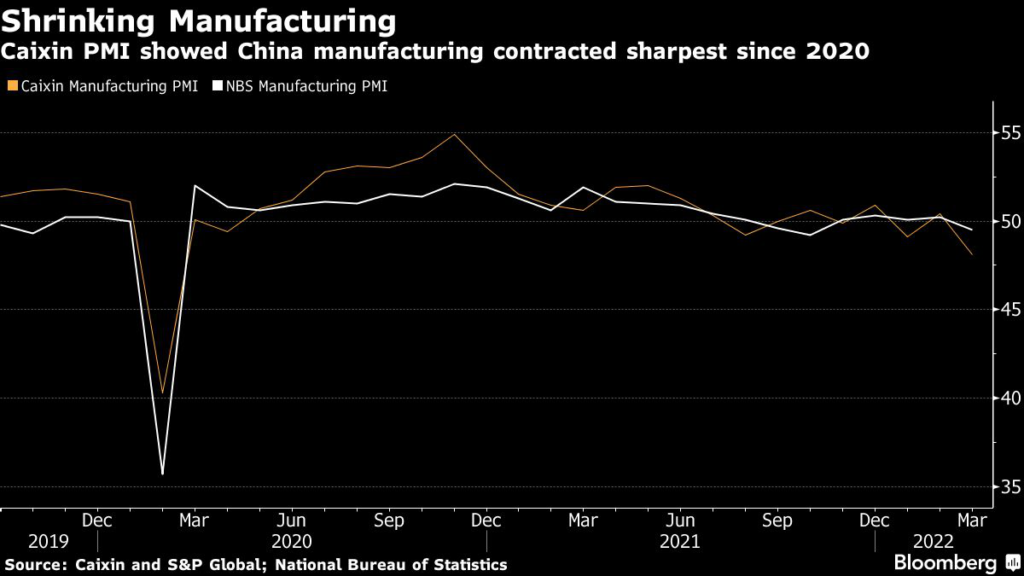
The disruptions to business is showing up in various indicators. Factory activity in March in China fell to its worst level since the pandemic’s onset two years ago, according to the Caixin Manufacturing Purchasing Managers’ Index, a private survey focusing on smaller export-oriented businesses. The official PMI also indicated a contraction in both manufacturing and services sectors in March.

The hit to consumption from lockdowns and more residents staying home instead of shopping or traveling continues to get worse. Data Monday showed a 10.9% plunge in vehicle sales in March from a year earlier, after a gain of 4.7% in February. 

Tourism revenue over the Qingming festival, the three-day national holiday last week, declined by 31% from last year to 18.8 billion yuan ($3 billion), according to official data. That’s equivalent to 39% of the pre-pandemic level in 2019, the Ministry of Culture and Tourism said. 

Price Pressures

The lockdowns have also pushed up vegetable prices, which surged 17.2% on year in March, compared to a drop of 0.1% in February. In addition, there’s rising concern that mobility restrictions are threatening spring planting of crops in the Northeastern region, the nation’s most important source of rice, soybeans and corn.

This means “the risk of food shortage may rise in the second half, adding further pressure to the worsening global food shortage caused by the ongoing military conflict in Ukraine,” Nomura Holdings Inc. economists led by Lu Ting said in a note Monday. Rising food and energy price inflation may limit the space for the People’s Bank of China to cut interest rates despite the rapidly worsening economy, Nomura wrote.

(Updates with some Shanghai compounds lifting lockdown in 13th paragraph, EU Chamber letter in 18th paragraph.)

More stories like this are available on bloomberg.com

©2022 Bloomberg L.P.

Close Bitnami banner
Bitnami