
Bloomberg

GoTo Shares Jump After Raising $1.1 Billion in One of 2022’s Biggest IPOs

(Bloomberg) — GoTo Group, Indonesia’s biggest tech company, surged on its first day of trading after raising $1.1 billion in one of the world’s largest initial public offerings this year.

The shares jumped as much as 23% and closed the day 13% higher at 382 rupiah in Jakarta, valuing the company at about $31.5 billion.

GoTo’s listing bucks a global trend of companies scrapping or delaying IPOs because of worries about Russia’s invasion of Ukraine, soaring inflation and rising interest rates. As Southeast Asia’s technology industry gains steam, GoTo’s strong debut bodes well for the region’s other technology companies seeking to list in Indonesia or overseas.

“The more these IPOs do well, the more Indonesia becomes a home for it, and you get a self-perpetuating type of situation,” said Angus Mackintosh, founder of CrossASEAN Research. “GoTo will likely have strong support in the near term given its broader exposure to the overall digital economy.”

GoTo is the largest of a crop of startups seeking to ride the rapid pace of mobile penetration and internet use in Southeast Asia, a region of more than 650 million people. Other regional technology companies that have been preparing for IPOs include PT Traveloka Indonesia and Blibli.com. GoTo will use the IPO to bankroll an expansion of its services to more markets, Chief Executive Officer and Co-founder Andre Soelistyo told Bloomberg Television.

It’s a matter of timing as to when GoTo will “expand more aggressively,” he said.

Tiket Said to Mull Blibli Merger Before $1 Billion Jakarta IPO

Underscoring GoTo’s importance to the local economy and technology industry, Indonesia’s President Joko Widodo gave a short video address at the ceremony marking the debut on Monday. “I hope this GoTo IPO motivates young Indonesians to lend new energy to the technological leap in this country’s economy,” he said.

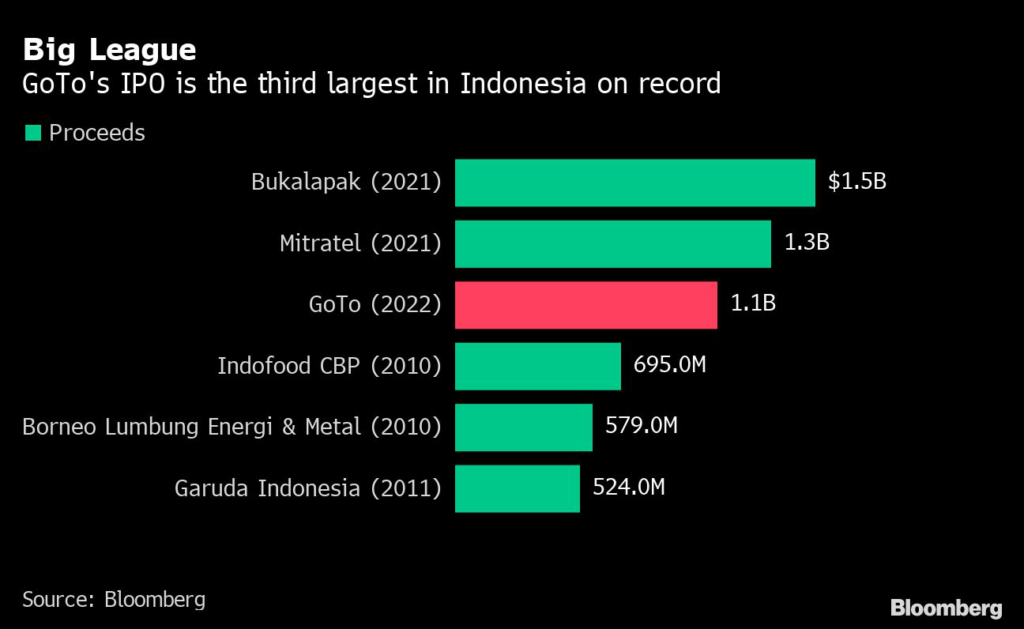
GoTo’s offering is the third-largest in Indonesia after PT Bukalapak.com and PT Dayamitra Telekomunikasi, known as Mitratel. The company immediately ranks among the most valuable companies listed on the Indonesia Stock Exchange along with PT Bank Central Asia, PT Bank Rakyat Indonesia and PT Telkom Indonesia.

The company is the result of last year’s merger between Indonesia’s two most valuable internet startups — ride-hailing provider Gojek and e-commerce firm Tokopedia — to get more firepower against rivals in an increasingly cutthroat market. Over the years, the two amassed a long list of investors, including Google, Tencent Holdings Ltd. and Sequoia Capital India. The latter was an early backer of both Gojek and Tokopedia.

GoTo is among Southeast Asian consumer-internet companies that are adding users at a rapid clip but have yet to generate sustainable profit. Still, GoTo is enjoying a leadership position in Indonesia, a country of more than 270 million people whose mobile-savvy consumers are shopping on Tokopedia’s platform and ordering rides and food via Gojek’s app.

The IPO “is testament of investors’ confidence on Indonesia’s promising digital economy outlook in the long term,” said Henry Wibowo, head of research at JPMorgan Sekuritas Indonesia. The country’s digital economy will expand to about $200 billion by 2025, backed by rising smartphone penetration and growing middle class, he said.

GoTo’s story started in 2009, when William Tanuwijaya, the son of a factory worker, made a bet on Indonesia’s economic and internet boom and founded Tokopedia — the name is a variant of the Indonesian word for “store.” A year later, Nadiem Makarim, a Harvard Business School grad and former McKinsey & Co. consultant, set up Gojek to arrange courier deliveries in Jakarta.

Soelistyo joined Gojek in 2015 after working as an investor at private-equity firm Northstar Group, one of the first institutional backers of the upstart. He and co-founder Kevin Aluwi were named co-CEOs of the ride-hailing company in October 2019, when Makarim left to join the government as the nation’s minister for education and culture. 

(Updates with comment from analyst in 11th paragraph)

More stories like this are available on bloomberg.com

©2022 Bloomberg L.P.

China Stocks See Fresh Bout of Selling on Covid, Regulation Woes

(Bloomberg) — Chinese stocks tumbled on Monday as mounting concern over a Covid outbreak at home and rising global interest rates added to persistent regulatory headwinds.

The tech sector was once again at the forefront of losses, with the Hang Seng Tech Index closing 5.2% lower in Hong Kong. The broader Hang Seng Index as well as China’s benchmark CSI 300 Index each slumped about 3%.

China’s markets are confronting multiple challenges at home and abroad, causing investors to sell stocks again despite mid-March vows from authorities to support the economy and the battered property and tech sectors. Record virus infections in Shanghai, a higher-than-expected jump in factory gate prices, concerns about tech regulations and surging U.S. yields all combined to trigger Monday’s losses.

“There’s very little to be optimistic about,” said Zhang Fushen, a senior analyst at Shanghai PD Fortune Asset Management (LLP). “The shine from policy pledges of a few weeks ago is starting to wear off, especially with the situation in Shanghai. There is a gloomy atmosphere.”

READ: China Said to Limit Sales by Some Funds as Stocks Slide Again

China’s market regulator gave window guidance to some big mutual fund houses to refrain from net selling A-shares on Monday, according to people familiar with the matter. Still, the CSI 300 closed at its lowest since March 15 as foreign investors sold 5.8 billion yuan ($910 million) of local shares — the most in three weeks — according to data compiled by Bloomberg.

Recovery at Risk

Local equities rebounded from a historic rout in mid-March, as top officials made a sweeping set of promises from ending the crackdown on tech to supporting overseas listings. A majority of fund managers and analysts surveyed by Bloomberg at the end of last month said they plan to add to stock holdings, on bets the bottom has already passed, or is nearing.  

READ: China Traders Gear Up to Add Stocks, Betting Worst Is Over

That investor optimism is being put to test as lockdowns in Chinese cities threaten business operations.

An announcement by China’s electric vehicle maker Nio Inc. that it halted car production, citing disruption from lockdowns, drove metals and battery stocks lower on the CSI 300 Monday. Battery giant Contemporary Amperex Technology Co. and Tianqi Lithium Corp. plunged 7.3% and 10%, respectively.

“The recent recovery rally in China’s equities is at risk from a protracted period of lower consumer spending on services from lockdowns that undermines housing sales,” said Stephen Innes, managing partner at SPI Asset Management.

A Bloomberg Intelligence gauge of developers lost more than 4% on Monday on concerns over the outbreak on sales and rental income. China’s smaller, tech-focused ChiNext Index slumped 4.2% to the lowest since July 2020.

READ: China Developer Rally Confronts Impatience for Policy Plan (1)

On a positive note, data released Monday showed China’s credit expanded faster than expected in March as economic activity resumed after the Lunar New Year holidays and bond sales accelerated. That suggests looser monetary policy stance has been flowing through to the economy, with analysts expecting more easing to come. 

Risk Premium

In Hong Kong, Bilibili Inc. plunged 13% to be the biggest loser on the Hang Seng Tech gauge. China’s State Council issued new guidelines over the weekend on removing data monopoly at platform companies and preventing them from restricting competition.

Tech shares were lower across Asia on Monday as 10-year U.S. yields climbed through 2.75% for the first time since March 2019.

Investors are also keenly watching for developments related to a potential delisting of Chinese companies at American exchanges as Beijing vowed to defuse risks with a radical proposal.

“What we saw in March was a reduction in the regulatory risk premium with the U-turn by Chinese regulators regarding the potential delisting of U.S.-listings,” said Olivier d’Assier, head of APAC applied research at Qontigo.

“What we are seeing so far in April, is an increase in the regulatory risk premiums from the Covid-19 lockdowns, economic downgrades, and a deteriorating U.S.-China relationship. This will continue to weigh on sentiment and markets in the near-term,” he added.

More stories like this are available on bloomberg.com

©2022 Bloomberg L.P.

Ericsson Halts Business in Russia for Now, Puts Staff on Leave

(Bloomberg) — Ericsson AB said it had suspended business with customers in Russia “indefinitely,” extending a halt from February that was originally billed as temporary, following sanctions imposed as a result of Russia’s war in Ukraine.

Roughly 600 staff in Russia will be placed on paid leave, said the Swedish telecommunication equipment maker, major supplier to Russia’s largest operator MTS and fourth largest operator Tele2. It’s also booking a provision of 0.9 billion kronor ($95 million) in the first quarter for impairment of assets and other exceptional costs. Roughly a third of that impacts cash flow.

“Indefinitely means until further notice,” an Ericsson spokesperson said in response to emailed questions, adding that last year, its combined sales in Russia and Ukraine amounted to less than 2% of its global sales. Staff there are employed in support functions.

The company, scheduled to report its quarterly results on Thursday, is overhauling its compliance function after revelations were made of alleged payments to terror group ISIS in Iraq and a statement by the U.S. Department of Justice that Ericsson failed to make adequate disclosures about its operations in Iraq before entering a deferred prosecution agreement in 2019.

More stories like this are available on bloomberg.com

©2022 Bloomberg L.P.

Sichuan Airlines Employee Suspended for Online Polemic Remarks

(Bloomberg) — Sichuan Airlines Corp. suspended one of its employees after contentious comments he posted online were unearthed, highlighting growing jitters in China after a deadly air crash last month. 

An internet user took to Weibo on April 10 to ask the carrier to prevent the staff member in question — identifiable as an ethnic Mongolian Chinese national called Ayingga — from flying because of his politically sensitive posts, some of which dated from 2015.

“How did the aviation political review end up being like this?” wrote the poster, whose Weibo account has about 52,000 followers. “Is this person going to crash into a building with a full plane of passengers?”

The Sichuan Airlines’ employee is accused of applauding the Nanjing Massacre, saying the people who died deserved their fate. The posts also included racial slurs against ethnic Han Chinese as well as a photo of the young man posing under what appears to be the national flag of the Mongolian People’s Republic. 

The original screenshots couldn’t be independently verified by Bloomberg. Ayingga couldn’t be immediately reached for comment.

The incident highlights unease among the nation’s traveling public in the wake of a fatal crash late last month. A Boeing Co. jet flown by China Eastern Airlines Corp. fell from the skies over China’s southwestern province of Guangxi on March 21, killing all 132 people on board. It’s also a reminder of a growing “cancel culture” that in some cases has seen nationalist trolls scour the internet for evidence, often going back many years. 

Sichuan Airlines issued a statement Sunday confirming that the posts were from one of its employees, although it didn’t name him. The “inappropriate remarks” were made while the employee was at university and he has been suspended and is under investigation, according to the statement.

Representatives from Sichuan Airlines didn’t immediately respond to requests for comment Monday.

The Civil Aviation Administration of China released a statement last week in which it reiterated efforts to ensure civil aviation safety and mentioned the need for airlines to assist employees with difficulties, including mental health issues they may have in their work and personal lives.

Read more: China Aviation Official Denies Rumors Over China Eastern Crash

Companies in the aviation industry should especially conduct some “ideology work” among pilots, the CAAC statement added without elaborating. 

More stories like this are available on bloomberg.com

©2022 Bloomberg L.P.
Swedish Fund-Backed Nigerian Startup Doubles Financing Target

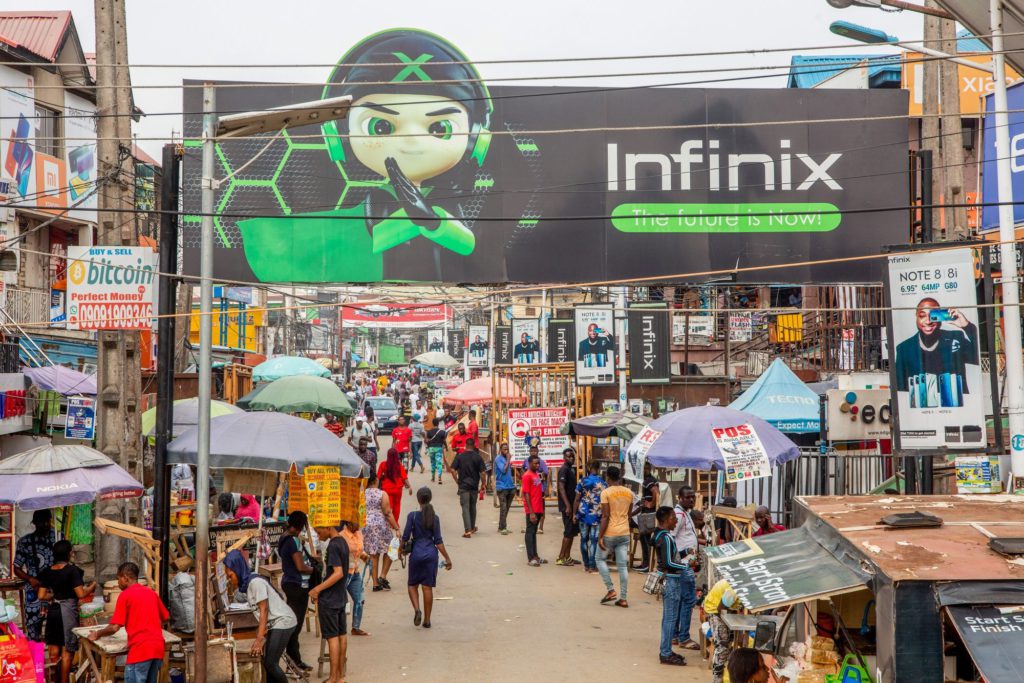
(Bloomberg) — A Nigerian startup that connects informal traders with suppliers more than doubled the amount of funds it plans to raise this year after it breezed through its financial targets.

Sabi is seeking $125 million in a Series B funding round planned to start in September, its co-founder, Ademola Adesina, said in an interview on Friday. The firm, which also operates in Kenya and plans to open in South Africa this month, is setting up a finance vehicle to help its clients raise money for expansion, he said.

Investors, including Softbank Group Corp. and founders of Swedish unicorns, are rushing to Africa to fund startups benefiting from connecting and helping finance businesses on the continent. Sabi, which raised $6 million in an initial funding round and has since tapped existing and new shareholders for additional finance, has seen its growth rate surge, according to Adesina. 

Its shareholders include Norrsken22, a fund backed by Swedish tech founders and chief executive officers, Fintech Collective Inc. and CRE Venture Capital.

The company, founded in late 2020, saw $100 million of transactions on its platform in its first year of operation and is now running at an annualized rate of $350 million, Adesina said. Its ability to expand is based on the fact that it runs a platform and has few physical assets, he said.

“We are asset light, we do not own vehicles or warehouses,” Adesina said. “We are a platform for owners of all of those. We are a platform for all of those middlemen.”

The company has widened its initial focus on fast moving consumer goods to other products, including chemicals, agricultural products and electronic goods

Sabi, founded by Adesina and Anu Adasolum, who serves as CEO, aims to operate in what it estimates is an $800 billion informal trade market in sub-Saharan Africa. 

More stories like this are available on bloomberg.com

©2022 Bloomberg L.P.

Copper Hires BofA Team to Build Prime Brokerage Crypto Product

(Bloomberg) — Copper Technologies Ltd. hired a team of executives from Bank of America Corp. to run a unit developing infrastructure for prime brokerage platforms, seeking to meet demand from institutional investors and banks for more direct access to cryptocurrencies.

The London-based digital asset custodian said the unit will be led by Michael Roberts, who joins immediately from BofA, where he was head of the bank’s prime brokerage platform for the Europe, Middle East and Africa region. Roberts will be joined by former BofA directors Adam Groom and Paul Barham from the same team at the bank, as well as Ben Carr and Ross Budgen. 

The team from BofA join a growing pool of bankers from New York to Singapore trading traditional finance for the crypto industry. The annual Bitcoin conference in Miami last week drew executives from giants like Fidelity International Ltd., Mastercard Inc. and Ernst & Young LLP, in addition to the thousands of crypto enthusiasts that flock to the event.

Bitcoin Extravaganza is ‘All About Eye-Catching’ Post Pandemic

Most firms seeking to offer prime brokerage in cryptocurrencies must currently purchase digital assets on an exchange before being able to trade — a problem Copper sought to solve with its ClearLoop network launched in 2020, Chief Executive Officer Dmitry Tokarev said. 

Copper’s infrastructure for prime brokerages will allow them to further move the trading process away from exchanges, “to make sure that a true prime brokerage offering can be enabled in this space,” he said in an interview. 

“There’s not a single sell-side institution on the planet, or at least in the top 20, that is not working on something in digital assets,” Tokarev said. 

Copper is in the process of raising its next funding round, which is expected to value the startup at around $3 billion. 

The company is still in discussions about its registration with the U.K.’s Financial Conduct Authority, after it didn’t get full approval under anti-money laundering rules by the regulator’s March 31 deadline. Copper is pursuing separate plans to seek regulatory approvals in Switzerland, a person familiar with the matter told Bloomberg last month.

More stories like this are available on bloomberg.com

©2022 Bloomberg L.P.
China Charges Ex-Hangzhou Party Chief With Taking ‘Huge’ Bribes

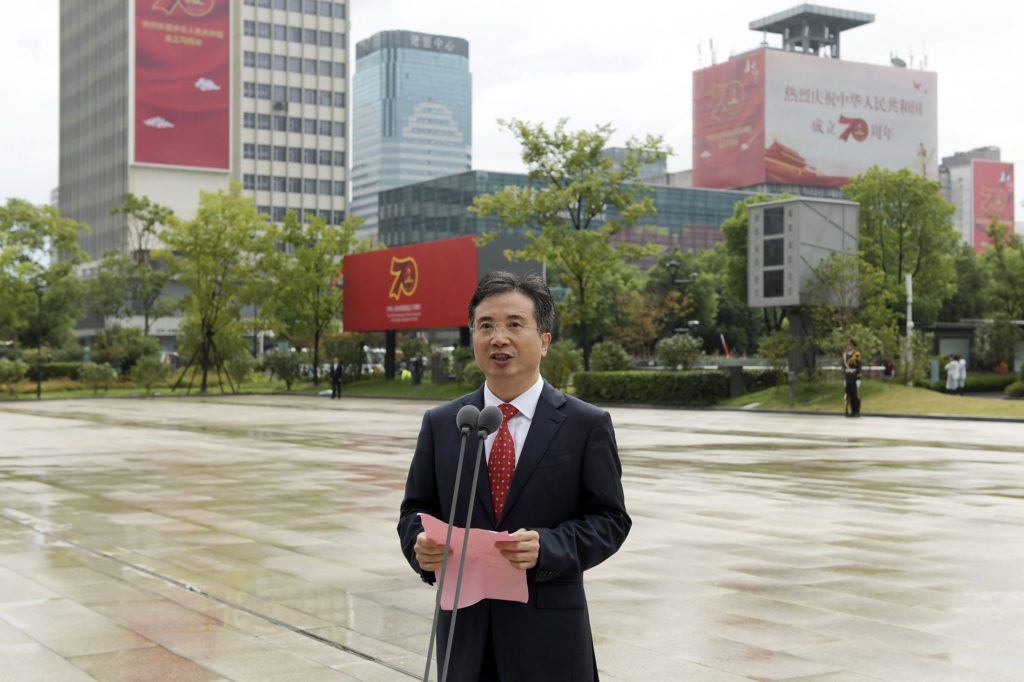
(Bloomberg) — Chinese authorities accused the former Communist Party chief of Hangzhou of accepting “huge” bribes, escalating a corruption probe in the affluent eastern city where Jack Ma’s Ant Group Co. and Alibaba Group Holding Ltd. are headquartered. 

The government will prosecute Zhou Jiangyong on allegations of bribery, according to a statement on the top prosecutor’s website that didn’t identify any companies. But the broader investigation into Zhou, who was arrested in February, has been linked to Ma’s fintech behemoth Ant. 

Beijing began a sweeping crackdown on the private sector in late 2020 by forcing Ant to pull the plug on what would have been the world’s largest initial public offering. That scrutiny has since expanded to almost every sector of the internet, from e-commerce to social media, and ensnared many of the country’s largest companies, including Alibaba.

Earlier this year, Zhou appeared in a state media documentary that claimed the former party secretary used his influence in the Chinese tech hub to help his younger brother’s businesses. One of those companies had received investment from a firm controlled by Ant, according to a local media report in August.

Zhou used his position and “illegally accepted gifts of an especially large volume,” the Supreme People’s Procuratorate said in the brief notice without elaborating. The country’s powerful corruption-busting agency, the Central Commission for Discipline Inspection, posted an identical statement online.

Xi Jinping’s administration has pursued an unprecedented campaign to root out graft within the Party, regarded by observers as a means to legitimize his government while tamping down internal dissent. 

In February, the city’s Party branch issued a statement about how it plans to move beyond Zhou’s arrest, and how it plans to navigate complex relationships between public officials and private companies. The city’s leading cadres had gathered on Feb. 15 for what was described as a “warning” conference to explain how to support the party’s priorities while avoiding corruption. 

The Hangzhou party pressed for improved reporting of personal matters and better reporting of business relationships.

Government officials should formulate “a positive and negative list” in establishing their relations with businesses, according to a statement about the conference on the website of China’s anti-corruption watchdog Central Commission for Discipline Inspection. Officials should establish “clean but not distant” relations with private businesses to “support and guide standardized and healthy development of capital.”

Apart from Ant and Alibaba, a number of other major Chinese tech companies call Hangzhou home.

More stories like this are available on bloomberg.com

©2022 Bloomberg L.P.

Geothermal Powerhouse Iceland Hit by Lack of Electricity

(Bloomberg) — Isolated from any other country’s power networks, Iceland has this winter faced a new predicament: running out of electricity.

Sitting in the Atlantic Ocean, 850 kilometers (530 miles) from the Scottish coast, the country had to be self-sufficient in electricity generation, and power was always so plentiful that a large aluminum-smelting industry emerged half a century ago to churn wealth for Icelanders, who until then had relied on fishing for their livelihoods.

Located between two tectonic plates, the land of glaciers, highlands and ample rainfall is fueled by geothermal power and hydro generation. Iceland has even considered exporting electricity, but never undertook the investment to connect to any other countries’ grids on economic grounds. 

But this winter, rising demand from an electrifying society and power-hungry industries combined with low reservoir levels after summer droughts meant the country spent four months curtailing power to certain industries, including fish-meal factories and district heating plants in some remote areas.

While the restrictions have for the most part ended after recent rains, Iceland is taking in the lessons.

The need to increase generation capacity “is quite urgent,” Hordur Arnarson, chief executive officer of national power company Landsvirkjun HF, said in an interview. Still, there’s no quick respite in sight, as it will take at least four years to bring new generation capacity — up to 300 megawatts — online, he said. 

The world’s biggest power producer relative to the size of its population, Iceland sells almost 80% of the electricity generated in the country to its heavy industry — the bulk of that made up by aluminum smelters belonging to Rio Tinto Plc, Century Aluminum Co. and Alcoa Corp. 

When power has been scarce, Landsvirkjun bought back electricity from some large users, and the smelters continued to be served by their long-term contracts. In contrast, fish-meal factories in the east of the country have been running on oil, because there was no electricity to power them, and heat for some homes had to be generated with crude over the winter.

All that has put environmentalists on the back foot.

“It’s crazy that people in the Westfjords need to heat their houses with oil when electricity supply goes down,” Audur Onnu Magnusdottir, general manager of environmental association Landvernd, said in an interview. “The big international companies are prioritized. This shows how flawed our priorities are.”

What she wants to see going forward is more focus on where energy is spent and reducing consumption. 

“We cannot be pressured by polluters of the world to sacrifice our nature,” Magnusdottir said, referring to plans to increase land use on power production, even for renewable energy.

The power crunch has also meant lost opportunities to diversify the economy, said Sigurdur Hannesson, managing director of the Federation of Icelandic Industries. Several green projects were pulled because companies couldn’t get power contracts, he said in an interview, adding that algae-based foods and battery production are among industries that could be built if electricity could be secured.

The government is taking a middle road as it weighs new power projects. Key considerations include ensuring the public benefits from private profits in energy generation, and what power will be used for, Prime Minister Katrin Jakobsdottir said in an interview. 

“The domestic energy transition should be prioritized over the extensive export of energy,” she said. “Those of us who want to protect nature a lot, like myself, and those who are more pro harvesting, all need to look at the overall interest.”

(Updates with power repurchases in eighth paragraph)

More stories like this are available on bloomberg.com

©2022 Bloomberg L.P.

India’s ‘Unicorn Couple’ Aim for First Startup IPO Within a Year

(Bloomberg) — An Indian couple that became the country’s first husband and wife to build separate billion-dollar startups is angling to debut one of those firms on public markets as soon as this year.

OfBusiness, a supplier of raw materials from steel to chemicals to small businesses, could go for an initial public offering in six months to a year, Ruchi Kalra, who co-founded the startup with husband Ashish Mohapatra, told Bloomberg Television on Monday. The couple’s other endeavor, digital lending startup Oxyzo, could float shares in about two years, she added.

“The companies are both ready for public markets and at the right, opportune time, over the six months to two-year period, you will see both companies go public,” she said.

Kalra, 38, and Mohapatra, 41, met while working for McKinsey & Co. before setting up OfBusiness in 2016 along with several others. A year later, they spun off Oxyzo, which uses technology to crunch data and provide financing to businesses — filling a gap in a credit-starved country where smaller businesses struggle to get working capital. Both their startups, which run from different offices and different teams, are profitable, the founders have said.

Oxyzo counts Alpha Wave Global, Tiger Global Management and Norwest Venture Partners as its backers while OfBusiness is funded by SoftBank Group Corp among others.

Read more: Husband and Wife Entrepreneurs Mint Own Unicorns Within a Year

More stories like this are available on bloomberg.com

©2022 Bloomberg L.P.

China Stocks Caught in Fresh Rout on Covid, Regulation Worries

(Bloomberg) — Chinese stocks tumbled on Monday as mounting concern over a Covid outbreak at home and rising global interest rates added to persistent regulatory headwinds.

The tech sector was once again at the forefront of losses, with the Hang Seng Tech Index losing as much as 5% in Hong Kong. The broader Hang Seng Index as well as China’s benchmark CSI 300 Index slumped as much as 3%.

Investors in Chinese equities are confronting multiple challenges at home and abroad, causing the market to plunge again despite mid-March vows from authorities to support the economy and the battered property and tech sectors. Record virus infections in Shanghai, a higher-than-expected jump in China factory gate prices, concerns about tech regulations and surging U.S. yields all combined to trigger Monday’s losses.

“There’s very little to be optimistic about,” said Zhang Fushen, a senior analyst at Shanghai PD Fortune Asset Management (LLP). “The shine from policy pledges of a few weeks ago is starting to wear off, especially with the situation in Shanghai. There is a gloomy atmosphere.”

Local equities rebounded from a historic rout in mid-March, as top officials made a sweeping set of promises from ending the crackdown on tech to supporting overseas listings. A majority of fund managers and analysts surveyed by Bloomberg at the end of last month said they plan to add to stock holdings, on bets the bottom has already passed, or is nearing.  

READ: China Traders Gear Up to Add Stocks, Betting Worst Is Over

While stocks remain higher than last month’s lows, investor optimism is being put to test as lockdowns in Chinese cities threaten business operations.

An announcement by China’s electric vehicle maker Nio Inc. that it halted car production, citing disruption from lockdowns, drove metals and battery stocks lower on the CSI 300 Monday. Battery giant Contemporary Amperex Technology Co. and Tianqi Lithium Corp. fell more than 8% each.

Foreign investors sold 6.1 billion yuan ($960 million) of local China shares as of 1:40pm, according to data compiled by Bloomberg. The smaller, tech-focused ChiNext Index slumped as much as 4%, headed for the lowest since July 2020.

“The recent recovery rally in China’s equities is at risk from a protracted period of lower consumer spending on services from lockdowns that undermines housing sales,” said Stephen Innes, managing partner at SPI Asset Management.

A Bloomberg Intelligence gauge of Chinese developers lost more than 4% on Monday on concerns over the outbreak on sales and rental income.

Risk Premium

Bilibili Inc. plunged about 14% to be the biggest loser on the Hang Seng Tech gauge, which was on course for a fourth day of losses. China’s State Council issued new guidelines over the weekend on removing data monopoly at platform companies and preventing them from restricting competition.

Tech shares were lower across Asia on Monday as 10-year U.S. yields climbed through 2.75% for the first time since March 2019.

Investors are also keenly watching for developments related to a potential delisting of Chinese companies at American exchanges as Beijing vowed to defuse risks with a radical proposal.

“What we saw in March was a reduction in the regulatory risk premium with the U-turn by Chinese regulators regarding the potential delisting of U.S.-listings,” said Olivier d’Assier, head of APAC applied research at Qontigo.

“What we are seeing so far in April, is an increase in the regulatory risk premiums from the Covid-19 lockdowns, economic downgrades, and a deteriorating U.S.-China relationship. This will continue to weigh on sentiment and markets in the near-term,” he added.

More stories like this are available on bloomberg.com

©2022 Bloomberg L.P.

Close Bitnami banner
Bitnami