

Bloomberg

Ukraine Update: EU Military Panel Meets on Next Phase of War

(Bloomberg) —

U.K. Prime Minister Boris Johnson made a surprise visit to Kyiv to meet with President Volodymyr Zelenskiy. Russia is pressing a land assault in the Donetsk region while attempting to complete its capture of Mariupol in the south, where air strikes are being targeted at the center of the city. 

Russia said YouTube had blocked its Duma-TV channel, which shows parliamentary debates and other political content. Russia’s first external default in a century now looks all but inevitable after another brutal week for the country’s finances. 

Russia is boosting an economic stability fund and will finance it with oil and gas revenues. A global pledging campaign with some celebrity help raised 10.1 billion euros to help those displaced by the war. The EU mission in Kyiv has reopened, and at least two European countries — Italy and Austria — look set to follow suit soon. 

(See RSAN on the Bloomberg Terminal for the Russian Sanctions Dashboard.) 

Key Developments

  • Russia’s War in Ukraine: Key Events and How It’s Unfolding
  • Celebrity-Backed Ukraine Campaign Raises $11 Billion for Aid
  • Half of Harvests in Crop Giant Ukraine Could Be Wiped Out by War
  • Rising Food Costs Push Arab World’s Vulnerable to Breaking Point
  • Russia’s Invasion Supercharges Push to Make a New Green Fuel
  • Russia’s First Default in a Century Looks All But Inevitable Now

All times CET: 

EU Holds Emergency Meeting of Top Military Body (11:53 a.m.)

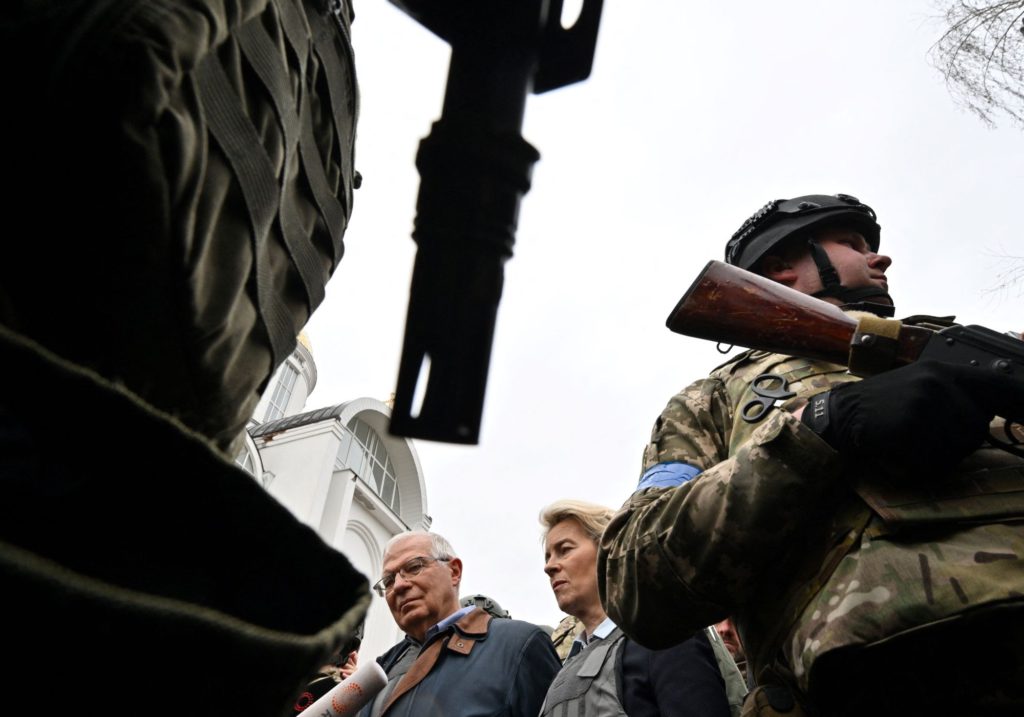
EU foreign policy chief Josep Borrell held an extraordinary meeting of the bloc’s military committee Sunday to discuss expected Russian attacks in the east and south of Ukraine, as well as Kyiv’s request for additional weapons, according to an EU official who declined to be named. 

The meeting comes a day before EU foreign ministers are expected to discuss further sanctions on Russia, including on the oil sector. 

The unusual Sunday meeting came after Russia on Friday bombed a train station in the eastern Ukrainian city of Kramatorsk, killing at least 50 people. The EU plans to approve an additional 500 million euros in arms in the coming days to support Ukraine, in addition to 1 billion euros already allocated.

Russia Boosts Fund to Counter Sanctions With Oil, Gas Proceeds (11:25 a.m.)

Russia will increase its government reserve fund by 273.4 billion rubles ($3.4 billion) to “ensure the stability of the economy in the face of external sanctions,” the Kremlin said in a decree. 

The government will mainly finance the increase via “additional oil and gas revenues received in the first quarter of 2022,” it said, citing legal amendments approved in early March by President Vladimir Putin just after he launched the invasion.

Ukraine Says It’s Pursuing 5,600 War Crimes Cases (10:42 a.m.)

Ukraine has started to pursue about 5,600 cases of war crimes linked to Russia’s invasion, Prosecutor General Iryna Venediktova told the U.K.’s Sky News. The suspects in only the main “anchor case” include more than 500 top military, political, and other officials in Russia, she said. 

“Almost every region of Ukraine was bombed, and we have a lot of concrete facts in every region and every city,” Venediktova said. The Kremlin denies targeting civilians and has blamed Ukraine for killing thousands of its own people, without providing evidence and despite satellite images, intercepted communications, eye-witness accounts and other reports indicating its troops are at fault. 

Venediktova said Vladimir Putin is “the main war criminal of the 21st century,” but while he remains Russian president he can’t be charged under international law without a decision from the International Criminal Court prosecutor. 

Russia Bringing Back Retired Troops, U.K. Says (8:10 a.m.)

In response to mounting losses, and as it prepares for what’s expected to be a major offensive in Ukraine’s east, Russia is looking to bolster troop numbers with personnel discharged from military service since 2012, the U.K. said in an intelligence update. Moscow is also trying to recruit from Transnistria, the pro-Russian enclave in neighboring Moldova, the U.K. said. 

NATO estimated in late March that as many as 15,000 Russian soldiers had been killed since the invasion of Ukraine on Feb. 24. Wounded soldiers who can’t rapidly return to duty are typically twice the number of dead, according to a Center for Strategic and International Studies estimate. 

Celebrity-Backed Campaign Raises $11 Billion for Aid (8:05 a.m.)

A global pledging campaign, “Stand Up for Ukraine” raised 10.1 billion euros ($11 billion) on Saturday to help more the than 10 million people displaced within and outside of Ukraine since Russia invaded six weeks ago.

Backed by Europe, Canada, Gulf countries and celebrities such as Katy Perry, Madonna and Elton John, the drive concluded at an event in Warsaw with Polish President Andrzej Duda, European Commission President Ursula von der Leyenand Canadian Prime Minister Justin Trudeau, who appeared by video link.

Ukraine President Volodymyr Zelenskiy also addressed the event via video, and later spoke with Trudeau, he said on Twitter. 

Japan Insurers to Halt Coverage for Firms in Russia, Kyodo Says (2:46 a.m.)

Japanese non life insurers including Tokio Marine Nichido will cease acceptance of new coverage contracts for Japanese firms operating in Russia, Kyodo News said Saturday, citing people close to the matter. 

Japanese drug-maker Takeda Pharmaceutical Co. won’t conduct new clinical trials in Russia, nor make any new investments in the country, the Nikkei newspaper reported. 

NATO Seeks Stronger Eastern Flank: Telegraph (11:20 p.m.) 

NATO is working on plans for a permanent troop presence on the alliance’s eastern border, the Telegraph reported, citing an interview with NATO Secretary General Jens Stoltenberg.

The “reset” required after Russia’s invasion of Ukraine “is to move from tripwire deterrence — which is the current concept — to something that is more about deterrence by denial or defense,” the newspaper quoted Stoltenberg as saying. Decisions are expected at a summit of NATO countries in June, he said.

Italy to Shift Gas Imports Toward Algeria (11 p.m.)

Italy will boost natural-gas imports from Algeria by almost 50% under a deal to be signed on Monday during a visit by Prime Minister Mario Draghi to Algiers, according to people familiar with the matter.

Italy imported some 21 billion cubic meters of gas from Algeria in 2021 and about 29 bcm from Russia. The agreement will probably lead to Algeria replacing Russia as Italy’s biggest supplier, according to the people. 

European Embassies Start Return to Kyiv (6:10 p.m.)

European embassies that moved out of Kyiv before or during Russia’s invasion are starting to return, taking their lead from the European Union’s diplomatic mission.  

Italy indicated it will reopen its embassy shortly after Easter, ANSA reported, citing Foreign Minister Luigi Di Maio. Austria’s chancellor said embassy staff will return from a location in far western Ukraine “since the situation around Kyiv has now stabilized somewhat,” the Austria Press Agency reported. 

Russia Hits Nitric Acid Tank in Ukraine’s East, Official Says (5:02 p.m.)

Ukrainian eastern Luhansk region governor Serhiy Haiday said that Russian troops hit a tank with nitric acid near town of Rubizhne, which they have been shelling. 

Exposure to the highly corrosive acid can cause a variety of symptoms including irritation to the eyes and skin, and later lead to conditions such as bronchitis and pulmonary edema. Haiday urged residents to stay inside, close windows and doors, and use protective masks as heavy smoke was seen on the site. 

U.K.’s Boris Johnson Makes Surprise Visit to Kyiv (4:13 p.m.)

U.K. Prime Minister Boris Johnson made a unexpected visit to Kyiv, the latest in a string of leaders traveling to Ukraine capital to meet President Volodymyr Zelenskiy. 

Johnson pledged new military assistance of 120 armored vehicles and new anti-ship missile systems. That’s on top of 100 million pounds ($130 million) in equipment announced Friday, including over 800 anti-tank missiles, Javelin anti-tank systems, Starstreak air defense systems, helmets, armor and night-vision goggles. 

The U.K. said it has also liberalized tariffs on most imports from Ukraine. 

U.S. Tightens Export Restrictions on Russia, Belarus (3:45 p.m.)

The U.S. widened export controls on Russia and Belarus to effectively cut off access to more products. The restrictions were extended “to almost any sensitive dual-use technology, software, or commodities that could be used to support Russia’s war effort,” the Department of Commerce said Saturday.  

The action also puts on notice Belarus airlines and plane owners that they can’t fly or service any aircraft without U.S. authorization if more than 25% of the machinery’s value comes from American content subject to export controls.

Google Says Complying With Sanctions Laws in Duma Site (3:39 p.m.)

Alphabet Inc.’s Google said it complied with applicable sanctions in blocking the YouTube channel of the Duma, the lower house of Russia’s parliament. 

Duma TV said on its Telegram channel earlier Saturday that its account on YouTube, a unit of Alphabet Inc.’s Google, had been blocked.   

“Google is committed to compliance with all applicable sanctions and trade compliance laws. If we find that an account violates our Terms of Service, we take appropriate action,” a Google spokesperson said in an emailed statement. “Our teams are closely monitoring the situation for any updates and changes.”

Russia Complains YouTube Blocked Duma TV (2:33 p.m.)

Russian media watchdog Roskomnadzor demanded that Google immediately restore access to the Russian parliament’s YouTube channel, Duma TV, and explain the reason for imposing restrictions. 

“The U.S. authorities are forcing American IT companies that own social networks to wage an information war against our country,” said Vyacheslav Volodin, head of the Russian State Duma, according to Tass. 

Andrei Klishas, a senior lawmaker, said on his Telegram channel that “YouTube is on its way to becoming illegal in our country.” Foreign ministry spokeswoman Maria Zakharova said YouTube “has sealed its fate.” 

More stories like this are available on bloomberg.com

©2022 Bloomberg L.P.

Binance Gets Abu Dhabi Crypto Nod as Billionaire CEO Touts UAE

(Bloomberg) —

Binance Holdings Ltd. received in-principle approval from Abu Dhabi Global Market to operate as a broker-dealer in virtual assets. 

The world’s largest cryptocurrency exchange by trading volume still needs to complete the application process, Richard Teng, the company’s head for the Middle East and North Africa and a former ADGM executive, told Bloomberg.

If the full licensing for Abu Dhabi — the United Arab Emirates’ capital — is successful, the exchange said it could then offer its virtual asset services to customers across the MENA region through a subsidiary, Binance (AD) Ltd. It marks a push by the company to expand its presence in the Persian Gulf, following approvals in Bahrain and Dubai, the commercial capital of the UAE.

“Binance has been actively engaging global regulators, such as ADGM, as part of its ongoing commitment to uphold global standards and collectively foster the developments and sustainable growth of the crypto ecosystem,” Teng said.

Read more: World’s Biggest Crypto Fortune Began With a Friendly Poker Game 

The UAE, in particular, has emerged as a preferred jurisdiction for crypto exchanges. FTX, one of Binance’s top competitors, received a virtual asset service provider (VASP) license in Dubai last month. BitOasis, the first VASP to be recognized in the country, also secured provisional approval from the regulatory body. Bybit and Crypto.com are expanding their presence as well. 

Changpeng ‘CZ’ Zhao, Binance’s co-founder and chief executive officer, told Bloomberg late last month that Dubai will be his base for the “foreseeable future” and that by “any common interpretation” it’s the company’s headquarters. Quite a few of the firm’s employees will follow his lead in relocating to the skyscraper-studded city in the months ahead, he said.

More stories like this are available on bloomberg.com

©2022 Bloomberg L.P.
Geothermal Powerhouse Iceland Struggles With Lack of Electricity

(Bloomberg) — Isolated from any other country’s power networks, Iceland has this winter faced a new predicament: running out of electricity. 

Sitting in the Atlantic Ocean, 850 kilometers (530 miles) from the Scottish coast, the country had to be self-sufficient in electricity generation, and power was always so plentiful that a large aluminum-smelting industry emerged half a century ago to churn wealth for Icelanders, who until then had relied on fishing for their livelihoods.

Located between two tectonic plates, the land of glaciers, highlands and ample rainfall is fueled by geothermal power and hydro generation. Iceland has even considered exporting electricity, but never undertook the investment to connect to any other countries’ grids on economic grounds. 

But this winter, rising demand from an electrifying society and power-hungry industries combined with low reservoir levels after summer droughts meant the country spent four months curtailing power to certain industries, including fish-meal factories and district heating plants in some remote areas.

While the restrictions have for the most part ended after recent rains, Iceland is taking in the lessons.

The need to increase generation capacity “is quite urgent,” Hordur Arnarson, chief executive officer of national power company Landsvirkjun HF, said in an interview. Still, there’s no quick respite in sight, as it will take at least four years to bring new generation capacity — up to 300 megawatts — online, he said. 

The world’s biggest power producer relative to the size of its population, Iceland sells almost 80% of the electricity generated in the country to its heavy industry — the bulk of that made up by aluminum smelters belonging to Rio Tinto Plc, Century Aluminum Co. and Alcoa Corp. 

When power has been scarce, the smelters continued to be served by their long-term contracts. In contrast, fish-meal factories in the east of the country have been running on oil, because there was no electricity to power them, and heat for some homes had to be generated with crude over the winter.

All that has put environmentalists on the back foot.

“It’s crazy that people in the Westfjords need to heat their houses with oil when electricity supply goes down,” Audur Onnu Magnusdottir, general manager of environmental association Landvernd, said in an interview. “The big international companies are prioritized. This shows how flawed our priorities are.”

What she wants to see going forward is more focus on where energy is spent and reducing consumption. 

“We cannot be pressured by polluters of the world to sacrifice our nature,” Magnusdottir said, referring to plans to increase land use on power production, even for renewable energy.

The power crunch has also meant lost opportunities to diversify the economy, said Sigurdur Hannesson, managing director of the Federation of Icelandic Industries. Several green projects were pulled because companies couldn’t get power contracts, he said in an interview, adding that algae-based foods and battery production are among industries that could be built if electricity could be secured.

The government is taking a middle road as it weighs new power projects. Key considerations include ensuring the public benefits from private profits in energy generation, and what power will be used for, Prime Minister Katrin Jakobsdottir said in an interview. 

“The domestic energy transition should be prioritized over the extensive export of energy,” she said. “Those of us who want to protect nature a lot, like myself, and those who are more pro harvesting, all need to look at the overall interest.”

More stories like this are available on bloomberg.com

©2022 Bloomberg L.P.
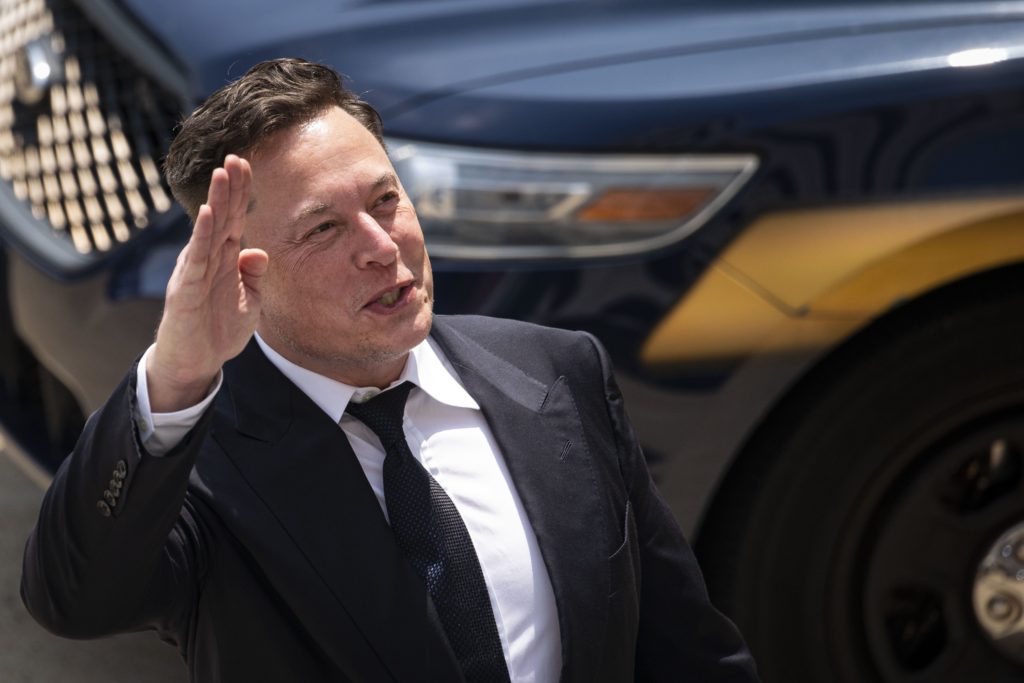
Elon Musk Floats Checkmarks, No Ads for Twitter’s Blue Service

(Bloomberg) — Elon Musk wants Twitter Inc. to offer authentication checkmarks and zero ads for users that pay for premium features on the social media service. 

After investor Michael Burry complained about losing his account’s authentication checkmark, the billionaire and new Twitter board member told Burry he’ll get it back and also suggested that the company give authentication checkmarks to all Twitter Blue users. 

Twitter’s monthly subscription service offers premium features such as some ad-free articles and the ability to retract a tweet before it’s visible to others and is available to users in the U.S., Canada, Australia and New Zealand.

Since taking a 9.2% stake and winning a board seat on Twitter, Musk has already weighed in on the lack of an edit button as well as how little celebrities like Justin Bieber and Taylor Swift post on the social media network.  

Read more on how Twitter’s board will have to contend with Musk

Musk is set to join Twitter Chief Executive Officer Parag Agrawal at a company meeting next week to address employee questions. Ahead of that, he held a poll on whether Twitter should convert its headquarters into a homeless shelter, taking aim at its return-to-office policy that allows employees the option of working remotely “forever.”   

More stories like this are available on bloomberg.com

©2022 Bloomberg L.P.
Ukraine Update: Johnson Meets Zelenskiy in Kyiv, Pledges Support

(Bloomberg) —

U.K. Prime Minister Boris Johnson made a surprise visit to Kyiv, the latest in a number of leaders traveling to the city to meet President Volodymyr Zelenskiy. Russia is pressing a land assault in the Donetsk region while attempting to complete its capture of Mariupol in the south. Reaction continues to pour in after Russia’s bombing on Friday of a railway station that killed dozens of civilians. 

Russia said YouTube had blocked its Duma-TV channel, which shows parliamentary debates and other political content. Russia’s first external default in a century now looks all but inevitable after another brutal week for the country’s finances. 

The European Union and the U.K. announced sanctions against the daughters of Russian President Vladimir Putin. European Commission President Ursula von der Leyen met Zelenskiy in Kyiv on Friday and promised more sanctions on Russia and financial aid for Ukraine. The EU mission in Kyiv reopened. 

(See RSAN on the Bloomberg Terminal for the Russian Sanctions Dashboard.) 

Key Developments

  • Russia’s War in Ukraine: Key Events and How It’s Unfolding
  • Dozens Killed as Russia Strikes Ukraine Rail Evacuation Hub
  • Nations Eye Modern Arms for Ukraine as Soviet-Era Stocks Dwindle
  • War-Crimes Justice Grinds Slowly Amid Fury Over Ukraine Killings
  • Ukraine War Has Made This D.C. Writer’s Newsletter a Must Read
  • Russia’s First Default in a Century Looks All But Inevitable Now

All times CET: 

Japan Insurers to Halt Coverage for Firms in Russia, Kyodo Says (2:46 a.m.)

Japanese non life insurers including Tokio Marine Nichido will cease acceptance of new coverage contracts for Japanese firms operating in Russia, Kyodo News said Saturday, citing people close to the matter. 

Japanese drug-maker Takeda Pharmaceutical Co. won’t conduct new clinical trials in Russia, nor make any new investments in the country, the Nikkei newspaper reported. 

NATO Seeks Stronger Eastern Flank: Telegraph (11:20 p.m.) 

NATO is working on plans for a permanent troop presence on the alliance’s eastern border, the Telegraph reported, citing an interview with NATO Secretary General Jens Stoltenberg.

The “reset” required after Russia’s invasion of Ukraine “is to move from tripwire deterrence — which is the current concept — to something that is more about deterrence by denial or defense,” the newspaper quoted Stoltenberg as saying. Decisions are expected at a summit of NATO countries in June, he said.

Italy to Shift Gas Imports Toward Algeria (11 p.m.)

Italy will boost natural-gas imports from Algeria by almost 50% under a deal to be signed on Monday during a visit by Prime Minister Mario Draghi to Algiers, according to people familiar with the matter.

Italy imported some 21 billion cubic meters of gas from Algeria in 2021 and about 29 bcm from Russia. The agreement will probably lead to Algeria replacing Russia as Italy’s biggest supplier, according to the people. 

European Embassies Start Return to Kyiv (6:10 p.m.)

European embassies that moved out of Kyiv before or during Russia’s invasion are starting to return, taking their lead from the European Union’s diplomatic mission.  

Italy indicated it will reopen its embassy shortly after Easter, ANSA reported, citing Foreign Minister Luigi Di Maio. Austria’s chancellor said embassy staff will return from a location in far western Ukraine “since the situation around Kyiv has now stabilized somewhat,” the Austria Press Agency reported. 

Russia Hits Nitric Acid Tank in Ukraine’s East, Official Says (5:02 p.m.)

Ukrainian eastern Luhansk region governor Serhiy Haiday said that Russian troops hit a tank with nitric acid near town of Rubizhne, which they have been shelling. 

Exposure to the highly corrosive acid can cause a variety of symptoms including irritation to the eyes and skin, and later lead to conditions such as bronchitis and pulmonary edema. Haiday urged residents to stay inside, close windows and doors, and use protective masks as heavy smoke was seen on the site. 

U.K.’s Boris Johnson Makes Surprise Visit to Kyiv (4:13 p.m.)

U.K. Prime Minister Boris Johnson made a unexpected visit to Kyiv, the latest in a string of leaders traveling to Ukraine capital to meet President Volodymyr Zelenskiy. 

Johnson pledged new military assistance of 120 armored vehicles and new anti-ship missile systems. That’s on top of 100 million pounds ($130 million) in equipment announced Friday, including over 800 anti-tank missiles, Javelin anti-tank systems, Starstreak air defense systems, helmets, armor and night-vision goggles. 

The U.K. said it has also liberalized tariffs on most imports from Ukraine. 


U.S. Tightens Export Restrictions on Russia, Belarus (3:45 p.m.)

The U.S. widened export controls on Russia and Belarus to effectively cut off access to more products. The restrictions were extended “to almost any sensitive dual-use technology, software, or commodities that could be used to support Russia’s war effort,” the Department of Commerce said Saturday.  

The action also puts on notice Belarus airlines and plane owners that they can’t fly or service any aircraft without U.S. authorization if more than 25% of the machinery’s value comes from American content subject to export controls.

Google Says Complying With Sanctions Laws in Duma Site (3:39 p.m.)

Alphabet Inc.’s Google said it complied with applicable sanctions in blocking the YouTube channel of the Duma, the lower house of Russia’s parliament. 

Duma TV said on its Telegram channel earlier Saturday that its account on YouTube, a unit of Alphabet Inc.’s Google, had been blocked.   

“Google is committed to compliance with all applicable sanctions and trade compliance laws. If we find that an account violates our Terms of Service, we take appropriate action,” a Google spokesperson said in an emailed statement. “Our teams are closely monitoring the situation for any updates and changes.”

Russia Complains YouTube Blocked Duma TV (2:33 p.m.)

Russian media watchdog Roskomnadzor demanded that Google immediately restore access to the Russian parliament’s YouTube channel, Duma TV, and explain the reason for imposing restrictions. 

“The U.S. authorities are forcing American IT companies that own social networks to wage an information war against our country,” said Vyacheslav Volodin, head of the Russian State Duma, according to Tass. 

Andrei Klishas, a senior lawmaker, said on his Telegram channel that “YouTube is on its way to becoming illegal in our country.” Foreign ministry spokeswoman Maria Zakharova said YouTube “has sealed its fate.” 

Zelenskiy Says Battle for Ukraine’s East ‘Crucial’ (2:30 p.m.)

President Volodymyr Zelenskiy suggested that the coming battle for Ukraine’s east could be decisive. Speaking at a joint press conference with Austrian Chancellor Karl Nehammer, Zelenskiy said that despite evidence of atrocities, Ukraine’s government is willing to continue talks with Moscow. 

“Ukraine has always said that it is ready for negotiations and will be seeking any ways to end the war,” Zelenskiy said. “At the same time, unfortunately we see preparations for an important, what some call a crucial, battle in the east of our state.”

Ukraine to Hold Hryvnia Rate Until Martial Law Ends (1:30 p.m.)

Ukraine’s central bank will hold the official hryvnia exchange rate at the current level of 29.25 per U.S. dollar at least until martial law ends, deputy governor Serhiy Nikolaychuk said. 

Thereafter it will return “gradually” to a floating rate as the central bank eases restrictions, he said in an interview on local TV. Ukraine’s government imposed martial law on Feb. 24 when Russia invaded and has extended it at least through April 25.

EU Deplores Russian Move to Oust Amnesty, Other NGOs (1:05 p.m.)

The European Union slammed Moscow for its move overnight revoke the registration of 15 widely recognized organizations, including Human Rights Watch, Amnesty International and others. 

“With this ban, the Russian political leadership continues to deny the Russian population their freedom of expression and freedom of thought,” the EU said in a statement.  

Germany’s foreign ministry, in strongly worded comments, said Russia was “again showing the world its true colors: with targeted bans and censorship, all voices that advocate transparency and truth, justice, human rights and democracy are consistently silenced.” 

Russia Cut to Selective Default by S&P (1:00 p.m.)

S&P Global Ratings cut Russia’s unsolicited foreign currency issuer credit ratings to selective default as it became the last major agency to pull sovereign ratings on the country. 

It’s the latest sign that Russia’s first external default in a century now looks all but inevitable in the fallout from its invasion of Ukraine. 

Greece Says Not Helpful to Ban Russian Gas Imports Now (12:45 p.m.) 

“It’s not helpful at present to talk about a complete ban on the import of Russian gas,” Greece’s Prime Minister Kyriakos Mitsotakis said Saturday speaking at Delphi Economic Forum. 

“We can’t replace Russian gas from one day to next. Let us look at the functioning of market and come up with realistic solutions.” 

Mitsotakis suggested that Europe repurpose 230 billion euros ($250 million) in Recovery and Resilience Facility loans to confront high energy prices and other issues. The RRF was set up to help Europe bounce back from the coronavirus pandemic. 

Ukraine Hopes to Get EU Candidacy Status in June (12:46 p.m.)

Ukraine is ready to move fast on a list of measures it needs to prepare for European Union membership and hopes to receive candidate status as early as in June, a government official said on Twitter.

Olga Stefanishyna, a deputy prime minister, commented after Friday’s visit to Kyiv of top EU officials. 

Road Transport of Commercial Cargo From Russia Ends (12:09 p.m.)

An EU sanction prohibiting the road transport of commercial cargo came into force at midnight. 

In Finland, the Customs office said Saturday it had turned away 35 vehicles attempting to enter the EU with Russian or Belarusian license plates at three border crossings, according to a statement. 

Russian or Belarusian vehicles still within the EU have seven days to exit the bloc. 

Kyiv Urges More Heavy Weapons for Upcoming Battles (10:09 a.m.) 

Ukraine continues to stress its need for heavy weapons, including combat planes, to support ground forces ahead of major battles expected in the Donetsk and Luhansk regions once Russian troops regroup. 

“We are getting more and more supplies, but I must say that these supplies are not enough,” Defense Intelligence Chief Kyrylo Budanov told CNN. “Our priority is heavy artillery and missile systems” as well as anti-defense and aviation systems. 

When asked to elaborate, Budanov mentioned “combat planes” for potential use against Russian ground forces. Ukraine’s military staff is preparing for heavy fighting in the Donbas region. 

EU Mission Reopens in Kyiv (9:34 a.m.)  

The European Union reopened its diplomatic mission in Kyiv after the delegation decamped to Rzeszow, Poland, shortly after Russian forces invaded Ukraine in late February. Moscow’s troops have now retreated from the Kyiv region. 

“We have witnessed first-hand the ability of the Ukrainian administration to ensure effective and full functioning of state and government structures, despite very difficult circumstances,” EU foreign policy chief Josep Borrell said in a statement as he visited Kyiv on Friday. 

Ukraine’s capital is cautiously coming back to life — the subway is no longer being used as a bomb shelter and city authorities are opening up stations that were closed after Russia’s invasion. 

Russian Land Corridor Hopes Still Thwarted, U.K. Says (7:10 a.m.)

Russian ambitions to establish a land corridor between Crimea and the Donbas region continue to be thwarted by Ukrainian resistance, the U.K. defense ministry said. 

Operations remain focused on the Donbas region, Mariupol and Mykolaiv, abetted by cruise missile launches into Ukraine by Russian naval forces. That includes strikes toward the Odessa region launched from the Crimean peninsula, Ukraine’s military said. 

Russia continues “storming actions,” focusing on taking control of towns such as Nyzhnye, Popasna, Rubizhne and Novobakhmutivka, and installing complete control over Mariupol, which has been under siege for a month, Ukraine said.  

More stories like this are available on bloomberg.com

©2022 Bloomberg L.P.

H.K. Billionaire Rebounds From Blunders With Win From Goto IPO

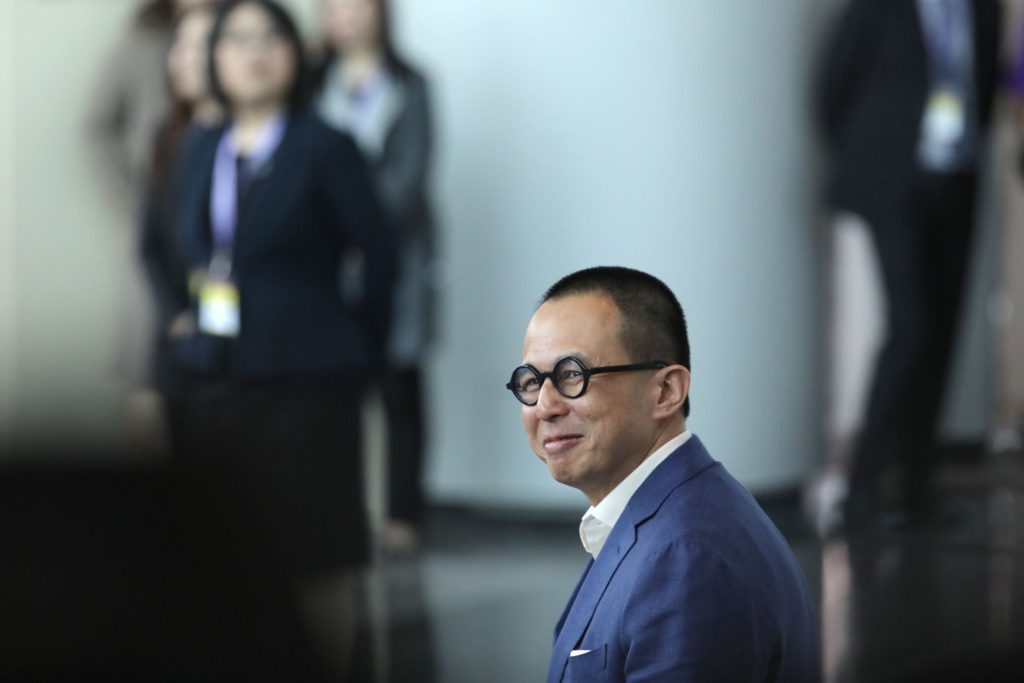
(Bloomberg) — Hong Kong billionaire Richard Li is back in the spotlight. 

The younger son of Li Ka-shing — the 93-year-old known in the city as “Superman” for his deal-making prowess — is gaining ground as an accomplished investor of his own. His latest win: GoTo Group, the Indonesian tech giant that will start trading on Monday. 

Tokopedia, the online-shopping startup that merged with ride-hailing company Gojek to create GoTo, is one of the junior Li’s first major bets in Southeast Asia, a region he’s been targeting to diversify his empire. 

Li, 55, started backing the firm in 2017 and sat on its board until 2020. He unsuccessfully tried to combine Tokopedia with one of his blank-check companies before the deal with Gojek came along, giving rise to Indonesia’s biggest tech firm. 

Now GoTo has raised $1.1 billion in one of the world’s largest initial public offerings this year. Based on its pricing, Li’s stake — owned via three vehicles — is worth $900 million. That would take his net worth to about $5 billion, according to the Bloomberg Billionaires Index.  

Li, whose fortune is mostly based on Hong Kong assets, has been increasing his investments in Southeast Asia in recent years. 

In 2019, his Hong Kong insurer, FWD Group Holdings Ltd., bought a Thai peer for $3 billion and set up a 15-year life insurance distribution agreement with Vietnam’s largest lender. The following year, he agreed to acquire a 30% minority stake in PT Bank Rakyat Indonesia’s life insurer. 

He then teamed up with PayPal Holdings Inc. co-founder Peter Thiel to establish a special-purpose acquisition company scouring opportunities in Southeast Asia. The Hong Kong billionaire has since backed three SPACs focusing on the region, two of which have listed. One of them merged with Singaporean online real estate platform PropertyGuru Pte and started trading last month.

Li also owns Southeast Asia’s second-largest streaming service. Viu had more paid subscribers than Netflix Inc. in the region last year, trailing only Disney Plus. 

By backing GoTo, the Hongkonger joined investors including Softbank Group Corp.’s Vision Fund, Alibaba Group Holding Ltd.’s Taobao China and Sequoia Capital India. He’s getting one of the biggest individual windfalls from the listing: His stake will be worth more than those of the company’s chief executive officer or its co-founders, according to Bloomberg calculations based on the IPO prospectus.  

Representatives for Li and GoTo declined to comment.

The son of the man who for years was Hong Kong’s richest person, Li has had his share of blunders. 

After a brief stunt at his father’s ports-to-retail conglomerate, the Stanford University dropout broke away to build his own empire. Things started out well: He sold a controlling stake of his first endeavor, media company Star TV, to Rupert Murdoch’s News Corp. in 1993 and founded Pacific Century Group, an investment firm with interests in areas from tech to media and financial services. 

But with the dot-com bubble burst, shares of PCCW Ltd., now its telecom and media business, began to slump. By 2009, the company had lost 99% of its market value, and when Li tried to buy it out a court ruled the plan had been manipulated. In 2005, he sold 20% of it to a state-owned firm now part of the China Unicom Group to cut down on debt after borrowing $12 billion to fund PCCW’s purchase of Hong Kong’s then dominant phone company, Cable & Wireless HKT Ltd. 

The billionaire’s comeback started when he decided to get into the insurance business. He bought some of ING Groep NV’s Asian insurance units in 2012, later creating FWD. The firm is now vying for one of the most anticipated Hong Kong listings this year.

More stories like this are available on bloomberg.com

©2022 Bloomberg L.P.

Bitcoin Extravaganza is ‘All About Eye-Catching’ Post Pandemic

(Bloomberg) — A pulsating beat was one of the constants at this week’s Bitcoin 2022 conference in Miami. That along with unlimited parties and testimonials about the life-changing powers of the cryptocurrency. 

After two pandemic-ravaged years, Bitcoiners declared they’re back in a big way, with more the 25,000 attending the extravaganza to celebrate the original digital asset as well as each other. So many parties had been set up that an Excel listing many of the soirées was passed around so attendees could plan accordingly. 

At the conference itself, companies showing off their wares amid a sea of exhibits were surrounded by physical manifestations of the excitement for the crypto universe — literally. A giant moon hung over the space to remind everyone of the heights they were striving for. And if that weren’t enough, an enormous Mars hung further afield. The message: shoot for the moon, the opportunities are boundless. 

Crypto dignitaries, including Michael Novogratz and Peter Thiel, gathered for panels in colossal rooms pumped around the clock with fog machines and dance music. Lasers of purples and greens skittered across the floor. A special section was reserved for so-called whales — these were the VIPs who got to sit on chairs and couches propped up on risers, levitating above the main crowd. 

“This is total madness,” said Marc LoPresti, managing director of The Strategic Funds. “The who’s who of the blockchain industry is here. It’s almost too big.”

In the years since Covid first broke out, the crypto industry has exploded — companies have sprouted and grown and there’s more money than ever sloshing around for projects. Bitcoin has surged more than fourfold since before the pandemic, even with it down almost 40% since setting a record high in November. 

This year’s the first since the pandemic started that many of those who have been part of the growth process are able to gather, and their zeal has rippled through the conference, said Ophelia Snyder, co-founder and president of ETF issuer 21Shares. 

“The industry is still at a stage where we can’t believe it,” Snyder said. 21Shares has expanded its workforce to 150 from 25 during the period and assets under management have ballooned to $2.5 billion from $25 million, Snyder said.

Getting around the convention required dexterity — one had to dodge swells of crowds and models-for-hire who were handing out branded crypto-company sunglasses. It was easy, also, to get distracted by the giant monitor that automatically gave everyone laser eyes as they walked by. 

The expo floor, meanwhile, was buzzing with the vibe of an amusement park. A sea of company booths encircled the perimeter; a crypto museum exhibited artworks; vendors peddling home-made products, including artworks of the Bitcoin logo, stood off in one corner. A nearly-40-foot volcano greeted visitors as they walked in, a colossal monument to El Salvador’s so-called volcano Bitcoin bond. And perpetually, the moon hovered above the crowd. 

“It’s electric — there’s so much energy. You work in the trenches every day and then you come here and see it’s actually happening,” said Bobby Zagotta, CEO of Bitstamp USA. “If you weren’t believing before, you come here and you become a believer.” 

That’s the kind of fervor attendees brought with them — a love for Bitcoin that borders on religiosity. The crypto space famously has a rabid fan base, a cohort of true believers who see Bitcoin as the salve for the world’s biggest problems. It’s a ride-or-die group whose proverbs include “Bitcoin is life” and “Bitcoin is the future.” Its preachers were there, on the stages, in the break-rooms, at the after-parties. 

“There’s this system of belief called Bitcoin maximalism and it’s a bit religious,” said Peter Smith, CEO of Blockchain.com, noting he didn’t consider himself one. “You definitely see a lot of Bitcoin-maximalist speakers on stage and they are there to preach the gospel. It’s super intense.” 

At the convention, it was a setup by novice crypto exchange Bullish in the middle of the exhibit center that drew a lot of attention: a mechanical bull, clad in a spotted calfskin, gyrated jerkily from left to right. The bull itself was another demonstration of the ethos — the future is bright. Anyone was welcome to ride it, but whoever proved to be the longest holdout won the ultimate prize: a single Bitcoin. 

“This is crypto, we’re at Bitcoin Miami — it’s all about eye-catching,” said Chris Briseno, head of marketing at Bullish and the man behind the setup. “The sky is the limit — there’s no holds barred here.” 

Miami is looking to transform itself into a crypto hub. The city’s mayor, Francis Suarez, who takes his paychecks in Bitcoin, has fully embraced digital assets and all their tentacles, hoping that Florida’s pleasant climate will continue to draw in entrepreneurs. 

Those packing up on Friday afternoon were already looking forward to next year’s gathering. Some expect it to be bigger, glitzier. Either way, “the toothpaste is out of the tube — it’s here,” said Bruce Fenton, a Bitcoin advocate who’s running for a Senate seat in New Hampshire. “You can’t uninvent Bitcoin.”

More stories like this are available on bloomberg.com

©2022 Bloomberg L.P.
Ukraine Update: Johnson in Surprise Kyiv Visit to Offer Support

(Bloomberg) —

Russia continues to press a land assault in the Donetsk region while attempting to complete its capture of Mariupol in the south. President Volodymyr Zelenskiy said the impending eastern battle will be crucial. Reaction continues to pour in after Russia’s bombing on Friday of a railway station that killed dozens of civilians and injured hundreds more. 

The European Union and the U.K. announced sanctions against the daughters of Russian President Vladimir Putin. European Commission President Ursula von der Leyen met Zelenskiy in Kyiv on Friday and promised more sanctions on Russia and financial aid for Ukraine. The EU mission in Kyiv has reopened. 

Russia said YouTube had blocked its Duma-TV channel, which shows parliamentary debates and other political content. Russia’s first external default in a century now looks all but inevitable after another brutal week for the country’s finances. 

(See RSAN on the Bloomberg Terminal for the Russian Sanctions Dashboard.) 

Key Developments

  • Russia’s War in Ukraine: Key Events and How It’s Unfolding
  • Dozens Killed as Russia Strikes Ukraine Rail Evacuation Hub
  • Nations Eye Modern Arms for Ukraine as Soviet-Era Stocks Dwindle
  • War-Crimes Justice Grinds Slowly Amid Fury Over Ukraine Killings
  • Ukraine War Has Made This D.C. Writer’s Newsletter a Must Read
  • Russia’s First Default in a Century Looks All But Inevitable Now

All times CET: 

European Embassies Starting to Return to Kyiv (6:10 p.m.)

European embassies that moved out of Kyiv before or during Russia’s invasion are starting to return, taking their lead from the European Union’s diplomatic mission.  

Italy indicated it will reopen its embassy shortly after Easter, ANSA reported, citing Foreign Minister Luigi Di Maio. Austria’s chancellor said embassy staff will return from a location in far western Ukraine “since the situation around Kyiv has now stabilized somewhat,” the Austria Press Agency reported. 

Russia Hits Nitric Acid Tank in Ukraine’s East, Official Says (5:02 p.m.)

Ukrainian eastern Luhansk region governor Serhiy Haiday said that Russian troops hit a tank with nitric acid near town of Rubizhne, which they have been shelling. 

Exposure to the highly corrosive acid can cause a variety of symptoms including irritation to the eyes and skin, and later lead to conditions such as bronchitis and pulmonary edema. Haiday urged residents to stay inside, close windows and doors, and use protective masks as heavy smoke was seen on the site. 

U.K.’s Boris Johnson Makes Surprise Visit to Kyiv (4:13 p.m.)

U.K. Prime Minister Boris Johnson made a surprise visit to Kyiv, the latest in a string of leaders traveling to Ukraine capital to meet with President Volodymyr Zelenskiy. 

Johnson pledged new military assistance of 120 armoured vehicles and new anti-ship missile systems. That’s on top of 100 million pounds ($130 million) in equipment announced Friday, including over 800 anti-tank missiles, Javelin anti-tank systems, Starstreak air defence systems and a range of helmets, armour and night-vision goggles. 

The U.K. said it has also liberalized tariffs on most imports from Ukraine as prt of its commitment to economic stability. 


U.S. Tightens Export Restrictions on Russia, Belarus (3:45 p.m.)

The U.S. widened export controls on Russia and Belarus to effectively cut off access to more products. The restrictions were extended “to almost any sensitive dual-use technology, software, or commodities that could be used to support Russia’s war effort,” the Department of Commerce said Saturday.  

The rule expands license requirements to all items on the Commerce Control List, including certain composite materials, medical products, hydraulic fluids, pumps, valves, and lower-level machine tools. 

The action also puts on notice Belarus airlines and plane owners that they can’t fly or service any aircraft without U.S. authorization if more than 25% of the machinery’s value comes from American content subject to export controls.

Google Says Complying With Sanctions Laws in Duma Site (3:39 p.m.)

Alphabet Inc.’s Google said it complied with applicable sanctions in blocking the YouTube channel of the Duma, the lower house of Russia’s parliament. 

Duma TV said on its Telegram channel earlier Saturday that its account on YouTube, a unit of Alphabet Inc.’s Google, had been blocked.   

“Google is committed to compliance with all applicable sanctions and trade compliance laws. If we find that an account violates our Terms of Service, we take appropriate action,” a Google spokesperson said in an emailed statement. “Our teams are closely monitoring the situation for any updates and changes.”

Russia Complains YouTube Blocked Duma TV (2:33 p.m.)

Russian media watchdog Roskomnadzor demanded that Google immediately restore access to the Russian parliament’s YouTube channel, Duma TV, and explain the reason for imposing restrictions. 

“The U.S. authorities are forcing American IT companies that own social networks to wage an information war against our country,” said Vyacheslav Volodin, head of the Russian State Duma, according to Tass. 

Andrei Klishas, a senior lawmaker, said on his Telegram channel that “YouTube is on its way to becoming illegal in our country.” Foreign ministry spokeswoman Maria Zakharova said YouTube “has sealed its fate.” 

Zelenskiy Says Battle for Ukraine’s East ‘Crucial’ (2:30 p.m.)

President Volodymyr Zelenskiy suggested that the coming battle for Ukraine’s east could be decisive. Speaking at a joint press conference with Austrian Chancellor Karl Nehammer, Zelenskiy said that despite evidence of atrocities, Ukraine’s government is willing to continue talks with Moscow. 

“Ukraine has always said that it is ready for negotiations and will be seeking any ways to end the war,” Zelenskiy said. “At the same time, unfortunately we see preparations for an important, what some call a crucial, battle in the east of our state.”

Ukraine to Hold Hryvnia Rate Until Martial Law Ends (1:30 p.m.)

Ukraine’s central bank will hold the official hryvnia exchange rate at the current level of 29.25 per U.S. dollar at least until martial law ends, deputy governor Serhiy Nikolaychuk said. 

Thereafter it will return “gradually” to a floating rate as the central bank eases restrictions, he said in an interview on local TV. Ukraine’s government imposed martial law on Feb. 24 when Russia invaded and has extended it at least through April 25.

EU Deplores Russian Move to Oust Amnesty, Other NGOs (1:05 p.m.)

The European Union slammed Moscow for its move overnight revoke the registration of 15 widely recognized organizations, including Human Rights Watch, Amnesty International and others. 

“With this ban, the Russian political leadership continues to deny the Russian population their freedom of expression and freedom of thought,” the EU said in a statement.  

Germany’s foreign ministry, in strongly worded comments, said Russia was “again showing the world its true colors: with targeted bans and censorship, all voices that advocate transparency and truth, justice, human rights and democracy are consistently silenced.” 

Russia Cut to Selective Default by S&P (1:00 p.m.)

S&P Global Ratings cut Russia’s unsolicited foreign currency issuer credit ratings to selective default as it became the last major agency to pull sovereign ratings on the country. 

It’s the latest sign that Russia’s first external default in a century now looks all but inevitable in the fallout from its invasion of Ukraine. 

Greece Says Not Helpful to Ban Russian Gas Imports Now (12:45 p.m.) 

“It’s not helpful at present to talk about a complete ban on the import of Russian gas,” Greece’s Prime Minister Kyriakos Mitsotakis said Saturday speaking at Delphi Economic Forum. 

“We can’t replace Russian gas from one day to next. Let us look at the functioning of market and come up with realistic solutions.” 

Mitsotakis suggested that Europe repurpose 230 billion euros ($250 million) in Recovery and Resilience Facility loans to confront high energy prices and other issues. The RRF was set up to help Europe bounce back from the coronavirus pandemic. 

Ukraine Hopes to Get EU Candidacy Status in June (12:46 p.m.)

Ukraine is ready to move fast on a list of measures it needs to prepare for European Union membership and hopes to receive candidate status as early as in June, a government official said on Twitter.

Olga Stefanishyna, a deputy prime minister, commented after Friday’s visit to Kyiv of top EU officials. 

Road Transport of Commercial Cargo From Russia Ends (12:09 p.m.)

An EU sanction prohibiting the road transport of commercial cargo came into force at midnight. 

In Finland, the Customs office said Saturday it had turned away 35 vehicles attempting to enter the EU with Russian or Belarusian license plates at three border crossings, according to a statement. 

Russian or Belarusian vehicles still within the EU have seven days to exit the bloc. 

Kyiv Urges More Heavy Weapons for Upcoming Battles (10:09 a.m.) 

Ukraine continues to stress its need for heavy weapons, including combat planes, to support ground forces ahead of major battles expected in the Donetsk and Luhansk regions once Russian troops regroup. 

“We are getting more and more supplies, but I must say that these supplies are not enough,” Defense Intelligence Chief Kyrylo Budanov told CNN. “Our priority is heavy artillery and missile systems” as well as anti-defense and aviation systems. 

When asked to elaborate, Budanov mentioned “combat planes” for potential use against Russian ground forces. Ukraine’s military staff is preparing for heavy fighting in the Donbas region. 

EU Mission Reopens in Kyiv (9:34 a.m.)  

The European Union reopened its diplomatic mission in Kyiv, lead by Matti Maasikas, after the delegation decamped to Rzeszow, Poland, shortly after Russian forces invaded Ukraine in late February. Moscow’s troops have now retreated from the Kyiv region. 

“We have witnessed first-hand the ability of the Ukrainian administration to ensure effective and full functioning of state and government structures, despite very difficult circumstances,” EU foreign policy chief Josep Borrell said in a statement as he visited Kyiv Friday with European Commission President Ursula von der Leyen. 

Ukraine’s capital city is cautiously coming back to life after the departure of Russian soldiers. The subway is no longer being used as a bomb shelter, and city authorities are opening up stations that were closed after Russia’s invasion. 

Fortum’s Time in Russia Running Out, Finnish Leader Says (9:27 a.m.)

Finnish utility Fortum Oyj’s days in Russia are numbered, Prime Minister Sanna Marin suggested on Saturday.  Asked why Fortum continues to operate in Russia after its invasion of Ukraine, Marin told YLE TV1 that “Finnish companies should leave Russia very soon.” 

The company, majority owned by the state, runs seven power plants in Russia, and its German subsidiary Uniper SE has another five units, with a book value of about 5.5 billion euros ($6 billion).  

Russian Land Corridor Hopes Still Thwarted, U.K. Says (7:10 a.m.)

Russian ambitions to establish a land corridor between Crimea and the Donbas region continue to be thwarted by Ukrainian resistance, the U.K. defense ministry said. 

Operations remain focused on the Donbas region, Mariupol and Mykolaiv, abetted by cruise missile launches into Ukraine by Russian naval forces. That includes strikes toward the Odessa region launched from the Crimean peninsula, Ukraine’s military said. 

Russia continues “storming actions,” focusing on taking control of towns such as Nyzhnye, Popasna, Rubizhne and Novobakhmutivka, and installing complete control over Mariupol, which has been under siege for a month, Ukraine said. 

Nations Eye Modern Arms for Ukraine (6:00 a.m.) 

Some supporters of Ukraine are ready to start helping it shift from Soviet-era weapons to more modern NATO-style equipment in the conflict with Russia, given the prospect the war drags on for months or even years.

Countries have largely held back on supplying state-of-the-art weaponry to avoid having to train Ukrainian forces to use it. But NATO’s eastern states risk running out of Soviet-produced equipment at some point. Some allies may start training Ukrainian troops outside the country to be able to maintain and use more sophisticated weapons.  

Russia Foreign Currency Rating Cut to SD by S&P (3:03 a.m.)

S&P cut Russia’s unsolicited long- and short-term foreign currency issuer credit ratings to Selective Default from CC/C.

“The foreign currency downgrade follows our understanding that the Russian government made coupon and principal payments on its U.S. dollar-denominated 2022 and 2042 Eurobonds in rubles when those payments were due on April 4, 2022,” S&P said.   

More stories like this are available on bloomberg.com

©2022 Bloomberg L.P.

Social Media Buzz: Dwayne Haskins, Beckham Wedding, Trump Jr.

(Bloomberg) — What’s buzzing on social media this morning: 

BUZZING COMPANIES 

Elon Musk, now Twitter’s largest individual shareholder, wondered if the social media platform “is dying,” just days after posting a poll on the site asking users if they want an edit button. (Twitter said it was already testing an edit button).

BUZZING HEADLINES

Pittsburgh Steelers quarterback Dwayne Haskins was killed on Saturday after being hit by a vehicle in south Florida, ESPN reported, quoting his agent. He was 24. 

Brooklyn Beckham and Nicola Peltz will tie the knot on Saturday at the Palm Beach, Florida, estate of Peltz’s billionaire father, Nelson, the Independent reported. Brooklyn, the eldest son of former soccer star David Beckham and Spice Girl turned fashion designer Victoria, and Peltz, an actress, will shell out a reported $3.3 million for the wedding. 

Donald Trump Jr. sent text messages to former White House chief of staff Mark Meadows after the 2020 presidential election with strategies for overturning the results and keeping his father, Donald Trump, in office, CNN reported. The messages, according to the network, were sent two days after Joe Biden was declared winner and were turned over to the House Select Committee investigating the Jan. 6 riot at the U.S. Capitol. Trump Jr.’s lawyer told CNN the messages to Meadows likely “originated” form someone else and were forwarded.

Republicans and Democrats are sharply divided on the news they trust, and that even includes weather reports. A new poll by the Economist and YouGov found a small proportion of Americans on both sides of the aisle trust only a handful of news organizations: The BBC, PBS and The Wall Street Journal. The most trusted? The Weather Channel, but Democrats have more faith in its accuracy, the poll showed. 

BUZZING TWEETS

U.K. Prime Minister Boris Johnson made a unannounced visit to Ukraine, meeting with President Volodymyr Zelenskiy in Kyiv. A Downing Street spokesperson said the trip was to show solidarity with the people of Ukraine and to discuss further financial and military aid as Ukraine continues to fight Russia’s invasion.

Jennifer Lopez and Ben Affleck are engaged again nearly two decades since they ended their first engagement. 

More stories like this are available on bloomberg.com

©2022 Bloomberg L.P.

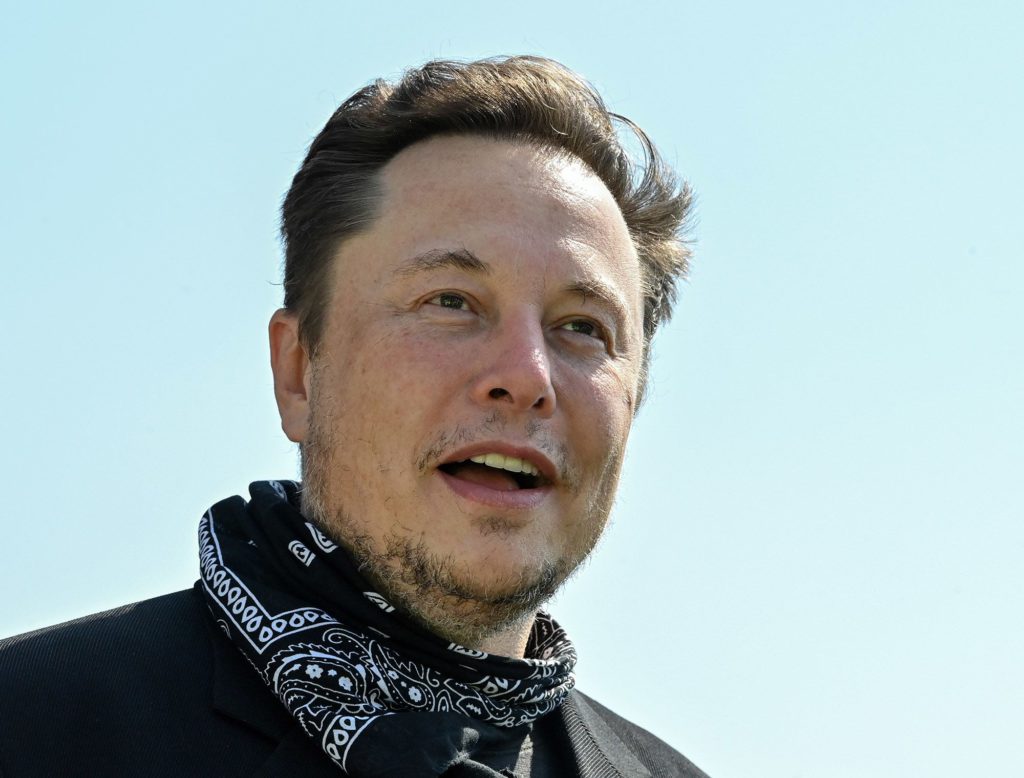
Musk Asks ‘Is Twitter Dying?’ as He Cites Bieber’s Quiet Account

(Bloomberg) — Twitter Inc.’s largest individual shareholder Elon Musk asked his followers if the social network is dying, after he bought a stake in the company now worth over $3 billion.

Citing a tweet listing the most followed Twitter accounts, the Tesla Inc. CEO pointed out that many of them are rarely active.

The billionaire pointed to pop stars Taylor Swift and Justin Bieber, who have over 200 million followers between them, but who appear rarely active on the platform.

Musk disclosed a 9.2% stake in the social media company on Monday and has wasted little time in trying to shake it up. He has since called for an edit function and criticized crypto currency bots as the “most annoying” problem.

Twitter CEO Parag Agrawal welcomed his new largest shareholder, giving Musk a seat on the board. The appointment ends the possibility of Musk mounting a takeover of Twitter, capping his ownership at 14.9% during his time on the board.

More stories like this are available on bloomberg.com

©2022 Bloomberg L.P.

Close Bitnami banner
Bitnami