

Bloomberg

Ukraine Update: U.S. Widens Export Controls; Duma YouTube Block

(Bloomberg) —

Russia continues to press a land assault in the Donetsk region while attempting to complete its capture of Mariupol in the south. President Volodymyr Zelenskiy said the impending eastern battle will be crucial. Reaction continues to pour in after Russia’s bombing on Friday of a railway station that killed dozens of civilians and injured hundreds more. 

The European Union and the U.K. announced sanctions against the daughters of Russian President Vladimir Putin. European Commission President Ursula von der Leyen met Zelenskiy in Kyiv on Friday and promised more sanctions on Russia and financial aid for Ukraine. The EU mission in Kyiv has reopened. 

Russia said YouTube had blocked its Duma-TV channel, which shows parliamentary debates and other political content. Russia’s first external default in a century now looks all but inevitable after another brutal week for the country’s finances. 

(See RSAN on the Bloomberg Terminal for the Russian Sanctions Dashboard.) 

Key Developments

  • Russia’s War in Ukraine: Key Events and How It’s Unfolding
  • Dozens Killed as Russia Strikes Ukraine Rail Evacuation Hub
  • Nations Eye Modern Arms for Ukraine as Soviet-Era Stocks Dwindle
  • War-Crimes Justice Grinds Slowly Amid Fury Over Ukraine Killings
  • Ukraine War Has Made This D.C. Writer’s Newsletter a Must Read
  • Russia’s First Default in a Century Looks All But Inevitable Now

All times CET: 

U.S. Tightens Export Restrictions on Russia, Belarus (3:45 p.m.)

The U.S. widened export controls on Russia and Belarus to effectively cut off access to more products. The restrictions were extended “to almost any sensitive dual-use technology, software, or commodities that could be used to support Russia’s war effort,” the Department of Commerce said Saturday.  

The rule expands license requirements to all items on the Commerce Control List, including certain composite materials, medical products, hydraulic fluids, pumps, valves, and lower-level machine tools. 

The action also puts on notice Belarus airlines and plane owners that they can’t fly or service any aircraft without U.S. authorization if more than 25% of the machinery’s value comes from American content subject to export controls.

Google Says Complying With Sanctions Laws in Duma Site (3:39 p.m.)

Alphabet Inc.’s Google said it complied with applicable sanctions in blocking the YouTube channel of the Duma, the lower house of Russia’s parliament. 

Duma TV said on its Telegram channel earlier Saturday that its account on YouTube, a unit of Alphabet Inc.’s Google, had been blocked.   

“Google is committed to compliance with all applicable sanctions and trade compliance laws. If we find that an account violates our Terms of Service, we take appropriate action,” a Google spokesperson said in an emailed statement. “Our teams are closely monitoring the situation for any updates and changes.”

Russia Complains YouTube Blocked Duma TV (2:33 p.m.)

Russian media watchdog Roskomnadzor demanded that Google immediately restore access to the Russian parliament’s YouTube channel, Duma TV, and explain the reason for imposing restrictions. 

“The U.S. authorities are forcing American IT companies that own social networks to wage an information war against our country,” said Vyacheslav Volodin, head of the Russian State Duma, according to Tass. 

Andrei Klishas, a senior lawmaker, said on his Telegram channel that “YouTube is on its way to becoming illegal in our country.” Foreign ministry spokeswoman Maria Zakharova said YouTube “has sealed its fate.” 

Zelenskiy Says Battle for Ukraine’s East ‘Crucial’ (2:30 p.m.)

President Volodymyr Zelenskiy suggested that the coming battle for Ukraine’s east could be decisive. Speaking in Kyiv at a joint press conference with Austrian Chancellor Karl Nehammer, Zelenskiy said that despite evidence of atrocities, Ukraine’s government is willing to continue talks with Moscow. 

“Ukraine has always said that it is ready for negotiations and will be seeking any ways to end the war,” Zelenskiy said. “At the same time, unfortunately we see preparations for an important, what some call a crucial, battle in the east of our state.”

Ukraine to Hold Hryvnia Rate Until Martial Law Ends (1:30 p.m.)

Ukraine’s central bank will hold the official hryvnia exchange rate at the current level of 29.25 per U.S. dollar at least until martial law ends, deputy governor Serhiy Nikolaychuk said. 

Thereafter it will return “gradually” to a floating rate as the central bank eases restrictions, he said in an interview on local TV. Ukraine’s government imposed martial law on Feb. 24 when Russia invaded and has extended it at least through April 25.

EU Deplores Russian Move to Oust Amnesty, Other NGOs (1:05 p.m.)

The European Union slammed Moscow for its move overnight revoke the registration of 15 widely recognized organizations, including Human Rights Watch, Amnesty International and others. 

“With this ban, the Russian political leadership continues to deny the Russian population their freedom of expression and freedom of thought,” the EU said in a statement.  

Russia Cut to Selective Default by S&P (1:00 p.m.)

S&P Global Ratings cut Russia’s unsolicited foreign currency issuer credit ratings to selective default as it became the last major agency to pull sovereign ratings on the country. 

It’s the latest sign that Russia’s first external default in a century now looks all but inevitable in the fallout from its invasion of Ukraine. 

Greece Says Not Helpful to Ban Russian Gas Imports Now (12:45 p.m.) 

“It’s not helpful at present to talk about a complete ban on the import of Russian gas,” Greece’s Prime Minister Kyriakos Mitsotakis said Saturday speaking at Delphi Economic Forum. 

“We can’t replace Russian gas from one day to next. Let us look at the functioning of market and come up with realistic solutions.” 

Mitsotakis suggested that Europe repurpose 230 billion euros ($250 million) in Recovery and Resilience Facility loans to confront high energy prices and other issues. The RRF was set up to help Europe bounce back from the coronavirus pandemic. 

Ukraine Hopes to Get EU Candidacy Status in June (12:46 p.m.)

Ukraine is ready to move fast on a list of measures it needs to prepare for European Union membership and hopes to receive candidate status as early as in June, a government official said on Twitter.

Olga Stefanishyna, a deputy prime minister, commented after Friday’s visit to Kyiv of top EU officials. 

Road Transport of Commercial Cargo From Russia Ends (12:09 p.m.)

An EU sanction prohibiting the road transport of commercial cargo came into force at midnight. 

In Finland, the Customs office said Saturday it had turned away 35 vehicles attempting to enter the EU with Russian or Belarusian license plates at three border crossings, according to a statement. 

Russian or Belarusian vehicles still within the EU have seven days to exit the bloc. 

Ukraine Urges More Heavy Weapons for Upcoming Battles (10:09 a.m.) 

Ukraine continues to stress its need for heavy weapons, including combat planes, to support ground forces ahead of major battles expected in the Donetsk and Luhansk regions once Russian troops regroup. 

“We are getting more and more supplies, but I must say that these supplies are not enough,” Defense Intelligence Chief Kyrylo Budanov told CNN. “Our priority is heavy artillery and missile systems” as well as anti-defense and aviation systems. 

When asked to elaborate, Budanov mentioned “combat planes” for potential use against Russian ground forces. Ukraine’s military staff is preparing for heavy fighting in the Donbas region. 

EU Mission Reopens in Kyiv (9:34 a.m.)  

The European Union reopened its diplomatic mission in Kyiv, lead by Matti Maasikas, after the delegation relocated to Rzeszow, Poland, shortly after Russian forces invaded Ukraine in late February. Moscow’s troops have now retreated from the Kyiv region. 

“We have witnessed first-hand the ability of the Ukrainian administration to ensure effective and full functioning of state and government structures, despite very difficult circumstances,” EU foreign policy chief Josep Borrell said in a statement as he visited Kyiv Friday with European Commission President Ursula von der Leyen. 

Ukraine’s capital city is cautiously coming back to life after the departure of Russian soldiers. The subway is no longer being used as a bomb shelter, and city authorities are opening up stations that were closed after Russia’s invasion. 

Fortum’s Time in Russia Running Out, Finnish Leader Says (9:27 a.m.)

Finnish utility Fortum Oyj’s days in Russia are numbered, Prime Minister Sanna Marin suggested on Saturday.  Asked why Fortum continues to operate in Russia after its invasion of Ukraine, Marin told YLE TV1 that “Finnish companies should leave Russia very soon.” 

The company, majority owned by the state, runs seven power plants in Russia, and its German subsidiary Uniper SE has another five units, with a book value of about 5.5 billion euros ($6 billion).  

Russian Land Corridor Hopes Still Thwarted, U.K. Says (7:10 a.m.)

Russian ambitions to establish a land corridor between Crimea and the Donbas region continue to be thwarted by Ukrainian resistance, the U.K. defense ministry said. 

Operations remain focused on the Donbas region, Mariupol and Mykolaiv, abetted by cruise missile launches into Ukraine by Russian naval forces. That includes strikes toward the Odessa region launched from the Crimean peninsula, Ukraine’s military said. 

Russia continues “storming actions,” focusing on taking control of towns such as Nyzhnye, Popasna, Rubizhne and Novobakhmutivka, and installing complete control over Mariupol, which has been under siege for a month, Ukraine said. 

Nations Eye Modern Arms for Ukraine (6:00 a.m.) 

Some supporters of Ukraine are ready to start helping it shift from Soviet-era weapons to more modern NATO-style equipment in the conflict with Russia, given the prospect the war drags on for months or even years.

Countries have largely held back on supplying state-of-the-art weaponry to avoid having to train Ukrainian forces to use it. But NATO’s eastern states risk running out of Soviet-produced equipment at some point. Some allies may start training Ukrainian troops outside the country to be able to maintain and use more sophisticated weapons.  

Russia Foreign Currency Rating Cut to SD by S&P (3:03 a.m.)

S&P cut Russia’s unsolicited long- and short-term foreign currency issuer credit ratings to Selective Default from CC/C.

“The foreign currency downgrade follows our understanding that the Russian government made coupon and principal payments on its U.S. dollar-denominated 2022 and 2042 Eurobonds in rubles when those payments were due on April 4, 2022,” S&P said. 

IMF Creates New Account to Help Ukraine (12:15 a.m.)

The International Monetary Fund is establishing a new account designed to give donor nations a secure way to provide support to stabilize Ukraine’s economy after Russia’s invasion. 

The account would receive loan or grant resources from donors in either reserve currencies or special drawing rights, the IMF’s reserve asset, and disburse support into Ukraine’s account at the fund, the institution said.

Ukraine Corn, Wheat Exports Set to Plunge Further (10:57 p.m.)

Ukraine’s grain exports are set to decline further with sea routes blocked off after Russia’s invasion, according to the U.S. Department of Agriculture. 

The USDA cut its forecast for corn exports by 4.5 million tons and wheat exports by 1 million tons, in the latest update of its closely watched World Agricultural Supply and Demand Estimates. The shortfalls will likely exacerbate the risks of food crisis in countries that rely on Ukraine and Russia for imports.

EU Formalizes Sanctions on Deripaska, Putin Daughters (9:07 p.m.)

The European Union announced sanctions against 217 individuals and 18 entities, including Russian President Vladimir Putin’s adult daughters and Oleg Deripaska, a Russian aluminum tycoon.

Deripaska, who has been under U.S. sanctions since 2018, owns an industrial conglomerate that includes a major provider of military equipment to Russia. 

Moscow Shuts Human Rights Watch, Amnesty Branches (8:27 p.m.)

The Russian offices of Human Rights Watch and Amnesty International were ordered to close, a move Amnesty’s secretary general vowed wouldn’t stop her organization’s work. 

“The authorities are deeply mistaken if they believe that by closing down our office in Moscow they will stop our work documenting and exposing human rights violations,” Secretary General Agnes Callamard said in a statement. “We will redouble our efforts to expose Russia’s egregious human rights violations both at home and abroad.”  

Russian government officials didn’t immediately respond to questions about the closings. Both groups have been critical of Russia’s actions in Ukraine. Human Rights Watch on Thursday applauded the United Nations’ decision to suspend Russia from the Human Rights Council. 

Von der Leyen Says Ukraine Belongs in ‘European Family’ (7:58 p.m.)

European Commission President Ursula von der Leyen met with Zelenskiy in Kyiv after seeing the devastation and bodies of war victims in Bucha and vowed more support — including “rolling sanctions” — from EU members against Moscow. 

“I am here with you in Kyiv today to tell you that Europe is on your side,” she said, adding that the EU would accelerate the second half of a financial aid package with 600 million euros ($650 million). Von der Leyen also delivered a folder to Zelenskiy with a questionnaire she described as an “important step toward EU membership.”  

U.S. Deploys Patriot Missile System to Slovakia (6:14 p.m.) 

President Joe Biden announced the deployment of a Patriot missile defense system to Slovakia after the NATO member said it was sending one of its S-300 air-defense systems to Ukraine. “I have directed my administration to continue to spare no effort to identify and provide to the Ukrainian military the advanced weapons capabilities it needs,” Biden said. 

Defense Secretary Lloyd Austin said the Patriot battery will be manned by U.S. forces and should arrive in the coming days. The deployment length hasn’t been fixed, he said, adding that “we continue to consult with the Slovakian government about more permanent air defense solutions.”  

More stories like this are available on bloomberg.com

©2022 Bloomberg L.P.
Nigeria’s Top Consumer Firms Tap Startup to Boost Sales

(Bloomberg) — Nigeria’s biggest consumer-goods companies have signed an agreement with e-commerce platform Omnibiz to boost sales and curb costs after Covid-19 lockdowns and smartphone use triggered a boom in online trade.

Omnibiz, a Lagos-based startup, has signed up more than 12 firms operating in the country — including Coca-Cola Co., Kellogg Co., Kimberly Clark, Nigerian Breweries, ABInBev, Indomie, Arla and Pepsi’s 7up Bottling Company. They will use the startup’s platform that helps firms track sales from distributors to retailers. 

Transactions on the firm’s Mplify product have hit $360 million, Omnibiz Chief Executive Officer Deepankar Rustagi said in an interview in Lagos. “The target is to grow it to $600 million by next year,” he said.

The opportunity for Omnibiz is to digitize the $1.2 billion annual local revenue of its new clients, which makes up about 3% of Nigeria’s total fresh produce and packaged foods market that is worth about $41 billion, according to data from KPMG. 

Last year, Omnibiz raised $3 million in seed funding. The company plans to raise about $12 million more this year to further develop its software and expand into about five countries in sub-Saharan Africa, according to the CEO.

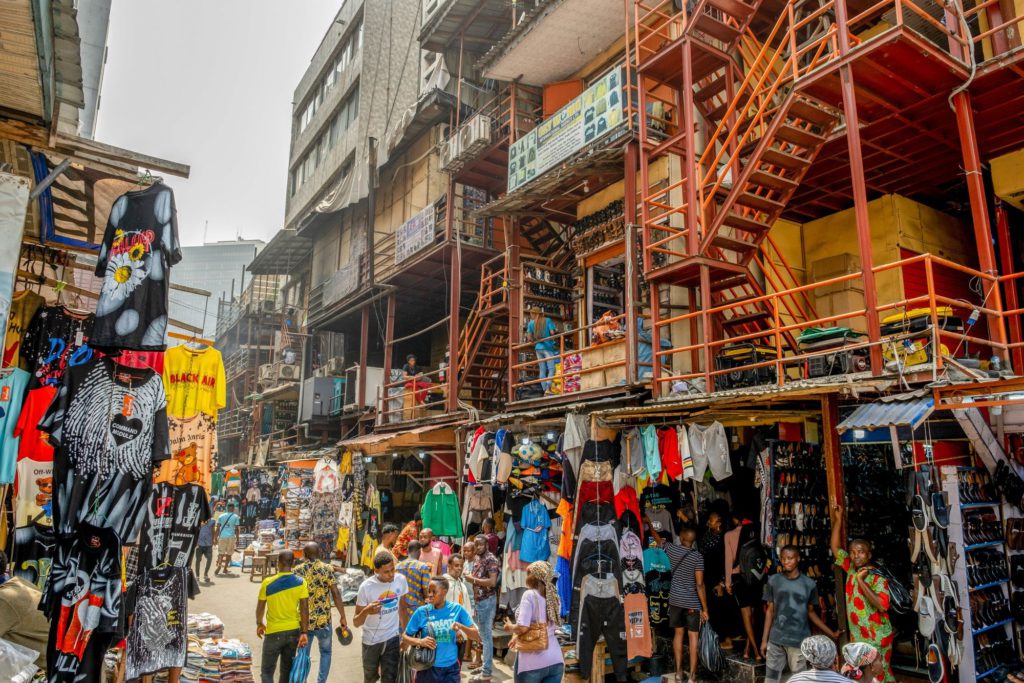
In Nigeria, Africa’s largest economy and most populous nation, most products are distributed physically, passing through informal or traditional channels like warehouses, markets, malls and kiosks. The coronavirus pandemic and lockdowns caused a shift, not only in distribution, but in how people worked, learned and more importantly shopped: going online. 

E-commerce platform Jumia Technologies AG, which has Nigeria as its biggest market, reported a 40% increase in total orders and 29% jump in active users in the 12 months to December across Africa. The pandemic also opened an opportunity for new digital payment apps like Kippa to enter the consumer digital payment space.

“The manufacturers are making more revenue because they are able to see the movement of their goods and can increase the supply at a lower cost,” said Rustagi. “We are in the business of making retail simple.” 

(Updates fourth paragraph with total worth of the FMCG market. An earlier version of this story corrects second paragraph to show that P&G, Nestle and Unilever are not part of this partnership. Also adds the other firms that signed, including Nigerian Breweries, Kimberly Clark, Pepsi’s 7up Bottling Company, ABInBev, Indomie and Arla)

More stories like this are available on bloomberg.com

©2022 Bloomberg L.P.

The War in Ukraine Has Made This D.C. Writer’s Newsletter a Must Read

(Bloomberg) — Since the start of the war in Ukraine, journalist Julia Ioffe has emerged as one of the most prominent, incisive and in-demand experts on the horrific conflict. 

She is a regular guest on cable news, frequently popping up to do hits on CNN and MSNBC. She’s provided analysis on CBS’s “The Late Show with Stephen Colbert,” on HBO’s “Real Time with Bill Maher” and on PBS’s “Frontline.” She speaks on the radio and on podcasts, and sometimes appears live on stage. Recently, a crowd of people packed into the Comedy Cellar in New York to see her participate in a policy debate about whether the U.S. and NATO were responsible for the war in Ukraine.

But foremost, Ioffe is renowned for her trenchant writing about the people, culture and politics of Russia, a particularly crucial skillset at this current moment. 

“She brings something unique to the table and that’s her deep personal investment in Soviet and Russian life,” said David Remnick, the editor of the New Yorker, himself a longtime chronicler of Russian politics. “At the same time, because of her reporting there and her network of friends and sources, she’s extremely knowledgeable. I read what she writes with enormous interest always.”

Outbreaks of war inevitably result in breakout voices from the news industry, often drawn from whatever medium happens to be embraced by news consumers at that particular moment in history. From the radio dispatches of World War II, emerged Edward R. Murrow. From the harrowing newspaper dispatches on the Vietnam War, came venerated writers like David Halberstam and Neil Sheehan. From the explosive round-the-clock live coverage of the Persian Gulf War, arose a prominent crop of cable TV correspondents like Bernard Shaw and Christiane Amanpour. 

Ioffe, for her part, is very much a new and specific archetype of the 2022 media landscape. Every few days, her latest piece on Russia’s invasion of Ukraine is delivered not to the doorstep of subscribers but to their inbox. She is a newsletter writer. 

Since last year, Ioffe (pronounced YA-FEE) has served as the Washington correspondent for Puck, a startup that aims to provide the inside story of Washington, Wall Street, Hollywood and Silicon Valley, primarily via newsletters for paying subscribers written by a handful of prominent, social-media-savvy authors. Ioffe and Puck’s other founding partners own part of the business and get paid a bonus based on how many subscriptions they generate. Puck, she says, has offered her more freedom than traditional publications.

“Whenever I’ve worked at big legacy places I’ve always had my wings clipped,” Ioffe said in an interview. “I start tripping over my feet at places like that. I’m not very good at playing internal politics and managing bureaucracies and figuring out who to CC on an email. I just want to do what I’m good at, which is reporting and writing.”

Since early December, her newsletter subscriber list has quadrupled.

Puck subscriptions, which cost $100 a year, are growing by 65% each month, driven in part by sales to businesses like law firms and media companies, according to co-founder Jon Kelly. He declined to disclose the total number of Puck subscribers. But the surge of interest in Ioffe hasn’t hurt. After one of her recent TV appearances, a university reached out to order Puck subscriptions for all its students, faculty and full-time employees, Kelly said.

“All of this attention on Julia has expanded her intellectual footprint but it also has expanded awareness of other Puck journalists,” Kelly said.

In her newsletter, Ioffe interviews people who offer a unique perspective on the war. Recent iterations have featured a Russian pollster, Biden’s former Ukraine adviser and a young actor from Moscow who is educating Russians through social media about what’s happening in Ukraine. From Washington, she conducts interviews in her native Russian and often stays up late or wakes up early to speak with sources in Moscow, which is seven hours ahead.

“I’m not on the ground in Ukraine and not in Russia, and I’m very cognizant of the limitations of that,” she said. “I’m trying to give the reader what I can offer, which is a deep knowledge of the history of the place, of the culture of the place.”

“It sucks to have a big moment in your career around something so horrible.”

Ioffe, 39, was born in Moscow, prior to the breakup of the Soviet Union. Shortages of food and other goods were common when she was growing up. Her father is a computer programmer. Her mother is a doctor. When she was 7, she and her family, who are Jewish, fled to the U.S. after hearing rumors that there would be violent anti-Semitic riots during a celebration of Russia’s Christianity. The Ioffes landed in the suburbs of Baltimore. For years afterwards, during lean times, they marked the day of their arrival in the U.S. by splurging on dinner at Bennigan’s. 

After graduating from Princeton with a degree in history and a minor in Russian studies, Ioffe started her journalism career as a fact-checker for the New Yorker. From 2009 to 2012, she returned to Russia and began freelancing for magazines. Miriam Elder, who met Ioffe while they were both reporters in Russia, said her stories countered the prevailing narrative of Russia being “all powerful.”

“She goes deeper, and she questions everything,” said Elder, now an editor at Vanity Fair. “She was very good at cutting through the bulls—.”

David Hoffman, a friend and former Moscow bureau chief for the Washington Post, said Ioffe’s breakthrough moment was a 2011 profile that she wrote for the New Yorker about Alexey Navalny, then a blogger and crusader against Russian corruption who was relatively unknown to Western audiences. 

“When that piece appeared, I knew none of that,” Hoffman said. “I thought, ‘Wow, this is somebody who is really running deep in a place that I thought I was.’”

Ioffe’s stories caught the eye of Susan Glasser, who at the time was editor in chief of Foreign Policy magazine. Glasser asked her to write regular dispatches for the magazine, resulting in a memorable piece in 2011 that revealed the identities behind a popular Twitter account lampooning the Russian president.

“I just think she is a unique talent,” Glasser said. “It’s a wonderful benefit for all of us that she has dedicated her career to explaining and straddling these two worlds that she knows and connecting them with each other, especially in the middle of this crisis.”

Ioffe has connections to both sides of the war. Part of her family is originally from Ukraine. She still has friends in Russia, though many have recently fled. 

“I can’t help but see the tragedy of this through that lens,” she said. “The country I was born in is doing this to a country where my people are originally from.”

All of which has made Ioffe feel deeply conflicted about the circumstances of her current turn in the spotlight.

“I feel really weird about it,” Ioffe said. “It sucks to have a big moment in your career around something so horrible.”

On Twitter, where she has more than 400,000 followers, Ioffe posts frequently about the war, occasionally in Russian, and recently helped raise money for an independent Russian TV news outlet that was forced to shut down. At times, she’s faced intense attacks. After she wrote a profile of Melania Trump for GQ magazine in 2016, she received death threats and anti-Semitic messages, and people tried to send coffins to her house. Things have calmed down in the Biden era, she said, and any social media criticism she gets these days she tries to shrug off.

“It doesn’t help to be a woman, it doesn’t help to be Jewish, it doesn’t help to have a big mouth and you say things that not everyone agrees with,” Ioffe said. “Even if it’s stressful, it’s part of the job. It’s a small fraction of the interactions that I have online.”

Ioffe often expresses pessimism about the war in Ukraine. After she explained a series of worst-case scenarios on Colbert’s show, he  joked, “Thank you for all the cheer.” Her newsletter is titled, “Tomorrow Will Be Worse.”

“To me, it’s just analysis,” Ioffe said. “People say ‘Oh you’re so Russian, it’s so dark and cynical.’ But I think I’m just being realistic about where things can go.”

More stories like this are available on bloomberg.com

©2022 Bloomberg L.P.
How Ford’s Electric F-150 Pickup Truck Will Cut Carbon Pollution

(Bloomberg) — As the top-selling model line in the U.S. for 40 years, Ford Motor Co.’s F-Series pickups hold special weight in the auto ecosystem. The lineup, led by the F-150, generates more than $40 billion in annual revenue. Only one other U.S. product—Apple Inc.’s iPhone—tops F-Series sales.

Given this, Ford’s decision to electrify the F-150 stands as one of the boldest strategic decisions in 21st century business. An electric F-150, more than any other vehicle, will persuade rural America to go green, leading the way for almost every automaker that finds itself challenged by the electric transition.

When now-Chief Executive Officer Jim Farley announced plans in early 2019 to sell an electric version of the F-150 — later called Lightning — he forced the hand of almost every boss in the business. Within months, several rivals—including General Motors, Stellantis, and Tesla—announced a parade of electric trucks and SUVs. “If Ford can pull this off, they’ll move the entire electric vehicle market,” says Dan Albert, automotive historian and author. “This is a cultural moment for America.”

Regardless of how many F-150 Lightnings make it off the lot, the truck arguably already has accelerated the adoption of electric vehicles in both the supply side and the demand side.

“This vehicle is a test for adoption of electric vehicles,” Farley said when the truck was unveiled last May. “We should all watch very carefully how this does.”

28 Years to Net-Zero?

Electrifying cars, especially SUVs and pickups, will help the U.S. reach its goal.

  • 2022 First deliveries of the F-150 Lightning are expected in April or May. Ford has 200,000 reservations.
  • 2026 Date Ford set to reach annual EV production of 2 million.
  • 2030 Goal leading automakers set for 40%-50% of new-vehicle sales to be electric. President Joe Biden’s target is half.
  • 2040 Sales of new gas-powered vehicles are set to end as Ford, GM, Mercedes, and others will sell only zero-emission cars.
  • 2050 The U.S. government’s goal for economy-wide net-zero emissions.

“We need to accelerate the adoption of these vehicles and consumers need to respond to get us even close to achieving carbon reduction targets,” says Greg Keoleian, director of the University of Michigan’s Center for Sustainable Systems and co-author of a recent emissions study Ford commissioned. “Decarbonization of the auto sector is very critical.”

A Greener Set of Wheels

U.S. greenhouse gas emissions in 2019 totaled 6.6 billion metric tons, with the transportation ­sector the worst polluter. Sedans, SUVs, and pickups accounted for 1.1 billion metric tons. According to a study from the University of Michigan’s Center for Sustainable Systems commissioned by Ford, over its lifetime, a ­battery-powered vehicle will cut emissions by: 

  • 74 metric tons for a pickup
  • 56 metric tons for an SUV
  • 45 metric tons for a sedan

U.S. sales of new cars and light trucks in 2021 totaled 14.9m up about 3% from 2020, according to Cox Automotive. Of the total, 1.5 million were hybrid, plug-in hybrid, or electric vehicles.

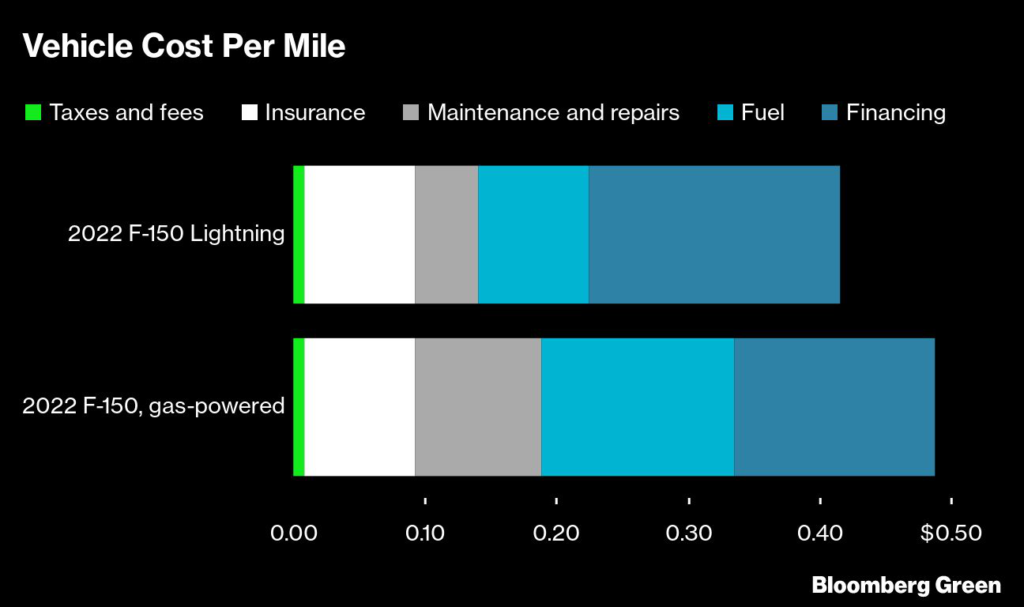
Costs for Lightning owners will be considerably lower than for those owning the F-150. The $39,974 base price (factoring in federal subsidies) is 17% less than that of an entry-level F-150, according to Atlas Public Policy.

More stories like this are available on bloomberg.com

©2022 Bloomberg L.P.

China’s Nio Delays Car Deliveries as Suppliers Face Covid Halts

(Bloomberg) — Chinese EV automaker Nio Inc. said it halted car production and delayed deliveries as the coronavirus outbreak in China forced many of its suppliers to suspend manufacturing.

Deliveries will be delayed for a number of customers in the near term, a spokesperson at Shanghai-based Nio said. Several of the company’s suppliers remain offline, including those in Jilin and Shanghai, both of which are under lockdown as they battle the highly-infectious omicron variant, the company said.

The disruption is yet another instance of economic impact from the nation’s strict Covid-zero policy, which it’s sticking to despite daily case counts rising to almost 26,000 on Saturday.

Tesla Halted, Chips Pile Up as Shanghai Lockdown Upends Business

Tesla Inc. shut down its factory in Shanghai because of the virus situation in China’s financial hub, which has worsened despite heavy restrictions on its 25 million inhabitants. Global automakers from Toyota Motor Corp. to Volkswagen AG have also faced production halts due to the latest outbreaks in the world’s second-biggest economy. 

More stories like this are available on bloomberg.com

©2022 Bloomberg L.P.
Guinea Gives Bauxite Miners May Deadline for Alumina Plant Plans

(Bloomberg) —

Guinea’s ruling military junta leader set a deadline of May for bauxite mining companies considering building alumina refineries in the West African country to submit timelines for their development. 

Mamadi Doumbouya gave the instruction during a meeting with miners, saying the policy is intended to increase the country’s revenue from the industry.

“From now, the transformation of raw materials on site becomes unavoidable, it is imperative and there must be no delay,” Doumbouya said in remarks televised late Friday by state-broadcaster Radio Television Guineenne.

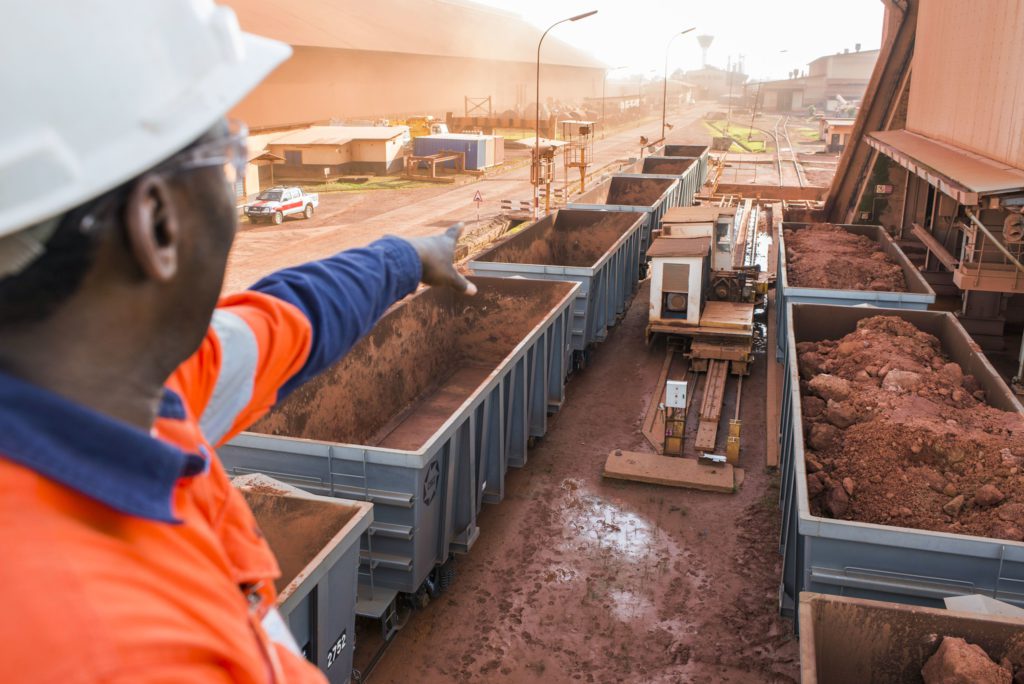
Guinea holds the world’s largest reserves of bauxite, the raw material processed into alumina, which in turn is used to make aluminum. A dozen companies including Guinea Alumina Corp., a unit of Emirates Global Aluminium PJSC, and China-backed Societe Miniere de Boke have proposed setting up refineries.

Africa’s Top Bauxite Exporter Guinea Posts 4% Rise in Shipments

The government must evaluate these proposals and help facilitate construction of the plants, Doumbouya said.

“Compliance with agreements remains non-negotiable for us and any failure to respect deadlines on refinery construction will result in penalties,” he said.

More stories like this are available on bloomberg.com

©2022 Bloomberg L.P.
Telecom Italia’s Single Network Plan Open to KKR, CEO Tells Sole

(Bloomberg) —

A plan by Telecom Italia SpA to merge its landline assets with those of state-backed rival Open Fiber SpA is also open to U.S. private equity firm KKR & Co., Chief Executive Officer Pietro Labriola told Il Sole 24 Ore.

KKR has said it’s open to exploring new deals with Telecom Italia after being rebutted this week in efforts for a full takeover of the company. It’s already a key investor in Telecom Italia’s FiberCop fiber unit.

Labriola said “of course” KKR could take part in the new single network company with Telecom Italia and Open Fiber. The agreement “is potentially open to the involvement of third party financial investors” and KKR has already “told us they are interested in other projects,” the CEO said in an interview with the Italian daily on Saturday.

That follows Telecom Italia’s board unanimously ruling on Thursday that it would not grant KKR the due diligence requested by the U.S. firm to go ahead with its 10.8 billion euro ($11.8 billion) takeover proposal. 

Labriola reiterated in the interview that the company plans to define a proposal for the spin-off of a single fiber network by the summer, adding that the new business plan will be presented at a Capital Markets Day before first-half results at the end of July.

Read More: Telecom Italia Grid Spinoff Feasibility to Be Defined by Summer

Separately, Telecom Italia said in a statement on Saturday that it appointed Eugenio Santagata as its chief public affairs & security officer, reporting directly to the CEO. Santagata has “an extensive and significant experience” in the defence sector and has dealt with private sector cyber security and security systems for over 15 years.

More stories like this are available on bloomberg.com

©2022 Bloomberg L.P.

Finnish Premier Signals Fortum Will Have to Exit Russia Soon

(Bloomberg) —

Finland’s Prime Minister Sanna Marin on Saturday signaled that utility Fortum Oyj’s days in Russia are soon numbered.

The Finnish company that’s majority owned by the state, runs seven power plants in Russia, and its German subsidiary Uniper SE has another five units, with a book value of about 5.5 billion euros ($6 billion). Fortum also owns the nation’s largest wind and solar portfolio. 

Asked why Fortum still continues to do business in Russia after the country on Feb. 24 launched an invasion of Ukraine, Marin said “Finnish companies should leave Russia very soon.” 

Speaking in an interview on YLE TV1 on Saturday, Marin also said she is aware that’s not been easy for them from a legal standpoint.

Fortum in early March said it will end all new investment projects and cut the number of its power plants in Russia. While it stopped short of announcing a full exit, the move marks a significant retrenchment for a company that earns about a fifth of its operating income in the country.

Fortum was formed in 1998 from the merger of two state-owned power and oil companies in Finland. That year, it bought a stake in Russian utility OAO Lenenergo and further acquisitions since then have boosted the company’s market share. Fortum and Uniper now employ 7,000 people in Russia.

Another Finnish company, Nokian Renkaat Oyj, whose biggest owner is state asset manager Solidium Oy, makes the bulk of its passenger-car tires in Russia. The company said on Saturday it’s studying newly imposed European Union sanctions that prevent it from bringing tires from Russia into the bloc.

The tire maker continues to increase production capacity at factories in Nokia, Finland, and Dayton, Tennessee, but has said it’s concerned that pulling back from Russia could cause its large factory near St. Petersburg to fall “into the wrong hands,” Chief Executive Officer Jukka Moisio said March 21.

“I believe that Finnish companies, both state-owned and others, will leave Russia, and do that as soon as it is possible,” Marin said. “My message is that all western companies should leave Russia.” 

More stories like this are available on bloomberg.com

©2022 Bloomberg L.P.

Filmer of Ethiopia Famine Is Face of NFT to Archive African Past

(Bloomberg) — Kenyan photojournalist Mohamed Amin is best known for capturing the world’s attention with images of Ethiopia’s 1984 famine that inspired the Live Aid concerts. 

Now five of his images are set to be the face of a more modern phenomenon: an NFT to raise awareness and $250,000 in startup funds to archive African cultural work and history. 

“What we found out is that there are very few archivists in Africa,” said Salim Amin, the son of Mohamed, who died in 1996 after his plane was hijacked and crashed in the Indian Ocean. “We are losing so much of our history because nobody is really interested in putting it together.”

The plan is being driven by Salim and the Kenyan foundation that bares his father’s name in collaboration with renowned African NFT artist Osinachi, whose work has sold for hundreds of thousands of dollars. An NFT, or nonfungible token, is a unique asset — often digital art — that is registered on a blockchain. 

Throughout his decades-long career, Mohamed documented the wars and coups that accompanied the rise and fall of many African leaders as well as the continent’s cultures, flora and fauna. While most famous for his Ethiopia famine filming, he lost an arm during an explosion while covering that country’s civil war in 1991. He also travelled and worked extensively in the Middle East.

Archive Teaching

Funding from the NFT will be used to both preserve African history and teach people around the continent how to archive, Salim said. 

The 51-year-old is also collaborating with Andrew Berkowitz, a web3 entrepreneur who co-founded online platform Socialstack, on a decentralized autonomous organization called AfrofutureDAO, which aims to support African NFT artists by commissioning them for work and offering a platform for distribution. Part of the profit from that venture will also be used to preserve the continent’s historical artifacts, Salim said. 

There are valuable items around the continent — including in museums and owned by families — that are not archived and risk getting lost, according to Salim. “They don’t know what to do with it. It is just sitting in a box in the basement. So, we are hoping after we finish ours, we can go out there, collect, digitize and monetize it.”

Properly archiving his father’s work will cost about $3 million, Salim said. 

“My long term goal is to make it available for educational use, that can be given free of charge to every school in Africa,” Salim said.

More stories like this are available on bloomberg.com

©2022 Bloomberg L.P.

LVMH Eyewear Virtual ‘Try-on’ Tool Draws Biometric Privacy Suit

(Bloomberg) — Luxury giant LVMH’s North America unit was accused in a lawsuit of unlawfully collecting biometric data about shoppers who use its online tool to virtually “try on” sunglasses and frames.

The company “collects detailed and sensitive biometric identifiers and information, including complete facial scans, of its users through the Virtual Try-On tool, and it does this without first obtaining their consent, or informing them that this data is being collected,” according to the proposed class-action lawsuit filed Friday in Manhattan.

Representatives of Louis Vuitton North America Inc. didn’t immediately respond to requests for comment.

Shoppers looking at sunglasses or frames on LVMH’s website are offered the option of using the Virtual Try-On tool. The tool turns on the customer’s webcams and creates a live video of the person wearing the eyewear they selected.

The data collected by the tool is translated into computer code and sent to an outside server, where it is collected and stored, according to the suit.

The complaint cites the Illinois Biometric Privacy Protection Act, which prohibits collecting and storing biometric data without consent and carries fines of $1,000 to $5,000 per violation.

The case is Theriot v v. Louis Vuitton North America Inc., 22-cv-02944, U.S. District Court, Southern District of New York (Manhattan).

More stories like this are available on bloomberg.com

©2022 Bloomberg L.P.

Close Bitnami banner
Bitnami