Bloomberg

Dorsey’s Block to Mine Bitcoin at Tesla’s Texas Solar Plant

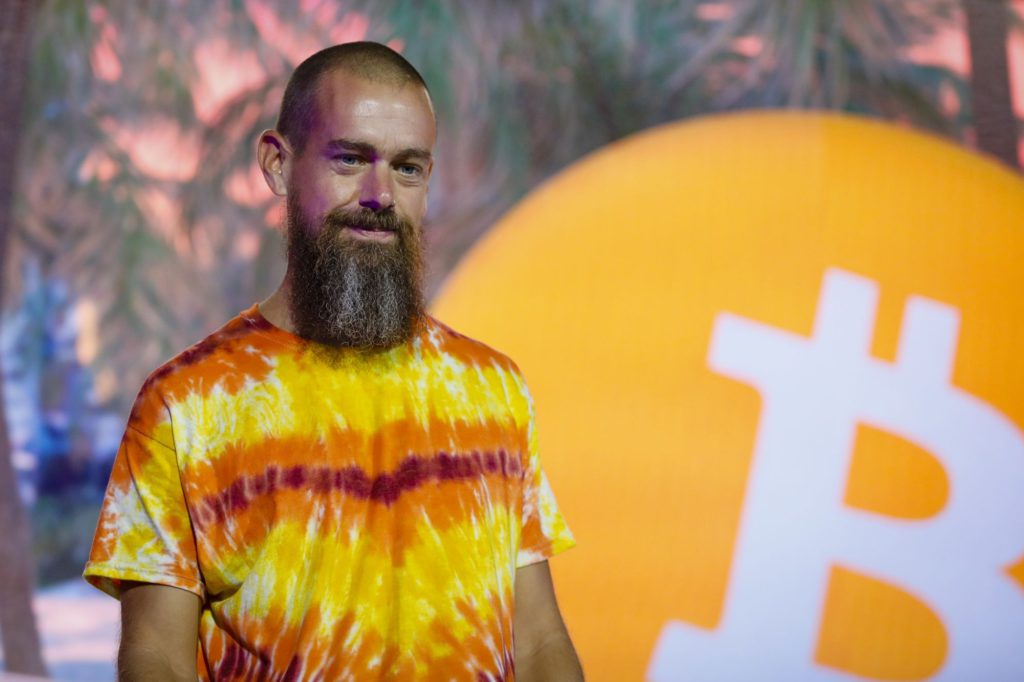
(Bloomberg) — Jack Dorsey’s Block Inc. and crypto firm Blockstream Corp. plan to mine Bitcoin at Tesla Inc.’s solar plant in Texas. 

The electric car manufacturer’s 3.8 megawatts solar PV and 12 megawatt-hour Megapack will power the mining facility, Adam Back, chief executive of Blockstream, said at the Bitcoin Conference 2022 in Miami. Such facilities can store energy and stabilize power output from intermittent wind and solar generations. 

The move came after Block, which is formerly known as digital payment company Square, secured a purchase from Intel Corp.’s Bitcoin mining chip. Buyers of the chip can potentially either make their own mining rigs or receive an assembled machine from the chipmaker. 

Dorsey revealed the plan to decentralize Bitcoin mining and make the token’s network more secure with Block earlier this year. 

The central and western parts of Texas are among the regions with rich wind and solar power resources. Bitcoin miners have flocked to the region, set up mines or expand transmission capacity in the past year.  

More stories like this are available on bloomberg.com

©2022 Bloomberg L.P.

BMW, Volkswagen Suppliers Face Scrutiny Over Ties to Xinjiang

(Bloomberg) — Some of the world’s biggest automakers are linked through their suppliers to labor programs in China’s Xinjiang region that experts have flagged as coercive, according to a new report by Horizon Advisory, a U.S.-based consultancy.

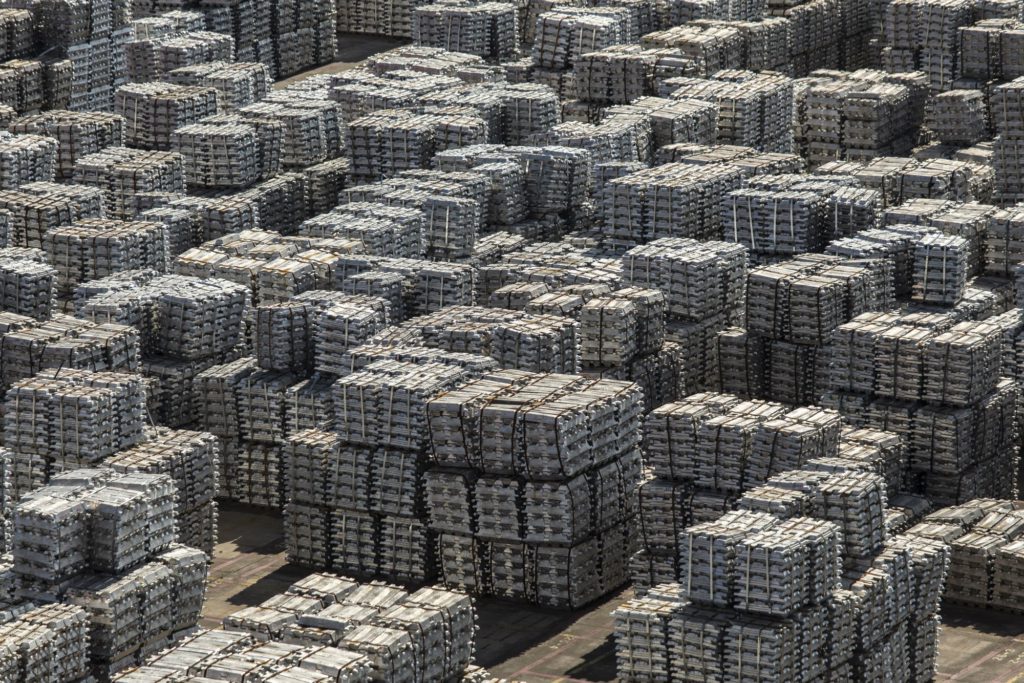
The concerns center around the production of aluminum, raising questions for another key industry about alleged human rights abuses in its supply chain.

Suppliers to BMW AG, General Motors Co. and Volkswagen AG, as well as to China-based electric vehicle manufacturers including Nio Inc. and BYD Co., are linked to controversial labor programs in Xinjiang, according to the study.

READ MORE: Secrecy and Abuse Claims Haunt China’s Solar Factories in Xinjiang

The complexity of modern supply chains — in which raw materials can pass through multiple manufacturers or countries before they’re used in finished products — means it’s difficult to make definitive links between Xinjiang’s plants and major brands. And China has repeatedly rejected international criticisms of the work programs, calling allegations of forced labor “the lie of the century” and defending its policies as an effort to reduce poverty and unemployment.

Even so, the U.S. and allies have sanctioned several individuals and entities with ties to Xinjiang and curbed imports of cotton products, tomatoes and solar equipment. From July, the Uyghur Forced Labor Prevention Act will ban goods from Xinjiang unless U.S. importers can prove they aren’t made with forced labor.

Volkswagen said it has no evidence of forced labor by its Xinjiang suppliers and is not aware of any aluminum from the region being used in its manufacturing or products. The company said any allegations are immediately investigated and contracts will be terminated if issues can’t be remedied.

BMW said all its direct suppliers are contractually obligated to comply with health and safety standards and verify that sub-suppliers also meet those requirements. The company “continuously monitors compliance” through a “variety of assessments,” a spokesperson said. 

A BYD spokesperson said it “enforces rigorous oversight of its entire supply chain” including by conducting regular labor audits. Representatives for GM, Nio, and China’s foreign ministry didn’t immediately respond to a request for comment.

“There’s going to be a huge challenge to a big swath of industries,” said Nathan Picarsic, a co-founder of Horizon who is scheduled to offer testimony Friday at a hearing of the Forced Labor Enforcement Task Force. Company supply chains still depend on Chinese industrial policies which make “forced labor part and parcel of business as usual” for producers in Xinjiang, he said.

Aluminum hasn’t so far been a focus of international attention on Xinjiang, but the region accounted for about 9% of global production. The country as a whole provided about 60% of the world’s aluminum in 2020, and transportation, including the auto industry, was its second-largest consumer.

Horizon’s report cites government and corporate documents that tie metal operations controlled by eight companies to labor transfer programs or to Xinjiang Production and Construction Corps — one of the state-linked organizations that’s been sanctioned by the U.S. government over alleged human-rights abuses.

Though documents alone can’t provide conclusive evidence of involvement in forced labor, the study on the aluminum sector found more indicators of complicity than in any previous case, said Emily de La Bruyere, also a co-founder of Horizon.

The report highlighted Xinjiang Zhonghe, a producer of high-purity aluminum. The company is as a participant in vocational programs for rural migrant workers and in job transfer training which human rights advocates have flagged as key indicators of forced labor.

Xinjiang Zhonghe is a supplier to auto companies including GM and BMW’s joint venture firms, according to its website. Beijing WKW Automotive Parts Co. is also a client, according to Bloomberg data, and a supplier of car parts and exterior trims to VW’s China venture, BMW, BYD and Nio.

Xinjiang Zhonghe and Beijing WKW didn’t immediately respond to requests for comment.

In another example, the report identified Shandong-based Xinfa Group, which has a wheel manufacturing unit that supplies heavy duty truck, luxury car and electric bus manufacturers with key sales networks in the U.S., Japan, South Korea and Canada, according to its website. It also owns Xinjiang Sixth Division Aluminum Co., which was established through a 2009 agreement with the XPCC, filings reviewed by Horizon show, and — in one specific example — is documented as having sought 400 workers in 2020 from an employment transfer guidance station at Wugongtai Town, identified by advocacy groups as a coordinator of forced labor programs.

Xinfa didn’t immediately respond to a request for comment.

Human rights groups and a panel of United Nations experts have for years raised concerns that minority groups in Xinjiang have been subject to mass detention. Millions of laborers in the region are transferred each year as part of government-sponsored labor programs, according to a Bloomberg News analysis of official data.

“For decades, the free world has dismissed the Chinese Communist Party’s outrageous slave labor practices in order to take advantage of its cheap manufacturing,” said Florida Senator Marco Rubio, who has pushed for tougher action on forced labor. The study on aluminum operations “exposes the pervasive nature of China’s forced labor abuses in Xinjiang and shows just how reliant major international companies are on slave labor,” he said.

Among the suppliers named by Horizon, only Tianshan Aluminum Group Co. is publicly held. Its Xinjiang-based unit is named in government documents as an employment poverty alleviation base, indicating its role in labor programs, and multiple local reports detail specific transfers, according to Horizon. Recruitment materials also describe the firm’s support for the XPCC, the consultancy said. Tianshan didn’t immediately respond to requests for comment.

Most of Tianshan’s biggest investors are Chinese, according to data compiled by Bloomberg. But Norges Bank Investment Management took a position in late 2021 that established it as among the company’s 50 biggest shareholders, according to Bloomberg data.

“As an investor, we expect companies to respect human rights and take human rights into account in their operations,” Norges Bank Investment Management said in a statement, though it declined to comment on individual investments or specifically on Tianshan.

(Adds BMW response in 7th paragraph.)

More stories like this are available on bloomberg.com

©2022 Bloomberg L.P.

Kenyan Mobile Money Gets Boost in Shift to Seamless Payments

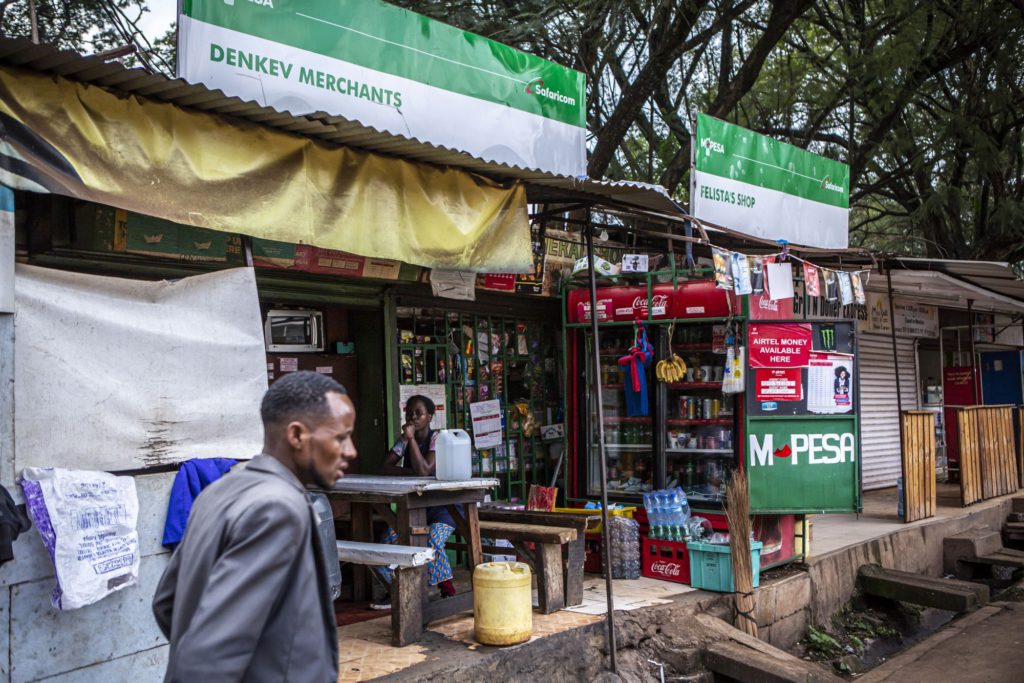
(Bloomberg) — Kenya’s cellular-phone operators agreed to allow mobile payments across their networks, joining an effort by the central bank to integrate the nation’s payment systems.

The first phase of “merchant interoperability” will enable Airtel Networks Kenya Ltd. and Telkom Kenya Ltd. users to pay for goods through Safaricom Plc’s M-Pesa, the biggest mobile-money platform in the East African country, the three companies said in a statement on Friday.

The next step will allow clients to make payments from Safaricom’s M-Pesa to till numbers on the Airtel Money and Telkom’s T-Kash platforms.

Kenya’s central bank is seeking seamless payments across all systems so clients can send and receive money from any financial institution. Mobile money is widely used in the region’s biggest economy, with transactions carried out at agents jumping to 60% of gross domestic product last year from 23% in 2010. 

There were more than 2.2 billion transactions valued at more than 6.9 trillion shillings ($60 billion) in 2021, according to the Central Bank of Kenya. 

“We have over 400,000 merchants,” Safaricom Chief Financial Services Officer Sitoyo Lopokoiyit said in an interview. “Over 11 million customers use this service on a monthly basis and 100 billion shillings goes to this service on a monthly basis.”

The move will likely be positive for Safaricom, the country’s biggest company, because more than 90% of mobile-money transactions go through M-Pesa, said Silha Rasugu, associate vice president for utilities, telecommunications, oil and gas at EFG Hermes Kenya.

More stories like this are available on bloomberg.com

©2022 Bloomberg L.P.

U.K. Brexit Border IT System Plagued by Outages Amid Queues

(Bloomberg) —

A key part of the U.K. government’s post-Brexit border IT system has suffered outages this week, adding to the headache for traders already facing long queues on the way to the country’s busiest port.

The problems have affected the Goods Vehicle Movement Service — which allows companies to file customs forms electronically before they move goods between Britain and the European Union — Her Majesty’s Revenue and Customs said in a statement on Thursday. Firms have been asked to use alternative documentation as part of an effort to “ensure minimal disruption,” HMRC said.

In an update on Friday, the U.K.’s tax authority said the issues had been fixed. Contingency plans will remain in place until midday on Monday and then the full GVMS requirements will be fully restored, it said.

The system failures have added a layer of complication for companies shuttling goods across the English Channel. They had already been facing 20-mile-long lines of trucks on the approach to Dover after P&O ferries suspended sailings. 

Without GVMS, firms have had to use a different set of forms to get their goods through customs, according to Shane Brennan, chief executive of the Cold Chain Federation, which represents businesses operating frozen and chilled storage distribution vehicles.

Read More: U.K. Trade and Travel Face More Disruption at Key Channel Port

“It’s just reinforcing for people — particularly the European-based haulage operations — the hassle of dealing with the U.K.,” he said. “It’s going to be a real problem if it carries on and compounds our ongoing problem of having enough capacity to get stuff into the U.K.”

Haulers said the timing couldn’t be worse, with Easter being one of their busiest periods of the year. P&O has said it is preparing to resume some services from this weekend, a move which may ease the crunch at the border.

“Easter is already really tight for capacity,” said Jon Swallow, co-founder of Felixstowe-based Jordon Freight, which moves goods between Britain and the European Union. The GVMS outage “just adds to the problem,” he said.

(Updates with HMRC resolution in third paragraph)

More stories like this are available on bloomberg.com

©2022 Bloomberg L.P.

Fury Over Ukraine War Crimes Has Been Swift. Justice Likely Won’t Be

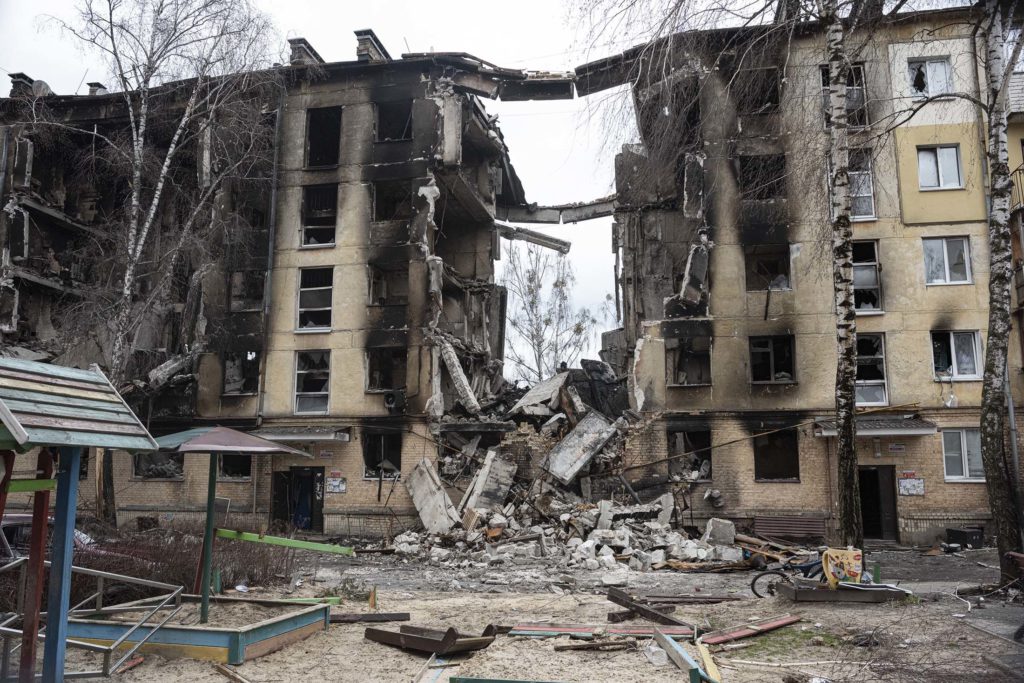
(Bloomberg) — The images of dead civilians in the streets, mass graves and bombed-out buildings emerging after Russian troops departed areas near Kyiv have prompted Western allies to dispatch investigators to collect and analyze evidence for possible war crimes trials. 

But don’t expect swift justice. 

Even as the world expresses outrage over graphic images of carnage in towns like Bucha and Ukraine’s President Volodymyr Zelenskiy calls for a Nuremberg-like trial for those responsible, United Nations and Western officials acknowledge that any international effort to pursue war-crime charges may take years.

“When you have a mass grave, each body has its story and you have to investigate each and every one of those stories,” said Louis Charbonneau, United Nations director at Human Rights Watch. “So you need forensics experts and all kinds of people with training and knowledge. If you start digging without the proper expertise, you can destroy evidence.”

Russian officials deny their forces committed any atrocities. They say the scenes emerging from areas Russia had controlled are Ukrainian fabrications or were perpetrated by Ukrainian forces, but they have provided no evidence for those claims. 

Read more: Dozens Killed as Russia Strikes Ukraine Rail Evacuation Hub 

Western nations are rushing to ensure that the right expertise is available to help Ukrainian investigators and prosecutors document crimes and responsibility for them.

London police dispatched their “war crimes team” to assist a probe by the International Criminal Court, while Germany’s Foreign Intelligence Service, BND, has presented recordings of Ukrainian survivors of alleged war crimes to a parliamentary committee in Berlin. 

In addition, the U.K. appointed an independent adviser to assist Iryna Venediktova, Ukraine’s prosecutor-general. U.S. prosecutors met this week with European counterparts in Paris as they work out a plan to gather evidence, Attorney General Merrick Garland said Wednesday.

UN Suspends Russia From Human Rights Panel as Dozens Abstain

UN officials and staff from the ICC are also gathering evidence that can be used in a future case. Ukraine Interior Minister Denys Monastyrskiy called it a “large-scale, unprecedented” effort to record “massive war crimes, crimes against humanity, which were committed by Russian troops that were on Ukrainian territory.”

With investigators rushing to document the situation on the ground as Russian forces pull back, their work remains dangerous and is often suspended on little notice, according to a UN diplomat who asked not to be identified discussing sensitive issues. 

Investigators in Ukraine have had to relocate repeatedly due to Russian bombing, the person said. Members of the fact-finding group, known as the Human Rights Monitoring Mission in Ukraine, have been unable to visit the locations of incidents, relying on trusted contacts and satellite imagery to document civilian casualties, the person said. 

What Are War Crimes? Could Putin Face Prosecution?: QuickTake

Yet the biggest delays may ultimately be bureaucratic. 

It took more than a decade, for instance, to put former Yugoslav leader Slobodan Milosevic on trial for his role in perpetrating atrocities against Bosnian Muslims. Milosevic died while in custody, before a verdict. ICC charges of crimes against humanity against the late Sudanese President Omar Al Bashir never managed to even secure his arrest. 

This time will be different, officials insist. 

“The wheels of accountability can move slowly, but they move, and someday, some way, somewhere, those who committed these crimes and those who ordered the crimes will be held accountable,” U.S. Secretary of State Antony Blinken said in an interview with NBC News.  

There are few expectations that Russian President Vladimir Putin will face Milosevic’s fate, ending his days in a prison cell near The Hague, where the ICC is based. 

Putin Army Regroups for Ukraine Showdown After Invasion Setback

A more immediate challenge for Western allies is how to coordinate the vast resources being offered to Ukraine. French Minister of Justice Eric Dupond-Moretti told Le Monde that Ukraine appealed to Eurojust, the European Union’s agency for judicial co-operation in criminal matters, to centralize the work of investigators and the collection of evidence.

Eurojust said it backs a joint investigation team initially formed by Lithuania, Poland and Ukraine to probe war crimes, crimes against humanity and other “core crimes,” adding that additional nations may join the team. Polish prosecutors say they have collected about 1,000 pieces of witness testimony describing instances of alleged war crimes as well as other evidence. 

Evidence gathered by a variety of entities will be cross-checked among allies, experts say. One question for now is who would prosecute the case. UN Secretary-General Antonio Guterres has called for an independent probe, and 41 nations have asked the ICC to investigate allegations of mass atrocities. 

Ex-Oligarch Says Putin Sees War With the West Already Underway

And although the U.S. is cooperating with the ICC, it isn’t a member state and has clashed with the organization over its investigations into Israeli actions in Palestinian territories as well as efforts to look into American military operations in Afghanistan. U.S. officials have declined so far to say whether the ICC would be the right court to pursue a case against Russia, which also isn’t a member of the ICC.

There are “different options and different mechanisms we’re working through now,” White House Press Secretary Jen Psaki said. “But it has not yet been determined what the international mechanism is.”   

Other options would be for the U.S. and allies such as Germany and France to create an ad hoc international tribunal outside of the UN or for a country’s domestic court system to take up the case under “universal jurisdiction.” 

The concept of universal jurisdiction enabled Israel to prosecute a senior Nazi official, Adolf Eichmann, for his role in the Holocaust. More recently, a German court sentenced a Syrian leader for his role in torturing thousands of people as head of interrogation in a prison in Damascus.

But any such efforts would undermine the legitimacy of the process, Human Right Watch’s Charbonneau said. 

“It’s very important these investigations be seen as independent and credible for everyone,” Charbonneau said. “You want to make it impossible for Russia to come up with conspiracy theories.”

More stories like this are available on bloomberg.com

©2022 Bloomberg L.P.

Canada Offers Carbon Capture Tax Credit to Reduce Emissions

(Bloomberg) — Prime Minister Justin Trudeau is rolling out one of Canada’s largest single industrial tax incentives to fund carbon capture projects as his government tries to deliver on ambitious climate goals by offsetting emissions from the country’s energy sector.

In a federal budget unveiled on Thursday, Trudeau proposed a refundable investment tax credit to encourage the country’s oil and gas companies to move more quickly to lower emissions.

From 2022 through 2030, the investment tax credit rates would be set at 60% for investment in equipment for direct air capture projects, 50% for equipment in all other carbon capture projects, and 37.5% for transportation, storage and use. To encourage companies to invest more quickly, these rates will be halved for the period from 2031 through 2040. 

The tax credit is expected to cost C$2.6 billion ($2.1 billion) during the first five years, and about C$1.5 billion annually until 2030.

Carbon capture projects permanently store carbon dioxide emissions before they are released into the atmosphere. In Canada, the government is relying on this technology to allow an oil and gas sector that accounts for about 10% of the country’s economy to continue production while still meeting the government’s 2030 emissions-reduction goal.

“In the largest economic transformation since the Industrial Revolution, the world economy is going green,” Deputy Prime Minister and Finance Minister Chrystia Freeland said in a statement. “Canada can be in the vanguard, or we can be left behind.”

Tax credits for carbon capture, utilization, and storage technologies are a contentious part of the climate change debate: environmental groups view them as a fossil fuel subsidy that will delay a transition to clean energy, while advocates see them as a way to ensure energy security while more renewable and clean energy sources are built. 

“New tax breaks for carbon capture technology are yet another subsidy to fossil fuel companies — which declared C$34 billion in profits in 2021 — at exactly the time when we should be actively winding down oil and gas production,” Hadrian Mertins-Kirkwood, a researcher at the Canadian Center for Policy Alternatives think-tank, said in a statement. “Climate policies that don’t curtail fossil fuels at the source are not compatible with a climate-safe future.”

With carbon-intensive businesses facing growing scrutiny from climate-conscious investors, Canada’s oil sands companies announced a goal to achieve net zero carbon emissions from operations by 2050, mostly through carbon capture projects with government support. Such goals are focused on production and don’t include emissions released when the oil is ultimately burned.

The country’s largest producers have formed a group called the Oil Sands Pathways to Net Zero, and estimate carbon capture projects will cost about C$75 billion over three decades. The group has been pushing for policies similar to those in Norway and the Netherlands, where roughly 75% of the cost of such projects was covered by public funds. 

“With this announcement, the federal government has recognized the importance of developing new technologies to help Canada fight climate change, as well as the importance of the oil sands to our country’s energy security,” Kendall Dilling, the group’s director, said in a statement. He added that the group’s carbon capture project alone could reduce carbon dioxide emissions by 10 megatons annually by 2030.

Canada has a significant opportunity to establish itself as a leader in this area, according to a report led by Toronto-Dominion Bank Chief Economist Beata Caranci. The country is one of the few that have made inroads in developing and deploying this technology, she wrote, and has a strong dependence on emissions-intensive sectors planning to use it. 

Critical Minerals 

Apart from energy, resource-rich Canada is also abundant in critical minerals that are essential for industries like electric vehicles, clean technology and computing. The 2022 budget proposes to provide up to C$3.8 billion over eight years to implement Canada’s first Critical Minerals Strategy. 

The investment in critical mineral mining and processing is among the flagship initiatives in this year’s budget that would help ensure medium-term growth for the country, according to a senior government official.

Specific measures to support critical mineral projects include the introduction of a new 30% tax credit for mineral exploration expenses and up to C$1.5 billion in infrastructure investments. The tax credit would apply to exploration expenditures on minerals such as nickel, lithium, cobalt, graphite and copper.

(Update with more details and comments from the eighth paragraph)

More stories like this are available on bloomberg.com

©2022 Bloomberg L.P.
Takeover of Anti-ARK Fund Is Just a Start as AXS Comes for Niche ETFs

(Bloomberg) — A small issuer in the $7 trillion U.S. exchange-traded fund industry is turning into one of the most aggressive in a bid to corner the market for niche investing strategies.

AXS Investments LLC has only ever launched one product — the $66 million AXS Astoria Inflation Sensitive ETF (ticker PPI) — yet in the past few weeks has unleashed a series of moves that pave the way for expansion.

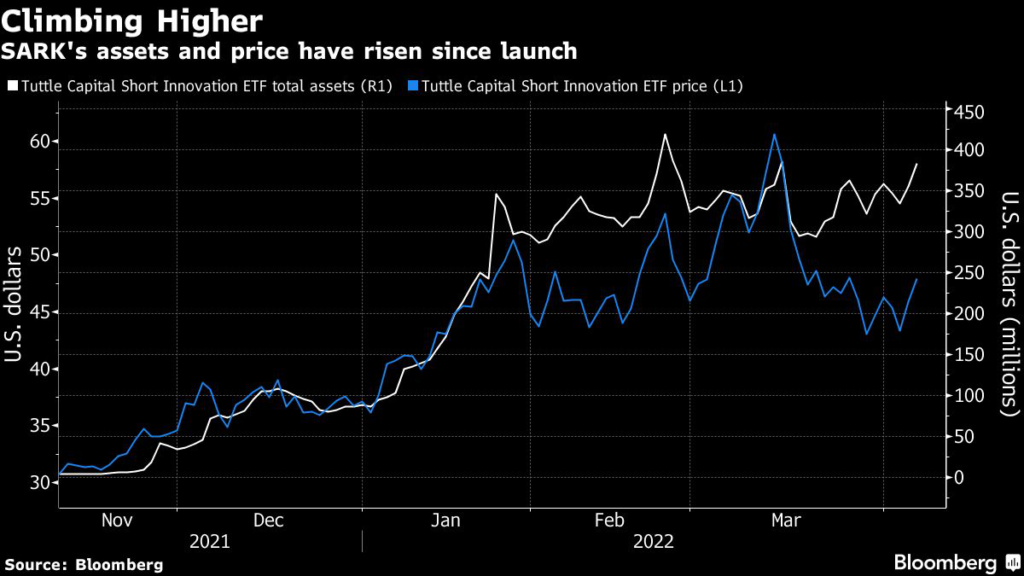
That includes a takeover of Tuttle Capital’s six funds, among them the famous $392 million Tuttle Capital Short Innovation ETF (SARK), which bets against Cathie Wood’s flagship strategy. AXS has also closed the acquisition of the $117 million AXS Change Finance ESG ETF (CHGX) from Change Finance, and applied for 18 single-stock products with the Securities and Exchange Commission.

The goal is to gain scale as rapidly as possible in an increasingly saturated market, according to Greg Bassuk, chief executive officer at AXS. While last year saw record ETF inflows and new product launches, funds that debuted in the last two years — around a quarter of the market — command just 2.5% of total assets, Bloomberg Intelligence data show.

“Our view is, rather than launch the third or fifth product of its kind, we would rather get the earlier movers,” Bassuk said in a phone interview.

New York-based AXS started two years ago with the aim of expanding access to alternative asset classes beyond institutional investors. While the firm’s first products were mutual funds, building out ETF infrastructure began on day one, said Bassuk, who previously co-founded IndexIQ Advisors LLC and served as head of liquid alternative strategies at FS Investments.

Among other AXS filings are plans for an ETF that would target 200% of the performance of the ARK Innovation ETF (ARKK) and a fund that would be an inverse wager on the KraneShares CSI China Internet Fund (KWEB). On Wednesday, the firm filed for the AXS Short Bitcoin Strategy ETF, following an October filing for a Bitcoin futures fund.

Bassuk said AXS has secured “significant capital” to support its aggressive expansion, though he declined to provide further details. The firm has invested heavily in national sales and distribution and now employs a team of more than 20, he said. As part of the tie-up with Tuttle Capital Management LLC, Matthew Tuttle will join as managing director.

“I’ve got a fairly good retail following, they’re locked and loaded with financial advisors and family offices,” Tuttle said in a phone interview. “Basically we decided to merge.” 

Cutthroat Market

The growth-by-acquisitions strategy makes sense for both sides of the deal, according to Cinthia Murphy, director of research at ETF Think Tank. AXS is able to expand its lineup, while the likes of the AAF First Priority CLO Bond ETF (AAA) — another fund set to be acquired — get access to AXS’s wholesaling team, which has a network of financial advisors and family offices.

“For some of these smaller guys, distribution is the holy grail to unlocking ETF success,” she said. 

Success is far from assured, however. From index-tracking giants such as BlackRock Inc. and Vanguard Group to thematic powerhouses such as ARK Investment Management, the ETF industry is a cutthroat arena. 

Assets in thematic ETFs have dropped to about $145 billion from $164 billion at the start of the year. Meanwhile, the market for leveraged and inverse products — which many of the planned AXS funds will target — is dominated by the likes of Direxion and ProShares. AXS is now in a race to issue the first single-stock ETFs in the U.S.

Bassuk, who is currently hiring for sales, product and operations roles, is undaunted. 

“We’re making significant investment on the distribution side, the product side,” he said.

More stories like this are available on bloomberg.com

©2022 Bloomberg L.P.
Race for Shorting Bitcoin ETF Heats Up as Direxion Leapfrogs Rivals

(Bloomberg) — A sudden race to create an exchange-traded fund betting against Bitcoin futures took an unexpected turn as Direxion amended an existing application to jump ahead of rival issuers.

The Direxion Bitcoin Strategy Bear ETF would offer managed short exposure to CME Bitcoin futures contracts, according to a Thursday filing with the U.S. Securities and Exchange Commission. The fund is similar to others from ProShares and AXS that are awaiting the SEC’s green light, except Direxion’s is set to go effective two weeks earlier. 

That’s because Direxion re-purposed a December 2020 filing for a short tech-stock ETF into the Bitcoin fund in an SEC ‘B’ filing. B filings go effective in 60 days while ProShares and AXS’ ‘A’ filings will take 75 days to go effective, unless they request accelerated effectiveness.

“It is a tactical maneuver ETF issuers employ occasionally, in strategically important products,” Henry Jim, ETF analyst at Bloomberg Intelligence, said of the re-purposing. “There’s no guarantee it will be accepted.” 

If the SEC does allow the funds to trade, Direxion’s will go effective on June 6, while those from AXS and ProShares, on June 20. 

The Strategy Bear ETF is Direxion’s second attempt at launching an inverse Bitcoin futures fund. The firm filed an application for one in October, but pulled it at the request of the SEC. 

In the new fund, Direxion will have a wide swath of tools to deliver the returns they are promising, including shorting other Bitcoin futures ETFs, according to the filing. 

While the SEC has still yet to approve ETFs that invest directly in Bitcoin, it allowed several futures funds to hit the market at the end of 2021, including one from ProShares, which debuted as the second-most heavily traded fund on record.

Bitcoin was hovering around $43,000 Friday morning. The cryptocurrency is down about 7% year-to-date and has struggled to break past its prior highs after surging nearly 60% in 2021.

More stories like this are available on bloomberg.com

©2022 Bloomberg L.P.
Ex-Barclays Traders Join Digital Art Craze With Bored Ape Tokens

(Bloomberg) — Two former Barclays Plc traders have swapped junk bonds for unique computerized art, amassing a collection of Bored Ape Yacht Club nonfungible tokens in a bet on the growing lure of digital collectibles.

Ovie Faruq and Mike Anderson, former high-yield cash and derivatives traders, have amassed 70 images of apes in various states of boredom, and three Damien Hirst NFTs, among other digital images. They wouldn’t reveal the value of their collection, or specific ID addresses, citing security concerns, but a Sotheby’s auction in September of similar images gives a ballpark figure. A lot of 101 Bored Ape tokens was sold for $24.4 million — and valuations have increased since. 

“It’s an illiquid market with large price swings, so much of the same discipline and skill around trading high-yield and distressed assets are transferable,” Anderson told Bloomberg News in a joint interview with his business partner. Both traders left Barclays in December, almost a year after they started to collect NFTs. 

A cousin of the cryptocurrency market, NFTs, or digital collectibles, have soared in value in recent years, drawing investment from venture capitalists such as Andreessen Horowitz. The NFT market will approach $30 billion in value this year and reach $80 billion in 2025, forecasts Stephanie Wissink, an equity analyst at Jefferies. 

The Bored Ape Yacht Club tokens, which have been limited to 10,000, have been at the forefront of the NFT craze, rising several times in value since their release in April 2021 and by 73% this year, according to CoinGecko, a cryptocurrency aggregator. Owners also get “airdropped,” a kind of reward system, which includes other NFTs and so-called ApeCoins. The market, though, remains volatile and fraught with risks.

The U.K. government followed the trend this week when the Chancellor of the Exchequer, Rishi Sunak directed the state-owned Royal Mint to create an NFT, which is expected to be rolled out this summer.

Boom and Bust

Faruq likened the NFT craze to the boom and bust cycle of the dot-com era in the late 1990s, whose results continue to shape the investment world decades later. Faruq and Anderson said that their phones “blew up” with interest when other bankers found out that they left their jobs to pursue NFT investing full-time. 

“In the dot-com bubble you saw 90% of companies go bust, but the 10% that survived are some of the world’s biggest companies,” he said. “It will be the same for crypto and NFTs, and we’re focused on utilizing our skillset to find the 10%.”

According to OpenSea, a NFT marketplace, prices for Bored Ape Yacht Club tokens first surged above 100 ether ($329,183) in January. Their values have largely fluctuated since, and over the last seven days averaged 118.75 ether, with a transaction volume on this platform of about $18.5 million in the past week.

That said, the value of digital art is still tricky to pin down — most transactions on the LooksRare platform show users selling tokens to themselves in a bid to earn more rewards. On the other hand, a copy of the first-ever tweet — by Twitter Inc. co-founder Jack Dorsey — has been offered for almost $48 million on OpenSea, 16 times what the owner paid for it a year ago. 

NFTs use blockchain to create a digital signature that make them unique. They have come under closer scrutiny recently after a string of NFT projects faltered and essentially died, sparking memories of the ‘Initial Coin Offering’ bust of 2018, when thousands of digital tokens quickly lost value. 

There’s a lot of work to be done to develop the market. The partners are seeking to invest in “seed opportunities” in web3 startups — a phrase used to describe the blockchain-driven internet for a decentralized economy. They’re interested in companies seeking to build infrastructure for the digital world, including crypto tokens with a focus on play to earn models, where participants take part in online games for digital payouts. 

One of the partners, Faruq, has even dabbled in creating digital art.

“I’ve also started creating and selling crypto art myself,” he said. “I used to do a lot of artwork and coding when I was younger, so it’s been nice to rediscover these interests.”

(Adds U.K government’s plans to issue an NFT in sixth paragraph.)

More stories like this are available on bloomberg.com

©2022 Bloomberg L.P.

Bearish Signals Flash at China Giants After Recovery

(Bloomberg) — The recent recovery of Chinese technology stocks hasn’t just lured bargain hunters. Short sellers are piling in, too. 

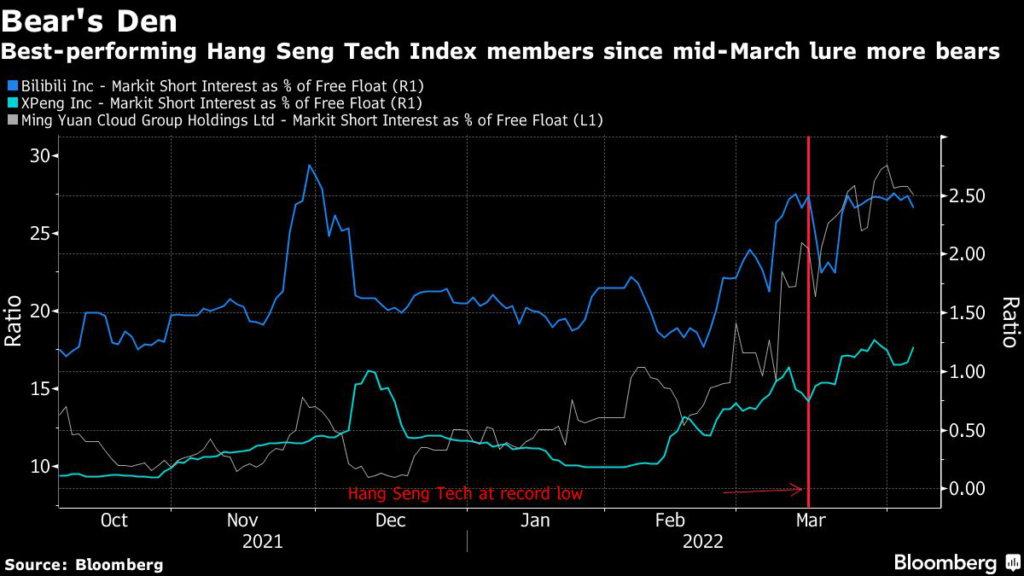
Bearish bets have risen on six out of the 10 best performers in the Hang Seng Tech Index since the benchmark’s record low in March, according to data from IHS Markit Ltd. And four of Hong Kong’s 10 most-shorted stocks are in the tech sector, include online-game company XD Inc. Video streamer Bilibili Inc. has seen short interest jump to near a record high.

Short interest accounts for a tiny portion of most tech companies’ free-floating shares in Hong Kong. Still, the increasing demand for downside protection when stocks rebound reflects how cautious investors are because of Beijing’s new regulations, worsening Covid lockdowns in China and U.S. interest rate increases. It’s already paying off, with the tech index dropping Friday for a third day. 

“The tech rally should be short-lived,” said Paul Pong, managing director at Pegasus Fund Managers Ltd., who has been cutting his holdings during the rebound. “We may see recent gains wiped out quickly. U.S. rates could be lifted at a faster-than-expected pace, which is big trouble. Also, China’s regulation keeps coming.” 

In the latest example of the regulatory crackdown, China on Friday kicked off a campaign to rein in the potential abuse of algorithms by internet giants, taking aim at the way they serve up ads and content to hook users. 

Tencent Holdings Ltd. also said it will shut its game streaming service, more than a year after Beijing blocked its effort to create a competitor to Amazon.com Inc.’s Twitch through a merger.

Although the sector is still up almost 30% from the bottom, market sentiment is fragile. The Hang Seng Tech Index dropped 1.2% Friday and registered its sixth weekly decline in the past eight weeks.

To be sure, short-term volatility of the tech index has fallen to levels prior to the epic rout in early March, when the index plunged 21% in three days. But coping with a new normal of a slowing Chinese economy and tightened regulation looks challenging. 

Technology giants including Alibaba Group Holding Ltd. and JD.com Inc. have announced big layoffs in the past three months as they seek to cut cost and stabilize margins. But it may be just a beginning. 

“From a company perspective, we believe cost savings will not only be through headcount reduction, but also lower sales and marketing expenses,” said John Choi, an analyst at Daiwa Capital Markets Hong Kong Ltd. “The easy growth phase is over in the China Internet sector and prudent resource management will likely be the new trend.” 

The Nasdaq Golden Dragon China Index rose 0.7% at 9:47 a.m. in New York. 


Tech Chart of the Day

Top Tech Stories

  • Taiwan Semiconductor Manufacturing Co. revenue rose to a record in the first quarter on demand for chips used in smartphones, computers and cars, while a prolonged shortage helped to boost prices.
  • Elon Musk, who was added to Twitter Inc.’s board after accumulating a stake in the social network, will join CEO Parag Agrawal at an all-hands company meeting next week to address employee questions.
  • The U.S. SEC rejected a request by Meta Platforms Inc. to quash a proposal from Arjuna Capital LLC asking for a third-party evaluation of the potential psychological, civil and human rights harms of the metaverse.
  • Atlassian Corp. announced a goal of $10 billion in annual revenue as the provider of productivity and collaboration tools continues its pivot to the cloud and expands its product line to reach a wider swath of corporate business.
  • Venture capitalists poured $9.7 billion into rapid-delivery companies globally in 2021, according to PitchBook. A few months into 2022, that optimism seems like a distant memory.

(Updates to add Nasdaq Golden Dragon China Index movement in last paragraph)

More stories like this are available on bloomberg.com

©2022 Bloomberg L.P.
Close Bitnami banner
Bitnami