Bloomberg

Renault Chief to Meet Nissan in Japan as Woes Cloud Alliance

(Bloomberg) — Renault SA’s top executives are planning their first in-person meetings since the pandemic with their counterparts at Nissan Motor Co. in Japan next month as the French carmaker’s weak financial position and possible breakup threaten to further strain their alliance.

Among topics for discussion will be emerging plans for a possible separate listing of Renault’s electric-vehicle unit and potential new partner for the legacy operations, according to people familiar with the matter. Discussions on Renault’s costly retreat from Russia will also feature prominently, said the people, who asked not to be identified because the talks are private.

There are no signs of any imminent structural change in the three-way alliance that includes Mitsubishi Motors Corp. Renault rose as much as 2.6% shortly after the open Friday in Paris, trimming losses of more than 30% since the war started, while Nissan’s shares were little changed in Tokyo.

The executive meetings next month would be the first trip to Japan for Luca de Meo since he became chief executive officer and his first in-person meeting with Nissan Chief Operating Officer Ashwani Gupta. Renault Chairman Jean-Dominique Senard, who is also vice-chairman of Nissan, has also been prevented from traveling to Japan due to Covid-19 restrictions.

The possibility of a transformational change at Renault is taking shape against a backdrop of mounting hurdles to its turnaround plan, including a forced pullout from Russia due to the war in Ukraine and ongoing shortages of semiconductors and supply-chain bottlenecks. While the carmaker raised the possibility of a breakup in February, de Meo last week provided more details to analysts.

Renault has given Nissan scant details about its breakup plan and executives at the Japanese carmaker are concerned about their partner’s response to the Russia situation, people said. The French automaker warned last month that it will book a 2.2 billion euros ($2.4 billion) non-cash charge. 

Representatives of Renault and Nissan declined to comment. 

The potential structural overhaul at Renault would be another wrinkle in the alliance since the three-member partnership was nearly destroyed by the 2018 arrest of its former leader, Carlos Ghosn, in Japan. The three-member alliance is working to cooperate more effectively as automakers globally grapple with the expensive shift to electrified, autonomous vehicles. The manufacturers are looking to use common batteries and other key components to bring cost-savings.  

The alliance has “substantial synergy potential although the companies had material challenges to realize this in the past,” rating firm Moody’s Corp. said in an April 6 report reaffirming Renault’s negative outlook. It pointed to the carmaker’s low returns, slow progress on turning around and suspension of the Russia operations.

At last week’s meeting with analysts, de Meo raised the possibility of splitting Renault into a new mobility company made up of EV and car-sharing assets, and a legacy entity, Stifel analysts including Pierre Quemener wrote in a note. “The CEO added that the latter could be combined with the ones of a potential partner,” the note said. “An IPO of New Mobility assets could be contemplated for 2023.”

Shareholding Imbalance

It’s unclear whether the move would change the shareholding imbalance within the alliance that has long stoked tension. Renault holds a 43% stake in the bigger Japanese company with voting rights, while Nissan owns 15% of Renault and has no voting rights. 

Selling all or part of the stake in Nissan would generate as much as 7.2 billion euros for Renault, which is about the same as its current market value. Nissan halted dividend payouts in 2019, depriving Renault of a key source of cash.

In January, the alliance outlined a plan to deepen operational ties and invest in electrification.

Renault last month halted its Moscow plant and said it’s considering the future of its longstanding AvtoVaz venture while revising downward its financial outlook for this year. 

(Adds Renault shares in third paragraph)

More stories like this are available on bloomberg.com

©2022 Bloomberg L.P.

Containers Pile Up at China Ports as Lockdown Blocks Trucks

(Bloomberg) — Containers full of frozen food and chemicals are piling up at China’s biggest port in Shanghai as a Covid lockdown in the city and compulsory virus testing means truckers can’t get to the docks to pick up boxes.

A shortage of trucks to haul containers from the port is impeding the clearance of imports, Ocean Network Express said in a customer advisory Wednesday. While the port is operating normally, there are a “critically high” number of refrigerated containers and items classified as dangerous goods piled up at two storage yards, meaning some ships carrying those types of cargo may not be able to unload any more boxes at the port, it said.

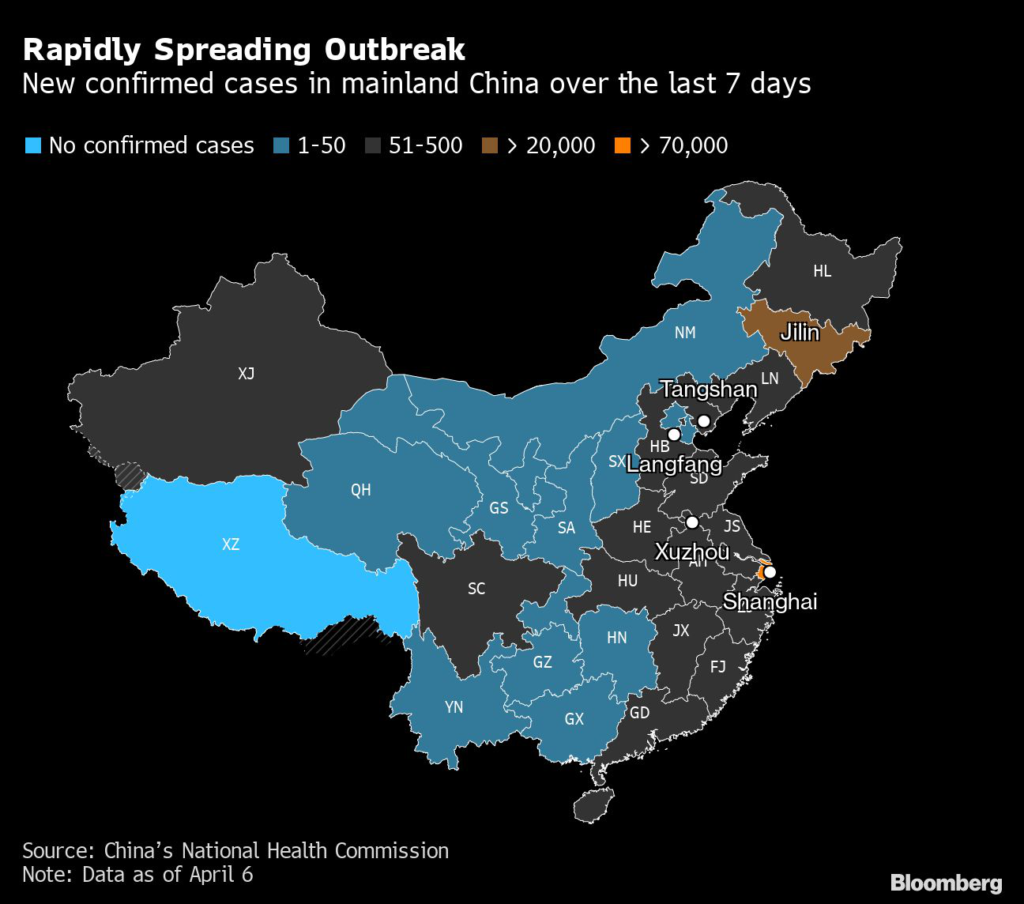
Shanghai is now the epicenter of China’s worst Covid outbreak in two years, with more than 21,000 cases reported just on Thursday. The shortage of trucks is also hitting companies in the city, which have been able to continue working through the lockdown, with chip giant Semiconductor Manufacturing International Corp. struggling to secure trucks to ship out finished goods. 

Truckers form a crucial component of supply chains in China, moving raw materials from coastal ports to factories further inland. The backlog is likely contributing to growing ship queues off China, threatening even more delays and higher freight rates in coming months. 

Tightened restrictions on truckers in other parts of China are also delaying the delivery and return of containers to ports, according to freight forwarders. There is a possibility that containers of frozen food or hazardous items like lithium batteries or chemicals won’t be able to land at Shanghai and will need to be re-routed to other ports, ONE said. 

Yantian terminal at Shenzhen port in southern China halted the collection and delivery of containers at all berths for about two hours Thursday evening to smooth out port operations, according to an advisory sent to customers. Truckers were advised not to arrive earlier to pick up boxes as they could get held up. 

The trucker shortage and closures of warehouses in Shanghai are also affecting nearby Zhejiang and Jiangsu, Citigroup Inc. analysts said in a report. The two provinces are major manufacturing hubs that produce about one third of China’s total exports.

“Not only does this have a significant impact on China’s domestic economy but also on potential regional supply chains, which could be more meaningful in Korea, Taiwan and Vietnam,” the analysts said.

(Updates with comments from Citi in last two paragraphs.)

More stories like this are available on bloomberg.com

©2022 Bloomberg L.P.

TSMC Sales Soar to Record on Demand for Smartphones, Cars

(Bloomberg) — Taiwan Semiconductor Manufacturing Co. revenue rose to a record in the first quarter on demand for chips used in smartphones, computers and cars, while a prolonged shortage helped to boost prices.

Revenue jumped 36% to NT$491.1 billion ($17 billion) in the three months through March, the company said in a statement Friday. Analysts estimated NT$469.4 billion on average. TSMC, the world’s largest contract chipmaker, is slated to report full earnings later this month.

Demand for mobile phones, smart televisions and other gadgets from makers such as Apple Inc. and Samsung Electronics Co. remains robust even as consumers in major markets in Europe and the U.S. exit pandemic-era lockdowns and work-from-home arrangements. Meanwhile a chip shortage is yet to ease — the wait times for semiconductor delivery grew again in March due to China’s Covid lockdowns and a Japan earthquake that hit production, according to research by Susquehanna Financial Group.

TSMC to Spend at Least $40 Billion to Address Chip Shortage

TSMC has kept production running in China, even as many other factories suspended operations to cope with the local pandemic policy. The chip assembler said in end-March that it will rearrange production priorities to deal with a shift in demand caused by Covid restrictions in Shanghai and Shenzhen. TSMC wasn’t planning to revise down its sales and capital spending forecasts for 2022, Chairman Mark Liu said at the time.

What Bloomberg Intelligence Says:

TSMC’s inventory strategy on key materials such as silicon wafers and industrial gases will be a key focus at the 1Q results briefing, as rising geopolitical tension and slow global wafer capacity gains keep the supply picture foggy.

– Charles Shum, analyst

Click here for research

Shares of TSMC have lost about 8% this year, hurt by a broader decline in global technology stocks and China’s lockdowns which have weighed on consumer demand and affected supply chains. The stock advanced 0.2% on Friday ahead of the company’s report.

Shanghai Lockdown Will Weigh on Market Sentiment: Chen (Video)

More stories like this are available on bloomberg.com

©2022 Bloomberg L.P.

China Targets Big Tech’s Algorithms as Crackdown Persists

(Bloomberg) — China kicked off a formal campaign to rein in the potential abuse of algorithms by internet giants from ByteDance Ltd. to Tencent Holdings Ltd., taking aim at the way social media platforms serve up ads and content to hook users.

The Cyberspace Administration of China will conduct on-site inspections of firms and ask them to submit their various services for review, the internet watchdog said in a statement Friday. Large-scale websites, platforms and products with big influence will be targeted, it said, without naming any.

The campaign is aimed at implementing and enforcing sweeping rules unveiled in August governing the industry’s use of algorithms to surface content for users, which took effect last month. It’s part of a broader effort that started in late 2020 to curtail the widening influence of China’s largest and richest corporations, whose platforms now control every sphere of public discourse and entertainment.

A barrage of regulations covering everything from gaming and online education to video censorship has since spooked the industry and prompted a shift in priorities to core growth versus unbridled expansion. The cyber-watchdog said in a subsequent statement it interviewed representatives from a dozen companies including Tencent, Alibaba Group Holding Ltd., Meituan and JD.com Inc. to address job cuts totaling 216,800 from July to mid-March — a prime concern for Beijing given the potentially destabilizing effect on the broader economy. 

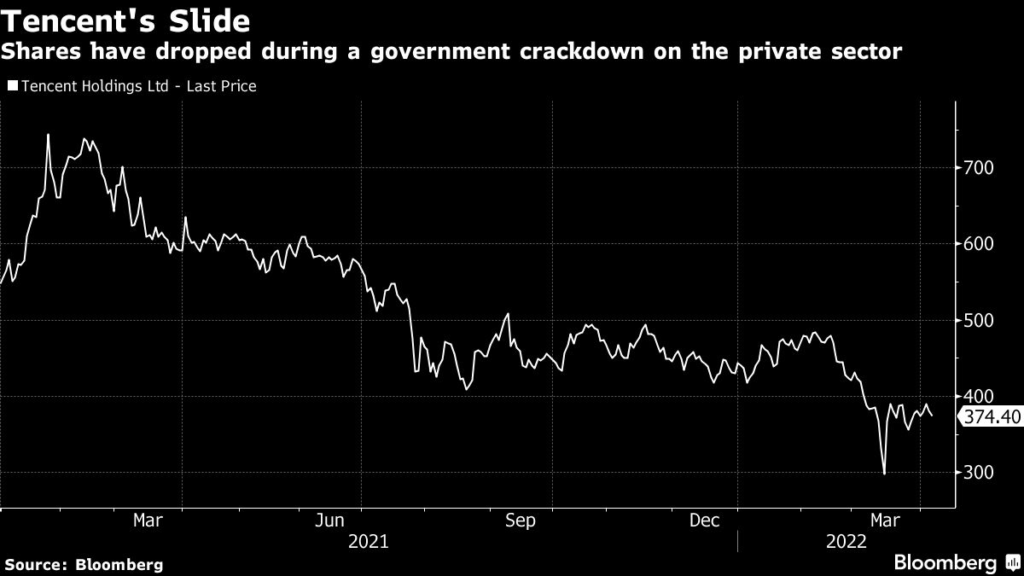
The agency highlighted that the companies actually hired 295,900 people over the same period, a net increase. Yet competition for jobs in the tech industry remains fierce and employers are willing to shell out to attract or retain top-flight talent. Tencent doled out more than $200 million apiece to two unidentified executives in 2021, even as it cut founder Pony Ma’s compensation for a year in which Beijing’s crackdown sent Tencent’s stock down by 19%.

Read more: China Plans Control of Tech Algorithms U.S. Can Only Dream Of

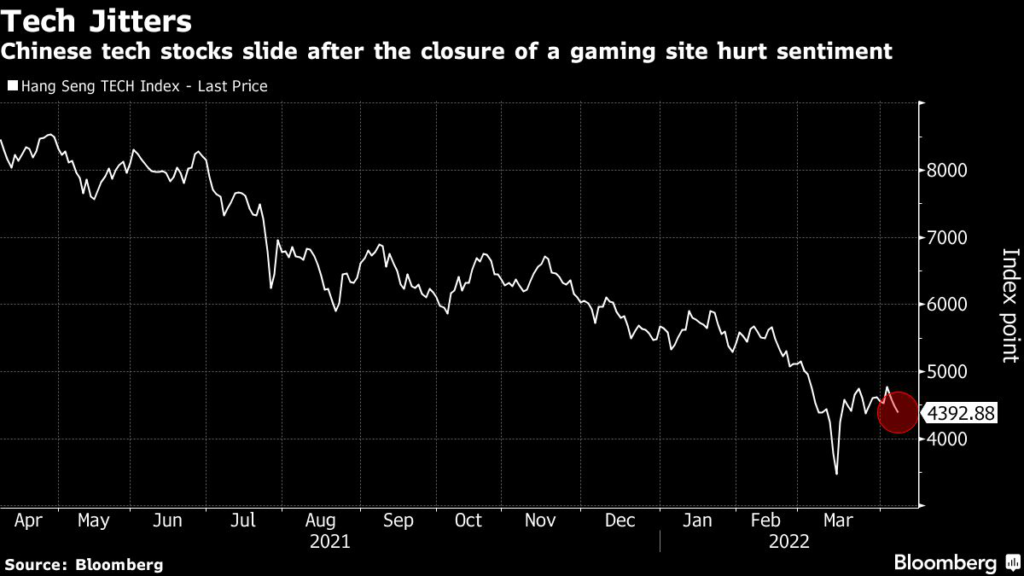
Investors, which wiped out more than $1 trillion of Chinese tech stock value at the height of the crackdown, remain cautious this year. On Friday, Tencent was down about 1.8% while video streaming firm Bilibili Inc. was among the worst performers in Hong Kong. Meituan also weighed on the gauge, following news Sequoia Capital had reduced its stake in the food delivery giant.  

One of the greatest areas of uncertainty for investors involves Beijing’s intentions for the country’s vast social media sector — an arena dominated by Tencent and ByteDance. 

The government has always maintained an iron grip on the industry, rooting out dissent and other forms of undesirable content that could undermine its rule. But while various agencies have targeted reckless competition in online commerce and ride-hailing during the crackdown, they’ve yet to level specific sanctions against the social media leaders. 

Regulators proposed far-reaching restrictions on content algorithms back in August to forbid practices that encourage online addiction, as well as any activities that endanger national security or disrupt social order.

In its 30-point proposal, the government asked that companies disclose the basic principles of any algorithm recommendation service and provide convenient options for turning off algorithm recommendations. It also said algorithms must adhere to “mainstream values” and “actively spread positive energy.”

Tech industry algorithms have been at the heart of political controversies around the world. Facebook Inc. and Google have been accused of serving up news stories and videos that exacerbate political polarization and fuel violence. While the U.S. government has had limited success in forcing changes, Beijing’s regulators have substantial power.

In February, Beijing’s internet watchdog launched a website where algorithm providers who influence public opinion or mobilize the masses can submit their services for record-keeping.

Companies including ByteDance and Tencent have made tweaks to their products following Beijing’s effort to protect personal privacy, for example, by offering users a way to opt-out of AI recommendations on apps like video service Douyin and the messaging platform WeChat.

QuickTake: Why China Keeps on Targeting Its Technology Giants

(Updates with CAC statement on layoffs, share action from the third paragraph)

More stories like this are available on bloomberg.com

©2022 Bloomberg L.P.

China Developer Rally Fueled by Fear and Greed Tests Policy Vow

(Bloomberg) — The Chinese government’s pledge of support for embattled developers ignited a frenzied rush for stocks and bonds.

But three weeks later, the frantic rally is testing the limits of investors’ patience as Beijing has yet to spell out details of how the government would relax curbs to prevent a disorderly collapse in the property market.

The market has been showing the first signs of doubt during a spell of exuberance for an industry that’s been crippled by crackdowns and mountains of debt that crushed large developers including China Evergrande Group and Shimao Group Holdings Ltd. It’s a sobering reality check as China braces for the fallout from its worst coronavirus outbreak, which has locked down major economic hubs from Shenzhen to Shanghai.

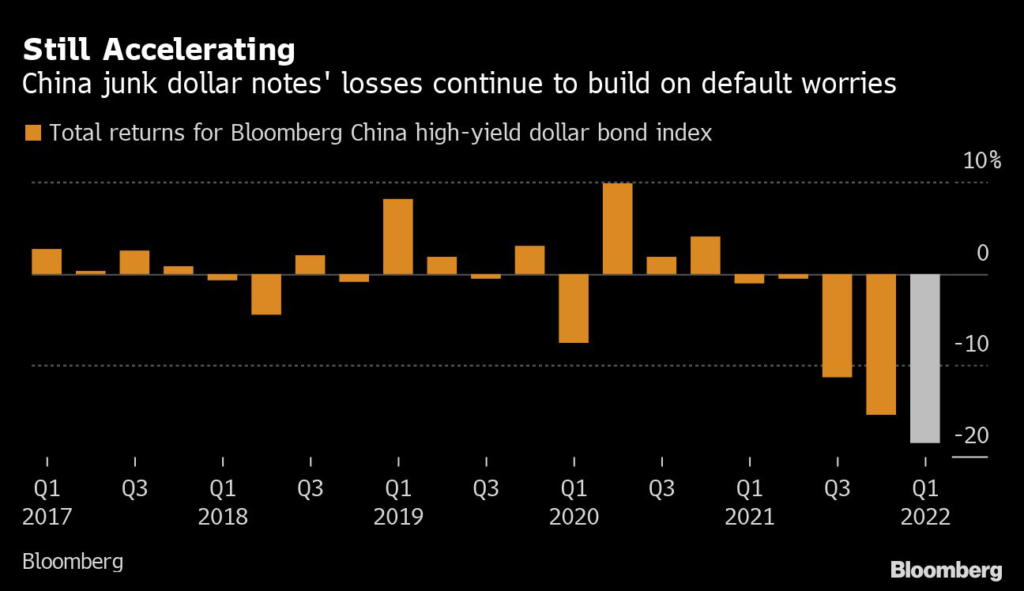
A Bloomberg stock gauge of the country’s developers rose 1.6% Friday, putting its advance since mid-March at 42% — more than seven times that posted by the benchmark CSI 300 Index. Chinese offshore junk bonds, dominated by builders, also remain on pace to rise for a third week and build on their biggest weekly gain of 2022, a Bloomberg index shows.

The recent weakness has amplified calls for more-aggressive policy action. Authorities have so far rolled out only piecemeal measures, such as not expanding a property tax trial, reduced mortgage rates and better access to loans for builders in some cities and provinces.

“The government cannot afford to wait longer to stabilize the sector,” Citigroup Inc. economists led by Xiangrong Yu wrote in a note this week. Potential options include relaxation of purchase restrictions to attract talent to cities and some forbearance on restrictions like the “three red lines.”

Citigroup’s China property equity analysts this week separately wrote that the second quarter is a “critical time” and the “last chance to shoot the silver bullet.” 

China kicked off its latest crackdown on the real estate sector in 2020, as high leverage and surging home prices threatened financial and social stability. As part of his “common prosperity” agenda, President Xi Jinping has said houses are for living in, not speculation. 

However, the economy has taken a hit in recent months as real estate has weakened, prompting Beijing to shift its focus to stabilizing growth. The industry accounts for about a quarter of the economy.  

As part of the shift, Premier Li Keqiang last month announced plans to set up a financial stability fund to “defuse risks and potential dangers” as well as adopt measures to keep home prices stable. The People’s Bank of China is leading the effort to raise several hundred billion yuan for the fund, which will focus on backstopping troubled financial institutions, Bloomberg News reported last week.

The fund’s key mandate will be rescuing financial institutions, but it may indirectly help large firms in other sectors including real estate, according to people familiar with the matter who asked not to be identified discussing a private matter. Home sales have fallen year-over-year each month since July, according to government data. The slump deepened in March, with sales falling a combined 53% for China’s 100 biggest developers, according to preliminary data from China Real Estate Information Corp. That’s the steepest decline this year.

“We might not see the light at the end of the tunnel for distressed developers until there are more aggressive measures, a package for them to meaningfully shore up their liquidity,” said Bloomberg Intelligence analyst Kristy Hung. “Rolling back curbs might not be meaningful in boosting their cash flow if buyers are balking at making a purchase from projects from brands at risk of non-completion.”

There are signs that state firms are increasingly stepping up to play a bigger role. Cash-strapped Kaisa Group Holdings Ltd., which defaulted late last year, unveiled a strategic tie-up this week with a state-controlled builder and one of China’s major bad-debt managers, spurring a rally in the developer’s dollar bonds. 

Though such pacts help boost sentiment, they may not be enough for a lasting fix, said Jenny Zeng, co-head for Asia Pacific fixed income at AllianceBernstein. “For the market rally to sustain, we need to see recovery in physical sales,” she said. 

Bond Losses

In the meantime, losses in riskier developers’ dollar bonds continue to pile up even with the recent rebound. More than half of Chinese high-yield developer dollar bonds were trading below 30 cents on the dollar at the end of March, according to Bloomberg Intelligence. Trading volumes remain muted, credit traders say, and yields are at about 20%, making it prohibitively expensive for the majority of developers to consider issuing new debt repay upcoming maturities.

On the other hand, state-owned developers are better placed. They sold a record 227.2 billion yuan ($35.7 billion) of local bonds in the first quarter of this year, more than five times the amount from their private-sector peers. State-backed firms and stronger private developers also helped spur a 27% jump in March home sales from the previous month.

Despite the strong headwinds, developers have been favorites in the recent rally. Greenland Holdings Corp., Seazen Holdings Co. and China Vanke Co. have been the biggest stock gainers in the CSI 300 Index since March’s bottom, each gaining at least 40%. 

The property downturn and surging Covid cases mean the turning point for real policy actions may be nearing, according to Citigroup economists. While Yu and his colleagues wrote they are cautiously constructive on China’s economic outlook if pledged pro-growth policies occur in a timely and coordinated manner, “policy implementation is a different story and is yet to be seen.”

(Updates market moves in third, fourth and second-to-last paragraphs.)

More stories like this are available on bloomberg.com

©2022 Bloomberg L.P.

Ukraine Update: EU Bans Russian Coal Imports, Japan May Follow

(Bloomberg) — European Union countries agreed to ban coal imports from Russia, the first time the bloc’s sanctions have targeted Moscow’s crucial energy revenues. Japan is also looking to curb imports, in what could be a shift in policy from one of the world’s largest energy buyers.   

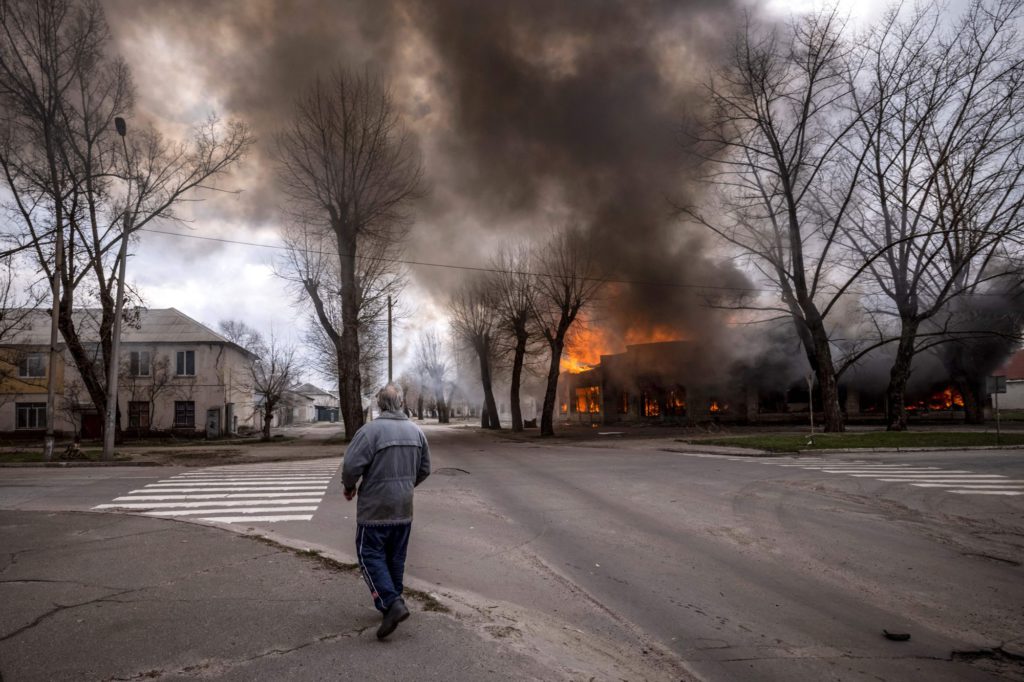
U.S. officials warned the war in Ukraine may last for weeks or even years, as Kyiv’s foreign minister pleaded for urgent military assistance while it can still make a difference. Australia said it would provide anti-armor weapons, ammunition and combat vehicles. 

The United Nations General Assembly voted to suspend Russia from the Human Rights Council, the first country to be kicked off since Libya in 2011, though many countries abstained. 

(See RSAN on the Bloomberg Terminal for the Russian Sanctions Dashboard.) 

Key Developments

  • Putin Army Regroups for Ukraine Showdown After Invasion Setback
  • Russia Sidesteps Sanctions to Supply Energy to Willing World
  • Race Is On to Rearm Eastern Front That Could Decide Ukraine War
  • Trending Apps in Russia and Ukraine Show New Priorities Amid War
  • U.S. Satellites Spying on Russia’s War Tap Commercial Technology
  • Mocked as ‘Rubble’ by Biden, Russia’s Ruble Roars Back (2)

All times CET: 

Australia to Send Combat Vehicles (12:41 a.m.)

Australia will donate 20 Bushmaster armored combat vehicles to Ukraine following a direct request from President Volodymyr Zelenskiy for the locally made equipment. Canberra will also provide a further A$26.5 million ($19.8 million) package that includes anti-armor weapons and ammunition.

The first four vehicles, which have been refitted and repainted with the Ukrainian flag, will be dispatched from the state of Queensland to Europe on Friday, according to a statement. The blast-resistant vehicles are built to carry 10 people and can sustain themselves for up to three days.

Read the story: Australia to Send Combat Vehicles to Ukraine After Leader’s Plea

Japan Considers Cutting Russia Coal Imports (2:44 a.m.)

Japan is considering curbing imports of Russian coal, signaling a potential shift of policy in one of the world’s biggest energy importers.   

The Asian nation “will aim to stop importing coal from Russia” as a longer-term goal, and will over time use energy conservation, other power generation and alternative country supply to reduce its dependency on Russia, Trade Minister Koichi Hagiuda said Friday. Japan had previously drawn a line at cutting energy ties to Russia because of its heavy dependence on fuel imports. 

Read the story: Japan Considers Cutting Russia Coal Imports in Shift of Position

Germany Allocates 2 Billion Euros for Ukraine Refugees (12:15 a.m.)

Germany’s federal government will provide 2 billion euros to states in support of efforts to accommodate and integrate Ukrainian refugees, Chancellor Olaf Scholz said, according to Deutsche Welle. 

Refugees will be integrated into Germany’s social security system and have easier access to health care, job centers and German-language courses, according to the public broadcaster. About 316,000 Ukrainian refugees are currently registered in Germany, it said. 

EU May Release Another 500 Million Euros for Arms (10: 53 p.m.)

European Council chief Charles Michel backed a proposal to release an additional 500 million euros to provide arms for Ukraine, taking the total to 1.5 billion euros, Agence France-Presse reported

EU Backs Russian Coal Ban in Fifth Sanctions Round (9:06 p.m.)

The European Union agreed to ban coal imports from Russia, its first move targeting Moscow’s crucial energy revenue, after reports of war crimes in Ukraine attributed to Russia.

The bloc’s fifth sanctions package, which also includes a ban on most Russian trucks and ships from entering the EU, was signed off by diplomats on Thursday, France announced. After negotiation, the phase-in period was extended to four months. Germany will make use of the transition period, Scholz said. 

The EU’s executive arm told member governments that it will start work on an embargo on Russian oil, gas and nuclear fuel, according to Poland. Preparations are due to begin tomorrow, Poland’s ambassador to the EU told reporters. 

UN Votes to Suspend Russia From Rights Panel; 58 Abstain (6:01 p.m.)

The United Nations General Assembly voted to suspend Russia from the Human Rights Council, with 93 nations backing the measure and 24 opposing it. There were 58 abstentions. 

It’s the first time a nation has been suspended since Libya in 2011. Ukraine’s UN envoy, Sergiy Kyslytsya, said the vote would be a defining moment for the global organization, which he has criticized for not doing enough to stop Russia’s invasion.

While Moscow was backed by longtime allies including Syria, Iran and North Korea, many nations — including Brazil, India and Mexico — said they wanted to see the results of an independent investigation into the killing of civilians before a decision on Russia’s membership was made.

War Will Be a ‘Long Slog,’ Top U.S. General Says (5:22 p.m.)

The war in Ukraine is “going to be a long slog” and a diplomatic solution isn’t an immediate possibility, General Mark Milley, chairman of the Joint Chiefs of Staff, told the U.S. Senate Armed Services Committee.

“It’s an open question now on how this ends,” he said.

Defense Secretary Lloyd Austin acknowledged at the same hearing that guidance on intelligence-sharing hasn’t been clear and that he’s clarifying that the U.S. will share intelligence with Ukraine to conduct offensive operations in the disputed Donbas region.

Ukraine Expects Russia to Relaunch Kyiv Offensive (4:47 p.m.)

Russian troops have retreated from around Kyiv and will try to seize the eastern regions of Luhansk and Donetsk, but a “re-offensive” on the capital should be expected, said Oleksandr Gruzevych, the deputy chief of staff for land forces. 

Gruzevych said that while the Ukrainian army eliminated about a third of Russian troops near Kyiv, the rest were re-located across the border – with a third deployed to the east, and another third remaining in Belarus. “That is quite a powerful group,” which may be mobilized again to attack Kyiv, he said.

War in Ukraine Could Last Years, NATO Chief Says (4:26 p.m.)

The war in Ukraine may last for years, according to the chief of NATO. He said foreign ministers from the alliance had agreed to step up support for the country.

Secretary General Jens Stoltenberg told reporters after the meeting in Brussels that allies need to work for a quick end to the war “but at the same time be prepared for a long haul. This war may last for weeks, but also months and possibly also for years.”

Kuleba Says Ukraine Needs NATO’s Help Now (3:21 p.m.)

Ukrainian Foreign Minister Dmytro Kuleba said his nation needs urgent military assistance before it’s too late to make a difference in its fight against Russian forces.

“Either you help us now — and I’m speaking about days not weeks — or your help will come too late,” he said after meeting with NATO foreign ministers in Brussels. He said he will be following up on specific timelines for his country’s request for more weapons to fight Russian forces. “I have no doubts that Ukraine will have weapons necessary to fight. The question is the timeline.”

“You provide us with everything that we need and we will fight for our security, but also for your security so that President Putin will have no chance to test Article 5,” he added, referring to a provision of the NATO treaty in which countries pledge to defend all alliance members from attack.

EU Sanctions Debate Hits a Few Snags (12:15 p.m.)

Several European Union countries say the fifth package of sanctions against Russia is being watered down too much, according to people familiar with the matter.

EU ambassadors are meeting Thursday with the aim of approving the package, which contains a coal embargo. But Poland is resisting a change in the draft sanctions plan, sought by Germany, that extends the phase-in period for the ban by a month to four months. Poland also wants to remove all remaining exemptions to the already existing ban on the sale of weapons, as well as military-related technologies and components, to Russia, the people said.

Estonia, Finland to Rent Joint LNG Terminal Vessel (11:14 a.m.)

Estonia and Finland plan to jointly rent a liquefied natural gas terminal vessel as part of an effort to lower dependence on Russian gas. 

The floating storage and regasification unit would have possible berths on both sides of the Gulf of Finland, according to statements from the countries, which are connected by the Balticconnector gas pipeline. The project’s timetable is “extremely urgent,” Finland’s economy ministry said.

Russia Coal, Oil Paid for in Yuan Heads to China (11:00 a.m.)

Several Chinese firms used local currency to buy Russian coal in March, and the first cargoes will arrive this month, Chinese consultancy Fenwei Energy Information Service Co. said. 

These will be the first commodity shipments paid for in yuan since the U.S. and Europe penalized Russia and cut several of its banks off from the international financial system. 

Hungary Still Opposes Sanctions on Russian Gas (10:56 a.m.) 

Hungary reiterated that it can’t back sanctions against Russia that would threaten its natural gas supplies. Despite efforts at diversification Hungary “is still heavily dependent on Russian gas,” Dora Zombori, ambassador-at-large for energy and climate, said at an industry conference in Budapest. “We cannot change this situation overnight.” 

Russian Railways Didn’t Repay $605M Bond (10:56 a.m.)

Russian Railways informed the issuer, RZD Capital Plc, that it’s applied for a license from the Office of Financial Sanctions Implementation in the U.K. for the purposes of facilitating payments on outstanding debt obligations issued before March 24, which “may require a number of weeks processing time,” according to a statement. 

Russian Railways Coupon Miss Raises Debt Swaps Trigger Question

EU Russian Coal Ban May be Pushed to Mid-August: Reuters (10:16 a.m.) 

Envoys are poised to approve a ban on Russian coal that would become fully effective from mid-August, a month later than initially proposed, Reuters reported, citing a person in the EU familiar with the matter who it didn’t identify. 

Shell Exit From Russia May Trigger $5 Billion Writedown (9:52 a.m.)

Shell Plc said its withdrawal from Russia will result in $4 billion to $5 billion of impairments, and warned investors that extreme energy price volatility in the first quarter could hit cash flow. 

While western energy companies leaving Russia are likely to take massive financial hits, they are attempting to minimize the reputational damage of investing in Moscow-backed projects following the war on Ukraine.  

More stories like this are available on bloomberg.com

©2022 Bloomberg L.P.

Two Mystery Executives Reap $200 Million Each at China’s Tencent

(Bloomberg) — Tencent Holdings Ltd. doled out more than $200 million apiece to two unidentified executives in 2021, even as it cut founder Pony Ma’s compensation for a year in which Beijing’s crackdown on the private sector walloped the internet giant’s stock.

The company said in its annual report that its two highest-paid individuals were not among the directors or most senior executives. One made about HK$1.599 billion, while another person made about HK$1.589 billion — the equivalent of $204 million and $203 million respectively. That would put the pair among the 20 most highly paid executives in the U.S., a roster led by Tesla Inc. founder Elon Musk and Apple Inc. Chief Executive Officer Tim Cook. 

The company didn’t name the two executives. Tencent’s most prominent talent includes Allen Zhang, hailed by the industry as the founder of the ubiquitous WeChat messaging service, and gaming business chief Mark Ren. 

Ma, the company’s chief executive officer, took home a total of 44.1 million yuan last year, down 25% from the year before. The billionaire founder still holds more than 7% of the company, giving him a net worth of about $39 billion, according to the Bloomberg Billionaires Index. His closest lieutenant, President Martin Lau, earned 24% less than a year earlier or 323 million yuan, including a 32% decline in his bonus to 23 million yuan, according to the company’s annual report.

Tencent is among the technology giants that came under fire from China’s regulators last year, as the government led a sweeping crackdown on what it deemed monopolistic practices and services contrary to Communist Party priorities. Beijing restricted the amount of time children could play online games and imposed new restrictions on online education, both critical to Tencent’s operations. 

Its shares dropped 19% during 2021, while rival Alibaba Group Holding Ltd. tumbled 49%. Tencent’s stock has dropped another 16% through Thursday.

For fiscal year ended in March 2021, Alibaba paid about $46 million salaries and other cash benefits to its directors and executive officers, a 36% drop from a year earlier. But while growth is slowing for the industry, the most sought-after engineers and tech executives continue to command outsized salaries because of endemic talent shortages. 

Zhang, the progenitor of the messaging service that sits at the heart of Tencent’s gaming and social media businesses, commands a cult-like following in China thanks to WeChat’s explosive popularity. His colleague Ren is widely credited with helping establish the world’s biggest game publishing empire, encompassing blockbuster names from League of Legends to Clash of Clans and with investments in studios like Supercell, Epic and Riot Games. The company didn’t immediately respond to a request for comment.

Tencent also increased pay for its staff in general in 2021. Employee benefits expenses — which include wages, bonuses, share awards and medical costs — leapt 37% to 95.5 billion yuan.

More stories like this are available on bloomberg.com

©2022 Bloomberg L.P.

AirAsia’s Fernandes Taps Google for Help With Super-App Push

(Bloomberg) — AirAsia, the budget airline that experimented with online commerce during the depths of the pandemic, is counting on a rebound in travel this summer to fuel a so-called “super app” to offer a suite of on-demand services from car-hailing to flight bookings.

The struggling carrier launched services such as meal delivery and car rides for revenue when air travel plummeted amid the outbreak, delving into areas already dominated by internet giants Grab Holdings Ltd. and GoTo Group. Now, that fledgling super app has signed a five-year tie-up with Google Cloud that it hopes will propel its ambitions to carve out a long-term online business, Tony Fernandes, the airline’s founder and chief executive officer of newly rebranded parent company Capital A Bhd., told Bloomberg News.

Super apps, which offer everything from travel bookings to e-commerce and financial services, are gaining in popularity among Southeast Asia’s more than 650 million people. Fernandes, 57, is betting that the combination of his carrier’s flights and loyalty programs with basic services will help carve out a share of the market. He said his background as an underdog — AirAsia stole significant market share from premium Asian carriers even though it was late to the game — will help with the digital ambitions.

“Watch us,” Fernandes said in an interview. “We can be a significant player in the super-app space.”

The five-year strategic partnership with Google will help the Airasia Super App to handle increasing user loads, the companies said in a joint statement on Friday. It’ll also allow the companies to bring in technology talent, co-create software tools, and generate data analytics for the small businesses on the Airasia Super App platform, they said.

Airasia Super App, which operates in five countries including Malaysia, Indonesia and Singapore, is the key part of Capital A’s digital arm. The digital unit is in its investment phase and unprofitable — losses before interest, taxes, depreciation and amortization last year amounted to 282.8 million ringgit ($67 million).

The region’s larger consumer internet companies are under intensifying investor pressure to turn a profit after years of frenzied spending to gain market share. Fernandes said that this provides an opportune window for newer players like Airasia Super App, which aren’t under similar scrutiny. 

“When we started AirAsia, it was a perfect time because everyone was saying, when will Malaysia Airlines or Thai Airways make money?,” Fernandes said. “That point has arrived” for the app business.

Still, the company doesn’t need billions to compete and plans to grow the business organically, Fernandes said. The Super App arm could reach positive Ebitda by early 2023, he said. The company’s logistics vertical, Teleport, is set to hit that milestone already this year, while its fintech business — which has applied for a digital banking license in Malaysia — will take till 2024, he said.

“Everything we’ve learned in the airline business, we can apply to the digital business in terms of efficiency, in terms of lowering costs,” he said. “If we could raise $150 million to $200 million, I think that could be all we ever need.”

A potential U.S. stock-market debut of Airasia Digital or Airasia Super App remains on the cards, Fernandes said. The company considered a listing last year but postponed the plan after the pandemic hindered the app’s attractiveness. The company may tap into private markets before an initial public offering, he said.

While Fernandes touts AirAsia’s successes in taking on larger rivals, the company has had its fair share of challenges. The business of AirAsia X Bhd., the long-haul unit of Capital A, came to a halt as the pandemic hit and international flying suddenly dried up. The majority of its more than 200 aircraft have remained idle for most of the past two years.

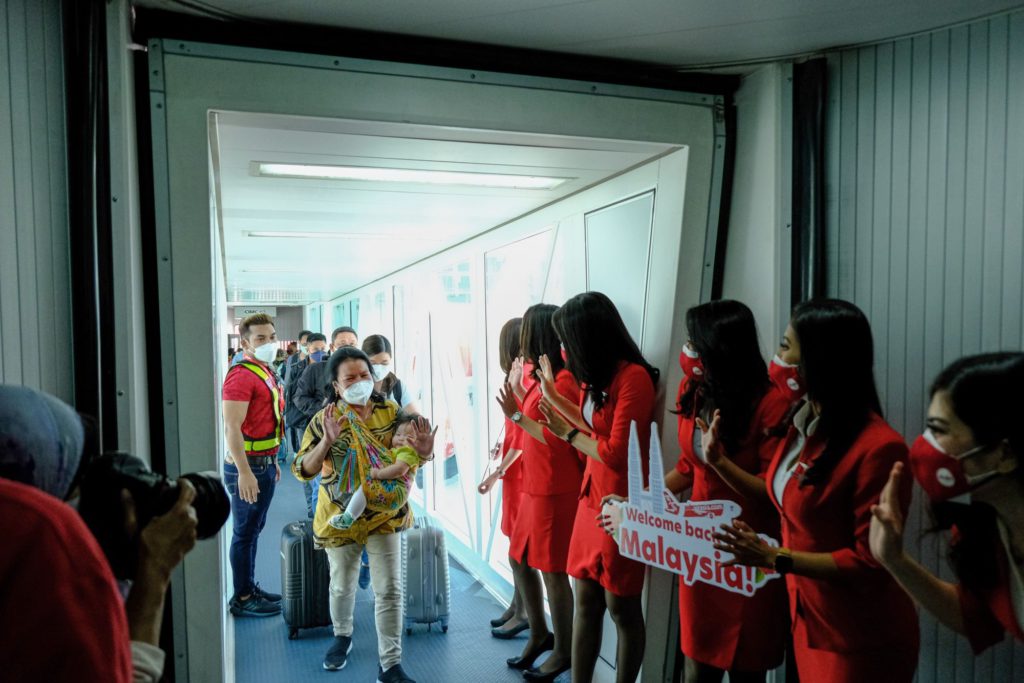
AirAsia expects travel to “return to normal” by July as more people will be able to take trips with most restrictions lifted, Fernandes said, predicting that his company will be able to bring some 200 planes back into operation by year-end.

(Updates with comment about potential IPO in 11th paragraph)

More stories like this are available on bloomberg.com

©2022 Bloomberg L.P.
Nissan Bets on In-House Technologies for Next-Generation Battery

(Bloomberg) — Nissan Motor Co. is betting that experience pioneering lithium-ion batteries for electric vehicles more than a decade ago will give it an upper hand in producing a new, yet still relatively unproven battery that some see as key to unlocking the future potential of EVs.

Nissan is producing prototype solid-state battery cells — which replace the electrical current-conducting liquid found in conventional batteries with a solid substance — at a facility resembling a pop-up lab inside its research grounds near its Yokohama headquarters. The Japanese automaker plans to bring the new type of batteries to market by fiscal year 2028, readying a pilot plant for them ahead of that around 2024.

If they can be manufactured, solid-state batteries would unlock cheaper, safer and faster-charging EVs, according to automotive executives and battery experts. Using different material combinations, Nissan predicts it will eventually be able to produce a solid-state battery pack that costs $65 per kilowatt-hour — a level at which analysts say EVs could reach price parity with gasoline-engine cars.

With its prototype facility, Nissan is joining almost every EV maker globally spending heavily on solving the slew of material and manufacturing issues that have thus far prevented solid-state batteries from making it into mass production. Challenges with the batteries include a tendency to form spiky lithium structures called dendrites that can cause short-circuiting, and each manufacturer is working on its own solution.

With 10-plus years of research, development and major funding behind solid-state EV batteries, the fact that a few core technologies have not yet won out highlights the “very complex and difficult process of making a full solid-state battery that’s EV-sized and has quite a low rate of failure off the line,” said Max Reid, a battery raw materials research analyst at Wood Mackenzie. In line with Nissan’s timeline, Wood Mackenzie sees solid-state batteries as a technology that’s still “closer to 2030 than 2025,” Reid said.

In its drive to develop next-generation cells, Nissan — similar to Japan’s other top automakers Toyota Motor Corp. and Honda Motor Co. — is taking a different approach than many of its western peers. While a number of car companies including Volkswagen AG, Ford Motor Co. and BMW AG have handed off development of solid-state cells to startups in the likes of Solid Power Inc. and QuantumScape Corp., Japanese automakers are pushing to keep research and development largely in-house.

To design new types of batteries “you need to start with the desired performance of a car, from there setting requirements for batteries and finally materials,” said Nissan Corporate Vice President Kazuhiro Doi. Creating that kind of battery-vehicle interplay is difficult for automakers specializing only in car design or battery makers focused solely on manufacturing cells. That’s something Nissan learned while creating batteries for the world’s first mass-market EV, the Leaf, over a decade ago, according to Doi.

Nissan, though still in the “trial and error” period of development, has been able to design solid-state cells with roughly double the energy density of conventional liquid lithium-ion batteries, Doi said. The company is working with some external partners, including NASA, to use data and artificial intelligence to evaluate the countless potential combinations of solid-state battery materials.

At the current stage though, it’s difficult to gauge progress with regard to solid-state batteries given the secrecy of the battery industry, enforced by manufacturers seeking to protect their trademark technologies. That opacity has led some developers to be accused of making exaggerated technical claims about their batteries. “To compare or measure companies’ success, we’d need to see them produce an EV pack worth of cells,” said Wood Mackenzie’s Reid. “Whoever gets to that hurdle first would be one of the frontrunners.”

For now, Nissan’s Doi says that having internal R&D and production teams working on development gives the automaker a stronger sense of the battery’s commercialization timeline. “If we rely on others, we won’t have ample foresight,” he said.

More stories like this are available on bloomberg.com

©2022 Bloomberg L.P.

Toshiba Climbs On Plans To Review Privatization Bids

(Bloomberg) — Toshiba Corp. gained as much as 3.5%, after the Japanese company said it would scrap plans to split the company in two and set up a committee to consider “strategic alternatives,” including bids to take the company private.

The embattled company said the new committee will comprise Toshiba’s independent directors, according to a statement late Thursday. It will begin discussions with potential investors and sponsors as soon as practical.

Toshiba has been struggling to regain its footing after years of scandal and management missteps. It was forced to spin off its prized memory-chip business, now called Kioxia Holdings Corp., after an ill-fated push into the nuclear business. 

That opened the door to activist investors who have battled with management over the company’s strategic direction. Toshiba initially planned to split into three companies, then revised the plan to divide into two companies. But shareholders rejected that new plan in a vote in March. 

Activists led by 3D Investment Partners Pte. have pushed for the company to consider alternatives, including a potential sale. Effissimo Capital Management Pte., now the company’s largest shareholder, said it had agreed to tender its entire stake if U.S. private equity firm Bain Capital launched a tender offer for two-thirds or more of Toshiba.

More stories like this are available on bloomberg.com

©2022 Bloomberg L.P.
Close Bitnami banner
Bitnami