

Bloomberg

Fund Manager Who Called End of Last Crypto Winter Remains Bullish

(Bloomberg Markets) — When Su Zhu co-founded Three Arrows Capital with Kyle Davies a decade ago, it seemed like a risky bet for two derivatives traders in their 20s. But the bet paid off. Today the company’s investments include Bitcoin, Ether, Avalanche’s AVAX, and Solana’s SOL, as well as decentralized finance (DeFi) projects like Neon, funds such as Multicoin Capital, and the play-to-earn project Axie Infinity, according to its website. Its blockchain holdings alone are worth close to $10 billion, estimates analytics firm Nansen. (Zhu would only say that the firm’s assets are in the “multibillion-dollar” range and wouldn’t provide data on the fund’s returns.)

Zhu, who turns 35 in April, was born in China, moved to the U.S. at age 6, and has been a citizen of Singapore since 2016. He’s proud of having called the bottom of the yearlong “crypto winter” with his Dec. 21, 2018, tweet: “We will pump off the bottom extremely quickly, leaving most sideline investors stuck in fiat.” Bitcoin, worth about $3,850 at the time of his tweet, surged to around $47,000 at the end of March this year.

Zhu spoke with Bloomberg Markets in late February about his career and his investment philosophy. The interview has been ­condensed and edited for clarity.

JOANNA OSSINGER: How did you get into finance?

SU ZHU: I did a pretty typical pre-GFC [global financial crisis] route. Majored in mathematics at Columbia, did a summer internship at an investment bank that turned into a full-time analyst role. In 2008, I started in equity exotic derivatives trading at Credit Suisse in Tokyo, got laid off during the financial crisis. Then I was fortunate enough to find a junior trader role at Flow Traders, a Dutch ETF [exchange-traded fund] market-making firm which was expanding in Singapore. Did a couple years there, then worked in Hong Kong for a year at an investment bank, and finally partnered with my high school and college classmate Kyle Davies to start Three Arrows Capital to trade emerging-market foreign exchange. Think we were 25 at the time, and back then it was extremely uncommon to start your own fund at that age, but we saw a lot of market structure disruptions coming in FX—electronic vs. voice, listed vs. over-the-counter–and felt the risk-reward was there.

JO: What drew you to crypto?

SZ: I first started dabbling in Bitcoin in early 2013. The main activity was focused on the Chinese exchanges, and there were various arbitrage trades you could do. In late 2017 it became extremely clear to me, just from the caliber and energy of young people involved in the space, that crypto was going to follow the dot-com cycle of creative destruction and then eventually become a paradigm shift across finance, technology, culture, and politics.

JO: What are your key areas of focus at Three Arrows?

SZ: Derivatives trading has been our bread and butter and always will be a huge component of what we do, and it also ties into our venture investing. Crypto trading firms have done well since 2018, because they have the resources to invest in stellar talent whether market conditions are good or bad. We don’t have any external investors, which has afforded us the ability to make very good decisions on market timing, which we then parlay into continual reinvestment into the overall ecosystem. Making sure that we capture revenues from market volatility and continue to invest in teams is my No. 1 priority.

JO: What areas have the most potential?

SZ: I’m a believer in Amara’s law, which is that technology is overestimated in the short run and underestimated in the long run, especially when applied to crypto. The areas of most potential are likely not even thought of as crypto use cases today. That said, I’m excited about what scalable L1s [Layer 1 blockchains, which run independently of other blockchains] like Avalanche can enable for users and application developers. We do not even know what kinds of network effects and emergent behaviors are possible when user counts begin entering the millions, tens of millions, and hundreds of millions. Most apps that people use today and think of as the domain of web2 will eventually be disrupted by lightweight and community-owned web3 technologies.

I also think we are entering an era where the potential of Bitcoin to become one of the key reserve currencies of people and nations is becoming clearer than ever. It will not be a smooth ride, but it will be a highly meaningful one for those who take the journey.

JO: What are the worst things about crypto?

SZ: The tribalism and bitter competition between crypto communities. [Austrian economist Ludwig von] Mises predicted open competition of private monies and technologies, and I think we’re seeing that play out in a high-stakes way now. Nonetheless it’s unavoidable that tensions run high when people have a high ­percentage of their net worth in these assets, and in a way it does also show the resilience of communities and what stuff people are truly willing to fight for.

JO: What has the war in Ukraine revealed about cryptocurrencies?

SZ: The power of crypto to protect individuals’ rights. Ukrainians are using it to protect their wealth from war, and Russians are using it to be able to flee the country and retain some level of assets. Moreover, crypto is enabling the global community to interact intimately with what’s happening.

JO: You frequently mention history and philosophy. How do those topics inform your work?

SZ: To really get crypto, you must understand what it’s a reaction against and what it’s a movement toward. For me, crypto represents several convergent trends:

Away from centralized control, toward decentralized decision-­making.

Away from closed-source walled gardens, toward open-source discussion.

Away from institutional ownership, toward individual ­ownership.

Away from permissioned assets, toward self-sovereign bearer assets.

Away from crony capitalism, toward collective capitalism.

Away from platforms capturing value from creators and fans, toward creators sharing value with fans.

I am a libertarian, but with that I am also a voluntaryist. What that means is I do not wish to convert everyone to my own way of thinking—I simply wish to help bring about a world where a ­parallel freedom-centric system exists, and at later points in time anyone can partake in this system as they see fit.

The first major victory for individuals was the advent of the internet, and the second was the development of open-source peer-to-peer encryption technology in the 1990s. At the time, the existence of end-to-end encryption for individuals was so alarming that the U.S. government attempted to deem its dissemination as the unlawful exportation of military-grade technology.

Since then, we’ve learned that these were in fact inalienable human rights that we’ve had all along. Technology re-enables behaviors as natural as handing someone cash or having a simple conversation in the physical world. I refer to the idea of crypto as a revanchist technology, because it is a critical step in reclaiming key ground that individuals have given up over time.

JO: What investments are you proudest of, and least proud of?

SZ: Investing in Deribit, the leading crypto options trading exchange, during the bear market. Investing in Layer-1s, like Avalanche, Solana, Polkadot, during the bear market, especially via the over-the-counter market. All of these felt really contrarian at the time, but obvious in the sense that going against the grain and backing hardworking, tech-oriented teams would pay off.

I don’t think there’s anything I’m not proud of. Even the ones that lose money, it’s important that those projects were attempted, and founders tried things. Too often people look at something that fails and try to make some broader conclusion, while not recognizing the probabilistic and unknowable nature of all things. To give you an example, our best venture investment to date was Axie Infinity, a project so undersubscribed in its seed round that people thought they were donating. The most crowded investment thesis I saw was probably Facebook’s Libra nodes, which everyone set up SPVs [special purpose vehicles] for and thought would become the future of crypto. [Facebook, now Meta Platforms Inc., planned to revolutionize global finance with a crypto initiative called Libra, later renamed Diem, but it never got off the ground. All the assets were sold to Silvergate Capital Corp. early this year.]

JO: Which person do you most admire in history or philosophy?

SZ: If you look at someone like [Singapore’s late founding prime minister] Lee Kuan Yew, what he managed to accomplish via the Singapore separation from Malaysia was incredibly futuristic. Essentially, Singapore was the first startup city. It had to undergo multipronged challenges of nation-building: security, energy, economy, and culture—all in a perilous geopolitical environment. I see a lot of analogies to crypto community-building itself. You have to believe in the power of community and collective will to action, as well as in the importance of nonstop transparency and honesty and the ability to win in the battlefield of ideas.

JO: What does the future hold for you? For Three Arrows?

SZ: I’m looking to support the development of whole-systems thinking wherever I can. I see important parallels to how we as a society think about futurism itself—many technologies sound futuristic but are in fact regressive, while many that seem clunky are in fact powerful humanity-enhancing innovations.

I am a big proponent of nature-based, grassroots solutions to key agricultural problems and look forward to making more of an impact there. My commitment to that is an extension of the same ethos and philosophy that underpins my commitment to crypto. Nature-based food systems, or agroecology, decentralize our access to nutritious food and clean water. They move us away from dependence on global supply chains. If we build farming alternatives at a community level, then people can choose to participate in this more local parallel food system. Community-­supported market gardens, especially in cities, expand our freedoms. They will be another major victory for individuals as they will give us more control over our own health and nutrition whilst regenerating the Earth.

As for Three Arrows, we will continue doing what we do best, which is invest in cryptoassets and support crypto-builders and communities for the long term.

Ossinger covers cryptocurrencies in Asia for Bloomberg News. She is based in Singapore.

More stories like this are available on bloomberg.com

©2022 Bloomberg L.P.

GM Electric Hummer Review: $110,000 Worth of Armor, With Soft Spots

(Bloomberg) — There may be no more polarizing vehicle than General Motors Inc.’s new Hummer EV.

The $112,595, more than 9,000-pound pickup is a gargantuan remake of the military vehicle that was tamed for civilians in the 1990s. It is 1,000 horsepower of muscled Americana with knobby tires and a ridiculous launch mode that will further inflate the diaphanous egos of those who engage it. It is as tall as a tank with a hood extending to my shoulder height. Nobody needs this truck. 

On the other hand, it’s electric! Driving range is 329 miles. It can charge to 100 miles in 12 minutes using a 800v DC fast-charger. Blissfully silent, it recently allowed me to pass wild donkeys in the desert outside Scottsdale without so much as a flick of a furry ear.  

So: paean to gluttony or ode to innovation? The Hummer EV is an automotive Rorshach test whose answer will reflect your predispositions.

Modernized Icon

Anyone can deduce its purpose just by looking: This is a powerful machine meant to signal the status and dominance of the person who owns it. It will excel at carrying sports and outdoor gear in its flatbed, and is rugged enough to use for camping or exploring hard-to-access locales, as long as you can figure out a way to charge it every other day or so. It will make a great support mule when you want a home base vehicle for a weekend of riding dirt bikes and all-terrain vehicles. 

I drove a “First Edition,” which comes only in white, with a two-tone interior. It has an Extreme Off-Road Package that adds air suspension and a crab-walk function that moves the vehicle sideways when useful. There are 35-inch tires, underbody armor, and rock sliders that allow the rig to move down sheer sides without harm. Deliveries of First Editions started earlier this year, and they have already sold out. Subsequent editions are available for a $100 reservation fee; pricing starts at $79,995. You’ll have to wait a year for delivery of any edition you choose—unless you hunt on Bring a Trailer, where one sold on April 1 for $275,000.   

This looks like the Humvee that Arnold Schwarzenegger would remember. Rectangular lights hang across the front like military badges. The headlights and taillights bear the distinctive H inside. The door handles, side mirrors, and fenders are all squared.  

This Hummer is more capable than its predecessor. Launch mode, activated by settings in the console, goes to 60 mph in three seconds. I did it twice in a parking lot. It felt like the cartoon moment when the roller coaster car plunges and your skeleton moves forward while your organs and eyeballs lag like silly putty. It was so jarring, it triggered a headache. Some will love it. 

Torque is 11,500 pound-feet; towing is 7,500 pounds; and payload is 1,300 pounds—less than the 1,760 pounds promised by the Rivian R1T and 2,000 promised by the Ford Lightening electric trucks. Top speed is 106 mph. If I were to own this thing, I’d load it with plants and pots, shovels, and the other gardening gear I schlep around on weekends. I’m not so advanced a gardener—yet—as to need to haul any gear, but the heavy-duty D-ring recovery hooks on the front and back of the Hummer I drove would easily suffice. Each is frame-mounted and has a load capacity of up to 15,000 pounds. Roof rails, a spare tire cover, and additional off-road high-mounted light bars and pod lights are also available. 

I was more impressed with how easily it cruised at 80 mph. It jumped from 60 mph to 90 mph with a quickness—and from such a high vantage point—that it felt as if I were flying. The “Supercruise” guided me on cruise control that followed the curves in the highway without my input on steering. One caveat: I became so relaxed that I nearly missed my exit. I had to cross three lanes of traffic in less space than I (and the cars behind me) would have preferred.

Off-Road Gladiator

Once on dirt, I switched to Off-Road and Terrain modes, which helped navigate unstable rocks and deep gullies. (Each driving mode has specific chassis and suspension characteristics.) I did nothing so challenging as driving up rivers, traversing dunes, or crawling boulders (as I have done in Rivian’s R1T and Jeep’s electric Wrangler), so I remain uncertain as to how the behemoth Hummer would handle those challenges.  

There’s no place to charge in the desert, and towing things, extreme temperatures, running the air conditioning, and so forth will deplete the battery faster. Be wary when planning adventures. 

The vehicle also lacks visibility over its hood and sides. GM mitigates the blind spots by offering 18 different camera views, among which I switched often to ensure I wouldn’t graze rocks as I passed.

The roof consists of four removable panels. I removed and stored them within five minutes and then felt so in touch with nature! As the truck moved forward silently, the scent of sage wafted in and a breeze caressed my cheeks. On the way back after I had replaced the roof panels, though, the sun felt increasingly oppressive through the plastic top. I yearned to hide from the heat under a conventional roof, but the Hummer EV is inherently unconventional.

I like that this vehicle offers a strong point of view, even if I wouldn’t necessarily want that point of view every day. Do we need an electric Hummer? No. But plenty will want one.


More stories like this are available on bloomberg.com

©2022 Bloomberg L.P.
Wonky SEC Ruling Reignites Spot U.S. Bitcoin ETF Approval Debate

(Bloomberg) — Those pining for a physically backed U.S. Bitcoin exchange-traded fund are embracing an under-the-radar ruling from the U.S. Securities and Exchange Commission. 

The SEC gave its blessing to the Teucrium Bitcoin Futures Fund application in a late Wednesday filing. Unlike existing Bitcoin futures ETFs, the Teucrium fund was filed under the Securities Act of 1933, rather than the Investment Company Act of 1940 — SEC Chair Gary Gensler’s preferred format up to this point.

In the eyes of Bloomberg Intelligence’s James Seyffart, that nuance matters. Gensler signaled last August that the 1940 law offers greater investor protection than the 1930s law, with the agency allowing the first Bitcoin futures ETF to begin trading in October. However, given that a physically backed Bitcoin ETF — a structure the SEC has repeatedly denied — would fall under the 1933 act, approving the Teucrium fund could be a needed step to a spot ETF, Seyffart said. 

“Gensler initially approved Bitcoin futures ETFs citing 1940 Act protections stating they’re better than 1933 Act products. But this is a 1933 Act futures ETF,” Seyffart said. “This strengthens the case for a spot Bitcoin ETF, which goes through the exact same process.”

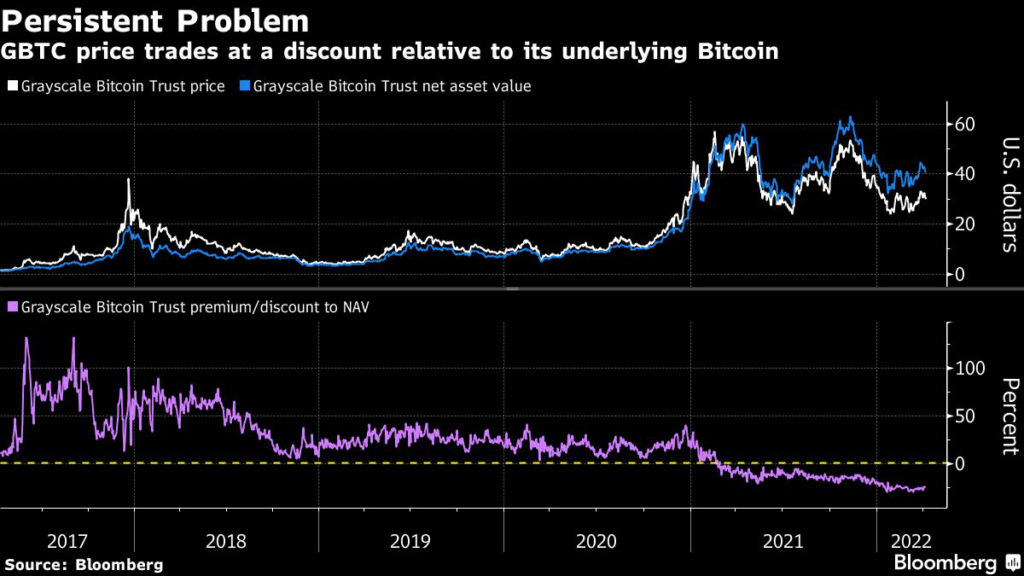
The Teucrium decision also casts a spotlight on Grayscale Investments LLC’s campaign to convert the $28 billion Grayscale Bitcoin Trust (ticker GBTC) into a physically-backed ETF. The SEC’s final deadline to make a ruling is July 6, and should the applications be rejected, “all options are on the table” including a potential lawsuit, Grayscale chief executive Michael Sonnenshein told Bloomberg News last month.

While the approval may embolden Grayscale and other potential issuers, issues such as oversight of the cryptocurrency exchanges still remain, according to Morningstar Inc.’s Ben Johnson.

“I don’t think it does anything to address the SEC’s concerns regarding spot Bitcoin ETFs,” said Johnson, director of global ETF research. “That said, it could be the event that compels one or more spot Bitcoin ETF filers to sue the SEC in hopes of forcing the issue.”

Nate Geraci of the ETF Store agrees. While the SEC has weakened its own argument for not approving a physically backed fund, it’s still unlikely that they’ll allow such as product to launch in the foreseeable future, he said. 

“The SEC had previously said that 40 Act funds provide additional investor protections. With the approval of the Teucrium ETF, the SEC just killed their own argument on that front,” Geraci said. “All that said, I still don’t expect the SEC to approve a spot Bitcoin ETF until they have oversight of crypto exchanges.”

More stories like this are available on bloomberg.com

©2022 Bloomberg L.P.
Ukraine Update: NATO, U.S. Warn That the War May Be a Long Slog

(Bloomberg) — The war in Ukraine may last for weeks or even years, NATO and U.S. officials warned, as Kyiv’s foreign minister pleaded for urgent military assistance before it’s too late to make a difference in its fight against Russian forces. 

The United Nations General Assembly voted to suspend Russia from the Human Rights Council, but the measure garnered a substantial number of abstentions in addition to votes against. It was the first time a nation was suspended since a similar vote against Libya in 2011. 

On the ground, the Ukrainian military said Russian troops are preparing for a new offensive in the country’s east. Elsewhere, German intelligence picked up radio intercepts that reinforced indications that Russian troops carried out atrocities against civilians near Kyiv. Russia has denied the accusations. 

(See RSAN on the Bloomberg Terminal for the Russian Sanctions Dashboard.) 

Key Developments

  • Shell to Write Down as Much as $5 Billion on Russia Exit 
  • Mocked as ‘Rubble’ by Biden, Russia’s Ruble Comes Roaring Back
  • Sanctions Hobble the Airline Built by ‘Russia’s Elon Musk’
  • Putin Army Regroups for Ukraine Showdown After Invasion Setback
  • U.S. Satellites Spying on Russia’s War Tap Commercial Technology
  • Congress Makes Russia a Pariah on Trade, Adds Pressure on Putin

All times CET: 

EU Backs Russian Coal Ban in Fifth Sanctions Round (9:06 p.m.)

The European Union agreed to ban coal imports from Russia in its first move targeting Moscow’s crucial energy revenue. Reports of atrocities in Ukraine attributed to Russia propelled officials to expand its fifth round of sanctions.

The sanctions package, which also includes a ban on most Russian trucks and ships from entering the EU, was signed off by the bloc’s diplomats Thursday, France announced. It was also coordinated with the U.S. and the U.K. Member states have until Friday morning to lodge final objections before the sanctions are formally adopted.

Diplomats haggled over exemptions and technical details, agreeing to extend the phase-in period of the coal ban by one month to four months.

Russia Expels Two Irish Diplomats in Possible Retaliation (8:20 p.m.)

Russia asked two Irish diplomats to leave the country, Ireland’s foreign minister Simon Coveney said. He condemned the move as without justification. Ireland expelled four Russian diplomats last month.

Thursday’s expulsions “will significantly reduce our ability to provide services to our citizens in Russia and to maintain diplomatic channels of communication with the Russian Federation,” Coveney said in a statement

UN Votes to Suspend Russia From Key Panel; 58 Abstain (6:01 p.m.)

The United Nations General Assembly voted to suspend Russia from the Human Rights Council, but the measure garnered a wide range of abstentions.

The move to suspend Russia was backed by 93 nations and opposed by 24 with 58 abstentions. It represented the first time a nation was suspended since a similar vote against Libya in 2011. Ukraine’s UN envoy, Sergiy Kyslytsya, said the vote would be a defining moment for the global organization, which he has criticized for not doing enough to stop Russia’s invasion.

Voting to suspend Moscow is “not an option, it is a duty,” Kyslytsya said. He added that voting no means “pulling a trigger, and means a red dot” on the voting screen. “Red as the blood of the innocent lives lost.”

While countries such as Syria, Iran and North Korea predictably backed Russia, many nations — including Brazil, India and Mexico — argued that they want to see the results of an independent investigation into apparent atrocities completed before a decision on Russia’s membership was made.

France Urges China to Stop Echoing Russian Propaganda (5:52 p.m.)

Top adviser to French President Emmanuel Macron told Chinese Foreign Minister Wang Yi in a phone call that his country needs to stop echoing Russia’s propaganda, an official at the French presidency said. 

War Will Be a ‘Long Slog,’ Top U.S. General Says (5:22 p.m.)

The war in Ukraine is “going to be a long slog” and a diplomatic solution isn’t an immediate possibility, General Mark Milley, chairman of the Joint Chiefs of Staff, told the U.S. Senate Armed Services Committee.

“It’s an open question now on how this ends,” he said.

Defense Secretary Lloyd Austin acknowledged at the same hearing that guidance on intelligence-sharing hasn’t been clear and that he’s clarifying that the U.S. will share intelligence with Ukraine to conduct offensive operations in the disputed Donbas region.

Ukraine Expects Russia to Launch Offensive at Capital Kyiv Again (4:47 p.m.)

Russian troops have retreated from around Kyiv and will try to seize the eastern regions of Luhansk and Donetsk, but a “re-offensive” on the capital should be expected, said Oleksandr Gruzevych, the deputy chief of staff for land forces. 

Gruzevych said that while the Ukrainian army eliminated about a third of Russian troops near Kyiv, the rest were re-located across the border – with a third deployed to the east, and another third remaining in Belarus. “That is quite a powerful group,” which may be mobilized again to attack Kyiv, he said.

War in Ukraine Could Last Years, NATO Chief Says (4:26 p.m.)

The war in Ukraine may last for years, according to the chief of NATO. He said foreign ministers from the alliance had agreed to step up support for the country.

Secretary General Jens Stoltenberg told reporters after the meeting in Brussels that allies need to work for a quick end to the war “but at the same time be prepared for a long haul. This war may last for weeks, but also months and possibly also for years.”

British Foreign Secretary Liz Truss said allies “agreed to help Ukrainian forces move from their Soviet-era equipment to NATO-standard equipment on a bilateral basis.”

Kuleba Says Ukraine Needs NATO’s Help Now (3:21 p.m.)

Ukrainian Foreign Minister Dmytro Kuleba said his nation needs urgent military assistance before it’s too late to make a difference in its fight against Russian forces.

“Either you help us now — and I’m speaking about days not weeks — or your help will come too late,” he said after meeting with NATO foreign ministers in Brussels. He said he will be following up on specific timelines for his country’s request for more weapons to fight Russian forces. “I have no doubts that Ukraine will have weapons necessary to fight. The question is the timeline.”

“You provide us with everything that we need and we will fight for our security, but also for your security so that President Putin will have no chance to test Article 5,” he added, referring to a provision of the NATO treaty in which countries pledge to defend all alliance members from attack.

EU Sanctions Debate Hits a Few Snags (12:15 p.m.)

Several European Union countries say the fifth package of sanctions against Russia is being watered down too much, according to people familiar with the matter.

EU ambassadors are meeting Thursday with the aim of approving the package, which contains a coal embargo. But Poland is resisting a change in the draft sanctions plan, sought by Germany, that extends the phase-in period for the ban by a month to four months. Poland also wants to remove all remaining exemptions to the already existing ban on the sale of weapons, as well as military-related technologies and components, to Russia, the people said.

Estonia, Finland to Rent Joint LNG Terminal Vessel (11:14 a.m.)

Estonia and Finland plan to jointly rent a liquefied natural gas terminal vessel as part of an effort to lower dependence on Russian gas. 

The floating storage and regasification unit would have possible berths on both sides of the Gulf of Finland, according to statements from the countries, which are connected by the Balticconnector gas pipeline. The project’s timetable is “extremely urgent,” Finland’s economy ministry said.

Russia Coal, Oil Paid for in Yuan Heads to China (11:00 a.m.)

Several Chinese firms used local currency to buy Russian coal in March, and the first cargoes will arrive this month, Chinese consultancy Fenwei Energy Information Service Co. said. 

These will be the first commodity shipments paid for in yuan since the U.S. and Europe penalized Russia and cut several of its banks off from the international financial system. 

Hungary Still Opposes Sanctions on Russian Gas (10:56 a.m.) 

Hungary reiterated that it can’t back sanctions against Russia that would threaten its natural gas supplies. Despite efforts at diversification Hungary “is still heavily dependent on Russian gas,” Dora Zombori, ambassador-at-large for energy and climate, said at an industry conference in Budapest. “We cannot change this situation overnight.” 

Russian Railways Didn’t Repay $605M Bond (10:56 a.m.)

Russian Railways informed the issuer, RZD Capital Plc, that it’s applied for a license from the Office of Financial Sanctions Implementation in the U.K. for the purposes of facilitating payments on outstanding debt obligations issued before March 24, which “may require a number of weeks processing time,” according to a statement. 

Russian Railways Coupon Miss Raises Debt Swaps Trigger Question

Commodity Markets Remain Volatile (10:20 a.m.)

Commodity markets continue to be whipsawed by disruptions sparked by Russia’s war in Ukraine and efforts to curb raw-material costs. 

Russia slipped closer to a technical default after foreign banks declined to process about $650 million of dollar payments on its bonds, forcing it to offer rubles instead.

Equities markets are showing signs of stability after a selloff sparked by hawkish minutes from the Federal Reserve, with European markets mostly up and U.S. futures mixed. 

EU Russian Coal Ban May be Pushed to Mid-August: Reuters (10:16 a.m.) 

Envoys are poised to approve a ban on Russian coal that would become fully effective from mid-August, a month later than initially proposed, Reuters reported, citing a person in the EU familiar with the matter who it didn’t identify. 

Shell Exit From Russia May Trigger $5 Billion Writedown (9:52 a.m.)

Shell Plc said its withdrawal from Russia will result in $4 billion to $5 billion of impairments, and warned investors that extreme energy price volatility in the first quarter could hit cash flow. 

While western energy companies leaving Russia are likely to take massive financial hits, they are attempting to minimize the reputational damage of investing in Moscow-backed projects following the war on Ukraine.  

Germany Overhears Russian Soldiers Discussing Bucha: Spiegel (9:52 a.m.) 

Germany’s foreign intelligence service intercepted communications between Russian soldiers discussing the killing of civilians in the town of Bucha, Der Spiegel reported, without saying how it obtained the information. 

The radio communications, which appear to place Russian soldiers at locations where bodies were found, contradict Moscow’s denial that its troops were involved. In one of the messages, a soldier can be heard describing how he shot a person on a bicycle. Another appears to provide evidence of a strategy to stop and question civilians before shooting them, according to the report. 

The material also shows that mercenaries, including the Kremlin-backed Wagner Group, appeared to have played a major role in the killings, according to Der Spiegel. 

Finland’s NATO-Backing Party Rises in Poll (9:19 a.m.) 

Finland’s National Coalition, the only large party in the Nordic country to openly support joining NATO, soared 3.5 percentage points in the latest poll. The party’s benefiting from a historic shift in Finnish attitudes to potential membership in the North Atlantic Treaty Organization. The gain, almost twice the margin of error, gives it 26.1% backing, its highest in polls by YLE.

Finland’s government is slated to send a white paper to parliament next week on its changed security environment. 

Australia Imposes New Sanctions on Russia Over Bucha (9:15 a.m.) 

Australia placed new sanctions on 67 Russian individuals, including military figures accused of human rights abuses, bringing the total number of people sanctioned by Canberra since the beginning of the Ukraine war to almost 600.

Foreign Minister Marise Payne said in a statement that the move was in response to “the emergence of evidence of war crimes committed by Russia in Bucha and other towns around Kyiv.” 

Russian Unemployment Crisis Looms (9:09 a.m.)

The next economic jolt to Russia will likely arrive by way of the labor market, building in intensity over the coming months and bringing new hardships for a nation already waylaid by a series of shocks.

Joblessness this year is set to more than double from the first quarter and exceed 9% for the first time in more than a decade, according to a Bloomberg survey of analysts in March. 

German Minister Says Open to Coal Embargo (8:33 a.m.) 

Economy Minister Robert Habeck said Germany has already cut its reliance on Russian coal by at least half in the past month and won’t stand in the way if the European Union decides to ban on imports of the fuel from Moscow. 

Habeck said it would be “foolish” to name an exact date for when purchases of Russian coal could end. The sanctions being considered would allow some deliveries to be completed, he added.

Austria Expels Four Russian Diplomats (8:24 a.m.)

Austria expelled four Russian diplomats for illegal activities, the Foreign Ministry in Vienna said in a statement.  

While several other nations who have announced similar measures in recent days, it’s a rare step for Austria, which houses several international organizations and has sought a diplomatic role in bridging Europe’s east and west. Russia has almost 300 diplomats stationed in Austria.  

Ukraine Says Russian Troops Readying for Eastern Offensive (8:02 a.m) 

Russian troops are focusing on preparations for their next offensive in Ukraine’s east, the General Staff of the Ukrainian armed forces said on its Facebook page. Shelling of towns in the Luhansk region started on Wednesday night and continued through morning, with significant damage to residential buildings and infrastructure.

Ukraine’s government has urged people living in the regions of Kharkiv, Donetsk and Luhansk to leave the areas “while the opportunity still exists” in advance of Russia’s expected new assault. 

EU Ministers Set To Discuss Oil Embargo, Borrell Says (8:11 a.m.) 

European Union foreign affairs ministers are likely to discuss imposing an oil embargo on Russia when they meet early next week, said Josep Borrell, the EU’s foreign policy chief. 

Borrell told reporters in Brussels that an oil embargo is not in a fifth sanctions package on the agenda for Thursday, but that he expects the ministers will tackle it on Monday “and sooner or later, I hope sooner, it will happen.” 

He said he hopes the fifth package, which would ban coal imports among other steps, “will be finally approved by the ambassadors” later Thursday. 

Germany Too Slow To Move on Weapons, Kuleba Says (7:47 a.m.)

Germany is taking too long to decide on supplying more weapons to Kyiv, Ukraine Foreign Minister Dmytro Kuleba said. “While Berlin has time, Kyiv doesn’t,” Kuleba said of Germany’s “length of procedures and decision-making” as he arrived for a meeting of NATO foreign ministers in Brussels. 

Kuleba said Germany had made “a revolutionary step” in agreeing several weeks ago to supply weapons to Ukraine. “However, it is clear that Germany can do more given its reserves and capacity.” 


(An earlier version corrected the 8:02 subhead to show Russia preparing for eastern offensive.)

More stories like this are available on bloomberg.com

©2022 Bloomberg L.P.
Goldman Sees U.S. Inflation Peaking Now and Recession Risk Rising

(Bloomberg) — Goldman Sachs Group Inc. expects U.S. inflation to come in below 4% this year, while growth in equities will be relatively flat, according to Meena Lakdawala-Flynn.

“In the U.S., we do think that inflation is peaking right about now,” Lakdawala-Flynn, co-head of global private wealth management at the bank, said Thursday at the Bloomberg Wealth Summit in New York. “We think the probability of a recession has increased in 2023.”

Wealthy clients are focused on profitability, and are looking for exposure to assets in health care, energy and disruptive technology, as well as real estate, she said. 

“Within equities, we’re recommending that our clients have exposure to names that have pricing power, that have strong margins,” said Lakdawala-Flynn, who has led the business since early 2021 along with John Mallory. 

Interest in digital assets such as nonfungible tokens and cryptocurrencies is also continuing, she said.

“Where we are focusing our clients is on the underlying infrastructure, the picks and shovels,” Lakdawala-Flynn said. 

Female Clients

“One of the biggest demographic shifts we are seeing is women managing more money,” the Goldman executive said in a subsequent interview on Bloomberg Television. Within households, the first transfer of wealth is typically to a woman whose husband pre-predeceased her, she said, and so “you have seen a significant increase in the number of women managing the financial matters for their household as well as women coming into wealth.”

Goldman has added dozens of advisers to its private-wealth unit across Europe, the Middle East and Africa in recent years as it seeks to diversify revenue streams beyond its core strengths of dealmaking and trading. 

The bank has also sought to broaden the range of clients it targets with its wealth-advisory services. While private wealth management focuses on the ultra-high-net-worth segment, including individuals as well as families and foundations, it also caters to the high-net-worth crowd through its Ayco business and through the recently re-branded Goldman Sachs personal financial management division.

Revenue at Goldman’s wealth-management and consumer unit rose 25% to $7.5 billion in 2021 from a year earlier. It had about $751 billion of assets under supervision at year-end.

(Updates with Bloomberg TV interview in seventh paragraph.)

More stories like this are available on bloomberg.com

©2022 Bloomberg L.P.
Bitcoin Mining Giants Eye Middle East, Europe for Expansion

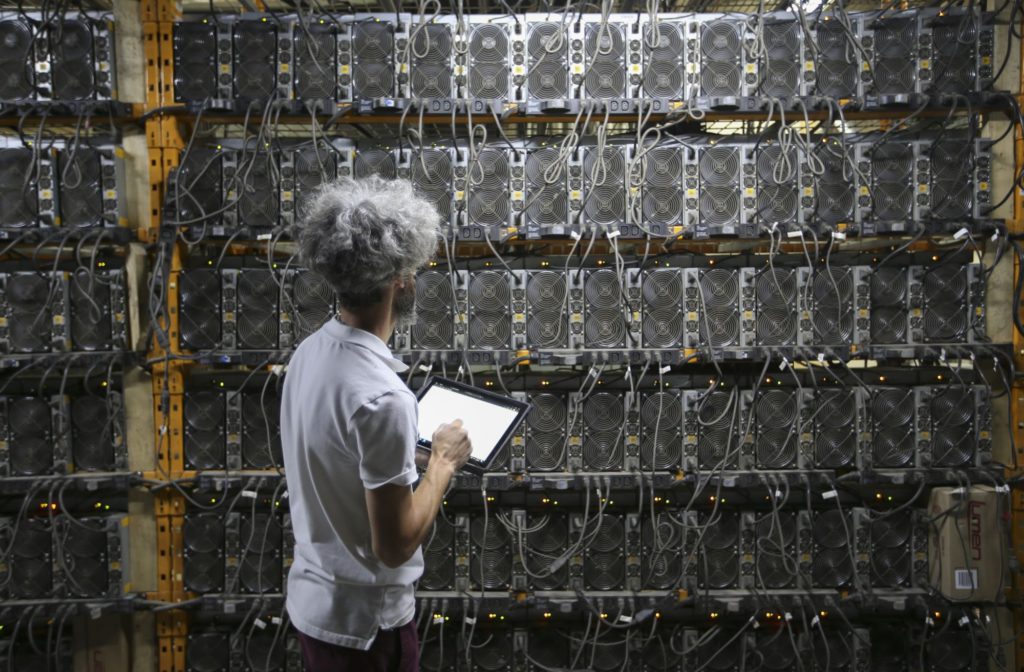
(Bloomberg) — Large-scale Bitcoin miners in the U.S. are looking to Scandinavia, the Middle East and other regions to expand their energy-intensive and lightly regulated industry. 

“We are geographically diversified in the U.S. … but we are also looking outside the U.S.,”  Mike Levitt, chief executive of Austin, Texas-based mining company Core Scientific, said at the Bitcoin Conference 2022 in Miami on Thursday. The most logical regions are Scandinavia and the Middle East,  where some nations have suitable power sources and capital, he said. 

Bitcoin miners also are searching for regions with fewer policy risks since the U.S. dethroned China as the world’s Bitcoin mining hub after Beijing’s crypto ban last May. Then just last month, the Texas state energy operator instituted a review process that could delay crypto miners for a few months from connecting to the power grid. 

Bitcoin miners had been flocking to Texas for its low electricity prices and liberal regulations on crypto mining. New York and Washington have put forward strict regulations on crypto miners due to their large demand on local grids and environmental concerns.

Miners say the regulatory efforts are a reason to look elsewhere.

“The middle east is a very interesting place because they have asymmetry in power and energy,” Fred Thiel, chief executive of Marathon Digital, said at the conference. “In the UAE in the summertime, they generate four gigawatts of power to run their air conditioners, the other nine months of the year they only use one gigawatt and three gigawatts sitting idle.” 

As for Europe, Thiel said, “The political winds in Europe are very anti.” 

More stories like this are available on bloomberg.com

©2022 Bloomberg L.P.

Takeaways From Thiel, Wood, Saylor Remarks on Bitcoin: TOPLive

(Bloomberg) — Here are the key takeaways from remarks by billionaire Peter Thiel, Ark Investment Management LLC Chief Executive Officer Cathie Wood and MicroStrategy Inc. CEO Michael Saylor at the Bitcoin 2022 conference in Miami Thursday. Click here for the TOPLive blog.

  • Saylor and Wood discussed the outlook for Bitcoin. The duo talked about the political and regulatory environment as well as capital markets and technology. Wood noted a “radical shift” in the way politicians have approached her about Bitcoin. Saylor said Joe Biden’s executive order signaled greater regulatory acceptance in the future.
  • Saylor also said capital markets are embracing crypto more. Wood said she anticipates roughly 2.5% of institutional assets will be allocated to Bitcoin in the coming years. Wood said Ark has a 2030 Bitcoin price target of $1 million.
  • Saylor and Wood touted the Lighting Network, a Layer 2 payment protocol added to Bitcoin’s blockchain that would enable speedier and cheaper transactions. Wood says she expects an explosion of developers focused on the network.
  • Thiel sees Bitcoin as the inflation-proof reserve currency of the future, with Ethereum the fast-moving payments system of tomorrow. He says Bitcoin warned central bankers about rising inflation and that ignoring that warning will have serious consequences.
  • Thiel listed the “enemies“ he feels are holding Bitcoin’s value back: Warren Buffett, Jamie Dimon, and Larry Fink. He refers to them as a “gerontocracy” holding back a youth movement.


More stories like this are available on bloomberg.com

©2022 Bloomberg L.P.
Activision Blizzard Makes 1,100 Game Testers Full-Time Employees

(Bloomberg) — Activision Blizzard Inc. said it will convert about 1,100 U.S.-based temporary or contract quality assurance workers to full-time staffers. The move comes in the wake of years of criticism over the video game publisher’s reliance on part-time employees and their tenuous working conditions.

The change will increase headcount at Activision’s publishing arm by 25% and boost the minimum salary for those workers to $20 an hour, according to a statement from the company. The workers will also be eligible for full company benefits.

In December, Activision converted 500 temporary roles to full-time positions while also ending 20 contracts. Outrage ensued over the job cuts, spurring a union push from a contingent of quality assurance testers at Raven Software, the Activision-owned studio that works on Call of Duty games. After Activision refused to recognize a union at Raven, the National Labor Relations Board in February heard arguments from both sides but hasn’t issued a ruling yet. 

“This change follows a process that began last year” across Activision Publishing and Blizzard, a spokesperson said in a statement. 

An Activision Blizzard spokesperson said Raven workers won’t receive new pay initiatives “due to legal obligations under the National Labor Relations Act.” The spokesperson added that “Whether Raven workers choose to unionize has nothing to do with the salary increases elsewhere for Activision’s QA workers.” A representative for the Communications Workers of America, which is representing Raven in its union push, didn’t immediately respond to a request for comment.  

In an email to staff on Thursday, Chief Operating Officer Josh Taub acknowledged that Call of Duty’s format has changed from an annual release schedule to an “always on” model. Along with that change, the company has “grown our workforce and support across our studios,” he said. The move to better integrate quality assurance workers will buoy Activision Blizzard’s service-game model, where a title is supported indefinitely with regular updates rather than a one-time purchase.

Activision Blizzard will bring on additional quality assurance support from “external partners,” the memo said, as part of a “long-standing studio and industry practice.”

For those hoping to work their way up in the video game world, quality assurance jobs are considered entry-level positions. However, across the industry, those workers have complained of low pay, overwork and uncertainty over how long their contracts will last. 


More stories like this are available on bloomberg.com

©2022 Bloomberg L.P.
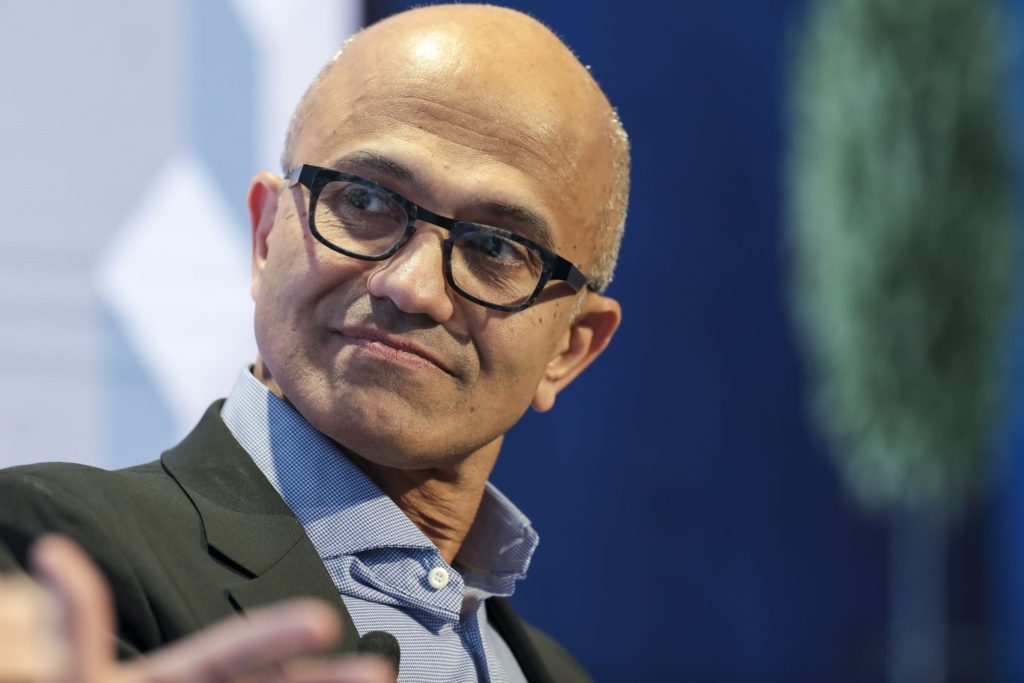
Microsoft’s CEO Warns of the Impact of All Those Late-Night Emails

(Bloomberg) — Microsoft Corp. Chief Executive Officer Satya Nadella warned that employee well-being could suffer from an ever-expanding workday that often now creeps well into the night.

Nadella, whose company has studied how remote work impacts collaboration in an effort to improve its Teams software, cited Microsoft research showing that about a third of white-collar workers have a “third peak” of productivity late in the evening, based on keyboard activity. Productivity typically spikes before and after lunch, but this third peak illustrates how remote work has broken down already-blurred boundaries between our job and our home lives. Nadella, speaking Thursday at the Wharton Future of Work Conference, said managers need to set clear norms and expectations for workers so that they’re not pressured to answer emails late at night.    

“We think about productivity through collaboration and output metrics, but well-being is one of the most important pieces of productivity,” he said. “We know what stress does to workers. We need to learn the soft skills, good old-fashioned management practices, so people have their wellbeing taken care of. I can set that expectation, that our people can get an email from the CEO on the weekend and not feel that they have to respond.”

Two out of 3 employees who consider leaving their job say their employer has not followed through on early pandemic promises to focus on employee mental health, according to a Harris Poll commissioned by online therapy provider Talkspace.

In a new study of Microsoft employees, about 30% experienced “peaks” of work in the morning, afternoon, and, to a lesser extent, at around 10 p.m. The average workday has expanded by 46 minutes, or 13%, since the pandemic began, Microsoft has found, with time spent on after-hours work growing even more quickly, at 28%. The data show how workers have increasingly adopted more asynchronous schedules, which don’t always line up with those of their far-flung colleagues or managers. 

Microsoft has brought on board about 50,000 employees during the pandemic, Nadella said. People, particularly in the technology sector, are increasingly demanding more flexibility in where and when they work, he said. An ongoing survey of knowledge workers — software programmers, data analysts and the like — from Future Forum, a research consortium backed by Slack Technologies, found that more than 3 out of 4 people want the ability to choose where they work, while 95% want to be able to set their own schedule.

Asked if he refrains from sending emails on the weekend, Nadella dodged a bit, saying, “I am learning every day.”

More stories like this are available on bloomberg.com

©2022 Bloomberg L.P.

Apple, Facing Outcry, Says App Developers Are Thriving on iPhone

(Bloomberg) — Apple Inc., looking to address criticism of its competitive practices by the European Union, developers and U.S. lawmakers, pointed to a report showing that third-party apps are thriving on the iPhone and other devices. 

In a study published by Analysis Group and touted by the iPhone maker, analysts said that Apple’s own apps are infrequently the dominant option and only account for a small share of app usage. 

“We found that Apple’s own apps, while used by many, are rarely the most popular of a given type and are eclipsed in popularity by third-party apps for nearly every country and app type we considered,” the report said. 

In the U.S., the report found that Spotify is 1.6 times more popular than Apple Music, that Google Maps is used 1.5 times more than Apple Maps, and that Netflix is 17 times more popular than Apple’s service. The Amazon Kindle service, meanwhile, was 4.5 times more popular than Apple’s Books app. 

Apple is under scrutiny from the European Union, which is working on legislation that would force the company to allow apps to be installed from outside the App Store. Such a move would threaten Apple’s grip on its platform and could limit its ability to collect a commission from developers.

U.S. lawmakers also have pushed to allow the practice, known as sideloading. Apple has said that sideloading would bring privacy and security risks to consumers.

Thursday’s move was an attempt to show that app developers are doing fine without a change. It also marked an unusual effort by Apple to downplay the success of its own services, which now generate more than $60 billion a year for the Cupertino, California-based company. The study found Apple’s music, TV, books and maps services are the dominant player in few major regions.

“In the U.S., iPhone users spend more than 50% more time on Spotify than on Apple Music,” the report said.

The researchers also found there was a variety of alternative apps across major categories. In Asia, for instance, third-party communication apps like LINE, WeChat and KakaoTalk are dominant on the iPhone.

(Updates with more from report in the seventh paragraph.)

More stories like this are available on bloomberg.com

©2022 Bloomberg L.P.

Close Bitnami banner
Bitnami