Bloomberg

Robinhood Rolls Out Cryptocurrency Wallet to 2 Million Users

(Bloomberg) — Robinhood Financial officially rolled out its cryptocurrency wallet on Thursday, giving access to more than 2 million customers that were on a waiting list for the digital product.

Chief Product Officer Aparna Chennapragada made the announcement as part of the Bitcoin 2022 conference in Miami and said in an interview at the event that the product shows the company’s commitment to the crypto space.

“You’ll see us play a very active role in crypto and shaping it,” Chennapragada said.

The company’s wallet enables users to interact with crypto outside of Robinhood’s trading platform, such as allowing them to buy nonfungible tokens, according to Chennapragada. The product was first announced in September, not long after Robinhood Chief Executive Vlad Tenev said that a crypto wallet was in high demand among customers during the company’s second-quarter earnings call.

Robinhood first began testing the wallet among users in the fall and made changes based on their feedback, such as adding visualizations that help explain the steps of a crypto transaction, Chennapragada said.

Known for its commission-free equities trading and its role in the meme-stock craze, the company has been steadily establishing itself as a force in crypto. However, Robinhood’s transaction revenue from crypto has been up and down, reflecting the volatility of digital currencies.

In the fourth quarter of last year, cryptocurrencies generated about $48 million in transaction-based revenue for Robinhood, a 79% drop from the $233 million reported in the second quarter. Even so, Chennapragada said the company will continue to play a “key part” in the industry.

In addition to rolling out its wallet, Robinhood is also working on allowing customers to use the Lightning Network, a blockchain platform designed to make Bitcoin transactions faster and cheaper.

Chennapragada said the Menlo Park, California-based company is improving its Bitcoin capabilities because of how the currency has helped broaden adoption of crypto.

“Bitcoin is actually the top most recurring buy for our customers, more than even many of the stocks that you think about,” she said.


More stories like this are available on bloomberg.com

©2022 Bloomberg L.P.

Teslas Are a Popular Choice for Fleets, From Hertz to NYPD

(Bloomberg) — Tesla Inc.’s cars are already trendy among electric-vehicle enthusiasts and environmentally conscious drivers. Now, they’re also catching on with companies building automobile fleets.

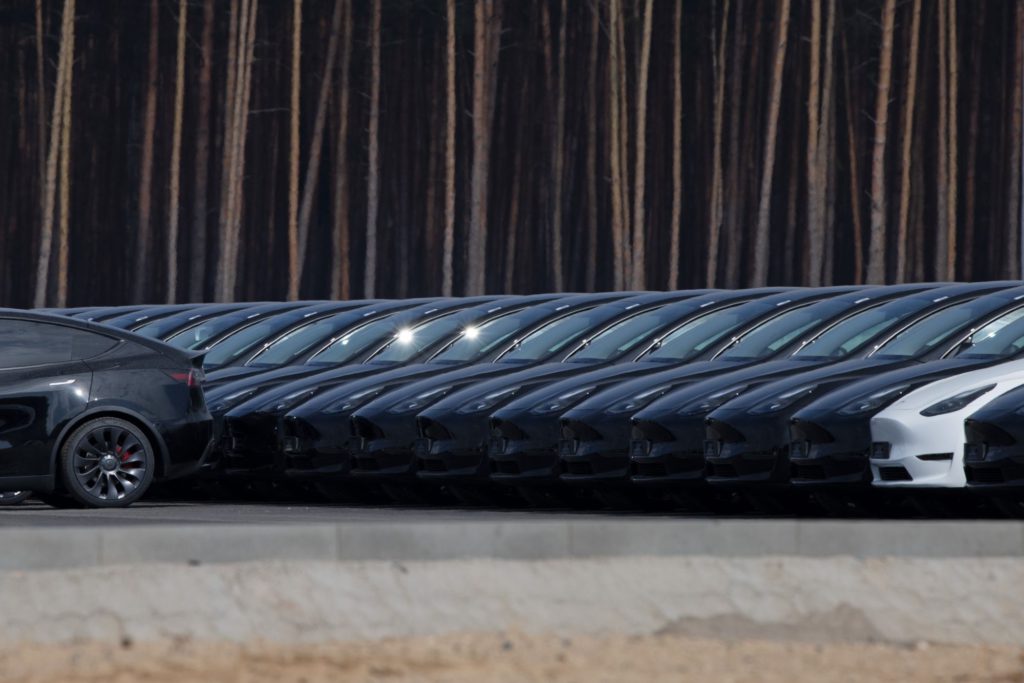
From Hertz Global Holdings Inc. to taxi operators to the New York City Police Department, Teslas are becoming a popular — if unexpected — choice for bulk buyers due in part to their favorable economics. Tesla is by far the most popular brand on an app operated by Standard Fleet, a San Francisco-based startup helping companies manage EV fleets.

“In concept, Teslas are more expensive but the payback is coming faster than people expect,” said Standard Fleet founder David Hodge, a former Apple Inc. engineer who worked on the company’s mapping technology. “There are lower fuel and maintenance costs. We’re talking high tens of thousands of miles to break even and not 100K miles.”

See also: TrueCar Founder’s Venture Will Get You a Tesla in 10 Minutes

Tesla itself is pursuing fleet sales, which automakers once saw as last-resort business because rental chains used to order stripped-down models rather than the more-expensive, feature-laden vehicles preferred by individual buyers. Tesla has a fleet website touting a lower cost of ownership, high resale values and the company’s broad charging network.

More stories like this are available on bloomberg.com

©2022 Bloomberg L.P.

New York’s MTA Asks Riders Griping on Twitter to Help Do Something About It

(Bloomberg) — New York’s Metropolitan Transportation Authority deals with a lot of unhappy riders on social media who complain about everything from train delays to crime and homelessness. Now it’s turning to those angry customers for help.

The MTA, the largest mass-transit provider in the U.S., is offering salaries of up to $94,000 for workers to help provide real-time updates for the millions of customers who rely on the system’s railroads, subways and buses, according to a job posting on April 5. 

“If you really want to tweet about fixing transit all day, we’ll pay you to do it,” the MTA’s subway alerts account said in a tweet.

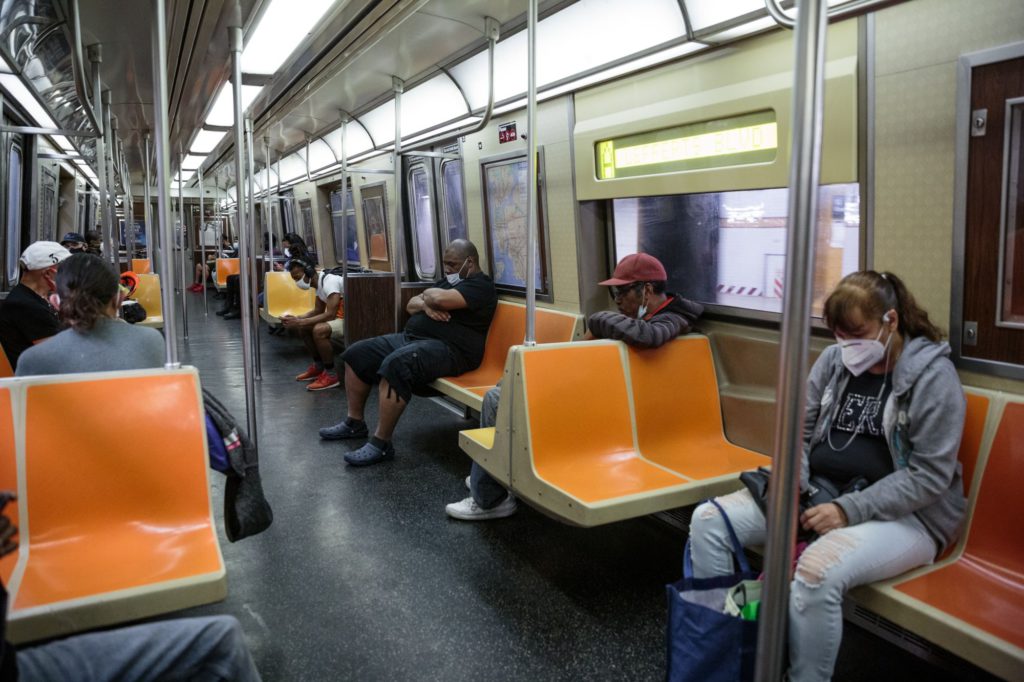
Weekday subway ridership in New York City is at about 60% of prepandemic levels, and increasing ridership will help the state agency address an estimated $2 billion budget deficit in 2026.

Crime has increased on the system during the pandemic as more people are sheltering in subway stations and trains. That’s also led the system to deal with increased train delays as they work to remove homeless people from stations. 

The MTA runs the New York City subways and buses, as well as Metro-North and the Long Island Rail Road.

More stories like this are available on bloomberg.com

©2022 Bloomberg L.P.

The Biggest Crypto Effort to End Useless Carbon Offsets Is Backfiring

(Bloomberg) — Users of a little-known crypto platform called Toucan now account for purchases of more than a quarter of all carbon credits by the world’s largest verifier of offsets. This newest crossover between crypto and the climate is having unexpected consequences that appear to be backfiring.

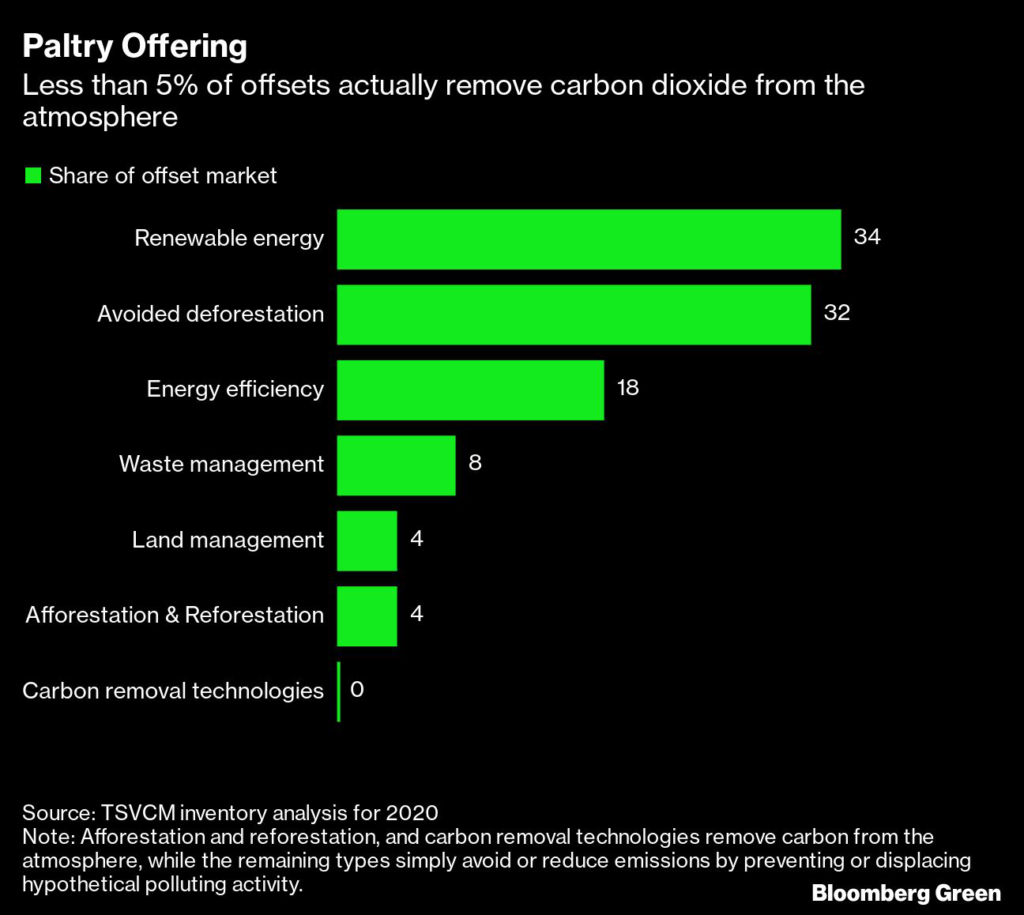
Crypto enthusiasts aren’t usually among the top buyers of carbon offsets. Airlines, banks, oil companies and other corporate polluters load up on offsets as a way to compensate for creating emissions. A project funded through offsets could, for example, support the building of a renewable energy plant on the logic that the carbon dioxide avoided by burning of extra coal will help cancel out a company’s climate harm.

In this case, crypto users didn’t move into offsets as a way to counteract the enormous emissions associated with mining cryptocurrencies. What brought them in was the idea that offsets will be important in the climate fight, a fast-expanding market that BloombergNEF projects could reach $190 billion in sales by 2030, and an opaque trading environment with virtually no oversight.

Blockchain technology underpinning cryptocurrency can be used to keep a public record of accounts involved in transactions for carbon offsets, even while buyers remain anonymous. Prices paid for individual offsets would become publicly available for the first time. Crypto could help clean up a messy market.

Some sought to go further. By organizing an effort to purchase the cheapest carbon credits, crypto users could rid the market of low-quality projects. An oil company would have to pay higher prices for offsets derived from more rigorous projects once Toucan’s users helped clear away the worst offenders. The crypto community even came up with a term for this method: “sweeping the floor.”

This do-gooder mission attempts to address the scientific problems with the vast majority of projects behind carbon credits, which don’t live up to environmental promises, by locking them away from being used. But now the crypto purchases aimed at ridding the world of bad offsets seem to be making the problem worse.

“You can see blockchain technology actually having a really important role because it’s a way in which you can create more security and transparency,” said Hugh Salway, head of environmental markets at Gold Standard, a major carbon offset registry. “But the way that this has been done in some examples is unhelpful.”

Take a look at the Dayingjiang-3 hydropower dam in China’s Yunnan province. In December, the dam’s developers sold their first credit endorsed by Verra, the largest offsets verifier. The buyers were anonymous entities via Toucan.Since then, more than 2 million credits from Dayingjiang-3 have been converted into what’s called a Base Carbon Tonne (BCT) on Toucan’s platform, each representing a ton of CO₂ supposedly avoided by not burning fossil fuels. Those BCTs make up more than 99% of the credits Dayingjiang-3 has sold, according to CarbonPlan, a nonprofit group that analyzes climate solutions.

Credits from existing dams don’t do much to help the environment. Given Dayingjiang-3 has been running since 2006, it doesn’t need additional funding to operate and displace more fossil fuel. This is a bedrock concept of carbon offsetting called “additionality” — a worthy credit will only come from green activities that wouldn’t have happened without the extra money. In fact, most of Toucan’s BCTs are based on renewable energy projects that would likely have happened without extra financial support, especially given how quickly the cost of clean energy has fallen in recent years.

“If a project hasn’t issued credits for years, there’s a real question as to whether it needed offsets and how important that income was,” said Barbara Haya, a research fellow at the University of California at Berkeley.

Many of the credits on Toucan’s platform are from projects that are more than a decade old, when standards were much lower. Almost all are linked to initiatives that started before 2016, CarbonPlan found. They wouldn’t be eligible for trading in established markets such as Corsia, a program run by the International Civil Aviation Organization, or on some commodities exchanges which offer carbon offsets contracts, according to Grayson Badgley, a research scientist at CarbonPlan.

If the intention was to raise the quality and price of carbon credits, things are moving backwards. The assumption was that there’s a finite pool of bad offsets, which could be bought and locked away, allowing good projects to be priced better. But the assumption was flawed.

Spiking demand for cheap Verra credits triggered by Toucan and its allies has created new reasons to generate the bad offsets. According to an analysis by CarbonPlan, dozens of project developers who haven’t issued credits in years have suddenly started selling again — even though they don’t need the money to keep operating, much less get off the ground.

“The problem we are seeing is that Toucan is creating incentives to bring zombie projects to life that have no environmental integrity,” said Danny Cullenward, policy director at CarbonPlan.

Over the last six months alone, Toucan’s platform has been used to scoop up more than 21 million credits verified by Verra. That activity accounts for more than one in four credits bought over that span available via Verra. Toucan says crypto wallets on its platform hold credits worth more than $100 million, with related trading volume exceeding $2 billion.

Toucan says it’s not their responsibility to judge the quality of a carbon credit. “We’re not trying to be the standards body that’s creating the criteria by which we measure climate impact,” said John Hoopes, who works on the company’s strategy and ecosystem. Toucan is aware of the problem of zombie projects, he added, and is working on ways to filter out older credits.

Verra, meanwhile, said in a statement that it takes no responsibility for any trading that happens via Toucan or elsewhere in the crypto world and also defended its certification of old projects.

Other attempts to reform the offsets market have run into issues of quality control because it is fundamentally difficult to decide which projects are truly benefiting the planet. Last month, a task force of hundreds of companies and sustainability experts led by finance heavyweights Mark Carney and Bill Winters acknowledged that their multiyear effort to improve carbon offsets trading had to be scaled back because they hadn’t yet agreed on exactly how to define a high-quality project.

If crypto’s entry into offsets hasn’t so far managed to improve the market, that doesn’t mean it hasn’t been an opportunity for profit.

Once a carbon credit from Verra is turned into a BCT token, buyers can do as they please: trade it to someone else, use it to offset a ton of CO₂ (thereby “retiring” the credit), or convert it into other carbon tokens. One popular move is to turn BCT into a “carbon-backed currency” managed by KlimaDAO. The group is the most high-profile proponent of eliminating low-quality offsets. KlimaDAO and Toucan aren’t officially in partnership, but the two organizations dominate carbon-related crypto trading.

Because Toucan accepts almost all Verra credits, which can sell for less than $2 each, it’s created an easy opportunity for users to make a quick buck, according to Cullenward. Here’s how it works:

  • A user buys a $2 credit from Verra and converts it into BCT on Toucan

  • BCTs on Toucan currently trade at about $3 each

  • Those BCTs can also be used to earn KlimaDAO’s currency, which stands at $21 today

Natacha Rousseau, a spokesperson for KlimaDAO, said the group’s push to get more carbon credits on the blockchain “has never been proposed as a solution to underlying supply-side issues.” Rather, the group is trying to address “clear market failures present at the demand-side, where many are making huge profits from asymmetric information while normal people are locked out,” she said, adding that KlimaDAO supports the work of organizations such as Verra and Gold Standard. 

It’s impossible to determine what motivates the users investing in Toucan and Klima. While crypto’s decentralized nature makes transactions more transparent, to some extent, it also disguises buyers’ true identities — are they trying to save the planet or make a profit, or both?

“They might be sweeping the floor,” Cullenward said, “but they are making dust while doing so.”

(Updates with comment from KlimaDAO in third-last paragraph.)

More stories like this are available on bloomberg.com

©2022 Bloomberg L.P.

Grocers Raise Workers’ Pay as U.K. Cost-of-Living Crisis Deepens

(Bloomberg) —

Britain’s biggest grocers are increasing pay to retain workers as rising inflation causes the worst cost-of-living crisis in decades.

Tesco Plc, the country’s largest grocer, said Thursday that it’s lifting wages by almost 6%. Smaller rival J Sainsbury Plc is telling staff on Friday that from May all workers will receive the so-called real living wage — currently 11.05 pounds ($14.43) in London and slightly lower outside the U.K. capital. 

The moves show how British companies are being forced to respond to the cost-of-living crisis, which is pinching consumer budgets as the prices of fuel, energy and food soar. U.K. supermarket employees are among those worst-affected, with an increasing number using food banks, according to the Independent Food Aid Network. 

Other companies across Britain are also facing demands for higher pay. Telecommunications company BT Group Plc on Thursday announced a 1,500-pound increase for its workers, calling it the biggest award in two decades. However, the Communications Workers Union, which represents nearly half of its staff, said the offer was “insulting” at a time when inflation is surging.  

The Bank of England says higher wages threaten to cause an upward spiral in prices. Policy makers have boosted interest rates three times since December and are expected to act again as early as next month to clamp down on inflationary forces.

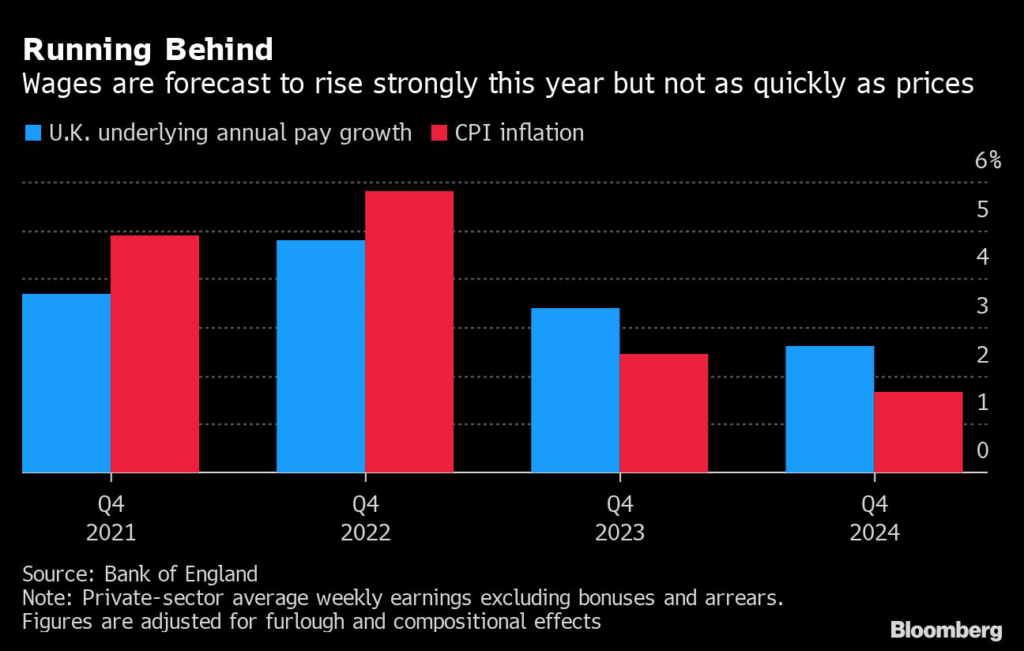
Consumer prices rose 6.2% in February, and the central bank has warned inflation could hit double digits by the end of the year, fueled by a surge in energy, food and clothing prices. Pay growth eased during the coronavirus lockdowns in 2020 and then surged as much as 8.8% in the middle of last year as the economy reopened and companies struggled to find workers.

Wage increases since then have settled down to a more moderate pace of under 5%, though Britain’s low productivity levels mean even that level may be more inflationary than in years past. The BOE’s target is to keep inflation to 2%.

British businesses facing increase requests have to balance those with the need to invest in the business at a time when costs are soaring and supply-chain problems and geopolitical concerns are weighing on sentiment. 

Tesco is increasing the hourly rate for shop and warehouse workers to 10.10 pounds from July 24, with staff in London receiving 10.78 an hour. Truck drivers, who are in strong demand as online grocer ordering takes off, will receive 11 pounds hourly. The company said that while it normally agrees to two-year deals with union workers, it will review wages again next year because of the uncertainty in the economy.

Sainsbury’s enhanced pay will make it the highest payer in the U.K. industry and the first grocer to provide the real living wage to supermarket employees, who were designated as key workers by the U.K. government during the pandemic.   

The real living wage is the minimum hourly rate necessary for workers to afford housing, food and other basic needs, according to the Living Wage Foundation. Sainsbury workers in central London were already receiving the 11.05-pound hourly rate; those in outer parts of the capital will now get it as well, while those in other regions of the U.K. will receive 10 pounds an hour — 10 pence above the real living wage for those regions.

Sainsbury was already facing a demand from more than 100 shareholders including HSBC Holdings Plc to pay the higher living wage to all its employees. The resolution was to be voted on at the annual meeting later this year. 

BOE Governor Andrew Bailey in February urged workers to hold off on inflation-busting pay demands, saying policy makers would have to respond with higher borrowing costs. That drew jeers from union and research groups concerned that wages are failing to keep up with rising prices, delivering the biggest squeeze on living standards since the 1970s.

More stories like this are available on bloomberg.com

©2022 Bloomberg L.P.

Apple Push Into Baseball Includes Elevating Female Broadcasters

(Bloomberg) — Apple Inc.’s push into streaming Major League Baseball games, part of an effort to expand its TV+ service, includes bringing more women into the broadcast booth.

Beginning with Friday’s game between the New York Mets and Washington Nationals, Melanie Newman will lead play-by-play coverage, becoming the second woman to handle those duties for a national broadcast team, Apple said Thursday. The group also includes Brooke Fletcher as reporter and Hannah Keyser as an analyst, with former player Chris Young filling out the team.

Later that evening, the broadcast team covering the Houston Astros playing the Los Angeles Angels will include Katie Nolan as an analyst and Heidi Watney on reporting duties. Stephen Nelson will handle play-by-play coverage, and Hunter Pence will serve as another analyst.

Apple announced plans to stream MLB games last month, marking its first foray into sports broadcasting. The TV+ service will offer two games on Friday nights to fans in eight countries.

The programming, called “Friday Night Baseball,” will have live pre- and postgame coverage hosted by Lauren Gardner, Apple said.

More stories like this are available on bloomberg.com

©2022 Bloomberg L.P.

U.K. Brexit Border IT System Plagued by Outages as Queues Build

(Bloomberg) —

A key part of U.K. government’s post-Brexit border IT system is expected to remain out of service until at least Monday, adding to the headache for traders already facing long queues on the way to the country’s busiest port.

The outage affects the Goods Vehicle Movement Service — which allows companies to file customs forms electronically before they move goods between Britain and the European Union — Her Majesty’s Revenue and Customs said in a statement on Thursday. Firms will be able to use alternative documentation as part of an effort to “ensure minimal disruption,” HMRC said.

The failure adds an extra layer of complication for companies shuttling goods across the English Channel. They had already been facing 20-mile-long lines of trucks on the approach to Dover after P&O ferries suspended sailings. 

Without GVMS, firms have to use a different set of forms to get their goods through customs, according to Shane Brennan, chief executive of the Cold Chain Federation, which represents businesses operating frozen and chilled storage distribution vehicles.

Read More: U.K. Trade and Travel Face More Disruption at Key Channel Port

“It’s just reinforcing for people — particularly the European-based haulage operations — the hassle of dealing with the U.K.,” he said. “It’s going to be a real problem if it carries on and compounds our ongoing problem of having enough capacity to get stuff into the U.K.”

Hauliers say the timing couldn’t be worse, with Easter being one of their busiest periods of the year. P&O has said it is preparing to resume some services from this weekend, a move which may yet ease the crunch at the border.

“Easter is already really tight for capacity,” said Jon Swallow, co-founder of Felixstowe-based Jordon Freight, which moves goods between Britain and the European Union. The GVMS outage “just adds to the problem,” he said.

More stories like this are available on bloomberg.com

©2022 Bloomberg L.P.

U.K. Fiber Startup Netomnia Raises $385 Million to Battle BT

(Bloomberg) — Fiber network startup Netomnia Ltd has raised 295 million pounds ($385 million) led by DigitalBridge Investment Management, showing there’s still ample investor appetite to challenge Britain’s big phone companies.

Additional funding came from previous investors Soho Square Capital LLP and Advencap Ltd, and takes Netomnia’s total funding to 418 million pounds, including 73 million pounds of debt, founder and Chief Executive Officer Jeremy Chelot said. The company declined to share a valuation.

Chelot, 38, has experience raising funds for fledgling fiber companies. He previously led the growth of London-focused network startup Community Fibre, which was sold in 2020 to private equity firm Warburg Pincus LLC and DTCP, the venture arm of Deutsche Telekom AG.  

Chelot and Community Fiber co-founder Callum Dick used money from that deal to start Netomnia, as well as a new internet service provider called YouFibre, which will share the funding. Chelot wants to build fiber lines to a million homes across the U.K. in the next two years, in a range of areas except his former stomping grounds of London, which already has plenty of competition, he said. 

“The goal is simple: Netomnia wants to become the third national operator in the U.K,” Chelot said in an interview. That will mean competing with Britain’s dominant network company, former state monopoly BT Group Plc, which has pledged to build 25 million connections by the end of 2026, and the second player, Virgin Media O2, which is in talks with potential investors to connect millions more homes to fiber. 

“Obviously that crown is contested, but that’s where we want to be,” Chelot said.

He’s up against some big fellow challengers, who have been plowing money into U.K. alternative networks or “alt nets” for several years in a land grab to connect as many customers as possible to gigabit broadband, including Goldman Sachs Group Inc.-backed CityFibre Holdings Ltd. and KKR & Co. Inc.’s Hyperoptic. 

More stories like this are available on bloomberg.com

©2022 Bloomberg L.P.

VW’s Board Backs Audi and Porsche Plans to Potentially Join Formula 1 Racing

(Bloomberg) — Volkswagen AG has opened the door for Audi and Porsche to pursue separate entries into Formula One racing.

Volkswagen’s supervisory and management boards are backing plans for the luxury-car brands to potentially join the competition as early as 2026, the carmaker said Thursday.

A final decision on whether to take part in F1 hasn’t yet been taken, Audi said, adding that it would hinge on the racing competition becoming more sustainable. The deliberations come as Volkswagen Chief Executive Officer Herbert Diess attempts to reduce complexity across the sprawling conglomerate.

Oliver Blume, who heads VW’s Porsche unit, said last month the brand was considering an entry into F1. Dominated in recent years by German rival Mercedes-Benz AG, F1 has outlined plans to become carbon neutral by the end of the decade, which would align the sport more closely with VW’s own climate goals.

More stories like this are available on bloomberg.com

©2022 Bloomberg L.P.

Ukraine Update: UN Votes to Suspend Russia From Rights Panel

(Bloomberg) — The United Nations General Assembly voted to suspend Russia from the Human Rights Council, but the measure garnered a substantial number of abstentions in addition to votes against. It was the first time a nation was suspended since a similar vote against Libya in 2011. 

The war in Ukraine may last for weeks or even years, NATO and U.S. officials warned as Kyiv’s foreign minister pleaded for urgent military assistance before it’s too late to make a difference in its fight against Russian forces. 

On the ground, the Ukrainian military said Russian troops are preparing for a new offensive in the country’s east. Elsewhere, German intelligence picked up radio intercepts that reinforced indications that Russian troops carried out atrocities against civilians near Kyiv. Russia has denied the accusations. 

(See RSAN on the Bloomberg Terminal for the Russian Sanctions Dashboard.) 

Key Developments

  • Russian Coal and Oil Paid for in Yuan to Start Flowing to China
  • Shell to Write Down as Much as $5 Billion on Russia Exit 
  • Mocked as ‘Rubble’ by Biden, Russia’s Ruble Comes Roaring Back
  • Sanctions Hobble the Airline Built by ‘Russia’s Elon Musk’
  • Russia Piles Pressure on Companies as Unemployment Crisis Looms
  • U.S. Satellites Spying on Russia’s War Tap Commercial Technology

All times CET: 

UN Votes to Suspend Russia From Key Panel; 58 Abstain (6:01 p.m.)

The United Nations General Assembly voted to suspend Russia from the Human Rights Council, but the measure garnered a wide range of abstentions.

The move to suspend Russia was backed by 93 nations and opposed by 24 with 58 abstentions. It represented the first time a nation was suspended since a similar vote against Libya in 2011. Ukraine’s UN envoy, Sergiy Kyslytsya, said the vote would be a defining moment for the global organization, which he has criticized for not doing enough to stop Russia’s invasion.

Voting to suspend Moscow is “not an option, it is a duty,” Kyslytsya said. He added that voting no means “pulling a trigger, and means a red dot” on the voting screen. “Red as the blood of the innocent lives lost.”

While countries such as Syria, Iran and North Korea predictably backed Russia, many nations — including Brazil, India and Mexico — argued that they want to see the results of an independent investigation into apparent atrocities completed before a decision on Russia’s membership was made.

France Urges China to Stop Echoing Russian Propaganda (5:52 p.m.)

Top adviser to French President Emmanuel Macron told Chinese Foreign Minister Wang Yi in a phone call that his country needs to stop echoing Russia’s propaganda, an official at the French presidency said. 

War Will Be a ‘Long Slog,’ Top U.S. General Says (5:22 p.m.)

The war in Ukraine is “going to be a long slog” and a diplomatic solution isn’t an immediate possibility, General Mark Milley, chairman of the Joint Chiefs of Staff, told the U.S. Senate Armed Services Committee.

“It’s an open question now on how this ends,” he said.

Defense Secretary Lloyd Austin acknowledged at the same hearing that guidance on intelligence-sharing hasn’t been clear and that he’s clarifying that the U.S. will share intelligence with Ukraine to conduct offensive operations in the disputed Donbas region.

Ukraine Expects Russia to Launch Offensive at Capital Kyiv Again (4:47 p.m.)

Russian troops have retreated from around Kyiv and will try to seize the eastern regions of Luhansk and Donetsk, but a “re-offensive” on the capital should be expected, said Oleksandr Gruzevych, the deputy chief of staff for land forces. 

Gruzevych said that while the Ukrainian army eliminated about a third of Russian troops near Kyiv, the rest were re-located across the border – with a third deployed to the east, and another third remaining in Belarus. “That is quite a powerful group,” which may be mobilized again to attack Kyiv, he said.

War in Ukraine Could Last Years, NATO Chief Says (4:26 p.m.)

The war in Ukraine may last for years, according to the chief of NATO. He said foreign ministers from the alliance had agreed to step up support for the country.

Secretary General Jens Stoltenberg told reporters after the meeting in Brussels that allies need to work for a quick end to the war “but at the same time be prepared for a long haul. This war may last for weeks, but also months and possibly also for years.”

British Foreign Secretary Liz Truss said allies “agreed to help Ukrainian forces move from their Soviet-era equipment to NATO-standard equipment on a bilateral basis.”

Kuleba Says Ukraine Needs NATO’s Help Now (3:21 p.m.)

Ukrainian Foreign Minister Dmytro Kuleba said his nation needs urgent military assistance before it’s too late to make a difference in its fight against Russian forces.

“Either you help us now — and I’m speaking about days not weeks — or your help will come too late,” he said after meeting with NATO foreign ministers in Brussels. He said he will be following up on specific timelines for his country’s request for more weapons to fight Russian forces. “I have no doubts that Ukraine will have weapons necessary to fight. The question is the timeline.”

“You provide us with everything that we need and we will fight for our security, but also for your security so that President Putin will have no chance to test Article 5,” he added, referring to a provision of the NATO treaty in which countries pledge to defend all alliance members from attack.

EU Sanctions Debate Hits a Few Snags (12:15 p.m.)

Several European Union countries say the fifth package of sanctions against Russia is being watered down too much, according to people familiar with the matter.

EU ambassadors are meeting Thursday with the aim of approving the package, which contains a coal embargo. But Poland is resisting a change in the draft sanctions plan, sought by Germany, that extends the phase-in period for the ban by a month to four months. Poland also wants to remove all remaining exemptions to the already existing ban on the sale of weapons, as well as military-related technologies and components, to Russia, the people said.

Estonia, Finland to Rent Joint LNG Terminal Vessel (11:14 a.m.)

Estonia and Finland plan to jointly rent a liquefied natural gas terminal vessel as part of an effort to lower dependence on Russian gas. 

The floating storage and regasification unit would have possible berths on both sides of the Gulf of Finland, according to statements from the countries, which are connected by the Balticconnector gas pipeline. The project’s timetable is “extremely urgent,” Finland’s economy ministry said.

Russia Coal, Oil Paid for in Yuan Heads to China (11:00 a.m.)

Several Chinese firms used local currency to buy Russian coal in March, and the first cargoes will arrive this month, Chinese consultancy Fenwei Energy Information Service Co. said. 

These will be the first commodity shipments paid for in yuan since the U.S. and Europe penalized Russia and cut several of its banks off from the international financial system. 

Hungary Still Opposes Sanctions on Russian Gas (10:56 a.m.) 

Hungary reiterated that it can’t back sanctions against Russia that would threaten its natural gas supplies. Despite efforts at diversification Hungary “is still heavily dependent on Russian gas,” Dora Zombori, ambassador-at-large for energy and climate, said at an industry conference in Budapest. “We cannot change this situation overnight.” 

Russian Railways Didn’t Repay $605M Bond (10:56 a.m.)

Russian Railways informed the issuer, RZD Capital Plc, that it’s applied for a license from the Office of Financial Sanctions Implementation in the U.K. for the purposes of facilitating payments on outstanding debt obligations issued before March 24, which “may require a number of weeks processing time,” according to a statement. 

Russian Railways Coupon Miss Raises Debt Swaps Trigger Question

Commodity Markets Remain Volatile (10:20 a.m.)

Commodity markets continue to be whipsawed by disruptions sparked by Russia’s war in Ukraine and efforts to curb raw-material costs. 

Russia slipped closer to a technical default after foreign banks declined to process about $650 million of dollar payments on its bonds, forcing it to offer rubles instead.

Equities markets are showing signs of stability after a selloff sparked by hawkish minutes from the Federal Reserve, with European markets mostly up and U.S. futures mixed. 

EU Russian Coal Ban May be Pushed to Mid-August: Reuters (10:16 a.m.) 

Envoys are poised to approve a ban on Russian coal that would become fully effective from mid-August, a month later than initially proposed, Reuters reported, citing a person in the EU familiar with the matter who it didn’t identify. 

Shell Exit From Russia May Trigger $5 Billion Writedown (9:52 a.m.)

Shell Plc said its withdrawal from Russia will result in $4 billion to $5 billion of impairments, and warned investors that extreme energy price volatility in the first quarter could hit cash flow. 

While western energy companies leaving Russia are likely to take massive financial hits, they are attempting to minimize the reputational damage of investing in Moscow-backed projects following the war on Ukraine.  

Germany Overhears Russian Soldiers Discussing Bucha: Spiegel (9:52 a.m.) 

Germany’s foreign intelligence service intercepted communications between Russian soldiers discussing the killing of civilians in the town of Bucha, Der Spiegel reported, without saying how it obtained the information. 

The radio communications, which appear to place Russian soldiers at locations where bodies were found, contradict Moscow’s denial that its troops were involved. In one of the messages, a soldier can be heard describing how he shot a person on a bicycle. Another appears to provide evidence of a strategy to stop and question civilians before shooting them, according to the report. 

The material also shows that mercenaries, including the Kremlin-backed Wagner Group, appeared to have played a major role in the killings, according to Der Spiegel. 

Finland’s NATO-Backing Party Rises in Poll (9:19 a.m.) 

Finland’s National Coalition, the only large party in the Nordic country to openly support joining NATO, soared 3.5 percentage points in the latest poll. The party’s benefiting from a historic shift in Finnish attitudes to potential membership in the North Atlantic Treaty Organization. The gain, almost twice the margin of error, gives it 26.1% backing, its highest in polls by YLE.

Finland’s government is slated to send a white paper to parliament next week on its changed security environment. 

Australia Imposes New Sanctions on Russia Over Bucha (9:15 a.m.) 

Australia placed new sanctions on 67 Russian individuals, including military figures accused of human rights abuses, bringing the total number of people sanctioned by Canberra since the beginning of the Ukraine war to almost 600.

Foreign Minister Marise Payne said in a statement that the move was in response to “the emergence of evidence of war crimes committed by Russia in Bucha and other towns around Kyiv.” 

Russian Unemployment Crisis Looms (9:09 a.m.)

The next economic jolt to Russia will likely arrive by way of the labor market, building in intensity over the coming months and bringing new hardships for a nation already waylaid by a series of shocks.

Joblessness this year is set to more than double from the first quarter and exceed 9% for the first time in more than a decade, according to a Bloomberg survey of analysts in March. 

German Minister Says Open to Coal Embargo (8:33 a.m.) 

Economy Minister Robert Habeck said Germany has already cut its reliance on Russian coal by at least half in the past month and won’t stand in the way if the European Union decides to ban on imports of the fuel from Moscow. 

Habeck said it would be “foolish” to name an exact date for when purchases of Russian coal could end. The sanctions being considered would allow some deliveries to be completed, he added.

Austria Expels Four Russian Diplomats (8:24 a.m.)

Austria expelled four Russian diplomats for illegal activities, the Foreign Ministry in Vienna said in a statement.  

While several other nations who have announced similar measures in recent days, it’s a rare step for Austria, which houses several international organizations and has sought a diplomatic role in bridging Europe’s east and west. Russia has almost 300 diplomats stationed in Austria.  

Ukraine Says Russian Troops Readying for Eastern Offensive (8:02 a.m) 

Russian troops are focusing on preparations for their next offensive in Ukraine’s east, the General Staff of the Ukrainian armed forces said on its Facebook page. Shelling of towns in the Luhansk region started on Wednesday night and continued through morning, with significant damage to residential buildings and infrastructure.

Ukraine’s government has urged people living in the regions of Kharkiv, Donetsk and Luhansk to leave the areas “while the opportunity still exists” in advance of Russia’s expected new assault. 

EU Ministers Set To Discuss Oil Embargo, Borrell Says (8:11 a.m.) 

European Union foreign affairs ministers are likely to discuss imposing an oil embargo on Russia when they meet early next week, said Josep Borrell, the EU’s foreign policy chief. 

Borrell told reporters in Brussels that an oil embargo is not in a fifth sanctions package on the agenda for Thursday, but that he expects the ministers will tackle it on Monday “and sooner or later, I hope sooner, it will happen.” 

He said he hopes the fifth package, which would ban coal imports among other steps, “will be finally approved by the ambassadors” later Thursday. 

Germany Too Slow To Move on Weapons, Kuleba Says (7:47 a.m.)

Germany is taking too long to decide on supplying more weapons to Kyiv, Ukraine Foreign Minister Dmytro Kuleba said. “While Berlin has time, Kyiv doesn’t,” Kuleba said of Germany’s “length of procedures and decision-making” as he arrived for a meeting of NATO foreign ministers in Brussels. 

Kuleba said Germany had made “a revolutionary step” in agreeing several weeks ago to supply weapons to Ukraine. “However, it is clear that Germany can do more given its reserves and capacity.” 


(An earlier version corrected the 8:02 subhead to show Russia preparing for eastern offensive.)

More stories like this are available on bloomberg.com

©2022 Bloomberg L.P.

Close Bitnami banner
Bitnami