
Bloomberg

Coinbase to More Than Triple India Headcount This Year

(Bloomberg) — Coinbase Global Inc., the U.S. cryptocurrency exchange operator, plans to more than triple its number of employees in India this year to around 1,000, according to Chief Executive Officer Brian Armstrong. 

India will be Coinbase’s technology hub to develop global products and half of the new hires will be engineers, added Pankaj Gupta, the company’s India site head. The South Asian nation will account for a quarter of the total 2,000 people Coinbase plans to hire across product, engineering and design in 2022.

“Last year we decided India is going to be a huge place,” Gupta said. “We understand the complexity of Indian market. It’s a place with a lot of potential.”

Coinbase’s expansion plans in India come against the backdrop of a backlash among local competitors against a draconian new taxation regime. The government is imposing a 1% tax deductible at source, or TDS, on all digital-asset transfers above a certain size — a move executives have warned will deprive the market of much-needed liquidity.

“We are going to invest for the long term in India,”  Armstrong said. 

India, with an estimated 15 million active crypto users, has been stuck in regulatory limbo since the Supreme Court in 2020 overturned a central bank directive banning regulated entities from working with digital-assets companies. 

Read more: Crypto Brain Drain Is ‘Crazy’ in India, Polygon Co-Founder Says

Armstrong, speaking at a Coinbase conference in the tech hub of Bengaluru, also said customers can now use the Unified Payments Interface, the nationwide quick-payments network, to directly purchase cryptocurrencies on its exchange. 

National Payments Corporation of India, which runs UPI, said in a statement it is “not aware of any crypto exchange using UPI.” An email seeking comment from Coinbase wasn’t immediately answered outside of business hours in Bengaluru.

(Updates with NPCI statement in final paragraph)

More stories like this are available on bloomberg.com

©2022 Bloomberg L.P.
Discovery Chief Zaslav Chooses Post-Merger Leadership Team

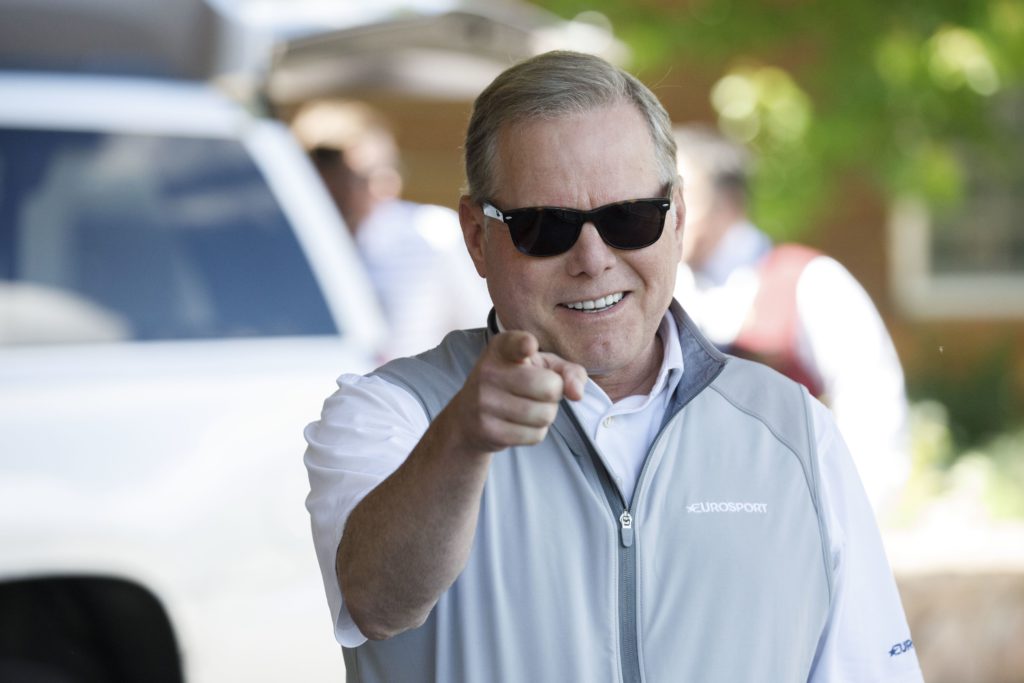
(Bloomberg) — Discovery Inc. has chosen the team that will run its business once it completes its megamerger with WarnerMedia, a deal that will transform Chief Executive Officer David Zaslav into one of the biggest players in Hollywood. 

Jean-Briac Perrette, a longtime lieutenant of Zaslav, will run the company’s streaming businesses, Discovery said in a statement Thursday, confirming an earlier Bloomberg News report. Bruce Campbell will take a new role as chief revenue and strategy officer, with a portfolio that includes U.S. advertising sales, distribution revenue and content licensing. 

Kathleen Finch will oversee more than 40 of the company’s cable channels as chairman and chief content officer for the newly created U.S. Networks Group, while Chris Licht will retain leadership of CNN Global as its chairman and CEO. Remaining in their roles will be HBO programming chief Casey Bloys and Warner Bros. studio chiefs Channing Dungey and Toby Emmerich. 

Zaslav is leaning on his own executives to run the business and operations of the combined company, while relying on WarnerMedia to supply the creative ideas. Zaslav already said goodbye to WarnerMedia chief Jason Kilar, as well as nine of his 11 direct reports, while eliminating layers of executives between himself and the creative chiefs so he can take a more hands-on role in their work. 

The CEO pursued the purchase to give the combined company the scale to compete with Netflix Inc., Walt Disney Co., Apple Inc. and Amazon.com Inc. in streaming. WarnerMedia’s HBO Max was one of the faster-growing services in the world last year. With more than 70 million subscribers, drawn largely by high-quality HBO programs and Warner Bros. movies, it’s still small relative to some peers.

Streaming Strategy

The combined company has yet to outline a streaming strategy. HBO Max is one of three streaming services WarnerMedia and Discovery operate between them. When the combination is complete later this week, the company will have one of the largest film and television libraries in the world. 

Zaslav has taken on tens of billions of dollars in debt to complete the deal, and pledged to cut $3 billion. He may eliminate staff duplication across advertising sales and TV distribution, among other areas. Though streaming is the future, the company still makes most of its money from linear cable networks and film distribution. 

The executive spent the last decade-plus running cable networks that air reality TV programs, and has spent the last year meeting with top agents and producers to develop his plans for one of the most famous companies in Hollywood. 

AT&T is set to receive $43 billion in cash and debt considerations as part of the deal, with its stockholders slated to own 71% of the post-merger company, which will be called Warner Bros. Discovery Inc.

(Updates with Discovery announcement of appointments in second and third paragraphs.)

More stories like this are available on bloomberg.com

©2022 Bloomberg L.P.
Terra Expands Stablecoin Reserve Beyond Bitcoin With Avalanche

(Bloomberg) — Public blockchain Terra, which captured the attention of the cryptocurrency world by pledging to buy $10 billion in Bitcoin to build a reserve for its UST stablecoin, is diversifying that strategy.

Luna Foundation Guard, a Singapore-based nonprofit organization built to support Terra, will acquire Avalanche tokens worth $100 million from the Avalanche Foundation to boost the stablecoin reserve. The native token of the Avalanche blockchain has a total market capitalization of $22.1 billion as of Thursday, according to data aggregator CoinGecko. The over-the-counter purchase will make the token the second asset in the UST reserve after Bitcoin.

Terra’s UST stablecoin is already backed by a Bitcoin reserve that could eventually reach $10 billion. The firm added another $230 million in Bitcoin on Wednesday, after pouring more than $1 billion into it since the end of January. Terra has been ramping up its Bitcoin purchase to help improve UST’s ability to remain pegged to the dollar. The algorithm stablecoin, despite not being backed by fiat currency, has managed to maintain its dollar peg by issuing and destroying Luna tokens, Terra’s native cryptocurrency.

Luna Foundation Guard chose Avalanche among other cryptocurrencies for its UST reserve because of its rapid growth and vast fan base, Do Kwon, founder of Terraform Labs which powers the Terra blockchain, said in an interview with Bloomberg News. 

Avalanche is the 10th biggest cryptocurrency by market capitalization while Luna stands in seventh place, according to data from CoinGecko. Both Avalanche and Terra are layer 1 blockchains, similar to Ethereum, where users can write codes and build different projects from non-fungible tokens to decentralized finance applications.

“Avalanche is still a growing ecosystem…a lot of it is fueled by loyalty to the AVAX token and users feel a lot of affinity with an asset that aligns itself with AVAX,” Kwon said. “Whereas for the average Ethereum user, aligning yourself with Ether doesn’t really mean that much.”

While Bitcoin will remain the “main backing” of UST stablecoin, the deal with Avalanche “buys a lot of user familiarity” for UST and Terra from Avalanche, Kwon said. 

Avalanche last month launched a $290 million push to attract top projects, in collaboration with major firms including Golden Tree Asset management, Jump Crypto and Valkyrie.

The strategic partnership with Luna Foundation Guard will allow Avalanche users to trade UST for Avalanche tokens directly on the latter’s blockchain. The Avalanche reserve, unlike the Bitcoin reserve which is on the Terra blockchain, will also live on Avalanche. And moving forward, several applications on the Terra blockchain will launch a version on Avalanche, according to a press release. 

Terra’s ability to scale their stablecoins is one of the reasons that drew Avalanche to its platform, said Emin Gün Sirer, CEO of The Ava Labs, Avalanche’s developer.

“I wish that more and more coins would look for ways to grow the crypto space as opposed to compete for the same set of people,” he said.

More stories like this are available on bloomberg.com

©2022 Bloomberg L.P.

Los Angeles to Electrify City’s Entire 10,000-Vehicle Fleet

(Bloomberg) — Los Angeles plans to electrify its fleet of more than 10,000 vehicles as part of an effort to become one of the first U.S. cities to rely on carbon-free energy by 2035.

The Electric Vehicle Master Plan was unanimously approved by the LA city council on Wednesday. The switch to electric vehicles will start at the city’s largest departments of sanitation, recreation and transportation.

Expansion of the EV charging network will also be considered as part of the rollout, according to a statement from Councilmember Paul Krekorian, who sponsored the initiative along with Council President Pro Tempore Mitch O’Farrell.

The LA Department of Water and Power currently projects about 97,000 charging stations will be needed by 2030, according to Krekorian.

In August, President Joe Biden set a target for half of all new vehicles purchased in the U.S. be zero-emissions models by 2030.

More stories like this are available on bloomberg.com

©2022 Bloomberg L.P.

Renault Chiefs to Meet Nissan in Japan as Woes Cloud Alliance

(Bloomberg) — Renault SA’s top executives are planning their first in-person meetings since the pandemic with their counterparts at Nissan Motor Co. in Japan next month as the French carmaker’s weak financial position and possible breakup threaten to further strain their alliance.

Among topics for discussion will be emerging plans for a possible separate listing of Renault’s electric-vehicle unit and potential new partner for the legacy operations, according to people familiar with the matter. Discussions on Renault’s costly retreat from Russia will also feature prominently, said the people, who asked not to be identified because the talks are private.

There are no signs of any imminent structural change in the three-way alliance that includes Mitsubishi Motors Corp. 

The executive meetings next month would be the first trip to Japan for Luca de Meo since he became chief executive officer and his first in-person meeting with Nissan Chief Operating Officer Ashwani Gupta. Renault Chairman Jean-Dominique Senard, who is also vice-chairman of Nissan, has also been prevented from traveling to Japan due to Covid-19 restrictions.

The possibility of a transformational change at Renault is taking shape against a backdrop of mounting hurdles to its turnaround plan, including a forced pullout from Russia due to the war in Ukraine and ongoing shortages of semiconductors and supply-chain bottlenecks. While the carmaker raised the possibility of a breakup in February, de Meo last week provided more details to analysts.

Renault has given Nissan scant details about its breakup plan and executives at the Japanese carmaker are concerned about their partner’s response to the Russia situation, people said. The French automaker warned last month that it will book a 2.2 billion euros ($2.4 billion) non-cash charge. Its shares have slumped more than 30% since the outbreak of war.

Representatives of Renault and Nissan declined to comment. 

The potential structural overhaul at Renault would be another wrinkle in the alliance since the three-member partnership was nearly destroyed by the 2018 arrest of its former leader, Carlos Ghosn, in Japan. The three-member alliance is working to cooperate more effectively as automakers globally grapple with the expensive shift to electrified, autonomous vehicles. The manufacturers are looking to use common batteries and other key components to bring cost-savings.  

The alliance has “substantial synergy potential although the companies had material challenges to realize this in the past,” rating firm Moody’s Corp. said in an April 6 report reaffirming Renault’s negative outlook. It pointed to the carmaker’s low returns, slow progress on turning around and suspension of the Russia operations.

At last week’s meeting with analysts, de Meo raised the possibility of splitting Renault into a new mobility company made up of EV and car-sharing assets, and a legacy entity, Stifel analysts including Pierre Quemener wrote in a note. “The CEO added that the latter could be combined with the ones of a potential partner,” the note said. “An IPO of New Mobility assets could be contemplated for 2023.”

Shareholding Imbalance

It’s unclear whether the move would change the shareholding imbalance within the alliance that has long stoked tension. Renault holds a 43% stake in the bigger Japanese company with voting rights, while Nissan owns 15% of Renault and has no voting rights. 

Selling all or part of the stake in Nissan would generate as much as 7.2 billion euros for Renault, which is about the same as its current market value. Nissan halted dividend payouts in 2019, depriving Renault of a key source of cash.

In January, the alliance outlined a plan to deepen operational ties and invest in electrification.

Renault last month halted its Moscow plant and said it’s considering the future of its longstanding AvtoVaz venture while revising downward its financial outlook for this year. 

More stories like this are available on bloomberg.com

©2022 Bloomberg L.P.
HP Soars to Record High After Buffett’s Berkshire Buys a Stake

(Bloomberg) — Warren Buffett’s Berkshire Hathaway Inc. has found another way to put even more of its money to work, purchasing a stake in HP Inc. valued at more than $4.2 billion. 

The disclosure that the billionaire investor’s company holds about 121 million shares in the computer maker sent HP’s stock surging to a record. The shares gained as much as 19% on Thursday to $41.47 in New York. Berkshire bought some of the stock earlier this week in multiple transactions, according to a regulatory filing late Wednesday.

“Berkshire Hathaway is one of the world’s most respected investors and we welcome them as an investor in HP,” an HP spokesperson said.

Berkshire’s HP bet is just the latest way the billionaire investor’s firm has found a way to deploy some of its near-record cash pile, after years of being stifled by high valuations and a competitive dealmaking landscape. In recent months, Berkshire has expanded its $350 billion equity portfolio, helped in part by volatility that dragged the S&P 500 Index down almost 6% this year through Wednesday’s close.

In March, Buffett’s company disclosed that it had been buying up shares in Occidental Petroleum Corp., building a stake that now ranks among Berkshire’s 10 largest common-stock bets. 

What Bloomberg Intelligence Says:

“Berkshire Hathaway’s $4.2 billion investment in HP Inc. reinforces the computer maker’s long-term capital-returns value proposition. HP Inc. has become a capital-returns story, given its low-single-digit growth profile.”

— Woo Jin Ho, BI senior industry analyst

Click here to read the research.

Berkshire has also found more luck on the acquisition front, announcing in March a $11.6 billion deal to purchase insurer Alleghany Corp. in the conglomerate’s largest deal since its 2016 acquisition of Precision Castparts Corp. Still, the purchase price represents just 7.9% of Berkshire’s cash pile of $146.7 billion at the end of 2021. 

Helped by strong performances from businesses such as the BNSF railroad and Berkshire’s sprawling energy empire, Buffett’s conglomerate has been pulling in more cash that he can quickly deploy into higher-returning assets, a skill that had drawn the investor acclaim for years. A shortage of appealing investment opportunities has led the billionaire to increasingly turn to share buybacks, with repurchases totaling a record $27.1 billion last year.

Now, some stock valuations have become even more attractive. HP stock rallied last year, gaining 53% in 2021, but had fallen 7.3% this year through Wednesday’s close. Berkshire, which had historically shied away from some technology investments, has leaned further into that sector in recent years and built up a stake in Apple Inc. that was valued at more than $161 billion at the end of 2021.

As one of the older, more traditional tech stocks, HP, which makes printers and computers, could benefit from a shift into so-called value tech shares, with the prospect for rising interest rates blunting gains for more highly valued Big Tech stocks. 

HP has benefited from sustained increased demand for PCs, a market that HP now expects to be worth as much as $560 billion by 2024, amid a shift to hybrid work. It’s also seeing continued success in segments such as gaming and 3D printing. Last month, HP agreed to buy Plantronics Inc., also known as Poly, which sells phone headsets and audio and video accessories, in a $3.3 billion deal to help it capitalize on the remote-work culture.

Berkshire didn’t immediately respond to a request for comment sent outside regular business hours about whether the purchase was made by Buffett himself or one of his two investing deputies.

More stories like this are available on bloomberg.com

©2022 Bloomberg L.P.
Chinese Tech Rout Offers Opportunity for Investors, VC Head Says

(Bloomberg) — There are “signs of hope” in the U.S.-China relationship, especially when it comes to health care and deep technology such as artificial intelligence, according to venture capitalist Kai-Fu Lee.

“Deep tech is an area China is committed to making work,” the chief executive officer of Beijing-based Sinovation Ventures said Thursday at the Bloomberg Wealth Summit in New York. “Now is a window of opportunity.” 

The Chinese capital market is open to U.S. investors, he said in a panel moderated by Bloomberg Television’s Caroline Hyde. His venture capital firm — one of the first from China to have a presence in the U.S. — is able to invest in almost any Chinese company, and he thinks the Beijing would like many of the nation’s firms to be listed in the U.S.

China has sought to reassure investors that venture capital still has a role to play in the technology sector after a government crackdown against private enterprise wiped out $1.5 trillion in market value last year. The actions opened the door for a new generation of startups that have been selected under a government program aimed at fostering a technology industry that can compete with Silicon Valley. 

Artificial intelligence and robotics are increasingly being used in Chinese factories, he said. The government is interested in helping support those areas, as well as the semiconductor industry. 

“Where the VC money is going are AI, semiconductor, drug discovery and that’s what we spend most of our time on,” he said.

‘Saving Lives’

The Covid-19 pandemic — especially the latest virus outbreak in Shanghai — has spurred collaboration between the nations, he said.

“This is not [intellectual property],” said Lee, a former Google executive. “This is saving lives. I’m somewhat optimistic that when a new drug is invented, that will be cross-border, a new treatment will be cross-border.”

During an earlier session at Thursday’s wealth summit, Ares Management Corp. Chief Executive Officer Michael Arougheti said he saw opportunities in distressed Chinese assets.

“One of the highest risk-adjusted returns I see now is for example investing distressed in Asia-Pacific and China specifically,” said Arougheti, whose Los Angeles-based firm is one of the dominant players in private credit.

More stories like this are available on bloomberg.com

©2022 Bloomberg L.P.
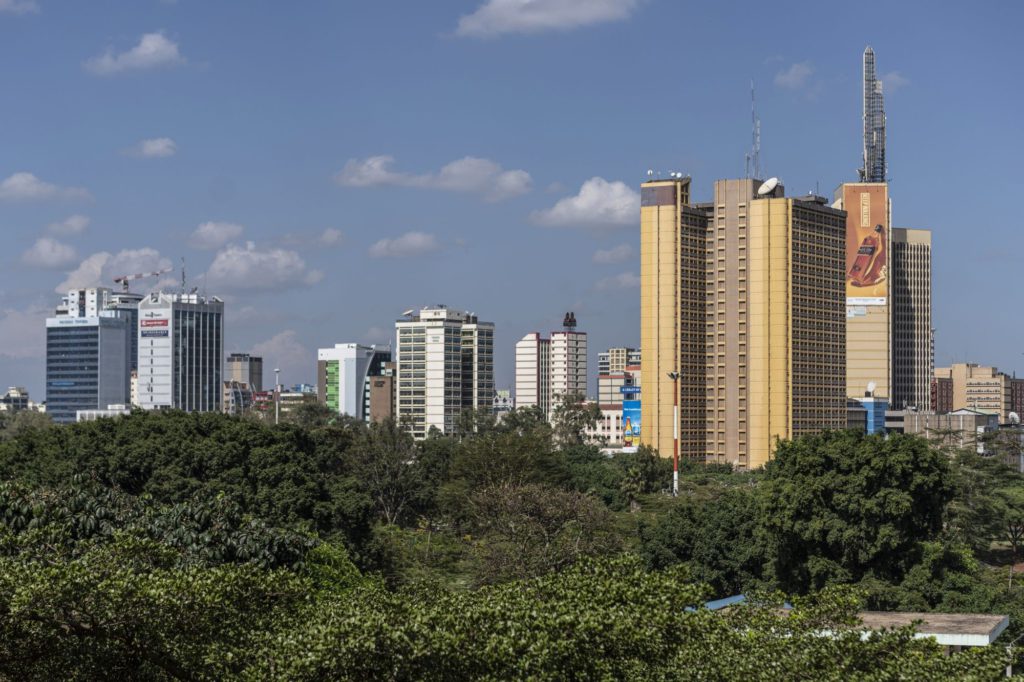
African Tech Sector Is Sprouting Unicorns and Raking in Billions

(Bloomberg) — Africa’s tech startups raised a record $5 billion in 2021 as investors piled into firms trying to fix the continent’s thorniest problems. But a lot of that money isn’t flowing evenly.

In this episode of Bloomberg’s Africa+, we explore how the burgeoning fintech scene in Nairobi and elsewhere is sprouting a growing number of unicorns, and what those companies need from governments to keep succeeding. 


More stories like this are available on bloomberg.com

©2022 Bloomberg L.P.
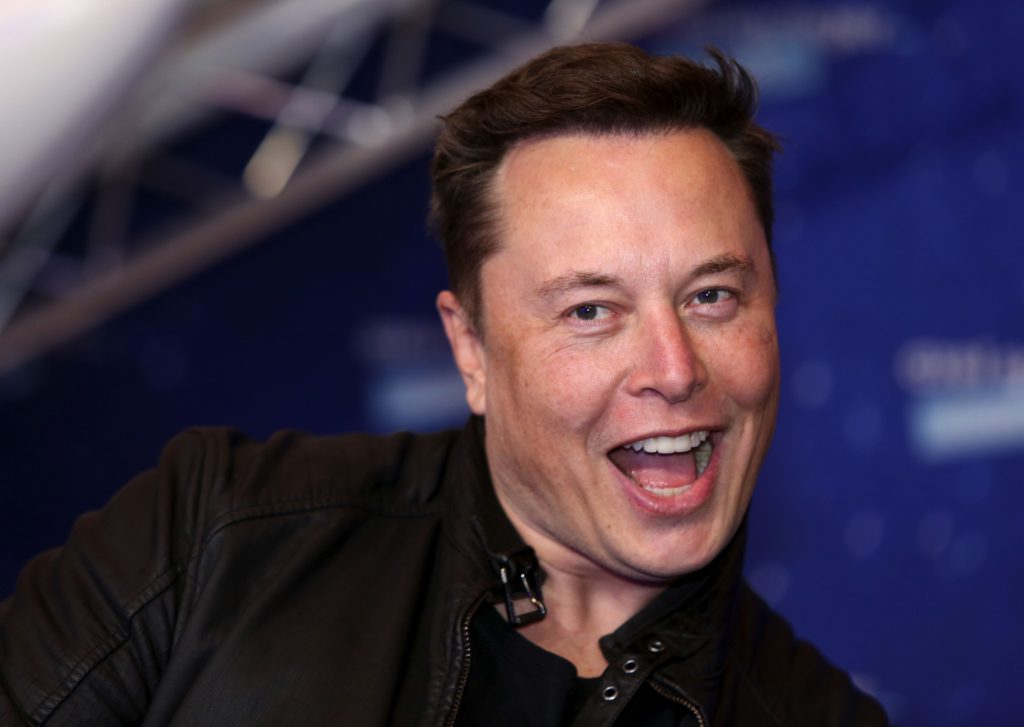
Elon Musk Saddles Up for His ‘Cyber Rodeo’ Party at New Tesla Factory in Texas

(Bloomberg) — Party boy Elon Musk is promising a blowout for his closest acolytes Thursday night to celebrate the opening of a new Tesla Inc. factory in Austin, Texas.

And while the carmaker received a permit to host as many as 15,000 people for the invitation-only “Cyber Rodeo,” Musk tweeted that “the door won’t be super strict.”

Photos and video footage of the construction site published by fans show art installations, multiple stages and a sea of Texas-made Model Y sport utility vehicles apparently waiting to be shipped to customers. Musk, Tesla’s chief executive officer, tweeted that the “biggest party on Earth” will start cooking at 8 p.m. and that he’d address the crowd about an hour later. Tesla has promised to livestream the festivities.

The $1 billion factory is critical to Tesla’s expansion. The company has been operating around capacity at its Fremont, California, plant since the heady days of 2018, when it erected a giant tent in the parking lot to boost output of the Model 3 sedan. The carmaker’s furious growth over the last two years is largely thanks to a factory outside Shanghai. In October, Tesla hosted some 9,000 people to fete the opening of a plant outside Berlin.

The Texas facility will be Tesla’s second automotive plant in the U.S., able eventually to pump out 500,000 vehicles a year, Musk has said. Tesla delivered more than 936,000 vehicles worldwide in 2021. 

Tesla broke ground on the Austin factory less than two years ago. Initial output will consist of Model Y SUVs. The coming Cybertruck pickup is slated to follow, as might a Semi big rig that is in development.

More stories like this are available on bloomberg.com

©2022 Bloomberg L.P.

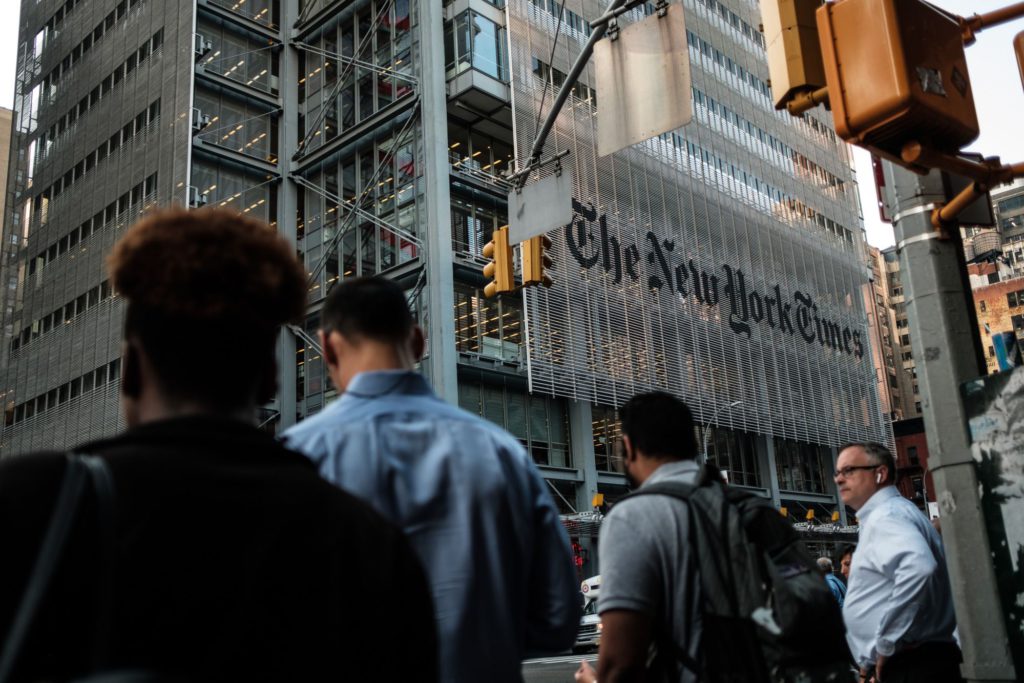
New York Times Suggests Staffers Reduce Time on Twitter

(Bloomberg) — Dean Baquet, the Executive Editor of the New York Times, has called for a reset in the relationship between staffers at the newspaper and Twitter, Business Insider reports, citing a memo to staffers.

The memo says reporters “can rely too much on Twitter as a reporting or feedback tool” and “can be overly focused on how Twitter will react” to their work. Baquet adds that journalists “can make off-the-cuff responses that damage our journalistic reputations.”

The report goes on to say it is clear that a change is needed and notes three new policies which will be enacted at the media outlet. Firstly, Twitter and other social media is now “purely optional” for journalists and those who choose to stay on the various platforms are encouraged to “meaningfully reduce” the time spent on them. Secondly, there is a new Times initiative to support journalists experiencing online harassment.

Finally, the Times will no longer allow “tweets or subtweets that attack, criticize or undermine the work” of other Times journalists. Baquet says “masthead editors, department heads and our Standards department will pay close attention to how all Times journalists use social media.”

To view the source of this information click here

More stories like this are available on bloomberg.com

©2022 Bloomberg L.P.

Close Bitnami banner
Bitnami